Low-dose radiation linked to increased lifetime risk of heart disease

by British Medical Journal, https://medicalxpress.com/news/2023-03-low-dose-linked-lifetime-heart-disease.html 8 March 23,
Exposure to low doses of ionizing radiation is associated with a modestly increased excess risk of heart disease, finds an analysis of the latest evidence published by The BMJ today.
The researchers say these findings “have implications for patients who undergo radiation exposure as part of their medical care, as well as policy makers involved in managing radiation risks to radiation workers and the public.”
A linked editorial suggests that these risks “should now be carefully considered in protection against radiation in medicine and elsewhere.”
It’s well recognized that exposure to high dose radiation can damage the heart, but firm evidence linking low dose radiation to heart disease (e.g., scatter radiation dose from radiotherapy or working in the nuclear industry) is less clear.
To address this knowledge gap, an international team of researchers examined scientific databases for studies evaluating links between a range of cardiovascular diseases and exposure to radiation (mostly radiotherapy and occupational exposures).
They excluded uninformative datasets or those largely duplicating others, leaving 93 studies, published mainly during the past decade, suitable for analysis. These studies covered a broad range of doses, brief and prolonged exposures, and evaluated frequency (incidence) and mortality of various types of vascular diseases.
After taking account of other important factors, such as age at exposure, the researchers found consistent evidence for a dose dependent increase in cardiovascular risks across a broad range of radiation doses.
For example, the relative risk per gray (Gy) increased for all cardiovascular disease and for specific types of cardiovascular disease, and there was a higher relative risk per dose unit at lower dose ranges (less than 0.1 Gy), and also for lower dose rates (multiple exposures over hours to years).
At a population level, excess absolute risks ranged from 2.33% per Gy for a current England and Wales population to 3.66% per Gy for Germany, largely reflecting the underlying rates of cardiovascular disease mortality in these populations.
This equates to a modest but significantly increased excess lifetime risk of 2.3-3.9 cardiovascular deaths per 100 persons exposed to one Gy of radiation, explain the authors.
Substantial variation was found between studies, although this was markedly reduced when the authors restricted their analysis to higher quality studies or to those at moderate doses (less than 0.5 Gy) or low dose rates (less than 5 mGy/h).
The authors suggest that mechanisms for these cardiovascular effects are poorly understood, even at high dose.
They also acknowledge that few studies assessed the possible modifying effects of lifestyle and medical risk factors on radiation risk, particularly major modifiable risk factors for cardiovascular disease like smoking, obesity, diabetes, high blood pressure and high cholesterol, and say further research is needed in this area.
In conclusion, they say their findings support an association between acute high dose and (to a lesser extent) chronic low dose radiation exposure and most types of cardiovascular disease and suggest that “radiation detriment might have been significantly underestimated, implying that radiation protection and optimization at low doses should be rethought.”
This view is supported by Professor Anssi Auvinen at Tampere University in Finland in a linked editorial, who points out that while inconsistencies and gaps remain in the evidence linking vascular disease to low dose radiation exposure, “evidence for cardiovascular disease will soon need to be added to the existing list of radiation-induced health risks.”
This will involve revisiting concepts and standards in radiological protection, while more stringent standards for justification and optimization, especially for high dose procedures, will have to be considered, he explains.
Their implementation will also require training to improve awareness, knowledge, and understanding of the risks associated with specific procedures and cumulative exposure, as well as risk communication for patients and the public, he concludes.
Australian corporate papers call for war with China, nuclear weapons and mass conscription

Oscar Grenfell, SEP candidate for NSW Legislative Council, 10 Mar, 2023, https://www.wsws.org/en/articles/2023/03/10/tutm-m10.html

In a militarist barrage, Nine Media and its main mastheads—the Sydney Morning Herald and the Age—published a major series this week insisting that Australia must prepare to fight an imminent war against China.
“Red alert” called for the stationing of nuclear weapons and long-range missiles in northern Australia, the introduction of mass conscription and preparations for the country to host as many as 200,000 US military personnel.
The articles are a demand for total war, not far off in the future, but as an immediate practical order of business. The series stressed that a war will be fought in the Indo-Pacific, not in twenty years or a decade, but within the next three years.
The multi-part series was not published in response to any specific development. Over the past week, there has not been a major geo-political occurrence in the region. China has not carried out any acts of aggression.

Instead, “Red alert” is part of a coordinated onslaught by those sections of the US and allied media that speak directly for the American military-intelligence apparatus. In concert, publications such as the Wall Street Journal and the Washington Post have published frothing condemnations of China. It is as though someone in the White House, the Pentagon or both flicked a switch that sent out an alert to their lackeys in the media.
The provocative attacks on Beijing come as the US and NATO escalate their proxy war against Russia in Ukraine. It is becoming ever more open that the war effort in Eastern Europe is one prong of a far broader militarist project. The US is seeking to inflict a crippling military defeat on Russia, as the essential prelude to war with China, which is viewed as the chief threat to American imperialist interests.
“Red alert” was couched as an “independent” review by five “experts” of Australia’s capabilities to fight a major war over the coming years. It was timed to precede the release of an official review commissioned by the federal Labor government, due out later this month. The claims of “independence” are a violation of the most basic journalistic ethics and standards related to disclosure.

One is employed directly by the Australian government, four are employed by or contribute to the Australian Strategic Policy Institute, one of the most hawkish government-funded think tanks, or the Centre for Strategic and International Studies, which is among the most militaristic Washington think tanks. In other words, they could not be any less independent. They are mouthpieces of the state apparatus, as well as of private arms manufacturers that are making a fortune on the back of the military build-up.
The contents of the “Red alert” review are no less false than its purported independence. The series is a compendium of the lies, double speak and incendiary accusations used by Washington and its allies in the Australian political establishment to justify an aggressive military encirclement of China.
The timeline featured by “Red alert,” of a war with China within three years, comes straight from the American military. It is simply a promotion of views advanced by US Air Force General Michael Minihan, who earlier this year forecast an American war with China by 2025.
The supposed cause of such a war advanced by “Red alert” is identical to that put forward by Minihan. The Chinese government would purportedly launch an invasion of Taiwan, compelling US intervention and rapidly spiralling into an all-out war.
“Red alert” tries to present the US, as well as its allies, such as Australia, as engaging in a defensive effort on behalf of “little Taiwan,” as they have supposedly done in defence of “little Ukraine.” This depiction is a fraud on every level.
The US has been carrying out a vast military build-up throughout the Indo-Pacific since it unveiled the “pivot to Asia” in 2011. The Pentagon has outlined an “Air Sea Battle” plan as to how an aggressive US war against China would be waged. Chief US strategists have openly acknowledged that this is motivated by fears of China’s economic rise, and American imperialism’s relative decline.
Taiwan is simply a pretext. The US and its allies have sought to transform it into a flashpoint. Successive US governments, beginning with Obama, have undermined the status quo. Since the 1970s, the international community, including American administrations, de facto acknowledged the Chinese Communist Party as the sole legitimate government of all of China, including Taiwan, located just 160 kilometres from mainland China.
But now, Biden has repeatedly declared that the US would fight a war to defend Taiwanese “independence.” His administration has tripled US forces on the island, while directly providing military aid and expanding diplomatic ties with Taipei. The aim is to provoke a Chinese response, which would serve as the justification for longstanding US war plans.

“Red alert” asserts that such a war would immediately become region-wide. Australia would be involved from the outset and within 72 hours of such a conflict, there would be Chinese attacks on Australian cyber networks and critical infrastructure. The US Pine Gap spy and military coordination base in central Australia would be a target, as would other Australian-US installations.
The series declares that in the event of such a war, as many as 200,000 American troops would descend on Northern Australia. That is, 47,000 less than the entire population of the Northern Territory, meaning the entire region would be transformed into a massive US base.
“Red alert” links this scenario to a call for the acquisition of major missile systems and other offensive weaponry. This is in line with a rapid build-up already underway, which is being dramatically accelerated by the Labor government. Virtually every week, there is a new announcement of military acquisition, be it sea mines, US HIMARS or naval strike missiles.
Conscious of the historic opposition to war among workers and young people, the document cites the necessity to break the “taboos” of conscription and nuclear weapons.
Perhaps the one note of truth in the series is its description of what a major war in the Indo-Pacific would involve. It would be a “whole of nation” effort, essentially requiring the militarisation of the entire society.
Along these lines, the “Red alert” series calls for the introduction of conscription. This would involve not only teenagers and young adults, but potentially anyone required for the war effort in what would be a war economy and the militarisation of society.
The series also advocates the stationing of US nuclear weapons in Northern Australia, on long-range missile systems that could fire them into the Indo-Pacific. As is the case whenever such proposals are made, the “experts” assert that this would serve as a “deterrent.” But they contradict themselves because in the previous parts of the series, the “experts” insisted that war is inevitable. The inescapable conclusion is that they are calling for nuclear war.
“Red alert” serves several purposes. It comes amid a debate within the Australian ruling elite, over Australia’s full alignment with the US war drive against China. A minority wing has voiced concerns over the implications of this. It is not anti-war or anti-imperialist, but fears that war with Australia’s largest trading partner will devastate the economy while provoking mass social and political upheavals.
The dominant sections of the political establishment, however, are all the way with the US. Australia, as a middle-order power, has always functioned under the umbrella of the dominant power of the day to prosecute its own imperialist interests. Australia, moreover, is completely integrated into the US war machine, meaning its participation in a conflict with China would be automatic.
This integration is only deepening. Next week, Labor Prime Minister Albanese will stand alongside President Biden in San Diego, as they announce that Australia will purchase US nuclear-powered submarines. The Labor government has already permitted nuclear-capable American B-52 bombers to “rotate” through northern Australia, meaning American nuclear weapons may already be stationed here.
The primary target of the “Red alert” series is the population itself. Its authors write about the need to change Australian “psychology.” They know that their mad plans for war are deeply opposed by the vast mass of workers and young people.
Conscription provoked massive social upheavals, both in World War I and during the Vietnam War. There is likewise a long history of broad opposition to nuclear weapons.
The propaganda blitz is aimed at bulldozing these popular sentiments by asserting that there is no alternative but to fight a war. A conflict is inevitable, so the population will simply have to accept it.
But the response to “Red alert” itself shows that this will not happen. The series has received a torrent of hostile commentary on social media. The Sydney Morning Herald posted the final part, containing the recommendation for nuclear weapons and conscription, to its Twitter account yesterday. The tweet has been viewed by 161,000 people. But only 20 of them hit the like button. While proclaiming the need for an “open” and “bold” discussion, the Herald has hidden all responses to its Twitter post.
The type of war that “Red alert” advocates is incompatible with democracy. That is the real meaning of the comments by the “experts” on the “Zelensky test.” They are referencing Ukrainian President Volodymyr Zelensky, a front man for the US and NATO. The “Zelensky test” is a willingness to place the entire country on a war footing. In Ukraine, this has involved the banning of all opposition parties and the promotion of fascist and Nazi forces.
The working class must take a sharp warning from the “Red alert” series and the broader turn to war with China. Longstanding plans for a catastrophic conflict are being activated. Governments and their mouthpieces are not only asserting that war is near. They are making it so.
This is a product of the deepest crisis of the profit system since the 1930s. The alternative to the catastrophe that is being prepared is the fight to build an international anti-war movement of the working class directed against the capitalist system itself and fighting for the socialist reorganisation of society.
Meet the man who uncovered the scandal of nuclear testing in South Australia

https://aeon.co/videos/meet-the-man-who-uncovered-the-scandal-of-nuclear-testing-in-south-australia
In the 1950s and ’60s, the British government conducted nuclear tests in Maralinga, a remote region of South Australia, with little understanding or forethought of the public health problems the fallout might cause. The harmful, sometimes deadly impact of these tests not only affected military conscripts, roped in without any real warning of the potential dangers, but private Australian citizens as well – and especially Indigenous peoples. Accounts of a Nuclear Whistleblower details this dark, somewhat forgotten chapter in Australia’s history via a firsthand account from Avon Hudson who, as a member of the Royal Australian Air Force, was stationed in dangerous proximity to these detonations, and later worked to expose their devastation and enduring threat. Hudson’s activism would ultimately help to precipitate the establishment in 1984 of the Royal Commission into British Nuclear Tests in Australia.
Via Director’s Library Director: Naveed Farro 7 March 2023
Fake ‘nuclear bomb’ alert on TV and radio scares Russians
Moscow viewers and radio listeners spooked by fake warning
Hackers took over Russian state media on Thursday to tell listeners to rush to nuclear bomb shelters and take anti-radiation pills.
Radio and television broadcasts in Moscow and the western Sverdlovsk area were interrupted with a phony warning of a missile strike on the country.
The Kremlin blamed the false alarm, which told listeners to take potassium iodine, put on gas masks and seek shelter, on a cyber attack.
“Urgent message. There was a strike,” a Russian voice boomed, while television viewers were presented with a map of Russia being covered in red.
“Urgently go to a shelter,” the voice declared. “Seal the premises. Use gas masks of all types.”
The Telegraph reported that after the message was broadcast, screens displayed a black and yellow radiation warning symbol.
“A false air raid alert was broadcast in Moscow after servers of radio stations and TV channels were hacked,” said the Kremlin’s emergency ministry.
There has been no claim of responsibility for the latest cyber attack with it possibly originating from Ukraine dissidents or potentially Russian
It was the third time in the past month that Russian broadcasters have been targeted. Last month a false warning was released in the Crimea urging caution against an incoming missile attack. For this event, Ukraine was blamed. A similar broadcast was run a week later during Vladimir Putin’s state of the union address.
Ukraine has not taken responsibility for any of the alleged cyber attacks………………………. https://www.independent.co.uk/news/world/europe/fake-nuclear-bomb-alert-russia-television-b2298070.html
Nuclear reactor: a deep crack discovered at Penly 1 risks destabilizing EDF
Nuclear reactor: a deep crack discovered at Penly 1 risks destabilizing
EDF. A new “stress corrosion” problem found by the the company on a
shutdown reactor in Seine-Maritime could have significant repercussions,
due to its size and location.
The discovery could have serious consequences
for EDF. The company detected a major crack on a weld of an emergency
circuit of a shutdown reactor, Penly 1, in Seine-Maritime, a new problem
for the energy giant whose nuclear fleet is heavily disturbed since 2021 by
these phenomena.
In a note, which went unnoticed until its media coverage
on Tuesday by the Context site , EDF mentioned having detected a
“significant stress corrosion defect” on an emergency pipe used to cool
the reactor in an emergency. For Yves Marignac, ” the fact that larger
cracks are possible raises the question of keeping the 6 reactors of the
same type P’4″ in operation while awaiting their preventive repair” ,
announced in December by EDF for the current year 2023.
Liberation 8th March 2023
What´s happening at Fukushima plant 12 years after meltdown? Massive amounts of fatally radioactive melted nuclear fuel remain inside the reactors.

Japan is preparing to release a massive amount of treated radioactive wastewater
into the sea. Japanese officials say the release is unavoidable and should
start soon.
Dealing with the wastewater is less of a challenge than the
daunting task of decommissioning the plant. That process has barely
progressed, and the removal of melted nuclear fuel hasn´t even started.
TEPCO needs a safety approval from the Nuclear Regulation Authority.
The International Atomic Energy Agency, collaborating with Japan to ensure the
project meets international standards, will send a mission to Japan and
issue a report before the discharge begins………………………..
Massive amounts of fatally radioactive melted nuclear
fuel remain inside the reactors. Robotic probes have provided some
information but the status of the melted debris is largely unknown. Akira
Ono, who heads the cleanup as president of TEPCO´s decommissioning unit,
says the work is “unconceivably difficult.” Earlier this year, a
remote-controlled underwater vehicle successfully collected a tiny sample
from inside Unit 1’s reactor – only a spoonful of about 880 tons of melted
fuel debris in the three reactors.
That’s 10 times the amount of damaged
fuel removed at the Three Mile Island cleanup following its 1979 partial
core melt. Trial removal of melted debris will begin in Unit 2 later this
year after a nearly two-year delay. Spent fuel removal from Unit 1
reactor´s cooling pool is to start in 2027 after a 10-year delay. Once all
the spent fuel is removed the focus will turn in 2031 to taking melted
debris out of the reactors.
Daily Mail 9th March 2023
NATO fighter jets, U.S. nuclear bombers run combat drills over Romania — Anti-bellum
NATOAllied Air CommandMarch 10, 2023 Allied fighters and heavy bombers conduct NATO mission over Romania United States Air Force B-52s and Allied fighters conducted coordinated combined air-to-ground drills over Romania further improving Allied capabilities on March 9. Allied Air Command led a dynamic long-range operation above Romania with the Combined Air Operations Centre at Torrejón […]
NATO fighter jets, U.S. nuclear bombers run combat drills over Romania — Anti-bellum
The narrow field of options for safely managing Ukraine’s Zaporizhzhia Nuclear Power Plant
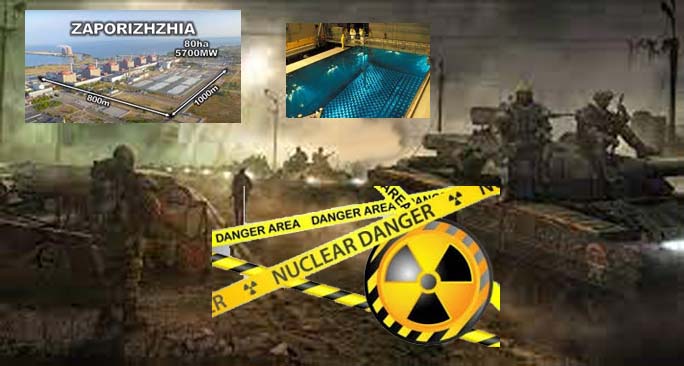
By Mark Hibbs | March 10, 2023 Bulletin of the Atomic Scientists,
One year after Russia’s assault and takeover of the Zaporizhzhia plant, Russians and Ukrainians face decisions about the operation status of the six reactors that will significantly impact nuclear safety and security. Decision makers might mothball the reactors, or instead elect one or more of a range of modes for operating them, on a scale from cold shutdown to resumed criticality and low-power operation…………………………………………………………………………………………..
the safest option for the Zaporizhzhia nuclear power plant would be to shut all reactors down, depressurize the circuits, and remove their fuel until the end of the war. As an IAEA peer reviewer in one European country with similar reactors said: “There would be no heat, no pressure, no radioactivity, and no severe accident.”
But the plant’s fuel inventory is another key consideration in decisions about how or if the Zaporizhzhia reactors are to be run. If removed from reactor cores, hot, highly radioactive fuel must be safely stored and contained.
Ukraine regulations require that the spent fuel storage pool at each reactor accommodate a full core of fuel in an emergency. As part of EU post-Fukushima upgrades, Zaporizhzhia reactors were outfitted with portable equipment to supply water in an emergency to spent fuel pools and to reactor cores. But moving a core of fuel into a pool would significantly increase the heat load, and safe storage margins might be limited following previous re-racking to pack more fuel in the pools.
Safety authorities may ultimately decide that the fuel would be better protected if left in the reactors, since they were designed to protect and cool the fuel including in an emergency. Separately, the owner/operator may not want to undertake prolonged outages of de-fueled reactors in the interest of limiting restart authorization requirements………………………………… https://thebulletin.org/2023/03/the-narrow-field-of-options-for-safely-managing-ukraines-zaporizhzhia-nuclear-power-plant/
Saudi Arabia Seeks U.S. Security Pledges, Nuclear Help

Agreement could upend Middle East geopolitics but faces daunting obstacles
Saudi Arabia is asking the U.S. to provide security guarantees and help to develop its civilian nuclear program as Washington tries to broker diplomatic relations between the kingdom and Israel, people involved in discussions between the two countries said.
Striking a normalization deal between Israel and Saudi Arabia has become a priority for President Biden and Prime Minister Benjamin Netanyahu amid a looming confrontation with Iran over its nuclear program and military aid to Russia during the Ukraine war. The Biden administration is deeply involved in the complex negotiations, the people said, and any deal would reshape the Middle East’s political landscape……………(Subscribers only) https://www.wsj.com/articles/saudi-arabia-seeks-u-s-security-pledges-nuclear-help-for-peace-with-israel-cd47baaf
China marketing nuclear power to Uganda

Uganda announces plans to start nuclear power generation
Energy minister says preparation ongoing to pave way for 1st nuclear power project
Hamza Kyeyune |09.03.2023,
KAMPALA, Uganda
Uganda announced Thursday it will begin construction of the country’s first nuclear facility, the Buyende Nuclear Power Plant, in partnership with China National Nuclear Corporation that would assist the East African country in developing capabilities for peaceful use of atomic energy.
Currently in Africa, only South Africa has an active nuclear power plant, while Russia’s state-owned energy corporation Rosatom commenced construction of Egypt’s first nuclear facility last year………..
https://www.aa.com.tr/en/africa/uganda-announces-plans-to-start-nuclear-power-generation/2841543
March 10 Energy News — geoharvey

World: ¶ “Ukraine War: Why Russia’s Infrastructure Strikes Strategy Isn’t Working” • A coordinated wave of Russian attacks on Ukraine’s power infrastructure was the first in almost a month. Western officials believe missiles and other precision-guided weaponry Russia needs to carry out such attacks with any measure of effectiveness is in short supply. [BBC] Bombed […]
March 10 Energy News — geoharvey
How the nuclear lobby scuttled the EU’s anti-greenwashing tool
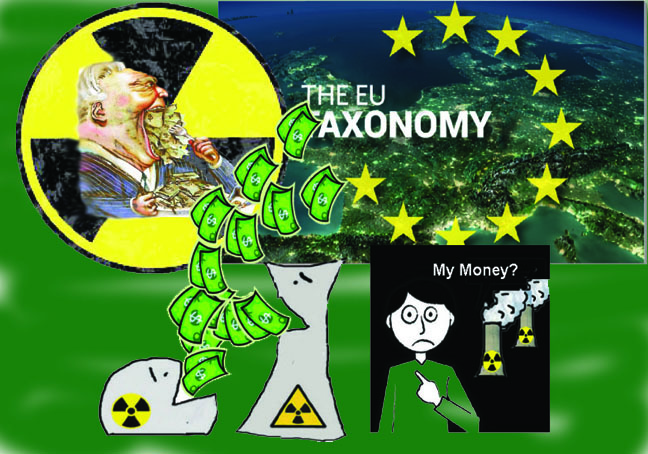
Succumbing to member states’ pressure and giving nuclear energy a “sustainable” label in a key regulation could derail the EU’s climate progress.
Aljazeera, Christiana Mauro, Senior advisor at the Biosphere Institute , Kacper Szulecki, Research professor in climate governance, 8 Mar 23,
One year ago, hopes were high for what was considered to be the most important environmental legislation in Europe. The European Union’s taxonomy regulation was meant to become the global “gold standard” for science-based policy that directs investment towards climate-friendly goals.
Their argument is that the “sustainable” label given to nuclear energy and natural gas breaches the EU’s climate commitments, violates EU environmental law and is incompatible with the “do no significant harm” criteria of the taxonomy regulation itself. The EC refused to revoke the act leading the complainants to launch a lawsuit at the European Court of Justice.
As we await the court’s decision, it is important to recall how this legislation was undermined by the nuclear lobby and what the consequences will be if it is not struck down
………………………………………………………………the EU taxonomy regulation ….. was supposed to be a list of scientifically-based technical criteria to set apart economic activities that are genuinely sustainable from those that are harming the environment.
It defined environmentally sustainable activities as contributing substantially to specific environmental objectives that will speed up the decarbonisation of the economy, comply with safeguards and “do no significant harm” to the environment.
Nuclear energy and natural gas initially failed to meet the taxonomy criteria. Of course, that went against big interests in the energy sector and predictably a lobbying blitz was launched to reverse this decision.

A report by Reclaim Finance, an NGO which scrutinises the impacts of financial actors on climate, revealed a lobbying campaign worth millions of euros was initiated to amend the regulation in favour of the natural gas and nuclear industries.
Lobbyists met frequently with EU representatives during critical phases of the deliberations over the taxonomy. Russia, which would have been a major financial and geopolitical beneficiary of the financial incentives that would ensue from the inclusion of gas and nuclear, was an extremely active “stakeholder” during the entire legislative process.
But there were also EU countries which sought to put pressure on the European Commission to change the regulation’s provisions. At the forefront of that effort were Poland, France, the Czech Republic, Hungary, Romania, Slovakia and Slovenia, whose leaders wrote a joint letter arguing for the inclusion of nuclear power in the regulation.
The document used various common claims and arguments in support of nuclear sustainability. We were part of a team of fact-checkers from four EU countries who determined that 20 statements in the letter were false or misleading.
Among them were assertions that nuclear power is “environmentally friendly”, “essential to the transition towards clean energy sources”, a “promising source of hydrogen” and “affordable”.
A full analysis of the letter can be found here.
Why nuclear energy is not green
Why nuclear energy is not green is perhaps less obvious to the general public than natural gas. This likely is due to efforts by governments – such as the seven mentioned above – and organisations to mislead it.
False narratives of “clean” nuclear are also peddled by intergovernmental organisations such as the International Atomic Energy Agency (IAEA), the OECD, and the UN Economic Commission for Europe (UNECE).

A common claim – which is also made in the letter to the EC – is that nuclear energy has a low carbon emission status. But if nuclear power can be said to produce lower carbon emissions, it is only true at the point of generation. When the entire life cycle of nuclear power plants is taken into consideration this contention crumbles.
Nuclear energy’s “upstream” activities that are necessary for operation, such as mining uranium, as well as transporting fuel, building and then decommissioning a power plant, and managing the radioactive waste that is a by-product of the process – are all linked to CO₂ emissions. Thus, the carbon footprint of nuclear energy generation is considerable, and according to some estimates, considerably higher than that of renewables.

Nuclear technology also needs significant amounts of cooling water and creates waste that is so toxic to the environment that no permanent storage solution has been developed for 70-odd years. It also represents a risk of seriously and permanently harming large swaths of territories in the case of an accident – which is now growing amid the current militarisation of civil nuclear facilities in Ukraine.
Posing an unmanageable danger to the environment, nuclear power falls short, even as a so-called “transitional activity”, defined in the regulation as an economic activity for which low-carbon alternatives are not available. This is because its financing today would derail the implementation of renewables by diverting investment away from them.
As Amory Lovins, a Stanford University professor and energy expert, says: “a low- or no-carbon energy source that costs more or takes longer to deploy will make climate change worse than one that is cheaper or faster, because the latter could have saved more carbon per euro and per year.”
Energy demand in Europe can easily be met by non-nuclear power sources, and considering the unreliability of nuclear power, with its ageing and deteriorating reactors, and vulnerability to extreme weather events, it is unlikely to have any energy contribution to make at all in the transition to renewables.
Even the most favourable calculations of the cost of nuclear energy show no advantage over renewable, which is seeing costs of deployment plummeting.
Government schemes keep consumer nuclear electricity prices artificially low. In fact, nuclear energy can only be made “competitive” with “hugely significant” government financing, as the EU Energy Commissioner inadvertently admitted in a recent speech. Hence, the seven governments’ letter also pleaded for “active support” for nuclear energy.
The profusion of nuclear delusions
There is a long history of attempts to link nuclear technology to overoptimistic technocratic environmental achievements that never materialise.
Media-hyped nuclear fiction abounds. For example, a recent fusion experiment in the US was touted as a major milestone in the search for an abundant source of clean energy. Predictably, it had a rather anticlimactic ending for anyone paying attention.
The energy generated in the experiment was significantly less than the amount needed to power the lasers involved in it. And the laboratory where the celebrated breakthrough took place was established to develop thermonuclear weapons, not civil nuclear energy projects, which explains its multibillion-dollar budget.
Such nuclear myths are usually debunked by independent experts whose critical voices are often buried beneath irresponsibly promoted fantasies. The morass of disinformation is meant in part to mask the industry’s own failures, but also the military interests of nuclear governments, by pushing unsupported theories to legitimise public funding. It is meant to confuse, demoralise and disable any organised effort to change things.
And the media, instead of challenging this intentional misleading of the public, has played a part in it. European media, for example, reported on the letter of the seven EU countries lobbying for nuclear to be included in the EU taxonomy regulation without checking the veracity of its claims.
Thus, a misinformed public and passive media have allowed political actors to influence regulations that are supposed to be politically neutral. Well-intentioned, vital, and comprehensive legislation, years in the making, has been subverted.
In its current form, this delegated act is likely to derail key 2030 and 2050 climate goals, and damage the Green Deal by influencing negatively green taxonomies being developed around the world. It will encourage greenwashing practices, redirect capital flows towards polluting sectors, and upset progress made on implementing the objectives of the Paris Agreement. https://www.aljazeera.com/opinions/2023/3/8/how-the-eus-most-promising-anti-greenwashing-tool-was-scuttled
Electricite De France (EDF) discovers a “significant defect” on a weld in Penly nuclear reactor.

Nuclear: EDF discovers a “significant defect” on a weld in Penly. A deep
crack with “a risk of leaking” was discovered on an emergency circuit
of a shutdown reactor.
The Nuclear Safety Authority is asking EDF to review
its repair plans. The impact on nuclear production remains uncertain.
Almost a year and a half after the discovery of a generic problem of
microcracks which will have cost it several tens of billions of euros in
2022 and which will have considerably weighed on the production of
electricity, EDF has encountered in recent weeks a new bad surprise. The
operator indicated on the website of the Penly power plant that it had
detected a “significant stress corrosion defect” on an emergency circuit of
the site’s number 1 reactor. This circuit is located within the radioactive
zone, in the “reactor building”.
Les Echos 7th March 2023
War in space: U.S. officials debating rules for a conflict in orbit

Christian Davenport, The Washington Post, Wed, March 8, 2023
Ukraine’s use of commercial satellites to help repel the Russian invasion has bolstered the U.S. Space Force’s interest in exploiting the capabilities of the private sector to develop new technologies for fighting a war in space.
But the possible reliance on private companies, and the revolution in technology that has made satellites smaller and more powerful, is forcing the Defense Department to wrestle with difficult questions about what to do if those privately owned satellites are targeted by an adversary.
White House and Pentagon officials have been trying to determine what the policy should be since a top Russian official said in October that Russia could target the growing fleet of commercial satellites if they are used to help Ukraine.
Konstantin Vorontsov, deputy director of the Russian Foreign Ministry’s department for nonproliferation and arms, called the growth of privately operated satellites “an extremely dangerous trend that goes beyond the harmless use of outer-space technologies and has become apparent during the latest developments in Ukraine.”
He warned that “quasi-civilian infrastructure may become a legitimate target for retaliation.”
In response, White House press secretary Karine Jean-Pierre reiterated earlier comments from her counterpart at the Pentagon that “any attack on U.S. infrastructure will be met with a response, as you’ve heard from my colleague, in a time and manner of our choosing.”
But what that response will be is unknown, as officials from a number of agencies try to lay out a policy framework on how to react if a commercial company is targeted…………………………………
The discussions come as the Pentagon is investing in more systems that were originally developed for civilian use but also have military applications. In the National Defense Strategy released late last year, the Pentagon vowed to “increase collaboration with the private sector in priority areas, especially with the commercial space industry,
leveraging its technological advancements and entrepreneurial spirit to enable new capabilities.”
Several companies are developing small rockets that would launch inexpensively, and with little notice. SpaceX, meanwhile, has launched its Falcon 9 rocket at a record cadence, firing it off 61 times last year
The company is on track for even more launches this year.
“We think in a few years we’ll be in the 200, 300, 400 range,” Space Force Maj. Gen. Stephen Purdy Jr. said during a conference this month, referring to total space launches. “There’s a massive increase in commercial launch.”
He said the Space Force would like to get to the point where “we’re constantly launching, and there’s a schedule. There’s a launch in two hours, and there’s launch in 20 hours. Your satellite is not ready? Okay, get on the next one.”
For its next round of national security launch contracts, the Space Force has proposed an approach specifically designed to help small launch companies compete.
One track of contracts will be reserved for the most capable rockets – those able to hoist heavy payloads to every orbit the Pentagon wants to plant a satellite. Stalwarts such as SpaceX and the United Launch Alliance, the joint venture of Lockheed Martin and Boeing, would probably compete for those. Blue Origin, the venture owned by Jeff Bezos, could also potentially bid its New Glenn rocket, though it has yet to fly. (Bezos owns The Washington Post.)
But the Space Force has proposed offering a second track for smaller rockets, allowing start-ups to enter one of the most reputable and lucrative space marketplaces that could be worth billions of dollars over several years. Those companies include Rocket Lab, which has recently christened its launch site on the Eastern Shore of Virginia, adding to its facility in New Zealand, and Relativity, which is scheduled to launch the world’s first 3D printed rocket on Wednesday…………..
 |
https://news.yahoo.com/war-space-u-officials-debating-120515128.html
Nuclear and space lobbies increase their grip on universities, a new example in UK

Bangor University in Wales will develop a nuclear thermal fuel system to
support deep space exploration with funding provided by the UK Space
Agency. It is one of eight projects receiving a total of GBP1.6 million
(USD1.9 million) in funding through the agency’s Enabling Space Exploration
fund.
World Nuclear News 7th March 2023
https://www.world-nuclear-news.org/Articles/Welsh-university-to-develop-space-nuclear-propulsi
1 This Month



Read the Public Inquiry Report, the Commissioners’ report, Surrendering Australia: The AUKUS Deception is available to download for free at aukuspublicinquiry.com. Or just watch the replay of the National Press Club Luncheon.

19 November – Webinar – The Reality of Reprocessing
Time: 11:00 AM Pacific Time (US & Canada) / 2:00 PM Eastern / 7:00 PM UK / 8:00 PM CET
Register for the Zoom Event Here


Shut down the radiation-damaged Heysham nuclear reactors now
To see nuclear-related stories in greater depth and intensity – go to https://nuclearinformation.wordpress.com

Say No to NASA’s Reckless Nuclear Reactor on the Moon
Say No to NASA’s Reckless Nuclear Reactor on the Moon
-
Archives
- November 2026 (119)
- October 2026 (302)
- September 2026 (339)
- August 2026 (330)
- July 2026 (355)
- June 2026 (287)
- May 2026 (306)
- April 2026 (356)
- March 2026 (251)
- February 2026 (267)
- January 2026 (308)
- December 2025 (358)
-
Categories
- 1
- 1 NUCLEAR ISSUES
- business and costs
- climate change
- culture and arts
- ENERGY
- environment
- health
- history
- indigenous issues
- Legal
- marketing of nuclear
- media
- opposition to nuclear
- PERSONAL STORIES
- politics
- politics international
- Religion and ethics
- safety
- secrets,lies and civil liberties
- spinbuster
- technology
- Uranium
- wastes
- weapons and war
- Women
- 2 WORLD
- ACTION
- AFRICA
- Atrocities
- AUSTRALIA
- Christina's notes
- Christina's themes
- culture and arts
- Events
- Fuk 2022
- Fuk 2023
- Fukushima 2017
- Fukushima 2018
- fukushima 2019
- Fukushima 2020
- Fukushima 2021
- general
- global warming
- Humour (God we need it)
- Nuclear
- RARE EARTHS
- Reference
- resources – print
- Resources -audiovicual
- Weekly Newsletter
- World
- World Nuclear
- YouTube
-
RSS
Entries RSS
Comments RSS

