“Together Against Sizewell” argue in UK’s High Court against this nuclear development’s impact on environment

The government’s decision to back a new Sizewell C nuclear power plant
failed to assess the environmental impact of the project and should be
overturned, campaigners have argued at the High Court.
Protest group Together Against Sizewell C has launched a bid to challenge development
consent granted by the then Business Secretary Kwasi Kwarteng last July. At
a hearing in London, lawyers for the Suffolk residents argued that the
government failed to assess the impact of providing an “essential” water
supply to the project and did not consider “alternative solutions” to
meeting its energy and climate change objectives.
They also argue that the
government concluded the power station site would be clear of nuclear
material by 2140, when rising sea levels and storm surges could flood the
site before it has been decontaminated. The government, supporting the
project with a £700m stake, argues that it made “legitimate planning
judgments” and that the campaigners’ “unarguable” challenge should be
dismissed.
ITV 23rd March 2023
What is Sizewell C and how will it be paid for? Campaigners challenge new
plant. Campaigners have told the High Court that the Government’s decision
to support the Sizewell C nuclear power plant plan was “unlawful” and
should be overturned.
Evening Standard 23rd March 2023
Lawyers representing campaigners argued in London’s High Court that the
government did not evaluate the environmental impact of the nuclear power
plant.
Energy Live News 23rd March 2023
Greens attack Albanese government’s ‘deeply unsettling’ secrecy on submarine nuclear waste plans.

Radiation Health and Safety Advisory Council also warned against cloak of national security to ‘mask inadequate radiation safety protection’.
Guardian. Daniel Hurst, 24 Mar 23
Labor and the Coalition have been accused of taking a “deeply unsettling approach” to transparency around Aukus after the major parties blocked the publication of documents about nuclear safety and waste issues.
The government cited national security concerns when it rejected a Senate order to produce documents, including those about options to manage operational waste from the nuclear-powered submarine program.
The move comes just months after the Radiation Health and Safety Advisory Council warned against allowing a cloak of national security to “mask inadequate radiation safety protection of the Australian public, weaken regulatory authority, or inhibit transparency on matters of Australian public safety”.
David Shoebridge, a Greens senator and defence spokesperson, said the council was “the very agency entrusted to protect Australians from radiation and ensure nuclear safety and security, yet the government is already ignoring its advice”.
“The hiding of information at this early stage signals a deeply unsettling approach to future regulation, transparency and oversight of these nuclear submarines,” Shoebridge said.
His motion had sought a range of documents reviewed by the Australian Nuclear Science and Technology Organisation (Ansto) working group, including the safeguards required for a nuclear-powered submarine program.
It also sought information about the “characterisation, classification and acceptance of risks in a nuclear environment” and any minutes of meetings held with the nuclear-powered submarine taskforce on these topics………….
The Coalition joined with Labor to defeat the motion in the Senate this week.
The former independent senator and submariner Rex Patrick said the blocking of the motion “shows the shallowness of thinking behind both major parties as to the need for complete transparency around this important issue”.
“This Aukus program has been orchestrated in total secrecy such that the government and Defence could get to a point of announcing a fait accompli without any debate or resistance,” Patrick said.
“There are some things that should properly be kept secret around a submarine – but these things should not include nuclear stewardship, nuclear regulation, nuclear safety or how to deal with operational waste and spent fuel.”
Patrick has, however, used freedom of information laws to obtain some other documents from Ansto and the Australian Radiation Protection and Nuclear Safety Agency (Arpansa).
These include minutes of an Ansto board meeting on 9 February showing the agency will seek government funding of $34.5m over the next four years because it faces increased workload “as a direct result of a nuclear-powered submarine program”…………………………………………………..
In the latest sign of misgivings within Labor, a party branch in the electorate of the prime minster, Anthony Albanese, passed a motion calling on his government to “withdraw from the Aukus alliance and cease any program in pursuit of the acquisition of nuclear submarines”.
Party members at the Enmore branch meeting this week agreed that Labor should prioritise spending that contributes to the “social good of our society rather than wasting hundreds of billions of dollars on a dangerous and unnecessary weapons program”.
According to a copy that has been widely circulated within NSW Labor, including to a large number of branch secretaries, the motion argued Aukus was “not in the interests of the Australian people” and “could take us into an unnecessary and devastating war”.
The motion reflects concerns within elements of the party’s rank-and-file membership, but does not yet indicate a groundswell that could stop the deal.
……………. The Petersham branch – also within Albanese’s electorate – passed an anti-Aukus motion in late February, before the San Diego announcement.
Labor members are also mobilising against the possibility of Port Kembla being selected as a future base for nuclear-powered submarines.
Some members are understood to have been emboldened to register their concerns, after several prominent Labor figures including the former prime minister Paul Keating spoke out against Aukus. https://www.theguardian.com/world/2023/mar/24/greens-attack-albanese-governments-deeply-unsettling-secrecy-on-submarine-nuclear-waste-plans
NATO pushes European Socialists for thirty more years, eternity of new wars — Anti-bellum

From Bosnia to Ukraine, NATO has been waging war – on three continents – for thirty years. Evidently permanently, “for the long term.” It could be argued that NATO has presented the world with its first Socialist/Social Democratic wars. (Think of Blair, Schroeder, Jospin, Solana, etc. in 1999.) And a plethora of them at that. […]
NATO pushes European Socialists for thirty more years, eternity of new wars — Anti-bellum
Minnesota nuclear plant shuts down for leak; residents worry
A Minnesota utility has begun shutting down a nuclear power plant near Minneapolis after discovering water containing a low-level of radioactive material was leaking from a pipe for the second time
abc news, By TRISHA AHMED and MATTHEW DALY Associated Press, March 25, 2023
MONTICELLO, Minn. — A Minnesota utility began shutting down a nuclear power plant near Minneapolis on Friday after discovering water containing a low level of radioactive material was leaking from a pipe for the second time. While the utility and health officials say it is not dangerous, the issue has prompted concerns among nearby residents and raised questions about aging pipelines.
Xcel Energy discovered in November that about 400,000 gallons (1.5 million liters) of water containing tritium had leaked. The utility made a temporary fix but learned this week that hundreds more gallons of tritium-laced water leaked, leading to the shutdown decision.
After the plant cools over the next few days, workers will cut out the leaking pipe, which is over 50 years old, said Chris Clark, Xcel Energy’s president. The utility will then have the pipe analyzed in hopes of preventing future leaks, he said……………………..
Edwin Lyman, director of nuclear power safety with the Union of Concerned Scientists, said the fact there was a second tritium leak “shines a light on the problem of maintaining aging pipelines” underground at older nuclear plants…………………..
The utility reported the initial leak to state and federal authorities in late November but didn’t make it widely public until last week, raising questions about transparency and public health issues. State officials said they wanted to wait for more details before sharing information widely. Criticism about the delay played a role in Xcel’s decision to hold a public information session Friday……………………………………..
Tim Judson, executive director of the Nuclear Information and Resource Service, a group that opposes nuclear power, said the second leak “is obviously concerning” and that public worries about possible health risks are exacerbated by the recent toxic train derailment in Ohio, where residents remain concerned about possible health effects despite government pledges that air and water are safe.
“People are seeing what happened in Ohio, and they are distrustful of the government response,’’ Judson said. https://abcnews.go.com/US/wireStory/minnesota-nuclear-plant-shuts-leak-residents-worry-98110848
Xi Jinping’s Russia trip reduced chance of nuclear war, says EU foreign policy chief
Josep Borrell says Chinese leader made it clear Vladimir Putin should not deploy atomic weapons
The Chinese president’s trip to Moscow this month has made the world safer, reducing the chance that Vladimir Putin will use nuclear weapons, according to the EU’s foreign policy chief.
Josep Borrell told reporters that President Xi Jinping had made it “very, very clear” to the Russian leader that he should not deploy nuclear weapons, citing China’s peace 12-point Ukraine peace plan, which condemned their use.
“One important thing is this visit reduces the risk of nuclear war and they [the Chinese] have made it very, very clear,” Borrell said. ………………………………… https://www.ft.com/content/8f895b27-9e16-47b4-8608-dbd002facd65
Strikes hit French nuclear output, disrupt EDF maintenance plans
By Forrest Crellin, March 24, 2023 https://www.reuters.com/business/energy/strikes-hit-french-nuclear-output-disrupt-edf-maintenance-plans-2023-03-24/
PARIS, March 24 (Reuters) – Strikes in France are impacting maintenance plans at EDF’s (EDF.PA) nuclear plants, curbing production just as the utility hoped to rebound from a 34-year output low last year.
At least 14 nuclear reactors in EDF’s fleet of 56 have suffered some delay affecting their maintenance plans, data from the CGT union showed.
France is witnessing widespread industrial action sparked by planned government policy changes including a move to raise the retirement age by two years.
For EDF that has meant nuclear power output in 2023 even lower than last year when it had swathes of reactors offline for repairs and checks for stress corrosion cracks.
Those factors compounded a backlog in regular maintenance due to the COVID-19 pandemic.
On Friday the average hourly nuclear availability until the end of the year was down by around 4% to 44 gigawatts (GW) from 46 GW in January when the strikes began, ICIS analysis showed.
The impact is expected to be more acute in the summer, with availability to June dropping by around 9% to 39 GW from 43 GW, they added.
EDF declined to comment on the impact of the strikes on its maintenance plans.
If average availability drops by another 8 GW this year, EDF’s minimum production target of 300 terawatt-hours (TWh) will become challenging, Refinitiv analyst Nathalie Gerl said.
Refinitiv estimates EDF will achieve production of 296 TWh this year.
The current reduction in availability has so far equated to around a 1% cut to generation for the full year, or 3 to 4 TWh, ICIS data showed.
CGT spokeswoman Virginie Neumayer said EDF’s production targets were “ambitious or even very optimistic” noting they required a vast staff recruitment plan to deal with stress corrosion found in its reactors in late 2021.
“The disorganisation generated by schedule shifts is therefore complex to manage and will be felt over time,” she said.
French nuclear safety watchdog ASN requested EDF revise its maintenance program due to new cracks discovered this month in some reactors.
The French first-quarter 2024 baseload power contract, an indication of market confidence in power supply through the end of next winter, has risen more than 30% in the last two weeks after the latest cracks were discovered and the maintenance delays started.
Low-dose Radiation Linked to Heart Disease
Columbia University Irving Medical Center, March 23, 2023
People exposed to low doses of ionizing radiation have an extra, but modest, risk of developing heart disease during their lifetime, according to a new study(link is external and opens in a new window) published by an international consortium of researchers.
“The study suggests that radiation exposure, across a range of doses, may be related to an increased risk of not just cancer, as has been previously appreciated, but also of cardiovascular diseases,” says Andrew Einstein, MD, PhD, professor of medicine at Columbia University Vagelos College of Physicians and Surgeons and one of the study’s senior authors.
“It should not steer people away from receiving radiation if necessary—in fact many medical uses of radiation are lifesaving—but it underscores the importance of ensuring that radiation is used appropriately and kept as low as reasonably achievable.”…………
The researchers used data from 93 studies covering all ranges of radiation exposures to find a relationship between dose and heart disease.
They found an increased excess lifetime risk of 2.3 to 3.9 cardiovascular deaths per 100 persons exposed to one Gy of radiation. (In the United States, about 25 out of every 100 people die from cardiovascular disease; a person exposed to 1 Gy of radiation will have a slightly higher, 27% to 29%, risk of dying from cardiovascular disease).
Few people other than those receiving radiation therapy will receive 1 Gy during their lives. But the researchers also found a higher risk of heart disease at low dose ranges (<0.1 Gy) more commonly experienced by the public and also for protracted exposures to low doses.
More research is needed to determine the precise increased excess lifetime risk of heart disease from these low doses.
“The effect of lower doses of radiation on the heart and blood vessels may have been underestimated in the past,” Einstein says. “Our new study suggests that guidelines and standards for protection of workers exposed to radiation should be reconsidered, and efforts to ensure optimal radiation protection of patients should be redoubled.”
References
More information
The study, titled “Ionising radiation and cardiovascular disease: systematic review and meta-analysis(link is external and opens in a new window),” was published March 8 in The BMJ…………………………….. https://www.cuimc.columbia.edu/news/low-dose-radiation-linked-heart-disease
—
Cry from soldier, unrecognised victim of depleted uranium radiation

Depleted uranium, used in some types of ammunition and military armour, is the dense, low-cost leftover once uranium has been processed….
A high-ranking official from Veterans Affairs says a handful of vets mistakenly believe their bodies have been damaged by depleted uranium…..
the Federal Court of Canada has found depleted uranium to be an issue. The court ruled the Veterans Affairs Department must compensate retired serviceman Steve Dornan for a cancer his doctors say resulted from exposure to depleted uranium residue.
Poisoned soldier plans hunger strike at minister’s office in exchange for care, Montreal CTV.ca Andy Blatchford, The Canadian Press, 30 Oct 11, MONTREAL — An ex-soldier who says he was poisoned while serving overseas is planning to go on a hunger strike outside the office of Canada’s veterans affairs minister until he gets medical treatment.

Britain supplying depleted uranium rounds to Ukraine
The UK will send “armour piercing rounds which contain depleted
uranium” to Ukraine, for use with the tank squadron donated by the
British army. Defence minister Baroness Goldie made the admission yesterday
in response to a written parliamentary question from crossbench peer Lord
Hylton. Goldie said: “Such rounds are highly effective in defeating
modern tanks and armoured vehicles.” Russia has previously warned it
would regard the use of depleted uranium in Ukraine as a ‘dirty bomb’.
Declassified UK 21st March 2023
Putin threatens response over Britain’s toxic tank shells.
Times 21st March 2023
Restarting Michigan Nuclear Power Plant Risks ‘Chernobyl-Scale Catastrophe,’ Coalition Warns
“This more than $10 billion in ratepayer and taxpayer robbery would merely fund an insanely high-risk game of radioactive Russian roulette on the Lake Michigan shoreline,” said one critic.
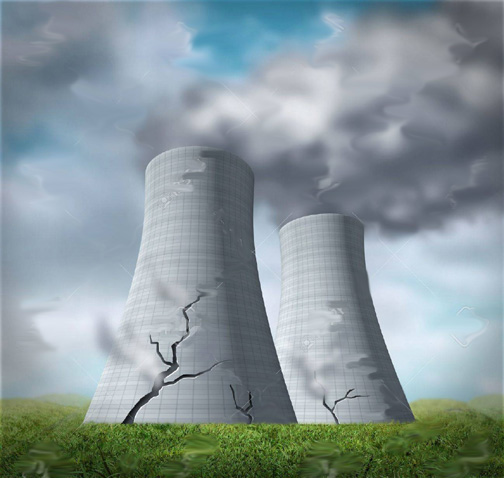
Most importantly, PNP is unable “to operate safely due to a litany of chronic and acute problems associated with age-related degradation and neglected maintenance on safety-significant systems, structures, and components,” the coalition argued in its statement. “This includes the worst neutron-embrittled reactor pressure vessel in the country and perhaps the world, at risk of pressurized thermal shock through-wall fracture, which would lead to reactor core meltdown.”
KENNY STANCIL, Mar 22, 2023 https://www.commondreams.org/news/palisades-nuclear-power-plant
A coalition of 191 individuals and 185 groups representing thousands of people on Wednesday implored the federal government for the third time not to fund the revival of a roughly 51-year-old nuclear power plant that was shut down last May in Covert, Michigan.
In a letter to the U.S. Department of Energy (DOE), the coalition warned that providing financial aid to Holtec International, which purchased the Palisades Nuclear Plant (PNP) last June, could lead to a massive public health and environmental disaster that reverberates far beyond the shoreline of Lake Michigan—a source of drinking water for millions of people in multiple states.
A little over a week after taking ownership of PNP “under the false pretense of decommissioning it,” Holtec secretly applied for funding from the DOE’s Civil Nuclear Credit (CNC) program in early July to reopen the plant, the coalition explained in a statement. The company’s application—supported by Democratic Michigan Gov. Gretchen Whitmer, who had been advocating for a “dangerous ‘zombie reactor’ bailout and restart scheme at Palisades” since April 2022—was made public in early September.
Thanks in part to opposition from the coalition, which sent its first letter to U.S. Energy Secretary Jennifer Granholm in September, the DOE rejected Holtec’s first funding request in mid-November. The following month, however, Holtec announced it would apply for federal funding during a second round of allocations, prompting a second letter of opposition from the coalition.
As The Holland Sentinelreported earlier this month: “Holtec is taking a different route with its second attempt at funding. Rather than applying through the CNC program, the company applied for funds from the U.S. Department of Energy loan office.”
Terry Lodge, legal counsel for the coalition’s lead groups, Beyond Nuclear and Don’t Waste Michigan, wrote in Wednesday’s letter that “DOE’s recently issued amended ‘guidance,’ which was specifically rewritten to enable Holtec to apply for $1.2 billion of federal taxpayer funds, is not legal under the Infrastructure Investment and Jobs Act (IIJA).”
“We understand that Holtec… may be applying to DOE for a subsidized loan under a different law, with the intention of using funds from the IIJA to pay off the loan,” wrote Lodge. “We question whether such a combined transaction would be lawful under the IIJA. Even if it is, IIJA credits may not be used to support Palisades. Congress intended the IIJA to support only currently operating commercial nuclear reactors that face termination of operations for economic reasons. Palisades does not meet any criteria for eligibility.”
The coalition once again asked Granholm—a former Democratic governor and attorney general of Michigan—and other high-ranking officials at the DOE to deny Holtec’s request that the non-operational PNP be certified to receive such federal funding.
Most importantly, PNP is unable “to operate safely due to a litany of chronic and acute problems associated with age-related degradation and neglected maintenance on safety-significant systems, structures, and components,” the coalition argued in its statement. “This includes the worst neutron-embrittled reactor pressure vessel in the country and perhaps the world, at risk of pressurized thermal shock through-wall fracture, which would lead to reactor core meltdown.”
“But additional pathways to catastrophic meltdown include a reactor lid, as well as steam generators, that have needed replacement for 17 years or longer,” the coalition continued. “Palisades’ control rod drive mechanism seal leaks have been uniquely bad in all of industry, for more than a half-century. Now added to this long list is Holtec’s neglect of vital maintenance, such as of the turbo-generator, bending under its own immense weight, as well as the steam generators, to name but two examples.”
Holtec has “applied to DOE for a billion dollar federal taxpayer-backed nuclear loan guarantee under the Inflation Reduction Act, which it would use to promote the reactor restart scheme, hoping to pay it back over time with the CNC program bailout,” said the coalition. In addition, Holtec is “seeking a more than billion dollar subsidy from the state of Michigan, as well as yet another lucrative, above-market rate power purchase agreement with an unnamed utility company in the area. Also, Holtec has applied to DOE for $7.4 billion in federal nuclear loan guarantees, authorized under the 2005 Energy Policy Act and congressionally appropriated on December 23, 2007, for the design certification, construction, and operation of four small modular (nuclear)
reactors, more than one of which would also be located at the Palisades site.”
In the words of Kevin Kamps, a radioactive waste specialist at Beyond Nuclear and board member of Don’t Waste Michigan, “This more than $10 billion in ratepayer and taxpayer robbery would merely fund an insanely high-risk game of radioactive Russian roulette on the Lake Michigan shoreline.”
“Both extremes of the risk spectrum would be co-located at the Palisades site, if Holtec gets its way,” said Kamps. “The ever-worsening breakdown phase risks at the old reactor would exist alongside the break-in phase risks of the new reactors, risking a Chernobyl-scale catastrophe, with the potential for Fukushima-style, domino-effect, multiple meltdowns.”
According to The Holland Sentinel: “Holtec has acknowledged there will be ‘a number of hurdles‘ to reopening the plant even if funding is secured. Those include financial commitment from the state, procuring a power purchasing agreement, upgrading the switchyard, partnering with a licensed operator for the restart, rehiring qualified and trained staff, and maintenance and delayed capital improvements of the facility—the plant closed earlier than planned due to failure of a control rod drive seal.”
Citing comments a U.S. Nuclear Regulatory Commission official made during a public meeting on Monday, MLivereported this week that PNP “would be the first plant to enter the decommissioning phase and then try to restart.”
During the meeting, Kamps declared, “Over my dead body are you all going to get away with this.”
UK’s depleted uranium plan threatens all of Europe – Moscow

RT.com 22 Mar 23
The Ukraine conflict could descend into a fight “to the last European,” a top Russian lawmaker has warned.
The British decision to supply depleted uranium munitions to Kiev is part of a dangerous trend that makes the Ukraine conflict a threat to the whole of Europe, Russian State Duma Chairman Vyacheslav Volodin has warned.
“The war to the last Ukrainian could become a war to the last European,” the politician said in a social media post. Numerous Russian officials have claimed that Kiev’s Western backers are prepared to sacrifice every Ukrainian for their geopolitical interests.
Volodin argued that Kiev’s acquisition of depleted uranium munitions, which can contaminate the battlefield and cause health risks for generations to come, could become a stepping stone to even more dangerous weapons.
The next step “could be the use of a dirty bomb by the Kiev regime or the deployment of a tactical nuclear weapon,” added Volodin.
President Vladimir Putin expressed concern about the British decision earlier this week, warning that Russia “will be forced to react accordingly, bearing in mind that the collective West has already started to use weapons with a nuclear component.”……………………………………………………………………
The British government announced on Monday that it will send Ukraine armor-piercing rounds containing depleted uranium, alongside previously-promised Challenger 2 main battle tanks. https://www.rt.com/russia/573407-volodin-ukraine-depleted-uranium/
Author of controversial memo puts the final nail in the coffin: Nuclear power in Denmark is not cost-effective
Even with district heating generation and a higher capacity factor, nuclear power in Denmark is still too expensive, according to calculations by an associate professor in energy planning at Aalborg University.
ING, Frederik Marcher Hansen 14. Mar 2023
Nuclear power in Denmark makes no sense, asserts Jakob Zinck Thellufsen, associate professor in energy planning at Aalborg University, during a presentation at the IDA trade union.
The controversial energy technology can neither help us achieve the climate goal for 2030 nor pay for itself compared to wind and solar energy, even if the nuclear power plants run almost continuously and generate district heating as a side benefit.
Jakob Zinck Thellufsen is the main author of the memo “Facts about nuclear power: Input for a fact-based discussion of the advantages and disadvantages of nuclear power as part of the green transition in Denmark”.
The memo was published in October last year and brought a lot of criticism.
Jakob Zinck Thellufsen has recalculated the scenarios for nuclear power in Denmark in the second version of the memo, which is currently being finalized, but which he partially revealed during the presentation.
………………………… Overall, however, this does not change the conclusion…………………………………..
Even if the construction costs are reduced to EUR 4.5 million per MW, the costs of a nuclear power-dominated energy system will be about 5 billion higher than of an energy system dominated by wind and solar power…………………………..
We can see that it’s possible to do it significantly faster in Asia, in around seven to nine years. But we have to compare that to the time required to build an offshore wind farm (including planning, ed.). And if it is pure construction time that we are looking at, it takes longer,” he says.1
Thus, nuclear power in Denmark will not be able to play a role in reaching the Danish climate goal of 70 percent lower CO2 emissions in 2030 compared to 1990, he states.
SMRs are also too expensive
Jakob Zinck Thellufsen has also looked at the small modular reactors, SMRs, which are claimed by proponents of nuclear power to be able to solve one of the biggest problems with conventional nuclear power—the costs.
During his presentation, he showed a figure of what the first SMRs from UK’s Rolls Royce and USA’s NuScale are expected to cost.
The cost is around EUR 55–70 per MWh, while the cost of the Danish offshore wind farm Thor is significantly lower at EUR 40 per MWh, and the cost of offshore wind turbines in Denmark in 2030 is expected to be just over EUR 30 per MWh.
“I’m not sure that either Rolls Royce’s or NuScale’s SMRs will be the right choice in the future, but it can be quite difficult to find figures on what they actually cost. […] and the technology is also developing, so it might be cheaper to do it (buy SMRs, ed.), but there the technology is also developing here (points to the figures for offshore wind, ed.), so the competition continues,” he says.
Where should we place them (the SMRs, ed.)? And how long can we wait for this to happen? That, I think, is an interesting topic to discuss.” https://ing.dk/artikel/author-of-controversial-memo-puts-the-final-nail-in-the-coffin-nuclear-power-in-denmark-is?utm_source=twitter&utm_medium=social&utm_content=social_top__20230322150732&utm_campaign=socialbuttons
UK says no nuclear escalation in Ukraine after row over depleted uranium munitions

By Alistair Smout, 23 Mar 23, UK says no nuclear escalation in Ukraine after row over depleted uranium munitions | Reuters
- Summary
- Britain is giving Ukraine ammo with depleted uranium
- Foreign Secretary says munitions are conventional
- Belarus warns of ‘fearful’ response, citing ‘real’ uranium
LONDON, March 22 (Reuters) – Britain’s Foreign Secretary James Cleverly said on Wednesday there was no nuclear escalation in the Ukraine war after Russian President Vladimir Putin criticised Britain for supplying depleted uranium tank munitions to Ukrainian forces.
Additional reporting by Gareth Jones, Gabrielle Tetrault-Farber and Caleb Davis, writing by Sarah Young and Alistair Smout, editing by William James, William Maclean
But Putin on Tuesday condemned British plans to send such ammunition to Ukraine, saying Moscow would be forced to respond accordingly as such weapons had “a nuclear component”.
Cleverly said that Russia was the only country talking about mounting nuclear risks and the ammunition was conventional.
“There is no nuclear escalation. The only country in the world that is talking about nuclear issues is Russia. There is no threat to Russia, this is purely about helping Ukraine defend itself,” Cleverly said at the launch of Britain’s international technology strategy.
“It’s worth making sure everyone understands that just because the word uranium is in the title of depleted uranium munitions, they are not nuclear munitions, they are purely conventional munitions.”
Britain has used depleted uranium in its armour piercing shells for decades and does not consider those rounds as having a nuclear capability. Russia is known to also have ammunition containing depleted uranium.
It is a particular health risk around impact sites, where dust can get into people’s lungs and vital organs.
Russian Foreign Minister Sergei Lavrov said Britain was “taking this escalation to a new and very serious stage,” while Russia’s mission in Geneva accused London of prolonging the conflict and leaving “no chance for a political and diplomatic settlement of the Ukrainian crisis.”
Belarusian President Alexander Lukashenko, a close Putin ally, also waded into the row on Wednesday, saying Russia would retaliate against the British decision by providing Belarus with ammunition containing “real uranium”.
“We need to step back from this madness. As soon as this ammunition explodes on Russian troops’ positions, you will see a fearful response, it will be a lesson for the whole planet,” he told reporters in a video clip.
“Russia does not only have depleted uranium… We have to lower this trend towards escalation in the conflict and move towards a peaceful settlement.”
US regulators delay decision on nuclear fuel storage license
KSL, By Susan Montoya Bryan, Associated Press – March 22, 2023
ALBUQUERQUE, N.M. — U.S. regulators say they need more time to wrap up a final safety report and make a decision on whether to license a multibillion-dollar complex meant to temporarily store tons of spent fuel from commercial nuclear power plants around the nation.
The Nuclear Regulatory Commission issued a new schedule Monday, citing unforeseen staffing constraints. The agency was initially expected to issue a decision by the end of March. It will now be the end of May.
The announcement comes just days after New Mexico approved legislation aimed at stopping the project. It’s expected that supporters of the storage facility will take the fight to court, but New Mexico Gov. Michelle Lujan Grisham on Tuesday asked the NRC to suspend its consideration of the license application……………………………………………………
Since the federal government has failed to build a permanent repository, it reimburses utilities to house the fuel in either steel-lined concrete pools of water or in steel and concrete containers known as casks at sites in nearly three dozen states. That cost is expected to stretch into the tens of billions of dollars over the next decade.
The legislation signed by Lujan Grisham last week requires that the state provide consent for bringing in such radioactive material. Consent from the Democratic governor would be unlikely, as she has argued that without a permanent repository, New Mexico stands to be the nation’s de facto dumping ground.
She reiterated her opposition in the letter to NRC Chairman Christopher Hanson.
“Thank you for respecting the state of New Mexico’s laws and the voices of our citizens, tribes and pueblos who overwhelming(ly) supported this legislation,” she wrote.
Similar battles have been waged in Nevada, Utah and Texas over the decades as the U.S. has struggled to find a home for spent fuel and other radioactive waste. The proposed Yucca Mountain project in Nevada was mothballed and a temporary storage site planned on a Native American reservation in Utah was sidelined despite being licensed by the NRC in 2006.
That project would have been located on land belonging to the Skull Valley Band of Goshute. Utah’s governor at the time — Republican Mike Leavitt — was among those fighting the effort. He and others were successful in getting Congress to amend a defense spending bill, essentially landlocking the site by creating the Cedar Mountain Wilderness and blocking a rail spur that would have delivered casks.
But it was only six weeks later that the NRC issued a license for the project.
Don Hancock with the nuclear watchdog group Southwest Research and Information Center pointed to the Utah case.
“If congressional action doesn’t affect NRC decision making, there’s no reason to think that New Mexico action has an effect,” he said in an email Tuesday…………………………… https://www.ksl.com/article/50605329/us-regulators-delay-decision-on-nuclear-fuel-storage-license
12 years later, evacuation orders lifted in parts of two towns near the crippled Fukushima nuclear power station
The government said Wednesday it will lift evacuation orders for parts of
two towns near the crippled Fukushima nuclear power plant next week, 12
years after their residents were forced to leave due to a nuclear disaster
following the massive earthquake and tsunami in March 2011. Evacuation
orders will be lifted in parts of Namie at 10 a.m. on March 31 and
neighboring Tomioka at 9 a.m. on April 1, the government said, while aiming
for a similar order to be lifted in the remaining village, Iitate, this
spring.
Japan Times 22nd March 2023
https://www.japantimes.co.jp/news/2023/03/22/national/fukushima-evacuation-orders-lifted/
1 This Month


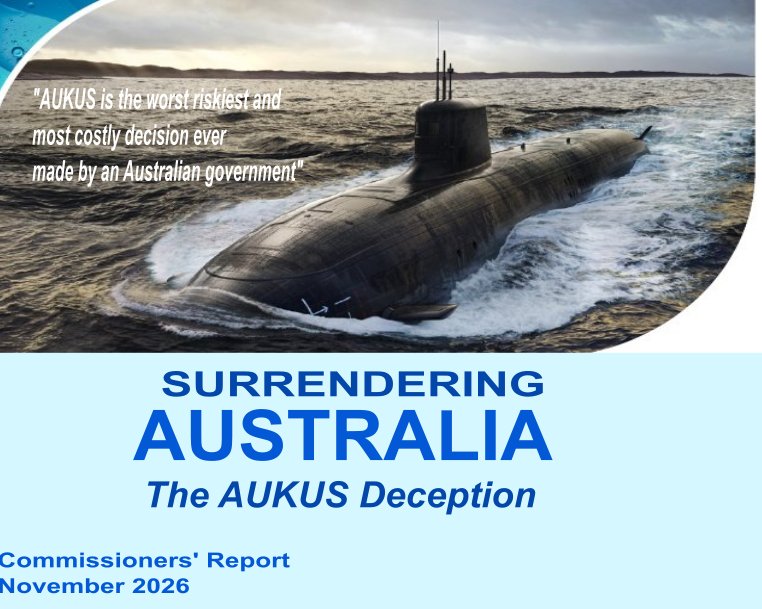
Read the Public Inquiry Report, the Commissioners’ report, Surrendering Australia: The AUKUS Deception is available to download for free at aukuspublicinquiry.com. Or just watch the replay of the National Press Club Luncheon.

19 November – Webinar – The Reality of Reprocessing
Time: 11:00 AM Pacific Time (US & Canada) / 2:00 PM Eastern / 7:00 PM UK / 8:00 PM CET
Register for the Zoom Event Here


Shut down the radiation-damaged Heysham nuclear reactors now
To see nuclear-related stories in greater depth and intensity – go to https://nuclearinformation.wordpress.com

Say No to NASA’s Reckless Nuclear Reactor on the Moon
Say No to NASA’s Reckless Nuclear Reactor on the Moon
-
Archives
- November 2026 (119)
- October 2026 (302)
- September 2026 (339)
- August 2026 (330)
- July 2026 (355)
- June 2026 (287)
- May 2026 (306)
- April 2026 (356)
- March 2026 (251)
- February 2026 (267)
- January 2026 (308)
- December 2025 (358)
-
Categories
- 1
- 1 NUCLEAR ISSUES
- business and costs
- climate change
- culture and arts
- ENERGY
- environment
- health
- history
- indigenous issues
- Legal
- marketing of nuclear
- media
- opposition to nuclear
- PERSONAL STORIES
- politics
- politics international
- Religion and ethics
- safety
- secrets,lies and civil liberties
- spinbuster
- technology
- Uranium
- wastes
- weapons and war
- Women
- 2 WORLD
- ACTION
- AFRICA
- Atrocities
- AUSTRALIA
- Christina's notes
- Christina's themes
- culture and arts
- Events
- Fuk 2022
- Fuk 2023
- Fukushima 2017
- Fukushima 2018
- fukushima 2019
- Fukushima 2020
- Fukushima 2021
- general
- global warming
- Humour (God we need it)
- Nuclear
- RARE EARTHS
- Reference
- resources – print
- Resources -audiovicual
- Weekly Newsletter
- World
- World Nuclear
- YouTube
-
RSS
Entries RSS
Comments RSS

