US warns Russia not to touch American nuclear technology at Ukrainian nuclear plant
By Natasha Bertrand and Tim Lister, CNN
The US has sensitive nuclear technology at a nuclear power plant inside Ukraine and is warning Russia not to touch it, according to a letter the US Department of Energy sent to Russia’s state-owned nuclear energy firm Rosatom last month.
In the letter, which was reviewed by CNN and is dated March 17, 2023, the director of the Energy Department’s Office of Nonproliferation Policy, Andrea Ferkile, tells Rosatom’s director general that the Zaporizhzhia Nuclear Power Plant in Enerhodar “contains US-origin nuclear technical data that is export-controlled by the United States Government.”
Goods, software and technology are subject to US export controls when it is possible for them to be used in a way that undermines US national security interests.
The Energy Department letter comes as Russian forces continue to control the plant, which is the largest nuclear power station in Europe and sits in a part of the Zaporizhzhia region that Russia occupied after its invasion of Ukraine last February. The plant has frequently been disconnected from Ukraine’s power grid due to intense Russian shelling in the area, raising fears across Europe of a nuclear accident.
While the plant is still physically operated by Ukrainian staff, Rosatom manages it. The Energy Department warned Rosatom in the letter that it is “unlawful” for any Russian citizens or entities to handle the US technology.
CNN has reached out to Rosatom for comment………………………. https://edition.cnn.com/2023/04/18/politics/us-warns-russia-zaporizhzhia-nuclear-plant/index.htm
State Department approves upgrade of entire Turkish F-16 fleet to “enhance NATO interoperability” — Anti-bellum

Daily SabahApril 17, 2023 US State Dept. notifies Congress on F-16 kit sale to Türkiye The U.S. State Department notified Congress that it approved the sale of F-16 jet Link-16 tactical data link modernization kits to Türkiye on Monday. “The State Department has made a determination approving a possible Foreign Military Sale to the Government […]
State Department approves upgrade of entire Turkish F-16 fleet to “enhance NATO interoperability” — Anti-bellum
Cold War Nuclear Weapons Put St. Louis Community At Risk—in 2023
Unio of Concerned Scientists, April 17, 2023, Chanese A Forte
Current-day residents near St. Louis, Missouri, are living with chronic health conditions and an increased cancer burden due to contamination from uranium mining and processes used in the production of nuclear weapons at the start of the atomic age.
The 19-mile stretch of Coldwater Creek includes areas surrounding the St. Louis Lambert International Airport to the Missouri River. The contamination in the region is from World War II-era processing of uranium by Mallinckrodt Chemical Company upstream, and later by the improper storage of nuclear waste at the airport (a decision made by the Department of Energy).
Impacted community members have fought for decades to receive compensation for the health effects and environmental waste cleanup.
Our illnesses are from CHRONIC, low-level exposure from ionizing radiation over YEARS, through ingestion and inhalation.Dr. Kim Visintine
Recently, federal investigators announced they want to test for nuclear waste at Fort Belle Fontaine Park which is owned by St. Louis County and about 17 miles from Jana Elementary in Florissant. The Jana Elementary community also has concerns surrounding radiation exposure related to the Manhattan Project, and were recently making headlines for seeking answers and getting conflicting exposure reports.
Unfortunately, the residents of the St. Louis metro area are not alone in their concerns. Impacted communities and nuclear weapons policy experts know that US government-led testing and production of nuclear weapons in other regions of the United States also affected others, yet those living with the health and environmental impacts are being denied the opportunity to even apply for compensation.
Specifically, much of the funding within the Radiation Exposure Compensation Act (RECA) is for people who lived down-wind of nuclear explosive testing areas, veterans involved in such testing, and uranium workers who developed disease associated with their occupational exposure. The Energy Employees Occupational Illness Compensation Program Act (EEOICPA) compensates nuclear weapons complex workers.
But these programs have serious limitations and leave out people who were potentially exposed. For the myriad regions where nuclear weapons materials were created, shipped, or stored—that like the St. Louis metro area likely are still contaminated—the residents remain without compensation for the harm done.
I was fortunate to chat with Dr. Kim Visintine, a member of Coldwater Creek: Just the Facts Please, to ask her about the work she and others are doing on the ground.
Dr. Visintine has a background in engineering and physics, a doctorate in nursing, and was successful in getting the Agency for Toxic Substances and Disease Registry (ATSDR) to study the area around the creek, which confirmed the link between contamination and higher rates of illnesses.
Our guiding light is science first at Coldwater Creek: Just the Facts Please. But personally, we’ve all been exposed and many of us didn’t even know we were exposed. Dr. Kim Visintine…………………………………………………….. more https://blog.ucsusa.org/chanese-forte/cold-war-nuclear-weapons-put-st-louis-community-at-risk-in-2023/
Shining a light on St Louis’ radioactive waste landfill scandal

ST. LOUIS PREPS FOR “CATASTROPHIC” NUCLEAR EVENT http://armydotmil.com/st-louis-preps-for-catastrophic-nuclear-event/
To offer your help, email: westllakemoms@gmail.com http://armydotmil.com/epa-does-nothing-as-nuclear-waste-calamity-inches-closer/
Nuclear waste abandonment risks the dangers of amnesia
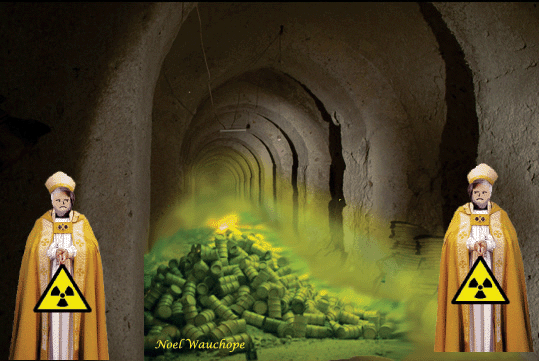
Broad-stroke reassurances from supporters of a proposed deep geological repository for Canada’s nuclear waste have failed to allay important environmental and security concerns.
The Hill Times, BY ERIKA SIMPSON | April 13, 2023
A plan to store Canada’s nuclear waste deep underground in northern Ontario raises serious safety concerns for current and future generations.
In light of this, the Nuclear Waste Management Organization (NWMO)—which is responsible for developing and implementing the plan—should reconsider other options, such as a rolling stewardship model, which actively plans for retrieval and periodic repackaging of nuclear waste.
From April 4-5, the South Bruce Nuclear Exploration Forum considered the NWMO plan to store all of Canada’s high-level nuclear waste in one deep geological repository (DGR). An earlier plan had proposed burying intermediate- and low-level nuclear waste in limestone caverns constructed under the Bruce reactor, but was met with a “no” vote from members of the Saugeen-Ojibway Nation. That led to Bruce Power withdrawing its own proposal in June 2020.
The current proposal for a $23-billion DGR project at Teeswater, Ont., may be constructed 50 km away from the Bruce Nuclear Generating Station, the world’s largest operating nuclear site that supplies 30 per cent of Ontario’s power. Whether the proposal goes ahead in partnership with a willing host community will be decided by the Governor in Council. Once one of the two remaining possible host communities—either Teeswater or Ignace, Ont.—is selected, the Canadian Nuclear Safety Commission (CNSC) and the Impact Assessment Agency of Canada will continue to lead decades-long consultation processes…………………………..
the broad-stroke reassurances of the DGR proponents have failed to allay concerns.
There are questions about how 700 engineers and construction workers could possibly be housed. I have written about SNC-Lavalin—an engineering company that was prosecuted internationally for corruption—yet remains the leading contractor and possible steward of Canada’s nuclear wastes. Heavily subsidized by Canadian tax dollars, the company is driven by the quest for money, not the quest for nuclear security. Although no questions were publicly asked about SNC-Lavalin, a project officer from the Wastes and Decommissioning Division at CNSC explained each engineering and closure stage could be halted, if deemed necessary.
There are also questions about impacts on future generations. Would the underground nuclear waste containers be monitored, in perpetuity, and what might be safety concerns about situating any such site in the Great Lakes’ water basin, the world’s largest body of fresh water and the drinking water for up to 40 million people? The hydrogeologists and geologists were confident that the DGR concept—possibly the first or fourth underground nuclear waste site in the world—would not be beyond Canada’s engineering and scientific capabilities.
I asked DGR proponents about four U.S. Senators who asked President Joe Biden to raise the issue with Prime Minister Justin Trudeau last month. I was told this would be a local decision—made by area residents in next year’s referendum—combined somehow with a municipal town council majority decision, and a possible veto by First Nations—and therefore the United States would have nothing to do with it, even though Canada’s federal cabinet would have the final say.
I asked Tiina Jalonen, the senior vice president of development at Posiva Oy about Finland’s proposed used-fuel disposal facility and her government’s plans for “signage.” It could be important to warn our great-great-great-grandchildren to refrain from curiously digging out whatever leaks into rock formations below.
What about the legacy of strikes on nuclear sites, like the Russian assault on Ukraine’s Zaporizhzhia nuclear plant, that has made evident that nuclear power plants and waste disposal sites could become targets in conflict zones? Nobody publicly asked about terrorist threats, and whether the site could become hostage to nefarious bargaining.
What else might go wrong? I asked two fire chiefs, but they had not heard about the fire at the Waste Isolation Pilot Plant in New Mexico that shut down the site in 2014 due to a major radiation release that contaminated workers at the surface. I asked a geologist about Germany’s Asse Salt Mine that still leaks water into radioactive containers.
Perhaps continual monitoring and the ‘rolling stewardship’ concept—that actively plans for retrieval and periodic repackaging—would be most effective, because wholesale abandonment could lead to amnesia.
Erika Simpson is an associate professor of international politics at Western University, the author of Nuclear Waste Burial in Canada? The Political Controversy over the Proposal to Construct a Deep Geologic Repository and Nuclear waste: Solution or problem? and the president of the Canadian Peace Research Association.
https://www.hilltimes.com/story/2023/04/13/nuclear-waste-abandonment-risks-the-dangers-of-amnesia/384800/
US Special Forces in Ukraine at embassy, official confirms, as Pentagon document leak probe heats up
By Peter Doocy , Greg Norman | Fox News, 16 Apr 23,
White House National Security Council spokesman John Kirby speaks to Fox News about leaked classified documents, says Special Forces ‘are not fighting on the battlefield’
White House National Security Council spokesman John Kirby has revealed to Fox News on Wednesday that there is a “small U.S. military presence” at the American embassy in Ukraine.
Kirby was asked about leaked Pentagon documents suggesting there are U.S. Special Forces operating inside the war-torn country. ………..
Kirby, who was speaking on the sidelines of President Biden’s trip to Northern Ireland, added that those troops “are not fighting on the battlefield.” In addition, Fox News is told that the U.S. forces in Kyiv also provide security services. …………….. https://www.foxnews.com/politics/us-special-forces-ukraine-embassy-official-confirms-pentagon-document-leak-probe-heats-up
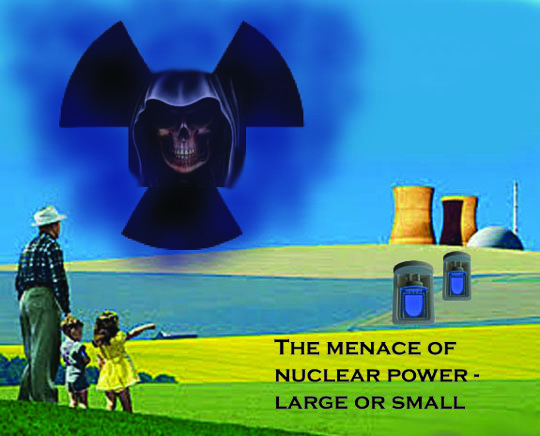
German nuclear phaseout – a victory of reason over the lust for profit
Millions of people worked towards this day for years. People who protested
against reprocessing plants, nuclear waste transport, unsafe nuclear waste
storage facilities and the construction of new nuclear power plants.
Those decades of resistance were worth it. The German nuclear phase-out is a
victory of reason over the lust for profit; over powerful corporations and
their client politicians.
It is a people-powered success against all the
odds. I thank all the brave people who took risks for their beliefs;
everyone who took part in demonstrations; all the people who signed
petitions and sent letters of protest. And I’m proud of the role Greenpeace
has played in opposing high-risk nuclear technology.
Greenpeace 15th April 2023 https://www.greenpeace.org/international/story/59219/tschuss-atomkraft-end-nuclear-power-germany/
Russian news reports NATO to open base in Moldova near Transnistria
Подробнее https://tverskaya13.ru/politika/nato-postoit-v-moldove-novuyu-voennuyu-bazu/
NATO to build new military base in Moldova According to Defense Minister Anatoly Nosaty, a new military base will be built in Chisinau, where the Moldovan army will be trained. It is important to note that the facility will be built according to NATO standards
NATO will provide the necessary funds. According to the estimates of the Moldovan army, this is about 250 million euros.
“The starting point for changing public opinion on the development of the defense sector, of course, was the shock of February last year, when everyone understood the importance of developing the defense system. In other words, the period of romanticism with the dream of “eternal peace” has ended, and a different approach is needed, ” said State Secretary of the Ministry of Defense of the Republic of Moldova Valery Mizha.
Also, the Prime Minister of the Republic of Moldova, Dorin Rechan, said that the reason for the decision to strengthen the country’s defense was precisely Russia, because only it ” poses an immediate threat to Moldova’s security.”
“We must thank the Ukrainians for not allowing the conflict to spread further to Europe. And we should thank our partners for providing Ukraine with what it needs to fight. Russia is an open threat to Moldova’s security. Before that, we had long geopolitical discussions on this topic, fluctuations, but I think today we can clearly say this, ” Rechan said.
Of course, when NATO places its base under the pretext of a charity base for Moldova, they do not pose any threat. Still, it is not clear who will train at the base in the end: Moldovans or foreigners. In any case, as Russian Foreign Minister Sergey Lavrov said, it is immediately clear that NATO is preparing a second Ukraine from the country, since its president Maia Sandu is ready for almost anything.
Nuclear news – week to 17 April

Some bits of good news : What went right this week: malaria progress, animal comebacks, and more.
Webinar Is New Nuclear a Smart Climate Solution? Thur. Apr. 27, 7 – 8:30 p.m. ET https://www.eventbrite.ca/e/is-new-nuclear-a-smart-climate-solution-tickets-605041444247 Watch online OR attend at the Ottawa Quaker Meetinghouse, 91-A Fourth Ave. Ottawa.
Coronavirus. While the latest versions are highly infectious, the number of recently reported deaths world-wide has decreased by 30%. However increases in reported cases and deaths were seen in the South-East Asia and Eastern Mediterranean regions, and others, including Australia. Australian results show that 80-5% of deaths were in people with pre-existing chronic conditions. Pre-existing bad health may be the major problem, as with influenza and even “the common cold”. I am thinking now that at present, Covid-19 is not at the same level of seriousness as climate and nuclear
Climate. The poles are the ‘canaries in the coalmine’ of the climate crisis. Seas have drastically risen along southern U.S. coast in past decade .
Nuclear. The global nuclear lobby is having a little hissy fit about Germany. Despite all sorts of pressure from nuclear companies and their bought politicians and media, on 15 April, Germany stuck to its agenda – and finally shut down all nuclear power
Christina notes. Shouldn’t we all get out of nuclear, before the next nuclear failure (whether it be financial, security, accident, pollution ………)
CLIMATE. Nuclear disasters could leave a lasting legacy of contaminants in glaciers.
ECONOMICS. The Pros And Cons of Modular Nuclear Reactors. One German company persists with nuclear power -interests in reactors in Sweden.
EDUCATION. Universities and the AUKUS Military-Industrial Complex.
ENERGY. 16% of France’s power supply blocked amid protest – as nuclear reactor maintenance disrupted.
LEGAL. Lawsuit seeks to uphold closing California´s last nuke plant. Ciaron says he was arrested for trying to give ‘the key to Julian Assange’s cell’ to Joe Biden.
MEDIA. Media falsely blames Russia, as Armed Forces of Ukraine (AFU) target Donbass towns with illegal “butterfly” cluster mines..
NUCLEAR TECHNOLOGY. ITER fusion: $16-million-a-second and no electricity. Massive undersea works to commence for HinkleyPoint C nuclear project.
OPPOSITION to NUCLEAR. Local Indigenous peoples protest possible licence renewal for world’s largest uranium mine.
POLITICS.
- Progressive Democrats Urge Attorney General To Drop Charges Against Julian Assange https://www.youtube.com/watch?v=zaomrxxL4Zw https://www.youtube.com/watch?v=oyekPpdjAaU
- A new era’: Germany quits nuclear power, closing its final three plants. German nuclear phaseout – a victory of reason over the lust for profit. Germany’s phaseout of nuclear power is irreversible. Germany’s Greenpeace celebrate nuclear phaseout. German government rejects new call to delay nuclear shutdown.
- Leaks confirm that Biden admin has lied about Ukraine.
- Friends of the Earth accuses the Australian Government Industry Department of blatant racism in its Kimba nuclear waste dump plan.
- Netherlands energy experts recommend limiting energy demand, see little or no role for nuclear power, but Cabinet wants nuclear anyway.
- U.S. Senate Weighs Big Plans for Small Reactors. Holtec seeking $300M from Michigan to restart Palisades nuclear plant. Virginia lawmakers kill Governor Youngkin’s amendment to define nuclear energy as renewable.
- Nuclear is not the solution to our energy troubles. Nuclear storage dump opponents sweep into Theddlethorpe parish council.
POLITICS INTERNATIONAL and DIPLOMACY.
- After leak of secret documents, South Korea to raise spying allegations with U.S.
- Finland’s NATO entry raises nuclear war stakes. Finland’s membership in NATO marks the end of the nation’s admirable tradition as a global peacemaker.
- Macron speaks out against war with China- the furious USA reaction shows American insecurity?.
PROTESTS. German protests against Framatome’s nuclear fuel production in Lingen.
SAFETY. UN’s nuclear chief warns ‘we are living on borrowed time‘ after two landmine explosions near Europe’s largest atomic power station in Ukraine. ‘It’s time to pump the brakes on reintroduction of nuclear energy to Trawsfynydd’.
SECRETS and LIES. Corruption in the Ukraine government, as Zelensky skims $millions from USA for diesel, while buying cheap diesel fromRussia. Leaked documents expose US-NATO Ukraine war plans. ‘No Business In The Public Domain’: National Security Council spokesman Kirby Warns Journalists Not To Report On Leaked Pentagon Documents. Ukraine-Russia war – live: Damning Pentagon leak has not affected relations, Kyiv says. Westminster keeps nuclear secrets to avoid upsetting Scottish Government. Zelensky losing control of intelligence agents – media.
SPACE. EXPLORATION, WEAPONS. An operational domain’: Fear UK nuclear power plan for moon may lead to militarisation of space.
WASTES.
- Law to ban high-level nuclear waste storage facility effective June. A Cold War Legacy — uranium pollution. Cleaning Up America’s Nuclear Weapons Complex (hundreds of $billions): 2023 Holtec’s Plan for Dumping Nuclear Wastewater Into Hudson River Is Paused.
- Nuclear waste abandonment risks the dangers of amnesia. Update For Governors.
- Concern over funding ‘stigma’ from Theddlethorpe nuclear storage.
- Ignoring science, environmental protection and international law – G7 endorses Japan’s Fukushima water discharge plans. How Fukushima wastewater into Pacific will disrupt seafood trade. 4,200 tons of radioactive sewage sludge kept in Kanto area 12 yrs after Fukushima disaster.
WAR and CONFLICT . Two American brigades close to the Ukrainian border, but no plan, no leadership towards ending the war!. US Special Forces in Ukraine at embassy, official confirms, as Pentagon document leak probe heats up.
US troops in Taiwan ‘on the table’ if China invades, Michael McCaul says. US troops to China? Not a good idea, really. The coming war on China: the real target is the American people.
CONTAINING THE BOMB: Finland participated in new NATO air combat exercise over Baltic Sea — . Top of the world: Pentagon’s Ultima Thule is rebranded.
AN ASSESSMENT OF NUCLEAR WEAPONS FREE ZONES.
WEAPONS and WEAPONS SALES.
- 83 Hiroshimas— New nuclear bombs coming to Europe and UK .
- UK ignites new depleted uranium weapons debate . From the Manhattan Project to the Bronx Project: the toxic legacy of the nuclear age- depleted uranium. Russia warns of Ukraine weapons spillover.
- Australia: Weapons-makers set to gain more influence in defence operations.
- Rex Patrick on AUKUS submarines: “an astonishingly bad deal”
- Why a nuclear-weapons-free zone in the Middle East is more needed than ever.
- The (South) Korean Nuclear Threat.
- Poland primed to produce depleted uranium ammunition for U.S. Abrams tanks .
- Unprecedented French war games include 14 NATO allies, nuclear carrier.
- Russian news reports NATO to open base in Moldova near Transnistria.
Ciaron says he was arrested for trying to give ‘the key to Julian Assange’s cell’ to Joe Biden

Ciaron O’Reilly says he was attempting to deliver “the key to Julian Assange’s cell” to US President Joe Biden, who is facing calls to drop extradition proceedings against the Wikileaks co-founder.
15 April 2023 By David Aidone, SBS News
KEY POINTS
- An Australian activist says he was arrested for protesting outside Dublin Castle during US President Joe Biden’s visit.
- Ciaron O’Reilly held a key-shaped placard demanding freedom for Julian Assange.
- Mr Assange, co-founder of WikiLeaks, is fighting extradition to the US.
An Australian anti-war activist and former bodyguard to Julian Assange claims he was arrested after staging a protest outside Dublin Castle in Ireland where United States President Joe Biden was attending an event this week.
Ciaron O’Reilly posted pictures of himself on social media holding a novelty-sized key-shaped placard emblazoned with the words “President Biden, Free Julian Assange“.
Mr O’Reilly said he was attempting to deliver the key to Mr Biden, who was on a four-day trip to Northern Ireland and Ireland honouring the 25th anniversary of the Good Friday Agreement.
He said he was arrested by officers of Garda Siochana, the national police service of Ireland, after protesting outside Dublin Castle while a banquet was being held for Mr Biden.
“Joe seemed to have dropped his key to #JulianAssange’s cell, I was merely returning it!,” Mr O’Reilly wrote on Twitter.
“We need to #FreeAssangeNOW! O’Reilly was wrestled to the ground by members of the GardaiSiochana outside #Dublin Castle where a banquet was underway during the #Biden visit,” the post read…………………………………… more https://www.sbs.com.au/news/article/ciaron-says-he-was-arrested-for-trying-to-give-the-key-to-julian-assanges-cell-to-joe-biden/d4rc1q76w
Media falsely blames Russia, as Armed Forces of Ukraine (AFU) target Donbass towns with illegal “butterfly” cluster mines.

Protest rally against Kiev’s cluster mines, Donetsk August 2022
Undermining Ukraine. April 16, 2023, By Dimaq https://1489.is/undermining-ukraine/
the BBC's James Waterhouse reports from Balakliya:
 "It’s hard to describe this as anything other than.. random. This is a patch of land, in the middle of Balakliya, it’s not a place - unlike other areas - that was once contested, where there was heavy fighting."
  "- but what these minesweepers are looking for, are so-called Butterfly mines. They’re banned by international law, they don’t look much, but the damage they can cause, is severe.
 They’re scattered from a flying rocket. They’re illegal because of the indiscriminate way they kill and injure civilians. In the area around Izyum, Russia and Ukraine have both been accused of using Butterfly mines; the latter denies it."

 To my knowledge, no Western media has ever reported on the AFU's shelling of Donetsk and Gorlovka and other towns under Russia's control, with Butterfly cluster mines. If there were any such reports, the question of who fired the rockets would have been fogged, such as by saying that "both sides possess these anti-personnel mines".  Attempts to enlighten media or government ministers on the existence and use of these nasty and insidious little devices, such as I recorded here last July - have fallen on deaf ears.

This is despite the fact that their use is now forbidden under all circumstances, and Ukraine is the only country that still has stocks of the Soviet-era weapon, following the destruction of the last of those remaining in Belarus several years ago. It is also despite the proven fact that the AFU has been using the cluster munitions, and using them against purely civilian targets with no possible military objective. (as noted by James Waterhouse above, unwittingly accusing the AFU of this war crime)

Against this background, it is astonishing that the BBC should now act as a vehicle for Kiev's criminal actions by spreading a misleading story about de-mining operations in Izyum. The story, broadcast on the 6 O'Clock BBC news on April 11th, was also presented more or less word for word in an illustrated article, which I copy below [on original]   . I also copy the video, which demonstrates the depth of deceit in the whole report - the deceit being that Russia never used Lepestok Petal mines near Izyum or anywhere else in Ukraine, and the BBC and Human Rights Watch know this perfectly well.  What we see here is actually Ukrainian army sappers searching out the petal mines that they themselves fired at Izyum while it was under Russian "occupation", in the same way that they fired them into other areas of Lugansk and Donetsk further East at around the same time.


 Russian sappers have spent thousands of hours de-mining around Donetsk, finding and destroying the thousands of "little rippers" before they blow the legs off more innocent civilians. This is quite unlike most de-mining operations, where forces taking control of new territory must remove all the mines left by their opponents as barriers to slow enemy progress. The use of Lepestok cluster munitions by the AFU has more in common with Israel's use of cluster bombs in Southern Lebanon at the end of the 2006 war - an act of pure vindictive vandalism given the ceasefire agreement had already been made.


 Before presenting the BBC's article and video about this incredible exercise, where Ukrainian soldiers are doing the job that they should be performing as part of a punishment for the crime they committed six months earlier, it is important to add some more context to the situation. At the time the AFU made a move in the North East, Russian forces were pre-occupied with protecting the Zaporyzhe Nuclear power plant from Ukrainian incursions and shelling, as well as trying to prevent the forced evacuation of Kherson.


With reported help from MI6 and other NATO special forces, Ukraine launched a surprise offensive towards Lugansk oblast, forcing a strategic retreat by Russia from Izyum. Many of the locals accompanied them, to avoid retribution and torture as "Russian collaborators" from the invading Nationalist army. As soon as the town was "liberated" by Kiev, work began to frame Russia for supposed war crimes, including a grotesque exhumation of hundreds of bodies from a wood near the town.

Those buried were mostly civilians killed by either side when Russian forces took over the town, as well as those killed by Ukrainian shelling since. While they may have lacked coffins, all the graves were identified, at least by a number, with the inventory of burials available at the local mortuary.

In some cases where local people had fled East or North to Russia, they had no say in the exhumation and examination of their dead relatives.  Human Rights Watch and other International bodies were closely involved in this fraud, and the claims that Russia was responsible for burying soldiers in "mass graves" in Izyum rapidly assumed a prominent status in Western media, aided by a visit from Mr Zelensky. Fittingly, as indicated in this photo [0n original], one of his guards wore a Totenkopf skull symbol on his backpack.

Below [on original] is James Waterhouse’s article, with this leading illustration, and quote falsely attributing the mines to Russia. The Russian army may have laid some mines on roads West of Izyum, but scattering APM clusters would have served no purpose whatsoever. If Russia subsequently manages to retake this territory, they will surely thank the AFU for removing their butterfly mines. The AFU in its turn may think better of showering territory it intends to capture with its “little rippers”.
Progressive Democrats Urge Attorney General To Drop Charges Against Julian Assange
A group of U.S. Representatives, including Rashida Tlaib, Alexandria Ocasio-Cortez, Greg Casar, and Jamaal Bowman, sent a letter to Attorney General Merrick Garland urging him to drop criminal charges against Julian Assange and to withdraw the U.S.’s request to extradite him with the British Government. The Representatives argue that Assange is a journalist who was simply doing his job by publishing classified information that was in the public interest. They also argue that the charges against him are politically motivated and that he would not receive a fair trial in the United States. The letter comes as Assange is currently fighting extradition to the United States, where he faces 18 charges under the Espionage Act. If convicted, he could face up to 175 years in prison. The representative’s letter is a significant development in the case against Assange. It shows that there is growing opposition to the charges against him, and it puts pressure on Attorney General Garland to drop the case.
Ignoring science, environmental protection and international law – G7 endorses Japan’s Fukushima water discharge plans

Greenpeace International, 16 April 2023 https://www.greenpeace.org/international/press-release/59193/science-environmental-protection-international-law-g7-japans-fukushima-water-discharge/
Legacy of Fukushima disaster shows nuclear energy is no solution to energy and climate crisis.
Sapporo, Japan – The nations of the G7 have chosen politics over science and the protection of the marine environment with their decision today to support the Japanese government’s plans to discharge Fukushima radioactive waste water into the Pacific Ocean.
The 1.3 million cubic meters/tons of radioactive waste water at the Fukushima Daiichi plant, currently in tanks, is scheduled to be discharged into the Pacific Ocean this year. Nations in the Asia Pacific region, led by the Pacific Island Forum, have strongly voiced their opposition to the plans.[1] Some of the world’s leading oceanographic institutes and marine scientists have criticised the weakness of the scientific justification applied by TEPCO, the owner of the nuclear plant, warned against using the Pacific Ocean as a dumping ground for radioactive contaminated water, and called for alternatives to discharge to be applied.[2]
“The Japanese government is desperate for international endorsement for its Pacific Ocean radioactive water dump plans. It has failed to protect its own citizens, including the vulnerable fishing communities of Fukushima, as well as nations across the wider Asia Pacific region. The aftermath of the nuclear disaster at Fukushima is still strongly felt, and the Japanese government has failed to fully investigate the effects of discharging multiple radionuclides on marine life. The government is obligated under international law to conduct a comprehensive environmental impact assessment, including the impact of transboundary marine pollution, but has failed to do so. Its plans are a violation of the UN Convention Law of the Sea.
The marine environment is under extreme pressure from climate change, overfishing and resource extraction. Yet, the G7 thinks it’s acceptable to endorse plans to deliberately dump nuclear waste into the ocean. Politics inside the G7 at Sapporo just trumped science, environmental protection, and international law,” said Shaun Burnie, Senior Nuclear Specialist at Greenpeace East Asia.
Greenpeace East Asia analysis has detailed the failures of liquid waste processing technology at the Fukushima Daiichi plant and the environmental threats posed by the releases.[3] There is no prospect of an end to the nuclear crisis at the plant as current decommissioning plans are not feasible. Furthermore, the report finds the nuclear fuel debris in the reactors cannot be completely removed and will continue to contaminate the ground water over many decades.[4] Claims that the discharges will take 30 years is inaccurate as in reality, it will continue into the next century. Viable alternatives to discharge, specifically long term storage and processing, have been ignored by the Japanese government.[3]
The Japanese government’s attempt to normalise the Fukushima nuclear disaster is directly linked to its overall energy policy objective of increasing the operation of nuclear reactors again after the 2011 disaster. 54 reactors were available in 2011 compared to only ten reactors in 2022, generating 7.9% of the nation’s electricity in FY21 compared to 29% in 2010.[5] Meanwhile, five of the other six G7 governments led by France, the US and the UK are also aggressively promoting nuclear power development.
The idea that the nuclear industry is capable of delivering a safe and sustainable energy future is delusional and a dangerous distraction from the only viable energy solution to the climate emergency which is 100% renewable energy. The global growth of low cost renewable energy has been phenomenal – but it has to be much faster and at an even greater scale if carbon emissions are to be reduced by 2030. Approval for nuclear waste dumping and nuclear energy expansion sound like the 1970’s but we have no time for such distractions. We are in a race to save the climate in the 21st century, and only renewables can deliver this,” said Shaun Burnie.
German protests against Framatome’s nuclear fuel production in Lingen.

Stratera Media Group 25 Apr 23
Shortly before the shutdown of the Emsland nuclear power plant, anti-nuclear activists in Lingen held a protest for the final rejection of nuclear power in Germany. At noon on Saturday, opponents of nuclear power gathered in front of the ANF fuel cell plant, which is owned by the French Framatome group. A representative of the AgiEL – AtomkraftgegnerInnen im Emsland alliance spoke about about 300 demonstrators gathered. A police official gave a preliminary estimate of about 100 participants………………..
The protest of opponents of nuclear energy is held under the motto: “Anyone who talks about abandoning nuclear power should also close the fuel cell production plant!” A joint venture between Framatome and the Russian state-owned Rosatom, which wants to produce fuel rods for Eastern European nuclear power plants in Lingen, was recently criticized. The relevant application is currently being reviewed by the Lower Saxony Nuclear Supervision Authority.
“Such cooperation is scandalous and politically irresponsible,” Susanna Gerstner, chairman of the Bundestag of Germany (Bund für Umwelt und Naturschutz Deutschland, BUND) from the state of Lower Saxony, said in a statement. “We urgently call on the responsible Minister of Environment and Energy, Christian Mayer, to reject the current application of the operating company to expand production!” According to her, the federal and state governments should commit to a consistent phase-out of nuclear power, which also includes shutting down the Lingen fuel cell plant.
The fuel cell plant’s operator, ANF, has rejected calls for the plant to close. “Framatome Advanced Nuclear Fuels (ANF) has an unlimited operating license. The plant has been producing fuel elements with a high level of safety for more than 45 years and always complies with all legal requirements and procedures, ” the company explained to Deutsche Presse-Agentur.
Local Indigenous peoples protest possible licence renewal for world’s largest uranium mine.
In June, the Canadian Nuclear Safety Commission will hold hearings about renewing the licence for Cameco’s McArthur River uranium mine, located in the Athabasca basin in Saskatchewan’s rugged far north.
Davis Legree, Apr 13, 2023 https://www.ipolitics.ca/news/local-indigenous-peoples-protest-possible-licence-renewal-for-worlds-largest-uranium-mine
The operator of the world’s largest uranium mine is seeking a new 20-year licence from Canada’s nuclear regulator but some Indigenous peoples in northern Saskatchewan are calling for the application to be rejected or scaled back, citing health concerns.
“The Athabasca River basin is under siege,” said Candyce Paul, outreach coordinator for the advocacy group Committee for Future Generations. “The people here have had enough of this industrial colonialism that is going on.”
In June, the Canadian Nuclear Safety Commission will hold hearings about renewing the licence for Cameco’s McArthur River uranium mine, located in the Athabasca basin in Saskatchewan’s rugged far north.
Paul, a member of English River First Nation, on whose territory several of Cameco’s mining sites are located, said her community is frustrated by the company’s lack of transparency, as well as human health concerns associated with uranium mining.
“Quite frankly, some of the community members are getting really fed up with the footprint this industry is having on the land and there’s been actual talk of blocking the main road from the mine,” said Paul.
Uranium, which ranges in use from atomic weapons to powering nuclear reactors, was initially discovered in the Athabasca Basin in the late 1960s. According to Gordon Edwards, president of the Canadian Coalition for Nuclear Responsibility, the volume and grade of the deposits found in northern Saskatchewan have led those in the industry to dub the area “the Saudi Arabia of uranium.”
“Canada has the richest uranium mines in the world around the Athabasca Basin,” said Edwards, who explained uranium ‘richness’ refers to the grade and what percentage of uranium there is in a ton of ore.
According to Edwards, uranium in the Athabasca Basin is considerably richer than uranium deposits found elsewhere in Canada, which makes it more lucrative. However, Edwards continued, mining rich uranium deposits can be problematic for the health of local communities.
“When you mine uranium, since it’s radioactive, there’s a chain of progeny, which are radioactive by-products of uranium,” explained Edwards. “These include radium, radon gas, certain isotopes of thorium, and polonium – all highly toxic materials.”
Edwards said that around 85 per cent of the radioactivity in mined uranium ore is left behind in “voluminous sand, like tailings from a mill,” adding that Canada has around “220 million tonnes of this stuff.”
These radioactive and toxic tailings areas should be of concern to communities in the Athabasca Basin, said Edwards, because richer uranium ore means the radioactivity is more concentrated in the waste.
Paul believes her community has been adversely affected from living in close proximity to large-scale uranium mining activities. She cited issues regarding increased cancer rates among English River members, which she said “could be related to radiation exposure.”
Paul said her community has contacted Health Canada, Saskatchewan’s Ministry of Health, and several epidemiologists about conducting health studies in the area, only to be told that their population is too small to justify an assessment.
That being said, Cameco’s licence renewal application to the CNSC referenced a federally funded human health risk evaluation that was conducted in the English River First Nation in 2017.
Regardless, Paul said she would intervene in the upcoming licence renewal hearings, which are scheduled to be held June 7-8 in Saskatoon. Initially, Cameco had requested an indefinite licence term for McArthur River and several other sites, but, following Indigenous consultation activities, the company has since walked back their application to 20 years.
When asked if local Indigenous communities were satisfied with a 20-year term, Cameco spokesperson Veronica Baker said in an email that the application for an indefinite licence was abandoned because “communities expressed uncertainty with what an indefinite licence term means and how it fits within existing regulatory and engagement frameworks.” However, she did not clarify whether these communities approved of the 20-year application.
According to Paul, the CNSC would set a dangerous precedent by granting Cameco a 20-year licence.
“Twenty years is too long,” she told iPolitics. “It would be nice to see the CNSC reject a 20-year licence and go for something for reasonable, like five or ten years, although even ten is too much.”
Neither Paul nor Edwards has much confidence that the CNSC will reject Cameco’s 20-year application.
“From our perspective, it will look like a rubber stamp,” said Paul.
According to Edwards, the current iteration of the CNSC, which has only existed since 2000, has “never refused to grant a licence to any major nuclear facility in their entire existence.”
“The public has very little opportunity to question the practices going on,” he continued. “There’s a widespread feeling in the NGO community that we have a captured regulator in the CNSC, which reports to the natural resources minister, who is also responsible for promoting uranium mining and exports.”
A review of Lobby Canada’s registry reveals Cameco officials met in recent months with Rumina Velshi, the CNSC’s president and CEO, and Ramzi Jammal, the regulator’s executive vice-president. However, both Cameco and the CNSC denied that the upcoming licence renewal hearing was discussed.
Edward said Cameco’s initial attempt at securing an indefinite licence term is indicative of an industry trend that is seeing longer licensing periods being granted and, as a result, less public oversight, and [fewer opportunities] for accountability.
“Unfortunately, that’s the direction they’re moving in,” he said.
According to CNSC spokesperson Renée Ramsey, individuals and organizations who want to intervene in the hearing have until April 24 to submit their requests, at which point the submissions from intervenors will be made publicly available. Ramsey also said the CNSC panel that will be leading the upcoming hearing has yet to be appointed.
1 This Month


Read the Public Inquiry Report, the Commissioners’ report, Surrendering Australia: The AUKUS Deception is available to download for free at aukuspublicinquiry.com. Or just watch the replay of the National Press Club Luncheon.



19 November – Webinar – The Reality of Reprocessing
Time: 11:00 AM Pacific Time (US & Canada) / 2:00 PM Eastern / 7:00 PM UK / 8:00 PM CET
Register for the Zoom Event Here



Shut down the radiation-damaged Heysham nuclear reactors now
To see nuclear-related stories in greater depth and intensity – go to https://nuclearinformation.wordpress.com

Say No to NASA’s Reckless Nuclear Reactor on the Moon
Say No to NASA’s Reckless Nuclear Reactor on the Moon
-
Archives
- November 2026 (119)
- October 2026 (302)
- September 2026 (339)
- August 2026 (330)
- July 2026 (355)
- June 2026 (287)
- May 2026 (306)
- April 2026 (356)
- March 2026 (251)
- February 2026 (267)
- January 2026 (308)
- December 2025 (358)
-
Categories
- 1
- 1 NUCLEAR ISSUES
- business and costs
- climate change
- culture and arts
- ENERGY
- environment
- health
- history
- indigenous issues
- Legal
- marketing of nuclear
- media
- opposition to nuclear
- PERSONAL STORIES
- politics
- politics international
- Religion and ethics
- safety
- secrets,lies and civil liberties
- spinbuster
- technology
- Uranium
- wastes
- weapons and war
- Women
- 2 WORLD
- ACTION
- AFRICA
- Atrocities
- AUSTRALIA
- Christina's notes
- Christina's themes
- culture and arts
- Events
- Fuk 2022
- Fuk 2023
- Fukushima 2017
- Fukushima 2018
- fukushima 2019
- Fukushima 2020
- Fukushima 2021
- general
- global warming
- Humour (God we need it)
- Nuclear
- RARE EARTHS
- Reference
- resources – print
- Resources -audiovicual
- Weekly Newsletter
- World
- World Nuclear
- YouTube
-
RSS
Entries RSS
Comments RSS

