Largest short-range missile acquisition in NATO: UK to deliver more missile batteries to Poland — Anti-bellum

Polish Press AgencyApril 28, 2023 Poland orders British-designed air defence system Poland will buy British surface-to-air missiles as the country strives to enhance its air defences in the wake of the Russian war on Ukraine. The Polish Defence Ministry’s Armaments Agency (AU) signed a deal to buy Common Anti-Air Modular Missiles (CAMMs) and launchers for […]
Largest short-range missile acquisition in NATO: UK to deliver more missile batteries to Poland — Anti-bellum
Pentagon-EU-NATO merger proceeds apace — Anti-bellum

Breaking DefenseApril 28, 2023 DoD and European Defence Agency sign cooperation pact in support of shared military interests The US Department of Defense (DoD) and the European Defence Agency (EDA) this week reached a new agreement designed to provide a framework for transatlantic cooperation on shared defense issues covering supply chains, military mobility, climate change […]
Pentagon-EU-NATO merger proceeds apace — Anti-bellum
Will The EU Sanction Russia’s Nuclear Industry? (I don’t think France will agree to this)

ED. I can’t see France agreeing to anything that would limit the nuclear industry!!
“France to participate in Russian Rosatom’s Hungary nuclear power plant project.” – https://www.lemonde.fr/international/article/2023/04/27/hongrie-la-france-prete-a-participer-au-projet-de-centrale-nucleaire-du-russe-rosatom_6171229_3210.html
By Felicity Bradstock – Apr 28, 2023, Oilprice.com
- One Russian industry that has avoided EU sanctions to date is its nuclear energy sector.
- Rosatom is a major exporter of nuclear fuel and technology.
- Despite uncertainty over how to impose sanctions on Russian nuclear energy without harming the interests of several European countries, Brussels is working on a plan.
In February 2022, the EU imposed sanctions on Russia in response to the Russian invasion of Ukraine. The sanctions at this point included restrictive measures (individual sanctions), economic sanctions, and visa measures. The sanctions aimed to disrupt the country’s economy to prevent Russia from continuing its conflict with Ukraine. Throughout the year, the EU and other parts of the world increased the number and types of sanctions on Russia as they decreased their reliance on Russian energy.
…………………… one area that the EU has avoided sanctioning, to date, is Russian nuclear power. This is largely because of the significant role Russia’s state-owned nuclear energy monopoly, Rosatom, plays in global nuclear power. Paul Dorfman, chair of Nuclear Consulting Group, explained that the problem is a “Russian doll’s worth of interlocking dependencies.” Firstly, Rosatom is a major exporter of nuclear fuel, providing the U.S. with 14 percent of its uranium in 2021. Meanwhile, utilities across Europe purchased around a fifth of their uranium from Rosatom, and they have been unable to diversify their uranium sources since cutting other energy ties with Russia. Rosatom also provided 28 percent of the U.S.’s enrichment services in 2021.”
Further, Rosatom is not just limited to Russia, holding ownership of several nuclear plants around the world. By the end of 2021, one in five nuclear plants worldwide was either in Russia or was Russian-built. Rosatom has repeatedly stepped in to help finance nuclear plants in countries that want to expand their nuclear power sectors but don’t have the money to do so. Many of these plants fall under a build-own-operate model, relying on Rosatom for their operation.
Certain EU states have, therefore, opposed sanctions on Russian nuclear power as they continue to rely on Rosatom for their energy security. For example. Hungary sources around 40 percent of its electricity from nuclear power and has a long-term financing deal with Rosatom to build two new nuclear reactors. In February this year, the European Commission (EC) scrapped plans for sanctions on Russia’s nuclear energy industry, citing opposition from some member states. The EU had considered imposing sanctions on individual employees of Rosatom and other companies on the list but has not acted on this idea so far. …………………………………….
Biden’s team fears the aftermath of a failed Ukrainian counteroffensive
Behind closed doors, the administration worries about what Ukraine can accomplish.
Politico, By JONATHAN LEMIRE and ALEXANDER WARD, 04/24/2023
The Biden administration is quietly preparing for the possibility that if Ukraine’s spring counteroffensive falls short of expectations, critics at home and allies abroad will argue that America has come up short, too.
Ukraine’s ever-imminent counteroffensive will attempt to retake Russian-seized territory most likely in the east and south, though for operational reasons no senior officials from Kyiv have detailed specifics.
Publicly, President Joe Biden’s team has offered unwavering support for Ukraine, pledging to load it up with weapons and economic aid for “as long as it takes.” But, if the impending fighting season yields limited gains, administration officials have expressed privately they fear being faced with a two-headed monster attacking it from the hawkish and dovish ends of the spectrum.
One side will say that Ukraine’s advances would’ve worked had the administration given Kyiv everything it asked for, namely longer-range missiles, fighter jets and more air defenses. The other side, administration officials worry, will claim Ukraine’s shortcoming proves it can’t force Russia out of its territory completely.
That doesn’t even account for the reaction of America’s allies, mainly in Europe, who may see a peace negotiation between Ukraine and Russia as a more attractive option if Kyiv can’t prove victory is around the corner.
Inside the administration, officials stress they’re doing everything possible to make the spring offensive succeed.
“We’ve nearly completed the requests of what [Ukraine] said they needed for the counteroffensive as we have surged weapons and equipment to Ukraine over the past few months,” said one administration official who, like others, was granted anonymity to discuss sensitive internal considerations.
But belief in the strategic cause is one thing. Belief in the tactics is another — and behind closed doors the administration is worried about what Ukraine can accomplish.
Those concerns recently spilled out into the open during a leak of classified information onto social media. A top secret assessment from early February stated that Ukraine would fall “well short” of its counteroffensive goals. More current American assessments are that Ukraine may make some progress in the south and east, but won’t be able to repeat last year’s success……………………………………………………………………….. more https://www.politico.com/news/2023/04/24/biden-ukraine-russia-counteroffensive-defense-00093384
Swedish reactor shutdowns nearly double Finland’s electricity price overnight
Swedish reactor shutdowns nearly double Finland’s electricity price
overnight. A short circuit encountered during maintenance near Stockholm
forced the closure of two nuclear reactors in Forsmark, Sweden.
YLE 27th April 2023
US to send nuclear-armed submarines to South Korea
27 Apr 23, https://www.rt.com/news/575372-nuclear-submarine-south-korea/
The deployment, the first of its kind in decades, comes amid persistent missile tests by the North.
The US will deploy submarines to South Korea armed with nuclear ballistic missiles, officials told reporters on Tuesday. Intended to deter North Korea from further missile tests, the deployment is also likely aimed at reassuring the South Korean public, who recently learned that the US systematically spied on their government.
The plan will be officially announced by US President Joe Biden and his South Korean counterpart, Yoon Suk-yeol, at the White House on Wednesday, the officials said in comments to multiple US media outlets.
Both men are expected to sign an agreement known as the ‘Washington Declaration,’ under which they will step up intelligence sharing and joint military exercises, while the US will send nuclear-armed submarines and bombers to South Korea on a rotating basis.
We intend to take steps to make our deterrence more visible through the regular deployment of strategic assets, including a US nuclear ballistic submarine visit to South Korea, which has not happened since the early 1980s,” one of the anonymous officials said. They compared the move to “what we did with European allies during the height of the Cold War in similar periods of potential external threat,” referring to the north’s missile program.
Pyongyang has test-fired more than 100 missiles since the beginning of 2022, and this month alone tested its first solid-fuel intercontinental ballistic missile and a nuclear-capable underwater attack drone. Officials in Washington and Seoul have claimed since last year that the north is gearing up for its seventh underground test of a nuclear weapon.
North Korea considers US deployments near its territory to be “provocations,” and usually responds with verbal threats, drills of its own, or new weapons tests.
Aside from deterring North Korea, the deployment of nuclear-armed submarines to the south is likely intended to patch up relations between Washington and Seoul, which were rocked when recently-leaked Pentagon documents revealed that the US spied on top South Korean officials to determine their stance toward sending arms to Ukraine.
The official told reporters that “by undertaking these new procedures,” the US hopes to remind Seoul that America’s “commitment” to the country is “unquestioned.”
Russia fixing power line from Zaporizhzhia nuclear plant to land it controls, IAEA says
VIENNA, April 28 (Reuters) https://www.reuters.com/world/europe/russia-fixing-power-line-zaporizhzhia-nuclear-plant-land-it-controls-iaea-says-2023-04-28/– Russia has informed the U.N. nuclear watchdog that equipment spotted at Ukraine’s Zaporizhzhia nuclear power plant, which Russia controls, will be used to fix a power transmission line that leads to Russian-held territory, the watchdog said on Friday.
The planned restoration of the downed power line could heighten Ukrainian fears that Russia is preparing to connect Zaporizhzhia, Europe’s largest nuclear power plant, to the power grid of territory that it controls.
A small number of International Atomic Energy Agency officials are present at the Zaporizhzhia nuclear power plant (ZNPP), which is operated by Ukrainian staff working under the orders of Russian forces and the Russian nuclear company Rosatom.
“The (IAEA) Team observed, and following questions were subsequently informed, that a large piece of equipment being transported into the turbine hall of Unit 3 was a transformer to replace the damaged ‘Kakhovka’ node in the ZNPP open switchyard,” the IAEA said in a statement.
“The Kakhovka line is one of the four 750 kV (kilovolt) lines that were operational before the military conflict. This line is linked to the currently Russian-controlled electrical grid, to the south of the ZNPP site,” it added.
Only one of those four power lines is currently working and is the only source of external power to the plant, which it needs to keep cooling the fuel in its six reactors even though they are shut down. Failing to cool that fuel could lead to a potentially catastrophic nuclear meltdown.
The IAEA said it also had not had access to the switchyard at a nearby thermal power plant (TPP) that can supply backup power to Zaporizhzhia. The IAEA last visited that switchyard in December, when damage from shelling was observed.
“Two weeks ago the team was informed that access would be granted in the coming days. It is important that ISAMZ (the IAEA Support and Assistance Mission to Zaporizhzhia) gets the necessary access to the ZTPP open switchyard given the implications on nuclear safety and security at ZNPP.”
Nuclear vs Solar: The Race For Renewable Dominance
oil Price, By Alex Kimani – Nov 11, 2020
“………………………………………………………….. now some nuclear experts and activists are suggesting a middle-ground: The Green Nuclear Deal.
Far more Republicans (65%) than Democrats (42%) are pro-nuclear as per Gallup Polls.
………………………………………………….. The United States Department of Energy (DOE), Nuclear Engineering & Science Center at Texas A&M, and the Idaho National Laboratory (INL) have partnered with Chicago-based Clean Core Thorium Energy (CCTE) to develop a new thorium-based nuclear fuel they have dubbed ANEEL. ANEEL, which is short for “Advanced Nuclear Energy for Enriched Life”, is a proprietary combination of thorium and “High Assay Low Enriched Uranium” (HALEU) that hopes to solve some of the knottiest problems nuclear power faces, including high costs and toxic wastes.
That said, we pointed out that the main sticking point to the promotion of thorium as a cleaner nuclear fuel is that it remains unproven on a commercial scale. Thorium MSRs (Molten Salt Reactors) have been in development since the 1960s by the United States, China, Russia, and France, yet nothing much ever came of them. Further, only about 50 of the world’s 440 reactors can currently be configured to run on thorium.
We have also highlighted how scientists have finally broken ground by kicking off the five-year assembly phase of the massive International Thermonuclear Experimental Reactor (ITER), the world’s largest fusion reactor, in Saint-Paul-les-Durance, France. Funded by six nations, including the U.S., Russia, China, India, Japan, and South Korea, ITER will be the world’s largest tokamak fusion device with an estimated cost of ~$24 billion and capable of generating about 500 MW of thermal fusion energy as early as 2025. Unfortunately, practical nuclear fusion remains a long-shot and could be decades away from becoming a commercial reality.
We simply don’t have the luxury of time.
Further, nuclear power in the U.S. faces an uncertain future. Of the country’s 97 currently active commercial nuclear reactors, 11 are scheduled for retirement by 2025. Only the Watts Bar plant in Tennessee has been commissioned over the past two decades, though two new reactors at the Vogtle plant in Georgia could be pressed into action as early as 2021.
The biggest obstacle for nuclear power, however, is that it remains a tough sell with well-publicized nuclear disasters such as Chernobyl, Fukushima, and Three Mile Island still looming large in the American public’s psyche. A Morning Consult survey has revealed that just 29% of Americans view nuclear energy favorably with 49% viewing it negatively thus making it the most unpopular energy source.
Solar rising
Whereas the nuclear sector comeback has its work cut out for it, solar power has clearly been on the ascendancy thanks in large part to falling costs………………………………….
Strongly Bullish
Despite challenges, the solar sector remains strongly bullish.
Indeed, S&P Platts says that the shift to renewable energy is likely to continue full steam ahead regardless of fed policies noting that the energy transition has “clearly been moving forward on a regional basis,” despite lacking clear endorsement at the federal level under Trump.
It remains to be seen whether nuclear energy can command the same level of support. https://oilprice.com/Alternative-Energy/Nuclear-Power/Nuclear-vs-Solar-The-Race-For-Renewable-Dominance.html
TODAY. Australia’s Defence Minister Richard Marles – a puppet of the American war industry – leading us on to WW3

We’re headed to take the brunt of USA’s next military adventure – and all to the tune of Marles repeating his mantra for AUKUS – the “fools’ based international order”.
Under the apparently mindless guidance of Richard Marles, the Australian government has leapt into full embrace of the American military-industrial-corporate-complex, – all without Parliamentary and public discussion and consent.
It has been painful to watch the transformation of the Australian Labor Party -happening slowly over the decades since 1975, but now suddenly speeded up.
The most recent revelations – that Australian tax-payers are feeding $7000 a day to shonky USA military has-beens, while Australia’s job-seekers get a lousy $50 a day. That’s the best example of the priorities of the Australian Labor government. On top of $billion deals to buy nuclear submarine, missile launchers etc, and set up military targes across the nation.

Another fine example is the government’s miserable silence on the fate of Australian citizen Julian Assange. Assange had the temerity to reveal USA”s military abuses – so his retribution is assured. And Prime Minister Anthony Albanese, weasel-word Foreign Minister Penny Wong, and of course, our brainless U.S. puppet Richard Marles toe the American line.
Don’t imagine that the Liberals and Nationals are any better – (though they’re just so poorly organised and incompetent that we might even be safer with them.)
What Australia now has a sort of joint party – the LaborNatEral Party perhaps – the sooner they sign us up as the 51st State of USA , the better the public will understand where we’re headed .
We’re headed to take the brunt of USA’s next military adventure – and all to the tune of Marles repeating his mantra for AUKUS – the “fools’ based international order”.

Stop SpaceX from crashing rockets in the Pacific.
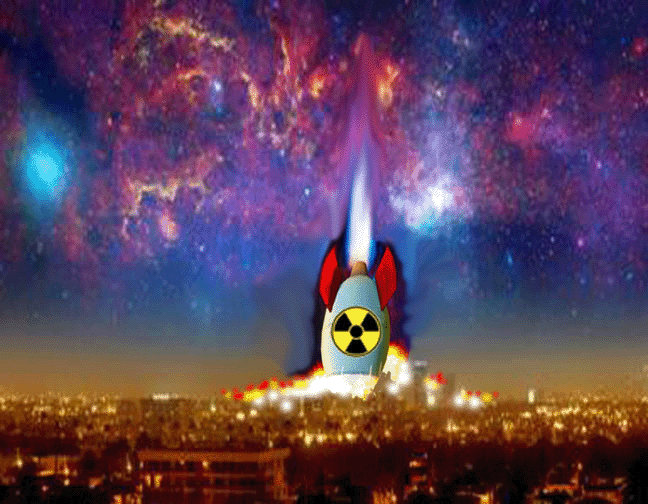
Hawaii should not be a collateral sacrifice zone for a private space company working for the pentagon
Hawaii needs to have input on SpaceX ocean-landing plan, STAR ADVERTISER. By Lynda Williams, APRIL 27, 2023
The world watched aghast as SpaceX blew up its own spaceship on April 20, four minutes after launch due to engine failure. Even though the mission was not completed, Elon Musk, CEO of SpaceX, claimed it was a success because the real goal was for the rocket to clear the launch pad at the spaceport in Boca Chica, Texas.
What most folks don’t know or realize is that Starship was always going to blow up when it crashlanded in the Pacific Ocean, just 62 nautical miles north of Kauai and a few hundred miles east of the Papahanaumokuakea Marine National Monument.
In the next test launch, which Musk boasted will happen in the next few months, the world’s largest spaceship will descend toward Earth in free fall and blow up upon impact with a force of a ton of TNT as fuel ignites in a great explosion. On a second and third launch test, Starship will break up in the atmosphere and tumble down and crash-land in a debris field several hundred miles southwest of the island chain.
SpaceX obtained a Federal Aviation Administration (FAA) commercial space launch license (experimental permit), rubber-stamped by the National Oceanic and Atmospheric Agency (NOAA) without any consultation of Hawaii’s people because, according to an email I received from the FAA: “No in-person public outreach was conducted in Hawaii as the Starship vehicle was planned to land outside of range for impacts to the residents of Hawaii.”
First of all, that is assuming everything goes exactly according to the plan, which we have all just witnessed doesn’t always happen. If the Starship goes off course by even a few degrees, the consequences could be catastrophic to Hawaii.
Secondly, I think most folks in Hawaii would agree that 62 miles north of Kauai is considered Hawaii culturally if not legally, and that is way too close for what is essentially a rocket bomb to crash-land.
SpaceX was not required to do a full environmental impact study (EIS), but a much-weaker environmental assessment (EA) that only requires the analysis of “nominal operations” or bestcase scenarios. Why was that allowed when the worst-case scenarios are so catastrophic?
In the EA, rather than doing a detailed analysis of the potential impact to marine mammals protected by the Endangered Species Act, NOAA wrote a “Biological Opinion” that argued “less than one” animal would be harmed by a 100 ton steel rocket exploding with the energy of a small nuclear bomb.
It came to that conclusion because it analyzed only one “nominal” scenario in which the rocket hits the water exactly horizontal to the surface with the fuel tanks orientated on top, which is impossible to control or predict. If the explosion is above water, NOAA argues, only a fraction of the energy will be transmitted into the ocean and travel deep enough to harm any of the 30 endangered species of whales, sharks, turtles, monk seals, dolphins and rays in Hawaii.
The EA has many unsubstantiated claims, such as no animals would be near the surface of the water during the crash — even though most are mammals that surface to breathe air.
It ignored the fact that Humpback whales migrate through the target “action area.” It assumed that most of the debris will be large enough to sink to the bottom of the ocean without encountering and injuring animals — but if any does drift into the Papahanaumokuakea Marine National Monument, then the Coast Guard would be sent to clean it up.
This alone is reason to contest the EA and demand an EIS since NOAA and the Office of Hawaiian Affairs co-manage Papahanaumokuakea and OHA should have been consulted, but was not.
The FAA and NOAA analyses are flawed, and both are failing in their duty to protect the people of Hawaii from extreme corporate and federal government abuse.
Hawaii must not become collateral damage and a colonized sacrifice zone for the government’s privatization of the space program and a billionaire’s personal ambition and corporate profits.
At minimum, the FAA must suspend the SpaceX license, conduct a full EIS and include the residents of Hawaii in the review process. The best plan is to ban SpaceX from trashing people and planet in Musk’s ego trip to Mars.
ISLAND VOICES
Port Kembla no place for a nuclear subs base, say local campaigners

Activists in Wollongong are organising against plans for nearby Port Kembla to host the East Coast base for the AUKUS nuclear submarines. Solidarity spoke to Alexander Brown from Wollongong Against War and Nukes about local opposition and how unions have dedicated this year’s May Day march to opposing the plan
The cost is around $10 billion for an East Coast submarine base. The Treasurer says they can’t afford the $24 billion required to increase Centrelink payments above poverty levels and yet they can afford to spend $10 billion on a war base. And that’s a small part of the overall $368 billion dollars for AUKUS. It’s a gross waste of money.
The strategic justification for it doesn’t make any sense. That’s being picked apart even within the Labor Party by people like Paul Keating and Bob Carr. We’re now seeing current sitting MPs start to express criticism. The submarines may arrive in between ten to 30 years, when their supporters in ASPI and the Sydney Morning Herald say we’re about to have war with China in the next three years. If so the subs are not going to be much use.
More importantly, it’s a ridiculous approach to peace making in the region to say we will arm ourselves to the teeth and that will deter China. China and its regime have many problems but they’re not a military threat to Australia now and they’re unlikely to be in the future. And if these subs are supposed to be to defend shipping, we are shipping most of our exports to China anyway, so who are we defending it against?
We need to build people-to-people solidarity with ordinary people in China to ensure peace and democracy in the whole region—not get drawn into a US provocation and starting a regional arms race.
What kind of actions have you taken to build opposition?
When Scott Morrison suggested that Port Kembla could be a site for an East Coast submarine base there was a protest called by the Student Association at Wollongong University, and different groups and individuals including unions and local councillors came to that.
We started organising a dedicated campaign group called Wollongong Against War and Nukes (WAWAN) and held a successful rally about a year ago to support the local council renewing the declaration of Wollongong as a nuclear free zone, which goes back to 1980.
We held a public meeting with former Greens Senator Scott Ludlam and the South Coast Secretary of the Maritime Union.
We had a rally here two weeks ago, because some local business interests held a defence industry conference and want to build a war industry down here.
This year when the Labor government so fully endorsed continuing AUKUS, after I think many people hoped they might back away, it created shock.
Then there was also a report in the ABC that Port Kembla was firming up as the most likely location for the submarine base. So the campaign has really picked up in the last two months.
The local South Coast Labor Council endorsed a motion to oppose having a nuclear base here.
Unions like the maritime union have put a lot of work into trying to plan for a renewable energy industry here to survive the big shocks that are coming in terms of the decline of coal and steel. They’re interested in expanding offshore wind and potentially green steel through hydrogen.
WAWAN has a community meeting in Port Kembla on 29 April, and we are calling for everyone who can get there to come and support the South Coast May Day march on Saturday 6 May, which will include opposition to the nuclear base alongside the slogan of “Peace, Jobs and Justice”.
Wollongong and Port Kembla steel works have been hotbeds of militancy since the beginning of last century and that tradition continues. The Dalfram dispute in the 1930s saw waterside workers refuse to load pig iron bound for Japan, because they knew that it would be used to make bombs and bullets for the Japanese invasion of China. Pig iron exports to Japan more or less stopped after that struggle.
In the Vietnam War there was a strong movement here and in the 1980s the anti-nuclear movement was really big in Wollongong and the unions were a major part of that. A lot of people in Wollongong have seized the opportunity to say that fighting unionism needs to look beyond the workplace at the environment that workers are going to be living in and creating.
We are wasting money and resources on the defence industry when we could be spending that money on addressing climate change and jobs through a Green New Deal.
Unions back renewable energy jobs over nuclear subs
The South Coast Labour Council, which represents unions in and around Wollongong, is opposing the submarine base as a threat to alternative jobs in the area.
Port Kembla has been assessed as an ideal spot for offshore wind developments, due to wind conditions, grid connections and the working harbour. The area is one of the NSW government’s priority Renewable Energy Zones, with at least two companies already carrying out scoping work for multi-billion dollar offshore wind projects.
Even NSW Ports and the Port Kembla Chamber of Commerce have warned that the Outer Harbour site is needed for wind turbine assembly as well as a new container port, and should not be taken by defence. This is also the likely site for the submarine base. Even the two offshore wind projects already proposed would create thousands of jobs in construction as well as over 500 ongoing jobs.
March against the nuclear base in Port Kembla
12pm Saturday 6 May, Wentworth St, Port Kembla, more details here
Sign up for travel from Sydney here
Australia pays former US defence chiefs $7000 a day for advice

By Matthew Knott, April 27, 2023 https://www.smh.com.au/politics/federal/australia-pays-former-us-defence-chiefs-7000-a-day-for-advice-20230427-p5d3lh.html
The federal government is paying retired senior American military officials up to $7500 a day for advice on major defence projects such as the AUKUS nuclear-powered submarine pact.
The government this week announced that, following its sweeping defence strategic review, retired United States Navy vice admiral William Hilarides would be hired to lead a snap review of the Royal Australian Navy’s surface fleet.
The review, to be handed to the government later this year, will examine whether planned fleets of Australian-made frigates and patrol vessels should be cut to free up money for smaller and more nimble vessels.
Hilarides has previously charged the Australian government US$4000 ($6000) a day for his consulting services, according to US Navy documents first reported by The Washington Post.
Hilarides has won naval consulting contracts from the federal government worth up to $1.6 million ($2.4 million) since 2016, according to figures from the Department of Defence.
Hilarides serves as chair of the Australian naval shipbuilding expert advisory panel and advised the government over the past 18 months while it finalised the deal with the United States and Britain to build a fleet of nuclear-powered submarines.
Defence Industry Minister Pat Conroy defended Hilarides’ appointment to the new navy fleet review this week, saying he had “a long association with Australia” and would do a good job.
In an investigation published last year The Post described Hilarides, a career submariner, as part of a large group of former senior US officials that Australia had relied upon heavily to guide its naval policies.
“To an extraordinary degree in recent years, Australia has relied on high-priced American consultants to decide which ships and submarines to buy and how to manage strategic acquisition projects,” The Post said.
Retired admiral John Richardson, who headed the United States Navy from 2015 to 2019, has received US$5000 ($7570) a day as a part-time consultant to the federal, according to documents released by the Pentagon to the US Congress.
Richardson was hired by the Department of Defence last November to provide advice on the best pathway for Australia to acquire a fleet of nuclear-powered submarines.
According to the documents, Richardson receives travel and lodging expenses to complete his work in Australia.
Richardson, the former US navy chief, told The Post: “I spent most of my life helping to keep America and our allies and partners safe and secure.
It’s a privilege to be invited to be able to use my experience, and help where I can to continue that work.”
Defence Minister Richard Marles on Thursday said outside advice was crucial to ensuring the government makes the correct decisions about significant defence policies.
“When we seek expert advice in relation to critical issues and challenges that we face, we have a global perspective in terms of where we seek that advice from and that’s really important because we want the very best advice,” he said.
“We make no apology for that because the kinds of challenges and decisions we’re making are profoundly important for the future of our country and where we have sought advice from those former officials in the US Navy that has been on issues of profound importance for our nation’s future.”
Greens defence spokesman David Shoebridge said he was shocked that Australia could seemingly not find local experts available to do these jobs.
“If that is true then it’s a pretty extraordinary failure on the part of the government and the ADF,” he said.
“You can only really explain this by Defence’s ongoing dependence on, and deference to, the US.”
He said it was remarkable that the US government had been more transparent than Australian government contracts than the federal government.
Chernobyl anniversary offers a bleak look at what may await other Ukrainian nuclear plants
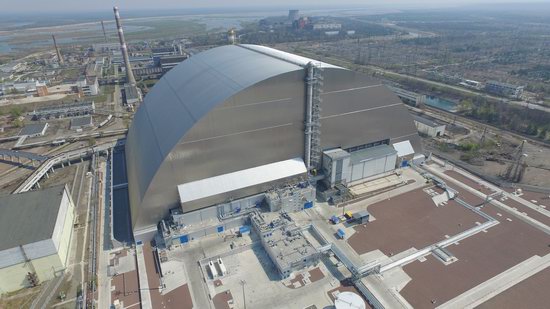
A huge steel and concrete sarcophagus covers the site of the meltdown. Under its dome, called the New Safe Confinement, lie 200 tons of lava-like nuclear fuel, 30 tons of highly contaminated dust and 16 tons of uranium and plutonium that continue to release high levels of radiation.
April 26, 2023 by Charles Digges https://bellona.org/news/nuclear-issues/2023-04-chernobyl-anniversar
A little over a year ago, Russian troops abandoned Chernobyl after briefly occupying it during the grim opening days of Moscow’s invasion of Ukraine. The takeover of the site where the world’s worst nuclear disaster happened thirty-seven years ago this week offered a preview of the reckless disregard for nuclear safety that has characterized so much of this war.
While the site has been left to Ukraine to painstakingly restore since the Russian withdrawal on March 31, 2022, the new anniversary of the Chernobyl plant’s original disaster on April 26, 1986, leaves lingering questions about what, exactly, the world can do when Ukraine’s nuclear infrastructure — or indeed any nuclear infrastructure — is attacked by a hostile neighbor.
The answer, at this point? Not much — aside from trying to pick up the pieces after the damage is already done.
As it stands, the Chernobyl exclusion zone is still dotted with mines planted by Russian troops when they rolled into the territory, churning up clouds of radioactive dust with hundreds of heavily armored vehicles. The mines have made treacherous any efforts to restore the territory.
Russian troops also dug trenches and set fires in an area known as the Red Forest — a gnarled expanse of irradiated trees — and scorched, according to NASA, some 14,000 hectares of land, filling the air with so much radioactive smoke that it was unsafe for firefighters to quell the blazes.
All the while, hundreds of Chernobyl employees — who oversee the site’s sprawling network of spent fuel storage facilities as well as the enormous efforts to dismantle the radioactive remnants of the exploded No. 4 reactor — were held hostage onsite, prevented from rotating out at the end of their shifts. Five workers were kidnapped and nine were killed, according to The Washington Post.
Those who remained said later that they had tried to keep the Russians from the most dangerous areas within the plant’s territory. But in what many called the worst situation they have seen in the decades since the initial disaster, Chernobyl’s power was cut by fighting, leaving them to rely on diesel generators for nearly a week to support the critical work of circulating water to cool spent nuclear fuel.
The damage the Russian soldiers did wasn’t purely technical. Doors to offices were ripped off hinges, windows smashed, walls spray-painted with graffiti.
“The poop was the icing on the cake,” Aleksander Barsukov, deputy director of the Chernobyl Ecocenter, which keeps samples of radioactive material collected from all over the world, told The Wall Street Journal after the Russian retreat.
By the time Russian troops pulled back from the plant on March 31, 2022 — amid reports of possible radiation poisoning among their ranks — Chernobyl’s technicians had been held at literal gunpoint at their workstations for more than a month.
During the retreat, according to Ukrainian accounts, Russian soldiers ransacked the site and took anything that looked valuable, looting more than 1,000 computers, and spiriting away dosimeters, software, lab tools, firefighting equipment — and in some cases even household appliances — piling them in stolen Ukrainian trucks.
“Whatever they didn’t steal, they broke,” Chernobyl Information Director Vitaly Medved told the BBC at the time.
Russian soldiers then brazenly mailed much of the booty home from across the Belarusian border. They also made off with radioactive instruments used to calibrate personal dosimeters for Chernobyl staff — substances that can cause radiation burns if handled improperly.
According to the European Bank of Reconstruction and Development, which has financed much of Chernobyl’s cleanup work since the original 1986 disaster, the Russian Army’s destructive adventure in the world’s most famous radioactive wasteland will cost some €100 million to repair.
The four RBMK reactors at the enormous nuclear station in Chernobyl no longer produce power, but before the invasion nearly 6,000 workers monitored the lasting effects of the disastrous meltdown that took place in 1986, as well oversaw as processing spent nuclear fuel from other plants in Ukraine. In the days before the invasion, all but a few hundred employees were evacuated.
Located just a few miles from the Belarusian border, Chernobyl was one of the first places occupied by Russian troops. Yevhen Kramarenko, the director of the exclusion zone — the 2,6000-square-kilometer area where radiation levels remain high and public access is limited — told The Washington Post that on the first day of the invasion, a Russian general presented himself as the new leader of the station, and introduced employees from Rosatom, Russia’s state nuclear corporation.
“I believe that at the time when they came,” Kramarenko told the paper, “they planned to be there permanently, they planned to take control for a long time.”
A sign of things to come?
Even before the occupation, the Chernobyl station had a post-apocalyptic air. It is situated in a dense forest, swarming with mosquitoes and gnats. Pripyat, the city where employees lived before the disaster, now stands empty and is being reconquered by nature.
A huge steel and concrete sarcophagus covers the site of the meltdown. Under its dome, called the New Safe Confinement, lie 200 tons of lava-like nuclear fuel, 30 tons of highly contaminated dust and 16 tons of uranium and plutonium that continue to release high levels of radiation.
Yet while Rosatom may have failed to keep hold of Chernobyl, the same cannot be said about Ukraine’s embattled Zaporizhzhia nuclear plant — Europe’s largest such facility — which once supplied a fifth of Ukraine’s electricity.
Since October of 2022, Moscow claims that it now controls the plant — a claim not honored by the UN’s International Atomic Energy Association, to say nothing of Kyiv.
From then on, Rosatom has begun flooding the Zaporizhzhia plant with Russian staff that it has transferred from its own Kalinin nuclear plant, 545 kilometers across the front to the northeast.
But while Russia asserts the six-reactor facility has been taken over as a protective measure, there is little to suggest that the joining of Russian and Ukrainian workforces is going smoothly. Only about 2,000 Ukrainian staff members still work at the plant, out of 11,000 before the war.
Indeed, much of Rosatom’s effort to assert itself at the plant has involved arresting and torturing Ukrainian workers opposed to the occupation as it toils to link Zaporizhzhia with the Russian electricity grid.
The plant, which lies on the south side of the Dnipro River next to the nuclear plant’s home city of Enerhodar, is on the front line of the war. Ukrainian troops are just a few of kilometers to the north, on the far bank of the Dnipro, while Russians are holed up in the power plant.Anxieties are high that the area could see renewed fighting in any Ukrainian counteroffensive.
Ukraine accuses the Russians of using the plant as a shield, hoping that the danger of causing a nuclear accident will keep Ukrainian soldiers from firing on them — the first time an atomic reactor has been put in such a position.
“They know Ukrainian troops would not dare to fire back. The nuclear power plant is a perfect hiding place from Ukrainian artillery,” Oleksiy Melnychuk, a former worker at the plant who fled from Enerhodar last July to Ukrainian-held territory, told Politico.eu. The Russians in turn accuse the Ukrainians of ignoring safety protocols and firing on areas near the plant.
The IAEA has inspectors on site and has been trying to walk a diplomatic tightrope to establish a non-military safety zone around the plant. While Moscow says it is keen to do so, Kyiv is leery of any step that could lend legitimacy to the Russian occupation.
Late last month, IAEA chief Rafael Mariano Grossi dropped the idea, and instead is now pushing for both sides to take steps to ensure that the plant isn’t attacked.
Over the last year, four of the station’s six VVER reactors have been put into a cold shutdown to minimize the risk of an accident, while two have been restarted to produce low levels of power to keep the plant operational. The facility needs access to electricity to ensure reactor cooling and other safety functions. However, its links to the Ukrainian grid have been cut six times since last March, forcing the ZNPP to rely on diesel-powered generators for emergency backup power — a situation that IAEA Director General Rafael Grossi has referred to as “rolling the dice.”
“And if we allow this to continue time after time then one day our luck will run out,” he added.
Still, even as events deteriorate, there is little the world can do but watch.
Even Grossi — who heads the world’s most respected nuclear power diplomacy body — has admitted as much. During a meeting of the IAEA’s 35-member board of governors last month, Grossi castigated his colleagues for “complacency” after the latest spate of airstrikes had again cut off Zaporizhzhia’s access to grid electricity.
“What are we doing to prevent this [from] happening?“ a flabbergasted Grossi asked the board. ”We are the IAEA, we are meant to care about nuclear safety.”
Even so, aspirations of pushing out the Russians among plant workers remain high.
“We still hope de-occupation is possible,” Melnychuk told Politico.eu. “You can’t even imagine how ready we all are to return and let our colleagues, working under tremendous pressure and fear, to finally have some rest.”
Unfortunately, the state of Chernobyl offers the clearest glimpse of what they may find if — or when — that time comes.
New nuclear tech not the answer to Canada’s climate woes, MPs say
National Observer, By Natasha Bulowski & Matteo Cimellaro, Ottawa Insider | April 26th 2023
Next-generation nuclear technology “has no part in fighting the climate emergency,” Green Party Leader Elizabeth May said Tuesday as a handful of MPs joined anti-nuclear activists to voice concern about the federal government’s intention to expand nuclear power.
“It, in fact, takes valuable dollars away from things that we know work, that can be implemented immediately, in favour of untested and dangerous technologies that will not be able to generate a single kilowatt of electricity for a decade or more,” the Saanich-Gulf Islands MP said at a cross-party press conference.
The comments came one day after Prime Minister Justin Trudeau said Canada must produce more nuclear power in the years to come. The federal government is funding the development of small modular reactors (SMRs) with a stated aim of replacing coal plants, powering heavy industry operations such as the oilsands and providing electricity for remote, diesel-reliant communities.
Ontario, Saskatchewan, New Brunswick and Alberta have agreed to a joint strategic plan for deploying SMRs to “provide safe, reliable and zero-emissions energy to power our growing economy and population.” In 2019, approximately 38 per cent of New Brunswick’s electricity generation was from nuclear, and Ontario is sitting at roughly 60 per cent.
…………critics argue the timelines, cost overruns and delays associated with building nuclear power generation facilities contrast with the need to immediately scale up fossil fuel-free energy to avoid the worst impacts of climate change. The longevity of radioactive waste, which is hazardous to human health and the environment, also raises questions among critics, as do concerns about nuclear proliferation.
Susan O’Donnell, a member of the Coalition for Responsible Energy Development in New Brunswick, warned: “SMRs create new types of toxic radioactive waste that would be very costly and difficult to isolate from the environment for millions of years.”
Some SMRs would extract plutonium — a radioactive, silvery metal used in nuclear weapons and power plants — mixed with other substances from nuclear fuel waste. But to do so undermines global nuclear weapons non-proliferation agreements, said O’Donnell, who is also an adjunct research professor in the environment and society program at St. Thomas University.
May, Liberal MP Jenica Atwin, Bloc Québécois MP Mario Simard and NDP MP Alexandre Boulerice attended the cross-party press conference on April 25…………..
May and Boulerice pointed to the influence of the nuclear industry on Parliament Hill and the close relationship between Natural Resources Canada and Atomic Energy of Canada Limited, a federal Crown corporation and the largest nuclear science and technology laboratory in the country.
“They don’t have to knock on the door to get into the house because they own the house,” said Boulerice of industry lobbyists.
“There’s no question that the nuclear industry has far more access to the Canadian Nuclear Safety Commission in terms of raising different concerns about SMRs” compared to the anti-nuclear camp, said O’Donnell.
The expansion and maintenance of nuclear power in Canada will have to deal with its significant waste problem. …………………..
…………………………………… not all agree Canada should remain a nuclear-dependent nation.
“I think the prime minister needs better advisers,” said O’Donnell, in reference to Trudeau’s recent comments that an expansion of nuclear energy will be necessary going forward………. https://www.nationalobserver.com/2023/04/26/news/new-nuclear-tech-not-answer-canada-climate-woes-mps-say
1 This Month

Read the Public Inquiry Report, the Commissioners’ report, Surrendering Australia: The AUKUS Deception is available to download for free at aukuspublicinquiry.com. Or just watch the replay of the National Press Club Luncheon.


19 November – Webinar – The Reality of Reprocessing
Time: 11:00 AM Pacific Time (US & Canada) / 2:00 PM Eastern / 7:00 PM UK / 8:00 PM CET
Register for the Zoom Event Here



Shut down the radiation-damaged Heysham nuclear reactors now
To see nuclear-related stories in greater depth and intensity – go to https://nuclearinformation.wordpress.com

Say No to NASA’s Reckless Nuclear Reactor on the Moon
Say No to NASA’s Reckless Nuclear Reactor on the Moon
-
Archives
- November 2026 (103)
- October 2026 (302)
- September 2026 (339)
- August 2026 (330)
- July 2026 (355)
- June 2026 (287)
- May 2026 (306)
- April 2026 (356)
- March 2026 (251)
- February 2026 (267)
- January 2026 (308)
- December 2025 (358)
-
Categories
- 1
- 1 NUCLEAR ISSUES
- business and costs
- climate change
- culture and arts
- ENERGY
- environment
- health
- history
- indigenous issues
- Legal
- marketing of nuclear
- media
- opposition to nuclear
- PERSONAL STORIES
- politics
- politics international
- Religion and ethics
- safety
- secrets,lies and civil liberties
- spinbuster
- technology
- Uranium
- wastes
- weapons and war
- Women
- 2 WORLD
- ACTION
- AFRICA
- Atrocities
- AUSTRALIA
- Christina's notes
- Christina's themes
- culture and arts
- Events
- Fuk 2022
- Fuk 2023
- Fukushima 2017
- Fukushima 2018
- fukushima 2019
- Fukushima 2020
- Fukushima 2021
- general
- global warming
- Humour (God we need it)
- Nuclear
- RARE EARTHS
- Reference
- resources – print
- Resources -audiovicual
- Weekly Newsletter
- World
- World Nuclear
- YouTube
-
RSS
Entries RSS
Comments RSS

