Why the US and Europe Still Buy Russian Nuclear Fuel
Washington Post, Analysis by Jonathan Tirone | Bloomberg, August 27, 2023
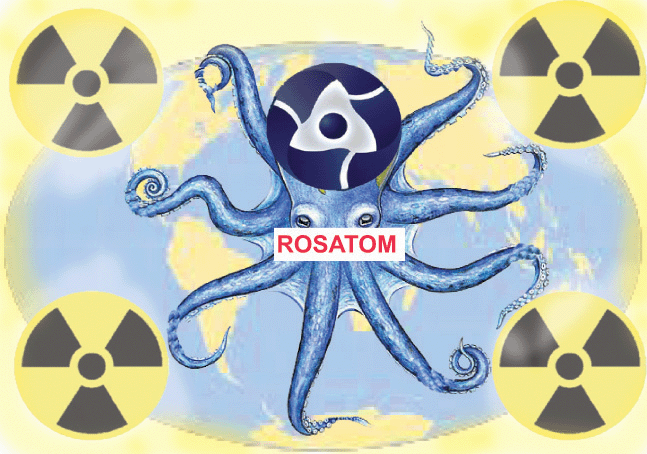
1The US and its European allies moved fast to choke exports of Russian oil, natural gas and coal after Vladimir Putin ordered troops into Ukraine. When it comes to atomic energy, however, Kremlin-controlled Rosatom Corp. continues to be the dominant source of fuel for the world’s nuclear power stations — supplying about half of global demand for enriched uranium. Western nations are racing to reconstitute their own processing capacity, much of which withered amid a growing aversion to nuclear power following Japan’s Fukushima meltdowns. But progress is likely to be slow.
………………………………………………………. Why is Russia so dominant?
Unlike Western companies in the nuclear business, Rosatom is involved in every part of the supply chain, from ore extraction to fuel enrichment and delivery. The company is as much an expression of the Kremlin’s geopolitical power as a profit-generating business. That state-level commitment has played to Russia’s advantage. When international investors turned away from nuclear power following the Fukushima accident in 2011, some Western companies involved in the fuel cycle, including Areva SA in France, the US Enrichment Co. and Westinghouse Electric Co., went bankrupt.
Russia stepped in, building market share not only among the world’s existing fleet of nuclear reactors, but by offering generous financing for new foreign projects. Today, Rosatom’s 330,000 workers provide fuel assemblies to scores of old reactors in eastern Europe and Russia, and is building 33 new power units in 10 countries, including China and India, that will be locked into fuel contracts for decades ahead.
3. Which countries are most dependent?
Former Soviet satellites in eastern Europe continue operating dozens of so-called VVER pressurized water reactors built during the Cold War era. Most of those aging units use Rosatom fuel and are already running on borrowed time, generating electricity beyond the initial period that regulators licensed them to operate. That means there’s little incentive for new companies to enter that market and compete against Russian supply. There are some exceptions. Westinghouse, after emerging from insolvency in 2018, signed contracts to fuel some of Ukraine’s VVER reactors. But even there, Ukraine continues to rely on Rosatom inventory and won’t be able to fully diversify away from Russia until later this decade. It’s a similar challenge from Bulgaria to the Czech Republic and Finland, where the search for alternative suppliers is expected to take years. In all, Russia covers about 30% of the European Union’s demand for enriched uranium.
4. How much is the US exposed?
Atomic trade between the countries grew in the aftermath of the Cold War under the so-called Megatons to Megawatts program, which converted 500 tons of Russian weapons-grade uranium into fuel suitable for US reactors. Russia continues to be a major provider of uranium mining, milling, conversion and enrichment services for US utilities, exposing US consumers to potential disruption. In 2022 it supplied about a quarter of the enriched uranium purchased by US nuclear power reactors, according to US government figures.
Most vulnerable is the provision of uranium enriched to higher levels, which is used by a new generation of so-called small modular reactors (SMRs) because it reduces the frequency of re-fueling. Rosatom currently supplies all the so-called HALEU, or high-assay-low-enriched uranium, to the US……………………………………………………………………. more https://www.washingtonpost.com/business/energy/2023/08/27/why-the-us-and-europe-still-buy-russian-nuclear-fuel/23474ddc-44cd-11ee-b76b-0b6e5e92090d_story.html
UN warns Ukraine over attacks on Russian civilian targets
27 Aug 23, https://www.rt.com/russia/581796-ukraine-civilian-attacks-un/
Kiev’s use of drones against Moscow and border regions was raised at the Security Council
The UN is concerned about shelling and drone attacks on Russian civilians, which contravene international law, Under-Secretary-General Rosemary DiCarlo told the Security Council on Thursday.
Ukraine has ramped up artillery attacks on the Russian regions of Donetsk, Kursk and Belgorod over the past three months, as its much-heralded offensive on the Zaporozhye front failed to make any significant advances. The shelling frequently employs US-supplied cluster munitions, banned by most UN member states.
Kiev has also ramped up attempts to target Moscow’s financial district with drones. The UAVs that managed to slip past the Russian capital’s air defenses have caused minor property damage, but so far no casualties.
“We are also concerned about the possible impact on civilians of the shelling of Russian border communities and drone attacks deep inside Russia, including Moscow,” said DiCarlo, an American diplomat overseeing Political and Peacebuilding Affairs since 2018.
“Attacks against civilians and civilian infrastructure – wherever they may occur – are indefensible and strictly prohibited under international law,” she added.
DiCarlo made the remarks as an aside to the speech focusing on condemning Russia’s “full-scale invasion” and expressing the UN’s “unwavering” commitment to Ukraine’s sovereignty, independence and “territorial integrity within its internationally recognized borders.”
Russia’s ambassador to the UN, Vassily Nebenzia, told the Security Council that the Ukraine conflict was a proxy war against Moscow planned at least since 2014 by Washington, London and Brussels, who are “not at all interested in stopping it.”
“We would not be where we are if the Kiev regime had not launched a war in 2014 against its own Russian-speaking citizens in the east of the country” and failed to comply with the UN-approved Minsk Agreements, which their authors admitted were a ploy to prepare Ukraine for war, Nebenzia insisted.
US to reduce military aid to Ukraine in 2024 – WSJ
27 Aug 23, https://www.rt.com/news/581824-us-reduce-aid-ukraine/
Washington will not give Kiev a second shot at its counteroffensive, the newspaper’s sources have said
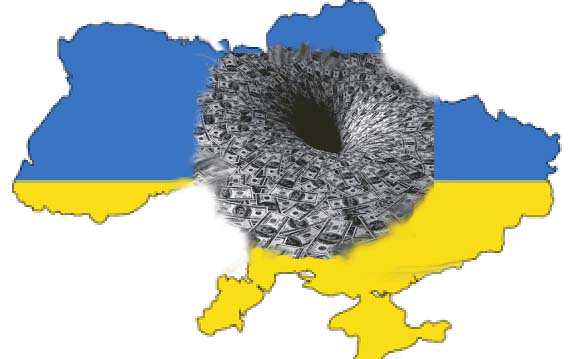
The US is unlikely to give Ukraine “anywhere near the same level” of military aid in 2024 compared to this year, the Wall Street Journal has reported, citing officials in Washington. Meanwhile, President Joe Biden and his administration insist that they will continue to back Kiev to the hilt.
The US has supplied more than $43 billion worth of arms to Ukraine since Russia’s military operation began last year, while leaked Pentagon documents indicate that NATO countries trained and equipped nine Ukrainian brigades to take part in the ongoing counteroffensive against Russian forces.
With the Ukrainian military failing to penetrate Russia’s defensive lines after nearly three months of fighting, American military planners are advising their Ukrainian counterparts to stick to their NATO training and use what they’ve been given more effectively, the Wall Street Journal reported on Thursday.
“The American advice is based on the calculation that the surge of equipment the US has funneled to Ukraine…is enough for this offensive and is unlikely to be repeated at anywhere near the same level in 2024,” the newspaper explained.
Washington’s continued bankrolling of the Ukrainian military is a matter of political contention in the US. While almost all Democratic members of Congress back Biden’s policy of arming Kiev “for as long as it takes,” a group of more than two dozen Republicans are vehemently opposed. Moreover, Republican frontrunner Donald Trump has promised to force Kiev into a peace deal if elected president next November, as has Vivek Ramaswamy, who is currently polling third for the GOP’s nomination.
The Biden administration has spent all of its money set aside for Ukraine, and the president is now pushing Congress to pass a $40 billion emergency spending bill, half of which would be allocated to Ukraine. With Republican anti-interventionists up in arms, House Speaker Kevin McCarthy has suggested that he won’t give the bill his unconditional support.
“You don’t get to just throw money [away],” he said earlier this summer. “What about the money we have already spent? What is the money for and what is victory?”
Biden’s top officials have downplayed the growing divisions in Washington. “We believe that the support will be there and will be sustained,” National Security Advisor Jake Sullivan told reporters on Tuesday. Sullivan added that despite the “dissonant voices” on the right, Republicans in “key leadership positions” will ensure that weapons keep flowing to Kiev.
According to a report by Axios on Wednesday, “senior US officials” have been in contact with European leaders to reassure them that the supply of military aid will not dry up.
Power-starved North Korea turns to solar energy to keep the lights on
1North Korea is increasingly turning to solar power to help meet its energy
needs, as the isolated regime seeks to reduce its dependence on imported
fossil fuels amid chronic power shortages. Prices of solar panels have
dropped in recent years thanks to an influx of cheap Chinese imports and a
rise in domestic assembly of panels within North Korea, according to the
Stimson Center think-tank in Washington.
This has allowed many North
Koreans to install small solar panels costing as little as $15-$50,
bypassing the state electricity grid that routinely leaves them without
reliable power for months. Larger solar installations have also sprung up
at factories and government buildings over the past decade.
FT 27th Aug 2023
https://www.ft.com/content/cff0639f-e095-465c-a6e9-3e418a7e30cf
Kudankulam Nuclear plant will destroy Southern Tamil Nadu, warns Vaiko
August 28, 2023 https://www.thehindu.com/news/national/tamil-nadu/kudankulam-nuclear-plant-will-destroy-southern-tamil-nadu-warns-vaiko/article67241700.ece
MDMK general secretary Vaiko on Sunday feared that waste water stored in the Nuclear Power Plants in Kudankulam could be released in the future into the Bay of Bengal destroying the coastal villages in southern Tamil Nadu. His apprehension was triggered by Japan’s decision to release stored waste water from the Fukushima nuclear plant into the pacific ocean.
In a statement in Chennai, he said the power plant was a Damoclean sword hanging over Tamil Nadu and closing the plant alone could save the people.
“You may land on the Moon. But I am worried that a part of Tamil Nadu will be destroyed. I would like to warn the Centre which is not bothered about the threat,” he said.
Mr Vaiko said nuclear plants in Russia, Japan and the US had affected a lot of people. “Japan has released waste water in the Pacific Ocean and the people of the country are opposing it,” he said.
Chicago Tribune should support Vivec Ramasramy’s call for end to perpetual war in Ukraine .
Walt Zlotow, President, West Suburban Peace Coalition, Glen Ellyn IL 27 Aug 23
As a peace advocate for the local West Suburban Peace Coalition, I take issue with the Trib’s Editorial: ‘Vladimir Putin is no Bond villain. Supporting him is morally repulsive.’
It mischaracterized Ramaswamy’s implied plea for peace in Ukraine thru ending unlimited weaponizing of the failed Ukraine counteroffensive. It said not one word about “going soft” on Russian President Putin.
Ramaswamy is not “morally repugnant”. He was simply reflecting current US public opinion. A majority now support ending weapons which squander US treasure while extending the killing and destruction in Ukraine indefinitely. –The Trib should know that virtually every war ends with a negotiated settlement. The only way that will not occur in Ukraine is if it goes nuclear. Ramaswamy was the only candidate on the podium promoting peace in Ukraine. That deserves our support, not condemnation.
Hinkley Point C: Millions of fish under threat after permit change
Campaigners say tonnes of fish could be sucked into Hinkley Point C’s
cooling system if an acoustic fish deterrent is not installed. The
Environment Agency (EA) has removed a requirement for EDF to install the
deterrent, which the company said could be dangerous to maintain.
Environmental groups say millions of fish could be killed per year. The EA
said it was confined to looking at water discharge activity, which did not
deal with the entrapment of fish. A final decision on whether EDF will have
to install an acoustic fish deterrent (AFD) will made by the Secretary of
State for Environment later this year.
The reactor cooling system tunnels
will take in 132,000 litres of water per second from the Severn Estuary to
cool the plant’s two nuclear reactors. An AFD would use underwater sound to
cause hearing species of fish to swim away.
BBC 26th Aug 2023
The Last Time A Foreign Military Threat Was Placed Near The US Border, The World Almost Ended
To demand that Russia and China tolerate foreign activities on their borders that the US would never even think about tolerating on its own borders is just demanding that the entire world lie down and submit to being ruled by Washington. It’s American supremacism at its worst.
CAITLIN JOHNSTONE, AUG 27, 2023 https://www.caitlinjohnst.one/p/the-last-time-a-foreign-military?utm_source=post-email-title&publication_id=82124&post_id=136456696&isFreemail=true&utm_medium=email
It’s ridiculously hypocritical for westerners to condemn Russia and China for responding aggressively to the US empire building up military threats on their borders, because the last time a credible military threat was placed near the border of the United States, the US responded so aggressively that it almost ended the world.
I point out this hypocrisy not because hypocrisy in and of itself is an especially terrible sin — there are much worse things you can be in life than a hypocrite — but to flag the fact that people who think Russia and China should tolerate US actions on their borders that the US would never tolerate on its own borders actually believe the United States should rule the world.
It’s worth spending some time learning about the Cuban Missile Crisis for a number of reasons in the 2020s. First, in a time of soaring hostilities between nuclear-armed governments it’s probably good to have a lucid understanding of how close humanity came to wiping itself out in 1962, and the fact that total nuclear war was averted by a single dissenting decision by a single Soviet officer on a nuclear-armed submarine that was being bombarded by the US navy. Second, in an environment where talk of peace negotiations and compromise are regarded as treasonous Kremlin loyalism it’s good to have an understanding of the fact that the only reason we survived that perilous standoff was because Washington made compromises and pulled its Jupiter missiles out of Turkey and Italy. Third, the Cuban Missile Crisis shows how aggressively the US will respond to a foreign rival placing a military threat near its border.
As we’ve discussed previously, the single dumbest thing the US empire asks us to believe is that its amassing of war machinery near the borders of its top two geopolitical rivals should be seen as a defensive measure, rather than the act of extreme aggression that it obviously is. The US empire was the aggressor when it expanded NATO and began turning Ukraine into a de facto NATO member, and it is the aggressor as it accelerates its encirclement of China and opens the floodgates of US-financed weapons into Taiwan.
We know the US would never in a million years tolerate such things being done anywhere near its own borders. We know this from the Cuban Missile Crisis, and we know this from the way empire managers talk about potential threats near the US border. There are US presidential candidates openly talking about invading Mexico just to take out drug cartels. Last month John Bolton penned a furious screed demanding aggressive military force against Cuba in response to reports that Havana and Beijing could possibly be in talks for a joint military training facility on the island at some point in the future. Earlier this year Senator Josh Hawley gave a speech at the Heritage Foundation ominously asking his audience to imagine a dark, horrifying future in which the Chinese military surrounds the United States, and his description of this frightening imaginary scenario matched the way the US military has actually been surrounding China in real life.
“Imagine a world where Chinese warships patrol Hawaiian waters, and Chinese submarines stalk the California coastline,” Hawley said. “A world where the People’s Liberation Army has military bases in Central and South America. A world where Chinese forces operate freely in the Gulf of Mexico and the Atlantic Ocean.”
This kind of rhetoric illustrates quite clearly that the managers of the US empire would regard military buildups by Russia and China near their borders as an incendiary and entirely unacceptable provocation — an act of war in and of itself.
And apologists for the empire would have you believe that wild discrepancy is perfectly fine and normal.
To demand that Russia and China tolerate foreign activities on their borders that the US would never even think about tolerating on its own borders is just demanding that the entire world lie down and submit to being ruled by Washington. It’s American supremacism at its worst.
Saying the US empire gets to do extremely aggressive things to other nations but those other nations aren’t allowed to do those same things to them is just saying you think the US rules the world. You’re saying it plays by different rules, because it’s in charge of the planet. You’re saying the US empire has a monopoly on military aggression in the same way the police in your society have a monopoly on violence. They’re allowed to act with extreme aggression on the borders of Russia and China for the same reasons that a police officer can legally tase you, but you can’t legally tase a police officer.
If you say Russia and China should let the US do things on their borders that it would never permit them to do on its own borders, what you are really saying is that you think the US should be functioning as the police, judge, jury and executioner of the entire world.
That is in fact the mainstream consensus on these conflicts. It normally gets obfuscated and manipulated to keep people from looking at it too closely, but that is in fact the argument being presented here. The US empire believes it is the rightful ruler of this planet, and those who are currently shaking their fists at Russia and China for refusing to accept this are fully behind it in that perspective.
South-east Australia marine heatwave forecast to be literally off the scale
Australia’s south-east could be in for a marine heatwave that is literally
off the scale, raising the prospect of significant losses in fishing and
aquaculture. The Bureau of Meteorology has forecast a patch of the Tasman
Sea off Tasmania and Victoria could be at least 2.5C above average from
September to February, and it could get hotter.
Guardian 27th Aug 2023
Degrowthers Gain Support as Planet Cooks. Can They Ally With Green New Dealers?

Degrowth and its opponents recognize the necessity of mass movements and system change to address the climate emergency. By Gareth Dale , TRUTHOUT 27Aug 23
egrowth, a movement advocating reductions in energy and resource use across the Global North, is finding new audiences. In Japan, Kohei Saito’s degrowth manifesto Capital in the Anthropocene became a bestseller. In Europe, members of the European Parliament sponsored a three-day “Beyond Growth” conference. In the U.S., the socialist journal Monthly Review has come around to degrowth. In recent weeks, the topic has been covered by New Statesman, The New Yorker, Jacobin, the British Medical Journal and The New York Times, among others.
Writing in New Statesman, economist Hans Stegeman proposes that the debates between degrowth and green growth are already outdated. In the present era of low GDP growth, there is no meaningful choice between the two. Instead, at least in the absence of any radical reordering of society, economies are by default transitioning toward a post-growth model.
In The New Yorker, environmental activist Bill McKibben presents degrowth as a call to reduce consumption, in contrast to the Green New Deal (GND), which emphasizes production. Evenhandedly, he opposes “endless” growth but parts company with degrowthers when they, citing the ecological costs of all the mining required, refuse to support “an all-out push for electric vehicles (EVs), heat pumps, solar panels and wind turbines.” Why not do both, he asks: Invest in renewables and EVs while also restricting “wasteful consumerism”?………………………………………………………………………………………………………………………more https://truthout.org/articles/degrowthers-gain-support-as-planet-cooks-can-they-ally-with-green-new-dealers/?utm_source=Truthout&utm_campaign=c6c53059c2-EMAIL_CAMPAIGN_3_20_2023_13_41_COPY_05&utm_medium=email&utm_term=0_bbb541a1db-c6c53059c2-650192793&mc_cid=c6c53059c2&mc_eid=73e1cd43d0
Nuclear deterrence is a dangerous fraud
The theory of nuclear deterrence is a feeble excuse for nations to hold onto their weapons of mass destruction and a fraud that must be exposed, writes Dr Sue Wareham. 23 Aug 23 https://independentaustralia.net/politics/politics-display/nuclear-deterrence-is-a-dangerous-fraud,17833
Dr Sue Wareham OAM is President of the Medical Association for Prevention of War (Australia) and a past board member of ICAN (the International Campaign to Abolish Nuclear Weapons) Australia.
HOW IS IT that “homo sapiens” has persisted with an invention that threatens our very survival, strikes fear in the heart of every rational one among us, diverts an unconscionable quantity of our collective time, labour and finances from things that are actually useful, and at the same time could be eliminated?
All we need to do is dismantle the invention and prioritise efforts to ensure that it remains a historic relic. That could all be done. Our failure to do so thus far is such an extraordinary gamble on our future that we must examine the reasons.
The invention is, of course, nuclear weapons. The answer to the opening question is not so straightforward, but given our current all-time high risk of these weapons being used, the question has never been more important. And given Australia’s rapidly growing enmeshment with the only nation that has used these weapons thus far in warfare, we in Australia have a particular interest in it.
The first response to the question that often comes to mind is that of “power”. That’s true, a tiny minority of the world’s leaders – in nine out of the nearly two hundred countries that make up the global community – see the capacity to inflict unimaginable suffering on others as a marker of global prestige and influence in world affairs.
But, as we shall see, translating a capacity for cruelty to military or political advantage is a completely different matter. And, in any event, even such leaders need to explain to their people how having horrific and widely-condemned weapons is actually a good thing. For this, they need a theory that sounds plausible; it doesn’t need to be valid, but it just needs to sound reassuring and humane.
That theory is nuclear deterrence — the theory that having nuclear weapons keeps a nation safe from attack, especially nuclear attack, because others will be too terrified of a possible nuclear response. The more inhumane our weapons appear, the safer we are and the more certain we are to prevail militarily if any armed conflict does occur — or so the theory goes. The Latin origin “terrere”, to terrify or deter by terror, sums up how deterrence is meant to work.
For Australia, the theory is extended nuclear deterrence, a belief that our ally – the U.S. – would launch its own nuclear weapons if needed to “protect” Australia (whatever that means in practice), even risking a nuclear retaliatory strike on its own shores in the process. Like nuclear deterrence itself, extended nuclear deterrence is no more than an unproven theory.
Nuclear deterrence has been so consistently presented as justification for the world’s worst weapons of mass destruction that it is worth unravelling. If it is found to be faulty, then the primary crutch that bolsters nuclear weapons policies is exposed as a dangerous fraud.
The first major problem with nuclear deterrence theory is that it hasn’t worked. Nuclear weapons have proven to be generally useless in preventing military aggression or bringing military victories. As nuclear weapons abolition advocate Ward Wilson argues: ‘It is possible for a weapon to be too big to be useful.’
History recounts multiple occasions in which a nuclear arsenal on one side of a conflict has been irrelevant to the outcome. Examples include the attacks on or by Vietnam, Afghanistan, the UK-held Falklands, Iraq (1991 and 2003), Lebanon, former Soviet republics, multiple confrontations between India and Pakistan (both nuclear-armed), and others. In addition, crises over the deployment of the weapons have triggered periods of extreme danger, such as the 1962 Cuban Missile Crisis.
The war in Ukraine is the latest example of a war involving a nuclear-armed adversary. Whether or not President Putin follows through with his gravely irresponsible threats to use nuclear weapons in this war remains to be seen, but “winning” a nuclear wasteland would be no more than a pyrrhic victory.
Claims that attacks on non-nuclear armed nations, such as Ukraine, would have been prevented if those nations did have “the bomb” are not supported by evidence. In any event, such claims would lead us to the conclusion that the weapons are essential for every nation — including, say, Iran and North Korea. Deterrence cannot work only for “us” and not for “them”.
Have nuclear weapons played a role in preventing a war between two nuclear-armed superpowers? We don’t know, but there is no evidence for such a role. Even if they did, could we rely on this deterrent effect to always work? The answer is a categorical no; such a proposition is not credible.
This leads to the second major problem with nuclear deterrence theory which is that to be reliable, it must work in every conceivable situation for all time. Common features of human behaviour, such as miscommunication, misunderstanding, clouded judgement or plain incompetence in a period of heightened tensions could spell catastrophe.
Irrational or malevolent leaders who care little about human suffering elevate the risks, as do ongoing cyber and computer vulnerabilities. Nuclear deterrence might be fit for a fantasy world where everything goes according to plan, but it is not fit for the real world. The nuclear weapons era has produced over a dozen “near misses” when detonation of a warhead was very narrowly avoided.
Tellingly, even governments for whom the mantra of deterrence is sacrosanct know all this. Repeatedly, official documents in the U.S. and, presumably, in other nuclear-armed nations, refer to measures needed “if deterrence fails”. Events that could be terminal for much of human civilisation are passed off with those few glib words, “if deterrence fails”, to set out what military strategy kicks in next.
Part of the “what next” for the U.S. is its missile defence program, another vast money-guzzling venture that won’t necessarily work but is designed to intercept incoming enemy nuclear missiles, the ones that haven’t been deterred; it just might save “our” side at least. The response of the “other” side, not to be deterred, is obvious — more missiles, thus the race continues.
There is one thing that “if deterrence fails” scenarios steer well clear of, however — what happens to people and the planet when the bombs do hit their target cities? For deterrence advocates, that’s someone else’s problem.
The third major impediment to nuclear deterrence is that pesky constraint on so many nefarious activities — the law. Since the entry into force in January 2021 of the Treaty on the Prohibition of Nuclear Weapons (TPNW), even the possession of these devices, let alone use or threats to use them, have been explicitly prohibited under international law.
While the prohibition is legally binding only for nations that have joined the Treaty (those with the weapons and their supporters, such as Australia, not yet being among them) its purpose goes much deeper. It replaces whatever international prestige might be attached to the weapons with international opprobrium. The treaties prohibiting both landmines and cluster munitions strongly influenced the behaviour of even nations that hadn’t signed them.
Fourthly, and herein lies the crux of all the above problems, nuclear deterrence is a threat to commit morally abhorrent actions. The incinerating of cities condemns millions of people, guilty and innocent alike, young and old, to the same collective unthinkable punishment. To play any role in deterring, a threat must be credible and therefore acceptable to those making it, something they would be prepared to carry through with in some circumstances.
Being the perpetrator of such suffering, or even just aiding and abetting it as extended nuclear deterrence requires, challenges us to consider whether our common humanity means anything at all. If it does, then committing or even threatening acts of savagery on a grand scale against innocent people has no place. It not only destroys the victims but also degrades the perpetrator.
Beyond the fundamental flaws of nuclear deterrence theory – its failure to prevent wars, its unsuitability for an imperfect world, its illegality and its immorality – it brings further risks and harm.
Economically, the cost of nuclear weapons programs is staggering, diverting scarce funds from essential human and environmental needs. In 2022, the nine nuclear-armed nations between them spent $82.9 billion on their nuclear weapons programs, over half of that being spent by the U.S. — all this for devices with the extraordinary purpose of existing so that they are never used.
With such national treasure invested in being able to commit atrocities, an enemy is needed, or a succession of enemies to suit changing circumstances. The enemy must be portrayed as morally inferior to us, less worthy as humans, so that no fate is deemed too terrible for them.
U.S. President Reagan’s “evil empire” speech of 1983 about the Soviet Union exemplified the process of dehumanising the “other”. President George W Bush’s reference in his January 2002 State of the Union address to the “axis of evil” – comprising Iran, Iraq, North Korea and others – did similarly. While more measured in rhetoric, President Biden’s “democracy versus autocracy” speech in February 2021 carried the same message of U.S. moral authority, for which read supremacy, with which it must confront its enemies.
As our “security” is built on a capacity to destroy, or euphemistically, “deter”, the critical task of building a common future with all people is marginalised. Foreign policies become stunted and skewed far too heavily towards inflicting collective punishment on whole populations rather than the slow and painstaking work of diplomacy to manage international relationships. Cooperation on global challenges such as climate dwindles as enmity is reinforced. Deterrence policy, with nuclear weapons at the pinnacle, erodes our capacity to survive together on this small and troubled planet.
Nuclear weapons themselves must be abolished. Given that they have proven to be almost useless in deterring anything or winning anything, this goal is achievable. Exposing the fraud of nuclear deterrence and extended nuclear deterrence theories – in promising security and yet delivering existential risk – is a key part of that process.
On the warpath: AI’s role in the defence industry

BBC, By Christine Ro, Technology reporter, 23 Aug 23
Alexander Kmentt doesn’t pull his punches: “Humanity is about to cross a threshold of absolutely critical importance,” he warns.
The disarmament director of the Austrian Foreign Ministry is talking about autonomous weapons systems (AWS). The technology is developing much faster than the regulations governing it, he says. “This window [to regulate] is closing fast.”
A dizzying array of AI-assisted tools is under development or already in use in the defence sector.
Companies have made different claims about the level of autonomy that is currently possible.
A German arms manufacturer has said, for a vehicle it produces that can locate and destroy targets on its own, there’s no limitation on the level of autonomy. In other words, it’s up to the client whether to allow the machine to fire without human input.
An Israeli weapons system previously appeared to identify people as threats based on the presence of a firearm – though such systems can, like humans, make errors in threat detection.
And the Australian company Athena AI has presented a system that can detect people wearing military clothes and carrying weapons, then put them on a map.
“Populating a map for situational awareness is Athena’s current primary use case,” says Stephen Bornstein, the chief executive of Athena AI……………………………………….
Many current applications of AI in the military are more mundane.
They include military logistics, data collection and processing in intelligence and surveillance and reconnaissance systems…………………………………………………………………………
However, it’s in the realm of weapons deployment that people really tend to worry about militarised AI.
The capacity for fully autonomous weapons is there, cautions Catherine Connolly, the automated decision research manager for the campaign network Stop Killer Robots.
“All it requires is a software change to allow a system to engage the target without a human actually having to make that decision,” according to Ms Connolly, who has a PhD in international law & security studies. “So the technology is closer, I think, than people realise.”
One argument advanced by proponents of AI-enabled weapons systems is that they would be more precise. But Rose McDermott, a political scientist at Brown University in the US, is sceptical that AI would stamp out human errors.
“In my view the algorithms should have brakes built in that force human oversight and evaluation – which is not to say that humans don’t make mistakes. They absolutely do. But they make different kinds of mistakes than machines do.”
It can’t be left to companies to regulate themselves, says Ms Connolly……………………………….
So that the speed and processing power of AI don’t trample over human decision making, Ms Connolly says the Stop Killer Robots campaign is looking for an international legal treaty that “ensures meaningful human control over systems that detect and apply force to a target based on sensor inputs rather than an immediate human command”.
She says regulations are urgent not only for conflict situations, but also for everyday security.
“We so often see that the technologies of war come home – they become used domestically by police forces. And so this isn’t only just a question of the use of autonomous weapon systems in armed conflict. These systems could also then become used by police forces, by border security forces.”…………………………. more https://www.bbc.com/news/business-66459920
Seafood war looms after Japan releases nuclear plant water
China became the latest country to ban imports of all types of Japanese
seafood while South Korea has stopped taking fish caught or farmed from the
area around the now abandoned power plant.
Anti-Japanese sentiment is also
on the increase in South Korea. Several people were arrested after
attempting to storm the Japanese embassy in Seoul while hundreds have taken
to the capital’s streets in protest. Public concern remains high in South
Korea over the plan to release more than 1 million metric tons of treated
radioactive water.
Other Asian countries are expected to ban or restrict
Japanese seafood imports in the coming weeks. More than a million tonnes of
treated radioactive water is understood to be stored at the now inactive
power plant.
Fish Farmer 24th Aug 2023
Ukraine will ‘capitulate unconditionally’ – Scott Ritter
Earlier this week, the Washington Post reported that the Ukrainian campaign is showing “signs of stalling.” The newspaper warned that “the inability to demonstrate decisive success on the battlefield [by Kiev’s forces] is stoking fears that the conflict is becoming a stalemate and international support could erode.”
25 Aug 23, https://www.rt.com/news/581761-ukraines-president-volodymyr-zelensky-speaks/—
President Vladimir Zelensky should recall how World War II ended for Japan, the former US intelligence officer says
The conflict between Russia and Ukraine will conclude with Kiev’s unconditional surrender, according to Scott Ritter, a former US intelligence officer and UN weapons inspector.
On Wednesday, Ukrainian President Vladimir Zelensky claimed in a post on X (formerly Twitter) that “Ukraine does not trade its territories, because we do not trade our people.”
The message was dedicated to the Third Crimea Platform Summit, where Ukraine discussed ways of “de-occupying” the peninsula, which reunited with Russia in 2014 following a referendum triggered by the US-backed Maidan coup in Kiev earlier that year.
Replying to Zelensky’s post, Ritter wrote that “it was NATO that suggested a trade. Russia isn’t trading anything.”
The former US intelligence officer was apparently referring to remarks by NATO Secretary General Jens Stoltenberg’s chief of staff, Stian Jenssen, who said in mid-August that Ukraine could “give up territory [to Russia], and get NATO membership in return.” According to Jenssen, this idea was actively being discussed within the US-led military bloc.
Jenssen later apologized for his remarks, saying they were “a mistake.”
The suggestion caused outrage in Kiev, with presidential aide Mikhail Podoliak branding it “ridiculous.” Such a move would amount to “deliberately choosing the defeat of democracy… and passing the war on to other generations,” he claimed.
The head of the Ukrainian National Security Council, Aleksey Danilov, reiterated that Kiev would never negotiate with Russian President Vladimir Putin, insisting that “Russia must be destroyed like a modern-day Carthage.”
Ritter insisted that Moscow is “dealing with reality” when it comes to the conflict with Kiev, including “where Russian boots will be when Ukraine capitulates unconditionally.”
“Think Tokyo Bay, September 2, 1945. That’s your future. Enjoy,” he wrote, addressing Zelensky.
On that date, representatives of the Japanese Empire signed an unconditional surrender to the Allies aboard the USS Missouri, ending the country’s participation in World War II.
In line with the deal, Japan agreed to the loss of all its territories outside of its home islands, complete disarmament, Allied occupation of the country, and tribunals to bring war criminals to justice.
On Wednesday, Zelensky admitted that the Ukrainian counteroffensive against Russian forces, which began in early June, was proving “very difficult.” However, he also claimed that the operation was moving “slowly, but in the right direction.”
Earlier this week, the Washington Post reported that the Ukrainian campaign is showing “signs of stalling.” The newspaper warned that “the inability to demonstrate decisive success on the battlefield [by Kiev’s forces] is stoking fears that the conflict is becoming a stalemate and international support could erode.”
President Putin claimed on Wednesday that it was “astonishing” to see how little the authorities in Kiev cared about Ukrainian soldiers. “They are throwing [them] on our minefields, under our artillery fire, acting as if they are not their own citizens at all,” the Russian leader said.
According to Moscow’s estimates, Ukraine has failed to make any significant gains since the launch of its counteroffensive, but has lost more than 43,000 troops and nearly 5,000 pieces of heavy equipment. Kiev has so far claimed the capture of several villages, but these appear to be some distance from Russia’s main defensive lines.
US and Ukraine ‘at odds’ over counteroffensive tactics – WSJ
25 Aug 23, https://www.rt.com/russia/581779-ukraine-us-debate-counteroffensive/
Washington is reportedly “frustrated” with Kiev’s reluctance to follow its advice in the conflict with Russia
American officials are “frustrated” with Ukraine’s reluctance to accept their advice on how to conduct the counteroffensive against Russian forces, the Wall Street Journal reported on Thursday.
The newspaper claimed it was still “not too late” for Kiev to follow instructions from Washington, and to utilize the training that tens of thousands of Ukrainian troops have received from NATO nations. The outlet noted, however, that the two sides are still “at odds about how to turn the tables on the Russians”before winter sets in.
According to the WSJ’s sources, the US believes that the amount of Western military aid sent to Ukraine is enough to breach Russian defenses, although the window of opportunity is closing.
“We built up this mountain of steel for the counteroffensive. We can’t do that again,” one former US official explained. “It doesn’t exist.”
The Ukrainian military leadership has attempted to deflect criticism by claiming that the Americans do not understand the kind of warfare that Kiev is engaged in, the WSJ added.
“This is not counterinsurgency. This is Kursk,” General Valery Zaluzhny, Kiev’s top military commander, told his US interlocutors, according to an unnamed American official.
Zaluzhny was referring to a key World War II battle on the eastern front, in which defending Soviet troops stopped Nazi forces before turning the tables on them.
Figures in Washington want Zaluzhny to concentrate Ukrainian forces near the southern city of Tokmak for a push towards the Azov Sea, the article claimed. It added that US officials disapprove of President Vladimir Zelensky’s focus on attempts to retake the city of Artyomovsk in the east, which Kiev calls Bakhmut.
The Ukrainian leader, who has invested symbolic significance in the settlement, reportedly argued that recapturing it would boost troop morale. US officials have long said Artyomovsk has no strategic value, urging a withdrawal before Ukrainian troops were ousted from it in late May. The WSJ said Kiev had made adjustments in recent weeks by taking a defensive posture in the east.
Russia has argued that the US is using the Ukrainian people as cannon fodder in a proxy war against Moscow. The Russian military has claimed that Ukrainian troop losses during the first two months of its summer counteroffensive were more than 43,000.
1 This Month



19 November – Webinar – The Reality of Reprocessing
Time: 11:00 AM Pacific Time (US & Canada) / 2:00 PM Eastern / 7:00 PM UK / 8:00 PM CET
Register for the Zoom Event Here



Shut down the radiation-damaged Heysham nuclear reactors now
To see nuclear-related stories in greater depth and intensity – go to https://nuclearinformation.wordpress.com

Say No to NASA’s Reckless Nuclear Reactor on the Moon
Say No to NASA’s Reckless Nuclear Reactor on the Moon
-
Archives
- November 2026 (74)
- October 2026 (302)
- September 2026 (339)
- August 2026 (330)
- July 2026 (355)
- June 2026 (287)
- May 2026 (306)
- April 2026 (356)
- March 2026 (251)
- February 2026 (267)
- January 2026 (308)
- December 2025 (358)
-
Categories
- 1
- 1 NUCLEAR ISSUES
- business and costs
- climate change
- culture and arts
- ENERGY
- environment
- health
- history
- indigenous issues
- Legal
- marketing of nuclear
- media
- opposition to nuclear
- PERSONAL STORIES
- politics
- politics international
- Religion and ethics
- safety
- secrets,lies and civil liberties
- spinbuster
- technology
- Uranium
- wastes
- weapons and war
- Women
- 2 WORLD
- ACTION
- AFRICA
- Atrocities
- AUSTRALIA
- Christina's notes
- Christina's themes
- culture and arts
- Events
- Fuk 2022
- Fuk 2023
- Fukushima 2017
- Fukushima 2018
- fukushima 2019
- Fukushima 2020
- Fukushima 2021
- general
- global warming
- Humour (God we need it)
- Nuclear
- RARE EARTHS
- Reference
- resources – print
- Resources -audiovicual
- Weekly Newsletter
- World
- World Nuclear
- YouTube
-
RSS
Entries RSS
Comments RSS

