Governments have unpopular decisions to make to achieve their nuclear aims.
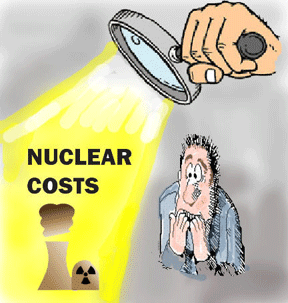
Global energy ministers met in Paris this week to discuss
how to kick-start a new age of atomic power. Installed capacity must triple
to 1,160 gigawatts by 2050, the Nuclear Energy Agency says. In the west,
many countries’ goals will hinge on attracting private capital to a
sector with a tarnished record.
Recent large projects in the US and Europehave run over budget and into delays. New, small reactors that can be built in factories by companies such as NuScale and Rolls-Royce to reduce risks are an exciting prospect. For larger projects in particular, governments
will have to offer incentives and guarantees that will not always sit
comfortably with taxpayers. ………..
France and the UK have ambitious targets. The UK is a test case for investor appetite
to fund new plants. It wants to secure funding for the 3.2GW Sizewell C
project, using a regulated asset base financing model. RAB …. offers
investors returns during construction. That avoids the accumulation of
interest on debt that would normally be paid off when projects open.
Households contribute to the financing via a surcharge on their energy
bills. For that reason, it is not popular with consumer groups. Opposition
will grow especially as investors will want the risk of any budget blow-ups
to be shared with bill-payers, at least 50-50. Governments have unpopular
decisions to make to achieve their nuclear aims.
FT 30th Sept 2023
https://www.ft.com/content/d3b6ca64-f93f-464f-96ab-ec479e7a933e
Return of US nuclear weapons to UK would be an escalation, says Russia
Moscow says it would respond with ‘countermeasures’, after US air force budget item hinted at possible move
Julian Borger and Andrew Roth, Wed 6 Sep 2023 https://www.theguardian.com/world/2023/sep/05/return-of-us-nuclear-weapons-to-uk-would-be-an-escalation-says-russia #nuclear #antinuclear #nuclear-free #NoNukes
The Russian foreign ministry has said Moscow will view any move to return US nuclear weapons to the UK as an escalation and will respond with “countermeasures” for its own security.
The foreign ministry spokesperson Maria Zakharova was responding to a report last week about an item in the 2024 US air force budget for building a dormitory at RAF Lakenheath in Suffolk for personnel on a “potential surety mission” – military jargon for nuclear safety and security. It raised the prospect of the return of US nuclear weapons to British soil for the first time in more than 15 years.
“If this step is ever made, we will view it as escalation, as a step toward escalation that would take things to a direction that is quite opposite to addressing the pressing issue of pulling all nuclear weapons out of European countries,” Zakharova said.
“In the context of the transition of the United States and Nato to an openly confrontational course of inflicting a ‘strategic defeat’ on Russia, this practice and its development force us to take compensating countermeasures designed to reliably protect the security interests of our country and its allies.”
The US is estimated by the Federation of American Scientists (FAS) to have 100 B61 gravity bombs deployed in Europe and another 100 B61s – the only tactical weapon in its arsenal – in storage in the US. If US nuclear weapons were sent back to Lakenheath, they would almost certainly be a modernised version of the B61.
FAS estimates Russia has 1,816 tactical, or non-strategic, weapons (shorter range and intended for use in battle rather than for the destruction of whole cities).
These have been held until now in storage facilities, but Vladimir Putin announced in June that some nuclear warheads would be deployed in Belarus within a month. There has so far been no confirmation by western intelligence that they have been moved.
The warheads are intended for use on Belarus Iskander missile launchers or as bombs to be dropped by Belarusian Su-24 or Su-25 jets. If the transfer is carried out, it would be the first time Moscow has put nuclear weapons in the hands of allies since the collapse of the Soviet Union.
Matt Korda, a senior research fellow at the FAS nuclear information project who first spotted the US budget item for a surety dormitory at Lakenheath, said: “While the potential return of US nuclear weapons to UK soil certainly merits scrutiny, it’s a bit rich to see it coming from a government who has spent the past year initiating the exact same thing with Belarus.
“It’s highly unlikely that the Russian government would describe its own nuclear sharing arrangements in Belarus as escalatory or destabilising and yet the parallels between the two situations are clearly visible.”
Elon Musk’s satellites litter the heavens as astonishing video shows how 5,000 Starlink aircraft are whizzing around the Earth and will soon outnumber the stars.
- Elon Musk’s 5,000 Starlink satellites are on track to surpass the number of visible stars in the sky, around 9,000
- A fascinating video showed the staggering number floating around in space
- Scientists fear for the future of astronomy as Musk’s space junk litters our sky

Unbalanced science. All about technology. But what about nature? What about light pollution? What about the moths, and all the other creatures that depend on the night darkness?
By MARTHA WILLIAMS FOR DAILYMAIL.COM 30 September 2023
Elon Musk‘s satellites are littering the heavens and an astonishing video has revealed how 5,000 of his Starlink aircraft are whizzing around the Earth.
Staggering footage posted by X user @flightclubio on September 18 shows thousands of little orange dots, representing the satellites, orbiting the planet and illustrating the vast scale of his investment.
But though Starlink has been hailed for providing internet in war-torn Ukraine, astronomers fear that the devices may soon obstruct our view of the cosmos – with around 9,000 stars visible from our planet.
New research showed that low-frequency radio waves – like the ones produced by Musk’s machines – are leaking into the sky which makes it difficult for scientists to make astronomical observations.
Scientists are also concerned that Musk’s ‘space junk’ could cause an extreme collision event. The ‘Kessler syndrome’ – proposed by NASA scientist Donald Kessler in 1978 – said that if there is too much space junk in the earth’s orbit then the objects could collide and make MORE space junk. This would result in Earth’s orbit becoming unstable.
SpaceX launched Starlink satellites in May 2019 and have already sent over 5,000 of the mass-produced objects into space.
The company announced reaching over 2 million subscribers in September 2023 and plan to deploy 12,000 satellites – a goal which could be raised to 42,000.
The SpaceX Starlink is a low orbit satellite that provides internet with unlimited data and quick broadband speeds.
The satellites offer fixed-location or portable internet options to users for a hefty price.
Internet provider T-mobile provide broadband for $50 monthly with no installation fee – while Starlink charges up to $2,500 for installation and can cost users up to $250 a month.
Viewers expressed their fear in the comments of the astonishing video that was uploaded to Musk’s social media website X (formerly known as Twitter).
One user said: ‘The size and scale of the Starlink project concerns astronomers, who fear that the bright, orbiting objects will interfere with observations of the universe, as well as spaceflight safety experts who now see Starlink as the number one source of collision hazard in Earth’s orbit.’
Researchers at Max Planck Institute used a telescope in the Netherlands to observe 68 devices made by Starlink, finding 47 were emitting ‘unintended electromagnetic radiation’ emanating from onboard electronics.
The team feared that the amount of emissions could be enough to be mistaken as radio waves from celestial objects.
The SpaceX CEO filed paperwork with the International Telecommunications Union for the operation of 30,000 more small devices in October 2019.
In its filings, SpaceX said the additional 30,000 satellites would operate in low Earth orbit at altitudes ranging from 1,076 feet to 1,922 feet. …………….. https://www.dailymail.co.uk/news/article-12575221/Elon-Musks-starlink-satellites-spacex-soon-outnumber-stars.html
The solar world we might have had

#nuclear #antinuclear #nuclear-free #NoNukes The Commission concluded that: “Nuclear fuels, for various technical reasons, are unlikely ever to bear more than about one-fifth of the load. We must look to solar energy.”
Instead, Truman’s presidency ended in January 1953, and the next president, Dwight Eisenhower, effectively tossed the Paley Commission report in the bin. It was replaced with the now infamous Atoms for Peace. Which of course was a lie. Because it was never about atoms for peace. It was really about atoms for war
by beyondnuclearinternational, By Linda Pentz Gunter, https://beyondnuclearinternational.org/2023/10/01/the-solar-world-we-might-have-had/—
Nuclear power has long stifled renewables. Now it needs to go extinct
We needn’t have had Fukushima at all, now 12 years old and still emitting radiation, still not “cleaned up”, still responsible for forbidden zones where no one can live, play, work, grow crops. We needn’t have had Chornobyl either, or Three Mile Island, or Church Rock. We needn’t have almost lost Detroit.
We could have avoided climate change as well. Not just by responding promptly to the early recognition of the damage fossil fuels were doing. But also by heeding one sensible plan that, if it had been acted upon, would have removed the nuclear power elephant from the energy solutions room and possibly also saved us from plunging into the climate catastrophe abyss in which we now find ourselves.
Right from the beginning, nuclear power made a significant contribution to the climate crisis we now face.
And unfortunately, as is often the case, the United States played the starring role.
Nuclear power was never the answer to climate change and it’s only pretending to be now as a desperate, last-ditch survival tactic. Renewables were always the answer and we’ve known this for decades.
Since the 1950s, nuclear power has been on the table for one reason only and it has nothing to do with reducing carbon footprints or sound science or strong economics.
What the nuclear power choice has always been about is the misguided caché given to nuclear weapons, to which nuclear power is inextricably linked. That caché prevented an early, rapid and widespread implementation of renewable energy. And that, in turn, has resulted in the climate crisis we have now.
There is growing recognition and acceptance of the role fossil fuels have played in our downfall and the imperative to eliminate their use. But there is little to no recognition of the impediment nuclear power has always been —and continues to be —when it comes to prioritizing renewable energy, along with energy efficiency and conservation.
Studies today clearly show that the choice of nuclear power over renewable energy impedes progress on carbon reductions, and of course costs far more. But nuclear power was always in the way. Arguably, nuclear power is far more a contributor to climate change than it could ever be a solution to it. How can that be so? Surely, using nuclear power all these years has spared us carbon emissions?
That would be true if the competition had been between nuclear and coal or nuclear and gas. But when nuclear power got started in the US, it was part of a very different agenda and what it supplanted was solar energy.
On July 2, 1952, President Harry Truman sent a report to Congress that had been completed a month earlier. It was called the President’s Materials Policy Commission “Resources for Freedom”. The Commission was chaired by William S. Paley, so it is commonly referred to as the Paley Commission.
Chapter 15 was entitled “The Possibilities of Solar Energy”. It went through many technical and economic scenarios, showing great potential and also flagging some stumbling blocks, most of which have since been solved. Here is what it concluded. In 1952.
“If we are to avoid the risk of seriously increased real unit costs of energy in the United States, then new low-cost sources should be made ready to pick up some of the load by 1975.”
Even at that early date, the Paley Commission’s authors recognized the abundance offered by solar energy, observing that, “the United States supply of solar energy is about 1,500 times the present requirement.”
But here is what they were not looking to for when it came to a “new low-cost source” of energy.
The Commission concluded that: “Nuclear fuels, for various technical reasons, are unlikely ever to bear more than about one-fifth of the load. We must look to solar energy.”
“We must look to solar energy.” Those words must surely give one pause.
And then the big what-might-have-been:
“Efforts made to date to harness solar energy economically are infinitesimal. It is time for aggressive research in the whole field of solar energy — an effort in which the United States could make an immense contribution to the welfare of the free world.” [my emphases]
Instead, Truman’s presidency ended in January 1953, and the next president, Dwight Eisenhower, effectively tossed the Paley Commission report in the bin. It was replaced with the now infamous Atoms for Peace. Which of course was a lie. Because it was never about atoms for peace. It was really about atoms for war.
The arguments for using nuclear power to address climate change are specious as we know. It’s too slow, too expensive, unsuited to distributed generation and the coming smart grids, as well as completely impractical for rural Third World environments. It can do nothing to reduce emissions from the transportation sector or agriculture, not to mention its show-stopping liabilities — safety, security and radioactive waste.
What nuclear power can boast is that is has slowed progress on achieving a low-carbon economy; wasted precious time on fruitless promises of a “renaissance”; stolen funds from renewable energy; and captured sectors of the energy market at our expense and for no other reason than to claim continued legitimacy.
I love elephants. We must do everything we can to save them. But the nuclear power elephant in the room really does need to go extinct in a hurry. Otherwise, that is the fate that will instead befall all of us.
US Pacific Security Deal With Marshall Islands at Risk Over #Nuclear Payments Description
VOA News, 1 Oct 23, #antinuclear #nuclear-free #NoNukes
The United States struck security agreements this week with Pacific Island nations seen as a key part of U.S. plans to counter China’s territorial expansion. But after three years of negotiations, one of those Pacific nations — the Marshall Islands — still has not reached a deal with Washington.
A member of the U.S. negotiating team blames the State Department’s legal team for the holdup, saying they object to how the agreement describes money for compensation from U.S. nuclear testing in the Marshall Islands some 60 years ago.
The agreement — known as the Compacts of Free Association — gives Washington exclusive access to large parts of the Pacific Ocean surrounding Micronesia, Palau and the Marshall Islands. Funding runs out on September 30.
“You would have to say that there was mission failure,” said Howard Hills in an exclusive interview with VOA.
Hills negotiated those compacts alongside presidential envoy Ambassador Joseph Yun but left his position September 7. Deals with Micronesia and Palau have been reached, while talks with the Marshall Islands have stalled.
In a speech before the United Nations General Assembly on September 20, President David Kabua laid out the Republic of the Marshall Island’s remaining demand.
“What the United States must realize is that Marshallese people require that the nuclear issue be addressed.”
Kabua was referring to the environmental and health impacts of the 67 atomic bomb tests conducted in the Marshall Islands between 1946 and 1958.
But Hills says the State Department won’t let Yun officially designate the funds as compensation for the effects of American nuclear tests in the Marshalls………………………………………………………………………………………. more https://www.voanews.com/a/7290553.html
 | |||
| |||
Nuclear Arms Control: U.S. May Face Challenges in Verifying Future Treaty Goals
GAO-23-105698P Sep 28, 2023. https://www.gao.gov/products/gao-23-105698 #nuclear #antinuclear #nuclear-free #NoNukes
Fast Facts. The U.S. has set goals for a new strategic U.S.-Russian nuclear arms control treaty when the current one expires in 2026.
The goals are to ensure that a new treaty addresses all nuclear weapons—including those in storage and shorter-range weapons—and certain weapon delivery vehicles. For the next treaty, officials largely expect to use current methods to verify that each country complies, such as on-site inspections and satellite imagery.
Beyond the next treaty, future treaties could include more extensive nuclear weapon limits. Verifying such treaties may require more advanced technology, which the U.S. is researching and developing.
What GAO Found
New START, a treaty that limits U.S. and Russian strategic nuclear forces, will expire in 2026. The U.S. has established three goals for a nuclear arms control treaty with Russia to follow New START:
- Retain limits on systems capable of delivering nuclear weapons at intercontinental ranges, or “strategic delivery vehicles”;
- Address all nuclear weapons, including nonstrategic nuclear weapons and weapons in storage; and
- Address new and novel Russian delivery vehicles, such as a nuclear-powered and nuclear-armed cruise missile.
According to U.S. officials, the measures for verifying compliance with a New START successor are likely to be similar to those employed for New START, including exchanges of data about deployed strategic delivery vehicles, inspections at relevant bases, and use of satellites. In the long term, the U.S. has aspirational goals—such as nuclear weapons reductions—that may require more extensive verification using more intrusive technologies.
The National Nuclear Security Administration (NNSA) has a plan for developing verification technologies that would support an array of possible treaty scenarios. NNSA’s plan groups these technologies into three “approaches” based on increasing levels of intrusiveness and confidence in compliance. Officials stated that technologies in the first, “baseline” approach are largely proven or already used under New START and are ready to support a potential successor treaty. More intrusive technologies—such as devices to measure weapons’ radiation signatures—would provide increased confidence in compliance and support longer-term treaty goals but may require 5 to 10 more years of development.
Stakeholders GAO interviewed and studies GAO reviewed noted likely challenges to verifying Russian compliance with future treaties that address U.S. nuclear arms control goals. For example, nuclear weapons are smaller than strategic delivery vehicles and would thus be harder to monitor using satellites. Verifying Russian compliance with limits on nonstrategic nuclear weapons may also be challenging, in part because many Russian nonstrategic delivery vehicles can carry nuclear or conventional weapons, making visual differentiation difficult.
Why GAO Did This Study
New START limits the number of U.S. and Russian strategic delivery vehicles—such as intercontinental ballistic missiles (ICBM)—and the total number of nuclear weapons that each party is allowed to deploy on those vehicles. New START also details a collection of verification measures—such as inspections and the use of satellites—intended to provide confidence that parties are complying with treaty limits. The U.S. has sought to negotiate a New START successor with Russia and aspires to pursue future arms control with China.
The Senate report accompanying a bill for the National Defense Authorization Act for Fiscal Year 2022 includes a provision for GAO to review technologies that could support verification of future nuclear arms control treaties. This report describes (1) U.S. goals and likely verification measures for future nuclear arms control treaties, including a successor to New START; (2) the extent NNSA has planned for or developed verification technologies to support future arms control goals; and (3) challenges stakeholders have identified to implementing verification measures to support future treaties.
GAO reviewed U.S. government plans and reports pertaining to nuclear arms control treaty verification, as well as relevant studies. GAO also interviewed 43 stakeholders, including U.S. government officials, representatives from the Department of Energy’s national laboratories, and nuclear arms control experts.
For more information, contact Allison Bawden at (202) 512-3841 or bawdena@gao.gov.
North Korea slams UN nuclear agency as US mouthpiece
The spokesman described the resolution as a ‘result of conspiracy’ by the United States and its allies, saying North Korea’s status as a nuclear weapons state has already become ‘irreversible.’
The spokesman described the resolution as a ‘result of conspiracy’ by the United States and its allies, saying North Korea’s status as a nuclear weapons state has already become ‘irreversible.’
Reuters 02 October 2023,
Read more at: https://www.deccanherald.com/world/north-korea-slams-un-nuclear-agency-as-us-mouthpiece-2708775
North Korea on Monday denounced the UN atomic watchdog for joining a US-led pressure campaign and “cooking up” a resolution over its nuclear programmes, calling the agency a “paid trumpeter” for Washington.
The spokesman also accused IAEA chief Rafael Grossi of “taking the lead in creating the atmosphere of pressurising the DPRK” by “spreading a false story” about an imminent nuclear test. Grossi warned last year that the reclusive country could resume…
Read more at: https://www.deccanherald.com/world/north-korea-slams-un-nuclear-agency-as-us-mouthpiece-2708775
Read more at: https://www.deccanherald.com/world/north-korea-slams-un-nuclear-agency-as-us-mouthpiece-2708775
‘We’re not doomed yet’: climate scientist Michael Mann on our last chance to save human civilisation.

‘We’re not doomed yet’: climate scientist Michael Mann on our last
chance to save human civilisation. The renowned US scientist’s new book
examines 4bn years of climate history to conclude we are in a ‘fragile
moment’ but there is still time to act.
“We haven’t yet exceeded the
bounds of viable human civilisation, but we’re getting close,” says
Prof Michael Mann. “If we keep going [with carbon emissions], then all
bets are off.”
The climate crisis, already bringing devastating extreme
weather around the world, has delivered a “fragile moment”, says the
eminent climate scientist and communicator in his latest book, titled Our
Fragile Moment. Taming the climate crisis still remains possible, but faces
huge political obstacles, he says. Mann, at Penn State university in the
US, has been among the most high-profile climate scientists since
publishing the famous hockey stick chart in 1999, showing how global
temperatures rocketed over the last century.
Guardian 30th Sept 2023
Chart: China’s solar export dominance grows with surging European orders
#nuclear #antinuclear #nuclear-free #NoNukes
China’s solar export dominance grows with surging European orders. The
country produces 80 percent of the world’s solar panels, and Europe is
now buying over half of the panels it exports.
Canary Media 29th Sept 2023
RFK Jr Will Run For President As An Independent: REPORT
JULIANNA FRIEMAN September 29, 2023 https://dailycaller.com/2023/09/29/robert-f-kennedy-rfk-independent-2024/
Democratic presidential candidate Robert F. Kennedy Jr. will reportedly announce on Oct. 9 that he is running as an independent
Kennedy is set to switch party affiliations after campaigning as a Democrat since April. His campaign plans to air “attack ads” against the Democratic National Committee to “pave the way” for his announcement, according to Mediate.
“Bobby feels that the DNC is changing the rules to exclude his candidacy, so an independent run is the only way to go,” a Kennedy campaign insider told the outlet. (RELATED: Biden World Wants The Media To Destroy Robert F. Kennedy Jr)
Kennedy has criticized President Joe Biden on various occasions during his campaign. He claimed to be “the first person censored by the Biden administration” in early 2021 when he was suspended from Instagram and Facebook for disinformation, and has accused the sitting president of living in a “bubble” and only talking to “donors.”
By switching his election bid to an independent campaign, Kennedy could serve as a “spoiler” candidate, though commentators were divided on whether he would pull more votes from Biden or former President Donald Trump.
Kennedy begged the Biden administration for Secret Service protection in September after a man impersonating a U.S. Marshal was arrested for bringing two loaded pistols and a spare ammunition magazine at one of Kennedy’s campaign events. The candidate’s father, New York Sen. Robert F. Kennedy, and his uncle, President John F. Kennedy, were both assassinated.
Contemplating the Unimaginable Costs of a Nuclear War
If you are on the road to annihilation—get off.
SCHEERPOST, By Andrea Mazzarino / TomDispatch October 1, 2023
Despite Russian hints about the use of nuclear weapons in the war in Ukraine, consider it strange — amid other world-endangering possibilities — how little attention nuclear destruction gets anymore. And that’s despite the fact that there are now nine (yes, nine!) nuclear powers on this planet, ranging from the United States, Russia, and China to Israel and North Korea.
Still, at some point in your life, you’ve probably heard about the theory of “nuclear deterrence” embraced by so many in our military and those of other major powers globally. The idea is that nuclear weapons actually keep us all “safe” by their mere presence in the hands of those powers. According to such thinking, their existence restrains the leaders of such countries from directly making war on each other for fear of setting off a world-ending nuclear conflict. And in that context, yes, the U.S. military spends tens of billions of dollars annually on the upkeep of some 5,428nuclear weapons of every sort and their delivery systems to keep us safe. Worse yet, it plans to “invest” upwards of two trillion dollars more “modernizing” that arsenal in the coming decades…………………………………………….
To take just the most obvious recent example, nuclear weapons no more prevented Russian President Vladimir Putin from invading Ukraine than they had stopped the U.S. invasion of Iraq (based, in fact, on the false claim that autocrat Saddam Hussein possessed weapons of mass destruction). Nor have they recently stopped the U.S. from sending close to $50 billion and counting in weaponry and ammunition, not to speak of training and intelligence technology, to Ukraine in response. And count on one thing: some of what our country has provided will impact Ukrainians for generations to come, including depleted uranium tank shells and cluster munitions, those bundles of bomblets banned by more than 100 countries because of their indiscriminate tendency to go off years later, often killing innocent civilians.
In an era marked by so many advances in healthcare, green energy, and food production, which would seem to offer other ways of helping stabilize weak states we fear, the U.S. has progressively expanded its military involvement to some 85 countries globally. There, our soldiers and contractors occupy bases, train local forces, run prisons and intelligence operations, fly drones, and sometimes fight alongside local armies, often in settings with far laxer human rights standards than ours.
Today’s unmanned drones also make it possible to wreak violence without having to witness the consequences………………………………………………………………………..
The Proliferation of Violence
In these decades, the lack of deterrence of violence itself, even if not the nuclear version of it, has been profound. The Costs of War Project at Brown University, which I helped found, has made it all too clear that suffering from armed conflict extends far beyond the battlefield and generations into the future. …………………………………………………………………
The question we at the Costs of War Project return to endlessly is: How do you measure the indirect effects of war? What kind of “security” — if any — has prevailed in the era following the devastation of Hiroshima and Nagasaki?
A Very Small Margin of Error
Of all our preconceptions about nuclear weapons, what’s probably the most destructive is the unstated assumption that they are the sole alternative to a more constant state of conventional warfare. There are, of course, conflict-resolution options that don’t involve violence at all, including diplomacy, the use of targeted intelligence, and anti-poverty programs the likes of which the United Nations and its affiliated human rights and humanitarian organizations promote. Conventional warfare exacts staggering opportunity costs and only makes it harder for leaders to pursue such routes.
Yet the sole type of conflict that could foreclose all alternatives whatsoever is, of course, nuclear war. It could vaporize the very skeleton of civilization — infrastructure, communications, government, and of course people in staggering numbers — all potentially in a matter of minutes, or less time than it takes you to read this piece.
These days, however, we in the U.S. seldom talk about the ever-present possibility of nuclear annihilation by, for instance, intercontinental ballistic missiles (ICBMs), warhead-bearing projectiles capable of traveling thousands of miles (of which the U.S. and Russia have about 400 each).
Scenarios that would place us all on the brink of nuclear annihilation could involve an all-too-human mix of everyday mistakes, incompetence, and heightened emotions. Consider, for instance, the possibility that a simple accident might detonate a warhead before it even leaves the ground, killing untold numbers of people………………………………………………………………………………………………….. https://scheerpost.com/2023/10/01/contemplating-the-unimaginable-costs-of-a-nuclear-war/
People Are Dying For Inches In Ukraine, The “World’s Largest Arms Fair”

CAITLIN JOHNSTONE, SEP 29, 2023 https://www.caitlinjohnst.one/p/people-are-dying-for-inches-in-ukraine?utm_source=post-email-title&publication_id=82124&post_id=137502350&utm_campaign=email-post-title&isFreemail=true&r=1ise1&utm_medium=email
There’s a heartbreaking graphic going around right now showing the almost microscopic changes that have occurred to the frontline of the war in Ukraine this year despite nonstop death and destruction of unfathomable horror the entire time.
The graphic comes from a New York Times article titled “Who’s Gaining Ground in Ukraine? This Year, No One.”, which eventually gets around to acknowledging that Russia has actually gained more ground than Ukraine in 2023 despite Kyiv’s much-hyped counteroffensive which began in June.
“When both sides’ gains are added up, Russia now controls nearly 200 square miles more territory in Ukraine compared with the start of the year,” the Times reports.
As Left I on the News noted on Twitter, this contradicts the titular claim in another New York Times article published last week under the headline “Ukraine Has Gained Ground. But It Has Much Further To Go.”
The reason the map of gains and losses is so heartbreaking is because so much has been given up for so very, very little. At least tens of thousands have died in this war with hundreds of thousands wounded, all for those teeny, tiny little blips on the map. Ukraine is now freckled with more landmines than anywhere else on earth, which experts say will take decades to clear. This giant deathtrap is exacerbated by the cluster munitions that are covering the land with greater and greater frequency, which will go on to detonate and kill civilians (mostly children) for years to come. The mines and artillery fire on the frontline of this war are reportedly creating tens of thousands of amputees, numbers comparable to what was seen in World War I.
And all for what? Essentially nothing. A few inches gained here, a few inches lost there. The meaninglessness of it all is probably one of the reasons why military-aged Ukrainian men have been fleeing and attempting to flee the nation in droves to avoid conscription.
War is the worst thing in the world. The suffering, trauma and loss of mass military violence is too much to comprehend, even for people who are right there experiencing it. And the only thing worse than a war where one side gets completely steamrolled by the other is one in which people keep killing each other and killing each other over tiny gains and losses on the battlefield without an end to the nightmare anywhere on the horizon.
And now we see western officials and media outlets telling us all to prepare for this war to drag on for years, potentially into the 2030s. This nonsensical violence, which even the head of NATO now admits could have been avoided by simply ceasing to amass a western military threat on Russia’s doorstep, is scheduled to drag on as long as possible for no grander reason than the advancement of US strategic interests.
This news from The New York Times comes out at the same time as a Wall Street Journal article titled “The War in Ukraine Is Also a Giant Arms Fair,” subtitled “Arms makers are getting orders for weapons being put to the test on the battlefield.”
“The Panzerhaubitze howitzer is part of an arsenal of weapons being put to the test in Ukraine in what has become the world’s largest arms fair,” writes WSJ’s Alistair MacDonald. “Companies that make the weapons being used in Ukraine have won orders and resurrected production lines. The deployment of billions of dollars worth of equipment in a major land war has also given manufacturers and militaries a unique opportunity to analyze the battlefield performance of weapons, and learn how best to use them.”
This is one of those things that just sounds a bit uncomfortable at first, but if you really sit with the words and deeply contemplate what’s being said here it will show up as so deeply evil it will give you nightmares. The fact that weapons systems are being tested on human bodies to the immense benefit of war profiteers over a completely avoidable and deliberately provoked war is one of the most depraved things you can possibly imagine, and is a clear sign that we are living in a profoundly sick society.
This is so, so ugly, and it’s slated to get even uglier — these freaks haven’t even gotten started on China yet. The sooner this monstrous power structure can be brought to its knees, the better it will be for everyone.
Nazigate: Canada’s top general won’t apologize for applauding Ukrainian Waffen-SS vet

WYATT REED, ·SEPTEMBER 28, 2023, https://thegrayzone.com/2023/09/28/nazigate-canadas-general-ukrainian-waffen-ss/—
As Canada’s top officials express embarrassment for honoring a WWII Nazi collaborator in parliament, the leader of the country’s military, Gen. Wayne Eyre, refuses to apologize for his standing ovation. The Canadian military has trained Ukraine’s notorious neo-Nazi Azov Battalion for years.
Canadian politicians have been in frantic damage control mode since feting a former member of the Waffen-SS during a parliamentary reception for Ukrainian President Volodymyr Zelensky on September 22. The Speaker of Canada’s House of Commons, Anthony Rota, resigned following the incident, while Prime Minister Justin Trudeau lamented it as “extremely upsetting,” and opposition leader Pierre Poilievre branded the affair the “biggest single diplomatic embarrassment” in Canada’s history.
But amid the gratuitous public rites of contrition, one influential official has been conspicuously absent: Canada’s highest-ranking general. According to the Ottawa Citizen, Chief of the Defence Staff Gen. Wayne Eyre has “declined to apologize for his standing ovation” for Yaroslav Hunka, the now-notorious 98-year-old former member of the 14th Waffen Grenadier Division of the SS, whose members gained international infamy for hunting down anti-Nazi partisans, massacring thousands of civilians, and burning hundreds of Polish villagers alive.
The notion that the Nazi proclivities of figures like Hunka could have escaped Eyre’s notice now appears increasingly remote. In 2017, Ukraine’s Azov Battalion published photos on their website publicizing their meeting with high-level Canadian military officials, who had arrived in Ukraine to help train the notoriously neo-Nazi infested unit, which was officially incorporated into the Ukrainian National Guard.
A year later, Azov posted photos on its official social media channels showing Canadian military attaché Col. Brian Irwin meeting with its personnel. Responding to a query from journalist Asa Winstanley, a Canadian military spokesman justified training the fascist military on the grounds that the session “includes ongoing dialogue on the development of a diverse, and inclusive Ukraine.”
Just four months before Russia’s invasion of Ukraine, The Friends of Simon Wiesenthal Center for Holocaust Studies sent a letter to then-Acting Chief of the Defense Staff Gen. Wayne Eyre and Defense Minister Harjit Sajjan demanding an investigation into the decision to train Ukrainian neo-Nazis. The Jewish group urged them to ensure that such instruction did not continue.
“If Canada is going to be providing military training to foreign forces, then it is our responsibility to know we are not training neo-Nazis,” said Jaime Kirzner-Roberts, policy director of the Friends of Simon Wiesenthal Center. “It is our obligation to our Canadian veterans who sacrificed so much defeating fascism in Europe.”
But such warnings apparently went unheeded. The Canadian military not only declined to discontinue its Nazi-training policies, it escalated its program of coaching avowed fascists. Since Russian military operations in Ukraine kicked off in Feb. 2022, Canada has invested a further $1.6 billion USD in the arming and instructing of Kiev’s military.
On the sidelines of Zelensky’s now-infamous address to the Canadian Parliament, Ottawa authorized the further disbursement of another $483 million USD in aid and training on F-16 fighter jets.
Canada’s scheme of funneling weapons to Kiev and coaching Ukrainian forces officially began in 2014, just months after anti-Russian forces toppled the democratically-elected government of Viktor Yanukovych in a brutal US government-backed coup d’etat. Under the auspices of “Operation UNIFIER,” more than 33,000 Ukrainian troops received “advanced combat instruction by Canadian soldiers,” Canada’s state-affiliated CBC reported in 2022.
Ukraine’s ambassador in Ottawa, Yulia Kovaliv, heralded the training initiative as a “very important initiative.”
“It is also important to further provide Ukraine with heavy weapons,” she added.
In the UK, where Canadian forces frequently travel in order to school Zelensky’s army in the art of killing Russians, the program received a similarly warm welcome. An ebullient British Defense Secretary Ben Wallace said in a statement at the time that he was “delighted” that “the Canadian Armed Forces will be joining the growing international effort to support the training of Ukrainian soldiers in the UK.”
“Canada’s expertise will provide a further boost to the programme and ensure that the Ukrainian men and women, coming to the UK to train to defend their country, will get a wide pool of experience and skills from both UK forces and our international partners,” Wallace crowed.
Just what exactly the nationalist-leaning members of Ukrainian armed forces did with the training and tacit blessing of Canada has yet to be ascertained. But Azov members have been implicated in a number of war crimes. Despite the unit’s recent push to whitewash its Nazi tendencies, Azov — which has since expanded to a full-fledged brigade under Kiev’s official command — retains as its leader Andrey Biletsky, who once described Ukraine’s role on the global stage as helping to “lead the white races of the world in a final crusade … against Semite-led Untermenschen.”
Biletsky has taken pains to distance himself from the comment, but the unit has not undertaken similar efforts to distance itself from Biletsky. In September 2023, Biletsky was photographed proudly shaking hands with Zelensky during an intimate meeting with the Ukrainian President on the outskirts of Bakhmut. And Zelensky himself appears to have few problems with publicly associating with the group.
In a post commemorating the encounter with Ukraine’s most celebrated Nazi formation, Zelensky declared: “I am grateful to everyone who defends our country and people, who brings our victory closer.”
Nuclear waste ship makes unprecedented port call at Novaya Zemlya
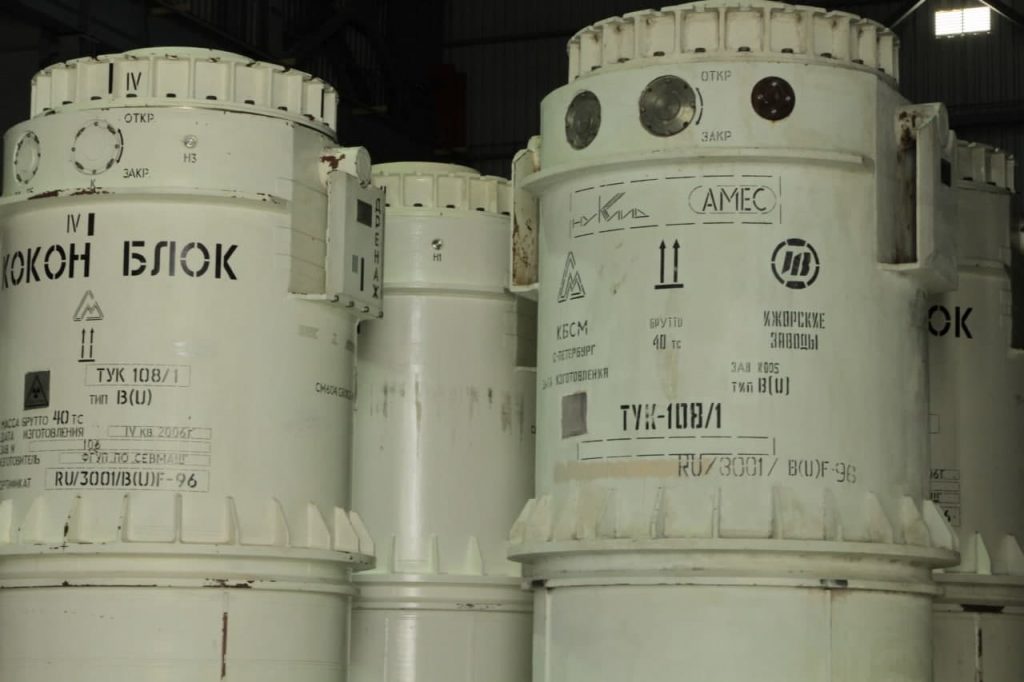
“I am deeply worried if Russia has started to move nuclear waste from the Kola Peninsula to the Arctic archipelago,” says Frederic Hauge with the Bellona foundation.
Much of the remaining uranium fuel elements in Andreeva Guba are damaged and pose special problems to handle. For that reason, the reprocessing plant in Mayak has been unwilling to receive.
Thomas Nilsen, September 29, 2023 https://thebarentsobserver.com/en/nuclear-safety/2023/09/nuclear-waste-ship-makes-port-call-novaya-zemlya
Last week, the “Rossita” could be seen on ship tracking services as it sailed outside Gremikha, a shutdown submarine base east on the Kola Peninsula. Now, the specially designed ship is moored at the pier in Severny, a military town on the shores of the Matochkin Strait diving the northern and southern islands of Novaya Zemlya
Severny is the settlement serving Russia’s nuclear weapons tests, nowadays in the form of sub-critical experiments taking place deep inside tunnels in the permafrost mountains. The last real detonation of a nuclear warhead was on October 24, 1990.
The “Rossita” was built in Italy with Italian taxpayers money. It was a helping hand from a European nation aimed to transport spent nuclear fuel from the run-down storage site in Andreeva Guba on the shores of the Litsa fjord, a short 60 km from the border with Norway.
Some 21,000 spent fuel elements from the Soviet Union’s fleet of Cold War submarines were stored. Italy’s contributions were part of a larger international cooperation to assist Russia in securing the lethal highly radioactive waste.
Other contributing nations were Norway, the United Kingdom and Sweden.
The “Rossita” shuttled between Andreeva Bay and Atomflot in Murmansk. From there, the containers with the fuel elements were sent by train to Mayak north of Chelyabinsk where Russia’s reprocessing plant is located.
With Moscow’s all-out war against Ukraine, the Western partners stopped all cooperation with Russia in regard to nuclear waste handling.
For the last 19 months, little information about what happens in Andreeva Bay has reached the public.
What is known is that two of the Northern Fleet’s most potent nuclear-powered submarines, the “Severodvinsk” and the “Kazan” of the Yasen class are moored across the bay at the piers in Nerpicha, part of Zapadnaya Litsa naval base.
“All reasons to monitor”
Frederic Hauge with the Bellona Foundation in Norway will not speculate too much about reasons Russia might have to move nuclear waste to the Arctic archipelago of Novaya Zemlya.
“What we do know is that “Rossita” is specially designed to carry TUK-18 containers modified to hold damaged spent nuclear fuel,” he says.
Much of the remaining uranium fuel elements in Andreeva Guba are damaged and pose special problems to handle. For that reason, the reprocessing plant in Mayak has been unwilling to receive.
“There are all reasons to monitor what now happens at Novaya Zemlya,” Hauge notes.
His team of nuclear experts in Oslo and Vilnius are now analyzing the limited available information with the hope of understanding what happens.
“A week ago, Rosatom’s larger carrier “Sevmorput” sailed to Novaya Zemlya. We are also told that there have been busy days at Severny and near the tunnels designed for nuclear weapons testing,” Hauge says in a phone interview with the Barents Observer.
“The big unanswered question is if what we now are witnessing is a Russia that brings dangerous nuclear waste to Novaya Zemlya for long-term storage in the permafrost.”
Fresh concerns over Zaporizhzhia nuclear power plant: Emerging Europe this week
Emerging Europe 29th Sept 2023 #nuclear #antinuclear #nuclear-free #NoNukes
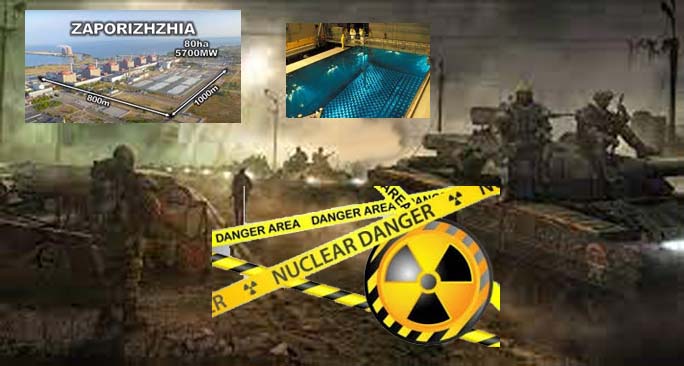
International regulators are incapable of properly monitoring safety at the Russian-occupied Zaporizhzhia nuclear power station, according to a critical dossier compiled by Greenpeace that is being sent to western governments on Thursday.
The environmental campaign group concludes the International Atomic Energy Agency has too few inspectors at Europe’s biggest nuclear plant—four—and that there are too many restrictions placed on their access.
It argues that the IAEA is “unable to meet its mandate requirements” but it is not prepared to admit as much in public, and as a result what it describes as Russian violations of safety principles are not being called out.
Shaun Burnie and Jan Vande Putte, nuclear specialists at Greenpeace, conclude: “The IAEA risks normalising what remains a dangerous nuclear crisis, unprecedented in the history of nuclear power, while exaggerating its actual influence on events on the ground.”
The vast Zaporizhzhia nuclear power plant, with six reactors on site, was captured by Russia in early March 2022 and has been on the frontline of the war ever since. It is sited on the Dnipro River in central Ukraine and Ukrainian forces occupy the riverbank opposite, leaving the plant in the sights of both sides’ militaries. https://emerging-europe.com/news/fresh-concerns-over-zaporizhzhia-nuclear-power-plant-emerging-europe-this-week/
1 This Month



19 November – Webinar – The Reality of Reprocessing
Time: 11:00 AM Pacific Time (US & Canada) / 2:00 PM Eastern / 7:00 PM UK / 8:00 PM CET
Register for the Zoom Event Here



Shut down the radiation-damaged Heysham nuclear reactors now
To see nuclear-related stories in greater depth and intensity – go to https://nuclearinformation.wordpress.com

Say No to NASA’s Reckless Nuclear Reactor on the Moon
Say No to NASA’s Reckless Nuclear Reactor on the Moon
-
Archives
- November 2026 (64)
- October 2026 (302)
- September 2026 (339)
- August 2026 (330)
- July 2026 (355)
- June 2026 (287)
- May 2026 (306)
- April 2026 (356)
- March 2026 (251)
- February 2026 (267)
- January 2026 (308)
- December 2025 (358)
-
Categories
- 1
- 1 NUCLEAR ISSUES
- business and costs
- climate change
- culture and arts
- ENERGY
- environment
- health
- history
- indigenous issues
- Legal
- marketing of nuclear
- media
- opposition to nuclear
- PERSONAL STORIES
- politics
- politics international
- Religion and ethics
- safety
- secrets,lies and civil liberties
- spinbuster
- technology
- Uranium
- wastes
- weapons and war
- Women
- 2 WORLD
- ACTION
- AFRICA
- Atrocities
- AUSTRALIA
- Christina's notes
- Christina's themes
- culture and arts
- Events
- Fuk 2022
- Fuk 2023
- Fukushima 2017
- Fukushima 2018
- fukushima 2019
- Fukushima 2020
- Fukushima 2021
- general
- global warming
- Humour (God we need it)
- Nuclear
- RARE EARTHS
- Reference
- resources – print
- Resources -audiovicual
- Weekly Newsletter
- World
- World Nuclear
- YouTube
-
RSS
Entries RSS
Comments RSS


