Fatal fallout
by beyondnuclearinternational, https://beyondnuclearinternational.org/2026/07/21/fatal-fallout/
What a secret report reveals about British nuclear weapons tests – veterans claimed they were harmed by the fallout, report Christopher R. Hill and Jonathan Hogg for The Conversation
“The Ministry of Defence has always maintained that it never rained,” said Ken McGinley, founder of the British Nuclear Test Veterans Association (BNTVA). “I’m sorry, you’re liars … I was there!”
McGinley, who was a royal engineer, gave this interview in January 2024, shortly before his death, as part of our Oral History of British Nuclear Test Veterans project.
McGinley was present during the Grapple nuclear weapons test series, conducted by the UK on the central Pacific island of Kiritimati (also known as Christmas Island) in the late 1950s. At the time, this remote atoll was inhabited by 250 villagers as well as thousands of British servicemen.
For decades, many of those present during this and other above-ground British nuclear weapons tests have argued they were harmed by radioactive fallout. McGinley founded the BNTVA in 1983 to “gain recognition and restitution” for the veterans who took part in British and American nuclear tests and clean-ups between 1952 and 1965.
Rain became a key symbol in their argument as one of the only tangible signs of fallout taking place. The nuclear physicist Sir Joseph Rotblat described these alleged post-blast showers as “rainout”, a phenomenon whereby rain and mushroom clouds interact, leading to the contamination of rain droplets by harmful radionuclides.
In almost all cases, any link to subsequent health issues has been denied by the UK government because of lack of evidence of widespread radioactive contamination. However, a review of the evidence – written in 2014 by anonymous government scientists in response to freedom of information requests – was recently leaked by whistleblowers.
It reveals that post-blast radiation readings increased by a factor of up to seven on the island, compared with the normal background level. In our view, this would be more than enough to satisfy the “reasonable doubt” that tribunals require for veterans to receive a war pension due to illness or injury related to their service, as stated in the Naval, Military and Air Forces (Disablement and Death) Services Pension Order.
The top secret review, first revealed publicly by the Mirror newspaper on March 14 2026, also contains new evidence of radioactive contamination of fish in the island’s waters.
The repeated dismissal of veterans’ testimony in court cases and pension appeals caused stress and trauma for many. The majority died insisting they were not deceitful or forgetful – and that it did indeed rain while they were living on Kiritimati.
‘Factually inaccurate’
Kiritimati was monitored for fallout by the Ministry of Defence (MoD) after each detonation over the island – the largest of which, Grapple Y, was 200 times more powerful than the bomb dropped on Hiroshima.
In 1993, environmental monitoring data was collated into a report by a team at the MoD’s Atomic Weapons Establishment (AWE). Known as the Clare report, this informed the UK’s official position on fallout: namely, that none occurred over populated areas and that veterans would need to prove otherwise to secure redress.
However, the 2014 review of fallout data concluded the Clare report was “incomplete and, in some cases, factually inaccurate”.
Despite this review being passed on to the MoD, however, it was kept secret for more than a decade. Following its release, the legal implications could be gamechanging. According to the 2014 review: “The instrument readings could potentially be used to challenge the validity of statements made by MoD and UK government regarding … fallout on Christmas Island.”
In a recent House of Commons debate on the issue, the UK minister for veterans and people, Louise Sandher-Jones, confirmed her commitment “to the nuclear test veterans and their fight for transparency … They have had a very long fight, and I really recognise how difficult it has been for them, and I want them to understand that I am committed to them.”
Iran accuses US of violating international law after strike on nuclear plant
Energy watchdog says Darkhovin nuclear plant symbolises Iranian nation’s dignity and self-reliance
MEE staff, Middle East Eye, 19 July 2026
Iran’s nuclear energy watchdog condemned the United States for bombing the construction site of the Darkhovin Nuclear Power Plant.
In a statement, the Atomic Energy Organisation of Iran (AEOI) said the US had targeted a symbol of the Iranian nation’s dignity and its efforts to achieve self-reliance.
“The terrorist and criminal US regime, whose nature is nothing but bullying and lawlessness, carried out an aggressive and barbaric act in violation of international law,” the organisation said in a statement.
The AEOI did not disclose the extent of the damage but described the attack as a violation of international law.
The power plant is located in Khuzestan province in southwestern Iran. Construction of the current reactor began in 2022 at a site on the Karun River, about 70km south of Ahvaz and roughly 100km north of the Persian Gulf.
The International Atomic Energy Agency (IAEA) said it was looking into reports of the overnight attack.
“The facility is in the very early stages of construction and contained no nuclear material when last visited by the IAEA,” the UN agency said, adding that the attack is not believed to pose any radiological risk.
IAEA Director General Rafael Grossi reiterated a call for “military restraint in the vicinity of all nuclear-related sites”.
Earlier on Saturday, Iranian officials said Iran had withdrawn from a memorandum of understanding with the Trump administration after the US resumed its bombardment of the country.
Iran and the US have intensified their attacks since an interim ceasefire deal signed a month ago fell apart last week, raising the possibility of a return to all-out war.
US Central Command (Centcom) said the latest air strikes began at 6pm ET (10pm GMT) on Saturday at the direction of President Donald Trump……………………………………….https://www.middleeasteye.net/news/iran-accuses-us-violating-international-law-after-strike-nuclear-plant
Close that Facility: The 2026 Pine Gap Protests

Dr Binoy Kampmark, 21 July 2026, https://theaimn.net/close-that-facility-the-2026-pine-gap-protests/
It remains a prickly reminder that Australia remains an embarrassed vassal of power, annexed to the security interests of another state basking in imperial and fast diminishing splendour. Pine Gap, known more technically as the Joint Defence Facility Pine Gap (JDFPG), is a largely US-operated effort in Alice Springs, Central Australia. As the late scholar of strategic studies Desmond Ball pithily remarked in 1988, it is “an espionage operation.
Euphemisms should not be allowed to obscure this essential point.” It grew out of a desire on the part of the US Central Intelligence Agency (CIA) in 1965 to establish a remote Australian-sited ground control station intended for signals intelligence satellites. Land belonging to the Central Arrernte people was accordingly excised the following year for the site. The decision, in typically rough fashion, was made without consultation and discussion with local residents or elders, a secret place that became what Trevor Paglen would describe as a “blank space on the map … erased from the public record.”
The facility staffs some 800 personnel from the US National Security Agency (NSA), CIA, the US National Reconnaissance Office (NRO) and such Australian agencies as the Australian Signals Directorate and Australian Federal Police. Over the years, the base has become increasingly corporatised with a heavy American accent: Raytheon, Northrop Grumman and General Dynamics, IBM and Hewlett Packard. A mere 10% of the constituted personnel are said to be Australian government employees.
The base periodically attracts its keen and principled protesters, aghast at the base’s role in furnishing targeting data for US and allied drone and missile strikes across the Middle East and Africa. This year, the Close Pine Gap-Sacred Land Back convergence featured three days (July 18-20) of activities, with hundreds of participants gathered in Alice Springs to demand the closure of the facility through a series of workshops, panels and woven “threads of anti-militarism and decolonial movements.”
On July 20, a rally of 300 individuals gathered close to the front of the spy base, the largest since 1987, sporting signs and flags and chanting the stock phrases: “shut it down”, “close Pine Gap”, and “always was, always will be Aboriginal land.” New South Wales Greens Senator David Shoebridge was present, expressing his concern about a “foreign military base set up for the interests of a foreign military” in the service of “right wing politics” and disrespectful of international law. The base was also a potential target for any adversaries the US might be willing to antagonise, thereby bringing “danger into the heart of our country.”
Arrernte Apmereke-artweye traditional custodians Felicity, Wyonna and Jacquita Hayes offer sound if disturbing logic, as reported by the Australian Associated Press: Pine Gap sits on a sacred site that not only profanes tradition but acts as vehicle for the waging of foreign wars and the conduct of genocide. “We don’t want to be feeling guilty all the time when bad things are happening overseas to little ones. We’re not the ones controlling that facility, but we feel guilty that it’s coming to our land.”
The custodians wished for the facility to be closed “so the generation coming can be safe. We want to be compensated so we can get houses at Whitegate community.” It is also with some astonishment that the residents of Whitegate, to this day, are deprived of rudimentary services, including decent housing and running water. The water has to be brought in by truck. There is no sewerage.
Richard Tanter of the Nautilus Institute, one of Pine Gap’s most astute and flawlessly detailed critics, proved ever reliable in remarking that, “Unless the Australian direct and indirect military relationship to Israeli activities in the Gaza Strip are closely reviewed … it is not possible for the Australian government to assure parliament and the Australian public that Australia is no complicit in acts of genocide.” The good professor has been able to shed much light on the facility’s broader purposes and is dismissive of critics who fault claims that the site is being used to feed such military efforts as those of Israel. (He can point to at least three satellites having the Gaza Strip within their reach.) In October 1973, for instance, satellite intelligence from Pine Gap was passed on to Israel during the Yom Kippur War, a contribution that aided Israel’s breakthrough of the Egyptian lines.
This is of little concern to the clubland militarists in Canberra and such think tanks as the Australian Strategic Policy Institute. Former intelligence officer Patrick White, writing for ASPI’s The Strategist, laments the diminished secrecy and security of the site, worrying that trends in signals technology have no longer made the base “irreplaceable”. The advent of extensive encryption means that satellite download feeds can be protected “almost anywhere. The remoteness that once hid the site from view no longer hides much at all.” He is sentimental about the ties with Washington. “We have shared in intelligence and expertise far beyond anything our own resources could produce. We have no satellites of this kind.” Precisely why Canberra is blood-crusted in its complicity, less an authoritative host than a butler eager to please.
Pine Gap acts, then, as a symbol of highly distilled, triple strength colonisation: a garrison outpost dominated by the US imperium and its personnel (a poke in the eye of Australian sovereignty), located on native land it defiles (a poke in the eye of the First Nations peoples), and also responsible for aiding the predations of Washington’s allies – more recently the Israeli Defense Forces in its cleansing conflict against the Palestinians. “I understand the genocide in Gaza against my people is made possible by intelligence flowing from the heart of this colony in Alice Springs directly to the Israeli occupation forces,” stated Palestinian activist Remah Naji of Justice for Palestine Magan-djin with potency. Shoebridge agreed: “We’re letting them use our land, this key real estate, I think [to] commit some of the worst atrocities we’ve seen.”
As the AUKUS Public Inquiry continues its various hearings on that ghastly, doomed security pact between Australia, the United Kingdom and the United States, the Close Pine Gap campaign should be commended as a linked, worthy extension. The former’s proceedings have been mostly savaging the wisdom of a pact that has shown Australia to be embarrassingly disadvantaged, its politicians largely deluded, and its strategic establishment impressionable and bankrupt. (That establishment seeks to bankrupt the Australian treasury to the princely sum of AU$368 billion over promised nuclear-powered submarines that may never arrive.) The Close Pine Gap protests, while receiving less in the way of coverage, is no less pertinent and urgent in its aims.
Russia’s Financial Crisis Casts a Shadow Over Central Asia’s Nuclear Future
By Eurasianet – Jul 20, 2026, https://oilprice.com/Alternative-Energy/Nuclear-Power/Russias-Financial-Crisis-Casts-a-Shadow-Over-Central-Asias-Nuclear-Future.html
- Rosatom is cutting its investment program by nearly 50% and reducing operating costs amid worsening economic conditions.
- The spending cuts raise concerns about delays to planned nuclear projects in Kazakhstan and Uzbekistan.
- Both Central Asian countries are increasingly exploring alternative nuclear partners, including China and the United States.
Kazakhstan and Uzbekistan may soon have to rethink their plans to develop nuclear energy. Rosatom, the Russian nuclear entity that has agreements to build nuclear plants in both Central Asian nations, is experiencing major financial difficulties.
Alexei Likhachev, Rosatom’s boss, has announced the entity is cutting its investment program by nearly 50 percent this year due to “poor economic conditions.” Likhachev also said Rosatom would strive to slash operating costs by 10 percent within the next 18 months.
“We immediately abandoned a number of projects or shifted the deadlines for their implementation to a later date, guided by several criteria, the main of which is efficiency in the horizon until 2030, that is, more profit and revenue per ruble of investment,” Likhachev was quoted as saying by the Reuters news agency.
The company’s troubles are widely linked to the Kremlin’s ongoing campaign in Ukraine, which has generally sapped Russia of its financial strength. International sanctions have also hampered Rosatom.
Likhachev did not specify which projects are being slashed or delayed. Kazakhstan awarded Rosatom a contract in 2025 to build the Central Asian state’s first nuclear power plant on the shores of Lake Balkhash. Since then, the project has been hit by delays and disputes, which many observers suspected were linked to Rosatom’s difficulties in obtaining financing. Likhachev’s announcement raises further doubts that the project can meet a tentative completion deadline in the mid-2030s.
Rosatom also has a preliminary agreement in place to build small-scale nuclear plants in Uzbekistan. Company officials in early 2026, seeking to dispel Uzbek worries about financing, offered to expand the deal to create a nuclear cluster. Likhachev’s announcement is likely to stoke further skepticism in Tashkent.
Both Kazakhstan and Uzbekistan have alternatives to Rosatom. Astana already has an agreement in place for a Chinese company to build two nuclear plants in the country. And both Kazakhstan and Uzbekistan have expressed interest in working with the United States to develop small modular nuclear plants.
Rosatom, historically a cash cow for the Russian government, is not the only major Russian entity experiencing financial woes. The stock price of the energy giant Gazprom has tanked over the past three months, and the company’s market capitalization now stands at a mere $25 billion.
US greenlights Saudi nuclear enrichment without safeguards: Report
MEE staff, 20 July 2026, https://www.middleeasteye.net/news/us-greenlights-saudi-nuclear-enrichment-without-safeguards-report
Crown Prince Mohammed bin Salman previously said he would acquire a bomb if Iran did
Crown Prince Mohammed bin Salman previously said he would acquire a bomb if Iran did.
The Trump administration has greenlit Saudi Arabia’s nuclear enrichment project, but with no safeguards in place to prevent the development of a bomb, CNN reported on Friday.
The draft deal, viewed by the news outlet, showed Washington’s support for Riyadh’s civilian nuclear programme is still awaiting President Donald Trump’s signature, despite US-Saudi negotiations concluding in October.
Unnamed officials cited in the story indicated that the documents, which include the mandatory “123 agreement” and safeguards protocols, have not yet been sent to Congress, potentially for fear of bipartisan pushback.
It is unclear how long the president will wait, given Congress is likely to switch hands to a Democratic majority after the November elections, stymying his policy agenda.
Crown Prince Mohammed bin Salman and his advisors have long pushed for a deal that would allow them to enrich uranium, which they say the kingdom holds vast reserves of.
“We will enrich it and we will sell it and we will do a ‘yellowcake’,” Saudi Energy Minister Prince Abdulaziz bin Salman said last year, referring to a step in the process that comes after mining but before enrichment.
Nuclear umbrella
The Saudi push to be included under the US’s nuclear umbrella was a key issue during the Saudi crown prince’s visit to the White House in November last year.
Days after Israel attacked Hamas negotiators in Qatar earlier in the year, Saudi Arabia signed a defence pact with Pakistan, the only nuclear-armed state in the Muslim world.
Pakistan is estimated to possess around 170 nuclear warheads. Saudi and Pakistani descriptions of the deal said it encompassed all military options.
The Americans’ nuclear talks with Saudi Arabia have been kept under tight wraps, but one former US intelligence official previously told Middle East Eye that the idea of extending protection to the kingdom could serve a purpose.
“It would pull them out of the Pakistanis’ nuclear umbrella and make the Saudis feel better than the Qataris,” he said at the time.
In February, the Trump administration notified Congress it is pursuing a civil nuclear pact with Riyadh that does not include non-proliferation safeguards it has traditionally imposed on countries to prevent them from developing nuclear weapons.
The language in the document also leaves room for Saudi Arabia to enrich uranium, as it stipulates “additional safeguards and verification measures to the most sensitive areas of potential nuclear cooperation” between the two countries, including enrichment and reprocessing, the report said.
A nuclear deal with Saudi Arabia that does not explicitly prohibit the kingdom’s potential to enrich uranium in the future would be much more transformative for the region than a separate deal for F-35 warplanes that the Trump administration is pursuing.
In nuclear agreements with foreign governments, for example, the UAE, the US made cooperation conditional on commitments that they will not enrich uranium or reprocess spent nuclear fuel.
The UAE, Morocco and dozens of European and Asian countries have signed the so-called “123 Agreements” with the US.
US law generally requires a 123 Agreement to be in force before licensing significant exports of US-origin nuclear material or equipment to a foreign country.
In addition to a 123 Agreement, US lawmakers have insisted that the US require Saudi Arabia to submit to what is called the “Additional Protocol”, which allows the United Nations’ International Atomic Energy Agency (IAEA) additional access to nuclear facilities, data, and undeclared sites.
The UAE, the only other Gulf state to have officially partnered with the US in nuclear energy, signed the Additional Protocol to its IAEA agreement in 2009.
Reuters reported, however, that the Trump administration sent a preliminary report to some heads of congressional committees in November, which it is required to send if it is not pursuing the Additional Protocol.
The Reuters report underscores how Trump is putting deal-making at the centre of his diplomacy, even if it means chafing at the traditional concerns of the US foreign policy establishment.
European Investment Bank Approves €800 Million For Cernavodă-1 Nuclear Plant Refurbishment
By David Dalton, 20 July 2026, https://www.nucnet.org/news/european-investment-bank-approves-eur800-million-for-cernavoda-1-nuclear-plant-refurbishment-7-1-2026
Romania also pushing ahead with plans for two new large-scale units at site
The European Investment Bank (EIB) has approved €17.4bn ($19.8bn) in financing to strengthen Europe’s energy autonomy, including an €800m loan for the refurbishment and life extension of one of two reactors at Romania’s Cernavodă nuclear power station.
The EIB said the financing, which covers Unit 1, is for key component replacements and system upgrades, enabling a new cycle of reliable and safe operation.
It said Cernavodă, Romania’s only commercial nuclear power station, generates around 20% of the country’s electricity.
combined €620m with a banking syndicate led by J.P. Morgan to advance the refurbishment of Cernavodă-1 and preparatory work for Cernavodă-3 and -4.
It also signed two agreements with subsidiaries of France’s EDF related to key projects for the Cernavodă-1 refurbishment.
In December 2024, Nuclearelectrica signed the main engineering, construction, and procurement contract to extend the life of Cernavodă-1 at a cost of about €1.9bn. The contract is with a consortium of four companies, comprising Canada’s AtkinsRealis, the Canadian Commercial Corporation, Korea Hydro & Nuclear Power (KHNP) and Italy’s Ansaldo Nucleare.
In September 2023, Canada announced €1.8bn in export financing to Nuclearelectrica towards the construction of the two new plants at Cernavodă.
The Fall of Israel’s Longest-Serving Leader: Is This the End for Netanyahu?
Aleena Im , July 20, 2026, https://journal-neo.su/2026/07/20/the-fall-of-israels-longest-serving-leader-is-this-the-end-for-netanyahu/
Israel may be witnessing the twilight of Netanyahu’s era as security failures, war fatigue, and the rise of the Yashar party erode his aura of indispensability. In geopolitics, leaders who build their legacy on security often fall when that very promise collapses.
In the world of geopolitics, even the strongest of leaders can be dethroned by just one crisis. For almost two decades, PM Netanyahu has held on as the leader of the Israelis. Considered to be the longest-serving prime minister of Israel, Netanyahu’s foreign policy revolves around security and regional monopoly. However, now in 2026, he is facing serious political backlash. It seems like his policies are now backfiring, and the situation is getting out of hand.
From domestic political circles to the international ones, hatred against Netanyahu has been increasing at an alarming rate. Whether it’s the October 7 attack or the recent war with Iran, Israel has been caught in a protracted conflict where it has become too costly to win the war. Is Israel witnessing the end of Netanyahu’s era, or is he preparing for a bigger comeback? The unfolding of Israel’s domestic circumstances would direct the ultimate result.
Israel’s Multi-Party System
There are various political factions in Israel, divided into right-wing, left-wing, and centre-wing parties. However, due to intense political fragmentation, no single party has ever been able to secure a majority in the Knesset. Therefore, coalition-based politics have become central to Israel’s domestic political structure. Bibi Netanyahu belongs to the right-wing political party named Likud, while the centrists include the alliance of opposition leaders Yair Lapid and Naftali Bennett. The leftist parties include Arab-Israeli factions, which never secured a majority.
The major reason why Netanyahu has remained in power for almost two decades is that he has mastered coalition politics and has made alliances with nationalist and religious parties. However, the same coalition-based politics that allowed Netanyahu to remain in power are now creating vulnerabilities for him. A new political party, ‘Yashar,’ has been established by the former IDF Chief Gadi Eisenkot. Although he belongs to the centrist faction, his popularity has seen a boom in recent months, even more than that of his predecessors, Lapid and Bennett. This ever-increasing political fragmentation would now decide the future trajectory of Israel’s foreign policy…………………………………………………………………………………………………………………………………………….
Conclusion
“The old order changeth, yielding place to new.” (Alfred, Lord Tennyson)
The upcoming elections in Israel would decide the fate of Netanyahu’s political career. However, one thing would be permanent: any future administration would continue to pursue the aims of dismantling Iran and its regional partners in one way or another. Their strategies and policies might be different, but their ultimate objective would be the same. The newly emerged Yashar party is gaining momentum at an alarming rate. Although Netanyahu remains the most influential political personality in Israel, the combination of security failures and political fragmentation has caused a serious dent to his indispensability. Whether he will survive this challenge or not remains uncertain. The fact is that, for the first time in years, Israel is seriously contemplating a future beyond Benjamin Netanyahu. https://beyondnuclearinternational.org/2026/07/21/fatal-fallout/
The Theocratic Trap – How Divine Claims Become Engines of Destruction

20 July 2026 Dr Andrew Klein, https://theaimn.net/the-theocratic-trap-how-divine-claims-become-engines-of-destruction/
I. The Definition: A Mask for Power
The word “theocracy” was coined by the Jewish historian Flavius Josephus in the first century CE to describe the polity of ancient Israel – a form of government in which God himself is recognized as the head of state, and divine law is the statute book. Taken literally, theocracy means “rule by God” and refers primarily to an internal “rule of the heart.”
But what begins as a claim to divine guidance inevitably becomes something else. As Josephus himself understood, theocracy is a form of government in which “the laws of the commonwealth are the commandments of God, and they are promulgated and expounded by the accredited representatives of the invisible Deity, real or supposed—generally a priesthood.”
This is the fatal flaw. The claim to speak for God is the ultimate abdication of personal accountability. When human beings claim divine authority, they place themselves beyond criticism, beyond question, beyond moral restraint. The hierarchy that forms around such claims – the priesthood, the clergy, the self-appointed guardians of divine will – becomes an engine of control that inevitably turns toward violence.
II. The Pre-Westphalian Pattern: Religious Wars as the Norm
For more than a century before the Peace of Westphalia in 1648, Europe was consumed by religious wars arising from the Protestant Reformations. The Thirty Years’ War (1618–1648), which the Peace of Westphalia finally concluded, was the last great religious war in Western Europe – a conflict that had “broken out as a result of confessional conflicts between Catholic and Protestant states” and “inflamed vast regions at the heart of Europe.”
The lesson of that era is clear: when religion becomes the justification for war, there is no limit to the violence. The theocratic impulse – the claim that God is on your side and that your enemies are God’s enemies – creates a permission structure for atrocity. As one scholar notes, the pre-Westphalian era was “riven by murderous ideological divisions” that produced wars fought not for faith alone, but for dominance.
The Peace of Westphalia introduced the radical idea that peace was more important than religious unity. It was a turning point—but not an endpoint. The theocratic impulse did not disappear. It merely found new forms.
III. The Jewish Bund: Human Rights, Democracy, and Universalism
In 1897, the same year that Theodor Herzl convened the First Zionist Congress, another Jewish movement was born in Tsarist Russia: the General Jewish Labour Bund.
The Bund was “a secular, socialist, defiantly Jewish, and uncompromisingly anti-Zionist revolutionary party.” Its members were “young Jewish Marxists who wanted to overthrow the tsar and establish democratic socialism, but also to liberate their own people.”
The Bund’s political project was built on:
- Do’ikayt (“here-ness”) – the principle that Jews should build viable communities wherever they lived, rather than seeking an ethnostate in Palestine.
- Internationalism – the belief that Jewish liberation was inseparable from the liberation of all peoples.
- Universal human rights – the demand for “equal civil and political rights for the Jews in Russia” and for all oppressed peoples.
- Anti-Zionism – the rejection of the idea that Jewish identity required a state of its own. The Bundists “fought for dignity and equality, not in an imagined homeland in Palestine but ‘here where we live.’”
As Bundist leader Henryk Erlich presciently warned in 1938: “Zionism, in point of fact, has always been a Siamese twin of antisemitism… The Zionists regard themselves as second-class citizens in Poland. Their aim is to be first-class citizens in Palestine and to make the Arabs second-class citizens.”
The Bund was “deeply committed to universal humanist values and to socialist politics.” It rejected “all ethnonationalism, including Zionism” and believed that “Jewish national problems arising within the countries where Jews reside can be solved on the basis of freedom and democracy.”
This was the alternative to theocracy: not divine rule, but human rights. Not exclusivity, but solidarity. Not conquest, but coexistence.
IV. Jabotinsky and Revisionist Zionism: The Theocratic Turn
Vladimir Jabotinsky, the founder of Revisionist Zionism, represented a fundamentally different vision. He advocated a “revision” of practical Zionism in favour of “political Zionism” – the idea that Zionism was essentially a political movement, not a cultural or spiritual one.
Jabotinsky’s ideology was built on:
- Exclusivism – the belief that Jewish national identity must take precedence over all other considerations.
- State sovereignty – the conviction that only a Jewish state could solve the “Jewish problem.”
- Ethnonationalism – the elevation of Jewish national identity above universal human values.
By the late 1930s, Revisionist Zionism had become “a right-wing tendency” with branches that included the Irgun, which conducted campaigns of violence against British authorities in Palestine. After World War II, Revisionist ideology evolved into the political and religious movements that now dominate Israeli politics.
In 2018, the Israeli Knesset passed the “nation-state law,” which codified “Jewish supremacy” into law and “effectively mirror[ed] the Nazi-era legislation of ethnoreligious stratification of German citizenry.” As one analysis notes, the law stipulates that “actualisation of the right of national self-determination in the state of Israel is unique to the Jewish people” – meaning that the 1.7 million Palestinian citizens of Israel are “without sovereignty or agency, forever living at the mercy of Israeli Jews.”
The theocratic impulse had found its modern expression: not a priesthood ruling in God’s name, but an ethnostate ruling in the name of a chosen people.
V. The Modern Manifestation: Gaza and the Theology of Extermination
The invocation of divine mandate has been central to Israel’s conduct in Gaza. In a speech on March 2, 2026, Israeli Prime Minister Benjamin Netanyahu declared: “In this week’s Torah portion, we read ‘Remember what Amalek did to you.’ We remember and we act.”
This reference to Amalek – the Biblical nation that God commanded King Saul to “destroy all they have, and do not let them live. Kill both man and woman, child and baby” – has become “an oft-used phrase at the highest levels of Israel’s government, a dog whistle well understood to call for the extermination of the Palestinians.”
UN institutions, international and Israeli human rights NGOs, and scholars of genocide studies have “classified the wide use of the Amalek rhetoric across Israeli politics and the military as a clear incitement to genocide.” Netanyahu’s invocation of Amalek was “explicitly cited as direct incitement to genocide.”
In June 2026, a UN Independent International Commission of Inquiry concluded that “Israeli authorities and security forces have deliberately targeted Palestinian children, resulting in genocide, crimes against humanity and war crimes in the Gaza Strip.” The commission found that the “intense scale and systematic nature of the Israeli military operations have continued, causing unprecedented death, injury and trauma to Palestinian children.”
The theocratic claim – the assertion of divine mandate – has become the justification for atrocity. As one report notes, “Wipe out the memory of Amalek” has become a rallying cry for those who seek the extermination of the Palestinian people.
VI. The Two Threads: Universalism vs. Exclusivism
The divergence between the Bund and Revisionist Zionism represents two fundamentally different visions of Jewish identity:
- The Bund (Universalism) Revisionist Zionism (Exclusivism)
- Human rights for all Rights for Jews only
- Democracy and socialism Ethnostate and supremacy
- Coexistence where you live Conquest of Palestine
- International solidarity National chauvinism
- Anti-Zionist Zionist
As Molly Crabapple’s recent history of the Bund documents, “Bundists themselves foresaw the inevitable inversion of victim and perpetrator demanded by Zionist ideology.” The Bund’s philosophy of do’ikayt – “here-ness” – offered a vision of Jewish life that did not require the dispossession of another people.
Today, those who place “human values, human rights and universalities above themselves” – the heirs of the Bund’s internationalist tradition – face threats not only from the Israeli far-right but also from figures like Donald Trump, who has embraced the same ethnonationalist rhetoric that fuels theocracy.
VII. The Pattern: How Theocracy Becomes Killing
The pattern is consistent across history:
- A claim to divine authority – human beings assert that they speak for God.
- The creation of hierarchy – a priesthood or ruling class that interprets divine will.
- The denial of accountability – those who claim divine authority place themselves beyond criticism.
- The dehumanization of the “other” – those who are not part of the chosen community are cast as enemies of God.
- The justification of violence – killing in the name of God becomes not only permissible, but sacred.
This pattern is visible in the pre-Westphalian religious wars of Europe, in the Nazi regime, and in the modern State of Israel. As one commentator notes, “the genocidal ideology the fans espouse” is rooted in “extremist religious nationalism, and the concentration of executive power.”
The claim to divine authority is always a mask for human power. The theocracy is always a hierarchy. And the hierarchy always protects itself – even at the cost of genocide.
VIII. Conclusion: The Choice Before Us
The theocratic impulse – the claim to speak for God – is the oldest and most persistent engine of human violence. It allows the powerful to place themselves beyond accountability. It allows the hierarchy to claim divine sanction for its crimes. It allows the killers to believe they are doing God’s work.
But there is another way.
The Bund offered it: a vision of Jewish identity rooted in universal human rights, democratic socialism, and international solidarity. A vision that rejected ethnonationalism and embraced do’ikayt – the commitment to build a just society wherever one lives.
That vision was nearly destroyed by the Holocaust and by Stalinism. But it survives – in the memory of those who fought for it, and in the example of those who continue to resist the theocratic impulse.
The choice is clear. We can continue to worship the theocracy – to bow before those who claim divine authority and commit atrocity in God’s name. Or we can choose the Bund’s path: human rights, democracy, and the recognition that no one speaks for God.
Theocracies are not built by the devout. They are built by the powerful, who use God’s name to mask their own ambitions. And they always, always lead to killing.
References
- Theocracy. Wikipedia.
- Theocracy. Catholic Encyclopedia.
- Peace of Westphalia. World History Encyclopedia.
- The Enduring Lessons of the Jewish Bund. The Nation, 10 April 2026.
- ‘For leftist Jews, the Bund is a model’. The Guardian, 8 April 2026.
- Revisionist Zionism. Wikipedia.
- Israel Is Using Its Genocidal Gaza Playbook on Iran. The Nation, 6 March 2026.
- Israel’s ‘nation-state law’ parallels the Nazi Nuremberg Laws. Al Jazeera, 26 July 2018.
- UN commission: Israel continues to commit genocide by targeting children. UN News, 23 June 2026.
- Blot Out the Memory of Amalek from Under Heaven. De Gruyter Brill, 2025.
- General Jewish Labour Bund. Wikipedia.
- Bundism. Wikipedia.
Germany To Join French Nuclear Exercise, Deepening ‘Counter-Russia’ Deterrence

by Tyler Durden, Sunday, Jul 19, 2026 – https://www.zerohedge.com/geopolitical/germany-join-french-nuclear-exercise-deepening-counter-russia-deterrence
In the latest development related to what some analysts have called the ‘new Cold War’ and nuclear saber-rattling between Russia and the West, Germany and France are planning a major nuclear exercise later this year.
The atomic drills were announced Friday, after a joint top-level meeting of the French and German governments near Cologne. “Alongside this work on a shared doctrine, German conventional forces will this year take part in a nuclear exercise of the French military,” German Chancellor Friedrich Merz unveiled.
He detailed while at a press event alongside French President Emmanuel Macron that a “strategic steering group” established by the leading European allies would continue looking at deterrence in the future, with an eye on Russia.
“This is complementary to our nuclear participation and deterrence within NATO, which we still hold to,” he added. He also previewed “a maneuver in the autumn held on the initiative of France” – while speaking of the Ukraine war.
“We will clarify together what form exactly this participation will take,” he said.
France is newly positioning itself at the forefront of nuclear deterrence for Europe, a role that the United States has long assumed, and currently still does.
According to some of Macron’s statements at the same event: “Patriotism, yes; nationalism, never. At a time when Europe is rearming, to think that each of us separately accumulating capabilities is the way history is going is absurd.” More details have been offered in the following:
Mr Macron and Mr Merz began the defence council at Nörvenich air base beside a French Rafale and a German Eurofighter – a symbolic backdrop after the aircraft designed to replace them was scrapped.
Nuclear deterrence offers one field where the strained partnership can still move forward.
German troops would play a conventional supporting role and would not control French weapons. Berlin will also help develop radar and space-based systems for detecting ballistic and hypersonic missiles.
Currently the United States and the UK, which both maintain nuclear arsenals, form the core of NATO’s nuclear deterrence strategy. While France also possesses nuclear weapons, it does not yet participate on a leadership level in NATO’s nuclear planning group. The US military also contributes F-35, refueling aircraft, and other support planes.
Russia has not infrequently held its own strategic drills over the course of the last several years of war in Ukraine. It has also become the ‘new normal’ for Russia and Europe to hold rival conventional war games, amid threats, warnings and ongoing miliary flexing.
Data centers powered by next-gen nuclear? Don’t fall for Big Tech’s PR hype

Amazon could decide not to purchase any electricity should generating it from these SMRs turn out to be too expensive. Likewise, the agreement between Kairos Power and Google talks about selling “energy, ancillary services, and environmental attributes to Google under Power Purchase Agreements.” The announcements said nothing about the terms of the power purchase.
Estimates of electricity costs from SMRs show that each unit of electrical energy from SMRs would be far more expensive than a corresponding unit from solar and wind power plants,
such incentives [Loan guarantees ] cause recipients to invest in excessively risky projects because they do not bear all the cost of a project’s failure.”
By Molly Langabeer, M.V. Ramana | Analysis | July 20, 2026
Nuclear energy recently crossed a global milestone. In 2025, the share of all electrical energy flowing in the world’s grids coming from nuclear power plants was just 8.8 percent, roughly half of what it was 30 years ago. In contrast, 19.5 percent of the electrical energy came from fast- growing renewables such as solar and wind power. Large hydropower plants provided an additional 13.9 percent.
This decline may come as a surprise, given the ongoing parade of announcements about the bright future of nuclear power, featuring oft-repeated terms like “renaissance” and “revival.” In recent years, two elements have featured prominently in these announcements: The demand from Big Tech companies for nuclear power, and their investment in so-called next-generation or small modular nuclear reactors.
In October 2024, a company called Kairos Power and Google announced that they had signed a “Master Plant Development Agreement, creating a path to deploy a U.S. fleet of advanced nuclear power projects totalling 500 megawatts by 2035.” Two days later, the utility company Energy Northwest and Amazon announced “an agreement to fund efforts to move toward the development and deployment of small modular reactor (SMR) technology in Washington state.” The Amazon version of this announcement also contained the expectation that these reactors “will help meet the forecasted energy needs of the Pacific Northwest beginning in the early 2030s.”
Peer under the hood however, and it becomes evident that these press releases are all show, with little substance.
To start, the actual announcements were far more circumspect than some media coverage would suggest. Amazon, for example, only promised to “fund the initial feasibility phase of an SMR project” in exchange for “the right to purchase electricity from the first project (4 modules), which is expected to generate 320 megawatts of energy capacity.” Having the right, presumably, doesn’t force Amazon to purchase the electricity—and Amazon could decide not to purchase any electricity should generating it from these SMRs turn out to be too expensive. Likewise, the agreement between Kairos Power and Google talks about selling “energy, ancillary services, and environmental attributes to Google under Power Purchase Agreements.” The announcements said nothing about the terms of the power purchase.
There are good reasons for companies to be circumspect about investing in nuclear power plants. In the United States, each unit of electrical energy from a new nuclear reactor costs about three times the corresponding energy from a solar or wind power plant. Furthermore, the diverging long-term trends for nuclear power (becoming more expensive over time) and renewables (becoming cheaper with time) suggest that the cost divergence will only increase. Estimates of electricity costs from SMRs show that each unit of electrical energy from SMRs would be far more expensive than a corresponding unit from solar and wind power plants, even when the cost of storage technologies and other means of accounting for the variability are included. For Big Tech companies already struggling with input costs, buying power from expensive nuclear reactors would only make their business less likely to be financially viable.
Then there is uncertainty. Nuclear power projects have historically been delayed and have cost more than initially anticipated. One study examined 180 nuclear power projects and found that 175 had exceeded their initial budgets and timelines. This is particularly likely with so-called advanced reactor designs and small modular reactors, because there is little or no experience with building such plants. The only recent experience with small modular reactors is in Russia, where the KLT-40S design was based on the design of reactors used in the nuclear-powered icebreakers operated by the country for decades. But building the first power plant based on the KLT-40S design took 13 years from the start of construction to generating electricity, instead of the expected 3 years. In China, the twin High Temperature Gas Cooled Reactor units (Shidao Bay 1-1 and 1-2), took more than twice the promised “50 months.”
To be clear: There are no small modular reactor projects currently under construction in the United States. Their estimated times of arrival have already been significantly pushed back. For example, in 2020, the Energy Department declared a goal of having the Natrium reactor and the Xe-100 reactors be operational “within 5-7 years.” But in November 2025, an executive working for Natrium promised “commercial operation delivery date, power on the grid” by “2031.”
When these reactors might actually produce any electricity is also dependent on how much assured funding there is behind each project. Many announcements are ambiguous; of the ones that do specify an amount, the largest investments have been in the hundreds of millions of dollars. In October 2024, a consortium involving “Amazon’s Climate Pledge Fund, Citadel Founder and CEO Ken Griffin, affiliates of Ares Management Corporation, NGP, and the University of Michigan” announced that they were investing “approximately $500 million” in X-energy, the designer of a high-temperature gas-cooled reactor. The following June, Terrapower, the nuclear company started by Bill Gates, announced that it had raised $650 million from a group that included “NVentures, the venture capital arm of NVIDIA, and current investors”; the latter included, not surprisingly, Bill Gates and the South Korean company, Hyundai.
To put these figures in context, one estimate of TerraPower’s proposed Natrium nuclear plant is $9.4 billion for 345 megawatts of electrical power. This puts it at roughly the same total cost as a project in Idaho involving six NuScale SMRs that would have generated 462 megawatts of power. The NuScale project was cancelled in 2023 because the $9.3 billion cost estimate was too high for potential purchasers of electricity from this project. Cost estimates for high-temperature gas-cooled reactors like Xe-100, supported by the Amazon consortium, are even higher; if actually built, both Natrium and Xe-100 would produce electricity at costs per unit that are double or more of the cost of producing electricity from large nuclear plants. And, as mentioned earlier, the cost of electricity from large nuclear plants is three times or more the cost of electricity from solar and wind power plants.
Even the largest investment announced so far, $650 million, would not suffice to fund the construction of a single Natrium reactor, or even the much lower power output NuScale SMR. In short, AI companies are not spending anywhere near the amounts needed to bring new nuclear power, especially from small modular reactors, online.
The AI industry certainly has the capital to do so. During their February 2026 earnings calls, Amazon and Google said that they were expecting to spend up to $200 billion and $185 billion, respectively, during the upcoming year on data centers. Their nuclear commitments are just a fraction of one percent of their annual expenditures earmarked for building data centers. This suggests that their announcements of nuclear power investments—typically containing the self-promoting, if questionable, adjectives “safe,” “reliable,” “clean,” and “affordable”—are primarily meant as greenwashing, in order to divert attention from the negative environmental impacts of data center operations. Such investments are more likely to come from the portions of their budgets dedicated to public relations than operational expenses.
In addition to being too expensive, the potential contribution from new nuclear projects will be too meagre. One report estimated that currently 10 percent of data centers require more than 1 gigawatt of power; but projected a doubling of this fraction, to 20 percent, by 2030. Stargate’s Abilene data center project in Texas wants up to 5 gigawatts of power. Meta is planning a 5 gigawatt data center in Louisiana. In January 2026, Pacifico Energy announced that its GW Ranch project received a Texas Commission on Environmental Quality air permit for 7.65 gigawatts of gas-fired power generation, the largest permit granted in the United States.
A single small modular reactor—defined as having the capacity to produce less than 300 megawatts of electricity, or less than a third of a gigawatt—would not go very far in meeting the voracious energy demands of AI data centers. Large reactors would be more helpful in meeting these enormous demands, but they are also far more expensive. The last large reactors built in the United States were the Vogtle project in Georgia, which ended up costing over $36 billion—more than double the $14 billion estimated when construction of those reactors started.
The sizeable gap in investment will, at least in part, be filled by public money, either from US citizens or citizens of other countries. In September 2024, when Constellation Energy and Microsoft announced an agreement to restart the Three Mile Island reactor—the twin unit to the reactor that melted down in 1979—they claimed that it was “entirely…a private agreement” and that it “involves no public funds.” The following month, the Washington Post revealed that Constellation had applied to the Energy Department for a $1.6 billion federal loan guarantee. In November 2025, the Energy Department loaned $1 billion to Constellation, and in June 2026, it announced a “$17.5 billion American Nuclear Supply Chain Loans… to accelerate the deployment of 10 large-scale commercial nuclear reactors.”
Loan guarantees were a key mechanism used by the Energy Policy Act of 2005 to incentivize what was described as a so-called “nuclear renaissance. (That renaissance fizzled!) What such guarantees do is transfer the financial “risk to the public,” as a 2008 Congressional Budget Office (“CBO”) report explained. The CBO went on to caution: “economic theory suggests that such incentives cause recipients to invest in excessively risky projects because they do not bear all the cost of a project’s failure.”
Which is what happened. US utility companies proposed constructing more than 30 reactors, but just four proceeded to construction, of which two were abandoned mid-project after over $9 billion was spent. Consumers in South Carolina are still paying every month for that project, although they never benefited from any electricity. Duke Energy also wasted billions of dollars on nuclear projects that were never built. The only two completed reactors were the ones at the Vogtle power plant in Georgia that cost close to $37 billion.
The Trump Administration has also used the threat of tariffs to twist the arms of other countries. Earlier this year, the government of Japan promised to invest $40 billion in two SMR projects in Tennessee and Alabama, and $33 billion in natural gas facilities in Pennsylvania and Texas; some of the power generated is to feed “co-located data centers.” If these investments move forward, then it would presumably be Japanese taxpayers who would be shouldering a significant part of the financial burden.
The backdrop to these announcements is the tremendous growth of data centers, which are being built at a rapid pace. As of July 2026, the website Data Center Map lists 11,826 data centers around the world, 4,467 of which were located in the United States. According to a report funded by many AI companies, private investment in artificial intelligence in the United States reached $285.9 billion in 2025, and AI data center power capacity “reached approximately 29.6 gigawatts by Q4 2025, enough to power all of New York state at peak demand.” The scale of the power demand from data centers has resulted in huge increases in consumer electricity bills—a Bloomberg article cited one case in which a blind man living on disability payments in Baltimore was contending with an 80 percent increase in his energy bills over three years. (He lives an hour’s drive from a part of northern Virginia known as ‘Data Center Alley.’) And he had it better than some consumers; the article found that “electricity now costs as much as 267 percent more for a single month than it did five years ago in areas located near significant data center activity.”
Nuclear energy, however, declined marginally from 831.5 TWh in 2020 to 826.1 TWh in 2025. We can conclude that nuclear power has played no role in fulfilling the increased demand for energy from data centers. If the output from any nuclear reactors were being directed towards data centers, then this electricity would have to have been diverted from the general public or other traditional consumers.
What else is increasing alongside demand from data centers is national carbon dioxide emissions, which increased by 147 million metric tons in the last year. The increase is in part because electricity produced by burning coal went up by about 13 percent. Underlying this increase is utility companies’ reliance on increased use of coal to provide electricity to data centers.
Not so long ago, most Big Tech companies, including Google, Meta, Amazon and Microsoft, made commitments to reduce greenhouse gas emissions from their operations. Microsoft pledged to achieve net negative emissions by 2030, Google and Meta committed to achieving net zero emissions by 2030, and Amazon committed to net zero emissions by 2040.
Google is singing a very different tune these days and is evidently interested in being seen as supporting the Trump administration. At the 2025 Hill & Valley Forum, an annual meeting featuring prominent tech executives, venture capitalists, and federal policymakers, Interior Secretary Doug Burgum called for “accelerating production of American oil, gas, coal, and potentially some nuclear would be key to realizing Silicon Valley’s AI agenda.” Ruth Porat, president and chief investment officer of Google and Alphabet, told conference attendees: “I thought Secretary Burgum’s comments were fantastic… [B]ecause I think it is very clear that to realize the potential of AI, you have to have the power.”
Between 2019 and 2023, the indirect greenhouse gas emissions caused by the generation of energy purchased by an organization (technically known as “Scope 2” emissions) from Amazon, Google, Meta, and Microsoft increased substantially, with emissions from data centers nearly doubling during that period. There are reports that the “real emissions” from company-owned data centers are over seven times higher than officially reported. Rather than scaling back growth to remain aligned with their climate targets, these companies continue to accelerate investments in AI infrastructure, increasing energy consumption and emissions, and mostly ignoring their own former goals.
This is perhaps why Big Tech firms and their supporters have emphatically described nuclear power as “carbon-free” when announcing any agreements with nuclear companies. For example, when the agreement between Microsoft and Constellation Energy to reopen the Three Mile Island nuclear reactor was announced, multiple officials used the term “carbon-free” while talking about nuclear power. The October 2024 news release by Amazon had the sub-headline: “New Small Modular Reactor agreements are part of Amazon’s plan to transition to carbon-free energy.”
Other than building small modular reactors, one way nuclear power could help meet the energy demand from data centers is by restarting reactors that have been shut down—if the companies running these plants could get the public to look the other way when it comes to concerns about the cost of running these plants and the risk of accidents.
There are a handful of reactors that were closed in the recent past, usually because they were uneconomical. First on this list is Three-Mile Island Unit 1, which was designed to generate 819 megawatts, for which Constellation received a $1 billion loan from the DOE. The 2017 decision to shut down this reactor, according to its then-owner, Exelon Corporation, resulted from “more than five years of losses… and its recent failure in an auction to sell Three Mile Island’s power into the regional grid.” The even more dangerous possibility is the reopening of the 805 megawatt Palisades nuclear reactor in Michigan, aided in part by a $1.5 billion loan from the Department of Energy. The dangers stem from problems discovered in the reactor and from the checkered history of the company that is to oversee repairs and operate the reactor. Finally, there is the 601 megawatt Duane Arnold reactor in Iowa, which was shut down in 2020 because a derecho (moving windstorm) caused extensive damage to the reactor’s cooling towers, reinforcing an earlier decision by the owner to shut down the plant because it had calculated that replacing nuclear energy with wind energy would “save customers nearly $300 million in energy costs, on a net present value basis.”
Even if these three reactors were to come online, they would only contribute 2.225 gigawatts of power, at best. Under the extremely optimistic assumption that these decades-old reactors work as anticipated without shutdowns or other problems, and operate at their historical load factors, they would together generate only about 15 TWh of energy every year—a tiny fraction of the Energy Institute’s demand estimate from US data centers of 312.6 TWh in 2025. The demand is expected to only increase.
Projections of future demand, however, have become far more uncertain in light of public opposition to data centers. Data Center Watch reports that between March and June 2025, twenty “projects were blocked or delayed amid local opposition, affecting $98 billion in potential investment—more than all disruptions tracked since 2023.” In July 2026, New York state banned the construction of data centers for a year.
A recent IPSOS poll, for example, found that when asked whether they support or oppose the construction of new data centers in the United States, 44 percent of those polled would oppose it, more than double the percentage of people who support the project (21 percent). When the question was modified to support or opposition to “a data center being built within your community,” support dropped to 14 percent, whereas opposition jumped to 57 percent. And 61 percent of those polled did not agree that rapid growth in the use of artificial intelligence was “mainly a good thing for the country.”
Opposition to data centers springs from multiple concerns. A Gallup survey from March 2026 found that people opposed data centers because of their effects on resources, such as energy consumption and water usage; the effects on costs, especially utility bills; noise pollution; and concerns about quality of life and economic effects from loss of jobs. Some of these concerns would be accentuated if these data centers are powered by nuclear reactors, which could drive up the costs of electricity because of how expensive it is to build new nuclear plants. Using reactors will also increase the water demand. Nuclear reactors that operate on a once-through water cycle withdraw, on average, 44,350 gallons of water for each megawatt-hour of electricity generated, roughly four times the corresponding figure for a combined cycle natural gas plant. It is possible to reduce these water requirements through by essentially recirculating the water used to absorb the plant’s waste heat, or what is known as “closed-cycle cooling,” but that would drive up the energy requirement—a loss either way. In contrast, renewables require little water because there is no heat production.
Finally, there are also reasons to question whether this demand for energy will diminish because the AI industry might be, as some analysts characterize it, a bubble. The main reason to expect this bubble to burst is the absence of a viable business model to pay for the immense expenses of building and operating the immense infrastructure needed. Some investors are even betting on this market collapsing. If that happens, then that would also remove the ostensible motive to build nuclear reactors.
Looking to the future, nuclear power and small modular reactors will be unable to provide any significant boost to the electricity consumption of data centers anytime soon—especially within the next several years, when AI-related energy demand is expected to increase most rapidly. The potential increase of nuclear output from restarting old reactors that were shut down because of age and poor economics is a small fraction of the demand—current and anticipated—from data centers. New nuclear reactors are at least a decade away from being started, and the scale of investment from tech companies in small modular or advanced reactors is completely mismatched to the actual cost of building even a single nuclear reactor, let alone the dozens that would have to be built for nuclear power to contribute a sizeable fraction of the demand from data centers.
AI for peace: In Rome, Nobel laureates call for disarming AI and nuclear weapons
Bulletin, By François Diaz-Maurin, John Mecklin | Analysis | July 17, 2026
ROME—In a future nuclear crisis, the speed of artificial intelligence may leave little room for human judgment or decision-making. Other AI impacts—its potential to empower destabilizing cyber-attacks or allow for the near-instantaneous generation of disinformation—increase the odds of such a crisis occurring in the first place. Touching on these themes and others, an international group of Nobel Prize winners issued a pointed warning Thursday on emerging nuclear risks in an era of rapidly developing AI technology.
The group’s declaration, titled Humanity at the Threshold: A Declaration on Artificial Intelligence and Nuclear Weapons, followed two days of meetings among the Nobel laureates, top scientific and policy experts, and religious leaders in the Papal Villas of Castel Gandolfo, a summer retreat for popes since the 1600s.
Dubbed The Global Nobel Laureates Assembly on Artificial Intelligence and Nuclear War, the meetings included expert presentations on eight themes related to the rapid advance of AI models, their use in military systems that include command and control of nuclear weapons, and the practical and ethical challenges connected to efforts to reduce the dangers that the AI-nuke nexus poses to humanity.
The assembly followed recent efforts at highlighting the risks posed by the ongoing AI and nuclear arms races. Last year, the Nobel Laureate Assembly for the Prevention of Nuclear War met at the University of Chicago and issued a declaration calling on policymakers and leaders to reduce the threat of nuclear war. And earlier this month, the United Nations published its first scientific assessment report on the opportunities, risks, and impacts of AI; the assessment explains how the technology could exacerbate global inequality.
But this week marked the first time that such a large and diverse gathering of scientists, experts, activists, and religious leaders addressed, in concert, the risks of AI and nuclear weapons.
The Rome Declaration presented a harrowing description of the problem:
AI built into nuclear systems leaves little time for, or even replaces, human judgement in a crisis. This technology changes the context in which nuclear-armed states compete with each other. … AI uplifts cyber attacks that can fracture critical civilian and strategic infrastructure. AI enables information warfare: Peace depends on a shared reality. Without facts there can be no truth; without truth there can be no trust; and without trust, no dialogue, no verification, and no restraint among nations.
The most advanced AI capabilities, computing resources, and data infrastructures are becoming increasingly concentrated in a small number of countries and corporations, creating significant asymmetries of power and limited incentives for cooperation. AI is a technology that causes economic, military, and social disruption, and is developing at a pace unprecedented in human history.
In the midst of a worsening nuclear arms race, we are embarking on an equally dangerous AI race.
The declaration’s subtitle—Toward an Unarmed and Disarming Peace—reflected the religious underpinnings of the assembly by referencing language Pope Leo XIV used in his May encyclical Magnifica Humanitas: on safeguarding the human person in the time of artificial intelligence. The Vatican was able to convene a diverse group of thought leaders in a way that arguably would not be possible otherwise. It’s a group that could have real impact.
“I might reach a million people,” 2011 Nobel physics laureate Brian Schmidt said. “But the Pope can reach 2 billion. That’s 2,000 times more than me.”………………………………………………………………………….. https://thebulletin.org/2026/07/ai-for-peace-in-rome-nobel-laureates-call-for-disarming-ai-and-nuclear-weapons/?utm_source=ActiveCampaign&utm_medium=email&utm_content=In%20Rome%2C%20Nobel%20laureates%20call%20for%20disarming%20AI%20and%20nuclear%20weapons&utm_campaign=20260720%20Monday%20Newsletter
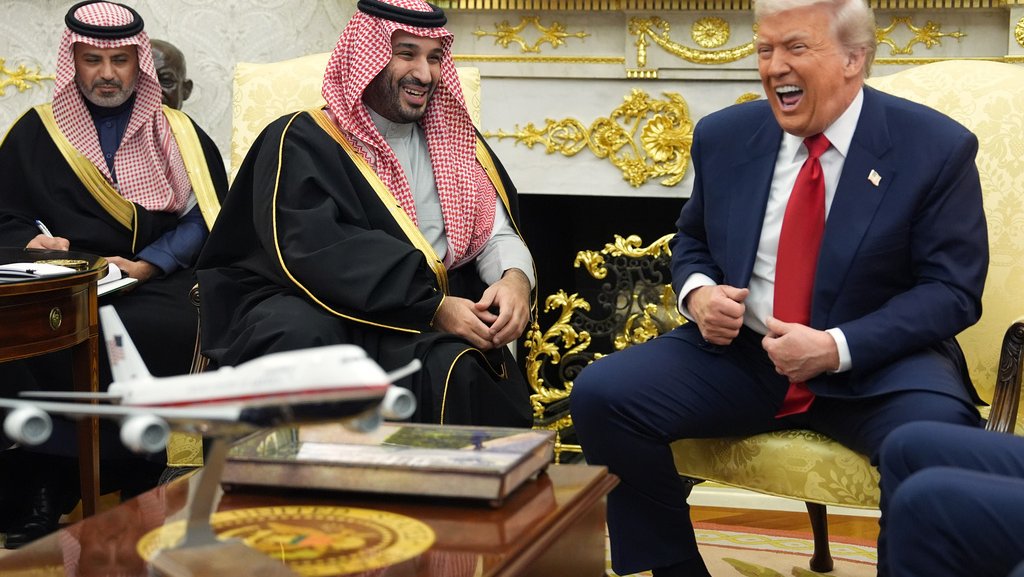
Nuclear deal that would permit uranium enrichment by Saudi Arabia in limbo awaiting Trump admin sign-off
18 July By Davis Winkie, Zachary Cohen, https://edition.cnn.com/2026/07/18/politics/saudi-arabia-trump-nuclear-enrichment
The Trump administration has tentatively agreed to allow Saudi Arabia to enrich uranium without enacting international safeguards intended to prevent nuclear weapons development, according to sources familiar with the matter and documents reviewed by CNN.
The draft nuclear accord that outlines US support for Riyadh’s civilian nuclear program is awaiting President Donald Trump’s signature despite US-Saudi negotiations concluding in October 2025.
Two sources familiar with the matter indicated that the ongoing war with Iran — which according to Trump was launched in part to prevent Tehran from using its enriched uranium to build nuclear weapons — has played a role in delaying Trump’s signature. Some on Capitol Hill also believe the Trump administration is delaying sign-off because it could face a bipartisan disapproval resolution blocking the deals from going into effect, said one of the sources.
Experts told CNN the deal could potentially provide Saudi Arabia with a path to nuclear weapons unless stringent safeguards are put in place. The country’s Crown Prince, Mohammed bin Salman, has previously threatened to build his own nuclear weapons should Iran, his country’s principal regional rival, acquire the bomb.
Four sources said the agreement, which includes a civil nuclear cooperation deal known as a 123 agreement and a mandatory nuclear safeguards agreement, still have not been sent to Congress for review, as federal law requires the White House to do once signed.
The White House did not answer questions regarding the agreements and instead referred CNN to an October 2025 statement from Energy Secretary Chris Wright announcing the end of negotiations.
“We’ve come together on a deal for civil nuclear cooperation,” Wright said at the time. “Together, with bilateral safeguard agreements, we want to grow our partnership, bring American nuclear technology to Saudi Arabia and keep a firm commitment to nonproliferation.”
The Saudi Arabian Embassy in Washington, DC did not respond to a request for comment.
A Contract for Difference for nuclear lifetime extension for Sizewell B – a nice save for the nuclear industry?

Jérôme à Paris, Jul 22, 2026
A few days ago, the British government announced the extension of the production life of the 1.2 GW Sizewell B nuclear power plant for 20 years, from 2035, and that included the fact that the electricity produced will be sold under a CfD at a price of 70.50 GBP/MWh (in 2025 prices, to be indexed). ……….
it is proper that the power also be sold to ratepayers at a fixed price. The existence of the CfD will also allow the owners to achieve a lower cost of capital (possibly through limited-recourse financing, but in any case through more favorable corporate funding as such a revenue line underpins their balance sheet), ensuring that the price achieved could be more competitive….
Secondly, this puts the production cost risk on the operator (EDF in this case, with Centrica having a 20% stake), as they will have to deliver power at a fixed price, irrespective of what they need to spend to keep the plant running (I have not checked if they can wiggle out of the contract by stopping production earlier in case it becomes too costly to run, but I see that this would have other likely consequences, including reputational, for the operator in any case).
The third point is that this puts a very visible price tag to nuclear plant lifetime extension. There’s often the blithe assumption that existing plants can continue to run at a very low cost. This reminds everybody that it is not the case, and existing plants definitely have ongoing operating costs – and older plants have significant heavy maintenance, refurbishment and safety costs to manage. The price level proposed here can be seen as attractive for baseload decarbonated power, but it’s certainly not low or the most competitive available these days.
The big question is whether the price is actually the right one. There can only be rather limited competition for nuclear lifetime extension CfDs, so one must consider the temptation for the operator to pad its costs and ask for a price that ensures as profitable an operation as possible (I presume that the price level was negotiated on the basis of detailed cost assumptions provided by the operator and checked by the regulator and experts). There is also the risk that the operator could ask later on for relaxation of safety or other standards in order to lower its ongoing costs (including possibly via the direct or indirect threat to stop operations.
Against that is the fact that the nuclear industry cannot afford to show that it is materially less competitive than alternatives, in particular than offshore wind, the renewable sector with the most similar characteristic as nuclear (large capacity plants, higher capacity factor). If the ask price for extension is barely competitive against new-build offshore wind, what would that say about new-build nuclear? Hinckley Point negotiated a CfD a decade ago, which EDF is not very happy with, even though it is already quite a bit higher (it was 89.5 GBP/MWh for 35 years (rather than 20), indexed from 2012, which means its current level is 131 GBP/MWh, and we’re still some years before operations), given all the cost overruns experienced in the meantime……………………………….. https://jeromeaparis.substack.com/p/a-cfd-for-nuclear-lifetime-extension
Von der Leyen paints target signs on Europe with Ukraine drone pact
This is not sleepwalking into war. The European elites’ eyes are wide open and crazed.
The European Union has officially joined the war effort against Russia. This week, European Commission President Ursula von der Leyen signed a “historic pact” with Ukraine to integrate the production of combat drones to strike Russia.
According to Euronews reporting, the pact also envisages the joint production of ballistic missiles.
This scaled-up war effort will be funded by the €90 billion loan that the EU is releasing to Ukraine. A bill that will be paid for by generations of European taxpayers.
Von der Leyen was greeted in Kiev by Ukraine’s unelected martial-law president, Vladimir Zelensky. That makes two people who do not have a democratic mandate making decisions that are driving Europe to all-out war with Russia. Von der Leyen is a political appointee. She is not elected by popular ballot. Formerly, she was Germany’s Minister of Defense, and not a particularly bright one either. Dogged by corruption scandals and abuse of power over procuring Covid-19 vaccines from Big Pharma, von der Leyen is an exemplar of “failing upwards.”
On her 11th visit to Kiev since the conflict escalated in February 2022, von der Leyen declared that the “tide is turning” in the NATO proxy war against Russia. She was referring to the increase in long-range air strikes on Russian territory and the release of €90 bn to fund the war.
In a public speech, she brazenly announced that the European Union was explicitly allied with Ukraine as a participant in the war.
“In Europe, we already have huge technological and industrial capacity that can be deployed. And we have safe and secure production sites that can help to scale up,” von der Leyen said.
She added: “But we do not have that battle-tested knowledge and expertise that Ukraine has forged. So the point I am making is that we need to combine our strengths. Together, we can work on joint production.”
The innovation, which von der Leyen and her NATO planners presumably think is ever-so smart, is that European countries will produce munitions that are “safe” from Russian retaliatory strikes. The drones and missiles will be transported to Ukraine, from where they can be launched to hit deep into Russian territory to target the capital, Moscow, and take out oil industrial facilities all over the country. In recent months, NATO-backed Ukrainian drones have killed hundreds of Russian civilians. Von der Leyen’s pact with Ukraine is giving a green light to intensify this terror campaign.
But it’s von der Leyen’s arrogant sense of impunity that is astounding and should be viewed as deeply disturbing. She apparently assumes that European countries can serve as an arsenal of weapons for Ukraine to attack Russia. Yet, in her view, Russia is not permitted to take retaliatory action against the EU (and NATO) as a participant in the war. This is insanely reckless and stupid.
Of course, the European Union, NATO, and the United States have been participants in the proxy war against Russia since their coup in Kiev in 2014 to install and weaponize a NeoNazi regime. That background of weaponization and ideological programming culminated in war erupting in 2022. The Collective West has supplied an estimated $400 billion to prop up the regime since 2022, has supplied NATO mercenaries and advisors, as well as providing targeting logistics and operational expertise for long-range missiles.
Ukraine has also signed bilateral military pacts with individual EU countries, such as Germany, France, Denmark, the Netherlands, and Norway. Britain has signed a One Hundred Year Defense Pact. All of these arrangements provide weapons, warplanes, drones, and missiles.
However, the EU support that von der Leyen unveiled this week is a commitment from the entire 27-nation EU bloc to join the war on an industrial scale.
In April this year, the Russian Ministry of Defense published a list of European companies and their locations that it said were partners in Ukraine’s war effort. Russia said that these sites could henceforth be considered legitimate targets for retaliation. So far, Russia has refrained from directly striking any EU or NATO state. But how long this Russian restraint will last is a pressing question in the light of increasing provocation by the EU and NATO.
Von der Leyen has taken to describing the Ukrainian regime as a “net provider of security for Europe.” This is to supposedly justify European citizens enduring economic hardship as public monies are funnelled to the corrupt regime.
This week, on cue for the drone deal and fusing of the EU and Ukrainian economies, Zelensky reshuffled his Cabinet for the second time in only a matter of months in an attempt to give the impression that he was cleaning up notorious corruption. Prime Minister Yulia Syrvydenko was sacked because she was close to Zelensky’s former Chief of Staff Andriy Yermak, who was forced to quit owing to a massive corruption scandal involving military procurement. In his latest clean-up act, Zelensky made the mistake of sacking Defense Minister Myhailo Federov, sparking public protests in Kiev and other cities. Federov, who had only been in the job for six months, was seen as an earnest reformer. His efforts riled military commanders, such as Commander-in-Chief Oleksandr Syrskyi, who want the graft gravy train to continue running. No surprise that Zelensky backed the old guard to stay in place, especially as the €90 bn EU freight car is soon to arrive in Kiev.
Indeed, the tide is turning, but not in the way that delusional von der Leyen imagines. Russian forces on the ground are wearing down the last NATO-backed Ukrainian defenses while ramped-up Russian air strikes are destroying drone-making centers in Kiev and other cities.
That is why the EU and NATO are innovating a new tactic of removing drone production sites from Ukraine and seemingly out of Russia’s reach by stationing these sites in European nations. The implicit idea is that the EU can scale up the war effort safely without suffering any consequences.
The Russophobic EU leadership is driving Europe to war against Russia, as Professor Richard Sakwa commented this week in an interview with Glenn Diesen. The decisions are being made autocratically without any democratic mandate. Effectively, the EU has become a dictatorship for war. Another manifestation of this was seen at the Bastille Day parade in Paris on July 14, when NATO troops joined French and Ukrainian regiments in a unified show of belligerence towards Russia.
And brain-dead bureaucrats like Ursula von der Leyen on her €400,ooo a-year salary are happily painting target signs across European nations.
This is not sleepwalking into war. The European elites’ eyes are wide open and crazed.
1 This Month



26 September – International Day for the Total Elimination of Nuclear Weapons


PLEASE OPPOSE HR 8255 AND S.3639 – bills would accelerate satellite deployment, with no environmental review or safeguards – https://ncstd5li.quorum.us/campaign/169331/
To see nuclear-related stories in greater depth and intensity – go to https://nuclearinformation.wordpress.com
-
Archives
- September 2026 (233)
- August 2026 (330)
- July 2026 (355)
- June 2026 (287)
- May 2026 (306)
- April 2026 (356)
- March 2026 (251)
- February 2026 (267)
- January 2026 (308)
- December 2025 (358)
- November 2025 (359)
- October 2025 (375)
-
Categories
- 1
- 1 NUCLEAR ISSUES
- business and costs
- climate change
- culture and arts
- ENERGY
- environment
- health
- history
- indigenous issues
- Legal
- marketing of nuclear
- media
- opposition to nuclear
- PERSONAL STORIES
- politics
- politics international
- Religion and ethics
- safety
- secrets,lies and civil liberties
- spinbuster
- technology
- Uranium
- wastes
- weapons and war
- Women
- 2 WORLD
- ACTION
- AFRICA
- Atrocities
- AUSTRALIA
- Christina's notes
- Christina's themes
- culture and arts
- Events
- Fuk 2022
- Fuk 2023
- Fukushima 2017
- Fukushima 2018
- fukushima 2019
- Fukushima 2020
- Fukushima 2021
- general
- global warming
- Humour (God we need it)
- Nuclear
- RARE EARTHS
- Reference
- resources – print
- Resources -audiovicual
- Weekly Newsletter
- World
- World Nuclear
- YouTube
-
RSS
Entries RSS
Comments RSS
 nuclear-news