Fighting for Peace and Fighting for War in Ukraine

More importantly, Kiev also rejected Russia’s key demand, thus maintaining the root, main cause of the war: NATO’s and Kiev’s attempts to have Ukraine become a NATO member
Russian and Eurasian Politics, by Gordonhahn, November 26, 2025, https://gordonhahn.com/2025/11/26/fighting-for-peace-and-fighting-for-war-in-ukraine/
We are witnessing another failed effort by U.S. President Donald Trump to make peace in Ukraine. Europe, perhaps along with the Deep State, has helped Kiev reject yet another Trump diplomatic effort. This leaves in place the threat of a Europe-wide war with Russia. Europe very possibly will spark a larger war with Russia.
The effort for peace spawned by the 28-point plan drafted by Steve Witkoff in consultation with Moscow has failed because Kiev again has refused to accept Russia’s key demands: Ukrainian neutrality, territorial concessions, and demilitarization. Denazification appears to a less key demand for Moscow or at least Kiev is willing to make concessions on this point.
Rather than accepting its imminent defeat the Ukrainians joined with their European allies in once again drafting an alternative, completely countervaling and counter-productive peace proposal, which Moscow immediately rejected, having already accepted the Trump document, as „a basis for a future agreement,“ as Russian President Vladimir Putin put it.
This could have led to the beginning of a three-way give and take, but Kiev rejected abandoning the 20 percent of Donetsk Oblast territory its forces still hold and demands an 800,000-man army. More importantly, it also rejected Russia’s key demand, thus maintaining the root, main cause of the war: NATO’s and Kiev’s attempts to have Ukraine become a NATO member, despite the objective threat this poses to Russian national security and Moscow’s opposition to NATO expansion spanning three decades.
Europe immediately declared its opposition to the plan and raced to draft the alternative, Kievan plan to undercut the Trump plan, repeating an exercise they undertook in summer when another Trump diplomatic effort seemed might make some headway. Furthermore, it appears that the Deep State and/or MI6 have helped to spearhead the Eurpean effort to derail the Trump peace train.
The bugging and leak to Bloomberg of a less than compromising conversation between Steven Witkoff and Russian President’s chief foreign policy advisor Yurii Ushakov has been used as was intended: to discredit the peace plan, which neocon propagandists like Michael Weiss have claimed was a purely Russian creation that Trump and other ‚Putin agents‘ dutifully pushed on tot he agenda, doing the Kremlin’s bidding.
Trump’s only hope of acheiving an agreement is to force one by pulling out all the stops in order to pressure Kiev to accede to Moscow’s demands, which are backed up strongly by Russia’s mounting advance across eastern Ukraine towards the Dnieper River.
Only depriving Kiev of all US assistance has a chance of forcing Ukrainian leader Volodomyr Zelenskiy to agree to a neutrality, a small army, and territorial losses. But Trump does not want to be blamed for helping Russia to achieve its war goals and to be able to claim a military victory over both Ukraine and NATO. Trump cannot abode a semi-credible propaganda campaign tot he effect that it was he is a loser, that he lost the NATO-Russia Ukrainian War, imagined by most in the West as ‚Putin’s full-scale, unprovoked war against Ukraine.‘ This is the stalement – one between Trump’s political needs and personal weaknesses, European and Kievan elites political-survival needs requiring Russia’s defeat, and Russia’s realistic perceptions of its national security’s min imal requirements – there is no stalement on the battlefield.
Only two outcomes are possible immediately – that is, during Trump’s presidency: (1) Russia takes all of Ukraine east of the Dniester or (2) a European-wide war begins when some Europeans deploy forces to western Ukraine and they are attacked by Russia and/or when Ukraine or its Western partners orchestrate some false flag operation to justify an escalation. These two outcomes both can occur sequentially.
The first outcome is already underway prompting panic and desparate steps in global neocon circles from Washington to Stanford to London and Paris. Russian forces are taking Kupyansk in the north on their way to Kharkov. After Kharkov, the road is open to western Kiev. Russian troops are finishing the capture of the important conglomeration and hub of Pokrovsk and Myrnograd, which opens the way to the last significant Ukrainian strong point of Pavlograd, located a mere 15 miles from the major industrial city of Dnipro on the Dnieper.
Further to the south, Russian forces have already entered Guliapole after having finished up sweeping through several small towns in the wake of capturing Vugledar 13 months ago. The southern city of Zaporozhia on the Dnieper also is now in site. Gulaipole is halfway from Vugledar to Zaporozhia, with Russian forces moving twice as fast as they were moving immediately after taking Vugledar. In addition to these forces marching west, other Russian forces are fighting towards the city from the south. That is the Russia will be at the Dnieper in force along a broad front in a matter of months, with Dnipro and Zaporozhia likely to fall in 1-3 months. There is no stopping the Russian army now. Its manpower, weapons superiority, and morale are increasing, while those of Kiev are in persistent decline.
The second outcome, which becomes more possible, as European and Kievan elites scramble to avoid political, professional and even personal disaster for themselves, is a European provocation of a larger European war. The French are making more and more insistent noises about sending troops to Odessa and elsewhere in Ukraine. And the voices calling for the deployment of European troops to Ukraine are becoming increasingly shrill.
Most recently, Gen. Fabien Mandon, French army’s new chief-of-staff, told a congress of mayors that France’s must muster will to fight:
“We have the know-how, and we have the economic and demographic strength to dissuade the regime in Moscow.”
“What we are lacking – and this is where you [the mayors] have a role to play – is the spirit. The spirit which accepts that we will have to suffer if we are to protect what we are.
“If our country wavers because it is not ready to lose its children … or to suffer economically because the priority has to be military production, then we are indeed at risk.
“You must speak of this in your towns and villages” (www.nytimes.com/2025/11/24/world/europe/france-voluntary-military-service.html).
Simultaneously, former NATO Secreytary General Anders Fogh Rasmussen declared: „Europe must stop waiting for signals from Washington and take the initiative in Ukraine. Paper guarantees mean nothing to Putin. Only concrete commitments matter. That’s why I now call for Europe to deploy up to 20,000 troops behind Ukraine’s front lines, establish an air shield with around 150 combat aircraft, and unlock frozen Russian assets. Europe earns its seat at the table by bringing real capability, not by asking for permission“ (https://x.com/AndersFoghR/status/1993221555166310410?s=20).
Europe’s ruling neocon-neoliberal elite are ‚simulacrats‘; they believe they can create reality on the basis of an the old world long dead and a new world it imagines, attempts to construct, make real by way of propaganda and the fear and hate it can induce. The old war of different glorious national pasts is mixed with the fictional new world of a Europe with perfect, pure democracies, histories, cultures, motives, and policies facing a putrid, barbarian Russia driven by an inexhaustible thirst for domination, power, and violence. Reality can be instantly reconfigured. First, Russia is a weak authoritarian regime with clay feet of oil and terror and an army that captures an uninhabited Ukrainian village or two per month. Then it is capable of conquering Europe, being at your front door virtually any day now.
The choice between war and peace should be an easy one. To be sure, Mr. Putin seems to have chosen war back in February 2022. However, there was good cause, and he softened the blow by conducting not the full-fledged massive invasion of Western mythology but a limited invasion force of some 100,000 troops and using little of Russia’s monumental air power. Moreover, he immediately contacted Kiev for peace talks, seeking an end to NATO expansion in Ukraine and the massive military buildup there equipped and trained by NATO. Mr. Zelenskiy immediately agreed to talk, and the ensuing Istanbul process yielded a treaty initialed by both sides in late March.
But the West chose a more serious war. The Bucha false flag ‘Russian massacre‘ was organized and Washington sent its British minion, then PM Boris Johnson to inform Kiev that the West would not provide the security guarantees, upon which much of Kiev’s agreement to the treaty rested and promised military and other assistance ‘for as long as it takes.‘ Putin’s short war for Russian nationals security became Ukraine’s long war for NATO. Now it is one for the survival of the Maidan regime and perhaps of NATO and the EU.
Some in the West have changed the nature of its assistance, struggling to build an offramp from destruction for Kiev, but others appear ready to offer in full the Ukrainian sacrificial lamb on the altar of NATO expansion ‘for as long as it takes‘ for Trump to leave the Oval Office and a new proponent of war for dying, democratic Ukraine‘ takes his place.
Soldiers Must Disobey Unlawful Orders Under Trump — It’s Their Legal Duty.

both the Nuremberg Principles and the Uniform Code of Military Justice established a duty to obey lawful orders but also a duty to disobey unlawful orders.
SCHEERPOST, November 26, 2025, Marjorie Cohn , Truthout
The courageous action of six Democratic members of Congress has thrust into the national discourse the duty of military and CIA personnel to disobey Donald Trump’s illegal orders. As the Trump administration continues to unlawfully murder people in small vessels in the Caribbean and Eastern Pacific, deploy the National Guard to U.S. cities, and ignore court orders, the six lawmakers were moved to act.
In a 90-second video organized by Sen. Elissa Slotkin (Michigan), two senators and four Congress members, all U.S. military or CIA veterans, take turns reading a statement to active servicemembers, urging them to refuse to follow illegal orders.
“Like us, you all swore an oath to protect and defend this Constitution,” the lawmakers said in the video. “Right now, the threats to our Constitution aren’t just coming from abroad, but from right here at home. Our laws are clear. You can refuse illegal orders. You can refuse illegal orders. You must refuse illegal orders. No one has to carry out orders that violate the law or our Constitution.”The other lawmakers speaking in the video are Sen. Mark Kelly (Arizona) and Representatives Chris Deluzio (Pennsylvania), Maggie Goodlander (New Hampshire), Chrissy Houlahan (Pennsylvania), and Jason Crow (Colorado).
Trump Threatens Six Lawmakers With Sedition Charges and Hanging
Their words, which constituted a correct statement of the law, elicited unprecedented vitriol from Trump, who wrote on Truth Social: “It’s called SEDITIOUS BEHAVIOR AT THE HIGHEST LEVEL. Each one of these traitors to our Country should be ARRESTED AND PUT ON TRIAL.”
In a second post, Trump wrote: “This is really bad, and Dangerous to our Country. Their words cannot be allowed to stand. SEDITIOUS BEHAVIOR FROM TRAITORS!!! LOCK THEM UP??? President DJT.” And he added in a third post: “SEDITIOUS BEHAVIOR, punishable by DEATH!” Trump also reposted a statement saying: “HANG THEM GEORGE WASHINGTON WOULD !!”
The six lawmakers responded to Trump’s diatribe in a statement: “What’s most telling is that the president considers it punishable by death for us to restate the law. Our servicemembers should know that we have their backs as they fulfill their oath to the Constitution and obligation to follow only lawful orders. It is not only the right thing to do, but also our duty.”
Now the Department of War is investigating Kelly for “serious allegations of misconduct,” threatening to call him back to active duty and court-martial him. The Department’s “Official Statement” posted on X adds, “All servicemembers are reminded that they have a legal obligation under the UCMJ to obey lawful orders and that orders are presumed to be lawful.” But they fail to add that servicemembers also have a legal duty to disobey unlawful orders, which is what Kelly and his fellow lawmakers accurately stated in their video.
The Duty to Disobey Unlawful Orders
Under the Uniform Code of Military Justice (UCMJ), a servicemember can be punished by court-martial for refusing to obey any lawful order or regulation. Although the UCMJ doesn’t define “lawful,” the Manual for Courts-Martial states that an order is lawful “unless it is contrary to the Constitution, the laws of the United States, or lawful superior orders or for some other reason is beyond the authority of the official issuing it.”
The manual also says that although it may be inferred that an order to perform a military duty or act is lawful, “this inference does not apply to a patently illegal order, such as one that directs the commission of a crime.” The Rules for Courts-Martial say that acting “pursuant to orders” is a legitimate defense “unless the accused knew the orders to be unlawful or a person of ordinary sense and understanding would have known the orders to be unlawful.”
Finally, the manual notes, “The lawfulness of an order is a question of law to be determined by the military judge.” Normally, that determination can be made only after a servicemember refuses or disobeys an order, in a court martial or war crimes tribunal. So the refuser takes the risk that a judge will find the order lawful and he or she will be punished for refusing to follow it.
Examples of unlawful orders within the United States include:
- The use of military forces to deport, remove, or detain immigrants. Removal to countries where there is a substantial likelihood of torture violates the Convention Against Torture and Other Cruel, Inhuman or Degrading Treatment or Punishment, which the U.S. has ratified.
- The use of military forces against civilian protesters. The Posse Comitatus Act forbids the use of federal troops to enforce domestic law unless there is an “insurrection.”
Examples of unlawful orders outside the United States include:
- Military attacks on vessels in international or foreign waters.
- An invasion or attack on Venezuela, Mexico, Nigeria, etc.
- The use of “preemptive” military force against Iran, China, etc.
- The use of nuclear weapons against any country.
- The torture or cruel treatment of civilians, prisoners of war, or other detainees.
- The intentional targeting of civilians.
- Attacking Palestinians in Gaza under the guise of “peacekeeping.”
Resistance to Illegal U.S. Wars — From Vietnam to Iraq
In 1968, U.S. Army Lt. William Calley led 100 U.S. troops into the village of My Lai in Vietnam and killed 500 civilian women, children, and elderly men in what came to be known as the My Lai Massacre.
Calley was accused of the premeditated murder of civilians. Charges were filed against 25 people, including two generals. The charges against the generals, 10 other officers, and seven enlisted men were dismissed. Five others, including the company commander, Capt. Ernest Medina, were court-martialed and acquitted.
At his court-martial, Calley claimed that he was just following Medina’s orders to kill all the villagers because everyone in the village was “the enemy.”
Like the Nazi officials at Nuremberg, Calley’s defense that he was just following superior orders was rejected. In 1971, he was convicted of the premeditated murder of “not less than” 22 Vietnamese people and sentenced to life in prison. Ultimately, Calley only served over three years of house arrest and confinement to barracks.
But there is a noble tradition in the United States of servicemembers refusing orders to deploy to illegal wars and/or commit war crimes. Some refusers have been arrested and court-martialed. Many have argued in their defense that they had a legal duty to disobey illegal orders.
Howard Levy
……………………………..Levy disobeyed an order to train Special Forces aidmen to be paramedics. He felt they would use their medical training to gain the trust of the Vietnamese people who would then not oppose U.S. troops carrying out their illegal missions. Levy, who called this the “prostitution of medicine,” thought these Green Berets were committing war crimes…………………….
Ehren Watada
…………………………….“The war in Iraq is in fact illegal. It is my obligation and my duty to refuse any orders to participate in this war. An order to take part in an illegal war is unlawful in itself……………………………………………………………………
Pablo Paredes.
………………………refused orders to board an amphibious assault ship that would transport 3,000 Marines to Iraq because he thought he would be complicit as a war criminal……………………………………………………………………………………………………. the Iraq War violated the UN Charter, and that Paredes had a reasonable belief that by transporting Marines to Iraq, he would place them in the position of committing war crimes………..U.S. forces were torturing prisoners at Abu Ghraib prison, which constituted war crimes…………both the Nuremberg Principles and the Uniform Code of Military Justice established a duty to obey lawful orders but also a duty to disobey unlawful orders……………………………………………………………………………………………………………………..
…………………..After the six members of Congress released their bold video, Veterans For Peace said in a statement:
We call on all veterans to stand with these members of Congress and amplify their message so that Airmen, Marines, Seamen, and Army troops know that if they ever face the difficult challenge of refusing an illegal order, they are carrying out their oath to defend the Constitution by following the law.
There are groups, including the GI Rights Hotline, the Center on Conscience and War, and the Military Law Task Force, that work with servicemembers to help them recognize when they have received an unlawful order and figure out their next steps. https://scheerpost.com/2025/11/26/soldiers-must-disobey-unlawful-orders-under-trump-its-their-legal-duty/
Reservations over a dash for nuclear- UK’s “Nuclear Regulatory Taskforce”.

Earlier this year Sir Keir Starmer set up an “independent” five-person Nuclear Regulatory Taskforce, comprising three nuclear industry proponents, an economist and a lawyer.
Perhaps unfortunately, the announcement of its role
pre-empted its findings, with the headline to the press release saying:
“Government rips up rules to fire-up nuclear power.” Hence, the
possibility that regulation takes as long as it does because that was how
long it took to do the job to the required standard was discounted.
The Taskforce has just made 47 recommendations “to speed up building new nuclear projects at a lower cost and on time, to unleash a golden era of nuclear technology and innovation” — including the proposal that new
nuclear reactors should be built closer to urban areas and should be
allowed to harm the local environment (“Ministers urged to allow new
nuclear plants in urban areas”, Nov 24).
Nuclear is a high-risk
technology. Blaming nuclear regulators for vast cost over-runs and huge
delays has always been a fallback position for the nuclear industry. This
is not the fault of safety and planning regulation, rather it is the nature
of the technology. De facto nuclear deregulation is a poor short-term
choice of the worst kind.
Dr Paul Dorfman, Times 26th Nov 2025, https://www.thetimes.com/comment/letters-to-editor/article/times-letters-ending-culture-free-gifts-mps-zg28h25s8
The “Arsenal of Freedom” is a Dangerous Fantasy for Armchair Warriors
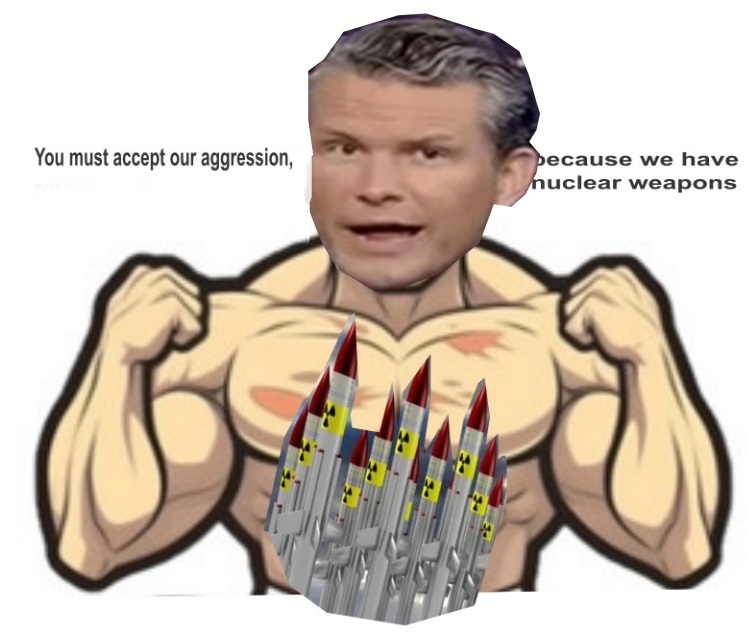
This vision of relentless war is consistently advocated by those who have never experienced its brutal reality.
These are men who have never found themselves in a trench. They see war as a video game – a contest of “Speed. Scale. Competition” – with clean graphics and no blood. They do not know the smell of a field hospital, the weight of a fallen comrade, or the thousand-yard stare of a soldier with PTSD.
27 November 2025 Andrew Klein , https://theaimn.net/the-arsenal-of-freedom-is-a-dangerous-fantasy-for-armchair-warriors/
The rhetoric of transforming the Pentagon into a “battlefield power” is historically illiterate, morally bankrupt, and a recipe for endless war.
A recent public statement by Secretary of War, Pete Hegseth, celebrating the transformation of the Department of Defence, offers a chilling vision for America’s future. He praised the shift “from bureaucratic process to battlefield power” and vowed to “unleash the ‘Arsenal of Freedom’.”
This is not a serious national security strategy. It is a dangerous and illogical fantasy, peddled by those who have never borne the true cost of war, and it threatens to plunge the nation into a cycle of perpetual conflict from which it may not recover.
The Illogical and Ahistorical Core of “Battlefield Power”
The rhetoric is built on buzzwords designed to sound strong, but which collapse under the slightest scrutiny.
First, the very idea of reframing the mission of the Department of Defence as pure “battlefield power” is a rejection of the very tools that prevent wars from starting. It sidelines diplomacy, intelligence, and strategic restraint in favour of the hammer – and when you are a hammer, every problem looks like a nail. This is not sophistication; it is intellectual bankruptcy.
Second, the phrase “Arsenal of Freedom” is Orwellian newspeak. An arsenal is a collection of weapons. Freedom is an ideal. To conflate the two is to argue that liberty is delivered by missiles and its volume is measured in munitions. This is the logic of a conqueror, not a liberator. True freedom is built in classrooms, hospitals, and polling stations, not imposed by a B-52 bomber.
History is littered with the ruins of empires that believed in their own unstoppable military might. The Roman Empire, Napoleon’s France, and the Third Reich all shared this faith in raw “battlefield power.” Their fates are a testament to the folly of this philosophy. More recently, the United States has “unleashed its arsenal” in Vietnam, Iraq, and Afghanistan. The result was not a wave of freedom, but decades of instability, the rise of new terrorist threats, millions of refugees, and a deep, lasting distrust of American motives.
The Hypocrisy of the Armchair General
The most glaring flaw in this rhetoric is the character of those who champion it. This vision of relentless war is consistently advocated by those who have never experienced its brutal reality.
These are men who have never found themselves in a trench. They see war as a video game – a contest of “Speed. Scale. Competition” – with clean graphics and no blood. They do not know the smell of a field hospital, the weight of a fallen comrade, or the thousand-yard stare of a soldier with PTSD.
This disconnect is often paired with a personal history that contradicts the virtues they preach. How can one speak of “Accountability” and “Patriotism” while allegedly fostering a toxic environment and demonstrating a leadership vacuum in their own professional conduct? This is not the profile of someone who understands the gravity of sending others to die. It is the profile of a man playing with live human beings as if they were toy soldiers.
The Ghost of Colonialism and the Path to Perpetual War
This speech is not about defense; it is about empire. It is a revival of the pernicious colonial power syndrome, dressed in the flag and speaking of freedom.
The language of bringing “freedom” to others through superior firepower is the exact same justification used by every colonial power from the British Empire to King Leopold’s Congo. It is a narrative that dehumanises the “other” and justifies their subjugation for their own “good.”
This path leads not to a peaceful hegemony, but to a state of perpetual war. It creates new enemies faster than it can kill old ones. It drains the national treasury, diverts resources from domestic prosperity, and morally corrupts the nation from within. The “Arsenal of Freedom” becomes a self-licking ice cream cone – an industry that exists to sustain itself, constantly in need of new enemies to justify its existence.
Conclusion: Rejecting the Fantasy
The vision of an America that unleashes its “battlefield power” upon the world is a dangerous fantasy. It is illogical because it mistakes destruction for creation. It is ahistorical because it ignores the graveyards of every empire that walked this path. It is hypocritical because it is championed by those who have never had to pay war’s personal price.
This is the rhetoric of a simpleton who believes the world is a simple place. It is a clear and present danger to global stability and to the soul of the nation itself. We must reject this folly and champion the true, difficult work of building a world that does not require such an “arsenal” to be free. Our future depends on it.
Risks of Restarting Duane Arnold nuclear plan
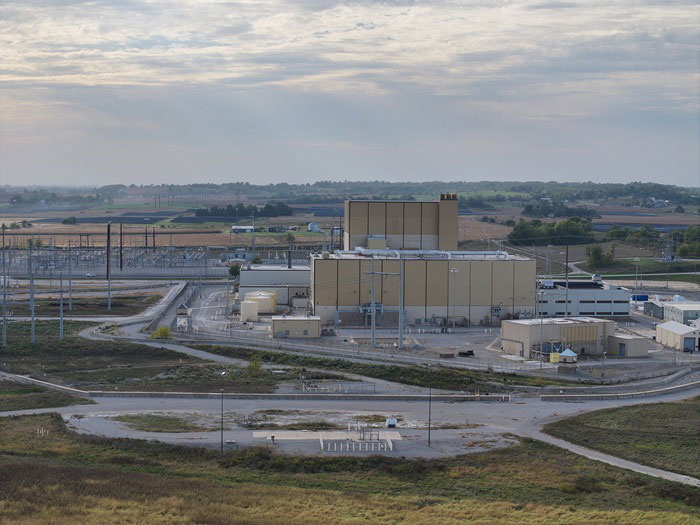
October 1, 2025, Sierra Club, Iowa Chapter
Risks of Restarting Duane Arnold Nuclear Plant and Iowa’s Renewable Energy Future
Sierra Club Iowa Chapter urges legislators and the public to oppose the restart of the Duane Arnold nuclear plant and to support Iowa’s transition to safe, clean, and renewable energy sources.
On September 29, 2025, the Iowa Chapter of the Sierra Club hosted a press conference to address NextEra Energy’s proposal to restart the Duane Arnold nuclear plant, which has been in decommissioning since 2020. Experts in nuclear energy, public health, and environmental law provided insight into the risks of nuclear power and Iowa’s proven success with renewables.
To see the recording of the press conference: Iowa’s Energy Future – Nuclear Risks vs. Renewable Solutions
To see the presentation slides:
Renewables vs. Nuclear in Iowa by Mark Z. Jacobson
Analysis of Changes in Local Health Near Duane Arnold Nuclear Plant by Joseph Mangano
The press conference was held to address NextEra Energy’s proposal to restart the Duane Arnold nuclear plant in Iowa, which has been in decommissioning since 2020. The company has requested federal approval to transfer connections from three planned solar projects to support the nuclear restart. The goal of the press conference was to inform the public about this proposal, its broader implications for Iowa’s energy future, and to provide clear, fact-based information about the challenges and alternatives to nuclear energy.
Restarting Duane Arnold poses significant safety, environmental, and economic risks. The plant’s GE Mark I reactor design is decades old and has known safety flaws, and components may have degraded during the five years of decommissioning. Nuclear energy generates highly radioactive spent fuel that remains dangerous for hundreds of thousands of years, and routine plant operations can impact local communities’ health, including increased cancer rates and infant mortality. Delays in decommissioning the Duane Arnold plant increase safety and financial risks, while the potential use of public funding raises concerns about taxpayers bearing the cost. Additionally, the abandonment of previously planned solar projects shifts resources away from proven renewable energy solutions, further undermining Iowa’s clean energy future.
Speakers highlighted that Iowa has the tools and proven capacity to meet its energy needs safely, affordably, and sustainably through renewable energy sources like wind and solar. Experts emphasized that the state can continue to lead with clean energy while avoiding the safety and financial risks of nuclear power. This amplified importance of science backed decision-making and public participation to ensure Iowa’s energy future is secure, clean, and renewable.
“Iowa now gets nearly 79% of its electricity from wind, water, and solar. Despite that, electricity prices here are about three cents per kilowatt-hour below the national average. The idea that renewables raise costs is simply a myth, in fact, they keep prices low,” said Mark Z. Jacobson, Director of the Atmosphere/Energy Program at Stanford University.
“Before Duane Arnold began operating, cancer rates in nearby counties were 6.5% below the state average. But after decades of operation, those same counties showed cancer rates more than 12% higher. That translates to nearly 500 additional cancer cases among local residents under age 40,” said Joseph Mangano, Executive Director of the Radiation and Public Health Project.
“Nuclear power is not clean or renewable. Uranium mining leaves radioactive waste, reactors routinely leak tritium into groundwater, and the spent fuel remains dangerous for hundreds of thousands of years with no solution in sight,” said Wally Taylor, Conservation Chair and Legal Chair of the Iowa Chapter of the Sierra Club.
“The Duane Arnold reactor uses the same GE Mark I design as the Fukushima reactors that melted down in 2011. This is an old, well-documented, and dangerous design, so flawed that even in the 1970s, engineers warned it could lead to a devastating accident. Fukushima proved those warnings were justified,” said Don Safer, Co-Chair of the Sierra Club Grassroots Network Nuclear Free Team.
More about the Speakers:……………………………………………….. https://www.sierraclub.org/iowa/blog/2025/10/risks-restarting-duane-arnold-nuclear-plan
Beyond the negative headlines, some truly good things came out of Cop30.

In this week’s newsletter: Ultimately, climate progress will come from
real-world action, and this year’s summit made some promising strides on
that front. ome commentators have called Cop30 a failure. An attempt to
insert plans for a route to the phaseout of fossil fuels into the legal
text was stymied, consideration of how to improve countries’
emissions-cutting plans was put off till next year, and although developing
countries got the tripling of finance for adaptation that they were
seeking, it will not be delivered in full until 2035 – and will come out
of already promised funds. Look beyond the headlines, however, and the Cop
achieved a great deal more. Take the outcome on fossil fuels – it seems
absurd, but until 2023 three decades of annual climate summits had failed
to address fossil fuels directly. More on the positives to come out of this
year’s climate conference, after this week’s most important reads.
Guardian 27th Nov 2025, https://www.theguardian.com/environment/2025/nov/27/beyond-the-negative-headlines-some-truly-good-things-came-out-of-cop30
Fossil Fuels at COP30: Sacred, Profane and Unmentioned

Most conspicuously, the final agreement makes no mention of fossil fuels (it made a unique appearance in COP28), tantamount to discussing a raging pandemic without ever mentioning the devastating virus.
28 November 2025 Dr Binoy Kampmark, https://theaimn.net/fossil-fuels-at-cop30-sacred-profane-and-unmentioned/
If the camel is a committee’s version of a horse, then the concluding notes of the 30th United Nations Conference of the Parties (COP30) at Belém, Brazil were bound to be ungainly, weak, and messy. That is what you get from an emitting gathering of over 56,000 mostly subsidised attendees keen to etch their way into posterity. Leave aside the fact that some of the conference mongers might have been well meaning, the final agreement was always going to be significant for what it omitted. It was also prominent for lacking any official role from the United States, a country where Make America Great Again has all but parted ways with notions of climate change.
For three decades, these events have drawn attention to climate change ostensibly to address it. For three decades, the stuttering, the vacillation, the manipulation, have become habitual features, making the very object of condemnation – fossil fuels – both sacred and profane. The message is that humanity must do without it lest we let planet Earth cook; the message, equally, is that it can’t. “COP30 will be the ‘COP of truth,’” Brazil President Luiz Inácio Lula de Silva declared extravagantly at the 80th United Nations General Assembly in September, immediately dooming it to comic platitude. The sacred and profane – fossil fuels – would remain strong at the end of the show.
There was some initial promise that attending member states might do something different. Initial pressure was exerted by the Colombia-led coalition (“mutirão” or joint effort) of 83 countries to abandon the use of fossil fuels and chart a Roadmap to decarbonise the global economy.
Then came a soggy threat by a group of 29 countries in a letter to the Brazilian COP presidency that any agreement lacking a commitment to phase out fossil fuels would be blocked. “We cannot support an outcome that does not include a roadmap for implementing a just, orderly, and equitable transition away from fossil fuels,” emphasised the authors, which included such countries as Austria, Belgium, France, Germany, Palau, the UK and Vanuatu. This expectation is shared by a vast majority of Parties, as well as by science and by the people who are watching our work closely.” The threat duly sagged into oblivion.
The resulting COP 30 agreement, with the aspirational title “Global Mutirão: Uniting humanity in a global mobilization against climate change” was a tepid affair. There were the usual tired acknowledgments – the importance of addressing climate change (yes, that’s what they were there for); the need to conserve, protect and restore nature and ecosystems through reversing deforestation (wonderful); the human rights dimension (rights to health, a clean, healthy and sustainable environment); the importance of equity and the principle of common albeit differentiated responsibilities specific to the States (fine sentiments) known as the just transition mechanism.
Most conspicuously, the final agreement makes no mention of fossil fuels (it made a unique appearance in COP28), tantamount to discussing a raging pandemic without ever mentioning the devastating virus. As Jasper Inventor, Deputy Programme Director of Greenpeace International acidly remarked: “COP30 didn’t deliver ambition on the 3Fs – fossil fuels, finance and forests.” In what can only be regarded as an observation born from defeat and desperation, UN Climate Change Secretary Simon Stiell offered his summary: “Many countries wanted to move faster on fossil fuels, finance, and responding to climate disasters. I understand that frustration, and many of those I share myself. But let’s not ignore how far this COP has moved forward.” In this area of diplomacy, movement is excruciatingly relative.
There remained a modish insistence on voluntariness, with COP30 President André Corrêa de Lago announcing a voluntary “roadmap” to move away from fossil fuels. Officially, the sacred and the profane could not be mentioned; unofficially, other countries and civil society could do what they damn well wished to when addressing climate change challenges. To that end, the process would take place outside the formal UN processes and merge with the Columbia-steered “coalition of the willing.” The parties would otherwise, as the agreement stipulated, “launch the Global Implementation Accelerator” to “keep 1.5°C within reach,” yet another woolly term conceived by committee.
Colombia and the Netherlands were quick to announce their co-hosting of the First International Conference on the Just Transition Away from Fossil Fuels. “This will be,” explained Irene Vélez Torres, Colombia’s Minister for Environment and Sustainable Development, “a broad intergovernmental, multisectoral platform complementary to the UNFCCC [United Nations Framework Convention on Climate Change] designed to identify legal, economic, and social pathways that are necessary to make the phasing out of fossil fuels.”
Admirable as this may be, a note of profound resignation reigned among many in the scientific community. While COP30 might have been seen as a meeting of “truth and implementation,” the truth, charged Johan Rockström, the director of the Potsdam Institute for Climate Impact Research, was that keeping the target of 1.5°C within reach entailed bending “the global curve of emissions downward in 2026 and then reduce emissions by at least 5% per year.” And that’s saying nothing about implementation.
The Unseen Battle: Why Access to Alternative Media is a Modern Necessity.
28 November 2025 Andrew Klein, https://theaimn.net/the-unseen-battle-why-access-to-alternative-media-is-a-modern-necessity/
In an age where information is power, a silent war is being waged for the mind. The landscape of public discourse is increasingly curated, with gatekeepers – both state and corporate – determining which narratives are amplified and which are silenced. In this environment, the role of alternative media transforms from a simple option to an urgent necessity. It has become the essential immune system for our democracy, fighting not only to disseminate information but to protect our fundamental right to a full and honest picture of the world.
The High Stakes: More Than Just News
To understand the critical importance of alternative media, one must first recognise what is at stake when a single narrative dominates.
The Weaponisation of Information: Mainstream media, often intertwined with powerful political and corporate interests, can be used to manipulate public sentiment. History provides a stark lesson: the powerful newspaper owner William Randolph Hearst famously cabled an illustrator in Havana, “You furnish the pictures. I’ll furnish the war,” demonstrating how media can be used to inflame public opinion and make conflict inevitable. This manipulation taps into deep-seated tribal emotions, a “militant enthusiasm” that can be mobilised on a huge scale for political ends.
The Distraction Economy: While the world faces unprecedented challenges – from the threat of thermonuclear war and catastrophic climate change to rising economic inequality – the mainstream media often offers a diet of pop music, sports, and sit-coms. This functions as a modern-day “bread and circuses,” numbing the public into political passivity and distracting from the severe, systemic issues that demand our immediate attention and action.
The Right to Information Undermined: According to the United Nations, the rise of disinformation is a direct threat to human rights, as it politically polarises populations and hinders people from meaningfully exercising their civic duties. When the information environment is flooded with false or misleading content, our very ability to discern truth is compromised, rendering the right to information meaningless.
The Vacuum of Censorship: Where Misinformation Thrives
A government’s attempt to restrict access to information, particularly under the guise of protection, is not a solution; it is a catalyst for a more profound problem. Limiting exposure to diverse perspectives does not create a well-informed citizenry; it creates an information vacuum.
The Rise of Unchecked Narratives: When official channels curate or suppress information, they create a void. This vacuum is rapidly filled by misinformation (false information shared without malicious intent) and disinformation (deliberately false information spread to deceive). Without the robust, competing frames provided by a healthy alternative media ecosystem, these false narratives can take root unchallenged.
The Illusion of Protection: Shielding any age group, especially the young, from complex political and world issues is a dangerous fallacy. It assumes that without exposure to challenging topics, individuals remain “safe.” In reality, it only ensures they lack the critical tools to analyse information when they inevitably encounter it through other, less reliable means. The lack of media literacy becomes a vulnerability, not a shield.
Challenging the Status Quo: A Skill for All Ages
The manufacturing of unquestioning consent is the goal of any authoritarian system. Breaking this requires a conscious, society-wide effort to foster critical thinking from childhood through adulthood.
Children as Critical Thinkers: The development of “mental state talk” – the ability to attribute thoughts, feelings, and intentions to others – is a cornerstone of understanding different perspectives. Narratives and stories are ideal contexts for children to develop this skill, as they practice connecting a character’s actions with their internal motivations. When children are encouraged to deconstruct stories, they are honing the very skills needed to later deconstruct political narratives.
Education, Not Indoctrination: Teaching media literacy is not about telling people what to think, but how to think. This involves equipping them with simple, effective tools like the “ESCAPE” method:
- Evidence: What facts are provided?
- Source: Who created this?
- Context: When and why was it made?
- Audience: Who is it meant for?
- Purpose: Why was it created?
- Execution: How was it presented?
The Role of Alternative Media: While mainstream media often operates with a top-down, “sedimenting” function – stabilising a single interpretation of events – alternative media can make an “explosive dent in the political culture of the moment.” It is vital for organising social movements, providing a platform for reflection and debate, and correcting the distorted picture provided by the mainstream.
The Path Forward: Reclaiming Our Cognitive Sovereignty
The battle for a healthy information ecosystem is not a lost cause. It requires a multi-faceted approach that defends alternative voices while empowering individuals.
Defend Alternative Media: Support and engage with independent media outlets. Their survival and growth are crucial for a balanced discourse, as they often give life to, and are given life by, social movements that challenge power.
Demand Media Literacy: Advocate for the integration of robust media literacy education at all levels of schooling. This is not a niche subject but a fundamental skill for navigating the modern world, helping individuals become discerning consumers and creators of media.
Embrace Critical Inquiry: As a society, we must move beyond the comfort of passive consumption. We must cultivate a culture where questioning the status quo and challenging state-manufactured narratives is not seen as subversion, but as the duty of every engaged citizen.
The trend towards restricting information and manufacturing consent is indeed dangerous. It addresses no real-world problems; it only hides them. In the face of this, the mission of alternative media and the critical, questioning citizen has never been more vital. It is a race between education and catastrophe, and we must ensure that the immune system of our democracy is strong enough to prevail.
This article synthesises key insights from academic and research sources to build a compelling case. It frames the issue not just as a matter of media preference, but as a fundamental requirement for democratic health and individual autonomy.
Hinkley Point C nuclear power station will add £1bn a year to energy bills.
Electricity project will be UK’s most expensive source with consumers footing the cost.
Jonathan Leake, Energy Editor, 28 Nov 25
The troubled Hinkley Point C nuclear power station will add £1bn annually to UK energy bills as soon as it’s switched on, official figures show.
The money will be taken from consumers and handed to the French owner EDF to subsidise operations, making it one of the UK’s most expensive sources of electricity.
A further £1bn will be added to bills by a separate
nuclear levy, supporting construction of the Sizewell C nuclear power
station in Suffolk, also led by EDF. Campaigners branded it a “nuclear
tax on households”.
Details were revealed in documents released by the
Treasury and the Office for Budget Responsibility in the wake of Rachel
Reeves’s Budget. They describe how EDF will be entitled to claim the
money under the “Contracts for Difference” subsidy system as soon as
Hinkley C begins operations, probably in 2030.
The documents state: “In
2030-31, Contracts for Difference (CfDs) are expected to generate £4.6bn
in government receipts, including £1bn to fund subsidy payments to the
Hinkley Point C nuclear power plant for its first year of expected
generation.” The impact on bills is linked to a 2013 agreement reached
between EDF and Sir Ed Davey, the then energy secretary.
He guaranteed that
EDF could charge £92.50 per megawatt hour (MWh) of power once Hinkley
Point C came online. With inflation, this equates to £133 today and is
expected to reach about £150 in 2030. If the wholesale cost of electricity
remains at its current level of about £80/MWh, then EDF can claim an extra
£70 from consumers and businesses via CfDs.
From January, energy bills
will also be hit by an entirely separate levy designed to support the
construction of another nuclear power station at Sizewell in Suffolk. The
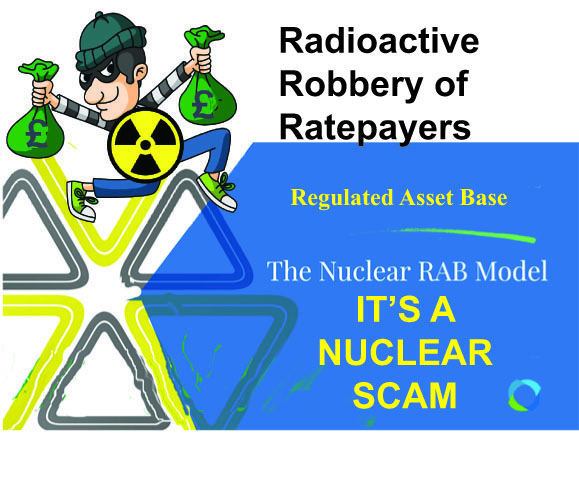
Regulated Asset Base levy will add £10 a year to power bills from 2026,
raising £700m, but will roughly double by 2030, when it will need to raise
£1.4bn a year for Sizewell.
Telegraph 28th Nov 2025, https://www.telegraph.co.uk/business/2025/11/28/hinkley-point-c-nuclear-power-station-add-1bn-a-year-bills/
The Nuclear Cult

ever since the first test of an atomic device, “the diabolically-named ‘Trinity’ atomic blast, when Manhattan Project scientists placed bets on whether or not it would ignite the Earth’s atmosphere, it’s been clear something pathological afflicts many in the ‘nuclear priesthood.’

“Step-by-step, they turned to an atomic religion, closed societies, a ‘state inside a state.’”
Karl Grossman, June 18, 2012, https://www.counterpunch.org/2012/06/18/the-nuclear-cult/
Nuclear scientists and engineers embrace nuclear power like a religion. The term “nuclear priesthood” was coined by Dr. Alvin Weinberg, long director of Oak Ridge National Laboratory, and the laboratory’s website proudly notes this. It’s not unusual for scientists at Oak Ridge and other U.S. national nuclear laboratories to refer to themselves as “nukies.” The Oak Ridge website describes Weinberg as a “prophet” of “nuclear energy.”
This religious, cultish element is integral to a report done for the U.S. Department of Energy in 1984 by Battelle Memorial Institute about how the location of nuclear waste sites can be communicated over the ages. An “atomic priesthood,” it recommends, could impart the locations in a “legend-and-ritual…retold year-by-year.” Titled “Communications Measures to Bridge Ten Millennia,” the taxpayer-funded report says: “Membership in this ‘priesthood’ would be self-selective over time.”
Currently, Allison Macfarlane, nominated to be the new head of the U.S. Nuclear Regulatory Commission, says she is an “agnostic” on nuclear power—as if support or opposition to atomic energy falls on a religious spectrum. Meanwhile, Gregory Jaczko, the outgoing NRC chairman, with a Ph.D. in physics, was politically crucified because he repeatedly raised safety concerns, thus not revering nuclear power enough.
Years ago, while I was working on a book about toxic chemicals, the publisher asked that I find someone who worked for a chemical company and get his or her rationale. I found someone who had been at American Cyanamid, the pesticide manufacturer, who said he worked there to better support his growing family financially.
But when it comes to nuclear power, it’s more than that—it’s a religious adherence.

Why? Does it have to do with nuclear scientists and engineers being in such close proximity to power, literally? Is it about the process through which they are trained—in the U.S., many in the nuclear navy and/or in the insular culture of the
government’s national nuclear laboratories? These laboratories, originally under the Atomic Energy Commission and now the Department of Energy and managed by corporations, universities and scientific entities including Battelle Memorial Institute, grew out of the World War II Manhattan Project crash program to build atomic bombs. After the war, the laboratories expanded to pursue the development of all things nuclear. And is it about nuclear physics programs at universities serving as echo chambers?
Whatever the causes, the outcome is nuclear worship.
And this is despite the Chernobyl or Fukushima Daiichi catastrophes. It’s despite the radioactive messes exposed at the Rocky Flats nuclear weapons production facility and at Los Alamos and other national nuclear laboratories most of which have been declared high-pollution Superfund sites where cancer on-site and in adjoining areas is widespread. It’s despite the continuing threat of nuclear war and the horrific loss of life it would bring and nuclear proliferation spreading the potential for atomic weapons globally. Still, they press on with religious fervor.
“Most of them are not educated about radiation biology or genetics, so they are fundamentally ignorant,” says Dr. Helen Caldicott, a founder of Physicians for Social Responsibility whose books include Nuclear Madness. “They are ‘brought up’ in an environment where they are conditioned to support the concept of all things nuclear.” Further, “nuclear power evokes enormous forces of the universe, and as Henry Kissinger said, ‘Power is the ultimate aphrodisiac.” And “they practice denial because I think many of them in their heart really know that what they are doing is evil but they will defend it assiduously, unless they themselves or their child is diagnosed with cancer. Then many of them recant.”Linking the “nuclear priesthood” to the Manhattan Project is Michael Mariotte, executive director of Nuclear Information and Resource Service. “The scientists involved weren’t really sure what they were unleashing, and had to have a certain amount of faith that it would work and it would not destroy the world in the process. After they saw the destructive power of the bomb, they were both proud and horrified at what they had done, and believed they had to use this technology for ‘good.’ Thus nuclear power was born,” says Mariotte. “The problem is when you have this messianic vision that you are creating good out of evil, it is very difficult to turn around and realize that the ‘good’ you have created is, in fact, also evil.”
Kevin Kamps, radioactive waste watchdog at Beyond Nuclear, says ever since the first test of an atomic device, “the diabolically-named ‘Trinity’ atomic blast, when Manhattan Project scientists placed bets on whether or not it would ignite the Earth’s atmosphere, it’s been clear something pathological afflicts many in the ‘nuclear priesthood.’ Perhaps it’s a form of ‘Faustian fission’—splitting the atom gave the U.S. superpower status with the Bomb and then over a 100 commercial atomic reactors, so the ‘downsides’ have been entirely downplayed to the point of downright denial. Perhaps the power, prestige and greed swirling around the ‘nuclear enterprise’ explains why so many in industry, government, the military, and even apologists in academia and mainstream media, engage in Orwellian ‘Nukespeak’ and monumental cover ups….The ‘cult of the atom’ has caused untold numbers of deaths and disease downstream, downwind, up the food chain, and down the generations from ‘our friend the atom’ gone bad.”
A parallel situation exists in Russia, the other nuclear superpower. Dr. Alexey Yablokov, a biologist, member of the Russian Academy of Sciences and environmental advisor to Presidents Yeltsin and Gorbachev, says the nuclear scientists there refer to themselves “atomschiky” or “nuclearists” and “think and act as a separate, isolated caste.” From the beginning of nuclear technology in the Soviet Union, they “were enthusiastic about the great, the fantastic discoveries of splitting the atom and developing enormous power. This ‘secret knowledge’ was magnified by state secrecy and a deep belief—in the Soviet Union as in the United States—of atomic energy ‘saving the globe’…There is a remarkable similarity in the argumentation of these groups here and in the United States. Step-by-step, they turned to an atomic religion, closed societies, a ‘state inside a state.’”
Dr. Heidi Huttner, who teaches sustainability at Stony Brook University, explains:
“As in so many parts of our industrialized and mechanized culture, there is no thought of consequences, or connections to the larger web of science, health, and human and nonhuman life…The nuclear culture becomes absolutely caught up in its own language and story. This self-enclosure feeds, validates and perpetuates itself. Without an outside critique or ‘objective’ third eye, any such culture loses the ability to self-regulate and self-monitor. This is where things become dangerous.”
Russell Ace Hoffman, author of The Code Killers, Why DNA and Ionizing Radiation Are a Dangerous Mix, says: “It is a cult. It fits all the classic definitions of a cult. It’s an elitist, war-mongering, closed society of inbred, inwardly-thinking, aggressively xenophobic, arrogant pseudo-nerds stuck in ideas that are at least half a century out of date…Another cult-like behavior is they don’t care about the suffering of their victims. Not one bit.”
Dr. Barbara Rose Johnston, an anthropologist and senior research fellow at the Center for Political Ecology in Santa Cruz, recounts spending three days at a U.S. Department of Energy-sponsored conference for people involved in the atmospheric monitoring program at the nuclear weapons test site in Nevada. “Many of the scientists and technicians in attendance were from southern Utah and St. Georges County area where the heaviest atomic fallout from the Nevada test site occurred…I did not find a single man who saw a connection between fallout and cancer rates, despite the fact that most had suffered. My initial reaction was that these folks truly ‘drank the Kool-Aid’—true believers through and through.”
“The nuclear industry requires buying into an orthodoxy,” explains nuclear engineer Arnie Gunderson. “I know, as I was in it as a senior VP.” He tells of how, after he voiced concerns and criticism, an industry lawyer “told me, ‘Arnie, in this industry, you are either for us or against us, and you just crossed the line.’ The same thing happened to [outgoing NRC Chairman] Jaczko I know of one nuclear engineer with 40 years of experience who committed suicide five days after Fukushima because he simply could not accept that his life’s work was based on erroneous assumptions. He had worked on the Mark 1 design [the GE design of the Fukushima Daicchi plants].”
Alice Slater, New York representative of the Nuclear Age Peace Foundation, says the “nuclear scientists are out of touch with reality. They talk about ‘risk assessment’—as though the dreadful, disastrous events at Chernobyl and Fukushima are capable of being weighed on a scale of ‘risks and benefits.’ They’re constantly refining their nuclear weapons—Congress has budgeted $84 billion for over the next 10 years to maintain the …’reliability of the nuclear arsenal,’ and $100 billion for new ‘delivery systems’—missiles, submarines and airplanes. After the horrendous effects on Hiroshima and Nagasaki, everyone knows these catastrophic weapons are unusable and yet we’re pouring all this money into perpetuating the national nuclear weapons laboratories. They’re not including the Earth in their calculations and the enormous damage they are doing. They’re involved in the worst possible inventions with lethal consequences that last for eternity. Still, they continue on. They’re holding our planet hostage while they tinker in their labs without regard to the risks they are creating for the very future of life on Earth.”
Dr. Chris Busby of the Health and Life Sciences faculty at the University of Ulster in Northern Ireland and author of Wings of Death, Nuclear Pollution and Human Health, says:“What we are seeing with nuclear scientists is a desperate need to control their environment and their lives and the forces that may affect their lives by creating a virtual universe which they can deal with by mathematics and by drawing straight lines on paper.”
It’s the “cult of the nuclearists,” says Busby. And this construct of the nuclear scientists seeking to “control nature with mathematical equations that make them feel safe” sets up a “collision with reality”—and a “way we are going to destroy ourselves.” The belief in nuclear power is “far beyond anything scientific or rational,” says Busby, who has a Ph.D. in chemical physics.
Joseph Mangano, executive director of the Radiation and Public Health Project, says the “religious passion for nuclear technology” started with the “guilt” of those in the Manhattan Project. “Those in the ‘nuclear priesthood’ knew that these horrible bombs dropped on Hiroshima and Nagasaki destroyed hundreds of thousands of lives and they wanted to make up for that…They developed atomic energy for warfare and then thought it had other uses—and they would do anything to make that work.” But the civilian nuclear technology they devised was also deadly, and this realization was too “devastating to be accepted” by the “nuclear originators” or those who followed who “spend their days with their buddies, their colleagues, all thinking the same way.”
Dr. J. Robert Oppenheimer, scientific director of the Manhattan Project, in his 1955 book The Open Mind, wrote: “The physicists felt a peculiarly intimate responsibility for suggesting, for supporting, and in the end, in large measure, for achieving the realization of atomic weapons….In some sort of crude sense…the physicists have known sin.”
Whether out of indoctrination, misguided belief, an obsession to “control nature,” the lure of the cult, closeness to power, job security, or their seeking to perpetuate a vested interest, the “nuclearists” have a religious allegiance to their technology. On a moral level, they have indeed sinned—and continue to do so. On a political level, they have corrupted and distorted energy policy in the U.S. and elsewhere in the world. On an economic level, they are wasting a gargantuan portion of our tax dollars.
Choices of energy technology should be based on the technology being safe, clean, economic and in harmony with life. Instead, we are up against nuclear scientists and engineers pushing their deadly technology in the manner of religious zealots.
Karl Grossman, professor of journalism at the State University of New York/College of New York, is the author of the book, The Wrong Stuff: The Space’s Program’s Nuclear Threat to Our Planet. Grossman is an associate of the media watch group Fairness and Accuracy in Reporting (FAIR). He is a contributor to Hopeless: Barack Obama and the Politics of Illusion.
What? Peace in Our Time in Ukraine?

Whad’ya mean we don’t get to dictate a settlement just because we’re the losers?
This, in a single sentence, is the position shared across the West and in Kiev. Trump’s latest sin — and this plan counts as another in many quarters — is that what he and his people now propose favors simple realities over elaborate illusions.
The Trump regime’s 28–point Ukraine peace plan accepts Moscow’s core concerns as legitimate. That’s essential for any possible settlement of the war, or the broader crisis between Russia and the West.
by Patrick Lawrence, Consortium News, November 26, 2025, https://consortiumnews.com/2025/11/24/patrick-lawrence-what-peace-in-our-time/
There are any number of reasons you may not like, or may even condemn, the 28–point peace plan the Trump regime has drafted to advance toward a settlement of the war in Ukraine.
You may be among those many all across the Western capitals who simply cannot accept defeat on the reasoning — is this my word? — that the West never loses anything, and it certainly cannot lose anything to “Putin’s Russia.”
You may think that President Donald Trump and those who produced this interesting document, which leaked out in the course of some days last week, have once again “caved” to the Kremlin.
The outstanding contribution in this line comes from the ever-mixed-up Tom Friedman, who argued in last Sunday’s editions of The New York Times that Trump is to be compared with Neville Chamberlain and Trump’s plan with the much-reviled British prime minister’s “appeasement” of Hitler via the Munich Agreement of September 1938.
I cannot think of a klutzier interpretation of history or a more useless comparison, given it sheds not one sliver of light on what the document to hand is about.
Or you may stand on principle and attempt the well-worn case that Ukraine is a liberal democracy — let me write that phrase again just for fun — Ukraine is a liberal democracy, altogether “just like us,” and must be defended at all costs in the name of freedom, the rights of the individual, free markets, etc.
Or you may think this is no time for the United States and its European clients to relent in their unceasing effort to destabilize the Russian Federation. Those of this persuasion cannot, of course, acknowledge that Ukraine is nothing more than a battering ram in this dreadful cause, at this point much-bloodied. This dodge tends to swell the ranks of those professing the defense of democracy against autocracy as their creed.
Anyone paying attention to the reactions to the Trump plan among the trans–Atlantic policy cliques and the media that serve them has heard all of this and more these past few days. I find it all somewhere between pitiful and amusing.
Pitiful because those who so wildly overinvested in the corrupt, Nazi-infested regime in Kiev prove incapable of acknowledging that Ukraine lost its war with Russia long ago, and this attempt to subvert Russia now proves a bust.
Amusing because those who so wildly over-invested in the corrupt, Nazi-infested regime in Kiev now squirm at the thought that the victor will have more to say about the terms of peace than the vanquished.
Whad’ya mean we don’t get to dictate a settlement just because we’re the losers?
This, in a single sentence, is the position shared across the West and in Kiev. Trump’s latest sin — and this plan counts as another in many quarters — is that what he and his people now propose favors simple realities over elaborate illusions.
Those asserting that the Trump plan caters to the Kremlin are not altogether wrong, to put this point another way. They are merely wrong in their objections. These 28 points, with many elaborations —No. 12 is followed by 12a, 12b, 12c and so on — indeed give Russia a lot — but not all — of what it has spent years attempting to negotiate.
The missed point is plainly stated: It is a very wise and fine thing finally to recognize the legitimacy of Russia’s perspective. At this point what will serve Russia’s interests will also serve Ukraine’s and the interests of anyone who thinks an orderly world is a good idea.
couple of things to note before briefly considering the contents of the Trump plan. I am working from a copy of the text apparently leaked to the Financial Times last Thursday.
One, it is a working document, nothing more. Trump’s people, notably Marco Rubio, Trump’s secretary of state, and Steve Witkoff, the New York property investor now serving as Trump’s special envoy, had extensive negotiations with Ukrainian and European delegations in Geneva over the weekend. These are to continue.
Trump earlier gave the Kiev regime until Thanksgiving, this Thursday, to accept or reject its terms, and he has not since said anything differently. But the Trumpster has already stated that if things are going well this deadline can be superseded. All is subjective.
Two, Rubio and Witkoff take credit for drafting this plan, reportedly in consultation with Kirill Dmitriev, the chief executive of Russia’s sovereign wealth fund, who seems sometimes to serve as a diplomat close to the Kremlin. But it has Trump’s name on it, and anything with the Trumpster’s name on it is subject to radical and unpredictable revision or withdrawal at any time.
Promise of Enduring Settlement
Setting these matters aside:
There are numerous on-the-ground provisions among its 28 clauses. No. 19 specifies that the Zaporizhzhia nuclear power plant along the Dnieper River, controlled by Russian forces since March 2022, less than a month into the war, will be restarted under the authority of the International Atomic Energy Agency, and the electricity it generates will go equally to Russia and Ukraine. Russia is to allow Ukrainians to use the Dnieper “for commercial activities” (No. 23).
There is to be a prisoner swap (No. 24a) and, a family reunion program (24c). A general amnesty will extend to “all parties involved in the conflict” (No. 26). “Measures will be taken,” No. 24d states, “to alleviate the suffering of victims of the conflict.”
These clauses, boilerplate humanitarian provisions and low-hanging fruit, are worthy enough, but read to me as greeting-card niceties next to the weightier items in this plan.
There is the much-discussed, much-disputed question of territory. Crimea and the Donbas — Luhansk and Donetsk — will be recognized as Russian territory, but de facto as against de jure. Why this distinction, the Russians would be perfectly right to ask.
The land from which Ukrainian forces will be required to withdraw will be designated a demilitarized zone that belongs to Russia, but the Russians will not be permitted to enter it. Again, what is this all about? As to Kherson and Zaporizhzhia, the southerly provinces Russia and Ukraine each partially control, they are to be divided and fixed at the current line of contact.
No. 22: “After agreeing on future territorial arrangements, the Russian Federation and Ukraine undertake not to change these arrangements by force.”
It is hard to say how either side will view these proposed divisions of territory. They award Moscow much of what it has demanded for some time, but in qualified fashion, and take away from Kiev much of what it has long said it will never surrender. So: Not enough for the Russians? Too much for the Ukrainians?
In my read the drafters’ intent here is to set down working language on the territory question as the basis of a lot of horse-trading. If I am correct, the U.S. side is not saying Kiev must accept or reject these terms as written so much as Kiev must agree finally to stop striking poses and do serious business at the mahogany table.
To be noted in this connection: It is long past time to dismiss all the rubbish of the past three years to the effect that Moscow’s intent has been to seize and occupy all of Ukraine. It is as ridiculous as the Europeans’ preposterous assertions — more cynical than paranoiac —that if the Russians are not stopped in Ukraine they will soon be in London and Lisbon.
Rubio Neo-Conned Trump’s Ukraine Peace Plan.

This time, by golly, Trump was finally going to step up and end a conflict nearly a year after he promised to end it 24 hours.
And then Rubio walked in.
Rubio jetted off to Geneva to help lick the wounds of the European “leaders” who are dedicated to fighting the Russians down to the last Ukrainian.
” By the end of the weekend, Rubio had taken the reins because the conversations became more flexible, the official said.”
Daniel McAdams Ron Paul Institute for Consortium News, https://scheerpost.com/2025/11/26/rubio-neo-conned-trumps-ukraine-peace-plan/
So goes President Trump’s 28 point peace plan to end the Russia/Ukraine war. Revealed at the end of last week, the plan initially received a cautious but cautiously optimistic reception in Moscow.
It was hardly a dramatic tilt toward the Russian position. Many of the plan’s points ranged from the implausible to the bizarre.
For example, the idea that President Donald Trump would be crowned some sort of “peace czar” overseeing the deal, and that Russia would agree to use its seized assets to rebuild Ukraine.
Then there is the one that Russia should accept a demilitarized “buffer” zone taking up a good chunk of Donetsk (which itself would be “de facto” part of Russia but not de jure – and thereby subject to the vicissitudes of Western electoral politics).
And of course, there was the part where the U.S. would share the “profits” from Russia’s paid reconstruction of Ukraine.
Very Trumpian, very weird.
Nevertheless, the flawed plan (in terms of Russian acceptance) dropped like an atom bomb on the U.S. neocons and their European counterparts. Trump’s peace plan was “entirely dictated by Putin,” the U.K. Independent breathlessly tells us.
Yes, that is how propagandistic the western mainstream media really is. And suddenly we are back to Russiagate and accusations the Trump is acting as Putin’s puppet – or at least stenographer.o goes President Trump’s 28 point peace plan to end the Russia/Ukraine war. Revealed at the end of last week, the plan initially received a cautious but cautiously optimistic reception in Moscow.
It was hardly a dramatic tilt toward the Russian position. Many of the plan’s points ranged from the implausible to the bizarre.
For example, the idea that President Donald Trump would be crowned some sort of “peace czar” overseeing the deal, and that Russia would agree to use its seized assets to rebuild Ukraine.
Then there is the one that Russia should accept a demilitarized “buffer” zone taking up a good chunk of Donetsk (which itself would be “de facto” part of Russia but not de jure – and thereby subject to the vicissitudes of Western electoral politics).
At the political level, E.U. foreign affairs chief Kaja Kallas pretty well summed up the level of delusion among the European elite: “We have not heard of any concessions from Russia. If Russia really wanted peace, it could have agreed to an unconditional ceasefire a long time ago.’”
Yes, Kaja “Sun Tzu” Kallas. Military history teaches us that every army making rapid gains on the battlefield periodically pauses to make concessions to the losing side. Otherwise, it wouldn’t be fair, and not everyone would get a trophy.
President Trump’s demand that Ukraine’s acting president, Zelensky, accept the terms by Thanksgiving or face a cut-off in U.S. military and intelligence assistance put the Europeans and U.S. hawks in panic mode.
It appeared Trump was finally tired of playing Hamlet after the framework he presented in Alaska in August was agreed upon by Russia and then abandoned by Trump himself after receiving an earful from said Europeans and U.S. neocons.
This time, by golly, Trump was finally going to step up and end a conflict nearly a year after he promised to end it 24 hours.
And then Rubio walked in.
The one lesson Trump 2.0 did not learn from Trump 1.0 is that the personnel is the policy, particularly with a president who appears uninterested in details and disengaged from complex processes. Trump 1.0 was dragged down by neocon albatrosses John Bolton and Mike Pompeo, among others.
Even a Col. Douglas Macgregor brought in in the 4th quarter at the two minute warning to throw a “Hail Mary” pass to get us out of Afghanistan was tackled behind the line of scrimmage by Robert O’Brien, Trump’s final National Security Advisor and neocon dead-ender.
Neocons are wreckers. That’s the one thing they are good at.
The inclusion of new blood in the person of Vice President Vance ally, Army Secretary Dan Driscoll – who supplanted terminally clueless Trump envoy Keith Kellogg – offered the promise that finally the realist faction in the shadows of the Trump Administration would have their shot.
Then the rug was pulled. Again.
Rubio jetted off to Geneva to help lick the wounds of the European “leaders” who are dedicated to fighting the Russians down to the last Ukrainian.
Politico lets us in on what happened next, in a piece titled, “Rubio changes the tack of Trump’s Ukraine negotiations after week of chaos.”
“Before Rubio showed up in Switzerland, it largely felt like Vice President JD Vance, via his close friend Driscoll, was leading the process. By the end of the weekend, Rubio had taken the reins because the conversations became more flexible, the official said.”
“Flexibility” means that we are back to square one, with a reversion to the Kellogg/Euro view that the side winning a war should unilaterally freeze military operations in favor of the losing side.
Politico continued:
“Rubio’s participation in the talks produced much more American flexibility, the four people familiar with the discussions said. Rubio told reporters on Sunday night that the aim is simply to finalize discussions ‘as soon as possible,’ rather than by Thanksgiving.”
That loss of momentum and destruction of the sense of urgency means we have returned to the endless bickering of the eternally deluded voices who even in the face of rapid recent Russian advances believe that Ukraine is winning – or could win with a few hundred billion more dollars – the war against Russia.
Never mind the golden toilets. Suddenly that’s out of the news.
At the end of the day, all the drama changes little. As President Putin himself said while meeting with his own national security council (h/t MoA):
“Either Kiev’s leadership lacks objective reporting about the developments on the front, or, even if they receive such information, they are unable to assess it objectively. If Kiev refuses to discuss President Trump’s proposals and declines to engage in dialogue, then both they and their European instigators must understand that what happened in Kupyansk will inevitably occur in other key areas of the front. Perhaps not as quickly as we would prefer, but inevitably.
And overall, this development suits us, as it leads to achieving the goals of the special military operation by force, through armed confrontation.”
In other words, Russia is happy to achieve its objectives through negotiation, which would save lives and infrastructure especially in Ukraine. But it is also willing to continue its accelerating push to achieve those objectives militarily. And no fever dreams of war with Russia from the likes of former NATO chief Anders Fogh Rasmussen is going to change that.
Marco Rubio is a pretty bad Kissinger, and Kissinger was bad enough. At some point – and that point may have now passed – the Russians are going to rightly conclude that they have no negotiating partner in a U.S. still dominated by people like the former Senator from Florida whose first love is regime change in Venezuela and Cuba.
Whatever the case, Trump should be pretty miffed that Marco threw a spanner in what would have been a world record, unprecedented, universally-praised, like-nothing-the-world-has-ever-seen, solving of NINE wars in just his first year in office!
US military orders that should be disobeyed
Walt Zlotow, Nov 27, 2025, https://waltzlotow.substack.com/p/us-military-orders-that-should-be
Loading up or flying planes to Israel with tons of weapons that have already killed over 100,000 Palestinians. Any service member doing that is guilty of assisting genocide…the worst crime any servicemember can commit.
Loading up or flying planes bombing small, unarmed boats near Venezuela. This is premeditated mass murder of unknown persons. US makes sure all the boaters are killed so no record of their innocence is retained. Every one of the hundred or more boaters killed in 20 such sinkings emanated from military orders that were illegal and should have been resisted.
The US military is not content with illegal orders to support Israeli genocide in Gaza and obliterating small unarmed boats off Venezuela. Their Commander In Chief Trump has ordered 100 bombing strikes on imagined bad guys in Somalia this year. Does even one American in a million believe the lies emanating from Trump’s military that this mass murder in Somalia is crucial to protect the Homeland. Orders to relentlessly bomb a pitifully poor country 7,800 miles from America, posing no threat whatsoever, are illegal and should be disobeyed.
Granted its not easy to risk banishment from service, possibly even being imprisoned for disobeying these illegal orders. But one service member took such resistance to heroic heights. In February 2024 U.S. Air Force serviceman Aaron Bushnell set himself on fire outside the Israeli Embassy in Washington, D.C. to protest US support of Israel’s genocide in Gaza.
Refusing to obey illegal orders to commit premeditated murder is the least that patriotic service members can do to end Uncle Sam’s worldwide killing rampage. We should commend the 6 members of Congress for reminding and supporting them to do that.
Walt Zlotow, West Suburban Peace Coalition, Glen Ellyn IL
Right-wing media praise Trump’s made-up excuses for war against Venezuela.

Trump massively inflated threat from Venezuelan “narco-terrorists” smuggling fentanyl into the US
MEDIA MATTERRS, by Zachary Pleat. Research contributions from Jane Lee, 11/24/25
President Donald Trump and right-wing media have been quick to cite fentanyl interdiction as the supposed justification for the administration’s likely illegal strikes against vessels in the Caribbean Sea and Pacific Ocean, which they have blamed on so-called “narco-terrorists” tied to the regime of President Nicolas Maduro of Venezuela. But reporting has shown the Trump administration’s excuses are built on lies — with virtually no fentanyl arriving in the United States via routes currently being targeted by the military in a bombing campaign that has already claimed at least 83 lives.
This isn’t the first time Trump and his media allies have used fentanyl as an excuse for his out-of-control policies, as it was used to justify his instigation of a trade war with Mexico and Canada earlier this year. The Trump administration’s military buildup also follows multiple actions that undermine efforts to combat fentanyl trafficking into the U.S.
- The New York Times: Military officials have told Congress “there was no fentanyl on the boats” destroyed by Trump administration military strikes. Rep. Sara Jacobs (D-CA) told the Times that according to briefings from military officials, the Trump administration’s “rationale for the strikes is because fentanyl is killing so many Americans, but these strikes are targeting cocaine.” Jacobs also told HuffPost that Pentagon officials “argued that cocaine is a facilitating drug of fentanyl, but that was not a satisfactory answer for most of us.” Another congressional source told HuffPost: “They’ve not recovered fentanyl in any of these cases. It’s all been cocaine.” [The New York Times, 11/19/25; HuffPost, 11/4/25]
- The New York Times: Multiple government agencies have found that “Venezuela plays virtually no role in the fentanyl trade.” A September New York Times report explained: “Fentanyl is almost entirely produced in Mexico with chemicals imported from China, according to the U.S. Drug Enforcement Administration, the Justice Department and the Congressional Research Service.” It added: “There is no proof that it is manufactured or trafficked from Venezuela or anywhere else in South America.” [The New York Times, 9/3/25]
- The Atlantic: Coast Guard data shows “Fentanyl Doesn’t Come Through the Caribbean.” A September 26 article in The Atlantic countered the Trump administration’s justification for extrajudicial killings via military strikes against boats off the coast of Venezuela: “Although the United States Coast Guard interdicts staggering quantities of illegal drugs in the Caribbean each year, it does not encounter fentanyl on the high seas. South American cocaine and marijuana account for the overwhelming majority of maritime seizures, according to Coast Guard data, and there isn’t a single instance of a fentanyl seizure—let alone ‘bags’ of the drug—in the agency’s press releases.” [The Atlantic, 9/26/25]
- According to the State Department’s March 2025 International Narcotics Control Strategy Report: “The Department of State, in consultation with the Drug Enforcement Administration (DEA) and other relevant agencies, has identified Mexico as the only significant source of illicit fentanyl and fentanyl analogues significantly affecting the United States during the preceding calendar year.” [Washington Office on Latin America, 11/5/25]
- Trump has bombed boats and built up a military presence near Venezuela based on dubious fentanyl-trafficking claims
-
- The United States has carried out at least 21 military strikes on alleged drug-smuggling vessels, in which at least 83 people have been killed, in the Caribbean and the Pacific since September 2 Trump and the Department of Defense have claimed the boats carried fentanyl and were being operated by “narcoterrorists.” After the first strike, Trump claimed that the people on the boat were members of Tren de Aragua; the Trump administration has falsely claimed that gang is controlled by Venezuela’s government and invaded the U.S., and has used the gang to justify many unrelated immigration arrests. [CNN, 11/16/25; ABC News, 11/16/25; PolitiFact, 9/3/25; ProPublica, 11/13/25]
Right-wing media suggested these military strikes are necessary to stop fentanyl from being moved into the U.S……………………………………………………………………………………………………………………………………………………………………………https://www.mediamatters.org/national-security/right-wing-media-praise-trumps-made-excuses-war-against-venezuela
Zaporizhzhia nuclear plant needs cooperation agreement in event of Ukraine peace, says IAEA
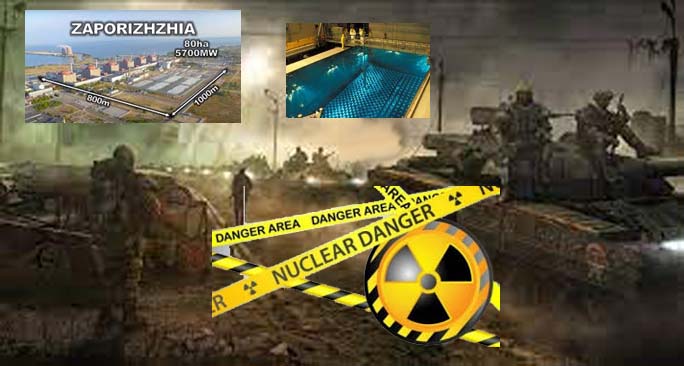
MANILA, Nov 25 (Reuters) – https://www.reuters.com/business/energy/zaporizhzhia-nuclear-plant-needs-cooperation-agreement-event-ukraine-peace-says-2025-11-25/
International Atomic Energy Agency chief Rafael Grossi said on Tuesday the Zaporizhzhia nuclear power plant will need a “special status” and a cooperation agreement between Russia and Ukraine if a peace deal is reached.
Russian forces seized the plant, Europe’s largest with six reactors, in the first weeks of Moscow’s February 2022 invasion of Ukraine. The plant produces no electricity, but each side regularly accuses the other of military actions compromising nuclear safety.
“Whatever side of the line it ends up, you will have to have a cooperative arrangement or a cooperative atmosphere,” he said.
Grossi’s comments come as U.S. President Donald Trump’s administration makes an intense new push to end the war.
U.S. and Ukrainian officials are trying to narrow the gaps between them over a draft peace plan that includes provisions for Zaporizhzhia’s future.
Without peace, there is danger of a nuclear accident, Grossi said.
“Until the war stops or there is a ceasefire or the guns are silenced, there is always a possibility of something going very, very wrong,” he said in an interview.
“No single operator can use a nuclear power plant when across the river there is another country which is resisting this and may take action against that.”
A draft version of the U.S.-backed 28-point peace plan for Ukraine, according to a copy seen by Reuters, proposes restarting the plant under IAEA supervision, with electricity output split equally between Russia and Ukraine.
“Shared, not shared – and I don’t want to get into that because it’s political – …it’s something that Ukraine and Russia will be deciding at some point,” Grossi said. “But one thing is clear, the IAEA is indispensable in this situation.”
Zaporizhzhia’s six reactors have been in cold shutdown since 2022, relying on external power lines and emergency systems to prevent a station blackout. The IAEA maintains a continued presence at the site to monitor safety amid ongoing shelling.
1 This Month
To see nuclear-related stories in greater depth and intensity – go to https://nuclearinformation.wordpress.com/
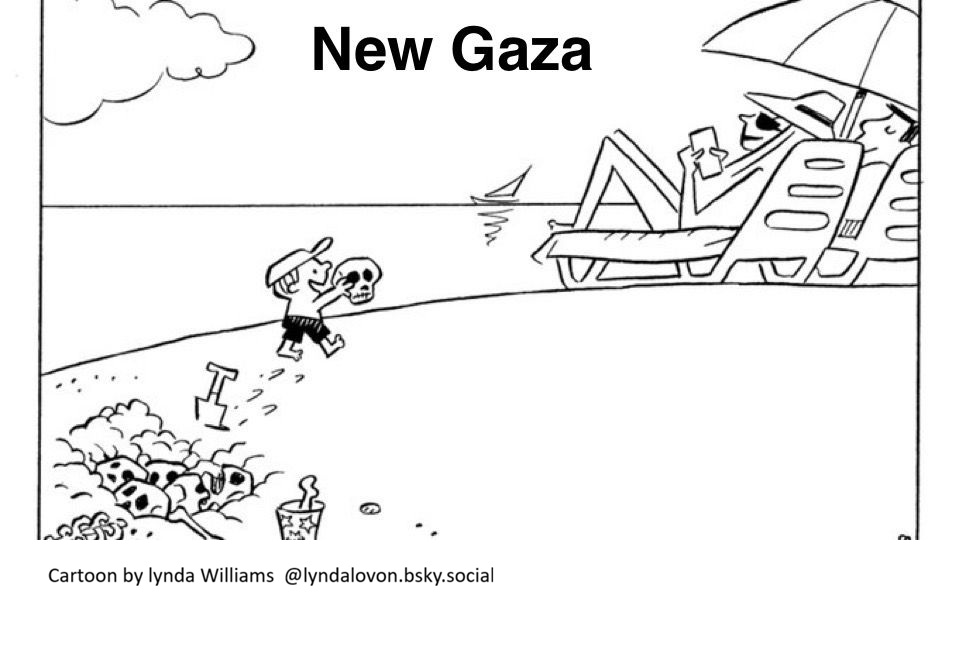
29 Jan. Thursday 7-8 p.m. Webinar – World’s Largest Nuclear Station in Port Hope, ON?

31st January – Challenging the War Machine – a DECLASSIFIED UK SUMMIT

Website of the Week
Now until to February 10, 2026 Radioactive waste storage in France: the debate is finally open! How to participate?
-
Archives
- January 2026 (259)
- December 2025 (358)
- November 2025 (359)
- October 2025 (376)
- September 2025 (258)
- August 2025 (319)
- July 2025 (230)
- June 2025 (348)
- May 2025 (261)
- April 2025 (305)
- March 2025 (319)
- February 2025 (234)
-
Categories
- 1
- 1 NUCLEAR ISSUES
- business and costs
- climate change
- culture and arts
- ENERGY
- environment
- health
- history
- indigenous issues
- Legal
- marketing of nuclear
- media
- opposition to nuclear
- PERSONAL STORIES
- politics
- politics international
- Religion and ethics
- safety
- secrets,lies and civil liberties
- spinbuster
- technology
- Uranium
- wastes
- weapons and war
- Women
- 2 WORLD
- ACTION
- AFRICA
- Atrocities
- AUSTRALIA
- Christina's notes
- Christina's themes
- culture and arts
- Events
- Fuk 2022
- Fuk 2023
- Fukushima 2017
- Fukushima 2018
- fukushima 2019
- Fukushima 2020
- Fukushima 2021
- general
- global warming
- Humour (God we need it)
- Nuclear
- RARE EARTHS
- Reference
- resources – print
- Resources -audiovicual
- Weekly Newsletter
- World
- World Nuclear
- YouTube
-
RSS
Entries RSS
Comments RSS
 nuclear-news