Nuclear waste dump agency pumps money into community projects in Mablethorpe

By Richard Silverwood
The organisation behind plans for a possible nuclear waste
dump in the Louth or Mablethorpe areas is continuing to pump money into
important community projects there. Nuclear Waste Services (NWS), a
government agency that specialises in the management of radioactive waste,
has earmarked Lincolnshire or Cumbria as the location for the dump, known
as a GDF (geological disposal facility).
Two potential sites – a former gas terminal at Theddlethorpe, near Mablethorpe, and agricultural land close to the villages of Hayton le Marsh and Great Carlton, near Louth –
have been mooted – and both have attracted widespread opposition.
Lincolnshire World 17th Feb 2025, https://www.lincolnshireworld.com/news/people/nuclear-waste-dump-agency-pumps-money-into-community-projects-in-mablethorpe-4995509
US Strategic Bombers Fly Near Gaza As Israel Threatens To Open ‘Gates of Hell’ GRAVITAS | WION.
A squadron of six US Air Force bombers has reportedly been flying over the Mediterranean Sea, consisting of B-52 Stratofortress. According to reports, the American aircraft took off from an American base in England on Monday, possibly heading towards West Asia. This comes a day after the U.S. and Israel displayed a united front on Gaza, with PM Benjamin Netanyahu warning to open the “gates of hell” in Gaza if all hostages are not returned. Watch in for more details!
Dr. Gordon Edwards Testifies on the BWRX-300 Reactor Design Feb 9 2025.
G Edwards’ testimony to the Canadian Nuclear Safety Commission (CCNR) on
February 9 2025 on behalf of the Canadian Coalition for Nuclear
Responsibility (CNSC). CCNR urges CNSC not to grant a construction licence
for the first of four new nuclear reactors – based on the 300 MWe Boiling
Water Reactor BWRX-300 design by General-Electric-Hitachi. Despite an
incomplete design and the deletion of several major safety features,
Ontario’s utility OPG asks the Canadian nuclear regulator CNSC to grant a
construction licence. On Feb 9 2025, the second of five days of public
hearings, Dr. Gordon Edwards of the Canadian Coalition for Nuclear
Responsibility (CCNR) urges the CNSC not to grant the licence
Gordon Edwards 18th Feb 2025,
https://www.youtube.com/watch?v=Iq0zG1Z_GrU
Amid ‘clear’ threat of nuclear war, Guterres tells Security Council multilateral off-ramp is essential

United Nations, 19 Feb 25
Strengthening international cooperation and delivering on a UN pact that calls for reforming global governance, among other measures, was the focus of debate in the Security Council on Tuesday.
The ministerial-level meeting was convened by China, which holds the rotating Council presidency this month, as the UN prepares to mark its 80th anniversary later this year.
UN Secretary-General António Guterres opened the debate emphasizing that “global solidarity and solutions are needed more than ever” as the climate crisis rages and inequalities and poverty increase.
Peace remains illusive
“As this Council knows well, peace is getting pushed further out of reach — from the Occupied Palestinian Territory to Ukraine to Sudan to the Democratic Republic of the Congo and beyond,” he said.
“Terrorism and violent extremism remain persistent scourges. We see a dark spirit of impunity spreading. The prospect of nuclear war remains – outrageously – a clear and present danger.”
Emerging technologies such as Artificial Intelligence (AI) are also a challenge as their “limitless promise…is matched by limitless peril to undermine and even replace human thought, human identity and human control.”
Security Council reform
“The Pact also recognizes that the Security Council must reflect the world of today, not the world of 80 years ago, and sets out important principles to guide this long-awaited reform,” said Mr. Guterres.
The Council should be enlarged and made more representative of today’s geopolitical realities, while countries also must continue to improve its working methods to make the body more inclusive, transparent, efficient, democratic and accountable.
He recalled that these issues have been under consideration by the UN General Assembly for more than a decade. ……………………………………………………….more https://news.un.org/en/story/2025/02/1160246
At Great Cost: The companies building nuclear weapons and their financiers show 260 profiteers from the nuclear weapons industry

The 2024 Don’t Bank on the Bomb analysis identifies 260 banks, pension funds, insurance companies and other financial institutions with significant finance or investment relations with the 24 main nuclear weapons producers.
The number of Institutions with significant financial exposure to companies involved in the nuclear weapons industry has dropped by a quarter since the Treaty on the Prohibition of Nuclear Weapons came into force in 2021 according to “At Great Cost: The companies building nuclear weapons and their financiers” a new report from the International Campaign to Abolish Nuclear Weapons (ICAN) and PAX. Read more about the significance of this trend here.
All nine nuclear-armed states are investing in their nuclear arsenals. Several of these countries contract the private sector to manufacture and service their nuclear weapons; the 24 most significant of these companies are identified in this report. The most significant contracts for nuclear weapons related work went to Northrop Grumman, General Dynamics, BAE Systems, Boeing, Leonardo, Lockheed Martin and RTX. download the PDF here.
Why it would be a bad idea for the Trump administration to conduct a “rapid” nuclear test

Bulletin, By Sulgiye Park, Jennifer Knox, Dylan Spaulding | February 18, 2025
The career of Brandon Williams, President Trump’s pick to run the National Nuclear Security Administration, does not give many clues about his priorities for the agency that safeguards the US nuclear arsenal. He served as a naval officer, co-founded a venture capital firm, and farmed truffles in upstate New York before spending two years in Congress as a Republican representative. (He lost his reelection bid in November 2024.) Like many of Trump’s nominees, he has had little direct interaction or experience with the federal agency he aspires to run. But for the Trump team, that may be the appeal of Williams. The search for an agency leader required a candidate willing to restart the US nuclear testing program, according to former Los Alamos National Laboratory director Terry Wallace: “That more or less disqualifies any recent director of any nuclear weapons lab.”
Restarting the US nuclear testing program could be one of the most consequential policy actions the Trump administration undertakes—a US test could set off an uncontrolled chain of events, with other countries possibly responding with their own nuclear tests, destabilizing global security, and accelerating a new arms race. Yet, despite its significance to US national security, nuclear testing is not a subject Trump campaigned on, nor is it mentioned in the 2024 Republican Party platform. This silence on the issue is unsurprising: Nuclear testing is politically divisive and unpalatable to voters. When the first Trump administration contemplated a nuclear test in 2020, it faced significant backlash from Congress and nuclear experts. Trump’s appointee to the NNSA is likely to remain coy on the subject during his upcoming confirmation hearings.
Behind the scenes, however, close advisors to the administration are busy making the case for a new era of explosive nuclear testing to the national security community. Robert O’Brien, a national security advisor in the first Trump administration, was allegedly involved in the selection of Williams. Laying out a vision of Trump’s foreign policy priorities, O’Brien recently argued that “Washington must test new nuclear weapons for reliability and safety.” However, O’Brien’s claim is not supported by the agencies and officials tasked with overseeing the US nuclear stockpile…………………………………………………………………………………………………………………………………………………… more https://thebulletin.org/2025/02/why-it-would-be-a-bad-idea-for-the-trump-administration-to-conduct-a-rapid-nuclear-test/
Uncertain nuclear partnership between ČEZ and Rolls-Royce.
Negotiations between ČEZ and Rolls-Royce
on cooperation are starting to falter. Negotiations on the capital
investment of the CEZ Group in the British company Rolls-Royce SMR and
subsequent cooperation on the development and construction of modular
reactors are not going smoothly.
On the contrary, according to two
well-informed sources of the Economic Daily, the negotiations are starting
to falter. The Czechs and the British have different expectations, for
example, regarding where the production of the main parts of the reactor
will be located – whether in the Pilsen-based Škoda JS or in Korea.
According to one source, the British claim that the best option would be to
outsource the production of pressure vessels, steam generators and other
large parts to the Korean Doosan; they are said to be able to produce them
cheaper and better than anyone in Europe. On the other hand, ČEZ is trying
to properly utilize the capacities of the manufacturing and engineering
company Škoda JS, which it took over at the end of 2022. It would like to
produce pressure vessels, internal parts of the reactor and other equipment
in Pilsen.
This is a lot of money, and supplies for up to dozens of
reactors are at stake. One of the sources contacted points to another point
of contention. Rolls-Royce management expected active participation of
Czech experts in completing the design of the 470-megawatt modular reactor.
However, ČEZ and its subsidiaries are keeping the shortage of nuclear
engineering experts “at home” and do not want to send them to Britain
for several years.
Ekonomicky Denik 17th Feb 2025
Louth MP welcomes council’s decision to pull out of nuclear waste dump group
By Richard Silverwood, 17th Feb 2025,
Louth’s MP has welcomed the key decision by a council to pull out of the
group central to plans for a nuclear waste dump. The Theddlethorpe
Community Partnership has been set up by Nuclear Waste Services (NWS), the
government agency that has earmarked two possible East Lindsey locations
for the dump, known as a GDF (geological disposal facility). Its purpose is
to explain the proposals to residents and councillors, and to persuade them
that the GDF would be safe and secure in the Lincolnshire area. Coun Craig
Leyland, the Conservative leader of the council, said this was a blatant
switch from a ‘brownfield’ site and “would scar several kilometres of
farmland on the margins of the Lincolnshire Wolds”. Now MP Victoria
Atkins has echoed this view. She said: “When the latest proposals were
revealed by NWS, I immediately called a meeting with Coun Leyland and Coun
Martin Hill, the leader of Lincolnshire County Council, to reiterate local
residents’ opposition to a dump.
Lincolnshire World 17th Feb 2025
Amazon-backed nuclear power developer X-Energy threatens to move investment away from UK
Amazon-backed nuclear power developer X-Energy delivered a potential blow
over the weekend by threatening to move investment earmarked for its first
next-generation plants in the UK elsewhere unless the government sets out a
clear regulatory and financial route to market, The Times reported this
morning. “We would like to go big in Europe from a base in the UK but we
don’t have to do a base in the UK,” said X-Energy’s chief executive Clay
Sell.
“We’ve got to get real and we’ve got to get going, otherwise we’re
going to go someplace else.” Based in Maryland in the United States, the
firm is reported to be in discussions with French energy group EDF to build
one or more units on the site of the Hartlepool nuclear power plant, which
is due to be decommissioned in 2027. X-Energy recently closed a $700m
funding round anchored by Amazon, as part of a broader partnership to bring
5GW of power on stream by 2039. However, Clay reportedly said he remains
“very optimistic” that it could get its 80MW modular reactors – which can
be scaled into “four pack” 320MW plant – built in the UK.
Business Green 17th Feb 2025
Pioneering micro nuclear reactors to be built in Britain.
Major test for UK’s energy policy as four reactors planned on site of former power
station in Wales. Britain’s first “micro” nuclear reactors are to be
built on the site of a former coal-fired power station in south Wales. Four
reactors will be installed at the decommissioned Llynfi power station in
Bridgend under the proposals, each generating up to 20 megawatts (MW) of
electricity. These will be assembled in modules after being produced in a
factory off-site. The 14-acre project is being overseen by Last Energy, a
Washington-headquartered business, in a major early test for the
Government’s green energy policy. It will be the first new UK location to
house a commercial nuclear power reactor since the Torness nuclear power
station in East Lothian in 1978. Until now, modern UK nuclear projects have
been built on sites previously occupied by an earlier plant.
Telegraph 17th Feb 2025
President Trump Wants to Cut the Pentagon Budget in Half. How?
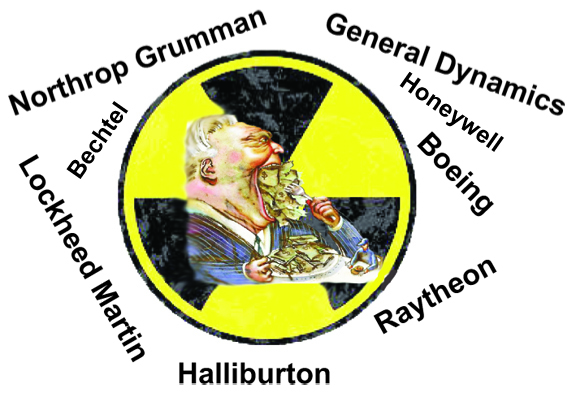
According to USAspending.gov and Defense News, the largest defense contractors in 2023 included:
BAE Systems – $13.6 billion
Lockheed Martin Corp. – $60.8 billion
RTX (Raytheon) – $40.7 billion
Northrop Grumman Corp. – $35.0 billion
Boeing Company – $30.8 billion
General Dynamics Corp. – $30.4 billion
L3Harris Technologies – $13.9 billion
Dennis Kucinich and Elizabeth Kucinich, Feb 18, 2025, https://denniskucinich.substack.com/p/president-trump-wants-to-cut-the
The President advances a three-pronged strategy for national security: 1. Negotiate a peace deal for Ukraine. 2. Negotiate nuclear arms drawdown with China and Russia. 3. Cut military spending by 50%
It is Presidents’ Day, and President Donald Trump has made a bold statement regarding military spending—one that no other president in modern history has made. He claims he could cut the Pentagon budget by about 50%.
President Trump has suggested a major cut in defense spending, proposing that the United States, Russia, and China each reduce their military budgets by 50%. He has also expressed a desire to begin denuclearization and arms control discussions with both Russia and China to accomplish this objective.
Military contractors poured $4,440,605 into Kamala Harris’s campaign—more than double what they contributed to Donald Trump. Yet, even with the support of establishment figures like Dick Cheney, their favored candidate fell short. The defeat of the military contractor’s candidate may have consequences for the industry.
Now, with President Trump in office and a bold initiative to cut Pentagon spending by 50%, the defense industry faces a challenge unlike any before.
The financial markets are already responding: Major U.S. defense firms are experiencing notable stock declines, while European defense companies surge in anticipation of increased regional military spending. Lockheed Martin, General Dynamics, and Northrop Grumman have all seen stocks fall, while companies such as Rheinmetall, BAE Systems, and Saab are benefiting from investors expecting a shift in global defense priorities.
As President Trump pursues negotiations to bring peace to Ukraine, European governments appear to be moving in the opposite direction, increasing military budgets and deepening their involvement in the conflict. European defense firms are thriving as they anticipate further arms sales to governments committed to escalating military engagement rather than seeking diplomatic solutions.
This contrast underscores the significance of Trump’s initiative—challenging the entrenched military-industrial complex, wherever it is located, and seeking to end perpetual warfare.
The era of unchecked military expansion may be coming to an end, and for the first time in decades, the ability of the defense industry to influence U.S. military policy is being curtailed.
Will it happen? We don’t know, but President Trump’s bold proposal to cut Pentagon spending reflects his signature negotiation style—starting with an aggressive position to shift the conversation and force a change in conditions, in this case – – scrutiny of military waste.xpansion may be coming to an end, and for the first in decades, the ability of the defense industry to influence U.S. military policy is being curtailed.
Rather than a rigid policy demand, Trump’s talk of a 50% cut in military spending challenges the entrenched interests of the military-industrial complex, putting pressure on defense contractors to reduce costs, compelling Congress to justify every dollar spent.
Peace, diplomacy and international agreements between military superpowers are now squarely on the priority policy table for the first time in decades and are being understood as pragmatic. Such strategic diplomacy can open the door for arms reduction talks with other global superpowers.
By challenging the status quo, Trump is causing security and economic prosperity to be merged. Trump is causing a rethink of national priorities, that America’s strength is built on both security and economic prosperity, and that unlimited military spending threatens both.
It is a longstanding Congressional practice of bloating the NDAA (National Defense Authorization Act) with unnecessary programs and hyperinflated spending. In all other authorization packages, things must be reduced and streamlined.
In the “defense” bill, they are always padded out and multiple zeros added to appropriations requests by habit. Very few lawmakers have the courage to vote against a “defense” bill despite knowing its excesses, and media will spin on the attack if they do.
Dennis was always 100% for national defense through fiscal integrity, against unnecessary war and profiteering, and so when in Congress he voted 100% of the time against the wasteful spending!
Throughout our careers, we have championed the principle of “Strength Through Peace.” This philosophy is rooted in the belief that true national security is not achieved through ever-expanding military budgets, but through diplomacy, cooperation, and a commitment to resolving conflicts without war.
We have carried this message forward, advocating that real strength is found in preventing war, not waging it. For decades, we have worked to place peace at the center of national policy—not as an idealistic dream, but as the most pragmatic and sustainable path forward.
It is a new day when a President questions military waste and opens the door for de-escalation of global conflict. However, notwithstanding the President’s ambition for sharp reductions in military spending, the current budget is a golden trough for contractors. Let’s take a look.
Breaking Down the Pentagon’s Nearly $1 Trillion Budget
The Pentagon’s budget is a massive and complex expenditure. Here’s a rough estimate of where the money goes:
- 25% goes toward soldiers’ pay and benefits.
- 25% is allocated for base operations, including training.
- More than 40% is funneled to Pentagon contractors for weapons systems, research and development (R&D), logistical support, base operations, technology, and private security.
- Additional funds go toward military construction and nuclear weapons programs.
Top Defense Contractors & Their 2023 Revenue
According to USAspending.gov and Defense News, the largest defense contractors in 2023 included:
- Lockheed Martin Corp. – $60.8 billion
- RTX (Raytheon) – $40.7 billion
- Northrop Grumman Corp. – $35.0 billion
- Boeing Company – $30.8 billion
- General Dynamics Corp. – $30.4 billion
- L3Harris Technologies – $13.9 billion
- BAE Systems – $13.6 billion
These companies receive billions annually in government contracts, making them deeply invested in maintaining high levels of military spending.
Military Contractors’ Political Contributions (2023-2024)
According to OpenSecrets, the top defense contractors contributed significantly to political campaigns in the current election cycle:
L3Harris Technologies – $2,475,712 total ($1,126,096 to Democrats, $1,331,975 to Republicans)
Lockheed Martin – $4,470,698 total ($2,393,034 to Democrats, $2,021,283 to Republicans)
Northrop Grumman – $3,354,889 total ($1,903,884 to Democrats, $1,385,924 to Republicans)
RTX Corp (Raytheon) – $2,805,535 total ($1,472,920 to Democrats, $1,258,511 to Republicans)
General Atomics – $2,507,912 total ($595,947 to Democrats, $1,660,970 to Republicans)
In the presidential race, defense contractors have donated:
- Kamala Harris – $4,440,605
- Donald Trump – $1,787,259
In total, the defense sector has contributed over $41.4 million in the 2023-2024 election cycle. For every $1 contributed to political campaigns, these companies receive $10,000 in government contracts—a return on investment most businesses could only dream of.
Trump’s Negotiation Strategy: What Is He Really Aiming For?
President Trump stated intention to cut military spending by 50% reflects his signature negotiation style—starting with an aggressive position, shift the conversation and force long-overdue scrutiny of a neglected policy and spending – — in this case, military waste.
Defense contractors will be under pressure to reduce costs. Congress will be forced to ever more careful review of defense appropriations. Just the mere mention of a shift in spending by the President galvanizes budget hawks to search for waste, fraud and abuse in Pentagon contracting,
Is War a Racket?
As Marine Corps General Smedley Butler once famously said, “War is a racket.” If so, how do we end that racket? Here are six possible reforms:
- Ban political contributions from federal contractors – No company receiving taxpayer-funded contracts should be allowed to donate to political campaigns.
- Prohibit companies that overcharge the government from receiving contracts – Firms with histories of price gouging should be disqualified from future defense spending.
- Restrict Pentagon officials from working for defense contractors – A five-year cooling-off period should be implemented for former officials joining military contractors.
- Ban members of Congress from lobbying for defense contractors – Prevent lawmakers from cashing in by lobbying for the companies they previously regulated.
- Establish public financing for all federal campaigns – This would reduce corporate influence in government decisions.
- Pass a Constitutional Amendment to repeal Citizens United and Buckley v. Valeo – Overturning these Supreme Court decisions would reduce corporate and special interest control over elections.
Trump’s Approach: A New Era?
Despite his rhetoric, President Trump is not calling for the disestablishment of America’s defense. Instead, he proposes a new strategy: engaging China and Russia in parallel arms reductions while scaling back America’s nuclear arsenal. This approach could set the stage for fresh arms reduction treaties and a shift away from perpetual military expansion.
For the first time, there is a sitting president who is starting to walk this path. If he follows through, this could mark the most significant shift in American military policy in decades.
If the ultimate goal is to restore peace and fiscal responsibility in America, then the President challenging the military-industrial complex may be the most important fight of all and is deserving of our support.
Nuclear expert issues Chernobyl update after it emerges fires are still burning.
Luke Alsford and Gergana Krasteva, Metro UK, February 16, 2025
Flames are still raging inside the Chernobyl nuclear station after multiple fires yesterday.
Three smoldering fires were detected earlier this morning, forcing teams to jump into action to prevent a disaster at the power plant.
Ukraine’s state agency on exclusion zone management confirmed that no release of radioactive material has been reported yet.
The plant was hit on Friday by a drone carrying a high-explosive warhead, according to Ukraine, 38 years after the nuclear explosion at the site…..
Firefighters continue to battle the blaze round the clock in challenging weather conditions, admitted the International Atomic Energy Agency.
The plant’s fourth reactor now has a 314 square foot gash after the drone strike.
Although no rise in radiation has been reported yet, an expert issued a frightening warning about how Russia’s attack will soon affect nearby radioactivity
Dr Olga Kosharna, founder of the Anti-Crisis Expert Nuclear Centre of Ukraine, said: ‘The hermetic seal has been broken.
‘It is clear that the ventilation systems will [work] differently and the radiation level will increase.
‘But I think that it will not go beyond the industrial site and the exclusion zone.
Chernobyl’s reactors are covered by an outer dome to prevent radioactive leakage after the 1986 disaster – the world’s worst civilian nuclear accident – which sent pollution spewing across Europe.
Video footage shows how the explosion blew a hole in the dome at 1.50am on Friday, before a fire then broke out.
An open fire on the roof structure – officially called the New Safe Confinement (NSC) – was swiftly put out by first responders.
However smouldering fires remain inside the 20ft diameter hole.
The International Atomic Energy Agency [IAEA] said: ‘The ongoing efforts to put out and prevent the spread of any remaining fires – apparently fuelled by inflammable material in the roof cladding – have delayed work to start repairing the damage.’
The organisation’s director Rafael Mariano Grossi added: ‘This was clearly a very serious incident, with a drone hitting and damaging a large protective structure at a major nuclear site.
‘As I have stated repeatedly during this devastating war, attacking a nuclear facility is an absolute no-go, it should never happen.’
Grossi also warned of an ‘increase in military activity in the area around the Zaporizhzhia Nuclear Power Plant.
‘The IAEA remains committed to doing everything we can to help prevent a nuclear accident. Judging by recent events, nuclear safety remains very much under threat.’…………………………….
Zelensky spoke at the Munich Security Conference yesterday, accusing Russia of flaming the conflict with the alleged drone attack……………………………… https://metro.co.uk/2025/02/16/nuclear-expert-issues-chernobyl-update-emerges-fires-still-burning-22567966/
French State Spars With EDF Over Multibillion-Euro Reactor Plan
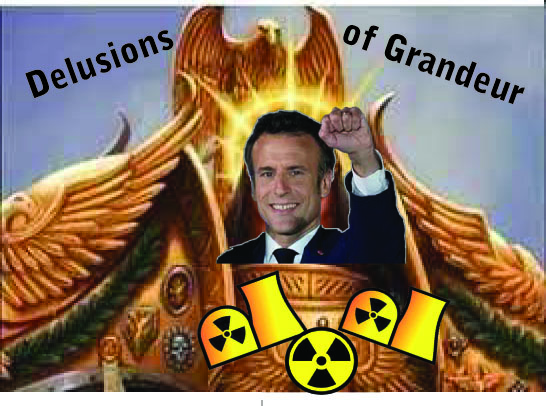
French government officials took issue with Electricite de France SA’s plan to build six nuclear plants, saying cost estimates are too broad and reactor designs not firmed up, according to people with knowledge of recent talks.
Bloomberg News, Francois de Beaupuy, Feb 14, 2025 – https://financialpost.com/pmn/business-pmn/french-state-spars-with-edf-over-multibillion-euro-reactor-plan
EDF’s board met with state representatives last week amid growing concern that the company and its suppliers are far from ready to launch a project deemed key to France’s long-term energy security. The world’s biggest nuclear-plant operator needs to prove it has a credible plan after long delays and cost overruns at other reactor developments caused debts to balloon.
Officials at the Feb. 5 meeting characterized state-owned EDF’s presentation as unconvincing on both budget and reactor design, the people said, asking not to be identified discussing private talks.
A French state auditor said last month that a final investment decision on the six reactors should be made only once their design is well advanced and funding finalized. It said the estimated bill for construction, excluding financing costs, had swelled to almost €80 billion ($84 billion) when accounting for inflation.
The criticism at last week’s presentation went both ways. EDF Chief Executive Officer Luc Remont railed against the government for enacting a finance bill that doesn’t specify tax rates on future windfall revenues, the people said. Several board members also expressed concerns about the uncertainty surrounding the level of state aid for reactor projects, the people said.
Spokespeople for EDF and the government’s shareholding agency declined to comment.
Slow progress is not only fueling tensions between EDF and the government. It also threatens to undermine preparations along the supply chain for reactor construction. In the past two years, EDF has seen US and Korean competitors make inroads in European markets as its own proposals were overlooked.
Nuclear Revival
The difficulties faced by a nuclear behemoth such as EDF may also raise questions over the speed and breadth of an atomic-power renaissance across Europe, with many countries planning new reactors to cut emissions from power generation and bolster energy security.
Back in July, EDF’s Remont expressed hope that a state support package for the six new reactors would be agreed upon by the end of 2024, paving the way for a final investment decision by the end of 2025 or early next year.
Already on the back foot, EDF must now move quickly to pin down costs and designs so that the government can work out the necessary support and seek approval from European competition authorities, the people said. The state aid needs to be fine-tuned to limit any remedies requested by Brussels, they said.
Film Review- Special Operation: The Invasion of Chornobyl
Sebastian Zaval, February 17, 2025,
https://loudandclearreviews.com/special-operation-film-review/
Oleksiy Radynski’s Special Operation (Spetsialna Operatsiia) is a chilling experiment in documentary narrative that tries to speak for itself.
Based on 1000 hours of real-life CCTV footage, Oleksiy Radynski’s Special Operation (Spetsialna Operatsiia) manages to show us things “as they were” when Russian troops occupied Ukraine’s Chornobyl Nuclear Power Plant on February 24, 2022.
Just like most documentaries, Special Operation includes a narrative and a point of view, but Radynski’s movie also does make a point of trying to remain as neutral as possible, allowing the viewer to be a spectator of all the things these soldiers and their superiors did during their five weeks stuck at the plant. The result is a fascinating experiment in documentary narrative that’s hard to watch at moments.
Now, the movie tries to be a sort of summary of all that happened when the Russian troops occupied the place, showing the viewer pretty much everything they did. We see as they arrive with tanks and weapons, trying to look as intimidating as possible. But most fascinatingly, we see them as people, not as particularly tough-looking goons. One of the aims of Special Operation is to show the viewer that these Russian invaders weren’t as efficient or intelligent as they were supposed to be, and looked rather lost most of the time.
It’s an interesting prospect, then, having the opportunity to watch the humanisation of an invading force. It’s not the sort of humanisation that turns these soldiers into three-dimensional figures with which one can empathise, but rather the kind that turns them into bumbling, clueless criminals. Special Operation shows the people who were supposed to be smart and powerful as vulnerable; as a force that arrived in a place without knowing what to do or how to do it. The fact that Radynski managed to get 1000 hours of footage of everything they did should tell us all about their efficiency; apparently, they weren’t even able to turn off or destroy most of the CCTV cameras at the plant.
Now, the fact that Special Operation is told exclusively through CCTV footage is quite fascinating. The viewer gets a birds-eye view of everything: the entrance to the plant, the exteriors, even the hallways and rooms. We see the Russian soldiers from afar, but at times, also closely, which means we see their faces and for a bit, even their bodies. Watching Special Operation almost feels like an out-of-body experience, as if we were passively watching something prohibited and dark, without being able to do anything about it.
Additionally, since CCTV cameras usually don’t record sound, Radynski collaborated with top Lithuanian-based sound artist Vladimir Golovnitski, who designed the film’s soundscape. This results in a completely plausible experience, in which the viewer never really notices the sound design – which is, of course, the whole point of Golovnitski’s work. There are footsteps and unintelligible conversations and even explosions in the background, outside the frame. Thus, the movie manages to create quite an oppressive atmosphere without ever feeling manipulative, complementing the realistic visual style and editing with an equally realistic soundscape.
Barely an hour long, Special Operation is short enough to not end up testing the viewer’s patience, but long enough to feel like a precise and largely neutral account of what happened in Chornobyl in 2022. It obviously has an anti-Russian invasion point of view, but it doesn’t try to convey it in an obvious or artless way, instead letting the real-life footage speak for itself as the viewer sees everything the invaders did for five weeks. Special Operation is not a movie for everyone, and it does demand quite a bit of patience and critical analysis from the viewer, but those who give it a chance will find themselves glued to the screen, considering the actions of these war criminals at the site of the worst nuclear disaster in history.
X-Energy threatens to pull out of building nuclear plants in Britain
Developer backed by Amazon demands clarity on financial and regulatory
support before building advanced modular reactor in Hartlepool.
X-Energy, based in Maryland in the United States, is in discussions with EDF, the
French state-backed energy group, over a project to build one or more units
on the site of the Hartlepool nuclear power plant in Co Durham, a
large-scale reactor that is due to be decommissioned in 2027.
The company, which is also backed by Dow, the American industrial group, is developing
its first advanced modular reactor at one of Dow’s manufacturing sites on
the Texas Gulf Coast, with support from the US government. Another project
for Amazon is also planned in Washington state.
While its preference was to
build its first European Xe-100 reactors in Britain, Clay Sell,
X-Energy’s chief executive, said that without greater clarity from the
government on financial and regulatory support mechanisms it would look to
other markets. “We would like to go big in Europe from a base in the UK
but we don’t have to do a base in the UK. We’ve got to get real and
we’ve got to get going, otherwise we’re going to go someplace else,”
Sell said.
A clear framework included sites being made available for
advanced modular reactors, some government support for early development
work for the first plant alongside private capital, and funding for
construction through the so-called regulated asset base model, which is
levied on electricity bills. Unlike the existing designs operating in the
UK, X-Energy’s technology uses helium as a coolant rather than water to
divert heat away from the core. It has also developed its own fuel, which
it claims can withstand four times the temperature of typical nuclear fuel.
Times 17th Feb 2025, https://www.thetimes.com/business-money/companies/article/x-energy-threatens-to-pull-out-of-building-nuclear-plants-in-britain-hk99djbps
-
Archives
- October 2026 (120)
- September 2026 (339)
- August 2026 (330)
- July 2026 (355)
- June 2026 (287)
- May 2026 (306)
- April 2026 (356)
- March 2026 (251)
- February 2026 (267)
- January 2026 (308)
- December 2025 (358)
- November 2025 (359)
-
Categories
- 1
- 1 NUCLEAR ISSUES
- business and costs
- climate change
- culture and arts
- ENERGY
- environment
- health
- history
- indigenous issues
- Legal
- marketing of nuclear
- media
- opposition to nuclear
- PERSONAL STORIES
- politics
- politics international
- Religion and ethics
- safety
- secrets,lies and civil liberties
- spinbuster
- technology
- Uranium
- wastes
- weapons and war
- Women
- 2 WORLD
- ACTION
- AFRICA
- Atrocities
- AUSTRALIA
- Christina's notes
- Christina's themes
- culture and arts
- Events
- Fuk 2022
- Fuk 2023
- Fukushima 2017
- Fukushima 2018
- fukushima 2019
- Fukushima 2020
- Fukushima 2021
- general
- global warming
- Humour (God we need it)
- Nuclear
- RARE EARTHS
- Reference
- resources – print
- Resources -audiovicual
- Weekly Newsletter
- World
- World Nuclear
- YouTube
-
RSS
Entries RSS
Comments RSS

