Australia’s continued enmeshment with the US could make it a nuclear target, former Labor minister warns

“This makes Australia a priority nuclear target for any adversary of the United States,”
“An adversary would target Australia before targeting the US directly since to do so would invite immediate retaliation.”
Former Labor minister Melissa Parke has warned that Australia’s close military ties to the United States make it a priority nuclear target that adversaries would likely strike before attacking the US directly.
By Tegan George, Tue 8 Sep 2026 , https://thepoint.com.au/new/260908-australias-continued-enmeshment-with-the-us-could-make-it-a-nuclear-target-former-labor-minister-warns
Former Labor minister Melissa Parke has warned that Australia’s close military ties to the United States make it a priority nuclear target that adversaries would likely strike before attacking the US directly.
Speaking on the Australia Institute’s After America podcast, Ms Parke said Australia’s increasing enmeshment with the US was even more reason for it to join the “groundbreaking” Treaty on the Prohibition of Nuclear Weapons (TPNW).
“It’s the first treaty to comprehensively and categorically prohibit nuclear weapons and anything to do with them: developing, possessing, testing, using, threatening to use, sharing, deploying, et cetera,” she said.
Ms Parke, now executive director of the International Campaign to Abolish Nuclear Weapons (ICAN), said more than half the world’s countries had joined as states parties or signatories, including almost all of Australia’s neighbours in Southeast Asia and the South Pacific.
While Labor has committed in its national platform to joining the treaty since 2018, the Albanese government is yet to sign on the dotted line.
The commitment was moved by Anthony Albanese and seconded by Richard Marles, now Prime Minister and Defence Minister.
Defence Minister Richard Marles recently travelled to the US to meet his counterpart, Defence Secretary Pete Hegseth, as the countries marked the 75th anniversary of the ANZUS alliance.
Following the meeting, they agreed to “accelerate force posture initiatives” at Australian bases but didn’t say whether that would mean more American troops heading down under.
The growing US military presence includes the rotation of nuclear-powered submarines through HMAS Stirling and nuclear-capable B-52 bombers at RAAF Base Tindal in the Northern Territory, alongside existing joint facilities such as Pine Gap.
“This makes Australia a priority nuclear target for any adversary of the United States,” said Ms Parke.
“An adversary would target Australia before targeting the US directly since to do so would invite immediate retaliation.”
She argued other countries in the region had joined the treaty without damaging their US relationship, pointing to Palau, New Zealand, the Philippines and Thailand.
Ms Parke said she understood the Albanese government was concerned about “upsetting” the US but cited former prime minister Paul Keating’s remark that “we couldn’t get rid of the Americans even if we wanted to”.
“Our own former foreign minister, Gareth Evans, says that reliance on US nuclear deterrence is both dangerous because it makes us a nuclear target and absurd because the US would never sacrifice one of its cities for ours.”
She said the treaty also provided victim assistance and remediation of affected environments.
“There’s a bit of a myth out there that nuclear weapons have only ever been used twice in Hiroshima and Nagasaki,” she told the podcast.
“But in fact, nuclear weapons have been exploded more than 2000 times around the world, mostly on colonised Indigenous and vulnerable communities.”
That includes Australia, where the British conducted 12 major nuclear detonations and hundreds of radiological trials in Western and South Australia between 1952 and 1963.
The tests caused severe radioactive contamination and prompted a royal commission into their lasting health and environmental impacts.
The treaty’s first review conference is due to be held in New York from 30 November to 4 December, but Ms Parke said some affected communities would not attend because they “don’t feel safe” under the Trump administration.
Ms Parke accused the US of doing “enormous damage” to international institutions and appearing willing to violate and discard any rule or norm of international law.
“When we only negotiate bilaterally with a hegemon, we negotiate from weakness,” she said.
“We accept what’s offered. We compete with each other to be the most accommodating. This is not sovereignty. It’s the performance of sovereignty while accepting subordination.”
Boris Johnson Continues to Lie About Subverting Ukraine Peace Talks

The origin of the Johnson sabotage story is not Russian propaganda. It was first reported by Ukrainska Pravda. The Ukrainian paper says that as soon as Ukraine and Russia had “agreed on the structure of a future possible agreement in general terms, UK Prime Minister Boris Johnson appeared in Kyiv almost without warning.” He told Zelensky that Putin “should be pressured, not negotiated with” and that “even if Ukraine is ready to sign some agreements on guarantees with Putin, they are not.”
Johnson also wooed Zelensky with promises of “influence” and “fame” as a great war hero.
The charge against Johnson is supported not only by Ukrainian testimony, but by British testimony
Columnist Ted Snider takes on the former PM
Ted Snider is a columnist for The Libertarian Institute and a contributing editor for The American Conservative. He is also a frequent contributor to Responsible Statecraft and other outlets.
In a recent interview, former UK Prime Minister Boris Johnson repeated his denial that he discouraged Ukraine from negotiating peace in the first days of the war. “This is complete, utter nonsense,” Johnson said. He insisted that the story was just the Kremlin spreading allegations.
Johnson has used that defense before. In January 2024, he told The Times that “This is nothing but total nonsense and Russian propaganda.”
But none of the sources of the charge are Russian. They are all either Ukrainian or British.
Johnson denies that he encouraged Zelensky to fight. He says that Zelensky’s mind was already set on fighting and that “there was not a single European or Western leader who could have stopped the Ukrainians from fighting for their country.”
That was not true at the time. In a February 25, 2022 address to Ukrainians, Zelensky said, “We are not afraid to talk to Russia. We are not afraid to say everything about security guarantees for our state. We are not afraid to talk about neutral status.”
The origin of the Johnson sabotage story is not Russian propaganda. It was first reported by Ukrainska Pravda. The Ukrainian paper says that as soon as Ukraine and Russia had “agreed on the structure of a future possible agreement in general terms, UK Prime Minister Boris Johnson appeared in Kyiv almost without warning.” He told Zelensky that Putin “should be pressured, not negotiated with” and that “even if Ukraine is ready to sign some agreements on guarantees with Putin, they are not.”
That story, first reported in the Ukrainian press, was confirmed by the head of the Ukrainian negotiating team, Davyd Arakhamia, who says that when the Ukrainian team “returned from Istanbul, Boris Johnson came to Kiev and said that we would not sign anything with them at all, and let’s just fight.” He adds that the West “actually advised us not to go into ephemeral security guarantees.”
Far from Russian propaganda, the charge against Johnson has a Ukrainian media source backed by primary source confirmation from the lead Ukrainian negotiator.
Though it carries less weight because she was not there and because she was no longer in office at the time, there is also secondary source confirmation from within Zelensky’s administration. Iuliia Mendel, Zelensky’s press secretary from 2019-2021, retells the story of Johnson rushing to Kiev to urge the Ukrainians to keep fighting. She also adds the claim, without support or attribution, that Johnson also wooed Zelensky with promises of “influence” and “fame” as a great war hero.
The charge against Johnson is supported not only by Ukrainian testimony, but by British testimony. A senior government source told The Times at the end of March 2022 that the British government warned Zelensky not to be bullied into concessions and that it was the position of the UK that he shouldn’t be “too eager… to settle” and that “Ukraine needs to be in the strongest possible position militarily before those talks can take place.”
Johnson did say that the UK “would back Ukraine a thousand percent.” But he also said, “I could not see for the life of me what the deal could be, and I thought that any deal with Putin was going to be pretty sordid.” He then told Zelensky that “as far as I am concerned, Putin must fail and Ukraine must be entitled to retain full sovereignty and independence.” Johnson then made the promise of providing the Ukrainian armed forces with military supplies.
In The Russo-Ukrainian War: Follies of Empire, Richard Sakwa reports an earlier phone conversation in which Johnson told Zelensky that the UK “would not stand as a guarantor power and urged Zelensky to refuse the deal.”
It is important to set Johnson’s perjury straight not just to correct the historical record, but to remember that, at a time when the war is becoming increasingly hopeless for Ukraine, before most of the death and destruction, there was the chance of peace, and that Johnson contributed to discouraging it and encouraging this horrible war.
Does Britain really face an imminent Russian threat?
By Anatol Lieven, 8 Sept 26, . https://unherd.com/newsroom/does-britain-really-face-an-imminent-russian-threat/
Diane Abbott has been subjected to ferocious attacks on her character for claiming on Wednesday that “the imminent threat from Russia is a Nato fiction.” The Labour MP added that the alliance was attempting “to justify their complete capitulation to Trump’s demands for more military spending. The increase should not go ahead.” Conservative Party leader Kemi Badenoch branded the comments “reprehensible”, while another Tory, Ben Obese-Jecty, labelled Abbott “Putin’s useful idiot”. The Hackney North and Stoke Newington MP even received criticism from her own Labour colleagues.
Many of the responses to Abbott are little more than attempts to shut down public debate on a question of vast importance to the United Kingdom. However, it is also true that she would have been much closer to the facts had she emphasised one word and added another: “The imminent conventional threat from Russia is a Nato fiction.”
Put like this, the argument is persuasive. Any suggestion of a Russian invasion or sustained air campaign in Western Europe is absurd. The Russian military and air force are already occupied with a grinding war in Ukraine: where is Moscow supposed to find a new army with which to attack Nato? How would the Kremlin pay for the resulting war when Nato has practically shut down Russia’s maritime trade?
Had she phrased her statement in these terms, Abbott would have been close to what sensible Nato figures and analysts have been saying. In June, the American Supreme Allied Commander in Europe (SACEUR), General Alexus Grynkewich, said that “Russia is not looking for a conflict […] They do understand the term ‘defensive alliance’, and they do understand that we have a number of asymmetric advantages.” Really, Russia’s threats have been intended to deter a direct war with Nato in Ukraine, not to start one.
Russian-organized hybrid attacks in Europe and Britain are a much more realistic danger, one which Abbott should have mentioned. Moscow has engaged in cyber warfare, as well allegedly organizing arson attacks and the sabotage of railway lines and undersea cables. Last month, explosive drones were discovered close to Ukrainian planes with military supplies at Leipzig/Halle Airport in Germany.
So far, however, the effects have been small, suggesting that Russia’s campaign has been either highly incompetent or deliberately restrained. If the latter, this is presumably because the Kremlin still wants to maintain some element of plausible deniability, and because these attacks are meant to be warnings rather than attempts to do serious damage and cause casualties.
Russian Foreign Ministry spokeswoman Maria Zakharova has threatened that “the response to Ukrainian strikes using British missiles on Russian territory may become [attacks on] any military sites and equipment of Britain in Ukraine, or beyond its borders.” This would mean making Russian hybrid attacks overt — a strategy Vladimir Putin has thus far avoided, both because of the risk of a radical increase in Western help to Ukraine, and perhaps because his instincts as a former intelligence officer are more geared towards covert operations.
In war, accidents happen. On the first day of the American-Israeli war on Iran, the US unintentionally destroyed an Iranian elementary school, killing 120 children. In 1988, American forces mistakenly shot down an Iranian airliner, killing 290 people. Russian contacts assure me that if a British missile were to destroy a school or an airliner in Russia, a direct response against the UK would be unavoidable.
At present, though, a direct threat from Russia to Britain is far from imminent. What is needed is a realistic public debate about the escalation of British support for Ukraine and its possible consequences, and a serious negotiating strategy rather than one that sabotages US initiatives. Support for Ukraine is legitimate, but it is the interests and security of the British people that ministers should be prioritizing. https://unherd.com/newsroom/does-britain-really-face-an-imminent-russian-threat/
Anatol Lieven is a former war correspondent and Director of the Eurasia Program at the Quincy Institute for Responsible Statecraft in Washington DC.
Nature at risk

by beyondnuclearinternational,
https://beyondnuclearinternational.org/2026/09/06/nature-at-risk/
UK Nuclear regulations will destroy havens for wildlife. This needs to be stopped, argues The Wildlife Trusts
The following is a position statement put out by The Wildlife Trusts in Britain, after the UK government published its response to the Nuclear Regulatory Review 2025. (Note: Ed Miliband is no longer the the Secretary of State for Energy Security and Net Zero since the departure of Prime Minister Keir Starmer.) After a massive public outcry, the most environmentally damaging proposals have been watered down. However, the Labour government has committed to new guidance about how to apply nature rules. This tinkering with protections could still lead to damage to nature-rich spaces. Writes the The Wildlife Trusts, “Resistance to this dismissive approach to nature is growing and we’ll keep sticking up for nature.” Their statement:
Recommendations in the Nuclear Regulatory Review put nature at risk
Wildlife and natural places need more protection, not less. But the UK Government is thinking about making it even easier and cheaper for developers to destroy our last few natural spaces.
A report called the Nuclear Regulatory Review is suggesting that protections for nature should be weakened. It says these protections result in unnecessary costs for developers. This is not true. We can’t afford to destroy the few havens we have for wildlife.
This isn’t policy yet – there’s still time to stop this from happening. That’s why we encouraged our supporters to take our simple action to send an email to Ed Miliband, the Secretary of State for Energy Security and Net Zero, and help us to stop this in its tracks.
The Nuclear Regulatory Review proposes weakening the Habitat Regulations
The Review proposes amending the Habitats Regulations so that developers don’t have to worry about avoiding harm to nature sites when they build nuclear plants. It also proposes removing a duty on public bodies to further the conservation and public access purpose of National Parks and National Landscapes.
Nature cannot afford this. Evidence continues to show that nature is in decline, and damage to nature is also damage to climate.
The Prime Minister previously suggested he wants the proposals to apply beyond the nuclear sector
In a speech on 1st December, the [then] Prime Minister said he agreed with all recommendations in the Nuclear Regulatory Review and also asked the Business Secretary to apply them to sectors beyond nuclear in the upcoming Industrial Strategy. This means the harmful recommendations could be extended beyond potential new nuclear energy sites.
If Department for Energy Security and Net Zero (DESNZ) gives the green light for the harmful Nuclear Regulatory Review recommendations, it makes a second damaging Planning Bill inevitable. This will slam the door on nature’s recovery and make net zero even harder to achieve.
If those proposals go ahead, people will suffer as well as wildlife
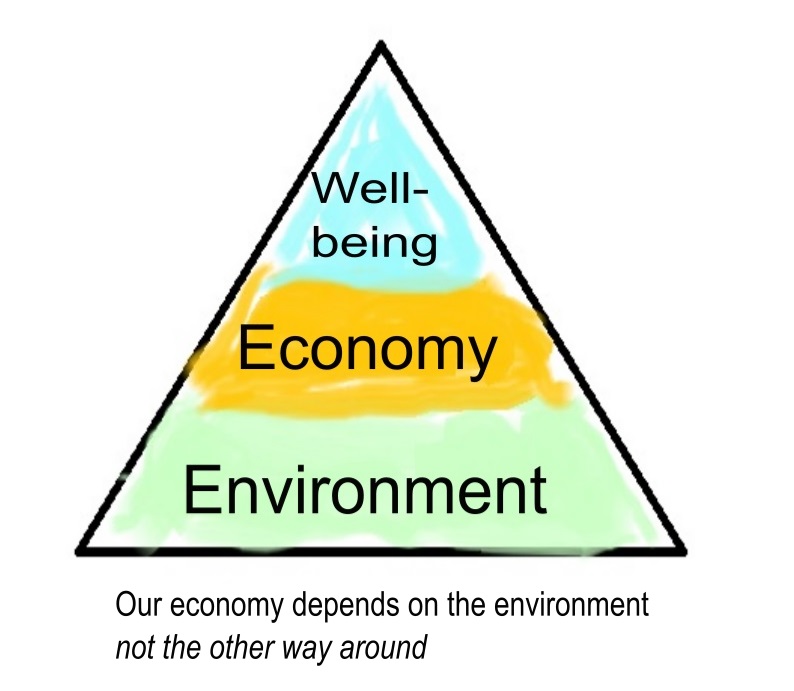
The recommendations in the Review will make natural spaces less safe from development and more vulnerable to damage and loss. These spaces might be close to where you live, or special landscapes that you visit and care about. The UK has already lost more biodiversity than any other country over the last few decades.
The risks of environmental damage through these recommendations will also have knock-on impacts for economic stability, which affects everyone through the cost of living.
Allowing the natural world to be neglected in this way will only benefit a handful of developers who can cut costs by bending the rules in future.
In the last year, the UK Government has targeted nature and wildlife, calling spiders and bats and newts ‘blockers’ and deliberately getting rid of legal safeguards and policies that are supposed to help nature recover. This goes against all evidence, and the public’s views that nature is necessary to everyone. Evidence shows a healthy environment underpins our economy and our wellbeing, and that building with nature in mind helps to ensure development is high quality and sustainable.
The original published statement can be read here on The Wildlife Trusts website.
Hegseth Must Go

Hegseth dismisses war crimes, pooh-poohs the rules of engagement, and projects unequivocal belligerence at a time when the United States is rapidly losing whatever moral standing it once had in the world
Pete Hegseth is the most incompetent person in the Trump regime, with the exception of Trump, and a clear and present danger to the security of the United States.
Robert Reich Substack, September 5, 2026, https://scheerpost.com/2026/09/05/hegseth-must-go/
The latest casualty of Pete Hegseth’s disastrous tenure as Secretary of “War” is Dan Driscoll, who resigned Monday as Secretary of the Army after repeatedly clashing with the Heg.
Driscoll isn’t a liberal in lion’s clothing. He’s an old friend of JD Vance from Yale Law days. He resigned because of his concerns that Hegseth is damaging the Army’s efforts to modernize and adapt to the 21st century battlefield environment — where drone warfare is becoming increasingly important — by firing or pushing out leaders spearheading those efforts.
Pete Hegseth is the most incompetent person in the Trump regime — with the exception of Trump himself — and a clear and present danger to the security of the United States and the world. If Trump won’t fire him, Democrats should impeach him when (hopefully) they take over the House next January, and two-thirds of the Senate should convict him.
A defense official in Europe told CNN that even though Hegseth talks about technology reform, he’s focusing instead on “muscles, dudes in dresses, testosterone.”
Hegseth’s tenure has been disastrous from the moment he walked into the Pentagon. Even if Trump were capable of hearing sound advice, Hegseth hasn’t come close to giving it to him. Instead, he’s been pursuing grievances about DEI, promoting testosterone, and denigrating or firing women and Black officers.
The Army now has no Senate-confirmed secretary or chief of staff (George’s replacement, General Christopher LaNeve, so far doesn’t have the votes to be confirmed).
The Iran war, meanwhile, is requiring the ongoing deployment of 19 warships, air-defense units, fighter squadrons and paratroopers across the region — straining service members and their families and creating a maintenance backlog that could take years to unwind, according to The Wall Street Journal.
The Washington Post reports that multiple senior military leaders — those still left, that is — have warned Hegseth that the United States cannot indefinitely extend military operations against Iran. Even the chief of naval operations, Admiral Daryl Caudle (who campaigned for the job by signaling agreement with Hegseth’s culture-war obsessions), told Hegseth that the Navy cannot “sustain its current level of support for the Iran conflict because there is no anticipated end date.”
Hegseth’s response? He castigated the media for revealing classified information.
I’ve known many other defense secretaries, starting with Cap Weinberger, who served as defense secretary under Reagan. I can say without fear of contradiction that Pete Hegseth is the stupidest and least qualified of them all.
Hegseth’s incompetence and determination to suck up to Trump helped launch the war against Iran in the first place.
Among the regime’s senior officials, Hegseth was the only one who supported Trump’s fantasies of a quick victory. Marco Rubio was against the war as was JD Vance; even then–Director of National Intelligence Tulsi Gabbard told Trump that a war with Iran was not winnable.
Since then, Hegseth has lied his way through more than six months of Pentagon and Iran war mayhem.
At a press briefing in March, Hegseth complained about a CNN report that the Trump administration had underestimated Iran’s ability to disrupt global oil traffic by closing the Strait of Hormuz. “Patently ridiculous,” Hegseth told reporters, adding — even as the strait’s blockage was proving to be Iran’s most powerful leverage in the war — we “don’t need to worry about it.” It was a false and insulting claim to an American public that deserved to know what the Trump regime was planning to do about soaring prices at the gas pump, directly due to that blockage.
He also denied that the U.S. bombed the school where some 175 children were killed — a claim belied by mounting evidence that the U.S. did bomb the school. Hegseth’s further insistence that the U.S. “never targets civilians” was refuted by the U.S. military’s killing of over 200 people on small boats in the Caribbean without evidence they were “narcoterrorists” rather than civilians.
Hegseth then lied about the severity of Iranian attacks on U.S. bases in the Persian Gulf that disrupted logistical support for American forces, leading to the deprivations suffered by the crew of the aircraft carrier the USS Abraham Lincoln.
Hegseth evidently believes that his job is to cheerlead and defend Trump with absurd claims like “We didn’t start this war, but under President Trump we’re finishing it” and “America is winning decisively, devastatingly, and without mercy” and “we will show no quarter for our enemies.” (“No quarter” means kill everyone and take no prisoners, which is a war crime.)
In the days leading up to the U.S. attack on Iran, Hegseth spent his time criticizing “wokeness” at American universities and forcing Scouting America to abandon programs aimed at promoting diversity.
Last year, he didn’t just mistakenly share the military’s plans with the editor of The Atlantic; we now know he shared them with a second Signal group, including his wife, brother, and personal lawyer.
John Ullyot, who resigned as Pentagon spokesman, said Hegseth had brought “total chaos” to the Pentagon and that the Pentagon “is in disarray under Hegseth’s leadership.”
Hegseth dismisses war crimes, pooh-poohs the rules of engagement, and projects unequivocal belligerence at a time when the United States is rapidly losing whatever moral standing it once had in the world.
Local ceasefire in place for Zaporizhzhia power line repairs
World Nuclear News 7th Sept 2026
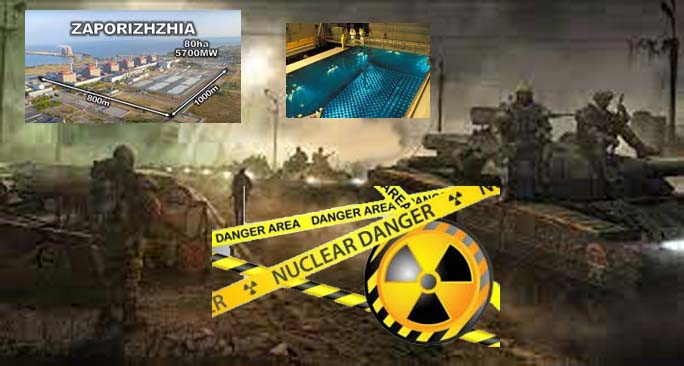
The International Atomic Energy Agency says that a seventh ceasefire is in place to allow demining and repair work to take place to restore external power to the Zaporizhzhia Nuclear Power Plant.
“……………….. The last remaining external power line was disconnected on 20 August “after military activity on the northern side of the Dnipro River”, which has left the plant relying on its fleet of emergency diesel generators to provide the power required for the six-unit plant.
Grossi said: “As the ZNPP’s emergency generators drained the available diesel to little more than a week of supplies, forcing its cooling pumps to be run only intermittently, I continued my persistent efforts to broker a ceasefire so that the Ferosplavna-1 power line could be repaired.”……
Repairs were carried out on a second line in June during another ceasefire, but it remains unavailable because of damage at a substation, he said.
“It goes without saying that nuclear power plant staff must be able to carry out their essential work without being attacked or placed at risk. I solemnly call on all military commanders in the region to stop attacks on nuclear power plants and their staff, and to exercise maximum military restraint. I say this because last month a drone explosion at a bus stop used by plant staff and subcontractors travelling to Zaporizhzhia nuclear power plant caused multiple casualties. The ZNPP informed the IAEA team at the plant that the explosion caused 20 casualties, including one death and three serious injuries………….
The Zaporizhzhia nuclear power plant has been under Russian military control since early March 2022. It is located on the frontline of Russian and Ukrainian forces and has lost offsite power on 26 occasions since the war began, including 10 times since June.
https://www.world-nuclear-news.org/articles/local-ceasefire-in-place-for-zaporizhzhia-power-line-repairs
The UK’s nuclear submarine town at the top of Putin’s target list

Helensburgh residents living next to the subs find rising tensions
‘worrying’, but hope upgrades at Faslane can bring an economic boost.
Mark Stewart, who lives at the Faslane Peace camp near Helensburgh in
Scotland, said: ‘All the Russia talk makes things feels scarier than it has
for a while. Russia’s veiled threats against the UK feel more tangible in
Helensburgh, the Scottish coastal town nestled close by one of Britain’s
most important military sites. Residents walking along the seafront are
well aware that the UK’s nuclear-armed submarines slide silently up and
down its open waters. HMNB Clyde, better known as Faslane, is home to the
submarines that carry the Trident weapons system, the nation’s nuclear
deterrent.
Nuclear Outlook: Key Developments
Dr Alexander Bychkov, former Deputy Director of the IAEA, spoke to NEI about some recent developments in the global nuclear sector
Staff Writer 7th Sep 2026,
https://www.nsenergybusiness.com/analysis/nuclear-outlook-key-developments/
R ALEXANDER BYCHKOV WAS FORMERLY Deputy Director of the International Atomic Energy Agency (IAEA) from 2011- 2015. Now a private consultant, he recently spoke to NEI to give his opinion about some recent developments in the global nuclear sector.
Q: How do you see the growing interest in small modular reactors and advanced reactors and the proliferation of new designs in these sectors?
A: I think we can distinguish two clear tendencies. One focuses on small reactors, so-called SMRs, and the other on a revival of previously tested reactor technologies and their application for Generation IV reactors. There is a lot of discussion about molten salt reactors (MSRs), while China has made progress in developing high temperature reactors (HTRs). This is in addition to the more classical approach – SMRs based on water cooled reactors. But it is important to underline that now there are a large number of SMR designs and I’m not so sure that this is our future when it comes to energy production.
Maybe from the political point of view it could be considered the next step but, from a practical point of view, I think that the legal and regulatory system of the ‘nuclear world’ cannot accept so many reactors. There are a lot of challenges such as licensing, waste, spent fuel management, nuclear security, safeguards etc. However, it may be possible to solve these problems if IAEA member states make a joint effort. And the current initiative of IAEA Director General Mr Rafael Grossi – the Nuclear Harmonization and Standardization Initiative – is an important illustration of these efforts.
Q: Many of these new reactor designs are targeting 2030 for deployment of their first reactor. Is this practical?
A: I don’t think companies will be able to deploy new design reactors by then. Of course, it is a good sign that small businesses and venture companies are making efforts in this area. However, my long-term experience in the nuclear industry shows that, without government support, it is not possible to establish long-term development. This does not necessarily mean just providing the required funding, but involves support and some kind of prioritisation for promoting nuclear technology. Without this government backing, long-term development will be difficult.
Maybe some small examples such as transportable NPPs or some other things could be organised by some vendor companies. However, they will have very strong competition from big vendors such as Rosatom, Chinese companies and maybe, in future, also some big American companies. But this is not an easy discussion. It’s necessary to consider each case separately, taking into account a lot of factors.
Small modular reactor client lines up £1.1bn Wylfa early works deal

07 Sep 2026 By Harmsworth,
https://www.constructionnews.co.uk/buildings/small-modular-reactor-client-lines-up-1-1bn-wylfa-early-works-deal-07-09-2026/
CGI of former plans for a nuclear site at Wylfa Newydd
Great British Energy – Nuclear (GBE-N) has outlined plans for an early works contract worth up to £1.1bn as part of its small modular reactor (SMR) programme.
The government-owned nuclear developer said the package would cover civil engineering, infrastructure, buildings, mechanical and electrical work and earthworks at the Wylfa site in Anglesey, north Wales.
The contract has an indicative value of £730m-£1.1bn and is expected to run from June 2028 until June 2034, GBE-N said in a preliminary market engagement notice.
It also included an option to extend the contract until June 2037.
The client said it had previously considered splitting the work into two packages but ultimately decided to combine them to reduce interfaces between contractors.
The successful supplier will take responsibility for design from RIBA stage four and delivery of site-enabling works.
07 Sep 2026 By Harmsworth
CGI of former plans for a nuclear site at Wylfa Newydd
Great British Energy – Nuclear (GBE-N) has outlined plans for an early works contract worth up to £1.1bn as part of its small modular reactor (SMR) programme.
The government-owned nuclear developer said the package would cover civil engineering, infrastructure, buildings, mechanical and electrical work and earthworks at the Wylfa site in Anglesey, north Wales.
The contract has an indicative value of £730m-£1.1bn and is expected to run from June 2028 until June 2034, GBE-N said in a preliminary market engagement notice.
It also included an option to extend the contract until June 2037.
The client said it had previously considered splitting the work into two packages but ultimately decided to combine them to reduce interfaces between contractors.
The successful supplier will take responsibility for design from RIBA stage four and delivery of site-enabling works.
Work will include species relocation, remediation, site clearance, site establishment, construction utilities, drainage and haul roads supporting bulk earthworks.
The works are intended to establish ground levels, provide construction access and create the physical platform required for later phases.
GBE-N said the programme will cover planning, licensing, design and construction needed before its technology partner installs and commissions SMR technology.
Energy secretary says US might not reach nuclear agreement with Iran
Chris Wright tells ABC there ‘may not’ be an agreement that would prevent Iran from having nuclear weapons
Maya Yang, Guardian, Mon 7 Sep 2026
US energy secretary Chris Wright said on Sunday morning that the US may not be able to reach a nuclear agreement with Iran that would prevent the country from having nuclear weapons.
Asked on ABC on Sunday morning about any sign of such a deal, as negotiations appear stalled and the US-Israel war on Iran continues, Wright said: “There may not be a nuclear agreement.”
He talked about options for ending the “existential threat” of a nuclear armed Iran coming about by further US military action to knock out the country’s capacity to manufacture and deploy such missiles, saying: “It may be simply [a case of] destroying their capabilities to do it” or else “an agreement may await the next administration in Iran”.
He later said on CBS that the US was not shutting down diplomatic outreach and was “always open for a deal”. Wright told that network’s Face the Nation show that the “biggest role” of the US military in the Gulf region currently was to stop Iranian energy exports.
“We are strangling their economy to try to bring either a change in policy from the existing regime or a new regime,” he said.
In an earlier interview with CNN on Sunday, Wright declined to declare the strait of Hormuz safe for oil tankers – unless they are being escorted by the US navy – and stopped short of saying whether the navy would need to remain in the Gulf region “indefinitely” in order to keep the vital energy passageway operating, as the conflict drags on.
This came despite Donald Trump’s repeated claims that ships can safely navigate the narrow marine waterway, and the US president’s insistence last week that the US controls the strait, while floating the idea that it be named after him – statements that were followed by further strikes from both sides in the area.
Wright, appearing for an interview on CNN’s State of the Union show on Sunday as well as ABC and CBS, was asked whether he could “unequivocally” assure safety to merchant ships transiting the strait. The question came after a New York Times report found that August was the deadliest month for merchant vessels in the area since March…………………………………………………………………………………
Wright was also asked by CNN if he would say the US is still at war. “We’re still in a conflict, for sure,” he said. On Thursday, the US vice-president JD Vance said at a White House press briefing: “I wouldn’t call it a war,” instead referring to a military conflict. Trump then defended Vance, saying: “A lot of people do not call it a war, I would call it a military conflict, because it’s small potatoes for us … it’s not a big thing.”
The Republican US senator John Kennedy of Louisiana was asked on Sunday by NBC if the war would be over by November.
“Probably not,” he said.
The conflict passed the six-month mark in late August. The former defense secretary Leon Panetta warned in an interview with the Guardian this weekend that it could last a lot longer. https://www.theguardian.com/world/2026/sep/06/us-iran-nuclear-agreement-chris-wright
Key parts for a new UK nuclear power station will be made in the North East.
The Siemens Energy plant in Byker, Newcastle, will manufacture steam turbines for Rolls-Royce’s flagship small modular reactors (SMRs) being built on Anglesey in North Wales.
It is the first time that such components will be produced for a small modular reactor anywhere in Europe.
Energy secretary Miatta Fahnbulleh visited Siemens Energy’s Shields Road facility on Thursday morning and said that the deal showed “what our golden age of nuclear looks like in practice”…………….
Ms Fahnbulleh said that the SMR station, which is due to open in the mid-2030s, would help deliver long-term energy bill savings for families……………
Rolls-Royce SMR selected Siemens Energy as its global turbine supplier in 2025 and has also secured contracts for similar nuclear power stations in Sweden and Czechia……………………
Rolls-Royce SMR CEO, Chris Cholerton, called Siemens Energy a “world class” supplier.
He said: “This is a perfect example of reindustrialisation and the golden age of nuclear bringing that to life.” https://www.northumberlandgazette.co.uk/news/politics/nuclear-power-station-parts-to-be-built-in-the-north-east-under-deal-for-siemens-energy-factory-8960138
America Is Betting Big on a New Generation of Small Nuclear Reactors

In addition to private-sector development, the U.S. Army has taken the lead in microreactor development in recent years, following Trump’s Executive Order 14299 – Deploying Advanced Nuclear Reactor Technologies for National Security, which established the Army as the lead agency for military nuclear energy efforts. The directive required the Army to create an official programme with a deadline for an operational reactor at a domestic military installation by September 30, 2028.
In August, the U.S. Army announced plans to award up to $2.2 billion to five companies to construct new-generation microreactors at military bases across the United States. The deployment of these reactors will be supported by the federal easing of regulations for innovative reactor designs.
The Army will provide financing to Antares Nuclear at Fort Bragg in North Carolina; BWX Technologies at Fort Campbell in Kentucky; General Atomics at Fort Hood in Texas; Radiant Industries at Fort Benning in Georgia; and Westinghouse Government Services at Fort Drum in New York, with the aim of deploying at least one microreactor by the third quarter of 2028. The companies will be expected to raise billions in private investment to support development efforts.
By Felicity Bradstock – Sep 05, 2026, 2:00 PM CDT
- The U.S. Army has selected five companies and five military installations for its Janus microreactor program, backed by up to $2.2 billion in federal funding.
- The Army aims to have at least one microreactor producing usable electricity at a military installation by September 30, 2028.
- Private developers, including Aalo, are also advancing reactor technology, supported by federal programs and efforts to streamline nuclear regulation.
Governments worldwide are racing to develop small modular reactors (SMRs) as part of their plans for a nuclear power renaissance, with significant progress being seen in recent years. However, the United States appears to be leading the way in nuclear microreactor development, with significant investment in the technology recently announced by the U.S. Army……………
A microreactor is even smaller than an SMR, for which a range of designs are currently under development in the United States with the aim of launching the first versions within the next decade. The compact nuclear reactors will be small enough to be transported by truck, boat, or plane ……
Microreactors will be produced and assembled in factories for transport to a wide range of sites, reducing capital costs and accelerating production. They are expected to have a simple, responsive design that allows them to self-adjust without requiring many specialised operators to make these changes, and will be developed with safety systems to prevent overheating or a reactor meltdown.
Most microreactors are being designed to generate between 1 MW and 20 MW of thermal energy, which could be used directly to heat or converted into clean electricity. They will run on a higher concentration of uranium-235 than is currently used in conventional reactors and can be connected to microgrids alongside renewable energy sources. They may also be useful for use in emergency response following a natural disaster. In addition, they can operate for up to 10 years without refuelling and be quickly removed from sites and replaced with new ones.
In the United States, the Department of Energy (DoE) supports a variety of advanced reactor designs, in line with President Trump’s support for a nuclear power resurgence. Trump has voiced support for a wide range of nuclear technologies, from conventional nuclear plants to SMRs and microreactors, aiming to quadruple nuclear power production in the United States by 2050.
In July, Texas-based Aalo announced that its Critical Test Reactor (CTR) had achieved criticality – the point at which a nuclear reactor is capable of sustaining a controlled, self-supporting chain reaction. Aalo said in a statement, “Our CTR went from groundbreaking to a sustained chain reaction in less than eight months – one of the fastest reactor builds in 80 years – and our company has gone from founding to fission in less than three years.” Aalo is focusing on producing 10 MWe reactors for deployment in 50 MWe Aalo Pods to power AI data centres.
In addition to private-sector development, the U.S. Army has taken the lead in microreactor development in recent years, following Trump’s Executive Order 14299 – Deploying Advanced Nuclear Reactor Technologies for National Security, which established the Army as the lead agency for military nuclear energy efforts. The directive required the Army to create an official programme with a deadline for an operational reactor at a domestic military installation by September 30, 2028.
In August, the U.S. Army announced plans to award up to $2.2 billion to five companies to construct new-generation microreactors at military bases across the United States. The deployment of these reactors will be supported by the federal easing of regulations for innovative reactor designs.
The Army will provide financing to Antares Nuclear at Fort Bragg in North Carolina; BWX Technologies at Fort Campbell in Kentucky; General Atomics at Fort Hood in Texas; Radiant Industries at Fort Benning in Georgia; and Westinghouse Government Services at Fort Drum in New York, with the aim of deploying at least one microreactor by the third quarter of 2028. The companies will be expected to raise billions in private investment to support development efforts.
Jeff Waksman, the principal deputy assistant secretary of the Army for installations, energy and environment, stated, “We believe that this will be the spear tip not just for microreactors but for all advanced reactors in the United States… There have been a lot of microreactor companies that have popped up recently, but we need to get them over the hump.”
While there has been greater discussion around SMR development, the United States is also investing heavily in microreactor construction, aiming to launch the first reactors within the next two years. Funding from the DoE and support from favourable national policies and regulations are expected to help rapidly advance development in the coming years. https://oilprice.com/Alternative-Energy/Nuclear-Power/America-Is-Betting-Big-on-a-New-Generation-of-Small-Nuclear-Reactors.html
Dreams about Gaza: Israel’s Ethnic Cleansing Proposals

5 September 2026 Dr Binoy Kampmark, https://theaimn.net/dreams-about-gaza-israels-ethnic-cleansing-proposals/
I’m Let’s be done with the pretence of decency and soggy references to just resolution in the face of extreme circumstances. Be done with the hilarious stage acts of referring to legal doctrines that either do not exist or cannot exist in the bloodied context they are being forced to refer to. The State of Israel is intent, with every arm, administrative faculty and office bearer of consequence, to achieve ethnic effacing and utopic bliss with the removal of Palestinians from Gaza and the West Bank, with the former going first.
Speaking on September 2 at a conference organised by the Israeli newspaper Yedioth Ahronoth, the Israeli Defence Minister Israel Katz returned to a theme so rapidly hardening it is likely to ossify at any given moment: that a Gaza filled with Palestinians is not a tenable proposition from the perspective of his country’s interests. Whatever dubious tag is attached – immigration, migration, or depopulation – the current populace could simply not remain. “In the end, there is no real solution for Gaza without this migration.” The emigration of Palestinians would take place “by any means” (“by sea, by air, by every way possible”), the process having only been put on ice by US President Donald Trump.
It had been one of those moments of mental arrest, but Trump engendered a sharp frisson in the ranks of the Netanyahu government with his February 2025 proposal to relocate the residents of Gaza. Once done, developers and builders could come in and turn the strip into a tourist destination replete with the vulgar fripperies typical of such resorts. By October 2025, Trump’s peace plan envisaged something else; the relocation-development scheme seemed to have not so much stalled as died in its sleep, with the promise that the residents could stay and engage in the process of rebuilding the devastated territory. Point 12 of the plan is explicit on this: “No one will be forced to leave Gaza, and those who wish to leave will be free to do so and free to return. We will encourage people to stay and offer them the opportunity to build a better Gaza.” Not so, according to Katz. “The [depopulation] plan hasn’t been cancelled; it is being discussed all the time, even now, and I think there is no other solution for everyone’s good.”
When asked when this odious object might be facilitated, Katz airily suggested that the conduct of Hamas could be the catalyst, notably “when it becomes clear that [it] is not fulfilling its commitment[s]” under US peace plans. “Then we will get a green light to advance militarily, territorially, and in other areas as well.”
During a visit to an IDF post close to the Yellow Line demarcating Israel’s area of control from the rest of the Strip, Prime Minister Benjamin Netanyahu declared his firm intentions. “We are not withdrawing,” he stated in a video message distributed by his office. “We are staying on this line. We control 60% of the Strip. And there is still more to come, because we are eliminating the terrorists who threaten us – we do this day in and day out.”
Gallingly, Katz had the temerity to suggest that the Gazans wished to leave – some 80% – making passing reference to vague, unsubstantiated surveys that had been conducted by Israeli authorities. (It’s always curious how the rabidly patriotic always assume that no other group can cling, so desperately and tenaciously, to a strip of land, whatever the cost.) If only other countries were willing to accept those apparently willing residents of Gaza, the problems would vanish. “Hamas isn’t allowing them [to leave], and there are no countries in the world taking them in. President Trump put the issue on the agenda. Now every country needs to take people in – and that’s the big issue.”
This deplorable language, condemned by US Democratic Senator for Maryland Chris Van Hollen, received a boost of patriotic umami from Israel’s National Security Minister Itamar Ben-Gvir. The minister tends to make a habit of going to prisons to gloat about their ruinous conditions, all the time threatening Palestinian inmates with impending death, ensuring the deprivation of basic human rights (they, the reasoning goes, do not deserve them) while encouraging the inexorable de facto annexation of the West Bank. On September 3, he also advanced his oxymoronic version of a “voluntary emigration” plan dubbed “Disengagement 710”, a nod to Israel’s exit from Gaza in 2005 and the Hamas attacks of October 7, 2023.
The plan entails the removal of 250,000 Gazans in the first year, 1.11 million within three years and 1.86 million within seven. A sinister “Emigration Ministry” will oversee the process. “Instead of [Gazans] digging tunnels, it’s time to pack suitcases,” reasoned Ben-Gvir. To sweeten the abuse, emigrants would receive an “absorption package” comprising “assistance with travel, initial housing, vocational training, employment and support for up to 24 months.” Payments would also be made to recipient States.
In his remarks, Ben-Gvir also had room to draw inspiration from Trump. Ignoring the Gaza Peace Plan, the minister preferred to focus on the President’s initial proposal to “encourage emigration [as] a solution to the Gaza issue.” From being “treated as a delusional extremist,” he mused about his own standing, plans of removing Palestinians had “become legitimate. Suddenly, everyone became Ben-Gvir.”
The second part of the Palestinian eradication program involves the full assertion of sovereign control over the West Bank, though the process there is necessarily staggered, a form of slow-motion extermination of a culture and people that is taking place before an international law system petrified and mostly silent. So far, things are coming along nicely – from the settlers’ perspective. They are the spear carrying proxies for an ethnic cleansing regime. The Israeli authorities have their backs and, when they do intervene to curb any zeal, a mild slap on the wrist is the best to expect. The consistently promoted narrative is that the more violent perpetrators are errant buffoons with a death wish yet sporting a good heart, buffoons in good standing with the broader annexation drive that has been approved by the Knesset in a non-binding motion.
A word, to finish off, on the very euphemistic term “ethnic cleansing.” To say cleansing is a ghastly concession to the supposed wickedness of impurity. Something needs rinsing, the stains need removal. This application of ideological detergent assumes that there is something deficient or suspect in a race, an ethnicity or a religious group, a people, in short. It follows that what is happening to the Palestinians is ethnic in nature and not so much cleansing as eradicative.
For A Westerner, Opposing The Empire Is The Only Path To Dignity
Caitlin Johnstone, Sep 05, 2026, https://www.caitlinjohnst.one/p/for-a-westerner-opposing-the-empire?utm_source=post-email-title&publication_id=82124&post_id=214242987&utm_campaign=email-post-title&isFreemail=true&r=1ise1&triedRedirect=true&utm_medium=email
The only way to truly have dignity and integrity as a westerner is to put your energy into opposing the empire under which you live.
Under the individualism of our capitalist society, we are indoctrinated with the belief that the most important and interesting things about us are the personal characteristics which distinguish us from other people: our likes and dislikes, our lifestyle, our interpersonal relationships, our sense of fashion, how successful we are professionally, academically and romantically, etc.
But when you live under the most murderous and tyrannical power structure on the planet, your individual little quirks and facets are a lot less significant than the extent to which you oppose the abuses that your rulers are inflicting upon human beings around the world. If you met a German in 1940, you would probably be a lot less curious about his taste in music and fondness for dapper suits than you would be about his level of support for Adolf Hitler.
That’s you right now. You’re the German in 1940. The most interesting and relevant thing about you is the extent to which you oppose the globe-spanning empire you live under. At this point in history, everything else about you is a very distant second.
I’m sure you’re a nice person. I’m sure you try to be decent to everyone you encounter, and I’m sure you’ve created a really nifty personality for yourself over the course of your life. You probably own some cool stuff and have some fun stories about things you’ve experienced over the years. But as a westerner, none of that matters nearly as much as the degree to which you stand in opposition to the psychopathic dominators who run your society today.
If we lived in Africa, Asia or Latin America, the unique qualities of our individual personalities would have more relevance, because we wouldn’t be materially benefiting from an empire which murders, exploits and steals from the people of the global south. But we are westerners, and the river of blood which feeds our way of life is always the loudest thing in the room.
For us, opposing that river of blood is the only path to a respectable life. We have no control over the fact that right now we live in a society that is fueled by a system of imperialist extraction propped up by the barrel of a gun, but we can control our response to that reality. We can do something every day to throw sand in the gears of the imperial machine. We can help weaken public trust in its propaganda services. We can help open the eyes of our fellow westerners to the reality of what our governments are doing in our name. We can work to foment a revolutionary zeitgeist. We can help construct a robust and widespread anti-war movement.
Your choice to do that or not is the most interesting and significant thing about you as a person. I mean no disrespect to your other wonderful attributes when I say this; that’s just the reality of what it means to be born into this particular slice of spacetime.
Norway seizes Russian research ship in Arctic waters at Kiev’s request
Signs of the Times, 3 Sept 26
The Professor Molchanov, which was carrying scientists, passengers and vital supplies, was seized in Svalbard as Ukraine’s Naftogaz pursues Russian assets.
Norway has seized a Russian research vessel in Svalbard at the request of Kiev, prompting Russian President Vladimir Putin to denounce the capture of civilian vessels as “state terrorism.”
The vessel, called the Professor Molchanov, was detained while docked in Barentsburg, a Russian-operated settlement on the Norwegian-administered Arctic archipelago. The ship has been barred from leaving after a local court granted a request by Ukraine’s state-owned energy company Naftogaz.
Moscow has since summoned Norway’s ambassador in protest and vowed to challenge the seizure.
Why was a Russian state vessel in Norway in the first place, why does Kiev want it, and what could happen to the ship now?
What exactly happened
The Professor Molchanov arrived in Barentsburg on Tuesday on a scheduled voyage from Murmansk carrying scientists, passengers and supplies for the Russian settlements on the Norwegian-administered Arctic archipelago of Svalbard.
Norwegian officials first boarded the vessel for what Svalbard Governor Lars Fause described as an ordinary border and customs inspection, of a kind the ship had undergone numerous times before.
On Wednesday, Norwegian police, accompanied by an interpreter, boarded the ship again and read a court order to its captain, barring the vessel from leaving. Nobody aboard was arrested.
The order was issued on August 31 by the Nord-Troms and Senja District Court after an application from Ukraine’s Naftogaz.
What happened to the passengers and crew
The exact number of people on board when the ship arrived in Barentsburg has not been officially confirmed. The Professor Molchanov can accommodate up to 80 people, including at least 20 crew members and as many as 60 scientists and other expedition personnel.
Norwegian media have reported that around 50 passengers and crew were affected by the seizure………………………………………………
The Professor Molchanov
The ship, named after renowned Soviet meteorologist Pavel Molchanov, is a Russian state-owned, ice-strengthened research vessel with more than four decades of experience operating in polar waters.
Built in Finland for the Soviet hydrometeorological service and launched in late 1982, the 71-meter-long ship was designed for Arctic oceanographic and weather research. It carries four laboratories on board and can accommodate dozens of researchers alongside its crew.
The ship continues to be actively used in Arctic research, including studies of weather, marine ecosystems, microbiology, biodiversity and environmental conditions in the Barents and Kara seas…………………..
Why is goes to Svalbard
The voyage to Svalbard was part of a regular route between Murmansk and Barentsburg, a Russian mining settlement where the state-owned Arktikugol trust has operated for decades.
Since 2025, the Professor Molchanov has carried scientists, Arktikugol employees, contractors, family members and supplies to Barentsburg and another Russian settlement called Pyramida. Ten round trips were planned for 2026………………………………………………………………………………………………………………………………………………………………………………………. https://www.sott.net/article/508230-Piracy-Norway-seizes-Russian-research-ship-in-Arctic-waters-at-Kievs-request
1 This Month



Shut down the radiation-damaged Heysham nuclear reactors now
To see nuclear-related stories in greater depth and intensity – go to https://nuclearinformation.wordpress.com

Say No to NASA’s Reckless Nuclear Reactor on the Moon
Say No to NASA’s Reckless Nuclear Reactor on the Moon
-
Archives
- October 2026 (256)
- September 2026 (339)
- August 2026 (330)
- July 2026 (355)
- June 2026 (287)
- May 2026 (306)
- April 2026 (356)
- March 2026 (251)
- February 2026 (267)
- January 2026 (308)
- December 2025 (358)
- November 2025 (359)
-
Categories
- 1
- 1 NUCLEAR ISSUES
- business and costs
- climate change
- culture and arts
- ENERGY
- environment
- health
- history
- indigenous issues
- Legal
- marketing of nuclear
- media
- opposition to nuclear
- PERSONAL STORIES
- politics
- politics international
- Religion and ethics
- safety
- secrets,lies and civil liberties
- spinbuster
- technology
- Uranium
- wastes
- weapons and war
- Women
- 2 WORLD
- ACTION
- AFRICA
- Atrocities
- AUSTRALIA
- Christina's notes
- Christina's themes
- culture and arts
- Events
- Fuk 2022
- Fuk 2023
- Fukushima 2017
- Fukushima 2018
- fukushima 2019
- Fukushima 2020
- Fukushima 2021
- general
- global warming
- Humour (God we need it)
- Nuclear
- RARE EARTHS
- Reference
- resources – print
- Resources -audiovicual
- Weekly Newsletter
- World
- World Nuclear
- YouTube
-
RSS
Entries RSS
Comments RSS

