
LOS ALAMOS, N.M. (AP) — The U.S. government on Monday cleared the way for a new management team to begin taking over one of the nation’s top nuclear weapons laboratories as it looks to rebuild its reputation.
The National Nuclear Security Administration issued an official notice to proceed to Triad National Security LLC , marking the beginning of a transition at Los Alamos National Laboratory that will take about four months.
Made up of Ohio-based Battelle Memorial Institute, Texas A&M University and the University of California, the management team was announced as the winning bidder in June of a coveted $2.5 billion-a-year contract to manage the northern New Mexico lab.
The University of California has played a key management role at the lab since it was created as part of a top-secret effort during World War II to build the atomic bomb. The federal government opted to put the contract up for bid following missed goals and a string of safety lapses involving the handling of plutonium and radioactive waste.
The new contract also comes as the U.S. has tasked the lab with building at least 30 plutonium cores a year. The cores are used to trigger nuclear weapons, and the work is complex.
The University of California on Monday touted the scientific work done at the lab over the decades — from its role in the Human Genome Project to experiments in nuclear medicine and work on renewable energy and climate change.
http://uk.businessinsider.com/ap-management-shift-begins-at-us-nuclear-weapons-lab-2018-7
July 10, 2018
Posted by arclight2011part2 |
Uncategorized |
1 Comment
Sadamaru Okano and his wife at Seirinji temple.
Sadamaru Okano is a Zen priest at the Seirinji temple in the Fukushima region. He is one of the few individuals to have systematically collected radiation data in Fukushima that predates the Safecast data set. Here he speaks about his experiences in Fukushima around the time of the earthquake of 2011 and why he stays involved with Safecast seven years after the Daiichi nuclear meltdown.
You are one of the few people that had radiation data from the time predating the 2011 Tohoku earthquake. What led you to start collecting that data?
When I was young – or should I say younger – in the late 80s and early 90s, I travelled quite a bit, many times in connection with volunteering. It introduced me to many cultures and gave me many friends from all over the world. On a couple of the trips, I met volunteers from countries in Eastern Europe. Of course, I knew about Chernobyl, but in my mind, it was over. This was the way that most people thought and felt about it. However, I met volunteers from Belarus and Ukraine who told me that it was definitely not over. That was one of the things that made me start to study radioactive materials and later to start taking measurements in the area around the temple where I am a priest today.
The temple and your family have a long relation to this area, I believe. Can you tell me a bit about it and your memories of growing up here in Fukushima?
Our current temple, where we sit today, is over 150 years old. Before that, there was a similar temple on the grounds. My mother was born in Kawauchi village, and we have many relatives in other cities across the prefecture. I have cousins that used to live in Namie and Tomioka – most of them cannot go back there because of the exclusion zone. Today, they live in places like Tokyo, Kamakura, and Saitama.
Growing up in the post-war era, I loved going to my cousins and relatives who lived on the seaside. My sister and I would visit my uncle’s house for two weeks in the summer. The government was investing a lot of money in construction along the coast, and we were amazed to see that they had things like paved roads. At home, we still had jarimichi – gravel roads. Many elderly people in the coastal towns would stop us and give us okozukai – a kind of pocket money. Of course, my sister and I were very happy with this.
Growing up, I was very much of two minds about whether I should follow my father’s path and become a priest. My father, who became my teacher and master, gave me the freedom to choose. At a point during my college years, I realised that I wanted to follow on in the family tradition.
Our local community has around 350 houses, and I realised that if I became a priest, I would become a useful person for the people in that community. After college, I was trained by a senpai who, like a master, instructed me in the way to get in touch with people by my own heart – a way that is built on listening to them by myself in order to empathise with them. My function is not to be someone who is trying to save people, but someone who can listen, understand, and help bring clarity.
You were in the area on the day of the 2011 Tohoku earthquake. What were your experiences and your memories of those days?
I had been in Iitate village with my wife and three-year-old son. We were driving back home at the time. It may sound strange if you have never experienced it, but being inside a car makes an earthquake feel less severe. We knew that it was serious, though, so I pulled the car over to the side of the road. It was around that time that the first quake subsided. Then the second one struck. On the mountainside ahead of us, a kawamata, a form of stacked retaining wall, was shaken loose and slid down. Cracks, some up to 20-30 centimetres wide, appeared in the road surface. By the end, I found myself clinging to the steering wheel. The second quake was followed by a third, each seemingly as powerful as the one before it.
Luckily, none of us were injured, and we decided to keep going towards the temple and our house.
Driving back to our temple and house, I was convinced that I would find that they had been destroyed by the quakes. I was surprised and happy to see that it wasn’t the case. Other houses in the area, however, were quite damaged. A couple of houses had roofs hanging off. A couple others had collapsed walls.
I was worried and wondered if people were safe or not, so I started going around to the neighbours. Ten of the houses in the area were seriously damaged, but luckily nobody was injured.
Throughout the day, we had so many aftershocks. And then there was the tsunami. First, there was a tsunami warning, and I immediately thought about my relatives living on the coast. My cousins live on high ground, but they used to work at the seaside. I remember seeing the first images of the coastal areas, including near where my uncle’s family had lived when I was a child.
That day was so full of activity. It wasn’t until that night that I realised that my son hadn’t spoken a word since the first quake. At his age at the time, children are constantly talking. He was no different. But for the first few days after the quake, he didn’t say a word.
What was it like to be in the area in the days after the quake, as the situation around Daiichi became clearer?
I had been already gathering radiation data in my local area for some time before that. After the quake, I kept on taking measurements. I was very worried about the situation with the nuclear power plants, and while there was some doubt, I thought that there had very likely been a meltdown. I also remembered visits to my uncle when the power plant was under construction, and I knew that it was right on the coast. I was worried that it was too near the water and built on too low ground.
The situation kept evolving and while we were being told by the Government and TEPCO that things were fine, I was taking measurements around my temple that were 30 to 50 times above normal background. Of course, I was very worried.
At the same time, family and people from the nearby areas started to arrive at the temple. I think that at one point there were 85 people here. Many would not be able to return to their homes after Daiichi. Today, some people that were displaced by the tsunami live in what was supposed to be temporary housing on the hill below the temple.
One strange thing was that some refugees that came to us were unaware of the fact that there had been a tsunami. The quake and waves had knocked out the electricity supply and much of the information infrastructure, so they had no access to information. The first time they saw the tsunami was on TV and they were very shocked.
There was a lot of confusion about what was happening. The Government put out a warning that told people to ‘shelter in place’. It means to stay inside and close windows. At the same time, the evacuation zone around Daiichi kept being expanded. First, it was three kilometres, then five, seven, ten, 20 kilometres, and a 30km ‘shelter in place’ zone. One thing I remember from the time is that no one talked about whether food and water were safe to consume at that time.
Was it at that time you came into contact with Safecast?
No, that happened much later. My first contact with Safecast was actually based around a misunderstanding.
In July of 2013, Joe Moross and Kiki Tanaka were in the area to install a Pointcast, a fixed real-time radiation monitoring system. There was a misunderstanding with the person where the sensor was supposed to be installed, and there wasn’t the necessary internet. One of the local Safecast volunteers, Munakata-san, said that there was a Zen priest in Fukushima City who had been collecting radiation data for a long time. Why not come here to the temple and ask if they could put up the sensor?
When they arrived, my initial reaction was that this was just what I had been looking for.
For me, what I have done, and part of why I continue to work with Safecast, is the focus on open, communal data. We need to have different data sets in order to compare results and find a way to establish the facts. For me, I had no one to directly compare my own results with. Perhaps very few people outside of the local area knew that I was taking measurements. Since then, there has been a Safecast radiation monitor attached to the temple.
When you say that your reaction to meeting Safecast was that this was exactly what you had been looking for, what do you mean?
After the earthquake, I think that for most people in the Fukushima area it quickly became apparent that the information that was coming out of the Government and TEPCO was, to put it mildly, incorrect. The idea that everything was safe, which was what they started with saying, quickly turned into a myth. People lost their belief in the objectivity of data and information coming from those channels.
I serve a function for my community, and I speak to many of the members of my neighbourhood very regularly. The general feeling after the meltdown was that people were scared. We knew that the plant had exploded and radioactive materials were in the atmosphere. Some people decided to evacuate. Some decided to stay. However, no one really knew what the situation was really like.
Access to data and information that can be compared to other sources enables people to make their own decisions. You can present them to people and say ‘these are just numbers. I will not tell you what to think about them. You can choose if you think that it’s safe or not for your life – if it’s safe to play outside, go into the mountains, or fish in the rivers.’
As a religious person, I believe that this is our destiny. It’s our own opportunity to choose a better way to live. And in the end, this is a decision that we must make by ourselves.
As a gadget guy, I believe that we need to continue measuring on a daily basis. The data we generate that way can be used to society’s benefit.
As a parent, I will use this data, radiation measurements, and the idea about open access to data and information to educate my son so he will be able to decide his own destiny and help people in the community that he chooses to live in.
https://blog.safecast.org/2018/05/the-bgeigie-diaries-the-temple-tale-of-fukushima-city
July 9, 2018
Posted by arclight2011part2 |
Uncategorized |
3 Comments

Next Thursday July 12th, Ireland could become the first country in the world to fully divest from fossil fuels. But the thing is, we need TDs to actually be there to vote. We, those campaigning for progressive action on climate, know how important this is, but the reality is that TDs have lots of other issues to contend with. Unfortunately, they might not show up and vote unless they’re asked by their constituents.
Will you take 30 seconds to ask your TDs to be there to vote for a strong Divestment Bill?
If the Bill passes the critical Report Stage in the Dáil on Thursday, it will seal the deal to make Ireland become the first country to take its investments out of the fossil fuel industry.
Right now the Government is in negotiations with Deputy Thomas Pringle, the Bill’s sponsor, about whether they will support the Bill on July 12th . We are hopeful they will support it, but it’s not a done deal yet. We need to keep the pressure on.
Nationally, where are we on climate action?
But passing this Bill could help us continue to turn the tide of climate action in our favour.
- In 2016 we banned fracking.
- The Climate Emergency Measures Bill to ban offshore oil and gas drilling has progressed to Committee Hearings in the Dáil.
- The government, under pressure from the Stop Climate Chaos Coalition, has just announced that they will establish a special Oireachtas committee on climate action to consider the report from the Citizens’ Assembly [5].
These changes came about because of people power, because of people like you pushing politicians to take progressive action on climate.
Will you continue to use your voice to protect our fragile climate?

Meaghan Carmody
Head of Mobilization
Friends of the Earth
P.S. Did you know that you can
attend the debate in person on the 12th at 2:10pm? All you have to do is simply follow these four simple steps to contact your local TD (you can use this handy tool if you don’t already know who they are
http://www.whoismytd.com/) who can put your name on the list of attendees:
- Call the switch board in the Dáil – 01 618 3000
- Ask to be put through to one of your TD’s offices
- Tell them you are a constituent (give them your address) and leave a message saying ‘you would like to be put on the list to attend the Fossil Fuel Divestment Bill Report Stage debate on Thursday July 12th at 2.10pm.’
- Leave your phone number and ask for a call back to confirm your name is on the list.
Notes
[1] Ireland and Poland worst countries in EU for action and ambition on climate change
[2] Government admits projected failure to meet greenhouse gas target ‘deeply disappointing‘
[3] Ireland’s Climate and Energy Policy within a European Context – A Critical Perspective
[4] Peat Harvesting – Prime Time, 5th July 2018
[5] Oireachtas to set up Special Joint Committee on Climate Action
July 6, 2018
Posted by arclight2011part2 |
Uncategorized |
Leave a comment

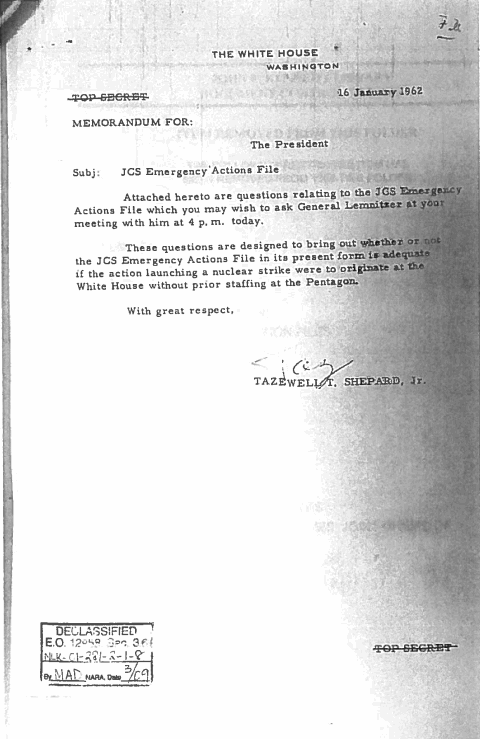
Major attention is being given to research by Prof Andy Stirling and Dr Phil Johnstone, which shows there is a link between the UK’s military submarine-related nuclear activities and civil new build agendas.
They identify that the need to maintain submarine nuclear capabilities in the military sector has played an influential role in the UK’s decisions to champion nuclear power. The findings have been profiled in a Guardian news story (12 October 2017), which highlights the potentially “extremely expensive” cost of this subsidisation for electricity consumers.
In investigating military documentation, the authors found previously unacknowledged links between civil and defence programmes. Their findings provide a compelling explanation for the UK’s resolute commitment to new nuclear energy projects (such as Hinkley Point C), despite the widespread criticism of its economic and technical feasibility.
In written evidence submitted to the House of Commons Public Accounts Committee (PAC) Inquiry on Hinkley Point C, Prof Stirling and Dr Johnstone highlighted a number of “significant but neglected queries” over public accounting for UK nuclear power. They wrote:
“The issues arise in the problem that growing recognition of the seriously unfavourable costs of HPC [Hinkley Point C] when compared with other low carbon energy, appears to be having little effect on the intensity of UK Government commitments to nuclear power. We outline evidence that the persistence of these nuclear attachments, despite adverse economics, is partly due to a perceived need to subsidise the costs of operating and renewing the UK nuclear-propelled submarine fleet.
This military nuclear infrastructure shares with civil nuclear power a necessity to maintain a large-scale national base of nuclear-specific skills, research, training, design, engineering, industrial and regulatory capabilities. Without large revenue flows to this highly-specialised joint industrial base from civil nuclear supply chains ultimately funded by electricity consumers, we document clear concern in defence policy debates, that the costs of UK nuclear submarine capabilities could be insupportable.”
In the Committee’s subsequent oral evidence session (9 October 2017), its Chair Meg Hillier MP drew on this evidence to question Stephen Lovegrove CB (Permanent Secretary for the Ministry of Defence) on whether “Hinkley is a great opportunity to maintain our nuclear skills base” (Q84).
His response confirmed that there had been talks with the Department of Business, Energy and Industrial Strategy (BEIS) on the subject, and acknowledged that:
“As a nation we are going into a fairly intense period of nuclear activity… We have at some point to renew the warheads, so there is very definitely an opportunity here for the nation to grasp in terms of building up its nuclear skills… it is going to require concerted Government action to make it happen.” (Q84-5)
Through a series of written questions to the Ministry of Defence, Caroline Lucas MP (Leader of the Green Party) has been querying “the relevance of UK civil nuclear industry skills and supply chains to the maintaining of UK nuclear submarine and wider nuclear weapons capabilities”. Responding to these, Harriett Baldwin MP (Parliamentary Under-Secretary for the Ministry of Defence) has confirmed that:
“We engage regularly with counterparts from the Department for Business, Energy and Industrial Strategy (BEIS), other Government Departments and industry, to address the issue of nuclear skills across both the defence and civil nuclear sectors, and will continue to do so… In all discussions it is fully understood that civil and defence sectors must work together to make sure resource is prioritised appropriately for the protection and prosperity of the United Kingdom.”
Speaking at the annual Campaign for Nuclear Disarmament (CND) Conference on 14 October 2017, Mrs Lucas MP declared:
“Nobody could possibly justify Hinkley C… The only way that I think we can explain the ideological obsession with Hinkley – with nuclear power – is because of the cross-subsidy between nuclear power and nuclear weapons… I’ve just been asking some parliamentary questions in the last few weeks, helped very much by Professor Andy Stirling at Sussex University. And now it’s getting on the record, coming back from the government – the fact that they are conceding, effectively, that our heating bills are directly subsidising nuclear weapons… So let us never forget that those two things are utterly interconnected.”
Rolls Royce have also formally acknowledged the benefits that a civil nuclear reactor programme has for the military nuclear submarine industry, in their bid to secure governmental funding for Small Modular Reactors (SMRs).
Last autumn, to coincide with the government’s green light for Hinkley Point C, Prof Stirling, Dr Johnstone and Emily Cox published a SPRU Working Paper titled ‘Understanding the Intensity of UK Policy Commitments to Nuclear Power.’ The report illuminates many important cross-overs between UK submarine and civil nuclear supply chains.
Begun in 2013, as part of the ESRC-funded Discontinuity in Technological Systems (DiscGo) project, Prof Stirling and Dr Johnstone’s research has gained significant UK and international coverage in the New York Times, Die Tageszeitung (Germany) and the Climate News Network. Their findings have since featured several more times in the Guardian; see: Hinkley Point: the ‘dreadful deal’ behind the world’s most expensive power plant (21 December 2017), Military secrets of our nuclear power plants (27 December 2017).
Report source; SPRU Science Policy Research Unit
http://www.sussex.ac.uk/spru/newsandevents/2017/findings/nuclear
July 6, 2018
Posted by arclight2011part2 |
Uncategorized |
8 Comments
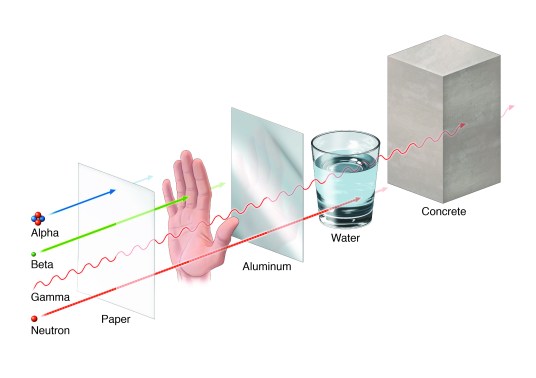
Source:
Allan Hedin
“Spent nuclear fuel – how dangerous is it? A report from the project “Description of risk’ ”
SKB Report – Technical Report TR-97-13 (March 1997)
On page 21 of this report at para 3.5.2: the following two figures are provided:
1) the lethal dose is given as 5,000 ‘milli-Sieverts’ [1]
2) a dose rate of one million ‘milli-Sieverts’ per hour is quoted
(one year after one tonne of waste fuel has been taken out of a reactor – when standing at one metre distance from the waste fuel rod)
From these two figures it is then calculated [2] that:
To stand one metre from:
- one tonne of waste fuel,
- one year after its removal from the reactor
– would kill you in twenty seconds.
On page 23 of the NDA ‘Disposability’ report for Westinghouse ‘AP1000’ [3] type fuel [4], a weight of approximately 600 kilograms per ‘AP1000’ fuel assembly is quoted. (see Table B4)
The figure quoted for the weight of an ‘EPR’ [5] fuel assembly is also roughly 600 kilograms. [6] ( See page 29 – Table B9)
Therefore:
- One fuel assembly of either ‘AP1000’ or ‘EPR’ type fuel weighs roughly half a tonne.
- This means that standing next to one of either of these fuel assemblies could kill you in about a minute.[7]
Dr Rachel E J Western BA(Oxon) PhD MRSC
16th March 2018
[1] milli = one thousandth – (for defintion of ‘Sievert’ see ‘Technical section at the start of this document )
[2] (by reference to Figures 3-8a and b ( See pp 22- 23 )
[3] ‘AP’ – Advanced Passive
[4] “Geological Disposal Generic Design Assessment: Summary of Disposability Assessment for Wastesand Spent Fuel arising from Operation of the Westinghouse AP1000 ”
NDA ( Oct ’09 )
http://www.nda.gov.uk/documents/upload/TN-17548-Generic-Design-Assessment-Summary-of-DA-for-Wastes-and-SF-arising-from-Operation-of-APPWR-October-2009.pdf
[5] ‘EPR’ – European Pressurised Reactor
[6] “Geological Disposal Generic Design Assessment: Summary of Disposability Assessment for Wastes and Spent Fuel arising from Operation of the UK EPR”
NDA Technical Note no. 11261814
NDA – October 2009
http://www.nda.gov.uk/documents/upload/TN-17548-Generic-Design-Assessment-Summary-of-Disposability-Assessment-for-Wastes-and-Spent-Fuel-arising-from-Operation-of-the-EPWR.pdf
[7] assuming that the waste fuel had been removed from the reactor one year earlier and that you were standing one metre away.
July 6, 2018
Posted by arclight2011part2 |
Uncategorized |
Leave a comment
02 July 2018
http://www.world-nuclear-news.org/NP-IEA-meeting-considers-future-of-nuclear-0207185.html
The International Energy Agency (IEA) has held a high-level meeting to identify the key issues faced by nuclear energy and to explore its future. Under current policies, together with limited investment in new reactors, nuclear’s contribution to the energy mix in developed economies is set to decline significantly, the meeting heard.
“For more than 40 years, nuclear energy has been an important contributor in several countries to energy security and a key source of zero-emissions generation,” the IEA said. “But the future of nuclear energy is facing growing challenges, increased competition with renewables and gas and, in some cases, public opposition.”
The IEA held a high-level meeting in Paris on 28 June – titled Nuclear Energy: Today and Tomorrow – to examine the role of nuclear energy in mature power markets and the challenges and future for nuclear energy for energy security, the economy and the environment. The event was attended by ministers and senior government officials from IEA member countries, industry leaders and experts.
“Nuclear power is continuing to play an important role in electricity security along with other conventional generating technologies,” said IEA Executive Director Fatih Birol in his opening remarks. “Despite this, with current policies there is little prospect for significant growth for nuclear power in developed economies on the horizon – although there are new efforts to spur innovations that could change this picture.”
The workshop focused on three themes: the challenges of meeting nuclear-specific policy targets while balancing overall economic, environmental and energy security goals; the position of nuclear power in mature power markets; and the potential of nuclear technologies to address future power flexibility challenges and emissions reduction targets.
In a keynote address, US Deputy Secretary of Energy Dan Brouillette said: “In the United States, we are committed to reviving, revitalising, and ultimately expanding the use of nuclear energy because we know its benefits.” He added, “We are just starting to see the potential of nuclear power in meeting our energy security needs and our clean energy goals. The advanced reactors, the advanced fuels, and the advanced materials being developed in the US, France and around the world all offer the promise of lessened emissions and increased reliability.”
“The sessions highlighted how, under current policy frameworks, and with limited investment in new plants, the contribution of nuclear to the power mix in mature markets is set to decline significantly,” the IEA said. Most new construction is in Asia, with China and India accounting for over half of the new reactors under construction. In the IEA’s World Energy Outlook New Policies Scenario, nuclear power production grows with two countries – China and India – responsible for over 90% of net growth to 2040. By contrast, outside of Japan, nuclear power generation in developed economies is set to decline 20% by 2040.
The meeting also heard about new initiatives to advance innovative nuclear power technologies, including those that can address better the need for greater power systems flexibility, spurred by the rise of generation from variable renewables.
The nuclear industry has set the Harmony goal for nuclear energy to provide 25% of global electricity by 2050. This will require a tripling of nuclear generation from its present level. Some 1000 GWe of new nuclear generating capacity will need to be constructed by then to achieve that goal. World Nuclear Association has identified three areas for action to achieve this: establishing a level playing field in electricity markets, building harmonised regulatory processes, and an effective safety paradigm.
Researched and written
by World Nuclear News
July 5, 2018
Posted by arclight2011part2 |
Uncategorized |
Leave a comment
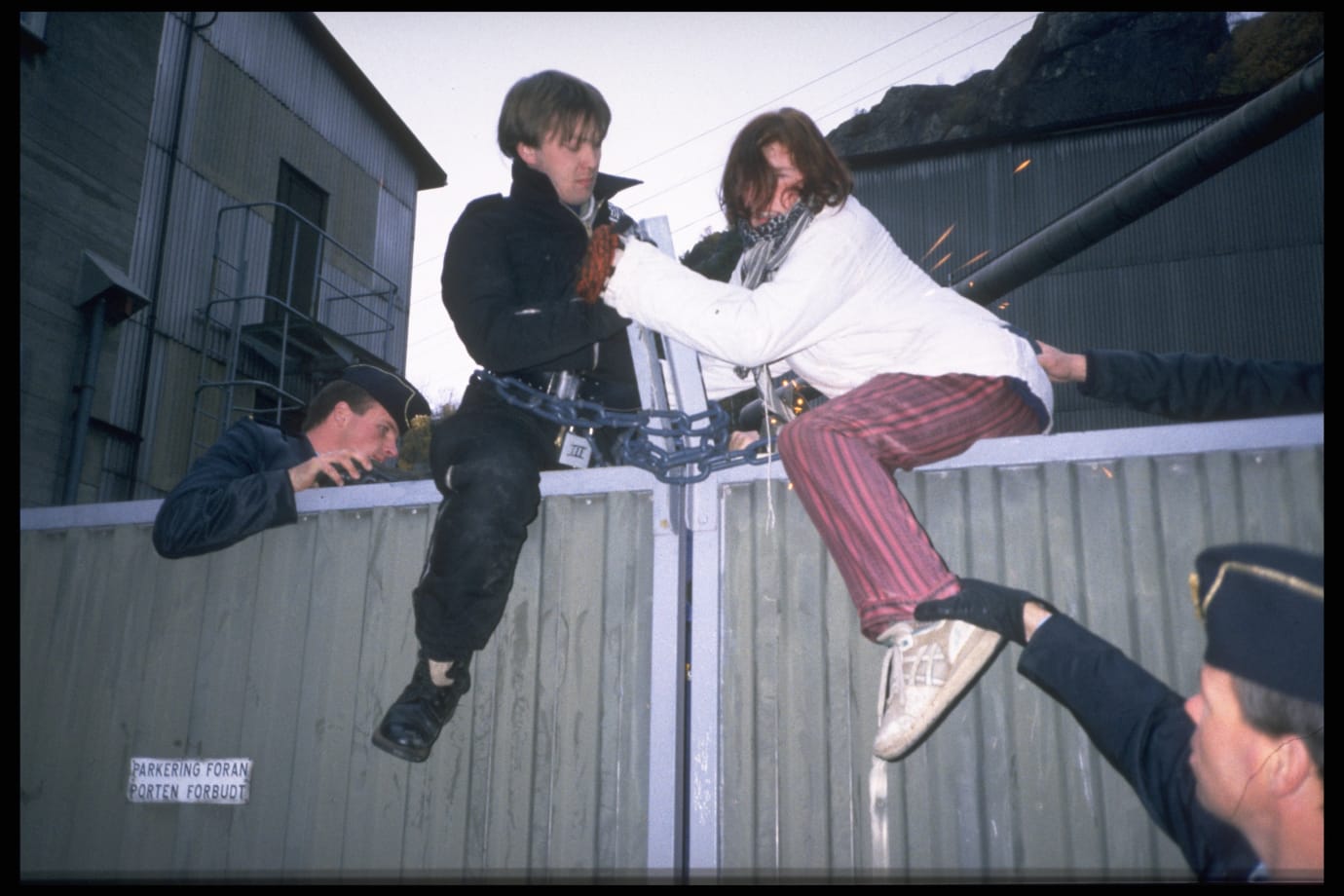
 Protests at the Halden Reactor in 1990. Credit: bellona
In a major victory for radiation safety in Europe, the Norwegian government announced Wednesday that it would be permanently shutting down the financially and technically troubled Halden research reactor, which experienced a leak in 2016.
The 25 megawatt installation, which is the world’s oldest heavy-water reactor, is located in a mountain cave in the southern Norwegian town of Halden, and has been under a temporary closure since March due to a valve failure.
It is the second of Norway’s two reactors, the first of which is the Kjeller reactor, near Oslo, which began operations in 1951.
Bellona has for three decades questioned the Halden reactor’s sometimes hazardous operations, and demanded that the government stop subsiding its continued use.
During its operation, Halden has contributed some 10 tons of spent nuclear fuel to the 17 tons the country has amassed since the middle of the last century.
The announcement of Halden’s closure came Wednesday after a much-anticipated meeting of the board of the Institute of Energy Technology (IFE), which has overseen the reactor’s operation since it opened in 1958.
Norway’s industry ministry issued the announcement late in the afternoon, saying the closure came “for reasons of economic and technical risk in further operations.”
“This is a happy day for Bellona,” said Nils Bøhmer, Bellona’s general manager and nuclear physicist. “We have fought for the shutdown of the Halden Reactor for about 30 years.”
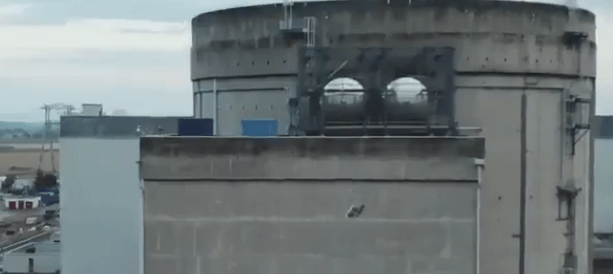
 The Halden Reactor. Credit: Bellona
Bøhmer urged the Norwegian government to develop a detailed dismantlement plan financed over the long term – and which would draw on the knowledge and expertise of technicians that currently operate the reactor.“Their jobs must be ensured during this transition phase,” Bøhmer said.
According to government projections, dismantling both the Halden and Kjeller reactors, as well as safely storing their radioactive waste, will cost some $1.5 billion, only a fraction of which has been accounted for by funding from the IFE. It is thus expected that the bulk of dismantling and storage costs will fall to the state.
Halden’s closure caps a luckless run for the reactor. In October 2016, a small leak of iodine 131 was detected at Halden, which prompted the evacuation of its staff, but caused no injuries or environmental damage outside the facility.
Yet the incident had the makings of something more serious. The iodine release caused a hydrogen buildup in Halden’s reactor core not unlike what occurred in 2011 at Fukushima. There were likewise concerns that the core of the reactor might become unstable, as well as other worrying issues surrounding its cooling system.
Most hazardous of all, however, was the lag-time between when the error occurred and when the IFE informed Norwegian radiation protection officials. The IFE later apologized for sitting on the news. But still, the incident fueled a rash of conspiracy theories charging that Norway was hiding a major nuclear disaster.
On less fantastical footing, however, the reactor had long ago fallen into costly obsolescence.
In April, government documents showed the reactor was operating at a loss of several million dollars, despite hefty operation grants to IFE from the government. At the same time, the reactor was drawing fewer and fewer paying customers for its nuclear research, and would have demanded another $18 billion in new revenues next year simply to stay solvent.
Wednesday’s decision to close the reactor stopped that financial bleed and Bellona is hopeful that the costs of operating the Halden reactor will now be put toward the safe dismantlement and storage of its radioactive legacy.
July 4, 2018
Posted by arclight2011part2 |
Uncategorized |
Leave a comment


 Protests at the Halden Reactor in 1990. Credit: bellona
  The Halden Reactor. Credit: Bellona








 nuclear-news