Justice and Law for Activists, A Global Perspective
This weeks European News Weekly is brought to you by Shaun McGee, Jimmy Hagan and Kevin Hester – 12th July 2015 – Justice and Law for activists!
This weeks 3 podcasts are full of interviews with activists recounting their recent experiences with the justice system. We have Emma and Amanda Kelly whose brother, John Kelly, died under suspicious circumstances in Dublin Ireland and their fight to bring closure to their brothers harrowing case. A most moving testimony in the third part of the show.
We also interview Chris Busby who (as is well documented) has been targeted by the establishment and just recently has been “punished” with punitive fines for taking the Ministry of Defence in the UK to court.
We also discuss with Chris, the methods employed to harass activists in the UK and the lengths that the UK is going to hide crucial evidence against the ICRP Dose model employed by the nuclear industry.
The Extinction report is delivered once again by Kevin Hester covering climate change anomalies being reported from around the world.
Then we have Jack Cohen Joppa on the show who publishes a newspaper for activist prisoners (The Nuclear Resister). He has some stunning tales of incarceration and we ask the question, Does the corporations and government agencies now employ different tactics against activists than imprisoning them? He gives us some good news regarding Mordechi Vannunu the Isreali nuclear bomb whistleblower. Altogether a great interview!
And lastly, we talk to Stephen Manning about mail tampering and other related issues in Ireland.
NOTE-
Sorry about the lack of European news items that we usually share but you can find many of them at this FB account ;
In hour 1 Chris Busby who (as is well documented) has been targeted by the establishment and just recently has been “punished” with punitive fines for taking the Ministry of Defense in the UK to court.We also discuss with Chris, the methods employed to harass activists in the UK and the lengths that the UK is going to hide crucial evidence against the ICRP Dose model employed by the nuclear industry.
The Extinction report is delivered once again by Kevin Hester covering climate change anomalies being reported from around the world.
In hour 2 we have Jack Cohen Joppa on the show who publishes a newspaper for activist prisoners (Nuclear Resister). He has some stunning tales of incarceration and we ask the question, Does the corporations and government agencies now employ different tactics against activists than imprisoning them?
He gives us some good news regarding Mordechi Vannunu the Isreali nuclear bomb whistle blower and alot more info. Altogether a great interview!
Exclusive interview with Emma and Amanda Kelly, sisters of the murdered young man, John Kelly discussing their hope of a resolution to the questions that have arisen from their investigation of their brothers death.They explain the pain and anguish of family and friends to the tragedy and lack of support from media and authorities. This is an emotional story of a fight against injustice and a cry for transparency.
Amanda and Emma also call on other victims to step forward and take a stand against injustice in Ireland. A stunning and insightful interview!
In the last 20 minutes of this hour we talk to Stephen Manning from Integrity Ireland about the 320 cases that are awaiting judicial review or have recieved dissapointing conclusions and he updates us on a case of mail tampering in Ireland.
If you’d rather send a cheque (or a check) please make it payable to Low Level Radiation Campaign and send it to The Knoll, Montpellier Park, Llandrindod Wells, Powys LD1 5LW, UK.
Hosts: Shaun Mc Gee and Jimmy Hagan
Guest: Charles William Digges, Journalist.
EXCLUSIVE and rare interview with Charles Digges on the BP GULF oil spill censorship and environmental effects 05/July/2015
This weeks European News Weekly covers European and Science news in the first hour covering a range of topics and surprising news articles. The second Hour we were joined by Charles Willian Digges, one of the few remaining Science media Journalists still operating within main stream journals. Charles discusses with us the truth behind the BP Gulf oil spill and updates us with new information from activists, Doctors and independent scientists. The Third podcast looks at the problems in Ireland and we throw light onto some of the censorship (attempted) currently being employed in Ireland and concerns that G4S might be using GCHQ spying techniques on Irish activists,politicians and journalists.
In this weeks European section of the show we discuss a variety of science stories including a new report concerning GMO fed to rats and mice causing health issues and sterility. We discussed the surveillance state abuses in the UK reported and a range of censored topics from the UK. Also a cry from Japan! 2 editors and many of Japans Foreign Correspondence Club supporting a call for the Japanese Government to stop interfering in the democratic vote in Okinawa because the Japanese Government wanted to close down the two popular newspapers supporting the democratic majority.. “If you have a US base in your country, you may lose your democratic rights as well” exclaimed a worried Newspaper Editor.
This week we were joined by Charles William Digges, journalist and activist. We discuss the problems concerning the Gulf oil spill, Charles gives us a great breakdown on his research in this area and tells us in summary of hidden health effects, a community isolated and manipulated by big corporate interests. We also discuss what happened to activists, scientists, environmentalists and journalists when they tried to get the truth out as to the full impact of the disaster. We discuss the lack of studies that have been done and what studies have been done have had their reports held up with gagging orders. We also discuss that WPP LLC companies being brought in to “manage the disaster” via the media and discuss the fact that WPP LLC had done the same thing during the Fukushima disaster using similar methods. And finally we asked whether the 19 billion dollars compensation fine recently arranged, be enough compensation for the damage. Charles Digges Articles on this disaster, and a range of other investigations can be found at http://bellona.org/Please note that Charles was a unused to interviewing on the radio so he is a bit nervous to start of with but settles down well as the show goes on.. The next podcast from Charles will be better. The testimony is stunning and so we present it to you in the raw.
For our Irish News section you will hear about NAMA’s missing 7.7 billion which was not mentioned by Constantin Gurdgiev check it out at http://trueeconomics.blogspot.ie/2015/07/4715-another-nama-story-that-wont-go.html
ear-marked for an individual Politician. We listen to a pod cast of Clare Daly speaking in the Dail about how Irish water will fail, a segment about licensing of bicycle’s. Irish involvement in trading arms to Israel and a man standing on his sovereignty under Article 40.5 of the Irish Constitution.We DO NOT mention Catherine Burns TDs daughter rental of her social housing. And we definitively didn’t quote TD Burns income for the last five years.. Nor did we mention Face Book blocking that story (nearly) In fact we didn’t say anything at all, just like the main stream media ..
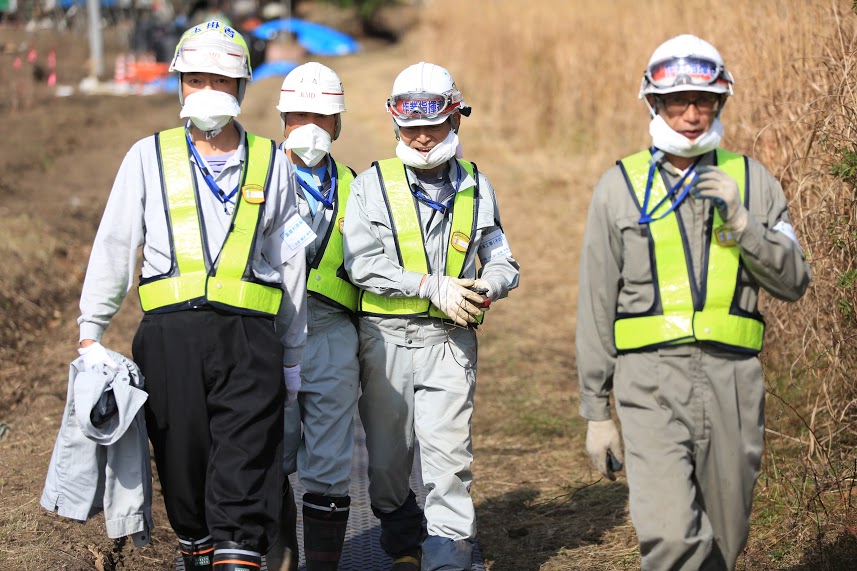
Plant Chief: Centuries may pass… The chief of the Fukushima nuclear power station has admitted that the technology needed to decommission three melted-down reactors does not exist, and he has no idea how it will be developed and conceded that the stated goal of decommissioning the plant by 2051 may be imposable . Naohiro Masuda, president of Tepco’s Fukushima Daiichi Decommissioning Company:
We have no idea about the debris. We don’t know its shape or strength. We have to remove it remotely from 30 meters above, but we don’t have that kind of technology, it simply doesn’t exist… We still don’t know whether it’s possible to fill the reactor containers with water. We’ve found some cracks and holes in the three damaged container vessels, but we don’t know if we found them all. If it turns out there are other holes, we might have to look for some other way to remove the debris.
2051!! The chief of TEPCO should accept to build the sarcophagus into “both of the aboveground and underground of nuclear reactor building” to start right cooling method to cool the nuclear fuel rods by Chisso. TEPCO should change the method quickly. The intellectual opinion of Jer Licciardello is right.
Jer Licciardello knows details of the information of Fukushima nuclear power plant better than Japanese citizens. Because Japanese Government conceals the actual situation of the radioactive contamination, and because neither most newspaper publishers nor TV criticizes Prime Minister Abe, the Japanese citizens do not look reality of radioactive contamination.If TEPCO prepares the sarcophagus into “both of the aboveground and underground of nuclear reactor building” to start right cooling method to cool the nuclear fuel rods by Chisso, Japan can prevent underground phreatic explosion and radioactive contamination.If underground phreatic explosion happens, all is the end.
The magnitude of this situation requires a global response for it increasingly becomes a global problem. Instead of remaining silent not to be asked the maker responsibility of GE, the Western countries may use the Japanese Self-Defense Forces as the charm against bullets to avoid the bullets of the wrong invading wars.
The use of right of collective self-defense becomes dangerous anytime. Japan should work hard to stop radioactive contamination faithfully. Japan will have to pay for this.
Doctor Arnie Gundersen, December 2013 already mentioned:
“I’ve been saying this for 30 months now. The solution is not to pump water out of the containment, but to prevent the water from going in. What we need is an underground wall. Just like the sarcophagus covers the top of Chernobyl, we need an underground sarcophagus to prevent the groundwater from entering Fukushima reactors. I think once that’s accomplished, there’s no need to decommission these power plants and turn them back to the ground they are in. And the reason for that is that exposure to young, brave Japanese workers is going to be way to high for almost 100 years… The Japanese government doesn’t want that to happen because they want their population to think that this is a solvable problem. It isn’t.”
TEPCO has ignored this suggestion of Doctor Arnie Gundersen about an underground sarcophagus to prevent the groundwater from entering Fukushima reactors for more than 1 year.
Can you understand? If underground phreatic explosion happens, all is the end.
Steam is already going up from the basement in Fukushima nuclear power plant.
Aozora Japanese Resistance
“Those journalists that used to stand by the side of someone crying,
now stand by those in power.”
Hidetoshi Kiyotake 2015
Summarised by Shaun McGee
Posted to Nuclear-news.net
posted 3 April 2015
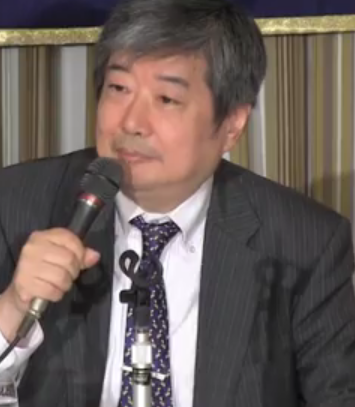
Video Published on 2 Apr 2015 by the FCCJ
Featuring;
Minoru Tanaka: Investigative Journalist
Hidetoshi Kiyotake: Investigative Journalist and Author
Comments from the Chairman of the press committee
The reason for the Press freedom Award in Japan is because of the fact that in 2010 Japan was 11th in the rankings for press freedom according to Reporters Without Borders. Japan now has a position of 61st (just behind South Korea and far behind Croatia) out of 180 countries.
The State Secrets Act of 2013 makes nuclear power and relations with the USA taboo for journalists. Journalist freedoms are being eroded to stop embarrassing details from being made public. The governments and Corporations also have been directly influencing Broadcasters and Journalists.
Japanese Media are more fearful and are more wimpy than ever before.
For instance the story of the Education ministers links to the Yakuza has been grossly under reported and there are other scandals not reported also.
The Freedom of the Press Awards will be formally announced on the 3rd May 2015 (World Press Day)
There will be one Award for investigative journalism and another award for non journalism but have contributed to Freedom of information causes.
The prizes are to confer due recognition that is supportive of Open Society, Free Speech and democratic accountability.
Minora Tanaka(Investigative journalist also on the judging panel for the Award)
Tanaka San has been investigating a range of subjects over the years including issues surrounding the nuclear energy industry.
Tanaka San begins outlining a problem called SLAPPs (Strategic Lawsuit Against Public Participation) against journalists getting too near the truth and these defamation cases have had a chilling effect on journalism. Even if the case is withdrawn because it is a weak case it could be years before that happens and by then time , money and stress will have taken their toll.
Added to the fact that the imposition of the Orwellian State Secrets Act of 2013, Journalism in Japan is in dire straights.
Tanaka San finishes of his statement by exclaiming;
“I am Kenji” (In reference to the recently murdered journalist)
Hidetoshi Kiyotake (Investigative journalist and author)
Currently he has six lawsuits on the go and has 2 of them due in court next week (SLAPPs). Whilst not attending court Kiyotake San likes to do some journalism research and writing. He also leaves time for the freedom of the press issues also. He worked for the Yomuri Shimbun for many years as a financial analyst and has held managerial positions. In 2011 he was dismissed from his post and is now an independent journalist. He one a non fiction prize last year.
He quotes as an example his research into the Sony corporation where he reported on the use of “Isolation Rooms” being used as a punishment for employees.
He then goes onto say that reporting on government and corporate scandals and stories is getting harder and harder all the time, whilst the number of investigative journalists are going down.
It would appear that journalists have become numb to the big changes within these media corporations.
As an example he states that a story of 10,000 or 20,000 people being sacked is not a shock to them anymore.
There have been many job loses also in the media and that also would have been frowned on in the recent past in Japan.
Kiyotake San goes onto ask the question if Japan uses a managerial style that takes into account human dignity and long term perspective as it once did?
As an example he relates a story in the past where a Japanese CEO of Sony asks the CEO of GE on what might be the best managerial style. The CEO of GE announced that if a worker wakes up and is upbeat and positive about his oncoming work day than the right managerial style has been used.
“Those that used to stand by the side of someone crying now stand by those in power.”
Kiyotake San then went on to explain his hopes for the future.
He calls for retired investigative journalists to leave retirement and to come back to the job of reporting and to find some platform in the media or on the internet to publish their articles.
He also calls for working journalists to research topics and publish on other formats to increase competition and improve the quality of reporting and the oversight of government and corporations.
He finishes by asking journalists to not be content with being in a closed club but to go out and publish as independent journalists as well.
Questions and answers on the source video
UPDATE
Edited version by missmilkytheclown1 on YouTube for easy listening
Shockingly the Daily Mail is the ONLY paper to expose this – and even that with a somewhat neutered letter on the Letters Page…the original sent to all press is below
Nuclear Waste Scandal
In the last gasp of Parliament before the election, something momentous
and awful happened but who knew?
Who knew that our government had asked MPs to vote to make nuclear waste
dumps Nationally Significant Infrastructure Projects? There was no debate
or even vote in the lobbies of the Commons, voting was done by filling in
a form. MPs voted 277 votes to 33 to dump democracy. Big NGO’s and the
press have played their part by their silence.
The normal checks and balances of democracy are wiped away by undemocratic
NSIP. Normal rules of planning protections are voided by NSIP. There would
be no public inquiry and no meaningful scrutiny or debate from full
council meetings.
The fig leaf of “positive test of public support” (still to be decided
upon by government!) would be followed by the final decision being made by
the Secretary of State.
There is a predetermined government agenda to “implement geological
disposal.” The UK government (in England only!) has signed up to
“implement geological disposal” and realistically only nuclear compliant
Cumbria is in the frame as nuclear patsy.
If our grandfathers’ and grandmothers’ had gone along with the dumping of
heat generating radioactive wastes deep under Cumbria would I now be
sitting at a desk in Cumbria drinking a glass of water and writing about
it? Many scientists and geologists have good reason to think not. They
have good reason to think that geological ‘disposal’ does not work.
Keeping heat generating nuclear wastes isolated from the biosphere is the
biggest challenge for mankind. The ruthless undemocratic push for
“implementation of geological disposal” is however a means to make ever
more nuclear wastes (useful only for weapons) by falsely promising “a
final solution.” “The final solution” of geological dumping of heat
generating nuclear wastes is now officially open for all manner of
corruption and can now be forced on Cumbria …but who knew?
Yours sincerely,
Marianne Birkby
On behalf of Radiation Free Lakeland
A senior Government scientist privately expressed concerns at the official response in Northern Ireland to the 1986 Chernobyl nuclear disaster, a declassified Stormont file has revealed.
Professor Cecil McMurray, who would go on to become Northern Ireland’s Chief Scientific Officer, warned that many of the assumptions of officials — who were assuring the public that there was little need for concern — were based on scant evidence.
In a confidential note to the Permanent Secretary of the Department of Agriculture, Prof McMurray, who was at that time in the department’s Agricultural and Food Chemistry Research Division, said: “The response of Jonathan Margetts [an NIO official] to the Permanent Secretary causes some concern.
“It is almost dismissive of the effect of the impact/effect of Cherbobyl on N Ireland. It leaves one with the impression that we are so far away it hardly matters. This is far from the case.”
He said that in the wake of the Ukrainian disaster the Province was not using the same measurement of radioactivity in agricultural produce such as milk, as that being used in the rest of the UK.
Northern Ireland was recording levels in pasteurised milk collected over a wide area, while the rest of the UK was monitoring levels at individual farms.
He said: “It is now evident that our milk powder results are as high as, if not higher than anything measured in the UK….in effect we don’t know how high the local hot spots were, but we must have had a considerable deposition compared with other places when levels are so high in SMP [seemingly an acronym for skimmed milk powder] which again integrates deposition over a considerable area (the collecting area of the manufacturing plant).”
Professor McMurray went on: “A fact we have not really considered yet – what proportion of our cows were solely dependent on grass as their source of forage on the 3rd May, i.e. considering the late wet season, especially in the West?”
Professor McMurray said that the only air monitoring site in Northern Ireland was at Newtownards (another document in the files explains that the DOE’s chief alkali and radiochemical inspector used his own initiative to begin air monitoring at his home in Newtownards as soon as news of Chernobyl reached the UK).
Prof McMurray said: “By chance this may have been the area with the lowest fallout.
“Milk samples from the Belfast area and S. Down were consistently lower than samples obtained in the West; and secondly, powders from Pritchetts in Newtownards were much lower than samples obtained from the West as well…it would be premature to discuss meat, but I suspect we might find considerably elevated levels.”
The scientist added: “I am sure if the truth were told this incident has taken a lot of people by surprise in how widespread the effects have been.”
Prof McMurray also pointed out an embarrassing gaffe by officials, who were referring to testing for “irradiation”, the use of radiation to kill bacteria in food.
He said: “There is a major howler in the draft terms for the working groups…the correct term should be food containing radioactive substances.”
” There is an issue in Fukushima on how to be correctly scared”
Yamada Atashi December 2014
This summary is of press conference in Japan discussing the recent attacks on the Asahi Shimbun concerning an article on the chaotic events during the 2011 nuclear accident at Fukushima Daichi nuclear power plant. The video source is from the Foreign correspondents Club of Japan video (linked below).
Published on 16 Dec 2014
Yuichi Kaido: Lawyer / Satoshi Kamata: Journalist / Tatsuro Hanada: Professor, Waseda University (Media and Journalism Studies)
Yuichio Kaido (Lawyer)
Worked on nuclear related legal cases.
Calling for a retraction of the situation regarding the Yoshida Testimony and disciplining of the reporters involved.
200 lawyers have signed a letter of support
The main issue was the headline of the article.
He clarified that the disputed headline was not incorrect.
Evidence was also given to those concerned supporting the correctness of the articles headline.
TEPCO confirmed that the order was given to remain within the grounds of the Fukushima Daichi nuclear plant but 650 actually went to the Fukushima Daini nuclear plant some 10 Km away.
The third document was a conversation from Yoshida San and the government Agency as further supporting evidence showing an unofficial exodus from the Dachi nuclear plant.
The press and human rights committee (PRC) of Asahi Shimbun (That ordered the article removed and the reporters punished) was found to be incorrect and a statement of this was noted.
Final point was that there was no sensors to measure the pressures and temperatures of the developing meltdowns.
“The fact that the workers had left the site also was grounds enough for an article describing the situation. The fact that the whole article retracted was found to not be understandable” Yuichio San Said.
Date: November 13, 2012 Source: University of South Carolina
The public policy video “Radioactive Berkeley: No Safe Dose” premiered at the Berkeley City Council in December of 1996. Featured speaker Dr. John Gofman M.D, Ph.D. addresses the medical impacts of low-level radiation exposure.
Summary: Even the very lowest levels of radiation are harmful to life, scientists have concluded, reporting the results of a wide-ranging analysis of 46 peer-reviewed studies published over the past 40 years. Variation in low-level, natural background radiation was found to have small, but highly statistically significant, negative effects on DNA as well as several measures of health.
Even the very lowest levels of radiation are harmful to life, scientists have concluded in the Cambridge Philosophical Society’s journal Biological Reviews. Reporting the results of a wide-ranging analysis of 46 peer-reviewed studies published over the past 40 years, researchers from the University of South Carolina and the University of Paris-Sud found that variation in low-level, natural background radiation was found to have small, but highly statistically significant, negative effects on DNA as well as several measures of health.
he review is a meta-analysis of studies of locations around the globe that have very high natural background radiation as a result of the minerals in the ground there, including Ramsar, Iran, Mombasa, Kenya, Lodeve, France, and Yangjiang, China. These, and a few other geographic locations with natural background radiation that greatly exceeds normal amounts, have long drawn scientists intent on understanding the effects of radiation on life. Individual studies by themselves, however, have often only shown small effects on small populations from which conclusive statistical conclusions were difficult to draw.
“When you’re looking at such small effect sizes, the size of the population you need to study is huge,” said co-author Timothy Mousseau, a biologist in the College of Arts and Sciences at the University of South Carolina. “Pooling across multiple studies, in multiple areas, and in a rigorous statistical manner provides a tool to really get at these questions about low-level radiation.”
Mousseau and co-author Anders Møller of the University of Paris-Sud combed the scientific literature, examining more than 5,000 papers involving natural background radiation that were narrowed to 46 for quantitative comparison. The selected studies all examined both a control group and a more highly irradiated population and quantified the size of the radiation levels for each. Each paper also reported test statistics that allowed direct comparison between the studies.
The organisms studied included plants and animals, but had a large preponderance of human subjects. Each study examined one or more possible effects of radiation, such as DNA damage measured in the lab, prevalence of a disease such as Down’s Syndrome, or the sex ratio produced in offspring. For each effect, a statistical algorithm was used to generate a single value, the effect size, which could be compared across all the studies.
The scientists reported significant negative effects in a range of categories, including immunology, physiology, mutation and disease occurrence. The frequency of negative effects was beyond that of random chance.
“There’s been a sentiment in the community that because we don’t see obvious effects in some of these places, or that what we see tends to be small and localized, that maybe there aren’t any negative effects from low levels of radiation,” said Mousseau. “But when you do the meta-analysis, you do see significant negative effects.”
“It also provides evidence that there is no threshold below which there are no effects of radiation,” he added. “A theory that has been batted around a lot over the last couple of decades is the idea that is there a threshold of exposure below which there are no negative consequences. These data provide fairly strong evidence that there is no threshold — radiation effects are measurable as far down as you can go, given the statistical power you have at hand.”
Mousseau hopes their results, which are consistent with the “linear-no-threshold” model for radiation effects, will better inform the debate about exposure risks. “With the levels of contamination that we have seen as a result of nuclear power plants, especially in the past, and even as a result of Chernobyl and Fukushima and related accidents, there’s an attempt in the industry to downplay the doses that the populations are getting, because maybe it’s only one or two times beyond what is thought to be the natural background level,” he said. “But they’re assuming the natural background levels are fine.”
“And the truth is, if we see effects at these low levels, then we have to be thinking differently about how we develop regulations for exposures, and especially intentional exposures to populations, like the emissions from nuclear power plants, medical procedures, and even some x-ray machines at airports.”
Anders P. Møller, Timothy A. Mousseau. The effects of natural variation in background radioactivity on humans, animals and other organisms. Biological Reviews, 2012; DOI: 10.1111/j.1469-185X.2012.00249.x
A Japanese man sits on the floor of a 4-mat-sized room, staring at a TV set neatly fitted into a corner. There’s enough room for the man, the TV, and a low plastic coffee table. Clean clothes and hung on hooks along the wall, and laundry hangs from the curtain rail. What’s the story here?
I asked that question to photo journalist Hiro Ugaya as we pored over his photos from a recent trip to Fukushima. “He’s an old friend,” said Hiro, “whose wife and son have evacuated to Yamagata. He’s been looking for work for six months, but the only available jobs are related to decontamination or decommissioning of the crippled nuclear power plant, and he doesn’t want to resort to either of those options. Still, as bad as the situation is in Fukushima, the economy’s worse in Yamagata, so he stays where he is.”
Hiro, a native of Kyoto living and working in Tokyo, has made nearly 50 trips back and forth to Fukushima since the triple disaster of 3/11, capturing scenes of life near the evacuation zone with his trusty Canon Mark3 5D. Read more about him here. He travels alone, going as far north as possible by train and then renting a car in Fukushima to drive along the coast. This month, he visited his friend Watanabe-san (pictured above), and stayed at a local hotel filled with temporary workers hired from all parts of Japan to do decontamination work in the outer regions of the evacuation zone. “Business is booming,” said Hiro, “but only if you want to work in irradiated areas.”
Although Hiro took hundreds of photos from the various coastal towns near the disabled Daiichi power plant, I want to focus mainly on his photos from Iitate Village. They reflect the slow but steady progress of the Herculean task of decontamination and serve as a sobering reminder of the sheer ugliness and shame of what happened in Fukushima. All photos in this post are Hiro’s, and all but one are from his recent November trip.
Iitate Village (pronounced EE-ta-tay), a highland farming area northwest of the crippled nuclear power plant, lies outside of the designated 30 Kilometer radius of the government-determined evacuation zone. But those of you who have followed the story, know that on March 15th, a gusty winter wind blew particles of radiation straight toward the mountains of Iitate. The wind was accompanied by snow, which blanketed the entire area. Stores, schools, houses, trees, rice paddies, vegetable gardens, and grazing pastures were all heavily contaminated, though no-one guessed at first because of the village’s physical distance from the center of the nuclear disaster. Of course, the evacuation map was drawn as a perfect circle, with multiple rings indicating distance from the radius, and Iitate was far from that radius. If only radiation travelled so neatly, without regard to weather or topography, right?
The evacuation of Iitate did not begin until April 22nd (over a month after the meltdown and the explosions occurred) and was not finished until late August of 2011; residents were inadvertantly exposed to high levels of radiation as well as emotional stress and confusion. For many of the elderly people who evacuated from Iitate and are still in temporary housing, living with depression, disappointment, and lingering sadness has become the new normal. Worse yet, residents from towns near the epicenter of the accident were also exposed to excess radiation when they were initially relocated to Iitate, which was considered a safe refuge shortly after the meltdowns. This was a tragedy that could have been prevented if the central government (not wanting to “incite panic”) had released a map known as SPEEDI, containing specific data regarding the path of the plume of radioactivity. You can read about it here, in an early blog entry from 2012.
So what’s the story on Iitate now, more than three years down the road? Well, some readers may be surprised to learn that although the level of radiation in many areas of Iitate remains high, the village is no longer “off-limits”. Former residents can now come and go freely and decontamination work is progressing–slowly, painstakingly–in hopes that the village will be revitalized. The mayor is determined that it will be. The problem is that Iitate is bordered by forestland. Since the nuclear disaster, trees are now cesium repositories, and many traditional houses in the village are situated in close proximity to sheltering groves, which serve as windbreaks. The trees that once sheltered homes have now contaminated them, and they are uninhabitable.
The central government does not consider forestland “residential”, and does not place a high priority on decontamination of the trees that define residents’ backyards. The reality is that many local residents must either abandon their homes, or attempt to “clean” the forestland lying closest to their houses, essentially stripping the forest of its ecosystem. Think of Iitate as a mountainous forest which humans have made habitable by clearing and cultivating the land for generations. Now it is
impossible to guarantee the safety of the land for humans without destroying the ecosystem itself, which is steeped in cesium, from the shiitake mushrooms that flourish in the contaminated forest to the wild boars that feed on the mushrooms. Cesium from the forest is carried down to the village with each rain or snowfall, and previously cleared terrain is re-contaminated. On the flat areas below the forest, work progresses at a painfully slow rate, and deadlines that prove impossible to adhere to are continually being re-assessed and re-determined. Booming business for the decontamination workers means a longer exile for residents still hoping to return in the near future.
The above assessment sounds and is harsh, but there is another vision. Many residents of Iitate and of similar small villages and towns in Fukushima believe that the land can be rescued and revitalized without destroying the ecosystem. You can read more about them in this transcript of an NHK broadcast from December 2013. Although the English translation reads imperfectly, the photos, personal stories and quotes from local residents gathered by Swiss journalist Susan Boos are food for thought.
Unlike the land around the Chernobyl nuclear disaster site, which was left to revert to its natural state, Fukushima’s contaminated areas are being stripped, scrubbed, plowed, drained, and stirred up; Boos wanted to know why. The transcript describing her visit to Iitate Village is interesting because it makes no mention of the decontamination work being funded by the central government, focusing instead on the efforts of individual farmers who have lived and worked in Iitate for generations. Frustrated with the slow pace of the clean-up, Iitate residents have been doing things their own way, taking detailed measurements of radiation levels, creating radiation maps, and developing alternative methods for reducing the effects of cesium in the soil.
“From now on,” says Iitate farmer Muneo Kanno in the transcript, “we will need to coexist with nature in this contaminated area over many generations. In other words, I think it’s our job to collect all the data we can about contamination and pass it on to the future generations….I strongly believe that this is the first and foremost role both for me and all the other local people.”
Kanno and other volunteer farmers and researchers are committed to accurately evaluating the state of their land, recording their findings, and experimenting with solutions. For them, decontamination is “Not just to remove everything, to wash, to brush and to think now the problem is done.” Boos, who has travelled the world reporting on the conditions of nuclear disaster sites, was deeply impressed by the devotion of the Iitate farmers to their land and by their determination to preserve it for future generations. The transcript reads, “Susan has travelled to many parts of the word, but this is the first time for her to be exposed to such deep affection for someone’s home.”
So who actually lives in Iitate Village right now? As of September 2014, a few hundred people have received permission to return home permanently, based on the location of their land. They are living in the zone that’s deemed “safe”, or at least”safe enough”. The area of Iitate still under decontamination and deemed “uninhabitable” is populated by day-trippers (former residents who commute into the village weekly–or even daily– to check on their houses, pets, or gardens), professional contamination workers, and the occasional journalist like Hiro, collecting stories, measuring radiation, and snapping pictures. It’s a ghost town at night.
On his most recent trip to Fukushima, Hiro, as I mentioned in the beginning of this post, stayed in a local hotel south of the Daiichi nuclear power plant. “I was lucky to get a room,” he said. “It’s always full these days. All guys, and all working in decontamination. ” Since there were no restaurants in town (read: nuclear zone, no tourists), Hiro and the other workers made a mad rush to the 7-11 , which closed at 8 p.m., to buy box lunches for their dinner every evening. According to Hiro, the going rate for a decontamination worker in Fukushima right now is around ¥16,000 a day–approximately $135 U.S. dollars– before money is taken out by contractors and sub-contractors. Is it worth the money? That’s something that every man ( I saw no women in any of the photos) must come to terms with on his own.
From here on in, I will let Hiro-san’s photos speak for themselves. You can read more about Iitate’s mountains of trash bags full of contaminated soil in this Japan Times article, which describes the current plan to build a 22 million cubic meter temporary waste storage facility in the Okuma/ Futaba area, home of the crippled power plant. That’s a space big enough to fill the Tokyo Dome Stadium 15 times. And you can read more about the plight of the old folks who have evacuated from Iitate and other neighboring towns in this article by The Guardian’s Justin McCurry. And you can support the excellent work of free lance journalists like Hiro Ugaya by passing on their words and images. Take a look at more of his stunning photos and read about his life here. I’ll post some of my favorites as well. Thank you for reading, and take care.
As the Japanese Secrets Act implementation looms on 10th December 2014, I thought it appropriate to remind our UK viewers that the new UK Secrets Act has already been Implemented from April 2nd 2014.. And as the nuclear Information will be retroactively applied, you can see, as why I had to leave the UK.
Will the Japanese who disseminates health and nuclear information have to do the same? Will the new Japanese Secrets Act apply retroactively too?
” Documents created prior to this date will continue to carry their existing markings until such time as they are amended in the normal course of work when the new markings will be applied at the same time.”
In 2012 Francis Maude, Minister for the Cabinet Office, announced the intention to fundamentally overhaul and replace the existing information classification and marking scheme as part of the government’s Civil Service Reform programme.
Sellafield Ltd’s security regulator, ONR (Office for Nuclear Regulation), have instructed Sellafield Ltd and the wider civil nuclear industry to adopt the new GSC protective marking scheme known as Government Security Classifications (GSC).
Government Security Classifications
The new three tier system has three classifications: OFFICIAL, SECRET and TOP-SECRET.
Additionally ONR have mandated the use of an additional classification: OFFICIAL-SENSITIVE for Sensitive Nuclear Information which is classified below SECRET.
Implementing GSC
In line with the rest of UK government, the new GSC scheme is coming into operation on April 2nd 2014. All documents (including commercial correspondence, drawings, specifications, data sheets etc) created by…
I am using this chance to make a correction to some comments made in last weeks Nuclear Hotseat report by Shaun McGee. The claims of manipulation of finances of these two Scientists (Chris Busby and Ian Fairlie) still stand. Also, Ian Fairllie had his recent bullet proof peer reviewed report on increased Leukemia in children around nuclear power plants disappear and become unavailable after some 200 odd downloads by the science community.And Chris Busby has been removed as a scientific witness to the Atomic veterans in the UK courts with no independent scientist allowed to offer non UK government backed Science data. I might add that Mr Gundersen from the USA tells us in the same Nuclear Hotseat Podcast, linked above, that his Tokyo sourced radioactive samples mysteriously disappeared showing that this criminal behaviour is happening on both sides of the Atlantic.
There are many other examples of UK blocking of emails and disruption of nuclear stakeholder groups that will be reported in depth in further articles posted exclusively on this blog, in the near future.
In the report this statement;
“.. even in the face of growing evidence reluctantly released by the UK government showing that there is indeed damage caused by U234 fallout from the Atomic Bomb program..”
Should have said;
The UK government is being challenged by the British Nuclear Test Veterans Association for a paltry 25 million Pounds Sterling (40 million US dollars Approx ) for damage to the veterans and their descendent’s for up to 20 generations, any funds needed above that need to be raised by the Veterans and their families.
And the statement that immediately followed;
“.. Also, this underpinned by recent findings and admissions by the UK government that Depleted Uranium has caused similar genomic problems in Iraq veterans due to DU..”
This statement was wrong, however, 2 soldiers from the first Iraq war were part compensated for Depleted Uranium health effects to themselves whilst cleaning out effected Tanks. And 2,000 others were awarded health pensions due to “war damage” (Quotes and links below).
A report from Going Underground claims that the UK will not be using DU in Iraq in further military actions;
Hundreds of tons of depleted uranium has been dropped in Iraq by US and UK forces, contaminating an estimated 300 sites, with a huge increase in cancer rates and a 17 fold increase in birth defects. The MoD denies any connection between the two. And the UK is one of only 4 countries ruling out banning the use of the weapon, which can disperse toxic dust and contaminate sites for years.
And below is some evidence to support the correction to the Nuclear Hotseat report above;
Exposure to depleted uranium in 1991 Gulf War killed UK soldier – inquest rules
A Black Country soldier died as a result of exposure to depleted uranium during the first Gulf War, an inquest has ruled. Stuart Dyson, of Cherwell Drive, Brownhills, formerly a Lance Corporal in the Royal Pioneer Corps, died of colon cancer in June last year aged only 39. His family has sought to prove his belief that he was dying because of being exposed to the lethal substance while cleaning tanks in the Gulf between January and May 1991. A jury, sitting at Smethwick Council House, heard medical evidence that cancer-inducing particles from uranium in tank shells had been breathed in and swallowed by Mr Dyson and that the onset of cancer in such cases could typically take ten years to show. (Birmingham Post, Sep 11 2009)
Pension award for British soldier’s depleted uranium poisoning claim
Scots ex-soldier Kenny Duncan has become the first veteran to win a pension appeal after being diagnosed with depleted uranium (DU) poisoning during the 1991 Gulf war.
Mr Duncan’s case relied on blood tests carried out by Dr Albrecht Schott, a German biochemist, which revealed chromosome aberrations caused by ionising radiation.
Dr Schott’s research formed part of a study of 16 British veterans of conflicts in the Gulf, Bosnia, and Kosovo. The test results were dismissed by the MoD as “neither well thought out nor scientifically sound”. (Glasgow Herald, Feb. 4, 2004)
UK Gulf War veterans to abandon legal battle for compensation claims
An eight-year, multimillion pound legal battle by more than 2,000 veterans for compensation for Gulf war syndrome has collapsed because there is not enough scientific evidence to prove their case in court.
The Legal Services Commission (LSC), which is estimated to have spent around £4m on the case, is expected to withdraw legal aid this month after being told by the veterans’ lawyers that the action has no real chance of success.
To succeed in their claim against the Ministry of Defence, the veterans would have to produce scientific evidence not only that their illness was caused by their service in the 1991 Gulf war, but also that the MoD had been negligent. The burden of proof would be on them as claimants to prove their case.
More than 2,000 Gulf veterans have been awarded “no fault” war pensions, granted to those whose health has been affected by war service. This week the first war pension for the effects of depleted uranium was awarded to a former soldier, Kenny Duncan, who claimed he was poisoned from inhaling DU dust from burnt-out tanks.
But winning a war pension is no pointer to success in a high court compensation claim. The burden of proof is reversed in pension cases, putting the onus on the MoD to prove the illness is not linked to Gulf service, and there is no need to prove negligence. (The Guardian Feb. 5, 2004)
Of course, the UK government has commissioned, what i believe to be, biased reports claiming no effect of Depleted Uranium although they claim that this weapon will not be used in any further attacks on Iraq. The Science Media backed Scientists connected to the UK governemnt are trying to cover up the effects of radiation and toxic effects of nuclear materials and this will also be reported on in the future exclusively to nuclear-news.net followers.
“…Under the initial adoption of the law, 19 government organs are granted specific authority for designating state secrets, and when considering additional provisions of the law, the number of organs with authority to designate secrets jumps to 61. This includes bodies with little to no relation to national security, including the Cultural Affairs Agency, the Ministry of Health Labor and Welfare, as well as the Nuclear Regulation Authority, raising concerns that the government may be able to hide information relating to nuclear plants and accidents.57…..”
The Asia-Pacific Journal, Vol. 12, Issue 37, No. 1, September 15, 2014.
In the following article, two distinguished experts affiliated with the Open Society Institute examine key aspects of Japan’s 2013 “Specially Designated Secrets Protection Act.” (“SDS”) They are concerned with two central problems: defects in the process that led to adoption of the SDS, and shortcomings in the text of the law itself.
Seasoned observers of lawmaking in Japan are familiar with the scenario that played out in the fall of 2013. The SDS bill law was drafted in secret in the administrative offices of government, rather than by the elected representatives of the people in the national legislature. The resulting “government bill” was presented to the Diet for its approval. Because ruling political parties control large majorities in both houses, debate on the floor of the Diet was a mere formality. Opposition party members were allowed to make comments and question government representatives before national television cameras, but the prospect that this would lead to actual revision of the bill was nonexistent.
During the sole occasion when changes to the government bill were considered, discussion was held in secret, off the floor of the Diet, and limited solely to representatives of conservative allies of the ruling parties. As if to underscore the complete superfluity of formal proceedings, the government’s Diet representative actually refused to answer questions for fear this might affect the secret discussions.1 Incredibly, the person selected by the Prime Minister as the government’s primary Diet representative was Mori Masako, the Cabinet member charged with food safety and other consumer issues and measures to address Japan’s low birth rate.2 Minister Mori had nothing to do with the drafting of the government’s bill and she would have nothing to do with future implementation of the law.3
But the essay by Halperin and Hofsommer points to a problem even more serious than the impotence of Japan’s national legislature. This is Japan’s isolation from the international community. In order to assess the content of Japan’s new secrecy law, the authors place it alongside the standards set in the “Global Principles on National Security and the Right to Information” (the “Tshwane Principles”). These Principles are the result of the extraordinary leadership displayed by the Open Society Institute and other civil society organizations and experts. The Principles were created after consultation with more than 500 experts from more than 70 countries at 14 meetings held around the world held over the course of two years.4 They present a comprehensive set of guidelines to assist governments in addressing the difficult balance between protection of the people’s right to know and maintaining the secrecy of sensitive national security information.
The Principles were completed and formally revealed to the world on June 6, 2013, three months before the Abe administration published a summary of its proposed secrecy legislation. Abe and his colleagues not only failed to participate in formulation of the Principles during the two years of proceedings, they also failed to consult the Principles at all in drafting Japan’s new law. When Prime Minister Abe was asked about the Principles, he showed the back of his hand, describing the Principles as nothing more than the opinion of a specific citizens group that did not represent an international standard.5
This episode illustrates the broader truth that Japan’s government simply does not participate in the international dialogue concerning law and fundamental rights. Abe’s disdain for the Tshwane Principles is matched by his government’s attitude toward its obligations under international human rights treaties. The world was recently reminded of this dismissive attitude by a simple recommendation issued by the UNHRC in Geneva two months ago. Among the many recommendations for reform of police and other government practices, the Committee expressed its concern that “many of its recommendations made after the consideration of the State party’s fourth and fifth periodic report have not been implemented.”6 The Committee referred to Japan’s blithe refusal to abide by identical recommendations it issued in 1998 and 2008 concerning the lack of procedural protections for individuals in police custody and other issues.7
This recommendation appeared a little over a year after the Abe administration responded to similar recommendations from the UN Committee Against Torture. In response to that Committee’s recommendation that Japan reform its police practices, on June 13, 2013 the Abe Cabinet actually issued a formal resolution declaring that the Committee’s recommendations were not legally binding. They would be ignored.
The attack on the people’s right to know that is embodied in the SDS is just one chapter in a much longer story of the government of Japan’s indifference and hostility toward the development of international standards.
We are very fortunate to have attracted the attention of Morton H. Halperin, one of the world’s leading experts on government information policy and national security issues, and his Open Society Institute colleague Molly Hofsommer, to examine Japan’s 2013 secrecy law for our readers. In the essay that follows, they elucidate developing international standards in this challenging area and clearly explain how Japan’s new secrecy law fails to meet those standards.
3 When Prime Minister Abe reformulated his Cabinet in September 2014, Ms. Mori was dropped from the cabinet. See Reiji Yoshida, “Abe focuses on stability with new Cabinet lineup,” The Japan Times, Sept. 4, 2014, here.
7 For details concerning the 2008 hearings, see Lawrence Repeta, “U.N. Committee Faults Japan Human Rights Performance, Demands Progress Report on Key Issues,” The Asia-Pacific Journal, Vol 20-5-09, May 17th, 2009.
In a democratic country, laws concerning classification of national security information, release of such information to the public, and any criminal penalties for unauthorized disclosure are central to both the state’s ability to protect itself from those who would do it harm and to maintaining the democratic character of the country. The laws must permit a state to protect secrecy when necessary for the security of the state. At the same time, the laws must assure that the public has the information that it needs to know what its government is doing and to hold its leaders accountable.
Therefore, a government considering altering existing laws, especially in ways that will increase secrecy, must proceed carefully with deliberate speed and must consult fully with all elements of civil society. It also has an obligation to explain fully and persuasively why the law is needed and to explain any deviations from best practices of democratic governments. The Japanese government failed in each one of these obligations with the recent passage of the Act on the Protection of Specially Designated Secrets (SDS).1 This article explores each of these failures and argues that the government needs to reconsider the legislation and implement it in ways that mitigate these harms.
WHY THE RUSH?
The Japanese government released a summary of the proposed secrecy bill on September 3, 2013. During the two-week comment period—which was only half the amount of time normally allocated for comment—government data shows that it received over 90,480 comments, with almost 70,000 of those comments opposing the bill.2 Prime Minister Abe Shinzo and his Cabinet approved a draft bill and submitted it to the Diet on October 25.3 Despite strong opposition from organizations (such as the Japan Federation of Bar Associations and the Open Society Justice Initiative), the media, scholars, and international human rights groups, and amid calls for careful discussion from many Japanese citizens, Prime Minster Abe railroaded the bill through the House of Representatives in just one month.4
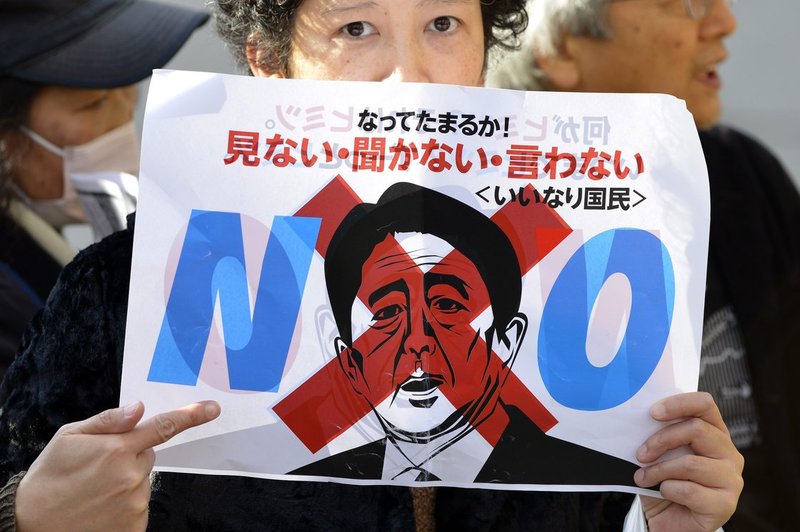
A demonstrator opposes Abe’s secrecy law, Nov 2013
Only a few hours after the final version was introduced in the House of Representatives on November 25, a vote was held on draft modifications and amendments proposed by the opposition. The points at issue, raised by witnesses and speakers at public hearings, were not given ample time for discussion and the bill was passed through to the upper house of parliament. Committee hearings began in the House of Councilors on November 28, and on December 6, 2013, the bill was voted, unchanged, into law.5
This short period of only seven weeks of parliamentary and public consultation was not sufficient to allow full and searching public debate and discussion in Japan that is necessary in dealing with an issue of such importance to the functioning of a democratic society. Japanese civil society and opposition parties, which were not very familiar with these issues, were not able to consult sufficiently with colleagues in other countries or to educate themselves and the Diet members about universal standards. The Government’s numerous inconsistencies and changes in statements during deliberations in the Diet only furthered the confusion.
On July 24th, the Abe Government released draft Standards for Uniform Implementation of the Specially Designated Secrets Act. The draft does provide some useful guidance and clarification, but continues to fall short of international standards. The draft standards were shared with the general public and open for the standard one-month comment period, twice as long as the two weeks allowed for the SDS itself. The comment period is intended to invite suggestions from the general public in preparation for implementation of the act as well as to promote fairness and improve transparency. In responding to the many comments that have been submitted, the Abe Government will have an opportunity to move the legislation closer to international standards.
On the issues of energyanddebateson climate changethe nuclear industrystillappears to promotethesecurity of its services, after human disasterssuch asChernobylorFukushima,whichshould have been sufficienttohighlight theunacceptable humancost of nuclear powerand to considerradical changes that occurred in the cases of someEuropean countries.
In this context,the legend of“zerodeath”obliginglycreated by somescientists,plays a strategicroleinevery disaster that we are hearingabout in Fukushimanow. Even thoughthe authoritiesand citizensof the countries concernedmust faceasudden increase in mortalityof the population.
Three and half yearsafter the accident atFukushima,the number of deathsrelated to theexplosionof the nuclear plantFukushimaDaiichiTepcocontinuesto grow.According to the newspaperTokyoShimbun, more than 1,100deathsare recorded on the11 September.The aging population, relocatedin “temporary” housing, was the firsthit.
The right toshelterwas notgranted, despite recommendations by therapporteurfor HumanRightsof the UN,AnandGrover following his mission to Japanin late 2012. No financial support was allowed for thesepeoplesrelocation. Their healthconditions deteriorate toastimegoes by,while othersdecide to goat their own expensebecause of the environmental instability being so unbearableon a day to day basis.
Fallinginto a spiral ofpovertyaffects some of them who are fighting depressionand alcoholism. The towns ofNamie(333 deaths), Tomioka(250deaths), Futaba(113deaths) andOkuma(106deaths), adjacent to theplant whoseleaks of contaminatedwaterare stillout of control, there has been a total of802deaths, formally identifiedas being significanttothe explosion of the power plant(55were recordedin the past sixmonths).
The newspaperFukushimaMinpopulled thealarm bellson June 21inreporting the statementsof the Ministryof Interioron the number ofsuicideson the rise. Increasing the numberofthyroid cancersshould also be takeninto account in theassessmentof the health consequencesof the explosion.According tothe Commission of Inquiryof Fukushima prefecture, 104 children under18,among the 300000 componentsthe samplewere diagnosedwith cancerof the thyroid.The voicesof epidemiologists, inside and outsideof Japancounteredthe position ofthe departmental committeeofexpertsin Fukushima,that thesecancerswould not beconsistentwiththe explosion.These Fukushima experts“justified”the increasing numberof casesby thedevelopment of existingradiologicaldevices.
Following the same logicof attemptedmoral supportof the people, andthe dual perspectiveof the reopening ofthe evacuation zonein order torehousethe populationas quickly as possibleandscheduledrestarttwopower plantsin 2014, the Ministry Environmentsupports, in a report dated August17thatbelow100mSv/ year, there would beno impacton health.
ProfessorToshihideTsuda, OkayamaUniversity, specializing in epidemiology,questionedpublicly, the investigation of the Medical UniversityofFukushima, saying both thattheWHO report2013notifiesan increase incurrent and futurenumber ofcancer atFukushima.
On the other handthe position of theJapanese governmentindenying thehealth effectsbelow100mSvis a scientificaberration.Professor KeithBaverstock, epidemiologist, formerly of WHO,inan open letter tothe United NationsScientific Committeeon the effects ofradioactive releasesletter(UNSCEAR)is attacking, meanwhile, the2013UNSCEARreportstatingthat this documentwas publishedthree years afterthe survey on whichit is baseddue to conflictsbetweenthe Members oftheCommittee.
One of them, Dr. WolfgangWeiss, opposed to its publication,which concluded thatthe denialof any increasein cancersrelated to theexplosion.However, this reportdoes not negate thefact that the accidentis in no waycomplete,since, according tothesame report from Tepco(May), the radioactivity continues to leakinthe centralPacific Oceanand in theair.
Beforethe doubts expressedby expertsonofficial reports,others whoneverthelesscame from the sameorganizations (WHO,IAEA,ICRP) settleat the 3rdSymposium ofinternational expertstoFukushima,organized by theSasakawaFoundation and theMedicalUniversityFukushimaon 8 and9 September. Titleannouncedsurpassingepidemiologicalquarrelsfinallyreach thesummitspromisingresilienceand reconstruction. AbelJulioGonzález, while a memberof UNSCEAR, has served asa member of theCommitteeonthesafety standardsof theIAEA,it’s all aboutcommunicationand isfirstto calmconcerns“irrational” populationsdue,in his opinion,the term “contamination” which, referring to thepathology,radiationposesa negative image.Idea furtherEmilievanDeventer(WHO)proposes the integrationofworkshopson irradiationandcomparable to theeducationin the formation ofprimary school children.“Anyway, she says, we must meet the challengeofcostbenefit.“
Theseexperts,iftheinsuredvalue of theirpsychologicalassumptions aboutthe fears ofthe publicand how tohandle themshould instead be focused on thedata andthe evidence andconsequences in terms ofpublic healththisbrief surveyhasallowed us to show?
CécileAsanuma–BRICE Research Associateat the Research Centerof the Franco-Japanese Housein Tokyo
It goes on to suggest that the Government is wrongly ploughing funds into chemotherapy which would be more effective if invested in increasing radiotherapy provision.
It says: “The radiotherapy budget is about £350m a year, compared with a cancer drug budget of about £2bn. Forty per cent of major cancers are cured by radiotherapy and just 11% by chemotherapy.”
The Board’s response says: “The report provides both an opportunity and a framework to support the development of radiotherapy services enabling evidence-based treatments to be delivered to patients in a timely manner and using modern, advanced radiotherapy techniques.”
Commenting on the report’s publication, Dr Diana Tait, Chair of the Radiotherapy Board and Vice-President, Clinical Oncology, RCR and consultant clinical oncologist said: “The Radiotherapy Board welcomes this vision document with its aspirations for investment in state of the art radiotherapy equipment, reduced maintenance costs and down-time.
“However, we strongly believe that the proposed rationalisation, standardisation and development of NHS radiotherapy services can only be achieved with the necessary investment in a skilled workforce.
“Therapeutic radiographers, clinical oncologists and medical physicists already work closely together in a clinical setting. The workforce in all three professional groups needs to grow to deliver the Vision for Radiotherapy. The value of this integrated model of working can already be seen in better patient outcomes”
SCoR Professional and Education Manager Charlotte Beardmore commented: “It is really positive that the report sets out a 10 year strategy that will carry on the work started by NRAG and NRIG. It shows a continuing commitment to the drive to deliver the highest quality radiotherapy treatment to all patients.
“This vision puts a national focus on radiotherapy development and innovation, and therapeutic radiographers have an important role to play. As a professional body, the SCoR will continue to work with its partners in the Radiotherapy Board to drive innovation and service improvement.
“As professionals, therapeutic radiographers must continue to work with their clinical oncology and physics colleagues to develop their services and ensure they are delivering high quality patient care.”
Click here to read ‘A Vision for Radiotherapy 2014-2024’
Click here to download the Radiotherapy Board’s response.
Anticipating the release of the report, the Sunday Times printed an article which criticises the Government for breaking David Cameron’s pledge that all cancer patients would have access to advanced radiotherapy techniques by April 2013.
The article suggests that the lack of radiotherapy provision has contributed to lower Cancer survival rates in Britain and highlights some cases where patients who have been refused funding for advanced radiotherapy techniques have died.
It goes on to suggest that the Government is wrongly ploughing funds into chemotherapy which would be more effective if invested in increasing radiotherapy provision.
It says: “The radiotherapy budget is about £350m a year, compared with a cancer drug budget of about £2bn. Forty per cent of major cancers are cured by radiotherapy and just 11% by chemotherapy.”
The Radiotherapy Board has responded to the article. Their letter, which was sent directly to the Sunday Times and added to the comments section of the article, praises the work which the radiotherapy community has already done to meet David Cameron’s target but emphasises the need for more investment.
It adds: “The timeframe of less than six months was challenging. In that time the needs of each of the 50 radiotherapy centres had to be assessed, the necessary facilities purchased, the appropriate workforce trained, and the services to be in effective clinical use.
“This was a complex programme and for anyone with experience of introducing change into a stretched healthcare system, it could be judged as phenomenally successful. The fact that the targets were not fully met for another six months is hardly surprising and should not be seen as a failure of this initiative.”
The letter welcomes the ‘Vision for Radiotherapy’ report as an opportunity to address what still needs to be done and states the three organisations that form the Radiotherapy Board are ready to work with all stakeholders to make the vision a reality.
It concludes by calling for a examination of the way funding is allocated. It says: “There needs to be a major look at cancer services funding with such a disparity between the annual funding for radiotherapy (£350 million) and the cancer drugs fund (more than £2 billion) and the reasons justifying this enormous differential.
“As clinical oncologists deliver both chemotherapy and radiotherapy to cancer patients, this is not about professional competition between two non-surgical cancer treatments. It is a call for a realistic examination of the way precious NHS resources are allocated.”
Click here to read the Radiotherapy Board’s letter to the Sunday Times.
Although the letter did appear in the Sunday Times (9 March) it was edited down to just two short paragraphs.
And while radiotherapy gets 350 million pounds a year (about 700 million dollars), genetic research into non nuclear therapies gets only 100 million a year (for three years)… Why is the UK trying to slow down the pace of genetic research, whilst claiming success? Why isnt the international community working on this project to speed the research – Arclight2011
“……Drugs that target cancer without harming healthy cells and triggering distressing side effects could be a reality in 20 years, claim British scientists.
A landmark project to map 100,000 complete DNA code sequences is set to transform treatment of cancer and rare diseases, meaning chemotherapy could be obsolete within a generation.
David Cameron said it will make Britain the world leader in genetic research as he announced a package of deals worth £300million to carry out the work, expected to be completed by 2017…..”
 brother, John Kelly, died under suspicious circumstances in Dublin Ireland and their fight to bring closure to their brothers harrowing case. A most moving testimony in the third part of the show.


 Image source ;













 nuclear-news