British media reports that a Trident II SLBM launched from HMS Vengeance—a Vanguard-class boomer—went drastically off target this past June. According to those reports, the submarine launched the test missile against a target on the west coast of Africa, however the missile veered toward the continental United States. If the failure is the result of a technical problem with the missile—there could be serious implications for the United States’ own strategic nuclear deterrence, which relies on the Trident II D5 as a key part of its nuclear triad. But that assumes that there is a systemic problem with the weapons.
The United States Navy has not suffered a Trident II failure in recent memory, but there is a small possibility that this British failure could be indicative of defect in the missile. “One failure isn’t enough to conclude we are in the tail end, statistically speaking,” Jeffrey Lewis, Director of the East Asia Nonproliferation Program at the James Martin Center for Nonproliferation Studies at the Middlebury Institute of International Studies at Monterey told me. “Now, you do need to figure out what went wrong. It is possible that it was an age-related defect, or a modification to the missile—which we make all the time—something with the test payload (it was unarmed) or something with the submarine. Maybe the failure reveals a show-stopper of a problem, although the excellent record of the D5 suggests it will be something small.”
However, overall, the Trident II has a remarkable reliability record. “There have been only a few failures—the Royal Navy one in June and perhaps one more a few years ago,” Lewis said. “Even at two out of 163, the D5 is remarkably reliable. There were some additional failures early in the program, but that’s a typical bathtub effect where you get failures at the beginning while you develop the missiles, then failures at the end when it ages out.”
But if there is a systematic problem with the missiles, the U.S. Navy is also impacted.
“The UK leases its D5 missiles out of a common pool shared with the U.S.,” Lewis told me. “They are the same missiles as the U.S. uses. While the U.K. has conducted relatively few firings—this was the first since 2012—the U.S. has conducted 161 successful firings since 1989.”
For the British government, covering up the test failure was likely a stupid public relations move. “Obviously, the Tories, mindful of the vote on Dreadnaught [replacement for the Vanguard-class], covered it up to the avoid the embarrassment. This is a serious mistake in my view. One former Admiral called it ‘bizarre and stupid.’ I think he’s altogether too kind,” Lewis said. “The cover-up gives the impression that the system has major flaws that are being hidden. I doubt it, but how can [British Prime Minister Theresa] May offer her word as bond on that point?”
The entire fiasco is has a negative impact on nuclear deterrence and on the political support for the British Trident program. “That’s bad for deterrence, as well as the political support for the massive investment that Dreadnaught will require,” Lewis said. “It is also unethical, I am old-fashioned that way.”
Meanwhile, the United States Navy—the by far the largest Trident operator and steward of the bulk of America’s nuclear forces—did not comment by press time.
Dave Majumdar is the defense editor for The National Interest.
Washington (CNN)A missile test involving Britain’s Trident nuclear deterrent system ended in failure off the coast of Florida last year, a US defense official with direct knowledge of the incident told CNN on Monday.
The official told CNN that the incident, which happened last June in an the area off the Florida coast used by the US and the UK for missile tests, did not in involve a nuclear warhead.
Britain’s Sunday Times newspaper reported that the missile veered towards the US coast, but the US official told CNN that this trajectory was part of an automatic self-destruct sequence. The official said the missile diverted into the ocean — an automatic procedure when missile electronics detect an anomaly.
A month after the test, the UK parliament approved the renewal of Trident at a cost of £40 billion. Unaware of the failure, members of the House of Commons voted by 472 votes to 117 in favor of renewal.
On Sunday, British Prime Minister Theresa May was asked four times during an interview with the BBC’s Andrew Marr Show whether she knew of the missile failure before the vote. May refused to answer.
Government challenged on CNN report
Forced to make a statement on the controversy in the House of Commons on Monday, British Defense Secretary Michael Fallon said he had “absolute confidence” in Trident but refused to give “operational details” about the test.
CNN published this story just as Fallon spoke, and Mary Creagh, of the opposition Labour Party demanded to know why he would not give any further details.
Citing CNN’s story she said: “The Secretary of State has advised us not to believe everything we read in the Sunday newspapers, but should we believe the [US] official who, while we’ve been sitting here debating, has confirmed to CNN that the missile did auto-self-destruct off the coast of Florida? And if that is the case, why is the British parliament and the British public the last people to know?”
Fallon once again declined to give “operational details”.
Another Labour lawmaker, Chris Byrant, said the reporting by CNN and the Sunday Times demonstrated the need for a full investigation.
“We deplore the leakage of any information about the nuclear deterrent but it is not for me to comment on what may or may not be said by the United States administration,” Fallon replied. “This is our submarine, our deterrent, and it is our responsibility to apply to it the very highest security classification.”
May under fire
The UK government’s refusal to discuss the missile failure has prompted criticism from opponents of the UK’s nuclear deterrent.
Scotland’s First Minister Nicola Sturgeon tweeted: “This is a hugely serious issue. There should be full disclosure of what happened, who knew what/when, and why House of Commons wasn’t told.”
Earlier on Monday, a spokeswoman for May said she was briefed on the Trident test when she came into office.
The Prime Minister and the Defense Secretary are routinely informed about tests and their outcome,
“These are known as a ‘demonstration and shakedown’ test. This test was in June (2016) under the last prime minister (David Cameron). On taking office the current Prime Minister (Theresa May) was briefed on a range of nuclear issues, including this. This test saw the submarine and crew successfully tested and certified.”
OCCUPIED AL-QUDS: Israeli nuclear whistle-blower Mordechai Vanunu has been convicted of violating the terms of his release, more than a decade after completing an 18-year jail term, a court announced on Monday.
Upon his release in 2004, Vanunu was slapped with a series of restraining orders, which he was charged with violating on three counts.
Vanunu was convicted of meeting with two US nationals in Occupied al-Quds in 2013 without having permission to do so, and will be sentenced in two months, a court statement said.
He was cleared of two other charges, one of which related to an interview he gave to Israel’s Channel 2 television in 2015.
Vanunu conviction’s dates back to January 18 but it was not made public until Monday. A sentencing hearing has been set for March 14.
The former nuclear technician was jailed in 1986 for disclosing the inner workings of Israel’s Dimona nuclear plant to Britain’s The Sunday Times newspaper. He spent more than 10 years of his sentence in solitary confinement.
In the Channel 2 interview, Vanunu said he longer has any secrets to spill and just wanted to join his new bride in Norway, theology professor Kristin Joachimsen whom he married at a Lutheran church in Occupied al-Quds in May that year.
He has been barred from emigrating on the grounds that he still poses a threat to national security.
Vanunu, 62, converted from Judaism to Christianity shortly before being snatched by Mossad agents in Rome and smuggled to Israel.
He has twice before been jailed for breaking the terms of his parole. Israel is the Middle East’s sole if undeclared nuclear power, refusing to confirm or deny that it has such weapons.
It has refused to sign the nuclear Non-Proliferation Treaty or to allow international surveillance of its Dimona plant in the Negev desert of southern Israel.
THE office of Prime Minister Theresa May has admitted finally that she was informed about the Trident missile test at the centre of cover-up allegations prior to addressing MPs on the matter.
It’s hard to see how she thought she could brazen it out after refusing four times in quick succession to answer a direct question from Andrew Marr on Sunday.
Her stubborn stonewalling served only to confirm in everyone’s mind that she had definitely been told and that failure to admit this was evidence of a cover-up.
Even now, the official line is that no-one is allowed to know whether a Trident-launched D5 missile veered off course after being launched off the coast of Florida last June.
Logic dictates that this did indeed happen, otherwise the Ministry of Defence would have denied any suggestion of a malfunction.
Defence industry insiders and politicians have lined up since then to declare that tests are held to seek out faults and correct them, which seems quite reasonable.
The major problem with it, however, is that, if the missile had been armed and international relations deteriorated to the extent that the PM was prepared to order Trident missile launches, at least one device would have obliterated Florida rather than delivering its payload wherever she had intended.
Apologetic phone calls to Trump Tower in the wake of a cock-up of that enormity would be unlikely to smooth ruffled feathers or bring back millions of dead US citizens.
Some pro-Trident commentators suggest that demanding information on a weapons system that we all pay for is out of order.
They claim silence is necessary to keep our “enemies” in the dark about how effective Trident is.
But our government has already had to inform other states — not least the US — over what was taking place in the region.
The idea that other nuclear-armed powers designated as our enemies would have been unaware of what happened is beyond risible.
The only people kept in the dark are taxpayers in Britain who fund this grotesquely expensive white elephant.
While the NHS, social care, council housing, infrastructure projects and industrial modernisation cry out for serious investment, our politicians across Parliament prefer to throw good money after bad to maintain an outdated pretence that possessing weapons of mass destruction is essential to be seen as a genuine leading world power.
Tell that to Germany, Japan or any other advanced country mature enough to have moved beyond WMD willy-waving.
Justifying the commitment of tens of billions of pounds — adding up to £205bn — to maintain the pretence of an independent nuclear deterrent depends on two basic falsehoods.
One is that Trident keeps Britain safe from invasion or nuclear blackmail and the other is that it provides employment.
Aside from the reality that there is no power seeking to invade or destroy our country, even were that the case, no British government could launch its nuclear missiles without a White House OK.
And if there was someone deranged enough as US president to authorise a global nuclear exchange, we could all kiss our backsides goodbye in such a scenario.
The myth of Trident guaranteeing defence employment was exposed recently by the Jimmy Reid Foundation, which revealed that just 600 civilian jobs are directly linked.
Its successor programme will safeguard 11,520 jobs, which works out at nearly £18 million a job.
Far better to devote that wasted investment in supporting jobs sacrificed on the austerity altar and to drop the obsession with global posturing.
Pakistan’s fourth heavy water reactor at Khushab nuclear site which allows it to build a larger number of miniaturised plutonium-based nuclear weapons now appears to be operational, a US think-tank has said. The reactor is part of Pakistan’s program to increase the production of weapons-grade plutonium
MOSCOW, January 13. /TASS/. The agreement between the government of Russia and Ukraine on building a third and fourth reactor of the Khmelnitsky nuclear power plant has been terminated, the Russian Foreign Ministry said in an official statement on the official website of legal information.
“The operation of the agreement between the government of Russia and Ukraine on cooperation in building the third and fourth units of the Khmelnitsky NPP, signed in Kiev on June 9, 2010 has been stopped,” the document says.
The agreement between the Ukrainian and Russian governments on cooperation was concluded on June 9, 2010 and ratified by the Ukrainian parliament on January 12, 2011. Under the contract Russia was to fund the reactors’ design and commissioning.
In 2015, the Ukrainian government initiated the procedure of severing the agreement and the parliament supported that proposal on September 16, 2015.
The Khmelnitsky NPP is located in the town of Neteshin. It has two one-thousand-megawatt pressurized water reactors VVER-1000 (commissioned in 1987 and 2004)
Paul Gunter is Director, Reactor Oversight Project for Beyond Nuclear specializing in all aspects of reactor hazardsand security. We discuss France’s Areva Le Creusot forge and the faulty major nuclear reactor parts produced there which are reported to be in use by 19 US nuclear reactors on 11 sites.
LINK to Beyond Nuclear’s petition calling for Nuclear Regulatory Commission action will be posted here as soon as it’s up.
Numnutz of the Week (for Nuclear Boneheadedness):
When is a new nuclear bomb NOT a “new” nuclear bomb? When the government says so, silly! Not even when it comes with – I kid you not – “Dial-a-yield” technology! (SEE: Featured Image at top)
In January 2017, the urban district of tomioka-Cho, which was on the end of the spring. The surface of the ground is 7 Μsv / h.
I don’t know what you’re talking about?
On March 25, 2013, the nuclear evacuation zone in Tomioka was lifted by the central government, and the town was re-zoned into three areas according to different levels of radiation. However, the town government elected to keep the evacuation in place for at least another four years due to the need to rebuild damaged infrastructure
Tomioka was severely affected by the Fukushima Daiichi nuclear disaster, and the 2011 Tōhoku earthquake and tsunami on March 11, 2011. Besides sustaining considerable damage from the earthquake, and the tsunami (which devastated the coastal area), the town was evacuated en masse on the morning of March 12 as it is located well within the 20 kilometer exclusion radius around the damaged Fukushima Daiichi nuclear power plant. Only one man, 56–57-year-old fifth-generation rice farmer Naoto Matsumura, with his dog, refused to evacuate, and remained behind to feed the pets and livestock left behind in his neighborhood with supplies donated by support groups.[3][4][5]
On March 25, 2013, the nuclear evacuation zone in Tomioka was lifted by the central government, and the town was re-zoned into three areas according to different levels of radiation. However, the town government elected to keep the evacuation in place for at least another four years due to the need to rebuild damaged infrastructure. In the zone with the highest radiation levels residents will not be allowed to return home at least for five years. People other than registered residents are banned from entry. This zone, which covers the northeastern part of the town, had about 4,500 people residents. The central part of the town, which used to have 10,000 residents was designated as a residence restriction zone, in which the residents could return during daytime hours but have to leave at night. The remaining zone, which mainly covers southern Tomioka had about 1,500 residents, and remaining restrictions are expected to be lifted.[6]
However, in a survey taken in 2013, some 40 percent of the town’s residents responded that they had decided never to return, and 43 percent were undecided. Concerns over radiation exposure, and the loss of compensation money from TEPCO should they decide to return, coupled with uncertainty over whether or not they could make a living in Tomioka were major issues.[7] https://en.wikipedia.org/wiki/Tomioka,_Fukushima
Alexei Yablokov speaking at a Bellona conference. (Photo: Bellona)
Alexei Yablokov, the towering grandfather of Russian ecology who worked with Bellona to unmask Cold War nuclear dumping practices in the Arctic, has died in Moscow after a long illness. He was 83.
As a member of the Russian Academy of Sciences, he was also the lead author of the seminal 2007 book, “Chernobyl: Consequences of the Catastrophe for People and the Environment.”
The book presented the conclusion that the 1986 Chernobyl disaster was responsible for 985,000 premature deaths – the boldest mortality tally to date – by analyzing 6,000 source materials on the accident.
Bellona President Frederic Hauge Tuesday remembered Yablokov as a friend of three decades standing.
“He was an inspiration, a great friend and a great scientist, one of the world’s most significant environmental heroes,” said Hauge. “To know him and to work with him, someone of such cool and keen intellect is a memory we should all take care of and treasure.”
Alexei Yablokov at a protest. (Photo: Wikipedia)
Yablokov commanded a broad environmental and political mandate in Russia, and published over 500 papers on biology, ecology, natural conservation and numerous textbooks on each of these subjects. He founded Russia’s branch of Greenpeace and was the leader of the Green Russia faction of the Yabloko opposition party.
While serving as environmental advisor to President Boris Yeltsin’s from 1989 to 1992, Yablokov published a searing white paper that detailed the gravity of the radiological threat posed by dumped military reactors and scuttled nuclear submarines in the Arctic.
The catalogue of waste dumped at sea by the Soviets, includes some 17,000 containers of radioactive waste, 19 ships containing radioactive waste, 14 nuclear reactors, including five that still contain spent nuclear fuel; 735 other pieces of radioactively contaminated heavy machinery, and the K-27 nuclear submarine with its two reactors loaded with nuclear fuel.
Yablokov’s white paper spearheaded an epoch of environmental openness that led to more than $3 billion in international aid to Russia to clean up 200 decommissioned submarines and to secure decades of military nuclear waste.
The paper’s findings dovetailed an early Bellona report in 1992 on radioactive waste dumped by the Russian Navy in the Kara Sea.
Hauge said that Yablokov was “the first person in a position of power in Russia who was brave enough to step forward and support our conclusions.”
“He helped open serious discussion about what was a Chernobyl in slow motion,” said Hauge.
Throughout the endless hearings leading up to Nikitin’s eventual acquittal, Hauge said Yablokov’s “calm, collected” knowledge of the Russian constitution helped guide the defense.
“His coolness during the Nikitin case was remarkable,” said Hauge on Tuesday. “He really emphasized that the constitution was the way to Nikitin’s acquittal.”
A nuclear submarine being dismantled. (Photo: Bellona Archive)
In 2000, Russia’s Supreme Court agreed, and acquitted Nikitin on all counts, making him the first person to ever fight a treason charge in Russia and win.
Yablokov was a constant luminary at Bellona presentations in Russia, the European Union, the United States and Norway, most recently presenting his 2007 book in Oslo on the 30th anniversary of the Chernobyl disaster.
He was also a tireless defender of environmental activists in Russia, suggesting at a 2014 Bellona conference in St. Petersburg that ecological groups should publish a list of those government officials who harass them.
“We must constantly support our comrades who have been forced to leave the country or who have ended up in jail on account of their environmental activism,” he told the conference.
That same year, Yablokov championed the presentation of a report on environmental violations that took place at Russia’s showcase Winter Olympics in Sochi.
“He was a friend and advisor to us from the beginning and in a large part we owe the success of our Russian work to his steady advice and guidance,” said Hauge.
Yablokov’s death was mourned across the spectrum in Moscow. Igor Chestin, head of the WWF called Yablokov Russia’s “environmental knight.”
Valery Borschsev, Yablokov’s colleague in the human rights faction of the Yabloko party said of him that “he was a person on whom the authorities had no influence.”
President-elect Donald Trump’s latest move regarding the United States’ nuclear arsenal is likely to stoke fears both at home and abroad.
Gizmodo reported Monday afternoon that the Trump transition team has apparently fired the National Nuclear Security Administration’s (NNSA) head and deputy chief, effective immediately. The NNSA is an agency within the U.S. Department of Energy (DOE) that “maintains and enhances the safety, security, and effectiveness of the U.S. nuclear weapons stockpile.” Citing an unnamed source within the DOE, Gizmodo reported it could be well into the spring or summer when the U.S. has a nuclear weapons chief again:
Trump has ordered Under Secretary for Nuclear Security Frank Klotz and his deputy, Madelyn Creedon—both Obama appointees—to leave their posts, even if it means no one is in charge of maintaining the country’s nuclear weapons. According to our Energy Department source, Trump’s team has yet to nominate anyone to succeed them. Since both positions require Senate confirmation, if could be months before their chairs are filled. And the vacancies may extend beyond the leadership roles.
While the Trump administration is expected to hire an estimated 4,000 people to work in the executive branch, and while political appointees of a previous administration traditionally resign from their positions at 12 PM on Inauguration Day (January 20), the NNSA is one of a select few federal agencies whose staff traditionally remains after previous appointees have left, given the world-ending capability of the U.S. nuclear arsenal, which is said to be up to 7,700 warheads strong. President Obama kept George W. Bush’s NNSA chief into his second term.
January 20 will mark the first time in the NNSA’s history that the agency has been without a head. President-elect Trump has so far not said who he would appoint to replace the two NNSA officials.
“I’m more and more coming around to the idea that we’re so very very fucked,” Gizmodo’s source said.
Tom Cahill is a writer for US Uncut based in the Pacific Northwest. He specializes in coverage of political, economic, and environmental news. You can contact him via email at tom.v.cahill@gmail.com,
Shocking images from Moria refugee camp of migrants forced to live in the snow (Lesbos, Greece)
Disgraceful images to anyone calling themselves human has leaked out of Moria refugee camp in Lesbos island, Greece, exposing the dreadful and inhumane conditions that migrants are being forced to endure in order to survive in – 5°C, sleeping in tents, on the frozen ground, under heavy snowfall. The severe weather conditions had been foreseen and expected for many days before and yet hundreds of people that sacrificed everything to escape to “civilized” Europe have been left to their own demise.
The footage itself has been captured on January 7, 2017 by an anonymous refugee, as a desperate message to the world about the appalling conditions provided by the UNHCR, that in turn contradict the ridiculously false statement of Greek Migration Minister, Yiannis Mouzalas, on January 5, 2017 that “there are no refugees or migrants living in the cold anymore. We successfully completed the procedures for overwintering, with the exception of 40 tents left in Vyiohori and another 100 in Athens”.
“This is not normal, we are human beings, I know of dogs who have a better life”, the refugee reiterates in disbelief of the torture that so many people in need are being forced to live in the outskirts of “Fortress Europe”.
A Chinese nuclear-powered submarine was reportedly docked at a port in Pakistan, raising concerns across the border in India that it could have been monitoring the movement of its warships more closely than ever, reported NDTV.
Showing an image on Google Earth of Chinese nuclear attack submarine docked in the harbour in Karachi in May last year, the report proved that Beijing might be scrutinizing Indian warships’ movements far more closely than earlier.
The image was of Chinese navy type 091 “Han” class fast-attack submarine, the first class of nuclear-powered submarines deployed by China.
The report said the Indian Navy has pointed out that “advance military assets” like submarines aren’t “appropriate” for taking on Somali pirates who terrorise the seas in “small skiffs”.
Unlike conventional submarines, nuclear-powered submarines have an unlimited range of operations since their nuclear reactors rarely require to be refuelled.
That means the submarines, which are armed with torpedoes and cruise missiles, can be deployed underwater for extended durations where they are difficult to track.
Speaking on the presence of the Chinese Navy’s ships and submarines in Pakistan in December last year, Navy Chief Admiral Sunil Lanba had said that India was keeping a close eye on them.
“We have capability and assets to take on any force which is deployed, and if and when this happens, we have plans in place to tackle it,” the Navy Chief had said.
HUNTSVILLE, AL–In an exclusive interview, Huntsville native and Air Force General John Hyten, the commander of the United States Strategic Command spoke to Redstone Alabama’s Jeff Martin about growing up in the North Alabama city, what’s ahead for STRATCOM, and the future of nuclear weapons.
General Hyten graduated from Huntsville’s Grissom High School in 1977, and then went to Harvard, graduating in 1981 with a commission in the United States Air Force. He says that growing up in Huntsville inspired him to join the space program, and that the Air Force was a way to do it, adding that he “started that adventure in 1977, and I’m still going. So I think the Air Force got it’s money worth.”
Speaking in an office overlooking Redstone Arsenal’s Von Braun Complex, which is the home of the Missile Defense Agency and the Army Space and Missile Defense Command/Army Forces Strategic, General Hyten talked about that inspiration, saying “My dad came here with the Apollo program in 1965. And my dad got to work on the Saturn V and I got to see the F-1 engine test here. I got to go to the Cape and watch them build up the infrastructure for the Saturn V. I got to meet Wernher Von Braun when I was in fifth grade. Those things shape who you are and what you want to do.”
After graduating Harvard, General Hyten went on to numerous assignments, including working on anti-satellite technology at Redstone Arsenal. However, the majority of his career has been spent on leveraging space systems for military use.
“A lot of people don’t realize that they don’t get gas without the space systems that the Air Force provides. We don’t go anywhere in the world and conduct military operations without space”, he said.
Before taking over his current job at US Strategic Command, he was the commander of Air Force Space Command, based in Colorado. In November, he took over Strategic Command, which commands all of America’s strategic nuclear forces, cyber weapons, and space operations.
At that ceremony, Secretary of Defense Ash Carter described Hyten as someone who’s “helped shape thinking at our government’s highest levels about the threats we face in space”. He also told the crowd that Hyten “has developed a keen understanding of the current and future operational needs of our DoD space force and how to acquire the capabilities we need. His experience and expertise will be a tremendous asset to STRATCOM as we prepare and face future threats in all domains.”
US Strategic Command has a key mission. Descended from the Cold War-era Strategic Air Command, STRATCOM forces are deployed around the world, on nuclear submarines, flying heavy bombers and in missile silos across the American West.
“A lot of people are scared about nuclear weapons, I don’t think anybody likes nuclear weapons. But I know what a world looks like without nuclear weapons, because my father in law fought in World War II. And from 1939 to 1945, when we didn’t have a strategic deterrent, the world killed somewhere between sixty and eight million people in those six years. That’s about 30,000 people a day. Our job is to prevent that from ever happening again”, General Hyten said when asked about his command’s role and the importance of having nuclear weapons.
But in order to carry that mission out, General Hyten argues that modernization is needed.
“I still have to advocate for them, because if we don’t build them, because if we don’t build those, we’re in a significant problem. Not now, but about a decade from now, some really significant risks could start”, he said.
The risks he’s talking about could be severe. The newest ballistic missile submarine (SSBN) was commissioned in 1997, the newest land based intercontinental ballistic missiles (ICBMs) were built in the 1970s and the Air Force is still flying 1950s and 1960s era B-52 bombers.
Just last week, the Pentagon announced that work on the Columbia-class submarines, the replacement for the current Ohio-class ballistic missile submarines, had hit Milestone B, which means detailed design work could begin. That announcement confirmed that the projected construction start date of 2021 was on track. That news was big to General Hyten, but he cautioned that if the program gets delayed at all, the consequences could be severe.
“If the Ohio Class Replacement program gets delayed a year, every year that it gets delayed, I lose as the commander, or my successor, I’ll lose one submarine from the strategic force. Two years go by, two submarines drop out. At some point, you lose the sea element of that triad”, he said.
The “triad” he’s referring to is the strategic deterrent triad. It had three “legs”. Sea-based nuclear ballistic submarines provide one, nuclear-armed bombers provide a second, and nuclear-tipped ICBMs provide a third. Each is separate from each other.
Beyond the sea-launched leg of the triad, other modernization is in the pipeline. The Air Force is working on the B-21 Raider, designed to replace aging B-52s, the Long Range Stand Off Missile (LRSO), designed to replace current air-launched cruise missiles, and the Ground Based Strategic Deterrent (GBSD), which will replace the nation’s ICBMs. Boeing’s proposal for the GBSD is managed in Huntsville.
When asked about those programs, General Hyten seemed confidant about the programs, saying “We’re in a good place on the bomber right now. the work is under way. We need to have some decisions made on the long range, the next cruise missile, the long range missile, we need to have decisions made there. Hopefully those will be made this year. Its interesting though, as the STRATCOM commander, my job is to advocate for those capabilities. The services, the navy and the Air Force in these cases, are actually the people who have to build that. I’m the combatant commander that operates that. But I still have to advocate for them, because if we don’t build them, because if we don’t build those, we’re in a significant problem.”
Missile defense is also a hot topic now, especially with North Korea supposedly preparing to test their own ICBM. America’s missile defense forces are under the US Strategic Command, and the command elements are based on Redstone Arsenal. The operational units are based around the world, some of them in Alaska.
” If you ever look at a map and see how far north Fort Greely is in Alaska, and it’s somewhere between forty and fifty below zero there today. You think it’s cold here in Huntsville, when it’s cold and it may snow half an inch, well, they’re under a thick blanket of snow and its forty below zero. You have soldiers standing watch in case there is a launch against the United States, we have a defensive system, that will shoot it down. That’s their job to defend it all this time. and it’s not just the interceptors, we have a series of sensors, radars at the far end of the Aleutian islands in Alaska, radars in the Pacific, radars in Alaska proper, that are there to sense the capabilities. Then we have overhead space assets that are the bell-ringers, that see the event when it first happens. cue all of those capabilities and its all integrated together through an integrated command and control process to make sure that we’re not surprised, that we can defend the United States against those kind of adversaries that might want to do us harm with an ICBM. That cannot be allowed to happen”, he said.
But in order for modernization to happen, a federal budget is needed, not another continuing resolution, General Hyten argued, saying that CR’s are not efficient ways of spending taxpayer dollars. “It’s just not a good way to do business. somehow, some day, we have to get past that, and start having normal budgeting processes”, he said.
“I’d like to make sure that we spend the money taxpayers give us in the most efficient way possible. and right now with the way the budget is, we don’t do that”, he added.
The U.S. is already secure, and doesn’t need to further expand its nuclear arsenal. Expanding the U.S. nuclear arsenal could rather excite a nuclear race which America might not win. Therefore, the Trump administration should see the nuclear danger for what it is, and work with other countries for nuclear disarmament.
U.S. president-elect Donald Trump twittered in late December that the United States “must greatly strengthen and expand its nuclear capability until such time as the world comes to its senses regarding nukes”. Later, he declared: “Let it be an arms race,” and asserted that the U.S. would win it. It seems he is committing a major mistake.
Like any other country, the U.S. deserves its legitimate national security. The U.S. first developed nuclear weapons through the Manhattan Project. And since the program was aimed at both keeping pace with the feared nuclear weapons development program of Nazi Germany and to counter imperialist Japan’s aggression, it gained legitimacy.
But the U.S. has often abused its nuclear policy. By flexing its nuclear muscles, the U.S. pushed the Soviet Union to expedite its nuclear weapons program in the late 1940s. By threatening China with a nuclear attack during the Korean War (1950-53), it forced Beijing to launch its own nuclear weapons program in the mid-1950s. And by waging an unjustified war in Iraq, the U.S. taught the Democratic People’s Republic of Korea the importance of possessing nuclear weapons.
Despite the several rounds of nuclear disarmament, the U.S. still deploys thousands of nuclear weapons and has more in its vaults. Russia has built a nuclear arsenal as powerful as the U.S.’, and China seems to have developed a cost-effective minimum deterrence to drive sense into potential rivals.
When Trump promised to strengthen the U.S.’ nuclear arsenal, in order to make other countries sensible, one wondered which countries Trump had in mind, and how much credit or damage his message would bring to the U.S. and the world. Did he mean to have a nuclear arms race with Russia, especially because Moscow is the only other power to have an equally massive, if not bigger, nuclear arsenal than the U.S.?
But U.S. President Barack Obama realistically “reset” Washington’s relations with Moscow in 2009 despite the Russia-Georgia conflict in 2008. And after Crimea’s inclusion into Russia in 2014, president-elect Trump seems interested in again “resetting” relations with Russia. This contradicts Trump’s own promise of “expanding nuclear weapons credibility”, and could lead to another Georgia- or Ukraine-like crisis.
Or, does Trump have an eye on China? Over 60 years ago China decided, despite its poverty, to go nuclear given the U.S. nuclear blackmail, and succeeded. Before China tested its nuclear weapons, the U.S. made a dozen nuclear threats against China, but after Beijing detonated its first nuclear device in 1964, the U.S. has not issued any open nuclear threats, vindicating the power of China’s own nuclear deterrence.
China has maintained a practical nuclear strategy of minimum deterrence, which has both boosted China’s national security and made it avoid an unnecessary nuclear arms race. At a time of resource scarcity, China’s approach was certainly a smart one.
But times have changed. The World Bank has said that, in terms of purchasing power parity, China became the largest economy two years ago. As long as China doesn’t perceive an increase in external threat, Beijing could live with its tradition. But if Trump forces other countries in a nuclear arms race, he could wake up to find that the U.S.’ relative nuclear credibility declining.
Rather than winning a nuclear weapons race, the U.S. national security could weaken vis-a-vis even the DPRK. Before the DPRK conducted its first nuclear test, the U.S. didn’t face any physical nuclear threat from Pyongyang. Now, given its rising capability to build long-range ballistic and sea-launched ballistic missiles, even the DPRK could deter the U.S. to certain extent, rather than merely the other way around. If Trump forces the DPRK into an arms race, the U.S. could find itself facing more risks.
The U.S. is already secure, and doesn’t need to further expand its nuclear arsenal. Expanding the U.S. nuclear arsenal could rather excite a nuclear race which America might not win. Therefore, the Trump administration should see the nuclear danger for what it is, and work with other countries for nuclear disarmament.
The author is a professor at, and associate dean of the Institute of International Studies, Fudan University.


 Alexei Yablokov speaking at a Bellona conference. (Photo: Bellona)
  Alexei Yablokov at a protest. (Photo: Wikipedia)
 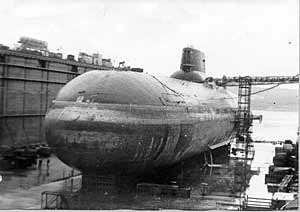 A nuclear submarine being dismantled. (Photo: Bellona Archive)






 nuclear-news