Breaking – U.K. nuclear safety regulations place too low a value on human life
A new report from Prof, Philip Thomas claiming that residents should have not been moved from contaminated areas of Fukushima. The study has some problems and is relevant to this article.. https://phys.org/news/2017-11-homes-abandoned-big-nuclear-accident.html#jCp

“It is difficult to see how any safety case presented from now on that relies in any way upon the UKVPF, whether on the roads, the railways or in the nuclear industry, such as the new nuclear power station at Hinkley Point C in Somerset, could stand up to test in court. More modern and accurate methods exist, but the regulators are not using them.”
Published 13 February 2017
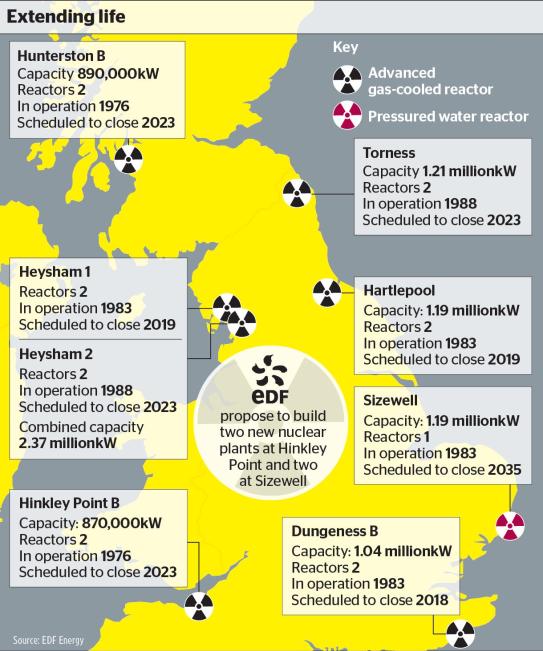
New research has shown that the benchmark used by the U.K. Office for Nuclear Regulation for judging how much should be spent on nuclear safety has no basis in evidence and places insufficient value on human life. The review suggests it may need to be ten times higher — between £16 million and £22 million per life saved.
New research has shown that the benchmark used by the U.K. Office for Nuclear Regulation for judging how much should be spent on…
View original post 550 more words
Resistance to Resilience: ISO/RTO Response to DOE’s NOPR
…Fukushima illustrates the folly of nuclear resiliency in the face of earthquakes and tsunamis. Cyberattacks are similarly agnostic as to fuel type, having targeted both coal and nuclear power plants in the U.S. as well as abroad. Therefore, the premise that baseload units with on-site fuel supply contributes to resiliency is fundamentally flawed…. … … Stripping away the ill-defined concept of resiliency, it is clear that the DOE NOPR simply represents a desire to provide out-of-market support to uneconomic coal and nuclear plants. The ISOs/RTOs have responded accordingly, laying out the arguments required to protect the competitive electricity markets they operate and set the stage for future legal action to protect state rights. It will be a short wait to see whether they make any progress in this first round….
Department of Energy, 18CFR Part 35, Docket No. RM17-3-000
At the end of September, the Department of Energy issued a Notice of Proposed Rulemaking (NOPR) that would direct the Federal Energy Regulatory Commission (FERC) to incorporate the value of resiliency into wholesale electricity prices under its authority to ensure “just and reasonable rates.” Comments were submitted within four weeks and FERC is expected to act on the proposal by December 11. While coal and nuclear plant owners generally are supportive, submissions by independent system operators (ISOs) and regional transmission operators (RTOs) reflect a consensus that the proposal should be rejected. Their reasoning is summarized below.
Variance in Resilience
The ISOs/RTOs unanimously agree that there is no single definition of resilience that can be applied to all regions. Nearly all criticized DOE’s attempt at a definition—that is, “the ability to reduce the magnitude or duration of a disruptive event”—as being amorphous, vague and unworkable. This lack of a fundamental definitional starting point creates a quandary for FERC which will either have to: (1) refine the definition to include a level of detail that can be enforced; or (2) assign the task of definition, measurement and timing to market participants.
If FERC attempts to create a single definition, it will find that the “one-size fits all” approach is untenable given regional differences. As highlighted in the comments, distinctions extend beyond an evolving generation mix that varies by market to variation in the types of “disruptive event” that can occur; California has fires while New England has ice. Many of the ISOs/RTOs posit that they should decide which resources are necessary and incentivize for reliability and resiliency given the characteristics of their region.
Insignificance of Resilience
Every ISO/RTO claimed that increased planning efforts and investments in transmission and distributed resources are more beneficial to ensuring grid resilience compared to fuel assurance. For example, the polar vortex in New England and PJM resulted in frozen coal piles, making the resiliency value of a 90-day fuel supply worthless. Similarly, California’s forest fires and Texas hurricane flooding disable generating units in their path regardless of the fuel type. Fukushima illustrates the folly of nuclear resiliency in the face of earthquakes and tsunamis. Cyberattacks are similarly agnostic as to fuel type, having targeted both coal and nuclear power plants in the U.S. as well as abroad. Therefore, the premise that baseload units with on-site fuel supply contributes to resiliency is fundamentally flawed.
Resiliency Redundancy
Many noted that current market designs already value resources for their reliability and resiliency attributes, augmenting revenues through transmission planning, performance pay programs, long-term capacity markets, and reliability evaluations. Baseload generators already are compensated for their reliability and availability under FERC-approved market rules. Furthermore, additional price formation initiatives already are underway given anticipated changes in economics, policy and generation mix.
Inefficient or Resilient
Nearly all ISOs/RTOs argue that the NOPR will negatively affect wholesale market design and price formation. Compensation for cost-of-service will need to take place outside of the market, without impacting real-time or day-ahead prices—a task easier said than done as many ISOs/RTOs already are navigating the impact of state policies on competitive markets. In addition, cost-of-service payments fail to create performance incentives or place any obligations on baseload generators, creating an inherent inconsistency with resiliency goals. Compliance with DOE’s proposal also could conflict with regional and state environmental goals.
No Urgency for Resiliency
The NOPR requires a rulemaking within 60 days of posting and would require competitive wholesale markets to be in compliance within thirty days after FERC’s ruling. The ISOs/RTOs unanimously agreed that the proposed timeline is unreasonable and may lead to unintended consequences. More pointedly, the NOPR fails to show any evidence that the hastened timeline will help with resilience. The DOE report notes that there currently is not a problem, but that it could become an issue over the longer term. With plenty of time to engage in the formal stakeholder processes required by the market rules, the ISO/RTO comments unanimously request that the deadlines listed in the DOE’s NOPR be postponed.
Stripping away the ill-defined concept of resiliency, it is clear that the DOE NOPR simply represents a desire to provide out-of-market support to uneconomic coal and nuclear plants. The ISOs/RTOs have responded accordingly, laying out the arguments required to protect the competitive electricity markets they operate and set the stage for future legal action to protect state rights. It will be a short wait to see whether they make any progress in this first round.
About the author: Tanya Bodell is the Executive Director of Energyzt, a global collaboration of energy experts who create value for investors in energy through actionable insights
Radioactive waste data removed from Tennessee state website
http://www.sunherald.com/news/business/article185800093.html
The Tennessee Department of Environment and Conservation has removed data from its website about the amount of low-level radioactive waste going into landfills.
The information had been open to the public for years before the department said it is confidential, The Tennessean reports .
A 2007 state law cites the Atomic Energy Act and an agreement with the federal Nuclear Regulatory Commission on what information to keep confidential, department spokesman Eric Ward said. However, commission spokesman David McIntyre said he knows of no law or rule that makes confidential the location and quantity of waste.
Ward said in a Friday email the department “is working toward a solution,” and it intends “to have the authority to soon begin providing that information again.”
Low-level radioactive waste includes contaminated materials from commercial reactors, such as lab supplies, machine parts, power plant equipment and debris from decommissioned nuclear plants.
Tennessee has more radioactive waste processors than any other state in the nation, according the department. The processors can treat radioactive waste before it is disposed in landfills as low-level waste.
The waste deposited in landfills does not pose a danger to public health or the environment, according to the department.
More than 5 million pounds (2 million kilograms) of low-level radioactive waste has been released into state landfills between 2014 and 2016, according to information the department no longer publishes but was accessed through cached versions of its website.
“The transparency is not there and the public is being left in the dark,” Tennessee Environmental Council board member Don Safer said. “Low level does not mean low risk.”
San Onofre Utility regulators used private lawyers to challenge probe
A report says California Public Utilities Commission lawyers sought to suppress court-approved search warrants after utility regulators promised they would cooperate with a state criminal investigation.
The San Diego Union-Tribune cites court documents unsealed Monday that show commission lawyers opposed providing records to investigators as required by three different warrants approved in 2015 and 2016.
The warrants were issued after judges found probable cause that ratepayers were illegally hit with billions of dollars in costs related to the San Onofre nuclear plant failure six years ago.
The newspaper says commission lawyers argued that prosecutors failed to properly serve the warrants — even though they agreed to the process in advance.
November 21, 2017 11:25 AM
http://www.sacbee.com/news/business/article185825503.html
California Public Utilities Commission lawyers sought to suppress court-approved search warrants after utility regulators promised they would cooperate with a state criminal investigation, according to a newspaper report.
The San Diego Union-Tribune cited court documents unsealed Monday that show commission lawyers opposed providing records to investigators as required by three different search warrants approved in 2015 and 2016.
The warrants were issued after judges found probable cause that ratepayers were illegally hit with billions of dollars in costs related to the San Onofre nuclear plant failure six years ago.
UK made ‘grave strategic errors’ in Hinkley Point nuclear project
MPs say consumers were ‘dealt a bad hand’ and warn against more nuclear power stations
“No part of government was really championing the consumer interest.”
More information can be found here.
https://www.ft.com/content/cd7227ca-cec5-11e7-b781-794ce08b24dc
an hour ago Andrew Ward, Energy Editor
British MPs have urged the UK government to rethink the economic case for new nuclear power stations after making “grave strategic errors” in the Hinkley Point project. In a report published on Wednesday, the Commons public accounts committee accused the government of neglecting consumer interests and failing to push for a better deal with the French and Chinese investors who are building the £20bn nuclear plant at Hinkley Point in Somerset. The committee said consumers had been “dealt a bad hand” by the government’s agreement to lock UK households into buying expensive electricity from Hinkley for 35 years. “Its blinkered determination to agree the Hinkley deal, regardless of changing circumstances, means that for years to come energy consumers will face costs running to many times the original estimate,” said Meg Hillier, the Labour MP who chairs the committee, which is often called parliament’s spending watchdog. Hinkley is intended to be the first in a series of new nuclear plants in the UK, as part of efforts to replace large amount of old generating capacity due to be decommissioned in coming years. However, the cross-party public accounts committee urged the government to “re-evaluate and publish its strategic case for supporting nuclear power before agreeing any further deals”.
Rise of cheap renewables disrupts EU energy plans for 2030
By Frédéric Simon | EURACTIV.com
The rapid fall in costs of wind and solar power, combined with flexible demand technology, could replace “more than half” of coal and gas-powered electricity in Europe by 2030, according to new research published on Tuesday (21 November).
A report from consultants Artelys, to be unveiled in Brussels today, updates the cost projections that form the basis of the European Commission’s modelling for the EU’s energy and climate change goals up to 2030.
According to the analysis, the EU could confidently opt for a 61% share of electricity generated from renewable sources by 2030, instead of the 49% currently foreseen in EU projections.
This would translate into an additional 265 million tonnes of avoided CO2 emissions, and savings of €600 million per year in energy system costs, the research found.
In fact, the falling costs of wind and solar power, combined with demand flexibility, means that it’s actually cheaper to go for 61% renewables and to decrease today’s level of gas generation by around 50%, the report found.
“The drop in the cost of clean technology has gone far beyond all expectations,” said Laurence Tubiana, the CEO of the European Climate Foundation (ECF), which commissioned the research. “The economics are now decisively tipping in favour of clean energy, making an even stronger case for higher EU ambition for 2030,” she added.
Tubiana’s words were echoed by Francesco Starace, the CEO of Italian power utility Enel, who recently took over the presidency of Eurelectric, the European power industry association.
In a recent interview with EURACTIV, Starace said progress in renewable energy technology had been “faster and deeper than expected” when Eurelectric last made projections for 2050.
“Today, [renewables] are clearly the winner of the cost per kilowatt hour battle,” said Starace, adding that carbon neutrality in the power sector was now achievable “certainly earlier than 2050”.
Clean energy package outdated before it is adopted
The report comes as EU lawmakers discuss proposals for a 2030 package of clean energy laws, which contain a 27% target for renewables in overall energy consumption and a 40% reduction in CO2 emissions.
But according to the research, these goals look outdated before they are formally adopted, and could even slow down the transition to a cleaner energy system. Current EU assumptions indeed foresee a carbon price of €27 per tonne of CO2 for 2030, a level considered insufficient to trigger a decisive shift away from coal generation.
“The European Commission seems to chronically underestimate just how great a positive impact sustainable renewable energy can have,” said Imke Luebbeke at the WWF European Policy Office.
“As this report shows, we can and must pull the plug on coal and crank up renewables way beyond the proposed 2030 target levels for the sake of Europeans’ health, taxpayers’ wallets and our shared climate,” she said.
Contacted by EURACTIV, the European Commission acknowledged the relevance of the report’s findings but declined to comment on the implications on the EU’s 2030 goals. Maroš Šefčovič, the EU Commission Vice-President in charge of the Energy Union, is expected to deliver a speech today at an event in Brussels where the report will be officially presented.
Displacing “more than half” of coal and gas
One of the report’s most striking findings is that cheap renewables and flexible demand could replace more than half of European coal and gas generation by 2030. As a consequence, power sector emissions could be be reduced almost twice as fast – from -30% to -55% in 2030 compared to 2015 levels.
And even with large shares of coal retiring, gas generation could still be cut in half by 2030, from 514 TWh today to 259 TWh, according to the research. This is because upgraded electricity grids and flexible demand solutions are expected to provide for more system balancing capacity at lower cost, decreasing the “bridging role” of natural gas in the transition to a carbon neutral power sector.
“Cheap renewables push out gas as well as coal,” said Jonathan Gaventa, director at E3G, a climate change think tank. “European countries should feel confident that they can phase out coal power without increasing energy security risks or new dependence on imported gas,” he said.
“Cost-effective renewable power, demand-side flexibility and electricity grids can pick up the slack. Infrastructure planners need to get to grips with this new reality, or they risk wasting money on utterly unnecessary gas pipelines and LNG terminals,” Gaventa said.
The massive potential of power grids to reduce CO2 emissions was confirmed by ENTSO-E, the European association of transmission network operators. According to ENTSO-E’s 10-year network development plan, published in 2016, grids can deliver a reduction of CO2 emissions in the range of 50 to 80%, depending on the vision, notably due to increased sharing of resources across borders.
This means a corresponding decrease in the “need for extra, often polluting generation plants” that are needed for back up electricity generation when the wind is not blowing or the sun not shining, said Claire Camus, head of communication at ENTSO-E.
Structural overcapacity
On the whole, the rise of cheap renewables, combined with greater end-use efficiency and better grids, is confronting Europe with a structural overcapacity in power generation, the report warned, calling on policymakers to adopt policies for an orderly phase out of coal.
“Phasing out depreciated, high-carbon generation assets is critical to making space for investments in renewable electricity and moving to a cleaner, smarter and cheaper energy system,” the report said. It did however warn of “a high likelihood” that decision-makers will continue to rely on “out-of-date understanding of power market economics when deciding on EU and national energy policies”.
This was confirmed by Francesco Starace of Eurelectric in his earlier interview. “I think the industry has lost some time in trying to resist what happened in technology, in denying what happened in the environment, so we had to catch up.
“We now see it clearly,” he said.
Whitehouse Remarks in EPW Subcommittee on Clean Air & Nuclear Safety (Cost/benefit issue)
Senator Whitehouse questions Davis Henry of Henry Brick Company, Christopher J. Kersting of Specialty Equipment Market Association (SEMA), Paul Williams of the United States Stove Company, Emily Hammond of the George Washington University Law School, and John Walke of Natural Resources Defense Council.
“Nuclear Prisoners” by Hisao
Lyrics: (in Japanese and English)
ウランから
プルトニウムへ
核実験
広島
人体実験
長崎へ
福一の プルサーマル 三号機
最初の
寿命二十年
いつの間に
四十年
人工地震
三一一
風評で 被曝体験 尚も且つ
Nuclear test
from uranium
to plutonium
Hiroshima
human experiments
to Nagasaki
Hukuichi’s pluthermal unit 3
First life
20 years
ago
40 years?
Artificial quake
311
Exposure experience still in reputational
東京と
京都除外の
原爆は
起爆なら
空襲警報
鳴らぬ筈
金儲け 壊す目的 再稼働
The Atomic-bombs
excluding Tokyo n’
Kyoto
Air raid alarms
shouldn’t ring if
detonated!
Money making purpose reactivated to break
ウランから
プルトニウムへ
核実験
First Nations and Allies Unite for a Non-Nuclear Ontario
On Nov. 8 – 9, 2017, First Nations and allies united to call for a phase-out of Ontario’s nuclear stations and a move to a 100% renewable future. They called on Premier Wynne to make a deal with Quebec to purchase its suplus renewable water power at a fraction of the cost of extending the Pickering or rebuilding the Darlington Nuclear Stations. Please sign the petitions: http://www.BuyQuebecPower.ca and http://www.ClosePickering.ca
Climate Without Borders: Meet a Meteorologist Who Dares to Say “Climate Change” in Weather Reports
As Democracy Now! broadcasts from the UN climate summit in Bonn, we look at how climate-related Hurricanes have devastated parts of the United States, but weather presenters still rarely utter the words: “climate change.” We speak with Jill Peeters, a weather presenter in Belgium who is also the founder of Climate Without Borders.
The consensus is clear: there is no upside to a nuclear Brexit Clare Moody
Source: https://www.environmentguru.com/pages/elements/element.aspx?id=5769869
© EnvironmentGuru.com [PAYWALL]
McClaughry: A global renewable energy power play
by John McClaughry Here’s an interesting insight into the arcane world of global renewable energy politics, based on the October 30 column in Forbes by widely-read energy blogger Rod Adams. Last week the annual “Conference of Parties” (COP23), the consultative body for the United Nations Framework Convention for Climate Change, convened in Bonn, Germany. For the past eight years a business-oriented Sustainable Innovation Forum (SIF) has been held alongside the COP, cosponsored by the U.S.-led advocacy group Climate Action and the UN Environment Program (UNEP).
This year the Forum accepted the World Nuclear Association as a Gold Sponsor. But then UNEP demanded that the Forum reject any participation by the nuclear trade association. Its spokesman said “we prioritise the renewables revolution, such as wind and solar energy…Our work on the nuclear sector is limited.”
It’s limited all right – to zero.
Adams reports that among the gold-level sponsors that SIF accepted were BMW and Toyota, whose profits come from fossil fuel burning engines, and Orstead, a utility that operates coal-fired power stations. Why did UNEP not veto those?
The answer seems to be that the auto manufacturers and utility acknowledge that their use of petroleum and coal is destroying the planet – UNEP’s mantra – and they’re seeking absolution for their guilt. And nuclear? The nuclear industry is proud that it emits virtually no carbon dioxide – no guilt, and no absolution needed.
Beneath this theological level, UNEP (along with the American climate change organizations) is passionately anti-nuclear. Why? Because the prospect of clean, safe, cheap 21st century nuclear electricity not only threatens to displace coal and petroleum, which is fine with the activists, but it also threatens to put an end to the subsidy-driven wind and solar carnival, which is not.
Adams quotes Kirsty Gogan, global director of Energy for Humanity, as saying “by blocking nuclear from the conversation, and insisting on a conditional, renewables-only, response to climate change, UNEP have displayed a dangerous ideological agenda that undermines its own credibility.”
But there are some climate change warriors who urge greater reliance on nuclear power. The most prominent is renowned climatologist Dr. James Hansen, the now-retired head of NASA’s Goddard Institute for Space Studies. He is the man who made “global warming”, later rechristened “climate change”, a global issue, in his 1988 testimony before a Senate Committee including his soon-to-be most ardent disciple, Al Gore.
Hansen is so passionate a believer in fossil-fuel-caused climate change that he has been arrested in protests against mountaintop coal mining and the Keystone pipeline. But he understands that attempting to maintain an acceptable level of civilization by relying on activist-approved renewables is, to use his term, “crazy”.
In 2013 Hansen co-authored an open letter to policy makers, which stated that “continued opposition to nuclear power threatens humanity’s ability to avoid dangerous climate change.” In a Scientific American report (12/4/15) Hansen said “Nuclear, especially next-generation nuclear, has tremendous potential to be part of the solution to climate change .The dangers of fossil fuels are staring us in the face. So for us to say we won’t use all the tools [such as nuclear energy] to solve the problem is crazy.”
Seven years prior to that, on a website titled “Tell the Truth to Obama”, Hansen said “The [$25 billion Federal nuclear waste disposal] fund should be used to develop fast reactors that eat nuclear waste and thorium reactors to prevent the creation of new long-lived nuclear waste… Accelerated development of fast and thorium reactors will allow the US to fulfill its obligations to dispose of the nuclear waste, and open up a source of carbon-free energy that can last centuries, even millennia.”
Here are three takeaways:
First, intermittent, diffuse, and non-dispatchable wind and solar electricity can be valuable in certain remote locations, and even for homesteads, but it simply can’t be relied upon to power a modern electric grid – and in fact, it’s already causing serious grid stability problems. Nuclear stations deliver steady, safe, reliable dispatchable baseload power to the grid, accompanied by almost no greenhouse gas emissions (mainly from trucks and equipment used in mining uranium ore.)
Second, we are long overdue to knock down the daunting regulatory barriers to licensing and building the Generation 4 nuclear plants that James Hansen urgently recommends.
Third, climate change activists who irrationally oppose even the discussion of anything nuclear deserve to be disregarded.
In addition, the Trump administration should reduce the U.S. contribution to the UN Environment Program, and let the renewable-industrial complex pick up the slack.
John McClaughry is vice president of the Ethan Allen institute (www.ethanallen.org (link is external)).
http://www.vermontbiz.com/news/2017/november/21/mcclaughry-global-renewable-energy-power-play
The UK’s Hair-Raising Admissions About the Prospect of Nuclear War and Accident
The British Ministry of Defence (MoD) has published several reports over the last few years. They discuss geopolitics and related themes, one of which is the likelihood of nuclear war or accident, including what it means for long-term survival.
Experts say that even a so-called limited exchange or accident would be catastrophic. For example, a recent paper in Earth’s Futurec alculates that the most optimistic scenario of a “small,” regional nuclear war between India and Pakistan would wipe out millions of people through famine and result in a nuclear winter. An exchange between the USA and Russia, for instance, could be even bigger and more devastating.
America’s ongoing “Asia Pivot” encourages China to build up its arsenals. Proxy wars in Syria and Ukraine with Russia and continuing tensions with North Korea also increase the risk of brinkmanship and miscalculation between those nuclear powers.
Britain’s Role
By training rebels in Syria and armed forces in Ukraine, the UK is particularly responsible for contributing to escalating tensions. Britain remains one of the USA’s closest allies and enjoys a “special relationship” with the US. It serves as a proxy for US Trident nuclear weapons systems. The UK’s Vanguard submarines host US-supplied Trident II D5 Intercontinental Ballistic Missiles. In 2016, a dummy ICBM was launched by the UK at a test target off the coast of Africa. It self-destructed and headed for Florida, according to news reports. The event took place a time when the British government voted to upgrade Trident in violation of Britain’s Non-Proliferation Treaty obligations and at a time when the newly-appointed Prime Minister, Theresa May (not yet elected), answered “Yes,” when asked by a member of Parliament if she would launch a nuclear missile and kill hundreds of thousands of civilians.
Let’s look at some examples of the UK MoD’s admissions that: 1) the world is getting more dangerous, 2) it is likely that some states will use nuclear weapons at some point, 3) brinksmanship increases the risk of miscalculation, and 4) that such events threaten human existence. These admissions are startling for a number of reasons: the MoD possesses nuclear weapons, yet acknowledges their danger; the media fail to report on these matters, despite their coming from establishment sources; and governments are not inherently compelled by this information to de-escalate.
“Doomsday Scenarios.”
Every few years, the MoD updates its studies concerning the nature of global developments. The third edition of the Strategic Trends Programme predicts trends between the years 2007-2036. It states (MoD’s emphases):
Accelerating nuclear proliferation will create a more complex and dangerous strategic environment, with the likely clustering of nuclear-armed states in regions that have significant potential for instability or have fears about foreign intervention. For example, North Korean, Pakistani and potentially, Iranian nuclear weapon capability will increase significantly the risks of conflict in Asia if a system of mutual deterrence does not emerge. In addition, nuclear possession may lead to greater adventurism and irresponsible conventional and irregular behaviour, to the point of brinkmanship and misunderstanding. Finally, there is a possibility that neutron technologies may reemerge as potential deterrent and warfighting options.
Neutron weapons supposedly kill living things but do not harm property. The report also notes a potential “revival of interest” among “developed states” in “neutron and smarter nuclear technologies.” Neutron bombs could become “a weapon of choice for extreme ethnic cleansing in an increasingly populated world.” The document concludes rather casually, stating: “Many of the concerns over the development of new technologies lie in their safety, including the potential for disastrous outcomes, planned and unplanned.” Note the word planned. It goes on to say: “Various doomsday scenarios arising in relation to these and other areas of development present the possibility of catastrophic impacts, ultimately including the end of the world, or at least of humanity.”
Will the US or Israel get impatience and attack Iran or North Korea? The now-archived Future of Character of Conflict (2010) predicts trends out to 2035 and states:
The risk of Chemical, Biological, Radiological and Nuclear (CBRN) use will endure; indeed increase, over the long term. The strategic anxiety and potential instability caused by CBRN proliferation is typified by international frustration over Iran and North Korea, with the risks of pre-emptive action and regional arms races, and where soft power alone has not been notably successful.
Soft power refers to economic and diplomatic coercion. As the US expands its global reach, other countries might seek possession of nuclear weapons to deter the USA: “[t]he possession of nuclear weapons, perceived as essential for survival and status, will remain a goal of many aspiring powers.”
Unless enforcement mechanisms are imposed, will arms controls and treaties be effective? Out to the year 2040, says the MoD’s fourth edition of its now-withdrawn Strategic Trends Programme, “[t]he likelihood of nuclear weapons usage will increase.” It goes on (MoD’s emphases):
Broader participation in arms control may be achieved, although this is unlikely to reduce the probability of conflict. Effective ballistic missile defence systems will have the long-term potential to undermine the viability of some states’ nuclear deterrence.
Could that last statement refer to ICBMs being integrated into a so-called defense shield and used by the few countries that possess them against ones that do not? What is the likelihood of nuclear weapons being used for warfighting? Finally, Future Operating Environment 2035 states:
Some commentators believe it is increasingly likely that a range of state actors may use tactical nuclear weapons as part of their strategy against non-nuclear and conventional threats coming from any environment, severe cyber attacks. Limited tactical nuclear exchanges in conventional conflicts by 2035 also cannot be ruled out, and some non-Western states may even use such strikes as a way of limiting or de-escalating conflict.
Conclusion
These analyses and admissions on behalf of the UK MoD and its reliance on US-produced weapons systems should serve as enough of a warning to scholars and anti-nuclear weapons campaigners to suggest that, as long as weapons of mass destruction exist and as long as international treaties have no enforcement mechanisms with regards the powerful countries, the clock to midnight will continue ticking.
UPDATE 1-EDF reports quality control failings regarding some rods at nuclear reactors
* EDF says no operational impact
* Was notified by Areva of the flaws
* Quality control shortcomings found related to 14 rods
* EDF cut 2018 earnings forecast last week (Adds detail, background)
PARIS, Nov 21 (Reuters) – EDF said on Tuesday it had been informed about shortcomings found in quality controls on a small number of rods installed at its French nuclear sites.
EDF said the discovery was made by nuclear equipment manufacturer Areva on 14 of 2,600,000 rods installed at its reactors across France.
“Areva notified the EDF Group of quality control deviations on certain rods used to manufacture fuel assemblies. The supplier is not able to demonstrate that quality control substantiating leak tightness of these rods has been properly performed,” EDF said in a statement.
The rods involved are in use at the Golfech 2, Flamanville 1 and Cattenom 3 reactors, while 11 others were not installed. EDF said the findings would have no operational impact.
France depends on nuclear power for more than 75 percent of its electricity, and EDF union members have warned of a risk of blackouts this winter due to nuclear reactor outages.
Last week, EDF said future nuclear reactor maintenance outages could be longer than expected and that these could weigh on its 2018 core earnings.
EDF lowered its 2018 core earnings forecast to a range of 14.6-15.3 billion euros ($17.2-$18 billion) from at least 15.2 billion.
1 This Month

of the week – Shut Down Drone Warfare!


Tell the Ukrainian Government to Drop Prosecution of Peace Activist Yurii Sheliazhenko

Petition to revoke the licensing of the Near Surface Nuclear Disposal Facility (NSDF) at Chalk River. https://www.ourcommons.ca/petitions/en/Petition/Details?Petition=e-7247
To see nuclear-related stories in greater depth and intensity – go to https://nuclearinformation.wordpress.com
-
Archives
- March 2026 (237)
- February 2026 (268)
- January 2026 (308)
- December 2025 (358)
- November 2025 (359)
- October 2025 (376)
- September 2025 (257)
- August 2025 (319)
- July 2025 (230)
- June 2025 (348)
- May 2025 (261)
- April 2025 (305)
-
Categories
- 1
- 1 NUCLEAR ISSUES
- business and costs
- climate change
- culture and arts
- ENERGY
- environment
- health
- history
- indigenous issues
- Legal
- marketing of nuclear
- media
- opposition to nuclear
- PERSONAL STORIES
- politics
- politics international
- Religion and ethics
- safety
- secrets,lies and civil liberties
- spinbuster
- technology
- Uranium
- wastes
- weapons and war
- Women
- 2 WORLD
- ACTION
- AFRICA
- Atrocities
- AUSTRALIA
- Christina's notes
- Christina's themes
- culture and arts
- Events
- Fuk 2022
- Fuk 2023
- Fukushima 2017
- Fukushima 2018
- fukushima 2019
- Fukushima 2020
- Fukushima 2021
- general
- global warming
- Humour (God we need it)
- Nuclear
- RARE EARTHS
- Reference
- resources – print
- Resources -audiovicual
- Weekly Newsletter
- World
- World Nuclear
- YouTube
-
RSS
Entries RSS
Comments RSS
 nuclear-news