The sludge left over from the production of plutonium for nuclear weapons was transferred from the old single walled tanks into modern double wall tanks that are considered much safer, the U.S. Department of Energy said in a statement provided to The Associated Press Monday.
While the event is regarded as a major milestone for the Hanford Nuclear Reservation, the waste removed came from only one of the facility’s 12 tank farms containing radioactive waste.
A government contractor is in the final stages of removing waste from one of the tanks, which has a capacity of 530,000 gallons (2 million liters), the energy department said. It has stored waste since 1947 and officials suspect it has been leaking.
Cleanup of the waste at Hanford has been underway since the 1980s and is expected to last for decades, costing an additional $100 billion.
Blogger Nguyen Van Hoa was handed a seven-year prison sentence by a court in Vietnam for reporting on the aftermath of one of the country’s worst environmental disasters.
Hundreds would get sick as a result of eating fish that had been swimming in cyanide-tainted water. The chemical spill originated with the factory Formosa Ha Tinh Steel, while simultaneously threatening the livelihoods of workers in the fishing and tourist industries.
In addition to writing about the spill and ensuing protests, Hoa produced videos in the wake of the disaster that began when the Taiwan-owned steel plant sent cyanide, carbolic acids and other deadly toxins out into the South China Sea, reaching 120 miles of coastline, The New York Times reports.
Formosa Ha Tinh Steel
The 22-year-old was arrested in April for disseminating material critical of Vietnam’s one-party government before his brief trial that ultimately ended in a guilty verdict.
After admitting to flushing its chemicals into the water, Formosa Ha Tinh Steel agreed in July 2016 to pay $500 million to compensate for the 70 tons of fish that were killed off and the devastating effect the spill had on the tourism sector.
Joining Hoa behind bars is fellow blogger Nguyen Ngoc Nhu Quynh, who was sentenced to 10 years for similar charges in June.
Nguyen Ngoc Nhu Quynh on trial in June in the south central province of Khanh Hoa, Vietnam
Quynh wrote about the Formosa spill as well as other issues such as Chinese economic influence in the country, including the controversial construction of a Beijing-backed bauxite mine.
According to Human Rights Watch, over 105 people are in prison for criticizing the government and engaging in protests.
German police have arrested a 41-year-old woman on suspicion of rigging card games by dousing specific cards with iodine-125. The cards could then be recognized by a gambler carrying a concealed detector.
German police on Tuesday revealed that they had raided a Berlin restaurant after a trail of radioactive card fragments found at a waste treatment plant was traced back to the premises.
It was there that authorities uncovered and confiscated 13 other cards with traces of the radioactive substance iodine-125, a nuclide commonly used in medicine. A club center, karaoke bar, some offices and an apartment were searched.
According to the police, the woman was involved in a scheme to rig card games. One of the players would carry a detector under their clothing enabling them to identify certain cards. Police said they were investigating how much the fraudsters might have netted.
Reports suggest that the raided restaurant did not have a gambling license.
The 41-year-old suspect from Berlin’s Marzahn-Hellersdorf district remains under investigation, and could face a fine and up to five years in prison.
Authorities played down the risk of any damaging health effects to those who came in contact with the cards. Even from half a meter away, the dose of radiation on the card could no longer be detected.
However, two local Berlin government agencies said that they had taken precautions by shutting the restaurant and contracting a specialist renovation company to have it cleaned.
Nuclear Hotseat notes for 22 Feb 2017 Iodine 131 in Europe, the evidence!
,,,,,,,,“In November 2011, for example, iodine-131 had been detected in air in several European countries and the survey4 had led to the rejection of iodine-131 from a radioisotope production institute in Budapest ( Hungary). Measurements carried out by the CRIIRAD laboratory in November 2011 confirmed a significant contamination of the vegetation with iodine-131 and iodine-125 in Budapest, several kilometers from this nuclear site.”,,,,,,,,,
Italian case about stolen medicine affects Denmark
29 August 2014
21 stolen packages of medicine from Italy have probably been sold on the Danish and German markets. The Danish Health and Medicines Authority has asked the company to recall the medicine (the batch).
The stolen packages contain the medicinal product Abilify®, oral solution, 1 mg/ml, which is used for the treatment of schizophrenia and mania. Up to 21 of the packages have been repacked by the company EuroPharmaDK and then sold on the Danish and German markets.
Stolen medicinal products are by definition falsified – even if they are manufactured in the right way – because they have been distributed outside the legal distribution chain. Consequently, we have asked the company to recall any unsold packages of the medicinal product (the batch) from pharmacies.
In connection with its control during the repackaging, EuroPharmaDK found no signs that the contents of the stolen medicine packages have been manipulated. The medicinal product is very stable and there are no special storage requirements. Against this background, we assess that the quality of the medicinal product has not been affected. We recommend that patients in treatment with Abilify oral solution from EuroPharmaDK continue the treatment.
Italian case about stolen medicinal products
The case about stolen medicinal products was first mentioned on our website in April 2014; at that time the case was about cancer medicine.
As the investigation progressed, it was found that the case also involved other types of medicine that were not sold in Denmark. The case is still being investigated in Italy in collaboration with other European authorities. A number of illegal companies have distributed the stolen medicinal products in the legal distribution chain in Europe.
We follow the situation closely and cooperate with other European drug regulatory authorities. When we get new information about the stolen medicine, we will investigate whether the medicine has been distributed to Danish pharmacies or consumers.
Stolen from hospitals in Italy
The medicine was stolen from hospitals and during transportation in Italy. Illegal companies using false authorisations in several European countries then sold the medicine in the legal distribution chain. After having been sold in the legal distribution chain again, the medicine could potentially have been distributed between several authorised wholesalers, all of which have bought the products in good faith just like EuroPharmaDK.
At present, no Danish companies have traded directly with the illegal companies.
So far the investigation in Italy has revealed that the following illegal companies have distributed medicines without holding a valid authorisation:
1. CARNELA LIMITED str. Michalaki Karaoli 8, Nicosia, Cyprus, VAT CY10308068X
2. ABLE POWER INTERNATIONAL HOLDINGS str. Podmaniczky Utca 57. 2/14, Budapest, Hungary
3. AVIMAX HEALTH AND TRADE KFT Fòti U. 4 Szàm, HU-2161 Csomàd, Hungary, VAT HU24206028
4. MARS DISTRIBUTIONS KFT Tompa M. Utca 9, HU-8360 Keszthely, Hungary, VAT HU11779074
5. EURORIGA MED Import Export – str. Akademika Mstislava Keldisa Iela 12-158, Riga, Latvia, VAT LV40103517211
6. LATVAMED INTERNATIONAL Imp. Exp – str. Akademika Mstislava Keldisa Iela 12-158, Riga, Latvia, VAT LV40103572887
7. PERSONAL COMMODITY RINGSIDE Municipiul Arad, str.Tribunal Dobra n.18 Judet Arad, Romania, Fiscal code RO31031066 dated 19.12.2012
8. ZEAPHARMA S.R.L , Municipiul Targu Jiu, Victoriei, bloc196, scara 3, etaj 2, ap. 10, Judetul GORJ, Romania (note: Zeapharma is authorised as pharmacy, not as wholesaler)
9. EXIMP AZ – sro, Bratislava, Slovak Republic
10. PIRAMID D.O.O Brniceva Ulica 31, 1231 Ljubljana, Slovenia, VAT 61869937
11. TAIN D.O.O Nova Gorica, str. Kridiceva Ulica n.19, Slovenia, VAT 76488632
12. HILDONS, Feidiou 3, Thessaloniki Greece, VAT number EL 800528668
The below companies holding a valid authorisation have traded directly with the non-authorised companies and then distributed the medicine to a number of European countries: 1. FARMA GLOBAL SNC Via Boscofangone Snc, 80035 Nola, Napoli, VAT 06474151211
2. FARMACEUTICA INTERNAZIONALE SRL Via Dell’industria Snc, 83030 Pietradefusi, Avellino, VAT 02715470643
3. FARMACIA COZZOLINO DI MARIO & CIRO S.N.C. – Corso Italia 15, 80056 Ercolano, Napoli, VAT 02778921219
4. FARMACIA DELLA ROCCA Via Sottotenente Ernesto Cirillo 207, 80041 Boscoreale, Napoli, VAT 06345681214
5. PHARMA-TRADE SPA, Via Roma,12 (Operative site: Via S.Abbondio, 158), 80045 Pompei (NA), VAT 07034161211
6. PHARMASEA Ltd. 11, Dingli Street, Sliema, Malta
The purpose of the further investigation is to unravel the supplier chain following these wholesalers.
The molten fuel from the Fukushima Daiichi Nuclear Power Plant is unprecedented in the world and is not considered as usual radioactive waste.
26/11/2017 【Nikkei Newspaper】 The government has decided in the process chart that the “decommissioning furnace” of TEPCO Fukushima Daiichi Nuclear Power Plant will be completed in 30 to 40 years. However, even after six and a half years from the accident, it is uncertain evidence that they discussed the method and place of final disposal of molten fuel melted from the nuclear reactor. It is on the way to develop technologies to reliably process up to 880 tons just by emphasizing that it will take out molten fuel from 2021.
TEPCO is planning to collect molten fuel and store it on the ground first. Besides strong radiation, one of the risks is recriticality where uranium of molten fuel and others starts fission reaction again. Fear of new exposure (hibaku) comes out.
It is said that re-criticality occurs when the conditions of nuclear fission reactions are satisfied according to the positional relationship of nuclear fuels. For this reason, at Toshiba’s nuclear technology research institute, researches on storage methods using containers called “storage cans” have begun.
The storage can is a stainless steel container like a bucket whose surface shines in silver. The diameter is about 20 centimeters. Director Naoaki Okuzu, director of the International Decommissioning Research and Development Organization (IRID) Development Planning Division responsible for decommissioning technology, explains, “If it is this size the amount to enter the container will be limited, to avoid a criticality.”
It is not the end when you pack it in a storage can. If moisture remains in the molten fuel, hydrogen is generated by radiation, and the can may rupture. Devices for degassing are required. In addition to the difficulty of technological development, selection of temporary a storage place is expected to be difficult.
What is further worrying in the way of final disposal. Radioactive waste generated from nuclear power plants etc is determined for each pollution degree depth to be buried in the basement. The wastewater (nuclear waste) which has been reprocessed and spent nuclear fuel with the highest pollution level can be confined deeper underground 300 than 300 meters.
The molten fuel from the Fukushima Daiichi Nuclear Power Plant is unprecedented in the world and is not considered as usual radioactive waste.
The government and TEPCO are to consider how to dispose of it, but we have not sufficiently started the research on how to do the final disposal while preventing radiation. “Director has not appeared” including the final disposal site (person in charge of the Nuclear Regulatory Authority).
The government can not choose to think even of the final disposal site of the nuclear waste. It shows a region that can become a candidate site, and it is only beginning to be discussed by society on a nationwide basis.
In fact, it will be necessary to look for the disposal sites separately from nuclear waste for molten fuel.
Roughly translated from Japanese. Link to original source;
And for further information on how Japan is dodging the issues of nuclear waste disposal read this exclusive report by nuclear-news.net [Arclight2011]
Japans dodgy deep geological nuclear waste disposal hopes and fears 2016
The issue of definition
,,,,,,,,It would appear that the Japanese Government is trying to play down the adverse comments from the OECD/NEA report from May 2016. Awkwardly enough, The NUMO report came out in March 2016 and seemed to rely on earlier findings in an older OECD/NEA report.
Well, moving on, The main issue found was with the definition and clarity of the Japanese experts terminology in making points within the report. This issue was brought up in the earlier OECD/NEA report and the March 2016 NUMO report said that it had tackled the problem. This was not true as the May 2016 OECD/NEA report still mentions issues of clarity in definition.,,,,,,,,,
Blogpost by Jan Haverkamp, Andrey Allakhverdov – 27 November, 2017 at 0:49 3 comments
A week ago, the Russian meteorological service, Roshydromet, reacted to a month-long standing request for information from Greenpeace. It triggered extraordinary interest among journalists world-wide in a rather unknown bit of nuclear physics: the radioactive substance ruthenium-106.
For weeks, two Russian state-run bodies, Rosatom and Roshydromet, made statements negating or misinterpreting each other’s information and the data coming from French and German sources. The International Atomic Energy Agency – the UN body in which all nuclear states are supposed to cooperate – did not give any clarity, and only a Russian energy propaganda site leaked what looks like the IAEA’s measurement data. The Russian disinformation services were working overtime over social and even official media, making denial statements and sometimes pointing the finger to France and the Ukraine. In other words, there is no reliable information on where the cloud of this rare man-made radioactive substance came from.
The only thing that is clear, is that at its source there must have been a lot of it – sufficient, according to the French nuclear research institute IRSN, to activate precautionary measures for some kilometres around. The scary thing is that we still don’t know what caused it. Speculation abounds: medical waste burned in an incinerator? Or an incident in the recently started new vitrification plant in the nuclear reprocessing facility, Mayak, or like in 2001 in a similar installation in France? We know it was no satellite and no nuclear power plant.
The Russian nuclear giant Rosatom has a legacy of denying accidents at nuclear facilities and radiation pollution: The explosion at Mayak (also known as the Kyshtym disaster) in 1957 and continuous contamination of the area in the South Urals; the Chernobyl catastrophe that was denied in the first days, and the effects of which last until today; the 1993 explosion at the Siberian Chemical Combine where, among other isotopes, the same ruthenium-106 was released into the atmosphere and about 2000 people were contaminated. The emergency situation in 2007 at Mayak resulted in the radioactive contamination of water; and many other incidents. In these cases, the event was immediately denied, then later reluctantly admitted after denial had become impossible.
Radioactive sampling from the Techa river near the Mayak complex, from July 2017.
Rosatom is building, or is planning to build, nuclear power plants in Europe, Asia, Africa and Latin America. It boasts a portfolio worth some $133 billion. We need a high level of safety culture: full transparency, immediate cooperation with regulatory authorities, the IAEA, international partners and competitors, whistleblower protection, and attention and care for the potential victims.
Rosatom has done nothing to demonstrate it is a responsible actor. No early and constructive publication of measurement data, no constructive analysis of what the source could be. Only denial, diversion of attention, and shooting at the messenger. In order to get more clarity, Greenpeace saw no other possibility than to request an investigation from the public prosecutor. The fact that the source of this ruthenium-106 emission remains a mystery is a reason for concern in itself. But the fact that Rosatom, one of the largest nuclear operators in the world, reacts as it did makes it really scary.
Jan Haverkamp is nuclear expert consultant at Greenpeace Central and Eastern Europe.
Andrey Allakhverdov is press secretary of the Greenpeace CEE nuclear project.
Discovered on September 27-29 by French and German experts, the release of ruthenium-106, which occurred, apparently, in the south of the Urals in late September 2017, became the property of the Russian public only at the end of November. And, as usual, we learned about this through publications in the Western media, based on monitoring data from local radiation monitoring services. The scandal that broke out was smoldering since the beginning of October and has flared up just now.
At the end of September in Europe, the level of pollution varied from several microbequerels (μBq) to 5 millibecquerels (MBq) per cubic meter. meter. French experts suggested on the basis of modeling that a radioactive release occurred somewhere on the territory of Russia between the Volga and the Urals, and the amount of ruthenium-106 at the release point was from 100 to 300 terabecquerels (TBq) [1]. German experts believe that the outburst occurred somewhere in the Southern Urals, stipulating, however, that this could happen and somewhere else in the south of Russia [2].
In its turn, Roshydromet, which is subordinate to the Ministry of Natural Resources of the Russian Federation, claims that it timely reported the detection of Ru-106 radioisotope in its weekly monitoring of environmental pollution. For example, in the October 6-13 issue [3], he reported an increase in the level of ruthenium-106 at his posts in the Southern Urals since September 25 (according to the data of the Typhoon of Roshydromet, the contamination was 5.2-7.5.10-2 Bq / m3 [8] ).
According to the same Roshydromet data, on 26-27 September, the Ru-106 decay products were fixed in Tatarstan, on September 27-28 a cloud of pollution moved to Volgograd and Rostov-on-Don. Since September 29, it has already recorded all the countries of Europe (n.10-3 Bq / m3). On October 2-6, Ru-106 was detected in aerosol samples in St. Petersburg, and at that time the concentration of Ru-106 in Europe decreased to n.10-4 Bq / m3.
Such a rapid spread of the polluted cloud from the South Urals Roshydromet explains the meteorological situation (the link of the two anticyclones), “thanks to which conditions for the active eastward transfer of air masses and pollutants from the territory of the South Urals and South Siberia to the Mediterranean region and then to the north of Europe.”
Now the administration of Roshydromet regrets that it published data on ruthenium-106 without specifying maximum permissible concentration (MPC), which, they say, caused an incorrect and sometimes deliberately unfair interpretation of their data by some media and public organizations. According to the head of Roshydromet Maxim Yakovenko, the concentration of ruthenium-106 never exceeded the MPC [4].
It is worth noting that on October 11 Rossiyskaya Gazeta published a report from Rosatom, according to which there was no ruthenium-106 outflow in Russia, radioactivity at Rosatom’s facilities is within the norm and corresponds to a natural radiation background. Moreover, the newspaper, referring to experts from Rosatom, suggested that the traces of ruthenium-106 do not lead to the south of Russia, but to one of the countries in the east of the European Union, but we will not point a finger at this country. The experts based their conclusions on the fact that aerosol samples showed the presence of ruthenium-106 in Russia only in St. Petersburg, while “the concentration of Ru-106 in the air above Romania was 145 000 μBq / m3, over Italy – 54 300, Ukraine – 40,000, Slovenia – 37,000, Poland – 9,930 μBq / m3 “[5].
It turns out that the information of Rosatom and Roshydromet contradict each other. The head of Roshydromet asserts that as early as October 20, the administration of the Chelyabinsk region administration held a special briefing for the media, which confirmed the presence of ruthenium-106 in samples taken by the Ural Department of the Hydrometeorological Service. Immediately, journalists were told that the concentrations of Ru-106 “are hundreds to thousands of times lower than the permissible average annual volumetric activity and do not pose a threat to the population.” They also stated about some “transit” origin of ruthenium [6].
Preface prepared by Natalia Demina Where could ruthenium-106 come from?
Boris Zhuikov
Boris Zhuikov. Photo by Ignat Nightingale.
What could have happened in reality? By his analysis of the data with the release of ruthenium-106 with TrB-Nauka, he shared his Doct. chem. Sciences, Head. Laboratory of the Institute for Nuclear Research of the Russian Academy of Sciences Boris Zhuikov.
In recent months, Europe and Russia have been agitated by reports of an impending radioactive cloud of ruthenium-106. People ask themselves: what’s the matter, what happened?
The usual story. As there is something related to radioactivity, specialists working in this field are silent, and people who have heard something about radioactive isotopes comment on something, but do not really understand.
At one time I had to work with radioactive isotopes of ruthenium, to study their volatility. In general, it’s understandable. 1. How do they get ruthenium-106?
This radionuclide (a half-life of 374 days) is a product of uranium fission and is produced by the operation of nuclear reactors. On cyclotrons it does not get at all, talking about it is stupid.
The yield of ruthenium-106 in fission products is 0.4%, and the other shorter-lived ruthenium radioisotope is ruthenium-103 (half-life 39 days) – 3%. The chemical behavior of both radionuclides is the same, and if the second isotope is not visible (as in this case), this means that ruthenium-106 was separated from the old products of the nuclear reactor, a year and a half or even several years after operating. 2. How could the release of pure ruthenium-106 be obtained?
Pure ruthenium-106 is obtained in small amounts for the manufacture of applicators for the treatment of certain eye diseases. But to explain the appearance of a huge ruthenium cloud by some processing of these medical products is impossible. According to the Institute of Nuclear and Radiation Safety of France (IRSN) [1], the release was 100-300 terabecquerels. This is a huge activity, no applicators are enough. And why recycle them?
Another “duck”: ruthenium appeared as a result of the destruction of the satellite. This is refuted by a member of the Russian Academy of Cosmonautics, former adviser to the head of the RSC Energia AB. Zheleznyakov [7]: on satellites, ruthenium-106 is not used.
So what’s the deal? Why not see other products of uranium fission?
The fact is that ruthenium has a chemical property that is quite rare for metals – it forms an easily volatile compound – ruthenium tetroxide. So when heating nuclear waste in air to a certain temperature, only ruthenium will fly. There are other volatile fission products of uranium, for example iodine-131, but it has already disintegrated (half-life of 8 days); the other isotope iodine-iodine-129 has a very long half-life (16 million years), so its activity is extremely small and against this background is not visible.
Thus, if an aqueous solution of old radioactive waste is evaporated in air or heated in a vitrification furnace, only ruthenium-106 will fly as a tetraoxide. Such long-lived radionuclides, like strontium-90, cesium-137, are not volatile under these conditions and therefore do not stand out when heated. They appear in the air either in the explosion and ejection of solid or liquid matter, or when heated to a much higher temperature – when a nuclear reactor is operating. Existing technologies for processing radioactive waste, of course, provide for the capture of the departed ruthenium with special filters, but apparently in this case the filters did not work. 3. How is ruthenium-106 distributed?
Once in the atmosphere, ruthenium will be deposited on the dust particles already in the form of low-volatile dioxide. Distribution can be quite wide, and the cloud can spread far in accordance with weather conditions. Particle deposition of particles leads to an increased concentration of radioisotope on the surface at individual points. Naturally, more such points will be close to the place where the emission occurred, but the ruthenium precipitation can happen quite far from the accident site. Ruthenium-106 itself emits only beta particles, but its spread is easily traced by the gamma activity of the daughter short-lived decay product – rhodium-106.
The map, with the supposed site of ruthenium-106 emission
Fig. 2. The movement of radioactive particles, assumed on the basis of published measurement data. Source: http://www.openrussia.org [9]
4. Where can this happen?
The published maps show (see Figures 1 and 2) that the cloud began its spread from the Ural region. Of the large nuclear facilities there is the production association “Mayak”, the enterprise of the state corporation Rosatom in Ozersk (Chelyabinsk region). Not so far, next to Yekaterinburg, operates the Beloyarsk nuclear power plant – also the enterprise of Rosatom. Most commentators suspect in the incident “Mayak”, because it is there that are engaged in the processing of nuclear waste.
The points with the greatest ruthenium-106 contamination, according to the published bulletin of the Federal Service for Hydrometeorology and Environmental Monitoring of Russia (Rosgidromet) [8], the settlements of Metlino, Argayash, Khudaiberdinsk, and Novogorny are located just in these places, in the Chelyabinsk region. “Mayak” denies involvement in the accident and emissions. This enterprise is a closed, unauthorized access to any of its facilities is strictly prohibited, so it is difficult to verify them. 5. How dangerous is this for the population?
Authorities and experts say that the concentrations of ruthenium-106 found are not dangerous. Many people, remembering the Chernobyl history, they do not believe. Let’s look at it in detail.
Journalists and some environmentalists like to compare the level of pollution with the background value (as they say – the usual meaning). This is completely unjustified. If the background value of someone of a rare substance is close to zero, then a thousand-fold excess of background means little.
It is not at all for the sake of radioactivity, but in the level of radioactivity. It is completely wrong to think that any radioactivity is harmful. Some kind of radioactivity is everywhere and always. At low doses (and only at low doses!), The number of diseases is not at all proportional to the dose of radiation, rather, on the contrary (radiation hormesis). The human body needs this kind of immunity, otherwise it can die, for example, after flashes on the Sun.
There are norms [10], they are rather rigid and made with a large margin. According to these standards, for professionals working with radioactivity and under constant control (persons of category A), the norm of the maximum annual intake of ruthenium-106 is up to 1,100,000 becquerels, in the workplace in the air it can have no more than 440 becquerels per cubic meter .
For people of category B – the whole population – the norms are more stringent – no more than 36 000 becquerels inside the body and 4.4 becquerels per cubic meter on average per year. Radiotoxicity of ruthenium-106 is higher than that of cesium-137, but lower than that of strontium-90.
According to the published data of Roshydromet [8], which has no reason to distrust, the maximum recorded content of ruthenium-106 in air was 0,086 becquerels per cubic meter in Argayash. That is, to get a dose that is the maximum for the population, a person should breathe at least about a million cubic meters of such air, in a professional – 100 million m3. A person inhales usually about a few thousand cubic meters per year … Or you need to carefully ruthenium ruthenium from the most active surface (Metlino) on an area of about 50 m2.
But even a temporary excess of the maximum allowable concentration is not so terrible. After all, otherwise the entire center of Moscow, not to mention Chelyabinsk and Norilsk, has long been needed to be evacuated, since there is regularly a multiple excess of the maximum permissible concentrations of harmful chemicals. And from my point of view this is a much more important problem. But the radioactivity of the people is special – radioactivity can not be seen, sniffed and touched, so it is so scary.
Does this mean that there is absolutely nothing to worry about? Not certainly in that way. Of course, there is no need to talk about any evacuation, even from the dirtiest places. But the loss of radioactivity can be very uneven, and careful monitoring in the contaminated areas is necessary. And, of course, we need to find the reasons for what happened and exclude it in the future.
Нормы радиационной безопасности (НРБ-99/2009). Санитарные правила и нормативы (СанПиН 2.6.1.2523-09). Государственное санитарно-эпидемиологическое нормирование Российской Федерации. Москва, 2009.
Если вы нашли ошибку, пожалуйста, выделите фрагмент текста и нажмите Ctrl+Enter.
China has invested heavily in scientific development in recent years, as it seeks to overtake the United States and Europe as a global scientific powerhouse.
The academy’s selection of foreign members is part of this effort to strengthen China’s presence and influence in engineering, science, and technology, the organisation said on its website.
The academy also pledged to continue studying and implementing the “spirit” of the 19th Party Congress, a phrase trotted out frequently by state media after the event in October, which saw Xi consolidate his grip on power.
Apart from Gates, the other 17 newly inducted foreign scholars included mechanical engineering professor Shixin Jack Hu from the University of Michigan; Stephen P Boyd, an electrical engineering professor from Stanford in Connecticut; and Zhengzhou University’s Nicholas Robert Lemoine, dean of the academy of medical sciences. Forty nine new Chinese members were also selected.
There were already 76 foreigners in the academy, including Nobel laureates such as Robert H Grubbs, from the California Institute of Technology, and Paul Nurse, from the Francis Crick Institute.
British scientist Joseph Needham, known for his historical chronicling of Chinese science and technology, was also a member until his death in 1995.
Membership of the body is a badge of honour for Chinese scientists. Its members are asked to be cautious about accepting public titles and urged to turn down “offers with excessively high or inappropriate material benefits”.
“Our recovery effort up until now would immediately collapse to zero if the water is released,” Iwaki abalone farmer Yuichi Manome said.
Some experts have proposed moving the tanks to an intermediate storage area, or delaying the release until at least 2023, when half the tritium that was present at the time of the disaster will have disappeared naturally.
More than six years after a tsunami overwhelmed the Fukushima nuclear power plant, Japan has yet to reach consensus on what to do with a million tons of radioactive water, stored on site in around 900 large and densely packed tanks that could spill should another major earthquake or tsunami strike.
The stalemate is rooted in a fundamental conflict between science and human nature.
Experts advising the government have urged a gradual release to the nearby Pacific Ocean. Treatment has removed all the radioactive elements except tritium, which they say is safe in small amounts. Conversely, if the tanks break, their contents could slosh out in an uncontrolled way.
Local fishermen are balking. The water, no matter how clean, has a dirty image for consumers, they say. Despite repeated tests showing most types of fish caught off Fukushima are safe to eat, diners remain hesitant. The fishermen fear any release would sound the death knell for their nascent and still fragile recovery.
“People would shun Fukushima fish again as soon as the water is released,” said Fumio Haga, a drag-net fisherman from Iwaki, a city about 50 kilometers (30 miles) down the coast from the nuclear plant.
And so the tanks remain.
Fall is high season for saury and flounder, among Fukushima’s signature fish. It was once a busy time of year when coastal fishermen were out every morning.
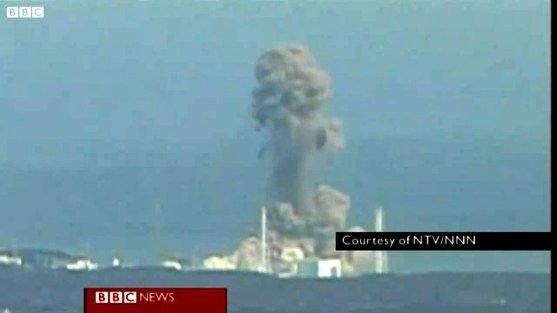
Then came March 11, 2011. A 9 magnitude offshore earthquake triggered a tsunami that killed more than 18,000 people along Japan’s northeast coast. The quake and massive flooding knocked out power for the cooling systems at the Fukushima nuclear plant. Three of the six reactors had partial meltdowns. Radiation spewed into the air, and highly contaminated water ran into the Pacific.
Today, only about half of the region’s 1,000 fishermen go out, and just twice a week because of reduced demand. They participate in a fish testing program.
Lab technicians mince fish samples at Onahama port in Iwaki, pack them in a cup for inspection and record details such as who caught the fish and where. Packaged fish sold at supermarkets carry official “safe” stickers.
Only three kinds of fish passed the test when the experiment began in mid-2012, 15 months after the tsunami. Over time, that number has increased to about 100.
The fish meet what is believed to be the world’s most stringent requirement: less than half the radioactive cesium level allowed under Japan’s national standard and one-twelfth of the U.S. or EU limit, said Yoshiharu Nemoto, a senior researcher at the Onahama testing station.
That message isn’t reaching consumers. A survey by Japan’s Consumer Agency in October found that nearly half of Japanese weren’t aware of the tests, and that consumers are more likely to focus on alarming information about possible health impacts in extreme cases, rather than facts about radiation and safety standards.
Fewer Japanese consumers shun fish and other foods from Fukushima than before, but one in five still do, according to the survey. The coastal catch of 2,000 tons last year was 8 percent of pre-disaster levels. The deep-sea catch was half of what it used to be, though scientists say there is no contamination risk that far out.
Naoya Sekiya, a University of Tokyo expert on disaster information and social psychology, said that the water from the nuclear plant shouldn’t be released until people are well-informed about the basic facts and psychologically ready.
“A release only based on scientific safety, without addressing the public’s concerns, cannot be tolerated in a democratic society,” he said. “A release when people are unprepared would only make things worse.”
He and consumer advocacy group representative Kikuko Tatsumi sit on a government expert panel that has been wrestling with the social impact of a release and what to do with the water for more than a year, with no sign of resolution.
Tatsumi said the stalemate may be further fueling public misconception: Many people believe the water is stored because it’s not safe to release, and they think Fukushima fish is not available because it’s not safe to eat.
___
The amount of radioactive water at Fukushima is still growing, by 150 tons a day.
The reactors are damaged beyond repair, but cooling water must be constantly pumped in to keep them from overheating. That water picks up radioactivity before leaking out of the damaged containment chambers and collecting in the basements.
There, the volume of contaminated water grows, because it mixes with groundwater that has seeped in through cracks in the reactor buildings. After treatment, 210 tons is reused as cooling water, and the remaining 150 tons is sent to tank storage. During heavy rains, the groundwater inflow increases significantly, adding to the volume.
The water is a costly headache for Tokyo Electric Power Co., the utility that owns the plant. To reduce the flow, it has dug dozens of wells to pump out groundwater before it reaches the reactor buildings and built an underground “ice wall” of questionable effectiveness by partially freezing the ground around the reactors.
Another government panel recommended last year that the utility, known as TEPCO, dilute the water up to about 50 times and release about 400 tons daily to the sea — a process that would take almost a decade to complete. Experts note that the release of radioactive tritium water is allowed at other nuclear plants.
Tritium water from the 1979 Three Mile Island accident in the United States was evaporated, but the amount was much smaller, and still required 10 years of preparation and three more years to complete.
A new chairman at TEPCO, Takashi Kawamura, caused an uproar in the fishing community in April when he expressed support for moving ahead with the release of the water.
The company quickly backpedaled, and now says it has no plans for an immediate release and can keep storing water through 2020. TEPCO says the decision should be made by the government, because the public doesn’t trust the utility.
“Our recovery effort up until now would immediately collapse to zero if the water is released,” Iwaki abalone farmer Yuichi Manome said.
Some experts have proposed moving the tanks to an intermediate storage area, or delaying the release until at least 2023, when half the tritium that was present at the time of the disaster will have disappeared naturally.
TOKYO – Overconfidence in technology and arrogance associated with it lies behind a series of misconduct that recently came to light at major Japanese manufacturers, an academic who was formerly in the country’s manufacturing sector says.
“I think there was an attitude (at the companies) that made them believe it’s okay to slack off a little because the quality of Japanese products are high,” said Atsushi Osanai, a professor in the business school at Waseda University in Tokyo and a former Sony Corp employee.
His remarks follow revelations that Mitsubishi Materials Corp subsidiaries falsified data for products supplied to over 200 firms for use in automobiles and aircraft in a scandal similar to that at Japan’s third-largest steelmaker Kobe Steel Ltd. Automakers Nissan Motor Co and Subaru Corp have also admitted that product inspections were carried out by uncertified staff.
Osanai said business models at Japanese automakers and electronics firms have “yet to be converted to match the changes of the times” such as a rise in Chinese firms, and it worked as another factor leading to irregularities at the firms.
“The Japanese automakers and electronics firms used to be able to increase profits just on the strength of their technologies, but they can no longer win in competition with Chinese and other foreign firms only with technology,” said Osanai, who spent 10 years working at Sony prior to becoming an academic.
“As a result, the Japanese companies were pressured to reduce employees and implement excessive cost-cutting measures, and it probably led to the misconduct,” he said.
Tsutomu Yamada, a market analyst at kabu.com Securities Co., echoes the view that cost cuts were behind the scandals.
“(These scandals) resulted from the companies overcutting fixed expenditures during the 20-year-long deflation in Japan,” Yamada said.
Some critics say the data falsification at the Mitsubishi Materials units could offset the favorable reputation the parent company earned last year when it concluded a settlement agreement with Chinese groups that had been negotiating compensation with the Japanese company over its use of forced labor during World War II.
The document covers 3,765 Chinese, the largest number of people subject to a Japanese company’s postwar compensation.
As the scandals have surfaced one after another over the recent months, members of the public have voiced concerns whether the misconduct is rampant in the country’s manufacturing industry.
Industry minister Hiroshige Seko said Friday in a press conference, “It’s important for the whole of the manufacturing industry to share the (recently revealed) problems.”
On September 23, 1Million Meditators reached 72,000 individuals with a shared vision to “Love Ourselves & the Planet”. This Saturday, November 25, 1Million Meditators is striving to reach 100,000 participants as part of this continued effort to promote engagement in the creation of a peaceful planet through collective intention: “Peace in our Hearts & Peace for our Planet.”
1Million Meditators welcomes anyone whose intention is to spread love and peace in the world, through any form of practice, including mindfulness, prayer or any other rite that promotes love, connectedness and peace, regardless of religious background or affiliation.
We’re getting in touch with you to ask you to show up in person or online and lend a few minutes of your time to create peace in your hearts and for the planet.
The meditation will last approximately 15 minutes. Participants around the world have contributed their voices to created a unique soundtrack, available to download for free.
To receive the soundtrack and a free “Thank You” gift please go to 1MillionMeditators.com and join the movement.
Help the movement grow by sharing 1Million Meditators with friends and family.
In peace,
Rick Wayman
Director of Programs & Operations
Nuclear Age Peace Foundation
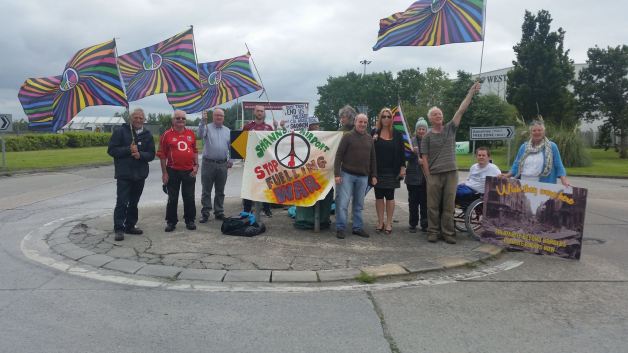
Four peace activists appeared in court today at Ennis Circuit court. Two travelled from Dublin, one from Waterforrd and one all the way from Limerick. Their legal team from the Pat Finucane Centre travelled from Belfast and Cork to represent two of the peace activists.
The decision not to use local legal representatives is based on experience of past peace activist trials. While in theory there should be clear separation and independence between the judiciary, the prosecution, and legal representatives for defendants, in practice these three are sometimes too closely associated.
Today was the twelfth time Colm Roddy and Dave Donnellan had to appear in court on the same alleged offence and the actual trial may still be almost a year away. For Dan Dowling and Edward Horgan it was the sixth day in court, They now have two more dates on 13 and 18 December with no trial date any time soon.
Today’s hearing was supposed to be for the peace activists’ legal teams to make a formal application to have the trials transferred from Co Clare to Dublin. The defendants believe they cannot get a fair trail in Co Clare due to possible conflicts of interest or bias of a Co Clare jury, as well as the perceived economic benefit to the Mid West region of having the US military using Shannon Airport.
At the hearing the prosecution said they had not had enough time to prepare a response to the defendants’ affidavit so they all had a wasted day in court. The matter of change of venue will be discussed again briefly in court on 18th December but will likely not be dealt with until 6th February at the earliest. It applies to all four defendants.
After the court appearance, one of the peace activists said: “While it was a wasted day in court, lets not complain too much. All four of us are still alive and well, we have done nothing wrong, and are before the courts only because we wish to put an end to Irish complicity with the killing of innocent people, especially children, in the Middle East. We are whistleblowers who are prepared to undertake the inconveniences that these court cases can impose on us.”
Last month the Clare Champion newspaper described Edward Horgan as “a self-confessed whistle-blower”. This might suggest that being a whistleblower is somehow to be frowned upon. It shouldn’t be; being a whistle-blower is a civic duty. More whistleblowers are needed to end Irish complicity in the killing of innocent people each day in the Middle East
Earlier this week, we noted that Russia’s state-owned nuclear energy agency had taken baby steps toward recognizing the dangers posed by an aging nuclear storage facility in Chelyabinsk, a town located on Russia’s southern border with Kazakhstan, when it officially acknowledged the extraordinary high levels of radiation in the area. Though the government refused to admit culpability, as many believe the radiation leaked out of the Mayak nuclear power plant, which has a history of serious nuclear accidents.
Still, a month after the mysterious radiation cloud was first observed over Europe, Russian authorities have said little other than admitting the spike in radiation – a troubling trend that’s making some locals nervous and angry.
As the Financial Times points out, 76 years after radiation first began seeping from Mayak into the surrounding rivers, lakes and atmosphere, Russian authorities admitted that the nearby town of Argayash was at the center of a radiation cloud containing “exceptionally high” levels of radioactive isotope ruthenium-106, which spread so far west that it reached France.
But residents of the town are demanding more information from authorities, whom they blame for putting the health of locals at risk.
The FT described Argayash is a cynical, mistrustful town. Apparently, decades of being lied to by the government about being down the road from a leaking nuclear plant does that to a place. So too does watching generations of people dying of radiation-related ailments while officials assure them nothing is amiss.
A small, two-road settlement where homes roofed with corrugated iron and Soviet-era Lada cars nod to its poverty, Argayash is one of a handful of towns surrounding the Mayak Production Facility in southern Russia, one of the world’s biggest radiation emitters where a litany of tragic accidents has made it a byword for the dangers of the atomic industry.
Until earlier this week, Russia’s state-controlled Rosatom corporation – the same company implicated in the Uranium One scandal – had insisted that there had been no radiation leak from Mayak’s facilities. Then earlier this week, it revised its story, admitting that radiation was leaking in the area around the plant but refusing to accept that the plant was responsible for the leak after the Russian meteorological service (Rosgidromet) reported that it had detected record levels of radiation in the area. Some calculating that the radiation exposure levels were up to 1,000x higher than the normal rate.
In a statement, the Russian Meteorological Service said that it recorded the release of Ruthenium-106 in the southern Urals in late September and classified it as “extremely high contamination.”
At this point, the denials are almost comical – but local residents don’t find them funny in the least.
Many scoff at official denials, having heard similar for decades, even as they watched family and friends die from radiation-related ailments.
“We are not told anything about Mayak,” says Nadia, an 18-year-old medical student living in the town, 1,700km east of Moscow. “The government should not keep things secret when people suffer.”
“People in the west know more about this than we do here,” she adds.
The Russian government’s refusal to admit that Mayak is probably the source of the radiation leak is in keeping with a decades-long pattern of secrecy surrounding the activities at the plant. An explosion at the site in 1957 rained down nuclear fallout on the surrounding area, causing the third-worst nuclear crisis in history (after Chernobyl and the meltdown at Fukushima).
Still, locals know relatively little about the threat posed by the plant. One woman who spoke with the FT said she only learned of the radiation that had enveloped her town when a friend in Germany read about it in a western newspaper. Before the authorities admitted its existence, text messages had been sent to residents saying that high levels of pollution from nearby industrial factories meant people should stay indoors.
Regardless of the potential health risks, many here say the government’s initial silence, denial and obfuscation has dredged up painful memories of a past that refuses to stay buried.
Secretly constructed in the 1940s, Mayak was at the forefront of the USSR’s scramble to catch up with the US nuclear programme. As it raced to produce weapons-grade plutonium, a vast amount of nuclear waste was discharged into nearby lakes and the Techa river.
Then, in 1957, nuclear waste storage tanks at the site exploded, raining fallout over hundreds of towns – and releasing more radiation than any other nuclear accident except Chernobyl and Fukushima. Ten years later, an adjacent reservoir used for waste disposal dried out, and powdered radioactive dust was blown over the area.
In 2004 the government confirmed that waste was being dumped in the local river. Nuclear regulators say that no longer happens, but anti-nuclear activists say it’s impossible to tell, and are deeply mistrustful of the government’s assurances.
Earlier this week, Greenpeace said that it would petition the Russian Prosecutor General’s office to investigate “a possible concealment of a radiation accident” and check whether public health was sufficiently protected.
Still, given Russia’s history with horrendous nuclear accidents, it’s possible that locals will never learn the real story behind the radiation cloud.
Toshiba Corp. will remove its corporate logo from its prominent position atop the One Times Square Building overlooking New York’s iconic tourist hub as part of cost-cutting efforts, sources close to the matter said Wednesday.
In addition to terminating its contract for the Times Square screen in the first half of next year, the company has also formally decided to end its sponsor’s agreement with two long-running Japanese television programs — a popular cartoon show and a Sunday night drama — at the end of March, the sources said.
The utility operating the sole reactor at the Tokai No. 2 nuclear power plant in Ibaraki Prefecture on Friday filed for state approval to extend the unit’s operation beyond the government-mandated 40-year limit.
It is the fourth time that an application has been filed with the Nuclear Regulation Authority to extend the operation of an aging reactor for an additional 20 years, but the latest request is the first for a boiling water reactor — the same type as at the crisis-hit Fukushima No. 1 nuclear complex.
The application for the Tokai plant, currently offline, comes despite local governments lacking emergency plans to evacuate around 960,000 people living within 30 km of the plant. Of all the nuclear power plants in Japan, Tokai has the most densely populated surrounding area.
Tougher safety rules introduced in the wake of the Fukushima disaster, triggered by the 2011 earthquake and tsunami, in principle prohibit the operation of nuclear reactors beyond 40 years. But extending a unit’s life for an additional 20 years is possible if operators carry out safety upgrades and pass the regulator’s screening.
It is unclear whether the operator, Japan Atomic Power Co., which is jointly owned by nine of the country’s utility companies, can secure an estimated ¥180 billion in costs to implement measures to enhance the safety of the aging reactor, with its business struggling after all its reactors ceased operations.
The Tokai No. 2 plant, sitting on the Pacific coast, is currently having its safety features assessed by the Nuclear Regulation Authority for a reactivation.
So far, three pressurized water reactors belonging to Kansai Electric Power Co. have gained the authority’s approval to extend their operations for 20 years.
The Tokai No. 2 plant, which started commercial operations in 1978, will be decommissioned if it cannot gain the authority’s approval for safety measures and extension by November next year.
But even if the authority approves the resumption and extension of the plant, the actual reactivation will happen later than March 2021, which would be the earliest that work on implementing safety measures will likely be completed.
Japan Atomic Power filed for the extension after its president, Mamoru Muramatsu, told Ibaraki Gov. Kazuhiko Oigawa of the utility’s intention to seek it in a meeting Tuesday.
Now scientists are trying to work out just what the long term effects are of changes in the brain during extended missions in space before NASA’s planned mission to Mars.
More people today are poised to explore space than ever before; and those who do will experience the effects of microgravity on the human body.
Roberts, of The Medical University of South Carolina, said: “Exposure to the space environment has permanent effects on humans that we simply do not understand.
“What astronauts experience in space must be mitigated to produce safer space travel for the public.”
NASA astronauts have experienced altered vision and increased pressure inside their heads during spaceflight aboard the International Space Station (ISS).
The conditions can be serious problems for astronauts.
To describe the symptoms, NASA coined the term visual impairment intracranial pressure syndrome, or VIIP Syndrome.
The cause of VIIP Syndrome is thought to be related to the redistribution of body fluid toward the head during long-term microgravity exposure, but the exact cause is unknown.
NASA has made determining the cause of VIIP Syndrome and how to resolve its effects a top priority.
Roberts proposed to NASA that MRI scans be used to investigate the anatomy of the brain following spaceflight.
She suspected subtle anatomical changes in the brains of astronauts during spaceflight might be contributing to the development of VIIP Syndrome.
She examined the brains and muscular responses of participants who stayed in bed for 90 days, during which time, they were required to keep their heads continuously tilted in a downward position to simulate the effects of microgravity.
Using MRI scans, Roberts evaluated brain neuroplasticity, studying the brain’s motor cortex before, during and after long-term bed rest.
Results confirmed neuroplasticity in the brain occurred during bed rest.
As Roberts evaluated the brain scans, she noted a “crowding” occurrence at the vertex, or top of the brain, with narrowing of the gyri and sulci, the bumps and depressions in the brain that give it its folded appearance.
The crowding was worse for participants who were on longer bed rest.
Roberts also saw evidence of brain shifting and a narrowing of the space between the top of the brain and the inner table of the skull.
She questioned if the same thing might be happening to the astronauts during spaceflight.
She also acquired brain MRI scans and related data from NASA’s Lifetime Surveillance of Astronaut Health program for two groups of astronauts: 18 who had been in space for short periods of time aboard the U.S. Space Shuttle and 16 who had been in space for longer periods of time, typically three months, aboard the ISS.
The researchers compared the brain images of the two groups of astronauts.
The results confirmed a narrowing of the brain’s central sulcus, a groove in the cortex near the top of the brain that separates the parietal and frontal lobes, in 94 percent of the astronauts who participated in long-duration flights and 18.8 percent of the astronauts on short-duration flights.
Cine clips also showed an upward shift of the brain and narrowing of the CSF spaces at the top of the brain among the long-duration flight astronauts but not in the short-duration flight astronauts.
Her findings concluded that “significant changes” in brain structure occur during long-duration space flight.
And, more importantly, the parts of the brain that are most affected — the frontal and parietal lobes — control movement of the body and higher executive function.
The longer an astronaut stayed in space, the worse the symptoms of VIIP syndrome would be.
To further understand the results of the study, Roberts plans to compare repeated post-flight imaging of the brains of astronauts to determine if the changes are permanent or if they will return to normal after some time back on Earth.
With NASA’s Mars expedition mission set to launch in 2033, there’s an urgency for researchers to collect more data about astronauts and understand the basics of human space physiology. A journey to Mars can take three to six months, at best.
During the two-year time period, crew members would remain on Mars, conducting exploration activities. The gravity on Mars is around one-third that of Earth.
Considering travel to and from Mars, along with the time on the surface, Roberts said the Martian expedition crew would be exposed to reduced gravity for at least three years.
To date, the longest continuous time in space was 438 days, a record held by Russian cosmonaut Valery Polyakov.
Roberts said: “We know these long-duration flights take a big toll on the astronauts and cosmonauts; however, we don’t know if the adverse effects on the body continue to progress or if they stabilize after some time in space.
“These are the questions that we are interested in addressing, especially what happens to the human brain and brain function?”
Study co-author Dr. Michael Antonucci added: “This study is exciting in many ways, particularly as it lies at the intersection of two fascinating frontiers of human exploration — space and the brain.
“We have known for years that microgravity affects the body in numerous ways.
“However, this study represents the most comprehensive assessment of the impact of prolonged space travel on the brain.
“The changes we have seen may explain unusual symptoms experienced by returning space station astronauts and help identify key issues in the planning of longer-duration space exploration, including missions to Mars.”










 nuclear-news