As Kenya moves steadily towards its industrialisation dream (Vision 2030), the question of how to generate reliable power to meet the growing demand from households and industries continues to induce headaches, as local manufacturers cry foul over power tariffs that are higher than those in neighbouring countries.
The Kenya Association of Manufacturers says local manufacturers are charged Sh15 per kilowatt hour, while manufacturers in Ethiopia, Egypt and Uganda pay as low as Sh4.14, Sh6 and Sh12 per kilowatt hour respectively.
The prohibitive power charges, the investors say, makes locally-produced goods not only expensive, but uncompetitive in regional markets.
While the government brags that over 60 per cent of the country’s population has access to power, unreliable power supply and frequent power outages steal the thunder from this achievement, pushing the government into overdrive to boost power production.
One of the strategies is to put up a nuclear energy plant by 2027, in a fervent push to lower the country’s energy deficit and electricity tariffs.
The project will cost a staggering Sh2 trillion begging the question of whether it will lower energy tariffs and still remain afloat.
Sceptics also argue that a sunshine-rich country such as Kenya should never think of going the risky route of nuclear energy.
However, the Kenya Nuclear Electricity Board (KNEB) CEO Collins Juma says that nuclear energy is now a necessity rather than a choice, pointing out that for Kenya to achieve its Vision 2030 goals, it needs between 17,000 and 21,000 megawatts (MW).
“There will still be a deficit even if all domestic energy resources are fully exploited and therefore, nuclear energy has been identified as a stable, efficient and reliable source of electricity that will steer industrial development, stimulate economic growth, create jobs and above all, better the lives of Kenyans,” Juma says, adding that the country currently generates about 2,400 MW from all its available energy sources.
AMIDST ALL THE PROMISE…
He adds that Kenya’s first reactor will have a capacity of 1,000 megawatts (MW), which is equivalent to 42 per cent of the country’s current installed electricity capacity, adding that that KNEB plans to put up at least four other plants with a total output of 4,000 MW.
“The large modular reactors that Kenya will construct have an electric power output of between 700 and 1, 700 MW,” Juma says.
But amidst all the promise, lies environmental, health and safety concerns. When nuclear fuel is burnt, it generates energy but leaves behind highly radioactive waste which poses a big threat to health and the environment for thousands of years. Nuclear power is also non-renewable.
While government officials strongly defend the nuclear project, questions abound about how a country whose major cities – Nairobi, Kisumu, and Mombasa – have failed to handle minor fire disasters and basic household waste will effectively deal with toxic wastes, which are the by-product of nuclear power generation.
In Nairobi for instance, where every individual generates about two kilogrammes of waste every day, garbage is littered all over, with roads becoming impassable when it rains. Moreover, some hospitals and clinics carelessly dispose their medical waste in landfills ran by cartels, yet the government insists it can handle nuclear waste.
One of the critics of nuclear power generation is North Horr Member of Parliament Chachu Gaya, who says that the government should explore safer sources of energy such as solar and wind energy, and only consider nuclear as an energy source of last resort.
Also opposed to the idea of nuclear energy is Lamarck Oyath, the CEO of Lartech Africa, a company that provides consultancy on Private Public Partnerships, such as the ones the government is considering to make nuclear power generation a reality.
He observes that while nuclear energy is the most reliable and climate-resilient source of energy, it is wrought with high risks that Kenya is not well prepared to handle.
Opponents are also worried about health hazards, safety and radioactive waste management, with questions about the country’s preparedness to deal with radioactive waste and accidental leaks which advanced economies like Japan have grappled with.
“Kenya only rides on optimism in its quest to generate nuclear power, but lacks human capital or infrastructure to roll out the technology,” says Oyath, adding that Kenya’s poor waste management strategies and pitiable response to disasters are considerable grounds to dismiss the project.
However, David Maina, the director of the Institute of Nuclear Science and Technology at the University of Nairobi, allays fears about lack of capacity.
“Over the last five years Kenya has been aggressively involved and participated in almost all the available training opportunities on nuclear energy,” he says, insisting that the country is capable of adequately managing a nuclear power plant by 2030.”
In the nuclear energy fraternity an accident anywhere is considered an accident for all and therefore a lot of intellectual energy is used to study the incident and provide a solution to minimise likelihood of its recurrence,” he adds.
Edwin Chesire, KNEB senior technical officer, argues that the alternatives of solar, wind and biomass energy have a cap beyond which they cannot be exploited.
He explains that by 2030, geothermal energy will only be able to produce between 4,000 MW and 5,000 MW of energy; hydropower stations will generate between 2,000 MW and 3,000 MW; coal will generate 3,000 MW; while wind and solar will generate 1,000 MW, leaving the country with a deficit that will be boosted by imports from the East African power pool and the planned nuclear power plant.
“The government is currently undertaking massive energy projects, but demand will surpass the country’s energy resources.
“When all is said and done, we won’t have anything else to turn to apart from nuclear power,” says Chesire, adding that while we may not be ready for a nuclear power plant in 2018, a decade from now, we will be.
China has proposed talks with Japan on whether to ease or lift an import ban on food from 10 Japanese prefectures imposed after the 2011 Fukushima nuclear disaster, Japan-China diplomatic sources said.
The Chinese side offered to set up a working group to discuss the matter in response to a request by a Japanese lawmaker to relax import restrictions.
The development may be a sign that the governments of the two countries are looking for ways to mend bilateral ties as they mark in 2018 the 40th anniversary of the signing of the Treaty of Peace and Friendship between Japan and the People’s Republic of China.
Zhi Shuping, the head of China’s certification and quarantine administration, made the proposal Friday when he met in Beijing with Toshihiro Nikai, secretary-general of Japan’s ruling Liberal Democratic Party, the sources said.
Earlier, a delegation of Japan’s ruling coalition led by Nikai met President Xi Jinping and other senior Chinese officials.
While the two sides have not decided when to establish the working group, it shows a clear shift in Beijing’s stance on the issue, according to a Japan government source.
Over 50 countries and regions imposed import bans on some agricultural and fishery products from Japan after the Fukushima disaster. Nine countries and regions including China and South Korea still have import restrictions in place.
Even food shipped to China from prefectures not subject to the restriction is required to come with a certificate of origin. A radiation inspection is also required for some products from outside the 10 affected prefectures, which are mostly in eastern and northeastern regions.
Fukushima Prefecture, where agriculture was a key industry, is highly contaminated and food production has been severely impacted. China cannot afford to risk a repetition of the Fukushima disaster in the Northeast.
In order to put the North Korean nuclear genie back in its bottle, should China protect Pyongyang under its nuclear umbrella while forcing the regime to give up its nuclear program? For China’s state-run Global Times, columnist Zhu Zhangping offers some suggestions that may give Beijing a way out of its unquestioned backing of North Korea, and asserts that whatever benefit Beijing derives from keeping the Kim Jong-un regime in office, the danger of allowing him The Bomb is too great.
A top priority for China is to ensure the survival of the Kim regime and keep North Korea from collapsing. But should China continue to back North Korea no matter what it does? And even if North Korea’s nuclear development is targeted only at the United States, its nuclear programs bring huge risks to China – not the United States.
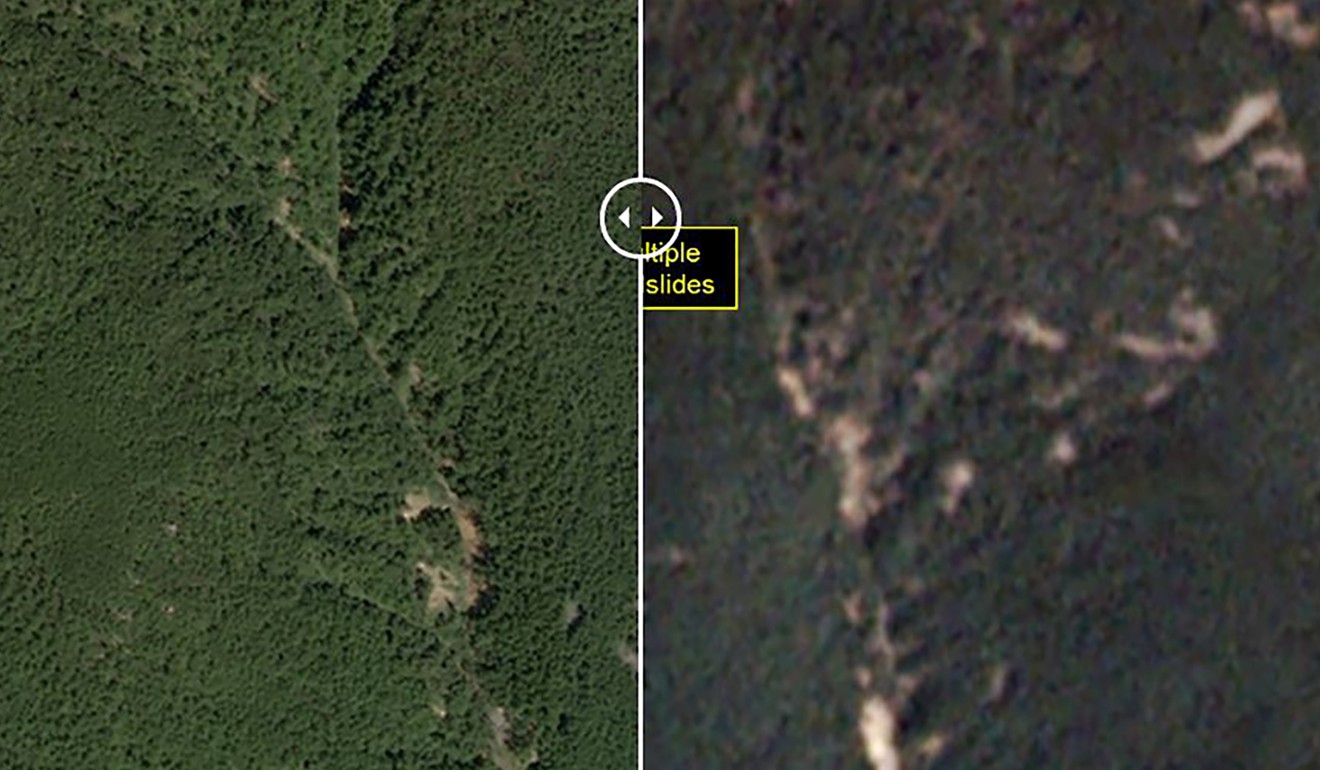
The third nuclear test in February was conducted just over 100 kilometers from China’s northeast border. Although Chinese authorities appeased the public by swearing that the mountains on the border would effectively prevent radiation spreading to China, the possibility that nuclear leakage could pollute underground water supplies cannot be ruled out.
Groundwater safety is not only a concern when it comes to Northeast China’s drinking water supply, but for food safety and even food security.
The Fukushima nuclear disaster in Japan is the latest lesson. Fukushima Prefecture, where agriculture was a key industry, is highly contaminated and food production has been severely impacted. China cannot afford to risk a repetition of the Fukushima disaster in the Northeast.
What China should do now is offer North Korea protection under its nuclear umbrella, just as the U.S. does for Japan and South Korea, while forcing it to accept China’s advice and abandon its nuclear program. China faces bigger risks than any other country in the event of a fourth nuclear test.
READ ON AT WORLDMEETS.US, your most trusted translator and aggregator of foreign news and views about our nation.
SEOUL–South Korean President Moon Jae-in said on Tuesday the improvement of inter-Korean relations
SEOUL–South Korean President Moon Jae-in said on Tuesday the improvement of inter-Korean relations was linked to resolving North Korea’s nuclear program, a day after the North offered talks with Seoul but was steadfast on its nuclear ambitions.
“The improvement of relations between North and South Korea cannot go separately with resolving North Korea’s nuclear program, so the foreign ministry should coordinate closely with allies and the international community regarding this,” Moon said in opening remarks at a cabinet meeting.
Moon’s comments contrasted with those of North Korean leader Kim Jong Un, who said on Monday that Seoul should stop asking foreign countries for help in improving ties between the two Koreas.
“This shows the Moon administration is looking at the situation from a very realistic, rational point of view,” said Jeong Yeung-tae, head of the Institute of North Korea Studies in Seoul. “It also shows resolving North Korea’s nuclear issue has a bigger priority (than improving inter-Korean relations).”
Moon’s comments came after a New Year’s Day speech by Kim who said he was “open to dialogue” with Seoul, and for North Korean athletes to possibly take part in the Winter Games, but steadfastly declared North Korea a nuclear power.
The South Korean president requested the ministries of unification and sports to swiftly create measures to help North Korea participate in the upcoming Pyeongchang Winter Olympics.
As for talks between the two Koreas, Defense Ministry spokeswoman Choi Hyun-soo said Seoul was awaiting a more detailed reply from Pyongyang to already-existing offers for dialogue made back in July last year by Seoul.
“We offered military talks in July and our offer still stands. We are waiting North Korea’s reply. We are willing to talk with North Korea on the peaceful resolution of the North’s nuclear program regardless of form, time and method,” said Choi in a regular briefing.
Kim’s offer of talks and sporting co-operation with South Korea follows a year dominated by fiery rhetoric and escalating tensions over Pyongyang’s nuclear weapons program.
North Korea tested its most powerful intercontinental ballistic missile (ICBM) in November, 2017, which it said was capable of delivering a warhead to anywhere in the United States.
On Monday, Kim said the North would mass produce nuclear warheads and ballistic missiles in 2018 for operational deployment, warning he had a “nuclear button” on his desk which he would use if his country was threatened.
PYONGYANG Democratic People’s Republic of Korea (Xinhua) Tensions on the Korean Peninsula have reached an unprecedented level in 2017 due to a nuclear test and multiple missile launches by the Democratic People’s Republic of Korea (DPRK) and constant U.S.-South Korea joint military drills. The crisis has also been worsened by the exchange of personal insults and confrontational rhetoric raising the specter of war between the United States and the DPRK.
Many describe the situation on the Korean Peninsula as the greatest threat to international peace and security and the international community remains concerned that any miscalculation or misunderstanding could lead to unexpected, even disastrous consequences.
The DPRK conducted several missile tests this year, including three involving intercontinental ballistic missiles (ICBM) and an alleged H-bomb test in disregard of the various UN resolutions banning it from such activities.
Its actions have drawn worldwide condemnation and prompted the UN Security Council to impose even tougher sanctions.
The DPRK justifies its nuclear and missile programs as a sovereign right of self-defense against the threat of the United States, and has vowed to continue strengthening its nuclear and missile capabilities.
Pyongyang also threatens to launch a missile attack on the U.S. pacific island of Guam, which serves as the base of strategic bombers frequently visiting South Korea.
It also claimed the “Hwasong-15” ICBM it tested on Nov. 29 is “capable of striking the whole mainland of the United States.”
While the DPRK is going further in its pursuit of nuclear capabilities, the United States and South Korea have upped the ante by holding frequent large-scale joint military drills in South Korea and waters near the peninsula.
With tens of thousands of troops in South Korea, the United States has sent three aircraft carrier groups, B-1B strategic bombers, stealth fighters, nuclear submarines and other strategic assets to the peninsula for war games.
It also carried out a number of ICBM tests simulating strikes against the DPRK.
The military maneuvers were accompanied by dangerous rhetoric by U.S. President Donald Trump, who threatened to “totally destroy” the DPRK if it continued to pose a threat to America.
Washington has so far refused to hold talks with Pyongyang, demanding that the latter halt its nuclear and missile programs first.
UN Secretary General Antonio Guterres said earlier this month that any military action on the Korean Peninsula would have “devastating and unpredictable consequences.”
His remarks were echoed by Swedish Foreign Minister Margot Wallstrom, who noted that the international community has to “exhaust every avenue for diplomacy and dialogue.”
UN Under Secretary General for Political Affairs Jeffrey Feltman visited the DPRK in December and said after the visit that it is important to “open or re-open technical channels of communication such as military-to-military hotline to reduce risk and signal intention to prevent misunderstanding and manage any crisis.”
Meanwhile, South Korea has also expressed willingness to seek a peaceful solution to the crisis, rejecting any military option. In a conciliatory gesture, it invited the DPRK to take part in the 2018 Winter Olympics in the South Korean city of Pyeongchang.
China, which shares a land border with the DPRK, has made it clear it wants a nuclear-free, peaceful Korean Peninsula, and has been strenuously working toward that end, including proposing a political solution based on a suspension-for-suspension proposal and a dual-track approach.
The suspension-for-suspension initiative calls for the DPRK to suspend its nuclear and missile activities and for the United States and South Korea to suspend their large-scale war games.
The dual-track approach involves parallel efforts to move forward both denuclearization and the establishment of a peace mechanism on the Korea Peninsula.
The Chinese proposal has won extensive support from the international community, which in recent months adamantly called for a peaceful solution to the Korean Peninsula nuclear issue.
AP – South Korea on Tuesday offered high-level talks with rival North Korea meant to find ways to cooperate on the Winter Olympics set to begin in the South next month.
The offer came a day after North Korean leader Kim Jong Un said in his New Year’s address that he’s willing to send a delegation to the Olympics, though he also repeated nuclear threats against the United States. Analysts say Kim may be trying to drive a wedge between Seoul and its ally Washington as a way to ease international isolation and sanctions against North Korea.
South Korean Unification Minster Cho Myoung-gyon says the South proposes the two Koreas meet Jan. 9 at the border village of Panmunjom to discuss Olympic cooperation and how to improve overall ties.
If the talks are realized, Cho said South Korea will first focus on Olympic cooperation but also try to discuss a restoration of strained ties between the Koreas.
In his closely watched address, Kim said that the United States should be aware that his country’s nuclear forces are now a reality, not a threat. He said he has a “nuclear button” on his office desk.
He called for improved ties and a relaxation of military tensions with South Korea, saying the Winter Olympics could showcase the status of the Korean nation.
The New Year’s address is an annual event in North Korea and is watched closely for indications of the direction and priorities Kim may adopt in the year ahead.
North Korea last year conducted its sixth and most powerful nuclear test and test-launched three intercontinental ballistic missiles as part of its push to possess a nuclear missile capable of reaching anywhere in the United States.
Members of a Russian environmental group say masked men attacked their leader in the southern Russian city of Krasnodar late Thursday.
Andrei Rudomakha, head of Environmental Watch of the North Caucasus, was hospitalized with multiple injuries including a fractured skull and broken nose.
Rudomakha and several other activists were returning from a trip to Russia’s Black Sea region, where they had documented the illegal construction of a luxury mansion.
Local authorities said they are investigating the incident.
Krasnodar “originated in 1793 as a military camp, then as a fortress built by the Cossacks to defend imperial borders and to assert Russian dominion over Circassia…” https://en.wikipedia.org/wiki/Krasnodar
“Unknown Assailants Brutally Beat Russian Environmentalist
December 29, 2017 6:33 AM, VOA News
Members of a Russian environmental group say masked men attacked their leader in the southern Russian city of Krasnodar late Thursday.
Andrei Rudomakha, head of Environmental Watch of the North Caucasus, was hospitalized with multiple injuries including a fractured skull and broken nose.
Rudomakha and several other activists were returning from a trip to Russia’s Black Sea region, where they had documented the illegal construction of a luxury mansion.
Local authorities said they are investigating the incident.
For more than 20 years, Environmental Watch has exposed illegal landfills, the destruction of landscapes and the contamination of waterways in Russia’s south – the Krasnodar, Stavropol, Rostov, Adygea…
On Thursday (28December 2017) Mordechai Vanunu, Israeli nuclear whistle blower published a photo of himself alongside the statue of St. Stephen at St. Stephens Church in east Jerusalem and tweeted:
“Life continue. waiting for my freedom to travel, now after 32 years with all the restrictions. nothing changes, nothing to report, nothing to post. see you in 2018 very soon.”
On 16 July 2009, this American was walking down Nablus Road in east Jerusalem when I heard the unmistakable voice of Mordechai Vanunu call out, “Hi, remember me?”
I turned to see Vanunu who quipped, “This is the same spot where the first Christian was martyred for freedom of speech.”
We had crossed paths in front of St. Stephens Church in east Jerusalem and Vanunu was referring to the book of Acts 7:54-60:
The Stoning of Stephen
When the members of the Sanhedrin heard this, they were furious and gnashed their teeth at him.
But Stephen, full of the Holy Spirit, looked up to heaven and saw the glory of God, and Jesus standing at the right hand of God.
“Look,” he said, “I see heaven open and the Son of Man standing at the right hand of God.”
At this they covered their ears and, yelling at the top of their voices, they all rushed at him, dragged him out of the city and began to stone him. Meanwhile, the witnesses laid their coats at the feet of a young man named Saul.
While they were stoning him, Stephen prayed, “Lord Jesus, receive my spirit.”
Then he fell on his knees and cried out, “Lord, do not hold this sin against them.” When he had said this, he fell asleep.
UPDATE:
I tried to share this link on Facebook but it blocked my comment on Eileen Flemings (the author) Facebook post. So I screenshotted the blocking of the comment and the comment as well. I then went to Google and checked Mordecai`s name within the past hour and got no results even though 2 bloggers had posted titles with his name in. Here is the screenshots anff a link to the Intercept on how Facebook is working with extreme elements within Israel.
For the insurance companies, The Japan 2011 Earthquake and nuclear disaster was not a concern, as I lay out below. The costs were to be managed largely by the government. The Insurance companies were getting of so lightly that they even paid out compensation to the victims, though they were not obliged too!
SwissRE, whose data this article is based off, compiles reports for the Global insurance industry. The Insurer with the largest impact from the Fukushima 2011 disaster was Lloyds of London with some 2 billion Dollar loss, 20 percent of the total insurance industry costs. This may account for the interest in the UK Government helping cover up the health and environmental impacts of the disaster in the long term, having got “skin in the game”, including the damage to the UK`s nuclear industry (MOX fuel reprocessing and nuclear reactor new builds etc).
The actual costs of the disaster as of April 2017 was 626 Billion Dollars up from the Japanese government total cost of the disaster of roughly 9 billion Dollars. Although, the initial figure seems to be based on the Insurers losses and not the governments calculations. The insurers, probably thinking of their 100`s of billions dollars investments in the nuclear industry (with the big 5 UK based insurers having 300 billion pounds sterling invested until they divested into PFI contracts leaving the UK tax payer holding the nuclear energy bill), played down the total costs and even seemed to bemoan the extra regulations that would be brought in as a response to the nuclear aspect to the Tohuku disaster in 2011.
Finally, In a recent article published on RT concerning the report for the year 2017 from Swiss RE we get dramatic headline of huge increased loses to some 300 Billion Dollars (Less than half of the Fukushima disaster cost) with 100 Billion of that specific to the USA. Once again though we do not get the uninsured loses from the disasters. And that is not the only problem. SwissRE does not mention that the actual US figures for total losses are 135 Billion Dollars for the hurricanes, 9 billion for the fires and the largely uninsured losses of 95 billion for Puerto Rico and similar for the Virgin Islands. Swiss RE`s recent claim that total insured loses from around the world have risen to 136 billion Dollars seems to be more of a PR move to hide the fact that governments are using tax payer money to bail out the Insurance companies over man made and natural disaster costs? I will leave evidence and links below;
“A private think tank says the total cost of the Fukushima disaster could reach ¥70 trillion ($626 billion), or more than three times the government’s latest estimate. In a study Saturday, the Japan Center for Economic Research said costs of dealing with the heavily damaged Fukushima No. 1 nuclear plant run by Tokyo Electric Power Company Holdings Inc. could rise to between ¥50 trillion and ¥70 trillion.
“Economic losses from natural and man-made disasters have soared by 63 percent in 2017 to an estimated $306 billion, according to a report from reinsurance firm Swiss Re.
The company estimates, insured losses from natural and man-made disasters around the world was approximately $136 billion, up from $65 billion in 2016. This is “well-above the annual average of the previous ten years, and the third highest since… records began in 1970,” Swiss Re said in its report. The reinsurance firm said insured losses from disasters have exceeded $100 billion in a number of years.
The new edition of the best-selling Japanese dictionary “Kojien” to go on sale next month will be the first with nuclear power generation terms selected by a dedicated editor in its 62-year history, according to its publisher.
The dictionary covering some 240,000 words was first published in 1955 and is revised every 10 years or so. Its publisher, Iwanami Shoten, decided to have a particular editor for nuclear terms for the upcoming 7th edition as people have become more familiar with such terms since the March 2011 Fukushima nuclear disaster.
Some of the terms have been frequently used in the media and become quite common, but many of those already included in the dictionary’s current edition are defined using technical jargon.
Toru Kawahara, 46, at Iwanami Shoten proposed at a meeting just months after the Fukushima disaster that the publisher appoint an editor dedicated to reviewing and selecting nuclear terms.
He remembers telling the meeting, “Issues regarding nuclear plants are no longer restricted to experts in the field and people living near the plants.”
The proposal was accepted unanimously and Kawahara himself became the first to take the post.
He added about 20 new words to the upcoming edition including “hairo” meaning decommissioning of a reactor and “anzen-shinwa” (safety myth), describing the view once held by the government and power companies that nuclear power is undoubtedly safe.
One of the key factors behind his choice of new terms was “whether they will continue to be used” in years to come, he says.
Kawahara came up with 200 candidate words, including those he saw in print media and came across on the internet. He was surprised to learn that hairo had not been included.
He realized that people only paid attention to the building and operating of nuclear plants and cared far less about the fact that the work of scrapping aged reactors safely is an important part of nuclear power.
“Everyone, including myself, was so indifferent (about nuclear power),” he says.
While also adding “The Great East Japan Earthquake” in 2011 which triggered the Fukushima crisis, Kawahara revised descriptions for some of the already listed terms, such as radiation and breeder reactor, using words easier to understand.
He knew that some of the terms he chose to add are not widely used. Among such terms were “youso” (iodine) and “bento” (venting).
Iodine pills help to reduce radiation buildup in the thyroid in the event of a nuclear accident. “I think it is good to tell people how they work and how they should take them in an emergency,” he said.
Venting is one of the terms which became widely known after the Fukushima disaster. Tokyo Electric Power Company Holdings Inc., the operator of the disaster-hit Fukushima Daiichi complex, came under fire for its failed venting operation to deal with the pressure buildup at the reactors and causing hydrogen explosions which severely damaged the structures.
Since venting could cause radioactive materials to reach the environment, “I thought it is a term we must have as long as it concerns life-and-death situations people may encounter during evacuation,” Kawahara said.
He contemplated adding “difficult-to-return-to zone” near the Fukushima plant where radiation levels remain high. But he dropped it, concluding the term would no longer be used once the designation is lifted.
“I felt compelled to help people remember the reality of residents there who cannot return to their way of life before the disaster. It was not an easy decision.”
Radiation levels in a Chinese city nearly 2,000km from a North Korean nuclear test site spiked following Pyongyang’s latest and most powerful nuclear weapons test in September, Chinese scientists say.
However, they say the spike in iodine-129 levels Xian was probably not related to the detonation of a 100-kilotonne hydrogen bomb in a tunnel at the Punggye-ri nuclear test site on September 3 and was more likely to have originated in Europe.
The spike was recently declassified by the Chinese Academy of Sciences, prompting heated discussion among researchers about its possible cause, with some disputing the Europe theory.
From September 3 to 11, levels of iodine-129 in Xian, the capital of Shaanxi province in central China, jumped to at least 4.5 times above average, according to readings picked up by instruments at the academy’s Institute of Earth Environment, which is based in the city.
Iodine-129 is an isotope of the element iodine that rarely occurs in nature. It is mostly produced by man-made fission and is closely monitored around the world as evidence of nuclear weapons tests or nuclear accidents.
The levels in Xian, nearly 2,000km west of Punggye-ri, peaked between September 5 and 6, when they were nine times as high as the day before the test.
Zhang Luyuan, a physicist at the institute who is leading the investigation of the incident, said she had goosebumps when she first saw the spikes on the chart.
“We thought we’d nailed it. The timing was almost perfect,” she said on Wednesday. “It could have been the first time fallout was recorded outside North Korea.”
But the matter turned out to be much more complicated than the researchers thought.
Zhang and her colleagues checked the data collected by devices set up along the Chinese-Korean border due to concerns in Beijing that the Punggye-ri test site, under a mountain near the border, might collapse and release a large amount of radioactive pollutants.
While some stations reported an increase in overall radioactivity, they did not detect trace elements such as iodine-129.
Zhang said the researchers pondered whether the radioactive particles might have been blown towards Xian but discovered winds had been blowing towards the east for most of the time in question.
The team also calculated that in order to generate enough fallout to boost the amount of iodine-129 in Xian by so much, the bomb detonated in North Korea would have had to have been “many, many times” larger than reported estimates, Zhang said.
The team now suspectedthe fallout might have come from western Europe, because two
of the world’s largest spent nuclear fuel recycling plants, in France and Britain, had released more than six tonnes of iodine-129 into the environment since the 1960s, more than 100 times the amount produced by all the nuclear weapons tests conducted in the atmosphere.
But that suggestion came under fire from many people in the research community, who pointed out that Xian was more than 8,000km from France and Britain.
Professor Guo Qiuju, a nuclear physicist leading the research programme on nuclear hazard monitoring at Peking University, said that if Europe was to blame, there must have been a very large, very serious accident that had not been disclosed.
“Europe has established maybe the world’s best network to monitor radioactivity in the environment,” she said. “If there was a cloud coming from there, it must have triggered alerts all along the way.”
But Guo, also a member of an expert panel that advises the Chinese government on dealing with North Korea’s nuclear threat, said the incident was unlikely to have been caused by the bomb test either.
“If a leak has indeed occurred, the stations on the high mountains at the border should have recorded similar or stronger signs,” she said. “The data is transparent. There is no cover-up.”
A nuclear safety expert who requested anonymity said Xian was home to a major research centre for China’s nuclear weapon programme.
The Northwest Nuclear Technology Research Institute, run by the People’s Liberation Army’s Equipment Development Department, operated a wide range of radioactive equipment in the city including a pulse reactor and powerful accelerators, the researcher said, adding “the possibility of a local accident cannot be ruled out.”
Zhang admitted the need to avoid public panic was one reason the information had been kept from the public until the end of November.
“Our investigation was not completed then,” she said.
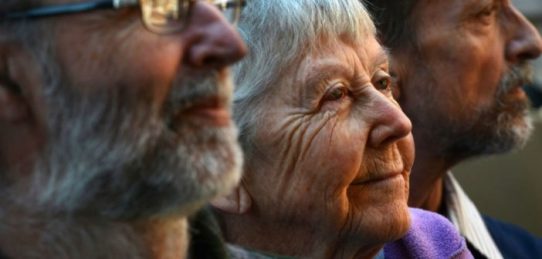
To celebrate the holidays, a reminder of one of 2015’s successes — the early release from prison of Sister Megan Rice, one of three brave peace activists who broke into high security nuclear weapons at the Y-12 nuclear facility in Oak Ridge, Tennessee.
We’ll hear from:
Sister Megan Rice, the 85-year old nun, speaks at length about the peaceful 2012 Transform Now Plowshares protest action which resulted in her being charged with sabotage and sentenced to almost three years in prison. Recorded when she was newly out of prison pending a re-sentencing hearing. All further charges were later dropped.
Co-defendant Gregory Boertje-Obed, 60, who along with co-defendant Michael Walli, 68, was sentenced to over five years in prison for their non-violent protest.
Originally presented on May 26, 2015, for Nuclear Hotseat #205.
Sister Megan Rice, newly released from prison in 2015 Photo Credit: Dan Zak, by his permission.
It seems fighting against environmental issues, nuclear madness and supporting peace strategies is not wanted on the web April/May 2017 Google algorythm changes. This has been widely reported by Democracy Now and many other websites! This is a quick video showing our blog getting hit as well. Bookmark https://nuclear-news.net/ before its to late! Evidence for the filtering is on this video;
A senior executive at the Russian nuclear processing plant suspected of being behind a spike of radioactivity over Europe this fall admitted Wednesday that the isotope recorded does emerge as part of the plant’s production cycle but said its levels are negligible.
Russian officials last month reported high levels of ruthenium-106 in areas close to the Mayak nuclear plant in the Ural Mountains.
The environmental group Greenpeace alleged that Mayak could have been the source of a ruthenium-106 leak, but the plant said it has not extracted the isotope or conducted any other operations that may lead to its release “for many years.”
But Yuri Mokrov, adviser to Mayak’s director general, said in a webcast press conference Wednesday that ruthenium-106 routinely emerges during the processing of spent nuclear fuel. Mokrov insisted, however, the plant was not the source of any major leak, saying it does not produce the isotope on purpose and that the emissions that the plant makes are so insignificant “we can only see it in the chimney.”
A Russian panel of experts dispatched to investigate the leak has failed to identify where the isotope came from, but alleged that it could have come from a satellite that came down from its orbit and disintegrated in the atmosphere. The commission said last week that a thorough inspection of the Mayak plant and its personnel had found no safety breaches.
“There is ruthenium in spent nuclear fuel, and Mayak during its activities routinely comes across this isotope,” Mokrov said, adding that “actual emissions are hundreds times lower the permitted levels.”
Mayak, in Russia’s Chelyabinsk region, saw one of the world’s worst nuclear accidents on Sept. 29, 1957, when a waste tank exploded. That contaminated 23,000 square kilometers (9,200 square miles) of territory and prompted authorities to evacuate 10,000 residents from neighboring regions.







 nuclear-news