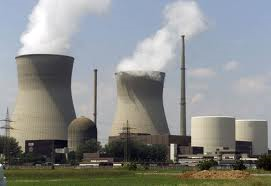
If anyone is looking for a policy to liven up the election campaign, Bob Hawke has an idea: make Australia the repository of the world’s nuclear waste.
”It’s a no-brainer,” he says. ”If you’ve got the safest geological sites in the world, why haven’t you got the moral responsibility to make them available?”
Mr Hawke has made the argument before, and it’s the one issue he raises when asked if he has achieved all he hoped for in the 22 years since he was prime minister.
Little time to relax: The in-demand Bob Hawke and his wife, Blanche d’Alpuget, now promoting a new book, at their home in July. Photo: Tim Bauer Photo: Tim Bauer
Australia would have that responsibility even if it did not sell uranium, contends Mr Hawke. When I express doubt about his proposal, he says: ”Of course, because you’re not – with respect – being intelligent about it. You’re just being prejudiced, nimby.”
Mr Hawke gave this interview in his office at 100 William Street, Sydney, last month to talk about his wife and biographer, Blanche d’Alpuget, whose new novel is about the politics of 12th-century France and England.
While she’s promoting The Young Lion, he has been fielding ”a thousand requests to speak at functions and open campaigns”.
Though he may have no takers for his nuclear-waste plan, the old lion at 83 remains a player. ”I’m very sad about the quality of our political life,” he says.”People basically hold Parliament in contempt and I put the position to Kevin [Rudd] and to Joe Hockey last night at the football [NSW-Queensland State of Origin in July] that both sides should say there are some things we don’t necessarily have the answer to. So we’ll put up draft legislation, there’ll be no caucus, we’ll go either side and abide by the decision of the Parliament.
”I think that would lift the quality of political life enormously. They both expressed some interest, so we’ll see.”
The change of prime minister from Julia Gillard to Mr Rudd ”had to happen”, Mr Hawke says. ”I like Julia and I supported her but the caucus had to look at the facts.”
…The Independent provided no source information whatsoever for their rather significant disclosure of top secret information. Did they see any such documents, and if so, who, generally, provided it to them? I don’t mean, obviously, that they should identify their specific source, but at least some information about their basis for these claims, given how significant they are, would be warranted. One would think that they would not have published something like this without either seeing the documents or getting confirmation from someone who has: the class of people who qualify is very small, and includes, most prominently and obviously, the UK government itself….
GCHQ’s headquarters on the outskirts of Cheltenham. Photograph: Barry Batchelor/PA
(Updated below)
The Independent this morning published an article – which it repeatedly claims comes from “documents obtained from the NSA by Edward Snowden” – disclosing that “Britain runs a secret internet-monitoring station in the Middle East to intercept and process vast quantities of emails, telephone calls and web traffic on behalf of Western intelligence agencies.” This is the first time the Independent has published any revelations purportedly from the NSA documents, and it’s the type of disclosure which journalists working directly with NSA whistleblower Edward Snowden have thus far avoided.
That leads to the obvious question: who is the source for this disclosure? Snowden this morning said he wants it to be clear that he was not the source for the Independent, stating:
I have never spoken with, worked with, or provided any journalistic materials to the Independent. The journalists I have worked with have, at my request, been judicious and careful in ensuring that the only things disclosed are what the public should know but that does not place any person in danger. People at all levels of society up to and including the President of the United States have recognized the contribution of these careful disclosures to a necessary public debate, and we are proud of this record.
“It appears that the UK government is now seeking to create an appearance that the Guardian and Washington Post’s disclosures are harmful, and they are doing so by intentionally leaking harmful information to The Independent and attributing it to others. The UK government should explain the reasoning behind this decision to disclose information that, were it released by a private citizen, they would argue is a criminal act.”
The US government itself has constantly used this tactic: aggressively targeting those who disclose embarrassing or incriminating information about the government in the name of protecting the sanctity of classified information, while simultaneously leaking classified information prolifically when doing so advances their political interests.
One other matter about the Independent article: it strongly suggests that there is some agreement in place to restrict the Guardian’s ongoing reporting about the NSA documents. Speaking for myself, let me make one thing clear: I’m not aware of, nor subject to, any agreement that imposes any limitations of any kind on the reporting that I am doing on these documents. I would never agree to any such limitations. As I’ve made repeatedly clear, bullying tactics of the kind we saw this week will not deter my reporting or the reporting of those I’m working with in any way. I’m working hard on numerous new and significant NSA stories and intend to publish them the moment they are ready.
Related question
For those in the media and elsewhere arguing that the possession and transport of classified information is a crime: does that mean you believe that not only Daniel Ellsberg committed a felony, but also the New York Times reporters and editors did when they received, possessed, copied, transported and published the thousands of pages of top-secret documents known as the Pentagon Papers?
“We encourage them to have the pills as part of their emergency kits, along with Band-Aids and flashlights,” Murphy said. “Those with old pills should throw them out and replace them with new pills.”
By Christine Legere, Cape Cod Times, Hyannis, Mass.McClatchy-Tribune Information Services
Aug. 24–State health officials supplied communities across the Cape and Islands with 1.7 million potassium iodide pills this week — more than enough to protect the thyroids of residents and visitors should a radioactive release occur at the Pilgrim Nuclear Power Station.
Residents are being urged to pick up pills for their families — two per person — and tuck them in their emergency kits.
According to the Nuclear Regulatory Commission, two pills will protect the thyroid for two days. By that time, the agency’s site states, people should have been evacuated or properly sheltered, and therefore out of harm’s way.
The thyroid gland is part of the endocrine system, which controls metabolism. The thyroid cannot differentiate between potassium iodide and the radioactive iodine that’s released in the steam of a failed reactor. Potassium iodide protects the thyroid by filling the gland to the point where it can’t absorb any more iodine for 24 hours.
The new batch of pills, which have a shelf life of seven years, will replace old potassium iodide tablets set to expire this month.
Residents can obtain pills free of charge from their health departments, courtesy of Entergy Corp., Pilgrim’s owner-operator.
The company is required by state law to provide the pills to residents in the 10-mile emergency zone around Pilgrim, as well as to Barnstable, Dukes and Nantucket counties, and Cape Ann, according to Anne Roach, spokeswoman for the Massachusetts Department of Public Health.
Entergy paid a little over 35 cents for each pill, Roach said. That puts the company’s cost to supply the Cape and Islands at just under $600,000.
According to the Centers for Disease Control and Prevention, the younger the person, the more vulnerable the thyroid is to injury from radioactive iodine. All infants, even those who are breast-fed, should be given the recommended dose of potassium iodide in case of a nuclear event, according to the CDC.
Pregnant women are advised to take the pill since all forms of iodine can cross the placenta to the growing fetus.
Ken Buesseler, a senior scientist as the Woods Hole Oceanographic Institution in Massachusetts who has studied radiation leakage from the Fukushima plant, said he is concerned about the lack of data on levels of strontium-90 in the waters off Fukushima http://www.csmonitor.com/World/Asia-Pacific/2011/0317/Japan-nuclear-crisis-sparks-calls-for-IAEA-reform [The IAEA are responsible for the testing of the Pacific after the Daichi meltdowns Arclight2011] .
He said that the groundwater now leaking into the Pacific—including, possibly, some contamination from leaking tanks—might now have much higher levels of that particular substance. Strontium-90 has potentially greater health risks than cesium isotopes because it becomes concentrated in the bones of fish and humans, he said.
[…]
When the company belatedly revealed last month the daily leakage of radioactive groundwater into the Pacific Ocean, a problem that outside scientists have long suspected,
[…]
The development prompted Japanese government officials to step in and take a more direct role: The government announced last week that it is considering spending 50 billion yen ($410 million) to finance construction of a frozen soil barrier—also known as an ice wall—in an effort to block the groundwater from the plant from reaching the ocean. (See related story: “Can an Ice Wall Stop Radioactive Water Leaks From Fukushima?“) That technology has long been used in the mining and construction fields, and reportedly performed well in containing radioactive water in a U.S. government test project in the early 1990s, but has never been used on a large scale at a nuclear power plant.
“This leak is very serious,”
said Dr. Janette Sherman, an Alexandria, Virginia-based physician who specializes in radioactive and toxic exposure. Dr. Sherman, who edited an in-depth study of health effects on cleanup workers in the 1986 Chernobyl nuclear disaster in the former Soviet Union, said she is concerned that the cleanup crew at Fukushima Daiichi may face long-term health risks.
She also raised the prospect of the radiation’s as-yet unknown effects on fish and other marine life in the Pacific.
[No mention of the unfolding Thyroid epidemic? Arclight2011]
Buesseler said he was concerned that the high level of radiation from the leaking tank might just be a harbinger of what is to come if more of the other temporary tanks begin to fail. But he’s even more worried by revelations of leaks and other problems at the plant, which lately have been coming with dismaying frequency.
“There is still a lot of contamination at Fukushima—in the land, in the buildings, and now from these tanks,” Buesseler said.
“Every bit of news that we’ve been getting is that the [radioactivity] numbers are going up.”
“I’m becoming less confident that [TEPCO] can contain the problem,” he said.
Japan’s Nuclear Regulation Authority shares Buesseler’s concern, warning that the latest leakage problem might be beyond TEPCO’s ability to cope [Dont mention the IAEA = Arclight2011]
“We should assume that what has happened once could happen again, and prepare for more,”
watchdog chairman Shunichi Tanaka told a news conference, BBC News reported. “We are in a situation where there is no time to waste.”
…Sullivan said Japan, which suffered a terrible nuclear disaster in 2011, “lacked the controls that the U.S. or France has” on nuclear power and storage…
The Mississippi Energy Institute is making a pitch to politicians and business leaders that Mississippi get into the used nuclear fuel storage business.
MEI will make a presentation Monday to the state Senate Economic Development Committee, then have a closed meeting with business and political leaders.
Proponents say that since opponents appear to have shot down federal government plans to store the country’s nuclear waste at Yucca Mountain, Nev., there’s an opportunity for Mississippi to bring billions of dollars and thousands of jobs by storing it here.
They say that because the federal government has moved so slow in creating centralized storage sites, nuclear plants, such as Grand Gulf in Port Gibson, are storing their used nuclear fuel in aboveground casks onsite.
But environmentalists say the idea is a bad one, and note the uproar a similar proposal to store nuclear waste in the Richton salt domes caused in Mississippi in the 1980s.
“When the U.S. decides to have a nuclear power renaissance, tremendous industry will come from that – there will be huge investment and job creation,” said Patrick Sullivan, president of the Mississippi Energy Institute. “Whatever the next renaissance in nuclear technologies will be, we believe it will take place adjacent to consolidated storage facilities.”
State Sierra Club spokesman Louie Miller said: “You’ve got to be kidding me. We went through this fight 30 years ago. Does Mississippi not have a bad enough image problem nationally without becoming a radioactive dump for the U.S. and probably the rest of the world? … I don’t care how many jobs it creates, if any. Think of how many it would destroy. This is a bad idea. This is something you don’t want in your backyard.”
A recent letter to the editor headlined “Nuclear obstructionism unwarranted” said that Georgia Gov. Nathan Deal blamed opponents of nuclear power for using many avenues of obstruction and then complaining about the increased costs, which are the result of their obstructionism.
The writer is referring to a Banner-Herald story headlined “Deal knocks opponents of nuclear energy” in which the governor was apparently talking through his hat, in the letter writer’s view, when he blamed nuclear opponents for running up the costs of nuclear plant construction. In the same story, Georgia Power executives are quoted as saying that the reasons for cost overruns are a longer than expected wait for a construction license and a delay by a Louisiana vendor in completing needed components due to misplaced quality-control records.
Nuclear energy is the most expensive electric power source there is, and it keeps on costing long after the power is used. It costs a lot of money just to store nuclear waste safely, for periods of time incomprehensible to most people. Any cleanup required is astronomically expensive. The Three Mile Island accident took 12 years and close to a billion dollars to clean up, and the Fukushima Daiichi cleanup is estimated to go as high as $112 billion and take 50 years.
The disaster at Fukushima was caused by hydrogen explosions when the electric power for pumping cooling water to the reactor cores and nuclear waste storage pits failed because the generators in the basement of the building were flooded.
The question arises: What kind of geniuses would put critical power generators in the basement of a nuclear plant built on the very edge of the sea of a tsunami-prone country?
The answer: The same kind of geniuses who would build the Diablo Canyon nuclear power plant in California directly on an earthquake fault line, or like those who caused Duke Energy Florida to have to shut down the Crystal River nuclear plant in 2009 due to damage to the reactor’s containment structure caused during a power upgrade and replacement of the unit’s steam generators. The damage was severe enough to lead to a decision to retire the whole plant. Now that’s a real waste of money!
It makes one wonder how well thought-out this whole nuclear-power boondoggle is.
Russia is funding a new technology centre in Vietnam and cooperating with an Argentine university, helping develop the skills needed for nuclear programs in those countries. Meanwhile, Rosatom claims more than 15,000 jobs could be created if South Africa proceeds with its nuclear energy expansion plans.
Russia and Vietnam signed an agreement in November 2011 covering the construction of such a centre in Vietnam. Under the terms of that agreement, the Russian government will provide loans worth $500 million for the centre’s construction.
Feasibility studies and site selection are underway, according to director of the Vietnam Atomic Energy Institute (VinAtom) Tran Chi Thanh. “Work on the project will probably begin in late 2015, under favourable conditions, and we have proposed building it in the Central Highlands city of Da Lat,” he told the Tuoi Tre newspaper. Once operational, the new centre will be used for conducting scientific research and developing technologies to support Vietnam’s planned nuclear power program. A research reactor at the new centre will be used for training programs as well as the production of medical isotopes.
Vietnam’s plans for nuclear power are well advanced. The country’s Atomic Energy Law came into force in 2009 and intergovernmental agreements in place with Russia and Japan allow for the construction of its first two nuclear power plants, both in Ninh Thuan province. Construction work has yet to begin, although the first Russian-designed unit at Ninh Thuan I is pencilled in to begin operation by the end of 2020.
Argentina assistance
A memorandum of cooperation on cooperation in nuclear education has been signed between the University of Buenos Aires and Rusatom Overseas – the subsidiary of Russia’s Rosatom state nuclear corporation concerned with exports of nuclear power plants. Under the agreement, the parties intend to develop cooperation programs, which may include scientific research, the exchange of experts, joint seminars and training manuals. They agreed to set up a working group to develop specific projects.
Russia and Argentina have signed many cooperation agreements in recent years, including one in 2010 which expresses Russian willingness to partner Argentina in designing and building plants in Argentina based on Russian VVER pressurized water reactors. In 2011, the two countries signed a memorandum on cooperation in the peaceful use of atomic energy that recognises Rosatom as a possible supplier for a fourth Argentinian nuclear power plant.
South African localization
Rosatom is ready to help South Africa with its plans to construct six nuclear power reactors, executive vice-president of Rusatom Overseas Boris Arseev announced last week.
Speaking at the annual conference of the Nuclear Industry Association of South Africa (NIASA) in Port Elizabeth, he claimed, “The implementation of the South African nuclear generation development program together with Rosatom would create 15,000 additional jobs in construction, service and operation of the new units, as well as several thousand jobs in related industries.”
NHK, Aug. 20, 2013 (Transcript): Health professionals in Northern Japan are suspicious about a trend they’re seeing after the nuclear accident there two years ago. The normal incidence rate is thyroid cancer in children is one in hundreds of thousands […] Health professionals had tested 210,000 children by the end of July. On top of the 18 minors they diagnosed [with thyroid cancer], they suspect 25 others may have the illness. Members of the panel say they can’t determine if the accident has affected the rate of cancer among children. They’ve decided to set up the team experts to look into the situation […]
Le Temps report – Google translation (click to view)
Le Temps (Switzerland); Summarized translation by Worldcrunch, Aug. 21, 2013: The nuclear accident of Fukushima is already leading to a surge in the number of cases of thyroid cancer, according to research being presented this week in Switzerland by Japanese scientist Toshihide Tsuda. […] annual incidence of thyroid cancer among those 18-years-old and younger in the Fukushima area to be 157 per one million, more than 31 times superior to the national average of five per million. [… A] stronger and faster evolution than that after the Chernobyl […] and, Tsuda believes, are only the first signs of a wider health catastrophe. […]
4-month old article in the Mainichi Daily News featuring Toshihide Tsuda, April 22, 2013: Professor Toshihide Tsuda of Okayama University, an expert on pollution investigations, says, “Although we cannot say anything for certain based on numbers from a single round of tests, this is important information for looking into the causal relationships between the spread of radioactive material (iodine-131) and the incidence of thyroid gland cancer. The regular release of information is necessary for keeping tabs on health changes.”
Japan’s nuclear regulator has suggested wants raising the severity level of a radioactive water leak discovered Monday at the tsunami-struck Fukushima-Daiichi plant from one to three on a seven-point international scale, Japanese media have reported.
News that the leak level has reached new heights of urgency dovetails with a new spike in thyroid cancer diagnosis rates among Fukushima youth who were exposed to fallout after the initial catastrophe in March 2011.
Six more young adults who were below the age of 18 when the Fukushima accident occurred were Wednesday diagnosed with the cancer, bringing the total number of confirmed thyroid cases resulting from the disaster to 18, Kyodo New Agency reported.
The new characterization of the leak would reclassify it from an “anomaly” to a “serious incident” on the seven point International Nuclear Event Scale (INES) maintained by the International Atomic Energy Agency (IAEA).
Plant operator Tokyo Electric Power Co. (Tepco) said about 300 tons (some 300,000 liters) of contaminated water has leaked from one of hundreds of 1,000-ton cylindrical steel tanks around the decimated plant, much of which has apparently seeped into the ground, Asashi Shimbun reported.
The utility is also checking for leaks at other tanks holding contaminated water at the site.
Bellona General Director and nuclear physicist Nils Bøhmer question whether Japanese authorities shouldn’t consider moving the classification of the accident to a Level 4, which would characterize it as “an accident with local consequences.”
“That highly radioactive water is presumably seeping into the ground would imply that this is somewhat more serious that the Level 3 Japanese officials are suggesting,” said Bøhmer. “Fukushima is the never-ending story and it is just getting worse and worse.”
Tepco officials said they presume the leaky tank is located somewhere west of Fukushima-Daiichi’s reactor No 4. Part of the water remains pooled within a concrete barrier surrounding a group of 26 tanks, said the paper.
Some one thousand tanks have been built to contain the water from the three melted down reactors, as well as underground water that is contaminated when it runs into reactor and turbine basements.
However, 350 of these tanks, holding 300,000 tonnes of water, are less durable than others, with rubber seams. Japanese officials say they have no choice but to keep building tanks to contain the contaminated water.
Tanks sloshing with highly radioactive water in ad-hoc containment system
The water in the tanks has a concentration of 80 million becquerels per liter, which translates into 24 trillion becquerels for 300 tons, Asashi Shimbun reported The water contains cesium, strontium, tritium and other radioactive materials, although cesium concentrations have been reduced through treatment.
Jerry-built coolant systems continue to keep the reactors and spent fuel ponds cool, but the consequence has been that enormous volumes of contaminated water have to be stored onsite at the destroyed nuclear power plant.
Tepco said that because the leaking tank is assumed to be about 100 meters from the coastline, the leak does not pose an immediate threat to the sea.
But Hideka Morimoto, an NRA spokesman, stomped on that report from Tepco, telling the Associated Press that contaminated water could reach the sea via a drain gutter.
The incidents have shaken confidence in the reliability of the tanks.
The most recent water incidents are viewed as the most serious since the initial explosion and meltdown.
A puddle of the contaminated water was emitting 100 millisieverts an hour of radiation, Kyodo news agency said earlier this week.
Masayuki Ono, general manager of Tepco, told Reuters news agency: “One hundred millisieverts per hour is equivalent to the limit for accumulated exposure over five years for nuclear workers; so it can be said that we found a radiation level strong enough to give someone a five-year dose of radiation within one hour.”
High radioactivity levels slow work
This severely complicates measures to stem the leak: The water is so radioactive that teams working to stem the flow must constantly be rotated because of the high exposure rates, and it is clear that most of the contaminated water has already been absorbed into the ground.
“We are extremely concerned,” Morimoto told reporters Wednesday. He urged Tepco to quickly determine the cause of the leak and its possible effect on water management plans.
Tepco spokesman Masayuki Ono told AP that workers were pumping out the puddle and the remaining water and will transfer it to other containers in a desperate effort to prevent it from escaping into the sea ahead of heavy rain predicted later in the day around Fukushima.
By Tuesday afternoon they had captured only about 4 tons (4,000 liters), Ono said.
Third revision in INES scale suggested
Japanese officials first suggested the most recent tank leak be classified as a level one incident on the INES scale. Suggestions by Japan’s newly constituted Nuclear Regulatory Authority (NRA) represent the third time incidents surrounding the Fukushima disaster, which began on March 11, 2011, have been upwardly revised on the INES scale.
The Fukushima incident was initially reported as a Level 5 “accident with wider consequences” on INES – by Japanese authorities immediately following the triple meltdown and reactor building explosions triggered by a total loss of primary and back up cooling systems after an 11-meter tsunami hit the plant.
Within days, that figure was upwardly revised by Japan to a Level 7 “major accident” – the first Level 7 since Chernobyl.
Japanese media has reported the upward revision of Monday’s radioactive water leak is a provisional measure that must be confirmed by the IAEA – just as the initial accident classifications were.
The move to classify the leak was announced in a document posted only in Japanese on the NRA’s website on Monday, the BBC reported. The move to reclassify the leak was subsequently approved at a Wednesday meeting of the regulators.
The Chinese Foreign Ministry said in a statement that it “hopes that the Japanese side can earnestly take effective steps to put an end to the negative impact of the after-effects of the Fukushima nuclear accident.”
WikiLeaks spokesperson, Kristinn Hrafnsson, joined us live to discuss WikiLeaks, Bradley Manning, Edward Snowden, David Miranda, The Guardian and much more. We’re live every Thursday either one-on-one or a larger debate but we’re open to your suggestions so please do leave a comment below and let us know who you’d like to see on Truthloader and what you’d like us to discuss.
Tom Carpenter is the Executive Director of Hanford Challenge, a non profit dedicated to the clean up of the Hanford Nuclear site in Washington state. Paul Gunter is an International Specialist at Beyond Nuclear, an organization that is working to eliminate nuclear weapons and nuclear power. Don Merrill talked with both of these men about similarities between the problems a Japan’s ill-fated Fukishima Daichi nuclear plant and the aging Hanford facility.
Radioactive Leaks in Japan Prompt Call for Overseas Help
….The International Atomic Energy Agency (IAEA) in Vienna and the U.S. Nuclear Regulatory Commission said they are prepared to help….
By Yuji Okada, Jacob Adelman & Peter Langan – Aug 22, 2013
The crippled nuclear plant at Fukushima is losing its two-year battle to contain radioactive water leaks and its owner emphasized for the first time it needs overseas expertise to help contain the disaster.
Tokyo Electric Power Co. (9501) is grappling with the worst spill of contaminated water since the March 2011 earthquake and tsunami caused a meltdown at the Fukushima Dai-Ichi plant. The call for help from Zengo Aizawa, a vice president at the utility, follows a leak of 300 metric tons of irradiated water. Japan’s nuclear regulator labeled the incident “serious” and questioned Tepco’s ability to deal with the crisis. Prime Minister Shinzo Abe made similar comments earlier this month.
“We will revamp contaminated-water management to tackle the issue at the Fukushima Dai-Ichi plant and seek expertise from within and outside of the country,” Aizawa said at a press conference last night in Tokyo. “There is much experience in decommissioning reactors outside of Japan. We need that knowledge and support.”
The International Atomic Energy Agency in Vienna and the U.S. Nuclear Regulatory Commission said they are prepared to help.
Subject: Patrick Henningsen and Brian Gerrish with a news update.
Patrick Brian and the team break down the Syrian crisis, highlighting the manipulation of the coverage of the so called recent Sarin attack. They point out that the UN inspection team were on the ground and local to the explosion.
They track the political organisations behind the news
Includes an RT report with Patrick Henningsen
And more..
Some great insights and investigative reporting from the UK Column team here.
And the UK alternative news scene will be covering more news and alternative music and art on The Peoples voice..
Do you want to present/report for The People’s Voice around the world?
Do you want to present/report for The People’s Voice around the world
If so, contact us with your experience and background at report@thepeoplesvoice.tv
Note from MsMilky;
Lots of info here today. I’m kind of tired so I’m just going to copy paste ENEnews headlines and you can watch the video to find out more. Cloud Seeding to make rain while they are unable to check for leaks in the tanks that hold radioactive waste water while it’s raining… pushing Japanese Food as “safe”, Allison Macfarlane moves the doomsday clock to 5 minutes before midnight… she’s the chairman of the NRC, how appropriate… mind boggling stuff…and a host of other topics. “enjoy”…
New York Times: “Potential for huge spill” of highly radioactive liquid from many Fukushima tanks at same time, says nuclear design expert — Top Officials: Leaks from more tanks are “the biggest concern… We are extremely concerned”
my 2nd time uploading this. The first one is still stuck in “processing”
originally uploaded by kna60 on YouTube. They translated text to French. http://youtu.be/pDu2-x8HGtg
Using google translator, the description box reads:
Timothy Mousseau holds including a Masters in zoology and a Ph.D. in Biological Sciences obtained in 1988, after which he completed a two-year postdoctoral fellowship in population biology. Since 1991, he is Professor in the Department of Biological Sciences at the University of South Carolina. Author of numerous scientific publications and two books, since 1999 he has worked with his colleagues on the biological and evolutionary consequences of radioactive contamination in Chernobyl regions in Ukraine and now Fukushima in Japan.
In this video of his speech at the Symposium in New York in March 2013, he shared with us the results of his research, fruits 1600 detailed field inventories at Chernobyl and Fukushima, on plants, insects, birds and mammals – Significant increase in genetic damage, birth defects and developmental abnormalities . – Fertility, life size and small populations. – Biodiversity in decline, local extinction of some species. – Transmission of mutations over generations, with the phenomenon of accumulation and migration of populations . unexposed Through this work remarkable and courageous pioneers, Dr. Mousseau and his colleagues show us that on the ground, it is far from the legend of the forbidden zone of Chernobyl has become a thriving Eden for wildlife, spread by the Chernobyl Forum, instances pro-nuclear sources and some unscrupulous.
And as we remember Dr. Helen Caldicott, it takes a few years for humans shows the same genetic alterations and abnormalities of development, already clearly visible in some cases in Russia Sweden …
For children in Fukushima Prefecture, the following figures have just been published by the authorities, 2 1/2 years after the disaster: – 18 cases of thyroid cancer found after surgery – 25 cases of tumors suspected malignant, awaiting response – more than 58% of children surveyed have nodules . thyroid to 5mm to 20mm or cysts Video made at the symposium “The Medical and Ecological Consequences of the Fukushima Nuclear Accident “(medical & environmental consequences of the nuclear accident at Fukushima) organized by the Helen Caldicott Foundation on 11 & 12 March 2013 in New York. http://nuclearfreeplanet.org/symposiu … Article, transcription, translations and docs annexes: http://kna-blog.blogspot.fr original Video and original PDF: ? http://www.totalwebcasting.com/view/ …
Video better quality Cinema Forum Fukushima: http:/ / cinemaforumfukushima.org / http://youtu.be/-rAJnIxQgxU Transcript in English by Afaz.at ( http://afaz.at/index_symp.html ) According to the French translation of R & F Gillard, editing & proofreading subtitles by me.
Category
Education
License
Creative Commons Attribution license (reuse allowed)
Remix this video!
Savannah River Site has completed a seven-year effort to adopt a new, top-secret computer system that keeps track of tritium reservoirs used in nuclear warheads.
The radioactive gas, which amplifies explosive power, has a half-life of about 12½ years. When tritium “reservoirs” in warheads require recharging, the stainless steel components are shipped to SRS, where recycled and newly extracted tritium is loaded into the containers.
The previous tracking program, known as Automated Reservoir Management System, or ARMS, had been in use more than 20 years and relied upon outdated technology, so the solution was a multi-year project to implement its modern replacement: ARMS II.
The system, with more than 200 users throughout the National Nuclear Security Administration’s nuclear arms facilities, tracks reservoirs throughout their life cycle and maintains real-time records of when components are processed or shipped from SRS, and when they should be returned based on their age.
The conversion required migrating more than 18 million historical records, according to site officials.
The transition also required a four-week outage, coordinated with other nuclear weapons sites, to allow migration of so much data to the new system.
Savannah River Site’s tritium program, which employs about 450 workers, is one of the last nuclear weapons functions still based at the South Carolina facility.
In addition to servicing the warhead reservoirs, SRS workers conduct performance tests on gas transfer systems randomly selected from the active stockpile to ensure performance without the need for nuclear testing.
In these critical tests, a valve fires to open a hole in the reservoir fill stem, and workers must verify that the fill gas is delivered.
The reservoirs are also exposed to extreme forces potentially experienced during use, including thermal changes, vibration, centrifugal force and drop tests. Workers also extract tritium from fuel rods produced at Tennessee Valley Authority reactors and from both surplus and active warhead reservoirs.
Though the number of nuclear warheads in the U.S. arsenal has fallen in recent decades, the total stockpile still includes about 4,650, of which an estimated 2,150 are deployed, according to a 2013 report by the Bulletin of the Atomic Scientists.