Nuclear reactors are not a viable source of new power in the West, Morningstar analysts conclude in a report this month to institutional investors.
Nuclear’s “enormous costs, political and popular opposition, and regulatory uncertainty” render new reactors infeasible even in regions where they make economic sense, according to Morningstar’s Utilities Observer report for November.
“Aside from the two new nuclear projects in the U.S., one in France, and a possible one in the U.K., we think new-build nuclear in the West is dead,” Morningstar analysts Mark Barnett and Travis Miller say in the report.
This view puts Morningstar on the same page as former Exelon CEO John Rowe, who said in early 2012 that new nuclear plants “don’t make any sense right now” and won’t become economically viable for the forseeable future.
Some nuclear cheerleaders continue to champion reactors as a source of new power, like members of an industry panel I covered last year who declared a renaissance of the nuclear renaissance and predicted nuclear plants would replace aging fossil fuel plants. They include the executive director of Exelon Nuclear Partners, who said, “The future of nuclear is looking pretty good.”
The Morningstar analysts call the nuclear renaissnace a “fiction” and a “fantasy,” at least in the West.
“The economies of scale experienced in France during its initial build-out and the related strength of supply chain and labor pool were imagined by the dreamers who have coined the term ‘nuclear renaissance’ for the rest of the world. But outside of China and possibly South Korea this concept seems a fantasy, as should become clearer examining even theoretical projections for new nuclear build today.”
Tom “Smitty” Smith, Texas director for Ralph Nader’s watchdog group Public Citizen, told the Fort Worth Star-Telegram he had suspected that Energy Future Holdings has been keeping the Comanche Peak expansion application alive because “they would be valuable assets in bankruptcy.”
“This stunning decision shows how little bankers on Wall Street value nuclear power,” he said..
DALLAS (AP) — The owner of a North Texas nuclear power plant has tabled its request for federal permission to expand.
Dallas-based Luminant Generation had asked the U.S. Nuclear Regulatory Commission for a license to double the number of nuclear reactors at its Comanche Peak plant from two to four.
However, in a letter to the NRC on Friday, Luminant said its Japanese-based reactor partner had decided to focus on restoring nuclear power in Japan after the 2011 earthquake and tsunami led to a disaster at the Fukushima nuclear power plant.
Mitsubishi Heavy Industries “has informed us that they will materially slow the development of their design control document for their new reactor design (for Comanche Peak) by several years. In addition, both (Mitsubishi) and Luminant understand the current economic reality of low Texas power prices driven in large part by the boom in natural gas,” Luminant said in a corporate statement.
That boom was ignited by the use of hydraulic fracturing to release abundant natural gas resources in North Texas. Natural gas is used to fire the boilers of numerous electric power generating plants.
“Currently, it’s just not competitive with gas,” Ross Baldick, University of Texas engineering professor, told The Dallas Morning News. “Nuclear’s capital costs are so high you can’t win on it.”
Also in the background is Dallas-based corporate parent Energy Future Holdings’ flirtation with bankruptcy.
Luminant is keeping its application on file with the NRC, though.
“Luminant will continue to support nuclear power as part of the solution to Texas electric reliability and re-evaluate this decision as conditions change,” according to the company statement.
The plant is situated about 40 miles southwest of Fort Worth near the town of Glen Rose. Its two nuclear reactors have the capacity to generate 2,300 megawatts of electric power — enough to power about 1.15 million homes in normal conditions and 460,000 homes in periods of peak demand, according to the company. The plans to add two more reactors would have lifted the plant’s generating capacity to 5,700 megawatts.
The project drew opposition from environmental groups, which were heartened by Luminant’s decision to place the expansion on hold.
Tom “Smitty” Smith, Texas director for Ralph Nader’s watchdog group Public Citizen, told the Fort Worth Star-Telegram he had suspected that Energy Future Holdings has been keeping the Comanche Peak expansion application alive because “they would be valuable assets in bankruptcy.”
“This stunning decision shows how little bankers on Wall Street value nuclear power,” he said.
Abu Dhabi: The Emirates Nuclear Energy Corporation (ENEC), the company developing the UAE’s peaceful nuclear energy programme, will host the inaugural New Nuclear International Conference (NNIC) in Abu Dhabi next week.
The conference will bring together nuclear energy leaders from more than 40 countries to discuss the opportunities for new and developing nuclear energy programmes around the world, exploring all aspects of the nuclear energy lifecycle. Key decision makers of nuclear energy programmes, energy policy makers from around the world, nuclear regulators, industry vendors, and legal and project finance specialists will all be represented during the Abu Dhabi-based event.
The conference is held under the patronage of Suhail Mohammad Al Mazroui, UAE Minister of Energy.
The conference will provide an opportunity for the UAE to share its experiences as the first nation in more than three decades to break ground on a nuclear energy plant. The UAE programme has been heralded as the “Gold Standard” for nations considering developing nuclear energy for the first time.
“We are looking forward to welcoming the world’s nuclear energy industry to Abu Dhabi to discuss important issues facing nuclear energy nations worldwide,” said Al Mazroui. “The UAE has much to share from its experiences in nuclear energy, we also have much to gain from the experiences of other nations to ensure our peaceful nuclear energy program remains a model for others to follow.”
Today, more than 430 nuclear energy plants operating in 30 countries worldwide generate 12.3 per cent of the world’s electricity. This number is set to rise, with 71 new nuclear plants currently under construction in 14 countries, and more than 40 countries who are seriously considering nuclear as a source of electricity.
WASHINGTON, October 11 (RIA Novosti) – The US Air Force on Friday fired the general in charge of its entire arsenal of nuclear missiles, citing “a loss of trust and confidence in his leadership and judgment.”
Maj. Gen. Michael Carey was removed from his command of the 20th Air Force, which is responsible for the nation’s three wings of intercontinental ballistic missiles (ICBMs), the US Air Force Global Strike Command (AFGSC) said in a statement.
The three wings of ICBMs consist of a total of 450 missiles at three bases across the country, The Associated Press reported.
The decision to fire Carey was made by the commander of AFGSC, Lt. Gen. James Kowalski, “based on information from an Inspector General investigation into Carey’s behavior during a temporary duty assignment,” the statement said.
Kowalski is in charge of all of the Air Force’s nuclear weapons.
Officials would not say what led to Carey’s dismissal, but the statement said it had nothing to do with his command of the nation’s nuclear weapons or sexual misconduct.
The vice commander of AFGSC, Maj. Gen. Jack Weinstein, has been named Carey’s interim replacement.
Official campaigning began Sunday for the Fukushima mayoral election, with the incumbent and two challengers filing candidacy papers.
Among the biggest issues in the Nov. 17 election are how to protect the health of citizens and decontaminate areas affected by the Fukushima Daiichi nuclear crisis as well as efforts to speed up recovery after the deadly earthquake and tsunami in March 2011.
Incumbent Mayor Takanori Seto, 66, seeking a fourth four-year term, will face independent challenger Kaoru Kobayashi, 54, and Yutaka Yamada, a 58-year-old backed by the Japanese Communist Party.
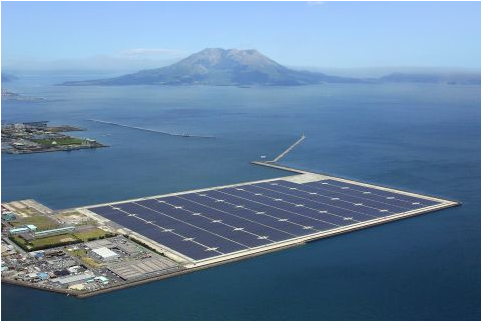
Nearly 300,000 offshore solar panels will provide enough power for 22,000 homes as post-Fukushima Japan struggles with energy sources.
Kagoshima in southern Japan is known for its puffing volcano Sakurajima, green tea, and rocket launchpads. Now it has a new superlative — the country’s largest solar plant.
Smartphone maker Kyocera recently launched the Kagoshima Nanatsujima Mega Solar Power Plant, a 70-megawatt facility that can generate enough electricity to power about 22,000 homes.
The move comes as Japan struggles with energy sources as nuclear power plants were shut down after meltdowns hit Tokyo Electric Power Co.’s Fukushima plant in 2011.
Set on Kagoshima Bay, the sprawling Nanatsujima plant commands sweeping views of Sakurajima, an active stratovolcano that soars to 3,665 feet.
It has 290,000 solar panels and takes up about 314 acres, roughly three times the total area of Vatican City.
Kyocera established the facility with six other firms as well as a company to run the plant. It will sell electricity generated to the local utility, Kyushu Electric Power Co.
A Japanese government program that began in 2012 compels utilities to buy 100 percent of electricity from certain renewable energy power plants.
To spread its solar philosophy, the Kagoshima plant hopes to attract tourists, students, and other visitors to an observation room overlooking the installation, which joins other photovoltaic attractions in Japan such as the Sanyo Solar Ark.
If you can’t make it, check out the Japanese promo ad from Kyocera in the vid below.
KYOCERA THINKING ENERGY」歴史を変えるメガソーラー篇(30秒)
A Japanese prime ministerial envoy secretly promised to the United States that Japan would resume its controversial “pluthermal” program, using light-water reactors to burn plutonium, according to documents obtained by the Mainichi.
***
The revelation comes as Japan’s pluthermal project remains suspended in the wake of the Fukushima No. 1 Nuclear Power Plant disaster due to safety concerns. The fact that a Japanese official promised to the U.S. to implement such a controversial project without a prior explanation to the Japanese public is expected to stir up controversy.
***
Under the pluthermal plan, spent nuclear fuel generated in light-water reactors is reprocessed to extract plutonium, which is then mixed with uranium to create mixed-oxide (MOX) fuel for use in power generation. However, many experts have raised questions about the program, citing its high costs and the risks posed by the fuel’s comparatively low melting point and the decreased effectiveness of control rods.
***
The documents that the Mainichi obtained are a compilation of cables recording the Ogushi-Poneman talks in the U.S. on Sept. 12 last year. During the meeting, Ogushi explained that Japan would inject all available policy resources to break away from nuclear power generation in the 2030s, that it would steadfastly promote the nuclear fuel cycle program in the medium and long term….
***
Despite the country not knowing which nuclear reactors will be authorized to resume operations following the July implementation of the new regulatory standards, the government has been pushing ahead with its plans to restart the controversial pluthermal program.
“It is abnormal for sure,” said one official with the Agency for Natural Resources and Energy. “But it can’t be helped if the Rokkasho plant is to be put into operation.”
The former Japanese Ambassador to Switzerland – Mitsuhei Murata – said recently:
In the US there are 31 [sic] units the same type of that of Fukushima nuclear plant [23 are virtually identical to Fukushima]. So, if the accident be spread too far that really embarrasses the US. So that is why the crisis of Unit 4 has been toned down recently. The USA is actually the main reason.
After months of denials, Tepco confirmed in July that contaminated water from the plant was flowing into the Pacific Ocean. It has also found that 300 tonnes of highly radioactive water leaked from one of hundreds of quickly built storage tanks, among numerous other problems.
(Reuters) – The operator of Japan’s wrecked Fukushima nuclear plant will double the pay of contract workers as part of a revamp of operations at the station, after coming under criticism for its handling of clean-up efforts.
Hazard pay for the thousands of workers on short-term contracts will be increased from 10,000 yen ($100) to 20,000 yen a day, Tokyo Electric Power Co said in a statement on Friday.
It will also tighten supervision of contractors and improve meals and other conditions at the site where three reactors melted down in March 2011 after an earthquake and tsunami.
A Reuters investigation last month found that workers’ pay was being skimmed, some had been hired under false pretences, and some contractors had links to organized crime gangs.
Tokyo Electric also faces a shortage of workers for the clean-up, that will take decades and cost more than $150 billion.
The revamp of operations comes as the company prepares to start removing spent fuel rods from one of four damaged reactors. The unprecedented operation, which could begin next week, will mark the beginning of full decommissioning efforts.
…“From the beginning, the United States has worked to support the Government of Japan in the immediate response efforts and in recovery, decommissioning, and cleanup activities. Within days of the accident, the Department of Energy sent a team of 34 experts and more than 17,000 pounds of equipment in support of efforts to manage the crisis. I was able to witness firsthand the continuing partnership between TEPCO and U.S. agencies and companies...
“On Friday, I made my first visit to the Fukushima Daiichi Nuclear Power Station. It is stunning that one can see firsthand the destructive force of the tsunami even more than two and a half years after the tragic events. The words of President Obama following the incident still hold true today: ‘The Japanese people are not alone in this time of great trial and sorrow. Across the Pacific, they will find a hand of support extended from the United States as they get back on their feet.’ My colleagues from the Department of Energy and I are grateful for the cooperation and openness of our host, TEPCO President Hirose, and his dedicated staff. They face a daunting task in the cleanup and decommissioning of Fukushima Daiichi, one that will take decades and is being carried out under very challenging conditions. The TEPCO workforce is facing unprecedented challenges and is clearly focused on devising and implementing solutions.
“From the beginning, the United States has worked to support the Government of Japan in the immediate response efforts and in recovery, decommissioning, and cleanup activities. Within days of the accident, the Department of Energy sent a team of 34 experts and more than 17,000 pounds of equipment in support of efforts to manage the crisis. I was able to witness firsthand the continuing partnership between TEPCO and U.S. agencies and companies.
“The DOE, our national labs, and U.S. companies will continue to offer our experience and capabilities to assist the Japanese government and TEPCO, especially with regard to water contamination issues. On Thursday, we were able to meet with Prime Minister Abe, METI Minister Motegi, and other senior members of the Japanese government. Their commitment to advancing the Convention on Supplementing Compensation of Nuclear Liability is much appreciated, since this will facilitate the further engagement of U.S. and other companies in Fukushima cleanup.
“We also witnessed the progress being made on spent fuel removal activities in parallel with the water challenges. It appears that spent nuclear fuel will begin to be removed from Unit 4 as scheduled in mid-November. This will be significant milestone for TEPCO and the Japanese Government and in the process of decommissioning the site.
“As Japan continues to chart its sovereign path forward on the cleanup at the Fukushima site and works to determine the future of their energy economy, the United States stands ready to continue assisting our partners in this daunting yet indispensable task. The United States and Japan created the Bilateral Commission to strengthen our strategic and practical engagement on civil nuclear R&D, Fukushima cleanup, emergency response, nuclear safety regulatory matters, and nuclear security and nonproliferation, and we look forward to the commission meeting next week in Washington, D.C.”
NHK WORLD, Oct. 31, 2013: Ernest Moniz […] in his speech in Tokyo on Thursday […] said the success of the cleanup of areas around the Fukushima plant and decommissioning of reactors have global significance. Moniz said the US has a direct interest in seeing the next steps are done efficiently and safely.
AP, Nov. 2, 2013: In a speech Thursday in Tokyo, [Moniz] said “the success of the cleanup also has global significance. So we all have a direct interest in seeing that the next steps are taken well, efficiently and safely.”
NHK, Nov. 2, 2013: Ernest Moniz spoke to NHK on Saturday in Tokyo, one day after visiting the Fukushima Daiichi plant. Moniz said he was shocked to see the scale of the damage that remains more than 2 and half years after the tsunami disaster and the nuclear accident.He said he also sensed how difficult work at the plant is with workers required to wear full face masks and other protective gear.
…The greatest physical damage might have come on the way home: Still hungry after lunch, we stopped for doughnuts…. Chico Harlem (below)
…As our bus left reactor four and drove along the sea front, I pointed my new monitor out of the window towards reactor building three. Suddenly the needle started to spike – 1,000 counts per second, then 2,000, 3,000, finally it went off the scale.
There, outside the bus, just a few dozen meters away is the real dead zone, a place where it is still far too dangerous for anyone to go. No human has been inside reactor three since the disaster. To do so would be suicide. No-one knows when it will be possible to go in… Rupert Wingfield-Hayes ( NOTE ; The gieger was likely reading Ruperts own positional reading. Or is there a new directional remote gieger on the market that measures a few meters away from the sensor?? Poor Rupert !! Arclight2011)
FUKUSHIMA DAIICHI NUCLEAR POWER PLANT, Japan — On Thursday, I visited the Fukushima Daiichi nuclear power plant for the first time, and it was a bit like seeing the movie after having read the book — vivid images flooding every space that my imagination hadn’t yet filled.
The visit didn’t do much to change my thinking about the main problems at the plant. But it did give me a sense of what it’s like to walk the premises and to work there, in layers of suffocating protective gear. I also got a sense of what it’s like to eat lunches provided by the plant’s operator, Tokyo Electric Power Co., or Tepco — in this case, white-bread sandwiches filled with a mayonnaise-meat ooze.
Tepco provided the tour Thursday to more than a dozen foreign journalists, and the first impression came on the bus ride to the facility. The plant is even more isolated than you’d expect. On the way there, you drive for miles through a recommended evacuation zone, an area of gutted car dealerships, abandoned homes and weeds high enough to obscure traffic signs. Starting about three miles from the plant, only authorized vehicles are allowed to enter. Polite policemen in face masks wave in Tepco vehicles, and for the rest of the drive, there are no human beings to be seen.
Soon after we arrived at the plant, we were escorted to a change room where we stripped down to our underwear and then dressed ourselves in Tepco-provided gear. First, gray and navy athletic gear that seemed suitable for yoga. Then socks. Then white gloves. Then a baggy white suit, followed by another layer of socks, two more sets of gloves, a cotton cap and plastic covers for our shoes. Last came the tight-fitting face mask, the sort that made us all look like nocturnal tree animals, with enormous eyes and extended honking noses. Similar equipment seems to be required for every employee at the plant, or at least the ones we saw. With the masks on, holding any kind of conversation is difficult. Because of that, workers need to know what they’re doing before they actually get there.
Seeing the nuclear plant firsthand, there’s no clear sign of chaos or trouble. Work is done mostly in silence. And some of the biggest problems — such as the leakage of contaminated water into the ocean — are happening out of sight. But cleanup from the March 2011 earthquake and tsunami has happened on a need-to-fix basis. Some buildings are pristine. Others have been ravaged by the natural disasters and left to rot. In one area of the nuclear plant, an abandoned car is wedged between pieces of rubble, its windshield shattered. In another area, a set of picnic tables — presumably an old lunch spot for employees — is now covered with a rich red rust.
Tepco allowed us out of the tour bus at three places around the site. We spent five minutes looking at tanks used to store contaminated water. We walked inside the No. 4 reactor building. Lastly, we caught a glimpse of construction taking place along the coastal side of the facility. Dosimeters buzzed sporadically, detecting high radiation levels. But after two radiation checks on the way out — one for surface contamination, one for internal contamination — I was given a clean bill of health. The greatest physical damage might have come on the way home: Still hungry after lunch, we stopped for doughnuts.
INTERVIEW: Norbert Suchanek is the founder and General Director of the Uranium Film Festival, which covers all aspects of the nuclear issue. A native of Germany, Suchanek is a journalist, author, filmmaker and activist living in Rio de Janeiro. He shares with Nuclear Hotseat listeners how the festival got started, his vision for an international nuclear film archive, and how you – yes you! – can get your film into the 2014 festival. The Uranium Film Festival comes to the United States this month (November, 2013) for showings in New Mexico and Albuquerque, with stops in early 2014 in New York and Washington, D.C. Learn more about the Uranium Film Festival at: www.UraniumFilmFestival.org. – See more at: http://www.nuclearhotseat.com/nuclear-hotseat-124-pandoraschmandora-weve-got-uranium-film-festival/#sthash.hiTbmypU.dpuf
INTERVIEW: Norbert Suchanek is the founder and General Director of the Uranium Film Festival, which covers all aspects of the nuclear issue. A native of Germany, Suchanek is a journalist, author, filmmaker and activist living in Rio de Janeiro. He shares with Nuclear Hotseat listeners how the festival got started, his vision for an international nuclear film archive, and how you – yes you! – can get your film into the 2014 festival. The Uranium Film Festival comes to the United States this month (November, 2013) for showings in New Mexico and Albuquerque, with stops in early 2014 in New York and Washington, D.C. Learn more about the Uranium Film Festival at: www.UraniumFilmFestival.org. – See more at: http://www.nuclearhotseat.com/nuclear-hotseat-124-pandoraschmandora-weve-got-uranium-film-festival/#sthash.hiTbmypU.dpuf
Nuclear Hotseat is the weekly international news magazine keeping you up to date on all things anti-nuclear. Produced and Hosted by Three Mile Island survivor Libbe HaLevy, each podcast contains the week’s international nuclear news, at least one expert interview, ways to protect physical health of yourself and your loved ones from the dangers of radiation exposure, and activist opportunities.
Among the nuclear experts interviewed by Nuclear Hotseat in its first two years:
Arnie Gundersen, nuclear engineer, head of Fairewinds Energy Education
Dr. Helen Caldicott, founding President, Physicians for Social Responsibility
Dr. Janette Sherman and Joseph Mangano, authors of “An Unexpected Mortality Increase in the United States Follows Arrival of the Radioactive Plume from Fukushima: Is There a Correlation?”
Karl Grossman, Journalist, host of “Enviro Close-Up”
Daniel Hirsch, Nuclear Policy Lecturer, UC Santa Cruz
…the project seeks to help develop the next generation of leaders with both the necessary subject matter expertise and the professional skills to be effective in shaping and implementing policy….
The Project on Nuclear Issues (PONI) aims to build and sustain a networked community of young nuclear experts from the military, national laboratories, industry, academia, and policy communities.
Addressing the complex array of nuclear weapons challenges will require a solid foundation of expertise across numerous sectors. Because most of these challenges are long-term, the Project on Nuclear Issues (PONI) aims to build and sustain a vibrant community of young nuclear experts from the military, national laboratories, industry, academia, and the policy community. To that end, PONI maintains an enterprise-wide membership base, hosts four major conferences and several smaller events each year, maintains an online blog, holds live debates on critical nuclear weapons issues, runs a six-month academic program for young experts, organizes bilateral exchanges involving young experts from the U.S. and abroad, oversees a working group of top young professionals, and distributes bi-weekly news and event announcements to members.
The project has three primary objectives.
First, PONI aims to build and sustain a networked community of young nuclear experts from across the nuclear enterprise, including in the laboratories, military, industry, academia, and policy world.
Second, the project seeks to help develop the next generation of leaders with both the necessary subject matter expertise and the professional skills to be effective in shaping and implementing policy.
Third, PONI works to mobilize the wide-ranging nuclear expertise within its membership ranks to generate new ideas and advance the public debate on all issues concerning nuclear weapons.
There are over 1,100 PONI members and affiliated programs in the UK and France. Membership is open to anyone working in the nuclear field or studying nuclear weapons issues. Members receive a periodic newsletter containing updates on activities, invitations to PONI events and conferences, and access to members-only forums and job boards. Visit the PONI Membership page for more information about the community or click here to go directly to the application.
Saudi Arabia has been “generous” to Pakistan’s defence sector for years, the BBC says.
This handout photograph released by Pakistan’s Inter Services Public Relations (ISPR) office shows a Hatf IX short-range nuclear-capable ballistic missile launched from an undisclosed location in Pakistan on May 29, 2012. Pakistan said on May 29 it had successfully test fired a short-range nuclear-capable ballistic missile. It was the third time Pakistan had test-fired a ballistic missile since arch-rival India last month launched its new long-range Agni V, capable of hitting targets anywhere in China.
Saudi Arabia has reportedly invested in the Pakistan nuclear program and has atomic weapons “on order” ready to be delivered.
The Saudis have long been interested in obtaining nuclear weapons to counter the possibility of an nuclear-armed Iran.
The BBC quotes a senior NATO source saying Pakistani nuclear weapons are ready and waiting to be delivered to Saudi Arabia.
The Newsnight report also cites former chief of Israeli military intelligence, Amos Yadlin, who told a conference in Sweden last month that if Iran acquired a nuclear bomb, “the Saudis will not wait one month. They already paid for the bomb, they will go to Pakistan and bring what they need to bring.”
Saudi Arabia purchased nuclear-capable ballistic missile launchers in the late 1980s from China, the report says.
The BBC also cites American intelligence reports and a former Pakistani security officer.
Gary Samore, who was U.S. President Barack Obama’s counter-proliferation adviser until earlier this year, told Newsnight: “I do think that the Saudis believe they have some understanding with Pakistan, that in extremis they would have claim to acquire nuclear weapons from Pakistan.”