LONDON – In April 1958, the first march to Aldermaston, Britain’s bomb factory in Berkshire, unleashed a new movement which was to have global repercussions. It mobilised thousands against the Bomb and shaped radical protest for generations. The famous symbol produced for the march by artist Gerald Holtom became CND’s own symbol and is universally recognised as the sign of peace.
Today, 1st April 2018, anti-nuclear campaigners from across Britain will gather at the Aldermaston Atomic Weapons Establishment in Berkshire to mark the 60th anniversary of that first Aldermaston march. Groups from Bristol, Bath, Leeds, Sheffield, Chesterfield, Derby, Nottingham, Leicester, Oxford, and Manchester are among those expected at the protest event.
A giant reproduction of the iconic CND logo will be installed in front of the bomb factory. It is part of a UK wide tour visiting over 20 sites, including the Clifton Suspension Bridge in Bristol and the White Cliffs of Dover.
Kate Hudson, CND General Secretary, said:
“Protest, speeches, music and poems will recall the 60 years of campaigning against nuclear weapons since that the first path-breaking Aldermaston march, and we will look to the future. We will recall our movement’s many achievements as well as recommitting to protest and political action to eliminate all nuclear weapons.
“The world will not be safe from the horrors of nuclear warfare until we have achieved that goal. Those dangers cannot be imagined away, they remain a real and present threat unless concrete and bold actions are taken by our political leaders.”
Bruce Kent, CND vice president, said:
“It took 40 years to get votes for women. The ending of slavery took almost 50 years, so the fact that things take a long time doesn’t deter us. CND will keep campaigning and demanding change until all nuclear weapons around the world have been abolished.”
The Prime Minister of Belgium Charles Michel after a meeting of the Council of Ministers with fewer staff announced that the Federal government of the Kingdom come to an agreement about “energy Pact”, reports the Chronicle.info with reference to Stranaya.
So, Michelle on Twitter posted a photo of the document minutes of the meeting with points of decision. Thus, it affirmed the denial of Belgium on nuclear power by 2025.
At the same time, Belgian media reported that the head of the government announced the draft law on the new capacities of electricity production, in particular, will identify new areas for parks construction of wind generators.
In the next few hours, the end of human civilisation may commence. We’ve had a good run – about 6,500 years, actually – and now we will perish in fire, famine, drought, never-ending winters, disease and chaos. A single megaton nuclear weapon dropped on the House of Commons would kill more than a million people outright. Nearly 2.5 million would be burned, maimed and injured. The fireball radius – the area that represents total annihilation – would stretch for nearly a kilometre.
That’s just one bomb, of course. What if 100 nuclear warheads with a much lower yield – 15 kilotons, say, the size of the bomb dropped on Hiroshima – were exchanged on the Indian subcontinent? Well, scientists have modelled this scenario, and the calamity extends far beyond the borders of India and Pakistan. As five megatons of black carbon instantly enter the atmosphere, temperatures will suddenly fall, rainfall will decline, the ozone layer will thin dramatically and the frost-free growing period for crops will shorten by between 10 and 40 days. According to the International Physicians for the Prevention of Nuclear War, 2 billion people could starve in the aftermath.
In a full east-west exchange billions would also die. Infrastructure would collapse. The survivors would, it is often said, envy the dead. They would suffer torturous protracted deaths from radiation; they would scrabble for food in irradiated soil; as healthcare systems implode, their illnesses and cancers would be untreated. For the diminishing minority who remained alive, it would be everyone for themselves in a struggle for survival in a ravaged hellscape. Nuclear deterrence is a myth. And a lethal one at that Why inflict this horror on your imagination?
It seems so abstract and distant, and yet, according to the Doomsday Clock of the Bulletin of the Atomic Scientists, we are but two minutes from midnight. The US and Russia combined have around 2,000 nuclear weapons on a hair trigger, meaning they could be launched in minutes, leaving my scenarios just hours away. There have been many close calls. In 1979, Zbigniew Brzezinski – President Carter’s national security adviser – was woken up at 3am to be told that 250 Soviet nuclear missiles were heading to the US. If the president were to retaliate, he would have between three and seven minutes to decide. An updated report came through: there were 2,200 missiles. Armageddon beckoned. But the reports were wrong. “Someone had mistakenly put military exercise tapes into the computer system,” as the former defence secretary Robert Gates put it. Consider today, with Donald Trump in the White House facing off against North Korea’s Kim Jong-un. A nuclear arsenal on a hair trigger under the control of a man whose Twitter feed is a never-ending temper tantrum is not exactly reassuring. Millions could perish in a nuclear conflagration in a matter of hours.
Which brings me to the noble but marginalised cause of nuclear disarmament. This Sunday marks 60 years since the first march to Aldermaston – where Britain’s nuclear bombs are produced – which spawned the Campaign for Nuclear Disarmament (CND). There is a certain paradox in the fact that a supporter of nuclear disarmament leads the Labour party, and yet the cause is barely on the nation’s political radar, even as Kim pledges to de-nuke the Korean peninsula. That’s because Labour’s leadership has made a strategic decision to accept party policy, which is to renew Trident. Cards on the table: I’m a unilateralist but I’ve accepted Labour’s position. It depends how the question is phrased, but polling does not suggest any substantial public appetite for unilateral disarmament.
Many unions are opposed. Such a policy would reopen a civil war with a Labour right that is already increasingly febrile. With the priority being to transform Britain with socialist policies, such a compromise seems sad but unavoidable. And yet the arguments for replacing Trident are based on utter delusion, the cost of acting on these delusions is grotesque, and we are rendered colossal hypocrites by lecturing the world about weapons of mass destruction while renewing our own. CND believes the lifetime cost will be at least £205bn. What would that money mean for an NHS that last year, the Red Cross said, faced a “humanitarian crisis”; for our struggling education system; and for eliminating the housing crisis? Listen to Tony Blair’s former defence secretary Des Browne, who suggested that cyber attacks against Trident could render it obsolete. Or take former Tory defence secretary Michael Portillo, who said that Trident’s replacement was “a waste of money” and that “our independent nuclear deterrent is not independent and doesn’t constitute a deterrent”.
Tony Blair himself said he could see “the common sense and practical argument” against Trident, that “the expense is huge, and the utility in a post-cold war world is less in terms of deterrent, and nonexistent in terms of military use”. So why throw all that money at it? Because in Blair’s own words it would be “too big a downgrading of our status as a nation”. All that wasted money for status alone. Trump’s ‘fire and fury’ has revived my nuclear nightmares There’s more wisdom from the Tory Crispin Blunt, when he was chairman of the Commons foreign affairs committee in 2016, who said: “At what point is it no longer value for money in the UK?
In my judgment we have reached that point.” We fail to adequately tackle the actual threats facing Britain and leave our conventional forces under-resourced because of the Trident obsession. Nearly a decade ago, Field Marshall Lord Bramall – former head of the armed forces – and two senior generals described nukes as “completely useless as a deterrent to the threats and scale of violence we currently face or are likely to face”. Take terrorism, take cyber-attacks, take climate change: all pose grave, demonstrable threats to our security. Yet we are failing to invest in tackling them, while billions are thrown at weapons of mass destruction that do not keep us safe.
Labour policy cannot shift until public opinion does decisively. As the cold war revived in the early 1980s, CND led mass national campaigns that began to shift opinion: the same is needed today to stop this madness (and it is madness). There are other steps that can be taken in the meantime. Labour should be campaigning for Russia and the US to cease putting their arsenal on hair-trigger alert. They should exert moral pressure on other nations to sign up to the comprehensive test ban treaty. Britain cannot disarm the world, but it can set an example. The nightmare of nuclear apocalypse hangs over humanity. It will one day become a reality, unless we stop it.
60-day Public Comment Period on Proposed Modifications to PUREX Storage Tunnels
Category:
Public Comment Periods
Event Date:
February 12 – April 12
The U.S. Department of Energy Richland Operations Office (RL) is holding a 60-day public comment period from February 12 to April 12, 2018, to support a Class 3 Permit Modification to the Hanford Dangerous Waste Permit. The modification addresses the stabilization of Tunnels 1 and 2 at the Plutonium Uranium Extraction (PUREX) Plant, until final closure decisions are made and implemented.
The PUREX Plant is located in the 200 East Area of the Hanford Site near Richland, Washington. It was used from 1956 to 1988 to process spent nuclear reactor fuel, and recovered plutonium, uranium and other radioactive isotopes. Spent nuclear fuel is fuel that has been exposed to radiation in a nuclear reactor. Two tunnels are used for the storage of waste — mostly large equipment components — from the PUREX plant and other onsite sources. The tunnels protect workers, the environment and the public from exposure to highly radioactive residues within the stored waste.
In May 2017, a 20-foot section of the roof of Tunnel 1 collapsed. The collapse caused a two-day emergency response that involved notifying the public and regulatory agencies, sheltering site employees until surveys verified no contamination was released and filling the collapsed portion of the tunnel with soil. RL addressed the threat of further failure in Tunnel 1 by filling it with engineered grout. That work began in October and was completed in November. RL also evaluated the structural integrity of Tunnel 2, identified a threat of potential collapse, and also determined that filling Tunnel 2 with engineered grout is also necessary to stabilize the tunnel and mitigate the risk of potential failure. If this permit modification is approved on schedule that work will begin this summer.
Engineered grout is a mixture of various materials customized for a specific job. More than 4,400 cubic yards of engineered grout was used to surround all of the equipment inside Tunnel 1.
The purpose of this permit modification is to describe the stabilization actions taken for Tunnel 1, actions proposed for stabilizing Tunnel 2, and their relationship for future closure and cleanup actions.
This proposed permit modification includes a 60-day public comment period, along with an opportunity to learn more and provide comments at a public meeting. The public meeting is Wednesday, March 14, 2018, at 5:30 p.m. in the Richland Public Library, 955 Northgate Drive, Richland, Washington 99352.
The proposed permit modification and supporting documentation is available at https://pdw.hanford.gov/arpir/index.cfm/viewDoc?accession=0066780H, as well as the Public Information Repositories located in Richland, Seattle, Spokane and Portland. These locations and additional information on public involvement can be found here.
Questions? Please contact Rich Buel, RL, at Richard.Buel@rl.doe.gov.
A top SCANA accountant ranted in an early-2016 voicemail that her utility’s executives were mismanaging their multibillion-dollar nuclear construction project and “breaking every friggin’ law that you can break.”
SCANA’s executives were propping up the failing V.C. Summer construction project so they could meet profit goals and collect millions of dollars in bonuses, Carlette Walker, then SCANA’s vice president of Nuclear Finance Administration, said in a voice message to Santee Cooper nuclear manager Marion Cherry.
In a five-minute-long voicemail, Walker urged Cherry to encourage Santee Cooper, the project’s minority owner, to stop paying SCANA any more for the project’s escalating construction costs.
“Whatever they’re telling y’all is just bulls–t,” Walker fumed. “But anyway, I just wanted to let you know that I know the truth now, and I don’t want you and Santee to get screwed any more by the executives of SCE&G and SCANA.”
The voicemail, provided to The State on Thursday by Santee Cooper, further illustrates internal strife over the nuclear project’s direction and progress long before SCANA and Santee Cooper abandoned the decadelong, $9 billion construction effort last July.
A federal grand jury in Columbia currently is investigating possible criminal wrongdoing by SCANA and its executives leading up to the project’s collapse, multiple sources have told The State. Walker could be a crucial witness in any possible action brought by federal authorities, sources said.
She also could become a witness in civil lawsuits brought by S.C. power customers and others against SCANA. Santee Cooper, which owns 45 percent of the failed V.C. Summer project, also is considering suing SCANA.
Walker retired from SCANA in May 2016, a spokesman confirmed.
Efforts to reach Walker, beginning last fall, have been unsuccessful.
Walker’s attorney, Jake Moore of Lexington County, declined detailed comment to The State on Thursday evening. He did say Walker is “one of the finest people I’ve ever known.”
Moore said Walker “is more than willing to participate in any court proceeding. She is not trying to hide from anybody.”
However, Moore said he does not think Walker knows anything more than what already is known publicly about the project’s shortcomings.
Sources said part of Walker’s job was to provide sworn statements to state regulators justifying the rate hikes that SCANA’s electric subsidiary, SCE&G, requested to bankroll the nuclear project.
The utility, ultimately, won nine rate hikes. It has charged its customers $2 billion, this far, for the useless reactors. About $27 of the average SCE&G customer’s monthly bill now pays for the nuclear project.
Over time, sources said, Walker became increasingly upset about discrepancies between her view of the V.C. Summer project’s progress and finances and what SCANA executives wanted her to report to state regulators in sworn statements.
Sources said Walker eventually hired a lawyer who negotiated her departure from SCANA, including a nondisclosure agreement that prevents her from discussing the nuclear project unless ordered to do so by a court, sources said.
Walker’s voicemail was sent in January or February 2016, Santee Cooper spokeswoman Mollie Gore said.
That was about when SCANA and Santee Cooper received the February 2016 Bechtel Corp. report. That study, which diagnosed critical problems at the nuclear site, was kept secret by the two utilities until months after the project’s collapse.
Walker’s concerns were not shared with Santee Cooper’s board, Gore said Thursday. But Gore said the information was considered as Santee Cooper staff developed recommendations for how to turn the project around.
“It was one piece of information among many pieces of information regarding management of the project that was being considered during this time frame,” Gore said. “While the voicemail wasn’t provided to the board, they did receive numerous updates on the status of the project management.”
Before retiring in May 2016, Walker raised questions about the project — mostly related to “personnel issues,” SCANA spokesman Eric Boomhower said in an emailed statement to The State.
However, Walker also “expressed concern about whether SCE&G had adequately disclosed in 2015” that the project could miss its expected completion date unless there was a significant improvement in construction productivity, Boomhower wrote.
Walker’s voicemail — first reported by the Post and Courier — was short on details of how the project was being mismanaged. But she mentioned by name former SCANA Chief Executive Kevin Marsh, former Chief Operating Officer Stephen Byrne and current Chief Executive Jimmy Addison, calling them liars.
“They’re all of the same cloth,” Walker said. “They all think they’re the smartest guys in the room, but they’re on the friggin’ take.”
Walker told Santee Cooper’s Cherry that the state-owned utility should push back against SCANA’s requests for more money to keep the nuclear project going.
“Don’t sign anything. Refuse to pay,” she said. “Push back and say, ‘No, we’re not going to do it,’ because they are mismanaging the project, and it’s at y’all’s expense. They’re doing it because they want to make money and they’re propping up earnings to be able to make their bonuses, and it’s at your expense.
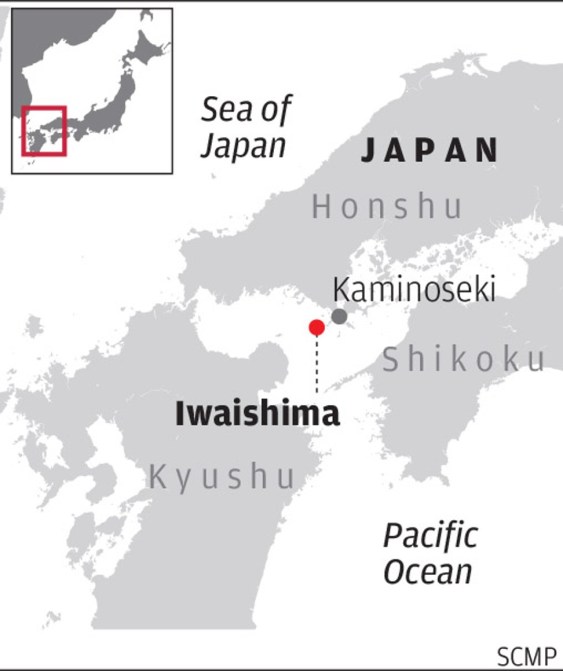
In the sleepy coastal town of Kaminoseki, population circa 3,000, one of Japan’s most divisive political debates – the future of nuclear power – is being played out in microcosm
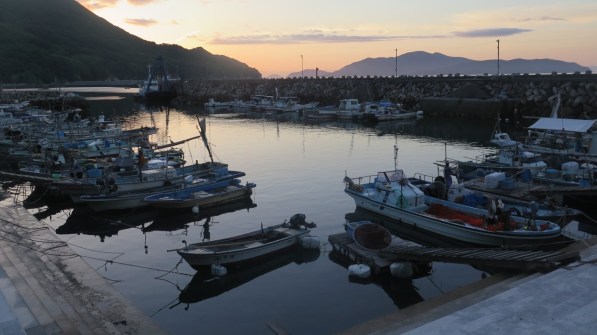
The views from the sleepy coastal town of Kaminoseki could not be more contrasting. From the tip of the Murotsu peninsula on Japan’s Honshu island, one can glimpse the country’s pre-industrial past on an islet just a few kilometres offshore.
There, on Iwaishima, an elderly and dwindling population now down to just a few hundred fishermen, cling to a traditional way of life with little to disturb them bar the mating calls of migratory murrelets.
The view from Iwaishima is different. When the fishermen look back to the mainland they see the site of a long-stalled development that they say threatens far more than their rural idyll. It is here that one of Japan’s most divisive political debates – that regarding the future of nuclear power – is being played out in microcosm.
For the past 35 years, plans for twin nuclear reactors on mainland Kaminoseki have split opinion in this town of population roughly 3,000. When the plans were first unveiled by the Chugoku Electric Power Company in 1982, many on the mainland were wooed by financial incentives that included offers of compensation for the loss of fishing grounds. But those on Iwaishima have always remained almost unanimously opposed, staging protests on hundreds of occasions since then.
For the islanders, and many others across Japan, the meltdown of the Fukushima Daiichi nuclear power plant in 2011 – triggered by an earthquake and tsunami – should have put an end to the country’s nuclear energy industry once and for all.
Yet slowly but steadily, the electric company is taking steps to resume the preparatory work it had been forced to halt in the aftermath of the disaster. By this summer, for the first time since 2014, the Japanese government will revise its strategic energy plan.
Not only will it look at restarting nuclear power reactors, it is expected to consider giving the green light to new facilities – a bold move Tokyo has avoided for years fearing a public outcry. Many see the future of the Kaminoseki plant – the only partially completed nuclear programme in the country – as a litmus test for Tokyo’s energy ambitions.
It is also, of course, something of a pivotal moment for Kaminoseki – which, at about 35 sq km, comprises Iwaishima, the Murotsu peninsula and two further islets. Iwaishima’s ageing population has been stalling the nuclear plant since 1982 in the face of a more business-minded approach by many on the peninsula, but how long it can continue to do so is unclear.
Proponents of the plant say it will offer Kaminoseki the kind of development that has long passed the town by. Kaminoseki boasts neither rivers nor plains, a geographic quirk that meant it was left out of the post-war double-digit growth enjoyed by many of its coastal peers that were transformed into industrial zones.
For those on Iwaishima, and others against the reactors, this lack of development is one of the island’s greatest assets. They want the government to scrap the project to preserve Iwaishima’s pristine environment, which in addition to the murrelets is home to numerous threatened species.
Fabled by sailors as “Japan’s Mediterranean”, the Seto Inland Sea in which Iwaishima sits is a hotspot for many migratory bird and fish species thanks to an upswelling of currents from both the Pacific Ocean and the Sea of Japan. Midori Takashima, a leading figure in the battle to stop the nuclear development, fears the reactors would upset Kaminoseki’s “miraculously maintained” ecosystem.
Safety is another concern, particularly for the elderly on Iwaishima. Ships leave for the mainland just three times a day and are often put out of service by summer typhoons or winter gales, making a smooth evacuation in case of a nuclear emergency extremely doubtful.
Those against the plant have some big names on their side, not least among them Junichiro Koizumi, a former prime minister who has called for Japan to be nuclear free. While the sitting prime minister, Shinzo Abe, appears likely to continue embracing nuclear power, Koizumi has said he is hopeful Japan’s next leader will get rid of nuclear power once and for all – including the Kaminoseki project.
IT’S THE ECONOMY, STUPID
The more sizeable pro-nuclear camp on mainland Kaminoseki takes an opposite view. “This is simply investment promotion. Not many companies are willing to come here,” says Tadanori Koizumi, an executive director of a pro-nuclear civic group.
He fears the effects of Kaminoseki’s declining population, as its youth continue to stream to the cities in search of work. Kaminoseki’s headcount has shrunk to a little over 2,800 – less than half what it was when the project was first unveiled.
“Our town’s very survival is at stake”, he says.
Kaminoseki, like other towns accommodating nuclear plants, has received generous government funding in return – at one point the central government was providing the town 500 million yen (US$4.7 million) annually in nuclear related subsidies, while Cepco has donated a total of 2.4 billion yen.
Such incentives have been likened to bribes by Cepco’s opponents. Cepco, for its part, argues that as a listed company it must ensure a balance in its projects, between expensive fuel-based power generators and more effective nuclear power ones.
A Cepco official said building a nuclear plant in Kaminoseki had been a “dearest wish” for the company, given its low dependency on nuclear power in contrast to other electricity companies in Japan.
“We want to coexist and co-prosper [with Kaminoseki],” said the official – though he admitted, via an analogy with the aviation industry, that 100 per cent safety could never be guaranteed.
Other than waiting for a terminal decline in Iwaishima’s demographics, it’s hard to see how the two sides can ever reconcile. As Toshiyasu Shimizu, the leader of the anti-nuclear campaign in Kaminoseki, explains, tensions over the issue escalate whenever there are elections.
The town has a habit of returning pro-nuclear mayors and most of its council members remain in favour of nuclear power. “When it escalates, the confrontation appears even between relatives, between parents and children,” he says.
Cepco has sued Shimizu and three of his fellow activists, seeking damages of around US$400,000 over their attempts to block preparatory construction work. But even Shimizu recognises the need to boost Kaminoseki’s economy. “The residents are not supporting or opposing the project because it is good or bad,” he says.
“Rather, their attitudes are formed by human relations, their jobs or the local economic structure.”
He says the town must rebuild its economy without turning to the nuclear energy industry, and suggests selling the locally produced delicacy hijiki – a brown sea vegetable – across the country.
“If the nuclear power project is completely gone one day, then that marks the start line,” says Shimizu.
“Then we can start thinking about the future of our town.”
AKRON, Ohio, March 31, 2018 /PRNewswire/ — FirstEnergy Solutions (FES), its subsidiaries and FirstEnergy Nuclear Operating Company (FENOC) (together, the “Filing Entities”) today announced that to facilitate an orderly financial restructuring, they have filed voluntary petitions under Chapter 11 of the Federal Bankruptcy Code with the U.S. Bankruptcy Court in the Northern District of Ohio in Akron. The Filing Entities collectively have over $550 million in cash, which they believe is sufficient liquidity to continue normal operations and meet post-petition obligations to employees, suppliers and customers as they come due.
FES and FENOC own and operate two coal-fired plants, one dual fuel gas/oil plant, one pet-coke fired plant and three nuclear power plants in the competitive, or non-regulated, power-generation industry. FirstEnergy Corp. announced in November 2016 that it planned to exit the competitive generation business. On March 28, 2018, FES filed notice with PJM Interconnection LLC (PJM), the regional transmission organization, that the three nuclear facilities would be deactivated or sold during the next three years. In the meantime, all of the plants will continue current operations.
Donald R. Schneider, President of FES, said, “Given the prospective timing of federal and state review and our ongoing cash needs and debt service obligations, the FES and FENOC Boards of Directors determined that the Chapter 11 filing represents our best path forward as we continue to pursue opportunities for restructuring, asset sales and legislative and regulatory relief. We believe that this decision will best serve our customers, employees and business partners.”
The Filing Entities expect that the Chapter 11 process will enable them to improve the viability of their operations. FES will also continue seeking legislative and regulatory relief at the state and federal level.
For example, on March 29, 2018, FES filed an application with U.S. Secretary of Energy Rick Perry seeking an emergency order directing PJM to secure the long-term capacity of certain nuclear and coal-fired plants in the region – including FES plants – to compensate their owners “for the full benefits they provide to energy markets and the public at large, including fuel security and diversity.”
The relief is being sought under Section 202(c) of the Federal Power Act, which gives the Secretary extraordinary powers to address such emergencies.
As previously announced, FES and FENOC have engaged in constructive discussions with parties representing their creditors. Those discussions are continuing as the Filing Entities explore strategic alternatives for the competitive generation businesses.
The Filing Entities have filed customary first-day motions with the Bankruptcy Court to support operations during the court-supervised process, including motions requesting authority to pay prepetition and post-petition employee wages and benefits and to continue customer programs. The Filing Entities will continue to adhere to all applicable regulatory and environmental standards.
Additional information can be accessed by visiting the Filing Entities’ restructuring website at www.fes.com/restructuring, calling the Restructuring Hotline, toll-free in the U.S. at (855) 934-8766, or sending an email to FESinfo@primeclerk.com. Court filings and other documents related to the court-supervised process are available on a separate website administered by the Filing Entities’ claims agent, Prime Clerk, at https://cases.primeclerk.com/FES.
The Filing Entities’ parent company, First Energy Corp. (NYSE: FE), and its other subsidiaries, including its regulated subsidiaries, are not part of the filing and will not be subject to the Chapter 11 process.
Akin Gump Strauss Hauer & Feld LLP is serving as legal counsel to the Filing Entities, Lazard Freres & Co. is serving as investment banker and Alvarez & Marsal North America, LLC is serving as restructuring advisor and Charles Moore has been appointed as Chief Restructuring Officer for the Filing Entities.
FES is a subsidiary of FirstEnergy Corp. FES provides energy-related products and services to retail and wholesale customers; and owns and operates 5,381 MWs of fossil generating capacity through its FirstEnergy Generation subsidiaries. FES also owns 4,048 MWs of nuclear generating capacity through its FirstEnergy Nuclear Generation subsidiary. Nuclear generating plants are operated by FENOC, which is a separate subsidiary of FirstEnergy Corp. Follow FirstEnergy on Twitter @FirstEnergyCorp or online at www.firstenergycorp.com.
Forward-Looking Statements: This news release includes forward-looking statements based on information currently available to management. Such statements are subject to certain risks and uncertainties. These statements include declarations regarding management’s intents, beliefs and current expectations. These statements typically contain, but are not limited to, the terms “anticipate,” “potential,” “expect,” “forecast,” “target,” “will,” “intend,” “believe,” “project,” “estimate,” “plan” and similar words. Forward-looking statements involve estimates, assumptions, known and unknown risks, uncertainties and other factors that may cause actual results, performance or achievements to be materially different from any future results, performance or achievements expressed or implied by such forward-looking statements, which may include the following: the ability to experience growth in the Regulated Distribution and Regulated Transmission segments and the effectiveness of our strategy to transition to a fully regulated business profile; the accomplishment of our regulatory and operational goals in connection with our transmission and distribution investment plans, including, but not limited to, our planned transition to forward-looking formula rates; changes in assumptions regarding economic conditions within our territories, assessment of the reliability of our transmission system, or the availability of capital or other resources supporting identified transmission investment opportunities; the ability to accomplish or realize anticipated benefits from strategic and financial goals, including, but not limited to, the ability to continue to reduce costs and to successfully execute our financial plans designed to improve our credit metrics and strengthen our balance sheet; success of legislative and regulatory solutions for generation assets that recognize their environmental or energy security benefits, including the Notice of Proposed Rulemaking released by the Secretary of Energy and action by the Federal Energy Regulatory Commission (FERC); the risks and uncertainties associated with the lack of viable alternative strategies regarding the Competitive Energy Services (CES) segment, thereby causing FirstEnergy Solutions Corp. (FES), and likely FirstEnergy Nuclear Operating Company (FENOC), to restructure its substantial debt and other financial obligations with its creditors or seek protection under United States bankruptcy laws and the losses, liabilities and claims arising from such bankruptcy proceeding, including any obligations at FirstEnergy Corp.; the risks and uncertainties at the CES segment, including FES, and its subsidiaries, and FENOC, related to wholesale energy and capacity markets and the viability and/or success of strategic business alternatives, such as pending and potential CES generating unit asset sales, the potential conversion of the remaining generation fleet from competitive operations to a regulated or regulated-like construct or the potential need to deactivate additional generating units, which could result in further substantial write-downs and impairments of assets; the substantial uncertainty as to FES’ ability to continue as a going concern and substantial risk that it may be necessary for FES, and likely FENOC, to seek protection under United States bankruptcy laws; the risks and uncertainties associated with litigation, arbitration, mediation and like proceedings, including, but not limited to, any such proceedings related to vendor commitments, such as long-term fuel and transportation agreements; the uncertainties associated with the deactivation of older regulated and competitive units, including the impact on vendor commitments, such as long-term fuel and transportation agreements, and as it relates to the reliability of the transmission grid, the timing thereof; the impact of other future changes to the operational status or availability of our generating units and any capacity performance charges associated with unit unavailability; changing energy, capacity and commodity market prices including, but not limited to, coal, natural gas and oil prices, and their availability and impact on margins; costs being higher than anticipated and the success of our policies to control costs and to mitigate low energy, capacity and market prices; replacement power costs being higher than anticipated or not fully hedged; our ability to improve electric commodity margins and the impact of, among other factors, the increased cost of fuel and fuel transportation on such margins; the uncertainty of the timing and amounts of the capital expenditures that may arise in connection with any litigation, including New Source Review litigation, or potential regulatory initiatives or rulemakings (including that such initiatives or rulemakings could result in our decision to deactivate or idle certain generating units); changes in customers’ demand for power, including, but not limited to, changes resulting from the implementation of state and federal energy efficiency and peak demand reduction mandates; economic or weather conditions affecting future sales, margins and operations such as a polar vortex or other significant weather events, and all associated regulatory events or actions; changes in national and regional economic conditions affecting us, our subsidiaries and/or our major industrial and commercial customers, and other counterparties with which we do business, including fuel suppliers; the impact of labor disruptions by our unionized workforce; the risks associated with cyber-attacks and other disruptions to our information technology system that may compromise our generation, transmission and/or distribution services and data security breaches of sensitive data, intellectual property and proprietary or personally identifiable information regarding our business, employees, shareholders, customers, suppliers, business partners and other individuals in our data centers and on our networks; the impact of the regulatory process and resulting outcomes on the matters at the federal level and in the various states in which we do business including, but not limited to, matters related to rates; the impact of the federal regulatory process on FERC-regulated entities and transactions, in particular FERC regulation of wholesale energy and capacity markets, including PJM Interconnection, L.L.C. (PJM) markets and FERC-jurisdictional wholesale transactions; FERC regulation of cost-of-service rates; and FERC’s compliance and enforcement activity, including compliance and enforcement activity related to North American Electric Reliability Corporation’s mandatory reliability standards; the uncertainties of various cost recovery and cost allocation issues resulting from American Transmission Systems, Incorporated’s realignment into PJM; the ability to comply with applicable state and federal reliability standards and energy efficiency and peak demand reduction mandates; other legislative and regulatory changes, including the new federal administration’s required review and potential revision of environmental requirements, including, but not limited to, the effects of the United States Environmental Protection Agency’s Clean Power Plan, Coal Combustion Residuals regulations, Cross-State Air Pollution Rule and Mercury and Air Toxics Standards programs, including our estimated costs of compliance, Clean Water Act (CWA) waste water effluent limitations for power plants, and CWA 316(b) water intake regulation; adverse regulatory or legal decisions and outcomes with respect to our nuclear operations (including, but not limited to, the revocation or non-renewal of necessary licenses, approvals or operating permits by the Nuclear Regulatory Commission or as a result of the incident at Japan’s Fukushima Daiichi Nuclear Plant); issues arising from the indications of cracking in the shield building at Davis-Besse; changing market conditions that could affect the measurement of certain liabilities and the value of assets held in our Nuclear Decommissioning Trusts, pension trusts and other trust funds, and cause us and/or our subsidiaries to make additional contributions sooner, or in amounts that are larger than currently anticipated; the impact of changes to significant accounting policies; the impact of any changes in tax laws or regulations or adverse tax audit results or rulings; the ability to access the public securities and other capital and credit markets in accordance with our financial plans, the cost of such capital and overall condition of the capital and credit markets affecting us and our subsidiaries; further actions that may be taken by credit rating agencies that could negatively affect us and/or our subsidiaries’ access to financing, increase the costs thereof, increase requirements to post additional collateral to support, or accelerate payments under outstanding commodity positions, letters of credit and other financial guarantees, and the impact of these events on the financial condition and liquidity of FirstEnergy Corp. and/or its subsidiaries, specifically FES and its subsidiaries; issues concerning the stability of domestic and foreign financial institutions and counterparties with which we do business; and the risks and other factors discussed from time to time in our United States Securities and Exchange Commission (SEC) filings, and other similar factors.
Dividends declared from time to time on FirstEnergy Corp.’s common stock during any period may in the aggregate vary from prior periods due to circumstances considered by FirstEnergy Corp.’s Board of Directors at the time of the actual declarations. A security rating is not a recommendation to buy or hold securities and is subject to revision or withdrawal at any time by the assigning rating agency. Each rating should be evaluated independently of any other rating. These forward-looking statements are also qualified by, and should be read in conjunction with the other cautionary statements and risks that are included in our filings with the SEC, including but not limited to the most recent Annual Report on Form 10-K and any subsequent Quarterly Reports on Form 10-Q. The foregoing review of factors also should not be construed as exhaustive. New factors emerge from time to time, and it is not possible for management to predict all such factors, nor assess the impact of any such factor on our business or the extent to which any factor, or combination of factors, may cause results to differ materially from those contained in any forward-looking statements. We expressly disclaim any current intention to update, except as required by law, any forward-looking statements contained herein as a result of new information, future events or otherwise.
They mention Burson-Marsteller but avoid mentioning WPP LLC (Its parent company) who are behind the scenes covering up SCL (Cambridge Analytica) election voting scandals, The BP Gulf Oil Disaster, The Fukushima nuclear disaster etc etc. A great bit of investigative Journalism by Christine Maguire here;
“…Previously, the small firm didn’t have a record of dealing with governments, but has ties to Trump. President Jacob Daniels was chief of staff at Trump’s Michigan campaign and owner Robert Stryk is a Republican operative who represented former Trump campaign manager Corey Lewandowski.
The list of US firms on the Saudi payroll is extensive. Other companies include The Harbour Group, Burson-Marsteller, Hill & Knowlton, King & Spalding, Brownstein Hyatt Farber Schreck LLP, Fleishman-Hillard Inc, Hogan & Hartson. The FT reported in September the kingdom’s information ministry was seeking to set up ‘hubs’ in Europe and Asia “to promote the changing face of KSA to the rest of the world and to improve international perception of the kingdom.”
Despite the best efforts of the multitude of PR firms, Saudi Arabia’s attempts to completely rebrand have fallen short. Bin Salman’s war in Yemen and the subsequent blockade on aid remains a sore point. Then there’s his November crackdown on corruption, which saw hundreds of businessmen and members of the royal family imprisoned in a luxury hotel where accusations of torture soon emerged.
The kingdom’s much-touted reform when it comes to women is the best PR for the country. However, with multiplereports that bin Salman has imprisoned his own mother to prevent her from influencing his father, not to mention the other obstacles imposed on the women of Saudi Arabia, the crown prince has a long way to go before he can truly be considered any sort of feminist, as Amnesty International noted on Thursday….”
May 2011 (Post Fukushima)
“…Crisis management may, in its turn, mitigate the cost and impact of disasters, even those that are the product of mismanagement. Anterooms to the executive suite are suddenly crowded with advisers eager to point out that BP’s bill would have been lower if it had fostered better political connections before, and communicated and lobbied differently after, the Gulf of Mexico catastrophe. ...”
Please note that the extensive articles posted on this blog on this companies connection to industrial disaster crisis management for governments and corporations, that mentioned WPP LLC complicity to the Fukushima nuclear disaster are not accessible as the new Google search algorythm (since July 2017) seems to block much of the content posted on this (and other websites, blogs etc) blog (Shaun aka arclight2011). Some evidence for that here;
Posted to nuclear-news.net by Shaun McGee (aka arclight2011)
Posted on 29th March 2018
Thanks to Prof. Chris Busby for proofreading the chemical composition from the chemist source materials ( linked here link) and for his input into this article.
After some research on Novichok i discovered that;
1/ Militarised Organophosphates (MOP) can be processed into a sticky oil or a fine powder and there are at least 4 types
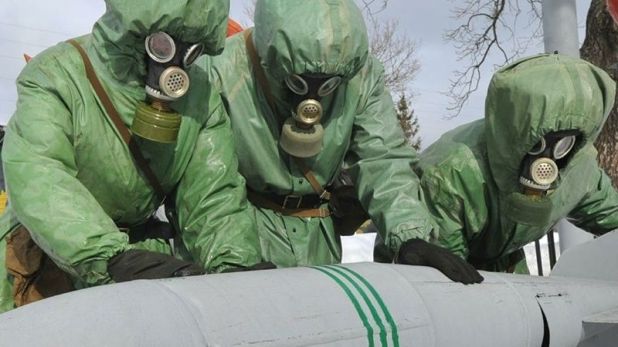
2/ New Nuclear, biological and chemical NBC suits were developed before Desert Shield as the Novichok series of chemical agents were designed to circumnavigate the old Noddy suits supplied to the military.
3/ Novichok series compounds are detectable easily with testing equipment developed prior to Desert Shield
4/ It is very likely that an antidote was developed prior to desert shield (especially as Skripals daughter and the policemen are recovering)
5/ By making all references to Novichok series a matter of national security the OPCW was not told that these compounds were so dangerous thus allowing the USA and UK to keep such weapons on their shelves.
6/ Most of the Russian peer reviewed studies on this were done under the guise of fertiliser/insecticide production
7/ Although some of the precursors like SO2 are very nasty making this product difficult to produce a synthetic chemist in a lab could produce it
8/ Concerning the Polonium 210 poisoning of Litvinyenko, this polonium could have been synthesised by reducing radium tubes and dials etc reasonably easily
I have some a posit that these chemicals were not recognised as a chemical weapon because of the need to protect Big Agri profits and their business models (ever wonder why Russia agriculture is mainly organic?)
I decided to see if any country could make this and decided to see if Ukraine (as an example) could have produced this. A 2017 OSCE report cited the need to improve chemical handling, transportation and safety in Ukrainian labs needed to be improved so a 3 year plan was initiated and funded by the EU and USA. Ukraine also sent battalion of chemical trained soldiers to Kuwait before the Iraq invasion. One week after the incident with the Skripals the Ukrainian Gov. sent this message to the UK ; “…Ukraine is ready to provide Britain with assistance in investigating the case of poisoning of former Russian intelligence agent Sergei Skripal and his daughter, Ukrainian Foreign Minister Pavel Klimkin said….”
Did the UK and USA also hide this product so they could have used it in Iraq or similar?
Ukraine had the basic Potash needed for manufacture of Novichok; “…John J. McKetta Jr – 1989 – Science
Of the foreign producers, the largest is the USSR, and its producing centers are the Upper Kama Basin of the western Urals, the Starobinsk Basin in Belorussia, and the Ciscarpathian area in the western Ukraine. USSR production has nearly tripled since 1969. Sulfates of potash are produced in the Ukraine, and Muriate Organphosphate is produced at the Upper Kama and Starobinsk basins …”
Some food for thought. Though Ukraine may not have produced this it could have been a criminal crowd in Russia or any secret services etc etc. I used Ukraine as an example and there is no direct proof that Ukraine was responsible though they were capable, thereby, busting the UK and USA government line that it HAD to be Russia!
Sources for quotes;
“…We proudly represent products of leading Russian, Belarus, and Ukrainian fertilizer producers. Member of the International Fertilizer Association. products. MOP / KCl – Muriate of Potash Ammonium Sulphate – granular / crystalline. SOP – Potassium Sulfate Calcium Ammonium Nitrate NPK blends – 15-15-15, 16-16-16…..” http://lushburyfertilizer.com/
From 2017 .. OSCE report with recommendations to have plans in place by 2020 “..2. Objectives
The overall objective of this Decision is to support OSCE projects aiming at strengthening chemical safety and security in Ukraine in line with UNSCR 1540 (2004) and the Association Agreement by providing a significant contribution to the ICSSP in Ukraine. In particular, this Decision aims at reducing the threat posed by the illicit trade of controlled and toxic chemicals in the OSCE region, in particular in Ukraine, thus promoting peace and security in the Union’s neighbourhood…..” https://eur-lex.europa.eu/legal-content/EN/TXT/?uri=CELEX%3A32017D1252
13th March 2018 – “…Ukraine is ready to provide Britain with assistance in investigating the case of poisoning of former Russian intelligence agent Sergei Skripal and his daughter, Ukrainian Foreign Minister Pavel Klimkin said.
“The UK is investigating, of course, it will bring it (until the end – IF.) It is already known that the poisoning was due to chemicals that were developed in Russia … We are in solidarity with Britain if we need our help – expert or other – we will provide it, “the minister said to journalists on Tuesday in Kiev….” http://interfax.com.ua/news/general/491334.html
Speculation regarding the crash of China’s Tiangong-1 space station has been going on all month, but that will come to an end this week. The space station is set to fall into the Earth within the next few days.
The earliest estimates have Tiangong-1 crashing into Earth on Friday (March 30).
Tiangong-1’s Fall
There has been a lot of news coverage for the better part of a month predicting where Tiangong-1 will fall. Predictions currently have the space station coming down to Earth within the next week. The earliest estimates have the station crashing into the planet by Friday, March 30.
China admitted in January 2018 that it lost control of the space station. It had previously lost contact with the space station in 2016.
The current window for the re-entry of Tiangong-1 has it coming in late on March 30 to the early morning of April 2. Tiangong-1 has been monitored by the Inter-Agency Space Debris Coordination Committee. This agency predicts that it will fall to Earth between 43° N to 43° S latitude.
It is very unlikely that the debris from the space station will strike anyone. No one has ever died from being struck by space debris, there has been one person that has been struck. On its current path, the space station is likely to fall on locations closer to the northern latitudes.
Toxic threat warning!
There is a potentially highly toxic substance called hydrazine aboard the space station that could survive the reentry. People who come across debris from the space station are advised to stay away from it.
There will be a webcast of the re-entry of Tiangong-1 on Wednesday (March 28), and it is set to begin at 8:00 a.m. EDT. It will provide views of the space station while it is still out in space. Determining where Tiangong-1 will fall will be complicated.
Since much of the Earth is uninhabited, there is a chance that the space station will land in a remote location such as the ocean. This would make it harder for people to see the crash since no one will be around. Even as little as 7 hours before the crash, there will still be an uncertainty of where Tiangong-1 will fall.
There will be changes in the sky in areas that are able to see the space station crash. Since the space station is tumbling, there will be tracks across the sky, and rapid changes in its brightness.
Plutonium contamination of North west Canada from Kosmos–954 ;
“….The fall of the 4 t satellite over Canada on January 24, 1978 would have been a disaster in urban areas: its nuclear reactor was powered by 31.1 kilograms of 235U. Radioactive waste contaminated an area of over 124,000 km2 in the Northwest. Territories and the provinces of Canada…” http://www.robindesbois.org/wp-content/uploads/2011/06/Space-Waste.pdf
USA has increased production of Plutonium 238 for its future space program;
“…..Jan 1, 2016 – For the first time in 30 years, the United States produced an isotope of plutonium that powers NASA’s deep-space missions. A total of 50 grams of plutonium-238 was produced at the Department of Energy (DOE)’s Oak Ridge National Laboratory (ORNL) in Tennessee….” https://www.space.com/31499-us-makes-plutonium-deep-space-fuel.html
Kim Dotcom is alleging WikiLeaks founder Julian Assange has had his internet connection within the Ecuadorian embassy in London cut off. He has called on Assange supporters to gather outside the embassy building in solidarity.
Neither WikiLeaks nor Assange has made an official statement regarding the reports. Dotcom demanded that authorities “#ReconnectJulian.” Former Greek Minister of Finance Ioannis Varoufakis also tweeted Wednesday, calling for people to rally around Assange to force the Ecuadorianauthorities to restore his internet connection.
“It is with great concern that we heard that Julian Assange has lost access to the internet and the right to receive visitors at the Ecuadorian London Embassy. Only extraordinary pressure from the US and the Spanish governments can explain why Ecuador’s authorities should have taken such appalling steps in isolating Julian,” Varoufakis wrote in an online statement.
“A world in which whistleblowers are hounded, small countries are forced to violate their cherished principles, and politicians are jailed for pursuing peacefully their political agenda is a deeply troubled world – a world at odds with the one the liberal establishment in Europe and the United States proclaimed as its artifact since the end of the Cold War.”
Assange’s latest tweet before his alleged disconnection and digital isolation came Tuesday, March 27. He responded to an apparent insult during a question and answer session in the UK House of Commons. (VIDEO)
Edward Joseph Snowden’s first 2018 appearance from Russia. Snowden does a Question & Answer Interview with Students from Norway.
Edward Snowden covers a number of topics people have been asking for including internet censorship, Facebook, Twitter, Google, YouTube’s role and far more aggressive approach over the last few years.
Explaining the history of Obama, Kim Dot Com, Wikileaks, Five Eyes, the Russian Doping scandal, his views on Russian interference, the Election of President Donald Trump and even more!
What do you think about Snowden’s Views?
What is you’r view on Edward Snowden now? has it changed over time?
TV-Novosti.com & Western Truth TV: Sponsored by #LIFTMODE!
Radiation levels can differ tremendously. Important note: the meaurements made while wearing a white protective suit were made in the red zone. All other measurements were made in zone 2/ Namie and Tomioka, Fukushima. Also, these are just some shots. The average radiation level in Namie and Tomioka is approx. 0,17 a 0,24 microsivert per hour. All measurements are made in July 2017 by TINKEBELL.
Filmed and edited by Linda Zwart.
( Note that these measuements found few hotspots in the limited time allowed but kienaiyoru records many hotsposts in the so called “clean areas” – Arclight2011)
A 94-year-old woman who was given seven times more than the prescribed dose of radiation at a Dublin hospital has settled her High Court case for €850,000.
Bridget Henry, from Ardminane, Killavil, Ballymote, Co Sligo, was attending St Luke’s Hospital in Rathgar for treatment for a lump on her lip when she was given the excessive dose of radiation.
The court heard Ms Henry was living independently and was a generally fit woman before she went for the radiotherapy treatment.
Her counsel, Des O’Neil, said she later had a stroke, is now cognitively impaired and cannot live independently.
Through her son Charles Henry, she sued the Health Service Executive over the provision of an excessive dose of radiation therapy at St Luke’s Hospital on 16 January 2017.
The court heard that Ms Henry had been generally fit and healthy woman for her 93 years and was independent with no cognitive dysfunction.
She enjoyed cooking and gardening, did all her housework and shopping, and would regularly make meals for her children and grandchildren.
In the summer of 2016 she was referred by her GP to hospital after she got a lump on her right lower lip.
After tests, it was decided that she have radiotherapy treatment at St Luke’s Hospital Rathgar.
The plan was that Ms Henry would receive a dose of radiotherapy in five sessions and she attended on 16 January 2017 to get the first dose.
However, instead of receiving the correct dose she received a dose seven times greater.
Ms Henry’s lip and mouth became extremely ulcerated and painful as a result of the excessive radiation and she required morphine for pain control.
She was also unable to eat solid foods and became dehydrated.
In February 2017, it was noted Ms Henry had become confused and agitated and a CT scan established she had suffered a stroke.
It was claimed on the balance of probabilities the stroke arose as a result of her weakened condition following the radiation overdose.
It was also claimed there was a failure to have the radiotherapy set up overseen and supervised by staff of significant skill and experience and that the wrong size applicator had been used.
Mr Justice Kevin Cross was told liability was admitted in the case.
Approving the settlement, Mr Justice Cross wished the family well in the future caring for their mother.
In a statement, the Henrys’ solicitor Sinead Travers said Ms Henry is now completely dependent and requires around the clock care.
“She suffered life changing injuries. Shortly after the event she suffered a stroke and consequently the independence she cherished with such vigour, enthusiasm and energy is no more,” Ms Travers said.
“To say that Ms Henry and her immediate family have been shattered by these events is an understatement.”
She said the family are pleased that Ms Henry’s future care needs are provided for in the settlement.
Flexing his nuclear muscles like never before, the Russian President in his annual state-of-the-nation speech presented two new nuclear-powered delivering systems for warheads.
Several times over the last two years, tiny small traces of radioactive iodine-131 have been measured in Europe, especially in the Scandinavian countries. National radiation agencies have been unable to direct the source of release, speculating in everything from leakages at a medical isotope production facility to leakages from operative nuclear reactors.
In Norway and Finland, radioactive isotopes were discovered at monitoring stations in January and March last year, as well as in January and February this year. The first cloud of radioactivity last year was first detected at Svanhovd air filter station on Norway’s border to Russia in the north, but spread over most of Europe south to France and Spain over the following two weeks.
Authorities underline that the levels were nearly undetectable and are far from presenting any health concern to population.
«Nobody has anything like this»
Spending much of speech to lawmakers in Moscow on Thursday talking about nuclear weapons, Vladimir Putin sent a clear message to the United States. Russia has developed new missiles and a underwater torpedo that would be immune to ballistic missiles shields and other means to stop an nuclear attack.
«Nobody has anything like this,» Putin said simultaneously as a video animation was displayed on big screens. Two of the screened weapons Putin presented are new nuclear-powered delivery systems.
The nuclear-powered underwater drone is known from before, although it is highly unclear how far Russian weapons constructers have come in regards towards deploying such massive drone.
Arctic test?
More remarkable is the nuclear-powered cruise missile. Using nuclear power for a missile has the advantage of extending the range significantly. On Putin’s screen, the video animation showed the missile flying southbound through the Atlantic, before turning north again on the west coast of South America.
Small amounts of the radionuclide Iodine-131 of anthropogenic origin was measured in the Pasvik valley in January. Photos: Thomas Nilsen
On Thursday this week, Fox News reporter Lucas Tomlinson sent a tweet where he quoted U.S. officials saying «Russia’s nuke powered cruise missile not operational yet, still in ‘R&D’ phase and has crashed recently in testing in the Arctic, despite claims by Putin today.»
Tomlinson’s tweet is referred to in an article in the Washington Post.
If this is true or not is difficult to check. According to a source in Russia’s military-industrial complex speaking to Vedomosti, the radiation safety during the testing of the missile was ensured. «The nuclear installation on board was represented by an electric power supply,» the source said.
That could have been the case if the missile was tested on-ground, but unlikely if it was a real flight test.
Talking about the successful test, President Vladimir Putin said in his speech that the missile was launched with a nuclear installation. «At the end of 2017, a successful launch of the newest Russian cruise-missile with a nuclear-power plant took place at Russia’s Central Range,» Putin told the applauding audience.
Likely radioactive releases
Nils Bøhmer, a nuclear physicist with the Bellona Foundation in Oslo says to the Barents Observer that a test of a nuclear-powered cruise missile would most likely have caused releases of detectable isotopes.
«If it is true that Russia has tested its new nuclear-powered missile, some radioactive released could have occurred,” Bøhmer says and points to the United States’ on-ground testing of reactors for a nuclear-powered aircraft back in the late 1950s. «That project was cancelled because of high releases of radioactivity behind the engines at the test site in Idaho Falls,» Nils Bøhmer explains.
He says there could be a connection between the mysterious iodine-131 detected and Russia’s new missile. «This could be explained by the secret testing of Russia’s new nuclear-powered missile. Because of short half-life of eight days of iodine-131, this isotope measured in the air could only be explained by reactor operations. Other isotopes, like Cecium-137 that has a half-life of 30 years is found in nature long after the releases have happened. This could explain why only iodine-131 is detected, because Cesium-137 is masked by the releases from the Chernobyl accident,» Bøhmer tells.
A nuclear-powered cruise-missile with a small reactor would most likely have an partly open-air cooling system, where isotopes simply would fly out as the missile speeds away.
Nils Bøhmer with the Bellona Foundation. Photo: Thomas Nilsen
Nuclear sniffer
The United States’ so-called “nuclear sniffer” WC-135 plane has by several occasions since early 2017 been deployed to the British air base in Surrey. From the base, the plane has made take-offs for flights to Norway and Baltic Sea area to monitor radioactivity levels, the newspaper Independent reported in February last year.
WC-135 can detect and identify radioactive isotopes from nuclear weapons testing as well as releases from reactors or other sources.
Althoug Nils Bøhmer agrees with radiation safety authorities in the Nordic countries that the levels measured do not present any health risk to population, he is concerned. «We know from history that when military scientists are developing weapons involving nuclear technology, safety is not always the number one priority.»
«The releases of radioactivity could be quite high directly at the site where the nuclear-powered cruise-missile is tested, which could lead to potential health concerns for the local population,» Nils Bøhmer says.
«It is also said by Putin that Russia is developing a new underwater nuclear-powered drone. Very little information is know about the technology on-board this drone, but one could speculate that also this nuclear-powered vehicle could lead to radioactive releases.»
Bøhmer says such radioactive releases could contaminate the fishing ground of the Barents Sea, if the testing takes parts in those areas.
The Barents Observer reported about the new underwater drone, known as STATUS-6, first time in 2016.


 View original content:






 nuclear-news