Human rights activists say authorities in the United Arab Emirates have arrested an 18- year-old blogger as part of a widening crackdown on perceived dissent.
Mohammed Salem al-Zumer was arrested by state security officers in the emirate of Sharjah on Wednesday and taken to an unknown destination, according to the London-based Emirates Center for Human Rights (ECHR).
Al-Zumer had reportedly posted comments on the Internet supporting jailed activists.
Last month, the Persian Gulf littoral state tightened its law on Internet use, making it an offence to deride or damage the state or its institutions and organize protests.
According to the ECHR report, Zumer was driving a car when he was stopped by security personnel, and was escorted to his home, where plainclothes officers searched for more than an hour.
The UAE has launched a crackdown on activists campaigning for free speech and political freedom in the past year and more than 60 activists have been arrested since then.
Iran’s growing position in global energy poses as competition to the United States and Israeli entity, with the former imposing unilateral sanctions as a result, a professor tells Press TV.
8 December 2012
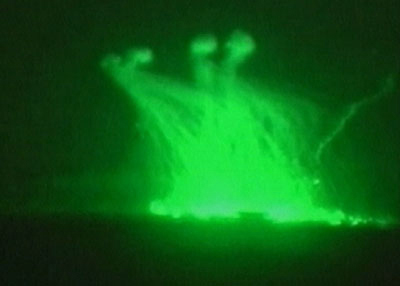
This comes as the United States carries out its 27th subcritical nuclear test, known as Pollux, in the state of Nevada on Wednesday to ensure that Washington “can support a safe, secure and effective stockpile” of nuclear weapons.
Press TV has conducted an interview with James H. Fetzer, Professor Emeritus at the University of Minnesota, Duluth, from Madison, to further discuss the issue. Fetzer is joined by Kaveh Afrasiabi, an author and political scientist from Boston, and Kenneth Katzman, an advisor to US Congress from Washington. The following is a rough transcription of the interview.
Press TV: Do you agree with some of the points made by our guest Kenneth Katzman?
Fetzer: I think he’s reflecting that the situation is laden with political hypocrisy and historical irony. Iran’s nuclear program was initiated by the United States under the “Atoms for Peace” program in the 1950s.
After the Iranian Revolution in 1979, Ayatollah Khomeini abandoned and denied that Iran would pursue nuclear weapons, a position which is its policy up to this date.
In 2007, 16 US intelligence agencies concluded that Iran had no nuclear weapons program, a position which incidentally it reaffirmed in 2011 as was reflected in a Los Angeles Timesarticle published in February of this year.
While Bibi Netanyahu plays the Chicken Little of the Middle East, Iran in fact is not pursuing nuclear weapons, and there’s really no question about it; therefore, the suggestion that that’s the real issue is completely misleading.
We know that the real underlying issues have to do with Iran potentially competing with the American nuclear energy industry by providing it with nuclear fuel rods for peaceful purposes at lower cost, and more importantly that Iran has abandoned the petrodollar.
Nations that abandon the petrodollar incur severe consequences from the United States and that of course includes Iraq, Libya and now Iran.
I find it embarrassing that anyone would suggest the United States is concerned about a nuclear program that its own intelligence agency has concluded does not exist.
Press TV: Our guest, [Mr. Kenneth Katzman], says the US is a member of the UN, then why isn’t it abiding by the Comprehensive Nuclear Test Treaty, the CTBT? Why is it then a non-signatory, for example, to the [Convention on] Cluster Munitions not to mention the ICC? Doesn’t that make it convenient for the US in some respects?
“Paradoxically for some, Iran without nuclear weapons has become more powerful year after year in the past 34 years, stymieing Western efforts to bring about the collapse of the regime.”
Thu Dec 6, 2012 4:52PM GMT
A US-based Iranian research scholar has outlined ten reasons why Iran is not seeking a nuclear bomb, saying it is time for the West to acknowledge the reality that pressures on Tehran have been ineffective.
“The West should enter into a genuine, face-saving and realistic solution, rather than continuing to push aggressively and ineffectively against Iranian nuclear development,” Seyyed Hossein Mousavian wrote in an article published on theNational Interest website.
The scholar referred to “religious obligations” as the first reason why Iran does not seek to build a nuclear bomb, saying that based on the fatwa by the Leader of the Islamic Revolution Ayatollah Seyyed Ali Khamenei “the use of nuclear weapons and all other types of Weapons of Mass Destruction (WMD) is forbidden…constituting a sin.”
He mentioned “lack of long-term advantage” in the possession of nuclear weapons as the second reason, saying that based on Iran’s assessment the possession of a nuclear bomb will have no long-term regional advantage and would trigger a regional nuclear arms race.
He added that, Iran’s “technology choices” is the third reason why the country is not after nukes. “The technical configurations Iran has chosen for its nuclear program, demonstrate a preference for a robust enrichment capability rather than for a rapid nuclear weapons breakout capability.”
Mousavian said possible “isolation” of Iran is the fourth reason dissuading Tehran from developing a bomb, stating, “Iran recognizes that by becoming a nuclear weapons state, it will compel Russia and China to join the US and implement devastating sanctions that would paralyze the Iranian economy.”
TOKYO, Dec. 7 (Xinhua) — Japan’s Nuclear Regulation Authority Secretariat is planning to adopt new nuclear safety standards and considering restarting more halted nuclear reactors next summer, local media reported Friday.
The nuclear management agency will make some preliminary checks on the suspended reactors next spring as the beginning of the new standards effective.
After the Fukushima No.1 nuclear power plant disaster on March 11, 2011, 48 of all 50 commercial nuclear reactors in Japan have shut down due to safety concerns.
A bill was passed earlier, requires all nuclear reactors to meet the new safety standards before restarting by next July.
There has been another 7 earthquakes reducing in intensity over the last couple of hours reducing to the 4.6 level so far..
These dump areas have been getting alot of strikes from off shore earthquakes during the last nearly 2 years. Why doesnt anyone talk about them?
The areas with dark hatchings are “special” waste sites likely for nuclear and biological wastes and the larger areas for lesser hazardous waste..
What effects are the effected dumps having on the sea life in the areas?
How much damage to the seabed is occurring near these off shore dumps?
Here is an update concerning the nuclear reactors that were under threat
12/7 Japan Earthquake – No Nuclear Plant Damage Reported
At 5:18 PM Tokyo time on December 7, a magnitude 7.3 (Richter) / 4 (Japanese intensity scale) earthquake occurred in roughly the same region as the Great Tohoku quake. All tsunami warnings were lifted a short time ago as this report is written (7:40 PM Tokyo time, 5:40 AM Eastern time US) and only a one meter tsunami was observed in some locations.
Tokyo Electric Power Company has released the following statement about the quake, relative to the Fukushima Daiichi and Fukushima Daini nuclear power plants:
Experts had said there was a dangerous fault at the planned site of the Shika nuclear plant in Ishikawa Prefecture in 1987, well before a similar suspicion arose earlier this year, according to governmentdocuments given Friday.
The previous claim had been left unaddressed until the government stated in July that a fault beneath the first reactor of the two-reactor nuclear plant was active and dangerous, triggering a detailed survey by the plant’s operator, Hokuriku Electric Power Co.
In Japan, nuclear reactors are not allowed to be built on any site that includes an active fault.
To have fuller access to the Kyodo News website, it is necessary to subscribe.
“The test “is proof that the United States could use nuclear weapons anytime. Such a country is not qualified to be a world leader,” Yamada said.”
“Between 16 July 1945 and 23 September 1992 the United States of America conducted (by official count) 1,054 nuclear tests, and two nuclear attacks. “
Fri Dec 7, 2012 10:17AM
Press TV
Hiroshima Mayor Kazumi Matsui on Friday condemned the United States for conducting a subcritical nuclear test at an underground test site in Nevada.
As the mayor of the city, which suffered the world’s first nuclear bombing in the World War II, Matsui said the test is against the global efforts to eliminate nuclear weapons.
The United States supported an anti-nuclear resolution at a plenary session of the UN General Assembly on Monday. The resolution appealed to eliminate nuclear weapons totally.
The latest U.S. subcritical nuclear test is the first test since February 2011. It brought the total number of such tests to four under U.S. President Barack Obama’s administration.
The United States conducted its first subcritical nuclear test in 1997, maintaining that the test didn’t violate the Comprehensive Test Ban Treaty. Xinhua
HIGHLIGHTS
The scientific data gathered through this subcritical nuclear test called Pollux – the 27th such experiment to date – will provide crucial information to maintain effectiveness of U.S. nuclear weapons, National Nuclear Security Administration (NNSA) said in a statement on Thursday. Business Line
“The government has also addressed key skills shortages in the sector and suggested ways of attracting talent, such as drawing on relevant skills from related industries and the redeployment of existing skills.”
7 December 2012 | Anna Reynolds
Improved access to export opportunities and advice for businesses looking to bid for nuclear contracts are two of the key areas highlighted in the government’s action plan to boost the nuclear industry.
Speaking as the government published the plan, business minister Michael Fallon said: “This is an important part of our work with industry to shape a vibrant UK nuclear industry, and to ensure the UK exploits the commercial opportunities that exist and is a leading player in the expanding global nuclear market.”
The publication coincides with an announcement that the Sellafield Nuclear site in West Cumbria is taking on 500 new staff. Further job opportunities are expected as EDF Energy and Centrica plan to invest in new reactors at nuclear sites in Somerset and Suffolk.
John Hayes, energy minister said: “The announcement of jobs at Sellafield shows the immense contribution of the nuclear sector to the UK economy. Our action plan for the nuclear supply chain will set out how the UK can make the most of future opportunities presented by around £60 billion of new investment.”
The plan establishes a Nuclear Industry Council comprising government and industry representatives, which will hold its first meeting at the start of 2013.
The doctor on the parliamentary panel, Hisako Sakiyama, is outraged about utility funding for Japan’s ICRP members. She fears that radiation standards are being set at a lenient level to limit costly evacuations.
[…]
Setting off such fears are medical checks on the thyroids of Fukushima children that found some nodules or growths that are not cancerous but not normal.
No one knows for sure what this means, but Yoshiharu Yonekura, president of the National Institute of Radiological Sciences and an ICRP member, brushes off the worries and says such abnormalities are common.
The risk is such a non-concern in his mind that he says with a smile: “Low-dose radiation may be even good for you.”
[..]
7:55 AM Friday Dec 7, 2012
The New Zealand Herald
Influential Japanese scientists who help set national radiation exposure limits have for years had trips paid for by the country’s nuclear plant operators to attend overseas meetings of the world’s top academic group on radiation safety.
The potential conflict of interest is revealed in one sentence buried in a 600-page parliamentary investigation into last year’s Fukushima Dai-Ichi nuclear power plant disaster and pointed out to The Associated Press by a medical doctor on the 10-person investigation panel.
Some of these same scientists have consistently given optimistic assessments about the health risks of radiation, interviews with the scientists and government documents show. Their pivotal role in setting policy after the March 2011 tsunami and ensuing nuclear meltdowns meant the difference between school children playing outside or indoors and families staying or evacuating.
One leading scientist, Ohtsura Niwa, acknowledged that the electricity industry pays for flights and hotels to go to meetings of the International Commission on Radiological Protection, and for overseas members visiting Japan.
He denied that the funding influences his science, and stressed that he stands behind his view that continuing radiation worries about Fukushima are overblown.
“Those who evacuated just want to believe in the dangers of radiation to justify the action they took,” Niwa told the AP in an interview.
The official stance of the International Commission on Radiological Protection is that the health risks from radiation become zero only with zero exposure. But some of the eight Japanese ICRP members do not subscribe to that view, asserting that low dose radiation is harmless or the risks are negligible.
“Small-scale chemical reprocessing of irradiated thorium can create an isotope of uranium — uranium-233 — that could be used in nuclear weapons. If nothing else, this raises a serious proliferation concern.”
ScienceDaily (Dec. 5, 2012) —
Thorium is being touted as an ideal fuel for a new generation of nuclear power plants, but in a piece in this week’s Nature, researchers suggest it may not be as benign as portrayed.
The element thorium, which many regard as a potential nuclear “wonder-fuel,” could be a greater proliferation threat than previously thought, scientists have warned.
Writing in a Comment piece in the new issue of thejournal, Nature,nuclear energy specialists from four British universities suggest that, although thorium has been promoted as a superior fuel for future nuclear energy generation, it should not be regarded as inherently proliferation resistant. The piece highlights ways in which small quantities of uranium-233, a material useable in nuclear weapons, could be produced covertly from thorium, by chemically separating another isotope, protactinium-233, during its formation.
The chemical processes that are needed for protactinium separation could possibly be undertaken using standard lab equipment, potentially allowing it to happen in secret, and beyond the oversight of organisations such as the International Atomic Energy Agency (IAEA), the paper says.
The authors note that, from previous experiments to separate protactinium-233, it is feasible that just 1.6 tonnes of thorium metal would be enough to produce 8kg of uranium-233 which is the minimum amount required for a nuclear weapon. Using the process identified in their paper, they add that this could be done “in less than a year.”
“Thorium certainly has benefits, but we think that the public debate regarding its proliferation-resistance so far has been too one-sided,” Dr Steve Ashley, from the Department of Engineering at the University of Cambridge and the paper’s lead author, said.
Prime Minister Jean-Marc Ayrault said on Thursday that the French government remains committed to finishing a new-generation nuclear reactor despite further cost overruns.
“The construction will continue right to the end,” Ayrault said on RTL (Berlin: R8L.BE – news) radio. “There are difficulties but I think we have to accept that because it is necessary.”
French energy group EDF (Paris: FR0010242511 – news) on Monday raised the total cost of its long-delayed new-generation nuclear reactor at Flamanville in western France by 2 billion euros ($2.6 billion) to 8.5 billion.
The cost of the facility, slated to begin operations in 2016, is now 5 billion euros more than initially estimated.
Built by Areva (Berlin: A9R.BE – news) and due to be operated by EDF, Flamanville is one of four European Pressurised Reactor projects in the world, including another much-delayed one planned in Finland, whose production date has been delayed indefinitely.
Two other EPR reactors are being built in Taishan in southeastern China.
Ayrault said that as Flamanville is one of the first EPR reactors to be built additional precautions have needed to be taken and the delays have been pushing up the cost.
He noted that safety standards are now higher and that the reactor was being designed to last 60 years, which also implied higher construction costs.
Ayrault also noted that the reactor had its opponents, including from the Greens inside the Socialist-led government, but said “this reactor will be the safest in the world.”
Press Trust of India / New Delhi December 06, 2012, 16:25
The Supreme Court today reserved its order on a plea seeking a stay on commissioning of the Kudankulam nuclear plant till all safety measures are put in place.
Following a marathon arguments spanning the last three months, a bench of justices K S Radhakrishnan and Dipak Misra reserved its order on the plea that questioned the safety and security of people, the environmental impact and other issues linked to the controversial plant.
The court was hearing a bunch of petition filed by anti-nuclear activists challenging the project on the ground that safety measures recommended for the plant by an expert body has not been put in place. They also raised various questions pertaining to the disposal of nuclear waste and the plant’s impact on environment.
Richard H Perkins and Larry Criscione both have a government and military experience and recently worked at the NRC, which was created to oversee reactor safety and security.
Compromising their jobs for the sake of speaking out, the men have publicized the severity of the flood risks facing a number of nuclear power plants using a number of documents obtained by the Huffington Post, RT reported.
“When you’re working with sensitive information, you just don’t talk about it, so what I’m doing I find to be both perverse and uncomfortable,” Perkins told the Huffington Post. “But I had to do it.”
After realizing that some details regarding the dangerous flood threat were withheld for years at the expense of public security, Perkins and Criscione felt the need to tell someone.
If a nuclear power plant floods past the level the facility is built to withstand, power to the plant from a grid connection or back-up diesel generator could be lost, causing an inability to circulate water to keep the reactor core or the spent fuel pool cool. If the plant cannot be kept cool, a catastrophic disaster similar to the failure at Japan’s Fukushima Daiichi plant could occur.
“If we believe there is a security vulnerability, we need to take measures to address it and not merely withhold it from public discussion,” Criscione said.
When Perkins in 2010 was assigned to review the dam-flood threat at nuclear power plants across the US, the NRC censored his analysis to exclude certain information. When an edited version of the report was completed and shared among NRC employees in June, 2011, large parts of the document were blacked out.
NRC officials claim they sometimes withhold information to promote safety – to keep the information from falling into the hands of terrorists, for example.
“But the redactions by the NRC did not promote safety in any of these ways. The actions have, in fact, allowed a very dangerous scenario to continue unaddressed for years,” Perkins said.
Nuclear power plants are required by US law to be able to withstand all types of weather conditions that could occur in the region they are located. But many of the flood walls built to protect the plants are inadequate. The Oconee Nuclear Station in South Carolina is protected by a 5-foot wall, but the plant is located near a dam that could result in floodwaters as high as 16.8 feet and cause a meltdown similar to Fukushima.
“…Israel has rebuffed a UN call to adhere to the Nuclear Non Proliferation Treaty (NPT) and open itself to international inspectors, calling the suggestion a “meaningless mechanical vote” of a body that “lost all its credibility regarding Israel.”
In a 174-6 vote, the United Nations General Assembly demanded in a non-binding call that Tel Aviv join the NPT“without further delay,” in an effort to create a legally binding nuclear-free Middle East.
Washington, Israel’s strongest ally, surprised no one by voting against the resolution – but did approve two paragraphs that were voted on separately, which called for universal adherence to the NPT and for all non-signatory governments to join.
The UN body “has lost all its credibility regarding Israel with these types of routine votes that are ensured passage by an automatic majority and which single out Israel,” Foreign Ministry spokesman Yigal Palmor was quoted by Jerusalem Post as saying.
The Assembly’s call on Israel comes days after a large majority of its members voted to grant Palestine statehood state status and just weeks after the an escalation of violence between Gazans and Israel’s occupation forces. Palmor stressed, however, that since the NPT vote takes place annually, the Palestinian victory is not connected.
Israel is not a signatory to the 1970 Nuclear Non Proliferation Treaty, the main objective of which is to is to prevent the spread of nuclear weapons and weapons technology. Despite near-universal acknowledgement that Tel Aviv maintains a powerful nuclear arsenal, Israeli officials promote a position claiming their government will “not be the first country to introduce weapons into the Middle East.”
The Middle East’s only democracy possesses as many as 400 nuclear warheads, along with various ways to deliver them. It is also one of four countries known to have nuclear weapons that are not recognized as Nuclear Weapons States by the NPT. The others are India, North Korea and Pakistan.
LYNCHBURG, Virginia — Two dozen engineers will soon use a simulated control room in Virginia to refine the design for a new class of mini nuclear reactors from Babcock & Wilcox Co.
The Charlotte, North Carolina-based company said Tuesday that the engineering simulator in Lynchburg is a key milestone in the mPower modular reactor development program.
Officials say the control room prototype is built to the samespecifications as one that would control the two reactors in an actual control room.
At first it will help the design team test man-machine interfaces and operating controls. As the program moves closer to deployment, the company says the control room will be used to train future reactor operators.
The mPower reactors will generate 125 megawatts. That’s about one-tenth the size of a conventional commercial nuclear reactor.

 8 December 2012