Danish U-turn clears way for uranium mining in Greenland and dodgy dealings on the stock market?
“…Despite having passed a law against social dumping in Denmark two months ago, the Danish government is backing the Greenlandic law.
Two weeks ago, Prime Minister Kleist said he had rejected requests from the European Union to block access to its deposits of rare earths, strategically important metals in which China has a near monopoly….”
“…In December, Greenland passed a bill setting the framework for foreign mining and exploration companies to start exploiting Greenland’s natural resources. It included plans to open up the country to foreign labour, including workers from China.
The legislation defines the size of large-scale projects and regulates the minimum salary of foreign workers. It has been criticised for allowing companies to employ cheap foreign workers, at the expense of local employment…..”

Image source http://www.ggg.gl/rare-earth-elements/rare-earth-elements-at-kvanefjeld/
Published 29 January 2013
EUractive
A majority in the Danish parliament signalled their readiness to allow extraction and exports of uranium from Greenland, marking a historical shift in Danish foreign policy after 30 years of opposition to nuclear power.
A majority in the Danish parliament is prepared for the first time to repeal Denmark’s so-called zero-tolerance policy on the radioactive metal, according to media reports.
The world’s fifth largest uranium deposit, Kvanefjeld, is situated in the south of Greenland and if the Danish self-ruled territory makes a formal request to exploit it, Denmark could become one of the biggest exporters of the radioactive metal.
Uranium is created as a byproduct when extracting many valuable and strategically important metals used in for example mobile phones. Uranium is also used for nuclear power and atomic bombs.
Because of the security political significance, Greenland will have to ask Denmark for permission before the zero-tolerance policy can be repealed.
“We have to approach this positively. We would be caught in a very weird Danish role if we block Greenland’s wish,” foreign policy spokesperson Rasmus Helveg Petersen from the Social Liberals, one of the parties constituting the Danish government, told the newspaper Politiken.
New report to be published
Greenland, a former Danish colony, was granted home rule in 1979. Thirty years later, Greenland assumed self-determination with responsibility for judicial affairs, police, and natural resources, but the Danish government is still in charge of foreign affairs, financial policy and security.
In spring, a report by the Greenlandic Directory for Raw Materials on uranium’s effect on the environment and public health will be published. If the report doesn’t point to major issues, there is likely to be a majority in Greenland’s parliament for extracting uranium.
“We support uranium mines as long as these are handled in a proper way and in collaboration with Denmark,” said Greenland’s Deputy Prime Minister Jens Frederiksen, a member of the Democratic Party.
“If everybody else can sell uranium, then we might as well. There’s a lot of money in it,” he said.

[More on a failing uranium industrycan be found here https://nuclear-news.net/2013/01/29/petition-to-save-nuclear-news-net-and-antinuclearnews-net/ ]
Meanwhile, Greenland’s Prime Minister Kuupik Kleist said his party Inuit Ataqatigiit (IA) wants a public debate in Greenland on uranium first.
“Until there is a good reason for repealing the zero-tolerance policy, we will keep our zero-tolerance policy,” Kleist said.
U-turn on uranium
Uranium is a toxic and radioactive metal and uranium exposure can affect a person’s kidney, brain, liver and heart. Many studies have also found workers working with uranium in mines to have a higher risk of developing lung cancer.
The main use of uranium in the civilian sector is to fuel nuclear power plants and its large-scale exploitation could potentially change Denmark’s position on the international stage.
“This is a huge turning point in the kingdom’s foreign policy,” said uranium expert Cindy Vestergaard from the Danish Institute for International Studies.
Fukushima I Nuke Plant: Pipes That Should Not Be There Are Blocking the Way in Reactor 2 Torus Room
“…I have to ask again if someone did go to the main building to retrieve the documents. However, the most recent work [drilling a hole through the floor of Reactor 2] revealed unexpected pipes right there in the middle of where they were not supposed to be. So I wonder….”
http://ex-skf.blogspot.co.uk/2013/01/fukushima-i-nuke-plant-pipes-that.html
EXSKF
TUESDAY, JANUARY 29, 2013

From the handout, this was what TEPCO had planned:

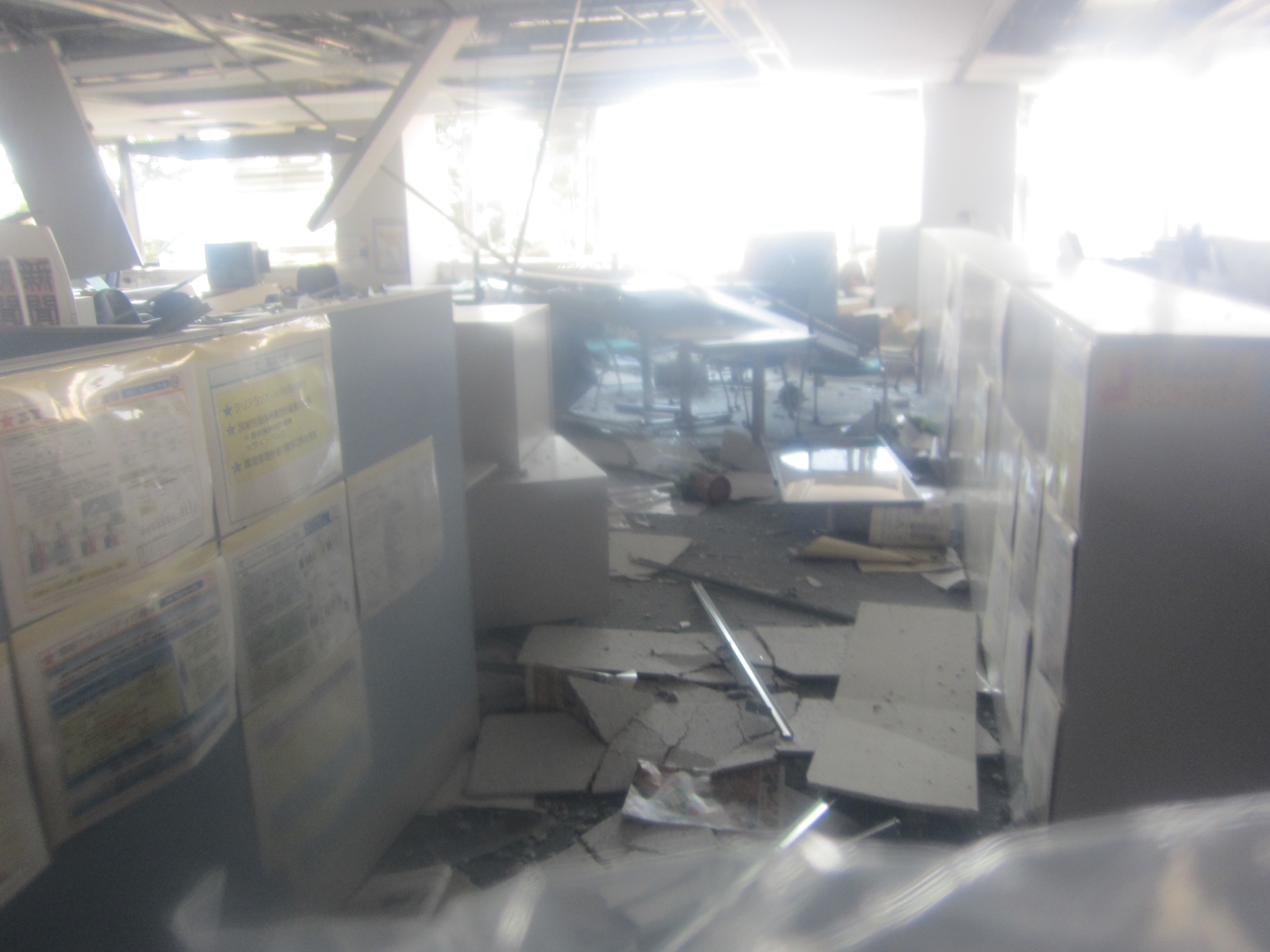
How did this happen? TEPCO chose the location because there wasn’t supposed to be anything, according to the original drawings. However, as repairs and renovations were done over the years, the original drawings from the time the reactor was built became obsolete.
Don’t they have the drawings of those repairs and renovations? Yes they do.But those drawings were stored in one of the buildings that was devastated by the March 11, 2011 earthquake and declared too dangerous to enter. There is no information as to whether anyone has gone back in to retrieve any document or data from the main building. Probably not, because, as we know well by now, TEPCO carefully abides by the rules and regulations from the authorities:
(Photo of the 2nd floor of the main building, Fukushima I Nuke Plant)
Independent journalist Ryuichi Kino tweeted:
福島第一の現況の把握が難しいことは、以前からわかっていた。原子炉の基本的な構造は設計当初のままだが、配管や細かい設備などは後から追加、修正をうけて、元の状況とは大きく変わっている。だからこれまでも、構造物に手を着ける作業は慎重に進められた。
It has been known that it is difficult to completely grasp the condition of Fukushima I Nuke Plant. The basic structures of reactors have been the same since the plans were drawn up, but pipes and other small facilities were added and modified later, making the current condition vastly different from the original condition. Therefore, any work that has to do with the structures have been carried out very carefully.
New milestone for Russian “floating” nuclear plant
29 January 2013
The installation of two 300-tonne tanks has taken the project to build Russia’s first floating nuclear power plant a step further towards completion.

The tanks, which provide a shielded housing for the reactor vessels and their cooling circuits, were manufactured by Baltiysky Zavod shipyard, which is constructing the plant for Rosenergoatom. They were lowered into the reactor compartment of the Akademik Lomonosov over two days in an operation made complicated by ice on the Neva river. Baltiysky Zavod general director Alexander Voznesensky described the installation of the tanks as a milestone in the project.
Akademik Lomonosov is Rosenergoatom’s first-of-a-kind floating nuclear power plant and will contain two 35 MWe KLT-40S nuclear reactors. The vessel’s keel was laid in April 2007 at Sevmash in Severodvinsk, but the project was subsequently transferred to the Baltiysky Zavod. The 21,500 tonne hull was launched in 2010, although construction work was frozen in mid-2011 amid bankruptcy proceedings against the shipyard. The company was subsequently acquired by state-owned United Shipbuilding Corporation and Rosenergoatom signed a new contract with Baltiysky Zavod shipyard for the completion of the first floating nuclear power plant in December 2012. It is now scheduled for commissioning in 2016.
Researched and written
by World Nuclear News
http://www.world-nuclear-news.org/NN-New_milestone_for_floating_nuclear_plant-2901137.html
Launch of Russia’s first floating nuclear plant pushed back several years – again
Hindered by contract delays,bankruptcy proceedings, and switching ownership of the company that is building it, plans to launch Russia’s first floating nuclear power plant have again been scuttled, with the new launch date pushed back from this year to 2016, Bellona has learned.
Charles Digges, 14/12-2012
In all, Russia’s state nuclear corporation Rosatom wishes to produce six 70 megawatt floating nuclear power plants (FNPPs), which it says are designed to deliver power to far flung regionsalong its own northern Arctic coast, and says further that the plants are a hot item on the wish list of foreign customers, mainly China.
Many of these potential foreign customers had been hoping Russia would meet its originally promised deadline for FNPP delivery of 2010.
Environmental outcry over FNPPs has been present since their inception. Russia has neither the means nor infrastructure to ensure their safe operation, has made no plans for disposing of their spent nuclear fuel (SNF), and has not taken into consideration the enormous nuclear proliferation risks posed by placing nuclear reactors in remote areas.
Furthermore, officials apparently have not considered their vulnerability to terrorist attacks while on site or during transportation to their intended locations.
But the fates of shifting shipyards, bankruptcy of the shipyard to where the first floating nuclear power plant was transferred, and the acquisition of the foundering shipyard by other financial holdings have not been kind to the timely launch of one of Rosatom’s pet projects – and have more than once shed doubt on whether the environmentally dicey project would be completed at all.
His Majesty King Mohammad VI: Drop the criminal defamation charges against Youssef Jajili.
“… Islamic law forbids Muslims from drinking alcohol. Amara accused Jajili of fabricating the report and vowed to seek revenge against Jajili on his facebook page. Jajili published Amara’s hotel bill which showed the charges for the meal and alcoholic beverages under Amara’s name….”
Petitioning His Majesty King Mohammad VI
His Majesty King Mohammad VI: Drop the criminal defamation charges against Youssef Jajili.
Petition by Save Youssef
Investigative Journalist Youssef Jajili is urgently seeking the help of the international press and human rights organizations to shed light on his case to prevent the Moroccan courts from sentencing him to time in a harsh prison and imposing hefty fines that could force the closure of his award-winning independent weekly investigative magazine. Jajili, 29, has been charged with criminal defamation in response to bold journalism that exposes corruption and human rights abuses within the Moroccan government. Immediate action is required as Jajili’s trial is set to start on Monday, January 28, 2013.
Reporters Without Borders, The Committee to Protect Journalists (CPJ), The International Freedom of Expression Exchange network (IFEX) , and The Arabic Network for Human Rights Information (ANHRI) denounced the Moroccan government’s criminal defamation case against Jajili as an ‘intimidation tactic’ to silence the independent press. “These defamation charges against Youssef Jajili should be dropped immediately,” said the Committee to Protect Journalists’ Middle East and North Africa Coordinator Sherif Mansour. “Journalists should be able to serve as watchdogs of the government without fearing intimidation, detention, or prison time.”
Jajili is the Editor-in-Chief of Alaan Magazine, a publication he founded in April 2012 that courageously calls out Moroccan authorities for freedom of speech and human rights violations. “The current charges against me are politicized and are being used to try to silence my journalism and my magazine,” says Jajili who won Morocco’s prestigious National Press Award in 2011. “I am not a criminal. I am a journalist who has done nothing but fulfill my ultimate duty which is to serve as a watchdog on the government and expose corruption, truth.”
The criminal defamation charges stem from a June 2012 article Jajili published about Abdelkader Amara, a Justice and Development minister in Morocco’s current Islamic government. Jajili reported Amara used taxpayer funds to purchase a private meal in his hotel room worth more than 900 Euros while on a taxpayer-funded trip outside the country. Jajili also reported that champagne was ordered during the meal which was embarrassing to Amara because the politician had campaigned to ban alcohol sales in Morocco and because Islamic law forbids Muslims from drinking alcohol. Amara accused Jajili of fabricating the report and vowed to seek revenge against Jajili on his facebook page. Jajili published Amara’s hotel bill which showed the charges for the meal and alcoholic beverages under Amara’s name. You can view a pdf version Jajili’s article in it’s entirety on this site.
International Children’s Heart Foundation team arrive at Kharkov Cardiac Children’s unit -Ukraine
“…The iodine shock may also initiate processes which continue to evolve under chronic low-level radiation due to incorporated Cs-137. The artificial radioactivity which has persisted for the last 17 years in the organisms of people living round Chernobyl is due to long-lived radionuclides, mainly strontium (Sr-90), caesium (Cs-134 and especially Cs-137) and uranium derivatives including plutonium….”
International Children’s Heart Foundation team arrive at Kharkov Cardiac Children’s unit for their first day.
There will be 2 children operated on today , one a little girl of 1yr old, called Juravel and a little 1.5 month old girl called Anna.
Please follow our stories of the trip this week.

http://www.facebook.com/Kharkov.ICHF?ref=stream
ICHF has conducted medical mission trips since the beginning of their work in 1993. Our trips have increased over the years so that now there are at least two ICHF Medical Teams every month repairing children’s hearts somewhere in the world. The year 2013 represents our most ambitious schedule to date. There will be 44 trips on the schedule this year!
| January 26 – February 9 | Kharkiv, Ukraine | |
| February 2 -16 | Tegucigalpa, Honduras | |
| February 16 – March 2 | Santiago, Dominican Republic | |
| February 23 – March 9 | Najaf, Iraq | |
| March 16 – 30 | Benghazi, Libya | |
| March 23 – April 6 | Skopje, Macedonia | |
| April 6 – 20 | Guayaquil, Ecuador | |
| April 6 – 20 | Kharkiv, Ukraine | |
| April 6 – 20 | Basra, Iraq | |
| April 20 – May 4 | Tegucigalpa, Honduras | |
| April 27 – May 11 | Jimani, Dominican Republic | |
| May 11 – 25 | Santiago, Dominican Republic | |
| May 4-18 | Najaf, Iraq | |
| May 25 – June 8 | Benghazi, Libya | |
| June 1 – 15 | Skopje, Macedonia | |
| June 1 – 15 | Guayaquil, Ecuador | |
| June 8 -22 | Kharkiv, Ukraine | |
| June 22 -July 6 | Jimani, Dominican Republic | |
| June 29 – July 13 | Basra, Iraq |

SHORT VIDEO HERE OF OPERATING ROOM….
http://www.facebook.com/photo.php?v=10200427953689524&set=vb.225990650786992&type=2&theater
Today in the ICU of the Kharkov children’s heart unit.— at Kharkiv Center of Cardiac Surgery.

Chronic Cs-137 incorporation
in children’s organs
Y. I. Bandazhevsky
S W I S S M E D W K LY 2 0 0 3 ; 1 3 3 : 4 8 8 – 4 9 0 · w w w. s m w. c h
EXTRACT
In Belarus’s Gomel region, which was heavily contaminated by fallout from the Chernobyl disaster, we have studied the evolution of the Cs-137 load in the organisms of the rural population, in particular children, since 1990. Children have a higher average burden of Cs-137 compared with that of adults living in the same community.
France waged Mali war to plunder Africa’s Natural resources: Ayssar Midani
“…I also want to say that it’s not only the French army who’s intervening in Mali; it’s also very heavy help from the United Kingdom, from Britain, and also from the United States. In fact, the same coalition going into Mali is the same who destroyed Iraq, the same who destroyed Libya and the same who are against Syria.
The problem is not to have any independent and strong country in these parts of planet earth where there are interestingly important resources of gas, oil, uranium, gold and everything. I think this is the main purpose….”
Video on link below articleb
Press TV
Mon Jan 28, 2013 1:25PM GMT

Transcript..
In the background to this, France has also imposed media restrictions on the developments on the ground with the help of the Malian army, which human rights groups say has committed ‘serious abuses.’
Press TV has conducted an interview with Ayssar Midani, an activist against the War in Mali, from Paris. Midani is joined by Lawrence J. Korb, senior fellow at the Center for American Progress, from Washington, and Michael Burns, a political and military analyst from New York. The following is a rough transcription of the interview.
Press TV: What is France exactly doing in Mali, according to your perspective, Ms. Midani?
Midani: I think France is also going to invade Mali because they have a special agenda for the uranium in Mali and in Nigeria, for the oil and gas, for gold.
Unfortunately, the French policy is also going from aggressive invasion to aggressive invasion. They have been in Syria, for example. France is arming the so-called opposition but they are only mercenaries sent to Syria, first.
Now, for me, I think they have been sent to Mali just to create the pretext for a military intervention for this exploitation agenda about the resources of Mali.
Press TV: Why are you skeptical about the intentions of France? Of course, Paris is saying a different reason for being there and stopping terrorism. Why are you skeptical about the reasons Paris is saying they’re there?
Midani: Because I think they started before, several years before against Algeria in the 90s, I remember, just to stabilize Algeria and take profit from the gas and oil in Algeria. Algeria kept very well their country but they paid very hard. I mean, it was a lot of victims. It was very hard for the Algerian people.
Actually, these mercenaries, we are told today that they have their weapons from Libya. We remember very recently how Libya has been destroyed by the NATO intervention.
The first who agreed, who was fighting to make this aggression – agreed by NATO, by the EU – was France, the French administration.
Dr Caldicott Interview in Byron Bay -Childrens thyroids cover up in japan – video
- Creative Commons License:
An interview with Dr. Helen Caldicott in Byron Bay, NSW, Australia in August 2012. This interview was focused on the issues related with the Fukushima nuclear disaster in March 2011.
Sign the Petition: Fukushima Mom calls for the Fukushima Local Government to Continue Housing Support
Click here to Sign the Petition calling for the Governor of Fukushima to Continue housing support for Fukushima refugees!

I’m a mom who lives in Fukushima, Japan. I have a daughter in middle school and a son with disabilities. When my daughter moved up to high school, my family had planned to move out of Fukushima because we were worried about the effect of radiation on my kids’ health.
Since 3.11, the state government has provided housing support to refugees displaced by the Fukushima nuclear power plant accident. But the government recently announced that it will end rent assistance to families who move outside of Fukushima – while keeping it for anyone who stays.
On the same day that I learned Fukushima had decided to stop support for people moving away, I received notice that my son’s exam for thyroid cancer had revealed small tumors. (An A2 rating for the thyroid cancer test indicates growths or tumors from 5.0 to 20 mm in size.) I’m shocked and scared — and I worry about how the radiation is affecting my kids.
Many families in Fukushima are juggling difficult decisions, made worse by fears about radiation — whether to keep their kids in a school with classmates they know, or leave behind their homeland of generations and move away. The state’s housing support is what enables many families who couldn’t otherwise afford it, the chance to move away.
In a recent poll conducted by the city of Fukushima, 90% of Fukushima residents said they were “somewhat worried” or “very worried” about the impact of radiation on the health of their family members. And nearly half of families with young kids said that “even now, they would like to move away” due to fears about radiation.
Save Hospital №31 in St-Petersburg: do not reform it into a VIP medical facility for Russian judges
Petition
Грачева Елена
Санкт-Петербург, Russian Federation
A unique Saint-Petersburg hospital #31, where many critically ill children are treated every year, is falling prey to the top Russian officials – federal judges.The hospital is to be transformed from a public clinic to the exclusive medical center serving only the needs of judges of the Supreme and Higher Arbitration Courts of Russia.

A typical bunch of Russian judges circa 2002.. [Arclight]
Just a few months ago the hospital was renovated and re-equipped.
Hospital #31 is not only famous for its exceptionally qualified team, but also for its strong ties with charitable foundations. Private foundations are financing a major part of the patients’ expenses on high-cost treatment, helping those who would otherwise be unable to afford it. Additionally, the hospital treats adult patients.
The head of the hospital’s Pediatric Oncology and Hematology Department, Margarita Belogurova says:
«Every year about a hundred children are diagnosed with Cancer in Saint-Petersburg, and half of them are treated here. In ten years we decreased the mortality rate in our department from 75% to 25%, We have some absolutely unique departments, highly qualified doctors and a well-developed system of charity support. I think people who decided to tear our hospital apart, imagine it as a simple process: like moving a bed from one corner to another. But it is absolutely not true! If the hospital is to be disbanded, this decision will destroy a unique environment in which the kids are treated, we’ll lose many excellent doctors and valuable ties between our departments will be destroyed. I hope that the federal government will change its decision».
The patients’ parents refuse to believe that Russian officials can simply take it all away from young patients on just a foolish whim.
«I can hardly comprehend that such cynicism is at all possible. Federal judges are rich people, well provided with social services in the country. They have everything. Why are they taking away from our children the last thing they have left? Do these judges need our hospital that much? Many parents want to act somehow, but we all know that when we try to protest peacefully to draw attention to this issue, we will just get arrested for the unsanctioned action. We will protest anyway, though, because you can’t take away the only hope for these children. And this hospital is the last hope for many kids, including my son, Kirill. If this hospital is closed, I will have to sell my apartment to pay for my son’s treatment, and I have two other kids. So, where are we supposed to live then? The government provides almost no help, and now it even puts my child’s life in danger», – says the outraged Oleg Kostin, an engineer from Saint-Petersburg and a father of a 14-year old Kirill.
We demand to stop the hospital’s transfer to the judges. We demand complete adandonment of such plans. Tearing the hospital apart, which means transferring its departments to multiple locations around Saint-Petersburg, is unacceptable, because it will destroy most important things: integrity, the hospital team and fine-tuned cooperation mechanisms established in the facility. These things are necessary to provide quality medical care in a timely fashion.
We are appealing to the humanity of the Head of the Department of Presidential Affairs, Mr. Kozhin and St-Petersburg governor, G. Poltavchenko.
Please sign the petition here..
PLEASE SORT IT OUT MR PUTIN!!

The Real Currency, Gold and Energy War in Mali -AUDIO interview
Januar 27th, 2013
EXCLUSIVE INTERVIEW: Have you heard lately of the meme of a currency war that’s going on? Well, Pepe Escobar, the “roving eye” correspondent of Asia Times, tells you about the real currency, gold and energy war that is now raging in Mali, as the overall Global War on Terror needs new battlefields to perpetuate itself as “The Long War.”

By Lars Schall
Pepe Escobar, who was born 1954 in Brazil, is one of the most outstanding journalists of our time with three decades of experience in covering politics and conflicts around the globe. He works for Hong Kong/Thailand-based Asia Times as “The Roving Eye.“ Moreover, he is the author of three books: “Globalistan: How the Globalized World is Dissolving into Liquid War,“ “Red Zone Blues: a snapshot of Baghdad during the surge,“ and “Obama does Globalistan.“
Mr. Escobar has been a foreign correspondent since 1985, based in London, Milan, Los Angeles, Paris, Singapore, and Bangkok. Since the late 1990s, he has specialized in covering geopolitical stories from the Middle East to Central Asia and has reported during this decade from Afghanistan, Pakistan, Iraq, Iran, the Central Asian Republics, China and the U.S.A.
He was in Afghanistan in Summer of 2001 and interviewed the military leader of the anti-Taliban Northern Alliance, Ahmad Shah Masoud, just a few weeks before his assassination, and he has been one of the first journalists to reach Kabul after the Taliban’s retreat. He is a renowned expert on the network of pipelines hardwiring the countries of the Middle East, Central Asia, Russia, and Europe that he has dubbed “Pipelinestan.” Mr. Escobar lives in Sao Paulo, Bangkok, and Hong-Kong.
The Real Currency, Gold and Energy War in Mali
FOR AUDIO CLICK HERE
For further reading see these three articles on Mali by Pepe Escobar:
“Burn, burn – Africa’s Afghanistan”
For German-speaking readers:
DAS WANDERNDE AUGE: Brenne, brenne – Afrikas Afghanistan
DAS WANDERNDE AUGE: Krieg gegen den Terror für immer
DAS WANDERNDE AUGE: Zero Dark Mali
Fukushima -TEPCO to Limit the Right to Claim Compensation to 3 Years After All
SUNDAY, JANUARY 27, 2013
EXSKF

It’s not quite a 180-degree turn from the position taken by the TEPCO president only days before the change, but still an unpleasant and frustrating turn for people affected by the nuclear disaster.
On January 10, 2013, this is what Naomi Hirose, president of TEPCO, said to Yuhei Sato, governor of Fukushima Prefecture, according to Mainichi Shinbun(1/10/2013; part):
東京電力の広瀬直己社長は10日、福島第1原発事故に伴う損害賠償の時効について「(3年間の)消滅時効の権利を主張するつもりはない」と初めて明言した。
Naomi Hirose, President of TEPCO definitely said on January 10 for the first time that TEPCO had “no intention of claiming its right to legal statute of limitations (3 years)” regarding the compensation to damages arising from the Fukushima I Nuclear Power Plant accident.
下河辺和彦会長らと同日、福島県庁を訪れ佐藤雄平知事と面会した際、広瀬社長は「全くそういう(消滅時効を主張する)つもりはない。法律の問題もあるが、何らかの形を示したい」と初めて踏み込んだ発言をした。佐藤知事は「完全な賠償の実施をお願いしたい」と求めた。
President Hirose and Chairman Kazuhiko Shimokobe visited with Governor Yuhei Sato at the Fukushima Prefectural government office on January 10. Mr. Hirose made specific remarks for the first time regarding the issue, saying “We have no intention at all (to claim our right to statute of limitations). It is a legal problem, but we would like to come up with something concrete.” Governor Sato demanded that TEPCO fully compensate the victims.
民法724条は、不法行為で被害などを知ってから3年以内に損害賠償を請求しないと、時効により権利を失うとされる。この規定は権利関係の迅速な確定を目的に設けられているが、佐藤知事は、東電に対して消滅時効を主張しないよう求めていた。
According to the Article 724 of the Civil Code, one loses the right to compensation unless one files a claim for damages within 3 years of first becoming aware of the damages from offense by others. The purpose of this article is to quickly establish relations of right. Governor Sato had asked TEPCO not to assert its claim to statute of limitations.
面会後、広瀬社長は「社内で対応策を検討中で、近々発表できると思う。裁判で消滅時効の権利を主張するつもりはない」と記者団に語った。
After the meeting, Mr. Hirose said to the press, “We’re discussing the measures, and I hope to announce them soon. We are not going to assert our claim to statute of limitations in lawsuits.”

[notice the time it takes for cancers to establish fully in children – Arclight]
[Image source enformable]
There are many who haven’t even received the applications yet. For those who have received the applications, the application is such a legal mumbo jumbo that many have simply given up.
Then on January 16, six days later, TEPCO revealed their plan. Instead of statute of limitations as stipulated by the Civil Code, the company will use a modified statute of limitations – 3 years from the time when the application forms are received by people affected by the accident.
As Nikkei Shinbun reported (1/16/2013; part):
東京電力と原子力損害賠償支援機構は、福島第1原子力発電所事故に伴う損害賠償の請求可能な期間を、被災者が請求用書類を受け取った日から3年間とする方針を固めた。賠償の請求権については法律上、事故から3年後に時効が成立する可能性があることが指摘されていた。時効の起点を後ろにずらして賠償を受け取れない被災者が出ることを防ぐ。
TEPCO and Nuclear Damage Liability Facilitation Fund has decided that the period to claim damages from the Fukushima I Nuclear Power Plant accident will be three years from the date when people affected by the accident receive their application documents. It has been pointed out that the three-year statute of limitations from the start of the accident may happen, but the new plan will move the date further back from which to count three years so that people affected by the accident are able to receive compensations.
茂木敏充経済産業相に15日に提出した「総合特別事業計画」の変更申請に盛り込んだ
The plan is part of the change request for the “Comprehensive Special Business Plan” that TEPCO submitted to Toshimitsu Motegi, Minister of Economy, Trade and Industry, on January 15.
So it’s a done deal. The plan is submitted, not because the plan will be analyzed or discussed by the government but as the last formality after everything in the plan has been already informally discussed and agreed upon by all the parties involved, in this case the national government and TEPCO (which are one and the same).
Very clever of them. The management of Chisso should have used the same ruse.
TEPCO’s Hirose by the way holds an MBA from Yale University. Minister Mogi is a former McKinsey consultant. They probably understand each other very well.
http://ex-skf.blogspot.co.uk/2013/01/fukushima-i-nuke-accident-tepco-to.html
Cancer Deaths in Lowca -An artists impression of Sellafield
“A cow with 2 heads”
Uploaded on Nov 12, 2008

Cumbrian performance artist Kevin Carr on everyday village life in the shadow of Sellafield nuclear reprocessing plant. Film made by Helen Petts for UK Channel Four arts programme “Halfway to Paradise”. 1990.
Mrs Tiggywinkle’s Laundry – hot pants! Sellafield Laundry scandal?

“…The only brand protection worth having is to contain radioactive contamination on the Sellafield site rather than dispersing it to the environment at previously non nuclear sites through landfill, metal “recycling”, a proposed nuclear dump and now, we learn, the laundry!….”
INTIMATE RELATIONSHIP BETWEEN SELLAFIELD LAUNDRY AND CUMBRIAN HOTELS – (Mrs Tiggywinkle and the hot pants) A Cumbrian laundry, Shortridge, supplying some of the most prestigious hotels in the Lake District has a £50,000 – £600,000 contract to provide a contingency laundry for Sellafield’s towels and underwear.
27 January 2013
There is no monitoring once the laundry leaves Sellafield, no checks once it arrives at the same laundry used by Cumbrian Hotels. Baroness Verma’s recent comments about the intimate relationship between the nuclear industry and tourism perhaps refers to the use of the same laundry? £500,000 has been pledged by government to protect the Lake District’s image. No doubt aggressive Mrs Tiggywinkle marketing could put a positive spin on the nuclear laundry being shared with Cumbrian hotels. The only brand protection worth having is to contain radioactive contamination on the Sellafield site rather than dispersing it to the environment at previously non nuclear sites through landfill, metal “recycling”, a proposed nuclear dump and now, we learn, the laundry!
The Environment Agency has provided answers below confirming the appalling situation which, despite assurances, opens up another new pathway for routine and accidental contamination. This has only come to light as a result of an anonymous letter to Radiation Free Lakeland.
Environment Agency -Freedom of Information Answers: PROTECT-NTH6582H
Dear Marianne Thank you for your request for information which was received in this office on 14 January 2013. Requests for information that are recorded are generally governed by the Freedom of Information Act 2000 (FOIA).
The information you have requested is environmental and it is therefore exempted from the provisions of FOIA by FOIA s.39(1). We have therefore considered your request under the provisions of the Environmental Information Regulations 2004 (EIR).
I will answer your points in turn. Laundry at Sellafield Sellafield Ltd has an on-site laundry for active and non-active (i.e. contaminated and non-contaminated) laundry. However, in case the laundry cannot operate, Sellafield Ltd has a contract with Shortridge Laundry as a contingency for the non-active (i.e. non-contamined) laundry.
MUST WATCH: Belgian MP, Laurent Louis, drops the F-bomb in parliament about the neo-colonial adventures for which media provides propaganda cover! Areva named and shamed!
Working link in french below..
MUST WATCH: Belgian MP, Laurent Louis, drops the F-bomb in parliament about the neo-colonial adventures for which media provides propaganda cover

Posted on January 27, 2013 by stacyherbert| 3 Comments
Stacy Summary: I suspect this is the next European parliamentarian to go viral. The speech is so amazing, I doubted its authenticity! I assumed it was green screened, anyway, to the Belgians reading this, do comment about who this guy is, etc., as I had never heard of him and would like to know more. Regardless, a surprising speech to hear delivered in any Western parliament.
If you have problems viewing on that link
Update : There appears to be a problem with the video on my you tube channel too! looks like the video has been redirected to belgium?? ie youtu.be
i am trying to find out whats going on but you might be able to still watch it on the max kaiser link.. read the comments anyway.. i have a download in french but no transcript file yet.. I will post the transcript here when it becomes available.. hopefully soon! there are subtitles available on the kaiser link
working link in french
you need to sign in to enable translation..
After he gave a press conference to the Belgian media to expose the report of autopsy of the paedophile Marc Dutroux’ little victims “Julie and Melissa” who have officially died of hunger in Marc Dutroux’s basement while he was in prison for another case, the members of the Belgian Parliament have sanctioned Laurent Louis, on the 30th of june 2012, by obvious fear the cruel truth to be brought in plain sight and protect those among the government who are directly involved in the protection of the pedocriminals… or worse, those who belong this international paedo-criminal ring…….
http://dotsub.com/view/ce14c149-e361-4465-a2ab-180a52ae234c
notes on video here
Here are some excerpts from his speech:
 1:25 And today, in the name of democracy and the fight against terrorism,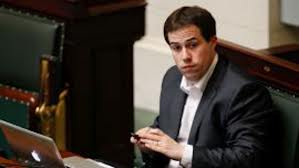
Fukushima Political Fallout: NHK Documentary; ‘Questioning Nuclear Power’
Published on Jan 26, 2013
A picturesque town with a slumping economy was torn by the lure of nuclear energy. Should the people accept the construction of a nuclear power plant, in the hope it will help fund their future? Or continue to struggle in bountiful nature, free of the risks of radiation? We get a close look at their 40-year dilemma.
What is the best way to frame the issue of nuclear power? In the end, maybe a great deal hinges on how people define “quality of life”.
Questioning Nuclear Power The program presents the thoughts of the residents of Ashihama who have been directly concerned with the pros and cons of the nuclear power issue ever since a plant was first proposed there in 1963.
A broadcasting issue created a somewhat poor quality video. The “message” comes through loud and clear regardless of the jerkiness of the film. Originally aired June 29, 2012.
Rebroadcast 1/26/13.
http://www3.nhk.or.jp/nhkworld/w/movie/
Reject Nuclear Power
http://dissidentvoice.org/2013/01/reject-nuclear-power/
1 This Month





PLEASE OPPOSE HR 8255 AND S.3639 – bills would accelerate satellite deployment, with no environmental review or safeguards – https://ncstd5li.quorum.us/campaign/169331/
To see nuclear-related stories in greater depth and intensity – go to https://nuclearinformation.wordpress.com
-
Archives
- September 2026 (339)
- August 2026 (330)
- July 2026 (355)
- June 2026 (287)
- May 2026 (306)
- April 2026 (356)
- March 2026 (251)
- February 2026 (267)
- January 2026 (308)
- December 2025 (358)
- November 2025 (359)
- October 2025 (375)
-
Categories
- 1
- 1 NUCLEAR ISSUES
- business and costs
- climate change
- culture and arts
- ENERGY
- environment
- health
- history
- indigenous issues
- Legal
- marketing of nuclear
- media
- opposition to nuclear
- PERSONAL STORIES
- politics
- politics international
- Religion and ethics
- safety
- secrets,lies and civil liberties
- spinbuster
- technology
- Uranium
- wastes
- weapons and war
- Women
- 2 WORLD
- ACTION
- AFRICA
- Atrocities
- AUSTRALIA
- Christina's notes
- Christina's themes
- culture and arts
- Events
- Fuk 2022
- Fuk 2023
- Fukushima 2017
- Fukushima 2018
- fukushima 2019
- Fukushima 2020
- Fukushima 2021
- general
- global warming
- Humour (God we need it)
- Nuclear
- RARE EARTHS
- Reference
- resources – print
- Resources -audiovicual
- Weekly Newsletter
- World
- World Nuclear
- YouTube
-
RSS
Entries RSS
Comments RSS

