EDF Extends Reactor Outage Until January After Corrosion Signs
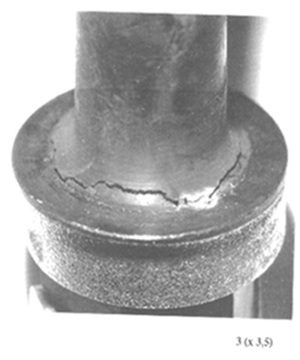
The Gravelines nuclear power station in Dunkirk, France. Electricite de France
SA extended a maintenance outage at one of its 57 nuclear reactors through
January next year, reducing power output during a key part of the heating
season. The prolonged halt at the Gravelines 5 reactor in northern France
will last seven weeks longer than initially planned until Jan. 25. That may
underpin European power prices, which have jumped in recent weeks due to
surging gas prices tied to the Iran war.
Bloomberg 3rd Sept 2026,
https://www.bloomberg.com/news/articles/2026-09-03/edf-extends-reactor-outage-until-january-after-corrosion-signs
How drones reinvented the proxy war

Drone technology, once confined to
great powers like the United States and China, has irrevocably spread to
smaller states and non-state actors. In the early 2000s, it would have been
unthinkable for small insurgent groups to develop sophisticated
drone-building programs and deploy unmanned aircraft against their
opponents. A generation later, this technology has become cheaper and far
more accessible. Syria’s civil war demonstrates how local initiative
combined with inexpensive drones imported from second-tier producers can
bring game-changing results.
Bulletin of Atomic Scientists 2nd Sept 2026,
https://thebulletin.org/2026/09/how-drones-reinvented-the-proxy-war/
I inadvertently misled parliament over a British nuclear scandal. Now I’m calling for justice
Tobias Ellwood, 3 Sept 26,
https://www.theguardian.com/commentisfree/2026/sep/02/british-nuclear-tests-compensation-for-veterans
Thousands of service personnel took part in dangerous cold war-era nuclear tests. The government owes them the truth – and compensation.
In December 2018, as defence minister, I inadvertently misled parliament. Asked whether blood samples had been taken from service personnel for radiological monitoring during the nuclear bomb tests, I relayed the line provided to me by the Ministry of Defence: it was “unable to locate any information” suggesting blood samples had been taken for radiological monitoring at the tests.
I now know the reality was very different – these samples were taken across the armed services branches. But those veterans seeking compensation for serious illnesses developed after radiation exposure have been unable to access them. This is among the greatest scandals in Britain, and it must be addressed.
More than 20,000 armed forces personnel took part in dozens of nuclear tests and nearly 600 radiation experiments, the majority between 1952 and 1967. This was for the entirety of the cold war. The science was deemed necessary. How effective were our own bombs and, just as importantly, how well could our military function if the Soviet Union used theirs against us? Test after test was conducted in the Australian desert, at Christmas Island in the Pacific, and we also sent service personnel into the atomic clouds of allies and enemies. Yet their medical records for the period are missing.
Other nuclear nations, such as the US, France and the Soviet Union, did the same. Yet they acknowledged that it happened and created dedicated compensation schemes for nuclear test veterans who subsequently developed serious illnesses. Britain stands apart here. In Britain, the burden was placed on veterans to prove their case. But how do you claim what happened decades earlier when potentially vital records are missing or inaccessible?
In 2007, about 1,000 nuclear test veterans and families took the MoD to court seeking compensation. Pilots had been instructed to fly through mushroom clouds. Service personnel sailed and crawled through fallout. Others witnessed nuclear explosions, in some cases just two miles from ground zero. Surely our service personnel deserved better?
This is where the scandal turns ugly. To deal with the veterans’ litigation, the MoD instructed the Atomic Weapons Establishment (AWE) to collate relevant documentation into a searchable database called Merlin. More than 28,000 documents were eventually assembled, covering radiation, precautions, health monitoring and what was known about the possible biological effects of the tests. Yet the veterans’ lawyers had no practical access to this vast archive. Thanks to the extraordinary investigative journalism of Susie Boniface, historical documents began emerging referring to blood and urine testing.
When I saw the evidence, I raised it in November 2022 as chair of the defence committee. The MoD finally acknowledged that the AWE held copies of blood-test results and urine-radioactivity measurements for “a small number of individuals”. That took me straight back to my parliamentary answer four years earlier.
I challenged the then defence secretary, Ben Wallace. If this information existed within the MoD, why had ministers not been given the full picture? He agreed that withholding relevant medical information would be “deeply wrong” and undertook to investigate.
The dam was beginning to burst. Searches of Merlin for “blood” and “urine” subsequently identified 151 documents. Then another extraordinary twist. A software change meant the AWE could no longer provide a historical audit trail showing who had accessed Merlin.
Nuclear microreactors move towards operational capability for military, space energy solutions
Robert Dougherty, Space Connect, 04 September 2026
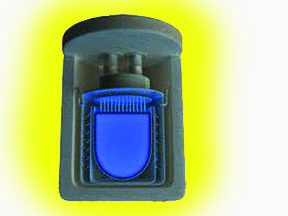
Advanced nuclear microreactors are moving towards operational capability as military and space energy solutions, according to recent comments from Antares Nuclear co-founder and CEO Jordan Bramble.
Bramble, speaking to a US House science committee on 2 September, confirmed that the microreactors are expected to have major implications for military energy resilience, national security, and space power.
Antares Nuclear’s Mark-0 reactor reportedly reached criticality on 4 June this year at Idaho National Laboratory, and the company plans to operate its Mark-1 reactor at INL for six months in 2027, followed by military deployments at Fort Bragg and Joint Base San Antonio in 2028.
He also credited the US ADVANCE Act of 2024 and 2025 presidential executive orders with streamlining regulatory processes and establishing a Department of Energy Reactor Pilot Program.
“As Antares ramps up production, we are actively exploring commercial applications to provide resilient power to compute capabilities, remote oil and gas hubs, austere mining environments, fulfilment and distribution centres, and more,” Bramble said.
“We are also building nuclear power for space. In December 2025, President Trump signed his Space Superiority executive order 14369, which was followed in April 2026 by the National Science and Technology Memorandum-3, the National Initiative for American Space Nuclear Power. We at Antares are responding to this charge.
“The same heat-pipe architecture, passive safety, TRISO fuel, and manufacturability that define our terrestrial microreactor form the design basis for space applications. This dual-use approach aligns directly with NASA’s plans for lunar fission surface power and the Space Reactor-1 Freedom pathfinder. Let me be clear, Antares is eager to build to support NASA’s planned 2028 nuclear electric propulsion demonstration mission as well as lunar surface reactors ready for launch by 2030.”
Bramble speculated around first deployment of an advanced small modular reactor at a military installation by 2028, aligning with an existing executive-order target for an Army-regulated reactor………………………………… https://www.spaceconnectonline.com.au/industry/7263-nuclear-microreactors-move-towards-operational-capability-for-military-space-energy-solutions
Devonport nuclear submarine dock upgrades could be accelerated
Navy Lookout 3rd Sept 2026
The MoD hopes to speed up two major dock renewal projects at Devonport following the site operator’s release from 12 years of enhanced nuclear safety oversight. A parliamentary answer this week confirmed that acceleration of work on 10 and 14 Dock is being explored as part of the £7.1Bn Project Royal Oak investment in the base.
Responding to a written Parliamentary question, Defence Minister Luke Pollard, who is also MP for Plymouth Sutton and Devonport, said: “opportunities to accelerate work on 10 and 14 Dock are being explored”. Following the nuclear regulatory review, delivery of both projects is being driven forward. Work on 10 Dock was originally scheduled to be completed in late 2027, but the current target date for handover is unclear.
The Office for Nuclear Regulation (ONR) review concluded in March 2026 and returned Devonport Royal Dockyard Limited (DRDL) to routine regulatory attention. The site had been under ‘enhanced attention’, effectively special measures, since 2014 over concerns about ageing facilities, organisational capability and control of work. ….. With enhanced oversight lifted, there should be fewer regulatory obstacles to progressing complex nuclear construction work at the site.
Faster progress cannot come soon enough. The RN currently has just three facilities able to take a nuclear submarine out of the water: the shiplift at Faslane and 9 and 15 Docks at Devonport. 9 Dock is occupied by HMS Victorious in deep maintenance, while HMS Audacious only vacated the refurbished 15 Dock in June after becoming the first Astute-class boat to dock at Devonport. HMS Astute will take her place as she begins a lengthy mid-life validation period.
Under a £750M contract awarded in 2023, 10 Dock is being modernised to provide a second Devonport dock certified for both SSN and SSBN maintenance. Any acceleration would directly benefit submarine availability.
Work on 14 Dock addresses a different but equally longstanding bottleneck. Its recommissioning will allow submarine defuelling to resume at Devonport for the first time since 2004, when the old facilities were judged to fall short of modern standards. Of the 14 decommissioned boats stored afloat in 3 Basin, 10 still contain nuclear fuel, while their storage and maintenance costs around £30M annually. The old defuelling cranes have been replaced by a Reactor Access House that moves on rails over the reactor compartment, with roughly one boat per year expected to be defuelled once operations begin.
As part of Project Royal Oak, £7.1Bn will be invested in Devonport naval base and dockyard over the next decade, the largest share outside Faslane of the £26Bn naval infrastructure programme confirmed in July’s Defence Investment Plan. The scale of the investment reflects historic underinvestment as well as evolving operational requirements.
The upturn in work is visible in DRDL’s newly filed accounts for the year to 31 March 2026, with revenue rising 6.7% to £1.87Bn, driven by increased submarine maintenance across both the Astute and Vanguard classes. Operating profit reached £131M despite a one-off £5.9M charge relating to a closed group pension scheme, while profit after tax jumped from £76M to £132M, helped by a lower tax charge and higher interest income.
DRDL’s long-term order book fell from £2.1Bn to £1.7Bn, reflecting completion of Year 5 of the Future Maritime Support Programme (FMSP), only partly offset by a six-month bridging contract. This gives added importance to the Gateway Agreement now being negotiated with the MoD, a successor contract intended to run from September 2026 until March 2032, covering the period in which SSN-AUKUS work begins to build.
DRDL is a Babcock subsidiary and employs around 10,200 people, with staff costs of £670M. The Secretary of State for Defence also continues to hold a £1 special golden share in the company, providing powers to overrule ordinary shareholders in extreme circumstances. https://www.navylookout.com/devonport-nuclear-submarine-dock-upgrades-could-be-accelerated/
How climate change threatens Europe’s nuclear renaissance

European governments are planning to fight climate change with a major
expansion of nuclear power. Global warming, however, is fighting back. The
continent’s ambitions for boosting atomic power generation, a central
part of government efforts to meet net-zero goals and rising electricity
demand, collided this summer with the effects of climate change.
Wilting heat waves and worsening drought plunged European river levels to record
lows in August, depriving nuclear plants of the water needed to cool their
reactors. The resulting shutdowns and production cuts prompted some
governments and companies to question whether their multi-billion-euro
plans to build new plants should be adjusted to account for the rising
threats of climate-related disasters.
Politico 1st Sept 2026,
https://www.politico.eu/article/climate-change-threatens-europe-nuclear-renaissance/
The Geopolitical Trap: Structural Incentives Prolonging the War in Ukraine [i]
The Geopolitical Trap: Structural Incentives Prolonging the War in Ukraine [i]
The war in Ukraine that will not stop…
As the war in Ukraine grinds into its next phase, international observers continue to search for signs of a diplomatic off-ramp or a negotiated settlement. However, a close examination of the underlying political, intelligence, and strategic dynamics suggests that the conflict is highly unlikely to end in the near future. The war’s prolongation is not merely the result of battlefield stalemates, but the product of a complex web of survival imperatives, intelligence-agency dominance, and grim strategic utility. From this perspective, the conflict’s continuation serves the immediate interests of the key actors involved, creating a self-sustaining cycle that resists peaceful resolution.
The Survival Imperative: Trapped Between West and Nationalist

At the center of this dynamic is Ukrainian President Volodymyr Zelensky, whose political survival has become inextricably linked to perpetuating the war. Operating within a framework heavily dictated by Western powers, Zelensky’s legitimacy and continued hold on power depend entirely on his alignment with the strategic narratives of NATO and his Western backers.
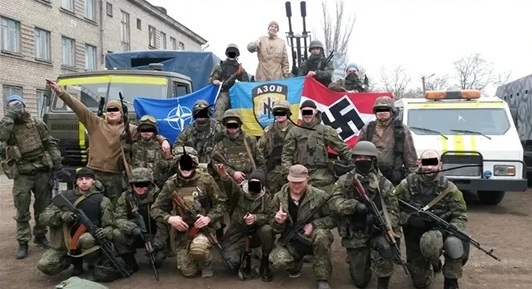
However, Zelensky faces a deadly dilemma from multiple directions. Should he attempt to negotiate peace or surrender to Russian demands, he would face immediate elimination not only from Western powers, who would discard an asset that no longer served their purposes, but also from within Ukraine itself. The country has seen the rise of powerful nationalist militias and far-right battalions that have grown substantially in influence and military capability since 2014. These groups, some with documented connections to neo-Nazi ideologies and symbolism, have made clear their absolute opposition to any negotiated settlement with Russia.
For Zelensky, the threat is existential and immediate. If he signals any willingness to surrender or accept terms unfavorable to maximalist war objectives, these armed nationalist factions would likely move against him. The president is thus trapped: he must continue the war to satisfy his Western patrons who fund and arm his government, while simultaneously appeasing or controlling the nationalist elements who would eliminate him if he showed weakness. This creates a perverse incentive structure where escalation becomes the only viable political path, and any move toward peace becomes politically impossible and personally dangerous.
The Deep State and the Intelligence Apparatus
The notion that Ukraine operates as a fully sovereign entity making independent decisions is contradicted by the pervasive influence of Western intelligence services, particularly Britain’s MI6. Ukraine’s wartime strategy is largely shaped from abroad, with British intelligence deeply embedded in the country’s military and political decision-making.
This reality is starkly illustrated by the positioning of figures like former Commander-in-Chief Valerii Zaluzhnyi. While often portrayed in Western media as a popular, independent alternative to Zelensky, analysts operating within this framework view Zaluzhnyi not as a sovereign Ukrainian nationalist, but as a vetted asset of Western intelligence. His rise, public image, and eventual sidelining were managed to ensure that no matter who occupies the presidential office or military command, the overarching strategy remains aligned with Western objectives. Nothing of strategic significance occurs in Kyiv without the implicit or explicit approval of these foreign intelligence apparatuses, ensuring that the war effort remains on a predetermined, unyielding trajectory.
The Mercenary Economy: Training Grounds for Future Conflicts
One of the most concerning developments prolonging the conflict is the massive influx of foreign mercenaries into Ukraine, creating what amounts to an international training ground with far-reaching implications for global security. Fighters from dozens of countries have flooded into Ukraine, motivated by ideology, adventure, or financial compensation, but their presence serves purposes beyond the immediate battlefield………………………………………………………………………………………………………………………………………………………………………..
NATO Forces and the Preparation for Wider War
Perhaps even more significant than the mercenary phenomenon is the documented presence of Western military personnel, including active and former special forces operators from NATO countries, participating directly in combat operations in Ukraine. While Western governments officially maintain that their forces are not engaged in direct combat, numerous reports and investigations have revealed that special operations personnel from the United States, United Kingdom, Poland, and other NATO members are actively involved in various combat roles………………………………………………………………………………………………………………………………………………………….
The Proving Ground for Western Weaponry
Beyond the training of personnel, the conflict serves as an unprecedented, real-world laboratory for NATO and Western-made weaponry. For decades, the United States and its allies have dominated global conflicts, but these were largely fought against asymmetric, third-world opponents lacking modern air defenses, electronic warfare capabilities, or peer-level artillery. Despite this overwhelming technological superiority, the US still suffered strategic defeats in protracted conflicts like Iraq and Afghanistan.
Ukraine offers a starkly different paradigm: a high-intensity, conventional war against a near-peer adversary with a sophisticated, layered defense. Western governments and defense contractors are eager to see how their flagship systems—such as the Patriot, HIMARS, Leopard tanks, and Storm Shadow missiles—perform against Russian electronic warfare, drone swarms, and advanced air defenses. This real-world testing is invaluable, exposing the vulnerabilities and limitations of Western tech that marketing brochures and sanitized military exercises would never reveal. It allows the West to gather crucial data on how their weapons fail, how they can be jammed, and how they must be upgraded for future high-end conflicts.
The Industrial Base and the Attrition Reality
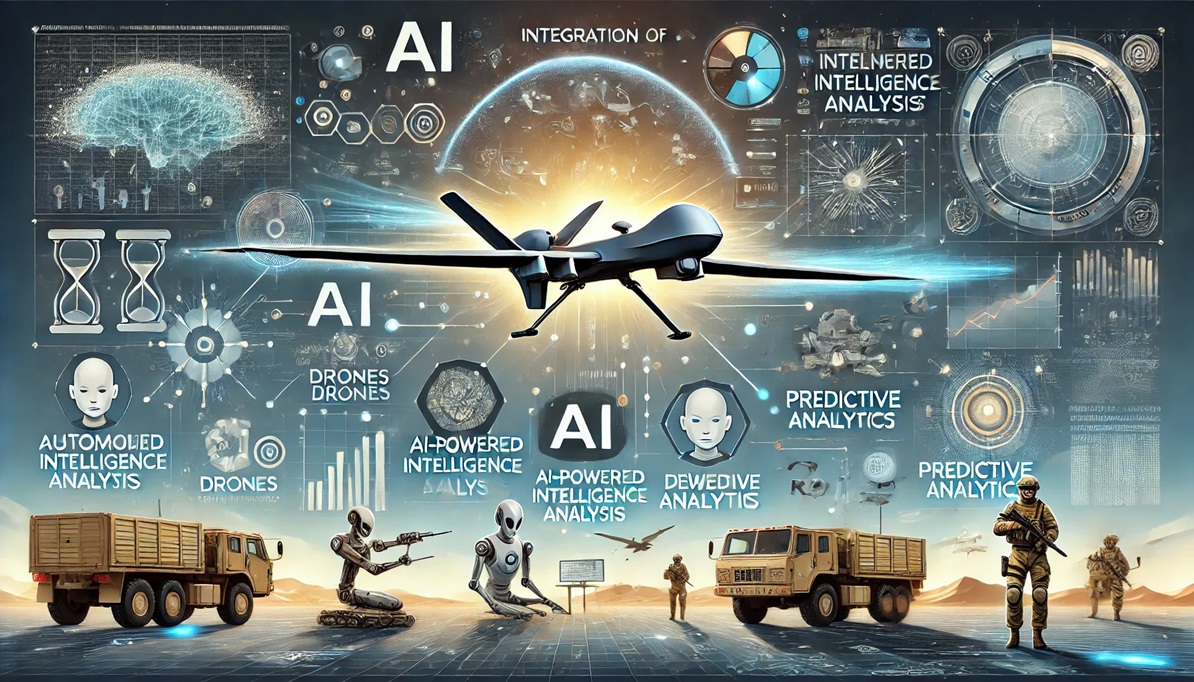
However, this real-world stress test has exposed a critical, perhaps fatal, flaw in the Western military paradigm: the inability to sustain a prolonged war of attrition. The Western military-industrial base is fundamentally optimized for short, high-intensity expeditionary conflicts—blitzkrieg-style interventions against technologically inferior foes. It is not designed for the grinding, artillery-heavy attrition seen in Ukraine……………………………………………………………………………
The Collective Survival of the Political Elite
This dependency on perpetual conflict extends beyond the president to the broader Ukrainian political and oligarchic elite. The current ruling class has thoroughly intertwined its fate with the wartime status quo. Years of martial law, the consolidation of power, and the redirection of state resources have created a system where the elite’s wealth, influence, and physical safety are entirely dependent on the continuation of the current regime………………………………………..
Russia’s Grim Strategic Calculus
Perhaps the most paradoxical element of this prolonged conflict is Moscow’s strategic calculus. While Russia officially seeks the “demilitarization and denazification” of Ukraine, the current Ukrainian leadership is inadvertently achieving these goals on Russia’s behalf.
From the Kremlin’s perspective, there is no strategic incentive to eliminate Zelensky. His policies, driven by the need to satisfy Western demands for total war, have resulted in the systematic dismantling of the Ukrainian state. The massive demographic depletion, the destruction of critical infrastructure, the flight of millions of citizens, and the economic devastation are all outcomes that align with long-term Russian objectives of neutralizing Ukraine as a viable, independent threat on its border. Russia recognizes that Zelensky, in his desperate bid to remain useful to the West, is actively destroying his own country’s future. Eliminating him would risk replacing him with someone more competent, more unifying, or better able to negotiate a peace that preserves Ukrainian statehood. As long as the current leadership continues to bleed the country dry in a war it cannot win, Moscow views him as a strategic asset, albeit an unwitting one.
The Media-Military-Industrial Echo Chamber
Compounding these strategic and industrial realities is the profound incompetence and disconnect of the Western mass media and its military analysts. The public narrative in the West is largely shaped by a revolving door of retired high-ranking military officers and defense officials who transition seamlessly into lucrative roles as television analysts and consultants for the very media and military-industrial complexes they once served.
These figures operate in a closed echo chamber, profoundly disconnected from the grim realities on the ground in Ukraine. They routinely offer overly optimistic assessments, dismiss Russian tactical adaptations, and parrot the official talking points of their former institutions. This manufactured consensus serves to obscure the actual trajectory of the war, hiding the failures of Western weapons, the depletion of stockpiles, and the strategic stalemate. By prioritizing the defense industry’s financial interests and their governments’ political narratives over objective analysis, these commentators ensure the public remains largely ignorant of the true costs and diminishing returns of the prolonged conflict.
Conclusion: A War Without an Exit
These factors converge to create a formidable barrier to peace. Zelensky must continue the war to avoid being discarded by Western powers or eliminated by nationalist factions within Ukraine. The Ukrainian political elite must support him to protect their own power and survival. Western intelligence agencies and military forces are using the conflict as a training ground and testing laboratory for future confrontations with Russia, while simultaneously exposing the limitations of their own industrial base. International mercenaries are gaining skills that will destabilize regions far beyond Eastern Europe. Meanwhile, Russia tolerates the current leadership because their actions are effectively dismantling the Ukrainian state from within.
In this grim equilibrium, the war is no longer just a military contest; it is a self-sustaining political, economic, and military ecosystem with powerful stakeholders on all sides who benefit from its continuation. Peace would threaten the survival of political leaders, eliminate valuable training opportunities for Western forces, and expose the strategic weaknesses of the NATO alliance. Until these underlying structural incentives shift, the war in Ukraine will continue. Peace remains a distant illusion, overshadowed by the immediate, overriding imperatives of political survival, military preparation, and industrial profit.
Big Tech’s Debate Over “Open” and “Safe” AI Leaves Corporate Power Unquestioned

Techno-optimism turns this hierarchy into a story of liberation, presenting corporate technologies as neutral instruments of progress while concealing who owns them and who bears their costs.
September 2, 2026, By Tim Scott
Two seemingly contradictory letters emerging from the AI industry point toward the same future.
On July 24, 2026, an initial coalition of 25 technology companies and organizations, including NVIDIA, Microsoft, and Meta, released the Open Weights and American AI Leadership letter, calling for wider adoption of AI models that institutions can download and modify. By August 3, more than 270 companies and organizations had signed, spanning Big Tech, venture capital, investment management, and the defense and security industries. Four days after Open Weights’ release, another letter, Pacing the Frontier, organized by employees of frontier AI companies with support from two AI-policy nonprofits, drew more than 1,300 signatures. It warned that leading companies may be close to automating AI research, accelerating development beyond society’s ability to understand or control the resulting AI systems.
The letters seem to argue for opposite futures. One presents wider access and fewer restrictions as the route to security and prosperity. The other asks the U.S. government to support an international effort to slow frontier development before competitive pressures make coordinated restraint impossible.
But they address different levels of the industry. Open Weights seeks to deepen AI’s already pervasive presence by making customizable models easier to embed throughout the economy and public life. Pacing the Frontier proposes government-backed management of frontier AI, the industry’s term for its most advanced and broadly capable models. That framework could make the small circle of companies building these systems indispensable to defining the dangers and writing the rules meant to restrain them.
Read together, the letters point toward a two-tier arrangement. AI becomes entrenched across society while ownership of its most powerful systems, infrastructure, and governance remains concentrated at the top. Their connection requires no secret agreement. It lies in what both take for granted: AI development will continue, public institutions will finance and adopt it, and private ownership and corporate power will remain intact.
The letters leave out harder questions: Who will own AI and decide its direction? How will it be used in surveillance and war, and how will it reshape work and deepen inequality? Whose lives and futures will be valued, and does the public have any right to limit or refuse a technology presented as inevitable? Beneath the language of openness and safety lie deeper a general agreement over corporate power, military dominance, elite rule, and the authoritarian currents shaping Silicon Valley’s vision of the future.
Open Weights Are Not Open Source
An AI model is the underlying system that generates answers, predictions, images, or other outputs. Its “weights” are the billions of numerical settings developed from patterns in training data. Releasing those weights allows organizations with computing power and expertise to download, run, and modify the model rather than use it only through a company-controlled service such as ChatGPT, Gemini, or Claude.
Researchers can examine these models, test their weaknesses, and build specialized tools, while organizations can run them locally rather than send sensitive information to a commercial service. Yet proprietary, company-controlled services such as ChatGPT, Gemini, and Claude are not inherently safer: their operators can keep flaws from public scrutiny, monitor how people use them, impose restrictions, raise prices, or withdraw access.
But releasing a model’s weights does not by itself make the AI system open source. Under the Open Source Initiative’s definition, open-source AI must provide the necessary materials and the legal freedom to use, study, modify, and share the system for any purpose. ……………………………………………………………………………………………………………………………………………………………………………………………..
The Ideology Behind the Two-Tier System
Both letters treat AI’s advance as inevitable, leaving the public to adapt and government to manage its deployment. That technological determinism merges with Silicon Valley solutionism: questions about ownership, labor, surveillance, military power, and the right to refuse AI shrink into matters of design and oversight. Within that shared premise, Open Weights gives institutions greater freedom to deploy AI, while Pacing the Frontier places corporate laboratories, experts, and officials at the center of determining whether and when AI development poses an unacceptable danger. The public remains a population to manage rather than a political force empowered to decide whether and how the technology should be developed and used……………………………………………………………………………………………………………………………………………………………….
Despite their differences, these ideological currents converge around the pursuit of ever-more-powerful AI. Accelerationists seek more computing power, faster deployment, and fewer restraints, convinced that technological growth will produce abundance and solve social problems. Longtermist safety frameworks may urge greater control over the pace of development, but they often leave that underlying project and its private corporate ownership and direction unquestioned. In the framework developed by Timnit Gebru and Émile P. Torres, these visions share a tendency to centralize power, elevate technical elites as humanity’s guardians, and invoke “safety” or universal benefit while pushing out of view the exploitation, discrimination, and environmental destruction already affecting dispossessed peoples.
They trace transhumanism, singularitarianism, longtermism, and related ideologies to Anglo-American eugenics. In their account, transhumanism recast improving the “human stock” as creating enhanced or “posthuman” beings. The language shifted from compulsory breeding to innovation and personal choice, but the sorting logic endured: ideas about race, intelligence, productivity, able-bodiedness, and capacity for enhancement continue to shape whose lives and futures are valued. Eugenics has not disappeared. It has been updated for an age in which powerful elites imagine redesigning humanity through technologies that reproduce existing hierarchies.
Techno-optimism turns this hierarchy into a story of liberation, presenting corporate technologies as neutral instruments of progress while concealing who owns them and who bears their costs…………………………………………………………………………………………………………….
None of this means every signer or developer endorses the Trump administration or shares the ideological commitments described here. The point is structural: both letters operate within a political order built around private infrastructure, concentrated wealth, U.S. geopolitical dominance, and interstate competition for AI-enabled military and technological superiority. The race (especially between the United States and China) to develop AI for weapons, intelligence, surveillance, cyberwarfare, logistics, and military planning turns continued expansion into a national-security imperative and makes restraint appear to be strategic surrender. Open weights accelerate diffusion, frontier-safety governance can legitimize control by insiders, and public institutions supply the money, data, infrastructure, legitimacy, and users. AI spreads throughout society, but ownership, power, and wealth remain concentrated. https://scheerpost.com/2026/09/02/big-techs-debate-over-open-and-safe-ai-leaves-corporate-power-unquestioned/
Great British Energy -Nuclear (GBE-N) reveals £20bn SMR TP Contract forecast breakdown after saying it didn’t have budget details

Tom Pashby, Sep 03, 2026, https://tompashby.substack.com/p/gbe-n-reveals-20bn-smr-tp-contract?utm_source=post-email-title&publication_id=6735486&post_id=213980624&utm_campaign=email-post-title&isFreemail=true&r=ln98x&triedRedirect=true&utm_medium=email
Great British Energy – Nuclear (GBE-N) has admitted it does have a breakdown of the forecast £20bn initial estimate for its small modular reactor (SMR) technical partner contract (TP Contract), despite having previously said it didn’t have details of the budget.
GBE-N is the UK Government’s body responsible for building the UK’s first government-supported SMRs. Rolls-Royce SMR has been selected by GBE-N to built three of its SMRs at the Wylfa nuclear site in North Wales.
In May, GBE-N announced it had awarded Rolls-Royce SMR stage 1 of the SMR TP Contract. It said: “The forecast Stage 1 price of the TP Contract is £359,000,000. This forecast price may change.
“The forecast Stage 2 price of the TP Contract is approximately £8,168,000,000. This forecast price is indicative only as the pricing mechanism for Stage 2 remains subject to negotiation during Stage 1.”
Taken together, that placed the forecast cost of the total TP Contract at £8,527,000,000. It is worth noting that the TP Contract does not capture the full cost of GBE-N’s Wylfa SMR project.
The contract award announcement also said: “The estimated total value within the tender notice for the two-stage TP Contract was £20,000,000,000 excluding VAT. This value was indicative only and based upon GBE-N’s initial understanding of the potential costs of developing a first of a kind technology.
“This estimated total value was based on the fact that in the tender notice GBE-N reserved the right to make up to four awards, although GBE-N also reserved the right to award three, two or only one contract(s). GBE-N has ultimately decided to award only one TP Contract and the contract award notice value reflects this.”
Given that the notes say GBE-N had an initial estimated £20bn for the TP Contract, and that it reserved the right to make up to four awards, it could reasonably be assumed that it had estimated each contract would have a value of £5bn. However, this was unclear.
Via the Freedom of Information (FOI) Act, GBE-N was asked to provide a breakdown of the £20bn figure.
In response, New Civil Engineer revealed that GBE-N said: “Following reasonable and proportionate searches of our records, we confirm that Great British Energy – Nuclear (GBE-N) does not hold the information you have requested.”
20 Working Days challenged this response via a request for an internal review and GBE-N chief financial officer Neil Cooper responded to say that upon further inspection, the organisation did have a breakdown of the figure.
“In our original decision, we concluded that GBE-N does not hold the information requested,” Cooper said.
He went on to say that, following the internal review, GBE-N concluded that it “does hold information within the scope of your request.
“Our review has found that our original decision did not identify this information because it sits within a document whose predominant purpose is not to explain the calculation of the £20bn figure and which was therefore not considered to fall within the scope of your request.
“We consider it was reasonable to have concluded initially that the document did not contain information within the scope of your request. On further review, however, we are satisfied that it does, and we have therefore continued to assess whether the information we hold is disclosable under the EIR (Environmental Information Regulations).”
However, he added: “Our review has concluded that the information held by GBE-N should be withheld from disclosure under the exceptions in Regulation 12(5)(e) (Confidentiality of commercial or industrial information) and Regulation 12(5)(b) (The course of justice and inquiries) of the EIR.”
He went on to explain this further, saying: “We are withholding the requested information in reliance on Regulation 12(5)(e) of the EIR, which permits a public authority to refuse to disclose information to the extent that disclosure would adversely affect the confidentiality of commercial or industrial information where such confidentiality is provided by law to protect a legitimate economic interest.
“The information you have requested includes inter alia vendor cost estimates, government funding assumptions, the approach to negotiation strategies, and assessments of vendor capability relating to the Small Modular Reactor Technology Selection Process.
“Much of this information was obtained through confidential market engagement, and the information is identified as being market-sensitive.”
Cooper did find that he was able to provide an explanation for the £20bn figure without releasing internal documents.
“Although we have concluded that the information that you have requested is exempt from disclosure, we have set out below an explanation of how the £20bn figure was derived,” he said.
“The £20bn estimated total value in the Contract Notice of 2023 was an indicative, best-estimate at the time figure, published to meet the legal requirement to state the total potential value of the contract award including all options on the number of sites and technology providers.
“It was arrived at on an objective basis reflecting GBE-N’s understanding at the time, and anticipating a procurement capable of supporting up to two small modular reactor projects (broadly £10bn per project), across the whole life of a project, from early development through to commercial operation.”
It is unclear whether a single SMR ‘project’ would cover the three Rolls-Royce SMRs which are proposed for the Wylfa site, or whether that would mean a single reactor.
Cooper continued: “Because the technology is first-of-a-kind and yet to be developed, the estimate necessarily carried significant uncertainty, as the Contract Notice made clear.
“The detailed assumptions underpinning the figure comprise commercially sensitive vendor cost information and funding and negotiating assumptions obtained through confidential market engagement, and to the extent that they fall within the scope of your request these are withheld under regulation 12(5)(e) of the EIR for the reasons set out in this response.”
GBE-N was approached for comment.
Trump rules out nuclear weapons against Iran, weighs limited Strait of Hormuz strikes
[your]NEWS, Mon, 31 Aug 2026, https://www.sott.net/article/508207-Trump-rules-out-nuclear-weapons-against-Iran-weighs-limited-Strait-of-Hormuz-strikes
President Donald Trump said nuclear weapons are unnecessary because Iran has been “totally defeated militarily,” while his administration considers limited conventional strikes aimed at protecting U.S. forces and commercial shipping in the Strait of Hormuz.
President Donald Trump said Monday that he has ruled out using nuclear weapons against Iran, even as the White House weighs additional conventional military action around the Strait of Hormuz following renewed clashes between U.S. and Iranian forces.
Trump addressed the nuclear question while speaking with reporters in the Oval Office, where he was asked whether he would exclude such an escalation from the ongoing conflict.
“Well, I would never say. That, but the answer is yes, I ruled out.I ruled it out there’s no reason for it.”
The president argued that Iran’s conventional military losses made the use of nuclear weapons unnecessary.
“What a stupid question that is. Actually, here they are. They’re totally defeated militarily. So now I defeat him, and now I should use a nuclear weapon on top of them. What a stupid question.”
Trump’s comments came as his administration considers a different form of escalation focused specifically on protecting traffic through the Strait of Hormuz.
According to Axios, the president is weighing a resumption of limited strikes following an exchange of gunfire between American and Iranian forces over the weekend.
One U.S. official told the outlet that the contemplated operations would be intended to reduce the threat of Iranian attacks against oil tankers, U.S. Navy vessels and Air Force aircraft operating in the region. The potential strikes would therefore be narrower in scope than a major offensive against Iran and would focus on protecting military assets and commercial navigation through the strategic waterway.
The Strait of Hormuz has become one of the central flashpoints in the U.S.-Iran conflict because of its importance to international oil shipments and the continuing danger posed to vessels operating there. Any sustained Iranian attacks on tankers or U.S. military forces could prompt additional American action even as Trump says the administration sees no reason to consider nuclear weapons.
The White House emphasized that the president continues to retain broad military flexibility:
“The President retains all options at his disposal. The Iranians want to make a deal, but they are always a day late and a dollar short.”
That statement leaves open the possibility of additional conventional strikes while simultaneously suggesting Washington believes negotiations remain possible.
Trump’s position therefore separates two questions surrounding the conflict:
On nuclear weapons, he gave an explicit answer that he had ruled them out and argued Iran’s military condition did not justify such an extraordinary escalation.
On conventional force, however, the administration continues evaluating whether further strikes are necessary to protect American personnel and commercial shipping.
The possible Strait of Hormuz operation would be designed around those immediate security concerns rather than the use of substantially more destructive weapons. Trump’s remarks also suggest the administration believes Iran has already suffered significant military setbacks but remains capable of threatening ships and aircraft in the region.
That distinction could shape the next phase of U.S. operations, with Washington continuing targeted military action against specific threats while attempting to avoid an escalation to nuclear warfare.
For now, Trump has publicly closed the door on using nuclear weapons against Iran while leaving conventional military options available if Tehran continues threatening U.S. forces or shipping through the Strait of Hormuz.
AUKUS makes Australia a nuclear target, top experts warn

Rob Harris, September 3, 2026 —https://www.smh.com.au/politics/federal/aukus-makes-australia-a-nuclear-target-top-experts-warn-20260902-p60tnk.html
Australia is significantly more likely to be dragged into a destructive conflict with China — and potentially targeted with nuclear weapons — under the AUKUS security pact, two former senior national security figures have warned.
Michael Keating, a former Department of the Prime Minister and Cabinet secretary, and former public servant Jon Stanford argue that the federal government’s current defence posture has “sacrificed considerable sovereignty” to the United States while leaving the country uniquely vulnerable without a guaranteed security safety net.
The pair will front a crowd-funded public inquiry into the AUKUS submarine pact on Thursday, urging the federal government to immediately redesign its national strategy, cancel plans to acquire American Virginia-class and British-designed SSN AUKUS nuclear-powered attack submarines, and pivot to low-enriched uranium vessels sourced from France or South Korea.
Keating, the most senior public servant during the Hawke-Keating era, spent 11 years on the Secretaries Committee on National Security – including five years as chairman – while Stanford has extensive background in submarine research and defence policy.
“Under AUKUS, Australia’s security is under greater threat while it has become increasingly clear that we cannot rely on the US for our defence,” they write in their submission. “We are now in a situation where, because of the AUKUS strategy of integrated deterrence in defence of US regional primacy, Australia is more likely to be attacked, potentially with nuclear weapons”.
They cite prescient warnings from former French foreign minister Jean-Yves Le Drian, who noted in 2021 that Australia had made a choice “to the detriment of sovereignty” and predicted it would discover later it had sacrificed both security and self-determination.
According to the submission, the policy of “integrated deterrence” and “pooled sovereignty” effectively converts Australian military facilities into forward operating locations for US forces without giving Canberra oversight or veto power.
They point out that unlike allies such as Japan, South Korea, and the Philippines, Australia lacks a formal US security guarantee, such as NATO’s Article V.
Yet, by developing command and basing infrastructure – such as the US submarine squadron facilities at HMAS Stirling in Western Australia – Australia becomes a prime military target.
“If there is a war between the US and China, Australia will inevitably be involved … even if we do not provide military support,” the submission states, adding that escalating hostilities could leave Australia open to nuclear strikes.
Fronting the first day of the hearings in Canberra on Wednesday, former home affairs secretary Mike Pezzullo called for a deeper military integration with the US, agreeing that Australia could surrender sovereignty under the current AUKUS without gaining a meaningful say in decisions that could draw it into a war with China.
Pezzullo, a national security hawk and former senior public servant under the Abbott, Turnbull and Morrison governments, was sacked by Labor in 2023 after confidential messages between him and Liberal Party powerbroker Scott Briggs were leaked to this masthead. The Australian Public Service Commission subsequently found he had breached the public service code of conduct on 14 occasions.
“If I was a Chinese war planner,” Pezzullo said, “I would flatten every single potential facility that might be used overnight by Americans flying in.”
He said facilities including Tindal, Stirling, North West Cape and Pine Gap could be targeted in such a conflict.
But Pezzullo said AUKUS’s nuclear-powered submarine program would transform Australia’s military options, giving the navy greater speed, endurance and reach while opening the way for a new generation of autonomous underwater systems.
Undersea warfare would be critical in any future conflict, from anti-submarine operations to intelligence gathering, he said.
At the same time, Pezzullo said Australia should not commit to fighting alongside the US in every future conflict.
“Alliances are political documents first and foremost,” he said, arguing that countries must retain the ability to make sovereign decisions when a conflict actually occurs.
But he said those political alliances needed military planning and preparation underneath them.
Australia, he said, could either try to remain outside a future US-China conflict and accept the consequences if Washington lost, or strengthen its alliance with the US in the hope that the combined deterrent would prevent war.
“The only choice would be whether we want to sit it out and hope for the best,” Pezzullo said. “I think that’s not plausible.”
The choice was whether to remain on the sidelines and accept the consequences if Washington lost, or deepen the alliance in the hope that Australian involvement would strengthen deterrence.
“I prefer that latter approach,” Pezzullo said. “The war machine is the thing that prevents the war.”
Hey Americans! Escape Debt By Going To War With Iran!
Caitlin Johnstone, Sep 03, 2026, https://www.caitlinjohnst.one/p/hey-americans-escape-debt-by-going?utm_source=post-email-title&publication_id=82124&post_id=213955094&utm_campaign=email-post-title&isFreemail=true&r=1ise1&triedRedirect=true&utm_medium=email
Today in dystopia, war pundits have begun suggesting that the US could recruit sufficient troops for a ground invasion of Iran by offering young Americans debt forgiveness in exchange for enlisting.
I guess it was only a matter of time.
In an article titled “The war with Iran will not be won through airstrikes, so what’s left?”, the Jerusalem Post’s AJ Jaff writes the following:
“Recruitment numbers are running below what a ground invasion of Iran would require. Estimates for a successful ground campaign against Iran’s 31 provincial commands and its Mosaic Defense Doctrine run between 750 thousand and 1.5 million American troops. The current active US Army stands at roughly 452 thousand. The math does not work, obviously.
“Based on American history, however, there is a path forward. Not conscription or a draft in a world war-era sense, but enlistment through a ‘debt forgiveness program.’
“The average American aged 18 to 34 carries more than $40 thousand in non-mortgage debt across student loans, credit card balances, auto loans, and personal loans, with some estimates go as high as $100 thousand.
“This is the cohort the Pentagon needs. A federally administered debt-forgiveness enlistment program that fully discharges student loan, credit card, and loan balances after 24 or 36 months of service, and extends the GI Bill, would produce voluntary enlistment at scale.”
“This is not theoretical.
“It is the American state doing what the American state has always done when it needed staff it could not otherwise generate. World War II offered the GI Bill. Vietnam offered college deferments. The post 9/11 wars offered signing bonuses and citizenship pathways. The Iran war will need to offer debt relief. The economics of the indebted American 20-and 30-something make this the most efficient conversion mechanism available to the Pentagon and the Trump administration.
“The moral reading on this is uncomfortable. But states generate the soldiers they need through the incentives that work on the population they have.”
In a Twitter essay on the same subject published earlier this month, AJ Jaff used more blunt language:
“When the choice is decades chained to $45,000+ in debt, or a few years of service that erases it and hands you a clean start, a huge share of desperate young people will take the offer. Not because they ‘support the war’. Because the debt was engineered into a cage, and service is the ONLY door out.”
The Jerusalem Post says that Jaff is a Canadian who currently serves as the head of security for an unnamed “multinational organization,” describing him in his author bio as “a retired officer of the Canadian Armed Forces and a recognized expert in international security, crisis management, and geopolitical risk.”
There isn’t much publicly available information about Jaff apart from this, and yet here he is being amplified by one of Israel’s largest English-language newspapers. So we can expect we’ll be seeing this idea pop up again elsewhere.
It’s just everything ugly about the US empire all rolled up in one neat little package, isn’t it? Struggling American citizens strapped with mountains of bills because they live in a dystopia which plunges people into debt for the privilege of living on the planet they were born on, desperately enlisting to go kill people in an imperialist war of aggression overseas in the hope of one day getting their heads above water financially.
It just might be the most American idea anyone has ever had.
IAEA concern over diesel supply for Zaporizhzhia generators
World Nuclear News 1st Sept 2026
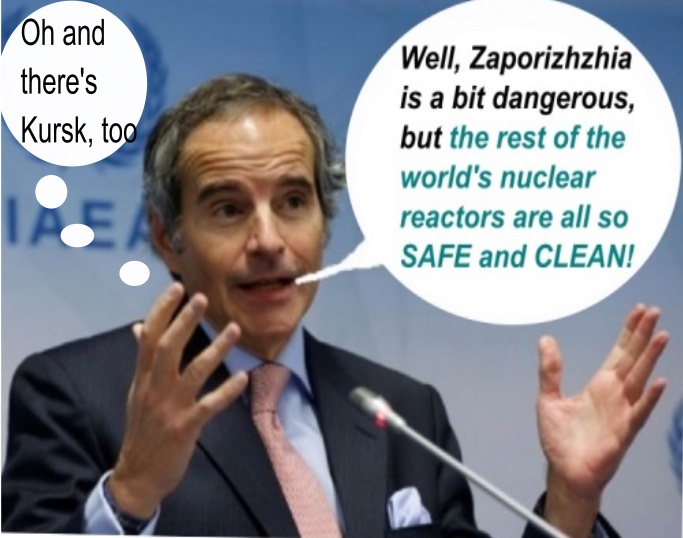
The Zaporizhzhia Nuclear Power Plant has been relying on emergency diesel generators for more than 11 days, with the International Atomic Energy Agency raising concerns about fuel supplies if the loss of external power continues.
The plant, which has been under Russian military control since early March 2022, lost connection to its last operating external power line on 20 August.
Since then it has been relying on its fleet of emergency diesel generators to provide the power the plant needs, including for the pumps which cool the six reactors and their used fuel ponds.
The International Atomic Energy Agency (IAEA) team at the plant have been told that a planned delivery of diesel to the site in May had been postponed because of military activity. On Thursday and Friday, the IAEA said its experts observed the transfer of “several dozens of tonnes of diesel fuel from two different off-site locations near the ZNPP to the plant”.
IAEA Director General Rafael Mariano Grossi said: “The availability of diesel fuel is of paramount importance whenever a nuclear power plant loses off-site power, as is the ability to maintain uninterrupted logistical supply chains to and from the site. The current situation once again shows why reliable external power and secure supply routes are indispensable for nuclear safety and security. Without the restoration of off-site power or additional diesel fuel deliveries in the near future, the plant could face a station blackout within approximately ten days.”
According to the official Russian Tass news agency, the plant operators have said there is enough fuel for the diesel generators. “However, due to shelling of the access roads, it is currently impossible to replenish the reserves,” a spokeswoman is quoted as saying. It also quoted the Director General of Russia’s state nuclear corporation Rosatom, Alexei Likhachev, as saying the fuel delivery operation would be organised “under any circumstances”, potentially with an IAEA escort.
The IAEA is seeking to arrange what would be a seventh localised ceasefire to allow repairs to take place to the external power line, which it said lost connection with the plant on 20 August “following military activity on the northern side of the Dnipro River”.
There have also continued to be incidents involving drones at, or near, the plant – with the IAEA saying it had been informed of a drone incident on 25 August near the cooling pond which injured two plant staff, and two more drone incidents the following day, one of which was in the area of the dry used nuclear fuel storage site……………..https://www.world-nuclear-news.org/articles/iaea-concern-over-diesel-supply-for-zaporizhzhia-generators
The Finnish President Made Some Surprisingly Solid Points About Russia

Andrew Korybko, Sep 03, 2026, https://korybko.substack.com/p/the-finnish-president-made-some-surprisingly
He argued that it’s not plotting to test NATO’s resolve, its resilience to immense hardships “should never be underestimated”, suggested that the conflict will end without Ukraine recovering its lost territories, praised the CIA chief for visiting Russia, and called for “someone in Europe” to follow suit.
Finnish President Alexander Stubb bucked the trend of fearmongering about Russia in his interview with Bild. Instead of claiming that it’s plotting to test NATO’s resolve like American media reported was the reason why the CIA chief recently paid an unannounced visit to Moscow, he described such talk as part of Russia’s “information warfare” against Europe. Stubb insisted that his intelligence doesn’t indicate any such plans and argued that Russia wouldn’t attack the world’s most powerful military bloc anyhow.
He also pointed to the unlikelihood of Russia “suddenly mobilizing” forces for a two-front conflict with Ukraine and NATO even though he still believes that a mobilization directed towards Ukraine will occur this fall despite United Russia Chairman Dmitry Medvedev recently denying that there’s any need to. Another of the surprisingly solid points that Stubb made about Russia had to do with its resilience to immense hardships and warned that this “should never be underestimated” by its foes.
He also suggested that Ukraine won’t recover its lost territories upon describing victory for it as simply “surviving, remaining independent, and remaining a sovereign state” but still urged its allies to continue supporting it for their unspecified sake of their own security. Wrapping everything up, Stubb praised the CIA chief’s recent unannounced visit to Moscow for expanding bilateral dialogue in “different formats”, which led to his clarion call for “someone in Europe” to “resume dialogue with Russia” too.
Stubb’s last point echoes what he intriguingly told local media a week prior about how “At some point, dialogue will have to be established on the European side, and perhaps the most important role in this will be played by countries that share a border with Russia.” This followed reports that Britain, France, and Germany – collectively known as the E3 – are preparing to resume dialogue with Russia. It was thus analyzed here that the E3 and the Intermarium might open up rival dialogues with Russia.
The Intermarium refers to the modern-day revival of interwar Poland’s vision of an anti-Soviet alliance between their country, the Baltic States, and Finland, all of which border Russia in the present. Therefore, the abovementioned analysis concluded that Stubb might lead the Intermarium’s dialogue with Russia since regional leader Poland’s government is irreparably divided between the conservative president and the liberal prime minister, which makes it unlikely to agree on this ultra-sensitive issue.
Stubb also expressed interest earlier this year in serving as the EU’s envoy for talks with Russia back when this role was first discussed among the bloc’s members, but the problem is that Putin suggested shortly thereafter that this should be “someone who has not badmouthed us”. As it turns out, Stubb was recently condemned by Russian Foreign Ministry spokeswoman Maria Zakharova as a terrorist for justifying Ukraine’s attacks against civilian infrastructure, which might disqualify him from this role.
At the same time, Putin might calculate that it’s better for dialogue to occur with Stubb if he initiates it on behalf of Finland, the Intermarium, or the EU as a whole than to rebuff him in that scenario, so the possibility of him entering into some sort of talks with Russia in the future can’t confidently be ruled out. While all EU leaders apart from Slovakia’s Robert Fico are adversarial to Russia, Stubb is the most pragmatic among them, so he might ultimately be tasked with this role or play it on his own initiative.
THE FOUR HORSEMEN OF THE UKRAINIAN APOCALYPSE
by Gordonhahn August 31, 2026, https://gordonhahn.com/2026/08/31/the-four-horsemen-of-the-ukrainian-apocalypse/
There have been at least four great deceptions engineered and lost opportunities for ending Ukraine‘s violence intentionally foregone by the West. They are the causes of the ‚Putin’s unprovoked war in Ukraine and the imminent Ruin of Ukraine. The four horsemen of the Ukrainian apocaplypse are:
(1) the violation of the 21 February 2014 agreement to end the Maidan confrontation in Kiev;
(2) the West’s and Kiev’s insincere, indeed simulated participation in the Minsk 2 accords that could have ended the Ukrainian civil war from 2014-2022;
(3) the U.S. withdrawal of Joseph Biden’s December 2021 promise to Putin that the US and NATO would not deploy cruise missiles in Ukraine; and
(4) the West’s subversion of the Istanbul Russo-Ukrainian peace agreement initialed in April 2022. Let us stake each in turn.
The first horseman oft he Ukrainian apocalypse is the violation of February 21, 2014 agreement between Ukrainian President Viktor Yanukovych and the Ukrainian opposition of the Maidan to pull back both demonstrators and police and hold early presidential elections late in 2014. Instead of seeing this agreement through, the neofascist wing oft he Maidan opposition carried out a snipers‘ terrorist attack killing both demonstrators and Berkut security police leading to the violent overthrow of Yanukovych, who was blamed by the Maidan opposition and the West for the shootings. The West hailed the putsch as democratic “revolution of dignity“ and never mentioned the February agreement; one brokered by Russian President Vladimir Putin, according to then Polish Foreign Minister and agreement participant, Radek Sikorski. The Maidan regime was born of blood and a lie.
Russia responded by giving the West a taste of its own medicine by supporting separatist actors in Crimea, Donetsk, and Luhansk. Kiev responded by declaring an “anti-terrorist operation“ that began the Ukrainian civil war, bringing Russian troops into Donbass to protect the pro-Russian separatists.
The second horseman of the Ukrainian apocalypse consists of the violations of the Russo-Ukrainian Minsk agreements. Ukraine never fulfilled any of its obligations under the agreement. It did not adopt statues on autonomy fort he Donbass regions nor did it negotiate directly with the Donbas rebels. Ukrainian troops, particularly the ultranationalist batallions routinely bombed civilian areas during the ‚ceasefire‘ agreement. This was nothing other than a Minsk Fake or Feint, which, as numerous Western and Ukrainian officials acknowledged, the Putin-Poroshenko Minsk ceasefire accords were used to buy time for building up Ukraine’s army for an assault on Crimea and Donbass. Thus, the civil war did not end but persisted, with Kiev inflicting more than 10,000 casualties on Donbass civilians in 2015-2021.
The third horseman of the Ukrainian apocalypse came with the U.S. violation of Joseph Biden’s December 2021 promise to Putin that the US and NATO would not deploy cruise missiles in Ukraine. Instead of holding tot hat promise made in a Biden-Putin phone call, US Secretary of State Anthony Blinken announced to Russian Foreign Minister Sergei Lavrov that the US was withdrawing that promise, opening up the possibility of deploying conventional and/or nuclear cruise missiles in Ukraine, with flight times to Moscow of minutes. This was the straw that broke the camel’s back, requiring Putin to undertake a military response to the Ukrainian crisis on 24 February 2022—the so-called “unprovoked and full-scale attack on Ukraine.“
The fourth and final horseman of the Ukrainian apocalypse is the Western scuttling of the March-April 2022 Russo-Ukrainian Istanbul process and agreement to end Russia’s incursion into Ukraine. Much has now been written about this, so I will not repeat the details here; I will only provide links to all the sources, confirming this (https://threadreaderapp.com/thread/1746596120971673766.html; see also https://x.com/i_katchanovski/status/1750362694949966291?s=51&t=n5DkcqsvQXNd3DfCRCwexQ; and https://www.facebook.com/photo/?fbid=8229337113762769&set=a.117187214977840).
These and the key process these ‚horsemen‘ have been intended in the West to facilitate – NATO expansion – are the causes of “Putin’s unprovoked war on Ukraine“ and Ukraine’s apocalypse or Second Great Ruin. Make no mistake about it.
-
Archives
- October 2026 (112)
- September 2026 (339)
- August 2026 (330)
- July 2026 (355)
- June 2026 (287)
- May 2026 (306)
- April 2026 (356)
- March 2026 (251)
- February 2026 (267)
- January 2026 (308)
- December 2025 (358)
- November 2025 (359)
-
Categories
- 1
- 1 NUCLEAR ISSUES
- business and costs
- climate change
- culture and arts
- ENERGY
- environment
- health
- history
- indigenous issues
- Legal
- marketing of nuclear
- media
- opposition to nuclear
- PERSONAL STORIES
- politics
- politics international
- Religion and ethics
- safety
- secrets,lies and civil liberties
- spinbuster
- technology
- Uranium
- wastes
- weapons and war
- Women
- 2 WORLD
- ACTION
- AFRICA
- Atrocities
- AUSTRALIA
- Christina's notes
- Christina's themes
- culture and arts
- Events
- Fuk 2022
- Fuk 2023
- Fukushima 2017
- Fukushima 2018
- fukushima 2019
- Fukushima 2020
- Fukushima 2021
- general
- global warming
- Humour (God we need it)
- Nuclear
- RARE EARTHS
- Reference
- resources – print
- Resources -audiovicual
- Weekly Newsletter
- World
- World Nuclear
- YouTube
-
RSS
Entries RSS
Comments RSS

