Book. The Russo-Ukrainian War: Follies of Empire
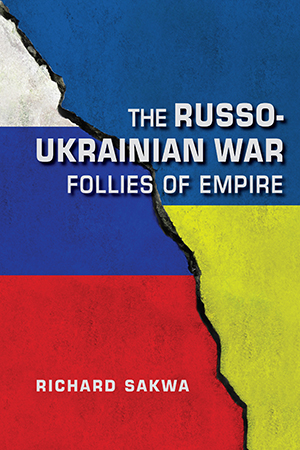
By Richard Sakwa, 22 July26 https://www.ceris.be/blog/the-russo-ukrainian-war-follies-of-empire/
Overview
The number of casualties in the ongoing Russo-Ukrainian war is rapidly approaching 1.5 million, with no resolution in sight … a staggering reality. Seeking to make what sense is possible of this catastrophic conflict, Richard Sakwa meticulously explores the origins, course, and consequences of the war in the sweeping context of global and domestic politics since 1945.
Sakwa’s balanced analysis centers on what he perceives as the five levels of the conflict: the dynamics of Ukrainian politics, the evolution of Russo-Ukrainian relations, the relationship between Russia and the West, broad changes in international politics, and the prospects for a viable and sustainable peace. In explaining―without endorsing―the logic behind actions on all sides, his goal is to contribute to a path toward that peace.
Reviews
“Sakwa offers a transcendent explanation for how the war in Ukraine fits into a decimated relationship between Russia and what he calls the US-led political West…. Even those who believe that the war grew out of a dance that Russia and the West did together, but that Russia’s choice in February 2022 is indefensible, will find much in the book to ponder and much in Sakwa’s hopes for the war’s outcome and future Russian-West relations to admire.”
— Robert Legvold, Columbia University
“In this deeply researched book, Richard Sakwa displays a balance rare in Anglophone writing on the subject of the Russo-Ukrainian war…. Sakwa’s superb account should be read by all who want to understand the origins of this tragic, unnecessary conflict, and how it might be ended.”
— Robert Skidelsky, University of Warwick
“Sakwa’s analysis advances the most articulated interpretation of the war through the lens of sovereign internationalism. A must-read for all those who want alternative explanations of the broader framework of the conflict, accompanied by detailed analysis of the course and consequences of the war.”
— Marlene Laruelle, George Washington University
‘Gaza Is One Giant Graveyard’
SCHEERPOST, July 21, 2026, Marah Abdel Jaber Prism
A seasoned humanitarian aid worker directing distributions to Gaza since the start of Israel’s genocide in October 2023 went on their first mission to the Strip last winter. During the two-week mission, they conducted a ground assessment: testing the efficacy of aid, recording field interviews with residents, and surveying the functionality of local hospitals. They have requested anonymity in order to share what they learned publicly, and minimize the risk of retaliation from Israeli officials.
In a Q&A with Prism in February, they reflected on the direct role of global humanitarian aid organizations in escalating the dehumanization of Palestinians under Israel’s genocide, the lack of a true ceasefire, and the world’s abandonment of Palestinians.
This interview has been edited for clarity and brevity.
Marah Abdel Jaber: What were the conditions of Gaza upon your arrival?
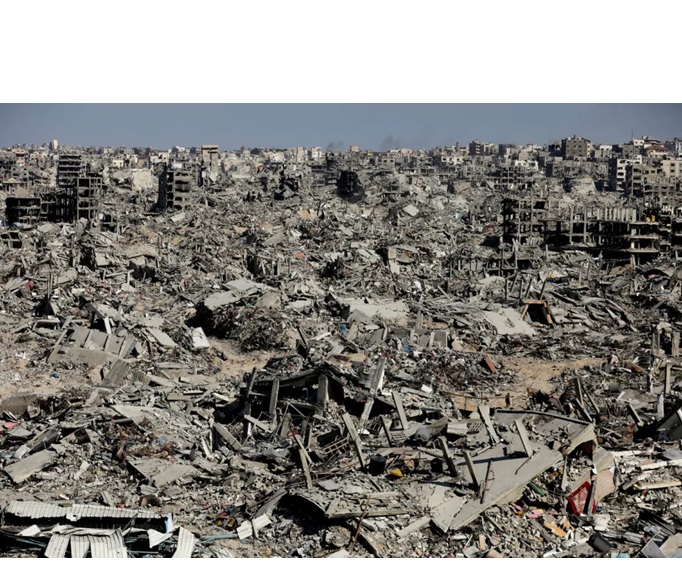
Humanitarian Aid Worker: When entering, we crossed through the Karem Abu Salem border and drove straight across the militarized yellow zone through Rafah. If I didn’t know any better, I wouldn’t think that it was an actual city before. It’s almost entirely flattened, and most of it has been bulldozed. As we made our way up towards Khan Younis, we saw some demolished buildings and rubble. You would never think that there were people living there before. It was obvious that the Israeli forces were bulldozing away evidence of war crimes, the genocide, and the dead. That was all I could think about while driving through it.
Abdel Jaber: What was a typical day in the field for you?
HAW: My role required visiting different programs that [a medical NGO] was running and giving feedback. I also looked into some of their pilot programs or their areas of interest for launching new programs. I visited a lot of different clinics, hospitals, a school, and even an orphanage. I spoke with different parts of the population dealing with orphaned or unaccompanied separated children, the elderly, amputees, or those receiving therapy. I had quite a diverse exposure to the issues that the population is facing there, in addition to the aid situation and the distribution.
Abdel Jaber: What was most striking about the reality on the ground?
HAW: The living conditions are horrendous. Many people don’t know about the reality on the ground because mainstream media is pushing the narrative of a ceasefire to distract from the next phase of the colonial project: to build on top of a cemetery. Gaza is essentially one giant graveyard. Airstrikes are happening in the dozens, day and night; the Israeli military ships would still shoot out from the sea; and fighter jets and drones were everywhere. Oftentimes people would tell me that I should have visited Gaza before the genocide, because it was heaven. It would stop me. I couldn’t bear the thought of that. It was still occupation, injustice, and apartheid, but they would say it was better than now. They want the Palestinian people to choose which level of oppression they have. You can have minimal or maximum oppression, because you will never have absolute freedom. These are your options. Genocide, or apartheid and occupation.
“People would tell me I should have visited Gaza before the genocide, because it was heaven. … I couldn’t bear the thought of that. It was still occupation, injustice, and apartheid, but they would say it was better than now.”
Abdel Jaber: How would you qualify the ceasefire in Gaza during your mission?
HAW: There was nothing that would indicate an actual ceasefire. People outside of Gaza view this as a successful ceasefire for two reasons. First, the idea that aid is flowing in daily. It is, but it is still incredibly minimal while being distributed inefficiently and ineffectively. Israeli forces are also allowing in consumer goods. This signals that residents can now purchase goods, but the vast majority in Gaza have been without work for two and a half years. And a lot of people lost their money in the banks because the [Israeli Occupation Forces (IOF)] destroyed them, so they could no longer access the systems.
The secondary narrative being pushed is that, before the ceasefire, we would hear of hundreds upon hundreds of Palestinians being killed every day. Now you don’t hear as much of that. People assume that there isn’t any more killing, when really dozens will get killed in a day. That’s not a ceasefire…………………………………………………………………………………………..
HAW: Everything that we’re seeing in this genocide in Gaza, everything that the Israeli forces have implemented, is intentional. It is by design. There is nothing coincidental about it. The intentional deprivation and inhumane conditions are meant to squeeze every ounce of hope out of Palestinians in Gaza. They signaled to people that if they want to stay in Gaza, they would have to get their aid in this way. The killing was intentional to serve as a warning for everyone else watching that they either starve or die trying to access essential aid. They don’t want them to have options. At first, it seemed like the only option was to leave. Now it looks like what is being done with this Board of Peace, and building this Riviera on a graveyard, is to use Palestinians as cheap labor………………………………………………………………………………………
HAW: Someone asked me the other day, if Israel is hellbent on getting rid of the Palestinian population, why not just drop a bomb and get it over with? Why are they torturing them? Everyone knows the IOF is killing them. Why not just do it? Well, first of all, that would make the genocide too obvious. But what a lot of people miss, and we really have to stress this as often as we can, is that genocide, ethnic cleansing, apartheid, occupation, injustice—and everything all within that realm—is not only physical, it’s psychological. The psychological aspect is crucial. You can control a population through psychological torture. It explains why, even before the genocide, Israel denied the entry of chocolates, wedding gowns, construction paper, and other menial things into Gaza. Cutting off food and medication, not allowing a catheter to come in for a dialysis patient, banning menstrual pads, and more—they want to remind you at every opportunity that they are in control of everything. There is a psychological toll that has detrimental, long-term impacts. The trauma, the lack of education, the epigenetic changes that are going to happen over the years, birth defects, and mental health will take forever to deal with. They want to ensure every aspect of Palestinian society, physical and psychological, has been damaged…………………………………………………………………………………………… https://scheerpost.com/2026/07/21/gaza-is-one-giant-graveyard/
-
Archives
- October 2026 (129)
- September 2026 (339)
- August 2026 (330)
- July 2026 (355)
- June 2026 (287)
- May 2026 (306)
- April 2026 (356)
- March 2026 (251)
- February 2026 (267)
- January 2026 (308)
- December 2025 (358)
- November 2025 (359)
-
Categories
- 1
- 1 NUCLEAR ISSUES
- business and costs
- climate change
- culture and arts
- ENERGY
- environment
- health
- history
- indigenous issues
- Legal
- marketing of nuclear
- media
- opposition to nuclear
- PERSONAL STORIES
- politics
- politics international
- Religion and ethics
- safety
- secrets,lies and civil liberties
- spinbuster
- technology
- Uranium
- wastes
- weapons and war
- Women
- 2 WORLD
- ACTION
- AFRICA
- Atrocities
- AUSTRALIA
- Christina's notes
- Christina's themes
- culture and arts
- Events
- Fuk 2022
- Fuk 2023
- Fukushima 2017
- Fukushima 2018
- fukushima 2019
- Fukushima 2020
- Fukushima 2021
- general
- global warming
- Humour (God we need it)
- Nuclear
- RARE EARTHS
- Reference
- resources – print
- Resources -audiovicual
- Weekly Newsletter
- World
- World Nuclear
- YouTube
-
RSS
Entries RSS
Comments RSS

