Nuclear energy is too slow and too expensive for the energy transition
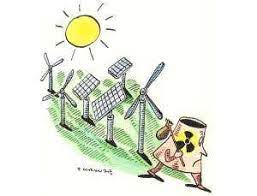
In terms of CO2 emissions, a nuclear power plant can compete with wind turbines and solar panels. Otherwise, however, the disadvantages and inertia outweigh the advantages.
May 27, 2026, Mario Petzold, https://www.golem.de/news/studie-kernenergie-zu-langsam-und-zu-teuer-fuer-die-energiewende-2605-209099.html
A study by the Öko-Institut commissioned by the Federal Environment AgencyThe report certifies that nuclear energy has an excellent climate record. According to the report, CO2 emissions per kilowatt-hour (kWh) fed into the grid are at the same level as those of photovoltaics and wind power.
In all other crucial aspects, however, nuclear energy exhibits numerous practical disadvantages. The study therefore considers a scenario in which nuclear power plays a decisive role globally to be unrealistic.

The cost of electricity generation is a major obstacle to the rapid spread of this technology. The authors estimate costs of 15 to 19 cents per kWh in Europe and 15 to 16 cents per kWh in North America. In contrast, wind power and photovoltaic electricity cost significantly less than 10 cents. Onshore wind power is estimated at an average of 3.6 cents per kWh.
Practical reasons speak against nuclear energy
But it’s not just the pure costs that argue against the rapid expansion of nuclear power plants. The annual addition of capacity would have to be at least 30 gigawatts (GW) per year, which corresponds to 25 to 30 large nuclear reactors.
In recent decades, the rate has been around 10 GW, which was just enough to compensate for the output of decommissioned nuclear power plants. According to the study, such a significant acceleration in construction seems unlikely.
And even if the number of planned projects were to increase, the long construction time of up to 20 years alone argues against nuclear energy playing a relevant role in global energy production by 2050.
Furthermore, the interaction with renewable energy sources is extremely poor. The controllability of nuclear power plants is minimal and requires a certain lead time. In contrast, a high share of wind and solar power in the energy system necessitates rapid load changes, which nuclear power cannot provide.
Climate change is an obstacle to nuclear power

Besides the risks posed by a serious reactor accident, which cannot be reliably quantified, climate change itself also hinders the expansion of nuclear energy. A location by the sea would be ideal, because sufficient cooling water with virtually constant temperatures is available.
However, rising sea levels and increasing extreme weather events are increasing the risk of unforeseen incidents precisely in these areas. Along rivers, heat waves, droughts, or heavy rainfall could jeopardize the reliable operation of a nuclear power plant.
Overall, the study authors assume that, in the best-case scenario, nuclear power plants will be able to supply nine percent of global energy production in the future. This corresponds to the current share and requires an increase in the current rate of expansion of nuclear reactors. In 1996, the share was still at 17 percent; according to the study’s calculations, it is most likely to be between three and four percent by 2050.
No comments yet.
-
Archives
- October 2026 (120)
- September 2026 (339)
- August 2026 (330)
- July 2026 (355)
- June 2026 (287)
- May 2026 (306)
- April 2026 (356)
- March 2026 (251)
- February 2026 (267)
- January 2026 (308)
- December 2025 (358)
- November 2025 (359)
-
Categories
- 1
- 1 NUCLEAR ISSUES
- business and costs
- climate change
- culture and arts
- ENERGY
- environment
- health
- history
- indigenous issues
- Legal
- marketing of nuclear
- media
- opposition to nuclear
- PERSONAL STORIES
- politics
- politics international
- Religion and ethics
- safety
- secrets,lies and civil liberties
- spinbuster
- technology
- Uranium
- wastes
- weapons and war
- Women
- 2 WORLD
- ACTION
- AFRICA
- Atrocities
- AUSTRALIA
- Christina's notes
- Christina's themes
- culture and arts
- Events
- Fuk 2022
- Fuk 2023
- Fukushima 2017
- Fukushima 2018
- fukushima 2019
- Fukushima 2020
- Fukushima 2021
- general
- global warming
- Humour (God we need it)
- Nuclear
- RARE EARTHS
- Reference
- resources – print
- Resources -audiovicual
- Weekly Newsletter
- World
- World Nuclear
- YouTube
-
RSS
Entries RSS
Comments RSS


Leave a Reply