Will there be global war over Taiwan? – Sociology matters
19 May 2026 Noel Wauchope, https://theaimn.net/will-there-be-global-war-over-taiwan/
Will there be global war over Taiwan? Ask a sociologist.
Having never actually studied sociology, I am indeed prepared to be shot down in flames, for my audacity in pronouncing opinions on sociology. But that thought has never stopped me, as I believe that anyone and everyone can have opinions, and should be taken seriously.
Britannica says:
“Sociology, a social science that studies human societies, their interactions, and the processes that preserve and change them… the processes that preserve and change human societies.”
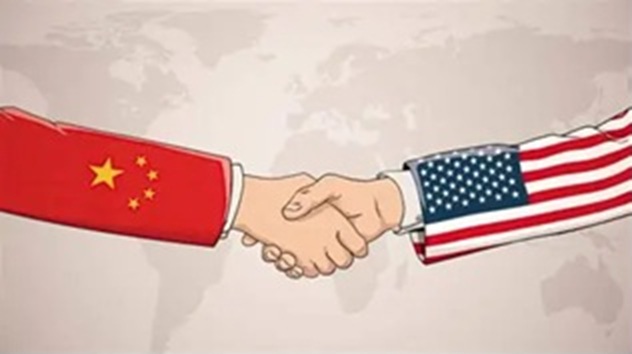
What prompted me to consider this, is the news coverage of Donald Trump’s visit to China, and his interaction (accompanied by business moguls) with President Xi Jinping. Was this the first part of a process that might preserve and change the global society? The general theme of most articles is that not much was achieved in this meeting, and particular concerns were not resolved. The main concern was about Taiwan. Will the USA come to the defence of Taiwan if China were to take it over? There was the need to open up the Strait of Hormuz There were trade concerns, particularly about China’s near monopoly of the rare earths market, about USA’s plan to to sell Taiwan $US14 billion more in weapons, and China’s to send weapons to Iran.
Other touchy topics like climate change and human rights were avoided.
It all looks as if there wasn’t any process, and it all came out with the same stalemate, and the same ambiguity about Taiwan. So we’re back into the old dilemma – will there be global war over Taiwan? But there was an interaction. Whatever we all think of Donald Trump, or of Xi Jinping, they had a courteous and cordial meeting, and Trump is the first American President to visit Beijing twice.
So, I’m thinking that this is the start of something new. Not because these powerful men might have altruistic ideas and plans, but because of another consideration. This was highlighted in an insightful article by ABC journalist Bang Xiao, who wrote:
“This week in Beijing, both Donald Trump and Xi Jinping quietly admitted something the rest of the world has been slow to grasp. Neither of them can afford the collision… Two structurally interdependent superpowers who have decided, for now, to manage their rivalry rather than let it manage them.“
It’s some kind of a comfort to realise that financial realities might now be prioritised over glorious ideals of national pride, the heroism of war, patriotic sacrifices and all those noble ideals which, with modern warfare, are becoming ecocidal. Neither the USA nor China can now afford a global war. Xi Jinping referred to the “Thucydides Trap.” In the 5th century, Greek historian Thucydides described this situation where a rising power challenges an established one, usually leading to a prolonged war.
The significant thing here is that China is no longer seen as a “rising power” – and this really is all about sociology. SL Kanthan writes that: “The Thucydides Trap is no more,” and gives a powerful explanation of China’s debts and its slowing economy. There have been recent articles on China’s current economic decline, but this is not really a new development, but more of a steady decline over years. China’s GDP growth has been decelerating – “the slowing empire, the tired dragon.”
The sociological facts come in here. There’s been quite a dramatic fall in China’s birth rate. With a dwindling population, and with the median age rising, it’s a poor forecast for China’s working-age proportion of the population. The fall in what was a booming real estate industry has resulted in a rapid decline in construction and related industries and the loss of employment opportunities. This job loss has been exacerbated by the loss of jobs for college graduates, with robots now taking over much of their work. China has severe and seemingly intractable debt problems. Finally, China’s military is in some trouble, and not ready for war.
With all the chest-thumping and the rush for new weaponry amongst the military-industrial complex, there’s a lack of concern for sociological realities such as those now affecting China. And China is not the only country affected by population change, economic problems, public and private debt – all factors that dampen enthusiasm for war. I sometimes ponder on what was the greatest scientific achievement of our age. Was it the atomic bomb, rockets, the digital revolution, medical breakthroughs?
I’m thinking that the most influential one might be effective contraception. That is certainly a huge factor in China’s slowdown, and its leadership’s reluctance about war, and its readiness to co-operate, while still competing with the West. The economic realities on both sides are there, on a background of sociological changes that make war look financially unappealing. And we all know that Trump, despite his bombast, is more interested in money than in anything else.
No comments yet.
-
Archives
- October 2026 (119)
- September 2026 (339)
- August 2026 (330)
- July 2026 (355)
- June 2026 (287)
- May 2026 (306)
- April 2026 (356)
- March 2026 (251)
- February 2026 (267)
- January 2026 (308)
- December 2025 (358)
- November 2025 (359)
-
Categories
- 1
- 1 NUCLEAR ISSUES
- business and costs
- climate change
- culture and arts
- ENERGY
- environment
- health
- history
- indigenous issues
- Legal
- marketing of nuclear
- media
- opposition to nuclear
- PERSONAL STORIES
- politics
- politics international
- Religion and ethics
- safety
- secrets,lies and civil liberties
- spinbuster
- technology
- Uranium
- wastes
- weapons and war
- Women
- 2 WORLD
- ACTION
- AFRICA
- Atrocities
- AUSTRALIA
- Christina's notes
- Christina's themes
- culture and arts
- Events
- Fuk 2022
- Fuk 2023
- Fukushima 2017
- Fukushima 2018
- fukushima 2019
- Fukushima 2020
- Fukushima 2021
- general
- global warming
- Humour (God we need it)
- Nuclear
- RARE EARTHS
- Reference
- resources – print
- Resources -audiovicual
- Weekly Newsletter
- World
- World Nuclear
- YouTube
-
RSS
Entries RSS
Comments RSS


Leave a Reply