Pentagon In Panic: China Just Delivered The Final Blow
Br decode, 29 Dec 2025 https://www.youtube.com/watch?v=qEa9E9vhQ0U
“Amateurs talk strategy. Professionals talk logistics.” The US Military just learned this lesson the hard way.
In this video, we analyze the “Supply Chain War” that has erupted between Washington and Beijing. While the US focuses on financial sanctions, China has just sanctioned 9 major US defense firms and is restricting the export of **Antimony**—a critical mineral essential for armor-piercing bullets, missiles, and night-vision goggles.
We expose the “Industrial Suicide” of the Pentagon: How the US shut down its own mines to save money, leaving its entire military industrial base 100% dependent on China for critical resources. We look at the “Sanction Boomerang,” the failure of the US National Defense Stockpile, and why the “Arsenal of Democracy” is running on empty.
The US has the money. China has the minerals. And in a real war, you can’t build missiles out of paper.
Israel’s Ceasefire Violations in Gaza Continue to Pile Up
By International Middle East Media Center, December 29, 2025 , https://scheerpost.com/2025/12/29/israels-ceasefire-violations-in-gaza-continue-to-pile-up/
Israeli occupation forces continued to breach the ceasefire agreement on Friday and Saturday, carrying out new airstrikes, artillery fire, and machine‑gun attacks across several areas of the Gaza Strip.
The renewed violations come as casualty figures climb and rescue teams warn they are unable to reach many of the dead and wounded.
On Saturday, the body of the child Atta Ma’moun Mai was recovered after he fell into a deep water well near the al‑Sudaniyya junction in the Gaza Strip.
On Friday evening, a Palestinian man, Odai al‑Maqadma, died after being shot by Israeli forces east of Gaza City.
Witnesses said troops opened machine‑gun fire toward him as he sat near the gate of Hafsa School. He was struck in the head and rushed to hospital in critical condition, where doctors later pronounced him dead.
Air, Naval, and Artillery Fire Across Multiple Regions
Israeli naval vessels opened fire on Saturday morning toward the coastline west of Gaza City, forcing fishermen and nearby residents to take cover.
At the same time, the Israeli occupation army continued demolishing buildings east of the Zeitoun and Tuffah neighborhoods, as well as in the Maghazi and Nuseirat refugee camps in central Gaza.
Further south, airstrikes, and bursts of machine‑gun fire were reported in the eastern areas of Khan Younis, where thousands of displaced families remain in makeshift shelters.
The Israeli Airforce also fired missile near the eastern graveyard of the Al-Bureij refugee camp, in central Gaza.
Humanitarian workers say these attacks have made it nearly impossible to deliver aid or recover bodies from destroyed neighborhoods, despite the declared ceasefire.
Casualty Toll Continues to Rise
The overall death toll from the genocide in Gaza has reached 71,266 Palestinians killed and 171,219 injured since 7 October 2023.
Medical teams reported that in the past 48 hours alone, hospitals received 29 bodies—including 4 newly killed individuals and 25 bodies recovered from rubble—along with 8 wounded. Many more victims remain trapped under collapsed buildings and in streets that rescue crews cannot safely access.
Civil‑defense teams say they are unable to reach large sections of Gaza City, central Gaza, and Khan Younis because Israeli forces continue to fire toward access routes and because many roads remain destroyed.
13-year-old Alaa suffered multiple injuries after surviving an Israeli attack in Gaza. While she recovered in the hospital, Israeli forces shot and killed her father as he was seeking humanitarian aid. pic.twitter.com/95RLrpFXwY— Defense for Children (@DCIPalestine) December 27, 2025
“Ceasefire Period” Still Marked by Killings and Destruction
Since the “ceasefire” announced on 11 October 2025, at least 410 Palestinians have been killed and 1,134 injured, while 649 bodies have been recovered from various locations. Dozens more remain under the rubble or in areas where rescue teams cannot operate.
Medical authorities also confirmed that 292 additional fatalities were recently added to the cumulative death toll after their documentation was completed by the official casualty verification committee between 19 and 26 December 2025..
A “Ceasefire” Undermined by Ongoing Military Violations
A review of field reports, hospital data, and eyewitness accounts shows a consistent pattern of Israeli military activity that contradicts the ceasefire’s terms. Violations documented over the past week include:
- Ground fire targeting civilians and rescue workers in eastern Gaza City and Khan Younis.
- Airstrikes and demolitions in Zeitoun, Tuffah, Maghazi, and Nuseirat.
- Naval fire along Gaza’s western coastline.
- Obstruction of rescue efforts, leaving victims under rubble.
As Israel pushes the ceasefire ‘yellow line’ deeper into Gaza amid complete mediator silence, systematic detonation of entire blocks is now underway. pic.twitter.com/Avvp5JgTX1— Israel Genocide Tracker (@trackingisrael) December 27, 2025
Humanitarian organizations say the pattern amounts to a “ceasefire in name only,” with Israeli forces maintaining operational pressure across multiple fronts while restricting the movement of civilians and emergency crews.
Humanitarian Conditions Remain in Freefall
Despite the ceasefire, Gaza’s humanitarian situation remains catastrophic. Hospitals are overwhelmed, morgues are full, and thousands of families remain displaced in areas still exposed to fire.
Gaza’s Civil Defense said it is facing “extremely harsh humanitarian conditions,” reporting continuous distress calls from displaced families as the winter storm intensifies.
The agency noted that many worn‑out tents did not withstand the intense winds, leading to their tearing or being completely uprooted, leaving families exposed in the open.
Aid agencies warn that without a genuine halt to military activity, the death toll will continue to rise—not only from direct attacks but from untreated injuries, lack of medical access, and the collapse of essential services.
Safety fears as Japan prepares to restart nuclear plant ‘built on tofu’
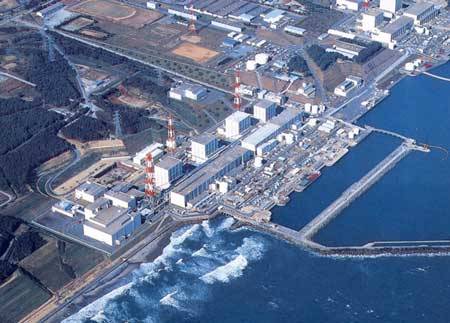
the greatest risk remains the region’s susceptibility to seismic activity.
the will of the majority of residents today is opposition to a restart and that opposition is f
While Fukushima operator Tepco says it is ‘committed to safety’ at Kashiwazaki-Kariwa, critics believe it is a disaster waiting to happen.
Julian Ryall, 27 Dec 2025
Campaigners against nuclear energy have condemned Japan’s decision to resume operations at the Kashiwazaki-Kariwa power plant, claiming that the facility will be unable to withstand a major earthquake as it was “built on tofu”.
Tokyo Electric Power Co (Tepco), the operator of the Niigata prefecture plant, on Wednesday applied for a final examination of the facility to the Nuclear Regulation Authority (NRA). Approval is likely to be a formality as the prefectural assembly already gave the nod on Tuesday.
Tepco, which has been fiercely criticised for its handling of the Fukushima Daiichi nuclear power plant disaster in March 2011, intends to restart one reactor at Kashiwazaki-Kariwa on January 20.
It would be the first of Tepco’s nuclear reactors to resume since three of Fukushima’s six reactors melted down after a magnitude 9 offshore earthquake unleashed devastating tsunamis.
Tepco has been working hard in recent years to convince the local government and residents of Niigata prefecture that it has made upgrades to secure the site from natural disasters.
Its president, Tomoaki Kobayakawa, told the media that as the operator “responsible” for the Fukushima accident, the company was now “committed to prioritising safety” at Kashiwazaki-Kariwa.
Many people remain unconvinced.
“The plant was famous for having been built on tofu – the bedrock is 30 metres (100 feet) below the surface – with many fault lines running through the site as well as offshore,” said Shaun Burnie, senior nuclear energy specialist for Greenpeace.
“Kashiwazaki-Kariwa is one of the world’s largest nuclear plants and the only one in theory capable of operating for Tepco. So restarting operations has been a priority for both the company and the government for more than a decade,” Burnie told This Week in Asia.
“But resistance from Niigata residents, the scale of safety issues and the incompetence of Tepco have undermined all efforts until now.”
History repeating itself?
Nearly 15 years after the Fukushima plant was the site of the second-worst nuclear accident in global history, Burnie warns that serious problems are being overlooked again.
Even during the preliminary planning stages, in the mid-1970s, it was apparent that ground conditions at the site by the Sea of Japan were not suitable, he said.
That was shown in July 2007, when the Chuetsu-oki earthquake struck. The magnitude 6.6 quake occurred on a previously unknown offshore fault line about 11km (7 miles) off the coast, followed 13 hours later by a 6.8 tremor around 330km (205 miles) to the west.
The nuclear plant, 19km (12 miles) due south from the epicentre of the initial quake, registered a peak ground acceleration – essentially how much the ground shook – of 6.8 metres (22 feet) per second squared in reactor No 1. The design specification for achieving a safe shutdown is 4.5m/s², while the restart level for key equipment in the plant is 2.73m/s².
Burnie said the original design specifications at the site “turned out to be gross underestimates”, with the quakes causing damage of varying degrees at 3,000 places within the plant.
A fire in an electric transformer caused the most serious damage. It left a pall of black smoke over the plant and alarmed local residents. There were also a number of leaks of mildly radioactive water and spills of radioactive cobalt-60, iodine and chromium-51 from overturned storage drums.
Given the events of 2007 and 2011, Burnie said local residents’ concerns were justified, particularly as new issues have come to light.
“We should have no confidence in Tepco assurances on safety at Kashiwazaki-Kariwa,” he said. “For example, two months after the NRA had approved the reactors’ basic safety assessment in late 2017, Tepco revealed that … the site under the emergency hydrogen ventilation buildings at units five, six and seven was vulnerable to liquefaction.”
Tepco “immediately came under pressure to explain the scale of liquefaction at the site, prove that it does not extend to the reactor buildings and how it was that the NRA was not informed prior to granting approval”, Burnie said.
Equally, he said, the NRA had to explain how it failed to identify liquefaction as a problem for a site before it granted basic safety approval.
A series of security incidents have also been cause for concern. There have been accusations of poor handling of sensitive documents, malfunctioning intruder detection systems and an employee borrowing a colleague’s pass to enter the restricted main control room in 2020.
Shaken by fears
But the greatest risk remains the region’s susceptibility to seismic activity.
“There are multiple seismic fault lines in the area of the Kashiwazaki-Kariwa site, including large-scale submarine active faults,” Burnie said. “The enormous seismic risks at the site remain unresolved and are certain to dominate the debate about the safety of any reactor restart, including in ongoing legal challenges.”
In a statement issued on Tuesday, Tepco said it would “carefully cooperate with all inspections performed by the NRA while also continuing to prioritise safety and steadily making each and every preparation for a restart”.
Takeshi Sakagami, a member of the Citizens’ Association for Monitoring Nuclear Regulation, said that a recent survey conducted by Niigata prefecture determined that 60 per cent of local residents believed that “conditions are not right” to resume operations at the plant.
“The governor explained that support should increase as understanding deepens,” Sakagami said. But “opponents counter that the will of the majority of residents today is opposition to a restart and that opposition is firm”.
Sakagami believed the government was hastening to restart the reactors “because they fear that Japan’s nuclear technology will fall behind the rest of the world”.
For him, the direction that Japan should take is simple.
“I believe Japan should abandon nuclear power and boldly shift towards renewable energy sources and energy conservation,” he said.
What Australians have NOT been told about the $368billion AUKUS nuclear submarine deal.

‘We will undoubtedly be a nuclear target,’ ‘I don’t think many of the people living in Perth realise that, if they weren’t a nuclear target before, they certainly will be when all these… submarines start arriving.

‘I would bet an awful lot of money that the AUKUS subs will be duds by the time they get here, if they ever do,’
‘They’ll probably be redundant because there’s been revolutions in drone technology which will be able to detect submarines more easily.
‘I would bet an awful lot of money that the AUKUS subs will be duds by the time they get here, if they ever do,’
By CAITLIN POWELL – NEWS REPORTER, 29 December 2025
An AUKUS critic has shed light on the fundamental dangers of the military deal, including the threat of Australia being a nuclear target, as the security pact receives support from Donald Trump – and a rising number of Australians.

Earlier this month, US Secretary of State Marco Rubio confirmed that AUKUS was going ‘full steam ahead’ after questions were raised when the Trump administration earlier announced it would review the deal.
The agreement, which would see Australia acquire nuclear-powered submarines, is expected to cost the country up to $368billion over three decades.
Just a few weeks before Rubio’s thumbs up, an Australia-wide survey of 2,045 people by the University of Technology Sydney (UTS) found support for the policy had increased.
The number of people who agreed that the trilateral deal with the US and UK could help keep Australia secure from a military threat from China surged compared to last year.
While 48 per cent agreed in 2024, that rose to 50 per cent in the 2025 survey. The poll also found that over two thirds (68 per cent) supported using AUKUS to deepen Australia’s cooperation with the US and UK on advanced technologies.
This included hopes for technology in cyber, AI and quantum computing.
But AUKUS critic and adjunct professor at the Australia-China Relations Institute, Mark Beeson, has said there are some major issues with the deal which most Australians are missing.
A major component of AUKUS will be a facility at the Australian Navy’s HMAS Stirling base in Perth’s south from 2027.
Up to 1,200 UK and US personnel, their families, and five nuclear-powered submarines will be stationed there.
‘We will undoubtedly be a nuclear target,’ Beeson said of the facility. ‘I don’t think many of the people living in Perth realise that, if they weren’t a nuclear target before, they certainly will be when all these… submarines start arriving.
‘This will be a sort of launch pad for whatever American strategic adventure they decide to take on next.’
The use of the area as base also raised another key issue for Professor Beeson: Australia’s sovereignty.
‘I think there are questions about the historical relationship we have with America,’ he said, referencing the poll.
The survey revealed that a growing trend among Australians is that they want Canberra to make foreign policy decisions without the US and UK.
Among those surveyed, 77 per cent said Australia should make its China foreign policy decisions independently, even when they differ from US preferences.
‘Australia would make absolutely no difference whatsoever to the outcome of any conflict or strategic stand-off between the United States and China – with or without four or five submarines,’ he said.
‘If the Chinese aren’t deterred by America’s overwhelming military power, they’re not going to be deterred by anything we can do.
‘We’re just a convenient piece of real estate in the southern hemisphere that they can use as sort of launching pad for whatever they decide to do next.
‘There are major implications for our independence and sovereignty.’
‘Australia would make absolutely no difference whatsoever to the outcome of any conflict or strategic stand-off between the United States and China – with or without four or five submarines,’ he said.
‘If the Chinese aren’t deterred by America’s overwhelming military power, they’re not going to be deterred by anything we can do.
‘We’re just a convenient piece of real estate in the southern hemisphere that they can use as sort of launching pad for whatever they decide to do next.
‘There are major implications for our independence and sovereignty.’
The reasoning for this, he said, is that by having the presence of American and British military on Australian soil, Canberra is no longer solely acting on behalf of Australians.
‘It limits the options available to Australian policymakers to make independent decisions that are in the national interest,’ he said.
‘Rather (we follow) some supposed mutual interest of Australia, Britain and the US.’
Professor Beeson highlighted that the poll displayed different views among Australians, with support for AUKUS but a desire for independence on policy.
‘I wasn’t surprised that there were a few contradictory sort of views amongst all that, because it is a complex set of issues,’ he said.
‘But some of it displays quite an encouraging degree of sophistication and not just wild panic about China, which is good.’
A final issue Professor Beeson raised was the capacity and timeline of the submarines promised to Australia.
‘I would bet an awful lot of money that the AUKUS subs will be duds by the time they get here, if they ever do,’ he said.
‘They’ll probably be redundant because there’s been revolutions in drone technology which will be able to detect submarines more easily.
‘It’s just such a ludicrous long term investment of a lot of money we don’t really have, and we could use on much better things.’
AI Did Not Demand Centralised Power. Vested Interests Did.
Aldo Grech ,
Linked-In From Legacy to Lifeforce. December 28, 2025
here is a comforting lie spreading fast, repeated by governments, legacy energy players, defence contractors, and now increasingly by parts of the tech sector itself. It says that artificial intelligence has created an unprecedented energy emergency, that AI requires vast, centralised, always-on power, and that this necessity leaves us no choice but to return to fossil fuels and nuclear energy.
The lie works because it sounds technical, urgent, and inevitable. It borrows the language of engineering while quietly abandoning engineering logic altogether.
AI did not demand this outcome. Vested interests did……………………………………………..
The claim that AI “needs” fossil fuels or nuclear power collapses almost immediately when examined through any serious engineering lens. AI’s energy demand is real, but its characteristics are consistently misrepresented. AI workloads benefit from flexibility, modularity, geographic distribution, rapid deployment, and declining marginal costs. These map naturally onto renewables paired with storage and intelligent demand management. Solar, wind, batteries, and grid-level AI can be deployed in months, not decades. They scale incrementally. They fail locally rather than catastrophically. They reduce exposure to geopolitical shocks and price volatility.
What AI does not require is a small number of hyperscale generation points that take decades to build, depend on political stability, demand water and security, and concentrate failure risk. Those attributes belong not to AI’s needs, but to institutional preferences.
The renewed enthusiasm for fossil fuels and nuclear energy is therefore not a response to AI’s requirements. It is a response to AI’s implications.
Distributed intelligence paired with distributed energy is profoundly destabilising to legacy power structures. It undermines the logic of scarcity on which energy rents, geopolitical leverage, and industrial monopolies depend. It reduces the strategic value of chokepoints. It weakens the ability of states and corporations to weaponise supply. Most importantly, it enables communities, regions, and smaller actors to operate with greater autonomy.
That is what is being resisted.
Fossil fuels and nuclear energy share one critical feature that renewables do not. They require centralisation. Massive capital expenditure, state-scale regulation, long approval chains, security apparatuses, liability shields, and political alignment are not side effects of these energy sources. They are their operating conditions. Control is not an accidental by-product. It is the point.
Nuclear energy exposes this more starkly than any other technology. It is routinely defended as pragmatic, scientific, and unavoidable, yet it fails the most basic test of rationality: insurability. There is no private insurance market willing to underwrite nuclear risk in full. Not accidents, not waste, not abandonment, not war, not institutional failure, not the passage of centuries. Every nuclear programme on Earth exists only because the state absorbs the downside, caps liability, and transfers risk to future generations who had no voice in the decision.
This is not a marginal flaw. It is the defining characteristic of the technology.
Nuclear waste remains hazardous for tens of thousands of years. That timescale dwarfs governments, nations, languages, and civilisations. We are being asked to believe that societies struggling to meet five-year climate targets and maintain basic institutional trust will flawlessly manage radioactive stewardship across millennia. This is not engineering optimism. It is narrative denial.
The uninsurable nature of nuclear energy should end the debate in any system that claims to respect markets, responsibility, or realism. If a technology cannot exist without forcing unborn humans to absorb its catastrophic downside, it is not a solution. It is a temporal externalisation of risk disguised as progress.
Artificial intelligence does not mitigate this problem. It intensifies it. AI accelerates feedback loops, increases coupling between systems, and magnifies rare failures into systemic ones. Nuclear energy, by contrast, depends on extreme institutional continuity, conservative change, and zero-failure tolerance. Pairing AI urgency with nuclear timelines is not strategy. It is a category error designed to launder political decisions through technological rhetoric.
The same pattern now plays out visibly in transport……………………………………………………………..
The world is not racing back to fossil fuels and nuclear energy because the future demands it. It is being pulled back because decentralisation works too well, too fast, and too broadly for existing power structures to absorb.
AI did not ask for this future. Neither did consumers. Vested interests did. And that is the story we are not being told.
If decentralisation were truly the threat it is portrayed to be, its consequences would already be visible wherever it has quietly taken root. Instead, what we see is the opposite. Where energy becomes local, intelligence distributed, and dependency reduced, human systems do not fracture. They stabilise.
The gaslit fear that drives the defence of centralised fossil fuels, nuclear power, and legacy mobility is not fear of collapse. It is fear of irrelevance. It assumes that without top-down control, societies cannot function, markets cannot coordinate, and people cannot be trusted. That assumption says more about the architecture of the institutions making it than about human capability.
Decentralised systems shift the locus of resilience. When energy is produced close to where it is consumed, outages shrink in scale and duration. When storage is modular rather than monolithic, failure becomes manageable rather than catastrophic. When intelligence is embedded at the edge rather than concentrated at the centre, systems respond faster, adapt locally, and degrade gracefully instead of collapsing wholesale. These are not ideological preferences. They are properties of robust systems.
The human consequences of this shift are profound……………………………………………
Decentralising vested interests does not mean eliminating institutions or abandoning expertise. It means removing their ability to externalise risk, hoard rents, and dictate futures without consent. It means designing systems that assume change rather than deny it, and that distribute both power and responsibility accordingly.
If allowed to unfold, decentralisation does not weaken societies. It humanises them.
And that is precisely why it is being resisted. https://www.linkedin.com/pulse/ai-did-demand-centralised-power-vested-interests-aldo-grech-hsumf/
Investors Beware: 2 Nuclear Energy Stocks That May Be Radioactive to Your Portfolio

By Rich Smith – Dec 28, 2025,
https://www.fool.com/investing/2025/12/28/investors-beware-nuclear-stocks-are-radioactive/
Key Points
- Oklo and Nano Nuclear Energy have both outperformed the S&P 500 this year, though one’s done a lot better than the other.
- Both companies are years from making a profit and are at risk of running out of cash before they get there.
SMR nuclear stocks may use uranium for energy in the future — but they’re burning cash already today.
Nuclear power stocks went on a tear in 2025, with the Global X Uranium ETF (URA0.30%), for example, rising an incredible 72% year to date, crushing the return of the S&P 500.
Much of the credit for this performance goes to President Trump, who signed four executive orders in May promoting American nuclear power as a means of supplying artificial intelligence (AI) data centers with the electricity they need to operate. Of particular note was the president’s encouragement of the development of small modular reactors (SMRs), which has helped spur market-beating returns among SMR nuclear startups, including Nano Nuclear Energy (NNE7.20%) and Oklo (OKLO3.68%).
Of the two, investors clearly favor Oklo stock, which is up more than 247% over the past 12 months, over Nano Nuclear — which has gained only 15%. Yet once you dig into the numbers, a sneaking suspicion arises: Neither of these stocks may be able to keep their gains for long.
Get to know Oklo
Let’s start with the investor favorite, Oklo.
Oklo is designing what it calls a microreactor. This Aurora powerhouse will use High-Assay Low-Enriched Uranium (HALEU) fuel to produce anywhere from 1.5 to 75 megawatts of usable electrical power. The company will build Auroras in a factory and then transport them to their permanent site for installation.
As the company regularly reminds us, it’s the first SMR to have received a “site use permit from the U.S. Department of Energy for a commercial advanced fission plant,” and it was also the first to submit a “custom combined license application for an advanced reactor to the U.S. Nuclear Regulatory Commission.” The company also aims to develop fuel recycling technologies to lessen U.S. reliance on foreign suppliers of uranium for the advanced nuclear plants that Oklo hopes to build.
The company has won multiple contracts from the Department of Energy, both to help develop its technology into working reactors and to build and operate three fuel fabrication plants.
Oklo’s issues
Oklo expects its first reactor to go online and begin generating revenue in 2027, with the first GAAP profit to arrive in 2030, and a forecast for positive free cash flow in 2033. But here’s where the problem arises.
Oklo has amassed more than $920 million in cash to fund its work and is currently burning less than $40 million a year. So far, so good? Yet the nearer Oklo gets to completion, the more money it’s going to have to spend to set up fabs and actually build its reactors — more than $580 million total over the next three years, and then close to $1 billion each year for the next four years, according to analyst estimates from S&P Global Market Intelligence.
At that rate, Oklo’s going to run out of cash long before it turns free cash flow positive in 2033. It will need to either take on significant debt or sell substantial quantities of stock, diluting shareholders — and perhaps both.
Suffice it to say that’s not going to be good news for investors in the stock when it happens.
Nano Nuclear Energy
Nano Nuclear Energy’s similar in many respects. Like Oklo, it’s placing its nuclear bets in a scattershot manner, not focusing on just one aspect of the business — building microreactors for data centers — but also working to produce reactors for spacecraft, enrich and transport nuclear fuel, and provide “nuclear industry consulting services.”
An optimist might look at all this activity and commend Nano for trying to diversify its revenue streams. A pessimist may look at the same activities and see “diworsification” instead.
The more so when you consider Nano Nuclear’s financial situation. Like Oklo in having neither revenue nor profit today, Nano’s similarly expected to begin generating revenue only in 2027 — and profit not before 2033. Analysts aren’t even making the effort to calculate operating cash flow, capital spending, or free cash flow for Nano Nuclear more than a couple of years out, perhaps because they’re not convinced the company has the cash to go much further than that. (Nano has only about $200 million in the bank.)
Of the two, I suspect Nano’s in the weakest financial shape, and likely to fold soonest. But to be perfectly blunt, I doubt either of these nuclear stocks will end up making money for investors in the long run.
Trump’s team no longer trusts Netanyahu – Axios.
27 Dec 25, https://www.rt.com/news/630093-trump-team-distrust-netanyahu/
The US president’s close aides reportedly feel that the Israeli prime minister is deliberately stalling the Gaza peace process.
Officials in US President Donald Trump’s closest circle no longer believe that Israeli Prime Minister Benjamin Netanyahu can be trusted to push forward with the Gaza peace plan, Axios reported on Friday, citing insiders.
The future of Trump’s grand Gaza war settlement roadmap, unveiled in September, hinges on his upcoming meeting with the Israeli leader on Monday, according to the outlet.
Last week, US special envoy Steve Witkoff and the president’s son-in-law, Jared Kushner, met with officials from Egypt, Qatar, and Türkiye to finalize the next step of the plan, which envisions Hamas disarming and Israel pulling out of Gaza.
Netanyahu has privately expressed skepticism about the roadmap, but the plan cannot go ahead without his buy-in, Axios said.
“Bibi is trying to convince a one-man audience,” the outlet cited a White House official as saying. “The question is whether Trump will side with him or with his top advisers when it comes to Gaza.”
Key figures in Trump’s team have now lost trust in Netanyahu, fearing he is “slow-walking the peace process” and could resume the war with Hamas after taking steps to undermine the fragile ceasefire, according to Axios.
The Israeli PM has “lost” Vice President J.D. Vance, Secretary of State Marco Rubio, Chief of Staff Susie Wiles, and both Kushner and Witkoff, the outlet wrote, citing another US official.
“The only one he has left is the president, who still likes him, but even he wants to see the Gaza deal moving faster than it is right now.”
Trump is expected to press Netanyahu to move past the Gaza war, as well as raise the issue of Israel’s push into the occupied West Bank, according to Axios.
West Jerusalem officially approved the construction of nearly a dozen new controversial Israeli settlements in Palestinian territory earlier this week, drawing international condemnation.
On top of losing trust within the White House, Netanyahu’s government has taken a beating in the domestic approval polls. Only a quarter of Israeli Jews trust their government, and only 17% of the country’s Arabs, according to an Israel Democracy Institute poll published earlier this week.
Palestinian factions have come together to thwart Israeli plans in Gaza, for now
The U.S. appears ready to reassess its tactics in carrying out Donald Trump’s plan for Gaza. The news vindicates the strategy Palestinians have used during the ceasefire to avoid the surrender Israel has demanded in exchange for ending the genocide.
Mondoweiss, By Mitchell Plitnick December 26, 2025
The United States seems to be poised to reevaluate its tactics in implementing President Donald Trump’s plan for the Gaza Strip. It seems they are considering installing a Palestinian technocrat government and Palestinian police force before assembling their International Stabilization Force (ISF), which they are finding no country wants to be part of.
While this remains very far from acknowledging the rights of the Palestinian people, and even farther from realizing those rights in practice, it is a real vindication for the strategic decisions that the assortment of Palestinian factions — not only Hamas — made in the wake of the diminishment of Israel’s genocide in October.
According to recent reports, the governments of Egypt, Türkiye, and Qatar have managed to make the Trump administration understand that their push for quick Palestinian disarmament in Gaza and the subsequent occupation of the Strip by an international force that would not include Palestinians is a non-starter.
Now, Washington is trying to come up with a formula that is more in keeping with what they’ve heard from their allies and would still be something they can sell to Israel. For its part, Israel has been conspicuously silent about all of this, probably waiting for their prime minister’s visit to Washington next week to voice their objections.
On paper, that all seems to amount to a minor victory at best, but digging deeper, we can see it vindicates the strategy the Palestinians have pursued to end Israel’s genocide and avoid the total surrender that Israel has pursued as the price for ending that horror.
A Palestinian gamble pays off
It’s worth keeping in mind that, while most media portray Hamas as the sole conductor of diplomacy in Gaza, decisions that affect all the people of Gaza and Palestine have actually been reached by a consensus of a wide array of Palestinian factions. This has even included Palestinian Authority President Mahmoud Abbas’ Fatah party, although it has been an inconsistent member and has often acted independently, often undermining the loosely unified factions.
That coalition agreed to the first stage of Trump’s plan, in which the militant factions, led by Hamas, ceased their offensive operations against Israelis, released all the remaining living hostages, as well as the bodies of those who are deceased (save two, one Israeli and one Thai hostage, who remain buried under rubble).
However, they never agreed to the rest of the plan, neither accepting nor rejecting it outright. In what was a bold but very risky move, the Palestinians insisted on more negotiations to find an accommodation that would allow Hamas to step aside from governance and lay down their arms without disappearing completely from Palestine or sacrificing the principle that they have the right to resist Israel’s violent occupation and apartheid, even with force, as international law provides.
The factions gambled that the Trump administration really wanted the worst of the ceasefire to stop, and that the U.S. would negotiate to maintain the ceasefire, however illusory it may be. And thus the very worst of the genocide was diminished.
It seemed a pyrrhic victory. The United States pressed forward with its efforts to assemble an international force to disarm Hamas and police Gaza, while its “Board of Peace” would govern Gaza with Palestinian technocrats merely operating the administrative, day-to-day tasks. Israel continued its attacks and refused to allow sufficient aid, including material for shelter in the winter months, and Palestinians continued dying and suffering, albeit at a lower rate. Yet the factions held to their bet.
Finally, now, it seems the bet has paid off. The Trump administration seems to have gotten the message that disarming Hamas cannot happen by force or coercion………………………………………………………………………………………………………………………………………………………………………………………… https://mondoweiss.net/2025/12/palestinian-factions-have-come-together-to-thwart-israeli-plans-in-gaza-for-now/
1 This Month


Tell the Ukrainian Government to Drop Prosecution of Peace Activist Yurii Sheliazhenko

Petition to revoke the licensing of the Near Surface Nuclear Disposal Facility (NSDF) at Chalk River. https://www.ourcommons.ca/petitions/en/Petition/Details?Petition=e-7247


of the week – STOP SMALL MODULAR REACTORS IN CANADA
To see nuclear-related stories in greater depth and intensity – go to https://nuclearinformation.wordpress.com
-
Archives
- March 2026 (204)
- February 2026 (268)
- January 2026 (308)
- December 2025 (358)
- November 2025 (359)
- October 2025 (376)
- September 2025 (258)
- August 2025 (319)
- July 2025 (230)
- June 2025 (348)
- May 2025 (261)
- April 2025 (305)
-
Categories
- 1
- 1 NUCLEAR ISSUES
- business and costs
- climate change
- culture and arts
- ENERGY
- environment
- health
- history
- indigenous issues
- Legal
- marketing of nuclear
- media
- opposition to nuclear
- PERSONAL STORIES
- politics
- politics international
- Religion and ethics
- safety
- secrets,lies and civil liberties
- spinbuster
- technology
- Uranium
- wastes
- weapons and war
- Women
- 2 WORLD
- ACTION
- AFRICA
- Atrocities
- AUSTRALIA
- Christina's notes
- Christina's themes
- culture and arts
- Events
- Fuk 2022
- Fuk 2023
- Fukushima 2017
- Fukushima 2018
- fukushima 2019
- Fukushima 2020
- Fukushima 2021
- general
- global warming
- Humour (God we need it)
- Nuclear
- RARE EARTHS
- Reference
- resources – print
- Resources -audiovicual
- Weekly Newsletter
- World
- World Nuclear
- YouTube
-
RSS
Entries RSS
Comments RSS
 nuclear-news