We’re having a heatwave -and nuclear power can’t cope.
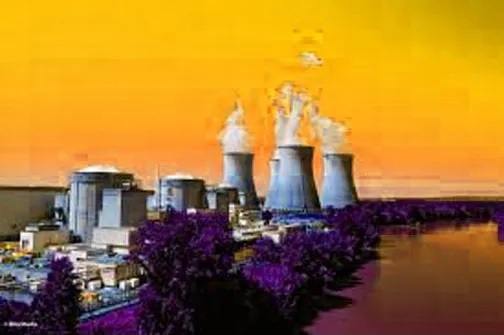
Nuclear power ……….is a sitting technological duck when extreme temperatures strike.
by beyondnuclearinternational, https://beyondnuclearinternational.org/2025/07/27/were-having-a-heatwave/
And nuclear power can’t cope. Worse still, it’s actually a liability under ever more extreme climate conditions, write Karl Grossman and Harvey Wasserman
At the core of the latest attempted “renaissance” of nuclear power is the Big Lie that atomic reactors are an answer to global warming. In fact, they are significant sources of heat.
There are more than 400 nuclear power plants in the world today that fission atoms at 300 degrees Centigrade, (572 degrees Fahrenheit). More are under construction or proposed. As the International Atomic Energy Agency states, “water-cooled reactors offer heat up to 300 degrees Celsius. These types of reactors include pressurized water reactors (PWRs), boiling-water reactors (BWRs), pressurized heavy-water reactors, and light-water-cooled graphite-moderated reactors (LWGRs).”
Some heat is absorbed in the water—drawn from water bodies—used to cool these nuclear power plants and then returned, still with considerable heat, to rivers or seas.
The heatwave going on in recent weeks in Europe, in combination with this discharge of heated water from nuclear plants, has caused nuclear plants there to shut down.
Consider these headlines from recent days:
“France and Switzerland shut down nuclear power plants amid scorching heatwave,” was the July 3rd headline on Euronews. As the piece explained: “To cool down, nuclear power plants pump water from local rivers or the sea, which they then release back into water bodies at a high temperature. However, Europe’s ongoing heatwave means that the water pumped by nuclear sites is already very hot, impacting the ability of nuclear plants to use it to cool down. On top of this, nuclear sites run the risk of posing a dangerous threat to local biodiversity, by releasing water which is too hot into rivers and seas.”
A New York Times article, also dated July 3rd, related how in Europe, “operators shut down one of the two reactors at the Golfech nuclear power plant in southern France after forecasts that the Garonne River, from which it draws water and then discharges it after it is used in the plant as coolant, “could top…82 degrees Fahrenheit.” The Times continued: “The Beznau Nuclear Power Plant in Switzerland, built along the Aare River followed suit, shutting down one of its reactors on Tuesday and the other on Wednesday.”
It quoted its European program director, Pawel Czyzak, saying: “Heatwaves will not go away—they will only get more severe in the future…Luckily, there is no lack of sunshine during heatwaves. The biggest opportunity is to store solar electricity…”
“The French nuclear fleet has been impacted the most, with all but one of the 18 facilities experiencing some type of capacity reduction,” said the report.
It continued: “While heatwaves bring major changes, these are partially offset by the large volumes of solar energy available during daytime. In fact, June 2025 was the highest European Union solar electricity production month on record.” And this “kept the grid well-supplied during daytime hours.”
The Ember report also pointed out, “Solar power is one of the cheapest forms of electricity that Europe has.”
Nuclear power, beyond being subject to catastrophic accidents such as those that occurred at Fukushima, Chernobyl and Three Mile Island, extreme cost, substantial carbon emissions during the nuclear “lifecycle”—mining of uranium, milling it, enrichment of the uranium fuel and other operations—is a sitting technological duck when extreme temperatures strike.
Ember, an independent London-based global energy think tank, on July 4th issued a report headed: “Heat and power: Impacts of the 2025 heatwave in Europe.” It noted: “Heatwaves are becoming more frequent in Europe, putting electricity grids under severe stress.”
“Europe embraces its new reality with heatwaves: ‘They are no longer an exception,’” was the headline of a July 3rd El Mundo article. “Heatwaves in Southern Europe are becoming increasingly early and intense,” it reported.
It quoted Meto-France climatologist Christine Berne saying: “Heatwaves are no longer an exception. They are now more frequent, longer, and spread over larger geographical areas…The phenomenon is directly related to global warming, which is profoundly altering weather patterns, both in France and elsewhere.”
In California, a “bait and switch” to continue operation of the Diablo Canyon atomic reactors is super-heating the Pacific Ocean. In 2018, Pacific Gas & Electric was being forced to stop violating state and federal water protection laws with its massive heat emissions from the twin nuclear power plants. Facing the expensive requirement to build cooling towers, the company agreed to shut down Diablo in 2024 and 2025, ushering in a transition to cheaper, safer, cleaner, more reliable and more job-producing renewables. But in 2022, Governor Gavin Newsom killed the phase-out agreement he had signed as Lieutenant-Governor. So, Diablo still pours billions of gallons of irradiated super-heated water into the Pacific, joining the billions of gallons of irradiated liquid that are pouring in from the site of the Fukushima catastrophe.
In addition to that heat, all nukes emit radioactive fallout, including a radioactive form of carbon, Carbon 14, along with other lethal pollutants, while costing ratepayers up to 10 times more than solar, wind, geothermal and battery backup.
Solar energy, its cost having plummeted in recent years, is now 90 percent cheaper per watt than nuclear power. Further, its efficiency level — its efficiency in converting sunlight to electricity — has dramatically increased. Safe, clean, renewable energy sources — primarily in the form of solar panels and wind turbines — now account for more than 80 percent of the world’s new electric generating capacity.
What’s gone on in the last several weeks in Europe is no exception. The heat is on all over the globe. But there’s solar (and wind) power continuing to function well, while adding no heat, radiation or carbon of its own — unlike the planet’s hyper-lethal nuke reactors.
Meanwhile, the nuclear industry is pushing a new kind of reactor — a fusion reactor that would operate at an astronomical level of heat. It would utilize, instead of fission, the fusion of atoms — the process that happens on the sun, and notes the World Economic Forum: “Temperatures in excess of 150 million degrees Celsius — 10 times hotter than the center of the sun — re required for fusion to occur on Earth.”
“Unsurprisingly,” says the Geneva, Switzerland-based organization, “achieving and controlling these enormous temperatures is a substantial technological challenge. This usually requires using incredibly powerful magnets to contain a hot plasma, preventing it from touching and melting the sides of vessels. Fusion research reactors have achieved temperatures in excess of 300 million degrees Celsius.”
The World Economic Forum’s 2020 analysis is headed: “What is fusion energy, and what will it take for it to go mainstream?”
What does 150 million degrees Celsius convert to in Fahrenheit: 270 million degrees!
To fantasize that Earth-threatening global warming happening now and gaining in intensity can be dealt with by fission nuclear power plants operating at 572 degrees Fahrenheit or fusion nuclear power plants operating at 270 million degrees Fahrenheit is among the great follies in human history.
Harvey Wasserman wrote the books Solartopia! Our Green-Powered Earth and The Peoples Spiral of US History and co-convenes the Grassroots Emergency Election Protection Coalition . Karl Grossman is the author of Cover Up: What You Are Not Supposed to Know About Nuclear Power and Power Crazy. He the host of the nationally-aired TV program Enviro Close-Up with Karl Grossman.
1 Comment »
1 This Month
26 April – Chernobyl: Inside the Meltdown airs on National Geographic on Sunday 26th April from 4pm

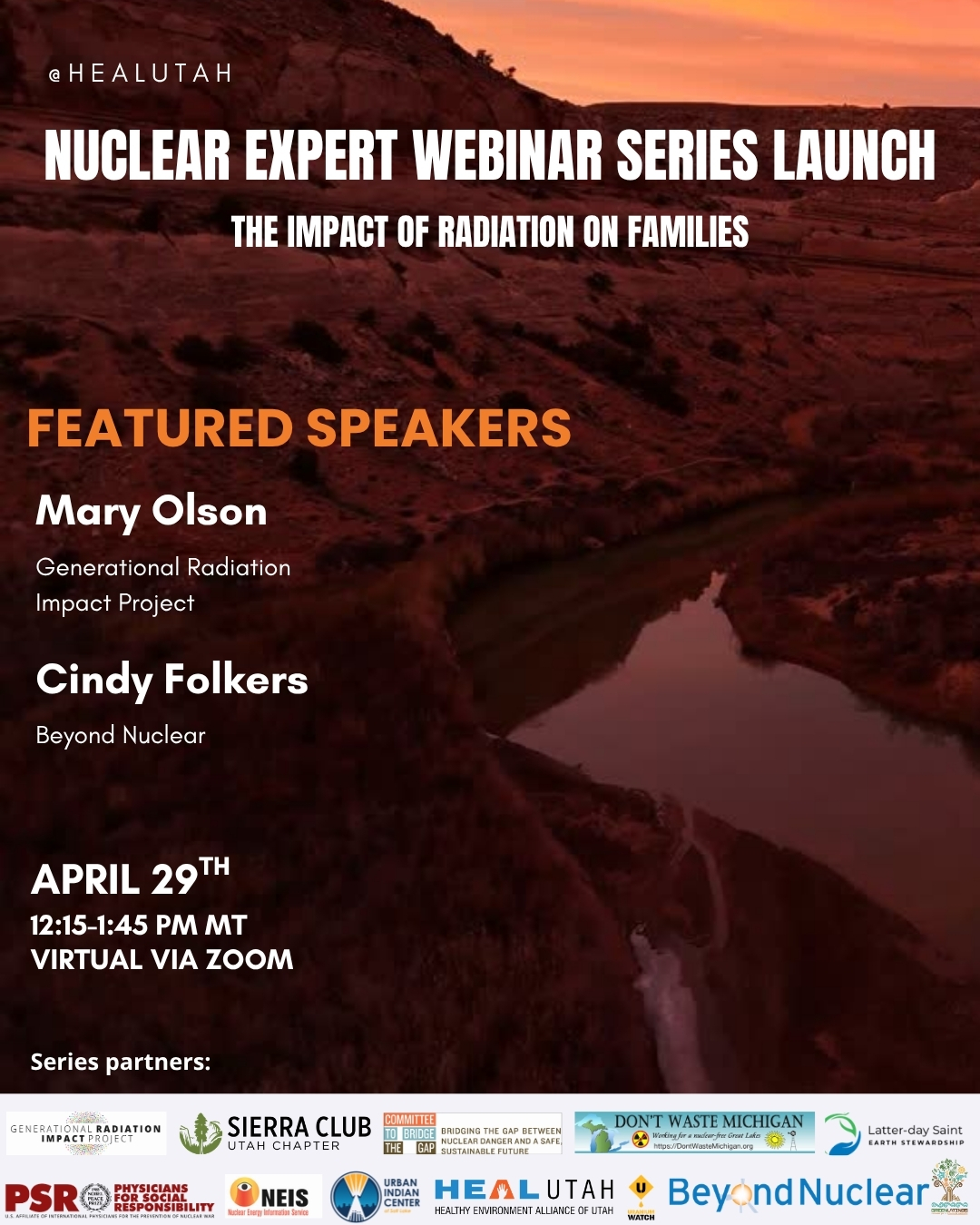
29 April – Nuclear Expert Webinar #1 – Radiation Impacts on Families with Mary Olson and Cindy Folkers
- 12:15 PM MT – 1:45 PM MT
- Location: Virtual – REGISTER TODAY

4 May -West Suburban Peace Coalition to discuss Iran war at May Educational Forum
Monday, May 4, 7:00 – 8:00 PM Central Standard Time
Title: : How Trump’s Narrative Tries to Shape the Reality of the War on Iran.
Contact Walt Zlotow, zlotow@hotmail.com 630 442 3045 for further information
14 May – online event From Bombs to Data Centres: the Face of Nuclear Colonialism

Pine Ridge Uranium is the real threat, not Tehran- Tell Burgum: Stop the Extraction.
Chernobyl: The Lost Tapes – A good documentary on Chernobyl on SBS available On Demand for the next 3 weeks– https://www.sbs.com.au/ondemand/tv-program/chernobyl-the-lost-tapes/2352741955560
To see nuclear-related stories in greater depth and intensity – go to https://nuclearinformation.wordpress.com
-
Archives
- May 2026 (25)
- April 2026 (356)
- March 2026 (251)
- February 2026 (268)
- January 2026 (308)
- December 2025 (358)
- November 2025 (359)
- October 2025 (376)
- September 2025 (257)
- August 2025 (319)
- July 2025 (230)
- June 2025 (348)
-
Categories
- 1
- 1 NUCLEAR ISSUES
- business and costs
- climate change
- culture and arts
- ENERGY
- environment
- health
- history
- indigenous issues
- Legal
- marketing of nuclear
- media
- opposition to nuclear
- PERSONAL STORIES
- politics
- politics international
- Religion and ethics
- safety
- secrets,lies and civil liberties
- spinbuster
- technology
- Uranium
- wastes
- weapons and war
- Women
- 2 WORLD
- ACTION
- AFRICA
- Atrocities
- AUSTRALIA
- Christina's notes
- Christina's themes
- culture and arts
- Events
- Fuk 2022
- Fuk 2023
- Fukushima 2017
- Fukushima 2018
- fukushima 2019
- Fukushima 2020
- Fukushima 2021
- general
- global warming
- Humour (God we need it)
- Nuclear
- RARE EARTHS
- Reference
- resources – print
- Resources -audiovicual
- Weekly Newsletter
- World
- World Nuclear
- YouTube
-
RSS
Entries RSS
Comments RSS
 nuclear-news
[…] Full reading at nuclear-news 2300 ♥️ […]
Pingback by Nuclear Power Struggles to Cope with Heatwave and Rising Temperatures - KillBait Archive | July 30, 2025 |