Nuclear news this week – not industry handouts

Some bits of good news.
Girl Goals: What Has Changed for Girls?Adolescent girls’ rights over 30 Years
Fighting malnutrition in Burundi: Mothers of Light are rays of hope .
A study found we underestimate how kind the world really is
TOP STORIES. Once seen as a symbolic protest, the nuclear ban treaty is growing teeth. Nuclear war threat: why Africa’s pushing for a complete ban.
Nuclear Threat Beneath The Seas.
Walt Zlotow – Why do so many leaders remain stupid about Ukraine war?
SMRs most expensive of all electricity technologies per kW generation.
PLANT VOGTLE The True Cost of Nuclear Power in the United States –Extract at
https://nuclear-news.net/2025/04/04/plant-vogtle-the-true-cost-of-nuclear-power-in-the-united-states/
Climate. Global warming is ‘exposing’ new coastlines and islands as Arctic glaciers shrink . Climate crisis on track to destroy capitalism, warns top insurer. Average person will be 40% poorer if world warms by 4C, new research shows.
AUSTRALIA. Trump tariffs spark questions over US alliance. This ain’t no April fools: Nuclear support melts down in proposed nuclear communities. More Australian nuclear news at https://antinuclear.net/2025/04/01/australian-nuclear-news-april-1st-7th/
NUCLEAR ITEMS.
ATROCITIES. International pressure forces Israel to change account of Gaza medics’ killing. What really happened in Bucha? The questions Western media won’t ask.
ECONOMICS.
- Cost of EPR2 : Reporterre publishes a censored alert. Mini nuclear reactor rush has a short half-life – ALSO AT https://nuclear-news.net/2025/04/06/2-b1-cost-of-epr2-reporterre-publishes-a-censored-alert/
- Buyer sought for nuclear energy developer as it collapses into administration.
- Miliband pours £2.7bn into Sizewell nuclear power projectafter EDF cuts stake. https://nuclear-news.net/2025/04/06/2-b1-cost-of-epr2-reporterre-publishes-a-censored-alert/ UK Treasury confident Sizewell C nuclear power investors will soon be ‘teed up’ – crunch time for Sizewell. ALSO AT https://nuclear-news.net/2025/04/03/1-b1-uk-treasury-confident-sizewell-c-nuclear-power-investors-will-soon-beteed-up-crunch-time-for-sizewell/
- UPDATE ON THE BANKRUPTCY OF USNC – Ultra Safe Nuclear.
- ‘Greedy landlords are cashing in and forcing us out of town’.
| EDUCATION. Hinkley C nuclear power station site teaches A Level students about “clean” energy !! |
| ENVIRONMENT. ‘They’re everywhere’: workers warn of rat infestation at Somerset nuclear plant. |
| EVENTS. Local Communities Say NO to Los Alamos National Laboratory (LANL Expansion); Public Comments Due on Thursday, April 10th. “Getting people to do what they can from where they are”: NFLAs support Democracy Day inspiring peace activists to make Councils anti-nuke allies-14-26 April – Lakenheath Peace Camp https://nuclearactive.org/ |
| HISTORY. ‘Bringing calm and hope’: President Carter’s role at Three Mile Island |
| LEGAL. Deloitte seeks to avoid liability over US nuclear fiasco – ALSO AT https://nuclear-news.net/2025/04/06/2-b1-deloitte-seeks-to-avoid-liability-over-us-nuclear-fiasco/ Atomic Safety and Licensing Board (ASLB) rejects intervenors’ Palisades “zombie” nuke reactor restart petition & hearing request. |
| MEDIA. Canada supplied uranium for atomic bombs in WWII — 80 years later, the cleanup continues – film Atomic Reaction. |
OPPOSITION to NUCLEAR . The great trek for justice.
Resistance to nuke dump grows in South Copeland.
POLITICS.
- Germany’s Conservative Christian Democratic Union (CDU) mulls reactivation of nuclear power plants.
- Democracy should not be an April Fools’ Day Joke! ‘Another significant show of confidence’ in Sizewell C, – making the total of taxpayers’ money going into the project a staggering £6.4bn).
- Federal regulator approves Canada’s first small modular reactor.
POLITICS INTERNATIONAL and DIPLOMACY. Iran rejects ‘meaningless’ direct talks with US. With US bombers at the ready, can Trump cut a deal with Iran and avoid a war? Trump’s bombing threat over Iran nuclear programme prompts backlash. Military confrontation ‘almost inevitable‘ if Iran nuclear talks fail: French FM. Iran rejects direct talks with the US over its nuclear programme. Trump Threatens Iran With ‘Bombing’ If Nuclear Deal Is Not Reached.
EUROPE’S DESPERATE GAMBIT. If the Europeans are serious about peace, they should invite Zelensky to fewer meetings. TRUMP’S PURSUIT OF A UKRAINIAN PEACE: Early Results and Future Prospects.
Why Ontario won’t consider the nuclear option in its fight over Trump’s tariffs.
China or America-Who is the warmonger?
The West has big plans for nuclear power: Will geopolitics play ball
SAFETY. Unsafe for Russia to restart Zaporizhzhia nuclear plant, says Ukraine energy chief.
Pearl Harbor update brings nuclear risk.
Nuclear site given more time to fix safety breach.
SECRETS and LIES.
- Britain sent over 500 spy flights to Gaza.
- Biden Lied About Everything, Including Nuclear Risk, During Ukraine Operation.
- Meltdown: the toxic culture that helped destroy the Nuclear Advanced Manufacturing Research Centre (AMRC).
- Russian sensors suspected of attempting to spy on the UK’s nuclear submarines have been found hidden in the seas around Britain – ALSO AT https://nuclear-news.net/2025/04/07/1-russian-sensors-suspected-of-attempting-to-spy-on-the-uks-nuclear-submarines-have-been-found-hidden-in-the-seas-around-britain/
SPACE. EXPLORATION, WEAPONS. Swarms of satellites are harming astronomy. Here’s how researchers are fighting back.
| TECHNOLOGY. Bavarian SMRs & Hydrogen Vans: What Could Possibly Go Wrong? |
| URANIUM. Uranium stocks dumped as market ‘paralysis’ intensifies. |
| WASTES Inside the bizarre race to secure Earth’s nuclear tombs. Cumbria could be only option for nuclear disposal. Millom nuclear waste plans ‘currently detrimental’ to locals-ALSO AT https://nuclear-news.net/2025/04/06/2-b1-millom-nuclear-waste-plans-currently-detrimental-to-locals/ Recycling Nuclear Waste: A Win-Win or a Dangerous Gamble? Plutonium The true story of the demon core – https://www.youtube.com/shorts/9FEFGlBZBwg |
| WAR and CONFLICT. It’s Official: Ukraine Conflict is British ‘Proxy War‘. Germany deploys troops to Russia’s doorstep for first time since the Nazis. Hegseth Orders Pentagon To Focus on Preparing for War With China Over Taiwan. Hegseth Circulated Secret Pentagon Memo On Preparing For War With China. |
| WEAPONS and WEAPONS SALES. The future of Europe won’t be shaped by mushroom clouds – why nuclear weapons don’t provide security – https://www.youtube.com/watch?v=M4Cx5O1yfoo Britain is aiding Israel’s nuclear force. UK nuclear deterrent: the mutual defense agreement is at risk in a Trumpian age. |
Iran rejects ‘meaningless’ direct talks with US
As war of words over nuclear weapons deal escalates, FM Araghchi says he wants talks on ‘equal footing’.
6 Apr 2025, https://www.aljazeera.com/news/2025/4/6/iran-foreign-minister-rejects-direct-talks-with-us
Iranian Foreign Minister Abbas Araghchi has described the prospect of direct negotiations on its nuclear programme with the United States as “meaningless” amid mounting tensions between the two countries.
Araghchi’s remarks came in a statement on Sunday, after Trump said last month in a letter sent to Iran’s Supreme Leader Ayatollah Ali Khamenei that he hoped there would be a negotiation between their countries aimed at preventing Tehran from acquiring nuclear weapons.
Trump upped the ante last week, saying: “If they don’t make a deal, there will be bombing.”
Araghchi questioned Washington’s sincerity in calling for negotiations, saying on Sunday, “If you want negotiations, then what is the point of threatening?”
Tehran, which maintains that it is not seeking a nuclear weapon, has so far rejected Washington’s overtures, but has said it is open to indirect diplomacy – a stance repeated by Araghchi in Sunday’s statement.
Araghchi said Iran wanted to negotiate on an “equal footing” with the US, describing it as “a party that constantly threatens to resort to force in violation of the UN Charter and that expresses contradictory positions from its various officials”.
In 2018, during his first term as president, Trump nixed the Joint Comprehensive Plan of Action, a deal between Iran and the permanent members of the United Nations Security Council that gave Iran sanctions relief in exchange for curbs on its nuclear programme.
Iran has since rolled back on its commitments under the agreement, amassing enough fissile material for multiple bombs, according to the International Atomic Energy Agency, which carries out inspections of Iranian nuclear sites.
Responding to Trump’s threat of war, Hossein Salami, the head of the Islamic Revolutionary Guard Corps, said on Saturday that the country was “ready” for war.
“We are not worried about war at all. We will not be the initiators of war, but we are ready for any war,” the official IRNA news agency quoted Salami as saying.
But Tehran’s position in the region appears to have weakened amid the ongoing war in Gaza and beyond, with Israel’s decimation of Hezbollah’s leadership in Lebanon, and the toppling of another key partner, Syrian President Bashar al-Assad, last year.
Iran says its nuclear activities are solely for civilian purposes. Israel, the top US ally in the region, is widely believed to have an undeclared nuclear arsenal.
Youth Leading the Charge for a Nuclear-Free Future

Monday, March 3, 2025, United Nations Headquarters – Meetup with International Youth Advocating for a World Without Nuclear Weapons.
The 3rd Meeting of States Parties (MSP) to the Treaty on the Prohibition of Nuclear Weapons (TPNW) saw the participation of numerous young people from around the world who are passionate about creating a world without nuclear weapons.
Thanks to the initiative of SPARK youth, an opportunity for a meetup and exchange with young people from anti-nuclear peace organizations in the United States and Japan was made possible.
A total of 20 youth from various organizations, including SPARK, Peace Action New York State, Kakuwaka Hiroshima, Gensuikyo (Japan Council against Atomic and Hydrogen Bombs), and Gensuikin (Japan Congress Against A and H-Bombs), participated in the meeting. Jin-tae Shim, a first-generation atomic bomb victim from Korea, and Jung-Soon Han, a second-generation victim, were also present to support and encourage the youth.
………………………..Following the introductions, the group discussed a variety of topics, including their interest in peace issues, their countries’ nuclear policies, and what sparked their interest in nuclear disarmament. Many intriguing ideas were exchanged…………………….. https://abombtribunal.campaignus.me/34/?q=YToxOntzOjEyOiJrZXl3b3JkX3R5cGUiO3M6MzoiYWxsIjt9&bmode=view&idx=159477468&t=board
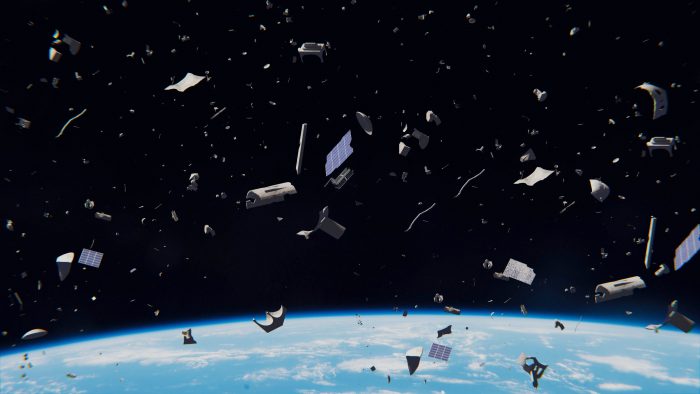
ESA’s new documentary paints worrying picture of Earth’s orbital junk problem
By Monisha Ravisetti , April 3, 2025, https://www.space.com/the-universe/earth/esas-new-documentary-paints-worrying-picture-of-earths-orbital-junk-problem
There are a lot of satellites, and a lot of trash, around our planet — and the quantities are only going to get higher.
A new documentary short released by the European Space Agency presents an ominous statement within its first 20 seconds: “Around 70% of the 20,000 satellites ever launched remain in space today, orbiting alongside hundreds of millions of fragments left behind by collisions, explosions and intentional destruction.”
The approximately eight-minute-long film “Space Debris: Is it a Crisis?” attempts to answer its conjecture with supportive statistics and orbital projections.
For instance, it discusses how the rise of satellite constellations (think, SpaceX Starlink internet satellites) is bound to further increase the amount of stuff that orbits our planet — yet simultaneously, the amount of space junk will likely go up, too, due to shards of rockets tearing off during launch and out-of-commission spacecraft that can’t be returned to the ground in a timely manner.
Considering how quickly things in Earth orbit tend to zip around, a fragment of a spacecraft crashing into a satellite could greatly hinder that satellite; two satellites colliding could be catastrophic for both. Sometimes, debris even falls uncontrolled back to our planet.
The film also mentions that the kind of Earth orbit matters when discussing whether we’re in a space junk “crisis” — though unfortunately, orbits at risk appear to be those with satellites that help with communication and navigation, as well as our fight against another primarily human-driven crisis: global warming.
Still, the film emphasizes that solutions ought to be thought of carefully: “True sustainability is complex, and rushed solutions risk creating the problem of burden-shifting.”
You can watch the film on ESA’s website, linked just here.
‘They’re everywhere’: workers warn of rat infestation at Somerset nuclear plant
Unions urge energy giant EDF to take action as concerns mount over health of construction staff.
Guardian, Jillian Ambrose, Sun 6 Apr 2025
Workers building the troubled Hinkley Point C nuclear reactor in Somerset have raised concerns that the construction site is overrun by rats.
The Unite and GMB trade unions are understood to have warned the developer, the French energy giant EDF, that urgent action is needed because the rodents are “everywhere”.
The growing vermin population has prompted fears over the health of the workforce building Britain’s first new nuclear power plant in a generation, which is running years late and billions of pounds over budget. A source on the site told the Observer: “They’re all over. You see them just sat there, looking at you. It is worse near the canteens, where I guess it started. But they are everywhere now.”
A second source confirmed that the trade unions had broached the issue with EDF, describing the number of rats on the site as “quite grim”.
“The more men working on the site, the more rubbish on the site – and the canteens are not clean either. It has just become worse over time,” the source added………………………………………………………….https://www.theguardian.com/world/2025/apr/06/theyre-everywhere-workers-warn-of-rat-infestation-at-somerset-nuclear-plant
Raising Funds to Stop Lake District Coast Sub-Sea Nuclear Dump
Radiation Free Lakeland has launched a crowdfund appeal to raise enough
funds to send out a leaflet direct to all 250,000 households explaining the
importance of lobbying Cumberland Council to carry out a full debate and
vote before going any further down the road to delivery of a “geological
disposal facility” (nuclear dump) for hot nuclear wastes. The bare
minimum we would need is £1,800 and with your help we could just do this.
We could stop the nuclear juggernaut in its tracks and protect the Lake
District coast from becoming the world’s biggest, leakiest nuclear
sacrifice zone.
Radiation Free Lakeland 6th April 2025
https://mariannewildart.wordpress.com/2025/04/06/raising-funds-to-stop-lake-district-coast-sub-sea-nuclear-dump/
Inside the bizarre race to secure Earth’s nuclear tombs
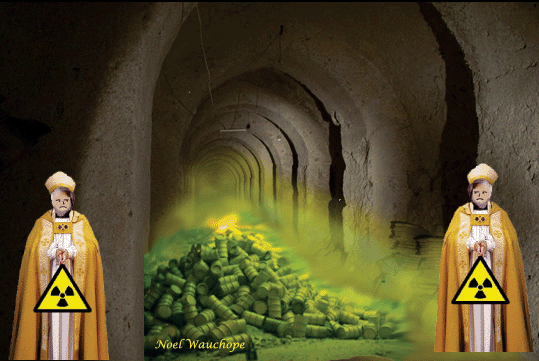
outlandish ideas have included linguist Thomas Sebeok’s proposal of an ‘atomic priesthood’ that would pass on nuclear folklore (in much the same way that generations of clergy have been relaying the tenets of their respective faiths for thousands of years
“Our generation must find a way to bury the waste very deep to avoid radioactive pollution or exposure to people and animals up to one million years into the future.”
“Currently, about 75 per cent of the UK’s nuclear waste is already stored across 20 sites,” says Winsley. “People are surprised to hear you’re never far away from the most hazardous radioactive waste, wherever you are in the UK.
Jheni Osman, BBC Science Focus, April 5, 2025
With nuclear energy production increasing globally, the problem of what to do with the waste demands a solution. But where do you store something that stays dangerous for thousands of years?
Uniformed guards with holstered guns stand at the entrance and watch you lumber past. Ahead lies a wasteland of barren metal gantries, dormant chimney stacks and abandoned equipment.
You trudge towards the ruins of a large, derelict red-brick building. Your white hazmat suit and heavy steel-toe-capped boots make it difficult to walk. Your hands are encased in a double layer of gloves, your face protected by a particulate-filtering breathing mask. Not an inch of flesh is left exposed.
Peering into the building’s gloomy interior, the beam from your head torch picks out machinery and vats turned orange with rust. On a wall nearby, a yellow warning sign featuring a black circle flanked by three black blades reminds you of the danger lurking inside.
Apart from the sound of your own breathing behind your mask, the only thing you can hear is the crackling popcorn of your Geiger counter.
This is what entering the Prydniprovsky Chemical Plant is like for nuclear researchers, including Tom Scott, professor of materials at the University of Bristol and head of the UK Government’s Nuclear Threat Reduction Network.
Prydniprovsky was once a large Soviet materials and chemicals processing site on the outskirts of Kamianske in central Ukraine. Between 1948 and 1991, it processed uranium and thorium ore into concentrate, generating tens of millions of tonnes of low-level radioactive waste.
When the Soviet Union dissolved, Prydniprovsky was abandoned and fell into disrepair.
“The buildings are impressively awful and not for the faint-hearted,” says Scott. “As well as physical hazards, such as gaping holes in the floor, there’s no light or power. And obviously there are radiological hazards. Until very recently, the Ukrainian Government didn’t have a clue what had gone on at the site, so there were concerns about the high radiation levels and ground contamination.”
When radiation levels are deemed too high for humans, Scott sends in the robots. ………………………….
Scott and his team are known as industrial nuclear archaeologists, and they’re working to find, characterise and quantify the ‘legacy’ radioactive waste at sites around the world.
“High-level radioactive waste gives off a significant amount of radioactivity, sufficient to make humans sick if they get too close,” he says. “Some of this waste will be dangerously radioactive for very long periods of time, meaning that it needs to be physically kept away from people and the environment to ensure that no harm is caused.”
But finding legacy waste like this, which has been amassing since the 1940s, is only part of the challenge. Once it’s been found, it has to be isolated and stored long enough for it to no longer pose a threat. And that’s not easy.
“Currently we’re storing our high-level wastes above ground in secure, shielded facilities,” Scott says. “Such facilities need to be replaced every so often because buildings and concrete structures can’t last indefinitely.”
Safely storing the nuclear waste that already exists is only the start of the problem, however. With the world moving away from fossil fuels towards low-carbon alternatives, nuclear energy production is set to increase, which means more waste is going to be produced – a lot more.
Currently, nuclear energy provides roughly nine per cent of global electricity from about 440 power reactors. By 2125, however, the UK alone is predicted to have 4.77 million m3 (168 million ft3) of packaged radioactive waste. That’s enough to fill 1,900 Olympic swimming pools.
Hence, the world needs more safe storage sites for both legacy and new nuclear waste. And it needs them fast.
Safe spaces
In the UK, most nuclear waste is currently sent to Sellafield, a sprawling site in Cumbria, in the north-west of England, with about 11,000 employees, its own road and railway network, a special laundry service for contaminated clothes and a dedicated, armed police force (the Civil Nuclear Constabulary).
Sellafield processes and stores more radioactive waste than anywhere in the world.
But more hazardous material is on the way, much of which will come from the new nuclear power station being built at Hinckley Point in Somerset. To keep pace, experts have been hunting for other, much stranger, disposal solutions.
It’s a challenge for nuclear agencies all around the world. All sorts of proposals have been put forward, including some bizarre ideas like firing nuclear waste into space. (The potential risk of a launch failure showering the planet with nuclear debris has silenced that proposal’s supporters.)
So far, the most plausible solution is putting the waste in special containers and storing them 200–1,000m (660–3,280ft) underground in geological disposal facilities (GDFs). Eventually, these GDFs would be closed and sealed shut to avoid any human intrusion.
These ‘nuclear tombs’ are the safest, most secure option for the long-term and minimise the burden on future generations.
“In the UK, around 90 per cent of the volume of our legacy waste can be disposed of at surface facilities, but there’s about 10 per cent that we don’t currently have a disposal facility for. The solution is internationally accepted as being GDFs,” says Dr Robert Winsley, design authority lead at the UK’s Nuclear Waste Services.
“We estimate that about 90 per cent of the radioactive material in our inventory will decay in the first 1,000 years or so. But a portion of that inventory will remain hazardous for much longer – tens of thousands, even hundreds of thousands of years.
“GDFs use engineered barriers to work alongside the natural barrier of stable rock. This multi-barrier approach isolates and contains waste, ensuring no radioactivity ever comes back to the surface in levels that could do harm.”
But how do you keep that radioactivity in the ground? Radioactive waste is typically classified as either low-, intermediate- or high-level waste.
Before being disposed of deep underground, high-level waste is converted into glass (a process known as vitrification) and then packed in metal containers made of copper or carbon steel. Intermediate-level waste is typically packaged in stainless-steel or concrete containers, which are then placed in stable rock and surrounded by clay, cement or crushed rock.
The process isn’t set in stone yet, though. Other materials, such as titanium- and nickel-based alloys, are being considered for the containers due to their resistance to corrosion.
Meanwhile, scientists in Canada have developed ultra-thin copper cladding that would allow them to produce containers that take up less space, while providing the same level of protection.
Rock solid
The hunt is also on to find facilities with bedrock that can withstand events such as wars and natural disasters (‘short-term challenges’, geologically speaking). Sites that won’t change dramatically over the millennia needed for nuclear waste to no longer pose a risk.
“A misconception is that we’re looking for an environment that doesn’t change, but the reality is the planet does change, very slowly,” says Stuart Haszeldine, professor of carbon capture and storage at the University of Edinburgh.
“Our generation must find a way to bury the waste very deep to avoid radioactive pollution or exposure to people and animals up to one million years into the future.”
To achieve this, the site ideally needs to be below sea level. If it’s above sea level, rainwater seeping down through fractures in the rock around the site might become radioactive and eventually find its way to the sea.
When this radioactive freshwater meets the denser saltwater, it’ll float upwards, posing a risk to anything in the water above.
Another challenge is predicting future glaciations, which happen roughly once every 100,000 years. During such a period, the sort of glaciers that cut the valleys in today’s landscape could form again, gouging new troughs in the bedrock that might breach an underground disposal facility.
“Accurate and reliable future predictions depend on how well you understand the past,” says Haszeldine.
“Typically, repository safety assessments cover a one-million-year timeframe, and regulations require a GDF site to cause fewer than one human death in a million for the next million years. Exploration doesn’t search for a single best site to retain radioactive waste, but one that’s good enough to fulfil these regulations.”
Hiding places
In 2002, the US approved the construction of a nuclear tomb in an extinct supervolcano in Yucca Mountain, Nevada, about 160km (100 miles) north-west of Las Vegas.
…………. opponents cited concerns that it was too close to a fault line and, in 2011, US Congress ended funding for the project. Since then, waste from all US nuclear power plants has been building up in steel and concrete casks on the surface at 93 sites across the country.
Other sites have fared better, however. Already this year, construction has begun on a nuclear tomb in Sweden, expected to be ready in the 2030s, but it’s also the year the world’s first tomb – at a site in Finland, called Onkalo (Finnish for ‘cave’ or ‘hollow’) – could open its doors for waste………………..
In January 2025, the UK Government announced plans to permanently dispose of its 140 tonnes of radioactive plutonium, currently stored at Sellafield. In a statement, energy minister Michael Shanks cited plans to put it “beyond reach”, deep underground.
Three potential sites in England and Wales are being explored by Nuclear Waste Services, and one of Haszeldine’s PhD students is independently investigating a fourth off the Cumbrian coast. The offshore site appears to be hydro-geologically stable (even over glacial timescales), but it would be expensive and difficult to engineer.
“Currently, about 75 per cent of the UK’s nuclear waste is already stored across 20 sites,” says Winsley. “People are surprised to hear you’re never far away from the most hazardous radioactive waste, wherever you are in the UK. Our mission is to make this radioactive waste permanently safe, sooner.”
……………………..The deep isolation approach costs less than a third of what it costs to construct a nuclear tomb and uses smaller sites, but the canisters are harder to recover if anything goes wrong.
Nevertheless, it’s a viable option for smaller nuclear countries and a second prototype is expected to undergo field testing at a deep borehole demonstration site in the UK in early 2025.
……………………………………………………………………………………………………………“The half-life of plutonium 239 is about 24,100 years, but the requirement is to keep a ceramic in that state for up to a million years. Essentially, we’re trying to design materials that’ll last forever. I don’t think humans will be around in a million years’ time, so the work we do needs to outlast humanity.”
Hide and seek
But even after you’ve found a suitable site and buried the radioactive material safely inside it, you still need to warn future generations about what’s hidden inside.
The trouble is, even if humans are still around in a million years’ time, there’s no guarantee the languages our ancestors speak, or the symbols they use, will be anything like those of today.
In Japan, 1,000-year-old ‘tsunami stones’, which warned future generations to find high ground after earthquakes, have failed to prevent construction on vulnerable sites.
Even the radiation symbol we use today (that black circle flanked by black blades on a yellow background) isn’t universally recognised. Research by the International Atomic Energy Agency found that only six per cent of the global population know what it signifies.
That’s why scientists have been working with everyone from artists to anthropologists, librarians to linguists, and sculptors to science-fiction writers – to come up with other ways of warning future generations about nuclear tombs.
………………….outlandish ideas have included linguist Thomas Sebeok’s proposal of an ‘atomic priesthood’ that would pass on nuclear folklore (in much the same way that generations of clergy have been relaying the tenets of their respective faiths for thousands of years
…………………………….. While some back this active forgetting of future nuclear tombs, researchers like Scott are still trying to get everyone to remember the nuclear sites we’ve already forgotten. It’s like a game of nuclear ‘hide and seek’ – but the stakes are high, and there’s no room for error.
…………………Currently, nuclear tombs are our best bet, but it’s a burden humanity must shoulder for thousands of years, long after the benefits gained from nuclear technology will have faded.
“My personal opinion is, I don’t think we should allow future generations to forget about a geological disposal facility,” says Scott. “The material is both dangerous and, in longer timescales, potentially valuable. People need to be reminded of its presence.”…………………… https://www.sciencefocus.com/planet-earth/inside-the-bizarre-race-to-secure-earths-nuclear-tombs
The great trek for justice
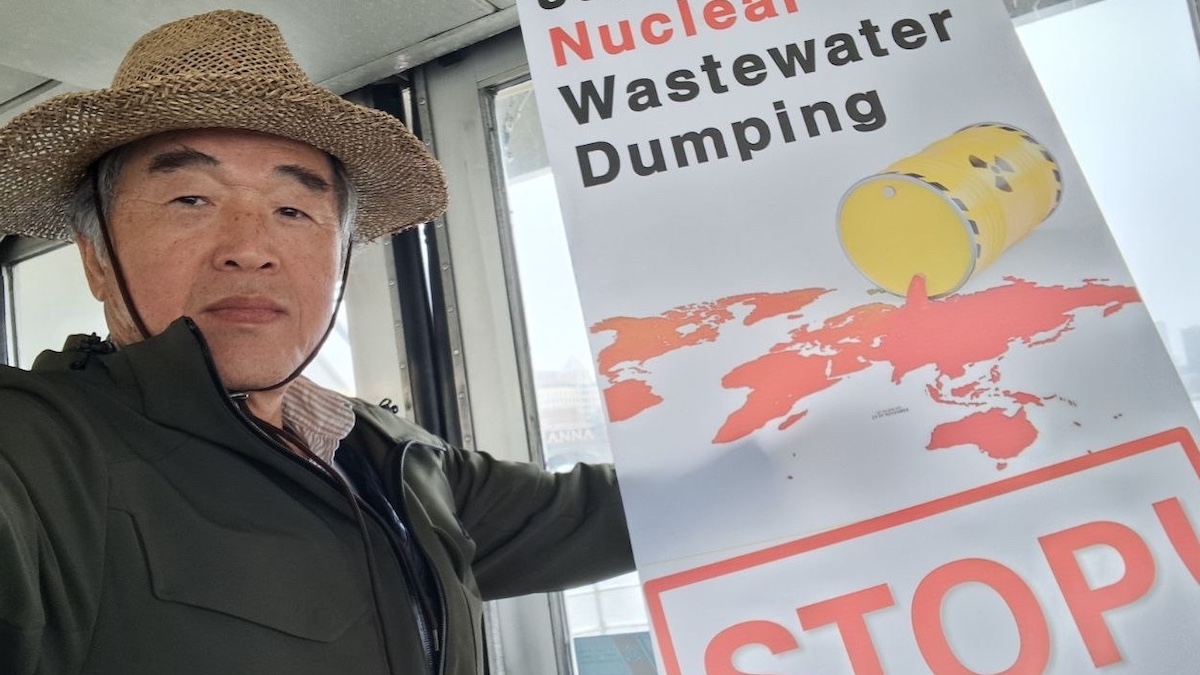
At the heart of the matter for Lee is the devastating and continued destruction of the ecosystems on which all of us — human and animals — depend. The Fukushima radioactive water dump is just one of the most recent examples.
, by beyondnuclearinternational, https://beyondnuclearinternational.org/2025/03/30/the-great-trek-for-justice/
Won-Young Lee has walked from his homeland in South Korea to Tokyo. Now he’s on the march in the US, writes Linda Pentz Gunter
How far would you walk for a cause? In the case of South Korean anti-nuclear activist, Won-Young Lee, that distance has no limit.
Lee, 67, and the director of the Korea Land Future Research Institute and the Public Reporting Center for the Dangers of Nuclear Power Plants (PRCDN), will arrive in Washington, DC on April 8, having walked there from the United Nations in New York City, a journey he began on March 19. The distance is about 260 miles.
His cause this time is to draw attention to the continued dumping of highly radioactive waste water from the stricken Fukushima Daiichi nuclear power plant in Japan into the Pacific Ocean. This is not Mr. Lee’s first walk, but he chose the dates deliberately to span the time between the 2011 Fukushima nuclear disaster that began on March 11 and the April 26, 1986 Chornobyl reactor explosion in Ukraine.
This latest walk falls under the umbrella of what Lee has titled the “New Silk Road for Life and No-Nukes. Walking Planet Earth With Joy.” Together, the walks constitute a marathon that have taken Lee and other walkers through vast areas of the Asian continent, including Vietnam, Laos, Thailand, Malaysia, India and Nepal and on through Uzbekistan, Azerbaijan, and Georgia and through numerous countries in Europe. Lee himself has traversed 6,125 miles on foot.
He has been inspired, he says, by Gandhi’s ‘Salt March’ “that led to India’s independence,” and was also started, Lee says, “by a small number of people,” that grew into ever greater numbers.
That will of the people manifested again in 2023, during a trek of almost 1,000 miles undertaken by South Korean and Japanese citizens from Seoul, South Korea to Tokyo, Japan with stops that included one in Hiroshima.
Currently, as Lee marches resolutely from Manhattan to DC, he has encountered others who are equally inspired, often from Japan. Yoko Akashi, who marched with him in New Jersey, wrote that “even though we’re only two walking highways and shopping streets, people waved, honked cars and wanted to know more because they’re concerned.”
All of this is done with unbounded optimism. The purpose of the current walk is not only to engage with populations along the route but to try, once it reaches its destination in the nation’s capital, to convince members of Congress and even the White House, that the water dumping at Fukushima needs to stop.
“By marching, we can gain the support of citizens, get citizens to join the march, and as the procession gets longer, citizens can pressure politicians,” asserts Lee.
We have published numerous articles on our news site — Beyond Nuclear International — arguing against the dumping of at least 1.3 million tons of radioactive water from Fukushima into the Pacific, a procedure that will go on for years, even decades.
One of the more recent ones, by Tilman Ruff, sums up many of the arguments. Another earlier one from GENSUIKIN, also lays out the specific risks.
Lee’s organization has turned to the cartoon format to produce a booklet telling the story. It’s entitled STOP! Fukushima Nuclear Wastewater Dumping and can be downloaded from the PRCDN website in English here.
I met with Lee and a group of Korean activists on Capitol Hill in February, during a press conference led by Congressman Brad Sherman (CA-32), a senior member of the House Foreign Affairs Committee, to urge for the passage of his bipartisan legislation, the Peace on the Korean Peninsula Act.
The bill calls for swift and substantial diplomatic engagement in order to achieve a formal end to the Korean War – America’s longest war.
During the event, Lee expressed his hopes for a political change of policy over the dumping (I am afraid I did not share his optimism.) In a statement before his New York to Washington march began, Lee expressed the view that stopping the dumping was in the hands of the US president. “He is the only person to whom the Japanese prime minister bows his head,” Lee wrote. “If the US president asks the Japanese prime minister to stop, the dumping can be stopped.”
At the heart of the matter for Lee is the devastating and continued destruction of the ecosystems on which all of us — human and animals — depend. The Fukushima radioactive water dump is just one of the most recent examples.
“Humanity has a responsibility to respect the survival of all living things in the ecosystem as well as its own future generations,” said a declaration put out before the latest walk launched. And yet, “the Japanese government is intentionally dumping potentially fatal nuclear contaminants into the sea.”
Both the International Atomic Energy Agency (IAEA) and the United Nations come in for deservedly harsh criticism as well. In the cartoon booklet, the IAEA is referred to as “Japan’s Brazen Enabler”. The UN, says the declaration, is “ignoring the spirit of the World Charter of Nature (1982), drawn up by themselves and the Earth Charter (2000), made by agreement at the Rio Environmental Conference, and are simply watching the destruction of our ecosystem.” Striking an uncharacteristically pessimistic note, it adds: “All of these things show that our international community is completely broken. At this rate, there is no hope for humanity.”
In conclusion, the march declaration offers the following:
- The Japanese government, which has intentionally put humanity and the Earth’s ecosystem at great risk, must immediately stop dumping nuclear contaminated water and apologize to all living things on Earth.
- The U.S. government and the IAEA, which support Japan’s ocean dumping of nuclear contaminated water, should immediately withdraw their support and seek safe measures for all living things on Earth.
- The UN and the International Community must acknowledge and reflect on dereliction of their duty to stop Japan from dumping nuclear contaminated water into the ocean.
- Global citizens, keep in mind that if we turn a blind eye to these errors, we are committing a crime to our descendants, and let us actively punish any country or power that intentionally commits such crimes.
- Global citizens, let us be aware of our responsibility to protect the dignity of all life in the global village, and set the right guideposts.
Headline photo Won-Young Lee courtesy of the subject.
Linda Pentz Gunter is the international specialist at Beyond Nuclear and writes for and edits Beyond Nuclear International. Her forthcoming book, Hot Stories. Reflections from a Radioactive World, will be published later this year.
International pressure forces Israel to change account of Gaza medics’ killing.
by Daily Sabah with Agencies, ISTANBUL Apr 06, 2025
The Israeli military was forced to revise its initial account of last month’s deadly strike that killed 15 emergency workers near Rafah after incriminating video footage of the incident was released by the Palestinian Red Crescent.
It has released new details while acknowledging that investigations into the incident are still ongoing.
The 15 paramedics and emergency responders were shot dead on March 23 and buried in a shallow grave where their bodies were found a week later by officials from the United Nations and the Palestinian Red Crescent. Another man is still missing.
The military initially said soldiers had opened fire on vehicles that approached their position “suspiciously” in the dark without lights or markings. It said they killed nine Hamas and Islamic Jihad members, who were traveling in Palestinian Red Crescent vehicles.
But video recovered from the mobile phone of one of the dead men and published by the Palestinian Red Crescent showed emergency workers in their uniforms and clearly marked ambulances and fire trucks, with their lights on, being fired on by soldiers.
The only known survivor of the incident, Palestinian Red Crescent paramedic Munther Abed, also said he had seen soldiers opening fire on clearly marked emergency response vehicles.
An Israeli military official said late Saturday the investigators were examining the video and conclusions were expected to be presented to army commanders Sunday.
He claimed the initial report received from the field did not describe lights but that investigators were looking at “operational information” and were trying to understand if this was due to an error by the person making the initial report.
“What we understand currently is that the person who gives the initial account is mistaken. We’re trying to understand why.”
Israeli media briefed by the military reported that troops had identified at least six of the 15 dead as members of Palestinian resistance groups.
However, the official declined to provide any evidence or detail of how the identifications were made, saying he did not want to share classified information.
“According to our information, there were … there but this investigation is not over,” he told reporters at the briefing late Saturday………………………………………………………………………………………..
The U.N. confirmed last week that it had been informed of the location of the bodies but that access to the area was denied by Israel for several days.
It said the bodies had been buried alongside their crushed vehicles – clearly marked ambulances, a fire truck and a U.N. car.https://www.dailysabah.com/world/mid-east/intl-pressure-forces-israel-to-change-account-of-gaza-medics-killing
With US bombers at the ready, can Trump cut a deal with Iran and avoid a war?
The United States and Iran are once again on a collision course over the
Iranian nuclear program. In a letter dated early March, US President Donald
Trump urged Iranian Supreme Leader Ayatollah Ali Khamenei to negotiate a
new deal.
The new deal would replace the defunct nuclear agreement
negotiated in 2015 between the United States, Iran and five other global
powers. Trump withdrew from that agreement, called the Joint Comprehensive
Plan of Action (JCPOA), during his first term.
Trump gave the Iranians a
two-month deadline to reach a new nuclear deal. If they don’t, the US will
bomb the country. In recent days, American B-2 bombers and warships have
been deployed to the region in a show of force. In response, Tehran has
agreed only to indirect negotiations. It has ruled out any direct talks
while under a US policy of “maximum pressure”.
Khamenei and his
generals have promised a “harsh response” to any military venture. Iran
has vowed to target all American bases in the region. France, one of key
negotiators in the 2015 deal, said this week a failure to secure a new deal
would make a military confrontation “almost inevitable”. In a positive
sign, however, Washington is reportedly “seriously considering” Iran’s
offer for indirect negotiations. And Trump is now suggesting Iran may
actually be open to direct talks.
The Conversation 5th April 2025 https://theconversation.com/with-us-bombers-at-the-ready-can-trump-cut-a-deal-with-iran-and-avoid-a-war-253828
Canada supplied uranium for atomic bombs in WWII — 80 years later, the cleanup continues
Gordon Edwards, 6 Apr 25
Atomic Reaction is a documentary feature film dealing with the radioactive history and contamination of the town of Port Hope Ontario, located on the North shore of Lake Ontario just east of Toronto.
Here is a YouTube of the film: https://www.youtube.com/watch?v=8jC1DPOYoQ0
Canada played a key role in chemically refining uranium from Canada and the Congo for use in the first two atomic bombs dropped on the cities of Hiroshima and Nagasaki in 1945. Canada then became the largest supplier and exporter of uranium in the world, in the post-war period, most of it sold for tens of thousands of nuclear warheads during the Cold War, until the sale of Canadian uranium for nuclear weapons was ended by Prime Miniister Pearson in 1965.
In the process, the town of Port Hope (where all this refining took place until 1980) became thoroughly contaminated with radioactive wastes that were carelessly discarded and dispersed all about town – dumped into the harbour and into open ravines about town, used in roadways and mingled with the sandy beach, and used in huge quantities as construction material and as fill for up to a thousand buildings – homes, schools, offices, throughout town – requiring a massive radioactive cleanup costing over two billion dollars, resulting in two surface mounds of about a million tons each which will remain highly radiotoxic for many thousands of years to come. The cleanup is stlll ongoing today.
A similarly sized mound of radioactive waste is currently planned for the cleanup of the Chalk River Laboratories, created near the end of World War 2 as a secret site for producing plutonium for the US bomb program among other things. Canada sold plutonium to the US military for weapons purposes.
For 20 years after the end of World War 2. The Chalk River megadump has been approved by Canada’s Nuclear regulator, but two of three court challenges have been successful in delaying the implementation pending legally required consultations with the Algonquin peoples on whose traditional land the megadump would be located, and pending the careful evaluation of alternative sites or waste management options that will not destroy the habitat of several endangered species.
Russian sensors suspected of attempting to spy on the UK’s nuclear submarines have been found hidden in the seas around Britain.
The discovery by the British military was deemed a potential threat to national security
and has never been made public.
Several were found after they washedashore, while others are understood to have been located by the Royal Navy.
The devices are believed to have been planted by Moscow to try and gather
intelligence on Britain’s four Vanguard submarines, which carry nuclear
missiles. One of these submarines is always at sea under what is known as
the UK’s continuous at-sea deterrent.
The Sunday Times has chosen to withhold certain details, including the locations of the sensors. During a three-month investigation we spoke to more than a dozen former defence
ministers, senior armed forces personnel and military experts to expose how
Russia is using its unrivalled underwater warfare capabilities to map, hack
and potentially sabotage critical British infrastructure.
Times 5th April 2025 https://www.thetimes.com/uk/defence/article/russia-secret-war-uk-waters-submarines-dpbzphfx5
The West has big plans for nuclear power: Will geopolitics play ball?
According to data from the US government, Russia holds roughly 44% of the
world’s uranium enrichment capacity. In terms of US demand for enriched
uranium, Russia accounted for 27% of this total (SWU) in 2023. To turn to
data from Euratom, Russia provided 37.9% of the total enrichment work to
supply EU utilities in the same year.
Faced with this dependency on Moscow,
former US president Joe Biden brought in a law banning uranium imports from
Russia in mid-2024. The legislation allowed some shipments to continue
until the end of 2027, although Russia then hit back with its own measures
— placing a temporary ban on these exports to the US.
“The US and Europe can quite quickly bring on new conversion facilities, but enrichment
will be more difficult,” Benjamin Godwin, head of analysis at PRISM, told
Euronews. “Inconsistency in policymaking in both the US and EU does make
it difficult for companies to commit to such capital-intensive projects,
but, as the Trump administration beds in, there is hope that industry will
be given a clearer signal on this,” he added.
One issue, experts claim,
is that both power plant operators and fuel suppliers are hesitant to be
the first to commit to future projects. Those producing nuclear power don’t
want to sign up to long-term supply deals unless they know uranium
processing facilities are being built. On the other hand, processors are
reluctant to expand unless they have agreements from buyers.
Euro News 5th April 2025, https://www.euronews.com/business/2025/04/05/the-west-has-big-plans-for-nuclear-power-will-geopolitics-play-ball
Federal regulator approves Canada’s first small modular reactor
the commissioners heard concerns from intervenors that GE-Hitachi hadn’t yet finished designing the reactor, raising questions about how its safety could be analyzed properly.
CNSC decisions are particularly vulnerable to challenges from First Nations.
Matthew McClearn, April 5, 2025, https://www.theglobeandmail.com/business/article-federal-regulator-approves-canadas-first-small-modular-reactor/
The federal nuclear safety regulator has authorized construction of an American small modular reactor (SMR) at the Darlington Nuclear Generating Station in Clarington, Ont., a crucial milestone for a project that has garnered worldwide attention.
The Canadian Nuclear Safety Commission granted the license to Ontario Power Generation on Friday for its Darlington New Nuclear Project. OPG has said it will finish building the first 327-megawatt reactor by the end of 2028, and begin supplying electricity to the province’s grid the following year. The reactor’s cost has not been disclosed publicly, but estimates suggest it could be several billion dollars.
“We now await the go-ahead from the Ontario government to proceed,” said OPG spokesperson Neal Kelly.
The Darlington SMR would represent a host of firsts, accompanied by larger risks and anticipated benefits. It would be the only nuclear reactor under construction in the Western hemisphere, and Canada’s first reactor start since the mid-1980s.
It would also represent the first SMR in any G7 country. And it would be the first BWRX-300; utilities in other jurisdictions (including Saskatchewan, the U.S., Poland and Estonia) have announced plans to build reactor fleets based on the same design.
The BWRX-300 is being designed by Wilmington, N.C.-based GE-Hitachi Nuclear Energy, a leading American reactor vendor. Its construction would make Canada more reliant on U.S. suppliers for enriched uranium fuel and other critical inputs at a moment when relations between the two countries are rapidly deteriorating.
Yet this has not diminished support from Canadian officials. In a statement Friday, Ontario Energy Minister Stephen Lecce called the license “a historic milestone” for his province and the country.
“Ontario is realizing its potential as a stable democratic energy superpower, and I look forward to sharing next steps for this exciting project in the coming weeks.”
OPG applied for the license in late 2022. During hearings held this fall and winter, the commissioners heard concerns from intervenors that GE-Hitachi hadn’t yet finished designing the reactor, raising questions about how its safety could be analyzed properly.
But the commissioners dismissed this concern, finding OPG had supplied adequate information. They noted that an OPG representative told them the design was 95 per cent done; CNSC staff said in other countries, licenses are typically issued when designs are less than one-third complete.
Intervenors also said that the BWRX-300 lacked two fully independent emergency shutdown systems, because it features two systems that insert the same set of control rods into the reactor. The CNSC’s own staffers confirmed this, but told the Commission the probability both insertion systems would fail was “very low.” The Commission said OPG would have to provide additional information about this at a later date.
In response to concerns from certain First Nations concerning OPG’s and the CNSC’s obligation to engage with them, the CNSC imposed what it calls “regulatory hold points.” The first occurs before construction begins on the reactor building’s foundation, another before OPG can install the reactor’s pressure vessel, and a third before testing and commissioning of the facility can begin. The Commission delegated responsibility for supervising these license conditions to CNSC chief regulatory operations officer Ramzi Jammal.
“The Commission is satisfied that the honour of the Crown has been upheld and that the legal obligation to consult and, where appropriate, accommodate Indigenous interests has been satisfied,” the commissioners wrote in their decision.
CNSC decisions are particularly vulnerable to challenges from First Nations. In February the Federal Court granted an application from Kebaowek First Nation for a judicial review of the CNSC’s decision to approve construction of a nuclear waste disposal facility at Chalk River Laboratories. Justice Julie Blackhawk found that the commissioners erred when they declined to apply the United Nations Declaration on the Rights of Indigenous Peoples, and ordered a resumption of consultations.
The CNSC’s authorization applies only to OPG’s first SMR. Since the 1960s, Ontario’s long-standing practice has been to build “four-packs,” power plants with four identical reactors sharing workers and common infrastructure. In 2023, the Ontario government instructed OPG to begin planning for another three BWRX-300s at Darlington.
Over the past several years the utility has cleared and re-graded the site for the first reactor; ongoing excavation has reached 8 metres below ground level. OPG has been installing utilities all four reactors would share, such as water and sewer lines and network cabling.
OPG’s pivot to SMRs means the plant will generate far less power than originally envisioned. Under an earlier plan the site was licensed for up to 4,800 megawatts, whereas the BWRX-300s would possess a quarter of that capacity. (According to rough industry estimates, a single BWRX-300 could meet electricity demand from a city the size of Markham or Vaughan, Ont.)
Also working on the project are AtkinsRealis Group Inc., serving as architect-engineer, and construction giant Aecon Group Inc. Major reactor components are to be built by subcontractors in Ontario: BWX Technologies, for example, is preparing to build its massive pressure vessel at its plant in Cambridge. A 2023 study by the Conference Board of Canada said the four-reactor plant would increase Canada’s GDP by $15.3 billion over 65 years, and support 2,000 jobs.
Promoters, including OPG, have argued that building the first SMR will grant Ontario “first-mover” advantage and allow its nuclear industry to participate in subsequent BWRX-300 constructions worldwide. With numerous U.S. federal officials proclaiming an era of American energy “dominance” and imposing punishing tariffs on allies and trading partners, some observers now doubt this will happen. Mr. Lecce, though, appeared to dismiss that concern in his statement Friday.
“Our government has insisted and successfully negotiated that local Ontario and Canadian businesses must be overwhelmingly used to build SMRs for the world.”
1 This Month

of the week – Shut Down Drone Warfare!


Tell the Ukrainian Government to Drop Prosecution of Peace Activist Yurii Sheliazhenko

Petition to revoke the licensing of the Near Surface Nuclear Disposal Facility (NSDF) at Chalk River. https://www.ourcommons.ca/petitions/en/Petition/Details?Petition=e-7247
To see nuclear-related stories in greater depth and intensity – go to https://nuclearinformation.wordpress.com
-
Archives
- March 2026 (244)
- February 2026 (268)
- January 2026 (308)
- December 2025 (358)
- November 2025 (359)
- October 2025 (376)
- September 2025 (257)
- August 2025 (319)
- July 2025 (230)
- June 2025 (348)
- May 2025 (261)
- April 2025 (305)
-
Categories
- 1
- 1 NUCLEAR ISSUES
- business and costs
- climate change
- culture and arts
- ENERGY
- environment
- health
- history
- indigenous issues
- Legal
- marketing of nuclear
- media
- opposition to nuclear
- PERSONAL STORIES
- politics
- politics international
- Religion and ethics
- safety
- secrets,lies and civil liberties
- spinbuster
- technology
- Uranium
- wastes
- weapons and war
- Women
- 2 WORLD
- ACTION
- AFRICA
- Atrocities
- AUSTRALIA
- Christina's notes
- Christina's themes
- culture and arts
- Events
- Fuk 2022
- Fuk 2023
- Fukushima 2017
- Fukushima 2018
- fukushima 2019
- Fukushima 2020
- Fukushima 2021
- general
- global warming
- Humour (God we need it)
- Nuclear
- RARE EARTHS
- Reference
- resources – print
- Resources -audiovicual
- Weekly Newsletter
- World
- World Nuclear
- YouTube
-
RSS
Entries RSS
Comments RSS
 nuclear-news