Antarctica is in crisis and we are scrambling to understand its future

The last two years have seen unprecedented falls in the levels of sea ice around Antarctica, which serves as a protective wall for the continent’s huge ice sheets. Researchers are now racing to understand the global impact of what could happen next
By James Woodford, 2 December 2024
If all our fear and uncertainty over climate change could be distilled into a single statistic, then arguably it was delivered to an emergency summit on the future of the Antarctic last month.
Nerilie Abram at the Australian National University, Canberra, opened her presentation with a slide headlined “Antarctic sea ice has declined precipitously since 2014, and in July 2023 exceeded a minus 7 sigma event”.
Antarctica is in crisis and we are scrambling to understand its future.
The last two years have seen unprecedented falls in the levels of sea ice
around Antarctica, which serves as a protective wall for the continent’s
huge ice sheets. Researchers are now racing to understand the global impact
of what could happen next.
If all our fear and uncertainty over climate
change could be distilled into a single statistic, then arguably it was
delivered to an emergency summit on the future of the Antarctic last month.
Nerilie Abram at the Australian National University, Canberra, opened her
presentation with a slide headlined “Antarctic sea ice has declined
precipitously since 2014, and in July 2023 exceeded a minus 7 sigma
event”.
According to the US National Snow and Ice Data Centre, the 7
sigma event was the lowest maximum since records began in 1979. This year
was the second lowest, with Antarctic sea ice “stalling out” at a
maximum extent of 17.16 million square kilometres, or just 200,000 square
kilometres more than last year. Remarkably, that is 1.55 million square
kilometres below the expected average extent.
In other words, in the past
two years an area of ice nearly 6.5 times the size of the UK has
disappeared. Another way to imagine it is that the ring of sea ice that
forms every winter around the entire Antarctic continent has contracted by
an average of 120 kilometres, says Abram.
New Scientist 2nd Dec 2024
https://www.newscientist.com/article/2458211-antarctica-is-in-crisis-and-we-are-scrambling-to-understand-its-future/
Why is Biden cheering terrorist takeover of Syria?
Walt Zlotow, West Suburban Peace Coalition, Glen Ellyn IL, 11 Dec 24
President Biden celebrated the ouster of Syrian rular Basha Assad by US designated terrorist organization Hayat Tahir al-Sham (HTS).
Syria remains one of the longest and bloodiest US regime change operations in history. After 13 years and over a half million dead Syrians, supported by in part by US aid to Islamic Jihadist rebels, America achieved his goal of deposing imagined enemy Bashar Assad.
Biden says Assad’s fall is a “Fundamental Act of Justice.” Justice to Biden is cool even if it involves the US getting in bed with folks who cheered on the 911 attacks. Biden did slip in his congratulations when he inadvertently muttered this colossal understatement, “Some of the rebel groups that took down Assad have their own grim record of terrorism and human rights abuses.”
The group that led the offensive, Hayat Tahrir al-Sham (HTS), was formed in 2017 by merging al-Qaeda’s Syrian affiliate al-Nusra Front with other Islamist groups. HTS is a US-designated terrorist organization, and the US had put a $10 million bounty on its leader, Abu Mohammad al-Julani. Now the US mulls removing HTS from its Terrorist List since al-Julani has ascended to power in Damascus.
With the HTS takeover, Syrian minority groups including Alawite, Druze, Circassian, Armenian, Chechen, Assyrian, Christian and Turkoman, protected by Assad, consider heading for safer climes to escape the repressive, violent religious fanatics who have succeeded Assad while America cheers.
To put lipstick on the pig of US regime change, Biden ordered his thousand solider invasion force used to steal Assad’s oil resources, to stay put in eastern Syria to keep watch on the new extremist Syrian rulers. Indeed, he ordered massive bombings of extremist al Qaeda elements with his ancient B’52’s to show HTS who’s really pulling the strings of Syrian rule.
Back in 2011, President Obama caved to the US war party to add Syria’s Assad to America’s ever-growing regime change hit list, regardless Syria posed no threat whatsoever to US national security interests. That policy continued from Trump to Biden, who finally realized the US war party’s cherished dream.
Biden’s Syrian triumph sets the table for Trump’s return to power in 41 days. Who will be Trump’s first regime change target? Iran? Russia? North Korea? China? The way the US war party rolls…maybe all 4.
New generation must take up fight against nuclear weapons, Nobel laureate group says
Young people must take up the fight for a nuclear-free world, with such
weapons many times more powerful than in the past, a representative for
this year’s Nobel Peace Prize laureate, an atomic bomb survivors’ group,
said Tuesday. Nihon Hidankyo, a grassroots movement of survivors of the
1945 nuclear bombings of Japanese cities Hiroshima and Nagasaki, is
campaigning for a world free of nuclear weapons using witness testimony.
The average age of Japan’s atomic bomb survivors is now 85, Terumi Tanaka,
a co-chair of the group, said when accepting the prize at a ceremony held
at Oslo City Hall attended by Norway’s King Harald, Queen Sonja and other
dignitaries.
VOA News 10th Dec 2024 https://www.voanews.com/a/new-generation-must-take-up-fight-against-nuclear-weapons-nobel-laureate-group-says/7896005.html
Nuclear Stocks Were Super Hot Just A Month Ago. What’s Changed?
Oil Price, By Alex Kimani – Dec 10, 2024
- However, nuclear energy stocks have lately lost momentum, mostly because the sector was seriously overheating.
- NuScale Power Corp. has lost more than 30% of its share price in the current month.
Over the past couple of years, the nuclear energy sector has enjoyed a renaissance in the U.S. and many Western countries thanks to the global energy crisis triggered by Russia’s war in Ukraine, high power demand and nuclear’s status as a low-carbon energy source. Uranium demand has soared thanks to a series of policy “U-turns” with governments from Japan to Germany revising plans to phase out nuclear power. Uranium spot prices hit an all-time high of $81.32 per pound in February, double the level 12 months prior. According to the World Nuclear Association, demand from reactors is expected to climb 28% by 2030, and nearly double by 2040. Not surprisingly, the sector’s popular benchmark, VanEck Uranium and Nuclear ETF (NYSEARCA:NLR), recently hit an all-time high.
However, nuclear energy stocks have lately lost momentum, mostly because the sector was seriously overheating. One of the biggest losers has been NuScale Power Corp.(NYSE:SMR), with the stock crashing nearly 30% in the current month. The selloff kicked off about three weeks ago after the company disclosed an agreement with several brokerage firms in which the company may offer and sell from time to time as much as $200M in common stock. NuScale says proceeds from the sale will be used for general corporate purposes, including operating expenses, capital expenditures, R&D costs and working capital.
NuScale is a developer of modular light-water reactor nuclear power plants. Small modular nuclear reactors (SMRs) are advanced nuclear reactors with power capacities that range from 50-300 MW(e) per unit, compared to 700+ MW(e) per unit for traditional nuclear power reactors. Back in October, we reported that NextEra Energy (NYSE:NEE) CEO John Ketchum revealed that he’s “not bullish” on small modular reactors (SMRs), adding that the company’s in-house SMR research unit has so far not drawn favorable conclusions about the technology.
“A lot of [SMR equipment manufacturers] are very strained financially,” he said. “There are only a handful that really have capitalization that could actually carry them through the next several years.”……………………………………………………………………………………………………… https://oilprice.com/Alternative-Energy/Nuclear-Power/Nuclear-Stocks-Were-Super-Hot-Just-A-Month-Ago-Whats-Changed.html
Nuclear Free Local Authorities (NFLA) make appeal over Areas of Focus in South Copeland
The UK/Ireland Nuclear Free Local Authorities have made an appeal to the
South Copeland GDF Community Partnership and Nuclear Waste Services to
exclude tourist spots, heritage sites and the local prison from
consideration as Areas of Focus in South Copeland.
The Chair of the NFLAs,
Councillor Lawrence O’Neill, has written to the Chair of the South
Copeland GDF Community Partnership and the Head of Siting at NWS asking
them to ensure that local beaches, the RSPB nature reserve and historic
sites are not included in the Areas of Focus. He has also asked them to
exclude the sites earmarked for investment through the Town Fund,
particularly the restored Iron Line and the refurbished cycle and walkways
that will criss cross the district, as well as HMP Haverigg as a major
local employer.
The South Copeland GDF Search Area comprises the Millom
Without and Millom electoral wards. Much of the area is already excluded
from possible development because it lies within the Lake District National
Park, but coastal areas around Drigg, Haverigg, and Millom, and inland to
Kirksanton are still under consideration as potential sites for a
Geological Disposal Facility. The GDF will be the final repository for
Britain’s high level radioactive waste currently stored and managed at
Sellafield. Low-level radioactive waste is stored at an existing repository
located at Drigg.
NFLA 10th Dec 2024
https://www.nuclearpolicy.info/news/nflas-make-appeal-over-areas-of-focus-in-south-copeland/
Why Murdoch’s succession case could be major blow to his rightwing legacy
Edward Helmore in New York, 11 Dec 24 https://www.theguardian.com/media/2024/dec/09/murdoch-succession-case-rightwing-legacy
Court ruling could mean that more liberal Murdochs may have say in content from world’s most powerful conservative media empire.
A Nevada court dealt nonagenarian media mogul Rupert Murdoch a major blow on Monday. And one that could – potentially – shatter his plans to secure his rightwing legacy.
Behind closed doors, Murdoch has been involved in a legal battle for control of the family’s media assets, pitching the mogul and Lachlan Murdoch, his political protege and heir apparent, against the patriarch’s three other oldest children.
The battle isn’t about money – it’s about power. The senior Murdoch wanted to change the family’s trust to ensure that Lachlan, CEO of Fox Corporation and chairman of News Corp, would control the empire after his death rather than sharing power with his siblings James, Elisabeth and Prudence.
But a 96-page ruling obtained by the New York Times blasted the scheme as a “carefully crafted charade” designed to “permanently cement” Lachlan’s control.
The spat will not end here but by failing to secure his eldest as his rightwing successor, Murdoch now faces the prospect that following his death – more liberal Murdochs may want a say in the the content flowing from what is now the world’s most powerful conservative media empire.
That Fox News, the Wall Street Journal, the Times, the Sun, the Australian and others under the News Corp umbrella could move in a different political direction would be bad for business, as Murdoch’s attorneys are believed to have argued in court. Fox News is the most-watched cable news show in the US and reported revenues of $14bn for fiscal year 2024. But while that may or may not happen, the business won’t benefit from replacing a media titan like Murdoch with squabbling siblings.
“This is the end of News Corp,” said a former high-level Murdoch lieutenant speaking on condition of anonymity. “The whole point is that unless one person runs it they can’t make decisions so they will fight over the direction of Fox News. Who is the editor of the Wall Street Journal? It will be controlled by the kids, become directionless, and lose its rightwing focus,”
“The trust was obviously rock-tight and the children had good lawyers,” they said. “Now Lachlan won’t be able to run it and that was the whole point.”
But whether James and Elizabeth Murdoch can force Fox News to take a progressive bent against News Corp CEO Lachlan, with eldest daughter Prudence a likely floating vote, is open to question. More likely, said the former lieutenant, News Corp leadership direction would devolve under a power-sharing arrangement.
If this all sounds like an episode of Succession, spare a thought for the Murdochs. Astonishingly, the legal drama had been kicked off when Murdoch’s children watched an episode of the hit HBO show in which the fictional heir of the fictional media empire discussed their PR strategy in the event of the patriarch’s death “where the patriarch of the family dies, leaving his family and business in chaos”.
According to the Times, Elizabeth Murdoch’s lawyer wrote a “‘Succession’ memo” to the trust hoping to prevent fiction turning into reality. Ironically, the memo, and the legal challenge that followed, may have created just that.
The ruling is unlikely to be the final word. Gorman acts as a “special master” who weighs the testimony and evidence and submits a recommended resolution to the probate court. A district judge could still reject Gorman’s recommendation, extending the legal wrangling far into the future.
But shareholders are already unhappy with this small S succession drama. In September, the hedge fund Starboard Value sent a letter to News Corp shareholders calling for the company to eliminate its dual-class share structure – which gives the family 41% of company votes, despite having just 14% of an overall stake in the company.
“This transition of power from Rupert Murdoch to his children has allowed for complicated family dynamics to potentially impact the stability and strategic direction of News Corp”, Starboard CEO Jeffrey Smith argued.
Four Murdoch children with voting rights, Smith said, “could be paralyzing to the strategic direction… the company could face real challenges and it becomes a very bumpy road for the other investors who are not part of the drama.”
News Corp’s dual-class voting structure that gives Rupert Murdoch control of the company might not function under equal control of four children with shifting alliances, Charles Elson, a leading authority on US corporate governance issues, told the Guardian in September.
Passing that power on generationally, Elson said, could be problematic. “How do you know the talent is genetic? Simply because they’re the children doesn’t mean they have the same business acumen as the father and it’s not how you pick the leader of a company or a country.”
Rupert Murdoch loses his legal battle, leaving future of media empire in the balance

The Conversation, Matthew Ricketson and Andrew Dodd, December 10, 2024
In the seemingly never-ending psychodrama surrounding Rupert Murdoch and his family, life has imitated art. Again.
A report on December 9 in The New York Times revealed details of the recent secret hearing in a Nevada probate court that was literally prompted by the epic HBO drama Succession…………………………..
The probate commissioner in Nevada who heard Rupert Murdoch’s application, Edmund Gorman “resoundingly” ruled against his attempt to change his family trust in a way that would have secured Lachlan’s position atop the global media empire.
Gorman was scathing in his ruling, saying father and son had acted in “bad faith” in their bid to change an “irrevocable” family trust that divides control of Fox News and News Corporation equally among Murdoch’s four eldest children from his first and second marriages: Prudence, Elisabeth, Lachlan and James.
In the 96-page ruling, Gorman described the plan to change the trust as a “carefully crafted charade” to permanently consolidate Lachlan’s executive roles inside News, “regardless of the impacts such control would have over the companies or the beneficiaries” of the family trust……………………………………….
Gorman’s ruling is not the end of the matter, however. It’s technically a recommendation to the Probate Court, which a district judge will ratify or reject.
Whatever the judge decides is open to appeal, which a lawyer for Rupert and Lachlan has already said they plan to do. Meanwhile, the other three siblings have released a statement welcoming the decision and expressing hope that “we can move beyond this litigation to focus on strengthening and rebuilding relationships among all family members”.
Good luck with that. The strongly worded ruling seems likely only to drive the parties further apart………………………………………………………………………………….
Lachlan’s description of James as the trust’s “troublesome beneficiary”.
By “troublesome” the plan was obliquely referring to the split in the family between Lachlan and Rupert – who are wedded to a media empire that is both right-wing and profitable – and James, who severed all ties with the company over its denialist coverage of climate change and its credulous reporting of baseless conspiracy theories about the result of the 2020 US presidential election………………………………………………………………………………….
If Prudence, Elisabeth and James can assert control, sideline Lachlan, and settle on a unified path forward, they can potentially reshape the company and redefine its journalism.
If they have already war-gamed it, and surely by now they have, the three siblings would know their greatest risk is alienating their current audiences, subscribers and advertisers.
In Australia, News operates in a virtual monopoly, so it can shapeshift with fewer consequences. But the US market is awash with emerging right-wing alternatives, each of which is eager to steal a share of the Fox audience. These viewers are the people who make Fox such a valuable commodity, and they’re the reason why it’s been so hard to stand up to Trump and his anti-democratic tactics, even on the odd occasions when Rupert and Lachlan wanted to.
The challenge is to somehow bring those audiences along for whatever transition the siblings envisage for the company. Can it be done, and if so, how?
The company’s own history suggests editorial change can happen quickly and audiences do tend to retain some loyalty. Murdoch’s takeover of The New York Post in the 1970s shows it is possible to radically change a masthead’s editorial position while expanding its audience, in that case from a mostly Democrat-leaning readership to a larger and more conservative one. But that was a moribund newspaper due for a radical makeover. There’s no guarantee it would work in reverse.
Fox News is arguably at the peak of its powers. The incentive to impose change has everything to do with journalistic standards and nothing to do with finances. In 2023–24 the Fox Corporation’s net income was US$1.5 billion (A$2.35 billion).
Even so, it must be possible to introduce incremental changes that reacquaint Fox viewers with more considered and ethical journalism without scaring them off. This wouldn’t work universally. Some of the demagogues who couldn’t cope would have to go – Sean Hannity springs to mind, as does former Fox firebrand Tucker Carlson.
Under new management, News could reintroduce some of the elements lost to Talk-TV in the mid-1980s, when the US scrapped the fairness doctrine that guaranteed balance and greater civility on the airwaves. It could ensure programs canvas different views, ask devil’s-advocate questions, and investigate issues without fear or favour.
Change of this nature wouldn’t be easy. News Corp has an echelon of editors across its global mastheads, most of whom are culture warriors and battle-hardened loyalists. They can and probably would work together to undermine progressive change.
During his tenure as the Australian head of News Corp, well before he became chair of the ABC, Kim Williams saw how the editors sneeringly white-anted his efforts to introduce reform. Even Lachlan Murdoch discovered that senior staff could undercut him. Paddy Manning recounts in his 2022 biography of Lachlan Murdoch, The Successor, that the infamous Roger Ailes did just this as Lachlan was learning the ropes at Fox in the early 2000s.
The three siblings will need resolve to dispense with those who get in their way, and they’ll need to introduce firm but gradual changes that don’t unduly scare their audiences or the market. But if Prudence, James and Elizabeth do share such a vision and are up for a fight, the world could soon be in for a fascinating media transition. more https://theconversation.com/rupert-murdoch-loses-his-legal-battle-leaving-future-of-media-empire-in-the-balance-245665?utm_medium=email&utm_campaign=Latest%20from%20The%20Conversation%20for%20December%2011%202024%20-%203195432592&utm_content=Latest%20from%20The%20Conversation%20for%20December%2011%202024%20-%203195432592+CID_9d007a3b0e7578f878c65cbd5b463722&utm_source=campaign_monitor&utm_term=Rupert%20Murdoch%20loses%20his%20legal%20battle%20leaving%20future%20of%20media%20empire%20in%20the%20balance
Rocket fuel eating away at US, China nuclear weapons
Fast-aging fuel has likely rendered many US and Chinese ICBMs unusable, raising urgent questions about their nuclear arsenals.
Asia Times, by Gabriel Honrada, December 10, 2024
Aging rocket fuel may be quietly crippling the world’s nuclear arsenals, according to a new report exposing the ticking time bomb inside both US and Chinese missiles.
This month, South China Morning Post (SCMP) reported that Chinese rocket scientists have discovered that the solid fuel used in intercontinental ballistic missiles (ICBMs) ages much faster than previously known, potentially rendering hundreds of missiles unusable.
Research conducted at China’s National Key Laboratory of Solid Rocket Propulsion in Xian revealed that significant changes in the fuel columns can occur within 30 years, making them unable to withstand the loads during flight. This finding could explain the frequent launch failures experienced by some nuclear powers in recent years.
The study, led by senior engineer Qin Pengju, found that while the aged propellant appeared stable during routine storage, it became significantly more brittle under high pressure. It mentions that the research focused on the solid fuel commonly used in ICBMs: ammonium perchlorate, aluminum powder and hydroxyl-terminated polybutadiene (HTPB) binder.
SCMP says the study’s findings suggest that the fuel’s ductility under pressure can be compromised after just 27 years, leading to possible rapid fractures during launch. It notes that the issue has raised concerns about the US’s declining nuclear deterrent capability, which relies on Minuteman III missiles manufactured in the 1970s and Trident II missiles that have been operational for nearly three decades.
Perhaps illustrating the unreliability of aging ICBMs, a failed Minuteman III ICBM test in November 2023 has heightened concerns about the US’s aging land-based nuclear arsenal. The unarmed missile was terminated during a launch from Vandenberg Space Force Base due to an anomaly.
While the Minuteman III as a whole is still considered a reliable weapons system, its subcomponents, such as the silo, electronics and warhead, are old and may have been neglected.
Asia Times has previously reported that the US faces mounting pressure to replace its aging Minuteman III ICBMs as delays and cost overruns plague its next-generation LGM-35A Sentinel program.
Budgeted initially at US$95.8 billion, the Sentinel’s cost has surged to an estimated $160 billion, forcing the Pentagon to justify the increase under the Nunn-McCurdy Amendment. Due to Covid-19 disruptions and inflation, production delays have postponed its deployment until 2029. As a result, the US Air Force must extend Minuteman III’s lifespan.
Aside from old delivery systems, Asia Times reported in January 2024 that the aging of plutonium pits in US nuclear weapons poses a significant challenge to the country’s strategic deterrent. Despite plutonium’s 24,000-year half-life, microscopic changes over time can affect the storage safety and explosive yield of nuclear weapons.
The US National Nuclear Security Administration (NNSA) has struggled to produce new plutonium pits, with current production capacity unlikely to meet the goal of 80 pits annually until 2030 or later. This shortfall is attributed to a post-Cold War culture of complacency, a lack of skilled workers and restrictive environmental regulations.
Existing pits, designed for older weapons, may not perform as required in newer systems, raising concerns about the reliability of the US nuclear arsenal.
Keeping the 1970s-era Minuteman III poses significant challenges. In a February 2014 RAND report, Lauren Caston and other writers mention that central to keeping the aging Minuteman III in service is the aging infrastructure and components that require continuous modernization to maintain operability………………………………………………………………………………….. more https://asiatimes.com/2024/12/rocket-fuel-eating-away-at-us-china-nuclear-weapons/
US, UK consider removing Hayat Tahrir al-Sham (HTS)from terror blacklist to ‘deepen contact’ with Al-Qaeda offshoot
Hayat Tahrir al-Sham toppled the government of Bashar al-Assad on Saturday, accomplishing a long-time goal of US foreign policy
The Cradle, News Desk, DEC 9, 2024
US officials are considering removing Hayat Tahrir al-Sham (HTS) from the US terrorist list after the offshoot of the Islamic State of Iraq (later known as ISIS) helped achieve the long-term US goal of overthrowing the Syrian government led by President Bashar al-Assad, The Washington Post reported on 9 December.
“US officials are in contact with all the groups involved in fighting in Syria, including the main group that ousted Assad, Hayat Tahrir al-Sham (HTS), which was once affiliated with Al-Qaeda and remains on a US terrorist list,” the newspaper wrote.
A US official told The Post that the US government has not ruled out removing the terror designation from HTS to enable deeper US contact and cooperation with the group………………………………………………
The UK government is also considering removing HTS from the list of banned terrorist groups.
………………….“The fall of the Assad regime fulfills a longtime US foreign policy goal, after Russia and Iran supported Assad amid the Obama administration’s efforts to oust him,” The Post added.
The former US special envoy to Syria said in an interview excerpt in March 2021 that HTS was an “asset” to US strategy in Syria. ……………………
………the US has supported ISIS in the past, including providing weapons to the organization to conquer Mosul, Iraq’s second-largest city, in June 2014. ISIS carried out the genocide of Yezidis in the nearby Sinjar district two months later, in August, with help from Iraqi Kurdish leader Masoud Barzani, a close US and Israeli ally………………………more https://thecradle.co/articles/us-uk-consider-removing-hts-from-terror-blacklist-to-deepen-contact-with-al-qaeda-offshoot
Chilling Warnings for Syria: When Foreign Interventions Go Bad
December 10, 2024, Dr Binoy Kampmark, https://theaimn.com/chilling-warnings-for-syria-when-foreign-interventions-go-bad/
The reports through Western presses read rather familiarly. Joyful residents taking selfies on abandoned, sullen tanks. Armed men ebullient and shooting into the sky with adventurist stupidity. The removal of statues and vulgar reminders of a regime. Prisoners freed; torture prisons emptied. The tyrant, deposed.
This is the scene in Syria, a war with more external backers and sponsors than causes. The terrain for some years had been rococo in complexity: Russia, Iran and Shia militants in one bolstering camp; Gulf states and Turkey pushing their own mixture of Sunni cause and disruption in another; and the US throwing in its lot behind the Kurdish backed People’s Protection Units (YPG). Even this schema is simplified.
While there will be an innumerable number of those delighted at the fall of Bashar al-Assad, the end of the Arab socialist Baathist regime provides much rich food for thought. Already, the whitewash and publicity relations teams are doing the rounds, suggesting that we are seeing a sound, balanced group of combatants that will ensure a smooth transition to stable rule. Little thought is given to the motley collection of rebels who might, at any moment, seek retribution or turn on each other, be they members of the Turkish-backed Syrian National Army (SNA), or those from the largest, most noted group, Hayat Tahrir al–Sham (HTS).
There is little mention, for instance, about the blotted resume of the aspiring usurper, Abu Mohammad Al-Jolani, who retains a bounty of US$10 million for information on his whereabouts and capture by US authorities. Human rights activist and former British diplomat Craig Murray helpfully posted a link from the US embassy in Syria from 2017, with the blood red title “Stop This Terrorist”. As he acidly notes, “You might want to retweet this before they delete it.”
When foreign powers meddle, particularly in the Middle East, the result is very often a cure worse than the disease. The billowy rhetoric follows a template: evil dictators, oppressors of their people, finally get their just desserts at the hands of a clearly demarcated, popular insurrection, helped along, naturally, by the world’s freedom lovers and democracy hailers. That those same freedom loving powers tolerated, traded and sponsored those same despots when it was convenient to do so is a matter confined to amnesia and the archives.
A few examples suffice. The scene in Libya in the immediate aftermath of the 2011 NATO intervention that overthrew Muammar al-Gaddafi saw commentary of delight, relief and hope. New prospects were in the offing, especially with the news of his brutal murder. “For four decades the Gaddafi regime ruled the Libyan people with an iron fist,” stated US President Barack Obama. “Basic human rights were denied, innocent civilians were detained, beaten and killed.” At the end of the regime, Obama confidently claimed that the new administration was “consolidating their control over the country and one of the world’s longest serving dictators is no more.”
UK Prime Minister David Cameron struck the same note. “Today is a day to remember all of Colonel Gaddafi’s victims.” Libyans “have an even greater chance, after this news, of building themselves a strong and democratic future.” French President Nicolas Sarkozy chose to see the overthrow of Gaddafi as the result of a unified, uniform resistance from “the Libyan people” who emancipated “themselves from the dictatorial and violent regime imposed on them for more than 40 years.”
What followed was not stability, consolidation and democratic development. Jihadi fundamentalism exploded with paroxysms of zeal. The patchwork of unsupervised and anarchically disposed militia groups, aided by NATO’s intervention, got busy. Killings, torture, enforced disappearances, forced displacement and abductions became common fare. The country was nigh dismembered, fragmenting from 2014 onwards between rival coalitions backed by different foreign powers.
-Advertisement-
The same gruesome pattern could also be seen in the post-Saddam Hussein Iraq of 2003. It began with a US-led invasion based on sham premises: Weapons of Mass Destruction that were never found. It also resulted in the overthrow of another Arab socialist Baathist regime. Statues were toppled. There was much celebration and looting. Even before the invasion inMarch that year, US President George W. Bush was airily declaring that “a new regime in Iraq would serve as a dramatic and inspiring example of freedom for other nations in the region.” In November 2004, Bush would dreamily state that the US and Britain “have shown our determination to help Iraqis achieve their liberty and to defend the security of the world.”
The consequences of the invasion: the effective balkanisation of Iraq aided by the banning of the Baath Party and the disbanding of the Iraqi Army; the murderous split between Sunni and Shia groups long held in check by Saddam with Kurdish rebels also staking their claim; the emergence of Iran as a regional power of significance; the continued thriving of al-Qaeda and the emergence of the caliphate-inspired Islamic State (ISIS/ISIL) group.
Even as the body count was rising in 2006, Britain’s Prime Minister Tony Blair was still fantasising about the political wishes of a country he had been so instrumental in destroying. “This is a child of democracy struggling to be born,” he told a gathering at Georgetown University in May that year with evangelical purpose. “The struggle for Iraqis for democracy should unite them.” The unfolding disasters were mere “setbacks and missteps”. Blair continued to “strongly believe we did and are doing the right thing.”
And so, we see the same pieties, the same reassurances, the same promises, played on a sedating loop regarding Syria’s fate, the promise of democratic healing, the transfiguration of a traumatised society. How long will such prisons as Sednaya remain unfilled? Therein lies the danger, and the pity.
Will Donald Trump kill US-UK-Aussie sub defense deal?

The landmark defense agreement between the U.S, U.K. and Australia could be in jeopardy with the maverick Republican back in the White House.
Politico, December 9, 2024, By Stefan Boscia and Caroline Hug
LONDON — There are few issues on which we do not know Donald Trump’s opinion.
After thousands of hours of interviews and speeches over the past eight years, the president-elect has enlightened us on what he thinks on almost any topic which enters his brain at any given moment.
But in the key area of defense, there are some gaps — and that’s leading global military chiefs to pore over the statements of the president’s allies and appointees to attempt to glean some clues, specifically over the $369 billion trilateral submarine program known as AUKUS he will inherit from Joe Biden.
Trump does not appear to have publicly commented on the AUKUS pact — named for its contingent parts Australia, the United Kingdom and the United States — which would see the U.S. share technology with its partners to allow both countries to build state-of-the-art nuclear submarines by the 2040s.
This uncertainty has left ministers and government officials in London and Canberra scrambling to discover how the Republican is likely to view the Biden-era deal when he returns to the White House in January.
Two defense industry figures told POLITICO there were serious concerns in the British government that Trump might seek to renegotiate the deal or alter the timelines.
This is because the pact likely requires the U.S. to temporarily downsize its own naval fleet as a part of the agreement — something Trump may interpret as an affront to his “America First” ideology.
Looking east
There is hope in Westminster that Trump would be in favor of a military project which is an obvious, if unspoken, challenge to China.
The deal would see American-designed nuclear submarines right on China’s doorstep and would form a part of Australia’s attempts to bolster its military might in the Indo-Pacific.
When former U.K. Prime Minister Boris Johnson said in September 2021 that the deal was not “intended to be adversarial toward China,” President Xi Jinping simply did not believe him.
The Chinese leader said AUKUS would “undermine peace” and accused the Western nations of stoking a Cold War mentality.
Mary Kissel, a former senior adviser to Trump’s ex-Secretary of State Mike Pompeo, said “you can assume Trump two will look a lot like Trump one” when it comes to building alliances with other Western countries against China.
“We revivified the Quad [Australia, India, Japan and the U.S.], got our allies to bolster NATO funding and worked to prevent China from dominating international institutions,” she said.
However, the deal also forces the U.S. government to sell Australia three to five active Virginia attack submarines, the best in the U.S. Navy’s fleet, by the early 2030s as a stopgap until the new AUKUS subs are built.
Is America first?
This coincides with a time where there is a widely recognized crunch on America’s industrial defense capacity.
In layman’s terms, the U.S. is currently struggling to build enough submarines or military equipment for its own needs.
One U.K. defense industry figure, granted anonymity to speak freely, said there was “a lot of queasiness” in the U.K. government and a “huge amount of queasiness in Australia” about whether Trump would allow this to happen.
“There is a world in which the Americans can’t scale up their domestic submarine capacity for their own needs and don’t have spare to meet Australia’s needs,” they said.
“If you started pulling on one thread of the deal, then the rest could easily fall away.”
One U.K. government official played down how much London and Canberra are worried about the future of the deal, however.
They said the U.K. government was confident Trump is positive about the deal and that the U.S. was “well equipped with the number of submarines for their fleet.”………………………………………………………………………………………………………………………………..
‘Everyone’s a winner
This attempted U.K.-China reset will likely be high on the list of talking points when Healey meets with his Australian counterpart Richard Marles next month in London for an “AUKMIN” summit.
The Australian Labor government, after all, has conducted a similar reset with the Chinese government since coming to power in 2022 after relations hit a nadir during COVID.
Also at the top of the agenda will be how to sell the incoming president on the AUKUS deal in a positive way.
A second defense industry insider said the British and Australian governments should try to badge the deal in terms that make it look like Trump has personally won from the deal.
“Everybody is worried about America’s lack of industrial capacity and how it affects AUKUS,” they said.
“He is also instinctively against the idea of America being the world’s police and so he may not see the value in AUKUS at all, but they need to let him own it and make him think he’s won by doing it.”………………………………………………………………………..
Pillar II
While the core nuclear submarine deal will get most of the headlines in the coming months, progress on the lesser-known Pillar II of AUKUS also remains somewhat elusive.
Launched alongside the submarine pact, Pillar II was designed to codevelop a range of military technologies, such as quantum-enabled navigation, artificial intelligence-enhanced artillery, and electronic warfare capabilities.
One Pillar II technology-sharing deal was struck on hypersonic missiles just last month, but expected progress on a range of other areas has not transpired.
Ambitions to admit Japan to the Pillar II partnership this year have also gone unfulfilled……………………………………………………………
https://www.politico.eu/article/donald-trump-aukus-kill-us-uk-aussie-sub-defense-deal/
The Fall of Assad & What it Means for The Middle East (w/ Alastair Crooke) | The Chris Hedges Report
December 9, 2024, By Chris Hedges / The Chris Hedges Report https://scheerpost.com/2024/12/09/the-fall-of-assad-what-it-means-for-the-middle-east-w-alastair-crooke-the-chris-hedges-report/
The fall of Syrian President Bashar al-Assad, ending a 55-year dynasty begun by his father, dramatically shifts the pieces on the chessboard of the Middle East. The rebel group Hayat Tahrir al-Sham (HTS), led by Abu Mohammed al-Jolani, is armed and backed by Turkey and was once allied with Al Qaeda. It is sanctioned as a terrorist group. Turkey’s primary goal is to prevent an independent Kurdish state in northern Syria where Kurds have formed an autonomous enclave. But it may not only be Turkey that is behind the overthrow of Assad. It may also be Israel. Israel has long sought to topple the Syrian regime which is the transit point for weapons and aid sent from Iran to the Lebanese militia group Hezbollah. The Syrian regime was backed by Russia and Iran, indeed Russian warplanes routinely bombed Syrian rebel targets. Israeli Prime Minister Benjamin Netanyahu has gloated about the ousting of Assad calling it an “historic day” and said it was a direct result of Israel’s actions against Hezbollah and Iran. But at the same time, Israel will soon have an Islamic state on its border.
Syria, a country of 23 million, is geopolitically important. It links Iraq’s oil to the Mediterranean, the Shia of Iraq and Iran to Lebanon, and Turkey, a NATO ally, to Jordan’s deserts.
Assad’s decision to brutally crush a pro-democracy movement triggered a 14-year-long civil war in 2011 that led to 500,000 people being killed and more than 14 milliondisplaced.
Now What? Will Hayat Tahrir al-Sham seek to renew relations with Iran? Will it impose an Islamic state, given its jihadist roots? Will Syria’s many minority groups, Alawite, Druze, Circassian, Armenian, Chechen, Assyrian, Christian and Turkoman,be persecuted, especially the Alawites, a heterodox offshoot of Shiite Islam comprising around 10 percent of the population, which Assad and the ruling elites were members of? How will it affect the U.S.-backed and Kurdish-led Syrian Democratic Forces, which holds the Syrian oil-rich territory in north and east Syria? Why are the U.S. and Israel bombing targets in Syria following the ouster of Assad? Will the new regime be able to convince the U.S. and Europe to lift sanctions and return the occupied oil fields? What does this portend for the wider Middle East, especially in Lebanon and the Israeli occupied territories?
Joining Chris Hedges to discuss the overthrow of the Assad regime and its ramifications is former British diplomat Alastair Crooke. He served for many years in the Middle East working as a security advisor to the EU special envoy to the Middle East, as well as helping lead efforts to set up negotiations and truces between Hamas, Islamic Jihad and other Palestinian resistant groups with Israel. He was instrumental in establishing the 2002 ceasefire between Hamas and Israel. He is also the author of Resistance: The Essence of the Islamist Revolution, which analyzes the ascendancy of Islamic movements in the Middle East
Syria – Winners And Losers Or Both
Bruce K. Gagnon, https://www.moonofalabama.org/ 9 Dec 24
Syria has fallen.
It is now highly likely that the country will fall apart. Outside and inside actors will try to capture and/or control as many parts of the cadaver as each of them can.
Years of chaos and strife will follow from that.
Israel is grabbing another large amount of Syrian land. It has taken control of the Syrian city of Quneitra, along with the towns of Al-Qahtaniyah and Al-Hamidiyah in the Quneitra region. It has also advanced into the Syrian Mount Hermon and is now positioned just 30 kilometers from (and above) the Syrian capital.
It is also further demilitarizing Syria by bombing every Syria military storage site in its reach. Air defense positions and heave equipment are its primary targets. For years to come Syria, or whatever may evolve from it, will be completely defenseless against outside attacks.
Israel is for now the big winner in Syria. But with restless Jihadists now right on its border it remains to be seen for how long that will hold.
The U.S. is bombing the central desert of Syria. It claims to strike ISIS but the real target is any local (Arab) resistance which could prevent a connection between the U.S. controlled east of Syria with the Israel controlled south-west. There may well be plans to further build this connection into an Eretz Israel, a Zionist controlled state “from the river to the sea”.
Turkey has had and has a big role in the attack on Syria. It is financing and controlling the ‘Syrian National Army’ (previously the Free Syrian Army), which it is mainly using to fight Kurdish separatists in Syria.
There are some 3 to 5 million Syrian refugees in Turkey which the wannabe-Sultan Erdogan wants, for domestic political reasons, to return to Syria. The evolving chaos will not permit that.
Turkey had nurtured and pushed the al-Qaeda derived Hayat Tahrir al-Sham to take Aleppo. It did not expect it to go any further. The fall of Syria is now becoming a problem for Turkey as the U.S. is taking control of it. Washington will try to use HTS for its own interests which are, said mildly, not necessary compatible with whatever Turkey may want to do.
A primary target for Turkey are the Kurdish insurgents within Turkey and their support from the Kurds in Syria. Organized as the Syrian Democratic Forces the Kurds are sponsored and controlled by the United States. The SDF are already fighting Erdogan’s SNA and any further Turkish intrusion into Syria will be confronted by them.
The SDF, supported by the U.S. occupation of east-Syria, is in control of the major oil, gas and wheat fields in the east of the country. Anyone who wants to rule in Damascus will need access to those resources to be able to finance the state.
Despite having a $10 million award on its head HTS leader Abu Mohammad al-Golani is currently played up by western media as the unifying and tolerant new leader of Syria. But his HTS is itself a coalition of hardline Jihadists from various countries. There is little left to loot in Syria and as soon as those resources run out the fighting within HTS will begin. Will al-Golani be able to control the sectarian urges of the comrades when these start to plunder the Shia and Christian shrines of Damascus?
During the last years Russia was less invested in the Assad government than it seemed. It knew that Assad had become a mostly useless partner. The Russia Mediterranean base in Khmeimim in Latakia province is its springboard into Africa. There will be U.S. pressure on any new leadership in Syria to kick the Russians out. However any new leadership in Syria, if it is smart, will want to keep the Russians in. It is never bad to have an alternative choice should one eventually need one. Russia may well stay in Latakia for years to come.
With the fall of Syria Iran has lost the major link in its axis of resistance against Israel. Its forward defenses, provided by Hizbullah in Lebanon, are now in ruins.
As the former General Wesley Clark reported about a talk he once had in the Pentagon:
“This is a memo that describes how we’re going to take out seven countries in five years, starting with Iraq, and then Syria, Lebanon, Libya, Somalia, Sudan and, finishing off, Iran.”
Six of the seven countries mentioned in that famous memo have by now been thrown into chaos. Iran is -so far- the sole survivor of those plans. It will urgently have to further raise its local defenses. It is high time now for it to finally acquire real nuclear weapons.
The incoming Trump administration sees China as its major enemy. By throwing Syria (and Ukraine) into chaos the outgoing Biden administration has guaranteed that Trump will have to stay involved in the Middle East (and eastern Europe).
The massive U.S. ‘Pivot to Asia’ will again have to wait. This gives China more time to build its sphere of influence. It may well be the only power that has been a winner in this.
Climate crisis deepens with 2024 ‘certain’ to be hottest year on record.

This year is now almost certain to be the hottest year on record, data
shows. It will also be the first to have an average temperature of more
than 1.5C above preindustrial levels, marking a further escalation of the
climate crisis.
Data for November from the EU’s Copernicus Climate Change
Service (C3S) found the average global surface temperature for the month
was 1.62C above the level before the mass burning of fossil fuels drove up
global heating. With data for 11 months of 2024 now available, scientists
said the average for the year is expected to be 1.60C, exceeding the record
set in 2023 of 1.48C.
Samantha Burgess, the deputy director of C3S, said:
“We can now confirm with virtual certainty that 2024 will be the warmest
year on record and the first calendar year above 1.5C. This does not mean
that the Paris agreement has been breached, but it does mean ambitious
climate action is more urgent than ever.”
Guardian 9th Dec 2024
https://www.theguardian.com/environment/2024/dec/09/climate-crisis-deepens-with-2024-certain-to-be-hottest-year-on-record
Taliban In Afghanistan Bad, Al-Qaeda In Syria Good
Caitlin Johnstone, Dec 10, 2024, Caitlin’s Newsletter
It’s pretty wild how the west went directly from “We need to occupy Afghanistan for two decades to prevent it from being taken over by the Taliban” to “Yay! Syria’s been taken over by al-Qaeda!”
❖
The IDF has moved to occupy new stretches of Syrian land in the name of protecting its safety and security in the wake of Assad’s removal, to approximately zero condemnation from the western power alliance.
One of the dumbest things we are asked to believe about Israel is that the only thing it can ever do to ensure its safety and security when a danger presents itself is to grab more land. Land grabs are always the answer.
So to recap:
Russia invading a country in the name of protecting its security interests from perceived threats on its border = wrong, evil, worst thing ever.
Israel invading a country in the name of protecting its security interests from perceived threats on its border = fine, normal, nothing to worry about.
The US is considering removing Hayʼat Tahrir al-Sham from its list of designated terrorist organizations following the al-Qaeda affiliate’s victory in Syria. I have said it before and I’ll say it again: “terrorist organization” is a completely arbitrary designation which is used as a tool of western narrative control to justify war and militarism. In effect it just means “disobedient population who need bombs dropped on them”.
I find it hilarious how empire simps are still shrieking “ASSADIST!” at me for criticizing western regime change interventionism in Syria like that means something. Assad’s gone. They can’t claim I’m helping him stay in power anymore. This shows they were never mad at me for “supporting Assad” or any of that nonsense; they were always just mad at me for criticizing the western empire, which was all I was ever doing
Assad’s not a thing anymore. Your guys are in power now, and your beloved empire got the regime change it’s been chasing for years. You don’t get to pretend you’re sticking up for the little guy any longer. If you’re going to keep simping for the empire you’ve got to do it right out in the open now; you can no longer mask your bootlicking by hurling bizarre false accusations of treasonous loyalty toward some random middle eastern leader at anyone who criticizes the empire’s actions in Syria. You need to find different tactics for your empire apologia.
personally do not believe western interventionism in the middle east leads to positive results and peace, because I am not a newborn baby with a soft squishy head who joined the earth’s population yesterday evening.
❖
Empire apologists rely heavily on the appeal to emotion fallacy when discussing Syria, because they have no real arguments. They can’t counter criticisms of the years of western interventionism which destroyed Syria, so they babble about Assad’s victims instead. But no matter how many sad stories you tell and no matter how much sympathy you elicit, it will not amount to a counter-argument against the extensively documented fact that the US and its allies worked to destroy Syria with the goal of toppling Damascus from the very beginning in 2011. You can rend your garments about barrel bombs and prisoners all you want, but it still won’t be an argument.
I personally don’t blame people for misunderstanding what’s been happening in Syria all these years. Some of my favorite analysts got Syria wrong in the early years of the war. It’s a complicated issue. It’s hard to sort out the true from the false, and it’s hard to sort through the moral complexities and contradictions of it all as a human being. What matters is that you stay curious and open and sincerely dedicated to learning what’s true instead of bedding down and making an identity out of your current understanding.
For years Syria was awash with some of the most complex psychological operations and hybrid warfare the world has ever seen. It’s okay if you didn’t understand it at first. The world is a confusing place, and is rapidly becoming more so. Just do your best, stay curious, and keep learning………………………………. https://www.caitlinjohnst.one/p/taliban-in-afghanistan-bad-al-qaeda?utm_source=post-email-title&publication_id=82124&post_id=152873905&utm_campaign=email-post-title&isFreemail=true&r=1ise1&triedRedirect=true&utm_medium=email
1 This Month
To see nuclear-related stories in greater depth and intensity – go to https://nuclearinformation.wordpress.com/
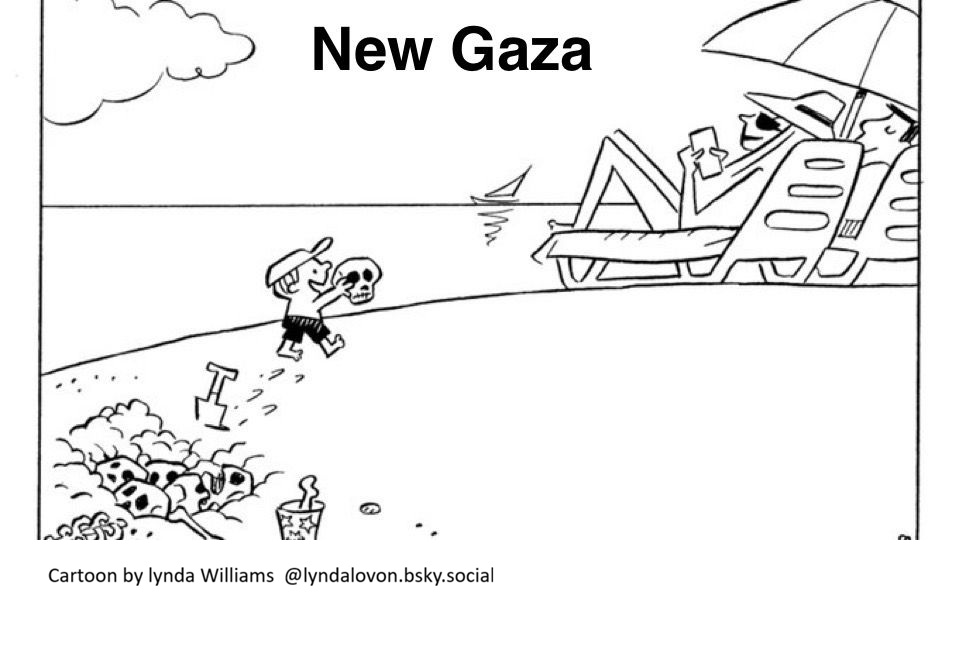
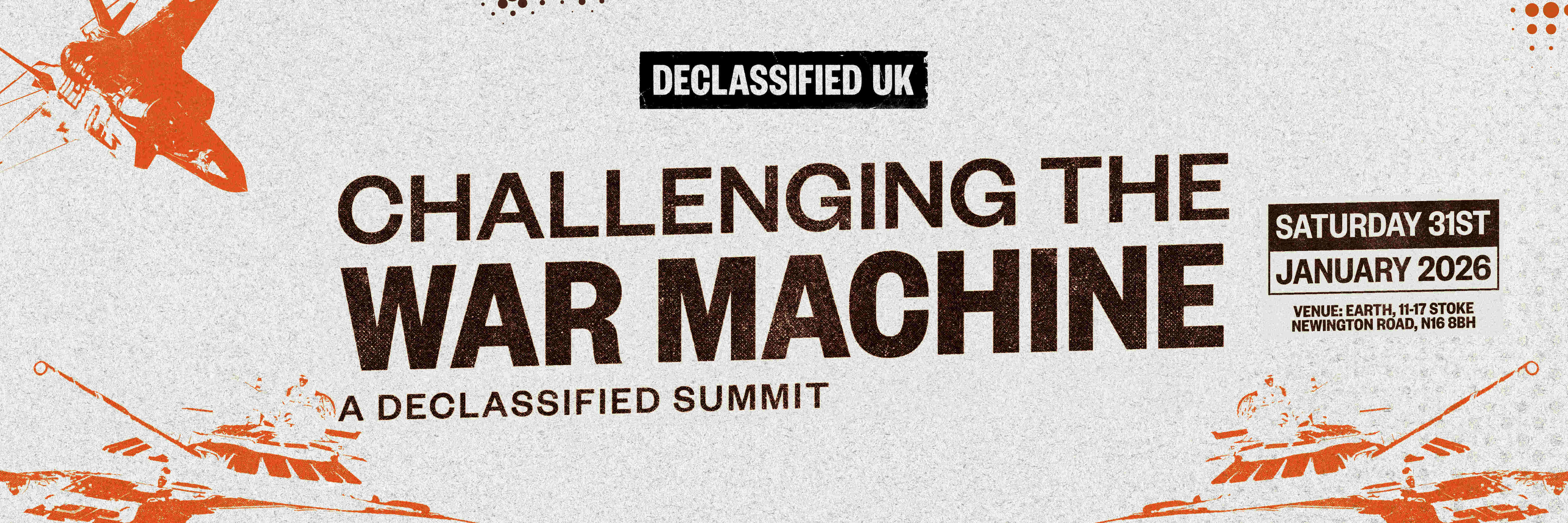
31st January – Challenging the War Machine – a DECLASSIFIED UK SUMMIT



Website of the Week
Now until to February 10, 2026 Radioactive waste storage in France: the debate is finally open! How to participate?
-
Archives
- January 2026 (306)
- December 2025 (358)
- November 2025 (359)
- October 2025 (376)
- September 2025 (258)
- August 2025 (319)
- July 2025 (230)
- June 2025 (348)
- May 2025 (261)
- April 2025 (305)
- March 2025 (319)
- February 2025 (234)
-
Categories
- 1
- 1 NUCLEAR ISSUES
- business and costs
- climate change
- culture and arts
- ENERGY
- environment
- health
- history
- indigenous issues
- Legal
- marketing of nuclear
- media
- opposition to nuclear
- PERSONAL STORIES
- politics
- politics international
- Religion and ethics
- safety
- secrets,lies and civil liberties
- spinbuster
- technology
- Uranium
- wastes
- weapons and war
- Women
- 2 WORLD
- ACTION
- AFRICA
- Atrocities
- AUSTRALIA
- Christina's notes
- Christina's themes
- culture and arts
- Events
- Fuk 2022
- Fuk 2023
- Fukushima 2017
- Fukushima 2018
- fukushima 2019
- Fukushima 2020
- Fukushima 2021
- general
- global warming
- Humour (God we need it)
- Nuclear
- RARE EARTHS
- Reference
- resources – print
- Resources -audiovicual
- Weekly Newsletter
- World
- World Nuclear
- YouTube
-
RSS
Entries RSS
Comments RSS
 nuclear-news