Surging seas are coming for us all, warns UN chief

Katy Watson, 26 Aug 24
The United Nations Secretary-General António Guterres has said that big
polluters have a clear responsibility to cut emissions – or risk a
worldwide catastrophe.
“The Pacific is today the most vulnerable area of
the world,” he told the BBC at the Pacific Island Forum Leaders Meeting
in Tonga. “There is an enormous injustice in relation to the Pacific and
it’s the reason I am here.” “The small islands don’t contribute to
climate change but everything that happens because of climate change is
multiplied here.”
But eventually the “surging seas are coming for us
all,” he warned in a speech at the forum, as the UN releases two separate
reports on rising sea levels and how they threaten Pacific island nations.
The World Meteorological Organization’s State of the Climate in the South
West Pacific, external report says this region faces a triple whammy of an
accelerating rise in the sea level, a warming of the ocean and
acidification – a rise in the sea’s acidity because it’s absorbing
more and more carbon dioxide.
“The reason is clear: greenhouse gases –
overwhelmingly generated by burning fossil fuels – are cooking our
planet,” Mr Guterres said in a speech at the forum. “The sea is taking
the heat – literally.”
BBC 27th Aug 2024
Hokkaido more plugged in to renewable energy than rest of Japan
Hokkaido had over 40% of its electricity generated by renewable energy
sources in fiscal 2023, nearly twice the national average and already above
the maximum share that the central government is looking to achieve by
2030.
With use of renewables — especially wind power — expected to grow
further, the local government has set a goal of getting 60% of its
electricity from solar, on and offshore wind, biomass, hydropower,
geothermal and some nuclear energy by 2030.
For all of Japan, the average
goal is to have between 36% and 38% of electricity be from renewables by
then.
Japan Times 26th Aug 2024
https://www.japantimes.co.jp/news/2024/08/26/japan/society/hokkaido-renewable-energy/
Same cast, new script: What’s next in Iran’s nuclear saga?
Niloufar Goudarzi, Monday, 08/26/2024
Abbas Araghchi, the newly appointed Iranian Foreign Minister, has declared
that the revival of the 2015 JCPOA nuclear deal with the six major world
powers is “untenable in its current form.”
In a Friday interview, Araghchi
stated that rather than merely reviving the deal, “the agreement needs to
be reopened” to allow for essential amendments. However, he clarified on
Saturday that this does not imply the deal’s “death.”
However, Iranian
experts permitted to speak in Tehran’s media offer differing solutions. One
expert advocates for comprehensive negotiations between Iran and the United
States to resolve all outstanding issues, while another suggests that the
West should accept the reality of Iran’s uranium enrichment and focus on
securing an agreement that prevents the development of nuclear weapons.
Iran International 26th Aug 2024
Sellafield Ltd told to improve after hazardous substance breaches
Sellafield Ltd has been handed two improvement notices after hazardous
substance control breaches. The Office for Nuclear Regulation has served
the notices after breaches of The Control of Substances Hazardous to Health
Regulations 2002.
Enforcement action was taken after Sellafield Ltd failed
to manage the risks of working with nickel nitrate and to prevent or
adequately control exposure of workers to this hazardous substance in one
of its effluent facilities. These shortfalls did not compromise either
nuclear or radiological safety. Used in the treatment of effluent, nickel
nitrate is not radioactive, but is a hazardous substance and could cause
harm to the health of a worker exposed to it.
To mitigate these risks,
operations involving the chemical should be conducted in a glovebox to
protect workers from any harmful health effects. In one facility on site,
contamination was found outside the glovebox area, which resulted in
workers potentially being exposed to the chemical. A poorly designed and
maintained glovebox appeared to have contributed to the contamination.
Cumbria Crack 27th Aug 2024
Rees-Mogg told Truss to plug nuclear submarine into the grid
“It is genuinely amazing how much worse the mercifully brief Truss premiership was than we’d even imagined at the time.”
by Jack Peat, 2024-08-27
Sir Jacob Rees-Mogg suggested plugging a nuclear submarine into the grid
in order to “show it’s safe”, extracts from a new book suggest. Sir
Anthony Seldon is set to release his latest political biography, ‘Truss
at 10: How Not to be a Prime Minister’ on 29th August, covering the
turbulent 49 days that Truss was in the top seat.
The book is expected to
contain some bombshell revelations about her time in charge, including
insight into how she proposed to deal with the fallout from her disastrous
mini-budget, which sent financial markets into a death spiral. It also
claims that Sir Jacob Rees-Mogg tried to persuade Truss to make him
chancellor instead of Kwasi Kwarteng, and that he urged her to abolish
inheritance tax, replace all tax rates with a 20p flat rate, and organise a
stunt to promote nuclear power.
Seldon writes that the then cabinet
minister told Truss: “We should get a nuclear submarine to dock at
Liverpool and plug it into the grid. That would show it is safe.” Sir
Anthony says cabinet secretary Simon Case dismissed the idea as a
“non-starter”, adding that “the subs are needed in operations”.
London Economic 27th Aug 2024
Democratic Party platform a catastrophe for world peace

https://heartlandprogressive.blogspot.com/—Walt Zlotow, 26 Aug 24,
Last Monday the Democratic National Committee (DNC) adopted likely the worst foreign policy platform in US history.
It voted “ironclad” support for Israel’s genocidal ethnic cleansing of Gaza. Nothing new here as America has long been supplying tens of billions in genocide weapons for Israel to ‘finish the job’. The Democratic platform’s promise of a “commitment to Israel’s qualitative military edge” ensures that hundreds of thousands of Palestinians will die and likely no Palestinian will be left in Gaza unless the US ends its conveyor belt of genocide weapons.
The platform further boasts about the US bombing campaign against Yemen for tying up Red Sea shipping in support of Palestine. Alas, the platform mischaracterized the multibillion-dollar campaign as a success when it has utterly failed to reopen the Red Sea to worldwide shipping. And until America stops supplying Israel the genocide weapons, it never will.
Another false achievement the platform touts is America’s proxy war against Russia in Ukraine which has backfired spectacularly, elevating the former while deeply degrading the latter.
One more imagined platform achievement for good measure: America’s massive multi billion dollar buildup in the Asia Pacific to defeat China, “America’s most consequential strategic competitor.”
The world will be damn fortunate if the 2024 Democratic Platform doesn’t serve as a blueprint for America blowing up the Middle East, blowing up Europe, blowing up the Asia Pacific.
A party platform on foreign affairs should build a sturdy foundation to promote world peace. The 2024 Democratic platform on foreign affairs ensures more instability, more spending of precious treasure on weapons of death, more war; possibly even nuclear winter. That represents a party platform servicing a gallows for peoplekind.
Australia offers U.S. a vast new military launchpad in China conflict

Australia is expanding its northern military bases, with U.S. support, to counter China’s growing threat. Critics quip it’s become the “51st state.”
Washington Post, By Michael E. Miller, August 24, 2024
ROYAL AUSTRALIAN AIR FORCE BASE TINDAL, Australia — Deep in the outback, a flurry of construction by Australia and the United States is transforming this once quiet military installation into a potential launchpad in case of conflict with China.
Runways are being expanded and strengthened to accommodate the allies’ biggest airplanes, including American B-52 bombers. A pair of massive fuel depots is rising side by side to supply U.S. and Australian fighter jets. And two earth-covered bunkers have been built for U.S. munitions.
But the activity at RAAF Tindal, less than 2,000 miles from the emerging flash points of the South China Sea,isn’t unique. Across Australia, decades-old facilities — many built by the United States during World War II — are now being dusted off or upgraded amid growing fears of another global conflict.
“This isabout deterrence,” Australia’s defense minister, Richard Marles, said in an interview. “We’re working together to deter future conflict and to provide for the collective security of the region in which we live.”
The United States has ramped up defense ties with allies across the region, including with the Philippines and Japan, as it tries to fend off an increasingly assertive and aggressive China. Australia offers the United States a stable and friendly government, a small but capable military, and a vast expanse from which to stage or resupply military efforts.
U.S. Secretary of Defense Lloyd Austin, hailing the “the extraordinary strength of our unbreakable alliance with Australia,” said after a meeting with Marles earlier this month that deepercooperation — including base upgrades and more frequent rotational bomber deployments — would help build “greater peace, stability, and deterrence across the region.”
Australia has also joined the AUKUS agreement, under which the United States and Britain will provide it with nuclear-propelled submarines, some of the world’s most closely guarded technology.
These moves underscore a bigger shift, as Canberra has grown increasingly tight with Washington as they both grow wary of Beijing. Military cooperation has become so extensive that critics quip Australia is becoming the United States’ “51st state.”
Mihai Sora, a former Australian diplomat who is an analyst at the Lowy Institute, a Sydney think tank, has a different metaphor. Australia is “an unsinkable aircraft carrier right at the bottom of the critical maritime sea lanes.”
“As the stakes increase in the South China Sea, as the risk over conflict in Taiwan increases, northern Australia in particular becomes of increasing strategic value for the United States,” Sora said.
American representatives ona recent congressional delegation to Darwin,onAustralia’s northern coast, agreed.
“This provides a central base of operations from which to project power,” Rep. Michael McCaul (R-Tex.), chairman of the House Foreign Affairs Committee, said during the trip.
Some Australian experts, however, argue that the growing U.S. military footprint doesn’t deter conflict with China so much as ensure Australia will be involved.
“I have deep misgivings about the whole enterprise” of increased U.S. military activity in Australia, said Sam Roggeveen, a former Australian intelligence analyst who is also at the Lowy Institute. “It conflates America’s strategic objectives in Asia with ours, and it makes those bases a target.”
……………………………………….Australia has spent roughly $1 billion on upgrading the Tindal air force base. Built by U.S. Army engineers in 1942 to stage bombing raids on Japanese targets in Papua New Guinea and Indonesia, Tindal is now the site of dozens of construction projects. A key one is the new parking apron capable of accommodating four of Australia’s biggest planes: KC-30 tankers that can refuel fighter jets and allow for far more distant attacks.
But there are also plans for the United States to build its own parking apron here, big enough for six B-52 bombers capable of reaching mainland China.
“That is absolutely something China would pay attention to,” Roggeveen said.
Marles declined to comment on the increasing rotations mentioned by Austin but said the trajectory is “an increasing American force posture in Australia.” We see that as very much in Australia’s national interest,” he said. “People understand that we are living through challenging times, when the global rules-based order is under pressure.”………………………………………………………………..
Australia is also surveying three “bare bases” — skeleton facilities in remote parts of western Australia and Queensland — with an eye to upgrading them so heavier Australian and American airplanes can use them, said Brigadier Michael Say, who leads Australia’s Force Posture Initiative. He said it’s still being determined whether the United States will pay for some of the improvements. [WHAA-A-AT!]
In the Cocos Islands, tiny coral atolls in the Indian Ocean northwest of the Australian continent and just south of Indonesia, Canberra will soon begin upgrading the airstrip to accommodate heavier military aircraft, including the P-8A Poseidon, a “submarine hunter” that could monitor increased Chinese naval activity in the area. A U.S. Navy construction contract published in June listed the Cocos as a possible project location, but Say said it hasn’t yet been decided whether the United States will contribute.
Diversifying — or redistributing?
These “bare bases,” which stretch for 3,000 miles from east to west, fit a new U.S. strategy of dispersing forces to prevent China from delivering a knockout blow.
“If one location gets taken out, the U.S. can still project force, it can still replenish and resupply and reinforce its troops,” Sora said. “Australia is fundamental to that but is just one plank in America’s regional force posture.”
Roggeveen questioned, however, whether the United States is actually increasing its capabilities in the region or merely moving assets out of places like Guam that are more immediately threatened by China’s improving missile capability. Under AUKUS, the United States will begin rotating up to four nuclear-powered submarines through western Australia in 2027………………………………………
Some concerns linger in Washington over Australia’s commitment, however. During the visit to Darwin, McCaul and other representatives asked about the 99-year lease a Chinese company holds over the port surrounding the Australian naval base. Australian officials said two reviews had found there wasn’t a security concern, and that in the case of a conflict, the port could be nationalized.
“Australia relies on China for prosperity and on America for security,” Rep. Jimmy Panetta (D-Calif.) told The Post. “That’s the balance they are playing.” https://www.washingtonpost.com/world/2024/08/24/us-military-base-australia-china/—
—
The western way of war – Owning the narrative trumps reality
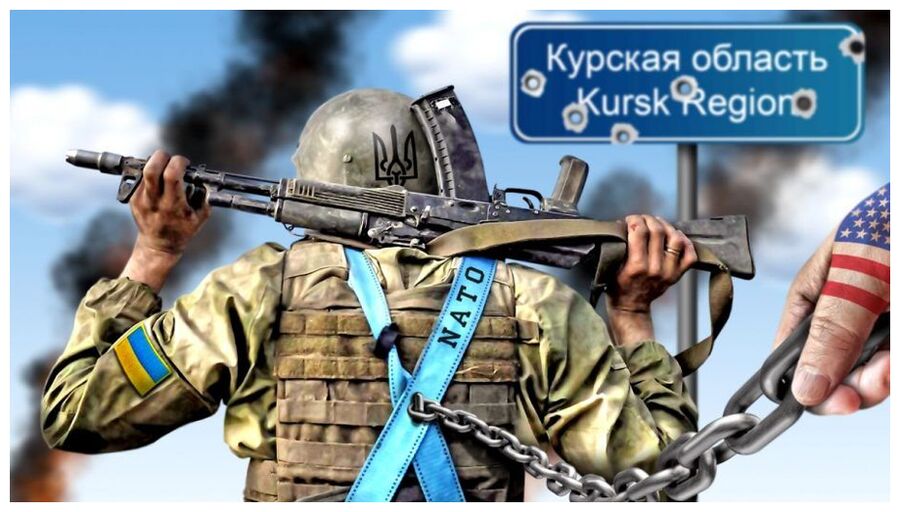
Take, for example, the NATO-orchestrated and equipped incursion into the symbolically significant Kursk Oblast. In terms of a ‘winning narrative’, its appeal to the West is obvious: Ukraine ‘takes the war to into Russia’.
Alastair Crooke, Strategic Culture Foundation, Mon, 26 Aug 2024
War propaganda and feint are as old as the hills. Nothing new. But what is new is that infowar is no longer the adjunct to wider war objectives – but has become an end in and of itself.
The West has come to view ‘owning’ the winning narrative – and presenting the Other’s as clunky, dissonant, and extremist – as being more important than facing facts-on-the ground. Owning the winning narrative is to win, in this view. Virtual ‘victory’ thus trumps ‘real’ reality.
Had the Ukrainian forces succeeded in capturing the Kursk Nuclear Power Station, they then would have had a significant bargaining chip, and might well have syphoned away Russian forces from the steadily collapsing Ukrainian ‘Line’ in Donbas.
And to top it off, (in infowar terms), the western media was prepped and aligned to show President Putin as “frozen” by the surprise incursion, and “wobbling” with anxiety that the Russian public would turn against him in their anger at the humiliation.
Bill Burns, head of CIA, opined that “Russia would offer no concessions on Ukraine, until Putin’s over-confidence was challenged, and Ukraine could show strength“. Other U.S. officials added that the Kursk incursion – in itself – would not bring Russia to the negotiating table; It would be necessary to build on the Kursk operation with other daring operations (to shake Moscow’s sang froid).
Of course, the overall aim was to show Russia as fragile and vulnerable, in line with the narrative that, at any moment Russia, could crack apart and scatter to the wind, in fragments. Leaving the West as winner, of course.
In fact, the Kursk incursion was a huge NATO gamble: It involved mortgaging Ukraine’s military reserves and armour, as chips on the roulette table, as a bet that an ephemeral success in Kursk would upend the strategic balance. The bet was lost, and the chips forfeit.
So, war becomes rather the setting for imposing ideological alignment across a wide global alliance and enforcing it via compliant media.
This objective enjoys a higher priority than, say, ensuring a manufacturing capacity sufficient to sustain military objectives. Crafting an imagined ‘reality’ has taken precedence over shaping the ground reality.
The point here is that this approach – being a function of whole of society alignment (both at home and abroad) – creates entrapments into false realities, false expectations, from which an exit (when such becomes necessary), turns near impossible, precisely because imposed alignment has ossified public sentiment. The possibility for a State to change course as events unfold becomes curtailed or lost, and the accurate reading of facts on the ground veers toward the politically correct and away from reality.
The cumulative effect of ‘a winning virtual narrative’ holds the risk nonetheless, of sliding incrementally toward inadvertent ‘real war’.
Take, for example, the NATO-orchestrated and equipped incursion into the symbolically significant Kursk Oblast. In terms of a ‘winning narrative’, its appeal to the West is obvious: Ukraine ‘takes the war to into Russia’.
Plainly put, this Kursk affair exemplifies the West’s problem with ‘winning narratives’: Their inherent flaw is that they are grounded in emotivism and eschew argumentation. Inevitably, they are simplistic. They are simply intended to fuel a ‘whole of society’ common alignment. Which is to say that across MSM; business, federal agencies, NGOs and the security sector, all should adhere to opposing all ‘extremisms’ threatening ‘our democracy’.
This aim, of itself, dictates that the narrative be undemanding and relatively uncontentious: ‘Our Democracy, Our Values and Our Consensus’. The Democratic National Convention, for example, embraces ‘Joy’ (repeated endlessly), ‘moving Forward’ and ‘opposing weirdness’ as key statements. They are banal, however, these memes are given their energy and momentum, not by content so much, as by the deliberate Hollywood setting lending them razzamatazz and glamour.
It is not hard to see how this one-dimensional zeitgeist may have contributed to the U.S. and its allies’ misreading the impact of today’s Kursk ‘daring adventure’ on ordinary Russians.
‘Kursk’ has history. In 1943, Germany invaded Russia in Kursk to divert from its own losses, with Germany ultimately defeated at the Battle of Kursk. The return of German military equipment to the environs of Kursk must have left many gaping; the current battlefield around the town of Sudzha is precisely the spot where, in 1943, the Soviet 38th and 40th armies coiled for a counteroffensive against the German 4th Army.
Over the centuries, Russia has been variously attacked on its vulnerable flank from the West. And more recently by Napoleon and Hitler. Unsurprisingly, Russians are acutely sensitive to this bloody history. Did Bill Burns et al think this through? Did they imagine that NATO invading Russia itself would make Putin feel ‘challenged’, and that with one further shove, he would fold, and agree to a ‘frozen’ outcome in Ukraine – with the latter entering NATO? Maybe they did.
Ultimately the message that western services sent was that the West (NATO) is coming for Russia. This is the meaning of deliberately choosing Kursk. Reading the runes of Bill Burns message says prepare for war with NATO.
Just to be clear, this genre of ‘winning narrative’ surrounding Kursk is neither deceit nor feint. The Minsk Accords were examples of deceit, but they were deceits grounded in rational strategy (i.e. they were historically normal). The Minsk deceits were intended to buy the West time to further Ukraine’s militarisation – before attacking the Donbas. The deceit worked, but only at the price of a rupture of trust between Russia and the West. The Minsk deceits however, also accelerated an end to the 200-year era of the westification of Russia.
Kursk rather, is a different ‘fish’. It is grounded in the notions of western exceptionalism. The West perceives itself as tacking to ‘the right side of History’. ‘Winning narratives’ essentially assert – in secular format – the inevitability of the western eschatological Mission for global redemption and convergence. In this new narrative context, facts-on-the-ground become mere irritants, and not realities that must be taken into account.
This their Achilles’ Heel.
The DNC convention in Chicago however, underscored a further concern:………………………………………………………………….
The Kursk ploy no doubt seemed clever and audacious to London and Washington. Yet with what result? It achieved neither objective of taking Kursk NPP, nor of syphoning Russian troops from the Contact Line. The Ukrainian presence in the Kursk Oblast will be eliminated.
What it did do, however, is put an end to all prospects of an eventual negotiated settlement in Ukraine. Distrust of the U.S. in Russia is now absolute. It has made Moscow more determined to prosecute the special operation to conclusion. German equipment visible in Kursk has raised old ghosts, and consolidated awareness of the hostile western intentions toward Russia. ‘Never again’ is the unspoken riposte. https://www.sott.net/article/494279-The-western-way-of-war-Owning-the-narrative-trumps-reality
North Korea condemns new US nuclear strategic plan report
VOA News, Seoul, South Korea26 Aug 24
North Korea vowed Saturday to advance its nuclear capabilities, reacting to a report that the United States had revised its own nuclear strategic plan.
The country will “bolster up its strategic strength in every way to control and eliminate all sorts of security challenges that may result from Washington’s revised plan,” the official Korean Central News Agency (KCNA) reported.
The New York Times reported this week that a U.S. plan approved by President Joe Biden in March was to prepare for possible coordinated nuclear confrontations with Russia, China and North Korea.
The highly classified plan for the first time reorients Washington’s deterrent strategy to focus on China’s rapid expansion in its nuclear arsenal, the Times said.
KCNA said North Korea’s foreign ministry “expresses serious concern over and bitterly denounces and rejects the behavior of the U.S.”
It added North Korea vowed to push forward the building of nuclear force sufficient and reliable enough to firmly defend its sovereignty.
Pyongyang and Moscow have been allies since North Korea’s founding after World War II and have drawn even closer since Russia’s 2022 invasion of Ukraine.
The United States and Seoul have accused North Korea of providing ammunition and missiles to Russia for its war in Ukraine.
Pyongyang, which has declared itself an “irreversible” nuclear weapons power, has described allegations of supplying weapons to Russia as “absurd.”…………………………………… more https://www.voanews.com/a/north-korea-condemns-new-us-nuclear-strategic-plan-report/7755256.html
Ukraine doubles down on Russian reactors in nuclear power push
Politico, August 27, 2024, By Gabriel Gavin
Ukraine will push forward with controversial plans to spend hundreds of millions of dollars on aging Russian-made nuclear reactors despite growing opposition from lawmakers, the country’s energy minister said, amid warnings of a major power crisis this winter.
German Galushchenko told POLITICO that the government still intends to pursue the expansion of the Khmelnytskyi nuclear power station in western Ukraine, buying two VVER-1000 reactors currently in storage in Bulgaria. The proposal has drawn criticism from the ruling party’s own MPs, who say there are quicker ways to help prop up the electricity grid, which has been hit hard by Russian bombing…………………..
Last week, Ukrainian MPs told POLITICO that the government had been forced to acknowledge it did not have sufficient support in the parliament to pass a draft law legislating for the purchase of the reactors.
According to Andrii Zhupanyn, a lawmaker from President Volodymyr Zelenskyy’s Servant of the People Party, such defeats are “extremely rare.”
MPs questioned whether the mothballed reactors, bought by Bulgaria more than a decade ago, would be able to be quickly brought into service, and whether the funds could be better spent on renewable power and other sources of electricity. The costs, they said, would likely balloon and open the door to corruption…………………………………………………………………………. https://www.politico.eu/article/ukraine-russia-reactor-khmelnytskyi-nuclear-power-station/
NYT Uncritically Reported Israel’s Version of Golan Bombing

Despite multiple eyewitnesses describing an Israeli Iron Dome interceptor missile falling on the field during the time of the Majdal Shams strike (Cradle, 7/28/24), the New York Times insisted on spotlighting Israeli and US claims in its headlines, rather than genuinely assessing the facts on the ground.
FAIR, Bryce Greene and Lara-Nour Walton, 26 Aug 24
As the US-backed genocide in Gaza continues, US media assist in Israeli Prime Minister Benjamin Netanyahu’s plan to widen the war, parroting the words of the aggressor. A consequential example of US press support for escalation was Western media’s coverage of the July 27 strike that killed 12 Druze children on a soccer field near the town of Majdal Shams in the Israeli-occupied Syrian Golan Heights.
Israel and the US immediately blamed the Iran-backed Lebanese organization Hezbollah for the strike—citing Israeli intelligence reports of an Iranian Falaq-1 missile being found at the soccer field (BBC, 7/28/24).
But, in a move that Hezbollah expert Amal Saad called “uncharacteristic” (Drop Site, 7/30/24), the group adamantly denied responsibility for the attack. Saad, a lecturer in politics at Cardiff University, noted that targeting the Syrian Golan Heights—where many inhabitants are hostile towards Israel—would be “illogical” and “provocative” for Hezbollah. Further, if the organization had accidentally committed an attack, Saad pointed to a precedent of the group issuing a public apology in a case of misfire, with the organization’s leader, Hassan Nasrullah, visiting families of victims.
Despite multiple eyewitnesses describing an Israeli Iron Dome interceptor missile falling on the field during the time of the Majdal Shams strike (Cradle, 7/28/24), the New York Times insisted on spotlighting Israeli and US claims in its headlines, rather than genuinely assessing the facts on the ground.
On July 28, the Times published “Fears of Escalation After Rocket From Lebanon Hits Soccer Field,” pinning the blame squarely on Lebanon’s Hezbollah. The next day, reporting on the potential escalations, the Times headline (7/29/24) described the strike as a “Deadly Rocket Attack Tied to Hezbollah.”
While the July 29 subhead acknowledged that Hezbollah denied responsibility, the assertion in the headline undermined any reference to alternative explanations. Attribution to Hezbollah was then repeated without qualification in the first paragraph of the story.
Rebroadcasting government talking points not only does a disservice to newsreaders as Israel has a long history of misleading the public, but it also serves Netanyahu’s goals of justifying an escalation against Hezbollah. Predictably, the New York Times did not contextualize accusations of Hezbollah responsibility with information about Israel’s current objectives for wider war. This continues a long trend of US media outlets obscuring and distorting reality in order to downplay Israel’s aggressive regional ambitions (FAIR.org, 8/22/23).
Israel an unreliable source
The first problem is that the New York Times accepts narratives from Israeli military and government officials at face value. From peddling evidence-free claims about Palestinian use of human shields during Operation Cast Lead in 2009 (Amnesty International, 2009; Human Rights Watch, 8/13/09), to dodging responsibility for its assassination of Palestinian journalist Shireen Abu Akleh in 2022 (Al Jazeera, 5/22/22), to consistently attempting to conceal its use of illegal white phosphorus munitions across the Middle East (Haaretz, 10/22/06; Human Rights Watch, 3/25/09; Guardian, 10/13/23), the Israeli military has been known to circulate disinformation to the international public for decades. Neither in headlines nor in the text of its pieces does the Times acknowledge this well-established history.
The current assault on Gaza has made the central role of lies in Israel’s public relations arsenal clearer than ever. As early as October 17, there was controversy over the origin of a rocket strike on the Al-Ahli Arab hospital that killed hundreds of Palestinians (FAIR.org, 11/3/23). In the media confusion, Israel released audio it said captured two Hamas militants discussing Palestinian Islamic Jihad responsibility for the strike. However, an analysis by Britain’s Channel 4 news (10/19/23) found that the audio was the result of two separate channels being edited together. In other words, Israel engineered a phony audio clip to substantiate the notion that it had not committed a war crime……………………………………………………………………………………………………………………………………………………………………………………..
It is not possible that the writers and the editors at the Times—the supposed newspaper of record—are ignorant of this seemingly unending series of deceptions. The decision to uncritically accept the word of the IDF regarding the Golan Heights strike demonstrates a deliberate editorial decision to knowingly advance the deceitful public relations goals of a genocidal state.
Justifying a wider war
In light of Israel’s past lies, serious journalism ought to refrain from regurgitating Israeli claims without significant context or qualification. This is especially true when doing so would advance goals as disastrous as Netanyahu’s current aims.
In the case of the Majdal Shams strike, media proliferation of Israeli propaganda manufactures consent for escalating the war on the northern border—something Israel has long stated as its goal, and something American officials have long been concerned about…………………………………………………………………………………………………..
On top of neglecting to acknowledge Israel’s flimsy credibility in their Majdal Shams analysis, Times reporters failed to address this readily available information about Israeli military objectives. By ignoring Israel’s strategic aims, they are ensuring the reader doesn’t encounter further reasons to question Israel’s account about the strike.
Who fired the rocket?
When reporting on Israel’s “reprisal” assaults on Lebanon following the strike on the soccer field, the New York Times (7/28/24) again asserted Israeli claims as fact, saying in the first paragraph that “a rocket from Lebanon on Saturday killed at least 12 children and teenagers in an Israeli-controlled town,” which “prompted Israel to retaliate early Sunday with strikes across Lebanon.”
Was Lebanon—and implicitly Hezbollah—the source of the explosion that killed the 12 children? The Times does not care to examine this question, which warrants exploration. which warrants exploration. Israel’s military chief of staff declared that the damage was done with an Iranian-made Falaq-1 rocket fired by Hezbollah, a claim that was uncritically repeated as fact by the New York Times (7/30/24), despite the lack of independent corroboration. While there has been fighting in the area, and Hezbollah acknowledged that they fired Falaq-1 rockets at the nearby IDF barracks, there is significant reason to doubt that one of these rockets struck the soccer field.
The Falaq-1 was described by Haaretz (7/28/24) as a munition that targets bunkers. But, images from the aftermath of the attack show that the damage to physical structures was far from bunker-busting. In an interview with Jeremy Scahill (Drop Site, 7/30/24), the Hezbollah expert Saad cited military specialists who told her that “if [Hezbollah] had used the Falaq-1, we would have seen a much larger crater…. It would be much, much bigger and there would be much more destruction.”
As discussed above, Israel, well-known for planting or fabricating evidence for propagandistic ends, released images of rocket fragments that it alleged were found at the impact site, though the Associated Press (7/30/24) was unable to verify their authenticity.
A substantial case can be made that the projectile came from the IDF. In the immediate aftermath of the attacks, multiple eyewitnesses told Arab news outlets the projectile was a misfired Iron Dome missile (Cradle, 7/28/24; Drop Site, 7/30/24). The New York Times omitted this from its coverage of this event.
Contrary to the mythos behind the high-tech defense system, there have already been several cases of Iron Dome missiles falling on populated areas within Israel since October 7 (Al Jazeera, 6/11/23; Jerusalem Post, 12/2/23, 7/25/24; Times of Israel, 5/4/23, 8/9/24) with many such instances resulting in civilian injuries and deaths. There was even a report of an Iron Dome malfunction near Majdal Shams, months before the recent July strike.
Bolstering the case for an Iron Dome malfunction, OSINT researcher Michale Kobs noted that the sound profile of the projectile suggested that its speed was constant until it hit the ground. Hezbollah’s projectiles constantly accelerate as they fall on their targets, since they are driven by gravity, whereas Iron Dome missiles are propelled throughout their entire flight.
For their part, the Druze people in the Golan Heights—an Arabic-speaking religious community which has largely declined offers of Israeli citizenship—repudiated Israel’s displays of sympathy for their slain children, rejecting the use of their suffering to advance Israel’s plans for a broader war (Democracy Now!, 7/30/24). Locals even protested a visit from Netanyahu, chanting “Killer! Killer!” and demanding he leave the area (New Arab, 7/29/24).
In the Times reporting on the strike, Lebanese and Syrian denials of Hezbollah’s responsibility for the strikes were acknowledged and reported, but portrayed as predictable denials that did nothing to alter the narrative. By omitting the evidence pointing to Israeli responsibility for the strikes, the New York Times assists Israel in yet another propaganda campaign to mislead the public in order to justify further regional strife and bloodshed. https://fair.org/home/nyt-uncritically-reported-israels-version-of-golan-bombing/
The Israel Lobby’s Demise & The Future of Gaza (w/ Ilan Pappé)
August 26, 2024 By Chris Hedges / The Chris Hedges YouTube Channel
Molten salt reactors were trouble in the 1960s—and they remain trouble today

Many molten salt reactor developers and proponents seem to have decided that the Molten Salt Reactor Experiment experience was so successful that all that remains is for it to be scaled up and deployed across the world. But is this really the case? A careful look suggests otherwise.
A few years after the Molten Salt Reactor Experiment was shut down, the Atomic Energy Commission terminated the entire molten salt reactor program, although it continued to fund the molten salt breeder reactor program until the end of fiscal year 1976.
Bulletin, By M.V. Ramana | June 20, 2022
Molten salt nuclear reactors are all the rage among some nuclear power enthusiasts. They promise designs that will soon lower emissions from shipping, be cheaper to run and consume nuclear waste, and be transportable in shipping containers. The Canadian government has provided two companies, Terrestrial Energy and Moltex, with tens of millions of dollars in funding. Indonesia’s Ministry of Defense has sponsored a study of thorium-based molten salt reactors. The International Atomic Energy Agency organized a webinar calling molten salt reactors “A game changer in the nuclear industry.” Unsurprisingly, China has plans to build one.
Unlike other nuclear reactor designs that can claim multiple roots, the technology underlying molten salt reactors has a fairly clear origin: the Oak Ridge National Laboratory in Tennessee. All molten salt reactors are based, in one way or another, on the Molten Salt Reactor Experiment that operated at Oak Ridge from 1965 to 1969. That experimental reactor, in turn, was based on another experimental reactor, the Aircraft Reactor Experiment, that had operated a decade earlier at the same facility.
Among developers, the Molten Salt Reactor Experiment has a legendary status. For example, in 2015, an official from Terrapower, the nuclear venture funded in part by Bill Gates, noted that his company was “excited to celebrate and build upon” the experiment by designing a molten chloride fast reactor. His accompanying slide show reinforced the message with pictures of the Molten Salt Reactor Experiment assembly, the red hot heat exchanger, and Alvin Weinberg, the leader of Oak Ridge at that time, noting that the experiment had operated for 6,000 hours. Also in 2015, Terrestrial Energy’s David LeBlanc made “a kind of pilgrimage to Oak Ridge” to celebrate the 50th anniversary of the Molten Salt Reactor Experiment becoming critical.
Many molten salt reactor developers and proponents seem to have decided that the Molten Salt Reactor Experiment experience was so successful that all that remains is for it to be scaled up and deployed across the world. But is this really the case? A careful look suggests otherwise.
Molten salt reactors’ early history. Molten salt reactors go back to the US Air Force’s failed effort to build a nuclear-powered, long-range bomber aircraft. The Air Force spent more than $1 billion (over $7 billion in today’s dollars) between 1946 and 1961 on its Aircraft Nuclear Propulsion program. President John F. Kennedy, seeing how little had been achieved, told Congress on March 28, 1961 that the possibility of success in the foreseeable future was “still very remote” and recommended terminating the program.
As part of this effort, the Air Force made Oak Ridge National Laboratory responsible for building the Aircraft Reactor Experiment as part of its effort to fly a bomber on nuclear power. The 2.5 megawatt reactor operated for a mere nine days in November 1954. Some Oak Ridge officials considered running the reactor longer, but others grew concerned about overheating of one of the reactor components. That concern was legitimate; five days later, this component failed and “released radioactive gas into the reactor compartment.” But Oak Ridge National Lab officials were undeterred. For them, the experience showed “the feasibility of molten-salt fuel” and they “persuaded the Atomic Energy Commission to fund a study of molten-salt power reactors.” In 1958, the commission did just that, and thus began the Molten Salt Reactor Experiment.
To understand the interest in molten salt reactors, start by adopting a 1950s mindset. At the time, nuclear power was expected to expand rapidly, and some energy planners were worried that there would be insufficient uranium to fuel all the reactors to be built over upcoming decades. Alvin Weinberg, the head of Oak Ridge, expressed this eloquently when he prophesized that humanity would need to “burn the rocks” in what are called breeder reactors in order to live a “passably abundant life.” While the dominant types of reactors around the world (light water reactors and heavy water reactors) use only a small fraction of the uranium and thorium found in the Earth’s crust, breeder reactors can exploit a much larger fraction of these minerals.
The concern among nuclear power advocates about running out of uranium was also at the heart of another major nuclear development during this period: the liquid metal (sodium) cooled fast breeder reactor. These reactors were an effort to tap the energy present in the uranium-238 isotope that is not used in standard light and heavy water reactors by converting it into plutonium. Glenn Seaborg, who discovered the element and rose to become Chairman of the US Atomic Energy Commission from 1961 to 1971, predicted in 1970 that, by the year 2000, plutonium “can be expected to be a predominant energy source in our lives.” By contrast, the molten salt reactors were mostly intended as a pathway to use thorium, which was more plentiful than uranium, by converting it into uranium-233.
In retrospect, these expectations proved mistaken in three ways. First, energy demand has risen much more slowly, both in the United States and globally, than predicted. For example, in 1959, Weinberg assumed that the global population would stabilize at 7 billion and that it would need at least 1.9 billion, billion BTU per year. In comparison, in 2020, the world used a little over a quarter of this level of energy for nearly 8 billion people.
Second, nuclear energy proved much more expensive than envisioned in the heady “too cheap to meter” era. As nuclear power’s poor economics became apparent, reactor construction declined dramatically and has never achieved anywhere near the levels seen in the 1970s and 1980s………………………………………………………
Third, uranium proved to be more ubiquitous than anticipated, and global uranium resource estimates have continuously increased. ………………………………………..
…..the Molten Salt Reactor Experiment, Oak Ridge’s proposal for the next step in the molten salt reactor research process, was designed and constructed. As one of the Oak Ridge team leaders described it, “Design of the [Molten Salt Reactor Experiment] started in the summer of 1960, and construction started 18 months later, at the beginning of 1962. The reactor went critical in June 1965.”
In 1965, when the reactor started operating, it was fueled by a mixture of 150 kilograms of depleted uranium and 90 kilograms of weapons-grade, highly-enriched uranium (93 percent of uranium-235). After March 1968, the fuel was changed to one involving another weapons-usable material, uranium-233, which was derived from thorium. After this switch, the Molten Salt Reactor Experiment went critical in October 1968 and reached full power in January 1969. But at the end of that year, the experiment shut down. No more molten salt reactors have been built since.
The Molten Salt Reactor Experiment operation. Proponents of molten salt reactors have claimed for decades that the Molten Salt Reactor Experiment operated successfully. Indeed, they started making this claim even when it had barely started operating. In May 1966, for example, Paul Haubenreich, Oak Ridge National Laboratory associate director, cockily announced that the experiment “will live up to the name which we think goes with the initials M.S.R.E.—Mighty Smooth Running Experiment.” This, after listing many problems, including a basic one that was never resolved.
That basic problem was the reactor’s power level. The Molten Salt Reactor Experiment was designed to produce 10 megawatts (MW) of heat. The power level is given only in terms of heat production because its designers did not even try to generate electricity from the power produced in the reactor. Instead, the experiment just dissipated the heat produced to the surrounding air.
But this design power level was never reached. As Haubenreich described while pronouncing that the experiment was running “mighty smooth,” the operators “ran into some difficulties” and could only operate “at powers up to 5 MW.” …………………It turned out that the designers of the reactor had “miscalculated the heat transfer characteristics” of the system used for dissipating the heat produced into the atmosphere, and the reactor could not operate at its intended power level.
……………the reactor operated for just 13,172 hours over those four years, or only around 40 percent of the time……………….
During its operational lifetime, the Molten Salt Reactor Experiment was shut down 225 times. Of these 225 interruptions, only 58 were planned………………….
One persistent problem was with the electrical system, which experienced “eleven important failures.”…………………………………….. unexpected failures and shutdowns ended only in December 1969, when the Molten Salt Reactor Experiment was shut down.
The patchy experience of the experiment was by no means unique. Many other reactor designs have been plagued by unreliable operations and frequent shutdowns, that in many cases only became worse when scaled up. Consider, for example, sodium cooled fast breeder reactors. France, the country most reliant on nuclear power, tried to commercialize this technology after operating pilot-scale and demonstration reactors. This “commercial” version was the Superphénix, which started operating in 1986, experienced a series of accidents, and was shut down in 1997. During this period, it generated less than 8 percent of the electrical energy of what it would have generated running at full power round-the-clock. In the United States, the first and only commercial sodium cooled breeder reactor, Fermi-1, suffered a disastrous meltdown in 1966 as a result of a series of failures that had been dismissed as not credible by reactor engineers. Likewise, high-temperature, gas-cooled reactors have historically performed poorly.
The Molten Salt Reactor Experiment aftermath. For Oak Ridge officials and other molten salt reactor proponents, these problems with the Molten Salt Reactor Experiment were not worthy of significant concern. They moved forward with plans to build a larger molten salt breeder reactor. (Remember that the ultimate goal was to use thorium to breed nuclear fuel.) But the experiment did identify major hurdles in the path of building reliable molten salt reactors.
Here’s a key concern: Materials used to manufacture molten-salt-reactor components must maintain their integrity in highly radioactive and corrosive environments at elevated temperatures. The corrosion is a result of the reactor’s nature, which involves the use of a fuel consisting of uranium mixed with the hot salts for which the reactor is named. As anyone living near a seashore knows, chemically corrosive salt water eats most metallic objects.
To deal with this problem, Oak Ridge developed a new alloy known as IN0R-8 or Hastelloy-N in the late 1950s. While Hastelloy-N did not get significantly corroded—at least during the four years of intermittent operations—it had two significant problems. First, the material had trouble managing stresses. It became brittle, for example. Second the material developed cracks on surfaces exposed to the fuel salt. Both of these could lead to the component failing.
These problems remain relevant. Even today, no material can perform satisfactorily in the high-radiation, high-temperature, and corrosive environment inside a molten salt reactor. In 2018, scientists at the Idaho National Laboratory conducted an extensive review of different materials and, in the end, could only recommend that “a systematic development program be initiated.” In other words, fifty years after the molten salt reactor was shut down, technical experts still have questions about materials development for a new molten salt reactor design.
A few years after the Molten Salt Reactor Experiment was shut down, the Atomic Energy Commission terminated the entire molten salt reactor program, although it continued to fund the molten salt breeder reactor program until the end of fiscal year 1976…………………………………………………………………………………………………………………………
The Atomic Energy Commission, for its part, justified its decision in a devastating report that listed a number of problems with the large molten salt reactor that Oak Ridge scientists had conceptualized. The list included problems with materials, some of which have been earlier described; the challenge of controlling the radioactive tritium gas that is produced in molten salt reactors; the many large components, such as steam generators, that woud have to be developed from scratch (as researchers had no experience with such components for a molten salt reactor); the difficulties associated with molten-salt-reactor maintenance because radioactive fission products would be dispersed throughout the reactor; some safety disadvantages (though these are balanced by pointing out some of the safety advantages); and problems with graphite, which is used in molten-salt-reactor designs to slow down neutrons, because it swells when subjected to the nuclear reactor’s high radiation doses.
Other institutions too questioned the idea. A 1975 Office of Technology Assessment report listed the pros and cons of maintaining support for the molten salt breeder reactor program. An important set of arguments listed there proved prescient: “the [molten salt breeder reactor] may never work, its economics would be doubtful even if it did, and the chances of needing it are small.” As a result, in the years after the Molten Salt Reactor Experiment was shut down, many arguments were advanced to abandon the molten salt route, including not throwing good money after bad.
The Molten Salt Reactor Experiment’s long difficult tail.………………………………………………………. The distribution of the numbers of papers indicates the challenge of dealing with the waste resulting from a small molten salt reactor.
Dealing with radioactive salt wastes involves at least two separate concerns. The first, ongoing problem is that managing the radioactive salts that contain the uranium isotopes and the fission products is difficult. In the 1990s, researchers discovered that uranium had migrated and settled in other parts of the facility, leading to the possibility of an accidental criticality.
The second challenge is that of securely storing the uranium-233 from the Molten Salt Reactor Experiment. Although the uranium-233 used in the Molten Salt Reactor Experiment is but a small part of the larger US stockpile of the substance, it occurs in chemical forms that are difficult to manage. Further, urarnium-233 is usable in nuclear weapons, and any loss of this material might lead to security concerns.
In all, the costs incurred so far have run into the hundreds of millions of dollars—dozens of times the cost of constructing the reactor itself. …………………………………………………………………………………
Molten salt reactors are a bad idea. The Molten Salt Reactor Experiment’s history is riddled with extensive problems, both during its operational lifetime and the half century thereafter. These problems were not accidental but a result of the many material challenges faced by the reactor itself………………………………………………………………..
Should molten salt reactors ever be constructed, they are unlikely to operate reliably. And if they are deployed, they would likely result in various safety and security risks. And they would produce several different waste streams, all of which would require extensive processing and would face disposal related challenges. Investing in molten salt reactors is not worth the cost or the effort.
This article has benefited from research support from Maggie Chong, a materials engineering student at the University of British Columbia. une 2022
https://thebulletin.org/2022/06/molten-salt-reactors-were-trouble-in-the-1960s-and-they-remain-trouble-today/
The heroes who saved the world from Chernobyl Two.
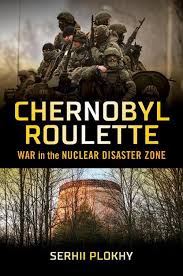
they were facing a life-or-death decision – stay or go. The Russians had told them they could leave – but what would happen if there was no one to monitor the radiation and ensure its safety?
the choices they made saved the world from another Chernobyl disaster.
Daily Mail, By Serhii Plokhy, 25 August 2024
Even though he had one of the most challenging jobs in the world as the man in charge of the night-shift at the Chernobyl nuclear power station, nothing fazed Valentyn Heiko. Three-and-a-half decades after the disastrous meltdown in 1986, round-the-clock monitoring of the site in Ukraine continued for deadly radioactive fallout from its defunct reactors and facilities.
On March 1, 2022, Heiko wished staff via loudspeaker ‘peace of the spirit’. It was a brave and apt message in the circumstances – and a defiant one. Because the corridors around the control rooms of the closed – but still lethally contaminated – nuclear compound were being patrolled by machine-gun toting, trigger-happy Russian soldiers.
Following Vladimir Putin’s invasion of Ukraine six days previously, they had burst their way in and taken over the plant.
Back in 1986, a massive explosion in one of Chernobyl’s reactors had blasted about 300 tons of radioactive graphite into the air, sparking a worldwide emergency.
With the collapse of the Soviet Union five years later, the area became part of an independent Ukraine, whose nuclear specialists have since been undertaking the monumental task of containing all possible contamination.
The danger was far from over. Indeed, just a year before, engineers had detected worrying signs that fission had restarted in one of the supposedly defunct reactors, threatening another accident.
After Putin’s decision to invade, the quickest route to the capital, Kyiv, was to go through the wasteland of the Chernobyl exclusion zone. One of the Russian leader’s excuses for invading was his claim that Ukraine was secretly building a nuclear bomb there and enriching irradiated materials to turn into weapons of mass destruction.
On February 24, 2022 – the first day of the invasion – a column of armoured vehicles broke through the security perimeter and hauled down the Ukrainian flag.
Inside the administrative building, soldiers of the Ukrainian National Guard unit took up positions, ready to fight. Two Russian officers, general Sergei Burakov and colonel Andrei Frolenkov, announced that they were assuming control of the plant.
Hopelessly outnumbered, the 170 Ukrainian guards put down their weapons and became prisoners of war, while the plant’s 50 engineers and operators and 80 firefighters found themselves under occupation.
Suddenly, they were facing a life-or-death decision – stay or go. The Russians had told them they could leave – but what would happen if there was no one to monitor the radiation and ensure its safety?
They knew they had to stay. So, for weeks, they worked at gunpoint with no change of clothing, medication or hygienic supplies.
In effect, these men and women were hostages, stuck on an endless shift, uncertain if they would ever see their loved ones or their homes again. But the choices they made saved the world from another Chernobyl disaster.
Their foreman, Heiko, had to cooperate with the Russians but was determined to do so on his own terms. He came up with a daring plan – he would use his technical know-how to frighten them.
Calmly, he introduced himself to his captors: ‘I am the shift supervisor and represent the state of Ukraine.’ After Heiko had confirmed the identity of his Russian ‘guests’, Burakov and Frolenkov declared that the Chernobyl plant was now behind Russian lines.
Though a captive, Heiko laid down his ground rules. He told them that no matter how powerful the Russian military, at the nuclear plant they were not in charge.
They didn’t understand how the plant worked and, as such, any interference would risk nuclear disaster – and all their lives.
As one observer noted: ‘He made it clear to the occupiers that either they would behave decently or be up s**t creek. That is why they did not touch any workers.’
They agreed his terms. Operational control would remain in the hands of the staff, who would be free to move around as necessary and without interference.
The Russian soldiers were allowed in the administration building but would stay away from the obsolete reactor and spent nuclear fuel facilities, and arms would be prohibited in operational areas.
The Russians accepted that they had captured a dangerous site and, to survive, they would have to follow Heiko’s recommendations.
He even bamboozled them into believing that three reactors were still operational when, in fact, the last one had shut in 2000.
As the days of occupation continued, Heiko turned the screws even more, particularly after Putin hinted at the use of nuclear weapons. He told his captors that if the Kremlin used nuclear weapons against Ukraine, he would sabotage the plant and unleash Chernobyl radiation to kill the Russians.
‘I promise you,’ he spelt out, ‘that you will slowly and certainly die here, together with me. I have enough knowledge and skill to ensure that you will remain here with us forever.’
Despite Heiko’s master manipulation, his fellow Ukrainian staff were totally unprepared for the situation they found themselves in. They lived and worked in appalling conditions, jammed into tiny spaces, four to a room
The work was unrelenting. Under normal circumstances, they were to take a 24-hour rest after a 12-hour shift, but now a new shift began immediately after the previous one. ‘We worked almost round the clock, resting for just a few hours,’ remembered engineer Liudmyla Kozak. ‘We were walking around like ghosts.’
Exhausted and homesick, they felt hunted as they were continuously under surveillance. Some succumbed to depression or panic, feeling ‘trapped, stressed and desperate for relief’ in the words of an article in the Wall Street Journal.
………………………………………..Troops started searching for those ‘nuclear bomb’ laboratories imagined by Putin. All the plant’s buildings were checked, with no result. Then, Russian officers considered opening up the mounds of earth erected over the sites where radioactive debris had been buried after the meltdown in 1986.
Valerii Semenov, a senior engineer, told them they were mad as exposing radioactive debris would put everyone in danger of contamination. Faced with the prospect of digging their own radioactive graves, the Russians desisted. Instead, they fortified their military position by digging trenches.
When Semenov discovered sandbags used to protect firing positions had been sourced from contaminated earth, he exploded: ‘You’re bringing in radioactive dirt from outside. Are you out of your mind?’ He also found trenches dug in some of the most contaminated areas – including one where, in 1986, radiation had discoloured the pine trees ginger brown.
The fact was that morale among the 1,000 Russian troops occupying the plant was very low. They drank heavily, with up to half of their rubbish consisting of empty bottles. Fights were frequent. So was looting as they combed the offices for alcohol.
Semenov recalled that many of the Russians were not prepared for a long war. They had expected it to be over within days.
What happened next was arguably the most heroic episode of the whole Chernobyl saga. It was increasingly obvious that staff at the plant had had enough. Even the Russian commanders agreed, realising the exhaustion and resentment of the Ukrainian personnel might lead to an accident that would jeopardise the lives of the occupiers.
They proposed a change of shift, allowing those on duty ever since the occupation to go home, to be replaced by a crew from the nearby town of Slavutych. But this depended on finding experienced staff prepared to risk their freedom – and perhaps their lives – by going into Russian captivity.
Amazingly, there was no lack of volunteers. Forty-six men and women came forward, with two senior men, Volodymyr Falshovnyk and Serhii Makliuk, offering to lead the new shift. Makliuk recalled: ‘We were worried because we were going into the unknown. But our anxiety was less about how we would work at the plant and more what would happen to the families we were leaving behind.’
It was a complicated process getting the original shift out and the new one in, not least because it had to be done in stages so there would always be some staff left to monitor the place. On the 26th day of what had begun as a 12-hour shift, 50 workers were on their way home – 16 engineers and mechanics stayed, including Semenov.
The two shifts met on the side of a river and the exchange took place. ‘We had just seconds to embrace and shed tears,’ recalled a woman from Heiko’s shift.
Heiko considered the volunteers true heroes. ‘They were going into the unknown,’ he said later. ‘No one knew how it would end or how long they would be there.’
Heiko and his crew had spent 600 hours on duty at the occupied nuclear power plant. It was anyone’s guess how long the replacement shift would be there………………………………………………………….
the Russians locked Falshovnyk in his office and presented him with a document.
It was titled ‘Act of Acceptance and Transfer of Protection of the Chernobyl Atomic Station’ and stated the troops of the Russian Guard had provided ‘reliable protection and defence’ of the Chernobyl nuclear station, which they were now transferring back to the Ukrainians. Men carrying automatic rifles demanded that he and Makliuk sign the document or they would be arrested.
They were being asked to confirm that the Russians had behaved well but, faced with the threat of arrest, they signed.
And then, the Russians were gone. A security camera captured an image of one soldier leaving with a Russian flag trailing behind him like the low-hanging tail of a defeated dog.
The next day, April 3, those inside the plant were astonished to hear a voice on a loudspeaker coming from beyond the perimeter. ‘Good morning,’ it said. ‘We are the armed forces of Ukraine. Please let us in.’
And then a Ukrainian armoured personnel carrier and two trucks rolled into Chernobyl.
It really was over.
The Chernobyl staff got to work cleaning up. The extent of the Russian troops’ damage and looting was astounding.
Missing were some 1,500 meters for checking radiation levels, 698 computers and 344 vehicles, amounting to a total value of $135million (£102million).
The only thing the retreating Russian soldiers left behind was an increased level of radiation – up more than 40 times, almost certainly the result of digging trenches in the highly contaminated Red Forest.
There were unverified reports from inside Russia that one soldier had died, 26 had been admitted to hospital and 73 sent for treatment after exposure to radiation in the Chernobyl zone.
The Ukrainians believed that one reason they departed in such a hurry was in panic that so many of them were falling sick.
The Russian troops may have left Chernobyl, but there was every chance that Chernobyl would never leave them. And the threat of nuclear disaster remains very real elsewhere in Ukraine.
Zaporizhia, a nuclear plant in southern Ukraine and the largest power facility in Europe, remains under Russian control.
And last Saturday, following a drone strike nearby, the UN’s nuclear watchdog warned that the safety situation at the plant was ‘deteriorating’.
At Chernobyl, the brave actions of the plant workers prevented nuclear disaster, but we cannot always count on individual heroism to produce such endings in the future.
Unless the world acts to protect nuclear reactors from attack during wartime, instead of being a solution to the problem of climate change, nuclear power will solidify its reputation as the destroyer of worlds.
Adapted from Chernobyl Roulette by Serhii Plokhy (Allen Lane, £25), out on September 3. © Serhii Plokhy 2024. To order a copy for £22.50 (offer valid to 06/09/24; UK P&P free on orders over £25) see tomailshop.co.uk/books or call 020 3176 2937
The Battle of Kursk probably won’t result in nuclear weapons use against Ukraine. But Russian escalation vis-à-vis NATO can’t be ruled out.
any nuclear use against Ukraine would be self-defeating for Russia.
involvement of the West turned Russia’s so-called “special military operation” (“SVO” in Russia) into a full-scale war. Consequently, nuclear signaling has been addressed to the West.
Russia’s central concern is the possible Western involvement in the war on the side of Ukraine, which can turn the tide at the front line. The most visible cause for such concern is the provision of modern Western arms to Ukraine, including long-range missiles capable of targeting deep into Russian territory.
Bulletin, By Nikolai N. Sokov | August 26, 2024
The successful Ukrainian offensive in the Russian Kursk oblast started in early August has once again triggered speculation about possible Russian nuclear use against Ukraine. The situation resembles the successful Ukrainian offensive in the late summer-fall of 2022 in the Kharkiv oblast, when many worried Russia would resort to battlefield nuclear use to stop advancing Ukrainian forces. On the face of it, there was reason to be concerned: Russian President Vladimir Putin did reference nuclear weapons in September 2022, and it became known more than a year later that the United States was “rigorously” preparing for that contingency.
A closer look reveals, however, that Putin’s 2022 reference to nuclear weapons sounded as an emotional impromptu remark made under stress, whereas the US assessment was reportedly based on an intercept of conversations among Russian generals rather than on tangible signs of preparation or data about discussions among policymakers. We now know that Moscow dealt with that situation in a different way: Partial mobilization helped beef up forces, which stopped the Ukrainian Kharkiv offensive.
Although the Kursk operation caught Russia by surprise once again, its military and civilian leadership are better prepared today to deal with surprise than in 2022.
One has reasons to be skeptical about the prospect of battlefield use of nuclear weapons. It was considered an acceptable option during the Cold War, especially its early years. Both the United States and the Soviet Union held large-scale exercises with live nuclear explosions in the 1950s, and both nuclear powers contemplated large-scale use of tactical nuclear weapons in Europe. Today, however, is different. The “nuclear taboo,” which began to take shape in the 1950s, has grown very strong.
Not that nuclear use is technically impossible. But the political and ethical implications make such a decision daunting—and unlikely. Battlefield nuclear use in Ukraine, for whatever reason, would make Russia a true pariah state in the international system, turning countries—partners and neutrals alike, all critical for breaking the tight sanctions regime, which has been established by the G7 economies and their partners—against Moscow. In other words, any nuclear use against Ukraine would be self-defeating for Russia.
Nuclear signals. Russian nuclear signaling has been persistent, going up and down throughout the war, with high points in the fall of 2022 and the spring of 2024, when Russian official rhetoric was the loudest. (Unofficial and semi-official rhetoric has never really stopped.) This signaling, however, has been exclusively and explicitly directed at the West—the United States and its allies. Even the very first statement of Putin announcing the “special military operation” contained a message to the West: “Do not interfere.”
This is hardly surprising: The war is conceptualized in Russia as a proxy war with NATO. Putin’s spokesman, Dmitry Peskov, has repeatedly said—most recently in March and June of this year—that involvement of the West turned Russia’s so-called “special military operation” (“SVO” in Russia) into a full-scale war. Consequently, nuclear signaling has been addressed to the West.
The Ukrainian operation in Kursk may carry certain risks, but these risks are different from what is commonly and hastily assumed as nuclear use against Ukraine.
Russia’s central concern is the possible Western involvement in the war on the side of Ukraine, which can turn the tide at the front line. The most visible cause for such concern is the provision of modern Western arms to Ukraine, including long-range missiles capable of targeting deep into Russian territory.
At a certain level, Western assistance may create serious, perhaps even insurmountable challenges for the Russian military. Each new step—including the provision of tanks, missile defense systems, tactical ballistic missile systems, and most recently F-16 fighter jets—triggers warnings about possible escalation. So far, Russia has coped with each new level of Ukraine’s military capability, but this may change in the future if Western assistance continues or even intensifies.
Perhaps more consequential for Russia, although less visible, is the provision of intelligence, which has helped Ukraine to select targets and significantly constrains Russia’s ability to clandestinely concentrate and move forces and supplies……………………………….
Russians often repeat that a nuclear state cannot be defeated. This is true only to an extent, but there is realization in the Kremlin and beyond that defeat in the ongoing war cannot be tactical. Not only it will end the political regime—which the Kremlin equates with sovereignty—but consequences will affect the entire country for decades. If Russia considers itself de facto at war with the United States and NATO and believes the West seeks its “strategic defeat,” then nuclear weapons legitimately enter the picture under the existing 2020 Decree on Nuclear Deterrence and the 2014 Military Doctrine. This is precisely the situation the United States has tried to avoid: ………………………………
Russian nuclear signals to the West can be divided into two categories.
The first is public statements, especially coming from the most authoritative source, Vladimir Putin, which have been relatively rare—namely, the “SVO” announcement and the September 2022 warning referenced above. ………………………. If someone’s actions will threaten our sovereignty and territorial integrity, we consider it allowable to use all means at our disposal.” Putin also declared that ndeclaredew threats may force Russia to change its nuclear doctrine, hinting that the nuclear threshold might be lowered.
The second category of nuclear signals is arguably more tangible: actions that change Russia’s nuclear posture and/or alert level. Such actions notably include nuclear sharing arrangements with Belarus, whose implementation began in the summer of 2022—after it became clear that war with Ukraine would be protracted, and Russia could not prevent the West from providing assistance to Ukraine—and was completed already in mid-2023. Other highly visible examples are exercises with tactical nuclear weapons, which have been held in three stages in May, June, and August of 2024………………….
Fuzzy red lines. Without doubt, publicly playing with the prospect of nuclear war is dangerous—in addition to be morally reprehensible—but one must admit that Moscow has been relatively restrained in its threats so far; it could certainly make more threats and make them more openly. So why has Russia shown such restraint as it conducts a full-fledged war?
……………………………………………………………………………………….The Russian leadership itself may not know what exactly constitutes a red line. So far, it seems to make such judgement after the fact, evaluating each new level of assistance to determine its impact on the course of the war. If and when such impact reaches a level that puts Russia on the brink of a “strategic defeat,” it may be classified as having crossed a red line…………………..
Evaluation of each new step takes time—from weeks to months. The absence of visible reaction may create a false sense of safety, potentially emboldening U.S. and Western officials. Then, if and when a Russian reaction takes place, it may catch Western allies by surprise and be perceived as unjustified and unprovoked, for the precise reason that the red line was unknown.
No doubt that Russia is very reluctant to launch an escalation that could result in nuclear use: The costs to Russia itself would be enormous—probably unbearable for the country and its leadership. ……………………………….
………the riskiest circumstances will happen after a red line has been crossed, not before. Each side will balance between caution and the perceived strategic need to act. Worse, a long sequence of moves that did not result in escalation may create a false sense of security and increase propensity for risk-taking on the part of Western military officials and political leaders.
…………………..The crossing of a red line in the war in Ukraine may not result in nuclear use. A more likely contingency is escalation starting with something relatively small, but visibly consequential………………………………………. The threat of nuclear use is expected to force the West to retreat, because its stakes in the conflict are believed to be lower than those of Russia in the war in Ukraine.
……………………………………………………………………..It can be predicted with reasonable confidence that Russia will not threaten, much less use, nuclear weapons against Ukraine. Escalation vis-à-vis NATO, however, is a different matter: That likelihood appears higher, but knowing in advance how high it is may be impossible.
Considering the risks outlined above, one obvious question is whether the West should continue and perhaps increase support of Ukraine. I believe that questions about the Kursk invasion and whether the West should continue aiding Ukraine are essentially unrelated. Regardless of which decision is made in regard to Western aid, the risks of that policy must be known and understood. Nothing good can come out of policy that is consciously blind to possible challenges. To the contrary, full information can enhance chances for success and lessen the likelihood of escalation. https://thebulletin.org/2024/08/the-battle-of-kursk-probably-wont-result-in-nuclear-weapons-use-against-ukraine-but-russian-escalation-vis-a-vis-nato-cant-be-ruled-out/?utm_source=Newsletter&utm_medium=Email&utm_campaign=MondayNewsletter08262024&utm_content=NuclearRisk_RussianEscalationVisAVis_08262024
1 This Month

petition to oppose the rapid increase of space-military industry threatening Jeju Island and the region.
[Petition by April 19th (KST)] Stop the joint military-Hanwha Systems-Jeju Provincial Government Sea Launch!

Chernobyl: The Lost Tapes – A good documentary on Chernobyl on SBS available On Demand for the next 3 weeks– https://www.sbs.com.au/ondemand/tv-program/chernobyl-the-lost-tapes/2352741955560

of the week–London Campaign for Nuclear Disarmament

Tell the Ukrainian Government to Drop Prosecution of Peace Activist Yurii Sheliazhenko
To see nuclear-related stories in greater depth and intensity – go to https://nuclearinformation.wordpress.com
-
Archives
- April 2026 (194)
- March 2026 (251)
- February 2026 (268)
- January 2026 (308)
- December 2025 (358)
- November 2025 (359)
- October 2025 (376)
- September 2025 (257)
- August 2025 (319)
- July 2025 (230)
- June 2025 (348)
- May 2025 (261)
-
Categories
- 1
- 1 NUCLEAR ISSUES
- business and costs
- climate change
- culture and arts
- ENERGY
- environment
- health
- history
- indigenous issues
- Legal
- marketing of nuclear
- media
- opposition to nuclear
- PERSONAL STORIES
- politics
- politics international
- Religion and ethics
- safety
- secrets,lies and civil liberties
- spinbuster
- technology
- Uranium
- wastes
- weapons and war
- Women
- 2 WORLD
- ACTION
- AFRICA
- Atrocities
- AUSTRALIA
- Christina's notes
- Christina's themes
- culture and arts
- Events
- Fuk 2022
- Fuk 2023
- Fukushima 2017
- Fukushima 2018
- fukushima 2019
- Fukushima 2020
- Fukushima 2021
- general
- global warming
- Humour (God we need it)
- Nuclear
- RARE EARTHS
- Reference
- resources – print
- Resources -audiovicual
- Weekly Newsletter
- World
- World Nuclear
- YouTube
-
RSS
Entries RSS
Comments RSS
 nuclear-news