Constellation Energy plans restart of Three Mile Island nuclear plant
Constellation Energy is in discussions with the US state of Pennsylvania
governor’s office and state legislators regarding funding for a potential
restart of a unit at the Three Mile Island power facility, Reuters has
reported. The ongoing talks have been described as “beyond preliminary”
by two sources.
The move indicates that Constellation is moving forward
with plans to bring back part of the nuclear generation site in southern
Pennsylvania, which was operational from 1974 until its closure in 2019.
The unit at Three Mile Island that may be restarted is distinct from the
facility’s unit 2, which suffered a partial meltdown in 1979 – the most
notorious nuclear accident in US history.
Power Technology 3rd July 2024 https://www.power-technology.com/news/constellation-three-mile-island-pennsylvania/
Fusion power could transform how we get our energy — and worsen problems it’s intended to solve
The Conversation Sophie Cogan, PhD Candidate, University of York July 6, 2024
Harnessing energy from nuclear fusion – the combining of nuclei, which lie within atoms – could be instrumental in the shift towards a decarbonised global energy system. As issues of climate change and energy security are becoming increasingly salient, the promise of an apparently “clean”, “abundant” and “safe” energy source, such as fusion, is ever more appealing.
In response, the fusion industry is growing rapidly and the trope that fusion is “30 years away and always will be” is beginning to lose credibility as the technology moves beyond its experimental stage.
But it’s too easy to generate hype around a seemingly ideal solution to societal challenges – and I would argue that the realisation of fusion energy may come into tension with the issues it proposes to solve.
Contextualising this hype and exploring areas where these tensions may arise is critical to ensuring the technology develops in an ethically sound way and can provide net societal benefit if it proves viable………………………………………..
benefits may mask deeper ethical questions around the development of the technology and some potentially detrimental impacts. Perhaps one of the clearest instances of such a tension arises over environmental sustainability. This applies particularly to the association with climate change mitigation and the reduction of greenhouse gas emissions.
Climate change is an issue that lends itself to the “techno-fix” approach – in other words, it can be tempting to avoid making important changes to our behaviour because we think we can depend on technology to fix everything. This is known as the “mitigation obstruction” argument.
Squaring greenhouse gas emissions with energy demand also raises questions of justice and equity. Energy demand is growing in certain regions, primarily the global south, that have contributed the least to the current climate crisis. Yet fusion programmes are overwhelmingly based in the global north. So if fusion proves viable, those with access to such a transformative technology are not necessarily those who will need it most.
Climate change is a global challenge, so any proposed solution must account for global impact. Efforts must be made to recognise the context of development and incorporate considerations of global inequity in the deployment of fusion if we are to meet the climate challenge.
Similar concerns can be found in the materials used for fusion energy. These include critical minerals, including lithium, tungsten and cobalt. Extraction and processing of these minerals emits greenhouse gases. In some cases, extraction operations are located on or near the lands of indigenous peoples. And the supply chains for these materials are embedded in geopolitical tensions, with alliances, collaboration, competition and the potential for monopolies forming.
Mercury, for example, is used in the processing of lithium for fusion reactors. Not only is the element environmentally damaging and toxic but depends largely on Chinese production……………………………….. https://theconversation.com/fusion-power-could-transform-how-we-get-our-energy-and-worsen-problems-its-intended-to-solve-233948
Australia further in the grip of the USA, with the Amazon data spy hub – paid for by Aussie tax-payers!
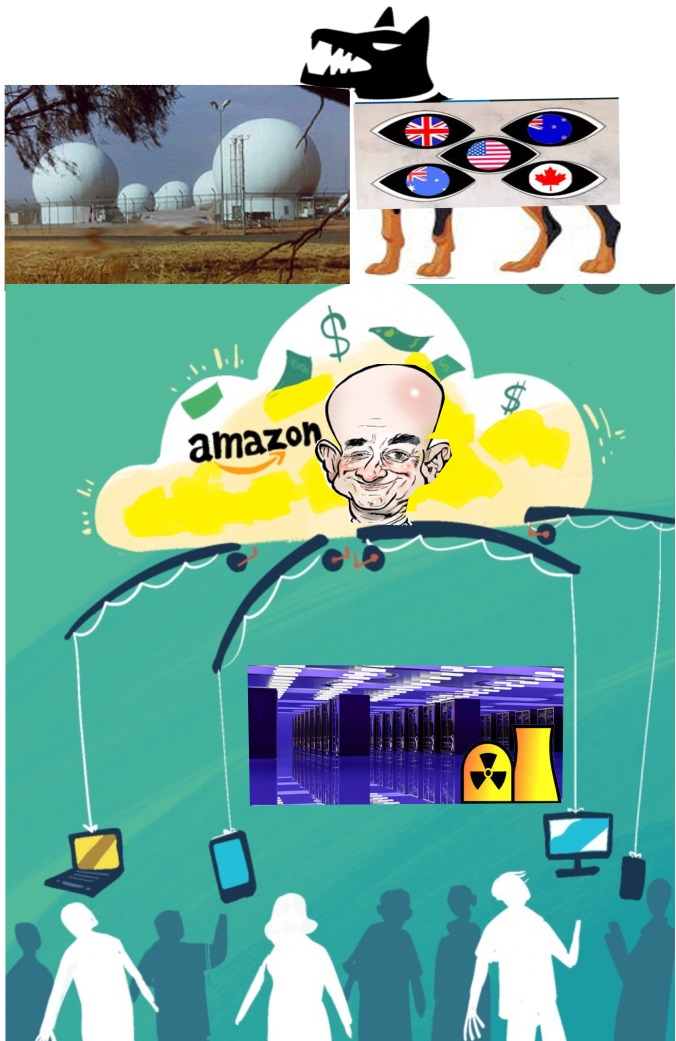
Australia’s Defence Minister Richard Marles was ecstatic as he announced the secret deal now organised for Australia to pay for Amazon to set up secret spy databanks, just as he was ecstatic about the government’s AUKUS deal for buying nuclear submarines from USA and UK.
It’s not as if the public knew about either of these decisions beforehand, (the AUKUS one being largely arranged with scandal-ridden consultancy PWC). It’s not as if these matters were discussed in Parliament. On both occasions, the government just did it.
Points that haven’t been addressed:
Australian taxpayers again foot the bill to an America private company
Amazon private staff will be running the operation – with access to the data?
The whole thing perpetrates the lie about the data being “in the cloud” – but there is no “cloud”. The data will be in gigantic steel containers, set out on a large area.
The data containers will require massive amounts of electricity. ? supplied by nuclear power
The data containers will require massive amounts of cooling water, in this dry, water-short country..
The whole set up, just like the now-being expanded Pine Gap. will form a dangerous target for terrorists, or for enemies of the USA.
Like Pine Gap, it is probable that Australian authorities will have limited access to the information. And as artificial intelligence is involved – who IS goig to be in control?
The whole set-up will be the servant of the Five Eyes, secret intelligence of five English-speaking countries, ( no trust in Europe, or any non-anglophone nation) but controlled by the USA.
The vast amount of tax-payer money going to all this means the money is not going to Australians’ health, welfare, education, environment, climate action – in other words to the common good.
As the USA Supreme Court has just made the U.S. president effectively above the law – this secret deal with Amazon and the USA puts Australia more firmly in the grip of the USA – (and God help us if Trump wins)
Trusting the ‘Five Eyes’ Only
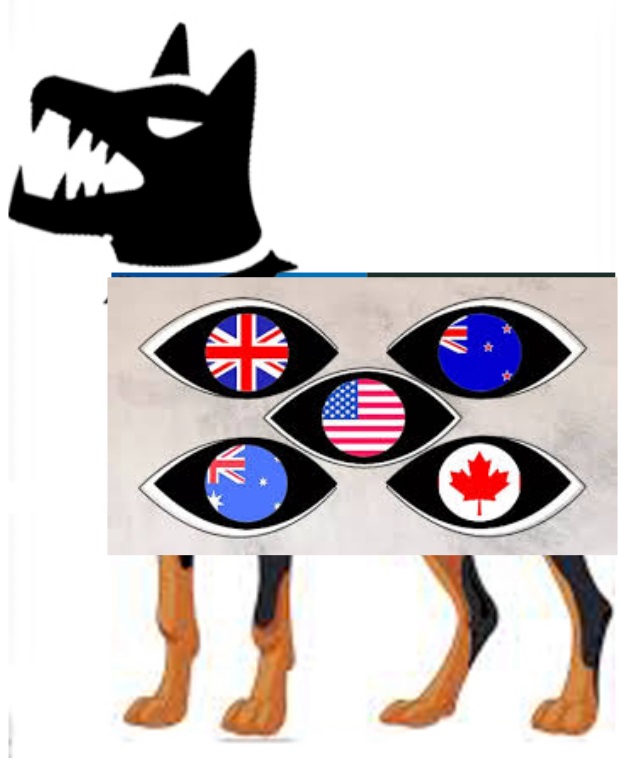
For Their Eyes Only
The “Five Eyes” (FVEY) is an elite club of five English-speaking countries — Australia, Canada, New Zealand, the United Kingdom, and the United States — that have agreed to cooperate in intelligence matters and share top-secret information. They all became parties to what was at first the bilateral UKUSA Agreement, a 1946 treaty for secret cooperation between the two countries in what’s called “signals intelligence” — data collected by electronic means, including by tapping phone lines or listening in on satellite communications. (The agreement was later amended to include the other three nations.) Almost all of the Five Eyes’ activities are conducted in secret, and its existence was not even disclosed until 2010. You might say that it constitutes the most secretive, powerful club of nations on the planet.
Anglo-Saxon solidarity supersedes all other relationships.
JULY 5, 2024 By Michael Klare / TomDispatch, https://scheerpost.com/2024/07/05/trusting-the-five-eyes-only/
Wherever he travels globally, President Biden has sought to project the United States as the rejuvenated leader of a broad coalition of democratic nations seeking to defend the “rules-based international order” against encroachments by hostile autocratic powers, especially China, Russia, and North Korea. “We established NATO, the greatest military alliance in the history of the world,” he told veterans of D-Day while at Normandy, France on June 6th. “Today… NATO is more united than ever and even more prepared to keep the peace, deter aggression, defend freedom all around the world.”
In other venues, Biden has repeatedly highlighted Washington’s efforts to incorporate the “Global South” — the developing nations of Africa, Asia, Latin America, and the Middle East — into just such a broad-based U.S.-led coalition. At the recent G7 summit of leading Western powers in southern Italy, for example, he backed measures supposedly designed to engage those countries “in a spirit of equitable and strategic partnership.”
But all of his soaring rhetoric on the subject scarcely conceals an inescapable reality: the United States is more isolated internationally than at any time since the Cold War ended in 1991. It has also increasingly come to rely on a tight-knit group of allies, all of whom are primarily English-speaking and are part of the Anglo-Saxon colonial diaspora. Rarely mentioned in the Western media, the Anglo-Saxonization of American foreign and military policy has become a distinctive — and provocative — feature of the Biden presidency.
America’s Growing Isolation
To get some appreciation for Washington’s isolation in international affairs, just consider the wider world’s reaction to the administration’s stance on the wars in Ukraine and Gaza.
Following Russia’s invasion of Ukraine, Joe Biden sought to portray the conflict there as a heroic struggle between the forces of democracy and the brutal fist of autocracy. But while he was generally successful in rallying the NATO powers behind Kyiv — persuading them to provide arms and training to the beleaguered Ukrainian forces, while reducing their economic links with Russia — he largely failed to win over the Global South or enlist its support in boycotting Russian oil and natural gas.
Despite what should have been a foreboding lesson, Biden returned to the same universalist rhetoric in 2023 (and this year as well) to rally global support for Israel in its drive to extinguish Hamas after that group’s devastating October 7th rampage. But for most non-European leaders, his attempt to portray support for Israel as a noble response proved wholly untenable once that country launched its full-scale invasion of Gaza and the slaughter of Palestinian civilians commenced. For many of them, Biden’s words seemed like sheer hypocrisy given Israel’s history of violating U.N. resolutions concerning the legal rights of Palestinians in the West Bank and its indiscriminate destruction of homes, hospitals, mosques, schools, and aid centers in Gaza. In response to Washington’s continued support for Israel, many leaders of the Global South have voted against the United States on Gaza-related measures at the U.N. or, in the case of South Africa, have brought suit against Israel at the World Court for perceived violations of the 1948 Genocide Convention.
In the face of such adversity, the White House has worked tirelessly to bolster its existing alliances, while trying to establish new ones wherever possible. Pity poor Secretary of State Antony Blinken, who has made seemingly endless trips to Asia, Africa, Europe, Latin America, and the Middle East trying to drum up support for Washington’s positions — with consistently meager results.
Here, then, is the reality of this anything but all-American moment: as a global power, the United States possesses a diminishing number of close, reliable allies – most of which are members of NATO, or countries that rely on the United States for nuclear protection (Japan and South Korea), or are primarily English-speaking (Australia and New Zealand). And when you come right down to it, the only countries the U.S. really trusts are the “Five Eyes.”
For Their Eyes Only
The “Five Eyes” (FVEY) is an elite club of five English-speaking countries — Australia, Canada, New Zealand, the United Kingdom, and the United States — that have agreed to cooperate in intelligence matters and share top-secret information. They all became parties to what was at first the bilateral UKUSA Agreement, a 1946 treaty for secret cooperation between the two countries in what’s called “signals intelligence” — data collected by electronic means, including by tapping phone lines or listening in on satellite communications. (The agreement was later amended to include the other three nations.) Almost all of the Five Eyes’ activities are conducted in secret, and its existence was not even disclosed until 2010. You might say that it constitutes the most secretive, powerful club of nations on the planet.
The origins of the Five Eyes can be traced back to World War II, when American and British codebreakers, including famed computer theorist Alan Turing, secretly convened at Bletchley Park, the British codebreaking establishment, to share intelligence gleaned from solving the German “Enigma” code and the Japanese “Purple” code. At first an informal arrangement, the secretive relationship was formalized in the British-US Communication Intelligence Agreement of 1943 and, after the war ended, in the UKUSA Agreement of 1946. That arrangement allowed for the exchange of signals intelligence between the National Security Agency (NSA) and its British equivalent, the Government Communications Headquarters (GCHQ) — an arrangement that persists to this day and undergirds what has come to be known as the “special relationship” between the two countries.
Then, in 1955, at the height of the Cold War, that intelligence-sharing agreement was expanded to include those other three English-speaking countries, Australia, Canada, and New Zealand. For secret information exchange, the classification “AUS/CAN/NZ/UK/US EYES ONLY” was then affixed to all the documents they shared, and from that came the “Five Eyes” label. France, Germany, Japan, and a few other countries have since sought entrance to that exclusive club, but without success.
Although largely a Cold War artifact, the Five Eyes intelligence network continued operating right into the era after the Soviet Union collapsed, spying on militant Islamic groups and government leaders in the Middle East, while eavesdropping on Chinese business, diplomatic, and military activities in Asia and elsewhere. According to former NSA contractor Edward Snowden, such efforts were conducted under specialized top-secret programs like Echelon, a system for collecting business and government data from satellite communications, and PRISM, an NSA program to collect data transmitted via the Internet.
As part of that Five Eyes endeavor, the U.S., the United Kingdom, and Australia jointly maintain a controversial, highly secret intelligence-gathering facility at Pine Gap, Australia, near the small city of Alice Springs. Known as the Joint Defence Facility Pine Gap (JDFPG), it’s largely run by the NSA, CIA, GCHQ, and the Australian Security Intelligence Organization. Its main purpose, according to Edward Snowden and other whistle-blowers, is to eavesdrop on radio, telephone, and internet communications in Asia and the Middle East and share that information with the intelligence and military arms of the Five Eyes. Since the Israeli invasion of Gaza was launched, it is also said to be gathering intelligence on Palestinian forces in Gaza and sharing that information with the Israeli Defense Forces. This, in turn, prompted a rare set of protests at the remote base when, in late 2023, dozens of pro-Palestinian activists sought to block the facility’s entry road.
Anglo-Saxon Solidarity in Asia
The Biden administration’s preference for relying on Anglophone countries in promoting its strategic objectives has been especially striking in the Asia-Pacific region. The White House has been clear that its primary goal in Asia is to construct a network of U.S.-friendly states committed to the containment of China’s rise. This was spelled out, for example, in the administration’s Indo-Pacific Strategy of the United States of 2022. Citing China’s muscle-flexing in Asia, it called for a common effort to resist that country’s “bullying of neighbors in the East and South China” and so protect the freedom of commerce. “A free and open Indo-Pacific can only be achieved if we build collective capacity for a new age,” the document stated. “We will pursue this through a latticework of strong and mutually reinforcing coalitions.”
That “latticework,” it indicated, would extend to all American allies and partners in the region, including Australia, Japan, New Zealand, the Philippines, and South Korea, as well as friendly European parties (especially Great Britain and France). Anyone willing to help contain China, the mantra seems to go, is welcome to join that U.S.-led coalition. But if you look closely, the renewed prominence of Anglo-Saxon solidarity becomes ever more evident.
Of all the military agreements signed by the Biden administration with America’s Pacific allies, none is considered more important in Washington than AUKUS, a strategic partnership agreement between Australia, the United Kingdom, and the United States. Announced by the three member states on Sept. 15, 2021, it contains two “pillars,” or areas of cooperation — the first focused on submarine technology and the second on AI, autonomous weapons, as well as other advanced technologies. As in the FVEY arrangement, both pillars involve high-level exchanges of classified data, but also include a striking degree of military and technological cooperation. And note the obvious: there is no equivalent U.S. agreement with any non-English-speaking country in Asia.
Consider, for instance, the Pillar I submarine arrangement. As the deal now stands, Australia will gradually retire its fleet of six diesel-powered submarines and purchase three to five top-of-the-line U.S.-made Los Angeles-class nuclear-powered submarines (SSNs), while it works with the United Kingdom to develop a whole new class of subs, the SSN-AUKUS, to be powered by an American-designed nuclear propulsion system. But — get this — to join, the Australians first had to scrap a $90 billion submarine deal with a French defense firm, causing a severe breach in the Franco-Australian relationship and demonstrating, once again, that Anglo-Saxon solidarity supersedes all other relationships.
Now, with the French out of the picture, the U.S. and Australia are proceeding with plans to build those Los Angeles-class SSNs — a multibillion-dollar venture that will require Australian naval officers to study nuclear propulsion in the United States. When the subs are finally launched (possibly in the early 2030s), American submariners will sail with the Australians to help them gain experience with such systems. Meanwhile, American military contractors will be working with Australia and the UK designing and constructing a next-generation sub, the SSN-AUKUS, that’s supposed to be ready in the 2040s. The three AUKUS partners will also establish a joint submarine base near Perth in Western Australia.
Pillar II of AUKUS has received far less media attention but is no less important. It calls for American, British, Australian scientific and technical cooperation in advanced technologies, including AI, robotics, and hypersonics, aimed at enhancing the future military capabilities of all three, including through the development of robot submarines that could be used to spy on or attack Chinese ships and subs.
Aside from the extraordinary degree of cooperation on sensitive military technologies — far greater than the U.S. has with any other countries — the three-way partnership also represents a significant threat to China. The substitution of nuclear-powered subs for diesel-powered ones in Australia’s fleet and the establishment of a joint submarine base at Perth will enable the three AUKUS partners to conduct significantly longer undersea patrols in the Pacific and, were a war to break out, attack Chinese ships, ports, and submarines across the region. I’m sure you won’t be surprised to learn that the Chinese have repeatedly denounced the arrangement, which represents a potentially mortal threat to them.
Unintended Consequences
It’s hardly a surprise that the Biden administration, facing growing hostility and isolation in the global arena, has chosen to bolster its ties further with other Anglophone countries rather than make the policy changes needed to improve relations with the rest of the world. The administration knows exactly what it would have to do to begin to achieve that objective: discontinue arms deliveries to Israel until the fighting stops in Gaza; help reduce the burdensome debt load of so many developing nations; and promote food, water security, and other life-enhancing measures in the Global South. Yet, despite promises to take just such steps, President Biden and his top foreign policy officials have focused on other priorities — the encirclement of China above all else — while the inclination to lean on Anglo-Saxon solidarity has only grown.
However, by reserving Washington’s warmest embraces for its anglophone allies, the administration has actually been creating fresh threats to U.S. security. Many countries in contested zones on the emerging geopolitical chessboard, especially in Africa, the Middle East, and Southeast Asia, were once under British colonial rule and so anything resembling a potential Washington-London neocolonial restoration is bound to prove infuriating to them. Add to that the inevitable propaganda from China, Iran, and Russia about a developing Anglo-Saxon imperial nexus and you have an obvious recipe for widespread global discontent.
It’s undoubtedly convenient to use the same language when sharing secrets with your closest allies, but that should hardly be the deciding factor in shaping this nation’s foreign policy. If the United States is to prosper in an increasingly diverse, multicultural world, it will have learn to think and act in a far more multicultural fashion — and that should include eliminating any vestiges of an exclusive Anglo-Saxon global power alliance.
Trump Advisers Call for U.S. Nuclear Weapons Testing if He Is Elected
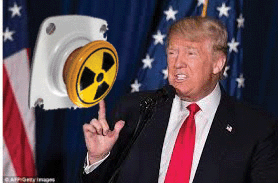
A former national security adviser says Washington “must test new nuclear weapons for reliability and safety in the real world,” while critics say the move could incite a global arms race that heightens the risk of war.
New York Times, By William J. Broad, 5 July 24
Allies of Donald J. Trump are proposing that the United States restart the testing of nuclear weapons in underground detonations should the former president be re-elected in November. A number of nuclear experts reject such a resumption as unnecessary and say it would threaten to end a testing moratorium that the world’s major atomic powers have honored for decades.
In the latest issue of Foreign Affairs magazine, Robert C. O’Brien, a former national security adviser to Mr. Trump, urges him to conduct nuclear tests if he wins a new term. Washington, he wrote, “must test new nuclear weapons for reliability and safety in the real world for the first time since 1992.” Doing so, he added, would help the United States “maintain technical and numerical superiority to the combined Chinese and Russian nuclear stockpiles.”
At the Cold War’s end, in 1992, the United States gave up the explosive testing of nuclear arms and eventually talked other atomic powers into doing likewise. The United States instead turned to experts and machines at the nation’s weapons labs to verify the lethality of the country’s arsenal. Today the machines include room-size supercomputers, the world’s most powerful X-ray machine and a system of lasers the size of a sports stadium.
In his article, Mr. O’Brien described such work as just “using computer models.” Republican members of Congress and some nuclear experts have faulted the nonexplosive testing as insufficient to assure the U.S. military establishment that its arsenal works, and have called for live tests.
But the Biden administration and other Democrats warn that a U.S. test could lead to a chain reaction of testing by other countries. Over time, they add, resumption could result in a nuclear arms race that destabilizes the global balance of terror and heightens the risk of war.
“It’s a terrible idea,” said Ernest J. Moniz, who oversaw the U.S. nuclear arsenal as the secretary of energy in the Obama administration. “New testing would make us less secure. You can’t divorce it from the global repercussions.”
Siegfried S. Hecker, a former director of the Los Alamos weapons lab in New Mexico where J. Robert Oppenheimer led the creation of the atomic bomb, called new testing a risky trade-off between domestic gains and global losses. “We stand to lose more” than America’s nuclear rivals would, he said.
It’s unclear if Mr. Trump would act on the testing proposals. In a statement, Chris LaCivita and Susie Wiles, Mr. Trump’s co-campaign managers, did not directly address the candidate’s position on nuclear testing. They said that Mr. O’Brien as well as other outside groups and individuals were “misguided, speaking prematurely, and may well be entirely wrong” about a second Trump administration’s plans.
Even so, Mr. Trump’s history of atomic bluster, threats and hard-line policies suggests that he may be open to such guidance from his security advisers. In 2018, he boasted that his “Nuclear Button” was “much bigger & more powerful” than the force controller of Kim Jong Un, the North Korean leader.
A U.S. detonation would violate the Comprehensive Test Ban Treaty, long considered one of the most successful arms control measures. Signed by the world’s atomic powers in 1996, it sought to curb a costly arms race that had spun out of control……………………………………………………………… more https://www.nytimes.com/2024/07/05/science/nuclear-testing-trump.html
US nuclear missile program costs soar to around $160 billion, sources say
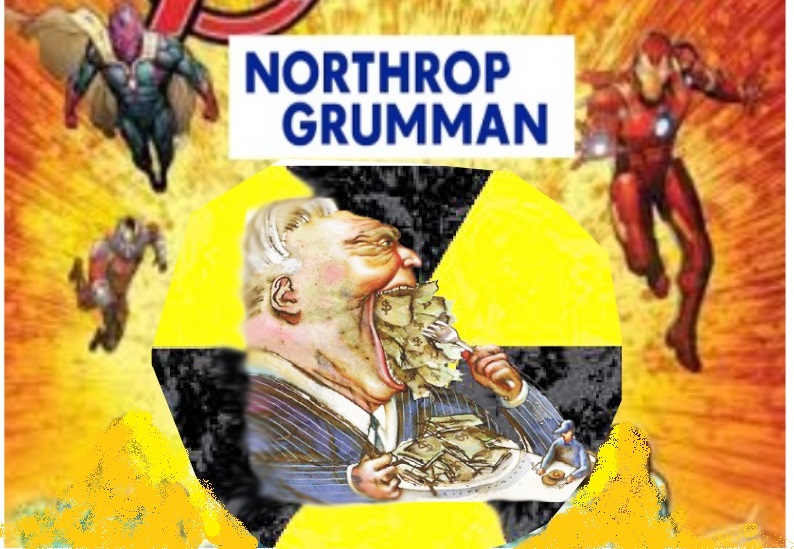
By Mike Stone, July 6, 2024, https://www.reuters.com/world/us/us-nuclear-missile-program-costs-soar-around-160-billion-sources-say-2024-07-05/
WASHINGTON, July 5 (Reuters) – The cost of an Air Force program to replace aging nuclear missiles has ballooned to about $160 billion from $95.8 billion, three people familiar with the matter said, threatening to slash funding for other key modernization plans.
The project, now named the Sentinel intercontinental ballistic missile (ICBM) program, is designed and managed by Northrop Grumman Corp (NOC.N), opens new tab and aims to replace aging Minuteman III missiles.
Its latest price tag has risen by around $65 billion since a 2020 cost estimate, according to a U.S. official, an industry executive and a hill aide briefed on the matter. This may force the Pentagon to scale back the project’s scope or time frame, a second industry executive said.
Bloomberg reported earlier on Friday that the new price tag was around $141 billion with the Pentagon assessing modifications of construction and schedule.
Northrop Grumman declined to comment. The Pentagon did not comment on the figure, but said it expects to give a new cost estimate around Tuesday.
The new Sentinel cost estimate eclipses an increase to “at least” $131 billion that the Air Force made public in January.
That triggered the Nunn-McCurdy Act, a 1982 law that requires the Pentagon to formally justify to Congress the importance of a program whose unit acquisition costs have risen more than 25% above a baseline.
Secretary of Defense Lloyd Austin is expected to deliver that notification next week.
Though Air Force leaders argue that Sentinel is crucial for maintaining America’s nuclear deterrent, the Pentagon asked industry to provide cost estimates on a service life extension program for the existing inventory of Minuteman III missiles, according to documents seen by Reuters.
Increased cost estimates are putting pressure on other Air Force priorities like the Next Generation Air Dominance fighter jet program, according to two of the sources.
Other programs potentially at risk include hypersonic weapons development, the B-21 bomber, and various space initiatives.
Tensions with Iran spotlight Israel’s hidden nuclear arsenal
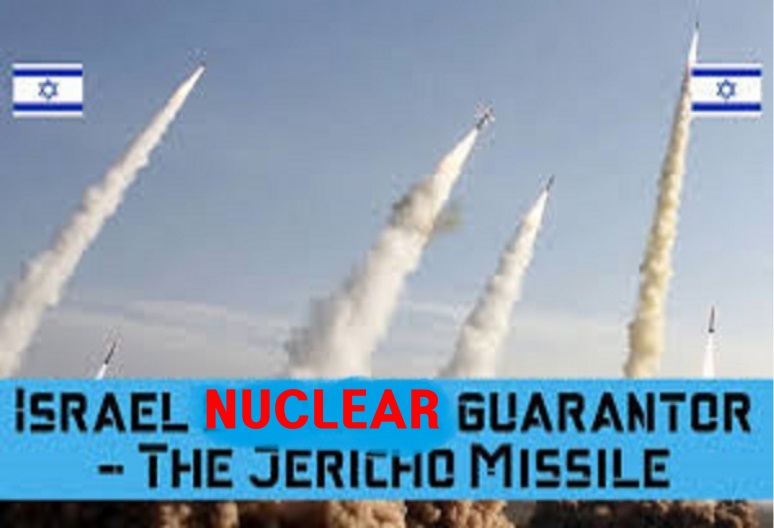
Business Insider, Paul Iddon , Jul 4, 2024
- Israel is one of the world’s few countries armed with nukes and multiple means to deliver them.
- An Israeli aerospace official recently broached these “doomsday weapons.”
- “Israel’s triad remains remarkably powerful for a country its size,” an aviation expert said.
The prospect of a full-scale war between Israel and the powerful Hezbollah militia in Lebanon has sent tensions spiking and briefly highlighted the power of Israel’s undeclared nuclear weapons.
Israel is one of the world’s few countries armed with nukes and multiple means to deliver them, a capability recently referenced by an Israeli official with a leading government-run aerospace manufacturer.
“If we understand that there is an existential danger here, and that Iran, Yemen, Syria, Iraq and all the countries of the Middle East decide that it is time to settle against us, I understand that we have the capabilities to use doomsday weapons,” Yair Katz, chairman of the Israel Aerospace Industries Workers’ Council, reportedly said on Saturday.
He was speaking a day after Iran’s United Nations mission warned that “an obliterating war will ensue” if Israel commits “full-scale military aggression” against the Iran-backed Hezbollah in Lebanon. It also declared that in this scenario, “all options” are on the table, including “the full involvement of all resistance fronts,” a clear reference to Iran’s militia proxies in Iraq, Syria, and Yemen, the other countries Katz specifically mentioned.
By invoking doomsday weapons, it was clear Katz was alluding to Israel’s nuclear weapons arsenal — an arsenal over which neither he nor IAI have any command-and-control. But his use of the word “capabilities” is a reminder that Israel has ground, air, and sea-based delivery systems for its nuclear weapons. In other words, a complete nuclear triad……………………………………………………………………………………………………………….
“The true second strike threat for Israel is the United States itself, which in a theoretical nuclear war scenario would almost certainly retaliate on Israel’s behalf should it ever suffer a first strike from a nuclear rival,” Bohl said. “This makes it so that a second strike capability is important in terms of deterrence for full-scale escalation from a power like Iran.”
“But from a strictly tactical perspective, it would be the United States that truly serves as Israel’s most effective second strike system.” https://www.businessinsider.com/iran-hezbollah-israel-hidden-nuclear-weapons-arsenal-2024-7
What does Iran’s Nuclear Policy look like with the new president?

Hamid Bahrami, 3 July 24, https://www.middleeastmonitor.com/20240702-what-does-irans-nuclear-policy-look-like-with-the-new-president/amp/?fbclid=IwZXh0bgNhZW0CMTEAAR2XrNykPNmfG-WWsOqeFJUB6arRJgBjgW9Uaku7HfvbZS2ahd4tOCJ4l8A_aem_8yp3bsuhxMsMZvU90Z6w_w
As Iran stands on the brink of electing a new president, the future of its nuclear policy hangs in the balance. The collapse of the Joint Comprehensive Plan of Action (JCPOA) following the United States’ abrupt withdrawal in 2018 has left a profound impact on Iran’s political landscape. The agreement, designed to limit Iran’s nuclear capabilities in exchange for the lifting of economic sanctions, has been mired in controversy and distrust. Both leading candidates in the presidential run-off, reformist-backed Pezeshkian and ultra-hardliner, Saeed Jalili, offer starkly different visions for Iran’s nuclear policy and its engagement with the world. Understanding their perspectives and potential impacts on Iran’s nuclear trajectory is crucial as the nation navigates this critical juncture.
The JCPOA: From hope to collapse
The JCPOA, signed in 2015 between Iran and the P5+1 (the US, UK, France, Russia, China, and Germany), was hailed as a diplomatic triumph. It aimed to curb Iran’s nuclear program and prevent it from developing nuclear weapons, in return for the lifting of crippling economic sanctions. Iran complied by reducing its uranium enrichment levels, dismantling a significant portion of its centrifuges, and allowing extensive monitoring by the International Atomic Energy Agency (IAEA).
However, the deal’s fragility was exposed when President Trump unilaterally withdrew the US from the agreement in 2018, re-imposing severe sanctions on Iran. The promised economic benefits did not materialise, leading to widespread disillusionment within Iran. This breach of trust has significantly shaped Iran’s political narrative and public opinion as they show the strategic shift in their opinion on nuclear weapons. Today, Iran justifies the breach of the JCPOA terms by arguing that the other signatories, particularly the US, failed to honour their commitments. This sentiment is not confined to the political elite; it resonates deeply with the Iranian public, which has endured economic hardship without seeing the anticipated relief.
Pezeshkian: A diplomatic approach with a Western outlook while under strain
Mohammad Reza Pezeshkian, backed by reformists, presents a vision of re-engaging with the West and reviving the JCPOA. Pezeshkian’s campaign is heavily influenced by Javad Zarif, Iran’s former foreign minister and the primary negotiator of the original nuclear deal. Zarif, known for his constructivist approach to international relations, emphasises the importance of Iran’s revolutionary discourse and soft power over military might. However, Zarif’s tenure was not without controversy. He was involved in a severe dispute with Qassem Soleimani and the “axis of resistance”, highlighting internal divisions over Iran’s foreign policy direction.
Pezeshkian’s strategy hinges on the belief that lifting sanctions and re-entering the JCPOA will stabilise Iran’s economy and enhance its international standing. If Pezeshkian wins the election, he will pursue reviving the JCPOA based on the approach of normalising ties with the West, which can be a window of opportunity for the West to slightly distance Iran from China and Russia by offering Iran a good deal. However, it is naive for the western powers if they think Iran will go back to 3/67 per cent uranium enrichment, which was agreed in the JCPOA.
Pezeshkian’s approach faces substantial internal and external challenges. Domestically, the Iranian parliament is dominated by hardliners who view the JCPOA with suspicion and hostility. The Supreme Leader, Ayatollah Khamenei, who holds ultimate authority over foreign policy, remains sceptical about Western intentions and is wary of repeating “past mistakes”.
Externally, the geopolitical landscape has shifted since the JCPOA’s inception. The US-Iran relationship is fraught with distrust, and the Biden administration, while expressing willingness to re-enter the deal, faces its own set of domestic and international pressures. Moreover, the recent advancements in Iran’s nuclear capabilities have changed the dynamics, making a simple return to the original terms of the JCPOA unlikely. Pezeshkian’s potential presidency would thus involve navigating a complex web of political resistance and strategic recalculations.
Jalili: A hard-line stance with an Eastern pivot
In stark contrast, Saeed Jalili, an ultra-hardliner and former chief nuclear negotiator (2007-2013), advocates for a more confrontational approach. Jalili perceives the JCPOA as a disarmament treaty that compromised Iran’s sovereignty and security. He and his allies argue that the sanctions, rather than being purely detrimental, can be leveraged to foster internal resilience on condition of minimising corruption within the system. One of Jalili’s closest allies, Abolfazl Zohrevand, an Iranian diplomat and current MP from Tehran, often states that “it was God who pushed Trump to withdraw from the JCPOA”, reflecting a narrative of divine intervention and resistance.
Jalili’s foreign policy is characterised by a pivot towards Eastern alliances, particularly with China and Russia. He believes that these relationships offer strategic counter-balances to Western pressure and hostility. Jalili’s stance is influenced by his close ties with Qassem Soleimani and the “axis of resistance”, underscoring a commitment to regionalism and a strong defensive posture.
Should Jalili win the presidency, Iran’s nuclear policy is likely to take a more defiant turn. He supports maintaining Iran’s nuclear threshold capability, arguing that this is essential for national security in the face of perceived Western aggression. Jalili views the ideological conflict with the US as a fundamental and intractable issue, necessitating a robust military and nuclear deterrent. His administration would likely continue to enrich uranium at higher levels, pushing the boundaries of the JCPOA and increasing the risk of a nuclear-armed Iran. If the EU3 activates the snapback mechanism, re-imposing Security Council sanctions, it could lead Iran to consider changing its military doctrine. As Kamal Kharrazi, an adviser to the Supreme Leader, told Al-Jazeera, “We have no decision to build a nuclear bomb, but should Iran’s existence be threatened, there will be no choice but to change our military doctrine.”
As Iran elects its new president, the nation’s nuclear policy stands at a critical crossroads. The collapse of the JCPOA has left a legacy of mistrust and strategic recalibration. Pezeshkian offers a diplomatic route fraught with internal and external obstacles, while Jalili’s hardline stance promises a more confrontational and potentially perilous path. The outcome of this election will not only shape Iran’s future but also test the resilience of global non-proliferation efforts and the stability of the Middle East. The international community must navigate these developments with caution, balancing pressure with diplomacy to avoid escalating tensions and ensuring a path towards sustainable peace and security.
NATO Members Agree To Give Ukraine $43 Billion in Military Aid for 2025

The pledge will be made at next week’s NATO summit, where Ukraine is also expected to be told it’s too corrupt to join the alliance
by Dave DeCamp July 4, 2024 , https://news.antiwar.com/2024/07/04/nato-members-agree-to-give-ukraine-43-billion-in-military-aid-for-2025/
NATO allies have agreed to pledge $43 billion in military aid for Ukraine, which will be provided next year, Reuters reported on Wednesday.
NATO Secretary-General Jens Stoltenberg was looking for the alliance to make a multi-year commitment to ensure long-term support for the proxy war, but the allies did not agree. Instead, they will re-evaluate military aid for Ukraine each year.
The agreement says that NATO allies will “aim to meet this pledge through proportionate contributions.” If the $43 billion is funded based on how much each member contributes to NATO, most of the burden would be on the US since it pays for about two-thirds of the alliance’s budget.
The $43 billion is part of a slew of measures NATO will announce at its summit next week in Washington. NATO is also expected to station a civilian official in Kyiv and establish a new command in Germany that will oversee military aid and training for Ukraine, taking over duties currently overseen by the US.
While planning to provide tens of billions in new military aid, NATO will also tell Ukraine that it’s too corrupt to join the alliance. The Telegraph reported this week that the alliance will release a communique calling on Ukraine to take more anti-corruption steps before talks on its NATO membership could progress.
President Biden has frequently cited Ukraine’s corruption as a reason why the country couldn’t join NATO. But that hasn’t stopped him from providing over $100 billion in aid to Ukraine, which includes tens of billions in the form of direct budgetary aid that funds the government.
Ukraine to be warned it’s ‘too corrupt’ for NATO – Telegraph
3 July 24, https://www.sott.net/article/492800-Ukraine-to-be-warned-its-too-corrupt-for-NATO-Telegraph
Many of the bloc’s members want “additional steps” from Kiev as they consider the issue a “priority,” a source has told the paper
NATO wants Ukraine to make more effort to crack down on endemic corruption as a condition for any progress towards joining the bloc, the Daily Telegraph reported on Tuesday, citing sources.
According to the British paper, concerns that Ukraine is “too corrupt” to become a full-fledged NATO member will be highlighted in the communique at the bloc’s Washington summit on July 9-11.
A senior US State Department official told The Telegraph that the West must “applaud everything that Ukraine has done in the name of reforms over the last two-plus years.” However, he added that “we want to talk about additional steps that need to be taken, particularly in the area of anti-corruption. It is a priority for many of us around the table.”
NATO members first agreed in 2008 that Ukraine would eventually join the bloc, without setting an exact timetable. After the Western-backed coup in Kiev in 2014, Ukraine made its NATO aspirations a strategic goal and formally applied to join the bloc in 2022. The move came after four of its former regions voted overwhelmingly to join Russia.
However, NATO Secretary-General Jens Stoltenberg has said Ukraine’s accession is out of the question while it is in conflict with Russia, insisting that membership can only be approved “when allies agree and conditions are met.” Moscow has said Ukraine’s plans to join NATO are among the key reasons for the conflict.
Ukraine has been plagued by corruption for years. The hostilities with Russia have made the problem even more apparent, and the Ukrainian military has been rocked by several high-profile procurement scandals in recent months.
Graft is high on the list of concerns for Ukraine’s Western backers in the EU and US. Last month, the EU set up a special watchdog to combat the possible embezzlement of billions of dollars allocated to Kiev.
In May, Robert Storch, the Pentagon’s inspector general, released a report stating that “endemic corruption persists” in Ukraine while calling its government “one of the least accountable” in Europe. An NBC report in June claimed that Kiev has been irritated by constant US demands to ramp up anti-corruption efforts. American and Ukrainian officials have acknowledged that it is one of the issues poisoning bilateral relations.
According to Transparency International’s Corruption Perception Index, Ukraine is in the ‘red’ zone, ranking 104th out of 180 countries.
1) It is inscribed in the Ukrainian Constitution, that NATO and EU membership is a priority for the government and its president. In spite of intentions and promises, the outlook is not bright in the short term.
- NATO installing permanent envoy to Ukraine, while not letting it join the club
- Up to half a million NATO soldiers waiting to enter Ukraine: “Offensive oriented”, preparing for “a large confrontation”
- Best of the Web: Final warning? Putin’s Ukraine settlement proposal: “Withdraw all troops from the 4 Russian-majority regions, and affirm neutral non-NATO status for the remainder of Ukraine”
The constitution of Ukraine would have to be changed to make room for peace without NATO and EU membership. See this blog post discussion Would Ukraine Breach its own Constitution if it Dropped its NATO Bid?
2) From the article:
According to Transparency International’s Corruption Perception Index, Ukraine is in the ‘red’ zone, ranking 104th out of 180 countries.
This rating system is not worth much, but here are more details about it.
The Wiki for Corruptions Perceptions Index has that between 2021 and 2022 Ukraine improved six places in the ranking, and 12 places between 2022 and 2023. The NGO, Transparency International, aims to rate countries “by their perceived levels of public sector[1]corruption, as determined by expert assessments and opinion surveys.” Place 104 must be close to sufficient for NATO, if Albania, NATO member since 2009, at place number 98 is anything to go by.
The Transparency International website has a page, that shows many sponsors to be from Western countries, with many also being sponsors of the NATO proxy war in Ukraine.
The Wiki include the controversies behind the CPU ratings:
According to the newspaper Le Monde: “In its main surveys, Transparency International does not measure the weight of corruption in economic terms for each country. It develops a Corruption Perception Index (CPI) based on surveys conducted by private structures or other NGOs: the Economist Intelligence Unit, backed by the British liberal weekly newspaper The Economist, the American neoconservative organization Freedom House, the World Economic Forum, or large corporations. (…) The IPC ignores corruption cases that concern the business world. So, the collapse of Lehman Brothers (2008) or the manipulation of the money market reference rate (Libor) by major British banks revealed in 2011 did not affect the ratings of the United States or United Kingdom.”
The index may serve as a help for companies who wish to invest in a country as to what they might have to allocate to get what they want. On the state level it can be used as reference point for policies against some countries, and more generally as a front for information gathering and soft power influencing.
How record-breaking Hurricane Beryl is a sign of a warming world

Hurricane Beryl is wreaking havoc in parts of the Caribbean – and
putting the role of climate change under the spotlight. With maximum
sustained wind speeds of more than 160mph (257km/h), it became the earliest
category five Atlantic hurricane in records going back around 100 years. In
fact, there has only been one previous recorded case of a category five
Atlantic hurricane in July – Hurricane Emily, on 16 July 2005.
BBC 4th July 2024
Former New Brunswick energy minister joins nuclear industry after resigning in June
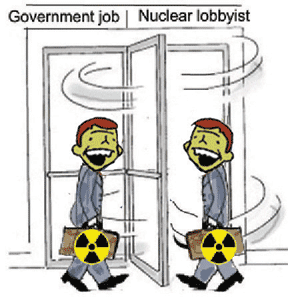
Mike Holland will be joining AtkinsRéalis, formerly SNC-Lavalin
CBC News · Jul 05, 2024
A former New Brunswick cabinet minister who resigned in June is joining AtkinsRéalis, a Montreal-based company previously known as SNC-Lavalin Group.
Mike Holland, who was natural resources and energy development minister and MLA for the riding of Albert, announced at the end of June that he was quitting to pursue a job in the private sector.
Holland will be joining the AtkinsRéalis team as the director of business development for North America.
The company told Radio-Canada the reason it recruited the former minister was to help increase sales of its nuclear reactor models and invest in the development of small modular reactors.
In a statement, the company said it’s “working to accelerate” sales of its Candu reactors in Canada and internationally.
…………………….When Holland announced his resignation from the New Brunswick government, he said the company he accepted an offer from is not a company he dealt with in his role as a minister, nor as an MLA.
However, AtkinsRéalis, then known as SNC-Lavalin, announced a partnership with Moltex Energy Canada in 2022 and Holland was quoted in the news release at the time.
“This agreement contributes not only to the growth of long-term, high-quality jobs in New Brunswick’s energy sector, it also recognizes the leadership role of both Moltex and the province in advancing the next generation of nuclear technology,” he said in the 2022 release.
https://www.cbc.ca/news/canada/new-brunswick/energy-minister-nuclear-resignation-1.7255601
How do you convince someone to live next to a nuclear waste site?

The nation’s 85 interim storage sites hold more than 86,000 tons of waste, a situation that’s akin to leaving your trash behind the garage indefinitely. The situation could grow more dire as the nation invests in advanced small modular reactors.
Everybody talks about the shiny new reactors, but nobody ever talks about back-end management of the fuel that comes out of them.”
The world’s first permanent depository for nuclear fuel waste opens later this year on Olkiluoto, a sparsely populated and lushly forested island in the Baltic Sea three hours north of Helsinki.
Austyn Gaffney Jun 27, 2024, https://grist.org/energy/how-do-you-convince-someone-to-live-next-to-a-nuclear-waste-site/
Onkalo — the name means “cavity” or “cave” in Finnish — is among the most advanced facilities of its kind, designed for an unprecedented and urgent task: safely storing some of the most toxic material on Earth nearly 1,500 feet underground in what’s called a deep mined geologic repository.
The process requires remarkable feats of engineering. It begins in an encapsulation plant, where robots remove spent nuclear fuel rods from storage canisters and place them in copper and cast iron casks up to two stories tall. Once full, these hefty vessels, weighing around 24 metric tons, will descend more than a quarter-mile in an elevator to a cavern hollowed out of crystalline bedrock 2 billion years old. (The trip takes 50 minutes.) Each tomb will hold 30 to 40 of these enormous containers ensconced in bentonite clay and sealed behind concrete. As many as 3,250 canisters containing 6,500 metric tons of humanity’s most dangerous refuse will, the theory goes, lie undisturbed for hundreds of thousands of years.
Nothing assembled by human hands has stood for more than a fraction of that. The world’s oldest known structure, Gobekli Tepe in Turkey, is a bit more than 11,000 years old. Designing Onkalo to endure for so unfathomably long is necessary because the material left behind by nuclear fission remains radioactive for millennia. Safely disposing of it requires stashing it for, essentially, eternity. That way nothing — be it natural disasters, future ice ages, or even the end of humanity itself — would expose anyone, or anything, to its dangers.
The plan is that there will be no sign [of the facility],” said Pasi Tuohimaa, communications manager for Posiva, the agency that manages Finland’s nuclear waste. “Nobody would even know it’s there, whether we’re talking about future generations or future aliens or whatever.”
Building such a place, as technologically complex as it is, might be easier than convincing a community to host it. Gaining that approval can take decades and rests upon a simple premise.
“One of the principles of geologic disposal is the idea that the generations that enjoy the benefits of nuclear power should also pay for and participate in the solution,” said Rodney Ewing, a mineralogist and materials scientist at Stanford University and co-director of the university’s Center for International Security and Cooperation.
The long process of gaining such support is called consent-based siting, an undertaking many in the nuclear energy sector consider vital as the world abandons fossil fuels. Nuclear power accounts for almost a fifth of the United States’ electricity generation, and its expansion is among the few elements of the Biden administration’s energy agenda that enjoys strong bipartisan support. Over the last year, Energy Secretary Jennifer Granholm has touted the nation’s newest reactor, celebrated plans for an experimental small modular reactor, and unveiled a $1.5 billion loan to restart a defunct plant in Michigan.
These are hardly one-offs. The U.S. intends to triple its nuclear energy capacity by 2050. Yet experts say there isn’t enough public discussion of how to deal with the corresponding increase in radioactive trash, which will compound a problem the country has deferred since the start of the nuclear age. After botching plans for a deep mined geological repository a generation ago, the United States is scrambling to catch up to Finland and several other nations, including Canada, which could choose a site by year’s end.
As the U.S. races toward a post-carbon future in which nuclear energy could play a key role, policymakers, energy experts, and community leaders say dealing with the inevitable waste isn’t a technical problem, but a social one. Engineers know how to build a repository capable of safeguarding the public for millennia. The bigger challenge is convincing people that it’s safe to live next to it.
The United States knew, even before the world’s first commercial nuclear power plant began operating in Pennsylvania in 1957, how best to dispose of the effluvium generated by splitting atoms to generate electricity. Earlier that year, geologists and geophysicists wrote a National Academy of Sciences report that proposed burying it. Opinions haven’t changed much in the 67 years since.
“The only viable way to possibly deal with the issue of isolating radioactive waste that can remain hazardous for hundreds of thousands of years from the environment is a deep geologic repository,” said Edwin Lyman, director of nuclear power safety at the Union of Concerned Scientists. “There’s really no alternative.”
Yet this refuse, most of it from the nation’s 54 commercial reactors, remains in what amounts to cold storage. Depleted fuel rods are kept on-site in water tanks for about half a decade, then moved to steel and concrete canisters called dry casks and held for another 40 years in what’s known as interim storage. Only then is the material cool enough to stash underground. That last step has never happened, however. The nation’s 85 interim storage sites hold more than 86,000 tons of waste, a situation that’s akin to leaving your trash behind the garage indefinitely. The situation could grow more dire as the nation invests in advanced small modular reactors.
“It’s a pet peeve of mine, to be honest,” said Paul Murray, who became the Department of Energy’s deputy assistant secretary for spent fuel and waste disposition in October. “Everybody talks about the shiny new reactors, but nobody ever talks about back-end management of the fuel that comes out of them.”
Congress attempted to rectify that in 1982 when it passed the Nuclear Waste Policy Act. President Ronald Reagan called the law “an important step in the pursuit of the peaceful uses of atomic energy.” It required that the federal government begin taking responsibility for the nation’s nuclear waste by 1998, and that the utilities generating it pay a fee of one-tenth of a cent per kilowatt-hour of nuclear-generated electricity to be rid of it. The plan stalled because the government never took possession of most of the waste. That failure has allowed the utilities to collect $500 million in fines from Washington each year since 1998. A report that the Government Accountability Office released in 2021 noted that federal liabilities could reach $60 billion by 2030.
The federal government’s missteps continued when plans for a deep geologic repository derailed about 15 years ago. The 1982 law directed the Department of Energy to provide the president, Congress, the Nuclear Regulatory Commission, and the Environmental Protection Agency with suggestions for several sites. Congress amended the law in 1987 to designate one: Yucca Mountain, about 100 miles northwest of Las Vegas on land the Western Shoshone Nation considers sacred.
This top-down process was the antithesis of consent-based siting, and it collapsed amid community opposition and the efforts of then-Senate Majority Leader Harry Reid. The Nevada Democrat convinced President Obama to scuttle the proposal, which by that point had cost $13 billion. The Obama administration convened a panel of scientists to devise a new plan; in 2012, it suggested creating an independent agency, giving it responsibility for the nuclear fund and directing it to revamp the effort through consent-based siting.
That recommendation mimicked what Finland had done, and Canada was doing, to build community consensus. Posiva spent four decades working toward the facility on Olkiluoto; the Canadian search started 24 years ago with the creation of the independent Nuclear Waste Management Organization. Yet more than 10 years after the Department of Energy made consent-based siting its official policy, there’s been little progress toward a deep mined geologic repository in the U.S. for commercial nuclear waste. (Radioactive refuse generated by the defense industry has, since 1999, been secured 2,150 feet underground at the Waste Isolation Pilot Plant in New Mexico.)
Instead of identifying possible sites for a deep geologic repository, the Energy Department directed Murray, who has a background in nuclear technology and environmental stewardship, to address a backlog of waste that could, by his estimate, take 55 years to clear out of interim storage. Much of this trash is languishing in dry casks that dot power plants in 37 states. Last year, he formed a 12-member Consent-Based Siting Consortia to start the search for a federally-managed site that would temporarily consolidate the nation’s waste until a permanent site is built.
Continue readingUnlike Sweden, Finland failed to be transparent on nuclear waste burial

12 Sept 2016
The foremost reason is that as the project was being discussed with the public, SKB’s research was found to be incomplete and, in certain cases, inaccurate.
When, in 2011, Sweden’s SKB first applied for a license to build the Forsmark repository, the KBS-3 project documentation was published, which made it possible to give the project a review that would be independent from the nuclear industry’s own evaluation.
In February 2016, a special expert group appointed by the government, called the Swedish National Council for Nuclear Waste (Kärnavfallsrådet), published a 167-page report entitled “Nuclear Waste State-of-the-Art Report 2016: Risks, uncertainties and future challenges.” Among other things, it identifies the repository project’s risks and uncertainties having to do with earthquake impacts, with the long-term prospects of financing and monitoring the site’s condition, and with the health effects of low doses of radiation.
Finland has no such expert body. The concept of the repository, under construction in Euroajoki municipality, is criticized by many Finnish scientists, but the government is not taking notice and is likewise ignoring the scientific objections coming from its neighbor Sweden.
When haste makes risky waste: Public involvement in radioactive and nuclear waste management in Sweden and Finland – How did it happen that in Sweden, the country that developed the technology for deep geological disposal of radioactive waste, construction of a such a repository – a first of its kind in the world – has been suspended for recognized risks and uncertainties, whereas Finland, which has copied the Swedish approach, is moving full speed ahead with building one? Bellona has looked for the answer on a fact-finding visit of the two countries. Bellona August 9, 2016 by Andrei Ozharovsky, translated by Maria Kaminskaya
“……..Out of sight, out of mind?
The deep geological disposal concept was first suggested over 40 years ago to solve the problem of spent nuclear fuel, the nuclear industry’s most dangerous byproduct. To a certain degree, this was a continuation of the “bury and forget about it” principle, applied to the less radioactive and thus less dangerous waste – radioactive waste. But where radioactive waste could be placed in shallow trench-type reservoirs or semi-buried near-surface concrete vaults, for nuclear waste, disposal facilities – repositories or burial sites – were proposed for construction in rock formations at a depth of several hundred meters. To date, no such deep geological repository has been created anywhere in the world.
The engineering side of a project for such a repository has been most fully explored in Sweden, where the concept has been under development since the 1970s by the Swedish Nuclear Fuel and Waste Management Company (Svensk Kärnbränslehantering AB, SKB). In 1984, the concept of direct final disposal of spent fuel inside hermetically sealed copper canisters embedded in bentonite clay and placed in crystalline bedrock at a depth of 500 meters – the so-called KBS-3 method – was, by a political decision of the Swedish government, adopted as the “most acceptable from the point of view of ensuring safety and radiation protection.” Suggested over 30 years ago, this approach to a possibility of relatively safe disposal of radioactive waste and spent nuclear fuel is one that is still endorsed and promoted by the International Atomic Energy Agency (IAEA).
The KBS-3 method also served as the basis for the Onkalo Finnish repository, near Olkiluoto Nuclear Power Plant, and already construction has started there. But in Sweden, where the concept originated, the KBS-3 repository project ultimately sited for Forsmark, near Forsmark Nuclear Power Plant, has yet to receive government approval. SKB has for several years been attempting to obtain a license to start construction in Forsmark, but has been denied permission by a land and environmental court ruling.
The foremost reason is that as the project was being discussed with the public, SKB’s research was found to be incomplete and, in certain cases, inaccurate. It turned out, for instance, that there is significant disagreement over the estimated corrosion rate of the copper canisters – which are considered the main engineered barrier to prevent the escape of long-lived radionuclides into the surrounding environment. SKB asserts the canisters will remain intact for the next 100,000 years, while independent university research shows that copper’s corrosion rate in an oxygen-free environment but in the presence of salty seawater is considerably higher than expected and that the canisters may start to decay within the first thousand years………
Independent science steps in
An independent scientific assessment of a project is made possible, first and foremost, by complete transparency and access to information – and not to the abridged environmental impact assessment statement, but to project documentation detailing engineering solutions that are critical to safety. This access only is what gives substance and meaning to public control over the nuclear industry’s actions.
When, in 2011, Sweden’s SKB first applied for a license to build the Forsmark repository, the KBS-3 project documentation was published, which made it possible to give the project a review that would be independent from the nuclear industry’s own evaluation.
Researchers at a number of universities experimented with testing copper’s susceptibility to corrosion under various environments. It was thus established that copper’s corrosion rate observed during experiments was much higher than that cited in SKB’s calculations. In particular, corrosion was shown to be accelerated by heat and radiation emitted by the radioactive waste that was expected to be disposed of in copper canisters. These were the first tests of such kind since the issue of copper corrosion over hundreds of thousands of years had simply not been taken up by scientists before.
Other facts cast doubt over the KBS-3 project’s safety as well. In February 2016, a special expert group appointed by the government, called the Swedish National Council for Nuclear Waste (Kärnavfallsrådet), published a 167-page report entitled “Nuclear Waste State-of-the-Art Report 2016: Risks, uncertainties and future challenges.” Among other things, it identifies the repository project’s risks and uncertainties having to do with earthquake impacts, with the long-term prospects of financing and monitoring the site’s condition, and with the health effects of low doses of radiation. The same National Council had earlier published reports on copper corrosion and bentonite clay erosion – the project’s two main engineered safety barriers. The council’s reports as an independent scientific body and at the same time one acting on a mandate from the Swedish government played an important role in revealing the KBS-3 project’s flaws.
Finland has no such expert body. The concept of the repository, under construction in Euroajoki municipality, is criticized by many Finnish scientists, but the government is not taking notice and is likewise ignoring the scientific objections coming from its neighbor Sweden. Finnish Parliament member Satu Hassi told the June visit participants that, for instance, one such voice of criticism is the retired Finnish geologist Matti Saarnisto, who believes no suitable place in Finland exists at all for a repository since no safety guarantees can be provided during the next expected ice age………..
An overview of the very deep borehole disposal method on MKG’s website concludes that, “at the present time and with present knowledge, the […] method appears to be a superior solution to the KBS method, and should therefore be investigated further.”
The precautionary principle is not being observed, either: There is no certainty that the copper corrosion rate, the ice conditions, and the seismic risks have been properly factored in.
“Under the worst possible scenario, dangerous radionuclides may escape into the surrounding environment already in a thousand years, the first of the 500 thousand years that the repository, according to SKB’s assertions, is designed for. Our data says radiation levels at the surface in such a case may exceed background radiation levels by 1,000 times. This is unacceptable,” Swahn said.
Based on this and many other arguments, the MKG coalition in May this year submitted a legal brief asking for a ruling denying the application for the Forsmark repository construction license……..http://bellona.org/news/nuclear-issues/radioactive-waste-and-spent-nuclear-fuel/2016-08-21710
Nuclear power would put our energy security into Russian hands.

George Baxter: Developing nuclear power would put our energy security into
Russian hands. Whenever there’s debate on energy and climate change, as
we are seeing fleetingly in the 2024 election campaign, you can rely on
nuclear power fans to flood the zone with claims that it is the answer.
It all seems so simple. But it isn’t. Far from it.
Take uranium. It’s not talked about much, but nuclear’s raw material is a global commodity – and we don’t have any. The global market is dominated by Russia which
controls around 50% of the supply of raw ore. Mining uranium isn’t the only
issue. Despite sanctions over the war in Ukraine, Russia continues to
supply western nuclear power plants with enriched uranium fuel. According
to the Royal United Services Institute, Europe and the US have scrambled to
build alternative supply chains for enriched fuel to reduce dependencies on
Russia. It is an intensifying international resource power play.
Replacing our vulnerability to international energy shocks and the market volatility
of fossil gas, with long term dependencies on uranium ore and nuclear fuel
hardly seems the wisest path to take, especially when your land and seas
are awash with untapped renewable energy.
A baseload of constant power
output from nuclear is not needed to make the electricity system work. Over
ten years ago the CEO of National Grid said the concept of baseload was
“already outdated.” while casting doubt on the role of large nuclear on
a modern green electricity network.
Nuclear creates more problems than it
solves because it isn’t very flexible. So when it is really windy or
sunny, it’s renewables that get turned off.
And worse, if there is a problem (and there have been issues in Scotland including cracks in the reactor cores of both Hunterston and Torness) the shut down can last for
weeks or months, and other reactors of the same design risk shut down as a
precaution.
If a wind turbine is attacked or damaged, there’s little drama,
we just put another one up. The reactors at Fukishima are not back in
operation – 13 years on – lest we forget. Renewables are variable in
nature, and predictably so, well in advance. To manage variability of some
renewable sources like the wind and sun, more flexible non-nuclear
technologies are a much better fit by far.
Herald 2nd July 2024
1 This Month.
5 January -Webinar-What is Trump’s Golden Dome?
REGISTER AT Massachusetts Peace Action Education


New book – https://www.amazon.com/dp/1923372157?utm_source=substack&utm_medium=email
Now until to February 10, 2026 Radioactive waste storage in France: the debate is finally open! How to participate?
-
Archives
- December 2025 (293)
- November 2025 (359)
- October 2025 (377)
- September 2025 (258)
- August 2025 (319)
- July 2025 (230)
- June 2025 (348)
- May 2025 (261)
- April 2025 (305)
- March 2025 (319)
- February 2025 (234)
- January 2025 (250)
-
Categories
- 1
- 1 NUCLEAR ISSUES
- business and costs
- climate change
- culture and arts
- ENERGY
- environment
- health
- history
- indigenous issues
- Legal
- marketing of nuclear
- media
- opposition to nuclear
- PERSONAL STORIES
- politics
- politics international
- Religion and ethics
- safety
- secrets,lies and civil liberties
- spinbuster
- technology
- Uranium
- wastes
- weapons and war
- Women
- 2 WORLD
- ACTION
- AFRICA
- Atrocities
- AUSTRALIA
- Christina's notes
- Christina's themes
- culture and arts
- Events
- Fuk 2022
- Fuk 2023
- Fukushima 2017
- Fukushima 2018
- fukushima 2019
- Fukushima 2020
- Fukushima 2021
- general
- global warming
- Humour (God we need it)
- Nuclear
- RARE EARTHS
- Reference
- resources – print
- Resources -audiovicual
- Weekly Newsletter
- World
- World Nuclear
- YouTube
-
RSS
Entries RSS
Comments RSS
 nuclear-news