No Russian heavy weapons at Zaporozhye plant – IAEA boss
https://www.rt.com/russia/596018-no-heavy-russian-arms-zaporozhye/—16 Apr 24
Europe’s largest nuclear power plant was attacked by drones last week
Russia has not stationed heavy weapons at Zaporozhye Nuclear Power Plant, International Atomic Energy Agency (IAEA) Director General Rafael Grossi told reporters on Monday.
Moscow and Kiev have accused each other of shelling Europe’s largest nuclear plant, which sits close to the front line. Ukraine and its Western backers have also accused Moscow of using the facility as cover for its troops.
“There is no heavy weaponry there,” Grossi told reporters, after a UN Security Council meeting dedicated to the renewed strikes on the plant.
Although there are Russian “armored vehicles and some security presence at the plant,” IAEA monitors did not see any prohibited weapons, such as multiple rocket launchers, tanks, and artillery, Grossi explained.
He added that the IAEA does not have the mandate to determine which side has been attacking the facility, and argued that “indisputable evidence” is needed to establish who is responsible.
Addressing the Security Council, Grossi confirmed that Europe’s largest nuclear power plant was struck on April 7, which was the first direct attack on the site since November 2022. Inspectors have determined that the apex of the containment dome of the Unit 6 reactor building was hit, he added. “Whilst the damage to the structure is superficial, the attack sets a very dangerous precedent of the successful targeting of the reactor containment,” Grossi stressed, warning that “these reckless attacks must cease immediately.”
Russian UN Ambassador Vassily Nebenzia told the Security Council that Ukrainian forces have been “systematically” targeting the plant and surrounding areas. The Russian army has been “spotting and intercepting up to 100 drones per week,” Nebenzia added, insisting that Moscow has never placed heavy weapons at the facility or used the plant to stage attacks on Ukraine.
Officials in Kiev have denied striking the nuclear plant. “The position of Ukraine is clear and unequivocal: we are not conducting any military activities or provocations against nuclear sites,” Andrey Yusov, spokesman for Ukraine’s military intelligence, told national TV this month. Andrey Kovalenko, the head of the state-run Center for Countering Disinformation, has accused Moscow of spreading false information and “manipulating the IAEA.”
The agency said in its report this week that all of the facility’s six reactors are currently in cold shutdown. According to the plant’s management, only one reactor had been working since 2022 in order to keep the site operational. IAEA inspectors were deployed to monitor the facility in September 2022.
Survey by East Lindsay District Councillor and Guardians of the East Coast (GOTEC) say ‘85% don’t want nuclear dump’

A new survey by a Theddlethorpe campaign group has shown that after years of the campaign, public opinion remains the same – it’s still a ‘no’ to a nuclear waste dump.
Lincolnshire World, By The Newsroom, 16th Apr 2024,
Travis Hesketh, East Lindsey District Councillor for the Withern and Theddlethorpe Ward, joined forces with the Guardians of the East Coast to host public consultation events during March to gather public opinion on Nuclear Waste Services plans to store nuclear waste at Theddlethorpe Gas Terminal.
As well as asking residents of Theddlethorpe and Sutton on Sea in person and online, village hall events were also held in Carlton, Reston, Mablethorpe, Maltby le Marsh, and Withern.
The results showed that of the 1,008 registered votes, 85 percent of respondents did not want the GDF – the same result found in 2022’s survey – while 7.7 percent were undecided, and the remaining 7.7 percent were for a GDF.
In a statement within the results, Ken Smith, chairman of the GOTEC, said: “After a three year project, the view of the community remains the same – this community does not want a GDF. It is not a willing community.
“There is no change of opinion taking place despite NWS lobbying. It is reasonable therefore to conclude that there is no prospect of gaining community support for the GDF.”………………………………………………….. https://www.lincolnshireworld.com/news/environment/survey-by-eldc-councillor-and-gotec-say-85-dont-want-nuclear-dump-4592761
Eve of destruction. Can war in the Middle East be avoided?
by Stuart McCarthy | Apr 17, 2024 https://michaelwest.com.au/israel-iran-and-the-prospect-of-war/?utm_source=newsletter&utm_medium=email&utm_term=2024-04-18&utm_campaign=Michael+West+Media+Weekly+Update—
Stuart McCarthy dissects the forever conflict.
Spectacular footage of Iranian missiles being intercepted by Israeli air defences in the night skies last weekend is only a portend of what’s at stake if Middle East tensions continue to spiral. As horrific as the human suffering in Gaza has been since October, there’s a risk of worse to come if cool heads don’t prevail. According to UN Secretary-General Antonio Guterres, there is now “a real danger of a devastating full-scale conflict.”
“Benjamin Netanyahu has completely lost his mental balance due to the successive failures in Gaza and his failure to achieve his Zionist goals.”
A history of tension
Tensions between Israel, Iran, and other Middle East and Western actors involved in the escalation go back decades, pre-dating the emergence of Hamas and Al Qaeda’s September 11, 2001 attacks, which drew the West into a ‘global war on terror’ that shaped many of the current animosities.This broader context is crucial in understanding how the Israel-Gaza conflict might reach a ceasefire or the prospects of an enduring two-state solution.
Western interests in the region have long revolved around the flow of oil to the global economy, a too-easily forgotten strategic vulnerability previously exploited by Middle East states in targeting the West’s support for Israel.
Organisation of Arab Oil Exporting Countries’ embargo that triggered the first oil shock of 1973 was a response to western support for Israel during the fourth Arab-Israeli war. That war, in turn, was an attempt by Egypt and Syria to recover the territories lost to Israel during the third Arab-Israeli war in 1967. Those territories included the Golan Heights (Syria), the Sinai Peninsula (Egypt), and the Israeli-occupied territories of the West Bank and the Gaza Strip.
of 1973 was a response to western support for Israel during the fourth Arab-Israeli war. That war, in turn, was an attempt by Egypt and Syria to recover the territories lost to Israel during the third Arab-Israeli war in 1967. Those territories included the Golan Heights (Syria), the Sinai Peninsula (Egypt), and the Israeli-occupied territories of the West Bank and the Gaza Strip.
The second oil shock was a consequence of the 1979 Iranian Revolution. While the complex causes of that revolution remain the subject of debate, among them was a conservative backlash against the country’s secularisation of the Shah of Iran’s western-backed monarchy. The country is now a Shia Islamic theocracy.
The genesis of September 11 and the ensuing Afghanistan and Iraq wars is similarly complex, however among Al Qaeda’s grievances was the predominantly Sunni Arab states’ support of western military presence in the Middle East. Their main strategic objective was to provoke the West into invading the Holy Lands, thus sparking a popular Muslim uprising that would bring about regional or even global theocratic rule under a Wahhabi Caliphate.
The West obliged with its ill-fated 20-year military campaign in Afghanistan and the epic strategic blunder of invading Iraq on a false pretext. Among the outcomes of the latter was the rise of ISIS in Iraq, Syria and its affiliates elsewhere.
Status quo
Today’s Middle East instability – including the role of Islamist terrorism – is largely the result of western interventionism and strategic incompetence, even before we consider the specific question of the Israel-Palestine conflict.
As the West lost its way in a series of quagmires, Iran sought to bolster itself against the threat posed by Israel and its Western allies. Allegiances were forged with Hamas and other regional actors, motivated not necessarily by shared religious ideology but by shared strategic interests in countering Israel, its Western allies, and their Arab state enablers, including Saudi Arabia and Jordan.
Other allies include Hezbollah in Lebanon and, more recently, the Houthis in Yemen. Both have been designated as terrorist organisations by Western governments, each is estimated to have more than 100,000 fighters in addition to significant arsenals of conventional weapons.
Saturday night’s retaliatory missile strikes against Israel have been dismissed by some as a strategic miscalculation, a futile escalation easily thwarted by Israel’s sophisticated air defence systems.
“To dismiss this event so lightly would be to fail to appreciate the broader context, the details of the attack and Iran’s obvious strategic interests.”
Hamas’ importance
The name Hamas translates to “Islamic Resistance Movement.” The significance of the Iran-led strikes last weekend is that these are being heralded – even celebrated by some – as a transition from ‘shadow war’ to overt, conventional military confrontation by a more unified resistance against the Israeli occupation of Palestine.
In the case of Hamas, at least, this movement transcends Sunni-Shia sectarian interests. The movement now also seems prepared to defy western military support for Israel despite the high risks involved, evidenced by the Saudi and western bombing campaign against the Houthis in Yemen.
The resistance movement’s rhetoric has become popular among Western protesters who are pressuring their governments to withdraw support for Israel over concerns about violations of international humanitarian law in Gaza. Protest organisers are now using the explicit threat of “causing pain to the economy.”
Missile strikes no surprise
Saturday’s missile strikes, dubbed Operation True Promise by the IRGC, were telegraphed by Iran for a week. Not only did Iran forewarn Israel and the US, some reports suggest the IRGC also warned Jordan and other Arab states not to intervene “during the punitive attack against the Zionist regime.”
The aerial assault was preceded by the IRGC’s seizure of an Israeli-linked commercial vessel in the Strait of Hormuz, several days after the IRGC’s naval commander boasted of their ability to close the critical shipping lane. The prospect of an actual blockade triggering another global economic shock is one of the main reasons for western naval presence in the Persian Gulf, a subject we will return to in a moment.
According to Israeli and other military sources, the projectiles fired towards Israel on Saturday night included 170 drones, 30 cruise missiles and 110 ballistic missiles, launched from Iran, Iraq, Syria and Yemen. Iranian military leaders announced soon after the launches that this would end their retaliation for Israel’s attack on the Iranian consulate in Damascus if there was no further Israeli escalation.
Hezbollah said it also fired two barrages of rockets at an Israeli military base in the Golan Heights. Most of the Iranian projectiles appear to have been intercepted by Israeli air defences and aircraft from Israel, the US, the UK, France and Jordan. Among those reportedly destroyed by the US were a ballistic missile on its launcher and seven drones in Houthi-controlled areas of Yemen.
The drone and missile attacks apparently targeted Israeli military installations, including the Nevatim Air Force Base in southern Israel. Nevatim is home to Israel’s F-35 fighter jets, including those thought to be involved in the 1 April attack on the Damascus consulate. Four missiles reportedly struck the air base, A fifth was reportedly aimed at a military radar site in northern Israel but missed the target. One child was reportedly injured in southern Israel when an Iranian drone was intercepted overhead.
Iran’s strategy
While Israeli officials have played down any Iranian successes, several independent experts have suggested the strikes were ‘well calibrated’ by Iran. They wanted the strategic effect of retaliating for Israel’s attack on the consulate while deterring further escalation by Israel and minimising the risk of direct military intervention by the US and other Western allies. Ali Vaezoff of the International Crisis Group told CNN:
“This attack crossed a psychological threshold. It’s the first time Iran is striking Israel directly from its own soil, but I think it was also an attack that was designed to be flashy but not fatal.
At time of writing. the Netanyahu war cabinet is reportedly engaged in a “heated debate” over how to respond, while the head of the Iranian military has said, “Our response will be much larger than [Saturday night’s] military action if Israel retaliates against Iran.” President Biden, Arab state leaders and other world leaders have called for Israel and Iran to de-escalate.
The stakes for escalation into full-scale war stretch well beyond the Middle East, including the possibility of another global economic shock. As concerned as many Australians may be for the civilian population of Gaza, such a shock would likely hit home in a way few yet appreciate. One-fifth of the world’s total oil consumption transits through the Strait of Hormuz, with Iran well placed to cause a major disruption using supersonic or hypersonic anti-ship missiles should it wish to do so.
Risk for Australia
Australia is one of the advanced Western economies most vulnerable to such a shock. The demand-led economy of the Covid-19 pandemic saw a decrease in national petroleum fuel consumption of as little as 7%, a decline accounted for mainly by the collapse in air travel, while the road transport sector remained functional.
Our near total dependence on imported oil and refined fuels, our long and vulnerable supply chains, and our negligence in failing to make the necessary preparations promise a significantly worse shock should a full-scale Middle East war break out.
While civil society’s efforts towards an Israel-Palestine ceasefire are laudable, those criticising the parties to this conflict from the comfort of their lounge rooms should perhaps reflect on how their own complacent dependence on a non-renewable resource contributes to the cycle of violence once again engulfing the region.
They might also contemplate life under the theocratic rule espoused by some of the conflict’s main actors. None of this is to diminish Israel’s atrocities in Gaza, but it should give pause to those cheering their favoured ‘side’ in a conflict threatening to spiral out of control.
Meanwhile, let’s hope cool heads prevail in the Middle East.
“Rules-Based Order” Means Rules For Thee But Not For We

Notes From The Edge Of The Narrative Matrix, CAITLIN JOHNSTONE, APR 18, 2024 https://www.caitlinjohnst.one/p/rules-based-order-means-rules-for?utm_source=post-email-title&publication_id=82124&post_id
Israel’s allowed to bomb an Iranian consulate, but Iran’s not allowed to strike back. The US is allowed to surround China with war machinery, but it would be World War Three if China ever tried to militarily encircle the US. NATO is allowed to expand to Russia’s doorstep and amass proxy forces on its border, but the last time Moscow placed a credible military threat anywhere near the United States, the US responded so aggressively that the world almost ended.
The “rules-based international order” that the US-centralized power structure purports to uphold just means an order in which the US makes up the rules and nations had better obey them. It means rules for thee but not for me.
Democrats are currently committing genocide, pushing through terrifying NSA surveillance powers, and working to imprison a journalist for life for telling the truth about US war crimes, but it’s very important to support Biden because if Trump wins, fascism might come to America.
❖
The Assange extradition case is like if the mafia was demanding a snitch be extradited to Italy and multiple nations collaborated with them to help make this happen, except in this case the snitch is a journalist who told the truth, and the mob happens to run a global superpower.
The imperial media are once again trotting out John Bolton to help sell the idea of war with Iran. This monster belongs in a cage, not on camera. The fact that the mainstream western press keep having this completely discredited bloodthirsty psychopath on their shows to advocate every possible US war proves that our entire civilization is diseased.
Israel’s actions over the last six months have made it abundantly clear that Biden’s stated goal of preventing the outbreak of more war in the middle east and his stated “ironclad” support for Israel are two mutually exclusive positions. You can do one or the other, but not both.
❖
Outside the mainstream press the news about Ukraine is a nonstop deluge of stories about how badly things are going for them.
Here are some recent articles from Antiwar.com:
“Ukraine’s Top General Says Situation on the Battlefield Has ‘Significantly Worsened’” discusses Ukrainian Commander-in-Chief Oleksandr Syrskyi’s acknowledgement that Russia is making steady gains and that the frontlines in Ukraine are at risk of collapsing wherever Russia focuses its offensive.
“US General Says Russia’s Military Is Bigger Than Before Ukraine Invasion” quotes General Christopher Cavoli saying “The army is actually now larger — by 15% — than it was when it invaded Ukraine,” an acknowledgement that Washington’s stated goal of using this proxy war to “weaken” Russia has failed.
“Russia Quickly Restores Oil Refinery Capability Hurt By Ukrainian Attacks” discusses how badly Russia is damaging Ukraine’s energy infrastructure compared to the damage Ukraine has been able to deal to Russia’s.
Here are a couple more from The Libertarian Institute:
“US Official Admits Ukraine Proxy War Failing to Weaken Russia” features an acknowledgement from Deputy Secretary of State Kurt Campbell that Russia has reconstituted nearly all of its military losses in Ukraine.
“Ukraine Tightens Rules on Military Service, Angering Soldiers” reports on how “Ukraine’s legislature advanced multiple new laws that tighten rules on conscription and extend military services for those already in uniform.”
It’s absolutely criminal how the west pushed this country into sacrificing a generation to a war they always knew was unwinnable.
So much suffering and loss has been caused by the way people decided a long time ago that killing one person is murder and therefore immoral but killing thousands of people is “war” and therefore fine. The actual act is the same; only the narrative and the scale are different.
❖
Around the mid-1800s humanity began to notice it doesn’t make sense for a small group of rich people to own everything and for everyone else to continually give that group labor, rent and expenses just to stay alive, and ever since then the media, the mainstream culture and the foreign policy of the ruling class have been intensely devoted to aggressively erasing this realization from humanity’s memory.
Analysis of Canada’s Budget 2024 provisions related to nuclear.

Budget 2024 proposes to provide $3.1 billion over 11 years, starting in 2025-26, with $1.5 billion in remaining amortization, to Atomic Energy of Canada Limited to support Canadian Nuclear Laboratories’ ongoing nuclear science research, environmental protection, and site remediation work.
16 Apr 2024, Susan O’Donnell
There’s no new money announcements for nuclear reactor development such as more money in the Strategic Innovation Fund, a bit of good news.
Overall, a ton of references to nuclear stuff, it’s all over this budget.
The big money announcement, which is not a surprise if you’re following goings-on at Chalk River, is $3.1 billion over 11 years “to Atomic Energy of Canada Limited to support Canadian Nuclear Laboratories’ ongoing nuclear science research, environmental protection, and site remediation work.” see highlight in red below. I have no idea if this is the amount CNL asked for or more or less than that amount. I assume this is new money in addition to the $1.2B or so AECL already gets every year just to run the place.
There’s this one under Indigenous initiatives that could potentially mean funding for nuclear development, but it’s not enough to do anything much with: $36 million, over three years, starting in 2024-25, to renew support for the Strategic Partnerships Initiatives’ Clean Energy program to promote Indigenous participation in clean growth opportunities.
The other money stuff, refundable tax credits for new equipment, means a company needs to spend money to get the credit, which is not what the industry is looking for.
Unrelated to funding but of definite interest is the three-year target for nuclear project reviews and to avoid duplication between the CNSC and IAAC. I wasn’t aware there was duplication so if anyone has insight on the potential impact of this, please share.
Related is broad text for the revised IAA including “measures that include increasing flexibility in substitution of assessments to allow for collaboration and avoid interjurisdictional duplication” which I don’t like the sound of, maybe someone can offer insight.
There’s a long section on the “Canada-US Energy Transformation Task Force” which includes a worrying reference to that pre-written media release at COP 28 to triple nuclear energy, calling it an initiative between “government and like-minded partners” – I say this is worrying because I suspect there’s a battle royale going on as to whether this media stunt at the COP in Dubai by the nuclear industry is an official government commitment. Last time I looked, it wasn’t on the website of Environment and Climate Change Canada which is responsible for COP commitments. But it’s in the budget, so maybe that’s supposed to make it official.
Then there’s a nothing-statement about maintaining a robust Arctic presence, referring to Russia as “today’s most hostile nuclear power” which I guess it is from Canada’s perspective although most of the world’s countries would likely name a different candidate for that honour. Why this is concerning is the reference by PM Trudeau just a week or so ago about needing nuclear submarines to maintain Arctic sovereignty. A file to watch for sure.
So, in summary, a LOT of nuclear references in the budget which is interesting and unsettling but the only big money is for Canadian Nuclear Laboratories, that private company run by Atkins-Réalis/SNC Lavalin and two U.S. companies involved in nuclear weapons development.
So, that’s where our country is at, at this point in history.
Budget 2024 Fairness for every generation https://budget.canada.ca/2024/home-accueil-en.html
Page numbers refer to the pdf page.
Page 29:
Extending for an additional year collaboration with our largest trading partner through the Canada-U.S. Energy Transformation Task Force, which is bolstering critical mineral and nuclear energy supply chain integration.
Page 200:
A 15 per cent refundable tax credit rate for eligible investments in new equipment or refurbishments related to: Low-emitting electricity generation systems using energy from wind, solar, water, geothermal, waste biomass, nuclear, or natural gas with carbon capture and storage.
Page 206:
Set a three-year target for nuclear project reviews, by working with the Canadian Nuclear Safety Commission and Impact Assessment Agency of Canada, and consider how the process can be better streamlined and duplications reduced between the two agencies.
To advance the principle of “one project, one review”, Budget 2024 proposes to: Amend the Impact Assessment Act to respond to the October 2023 Supreme Court of Canada decision that ruled that elements of the Act are unconstitutional. The proposed amendments will ensure the Act is constitutionally sound, facilitating efficient project reviews while advancing Canada’s clean growth and protecting the environment. An amended Act will provide certainty for businesses and investors through measures that include increasing flexibility in substitution of
assessments to allow for collaboration and avoid interjurisdictional duplication, clarifying when joint federal-provincial review panels are possible, and allowing for earlier Agency screening decisions as to whether a full impact assessment is required after the Planning phase. The amended Act will remain consistent with the United Nations Declaration on the Rights of Indigenous Peoples Act;
Page 208
Advancing Nuclear Energy, Nuclear Research, and Environmental Remediation
Non-emitting, nuclear energy is one of the key tools in helping the world reach net-zero emissions by 2050. Canada stands out as one of the few countries to have developed and deployed its own nuclear technology, the CANDU. And the robust Canadian supply chains built around CANDU not only generate highskilled jobs and foster research and development but also play a role in creating affordable and clean electricity. Canada’s nuclear sector also produces medical isotopes essential for radiation therapy and diagnosing heart disease.
Page 209
Canada is a Global Nuclear Energy Leader
Continue readingWyden Says Spying Bill Would Force Americans to Become an ‘Agent for Big Brother’
“If you have access to any communications, the government can force you to help it spy,” said Sen. Ron Wyden.
JAKE JOHNSON, Apr 17, 2024, Common Dreams
Democratic Sen. Ron Wyden took to the floor of the U.S. Senate on Tuesday to speak out against a chilling mass surveillance bill that lawmakers are working to rush through the upper chamber and send to President Joe Biden’s desk by the end of the week.
The measure in question would reauthorize Section 702 of the Foreign Intelligence Surveillance Act (FISA) for two years and massively expand the federal government’s warrantless surveillance power by requiring a wide range of businesses and individuals to cooperate with spying efforts.
“If you have access to any communications, the government can force you to help it spy,” said Wyden (Ore.), referring to an amendment that was tacked on to the legislation by the U.S. House last week with bipartisan support. “That means anyone with access to a server, a wire, a cable box, a Wi-Fi router, a phone, or a computer. So think for a moment about the millions of Americans who work in buildings and offices in which communications are stored or pass through.”
“After all, every office building in America has data cables running through it,” the senator continued. “The people are not just the engineers who install, maintain, and repair our communications infrastructure; there are countless others who could be forced to help the government spy, including those who clean offices and guard buildings. If this provision is enacted, the government can deputize any of these people against their will, and force them in effect to become what amounts to an agent for Big Brother—for example, by forcing an employee to insert a USB thumb drive into a server at an office they clean or guard at night.”
Wyden said the process “can all happen without any oversight whatsoever: The FISA Court won’t know about it, Congress won’t know about it. Americans who are handed these directives will be forbidden from talking about it. Unless they can afford high-priced lawyers with security clearances who know their way around the FISA Court, they will have no recourse at all.”……………
Despite its grave implications for civil liberties, the bill has drawn relatively little vocal opposition in the Senate. A final vote could come as soon as Thursday.
Titled Reforming Intelligence and Securing America Act (RISAA), the legislation passed the Republican-controlled House last week after lawmakers voted down an amendment that would have added a search warrant requirement to Section 702.
The authority allows U.S. agencies to spy on non-citizens located outside of the country, but it has been abused extensively by the Federal Bureau of Investigation and National Security Agency to collect the communications of American lawmakers, activists, journalists, and others without a warrant………………………………………..more https://www.commondreams.org/news/wyden-says-spying-bill-would-force-americans-to-become-an-agent-for-big-brother
Coral bleaching: Fourth global mass stress episode underway – US scientists
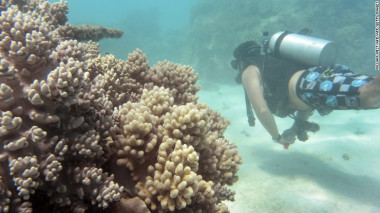
Coral around the world is turning white and even dying as recent record
ocean heat takes a devastating toll. It has triggered the fourth global
mass coral bleaching event, according to the US National Oceanic and
Atmospheric Administration (NOAA).
Bleaching happens when coral gets
stressed and turns white because the water it lives in is too hot. Coral
sustains ocean life, fishing, and creates trillions of dollars of revenue
annually.
Ocean heat records have been falling for months but this is the
first global evidence of how this episode is affecting sea life. The US
National Oceanic and Atmospheric Administration (NOAA) confirmed the mass
stress in all oceans (the Atlantic, Pacific and Indian Ocean) after weeks
of receiving reports from scientists globally. The bleached coral can look
beautiful in pictures but scientists that dive to examine the reefs say
that up close the coral is clearly ill and decaying.
BBC 15th April 2024
Nuke authorities approve loading fuel at Niigata nuclear plant
THE ASAHI SHIMBUN, April 15, 2024 https://www.asahi.com/ajw/articles/15229991
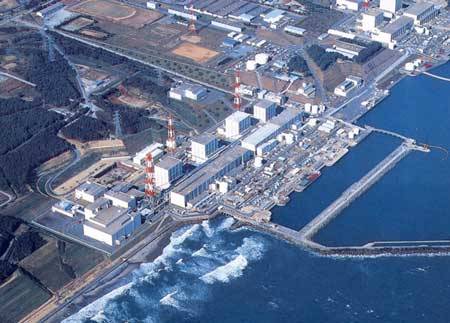
KASHIWAZAKI, Niigata Prefecture–The Nuclear Regulation Authority gave the go-ahead on April 15 to loading nuclear fuel into a reactor at the long-idled Kashiwazaki-Kariwa nuclear power plant here.
The approval is an important step toward restarting the plant, which has remained offline for more than a decade.
Plant operator Tokyo Electric Power Co. will start loading 872 fuel assemblies into the plant’s No. 7 reactor at around 4 p.m. The loading process is expected to take a couple of weeks to complete.
The reactor will then undergo a series of safety inspections before regulatory approval for a restart is granted.
In 2017, the reactor passed new safety regulatory standards mandated following the 2011 nuclear disaster at TEPCO’s Fukushima No. 1 nuclear power plant.
However, regulators suspended the restart process in 2021 due to deficiencies in the plant’s anti-terrorism measures. The NRA eventually approved the plant’s upgraded security measures in December last year.
Despite progress toward restarting the reactor, the governor of Niigata Prefecture has not yet granted his consent. Local communities remain divided, with ongoing debate and concerns regarding the plant.
Labour and nuclear weapons: a turbulent ideological history
BY CHAS NEWKEY-BURDEN, THE WEEK UK, 15 Apr 24
From the 1940s to Keir Starmer, the party leadership has zigzagged in and out of love with the bomb
“We’ve got to have this thing over here, whatever it costs,” Labour’s then foreign secretary Ernest Bevin reportedly said in the 1940s, and “we’ve got to have the bloody Union Jack on top of it”.
That “thing” was the atomic bomb, but since being acquired by the UK, nuclear weapons have been a “divisive issue” within Labour, said the BBC.
Anti-nuke ‘fixture’
Michael Foot, who became Labour leader in 1980, was a founder member of the Campaign for Nuclear Disarmament (CND) and “a fixture at anti-nuclear demonstrations”, said socialist magazine Tribune.
When Neil Kinnock took over as leader in 1983, the party’s policy, which he supported, was unilateral nuclear disarmament and the removal of all US nuclear weapons and bases from British soil. But this policy was only supported by a minority of the British public, and Labour lost the 1987 general election.
By 1989, Kinnock had convinced the party to drop these policies, but “many” on the Labour left remain “vehemently opposed” to that decision, said the BBC.
Previously ‘unthinkable’
As a young MP, Tony Blair was a member of CND, but he was never strongly in favour of unilateral disarmament, and as party leader, he was on board with the party’s pro-nuclear policy……………………………………………
A ‘nuclear-free world’
Like Foot and Blair, Jeremy Corbyn was also a CND member, rising up to be vice-president of the campaign group before he became party leader in 2015. Corbyn told BBC Radio 4’s “Today” programme that if he became prime minister, he would instruct the UK’s defence chiefs never to use the Trident nuclear weapons system.
“I am opposed to the use of nuclear weapons,” he said. “I am opposed to the holding of nuclear weapons. I want to see a nuclear-free world. I believe it is possible.”……………………
‘Unshakeable’
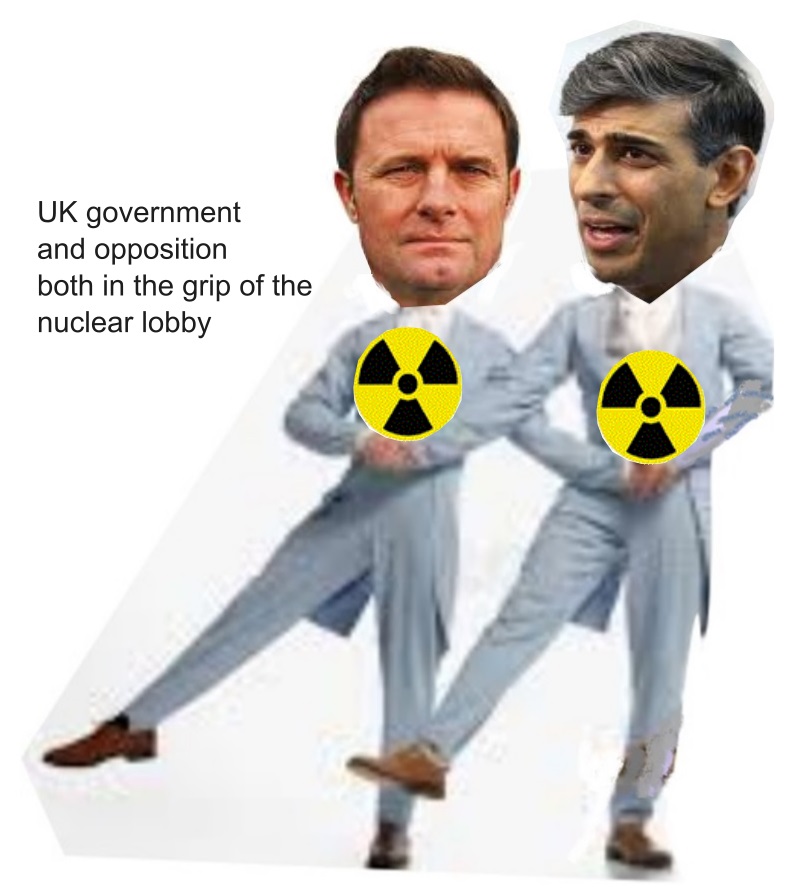
Corbyn’s successor, Keir Starmer, has moved the party back to a staunchly pro-nuclear policy. In an article in the Daily Mail last week, he said that his commitment to the UK’s nuclear weapons was “unshakeable” and “absolute”……………………
Asked by ITV News if he would be willing to push the nuclear button as PM if Britain were under attack, Starmer said that “deterrence only works if there is a preparedness to use it”. https://theweek.com/defence/labour-nuclear-weapons-history
Two days of strikes planned at Dounreay nuclear power complex
Workers at the Dounreay nuclear power complex have voted to go on strike
next month. The Prospect union said its members would walk out on 1 and 2
May followed by a work to rule. Workers from Unite and the GMB had
previously voted in favour of industrial action after rejecting a 4.5%
offer backdated to April 2023. Dounreay’s operator, Nuclear Restoration
Services (NRS), has said previously it was disappointed by the result of
the votes. The site employs about 1,200 people.
BBC 15th April 2024
Theberton faces nightmare Sizewell C roadworks disruption
Fed-up villagers living along a B-road near Leiston have been left upset,
sleep-deprived and out of pocket after weeks of roadworks for Sizewell C. A
night-time operation to resurface the B1122 through Theberton and towards
Middleton between March 18 and April 10 left residents at the end of their
tether. Middleton Parish Councillor Charles Macdowell – who lives along the
road – said his house was shaking as they planed the surface of the road
and the noise kept him and his wife awake at night.
East Anglian Daily Times 15th April 2024
https://www.eadt.co.uk/news/24252702.theberton-faces-nightmare-sizewell-c-roadworks-disruption
MPs flag UK’s HM Revenue & Custom’s £1.4bn active contracts with Fujitsu

accounting WEB, by Tom Herbert, 10 Feb 24
A committee of MPs has published new data showing that HMRC holds eight active contracts with Fujitsu with a combined value of £1.4bn, all of which were awarded after a High Court verdict that ruled the developer’s software was responsible for misreported losses during the Post Office scandal.
Data from the Treasury Committee shows public organisations have held more than £3.4bn worth of contracts with Fujitsu since 2019 – the year a High Court ruling determined that there were defects in the developer’s Horizon software. Just over £2bn worth of contracts were agreed before the judge’s ruling and continued into the period following 2019, while around £1.4 bn was awarded after 2019.
Fujitsu’s Horizon software is at the heart of one of the biggest miscarriages of justice in British legal history, where 900 Post Office subpostmasters were prosecuted based on faulty evidence provided by the system, and backed up by court testimonies from Fujitsu experts.
Despite the court ruling, and evidence that the company and its staff were complicit in covering up the scandal, Fujitsu continued to be listed as a preferred government supplier until 2022 when it was removed (but continued to win contracts through the regular procurement process). Following the public outcry generated by the ITV drama Mr Bates vs the Post Office, Fujitsu wrote to the government in January 2024 to confirm it would no longer tender for business.
HMRC’s active contracts
At the time of writing, HMRC holds eight active contracts with Fujitsu with a combined value of £1.39bn – the largest in terms of both value and number. Financial services watchdog the FCA maintains six contracts worth more than £9m. ………………………………………………….
Government tech programmes ‘hobbled’
While the figures may generate plenty of noise from politicians and frustration from taxpayers, they are unlikely to result in meaningful change in the near future.
There are few ‘strategic technology suppliers’ able to take on the complexity and scale of many of the projects undertaken by government departments – as underlined by the award of a £485m contract to Fujitsu for the Northern Irish Education Authority in December 2023, which received just one tender from the Japanese software house.
Critics have also pointed to a lack of technical and commercial skills in government to deal with the challenges – leaving them poorly positioned when it comes to digital transformation or re-procurement.
In a report last year, Public Accounts Committee Chair Meg Hillier said the government’s technology programmes are “hobbled by staff shortages, and a lack of support, accountability and focus from the top.
“The government talks of its ambitions for digital transformation and efficiency, while actively cutting the very roles which could help achieve them,” she added.
Assange Extradition Case Moves Forward While The CIA Covers Its Tracks

CAITLIN JOHNSTONE, APR 17, 2024 https://www.caitlinjohnst.one/p/assange-extradition-case-moves-forward?utm_source=post-email-title&publication_id=82124&post_id=143660864&utm_campaign=email-post-title&isFreemail=true&r=1ise1&triedRedirect=true&utm_medium=email
So they’re really doing it. The Biden administration is really ignoring Australia’s request to end the case against Julian Assange, and they’re proceeding with their campaign to extradite a journalist for telling the truth about US war crimes.
In order to move the extradition case forward, per a British high court ruling US prosecutors needed to provide “assurances” that the US would not seek the death penalty and would not deprive Assange of his human right to free speech because of his nationality. The US provided the assurance against the death penalty (which they’d previously opposed doing), and for the free speech assurance they said only that Assange will be able to “raise and seek to rely upon” US First Amendment rights, adding, “A decision as to the applicability of the First Amendment is exclusively within the purview of the U.S. Courts.”
Which is basically just saying “I mean, you’re welcome to TRY to have free speech protections?”
At the same time, CIA Director William Burns has filed a State Secrets Privilege demand to withhold information in a lawsuit against the agency by four American journalists and attorneys who were spied on during their visits to Assange at the Ecuadorian embassy in London. State secrets privilege is a US evidentiary rule designed to prevent courts from revealing state secrets during civil litigation; the CIA began invoking it with the Assange lawsuit earlier this year.
Burns argues:
“I am asserting the state secrets and statutory privileges in this case as I have determined that either admitting or denying that CIA has information implicated by the remaining allegations in the Amended Complaint reasonably could be expected to cause serious — and in some cases, exceptionally grave — damage to the national security of the United States. After deliberation and personal consideration, I have determined that the complete factual bases for my privilege assertions cannot be set forth on the public record without confirming or denying whether CIA has information relating to this matter and therefore risking the very harm to U.S. national security that I seek to protect.”
Which is obviously a load of horse shit. As Assange himself tweeted in 2017, “The overwhelming majority of information is classified to protect political security, not national security.” Burns isn’t worried about damaging “the national security of the United States,” he’s worried about the potential political fallout from information about the CIA spying on American lawyers and journalists while visiting a journalist who was being actively targeted by the legal arm of the US government.
Political security is also why the US is working to punish Julian Assange for publishing inconvenient facts about US war crimes. The Pentagon already acknowledged years ago that the Chelsea Manning leaks for which Assange is being prosecuted didn’t get anyone killed and had no strategic impact on US war efforts, so plainly this isn’t about national security. It’s just politically damaging for the criminality of the US government to be made public for all to see.
They’re just squeezing and squeezing this man as hard as they can for as long as they can get away with to keep him silent and make an example of him to show what happens when journalists reveal unauthorized information about the empire. Just like Gaza, the persecution of Julian Assange makes a lie of everything the US and its western allies claim to stand for, and reveals the cruel face of tyranny beneath the mask of liberal democracy.
The ‘Accepted Insanity’ of World War III
By Robert C. Koehler, 17 Apr 24 http://commonwonders.com/the-accepted-insanity-of-world-war-iii/
“Mr. Netanyahu faces a delicate calculation — how to respond to Iran in order not to look weak, while trying to avoid alienating the Biden administration and other allies already impatient with Israel’s prosecution of the war in Gaza.”
Yeah, this is virtually nothing: a random, utterly forgettable quote pulled from the New York Times — from the basic corporate coverage of our present-moment violence, as the world shimmies on the brink of . . . uh, World War III.
It’s the forgettable quotes, especially in regard to ongoing war, that may be the most dangerous, because all they do is solidify a collective sense of normal. My term for it is “accepted insanity.” We have the technological and psychological capacity to kill not simply thousands or even millions of people but the whole human race, but let’s talk about it in terms of strategy, tactics and public relations! Let’s talk about it as though we’re covering a bunch of 10-yer-old boys throwing stones. Which one’s going to win?
That’s the key issue here: winning.
When two cowboys face off in an armed confrontation, the one who draws and fires fastest, hitting the other guy in the stomach or wherever, wins. He gets to walk away with a self-satisfied smirk.
I’m not singling out the Times story quoted above as uniquely problematic in its coverage of the latest turn of events in the Middle East, but rather that it’s representative of the accepted insanity of endless war — the reduction of war to an abstraction, virtually always involving clearly defined good guys and bad guys, and describing murder (including mass murder) as retaliation, self-defense, “show of force,” etc., etc. “National interests” are the prize at stake. Human lives are just bargaining chips, except, of course, when the bad guys kill them.
The Times story, for instance, steps beyond its abstraction of the Israel-Iran confrontation at one point. Israel bombed Iran’s consulate in Damascus, Syria, killing several Iranian officers, the story informed us. Iran retaliated two weeks later, firing 300 drones and missiles at Israel, almost all of which were shot down and very little damage was caused. The Times noted: “The only serious casualty was a 7-year-old girl, Amina al-Hasoni, who was badly wounded.”
War affects children! Yes, yes, yes it does. My heart goes out to Amina al-Hasoni. But my God — some 13,000 children have been killed in the Israeli assault on Gaza, and thousands more injured, not to mention orphaned. And some are simply missing, lying under the rubble. What are their names?
What if war were covered the way street crime is covered — not as an abstraction, but with awareness that it’s a profound social problem? What if war were covered with external awareness, i.e., with wisdom that transcends political platitudes — rather than in obeisance to those platitudes?
Here, for instance, is CNBC reporting on the Israel-Iran confrontation. Noting that Israel has pledged to “exact a price” from Iran in response to the missile attack, CNBC then quotes President Biden condemning the attack and adding that the United States “will remain vigilant to all threats and will not hesitate to take all necessary action to protect our people.”
Can you believe? His words didn’t make me feel safer. I’d been pondering not just the possibility but the likely reality of World War III, and to read these words — “take all necessary action to protect our people” — made the wolves starting to howl in my own soul.
Platitudes plus nukes? Biden wasn’t talking about transcending war and shunning the country’s trillion-dollar military budget. Presumably, he was talking about using it, putting it to work to “protect” us — you know, to “defeat” our declared enemy (Iran, apparently), no matter the price exacted on Planet Earth, including on you and me. How about some media coverage that doesn’t blow this off with a shrug?
Coverage of war requires awareness of the lies that prop it up politically. For instance, as World Beyond War has put it:
“According to myth, war is ‘natural.’ Yet a great deal of conditioning is needed to prepare most people to take part in war, and a great deal of mental suffering is common among those who have taken part.”
In other words, war is not a product of human evolution — humanity finally becoming mature enough to fight itself in an organized, collective fashion — but essentially the opposite of that: an unevolved aspect of who we are . . . an embedded failure to evolve, you might say.
So many veterans, as the World Beyond War quote implies, often bear the burden of this truth well beyond their time of service. They are forced to face, on their own, the psychological and spiritual implications of what they did — of following orders, of participating in the dehumanization and murder of alleged enemies. In the wake of wars, vet suicide rates can be horrific. While such psycho-spiritual trauma is officially defined as a mental illness — post-traumatic stress disorder (PTSD) — others with deeper understanding, including many vets, call it moral injury. Following orders forced them to act beyond their own humanity: When you dehumanize others, you dehumanize yourself.
This is the accepted insanity the corporate media cover with such win-lose abstraction, even when we’re on the brink of World War III. Multiply moral injury by several billion human beings and what you could wind up with is human extinction.
What do we know about Israel’s nuclear weapons?

The New Arab Staff, 23 November, 2023
Israel is believed to possess between 80 and 400 nuclear weapons but has never faced serious international scrutiny over this.
Despite widespread speculation, Israel has neither confirmed nor denied having nuclear weapons, adhering to a policy of deliberate ambiguity.
Israel is believed to have between 80 to 400 nuclear warheads, with the first completed around late 1966 or early 1967.
This estimate would position Israel as the sixth nation globally to develop nuclear weapons. Delivery methods for these weapons are believed to include aircraft, submarine-launched cruise missiles, and the Jericho series ballistic missiles.
Israel consistently reiterates the cryptic refrain that it will “not be the first to introduce nuclear weapons to the Middle East”. The nation has not signed the Treaty on the Non-Proliferation of Nuclear Weapons (NPT) despite international calls to join.
Recently, the issue gained renewed attention when Israel’s Heritage Minister Amichai Eliyahu, of the extremist Otzma Yehudit (Jewish Power) party, suggested that using nuclear weapons against Gaza would be an option. He was suspended soon afterwards.
Turkish President Recep Tayyip Erdogan also recently said that the issue of Israel’s nuclear arsenal should remain a focus on the global agenda.
He accused Western nations of aiding and overlooking alleged crimes against humanity by Israel in Gaza, where over 14,000 people have been killed in indiscriminate bombardment.
History and implications
Israel’s first Prime Minister, David Ben-Gurion, was committed to acquiring nuclear weapons, justifying this by saying it was to prevent a recurrence of the Nazi Holocaust. …………………………..
By 1952, Israel Atomic Energy Commission chief Ernst David Bergmann sought nuclear collaboration with France, and laid the foundation for future French-Israeli cooperation. This partnership included Israeli scientists’ involvement in France’s nuclear facilities and knowledge sharing, particularly with those with experience on the Manhattan Project.
The relationship culminated in 1957, with France agreeing to build a nuclear reactor and reprocessing plant in Israel, a decision influenced by geopolitical factors and mutual scientific benefits.
This partnership was solidified through secret agreements, ostensibly concentrating on peaceful use of atomic technology but with implications for weapons development………………………………….
The Dimona reactor achieved criticality in 1962, and by 1966 Israel had reportedly developed its first operational nuclear weapon, marking the beginning of its full-scale nuclear weapons production.
The exact costs of Israel’s nuclear program are unknown, but substantial foreign aid and Mossad’s covert operations played crucial roles.
Israeli defector Mordechai Vanunu dramatically revealed the extent of the nuclear programme in 1986, and he was kidnapped by Mossad agents and brought back to Israel, serving long years in prison.
By the mid-2000s, estimates of Israel’s nuclear arsenal varied widely, with speculation about uranium enrichment capabilities adding to these uncertainties.
Despite occasional statements by other countries expressing concern about Israel’s nuclear capabilities, there has been little pressure on Israel to declare its nuclear activities or open up its facilities for inspection, let alone to destroy its weapons.
Double standards
The international community’s approach to nuclear proliferation exhibits notable disparities, especially when comparing the cases of Israel, Iran, and Pakistan.
Israel, despite widespread belief in its possession of nuclear weapons, has never publicly confirmed this and enjoys a unique position of strategic ambiguity. It does not face the same level of scrutiny or sanctions imposed on other nations.
In contrast, Iran, whose nuclear program has raised global concerns about potential weaponisation, has been subject to rigorous inspections, strict sanctions, and intense diplomatic negotiations under frameworks like the Joint Comprehensive Plan of Action (JCPOA).
Pakistan, having openly conducted nuclear tests in 1998, is often viewed through the lens of regional security dynamics, particularly its rivalry with India, and faces a distinct set of international concerns and regulatory measures. https://www.newarab.com/news/what-do-we-know-about-israels-nuclear-weapons
1 This Month
23 April – WEBINAR – Why new nuclear reactors are the wrong tools for decarbonization Thursday, April 23 • 1 AM – 2 AM AEST
World Nuclear Power. Reactors 1951-2026, 75 Years of Nuclear Power.
Interactive Map– https://dv.worldnuclearreport.org/
Chernobyl: The Lost Tapes – A good documentary on Chernobyl on SBS available On Demand for the next 3 weeks– https://www.sbs.com.au/ondemand/tv-program/chernobyl-the-lost-tapes/2352741955560

of the week–London Campaign for Nuclear Disarmament

Tell the Ukrainian Government to Drop Prosecution of Peace Activist Yurii Sheliazhenko
To see nuclear-related stories in greater depth and intensity – go to https://nuclearinformation.wordpress.com
-
Archives
- April 2026 (220)
- March 2026 (251)
- February 2026 (268)
- January 2026 (308)
- December 2025 (358)
- November 2025 (359)
- October 2025 (376)
- September 2025 (257)
- August 2025 (319)
- July 2025 (230)
- June 2025 (348)
- May 2025 (261)
-
Categories
- 1
- 1 NUCLEAR ISSUES
- business and costs
- climate change
- culture and arts
- ENERGY
- environment
- health
- history
- indigenous issues
- Legal
- marketing of nuclear
- media
- opposition to nuclear
- PERSONAL STORIES
- politics
- politics international
- Religion and ethics
- safety
- secrets,lies and civil liberties
- spinbuster
- technology
- Uranium
- wastes
- weapons and war
- Women
- 2 WORLD
- ACTION
- AFRICA
- Atrocities
- AUSTRALIA
- Christina's notes
- Christina's themes
- culture and arts
- Events
- Fuk 2022
- Fuk 2023
- Fukushima 2017
- Fukushima 2018
- fukushima 2019
- Fukushima 2020
- Fukushima 2021
- general
- global warming
- Humour (God we need it)
- Nuclear
- RARE EARTHS
- Reference
- resources – print
- Resources -audiovicual
- Weekly Newsletter
- World
- World Nuclear
- YouTube
-
RSS
Entries RSS
Comments RSS
 nuclear-news