The $97 billion mess – spent nuclear fuel reprocessing in Japan

The reprocessing plant was initially scheduled for completion in 1997.
Including expenditures for the future decommissioning of the plant, the total budget has reached 14.7 trillion yen. (close to $97 billion)
Even if the reprocessing plant is completed, it can treat only 800 tons of spent nuclear fuel annually at full capacity, compared with 19,250 tons of spent fuel stored nationwide.
“They have invested too much money in the program to give up on it halfway,“
Another delay feared at nuclear fuel reprocessing plant in Aomori
By AKI FUKUYAMA/ Staff Writer, April 1, 2024, https://www.asahi.com/ajw/articles/15183716
Long-flustered nuclear fuel cycle officials fear there could be another delay in the project.
In a surprise to hardly anyone, the “hopeful outlook” for completion in June of a spent fuel reprocessing plant, a key component in Japan’s nuclear fuel cycle project, was pushed back in late January.
The facility is supposed to extract plutonium and uranium from used nuclear fuel. The recycled fuel can then be used to create mixed-oxide (MOX) fuel, which can run certain nuclear reactors.
But the incompletion of the plant has left Japan with 19,000 tons of spent nuclear fuel with nowhere to go.
The nuclear waste stockpile will only grow, as the administration of Prime Minister Fumio Kishida is turning to nuclear energy to cut Japan’s greenhouse gas emissions and reduce the country’s dependence on increasingly expensive fossil fuels.
Under the plan, 25 to 28 reactors will be running by 2030, more than double the current figure. Tokyo Electric Power Co. is seeking to restart reactors at its Kashiwazaki-Kariwa nuclear power plant in Niigata Prefecture this year.
31 YEARS AND COUNTING
A sign reading “village of energy” stands near Japan Nuclear Fuel Ltd.’s nuclear fuel reprocessing plant in Rokkasho, Aomori Prefecture.
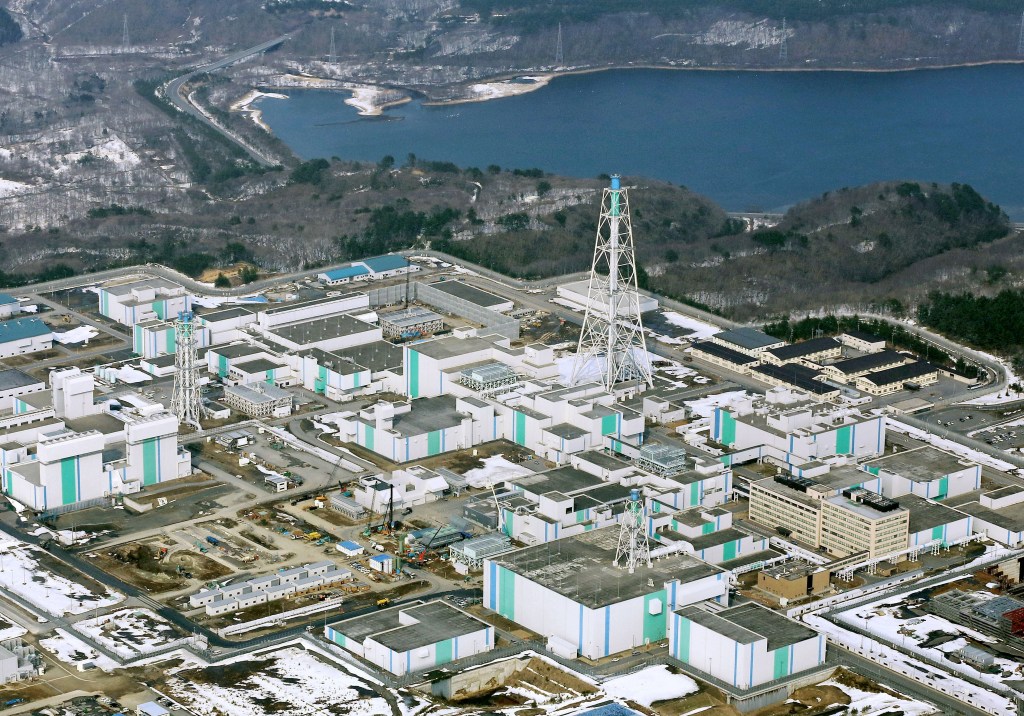
The site, which is 159 times the size of Tokyo Dome, is lined with white buildings with no windows.
Construction started 31 years ago. It was still being built in late November last year, when it was shown to reporters.
The reprocessing plant is located on the Shimokita Peninsula at the northern tip of the main Honshu island.
Crops in the area are often damaged by cold humid winds during summer, so Rokkasho village accepted the plant in 1985 for local revitalization in place of agriculture.
Employees of privately-run Japan Nuclear Fuel, which is affiliated with nine major power companies, and other industry-related personnel account for more than 10 percent of Rokkasho’s population.
After repeated readjustments to the schedule, Naohiro Masuda, president of Japan Nuclear Fuel, said in December 2022 that the plant’s completion should come as early as possible during the first half of fiscal 2024, which is April to September 2024. More specifically, he pointed to “around June 2024.”
But at a news conference on Jan. 31 this year, Masuda said it is “inappropriate to keep saying the plant will be completed in June.”
The reprocessing plant was initially scheduled for completion in 1997.
Many insiders at the plant say it will be “quite difficult” to complete the work within the first half of fiscal 2024.
If officially decided, it will be the 27th postponement of the completion.
PROLONGED SCREENING, ACCIDENTS
One of the reasons for the delay of the completion is prolonged screenings by the Nuclear Regulation Authority.
Flaws were identified one after another in the company’s documents submitted to the nuclear watchdog, and around 400 Japan Nuclear Fuel employees are working on the papers within a gymnasium at the plant site.
Mechanical problems have also hampered progress. In 2022, for example, a system to cool high-level radioactive liquid waste broke down.
Masuda visited industry minister Ken Saito on Jan. 19 to report on the situation at the plant.
Saito told Masuda about the construction, “I expect you to forge ahead at full tilt.”
Masuda stressed his company “is fully devoted to finishing construction as soon as possible,” but said safety “screening is taking so much time because we have myriad devices.”
The cost to build the reprocessing plant, including new safety measures, has ballooned to 3.1 trillion yen ($20.57 billion), compared with the initial estimate of 760 billion yen.
Including expenditures for the future decommissioning of the plant, the total budget has reached 14.7 trillion yen. (close to $97 billion)
Even if the reprocessing plant is completed, it can treat only 800 tons of spent nuclear fuel annually at full capacity, compared with 19,250 tons of spent fuel stored nationwide.
Kyushu Electric Power Co. said in January that it would tentatively suspend pluthermal power generation at the No. 3 reactor of its Genkai nuclear power plant in Saga Prefecture. The reactor uses MOX fuel.
Kyushu Electric commissioned a French company to handle used fuel, but it recently ran out of stocks of MOX fuel.
Kyushu Electric has a stockpile of plutonium in Britain, but it cannot take advantage of it because a local MOX production plant shut down.
HUGE INVESTMENT
Calls have grown over the years to abandon the nuclear fuel cycle project.
Many insiders of leading power companies doubt whether the reprocessing plant “will really be completed” at some point.
But the government has maintained the nuclear fuel cycle policy, despite the huge amounts of time and funds poured into it.
“The policy is retained just because it is driven by the state,” a utility executive said.
Hajime Matsukubo, secretary-general of nonprofit organization Citizens’ Nuclear Information Center, said the government’s huge investment explains why the fuel cycle program has yet to be abandoned.
“They have invested too much money in the program to give up on it halfway,” Matsukubo said.
1 Comment »
Leave a reply to Hdhd Cancel reply
1 This Month
26 April – Chernobyl: Inside the Meltdown airs on National Geographic on Sunday 26th April from 4pm

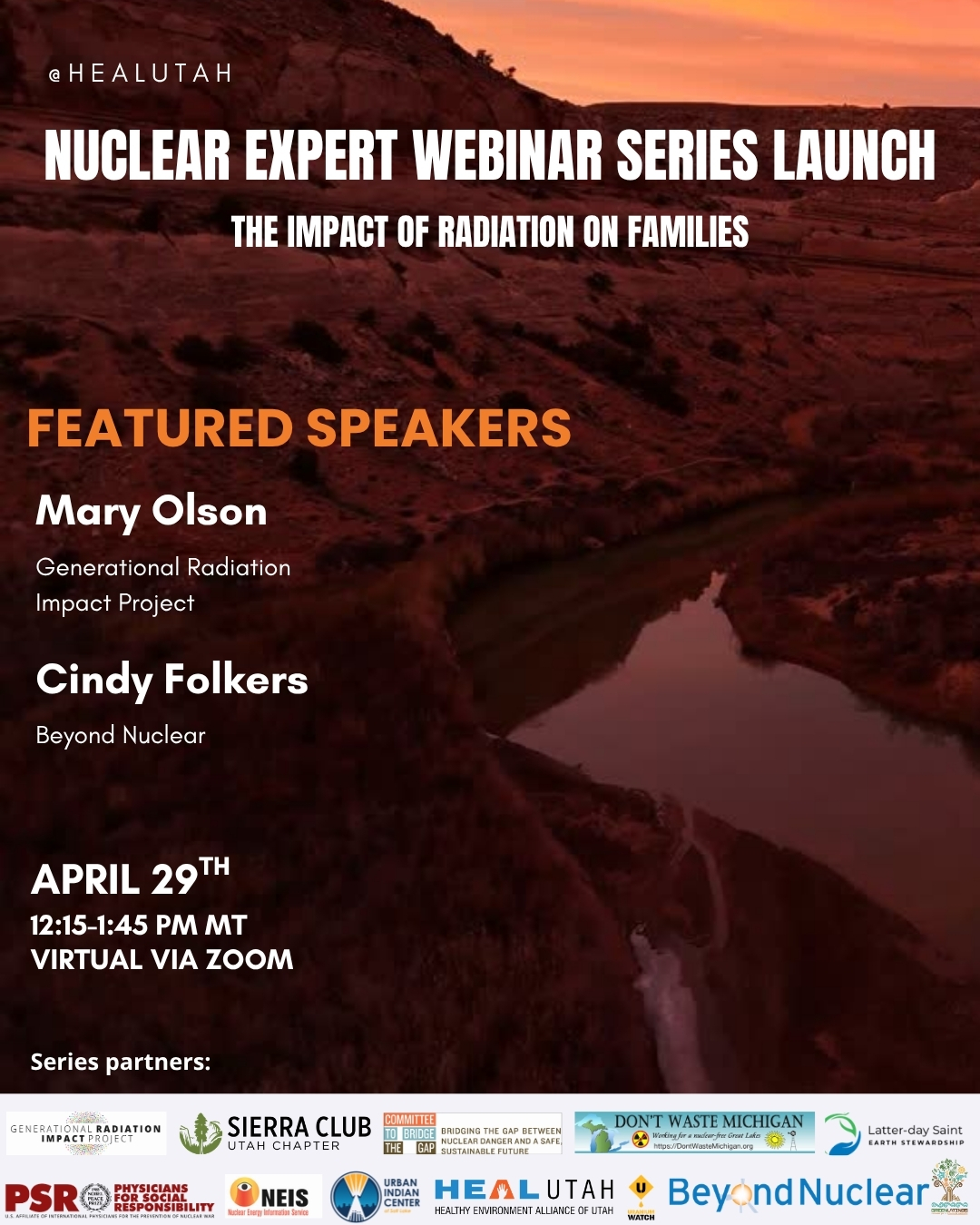
29 April – Nuclear Expert Webinar #1 – Radiation Impacts on Families with Mary Olson and Cindy Folkers
- 12:15 PM MT – 1:45 PM MT
- Location: Virtual – REGISTER TODAY

4 May -West Suburban Peace Coalition to discuss Iran war at May Educational Forum
Monday, May 4, 7:00 – 8:00 PM Central Standard Time
Title: : How Trump’s Narrative Tries to Shape the Reality of the War on Iran.
Contact Walt Zlotow, zlotow@hotmail.com 630 442 3045 for further information
14 May – online event From Bombs to Data Centres: the Face of Nuclear Colonialism

Pine Ridge Uranium is the real threat, not Tehran- Tell Burgum: Stop the Extraction.
Chernobyl: The Lost Tapes – A good documentary on Chernobyl on SBS available On Demand for the next 3 weeks– https://www.sbs.com.au/ondemand/tv-program/chernobyl-the-lost-tapes/2352741955560
To see nuclear-related stories in greater depth and intensity – go to https://nuclearinformation.wordpress.com
-
Archives
- May 2026 (12)
- April 2026 (356)
- March 2026 (251)
- February 2026 (268)
- January 2026 (308)
- December 2025 (358)
- November 2025 (359)
- October 2025 (376)
- September 2025 (257)
- August 2025 (319)
- July 2025 (230)
- June 2025 (348)
-
Categories
- 1
- 1 NUCLEAR ISSUES
- business and costs
- climate change
- culture and arts
- ENERGY
- environment
- health
- history
- indigenous issues
- Legal
- marketing of nuclear
- media
- opposition to nuclear
- PERSONAL STORIES
- politics
- politics international
- Religion and ethics
- safety
- secrets,lies and civil liberties
- spinbuster
- technology
- Uranium
- wastes
- weapons and war
- Women
- 2 WORLD
- ACTION
- AFRICA
- Atrocities
- AUSTRALIA
- Christina's notes
- Christina's themes
- culture and arts
- Events
- Fuk 2022
- Fuk 2023
- Fukushima 2017
- Fukushima 2018
- fukushima 2019
- Fukushima 2020
- Fukushima 2021
- general
- global warming
- Humour (God we need it)
- Nuclear
- RARE EARTHS
- Reference
- resources – print
- Resources -audiovicual
- Weekly Newsletter
- World
- World Nuclear
- YouTube
-
RSS
Entries RSS
Comments RSS
 nuclear-news
dead ruin and massive waste in a d3clining country where half the people are loaded with tritiumplutonium cs 137 and other radionuclides