The Post Office Scandal, Nuclear Waste and The Bransty Tunnel – Off Limits for Nuclear Luvvies at Britain Remade?

Trudy Harrison MP and wannabe MP Josh MacAlister have joined forces under the banner of “Britain Remade”. Their dream of building a nuclear prefab “faster” and “cheaper” next to the worlds biggest stockpile of plutonium is within our grasp they breathlessly tell us. “There could be new nuclear power in Cumbria, delivering jobs for the region, and clean energy for the whole country”.
Hot and dangerous Nuclear wastes from their “clean energy” trundles through the Bransty Rail Tunnel under the town of Whitehaven EVERY week enroute to the Sellafield site already bursting at the seams with radioactive crapola. The Bransty Rail Tunnel has served Network Rail and the nuclear industry well. It is a fine piece of old Victorian engineering which extends for a full 1km directly under homes and businesses in Whitehaven. Only recently it has become unstable. Network Rail are rather worried about the impacts of reactivated old mine water water bubbling up into the tunnel and even putting pressure on the sides of the tunnel (as we can see from Network Rail’s own video taken recently).
Rather than gushing about building untried untested nuclear prefabs (euphemistically called “Small Modular Reactors” actually pretty large at half the size of Calder Hall reactors), the MP and wannabe MP should be putting EVERY EFFORT into protecting the safety of the folk of Whitehaven by CLOSING THIS TUNNEL certainly to Nuclear Waste Transports and possibly to passenger and other freight trains. Ceasing nuclear waste production in Scotland and the North wouldn’t make a huge difference to electricity as nuclear’s contribution to the UKs electrcity capacity has been minimal according to National Grid with wind producing many times more capacity in the recent cold weather.
The most urgent question for Whitehaven is:
Why is heavily polluted mine water is still gushing into the nuclear waste route of the Bransty Tunnel over one year on and into Queens Dock, Whitehaven and what are Trudy Harrison MP and Josh MacAlister wannabe MP doing to address this?
Another equally urgent and topical question given the Post Office scandal is:
Are the MP and prospective MP happy that all nuclear waste consignments including those travelling a few times a week through the Bransty Tunnel are monitored and tracked by the same company, Fujitsu, responsible for the Post Office scandal. Fujitsu’s “Accountancy and Tracking Of Material” ATOM was contracted by the United Kingdom Atomic Energy Authority in 2001. “Fujitsu chose a combination of Microsoft and Oracle systems with web portal technology to make this possible, i.e. to successfully design and implement a package to process, update and report on nuclear and radioactive materials throughout the supply chain.” As Dik Third of UKAEA says, “We believe that there is no other system in the world capable of dealing with such complexity and breadth of plant operations and regulatory accounting requirements.” Does Whitehaven feel lucky? Britain is being Remade into what? A Nuclear Sacrifice Zone?
US plans to store nuclear weapons in UK: report
Examiner January 27 2024 –
The US is planning to station nuclear weapons in the UK for the first time in 15 years amid a growing threat from Russia, according to a report.
Warheads three times as strong as the Hiroshima bomb would be located at RAF Lakenheath in Suffolk under the proposals, The Telegraph reported.
The US previously placed nuclear missiles at RAF Lakenheath, removing them in 2008 when the Cold War threat from Moscow had receded.
Pentagon documents seen by the UK newspaper reveal procurement contracts for a new facility at the airbase.
A Ministry of Defence spokesperson said: “It remains a longstanding UK and NATO policy to neither confirm nor deny the presence of nuclear weapons at a given location.”
………………………….. Downing Street defended the government’s spending on defence, saying Britain has been Washington’s “partner of choice” in its strikes against Houthi rebels in the Red Sea because of its “military strength”. https://www.examiner.com.au/story/8500518/us-plans-to-store-nuclear-weapons-in-uk-report/—
Israel Accuses The International Court of Justice Of (You Guessed It) Antisemitism
CAITLIN JOHNSTONE, JAN 27, 2024, https://www.caitlinjohnst.one/p/israel-accuses-the-icj-of-you-guessed?utm_source=post-email-title&publication_id=82124&post_id=141088641&utm_campaign=email-post-title&isFreemail=true&r=1ise1&utm_medium=email—
The International Court of Justice rejected Israel’s request to dismiss the genocide case brought against it by South Africa on Friday, ruling by a massive majority that the case shall proceed and instructing Israel to refrain from killing and harming Palestinians in the interim.
Many Palestine supporters have expressed dismay that the ICJ did not explicitly order a ceasefire, while many others (including South African officials) argue that the ruling is very positive and tantamount to a ceasefire order because it demands the end of harm to members of the protected group.
Imperial media are aggressively emphasising the absence of a ceasefire order in their headlines and many Israel apologists are framing that absence as a victory for their favorite ethnostate, but such performative chest-thumping is severely undercut by the way high-level Israeli officials are currently accusing the ICJ of antisemitism and saying Israel should ignore its rulings.
“The international court of justice went above and beyond when it granted South Africa’s antisemitic request to discuss the claim of genocide in Gaza, and now refuses to reject the petition outright,” complained Israeli defense minister Yoav Gallant in response to the ruling.
“The decision of the antisemitic court in The Hague proves what was already known: This court does not seek justice, but rather the persecution of Jewish people,” said Israeli national security minister Itamar Ben Gvir.
Ben Gvir also tweeted “Hague Schmague” immediately after the ruling was issued, which will probably go down in history as the most Israeli tweet of all time.
Everyone’s arguing about whether or not the ICJ’s ruling is helpful, and I don’t know enough one way or the other to be sure either way, but from where things stand right now it does seem unlikely to me that managers of the Israeli war machine would be getting this freaked out and whipping out their tired old “antisemitism” song and dance if there wasn’t something of substance to it.
International lawyer Francis Boyle, who won provisional measures against Yugoslavia at the ICJ in 1993, said the following of the ruling:
“This is a massive, overwhelming legal victory for the Republic of South Africa against Israel on behalf of the Palestinians. The U.N. General Assembly now can suspend Israel from participation in its activities as it did for South Africa and Yugoslavia. It can admit Palestine as a full member. And — especially since the International Criminal Court has been a farce — it can establish a tribunal to prosecute the highest level officials of the Israeli government, both civilian and military.”
So take that for whatever that’s worth to you. In any case the butchery in Gaza still urgently needs to be ended, and only time will tell whether Friday’s development had any major effect on the outcome of this horror.
But man what I wouldn’t have given to be a fly on the wall at the meetings they were having at the US State Department on Friday. It’s days like this that remind you why empire managers switched from talking about “international law” to using the meaningless phrase “rules-based international order”.

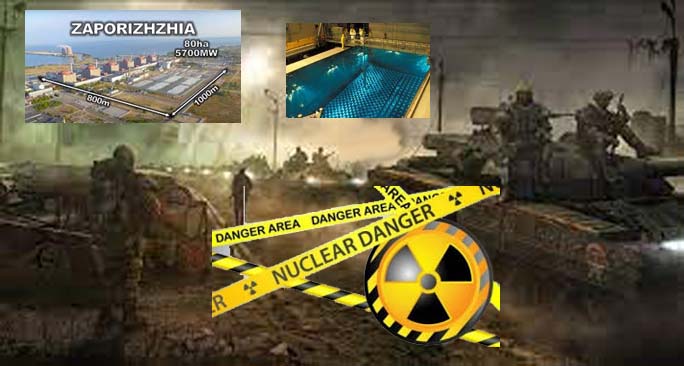
UN Nuclear Chief Says ‘Very Real’ Threat Remains at Moscow-Held Zaporizhzhia Plant
Moscow Times 26 Jan 24
The possibility of a nuclear disaster at the Russian-held Zaporizhzhia nuclear plant in Ukraine remains “very real,” according to the head of the UN’s nuclear watchdog. …….
Regular shelling and drone attacks around the plant have raised the risks of a radioactive disaster, while Kyiv and Moscow have accused each other of planning provocations.
Experts from the International Atomic Energy Agency (IAEA) have been on the ground monitoring the Zaporizhzhia plant since September 2022.
“The plant’s six reactors have been shut down since mid-2022 — five of them in cold shutdown and one in hot shutdown. But the potential dangers of a major nuclear accident remain very real,” IAEA chief Rafael Grossi told the UN Security Council on Thursday.
Grossi warned that issues with access to power could lead to a disaster at the Moscow-controlled nuclear plant.
Emergency diesel generators are now “the last line of defense against a nuclear accident” after they were activated eight times when the plant lost all off-site power, he added.
“The plant is currently relying on just two lines of external power, and sometimes just one, or for a period the backup power was not properly configured. This demonstrates the highly precarious situation regarding essential off-site power.”………. https://www.themoscowtimes.com/2024/01/26/un-nuclear-chief-says-very-real-threat-remains-at-moscow-held-zaporizhzhia-plant-a83860
US nuclear agency isn’t consistent in tracking costs for some construction projects, report says
Daily Mail, 26 Jan 24, PHOENIX (AP) – The U.S. agency in charge of maintaining the nation´s nuclear arsenal is not consistent when it comes to tracking the progress of small construction projects, making it difficult to prevent delays and cost overruns, congressional investigators said in a report released Thursday.
The Government Accountability Office warned in the report that even fewer projects will go under the microscope if officials raise the dollar limit for what qualifies as a small project. Congress has raised that threshold numerous times, reaching $30 million during the last fiscal year after having started at $5 million in 2003.
Without collecting and tracking information on minor projects in a consistent manner, National Nuclear Security Administration officials may not have the information they need to manage and assess project performance, the investigators said…………………………………………………
Greg Mello with the Los Alamos Study Group said large projects often are split into two or more smaller ones as a way to avoid federal and congressional oversight and accountability. He said better reporting after the fact won’t necessarily help NNSA do a better job of managing projects going forward.
“There are too many contractors and subcontractors in the value chain, too many profit opportunities and too few penalties for poor performance to expect high-quality results,” he said.
Mello pointed to the contracts to run Los Alamos and other sites that are part of the complex, saying they are worth tens of billions of dollars and are among the largest contracts in the federal government………………………..
Between 2019 and 2023, the congressional investigators documented 414 minor construction projects worth more than $3 billion at NNSA sites across several states. Most of that spending was done at Lawrence Livermore National Laboratory in California and at Sandia and Los Alamos labs in New Mexico.https://www.dailymail.co.uk/wires/ap/article-13008399/US-nuclear-agency-isnt-consistent-tracking-costs-construction-projects-report-says.html
Two Men Sentenced for Falsifying Documents Related to Testing of Equipment at Nuclear Power Plants
Two men attended sentencing hearings today in federal court for their
roles in creating false calibration certificates in a matter within the
jurisdiction of the Nuclear Regulatory Commission (NRC). Miguel Marcial
Amaro and Martin Ramos had each previously pleaded guilty to the felony
offense of making and using a false document, in violation of 18 U.S.C. §
1001. Each defendant is banned from participation or employment in
NRC-licensed activities as a condition of their plea agreement – Marcial
Amaro for five years and Ramos for two years.
US Dept. Justice 25th Jan 2024
France to push UK government for additional support for faltering nuclear projects
The fallout from EDF’s confirmation its flagship Hinkley Point nuclear
project is facing further delays and budget overruns continued yesterday,
with reports French Ministers are preparing to call on their UK
counterparts to help shoulder some of the ballooning costs faced by the
state-owned energy giant.
The FT reported the French government is
preparing to call directly on the Westminster government to revisit some of
the funding arrangements for EDF’s UK nuclear plans, which include the
delayed Hinkley Point project and the proposed Sizewell C project that it
co-owns with the UK government. The paper quoted an unnamed French economy
ministry official as saying, “the British government cannot at the same
time say EDF has to figure it out alone on Hinkley Point and at the same
time ask EDF to put money into Sizewell”.
Business Green 25th Jan 2024
Finland is a focal point of Nato’s largest exercise since the Cold War, and looks to siting nuclear weapons.
YLE NEWS 26 Jan 24
Nato’s largest military exercise since the Cold War is starting in Finland this week, reports Ilta-Sanomat.
The exercise, dubbed “Steadfast Defender”, is bringing Nato soldiers to Finland. The drill, which includes a total of 90,000 troops from 31 Nato countries, will span this winter and spring and involves thousands of troops moving massive amounts of material through Sweden.
Troops are practicing defending a European Nato ally that has come under attack. Swedish broadcaster SVT has reported that the exercise features a scenario where Russia attacks Finland and Nato invokes Article 5, its collective defence clause.
Nuclear reality
An editorial in Helsingin Sanomat suggests that Finnish leaders have not come to terms with the fact that nuclear weapons are a core part of Nato’s deterrence policy. The paper notes that some presidential candidates don’t support siting nuclear weapons in Finland. At the same time, Finland is reworking its nuclear safety laws. According to HS, these reforms must not impede Nato’s operational activities in a wartime situation in Finland.
The nuclear deterrent is a central component of Nato’s security guarantees, under which Finland sought protection by pursuing membership in the alliance. For that reason, Finland must bear its own responsibility in preserving that deterrent, according to the national daily……………. more https://yle.fi/a/74-20070550
Japan’s Fukushima nuclear plant: further delays for removal of melted fuel debris
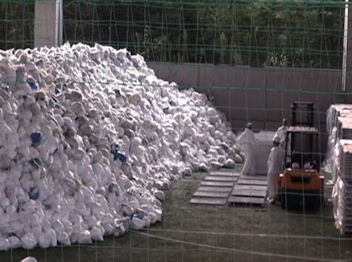
About 880 tons of highly radioactive melted nuclear fuel remain inside the three damaged reactors. Critics say the 30- to 40-year cleanup target set by the government and TEPCO for Fukushima Daiichi is overly optimistic. The damage in each reactor is different and plans need to be formed to accommodate their conditions.
NewsDay, By The Associated Press, January 25, 2024
TOKYO — The operator of the tsunami-hit nuclear plant in Fukushima announced Thursday a delay of several more months before launching a test to remove melted fuel debris from inside one of the reactors, citing problems clearing the way for a robotic arm.
The debris cleanup initially was supposed to be started by 2021, but it has been plagued with delays, underscoring the difficulty of recovering from the plant’s meltdown after a magnitude 9.0 quake and tsunami in March 2011.
The disasters destroyed the Fukushima Daiichi nuclear plant’s power supply and cooling systems, causing three reactors to melt down, and massive amounts of fatally radioactive melted nuclear fuel remain inside to this day.
The government and the Tokyo Electric Power Company Holdings, or TEPCO, initially committed to start removing the melted fuel from inside one of the three damaged reactors within 10 years of the disaster.
In 2019, the government and TEPCO decided to start removing melted fuel debris by the end of 2021 from the No. 2 reactor after a remote-controlled robot successfully clipped and lifted a granule of melted fuel during an internal probe.
But the coronavirus pandemic delayed development of the robotic arm, and the plan was pushed to 2022. Then, glitches with the arm repeatedly have delayed the project since then.
On Thursday, TEPCO officials pushed back the planned start from March to October of this year.
TEPCO officials said that the inside of a planned entryway for the robotic arm is filled with deposits believed to be melted equipment, cables and other debris from the meltdown, and their harder-than-expected removal has delayed the plan.
TEPCO now is considering using a slimmer, telescope-shaped kind of robot to start the debris removal.
About 880 tons of highly radioactive melted nuclear fuel remain inside the three damaged reactors. Critics say the 30- to 40-year cleanup target set by the government and TEPCO for Fukushima Daiichi is overly optimistic. The damage in each reactor is different and plans need to be formed to accommodate their conditions.
TEPCO has previously tried sending robots inside each of the three reactors but got hindered by debris, high radiation and inability to navigate them through the rubble, though they were able to gather some data in recent years.
Getting more details about the melted fuel debris from inside the reactors is crucial for their decommissioning. TEPCO plans to deploy four mini drones and a snake-shaped remote-controlled robot into the No. 1 reactor’s primary containment vessel in February to capture images from the areas where robots have not reached previously……… more https://www.newsday.com/news/nation/Japan-Fukushima-nuclear-plant-melted-fuel-decommissioning-v83291
Ukraine to start building 4 new nuclear reactors this year
By Pavel Polityuk. January 25, 2024
KYIV, Jan 25 (Reuters) – Ukraine expects to start construction work on four new nuclear power reactors this summer or autumn, Energy Minister German Galushchenko told Reuters on Thursday, as the country seeks to compensate for lost energy capacity due to the war with Russia.
Two of the units – which include reactors and related equipment – will be based on Russian-made equipment that Ukraine wants to import from Bulgaria, while the other two will use Western technology from power equipment maker Westinghouse.
All four reactors will be built at the Khmelnytskyi nuclear power plant in the west of Ukraine, Galushchenko added.
The timeline is more aggressive than previously outlined by Kyiv, which has spoken of starting work in some time in 2024 and without specifying that all four reactors could be developed simultaneously.
“I think (we’ll start construction) in summer-autumn,” Galushchenko said in an interview. “We need vessels,” he added, referring to the reactor pressure vessels that will have to be imported. We want to do the third and fourth units right away.”
Construction of the 3rd and 4th reactors at Khmelnytskyi began in the 1980s but was frozen.
Since gaining independence from the Soviet Union in 1991, Ukraine has built three new nuclear reactors – one each at Zaporizhzhia, Khmelnytskyi and Rivne nuclear power plants…………………
In parallel with the construction of the Soviet-era VVER-1000 units, Ukraine wants to start preparatory construction work to accommodate two modern Western AP-1000 units, also at Khmelnytskyi.
“We need to pass (parliamentary) legislation and we have draft laws on the 3rd, 4th, 5th and 6th units. This is VVER-1000s, while the 5th and 6th we want to build the AP-type. This is a parallel process,” he said.
In December, Ukraine’s nuclear power firm Energoatom and Westinghouse signed an agreement on the purchase of equipment for Khmelnytskyi’s 5th power unit.
Reporting by Pavel Polityuk; Editing by Mike Collett-White and Nick Macfie https://www.reuters.com/business/energy/ukraine-start-building-4-new-nuclear-reactors-this-year-minister-2024-01-25/
Japan’s Fukushima nuclear plant further delays removal of melted fuel debris
Daily Mail, 26 Jan 24, TOKYO (AP) – The operator of the tsunami-hit nuclear plant in Fukushima announced Thursday a delay of several more months before launching a test to remove melted fuel debris from inside one of the reactors, citing problems clearing the way for a robotic arm.
The debris cleanup initially was supposed to be started by 2021, but it has been plagued with delays, underscoring the difficulty of recovering from the plant’s meltdown after a magnitude 9.0 quake and tsunami in March 2011……………………………………………
About 880 tons of highly radioactive melted nuclear fuel remain inside the three damaged reactors. Critics say the 30- to 40-year cleanup target set by the government and TEPCO for Fukushima Daiichi is overly optimistic. The damage in each reactor is different and plans need to be formed to accommodate their conditions.
TEPCO has previously tried sending robots inside each of the three reactors but got hindered by debris, high radiation and inability to navigate them through the rubble, though they were able to gather some data in recent years.
Getting more details about the melted fuel debris from inside the reactors is crucial for their decommissioning. TEPCO plans to deploy four mini drones and a snake-shaped remote-controlled robot into the No. 1 reactor’s primary containment vessel in February to capture images from the areas where robots have not reached previously………………. https://www.dailymail.co.uk/wires/ap/article-13006423/Japans-Fukushima-nuclear-plant-delays-removal-melted-fuel-debris.html
In Assange’s Darkest Hour, Committee To Protect Journalists Yet Again Excludes Him From Jailed Journalist Index
for another year, CPJ excluded the imprisoned former WikiLeaks editor-in-chief from their database of jailed journalists.
Assange is a member of the International Federation of Journalists, which is the world’s largest federation of journalists.
if Assange was brought to trial that it would “effectively criminalize journalists everywhere.”
Assange is and will always be a detained journalist so long as the Justice Department pushes onward with this political case. It is too bad CPJ staff cannot get past their professional hangups and include him in their annual index. It would strengthen their opposition to the prosecution in a way that would give their advocacy even more clarity.
Kevin Gosztola, 20 Jan 24, https://thedissenter.org/assange-darkest-hour-cpj-yet-again-excludes-jailed-journalist-index/
The Committee to Protect Journalists (CPJ) released its census report for 2023. Three hundred and twenty detained or imprisoned journalists were counted by the press freedom organization, as of December 1, 2023.
As indicated, that number is not far from the record high of 360 jailed journalists that was set in 2022.
The 2023 census takes on greater significance given the Israeli government’s war on Gaza and the military attacks and crackdown on Palestinian journalists. Seventeen journalists were jailed by Israel, the “highest number of arrests” since CPJ began tracking arrests in 1992. It is the first time that Israel has “ranked among the top six offenders.”
But at this moment, WikiLeaks founder Julian Assange and his legal team are preparing for a major hearing on February 20 before the High Court of the Justice in the United Kingdom. They view the hearing as a final opportunity to save him from extradition to the United States, where he was charged with violating the Espionage Act in 2019.
Assange needs press freedom organizations, especially those with U.S. headquarters, to strengthen their stand against the charges from the Justice Department. However, for another year, CPJ excluded the imprisoned former WikiLeaks editor-in-chief from their database of jailed journalists.
I emailed CPJ a request for comment and asked why Assange remains excluded from the organization’s annual jailed journalist census, especially given CPJ’s methodology. The response that a CPJ communications person sent me was disappointing.
“After extensive research and consideration, CPJ chose not to list Assange as a journalist, in part because his role has just as often been as a source and because WikiLeaks does not generally perform as a news outlet with an editorial process,” CPJ answered.
The statement was copied-and-pasted from a 2019 post that then-CPJ executive editor Robert Mahoney authored, where he defended the exclusion of Assange.
I pointed out to CPJ that this “extensive research and consideration” was completed in 2019, and I did so because perhaps it is time for CPJ to reassess their determination. To that, CPJ replied, “Yes, there have been many articles about our position on Assange. While you’re free to disagree, our position has been clear, transparent, and consistent for years.”
Indeed, CPJ’s position has been clear. The organization has been consistent in their exclusion of Assange from the press freedom organization’s annual census.
It is debatable whether the organization has been transparent. To my knowledge, the “extensive research and consideration” that they did to decide that Assange is not a journalist has never been shared with the public.
Also, it remains puzzling how a press freedom organization led primarily by journalists with experience in newsgathering can insist that Assange is a source. He has never held a security clearance or a position in the U.S. government that would give him access to classified documents.
The source of the documents at issue in the Espionage Act prosecution against Assange was a U.S. Army intelligence analyst known as Chelsea Manning. She had access to the classified military and government documents, submitted over 700,000 files to WikiLeaks, and Assange published them in 2010 and 2011.
My request for comment mentioned CPJ’s own methodology for labeling someone a journalist, however, CPJ ignored this part of my question.
According to CPJ, a journalist is someone who covers the news or comments on public affairs through any media—including in print, in photographs, on radio, on television, and online.”
Between 2010 and 2017, Assange appeared numerous times on news networks, such as CNN and Al Jazeera English, to comment on WikiLeaks publications as well as public affairs, like National Security Agency (NSA) whistleblower Edward Snowden, NSA surveillance, and internet freedom. He frequently appeared on the independent news program “Democracy Now!” to discuss Google, corruption within U.S. security agencies, and even the Catalonia independence movement in Spain.
Assange is a member of the International Federation of Journalists, which is the world’s largest federation of journalists. Twenty affiliates of the European Federation of Journalists (EFJ), including France, Germany, Italy, Spain, and the United Kingdom, granted Assange honorary membership.
Since 2010, Assange has also been a member of the Media, Entertainment, and Arts Alliance, a trade union in Australia.
CPJ partnered with various civil liberties, human rights, and press freedom organizations in December 2022 to send a letter to Attorney General Merrick Garland demanding that the Justice Department drop all charges against Assange.
On World Press Freedom Day in 2023, CPJ CEO Jodie Ginsberg spoke at an event hosted by the United Nations Educational, Scientific, and Cultural Organization (UNESCO) at the UN headquarters in New York.
Ginsberg called out lawfare targeting journalists and clearly stated, “One thing that the United States could concretely do is drop the charges against Julian Assange.” She noted if Assange was brought to trial that it would “effectively criminalize journalists everywhere.”
So, why the refusal to label Assange a journalist?
I asked CPJ if they have come under pressure from officials within the U.S. government and that is why they will not acknowledge Assange is a jailed journalist. After all, if the Chinese or Russian governments detained someone like Assange, that person would almost certainly be included in CPJ’s index.
The press freedom organization disregarded this portion of my request for comment.
Continue readingNuclear hype in meltdown

The latest nuclear power ‘renaissance’ is going in reverse.
Dr Jim Green , 23rd January 2024, https://theecologist.org/2024/jan/23/nuclear-hype-meltdown
Nuclear power went backwards last year and shrunk to below 10 percent of global electricity generation despite all the hype about a new nuclear ‘renaissance’. Meanwhile, renewables enjoyed record growth for the 22nd consecutive year and now accounts for more than 30 percent.
The nuclear renaissance of the late-2000s was a bust due to the Fukushima disaster and catastrophic cost overruns with reactor projects. The latest renaissance is heading the same way – nowhere.
There were five reactor start-ups and five permanent closures in 2023 with a net loss of 1.7 gigawatts (GW) of capacity. There were just six reactor construction starts in 2023, five of them in China.
Hype

Due to the ageing of the reactor fleet, the International Atomic Energy Agency (IAEA) anticipates the closure of 10 reactors (10 GW) per year from 2018 to 2050.
Therefore the industry needs an annual average of 10 reactor construction starts, and 10 reactor startups (grid connections), just to maintain its current output. Over the past decade (2014-23), construction starts have averaged 6.1 per year and reactor startups have averaged 6.7.
The number of operable power reactors is 407 to 413 depending on the definition of operability, well down from the 2002 peak of 438.
Nuclear power’s share of global electricity generation has fallen to 9.2 percent, its lowest share in four decades and little more than half of its peak of 17.5 percent in 1996.
Over the two decades 2004-2023, there were 102 power reactor startups and 104 closures worldwide: 49 startups in China with no closures; and a net decline of 51 reactors in the rest of the world.
In China, there were five reactor construction starts in 2023 and just one reactor startup. Put another way, there was just one reactor construction start outside China in 2023. One. So much for the hype about a new nuclear ‘renaissance’.
Deployment

Small modular reactors (SMRs) are the subject of endless hype but there were no SMR construction starts or startups last year.
Indeed, the biggest SMR news in 2023 was NuScale Power’s decision to abandon its flagship project in Idaho despite securing astronomical subsidies amounting to around US$4 billion from the US Government. The company is far more likely to go bankrupt than to break ground on its first reactor.
The pro-nuclear Breakthrough Institute noted in a November 2023 article that efforts to commercialise a new generation of ‘advanced’ nuclear reactors “are simply not on track” and it warned nuclear advocates not to “whistle past this graveyard”.
The Institute said: “The NuScale announcement follows several other setbacks for advanced reactors. Last month, X-Energy, another promising SMR company, announced that it was canceling plans to go public. This week, it was forced to lay off about 100 staff.
“In early 2022, Oklo’s first license application was summarily rejected by the Nuclear Regulatory Commission before the agency had even commenced a technical review of Oklo’s Aurora reactor.
“Meanwhile, forthcoming new cost estimates from TerraPower and XEnergy as part of the Department of Energy’s Advanced Reactor Deployment Program are likely to reveal substantially higher cost estimates for the deployment of those new reactor technologies as well.”
Installed
The International Energy Agency (IEA) has just released its ‘Renewables 2023’ report and it makes for a striking contrast with the nuclear industry’s malaise.
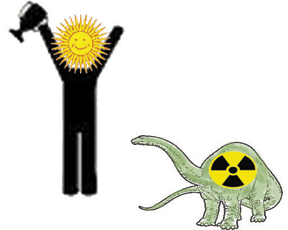
Nuclear power suffered a net loss of 1.7 GW capacity in 2023, whereas renewable capacity additions amounted to a record 507 GW, almost 50 percent higher than 2022. This is the 22nd year in a row that renewable capacity additions set a new record, the IEA states.
Nuclear power accounts for a declining share of global electricity generation (currently 9.2 percent) whereas renewables have grown to 30.2 percent.
The IEA expects renewables to reach 42 percent by 2028 thanks to a projected 3,700 GW of new capacity over the next five years in the IEA’s ‘main case’.
The IEA states that the world is on course to add more renewable capacity in the next five years than has been installed since the first commercial renewable energy power plant was built more than 100 years ago.
Milestones
Solar and wind combined have already surpassed nuclear power generation and the IEA notes that several other milestones are in sight:
‒ In 2025, renewables surpass coal-fired electricity generation to become the largest source of electricity generation
‒ In 2025, wind surpasses nuclear electricity generation
‒ In 2026, solar PV surpasses nuclear electricity generation
‒ In 2028, renewable energy sources account for over 42 percent of global electricity generation, with the share of wind and solar PV doubling to 25 percent.
An estimated 96 percent of newly installed, utility-scale solar PV and onshore wind capacity had lower generation costs than new coal and natural gas plants in 2023, the IEA states.
Tripling
The IEA states in its ‘Renewables 2023’ report that: “Prior to the COP28 climate change conference in Dubai, the International Energy Agency (IEA) urged governments to support five pillars for action by 2030, among them the goal of tripling global renewable power capacity.
“Several of the IEA priorities were reflected in the Global Stocktake text agreed by the 198 governments at COP28, including the goals of tripling renewables and doubling the annual rate of energy efficiency improvements every year to 2030.
“Tripling global renewable capacity in the power sector from 2022 levels by 2030 would take it above 11 000 GW, in line with IEA’s Net Zero Emissions by 2050 (NZE) Scenario.”
It adds: “Under existing policies and market conditions, global renewable capacity is forecast to reach 7300 GW by 2028. This growth trajectory would see global capacity increase to 2.5 times its current level by 2030, falling short of the tripling goal.”
In the IEA’s ‘accelerated case’, 4,500 GW of new renewable capacity will be added over the next five years (compared to 3,700 GW in the ‘main case’), nearing the tripling goal. The goal of tripling renewables by 2030 is a stretch but it is not impossible. Conversely, the ‘pledge’ signed by just 22 nations at COP28 to triple nuclear power by 2050 is absurd.
Military-strategic
China’s nuclear program added only 1.2 GW capacity in 2023 while wind and solar combined added 278 GW. Michael Barnard noted in CleanTechnica that allowing for capacity factors, the nuclear additions amount to about seven terrawatt-hours (TWh) of new low carbon generation per year, while wind and solar between them will contribute about 427 TWh annually, over 60 times more than nuclear.
Barnard commented: “One of the things that western nuclear proponents claim is that governments have over-regulated nuclear compared to wind and solar, and China’s regulatory regime for nuclear is clearly not the USA’s or the UK’s.
“They claim that fears of radiation have created massive and unfair headwinds, and China has a very different balancing act on public health and public health perceptions than the west. They claim that environmentalists have stopped nuclear development in the west, and while there are vastly more protests in China than most westerners realise, governmental strategic programs are much less susceptible to public hostility.
“And finally, western nuclear proponents complain that NIMBYs block nuclear expansion, and public sentiment and NIMBYism is much less powerful in China with its Confucian, much more top down governance system.
“China’s central government has a 30-year track record of building massive infrastructure programs, so it’s not like it is missing any skills there. China has a nuclear weapons programme, so the alignment of commercial nuclear generation with military strategic aims is in hand too. China has a strong willingness to finance strategic infrastructure with long-running state debt, so there are no headwinds there either.
“Yet China can’t scale its nuclear program at all. It peaked in 2018 with seven reactors with a capacity of 8.2 GW. For the five years since then then it’s been averaging 2.3 GW of new nuclear capacity, and last year only added 1.2 GW…”
This Author
Dr Jim Green is the national nuclear campaigner with Friends of the Earth Australia and a member of the Nuclear Consulting Group.
Hinkley Point C could be delayed to 2031 and cost up to £35bn, says EDF

As nuclear plant is hit by further delay, real cost will be far higher after inflation is included, as project uses 2015 prices
Guardian, Alex Lawson, Wed 24 Jan 2024
The owner of Hinkley Point C has blamed inflation, Covid and Brexit as it announced the nuclear power plant project could be delayed by a further four years, and cost £2.3bn more.
The plant in Somerset, which has been under construction since 2016, is now expected to be finished by 2031 and cost up to £35bn, France’s EDF said. However, the cost will be far higher once inflation is taken into account, because EDF is using 2015 prices.
The latest in a series of setbacks represents a huge delay to the project’s initial timescale. In 2007, the then EDF chief executive Vincent de Rivaz said that by Christmas in 2017, turkeys would be cooked using electricity generated from atomic power at Hinkley. When the project was finally given the green light in 2016, its cost was estimated at £18bn…………
Crooks said: “Running the project longer will cost more money and our budget has also been affected by rising civil construction costs. It is important to say that British consumers or taxpayers won’t pay a penny, with the increased costs met entirely by shareholders.”
EDF had previously said that the first reactor unit at the nuclear site would be due to be complete by June 2027, with a 15-month buffer period which was likely to be used – putting its completion at September 2028, and a further year for the second unit. It costs were estimated between £25bn and £26bn, and this was later revised up to £32.7bn in February 2023
EDF gave three scenarios, ranging from becoming operational is 2029, to delays pushing this back to 2031.
It said that the cost of completing Hinkley will be between £31bn and £34bn, although if completion is delayed to 2031 costs would rise to £35bn.
In December it emerged EDF’s partner in the project, China General Nuclear, had halted funding for Hinkley. The move came after the government took over CGN’s stake in Hinkley’s proposed sister site, Sizewell C in Suffolk, stripping the Chinese state-owned company of its role in the project.
The latest financial estimates are based on accounting in 2015 figures, meaning the total cost of the project could be far higher when inflation over the last decade is factored in. Hinkley’s ballooning costs have proved controversial with French taxpayers, which are picking up the tab.
Hinkley Point C and Sizewell C are expected to herald a new era of nuclear plants touted by the government.
Last year the government launched a delivery body, Great British Nuclear, with the aim of accelerating the development of new nuclear projects. Earlier this month ministers set out plans for out for the “biggest nuclear power expansion in 70 years”.
However, the Hinkley Point C delay will add to concerns over project delays and costs, as well as skills in an industry earmarked to deliver a quarter of the national electricity demand by 2050………………..
EDF said in January it would delay the shutdown of four of its UK nuclear reactors for at least two years and increase investment in its British nuclear fleet. https://www.theguardian.com/business/2024/jan/23/hinkley-point-c-could-be-delayed-to-2031-and-cost-up-to-35bn-says-edf—
EDF’s UK Hinkley Nuclear Costs Balloon as Plant Delayed Again – an “unmitigated disaster”?

A government spokesperson said the new plant is “not a government project” and as such “any additional costs or schedule overruns are the responsibility of EDF and its partners and will in no way fall on taxpayers”.
The government has also just doubled its own investment into Sizewell C to £2.5bn and is in the process of raising capital from private investors.
A government spokesperson said the new plant is “not a government project” and as such “any additional costs or schedule overruns are the responsibility of EDF and its partners and will in no way fall on taxpayers”.
The government has also just doubled its own investment into Sizewell C to £2.5bn and is in the process of raising capital from private investors.
Hinkley C: UK nuclear plant price tag could rocket by a third.
By Simon Jack, Business editor
The final cost of the Hinkley Point C nuclear plant being built in Somerset may soar by about a third, according to the French firm developing it.
EDF now estimates that the cost could hit £46bn, when taking price rises into account.
The completion date could also be delayed by three years………………………………
The French state-owned firm manages all five nuclear power stations that are currently generating electricity in the UK, along with three that are defueling, the first stage of winding down operations.
In 2022, the cost of the UK’s first new nuclear plant since the 1990s was estimated at £26bn, with a target date for completion of June 2027.
Previous cost estimates have been expressed in 2015 prices for easy comparison over time.
But taking inflation into account, the previous estimate on final costs of £26bn works out at £34bn today. The updated estimate of £31-35bn, could see costs hit £46bn in today’s prices – an increase of about a third.
In a letter to staff, seen by the BBC, Stuart Crooks, the managing director of Hinkley Point C, said there were 7,000 substantial design changes required by British regulations that needed to be made to the site, with 35% more steel and 25% more concrete needed than originally planned.
The revised estimates come after the government recently announced ambitions for the biggest expansion in nuclear power for 70 years.
The UK government has said in the past it wants nuclear to provide up to 25% of the UK’s electricity needs by 2050 as part of its plans to combat climate change.
A government spokesperson said the new plant is “not a government project” and as such “any additional costs or schedule overruns are the responsibility of EDF and its partners and will in no way fall on taxpayers”…………………………………….
Stuart Crooks, the managing director of Hinkley Point C, pointed out, however, that UK bill payers will not be directly affected by those building and cost time overruns.
The French firm EDF agreed to shoulder the risk and pay the full cost of construction, including any increases. This was in return for an agreed electricity price that was substantially higher than the average price in 2015 and would only rise in line with inflation.
“It is important to say that British consumers or taxpayers won’t pay a penny, with the increased costs met entirely by shareholders,” Mr Crooks’ letter read.
However, this price shock comes at a sensitive time for the UK government, which has agreed to allow construction costs for a new plant at Sizewell in Suffolk to be added to customers’ bills gradually over the decade which it will take to build.
The government has also just doubled its own investment into Sizewell C to £2.5bn and is in the process of raising capital from private investors.
Last week, the government triggered a “development consent order” that allows early-stage construction to begin in Suffolk despite several legal challenges from local and national opponents who have taken their fight to the Supreme Court.
Alison Downes of the campaign group Stop Sizewell C said that the announcement of additional funding was”inexplicable” following news of delays to one of the government’s key nuclear projects.
She described the Hinkley and Sizewell projects as an “unmitigated disaster”.
“The government should cancel Sizewell C instead of handing over scarce billions that could be used instead for renewables, energy efficiency or – in this [general] election year – schools and hospitals,” she added……………….. https://www.bbc.com/news/business-68073279
-
Archives
- February 2026 (220)
- January 2026 (308)
- December 2025 (358)
- November 2025 (359)
- October 2025 (376)
- September 2025 (258)
- August 2025 (319)
- July 2025 (230)
- June 2025 (348)
- May 2025 (261)
- April 2025 (305)
- March 2025 (319)
-
Categories
- 1
- 1 NUCLEAR ISSUES
- business and costs
- climate change
- culture and arts
- ENERGY
- environment
- health
- history
- indigenous issues
- Legal
- marketing of nuclear
- media
- opposition to nuclear
- PERSONAL STORIES
- politics
- politics international
- Religion and ethics
- safety
- secrets,lies and civil liberties
- spinbuster
- technology
- Uranium
- wastes
- weapons and war
- Women
- 2 WORLD
- ACTION
- AFRICA
- Atrocities
- AUSTRALIA
- Christina's notes
- Christina's themes
- culture and arts
- Events
- Fuk 2022
- Fuk 2023
- Fukushima 2017
- Fukushima 2018
- fukushima 2019
- Fukushima 2020
- Fukushima 2021
- general
- global warming
- Humour (God we need it)
- Nuclear
- RARE EARTHS
- Reference
- resources – print
- Resources -audiovicual
- Weekly Newsletter
- World
- World Nuclear
- YouTube
-
RSS
Entries RSS
Comments RSS
 nuclear-news