Doomsday clock stays at 90 seconds to midnight: What we know

The clock was set close to midnight due to worries about Russia’s nuclear arsenal, Israel’s war on Gaza and climate change.
Atomic scientists have kept their Doomsday Clock set at 90 seconds to midnight as they did last year, citing worry about Russia’s potential use of nuclear weapons amid its invasion of Ukraine, Israel’s war on Gaza and worsening climate change as factors driving the risk of global catastrophe.
Here is what we know about the Doomsday Clock and Tuesday’s announcement:
What did the Bulletin of the Atomic Scientists announce?
Scientists kept their Doomsday Clock close to midnight and the latest it’s ever been set in its 77-year history.
“Conflict hot spots around the world carry the threat of nuclear escalation, climate change is already causing death and destruction, and disruptive technologies like AI and biological research advance faster than their safeguards,” Rachel Bronson, the bulletin’s president and CEO, said, adding that keeping the hands of the clock unchanged from the prior year is “not an indication that the world is stable”.
What war and conflicts led to this announcement?………………………………………………………………………………………..
UK’s flagship nuclear plant could cost up to $59 billion, developer says
A major nuclear plant that Britain’s government hopes will generate affordable, low-carbon energy could cost up to 46 billion pounds, or $59 billion, and the completion date could be delayed to after 2029
abc news, By SYLVIA HUI Associated Press, January 25, 2024
LONDON — A major nuclear plant that Britain’s government hopes will generate affordable, low-carbon energy could cost up to 46 billion pounds ($59 billion), and the completion date could be delayed to after 2029, the firm developing it said Wednesday.
The U.K. government says nuclear projects like the Hinkley Point C plant are a key part of its plans to ensure greater energy independence and achieve its “net zero” by 2050 strategy.
But a re-evaluation showed that the final bill for the plant, being built in Somerset in southwest England, could soar to up to 34 billion pounds in 2015 prices — or 43 billion pounds in current value, French energy giant EDF said…………………………………. https://abcnews.go.com/Business/wireStory/uks-flagship-nuclear-plant-cost-59-billion-developer-106635464
As Trump looms, top EU politician calls for European nuclear deterrent
Center-right leader Manfred Weber says EU needs to prepare for war without US help and must build its own atomic shield.
Politico, BY JAKOB HANKE VELA AND NICOLAS CAMUT, JANUARY 25, 2024
Facing the potential return of Donald Trump to the White House, the head of the EU’s biggest political grouping is calling for Europeans to prepare for war without support from the United States and to build its own nuclear umbrella.
Manfred Weber, leader of the center-right European People’s Party (EPP) — currently tipped to come first in the European Parliament election in June — described Trump and Russian President Vladimir Putin as “the two who set the framework” for 2024.
Trump’s seemingly imminent coronation as Republican presidential contender after wins in Iowa and New Hampshire have spooked Europe, where he is remembered as a NATO skeptic, accusing EU countries of not paying their way and threatening not to come to Europe’s defense if it were attacked………………………………………… more https://www.politico.eu/article/europe-nuclear-warfare-detterence-manfred-weber-vladimir-putin-ukraine-russia-war/
Chris Hedges: The Four Horsemen of Gaza’s Apocalypse

Biden has always been an ardent militarist — he was calling for war with Iraq five years before the U.S. invaded.
Blinken, along with Biden, lobbied for the invasion of Iraq
Sullivan, Biden’s national security advisor, and McGurk, are consummate opportunists, Machiavellian bureaucrats who cater to the reigning centers of power, including the Israel lobby.
Joe Biden relies on advisors who view the world through the prism of the West’s civilizing mission to the “lesser breeds” of the earth to formulate his policies towards Israel and the Middle East.
By Chris Hedges ScheerPost 21 Jan 24
Joe Biden’s inner circle of strategists for the Middle East — Antony Blinken, Jake Sullivan and Brett McGurk — have little understanding of the Muslim world and a deep animus towards Islamic resistance movements. They see Europe, the United States and Israel as involved in a clash of civilizations between the enlightened West and a barbaric Middle East. They believe that violence can bend Palestinians and other Arabs to their will. They champion the overwhelming firepower of the U.S. and Israeli military as the key to regional stability — an illusion that fuels the flames of regional war and perpetuates the genocide in Gaza.
In short, these four men are grossly incompetent. They join the club of other clueless leaders, such as those who waltzed into the suicidal slaughter of World War One, waded into the quagmire of Vietnam or who orchestrated the series of recent military debacles in Iraq, Libya, Syria and Ukraine. They are endowed with the presumptive power vested in the Executive Branch to bypass Congress, to provide weapons to Israel and carry out military strikes in Yemen and Iraq. This inner circle of true believers dismiss the more nuanced and informed counsels in the State Department and the intelligence communities, who view the refusal of the Biden administration to pressure Israel to halt the ongoing genocide as ill-advised and dangerous.
Biden has always been an ardent militarist — he was calling for war with Iraq five years before the U.S. invaded. He built his political career by catering to the distaste of the white middle class for the popular movements, including the anti-war and civil rights movements, that convulsed the country in the 1960s and 1970s. He is a Republican masquerading as a Democrat. He joined Southern segregationists to oppose bringing Black students into Whites-only schools. He opposed federal funding for abortions and supported a constitutional amendment allowing states to restrict abortions. He attacked President George H. W. Bush in 1989 for being too soft in the “war on drugs.” He was one of the architects of the 1994 crime bill and a raft of other draconian laws that more than doubled the U.S. prison population, militarized the police and pushed through drug laws that saw people incarcerated for life without parole. He supported the North American Free Trade Agreement, the greatest betrayal of the working class since the 1947 Taft-Hartley Act. He has always been a strident defender of Israel, bragging that he did more fundraisers for the American Israel Public Affairs Committee (AIPAC) than any other Senator.
“As many of you heard me say before, were there no Israel, America would have to invent one. We’d have to invent one because… you protect our interests like we protect yours,” Biden said in 2015, to an audience that included the Israeli ambassador, at the 67th Annual Israeli Independence Day Celebration in Washington D.C. During the same speech he said, “The truth of the matter is we need you. The world needs you. Imagine what it would say about humanity and the future of the 21st century if Israel were not sustained, vibrant and free.”
The year before Biden gave a gushing eulogy for Ariel Sharon, the former Israeli prime minister and general who was implicated in massacres of Palestinians, Lebanese and others in Palestine, Jordan and Lebanon — as well as Egyptian prisoners of war — going back to the 1950s. He described Sharon as “part of one of the most remarkable founding generations in the history not of this nation, but of any nation.”
Continue readingBerkshire nuclear defence workers strike
Planet Radio 24 Jan 24
Workers at the Atomic Weapons Establishment (AWE) at Aldermaston and Burghfield are on a 24-hour strike after two months of other forms of industrial action in a dispute over pay.
Action short of a strike started in mid-November and will re-commence on Thursday January 25. ……………………………………….https://planetradio.co.uk/greatest-hits/berkshire-north-hampshire/news/workers-awe-aldermaston-burghfield-strike/
TODAY. Time that Israel stopped being a religious dictatorship

What is so badly needed right now ? The truth. Facts. A bit of logic.
Israel has no official religion. Yet the declaration of independence in 1948 made it clear that Israel is “The Jewish State”.
And now – all the Western powers seem to agree with Benjamin Netanyahu - yes Israel IS the Jewish State.
And why does that matter?
Well, look at the past , and the present. What does a theocracy mean for its people?
Well, for hundreds of years up to around the 500 BC time, the Israel lands, especially Judah, were controlled by a state ideology of “Zion theology,” the idea that Yahweh, the god of Israel, had chosen Jerusalem for his dwelling-place and that the Davidic dynasty would reign there forever. Then the Babylonian conquest happened, and the Hebrew Bible developed in the exiled community. The exiles saw themselves as a people distinct from other peoples.
Oppressed by the Romans, the Jews later became persecuted for centuries by the Christians. In theocratic Europe, the Inquisition developed, culminating in the horrors of the Spanish Inquisition, torturing and killing non-Christians.
So, we see what religiously controlled States did to people, in the past.
And today.
Iran’s Islamic Republic says it all – enforcement of sharia law, oppression of women, oppression of religious minorities, the Supreme Leader exerts ideological and political control over a system dominated by clerics who shadow every major function of the state.
Saudi Arabia is an Islamic theocracy and the government has declared the Qur’an and the Sunnah (tradition) of Muhammad to be the country’s Constitution. Laws are enforced against religious minorities. It has the Committee for Promoting Virtue and Preventing Vice, which carries out religious policing, including control over women’s clothing and their lives. There are severe punishments for blasphemy. Education is dominated by a religious focus.
How does Israel get away with pretending not to be a theocracy?
There’s a worldwide pretence that Jews are an ethnic minority. But Jews are all over the world, and do not have distinctive physical traits or genetic markers.
From the Balfour Declaration of 1917, to the Declaration of Independence in 1948, the world powers seemed to agree that the Palestine communities didn’t matter, and the land could be claimed by Jews who had previously bought properties there, and by the European Jews who survived the Holocaust.
This was grossly unfair to the Palestinians, – and to the Jews, who had little other choice.
But they’re there now. And can’t realistically be moved elsewhere. And Palestinians exist too.
So – everybody has to live with this. It would be a good start if everybody, especially Israeli citizens, recognised the humanity of all people, stopped banging on about “God’s chosen people”, and clearly stated Israel as a secular state.
Israel minister renews call for striking Gaza with ‘nuclear bomb’
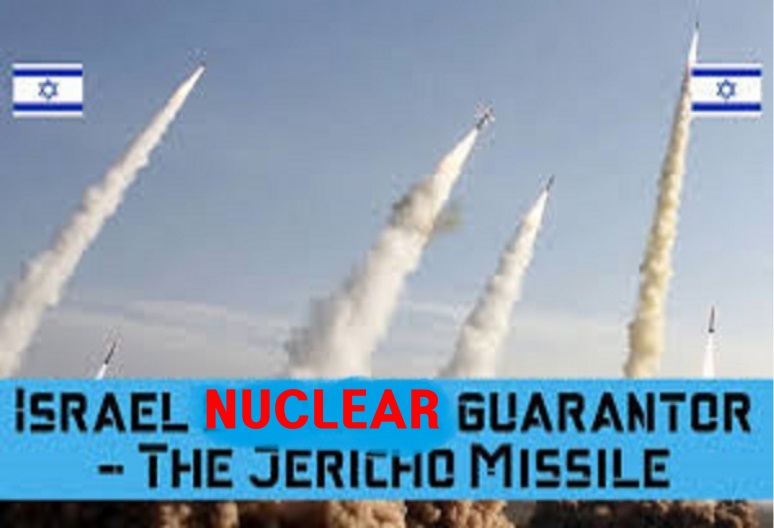
Israel’s far-right Heritage Minister Amichai Eliyahu today renewed his call for striking the Gaza Strip with a “nuclear bomb.”
“Even in The Hague they know my position,” the Times of Israel newspaper quoted Eliyahu as saying during a tour of the occupied West Bank city of Hebron, in reference to his previous call for using nuclear weapons in the Gaza Strip.
In November, Eliyahu said dropping a “nuclear bomb” on the Gaza Strip is “an option.”
The hardline minister also called for encouraging Gaza’s population to leave the enclave.
During the two-day public hearing at the International Court of Justice (ICJ) on 11-12 January, South Africa quoted extremist Israeli politicians, including Prime Minister Benjamin Netanyahu, who have time and again called for erraticating Palestinians, resettling Gaza and blocking the establishment of a Palestinian state, as evidence that Tel Aviv is committing genocide in the Gaza Strip.
France presses UK to help fill multibillion-pound hole in nuclear projects

Call comes day after EDF flagged more delays of construction of power plant at Hinkley Point
Sarah White in Paris and Jim Pickard and Rachel Millard in London, 25 Jan 24, https://www.ft.com/content/3320c06e-7ce3-4a6b-ab22-4b8201a4cfca
The French government is pressing the UK to help plug a multibillion-pound hole in the budget of nuclear power projects being built in Britain by France’s electricity operator EDF. The call for a contribution from the UK is likely to cause tensions between Paris and London, a day after state-owned EDF admitted its construction of a new nuclear power station at Hinkley Point in Somerset would suffer further costly delays, taking the bill to as much as £46bn. The UK has said it will not put cash into the project, which counts EDF as a majority shareholder, and is already backed by a government guarantee on its revenues once it is up and running.
But Paris is pushing for a “global solution” that would also encompass funding issues at another planned UK plant, Sizewell C, said a French economy ministry official and another person close to the talks. “It’s a Franco-British matter,” the French economy ministry official said. “The British government cannot at the same time say EDF has to figure it out alone on Hinkley Point and at the same time ask EDF to put money into Sizewell. We’re determined to find a global solution to see these projects through.”
Sizewell in Suffolk has a different financial set-up to Hinkley. The UK this week said it would inject another £800mn of state funds, bringing its total contribution to £2.5bn at the £20bn plant, where it is the top shareholder. Its partner EDF has no obligation to put more money in. French officials said discussions on various options had begun several months ago with British counterparts, although they acknowledged London had flagged budgetary constraints that would have to be taken into account. In the UK, a government official played down the talks, adding that on Hinkley Point: “Costs will be the responsibility of EDF.”
An EDF executive told the BBC on Wednesday that the French company picks up “the tab for the cost overruns”. EDF on Tuesday warned Hinkley Point would not now be completed until 2029 at the earliest, four years later than its original start date, while the two reactors could cost up to £46bn to build at today’s prices, compared with a £18bn budget in 2016.
Other factors might play into the discussions, however. Under Prime Minister Rishi Sunak, Britain took the political initiative to eject Chinese group CGN as an investor in Sizewell — leaving that project in need of fresh private capital, but also prompting CGN to pull back from Hinkley, where it is a 33.5 per cent shareholder. The Chinese group has fulfilled its contracted payments on Hinkley but has no obligation to fund over-costs and stopped doing so a few months ago.
“The French don’t have many levers here but the CGN issue is a very real one,” a third person close to the talks said. Finding private investors to make up the Hinkley shortfall may be tough, several people close to the group said, although formulas such as state guarantees could be discussed. EDF is only just coming out of a period of financial turmoil, and has big investments to make at home, too, in the coming decades. It was fully renationalised last year
“Our goal here . . . is for what’s happening at Hinkley Point, with the delays and the issue with the Chinese partner’s decision, not to impact EDF’s financial trajectory excessively,” the French economy ministry official said. However, one UK nuclear industry figure said that EDF’s plight at Hinkley was the consequence of signing up to a deal with the UK government a decade ago, which at the time was criticised for being too generous to the French group. Under a so-called contract for difference signed with the state, construction costs are not covered but future electricity production is backed up by subsidies in case power prices fall below a certain threshold.
UK nuclear plant hit by new multiyear delay and could cost up to £46bn.
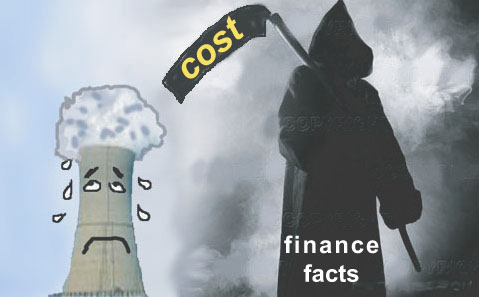
Britain’s flagship Hinkley Point C nuclear plant has been delayed until
2029 at the earliest, with the cost spiralling to as much as £46bn, in the
latest blow to a project at the heart of the country’s long-term energy
plans.
The surging bill and slipping schedule, announced on Tuesday by the
French state-owned operator and constructor EDF, will put pressure on the
UK government to provide extra financial support for the project.
EDF, which has also experienced long delays on recent parallel projects in
Finland and France that use the same reactor technology, blamed the latest
problems at Hinkley in Somerset on the complexity of installing
electromechanical systems and intricate piping. Hinkley was previously
delayed due to construction disruption during Covid pandemic.
Under EDF’s latest scenario, one of the two planned reactors at Hinkley Point C could
be ready in 2029, a two-year hold-up compared with the company’s previous
estimate of 2027. But it could be further delayed to 2031 in adverse
conditions, EDF said. It did not give an estimate for the second reactor.
EDF said the cost would now be between £31bn-£35bn based on 2015 prices,
depending on when Hinkley Point C was completed.
In today’s prices, the cost would balloon to as much as £46bn. The initial budget was £18bn, with a scheduled completion date of 2025. Alison Downes of Stop Sizewell C, a
campaign group opposed to the planned Suffolk nuclear plant, said EDF was
an “unmitigated disaster”. She added the UK government should cancel
Sizewell C, saying state funding for the project could be better spent on
“renewables, energy efficiency or, in this election year, schools and
hospitals”.
FT 23rd Jan 2024
https://www.ft.com/content/1157591c-d514-4520-aa17-158349203abd
EDF’s UK Hinkley Nuclear Costs Balloon as Plant Delayed Again

Francois de Beaupuy, Bloomberg News, Jan 23, 2024
(Bloomberg) — Electricite de France SA’s nuclear project at Hinkley Point in the UK will cost as much as £10 billion ($13 billion) extra to build and take several years longer than planned, the latest in a series of setbacks for the budget and timetable of the country’s largest energy project.
EDF now expects the two reactors it’s building in southwest England to cost between £31 billion and £35 billion in 2015 terms, the French energy company said in a statement on Tuesday. That’s up from an estimate of £25 billion to £26 billion in 2022, and is the fifth budget increase in eight years. At today’s prices, the project would cost as much as £46 billion, according to the Bank of England’s inflation calculator. …………………
The UK is struggling to get its huge nuclear program off the ground. The government is aiming for as much as 24 gigawatts of capacity by 2050 and will have to accelerate rapidly to achieve that. Hinkley Point will be the first new atomic station to start generating in Britain since 1995. Construction of complex nuclear plants is notoriously slow, and the cost overruns and delays at Hinkley may damp investor enthusiasm for the sector…………………………………..
The setback comes just one day after the UK government pledged to invest an additional £1.3 billion in EDF’s second UK project at Sizewell C. Ministers are hoping the commitment will attract enough private capital to make a final investment decision this year and make progress toward its ambitious 2050 target.
EDF was already struggling with the budget for Hinkley after China General Nuclear Power Corp, its partner in the project, stopped funding, potentially leaving the French company to foot the bill until it is completed. The government-owned French company will also have to spend tens of billions of euros on new atomic plants at home in the coming decades.
Hinkley Point C is not a French government project and so any additional costs or schedule overruns are the responsibility of EDF and its partners and will in no way fall on taxpayers, said a spokesperson for the UK Department for Energy Security and Net Zero.
…….. EDF’s current fleet of five nuclear plants is scheduled to shrink to just three by the end of 2026. Last year, output slumped to the lowest in more than four decades.
While rising costs of metals, cement and labor are affecting industries including large offshore wind projects, the revised plan may revive a controversy over how expensive the technology is and whether further delays are inevitable. Still, the UK government said this month that the country will build another large-scale nuclear power plant, beyond current projects led by EDF.
t’s not the first time Hinkley has ballooned beyond its budget. EDF increased its estimates in 2017, 2019, 2021, and 2022 from an initial estimate of £18 billion when the contract was signed with the UK in 2016.
At the start of the project, the French utility expected the first unit to start by the end of 2025. However, Brexit, the Covid pandemic and the war in Ukraine have disrupted supply chains and boosted the cost of labor and essential materials like steel and cement.
“Going first to restart the nuclear construction industry in Britain after a 20-year pause has been hard,” said Stuart Crooks, Managing Director for Hinkley Point C. https://www.bnnbloomberg.ca/edf-s-uk-hinkley-nuclear-costs-balloon-as-plant-delayed-again-1.2025542
CAMPAIGNERS opposing the development of nuclear power in Bradwell-on-Sea say they believe ‘new nuclear’ in the area “remains dead in the water”.
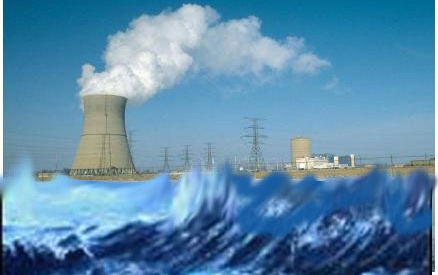
Blackwater Against New Nuclear Group (BANNG) has been fighting its cause for 15 years.
On January 11, the Government released its Civil Nuclear: Roadmap to 2050.
BANNG claims it means the original eight government-listed coastal sites, including Bradwell, are no longer the only sites earmarked for nuclear deployment.
They say new nuclear power stations will only be sited in “suitable locations” identified by developers based on a set of criteria.
BANNG chairman Professor Andy Blowers said: “This new approach to siting effectively rules Bradwell out of any further consideration.
“As we have strenuously demonstrated over the last 15 years, Bradwell is a most unsuitable site and the Blackwater communities are overwhelmingly opposed to nuclear development in such a fragile location, increasingly vulnerable to the impacts of climate change.”
He added: “BANNG welcomes the effective delisting of the Bradwell site. Delisting is something we have insisted on since the list was first compiled more than a decade ago.
“We are at a loss to understand what ‘certain advantages’ can conceivably be attributed to the site.
“Rather as the myriad evidence accumulated and published over the years shows, Bradwell is a wholly unsuitable and unsatisfactory site for the development of nuclear power at whatever scale and capacity.”
A BANNG spokesman said: “A major problem is the vulnerability of the site to flooding, and to storm surges and coastal processes that are intensifying as the impacts of climate change begin to take hold on this fragile coastline
They added: “There are other significant reasons why Bradwell should be off the Nuclear Road Map.
“The Blackwater area has precious environments in land, sea and sky which are protected, conserved and significant.
“The intrusion of a mega power station or a cluster of smaller reactors would prove intrusive, polluting and detrimental to habitats and to human wellbeing.
“Further, there would be dangerous highly radioactive wastes stored on the site for future generations to cope with, along with all the other problems of climate change.
“Above all, the communities around the Blackwater have over the years overwhelmingly declared against new nuclear development at the Bradwell site.
“New nuclear is not welcome here.”
Sizewell C opponents appeal to Supreme Court

Energy Live News, 24 Jan 24
1Opponents of the Sizewell C nuclear power plant, dismissed by the Court of Appeal, seek Supreme Court appeal as the government commits an extra £1.3 billion for project construction in Suffolk.
he government’s recent announcement of an extra £1.3 billion support for the project has prompted a renewed legal bid from the opponents, citing concerns about the project’s viability, sea defences, climate change and infrastructure sustainability.
Opponents of the Sizewell C nuclear power plant include campaign groups Together Against Sizewell C, Stop Sizewell C and Suffolk Coastal Friends of the Earth……..
https://www.energylivenews.com/2024/01/24/sizewell-c-opponents-appeal-to-supreme-court/—
UK Government’s nuclear power plans a roadmap to a dead-end – CND

“The debate and investment into trying to develop new nuclear energy projects divert funds and political motivation away from further developing truly renewable energy sources, which is the real solution.”
Sara Medi Jones, Campaign for Nuclear Disarmament (CND), assesses the government’s latest nuclear power announcement m https://labouroutlook.org/2024/01/23/governments-nuclear-power-plans-a-roadmap-to-a-dead-end-cnd/
It’s only mid-January and we have already had two major nuclear power announcements in 2024. A long-awaited “roadmap” of nuclear power expansion was unveiled earlier this month, with the government promising to accelerate new nuclear projects. And this week we’ve just heard that construction of the Sizewell C nuclear station in Suffolk should be a step closer.
But the problem is – nuclear is a dead-end technology that is not the answer to our climate or energy needs.
Plans for eight new nuclear sites laid out in 2011 have largely stalled, with the only two projects to have got off the ground – Hinkley Point C and Sizewell C – beset with problems. Costs at Hinkley Point have spiralled by 30% to £33 billion, and the start date has repeatedly been pushed back. Sizewell C is struggling to attract private financing, and despite building permission finally being granted now, there are still many hurdles to clear.
The nuclear roadmap’s main aims are to “explore” another nuclear site, develop small modular reactors, secure more investment, and engage the private sector more
But we are unlikely to see any meaningful progress because nuclear power in its very essence is a dangerous and economically unsustainable technology. It burdens future generations with a potential human and environmental disaster that is not compensated for by the expensive electricity provided.
Any new nuclear projects would take decades to build. But we need an answer to our cost of living struggle and to climate change now. Even if nuclear power capacity was doubled worldwide by 2050 (a hugely ambitious ask in itself), it would only result in a 4% reduction in emissions.
The debate and investment into trying to develop new nuclear energy projects divert funds and political motivation away from further developing truly renewable energy sources, which is the real solution.
We must also bear in mind the main reason this government is so in favour of nuclear power: it helps to ensure the infrastructure and skilled personnel is in place to maintain and manufacture Britain’s nuclear weapons system, Trident. During this time of global instability and increased nuclear risk, Britain would do well to forget about propping up their weapons of mass destruction and instead focus on delivering the things that people in this country need, including a functioning and sustainable energy system.
Rare nuclear bunker hits the market as America’s wealthiest people prepare for the worst
Real Estate Brendan Casey, Property Journalist and Editor, 23 Jan 2024, News Corp Australia Network
A rare bunker with roots in the Cold War era has found its way into the real estate market, carrying an asking price of $1.88m (US$1.24m).
Nestled in the city of Sprague in Washington state, this property, constructed in 1959, once safeguarded some of America’s most critical nuclear weapons during the tumultuous time, which spanned from 1945 to 1991, The Post reports.
The Cold War was marked by a strategic standoff between the United States and the Soviet Union, defined by political rivalries and the looming threat of nuclear warfare.
The intense global tension finally subsided in 1991 when Soviet president Mikhail Gorbachev and US president George H. W. Bush inked a historic treaty, putting an end to the conflict………………………………………………………………………………………………………………………………………
In recent years, bunkers have experienced a surge in popularity, reflecting a growing demand for doomsday shelters in the USA.
According to Post sources, the scarcity of such shelters has led to a significant spike in prices.
Some of America’s wealthiest individuals, including Mark Zuckerberg and Peter Thiel, are investing in bunkers for their own doomsday preparations.
Zuckerberg, the Facebook founder and CEO of Meta Platforms, is building a $100m compound in Hawaii, complete with an underground bunker and self-sustaining resources.
Financier Peter Thiel is awaiting approval for a bunker project in New Zealand, joining the ranks of other notable figures such as Sam Altman of OpenAI, and Larry Ellison of Oracle, who are also constructing their own ‘end-of-days retreats’. https://www.realestate.com.au/news/rare-nuclear-bunker-hits-the-market-as-americas-wealthiest-people-prepare-for-the-worst/?campaignType=external&campaignChannel=syndication&campaignName=ncacont&campaignContent=&campaignSource=herald_sun&campaignPlacement=spa
NOWHERE TO HIDE – How a nuclear war would kill you — and almost everyone else.

Bulletin of the Atomic Scientists OCTOBER 20, 2022, By François Diaz-Maurin
This summer, the New York City Emergency Management department released a new public service announcement on nuclear preparedness, instructing New Yorkers about what to do during a nuclear attack. The 90-second video starts with a woman nonchalantly announcing the catastrophic news: “So there’s been a nuclear attack. Don’t ask me how or why, just know that the big one has hit.” Then the PSA video advises New Yorkers on what to do in case of a nuclear attack: Get inside, stay inside, and stay tuned to media and governmental updates.
But nuclear preparedness works better if you are not in the blast radius of a nuclear attack. Otherwise, there’s no going into your house and closing your doors because the house will be gone. Now imagine there have been hundreds of those “big ones.” That’s what even a “small” nuclear war would include. If you are lucky not to be within the blast radius of one of those, it may not ruin your day, but soon enough, it will ruin your whole life.
Effects of a single nuclear explosion
Any nuclear explosion creates radiation, heat, and blast effects that will result in many quick fatalities.
Direct radiation is the most immediate effect of the detonation of a nuclear weapon. It is produced by the nuclear reactions inside the bomb and comes mainly in the form of gamma rays and neutrons.
Direct radiation lasts less than a second, but its lethal level can extend over a mile in all directions from the detonation point of a modern-day nuclear weapon with an explosive yield equal to the effect of several hundred kilotons of TNT.
Microseconds into the explosion of a nuclear weapon, energy released in the form of X-rays heats the surrounding environment, forming a fireball of superheated air. Inside the fireball, the temperature and pressure are so extreme that all matter is rendered into a hot plasma of bare nuclei and subatomic particles, as is the case in the Sun’s multi-million-degree core.
The fireball following the airburst explosion of a 300-kiloton nuclear weapon—like the W87 thermonuclear warhead deployed on the Minuteman III missiles currently in service in the US nuclear arsenal—can grow to more than 600 meters (2,000 feet) in diameter and stays blindingly luminous for several seconds, before its surface cools.
The light radiated by the fireball’s heat—accounting for more than one-third of the thermonuclear weapon’s explosive energy—will be so intense that it ignites fires and causes severe burns at great distances. The thermal flash from a 300-kiloton nuclear weapon could cause first-degree burns as far as 13 kilometers (8 miles) from ground zero.
Then comes the blast wave.
The blast wave—which accounts for about half the bomb’s explosive energy—travels initially faster than the speed of sound but slows rapidly as it loses energy by passing through the atmosphere
Because the radiation superheats the atmosphere around the fireball, air in the surroundings expands and is pushed rapidly outward, creating a shockwave that pushes against anything along its path and has great destructive power.
The destructive power of the blast wave depends on the weapon’s explosive yield and the burst altitude.
An airburst of a 300-kiloton explosion would produce a blast with an overpressure of over 5 pounds per square inch (or 0.3 atmospheres) up to 4.7 kilometers (2.9 miles) from the target. This is enough pressure to destroy most houses, gut skyscrapers, and cause widespread fatalities less than 10 seconds after the explosion.
Radioactive fallout
Shortly after the nuclear detonation has released most of its energy in the direct radiation, heat, and blast, the fireball begins to cool and rise, becoming the head of the familiar mushroom cloud. Within it is a highly-radioactive brew of split atoms, which will eventually begin to drop out of the cloud as it is blown by the wind. Radioactive fallout, a form of delayed radioactivity, will expose post-war survivors to near-lethal doses of ionizing radiation.
As for the blast, the severity of the fallout contamination depends on the fission yield of the bomb and its height of burst. For weapons in the hundreds of kilotons, the area of immediate danger can encompass thousands of square kilometers downwind of the detonation site. Radiation levels will be initially dominated by isotopes of short half-lives, which are the most energetic and so most dangerous to biological systems. The acutely lethal effects from the fallout will last from days to weeks, which is why authorities recommend staying inside for at least 48 hours, to allow radiation levels to decrease.
Because its effects are relatively delayed, estimating casualties from the fallout is difficult; the number of deaths and injuries will depend very much on what actions people take after an explosion. But in the vicinity of an explosion, buildings will be completely collapsed, and survivors will not be able to shelter. Survivors finding themselves less than 460 meters (1,500 feet) from a 300-kiloton nuclear explosion will receive an ionizing radiation dose of 500 Roentgen equivalent man (rem). “It is generally believed that humans exposed to about 500 rem of radiation all at once will likely die without medical treatment,” the US Nuclear Regulatory Commission says.
But at a distance so close to ground zero, a 300-kiloton nuclear explosion would almost certainly burn and crush to death any human being. The higher the nuclear weapon’s yield, the smaller the acute radiation zone is relative to its other immediate effects.
One detonation of a modern-day, 300-kiloton nuclear warhead—that is, a warhead nearly 10 times the power of the atomic bombs detonated at Hiroshima and Nagasaki combined—on a city like New York would lead to over one million people dead and about twice as many people with serious injuries in the first 24 hours after the explosion. There would be almost no survivors within a radius of several kilometers from the explosion site.
1,000,000 deaths after 24 hours
Immediate effects of nuclear war
In a nuclear war, hundreds or thousands of detonations would occur within minutes of each other.
Regional nuclear war between India and Pakistan that involved about 100 15-kiloton nuclear weapons launched at urban areas would result in 27 million direct deaths.
27,000,000 deaths from regional war
A global all-out nuclear war between the United States and Russia with over four thousand 100-kiloton nuclear warheads would lead, at minimum, to 360 million quick deaths.* That’s about 30 million people more than the entire US population.
360,000,000 deaths from global war
This estimate is based on a scenario of an all-out nuclear war between Russia and the United States involving 4,400 100-kiloton weapons under the 2002 Strategic Offensive Reductions Treaty (SORT) limits, where each country can deploy up to 2,200 strategic warheads. The 2010 New START Treaty further limits the US- and Russian-deployed long-range nuclear forces down to 1,550 warheads. But as the average yield of today’s strategic nuclear forces of Russia and the United States far exceeds 100 kilotons, a full nuclear exchange between the two countries involving around 3,000 weapons likely would result in similar direct casualties and soot emissions.
In an all-out nuclear war between Russia and the United States, the two countries would not limit to shooting nuclear missiles at each other’s homeland but would target some of their weapons at other countries, including ones with nuclear weapons. These countries could launch some or all their weapons in retaliation.
Together, the United Kingdom, China, France, Israel, India, Pakistan, and North Korea currently have an estimated total of over 1,200 nuclear warheads.
As horrific as those statistics are, the tens to hundreds of millions of people dead and injured within the first few days of a nuclear conflict would only be the beginnings of a catastrophe that eventually will encompass the whole world.
Global climatic changes, widespread radioactive contamination, and societal collapse virtually everywhere could be the reality that survivors of a nuclear war would contend with for many decades.
Two years after any nuclear war—small or large—famine alone could be more than 10 times as deadly as the hundreds of bomb blasts involved in the war itself…………………………………….more https://thebulletin.org/2022/10/nowhere-to-hide-how-a-nuclear-war-would-kill-you-and-almost-everyone-else/#post-heading
1 This Month
23 April – WEBINAR – Why new nuclear reactors are the wrong tools for decarbonization Thursday, April 23 • 1 AM – 2 AM AEST
World Nuclear Power. Reactors 1951-2026, 75 Years of Nuclear Power.
Interactive Map– https://dv.worldnuclearreport.org/
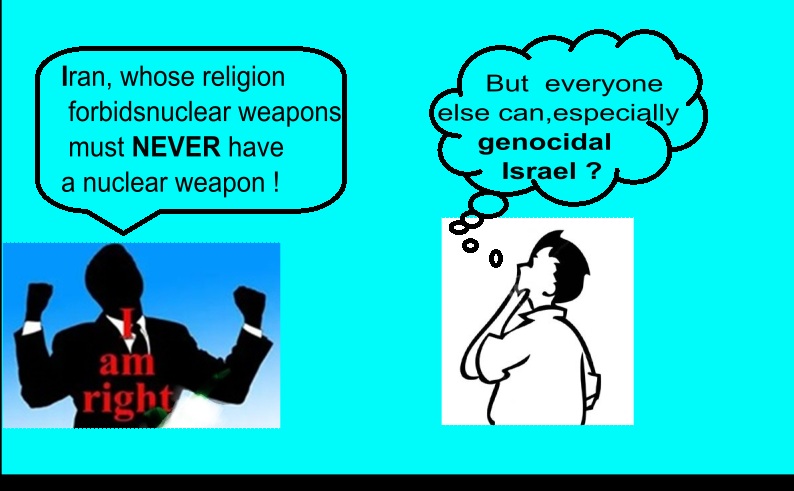
Chernobyl: The Lost Tapes – A good documentary on Chernobyl on SBS available On Demand for the next 3 weeks– https://www.sbs.com.au/ondemand/tv-program/chernobyl-the-lost-tapes/2352741955560

of the week–London Campaign for Nuclear Disarmament

Tell the Ukrainian Government to Drop Prosecution of Peace Activist Yurii Sheliazhenko
To see nuclear-related stories in greater depth and intensity – go to https://nuclearinformation.wordpress.com
-
Archives
- April 2026 (231)
- March 2026 (251)
- February 2026 (268)
- January 2026 (308)
- December 2025 (358)
- November 2025 (359)
- October 2025 (376)
- September 2025 (257)
- August 2025 (319)
- July 2025 (230)
- June 2025 (348)
- May 2025 (261)
-
Categories
- 1
- 1 NUCLEAR ISSUES
- business and costs
- climate change
- culture and arts
- ENERGY
- environment
- health
- history
- indigenous issues
- Legal
- marketing of nuclear
- media
- opposition to nuclear
- PERSONAL STORIES
- politics
- politics international
- Religion and ethics
- safety
- secrets,lies and civil liberties
- spinbuster
- technology
- Uranium
- wastes
- weapons and war
- Women
- 2 WORLD
- ACTION
- AFRICA
- Atrocities
- AUSTRALIA
- Christina's notes
- Christina's themes
- culture and arts
- Events
- Fuk 2022
- Fuk 2023
- Fukushima 2017
- Fukushima 2018
- fukushima 2019
- Fukushima 2020
- Fukushima 2021
- general
- global warming
- Humour (God we need it)
- Nuclear
- RARE EARTHS
- Reference
- resources – print
- Resources -audiovicual
- Weekly Newsletter
- World
- World Nuclear
- YouTube
-
RSS
Entries RSS
Comments RSS
 nuclear-news