COP28’s Nuclear Energy Promise Is Still a Long Way Off

The role nuclear energy might play in the future global energy mix should be supported by realistic analysis not on hope about what might be accomplished on hypothetical pathways.
During the past decade, the industry has shifted its
attention from constructing relatively large scale ~1,000 MWe pressurized
and boiling water reactors to considering small modular reactors, SMRs ≤
300 MWe. It is widely believed that SMRs will be of lower cost than the
disastrous cost levels experienced at the Vogtle, GA, and abandoned V.C.
Summer, South Carolina, plant construction. Accordingly, SMRs have
attracted a great deal of private and federal investment, but low overnight
capital cost has yet to be demonstrated.
Optimism arose beginning in
mid-2022 that nuclear deployment in the United States was entering a period
of growth. The GE-Hitatchi BWRX-300 MWe SMR was selected for deployment by
the Ontario Power Group at its Darlington site. It is under consideration
by Saskatchewan’s SaskPower and the TVA at Clinch River, Tennessee.
NuScale, partnering with Utah Associated Municipal Power Systems (UAMPS),
planned to combine twelve 77 MWe pressurized water modules to produce a 924
MWe plant at the Department of Energy’s (DOE) Idaho Falls ID site by
2030. The DOE’s GEN IV Advanced Reactor Demonstration Program selected
X-Energy’s Xe-100 high-temperature gas reactor (four 80 MWe modules
ganged together to produce 320 MWe) and TerraPower’s 345 MWe molten salt
Natrium reactor, each to receive $110 million 50/50 cost share. X-Energy
has selected DOW’s Seadrift TX chemical plant as its first location.
TerraPower was selected at a retired coal plant at Kemmerer, WY, which
PacifiCorp will operate.
Toward the end of 2023, expectations collapsed.
COVID-19, unexpected inflation, and high borrowing rates have caused all
the early participants to extend their anticipated completion dates, exceed
initial cost targets, and indicate additional financing will be needed.
After the massive budget outlays of the Bipartisan Infrastructure Act and
Inflation Reduction Act legislation, it is unlikely that major additional
support will come from the federal government.
In November, NuScale
announced the cancelation of its UAMPS project, delivering a major setback
to nuclear energy expectations. The DOE has provided $232 million for the
project since 2020, and the department has backed the project with a $1.4
billion cost-share deal. The project was abandoned because of the
substantial cost overruns and the unwillingness of UAMPS members to pay
higher prices for the off-take electricity.
Accordingly, the United States
will not have acquired a record declining unit cost on SMR reactors, at
least until the mid-2030s. In sum, we are confronted with an aspirational
goal for the growth of international nuclear energy deployment at
mid-century and a decidedly guarded assessment of nuclear energy progress
today based on conditions in the United States, the country with the
largest deployment of nuclear reactors and a history of leading the world
in nuclear technology. The role nuclear energy might play in the future
global energy mix should be supported by realistic analysis, not hope about
what might be accomplished on hypothetical pathways.
The National Interest 2nd Jan 2024
EDF using Pontins Brean Sands has ‘big determinantal impact’ on local economy, tourism firm fears
It is unclear when the site will return to
being a holiday park. The continued use of Pontins Brean Sands to house
hundreds of Hinkley Point C workers is reportedly having a “big
determinantal impact” on the local economy, according to one tourism firm.
Up to 900 staff from Hinkley Point C have been living at Pontins Brean
Sands and are expected to be there across 2024 and perhaps beyond. The
holiday resort has seen a massive refurbishment of the chalets worth around
£2 million, which saw new kitchens, bathrooms, furniture, TVs, and new
Wi-Fi access installed. Yet Discover Brean has hit out at the continued use
of the site to Hinkley Point C workers and noted its impact on the local
economy and nearby traders.
Somerset Live 3rd Jan 2023
https://www.somersetlive.co.uk/news/somerset-news/edf-using-pontins-brean-sands-9009354
‘Renewable surge powers all UK homes in 2023’
Renewable electricity production in the UK reached a significant milestone
in 2023, generating more than 90 terawatt hours (TWh) of power from wind,
hydro and solar sources. This amount surpasses the energy needed to power
all of the UK’s 28 million homes.
Energy Live News 2nd Jan 2024
Volcanic hazard to planned Natrium fast nuclear reactor – even the NRC admits.

The proposed site of the Natrium fast nuclear reactor in Kemmerer, Wyoming
is subject to potential volcanic hazards that must be rigorously evaluated.
Volcanic ash falls and nuclear plants don’t play together very well.
Nuclear Regulatory Commission 16th Dec 2023
Backing the wrong horse: Government doubles Sizewell C funding on nuclear bad news day
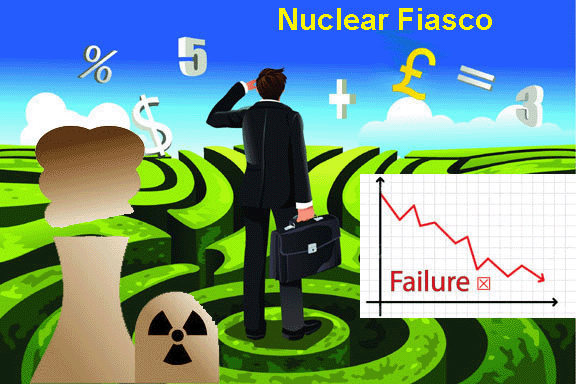
Given the Hinkley debacle, the NFLAs regret that Mr Bowie did not put his shovel to good use by burying the Sizewell project, but instead, like many reckless gamblers, Ministers and senior civil servants at the Department of Energy Security and Net Zero have chosen to blow more taxpayers’ money on a losing prospect, doubling their bet on Sizewell C to £2.5 billion.
The UK/Ireland Nuclear Free Local Authorities were incredulous to learn that government ministers chose to back Sizewell C with a further £1.3 billion of public money on the same day (23 January) French nuclear operator EDF announced that Sizewell’s older twin sister, Hinkley Point C, would begin operating even later and at an even greater cost.
The public relations team handling Hinkley Point C announcements at EDF Energy must have a thankless task as theirs is seemingly a role that involves continually dispensing bad news. Yesterday’s https://www.edf.fr/en/the-edf-group/dedicated-sections/journalists/all-press-releases/hinkley-point-c-update-1 took the biscuit (though whether the PR team could console themselves with any given the state of the corporate finances is debatable; humble pie maybe?)
In the latest in a long litany of gloomy announcements portending further cost and delivery overruns, the company has now advised that the expected cost of delivering Hinkley Point C has increased by anything from £5-9 billion (your guess is as good as theirs) or ultimately between £31 and £35 billion. But this is based on 2015 estimates, so with inflation the bill might run to £46 billion at today’s prices. And the anticipated year in which Reactor 1 might start generating has slipped from the summer of 2027 to sometime never in 2029, with Reactor 2 coming online about one year later (or maybe not).
Interestingly our friends in Stop Sizewell report that Nuclear Minister Andrew Bowie told them recently on his whistlestop visit to Suffolk, bearing a ceremonial shovel, that Hinkley would come online in the late 2020s or early 2030s, and even the Telegraph and Guardian have reported that the plant will not be operational until the next decade.
Rather unconvincingly EDF claims that ‘The project continues to capitalise on the experience gained from construction of the 4 other EPRs around the world’ which is hardly encouraging as Taishan-1 in China experienced a serious accident which led to its shutdown for many months; Flamanville-3 in France, started in 2007 and expected to commence generation in 2012, is only now about to start loading fuel after an unhappy history of faults and compromised quality control; and Olkiluoto-3 in Finland, begun in 2005 with a start date of 2010, was only finished last year after a prolonged construction period which included a bitter contractual dispute about the apportionment of the massively spiralling costs, followed by a corporate bankruptcy.
Given the Hinkley debacle, the NFLAs regret that Mr Bowie did not put his shovel to good use by burying the Sizewell project, but instead, like many reckless gamblers, Ministers and senior civil servants at the Department of Energy Security and Net Zero have chosen to blow more taxpayers’ money on a losing prospect, doubling their bet on Sizewell C to £2.5 billion.
Clearly, DESNZ is unaware that lumbering nuclear white elephants are not the best runners to back in a race, and that renewables, provided with equal financial encouragement, will romp home by a mile every time. Given its latest foolhardy behaviour, the NFLAs now venture to suggest that DESNZ be once more swiftly renamed – this time to the Department of No Energy and Zero Sense.
TODAY. Japan’s earthquake: The world must not be conned by the irrational optimism of the nuclear lobby

Dr Pangloss would be in his element. In today’s world, Pangloss would surely be paid a fortune, one that would minimise the fat salaries of Nuclear Publicist Raphael Grossi, and his cronies.
The earthquake in Japan is a timely case in point.
It demonstrates the safety of nuclear technology.
Or does it?
We get the comforting headlines in the corporate media. - “nuclear power plants largely undamaged following quake” “No Irregularities Identified At West Coast Nuclear Power Plants, Says Regulator”

Grossi’s been remarkably quiet about all this. Being the devious slimy propagandist that he is, Grossi knows that the full story may not be so comforting. He really needs a Dr Pangloss to tutor him on this one.
At first, the news of a radioactive spill at at the Kashiwazaki-Kariwa nuclear power station was unavailable – labelled “Forbidden”. And no wonder, as this, the world’s biggest NPP, has a chequered safety history, and is about to be restarted! It has 7 reactors, and is situated all too close to the earthquake fault line.
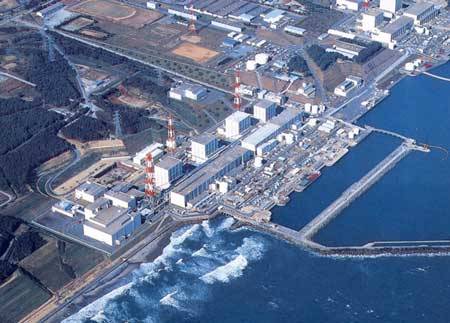
But then, the nuclear lobby rallied – and added ” No Damage or Leak” to the headline, and made it public.
So – the timing of the earthquake was unfortunate for its owner – Tokyo Electric Power Company (TEPCO), (especially as TEPCO is still afflicted with the legal and other effects of its Fukushima nuclear catastrophe).
But hey – the nuclear lobby to the rescue! Never mind that the earthquake made radioactive water from Kashiwazaki-Kariwa’s fuel pools spill over.
They will push ahead with restarting this globally iconic nuclear plant – regardless of its recent problem, and regardless of its problematic history:
- Kashiwazaki-Kariwa nuclear powerplant out of action for many months due to 74 instances of defective welding.
- Security lapses at Kashiwazaki-Kariwa nuclear power plant in Niigata.
- Safety and security issues at Kashiwazaki-Kariwa nuclear power station.
- A number of cases of unauthorized access have occurred at the Kashiwazaki-Kariwa plant.
- Japan’s nuclear regulator bans Tepco from restarting Kashiwazaki-Kariwa plant due to safety flaws.
- 60 holes at Kashiwazaki-Kariwa nuke plant found unfilled in violation of building code. TEPCO again!!
- Danger of radioactive groundwater leak at Kashiwazaki-Kariwa nuclear power plant
- Trouble with nuclear fuel rods in Japan’s Kashiwazaki-Kariwa plant.
So we wait to see what Grossi, Pangloss, and the rest of of the nuclear cabal come up with, to justify the restart of Kashiwazaki-Kariwa.
Japan Earthquake: Water Levels Rose At Shika Nuclear Plant After Monday’s Tsunami, Says Report

Earlier, it was said that there was no significant change in water levels while monitoring the gauge at Shika nuclear plant.
The water levels rose at Japan nuclear plant— Shika after Monday’s tsunami.
The broadcaster NHK quoting the operator of the nuclear power plant in quake-hit Ishikawa Prefecture said water levels rose by about three meters at the site following tsunami triggered by the magnitude 7.6 earthquake in central Japan.
The plant is located in the prefecture’s Noto region, the report mentioned.
A major tsunami warning was temporarily issued for the area following the quake, which struck around 4:10 p.m. on Monday, the report mentioned.
It also stated the waves later reached multiple locations along the Sea of Japan coast.
Staff at Hokuriku Electric Power Company checked a water level gauge near a seawater intake. They found out the level had been three meters higher than usual between 5:45 p.m. and 6 p.m. on Monday,” it said.
Earlier, it was said that there was no significant change in water levels while monitoring the gauge at the plant.
It was also said a four-meter high seawall installed to protect the No.1 reactor was tilting by several centimeters when its workers took a second look at the plant premises, the report mentioned.
The report mentioned some systems at the plant are not functioning after pipes of transformers used to supply outside electricity to the reactors sustained damage in the earthquake. The rupture led to oil leaks, it said.
The operator says the plant is using other means to supply power to critical equipment, the report said.
The report said the recovery work started on Tuesday and is proceeding quickly. That work includes retrieving the leaked oil, it said.
Both the No.1 and No.2 reactors at the plant were taken offline long before the earthquake, the report said.
Radioactive water spills over after quakes hit Japan
By JIANG XUEQING in Tokyo | China Daily 3 Jan 24
Radioactive water from the fuel pools of two reactors at the Kashiwazaki-Kariwa Nuclear Power Plant in Japan’s Niigata prefecture spilled over after a magnitude 7.6 earthquake and multiple aftershocks rocked the country on New Year’s Day.
However, Tokyo Electric Power Company, which owns and operates the plant, said the reactors were offline before the quake hit and no abnormalities in operation had been detected……………………………………………………………………………………………
TEPCO said that about 10 liters of water containing radioactive materials spilled from the fuel pool of the No 2 reactor and about 4 liters from the fuel pool of the No 7 reactor at around 6:45 pm on Monday.
After the 2011 earthquake triggered a triple meltdown at the Fukushima Daiichi plant, Japan introduced a maximum operating life of 60 years for its nuclear reactors. However, the limit was scrapped in May as the nation shifted its policy to promote nuclear energy, aiming for an early restart of nuclear power plants, The Yomiuri Shimbun reported. https://www.chinadaily.com.cn/a/202401/03/WS65949a3ba3105f21a507a34e.html
Fears after warning of ‘rotting’ nuclear infrastructure on Clyde

By Xander Elliards
THE UK Government must “urgently” make a statement to parliament on whether Scots living near its nuclear bases remain safe after alarm bells were rung over “rotting” infrastructure, the SNP have said.
It comes after Dominic Cummings, Boris Johnson’s former chief adviser, claimed
there was a top-level cover-up of the poor state of the UK’s nuclear
provision. Cummings said that in 2022 Prime Minister Rishi Sunak had
approached him for help with the next General Election campaign, and he had
asked for several conditions in return.
One of these, he said, was
addressing the “fundamentally critical” issue of “the scandal of
nuclear weapons infrastructure which is a dangerous disaster and a budget
nightmare of hard-to-believe and highly classified proportions, and which
has forced large secret cannibalisation of other national security
budgets”.
Writing on social media, Cummings added that it was a
“fact that our nuclear weapons infrastructure is dangerously rotting and
is tens of billions secretly in the hole, with huge knock-on effects beyond
its destructive effects on MoD [Ministry of Defence] which has got *even
worse*”. HM Naval Base, Clyde, at Faslane on the west coast of Scotland is
home to the UK’s nuclear submarines. The nearby Royal Naval Armaments
Depot at Coulport is responsible for storing, processing, maintaining and
issuing key elements of the UK’s Trident nuclear missile system.
The National 2nd Jan 2024
https://www.thenational.scot/news/24023426.fears-warning-rotting-nuclear-infrastructure-clyde/
Hackers use LinkedIn to target UK nuclear waste firm

ITPRO, By Emma Woollacott, 2 Jan 24
Radioactive Waste Management said attackers have leveraged LinkedIn in a spear phishing campaign
Radioactive Waste Management (RWM), which is planning a huge underground nuclear waste store in the north of England, has been targeted by cyber criminals via LinkedIn, according to The Guardian.
Accounts for RWM filed at Companies House show that the organization has been targeted by cyber criminals using various methods, including the use of popular social network platforms to dupe staff.
RWM, which is part of Nuclear Waste Services (NWS), revealed that attacks have escalated in recent months, raising concerns over the risk of hackers gaining access to highly sensitive materials.
NWS chief executive, Corhyn Parr, said the government-backed organization has experienced “instances of potential exploitation of ownership change through specific attack vectors, predominantly LinkedIn targeting”…………………………………………………………………………..
The incident highlights a growing problem. Last month, for example, the UK’s National Cyber Security Centre (NCSC) and international partners warned that Russia-based hacking group Star Blizzard was using spear phishing techniques via email and social media to target defense and governmental organizations.
LinkedIn has been the method of choice in previous attacks on industry and infrastructure, according to Adam Pilton, cyber security consultant at CyberSmart.
Used by millions of professionals globally, the popular social network has become a key hunting ground for targets in recent years……………………………………………. more https://www.itpro.com/security/hackers-use-linkedin-to-target-uk-nuclear-waste-firm
Water Containing Radioactive Materials Spills Over at Kashiwazaki-Kariwa Nuclear Power Plant Due to Earthquakes
The Yomiuri Shimbun, 21:24 JST, January 1, 2024
Water from the fuel pools at the top floors of the No. 7 and No. 2 reactors at the Kashiwazaki-Kariwa nuclear power plant in Niigata Prefecture spilled over due to strong earthquakes, Tokyo Electric Power Company Holdings, Inc. announced Monday. No damage or leaks were confirmed.
According to TEPCO, when the company checked the fuel pools of reactors No. 1 through No. 7 at around 6:45 p.m., it found that water containing radioactive materials spilled from the pools. About 10 liters spilled from the No. 2 reactor and about 4 liters from the No. 7 reactor. TEPCO is measuring the radiation levels.
Swedish nuclear outage extended by 3 weeks
The outage coincides with a winter cold snap that has sent Nordic temperatures to their lowest levels in decades
Terje Solsvik, Reuters News, January 3, 2024, https://www.zawya.com/en/world/uk-and-europe/swedish-nuclear-outage-extended-by-3-weeks-njnyjkcb
A partial outage at Sweden’s Forsmark 2 nuclear reactor was extended by three weeks until Jan. 24 while repairs are made to a generator, the operator said in a market message posted via Nordic power exchange Nord Pool on Wednesday.
Forsmark Block 2 will operate at just 490 megawatt (MW) of its total 1,121 MW capacity, the note said.
The outage coincides with a winter cold snap that has sent Nordic temperatures to their lowest levels in decades, boosting demand for electricity in heating. (Reporting by Terje Solsvik, editing by Nora Buli)
American weapons company Lockheed Martin scores again with sale of more F-35s to South Korea

3rd January 2024 – 16:30 GMT | by Norbert Neumann in London
South Korea has formalised its plans to expand its fleet of Lockheed Martin F-35A Lightning II fifth-generation fighter aircraft
South Korea has signed a letter of acceptance (LOA) to acquire an additional 20 Lockheed Martin F-35A Lightning II fifth-generation fighter aircraft. The Defense Acquisition Program Administration (DAPA) said on 1 January that the LOA was signed in December………. (Subscribers only) more https://www.shephardmedia.com/news/air-warfare/south-korea-to-enhance-air-force-with-more-f-35a-fighters/
Prolonged impact of the Fukushima Nuclear Power Plant Accident on health and society
3rd January 2024, https://www.openaccessgovernment.org/article/prolonged-impact-of-the-fukushima-nuclear-power-plant-accident-on-health-and-society/171684/
Naomi Ito, Research Assistant at the Fukushima Medical University, tells us how the 2011 Fukushima Daiichi Nuclear Power Plant Accident impacted and continues to impact local residents
The health effects on local residents following a nuclear power plant accident are diverse, not only because of radiation exposure but also because of changes in lifestyle and social environment. It has also been indicated that various environmental changes that could emerge during the restoration process may affect residents in various ways over a long time.
What is the Fukushima Daiichi Nuclear Power Plant Accident?
On March 11, 2011, the Great East Japan Earthquake struck Japan with a magnitude of 9.0. Within an hour, a tsunami hit the shore. Three reactors at the Fukushima Daiichi Nuclear Power Plant (FDNPP, operated by Tokyo Electric Power Company) lost power. The reactors could not be cooled, and core meltdowns occurred, which resulted in an explosion due to hydrogen being generated at high temperatures. As a result, radioactive materials were released and scattered northwest from the power plant.
The Japanese Government declared a nuclear emergency and ordered residents within a 30km radius of the reactor to evacuate. In the Fukushima prefecture, more than 160,000 residents were forced to evacuate immediately due to the earthquake, tsunami, and explosion at the Daiichi Nuclear Power Plant. Subsequently, the evacuation order was gradually lifted. While some residents have returned under the national repatriation policy, many others have decided to continue living in the places they evacuated to.
Health Indicators Worsening
It has been reported that in areas where evacuation orders were issued after the nuclear power plant accident, the number of residents who are overweight has increased. Health indicators such as BMI, high blood pressure, and hyperglycaemia have generally deteriorated. Living in an evacuation site involves major changes in the social environment, which worsens various health parameters. At the same time, there was also an extremely high level of depression among residents who continued to evacuate and a sharp increase in the number of people using nursing care. Various health measures have been taken to address these problems.
What is happening in the area after the evacuation order was lifted has been a concern. The evacuation order for most of Katsurao Village, which initially had one thousand four hundred people, was lifted in 2016 (Figure 1). Seven years have passed since then, but the number of people who have returned to the village has yet to reach 30%, and the aging rate of those who have returned to the village is nearly 60%.
Urgent Long-Term Care Issues
Evacuated residents who remain outside the village are more likely to fall under the category of frailty regarding motor function than those who have returned. Early preventive intervention for residents would be important in the event of a disaster where long-term evacuations are expected (Figure 2).
Intention to Return and Health Issues
The number of residents in the village has remained constant at around four hundred for the past few years, and it is unlikely that many more will return. We found that there are a certain number of people who want to go back but are not able to do so. By interviewing them, we learned that they are staying at their evacuation destinations since they need medical treatments and/or nursing care or they started receiving new services there. We believe that intention to return and health issues are closely related. Enhancement of clinics and visiting services in the village, and improved access to medical institutions, are essential for rebuilding the lives of returning residents. (1)
Dual Life After Disaster
After the evacuation order was lifted, a fairly large number of people kept houses in their evacuation destination and the original one in the village, moving back and forth. Unlike natural disasters such as typhoons and tsunamis, this ‘double-base living (or dual life?)’ is considered a unique phenomenon of nuclear disasters, where the original houses remain intact. Still, there is a fear of invisible radiation. Above all, the prolonged evacuation has drastically changed people’s lives. The challenge would be how to respond to the health needs of people living new lifestyles. (2)
References
- Ito, N.; Moriyama, N.; Furuyama, A.; Saito, H.; Sawano, T.; Amir, I.; Sato, M.; Kobashi, Y.; Zhao, T.; Yamamoto, C.; et al. Why Do They Not Come Home? Three Cases of Fukushima Nuclear Accident Evacuees. International journal of environmental research and public health 2023, 20.
- Ito, N.; Amir, I.; Saito, H.; Moriyama, N.; Furuyama, A.; Singh, P.; Montesino, S.; Yamamoto, C.; Sato, M.; Abe, T.; et al. Multisite Lifestyle for Older People after the Fukushima Nuclear Disaster. Geriatrics (Basel, Switzerland) 2023, 8.
Zelensky promises to ‘cut off’ Crimea in 2024
The Russian peninsula will become the conflict’s “center of gravity,” the Ukrainian leader told The Economist
Ukrainian President Vladimir Zelensky has predicted that his country’s armed forces will “isolate” Crimea in 2024. The region, which joined Russia in 2014 following a bloody nationalist coup in Kiev, hosts Moscow’s Black Sea fleet.
Kiev will seek to cut off access to the peninsula by destroying the Kerch bridge, which connects it to the Russian mainland, Zelensky claimed. For this purpose, he once again demanded German-made long-range Taurus cruise missiles, which Berlin has so far refused to supply even after France and the UK provided Kiev with Storm Shadow missiles.
Zelensky blamed information leaks for the failure of Kiev’s much-hyped summer counteroffensive against Russia, but nevertheless shared new insights into the military’s top priorities for 2024, saying in an interview with The Economist that isolating Crimea is “extremely important.”
The Ukrainian president reiterated his ambitious goal of eventually restoring the country’s 1991 borders, but stopped short of making any promises or setting timelines. The immediate goal, he said, will be “to defend the east” and protect Ukraine’s critical infrastructure.
“Russia has to know that for us this is a military object,” he said.
According to President Vladimir Putin, Russian forces now hold the strategic initiative in the Ukraine conflict, while Kiev has largely been driven by political goals, with their efforts aimed at showing “their true masters at least some results.”
Zelensky also complained that the “mobilization of Ukrainian society and of the world” was much lower now than at the beginning of the conflict, admitting that any military success will depend on assistance from the West.
“Giving us money or giving us weapons, you support yourself. You save your children, not ours,” he claimed.
Kiev announced a general mobilization in February 2022, barring most men aged 18 to 60 from leaving the country, but the campaign has been marred by corruption and draft dodging. Following Ukraine’s disappointing summer counteroffensive, which according to Moscow cost Kiev nearly 160,000 troops, Zelensky recently announced a plan to raise 500,000 more soldiers to replace battlefield losses.
“Mobilization is not just a matter of soldiers going to the front. It is about all of us. It is the mobilization of all efforts,” he told The Economist. “Let’s be honest, we have switched to domestic politics… If we continue to focus on domestic politics, we need to call elections. Change the law, the constitution. But forget about counteroffensive actions and de-occupation.”
1 This Month
23 April – WEBINAR – Why new nuclear reactors are the wrong tools for decarbonization Thursday, April 23 • 1 AM – 2 AM AEST


Pine Ridge Uranium is the real threat, not Tehran- Tell Burgum: Stop the Extraction.
Chernobyl: The Lost Tapes – A good documentary on Chernobyl on SBS available On Demand for the next 3 weeks– https://www.sbs.com.au/ondemand/tv-program/chernobyl-the-lost-tapes/2352741955560
To see nuclear-related stories in greater depth and intensity – go to https://nuclearinformation.wordpress.com
-
Archives
- April 2026 (275)
- March 2026 (251)
- February 2026 (268)
- January 2026 (308)
- December 2025 (358)
- November 2025 (359)
- October 2025 (376)
- September 2025 (257)
- August 2025 (319)
- July 2025 (230)
- June 2025 (348)
- May 2025 (261)
-
Categories
- 1
- 1 NUCLEAR ISSUES
- business and costs
- climate change
- culture and arts
- ENERGY
- environment
- health
- history
- indigenous issues
- Legal
- marketing of nuclear
- media
- opposition to nuclear
- PERSONAL STORIES
- politics
- politics international
- Religion and ethics
- safety
- secrets,lies and civil liberties
- spinbuster
- technology
- Uranium
- wastes
- weapons and war
- Women
- 2 WORLD
- ACTION
- AFRICA
- Atrocities
- AUSTRALIA
- Christina's notes
- Christina's themes
- culture and arts
- Events
- Fuk 2022
- Fuk 2023
- Fukushima 2017
- Fukushima 2018
- fukushima 2019
- Fukushima 2020
- Fukushima 2021
- general
- global warming
- Humour (God we need it)
- Nuclear
- RARE EARTHS
- Reference
- resources – print
- Resources -audiovicual
- Weekly Newsletter
- World
- World Nuclear
- YouTube
-
RSS
Entries RSS
Comments RSS
 nuclear-news