Japan earthquake raises concerns over restarting country’s nuclear plants
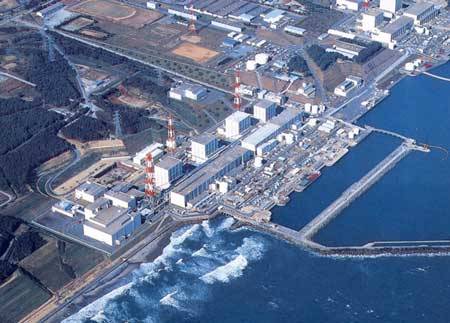
The earthquake struck days after Japan’s regulators lifted a two-year operational ban on a power plant run by Tokyo Electric Power Company (Tepco), which operated the wrecked Fukushima nuclear plant.
Ashima Sharma, January 5, 2024, https://www.power-technology.com/news/japan-earthquake-raises-concerns-over-restarting-countrys-nuclear-plants/?cf-view
The 7.6 magnitude earthquake that hit Japan’s western coast on 1 January has raised concerns over the push to bring the country’s nuclear capacity online.
The earthquake struck just days after the country’s regulators lifted a two-year operational ban on Tepco’s Kashiwazaki-Kariwa nuclear power plant.
Tepco’s plant is located around 120km from the earthquake’s epicentre but has been offline since 2012. Tepco was also the operator of the wrecked Fukushima nuclear plant and in 2021 was banned from transporting new uranium fuel to its Kashiwazaki-Kariwa nuclear plant.
The move was to prevent Tepco from restarting the facility’s seven nuclear reactors, ten years after two of its reactors incurred a triple meltdown at Fukushima.
Following the quake, Tepco reported water spillage from two nuclear fuel pools of the No. 7 and No. 2 reactors at the Kashiwazaki-Kariwa nuclear power plant.
The company ascertained that about 14 litres of water containing radioactive materials spilled from the pools, although it said the radiation levels were normal.
The Shika nuclear power plant, operated by another company, Hokuriku Electric, and located 65km from the epicentre, also reported spillage from spent nuclear fuel pools and oil leaks.
After the Fukushima nuclear disaster in March 2011, there was a strong public and political sentiment to phase out nuclear plants in the country. However, over the years, severe power crunches coupled with rising energy prices have pushed Japan towards restarting idle reactors.
In 2023, Japan’s Kansai Electric Power restarted its 12th nuclear reactor at the Takahama plant. The 826MW Takahama No. 2 was the country’s second-oldest operating reactor, having entered service in 1975.
We care about Japan’s disaster situation and are concerned about nuclear safety:

By Global Times, Jan 03, 2024
As of Tuesday evening, the 7.6-magnitude strong earthquake that occurred in Japan has caused at least 57 deaths, multiple casualties, building collapses, widespread power outages, and fires. The latest development is a collision between a Japan Airlines plane and a Japan Coast Guard aircraft at Tokyo’s Haneda Airport during landing, resulting in at least five deaths among the six crew members of the latter. The Japan Coast Guard aircraft was originally scheduled to transport relief supplies to the earthquake-stricken area in Ishikawa Prefecture. It was preparing for takeoff on the runway when the incident occurred. It’s not difficult to imagine the various chaos that this major earthquake has brought to Japan.
This is the strongest earthquake in Japan since the “3.11” earthquake in 2011. The Japan Meteorological Agency stated on Tuesday that since January 1 local time, there have been 155 earthquakes in Japan, including two strong earthquakes of over magnitude 6. It is uncertain whether there will be continuous aftershocks or even larger earthquakes. Despite Japan’s rich experience in dealing with disasters such as earthquakes and tsunamis, human society remains vulnerable in the face of unexpected natural disasters.
Meanwhile, we also notice that in this earthquake, there is some important information that may not have received enough attention. For example, Tokyo Electric Power Company (TEPCO) announced on the evening of January 1 that the water from the fuel pools at the top floors of the No. 7 and No. 2 reactors at the Kashiwazaki-Kariwa nuclear power plant in Niigata Prefecture spilled over due to strong earthquakes. These waters contain radioactive materials, and the radiation levels are currently being measured. In addition, there was a situation at the Shika Nuclear Power Station in Ishikawa Prefecture where some water had sloshed from a cooling pool for spent fuel rods. Regarding the issues at these two nuclear power stations, the Japanese authorities have promptly concluded that they are “currently safe,” stating that “no damage or leaks were confirmed” and that the fuel cooling at the Shika Nuclear Power Station was “unaffected.”
We certainly hope that this accurately reflects the current situation regarding the nuclear power plants. The information has garnered significant attention from netizens, leading to doubts about whether Japan will experience another catastrophic nuclear accident similar to the Fukushima incident following an earthquake. One reason for this concern is that Japan is one of the countries with the highest concentration of nuclear power plants in the world, coupled with its limited land area. Once a serious nuclear disaster occurs, Japan can hardly cope with it independently. The Fukushima nuclear accident serves as a painful reminder.
More importantly, the Japanese government and TEPCO have a bad track record of mishandling nuclear accidents. To some extent, they have lost credibility. Furthermore, Japan’s stubborn and irresponsible actions regarding the dumping of nuclear-contaminated water from Fukushima have caused great concerns among the Japanese people
Japan needs to take these legitimate concerns seriously. Although the epicenter of this earthquake was in the Noto Peninsula in Ishikawa Prefecture, its impact was widespread, ranging from Hokkaido to Kyushu. The coastal areas of northern Japan, where numerous nuclear facilities and power plants are located, have been affected to varying degrees. The Kashiwazaki-Kariwa nuclear power station, which has witnessed problems, is one of the largest in the world.
It is crucial to assess the condition of these nuclear facilities and the radiation levels in the surrounding sea. Does Japan have a comprehensive monitoring plan in place? Are other nuclear power plants along the coast in a safe state? How does Japan ensure transparency in information disclosure? These issues are directly related to the well-being of the Japanese people and the surrounding countries, and they require a serious response from Japan in the process of dealing with this earthquake………………. https://www.globaltimes.cn/page/202401/1304687.shtml
IAEA says its inspectors are denied access to parts of Ukraine nuclear plant .
The head of the U.N. nuclear power watchdog said on Wednesday his
inspectors had been denied access to parts of Ukraine’s Russian-occupied
Zaporizhzhia nuclear power station and had yet to receive 2024 maintenance
plans for the facility. The plant was seized by Russia in the days
following Moscow’s 2022 invasion of Ukraine. Each side has accused the
other of shelling around the station, Europe’s largest, though its six
reactors now produce no electricity.
Reuters 3rd Jan 2024
Nuclear weapons test treaty fears sink plans for major wind farm
UK Ministry of Defence objected to 315MW array over fears nuclear monitoring station would be affected by vibrations
5 January 2024 By Cosmo Sanderson , Recharge,
The UK’s obligations to monitor nuclear weapons testing have helped scupper a proposal for a Scottish wind farm over fears it could affect a nearby monitoring station.
The Scottish government rejected a proposal from British developer Community Windpower for a planned 315MW array made up of 45 turbines near the border with England last month.
The reasons for this included the potential impact of the wind farm on the nearby Eskdalemuir Seismic Array, a seismological monitoring station that forms part of the UK’s obligations under a multilateral treaty to ban nuclear weapons testing…………..(Subscribers only) more https://www.rechargenews.com/wind/nuclear-weapons-test-treaty-fears-sink-plans-for-major-wind-farm/2-1-1579329
A ‘natural alternative’ plan for protecting fish from Hinkley nuclear station’s cooling system
Plans for a salt marsh near a nuclear power station have been proposed as
a “natural” alternative to protect fish from its cooling systems.
Campaigners had called for changes amid fears Hinkley Point C’s cooling
tunnels could kill millions of fish. EDF Energy said it would carry out a
consultation on its proposal for the 800 acres of wetland near Bridgwater.
Chris Fayers from Hinkley Point C said it would be a natural alternative to
installing an acoustic fish deterrent.
The deterrent system would have used
280 speakers to make noise “louder than a jumbo jet” 24-hours a day for 60
years. The alternative plans for the wetland, being developed with Natural
England, Natural Resources Wales and the Environment Agency, are expected
to create new habitats for fish and animals, improve local water quality
and help prevent flooding.
BBC 5th Jan 2024
A Visit to Belmarsh Prison, Where Julian Assange Awaits His Final Appeal Against Extradition to the US

The Wikileaks founder says he fears his own imprisonment, US government surveillance, and restrictions on the group’s funding have effectively scared off potential whistleblowers.
The Nation, CHARLES GLASS, 2 Jan 24
MP BELMARSH—It is 2:30 PM on Wednesday, December 13, when Julian Assange strides into the visitors’ area. He stands out in the column of 23 prisoners for his height—6′ 2″—and flowing white locks with trimmed beard. He squints, looking for a familiar face among the wives, sisters, sons, and fathers of the other inmates. I am waiting, as assigned, at D-3, one of about 40 sets of small coffee tables surrounded by three upholstered chairs—two blue, one red—screwed into the floor of what looks like a basketball court. We spot each other, walk forward, and embrace. It is the first time I have seen him in six years. I blurt, “You’re pale.” Through a mischievous smile I remember from past meetings, he jokes, “They call it prison pale.”
He has not been outdoors—apart from a minute when police dragged him into a paddy wagon—since he took refuge in London’s cramped Ecuadorian Embassy in June 2012. The embassy’s French windows had afforded glimpses of sky. Here at Belmarsh maximum security prison in southeast London, his abode since April 11, 2019, he has not seen the sun. Warders confine him to a cell for 23 out of every 24 hours. His single hour of recreation takes place within four walls, under supervision. His paleness is best described as deathly……………………………………………………………………………………………………………………………..
Julian and I sit down, face to face, me on the red chair, he on one of the blues. Above us, glass globes hide cameras that record the interactions between inmates and their guests.
…………………………. Julian had thought prison meant communal meals at long tables, as in the movies. Belmarsh’s warders shove the food into the cells for prisoners to eat alone. It is hard to make friends that way. He has been there longer than any other prisoner apart from an old man who had served seven years to his four and a half. There are occasional suicides, he tells me, including one the night before.
……………………………… I ask whether he still has the radio he had struggled to obtain in his first year. He did, but it was not working due to a defective plug. Regulations permit each prisoner to have a radio purchased from prison stores. The authorities, however, said no radios were available for him. When I heard about it, I sent him a radio. It was returned. I then sent him a book on how to make a radio. That too was returned………………………………………………………………
How did he, a news addict, keep in touch? The prison allows him to read printouts of news stories, and friends write to him. With the invasions of Ukraine and Gaza, I say, now is an important time for whistleblowers to send documents to WikiLeaks. He regrets that WikiLeaks is no longer able to expose war crimes and corruption as in the past. His imprisonment and US government surveillance and restrictions on WikiLeaks’ funding wards off potential whistleblowers. He fears that other media outlets are not filling the vacuum.
Belmarsh does not offer him education programs or communal activity, like orchestra practice, sports, or publishing a prison journal, that are standard at many other prisons. The regime is punitive; although Belmarsh’s 700-odd inhabitants are on remand, awaiting trial or appeal. They are Category A prisoners, those who “pose the most threat to the public, the police or national security” and stand accused of terrorism, murder, or sexual violence.
We talk about Christmas, which is just another day in Belmarsh: no turkey, no carols, no presents. The prison is closed to visitors on Christmas Day and the day after, and the prison has informed his wife, Stella Moris, that she and their two young sons, Gabriel and Max, may not see him on Christmas Eve. He can attend Catholic Mass celebrated by the Polish chaplain, who has become a friend.
………….Apart from occasional visiting days, his days are all the same: the confined space, the loneliness, the books, the memories, the hope that his lawyers’ appeal against extradition and life imprisonment in the United States will succeed……….. https://www.thenation.com/article/activism/julian-assange-wikileaks-belmarsh-prison/

Operational Ban Lifted on Major Japan Nuclear Plant
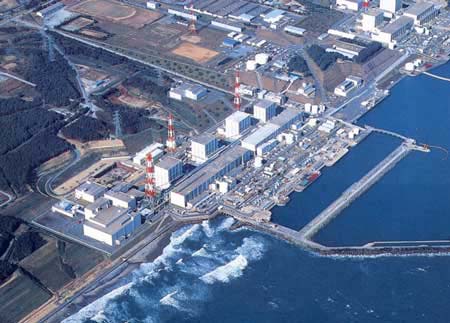
by Sydney Leimbach | Jan 3, 2024
Japan’s nuclear power regulator has lifted its operational ban on Tokyo Electric Power’s (Tepco) Kashiwazaki-Kariwa nuclear plant, the largest nuclear site in the world, after shutting it down about three years ago due to safety concerns.
The plant, which reportedly has a capacity of 8.2 gigawatts, was the only operable atomic power station in the country when it was shut down. It had previously been offline since the 2011 Fukushima disaster caused all nuclear power plants in the country to cease operations.
Tepco was barred from operating the Kashiwazaki-Kariwa plant in 2021 after the Nuclear Regulation Authority reportedly found safety breaches such as failing to protect nuclear materials and finding an unauthorized staff member accessing sensitive areas of the plant.
Last week, Japan’s Nuclear Regulation Authority found that counterterrorism and safety measures had since been improved at the plant after conducting inspections. Before the plant may come back online, however, consent must be achieved from local governments in Niigata, Kashiwazaki city, and Kariwa village, where the plant is located.
“The government will seek the understanding and cooperation of Niigata prefecture and local communities, emphasizing ‘safety-first’,” said Yoshimasa Hayashi, the government’s top spokesperson, in a Reuters report.
The company has compiled a report on the causes of the infractions that led to its ban and how improvements have been made since. Shares in Tepco dramatically increased when the Nuclear Regulation Authority indicated that the ban would be lifted, especially as the country works to revitalize its nuclear power profile, https://www.environmentenergyleader.com/2024/01/operational-ban-lifted-on-major-japan-nuclear-plant/
 | |||
| |||
Following earthquake, Japan’s nuclear reactors escaped serious problems – THIS TIME.
Japan’s nuclear power plants largely undamaged following quake
BY ERIC JOHNSTON, STAFF WRITER, Japan Times, 2 Jan 24
Japan’s nuclear power plants along the Sea of Japan coast escaped serious damage in the New Year’s Day earthquake that struck the Noto Peninsula in Ishikawa Prefecture.
But the 7.6 magnitude quake, which triggered tsunami warnings from Hokkaido to Kyushu and led to evacuations in nine prefectures, could once again spark public concern about the safety of nuclear power in an earthquake-prone country at a time when Prime Minister Fumio Kishida plans to ramp up its usage as part of his “green transformation” policy.
In Ishikawa Prefecture, Hokuriku Electric Power’s Shika nuclear plant saw its electricity system partially disabled following the quake, but no major abnormalities have been reported. The plant’s No. 1 and No. 2 reactors were offline prior to the quake.
The Nuclear Regulation Authority (NRA) reported that Shika plant workers heard what sounded like an explosion, and then smelled something burning near a transformer that received electricity for use in the No. 2 reactor. Staff checking the area discovered the fire extinguishing system had been activated.
No fire was detected but the reactor’s electricity supply was partially disabled. Hokuriku officials believe pressure inside the transformer increased due to the tremor. This triggered a device to release the pressure, causing a loud noise and activation of the fire extinguishing system rather than an actual fire.
Electric power for equipment critical for the plant’s safety was secured through other systems, and cooling pools where spent nuclear fuel is stored continued to operate. Hokuriku Electric officials said Monday they were assessing the damage but that there was no change in the readings of the plant’s monitoring posts, and that no external radiation had been detected. However, of the 101 radiation monitoring posts in the plant’s vicinity, 13 are no longer operational. As of Tuesday, the cause was still unknown.
At Tokyo Electric Power Company Holdings’ Kashiwazaki Kariwa Nuclear Power Station in Niigata Prefecture, home to seven nuclear reactors — all of which were offline before the quake — plant officials confirmed Monday that water from a spent fuel pool spilled over due to the earthquake, but that no abnormalities in operation had been detected………………………………………………..
While the nuclear power plants avoided damage, the New Year’s Day quake and tsunami warnings brought back memories of the devastating Great East Japan Earthquake and triple meltdowns at the Fukushima No. 1 power plant, and could revive doubts about the nuclear industry — especially at a time when the government has plans to use more reactors, many located on the Sea of Japan coast, that have been offline since the quake on March 11, 2011.
Last February, the Kishida Cabinet approved its green transformation policy, which would extend the lifespan of nuclear reactors beyond 60 years and replace those that get scrapped. It was a major reversal of the policies that went into place following the 2011 disaster.
Currently, 12 nuclear power plants have been officially restarted since 2011, while five have received permission to restart and are undergoing final preparations to do so. Another 10 reactors are still undergoing inspections for a possible restart. Nine reactors have not applied for restart, and 24, including 10 Tepco reactors in Fukushima Prefecture, are being decommissioned.
Systems to supply power to nuclear plant in Ishikawa partially unusable
NHK News, Tuesday, Jan. 2, 2024
The operator of the Shika nuclear power plant in quake-hit Ishikawa Prefecture says systems to supply electricity to the facility from outside sources remain partially unusable.
But the utility says electricity continues to be supplied to the plant through other means and that sources of power for important safety equipment are secure.
Hokuriku Electric Power Company held a news conference on Tuesday, one day after a magnitude 7.6 earthquake struck the prefecture.
Both of the No.1 and No.2 reactors at the plant, which are located in the town of Shika, had been taken offline long before the earthquake…………………………..
Hokuriku Electric officials said the pipes of two transformers used for the two reactors to receive electricity from outside have been damaged due to the earthquake, with oil for insulation and cooling leaking out.
The officials said the oil leakage amounts to 3,600 liters at the No.1 reactor and 3,500 liters at the No.2 reactor. They said systems using the two transformers remain unable to receive electricity.
They also said both reactors are receiving electricity from other means, adding that emergency diesel generators have enough fuel to last seven days.
The officials say there are no problems with the systems for cooling spent nuclear fuel. more https://www3.nhk.or.jp/nhkworld/en/news/20240102_33/
UK Nuclear Output Slumps to 42-Year Low
- More reactors are due to be decommissioned in a few years
- EDF has warned of delays to its new Hinkley Point plant
Bloomberg, By Rachel Morison, January 3, 2024
Power output from the UK’s nuclear power plants slumped to the lowest in more than four decades last year, potentially increasing a reliance on fossil fuels that will make it more difficult to reach the nation’s net zero emissions target.
Output shrank to about 37 terawatt-hours after two stations closed, dropping below 40 terawatt-hours for the first time since the early 1980s, according to data from the government and the UK unit of Electricite de France SA. …the country’s current fleet of five nuclear plants scheduled to shrink to just three by the end of 2026,…
The UK, which has a target to reach net zero emission by the middle of this century, wants to build as much as 24 gigawatts of new nuclear capacity by that time. The government is due to publish a roadmap on how it intends to achieve that ambitious target.
But construction takes many years and is often beset by cost overruns and delays. To reach the goal, developers would need to add 16 gigawatts in the next decade at a cost of more than £150 billion ($190 billion), according to estimates from Aurora Energy Research.
“With revenues materializing around a decade after the Final Investment Decision, this generally makes nuclear a very different investment case to banks compared to other low-carbon generation technologies, one which fewer lenders are willing to consider,” said Ashutosh Padelkar, senior associate at Aurora. “It would be extremely challenging if not impossible to deliver 24 gigawatts of nuclear capacity by 2050 without the government taking most of the burden.”…………
Most of the current atomic fleet is reaching the end of it’s operating life. EDF has spent about £7.5 billion on life extensions and maintenance since 2009, when it acquired the current fleet.
EDF’s Hinkley Point C is the first project to be constructed in more than three decades. Startup of its two reactors is due in 2027 and 2028, though the utility has warned that may be pushed back by more than a year. https://www.bloomberg.com/news/articles/2024-01-03/uk-nuclear-output-slumps-to-42-year-low-in-threat-to-net-zero?embedded-checkout=true
More than half of eligible schools enlist in new solar scheme in Ireland

More than half of eligible schools enlist in new solar scheme in Ireland.
Ireland’s Department of Education says that just over 900 schools out of
1,600 eligible facilities have signed up to participate in the
government’s first round of the Solar for Schools Programme, a nationally
funded scheme to cover the costs of 6 kW roof-mounted solar installations.
Panels would be connected to the electricity grid, leading to €1,200
($1,310) to €1,600 per annum in savings, according to the government.
Schools from 11 districts could sign up in the first application round
which opened in mid-November and is expected to reach completion in May
this year.
PV Magazine 2nd Jan 2024
DOE docs: Carbon removal proposal bets on rare nuclear reactors
E & E News, ClimateWire, By Corbin Hiar | 01/03/2024
A climate technology startup aims to suck carbon from the atmosphere using a new type of nuclear power plant that’s never been built in the United States.
The use of so-called small modular reactors could provide a steady supply of electricity that’s free of climate pollution to a major carbon removal facility planned in Wyoming, according to Energy Department documents obtained by POLITICO’s E&E News. But some experts worry that relying on a novel nuclear plants could jeopardize the development of a federally funded proposal to develop direct air capture, an emerging industry that uses fans, filters, heat and piping to siphon carbon dioxide from the sky.
“It adds complication upon complication,” said Wil Burns, the co-director of American University’s Institute for Carbon Removal Law and Policy. “You’re starting off with a complex new technology, and now you’re trying to wed another complex technology, including one that’s in transition.”
The interest in small nuclear reactors by CarbonCapture, the lead developer of the carbon removal proposal, is among several previously undisclosed components of its initial concept for the Wyoming Regional Direct Air Capture Hub, outlined in documents released by the DOE via a Freedom of Information Act request.
The revelation comes as the Biden administration is moving to pour billions of dollars into commercializing direct air capture technologies while also resuscitating the nuclear power industry. The administration considers the success of both, which is far from assured, to be essential in the fight against climate change.
There are currently only two commercial-scale direct air capture facilities in operation worldwide that remove carbon dioxide from the air and store it underground or in long-lasting products like concrete. Building direct air capture plants and other types of carbon removal facilities — while rapidly weaning the world off of fossil fuels — is necessary to avoid the worst impacts of global warming, climate scientists say.
In theory, nuclear power plants could provide direct air capture developers with a steady supply of carbon-free electricity and heat.
Yet only two new reactors have come online in the U.S. over the past quarter-century. Small modular reactors have been promoted by the administration and nuclear energy advocates as a way to address concerns about cost and waste that derailed the nuclear industry in the 1990s.
That vision was thrown into doubt in November when a nuclear power company — facing spiraling costs and fleeing customers — pulled the plug on a $1.4 billion project to develop the nation’s first small modular reactors………………………………………………………
For Burns, who also teaches at Northwestern University and has reviewed carbon removal business plans for the payments company Stripe, the new details about CarbonCapture’s initial project designs suggest more due diligence is warranted.
“Government needs to be thinking this through before we commit a lot more money,” he said…………………………………………… https://www.eenews.net/articles/doe-docs-carbon-removal-proposal-bets-on-rare-nuclear-reactors/.
‘100-200,000, Not Two Million’: Israel’s Finance Minister Envisions Depopulated Gaza
Israel’s far-right Finance Minister Bezalel Smotrich joined a growing list of senior lawmakers who expressed support for large-scale transfer of Gaza’s civilian population as a solution to Israel’s post-war security concerns.
Finance Minister Bezalel Smotrich said that Israel must control the territory in the Gaza Strip and significantly reduce the number of Palestinian residents in Gaza.
In an interview to army radio, the far-right minister said that his “demand” was for the Gaza Strip to stop being a “hotbed where two million people grow up on hatred and aspire to destroy the State of Israel.”
Without outlining his preferred method, Smotrich then suggested that the removal of around 90 percent of Gaza’s residents would help achieve his goal. “If there are 100,000 or 200,000 Arabs in Gaza and not two million, the whole discourse about the day after will be different,” he said.
The Religious Zionism party chairman then noted that in order to regain security, Israel must control the Gaza Strip, and that “in order to control the territory militarily over time, you must also have civilian presence there.”
Smotrich’s comments are the latest in a growing list of troubling remarks by Israeli lawmakers to seemingly support expelling Gazans en masse out of the Strip in order to ensure Israel’s security after the war.
“Civil nuclear power” has always been a cover story for wasting public money on nuclear weapons.
The ride aboard our “Pale Blue Dot”
By Walt Patterson, Beyond Nuclear 31 Dec 23
“…………………………………………………………………………………………………… Eighty-seven years after I got here the blue dot is now in serious trouble. Not the dot itself, but all of us creatures riding on it. My eighty-seven year ride coincides precisely with the time we have been living with the knowledge about nuclear fission. As I have contemplated it most of my life I have been compelled to conclude that nuclear electricity, so-called nuclear power, has never been a normal economic activity, it has never paid its way, and still does not, it has always relied on vast injections of money and resources from taxpayers and electricity users, decreed by governments.
Civil nuclear power has been in effect a cover story, to disguise the true reason for pouring so much of our wealth into this dangerous sinkhole. In the eyes of governments, the key nuclear activity has been to stockpile terrifying quantities of nuclear explosives for use as weapons, nuclear political power, in which someone says, in effect, unless you do what I want, or give me what I want, I’ll obliterate this blue dot.
As climate change makes more and more of the blue dot uninhabitable, conflicts are breaking out world-wide. We have to hope that some people, some of our fellow dot-riders, some states-people, can find a way to defuse the nuclear threat.
Best wishes for a better 2024 — Walt. https://beyondnuclearinternational.org/2023/12/31/the-ride-aboard-our-pale-blue-dot/
1 This Month
23 April – WEBINAR – Why new nuclear reactors are the wrong tools for decarbonization Thursday, April 23 • 1 AM – 2 AM AEST


Pine Ridge Uranium is the real threat, not Tehran- Tell Burgum: Stop the Extraction.
Chernobyl: The Lost Tapes – A good documentary on Chernobyl on SBS available On Demand for the next 3 weeks– https://www.sbs.com.au/ondemand/tv-program/chernobyl-the-lost-tapes/2352741955560
To see nuclear-related stories in greater depth and intensity – go to https://nuclearinformation.wordpress.com
-
Archives
- April 2026 (275)
- March 2026 (251)
- February 2026 (268)
- January 2026 (308)
- December 2025 (358)
- November 2025 (359)
- October 2025 (376)
- September 2025 (257)
- August 2025 (319)
- July 2025 (230)
- June 2025 (348)
- May 2025 (261)
-
Categories
- 1
- 1 NUCLEAR ISSUES
- business and costs
- climate change
- culture and arts
- ENERGY
- environment
- health
- history
- indigenous issues
- Legal
- marketing of nuclear
- media
- opposition to nuclear
- PERSONAL STORIES
- politics
- politics international
- Religion and ethics
- safety
- secrets,lies and civil liberties
- spinbuster
- technology
- Uranium
- wastes
- weapons and war
- Women
- 2 WORLD
- ACTION
- AFRICA
- Atrocities
- AUSTRALIA
- Christina's notes
- Christina's themes
- culture and arts
- Events
- Fuk 2022
- Fuk 2023
- Fukushima 2017
- Fukushima 2018
- fukushima 2019
- Fukushima 2020
- Fukushima 2021
- general
- global warming
- Humour (God we need it)
- Nuclear
- RARE EARTHS
- Reference
- resources – print
- Resources -audiovicual
- Weekly Newsletter
- World
- World Nuclear
- YouTube
-
RSS
Entries RSS
Comments RSS
 nuclear-news