Gaza Massacre could lead to Nuclear War
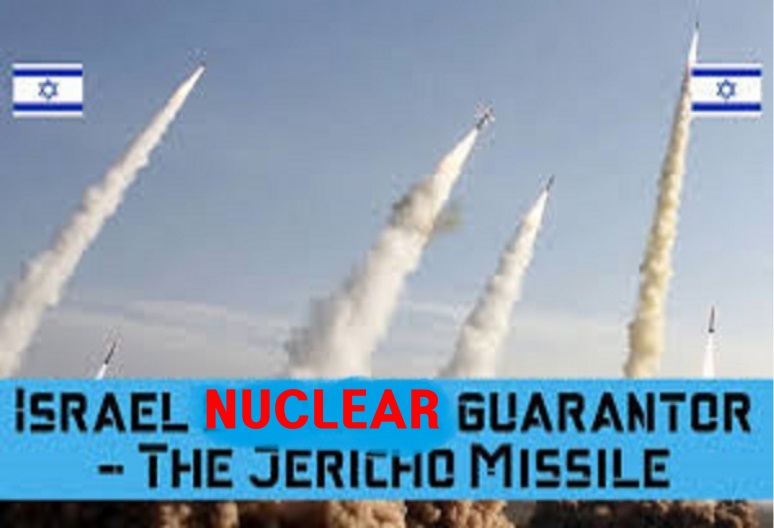
https://www.commondreams.org/newswire/gaza-massacre-could-lead-to-nuclear-war 21 Nov 23
WASHINGTON – As military veterans who have experienced the deadly threat of nuclear weapons from the Cuban Missile Crisis onward, as well as being distraught and outraged by what is now going on in Gaza, we must warn against the potential of a wider war in the Middle East, one that could even lead to nuclear war.
The massive and relentless Israeli bombing of Gaza has been indiscriminate – if not actually targeting civilians. Over 10,000 Gazan residents have been killed to date, including at least 4,000 children. Many victims remain beneath the rubble. It is almost as if a nuclear bomb had been dropped.
A member of the Israeli Knesset has actually called for dropping a nuclear bomb on Gaza– or as she calls it a “doomsday weapon.” It is an open secret that Israel has possessed nuclear weapons since the 1960’s. Israeli leaders have smugly refused to acknowledge the possession of nuclear weapons, and have signed no nuclear treaties. However, they have implicitly threatened Iran with a nuclear attack. As Daniel Ellsberg pointed out, the US and other nuclear powers use nuclear weapons all the time – it’s like pointing “a gun at someone’s head without pulling the trigger.”
The US has recently deployed massive naval forces and thousands of troops to the eastern Mediterranean, covering Israel’s back while it carries out its genocidal slaughter in Gaza. The implicit US threat against Iran and Hezbollah, an Islamic militia and major political party in the government of Lebanon, has raised tensions in the region.
US and Israeli threats against Iran – coupled with the US withdrawal from the Iran Nuclear Deal (JCPOA) – could actually spur Iran to develop its own nuclear weapons. Pakistan, the only Muslim-majority country with nuclear weapons, has called on Israel to end its massacre in Israel
While nuclear war is not considered a “likely” result of Israel’s assault on Gaza, it is an all too real possibility. The US and Israel are playing with fire. This is another reason why we in Veterans For Peace join with people all over the world who are calling for an immediate ceasefire in Gaza, as well as for an end to Israeli settler and soldier violence against Palestinians in the West Bank. We support Palestinian human rights, including the rights to dignity and self-determination.
As veterans of too many wars, we want to see an end to militarism, which if unchecked, will inevitably lead to nuclear war. We repeat our calls for a ceasefire and negotiations to end the war in Ukraine, and for an end to US war preparations against China. We want a peaceful world – free of racism, colonialism and imperialism – where the sovereign rights of all peoples are respected.
The proliferation of weapons of mass destruction has brought the world to a critical juncture. As Martin Luther King warned, we must choose between “nonviolence and nonexistence.” We call on the US and all nuclear-armed nations to begin urgent diplomacy to rid the world of nuclear weapons. We call for an immediate ceasefire in Gaza, for massive humanitarian aid for the people of Gaza, and for an end to Israel’s inhumane occupation of the Palestinian people.
Veterans For Peace is a global organization of Military Veterans and allies whose collective efforts are to build a culture of peace by using our experiences and lifting our voices. We inform the public of the true causes of war and the enormous costs of wars, with an obligation to heal the wounds of wars. Our network is comprised of over 140 chapters worldwide whose work includes: educating the public, advocating for a dismantling of the war economy, providing services that assist veterans and victims of war, and most significantly, working to end all wars.
 | |||
| |||
UK Has £10 Billion Per Nuclear Reactor Decommissioning Bottomless Pit

estimate in late 2022 was that the program was likely to cost £260 billion given the cost trends. That’s £10.4 billion per reactor, an order of magnitude higher than the industry average of three years ago.
Whether £6 billion or £10 billion, these numbers should be giving national energy policy makers pause. After all, those costs are going to be paid in the future in future value dollars that will be inflated. They won’t be getting magically smaller due to discounting, but should be included in cost cases with the discounting rates built in.
Clean Technica, , Michael Barnard
The decommissioning costs for the UK’s nuclear generation are coming home to roost, and they are laying golden eggs for the firms that won the business. For UK citizens, not so much. Despite the very high costs of both the new nuclear reactors at Hinkley Site C, the rapidly rising costs of clean up and the much cheaper alternatives available, the country’s current administration remains committed to the technology. Something is likely to give.
The UK is like the USA and France, a western nuclear military power. They built and operated four nuclear powered submarines with nuclear missiles and two nuclear powered aircraft carriers. That gave them one of the preconditions for success for commercial nuclear electricity generation.
They built all of the 14 shut down and 9 currently operating nuclear generation plants between 1957 and 1995, satisfying the conditions of success of a three to four decade build out to maintain master builders, creation of a nuclear construction industry with skilled, certified and security validated resources, and building a couple of dozen reactors to amortize the national program across.
They built all reactors with a very narrow set of designs, first the Magnox which also created weapons grade plutonium and then the AGR which was a modified Magnox optimized for electricity generation, not plutonium manufacturing. The high similarity and only two designs across all 23 reactors satisfied another criterion for success of a nuclear program…………….
Naturally, the nuclear program was a national strategic priority for the UK with bi-partisan support between the Conservatives and Labour, satisfying another condition of success.
This was a blueprint for a successful nuclear electrical generation program, and why nuclear generation is a poor fit for free market economics.
Despite no longer having the obvious conditions for success for a new nuclear program, the British government got behind the Hinkley Point C construction of two new EPR reactors with their unproven design. That program is years late and 50% over budget as a result. The reactors are GW scale, with 3.2 GW between the two reactors so have one condition for success out of six. The UK government also have planned two EPRs at the Sizewell site, with one of the innumerable Conservative Prime Ministers of the past decade committing £100 million of governmental money in a vain attempt to get any private investors interested. No schedule has been set for construction of those reactors.
But now the reactors are shut down or about to be shut down. Most of the remaining operating reactors will be off the grid by 2028, with only Sizewell B hanging on until 2035. All reactors had roughly a 40 year lifespan, not the 60 to 80 years often claimed by the industry, including the 60 year claim for Hinkley Point C.
How much will it cost to decommission those 23 reactors and the two Hinkley Point C reactors still under construction? The last time I looked at nuclear decommissioning costs and duration was three years ago. At the time, the average was roughly a billion US dollars and a century of duration per site.
Well, the UK’s nuclear program is definitely exceeding that. As of late 2022, the official estimate of the UK’s Nuclear Decommissioning Authority (NDA) was £149 billion. Assuming Hinkley Site C was rolled into that number, that would be a cost of £6 billion per reactor, or more than many nuclear advocates claim new nuclear can be built for.
However, Stephen Thomas, a professor of energy policy at the University of Greenwich and a regular analyst of the nuclear industry with a publication history on energy and nuclear programs with a global reach stretching back to 2004, has a slightly different expectation. He first published on the UK’s NDA in 2005 and has been tracking costs closely since, including with freedom of information requests to get accurate numbers.
His estimate in late 2022 was that the program was likely to cost £260 billion given the cost trends. That’s £10.4 billion per reactor, an order of magnitude higher than the industry average of three years ago.
Whether £6 billion or £10 billion, these numbers should be giving national energy policy makers pause. After all, those costs are going to be paid in the future in future value dollars that will be inflated. They won’t be getting magically smaller due to discounting, but should be included in cost cases with the discounting rates built in.
Given the magnitude of the costs, effectively every MWh generated by the UK fleet of reactors cost substantially more than its official stated cost. The price will be paid, after all.
If there were no alternatives to nuclear generation, then this wouldn’t be a problem compared to global warming. But, of course, this is 2023 and there are proven, effective, efficient and reliable forms of low-carbon electrical generation that do compete with nuclear energy, wind and solar. ……………………………………
The full lifecycle costs of nuclear energy are fairly well established now, and they are much higher than for renewables, transmission and storage. The conditions for success for nuclear programs are well established as well, and there isn’t a single country in the world that has fulfilled them in the 21st Century. Even China has failed, in my assessment as their industrial policy of exporting nuclear reactors of any type foreign buyers might want overrode energy policy requirements to build only a single design.
It’s unclear to me what blend of ideology, tribalism and magical thinking are combining to make countries think that their nuclear programs are unique, and that they will succeed at them when there are clear alternatives. https://cleantechnica.com/2023/11/19/uk-has-e10-billion-per-nuclear-reactor-decommissioning-bottomless-pit/
Small nuclear reactors are NOT emissions-free

No emissions claim mars SaskPower webinar on nuclear power
A reader comments that a presentation by SaskPower on small modular nuclear reactors failed to include information about nuclear emissions.
Nov 18, 2023 , Dale Dewar, Wynyard https://thestarphoenix.com/opinion/letters/letter-no-emissions-claim-mars-saskpower-webinar-on-nuclear-power
SaskPower held a webinar on its proposal for a Hitachi Boiling Water Reactor (BWRX300), a small modular nuclear reactor in Southern Saskatchewan. Its otherwise informative webinar was marred by a statement that the BWRX300 would have no emissions.
No emissions! People may not know everything about nuclear power plants, but most of us know that tritium or “hydrogen” is created and released in planned or unplanned episodes. It could build up and cause an explosion.
Tritium is more dangerous than the nuclear industry admits. Tritium is radioactive hydrogen. When combined with oxygen, it forms radioactive water. Tritium has been described as a “weak beta emitter.” Its beta particle can be stopped by paper or skin.
Our bodies incorporate hydrogen into every cell and cellular structure in our bodies. Our bodies are unable to distinguish between a normal hydrogen atom and tritium. This means that every tritium atom that we ingest into our bodies could spontaneously decay into helium, a gas.
As the tritium decays, it emits energy that can oxidize cellular contents including RNA and DNA, genetic material. Many believe that tritium is the culprit for the increase in children developing leukemia close to nuclear power plants.
With a half-life of 12 years, the tritium that is released today will not be “gone” for 120 years.
But let’s not forget the small amounts of other radioactive elements emitted: krypton-85, carbon-14, strontium-90, iodine-131, and caesium-137, to name a few. Nuclear power plants also emit all the types of pollutants any other steam- or gas-powered electrical plant emits.
First Tel Aviv Anti-War Demonstration Reveals the Limits on Protest in Today’s Israel
The first anti-war demonstration in Tel Aviv since October 7 offered an important look at the current state of the protest movement in Israel, as well as how the government will seek to repress it.
SCHEERPOST, By Yoav Haifawi / Mondoweiss , November 20, 2023
Since October 7, Israeli police have implemented full dictatorship from the river to the sea. This has included preventing any anti-war protest within the Green Line and filling the prisons with ‘freedom-of-expression’ prisoners. Today, November 18, after a month and 11 days of massive bloodshed, there was the first anti-war demonstration in Tel Aviv. I joined the protest mostly because I felt obliged to support the call for immediate ceasefire and call for an “all for all” captives and prisoners’ exchange. But I also wanted to assess what this demonstration teaches us about the current policies of the repressive Israeli regime and about the protest movement.
Court ruling allows demonstration
Hadash (“The Democratic Front for Peace and Equality,” organized around the Israeli Communist Party) applied for a license to demonstrate in Tel Aviv against the war and for a prisoners’ exchange. Their initial application was refused by the police, which suggested they hold a meeting in a closed venue instead. Then Hadash, with the help of ACRI (The Association for Civil Rights in Israel), appealed to the Bagatz (Hebrew acronym for “High Court of Justice”), which finally forced the police to allow the demonstration.
…………………………………………………… Local Call‘s report about the demonstration was titled “At an anti-war demonstration, the police forbade the waving of anti-war signs.” They went on to report what banners were refused by the police: ……………………………..
Speakers call for ceasefire, prisoner exchange
If we could demonstrate safely in Palestinian towns and villages and Arab neighborhoods in mixed cities, you would see tens of thousands coming out in solidarity with Gaza’s people. However, the police are terrorizing the Arab population, and many people believed that this demonstration in Tel Aviv would be attacked even though it was permitted. Besides, there is a real danger of lynch mobs in the Jewish areas, especially as the Ben-Gvir police distributed tens of thousands of weapons to local militias. The militia in Tel Aviv is headed by a right-wing rapper called “The Shade,” well known for organizing attacks against peace demonstrations during previous wars.
There were about five hundred brave demonstrators who dared to gather in the park. Haaretz, by the way, always under-reporting leftist protest, headlined their report “Tens demonstrated in Tel Aviv.” About 80% of the demonstrators were Jews. It was all held in Hebrew, and the content was adjusted to challenge but not break with the current awful mood in the Israeli Jewish society.
The main demands of the demonstration were immediate ceasefire and the return of all captives, POWS, and prisoners through a comprehensive exchange deal, “all for all.” These are the most essential demands in the current situation, and they made this demonstration important…………………………………………………………………………………………………………… more https://scheerpost.com/2023/11/20/first-tel-aviv-anti-war-demonstration-reveals-the-limits-on-protest-in-todays-israel/
The Dangers Only Multiply: Could Israel’s War on Gaza Go Nuclear?
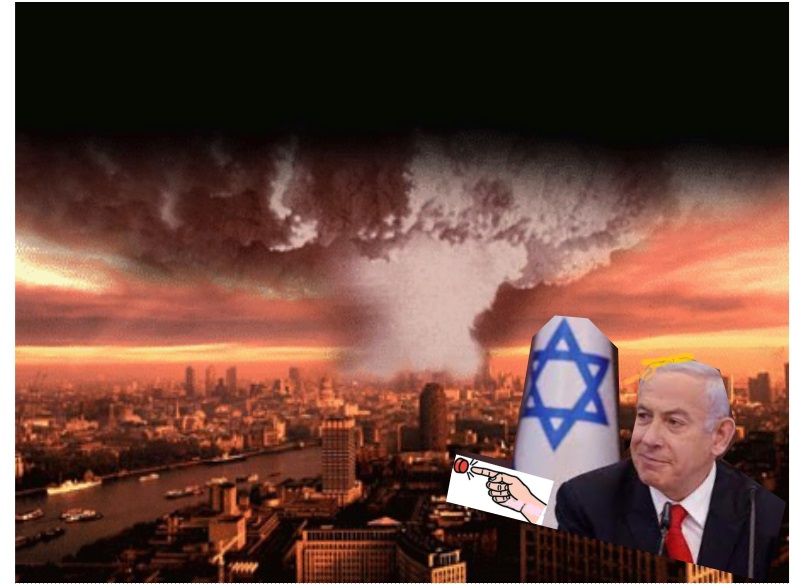
A cornered, nuclear-armed Benjamin Netanyahu would be the definition of a perilous situation in a war where nothing, not journalists, schools, or even hospitals, has proven off-limits.
By Joshua Frank / TomDispatch, https://scheerpost.com/2023/11/20/the-dangers-only-multiply/
Israel’s robust military, the fourth-strongest in the world, is ravaging Gaza and, along with armed settlers, terrorizing Palestinians in the West Bank following the brutal Hamas massacres of October 7th. Like so many other colonial projects, Israel was born of terror and has necessitated the use of violence to occupy Arab territory and segregate Palestinians ever since. The realization that its existence was dependent on a superior military in an unfriendly region also encouraged Israel to pursue a nuclear weapons program shortly after the state’s founding in 1948.
Even though Israel was a young nation, by the mid-1950s, with the aid of France, it had secretly begun the construction of a large nuclear reactor. That two allies had teamed up to launch a nuclear weapons program without the knowledge of the administration of President Dwight D. Eisenhower turned out to be a colossal (and embarrassing) American intelligence failure.
Not until June 1960, the final year of Eisenhower’s presidency, did U.S. officials catch wind of what was already known as the Dimona project. Daniel Kimhi, an Israeli oil magnate, having undoubtedly had one too many cocktails at a late-night party at the U.S. embassy in Tel Aviv, confessed to American diplomats that Israel was indeed constructing a large “power reactor” in the Negev desert — a startling revelation.
“This project has been described to [Kimhi] as a gas-cooled power reactor capable of producing approximately 60 megawatts of electric power,” read an embassy dispatch addressed to the State Department in August 1960. “[Kimhi] said he thought work had been underway for about two years and that a completion date was still about two years off.”
The Dimona reactor wasn’t, however, being built to deal with the country’s growing energy needs. As the U.S. would later discover, it was designed (with input from the French) to produce plutonium for a budding Israeli nuclear weapons program. In December 1960, as American officials grew more worried about the very idea of Israel’s nuclear aspirations, French Foreign Minister Maurice Couve de Murville admitted to U.S. Secretary of State Christian Herter that France had, in fact, helped Israel get the project off the ground and would also provide the raw materials like uranium the reactor needed. As a result, it would get a share of any plutonium Dimona produced.
Israeli and French officials assured Eisenhower that Dimona was being built solely for peaceful purposes. Trying to further deflect attention, Israeli officials put forward several cover stories to back up that claim, asserting Dimona would become anything from a textile plant to a meteorological installation — anything but a nuclear reactor capable of producing weapons-grade plutonium.
Atomic Denials
In December 1960, after being tipped off by a British nuclear scientist concerned that Israel was constructing a dirty (that is, extremely radioactive) nuke, reporter Chapman Pincher wrote in London’s Daily Express: “British and American intelligence authorities believe that the Israelis are well on the way to building their first experimental nuclear bomb.”
Israeli officials issued a terse dispatch from their London embassy: “Israel is not building an atom bomb and has no intention of doing so.”
With Arab countries increasingly worried that Washington was aiding Israel’s nuclear endeavors, chairman of the Atomic Energy Commission John McCone leaked a classified CIA document to John Finney of the New York Times, claiming that the U.S. had evidence Israel, with the help of France, was building a nuclear reactor — proof that Washington was none too pleased with that country’s nuclear aspirations.
President Eisenhower was stunned. Not only had his administration been left in the dark, but his officials feared a future nuclear-armed Israel would only further destabilize an already topsy-turvy region. “Reports from Arab countries confirm [the] gravity with which many view this possibility [of nuclear weapons in Israel],” read a State Department telegram sent to its Paris embassy in January 1961.
As that nuclear project began to make waves in the press, Israeli Prime Minister David Ben-Gurion moved quickly to downplay the disclosure. He gave a speech to the Knesset, the Israeli parliament, admitting the country was developing a nuclear program. “The reports in the media are false,” he added. “The research reactor we are now building in the Negev is being constructed under the direction of Israeli experts and is designed for peaceful purposes. When it’s complete, it will be open to scientists from other countries.”
He was, of course, lying and the Americans knew it. There was nothing peaceful about it. Worse yet, there was a growing consensus among America’s allies that Eisenhower had been in on the ruse and that his administration had provided the know-how to get the program off the ground. It hadn’t, but American officials were now eager to prevent United Nations inspections of Dimona, fearful of what they might uncover.
By May 1961, with John F. Kennedy in the White House, things were changing. JFK even dispatched two Atomic Energy Commission scientists to inspect the Dimona site. Though he came to believe much of the Israeli hype, the experts pointed out that the plant’s reactor could potentially produce plutonium “suitable for weapons.” The Central Intelligence Agency, less assured by Israel’s claims, wrote in a now-declassified National Intelligence Estimate that the reactor’s construction indicated “Israel may have decided to undertake a nuclear weapons program. At a minimum, we believe it has decided to develop its nuclear facilities in such a way as to put it into a position to develop nuclear weapons promptly should it decide to do so.”
And, of course, that’s precisely what happened. In January 1967, NBC News confirmed that Israel was on the verge of a nuclear capability. By then, American officials knew it was close to developing a nuke and that Dimona was producing bomb-worthy plutonium. Decades later, in a 2013 report citing U.S. Defense Intelligence Agency figures, the Bulletin of the Atomic Scientists revealed that Israel possessed a minimum of 80 atomic weapons and was the only nuclear power in the Middle East. Pakistan wouldn’t acquire nukes until 1976 and is, in any case, normally considered part of South Asia.
To this day, Israel has never openly admitted possessing such weaponry and yet has consistently refused to allow inspectors from the International Atomic Energy Agency to visit the secretive site. Nonetheless, evidence suggests that a “major project” at Dimona was underway in 2021 and that Israel was by then actively expanding its nuclear production facilities. The lack of U.N. or other inspections at Dimona has, however, meant that there has been no public Israeli acknowledgment of its nuclear warheads and no threat of accountability.
A Rogue Nuclear Power?
Following the Six-Day War in June 1967, Israel seized large tracts of Arab land, including the West Bank from Jordan, the Gaza Strip and Sinai Peninsula from Egypt, and the Golan Heights from Syria. Not coincidently, that year was also the moment Israel crossed the nuclear threshold. (In 2017, it was revealed that, on the verge of the Six-Day War, the Israelis had even contemplated exploding a nuclear bomb in Egypt’s Sinai Desert as the ultimate threat to its neighbors.)
At that time, as human rights attorney Noura Erakat explained to Daniel Denvir on The Dig, President Lyndon Johnson’s administration came to see in Israel “a significant Cold War asset and [pivoted] very quickly and [established] this new policy of ensuring Israel’s qualitative military edge in the region whereby it can defeat singularly or collectively any Middle Eastern powers.” And that, she added, was done in those Cold War years “to ensure its sphere of influence across the Middle East in competition with the Soviet Union.”
As Israel and the U.S. remained the closest of allies, the thinking in Washington went, it could act as Washington’s military proxy in the Middle East. “From 1966 through 1970, average aid per year increased to about $102 million, and military loans increased to about 47% of the total,” the Congressional Research Service reported in 2014. “Israel became the largest recipient of U.S. foreign assistance in 1974… From 1971 to the present, U.S. aid to Israel has averaged over $2.6 billion per year, two-thirds of which has been military assistance.”
Despite Washington’s wish for a symbiotic, mutually beneficial relationship, Israel wasn’t afraid to go rogue when its leaders believed it would serve their interests. In June 1981, for instance, with the assistance of France and Italy, Israel bombed the Osirak nuclear reactor, then under construction in Iraq.
Top officials in the administration of President Ronald Reagan weren’t pleased that the strike had been carried out with American F-16s, as Israel was legally required to utilize the fighter jets only in cases of “legitimate self-defense.” After some backroom wrangling, however, they decided to chalk the matter up as a diplomatic dispute, having come to believe that erasing Iraq’s nuclear program and maintaining Israel’s sole nuclear arsenal in the region justified the airstrike.
By the late 1980s, as the Soviets invaded Afghanistan, Israel joined the U.S., Pakistan, and Saudi Arabia in forming Operation Cyclone to supply arms to the anti-Soviet mujahideen resistance fighters. As the Cold War ended and the first Gulf War in Iraq began in 1990, Israel quietly assisted President George H.W. Bush’s administration from the sidelines, believing that directly entering the conflict would only embolden Arab countries to back Iraqi leader Saddam Hussein’s invasion of Kuwait. Despite the once-tenuous nature of the U.S.-Israeli bond, it’s long been understood that Israel can, at times, play an impactful role in the service of American operations in the region by providing intelligence and other covert support.
A Developing Dangerous Situation
Following the 9/11 attacks, Israel counseled the George W. Bush administration on how best to handle Osama bin Laden (and apparently later provided intelligence for the ambush that would kill him). As the planes struck the World Trade Center, Israel was experiencing a new Palestinian uprising known as the Second Intifada. Its leaders came to believe that they could benefit from the “Global War on Terror” President Bush had just announced. When Benjamin Netanyahu, then a former prime minister, was asked what it meant for the U.S.-Israel relationship, he replied, “It’s very good.” Then, lest he sound too optimistic about 9/11, he added, ”Well, not very good, but it will generate immediate sympathy… [it will] strengthen the bond between our two peoples because we’ve experienced terror over so many decades, but the United States has now experienced a massive hemorrhaging of terror.”
A year later, Israel became a booster of an American war on Iraq, helping spread the falsehood that Saddam Hussein possessed weapons of mass destruction and posed a threat not only to Israel and America but to the rest of the world as well.
“[Saddam] is a tyrant who is feverishly trying to acquire nuclear weapons,” Netanyahu declared to the U.S. House Committee on Government Reform in September 2002, six months before the invasion of Iraq. “And today, the United States must destroy [Saddam’s] regime because a nuclear-armed Saddam will place the security of our entire world at risk. And make no mistake about it: if and once Saddam has nuclear weapons, the terror network will have nuclear weapons. And once the terror network has nuclear weapons, it is only a matter of time before those weapons will be used.”
Israel would later use a similar line of reasoning to justify its 2007 strike on a suspected nuclear reactor under construction in Syria. Over the years, Israel has purportedly targeted Iran’s nuclear objectives in various ways as well, from cyberattacks to bombings. In 2010, Iran accused Israel of murdering physicist Masoud Ali Mohammadi and engineer Majid Shariariby in two separate incidents, as well as other scientists believed to be integral to Iran’s nuclear program. In 2021, Iran also claimed that Israel had struck a facility in the city of Karaj that its officials believed was being used to build nuclear centrifuges.
Many are concerned that Israel’s cruel war on Gaza, if it were to expand regionally to include Hezbollah in Lebanon, would drag Iran, a prominent Hezbollah supporter, into the fray. And that, in turn, might be all the justification Netanyahu would need to strike Iran’s supposed nuclear sites. In fact, in response to drone and rocket attacks on American personnel in Iraq and Syria by Iranian-backed militants, the U.S. recently destroyed a weapons facility in Syria.
As for the situation in Gaza, right-wing Heritage Minister Amihai Eliyahu, a member of Netanyahu’s coalition government, recently commented that “one way” to eliminate Hamas would be the nuclear option. “[T]here’s no such thing as innocents in Gaza,” he added. In response to those comments, Netanyahu suspended Eliyahu — a largely meaningless act — in an attempt to quiet criticisms at home and abroad that the war was harshly impacting innocent civilians. Or, perhaps, it had more to do with Eliyahu inadvertently admitting to Israel’s nuclear capabilities.
No doubt fearing a broader war in the Middle East, the Biden administration is committing itself heavily to Israel’s efforts to eliminate Hamas: not only by delivering interceptors for its Iron Dome missile defense system and upwards of 1,800 Boeing-made JDAMs (guidance kits for missiles) but also by replenishing stocks of weapons for Israel’s American-made F-35 fighter jets and CH-53 helicopters as well as KC046 aerial refueling tankers. In addition, two U.S. aircraft carrier task forces have been deployed to the Middle East, as has an Ohio-class nuclear submarine. To top it off, according to a New York Times investigation, the U.S. is providing commandos and drones to help locate Israeli (and American) hostages in Gaza.
While the Biden White House seems anything but eager for an expanded Middle Eastern war, it is nonetheless preparing for just such a scenario. Of course, any military escalation, especially one that leaves Israel fighting on multiple fronts, would only increase the chances that things could get much worse. A cornered, nuclear-armed Benjamin Netanyahu would be the definition of a perilous situation in a war where nothing, not journalists, schools, or even hospitals, has proven off-limits. Indeed, well over 25,000 tons of bombs had already been dropped on Gaza by early November, the equivalent of two Hiroshima-style nukes (without the radiation). Under such circumstances, a nuclear-capable Israel that blatantly flouts international law could prove a clear and present danger, not only to defenseless Palestinians but to a world already in ever more danger and disarray.
Israel expands Gaza operation amid hostage deal talks
November 20, 2023 https://www.news.com.au/world/middle-east/israel-expands-gaza-operation-amid-hostage-deal-talks/news-story/e1a2c133878d59fdfccc446195f410d1
Gaza is bracing for a further expansion of Israeli military operations even as cautious hopes built for a deal to release hostages in exchange for a pause in fighting.
The Israeli army said on Sunday they were taking their fight against Hamas militants to “additional neighbourhoods” of the Gaza Strip, where an aerial and ground offensive has already killed 13,000 people including thousands of children, according to the Hamas-run government.
The bloodiest ever Gaza war started with the shock October 7 Hamas attack that Israeli officials say left 1,200 people dead and saw 240 taken hostage.
Qatari mediators said on Sunday talks on a deal that would free some of the hostages were progressing, held up only by “very minor” practical challenges, though neither details nor a timeline were provided, and Israel and Hamas have said little.
An Israeli strike on the Indonesian Hospital near northern Gaza’s Jabalia refugee camp — the territory’s largest — killed 12 people, including patients, and wounded dozens more, the Gaza health ministry said on Monday.
An AFP journalist saw columns of smoke rising from Jabalia on Sunday, one day after a health official said more than 80 people had been killed in twin strikes there, including on a UN school sheltering displaced people.
Social media videos verified by AFP showed bodies covered in blood and dust on the floor of a building, where mattresses had been wedged under school tables.
Israel’s military has said Jabalia is among the areas of focus as they “target terrorists and strike Hamas infrastructure”.
Without mentioning the strikes, the Israeli army said “an incident in the Jabalia region” was under review.
The bloodiest ever Gaza war started with the shock October 7 Hamas attack that Israeli officials say left 1,200 people dead and saw 240 taken hostage.
‘Act urgently’
The violence in Jabalia was the latest to draw strong condemnation from Arab and other governments.
On Monday foreign ministers from the Palestinian Authority, Egypt, Saudi Arabia, Jordan and Indonesia held meetings on the war in Beijing, where their Chinese counterpart Wang Yi said the world must “act urgently” to stop the “humanitarian disaster” in Gaza.
“The situation in Gaza affects all countries around the world, questioning the human sense of right and wrong and humanity’s bottom line,” Wang told the visiting diplomats.
Six weeks into the war, Israel is facing intense international pressure to justify the bloody toll.
Israeli officials have warned a “window of legitimacy” for the war to rout Hamas may be closing.
Israel on Sunday presented what it said was evidence Hamas gunmen used Gaza’s largest hospital, Al-Shifa, to hide foreign hostages and to mask underground tunnels.
The hospital has been a focal point of global concern after Israeli forces launched a raid of the facility last week, with the World Health Organisation calling it “a death zone”.
Israel has repeatedly claimed that Al-Shifa and tunnels beneath it double as a base for Palestinian militants, a charge Hamas and hospital administrators deny.
The Israeli military released what was said to be CCTV footage from October 7 of two male hostages, from Nepal and Thailand, being brought into the hospital.
“We have not yet located both of these hostages,” army spokesman Daniel Hagari told reporters.
One clip showed a man in shorts and a pale blue shirt being dragged into an entrance hall by five men, at least three of whom were armed.
In a second clip, an injured man in underwear is wheeled in on a gurney by armed men as several others wearing blue hospital scrubs look on.
AFP could not immediately verify the footage.
Israel also accused the Palestinian militant group of executing 19-year-old Israeli soldier Noa Marciano at Al-Shifa and presented images of what it said was a 55-metre (180-feet) tunnel under the hospital.
Over the weekend, hundreds of people fled Al-Shifa hospital on foot as loud explosions were heard around the complex.
Columns of sick and injured were seen leaving with displaced people, doctors and nurses, and the UN said 31 premature babies were evacuated from the facility.
At least 15 bodies, some in advanced stages of decomposition, were strewn along the route, an AFP journalist said.
Al-Shifa head of surgery Marwan Abu Sada told AFP that Israeli troops were still in the hospital and it was surrounded by tanks.
The Israeli army said on Sunday they were taking their fight against Hamas militants to ‘additional neighbourhoods’ of the Gaza Strip.
“I heard at least two explosions since this morning,” he said Sunday. Other doctors said the troops were going from building to building and detonating explosives on the ground floors and hospital basements searching for Hamas tunnels.
Israel has vowed to eradicate Hamas and has refused to heed calls for a ceasefire before all the captives are released.
The bodies of two female hostages, including the soldier, were recovered in Gaza, the Israeli military said last week.
Four abductees have so far been released by Hamas and a fifth rescued by troops. Qatar’s prime minister said efforts to bring hostages “safely back to their homes” in return for a temporary ceasefire was now within reach, raising hopes that Israeli, American or other captives could soon be free.
“I’m now more confident that we are close enough to reach a deal,” said Mohammed bin Abdulrahman Al Thani, adding that only “minor” practical details remained unresolved.
The hostages include infants, teens and pensioners.
Their fate has wracked not just their families but the Israeli public at large. US deputy national security adviser Jon Finer told US media that negotiators were “closer than we have been in quite some time” to securing a deal.
But he cautioned: “The mantra that nothing is agreed until everything is agreed really does apply.” In London, the teary father of missing nine-year-old Emily Hand begged for her to be brought home.
“There’s just a big, big hole in all our hearts that won’t be filled until she comes home again,” he to
We’re long past nuclear deterrence: Bring on mutually assured prevention

BY HARLAN ULLMAN, https://thehill.com/opinion/national-security/4317456-were-long-past-nuclear-deterrence-bring-on-mutually-assured-prevention/ 21 Nov 23
The United States needs a replacement concept for deterrence, the theory that was a child of the Cold War. It no longer is fit for purpose. Why?
For those who believe the Clausewitzian view that the nature of war, not the character, was immutable, the two nuclear bombs destroyed that premise along with Hiroshima and Nagasaki. A principal reason why deterrence is obsolete today was, as the presidents of America, China and Russia agreed, nuclear war must never be fought and can never be won. And thermonuclear weapons that are 1,000 times more powerful make that even clearer.
A war in which there were only losers and no winners produced deterrence. Deterrence rested on maintaining a survivable capability to retaliate and destroy the other after absorbing a first strike. And both sides knew that.
During the Cold War, “MAD,” the ironic acronym for mutually assured destruction, became the shorthand basis for deterrence. At that time, nuclear deterrence was achieved by the threat of mutually assured destruction and retaliation. Deterrence was sufficiently broad that some thought it could be “extended” to non-nuclear war under the mutually assured destruction umbrella. The Cold War ended without a shot or nuclear weapon being fired in anger by the U.S. or USSR
Deterrence was a bipolar condition that applied to the U.S. and USSR. How does deterrence now deal with the soon-to-be three nuclear superpowers? Deterrence assumed retaliation. But what happens if the deterrent notion of retaliation can actually lead to winning by losing?
As North Korea intends to build an intercontinental missile capable of reaching the U.S., this adds another strategic dimension. Whether Iran ultimately develops nuclear weapons or not will also affect this calculus.
The Strategic Posture Review released in October addresses these issues. Its recommendations called for major increases in both U.S. nuclear and strategic forces. But it did not suggest the size or composition of these forces or, most importantly, the costs because of the sticker shock that would create.
Deterrence is also obsolete at the non-nuclear level because of a further tectonic change in the nature of war: winning by losing or by not losing a long-sustained conflict. Vietnam, the October War of 1973 and the war in Gaza are notable examples.
Despite the nuclear imbalance, North Vietnam drove the U.S. out of Vietnam although it lost virtually every battle it fought.
Egypt’s President Anwar Sadat knew that his army could only surprise and not defeat Israel when he started the October 1973 War. He planned on Israel retaliating. But he won back the Sinai peninsula that Israel had captured in June 1967 and still secured a peace treaty. Yet he lost the ground war.
Hamas is following a similar strategy of “winning” by losing, forcing Israeli retaliation even though the costs threaten its temporary eradication along with tens of thousands of Palestinians and the wholesale destruction of Gaza. Protests and unruly demonstrations have been ubiquitous. And surprisingly and tragically, antisemitism has been on the rise in America.
What needs to be done? First, regarding the nuclear aspect of deterrence, a new concept of tri-deterrence must be developed to deal with this superpower triangle. As opposed to mutually assured destruction, a new foundation is needed and it should be based on preventing war and a new “MAP” for mutually assured prevention.
Prevention, not deterrence or retaliation, now matters. Prevention applies tested means to this end. A series of “hot lines” and military-to-military talks, including the stationing of observers at each military headquarters in the three countries must be established. These are additional confidence-building measures to ensure wars by accident do not occur. The U.S. and USSR did this.
Second, arms control discussions must address the prevention of any form of nuclear war and the restoration of three-way trust and confidence. These discussions must include not only arms limitations but also acceptable agreements to balance offensive and defensive weapons and the impact of highly accurate non-nuclear weapons that can have a strategic impact if targeted against nuclear forces.
Third, prevention also applies to traditional forms of war when winning can be accomplished by losing and provoking retaliation, as in Gaza, which may ensure Israel’s geostrategic defeat. This means greater reliance on diplomacy to reduce the grounds for conflict. And the consequences of artificial intelligence that some believe pose a possible existential threat to humanity must be addressed.
How or if the U.S., China and Russia can begin discussions is crucial. Whether a new 21st century 1914 is looming or not, mutually assured prevention can ensure another never reoccurs.
Harlan Ullman Ph.D. is a senior advisor at the Atlantic Council and the prime author of the “shock and awe” military doctrine. His 12th book, “The Fifth Horseman and the New MAD: How Massive Attacks of Disruption Became the Looming Existential Danger to a Divided Nation and the World at Large,” is available on Amazon. He can be reached on Twitter @harlankullman.
Major malfunction on Royal navy nuclear submarine plunges warship into ‘danger zone’

The sub was preparing to go on patrol when dials indicating its depth stopped working, leaving commanders to think it was level when it was still diving.
Jerome Starkey – The Sun, November 20, 202
A Royal navy nuclear sub sinking towards its crush depth was saved moments from disaster.
A depth gauge failed on the decades-old Vanguard class vessel, carrying 140 crew and Trident 2 doomsday missiles in the Atlantic.
Such a catastrophe would also have triggered a nightmare salvage mission to recover the top-secret vessel and its nuclear reactor before the Russians got to the scene, The Sun reports.
The sub was preparing to go on patrol when dials indicating its depth stopped working, leaving commanders to think it was level when it was still diving.
It was entering the “danger zone” when engineers at the back of the 490ft Vanguard-class vessel spotted a second gauge and raised the alarm………………………………………. more https://www.news.com.au/travel/travel-updates/incidents/major-malfunction-on-royal-navy-nuclear-submarine-plunges-warship-into-danger-zone/news-story/6267e0293fd0b47979b907f1912d5058
Disarmament Grows More Distant as US Plans Another “Upgrade” to Nuclear Bomb

Disarmament proponents have called the B61 bomb upgrade “an irresponsible escalation of the new nuclear arms race.”
By Jon Letman , TRUTHOUT
In October, the United States Department of Defense announced plans to develop a new version of the B61 nuclear gravity bomb. The new variant, the thirteenth modification of a nuclear weapon first developed in the 1960s, will be called the B61-13. Development is subject to authorization by Congress……………..
The bomb’s predecessor, the B61-12, was announced during the Obama administration and went into production last year. It is being deployed to military bases in five NATO countries (Belgium, Germany, Italy, the Netherlands and Turkey).
The B61-13 will not be deployed in Europe, but instead housed at U.S. bomber bases that will host its delivery systems, the B-2 and yet-to-be-completed B-21 bombers.
Like all U.S. nuclear weapons, the B61-13 will be assembled near Amarillo, Texas, at the Pantex Plant, which describes itself as “the nation’s primary assembly, disassembly, retrofit, and life-extension center for nuclear weapons.” Life-extension programs are designed to upgrade and prolong the service life of nuclear weapons, keeping them in the arsenal for additional decades.
A Political Bomb
Matt Korda, a senior research fellow with the Federation of American Scientists’ Nuclear Information Project, told Truthout that the decision to develop the B61-13 appears to have been motivated more by politics than perceived military need.
Korda and fellow nuclear weapons analyst Hans Kristensen published a detailed summary report explaining the technological characteristics, political dynamics and background behind the B61-13. They suggest development of the B61-13 is a tradeoff to placate Republicans in Congress like Rep. Doug Lamborn of Colorado, Sen. John Kennedy of Louisiana, and others who have argued for the retention of the B83, the last megaton-class weapon in the U.S. nuclear arsenal…………………………………………………………………………………………..
Old Bomb, New Bomb
If built, the B61-13 would have a maximum yield (the amount of energy, blast and radiation released in an explosion) of 360 kilotons, far larger than the B61-12, which has a maximum yield of 50 kilotons. By comparison, the bombs that destroyed Hiroshima and Nagasaki had yields of 15 and 21 kilotons respectively…………………………………………………………………………………………………………….
In a statement, Melissa Park, executive director of the International Campaign to Abolish Nuclear Weapons called the B61 upgrade “an irresponsible escalation of the new nuclear arms race.”
The vast and complex web of nuclear modernization programs being pursued by the United States, an endeavor which could cost up to $2 trillion over 30 years, is thoroughly summarized by the Arms Control Association in this detailed fact sheet.
More Bombs, More Threats
The B61-13 announcement comes as Congress appears prepared to fund a new U.S. nuclear sea-launched cruise missile, which is opposed by the Biden administration……………………………………………….
Modernization and expansion of nuclear arsenals by the world’s nine nuclear-armed nations continues despite the Treaty on the Prohibition of Nuclear Weapons (TPNW) which was adopted by 122 countries in 2017 and entered into force in 2021. The TPNW (also called “nuclear ban treaty”) has been signed by 93 countries and ratified by 69 state parties. The treaty prohibits all aspects of nuclear weapons, from development and deployment to stockpiling and threat of use.
In late November, the second Meeting of States Parties to the TPNW will convene at the United Nations. Alexander Kmentt, director for Disarmament, Arms Control and Non-Proliferation for the Austrian Foreign Ministry and an active proponent of the nuclear ban treaty said, “We are at an inflection point on the nuclear weapons issue with an increasing re-emphasis on nuclear deterrence coupled with highly irresponsible nuclear rhetoric.”
In an email, Kmentt told Truthout “nuclear deterrence is a highly precarious theory” that could fail at any moment and, if it did, would have “catastrophic consequences on a global scale.” He added that “the nuclear taboo looks increasingly fragile and nuclear risks are higher today than probably ever.”
Kmentt says that the nonnuclear majority of nations argue for an “urgent paradigm shift [through the TPNW] … away from the ill-fated belief that a permanent threat of global mass destruction can be considered … as a legitimate way to provide security.”
Korda, who analyzes the complex, technical details of the world’s deadliest weapons, suggests that rather than focusing on the modifications of one specific bomb, the public would do well to pay attention to the bigger, general trends related to nuclear weapons.
“I think people should be aware of the fact that countries — not just the U.S. but certainly this includes the U.S. — are planning on maintaining nuclear weapons for the next 60, 70, 80 years,” said Korda. “Nuclear-armed countries are not planning on disarming any time soon. They’re planning on keeping nuclear weapons around longer than many of us are going to be alive. If we want to push countries toward disarmament, that’s going to be a long process.”
“Every time a country announces a new weapon, a new missile system, those have shelf lives of 50 years or sometimes more. Those are things that we’re going to be paying for throughout the entirety of our lives if you’re a taxpayer in one of those countries. And if you don’t live in one of those countries, then you still might pay for it anyway because it’s possible that one of these weapons is going to go off in our lifetimes, right?” https://truthout.org/articles/disarmament-grows-more-distant-as-us-plans-another-upgrade-to-nuclear-bomb/
Military revokes planned contract for nuclear plant at Eielson AFB
By Nathaniel Herz
The U.S. military has rescinded the preliminary award of what could be a nine-figure contract with the company it had tentatively selected to build a small-scale nuclear power plant at Eielson Air Force Base near Fairbanks.
The Department of the Air Force and the Defense Logistics Agency in August announced an “intent to award” the contract to Oklo — a Silicon Valley startup backed by Sam Altman, who, until his ouster this week, also led the company behind ChatGPT……………………………………………… https://www.airforcetimes.com/news/your-air-force/2023/11/20/military-revokes-planned-contract-for-nuclear-plant-at-eielson-afb/
A four-decade-old Pacific treaty was meant to preserve the ‘peaceful region’. Now experts say it’s being exploited
“We regret that the Aukus agreement … is escalating geopolitical tensions in our region and undermining Pacific-led nuclear-free regionalism,” says the Pacific Elders’ Voice,
the US and the UK will increase rotations of nuclear-powered submarines to Australia,
Pacific countries rushed to join the TPNW six years ago, reflecting their longstanding concerns about nuclear testing legacies. It’s the same regional sentiment that spurred the earlier Treaty of Rarotonga.
Daniel Hurst in Rarotonga
Nearly 40 years after the Treaty of Rarotonga came into force, the region is on edge about another rise in geopolitical tension
…………………………………………………………………………….heightened concerns permeated the region in the months leading up to the crucial meeting in the Cook Islands in August 1985 where leaders endorsed a nuclear-free zone.
Hawke, the Australian prime minister at the time, hailed the negotiations as a “dramatic success” that would send “a clear and unequivocal message to the world”, with the treaty leaving major powers in no doubt about the region’s desire to preserve “the South Pacific as the peaceful region which its name implies”.
But nearly 40 years after the Treaty of Rarotonga came into force, the region is on edge about another rise in geopolitical tensions – and critics say gaps in the treaty’s coverage are now being exploited.
“The treaty was really important to a lot of people, especially for grassroots activists,” says Talei Mangioni, a Fijian-Australian board member of the International Campaign to Abolish Nuclear Weapons Australia.
But it was quite watered down. And so even though we celebrate it today, what activists were saying in the 1980s and what progressive states like Papua New Guinea, Solomon Islands and Vanuatu were saying was that it wasn’t comprehensive enough.”
Mangioni, who researches the legacy of the Nuclear Free and Independent Pacific Movement, adds: “That’s what’s left us now with things like Aukus exploiting certain loopholes that have remained in the treaty.”
A hotbed of great-power competition?
When leaders met last week in the Cook Islands for the annual meeting of the Pacific Islands Forum (Pif), the Treaty of Rarotonga was once again on everyone’s lips.
The host of the summit, prime minister Mark Brown of the Cook Islands, argued the region “should rediscover and revisit our Rarotonga treaty to ensure that it reflects the concerns of Pacific countries today, and not just what occurred back in 1985”.
The treaty – signed on the 40th anniversary of the US atomic bombing of the Japanese city of Hiroshima – reflected “the deep concern of all forum members at the continuing nuclear arms race and the risk of nuclear war”.
Also known as the South Pacific Nuclear Free Zone Treaty, it designated a vast area from the west coast of Australia to Latin America where its parties must prevent the “stationing” (critics say this was always a deliberately ambiguous word) of nuclear weapons.
“The treaty prohibits the use, testing or stationing of nuclear explosive devices in the South Pacific,” the Cook Islands News explained on 7 August 1985.
“It does not prohibit countries from transporting nuclear devices through the zone nor does it prohibit nuclear-powered or equipped ships from calling in ports within the area.”
Today the parties to this treaty are Australia, Cook Islands, Fiji, Kiribati, Nauru, New Zealand, Niue, Papua New Guinea, Samoa, Solomon Islands, Tonga, Tuvalu and Vanuatu.
Once again, many of these nations are worried about the Pacific becoming a hotbed of great-power competition and the risk of that spiralling into conflict. Aukus feeds into some of those fears.
“We regret that the Aukus agreement … is escalating geopolitical tensions in our region and undermining Pacific-led nuclear-free regionalism,” says the Pacific Elders’ Voice, a group of former leaders whose members include Anote Tong, the ex-president of Kiribati.
The legality of a treaty – and the spirit of it
Under the Aukus plan, Australia will buy at least three Virginia class nuclear-powered submarines from the US in the 2030s, before Australian-built boats enter into service from the 2040s.
In the meantime, the US and the UK will increase rotations of nuclear-powered submarines to Australia, all aimed at deterring China from unilateral action against Taiwan or destabilising activities in the increasingly contested South China Sea.
One point of sensitivity is that it will be the first time a provision of the Nuclear Non-Proliferation Treaty regime has been used to transfer naval nuclear propulsion technology from a nuclear weapons state to a non-weapons state.
The Australian government has worked assiduously behind the scenes to reassure Pacific leaders on a key point about Aukus.
“Certainly when I was talking to people about it I would explain how it was consistent with the Treaty of Rarotonga,” says the Australian minister for the Pacific, Pat Conroy.
Donald Rothwell, a professor of international law at the Australian National University, concurs. The treaty, he notes, does not deal with nuclear-propelled submarines.
“My view is that Aukus is consistent with Australia’s Treaty of Rarotonga obligations,” Rothwell says.
“Pacific states may have concerns about the potential stationing of US and UK nuclear-armed warships in Australian ports under Aukus. The stationing of such vessels, as opposed to port visits, would be contrary to the treaty.”
The Australian prime minister, Anthony Albanese, sought to allay any Aukus-related concerns when he briefed Pacific leaders during the Pif meetings last week and appears to have held off any open rebellion.
Albanese insists the treaty remains “a good document” and “all of the arrangements that we’ve put in place have been consistent with that”.
But anti-nuclear campaigners point to the planned new aircraft parking apron at the Tindal base in the Northern Territory that will be able to accommodate up to six US B-52 bombers.
The US refuses to confirm or deny whether the aircraft on rotation would be nuclear-armed, in line with longstanding policy.
“We should delineate between a legalistic interpretation of the Treaty of Rarotonga and the spirit of it,” says Marco de Jong, a Pacific historian based in Aotearoa New Zealand.
“Pacific nations are growing increasingly frustrated at Australia’s reliance on loopholes and technicalities.”
Australia: the regional outlier
The Nobel prize-winning International Campaign to Abolish Nuclear Weapons says a good way for Australia to reassure the region about its long-term intentions would be to sign the newer Treaty on the Prohibition of Nuclear Weapons (TPNW).
This is an idea Albanese previously supported enthusiastically but which appears stalled.
One potential problem is that the US has warned that the TPNW – which includes a blanket ban on helping others to use or threaten to use nuclear weapons – wouldn’t allow for close allies like Australia to enjoy the protection of the American “nuclear umbrella”.
Documents obtained by the Guardian under freedom of information laws show the Australian defence department has warned the Labor government that the TPNW is “internationally divisive” because the nuclear weapons states “are all opposed”.
But Mangioni, a member of the Youngsolwara Pacific movement of activists, counters that Pacific countries rushed to join the TPNW six years ago, reflecting their longstanding concerns about nuclear testing legacies. It’s the same regional sentiment that spurred the earlier Treaty of Rarotonga.
“I would say that Australia is indeed the outlier compared to the rest of the Pacific states,” Mangioni says.
“Australia depends on nuclear deterrence as its policy but the rest of the Pacific states are nuclear abolitionists.” https://www.theguardian.com/world/2023/nov/19/a-40-year-old-pacific-treaty-was-meant-to-maintain-the-peaceful-region-now-experts-say-its-being-exploited
Nuclear submarine scare for 140 British crew due to ‘faulty’ gauge
George Sandeman, Monday November 20 2023, The Times

A Royal Navy nuclear submarine travelled to dangerous oceanic depths because of a failed gauge, it was reported last night.
The Vanguard-class vessel, which was carrying 140 crew and equipped with Trident missiles, was operating in the Atlantic at the time of the incident. It was preparing to go on patrol when the depth gauge stopped working, according to The Sun, leading commanders to believe that the submarine was level when it was still diving
Its descent was only halted once engineers working at the rear of the vessel noticed the actual depth on a second gauge, which was working correctly, and raised the alarm…………………………………..https://www.thetimes.co.uk/article/nuclear-submarine-scare-for-140-british-crew-due-to-faulty-gauge-5nlv2bgqc
1 This Month
Chernobyl: The Lost Tapes – A good documentary on Chernobyl on SBS available On Demand for the next 3 weeks– https://www.sbs.com.au/ondemand/tv-program/chernobyl-the-lost-tapes/2352741955560

of the week–London Campaign for Nuclear Disarmament

Tell the Ukrainian Government to Drop Prosecution of Peace Activist Yurii Sheliazhenko
To see nuclear-related stories in greater depth and intensity – go to https://nuclearinformation.wordpress.com
-
Archives
- April 2026 (126)
- March 2026 (251)
- February 2026 (268)
- January 2026 (308)
- December 2025 (358)
- November 2025 (359)
- October 2025 (376)
- September 2025 (257)
- August 2025 (319)
- July 2025 (230)
- June 2025 (348)
- May 2025 (261)
-
Categories
- 1
- 1 NUCLEAR ISSUES
- business and costs
- climate change
- culture and arts
- ENERGY
- environment
- health
- history
- indigenous issues
- Legal
- marketing of nuclear
- media
- opposition to nuclear
- PERSONAL STORIES
- politics
- politics international
- Religion and ethics
- safety
- secrets,lies and civil liberties
- spinbuster
- technology
- Uranium
- wastes
- weapons and war
- Women
- 2 WORLD
- ACTION
- AFRICA
- Atrocities
- AUSTRALIA
- Christina's notes
- Christina's themes
- culture and arts
- Events
- Fuk 2022
- Fuk 2023
- Fukushima 2017
- Fukushima 2018
- fukushima 2019
- Fukushima 2020
- Fukushima 2021
- general
- global warming
- Humour (God we need it)
- Nuclear
- RARE EARTHS
- Reference
- resources – print
- Resources -audiovicual
- Weekly Newsletter
- World
- World Nuclear
- YouTube
-
RSS
Entries RSS
Comments RSS
 nuclear-news