Typhoon Koinu Could Slam Straight Into Nuclear Power Plant

Newsweek, BY ANNA SKINNER ON 10/4/23 #nuclear #anti-nuclear #nuclear-free #NoNukes
Category 4 typhoon is headed straight toward a nuclear power plant in southern Taiwan.
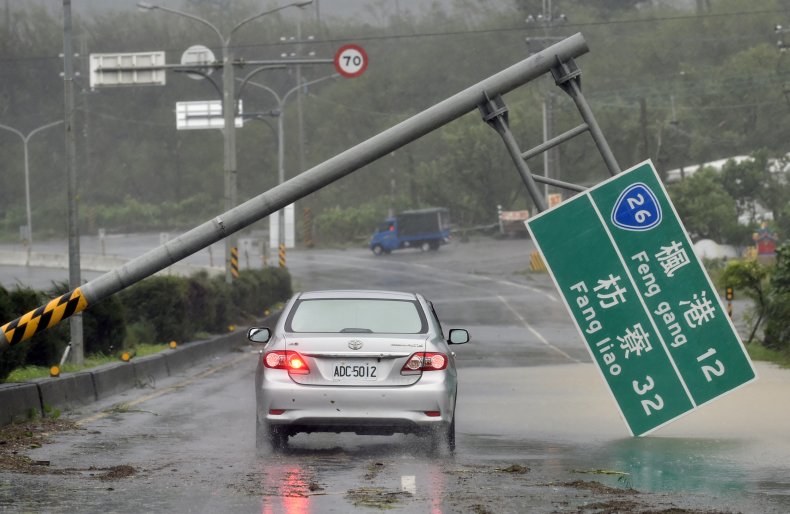
Typhoon Koinu slammed into Taiwan’s southeastern islands on Wednesday and the massive storm is anticipated to hit southern Taiwan in the next few hours, which would be Thursday morning local time. The storm’s strength prompted meteorologists and storm chasers to voice concern ahead of its landfall, as wind gusts of 212 miles per hour were documented by Lanyu Weather Station as the storm lashed Orchid Island on Wednesday. The storm has sustained winds of 130 miles per hour, which makes it equivalent to a Category 4 hurricane.
If the wind gust recording is accurate, it would be one of the top five strongest wind gusts ever recorded on Earth, a concerning fact as the storm is barreling toward the Maanshan Nuclear Power Plant in southern Taiwan. AccuWeather meteorologist Bill Deger told Newsweek he expects the storm may weaken to a Category 2 or Category 3 by the time it makes landfall.
However, the storm is expected to pass directly over Taiwan’s last active nuclear power plant.
“It’ll come very close to where the eye of this typhoon is expected to move,” Deger told Newsweek
In 2021, Taiwan Power Company submitted an application to shutter the two-unit power plant. The plant’s 40-year operating licenses are set to expire, but the nuclear units won’t close until 2024 and 2025.
Despite the storm’s direct path toward the plant, there are no announcements on the power company’s website about efforts being made to protect the plant from the incoming storm’s harsh winds.
With a storm of Koinu’s strength, Deger said power outages, structural damage and flooding can be expected. Up to 12 inches of rain is expected to fall as well, causing a flood risk.
Storm chasers and weather experts have issued warnings in advance of the storm’s impact, with one storm chaser seemingly very concerned about the storm’s path…………………………………………..
Natural disasters have posed a high risk to power plants in the past. The Fukushima Daiichi nuclear plant in Japan was damaged by a tsunami after a 9.0-magnitude earthquake struck the area in 2011.
01:40
Tropical Storm vs Cyclone vs Hurricane vs Typhoon: What’s The Difference?
Share
Share on FacebookShare on TwitterShare on LinkedInShare on RedditShare on FlipboardShare via EmailComments
WORLDTYPHOONSTORMTAIWANNUCLEAR ENERGY
ACategory 4 typhoon is headed straight toward a nuclear power plant in southern Taiwan.
Typhoon Koinu slammed into Taiwan’s southeastern islands on Wednesday and the massive storm is anticipated to hit southern Taiwan in the next few hours, which would be Thursday morning local time. The storm’s strength prompted meteorologists and storm chasers to voice concern ahead of its landfall, as wind gusts of 212 miles per hour were documented by Lanyu Weather Station as the storm lashed Orchid Island on Wednesday. The storm has sustained winds of 130 miles per hour, which makes it equivalent to a Category 4 hurricane.
If the wind gust recording is accurate, it would be one of the top five strongest wind gusts ever recorded on Earth, a concerning fact as the storm is barreling toward the Maanshan Nuclear Power Plant in southern Taiwan. AccuWeather meteorologist Bill Deger told Newsweek he expects the storm may weaken to a Category 2 or Category 3 by the time it makes landfall.
SUBSCRIBE NOW FROM JUST $1 PER MONTH >
However, the storm is expected to pass directly over Taiwan’s last active nuclear power plant.
“It’ll come very close to where the eye of this typhoon is expected to move,” Deger told Newsweek.
READ MORE
- Taiwan scrambles to secure sunken cargo ship before Typhoon Doksuri hits
- Typhoon Mawar path, track update as “direct hit” expected for Guam
- NASA image shows powerful cyclone that injured 700 people
In 2021, Taiwan Power Company submitted an application to shutter the two-unit power plant. The plant’s 40-year operating licenses are set to expire, but the nuclear units won’t close until 2024 and 2025.
SIGN UP FOR NEWSWEEK’S DAILY HEADLINES >
Despite the storm’s direct path toward the plant, there are no announcements on the power company’s website about efforts being made to protect the plant from the incoming storm’s harsh winds.
With a storm of Koinu’s strength, Deger said power outages, structural damage and flooding can be expected. Up to 12 inches of rain is expected to fall as well, causing a flood risk.
Storm chasers and weather experts have issued warnings in advance of the storm’s impact, with one storm chaser seemingly very concerned about the storm’s path.
“12:10 am. Could be one of my final posts,” storm chaser Josh Morgerman posted on X, formerly Twitter with a screenshot of the storm’s intimidating radar image. “Star = my location in Jialeshui #Taiwan. Just outside #Typhoon #KOINU‘s potent eyewall. Wind starting to rip. 987 mb & falling fast. I’ll post as long as I can.”
Others commented on the storm’s strength.
“Wow. Lanyu Weather Station on Orchid Island, Taiwan, at an elevation of 324 m, recorded a wind gust of 342 km/h (212 mph) at 9:53 pm local time as the eyewall of Typhoon Koinu moved over the area. This is provisionally the highest gust ever recorded in Asia,” one user posted on X, formerly Twitter.
ADVERTISING
Natural disasters have posed a high risk to power plants in the past. The Fukushima Daiichi nuclear plant in Japan was damaged by a tsunami after a 9.0-magnitude earthquake struck the area in 2011.
A typhoon is classified as a severe tropical cyclone occurring in the Northwest Pacific. A hurricane is the term for the same type of storm in the Northeast Pacific and Northern Atlantic. Outside of these regions, the storms are called tropical cyclones. https://www.newsweek.com/typhoon-koinu-could-slam-straight-nuclear-power-plant-1832169
No comments yet.
1 This Month

of the week – Shut Down Drone Warfare!


Tell the Ukrainian Government to Drop Prosecution of Peace Activist Yurii Sheliazhenko

Petition to revoke the licensing of the Near Surface Nuclear Disposal Facility (NSDF) at Chalk River. https://www.ourcommons.ca/petitions/en/Petition/Details?Petition=e-7247
To see nuclear-related stories in greater depth and intensity – go to https://nuclearinformation.wordpress.com
-
Archives
- April 2026 (114)
- March 2026 (251)
- February 2026 (268)
- January 2026 (308)
- December 2025 (358)
- November 2025 (359)
- October 2025 (376)
- September 2025 (257)
- August 2025 (319)
- July 2025 (230)
- June 2025 (348)
- May 2025 (261)
-
Categories
- 1
- 1 NUCLEAR ISSUES
- business and costs
- climate change
- culture and arts
- ENERGY
- environment
- health
- history
- indigenous issues
- Legal
- marketing of nuclear
- media
- opposition to nuclear
- PERSONAL STORIES
- politics
- politics international
- Religion and ethics
- safety
- secrets,lies and civil liberties
- spinbuster
- technology
- Uranium
- wastes
- weapons and war
- Women
- 2 WORLD
- ACTION
- AFRICA
- Atrocities
- AUSTRALIA
- Christina's notes
- Christina's themes
- culture and arts
- Events
- Fuk 2022
- Fuk 2023
- Fukushima 2017
- Fukushima 2018
- fukushima 2019
- Fukushima 2020
- Fukushima 2021
- general
- global warming
- Humour (God we need it)
- Nuclear
- RARE EARTHS
- Reference
- resources – print
- Resources -audiovicual
- Weekly Newsletter
- World
- World Nuclear
- YouTube
-
RSS
Entries RSS
Comments RSS
 nuclear-news
Leave a comment