Atomic Bombing of Japan Was Not Necessary to End WWII. US Gov’t Documents Admit It
US government documents admit the atomic bombing of Hiroshima and Nagasaki was not necessary to end WWII. Japan was on the verge of surrendering. The nuclear attack was the first strike in Washington’s Cold War on the Soviet Union.
By Ben Norton / Geopolitical Economy Report August 10, 2023 https://scheerpost.com/2023/08/10/atomic-bombing-of-japan-was-not-necessary-to-end-wwii-us-govt-documents-admit-it/
It is very common for Western governments and media outlets to tell the rest of the world to be afraid of North Korea and its nuclear weapons, or to fear the possibility that Iran could one day have nukes.
But the reality is that there is only one country in human history that has used nuclear weapons against a civilian population – and not once, but twice: the United States.
On the 6th and 9th of August, 1945, the US military dropped atomic bombs on the Japanese cities of Hiroshima and Nagasaki. Around 200,000 civilians were killed.
Today, nearly 80 years later, many US government officials, journalists, and educators still claim that Washington had no choice but to nuke Japan, to force it to surrender and thus end World War Two. Some argue that this horrifying atrocity was in fact a noble act, that it saved even more lives that would have been lost in subsequent fighting.
This narrative, although widespread, is utterly false.
US government documents have admitted that Japan was already on the verge of surrendering in 1945, before the nuclear strikes. It was simply not necessary to use the atomic bomb.
The US Department of War (which was renamed the Department of Defense later in the 1940s) conducted an investigation, known as the Strategic Bombing Survey, analyzing its air strikes in World War II.
Published in 1946, the Strategic Bombing Survey stated very clearly, “Japan would have surrendered even if the atomic bombs had not been dropped”:
… it seems clear that, even without the atomic bombing attacks, air supremacy over Japan could have exerted sufficient pressure to bring about unconditional surrender and obviate the need for invasion.
Based on a detailed investigation of all the facts, and supported by the testimony of the surviving Japanese leaders involved, it is the Survey’s opinion that certainly prior to 31 December 1945, and in all probability prior to 1 November 1945, Japan would have surrendered even if the atomic bombs had not been dropped, even if Russia had not entered the war, and even if no invasion had been planned or contemplated
The nuclear strikes on Japan represented a political decision taken by the United States, aimed squarely at the Soviet Union; it was the first strike in the Cold War.
In August 1945, the USSR was preparing to invade Japan to overthrow its ruling fascist regime, which had been allied with Nazi Germany – which the Soviet Red Army had also just defeated in the European theater of the war.
Washington was concerned that, if the Soviets defeated Japanese fascism and liberated Tokyo like they had in Berlin, then Japan’s post-fascist government could become an ally of the Soviet Union and could adopt a socialist government.
The atomic bombs dropped on Hiroshima and Nagasaki, therefore, were not so much aimed at the Japanese fascists as they were aimed at the Soviet communists.
This expressly political decision to use nuclear weapons against Japan was in fact opposed by several top US military officials.
As one of the most famous generals in US military history, Dwight Eisenhower led operations in the European theater of the war and oversaw the subsequent occupation of what was formerly Nazi Germany.
Eisenhower later became president of the United States, following Harry Truman, the US leader who had nuked Japan.
Eisenhower is renowned worldwide for his leadership in the fight against fascism in Europe. But what is little known is that he opposed the US nuclear attacks on Japan.
After leaving the White House, Eisenhower published a memoir titled Mandate for Change. In this 1963 book, the former top general recalled an argument he had in July 1945 with then US Secretary of War Henry Stimson.
Stimson had notified him that Washington was planning to nuke Japan, and Eisenhower criticized the decision, stating that he had “grave misgivings” and was convinced “that Japan was already defeated and that dropping the bomb was completely unnecessary”.
The incident took place in [July] 1945 when Secretary of War Stimson, visiting my headquarters in Germany, informed me that our government was preparing to drop an atomic bomb on Japan. I was one of those who felt that there were a number of cogent reasons to question the wisdom of such an act. … But the Secretary, upon giving me the news of the successful bomb test in New Mexico, and of the plan for using it, asked for my reaction, apparently expecting a vigorous assent.
During his recitation of the relevant facts, I had been conscious of a feeling of depression and so I voiced to him my grave misgivings, first on the basis of my belief that Japan was already defeated and that dropping the bomb was completely unnecessary, and secondly because I thought that our country should avoid shocking world opinion by the use of a weapon whose employment was, I thought, no longer mandatory as a measure to save American lives. It was my belief that Japan was, at that very moment, seeking some way to surrender with a minimum loss of “face”. The Secretary was deeply perturbed by my attitude, almost angrily refuting the reason I gave for my quick conclusions.
These “completely unnecessary” nuclear attacks on Hiroshima and Nagasaki killed some 200,000 civilians. But they had a political goal, aimed at the Soviet Union.
The political reasons behind the atomic bombing of Japan have been publicly acknowledged by the US Department of Energy’s Office of History, which runs a website with educational information about the Manhattan Project, the scientific initiative that developed the bomb.
The US government website conceded that the Truman administration’s decision to nuke Japan was politically motivated, writing:
After President Harry S. Truman received word of the success of the Trinity test, his need for the help of the Soviet Union in the war against Japan was greatly diminished. The Soviet leader, Joseph Stalin, had promised to join the war against Japan by August 15th. Truman and his advisors now were not sure they wanted this help. If use of the atomic bomb made victory possible without an invasion, then accepting Soviet help would only invite them into the discussions regarding the postwar fate of Japan.
Other historians argue that Japan would have surrendered even without the use of the atomic bomb and that in fact Truman and his advisors used the bomb only in an effort to intimidate the Soviet Union.
…
Truman hoped to avoid having to “share” the administration of Japan with the Soviet Union.
Mainstream historians have acknowledged this fact as well.
Ward Wilson, a researcher at the establishment London-based think tank the British American Security Information Council, published an article in Washington’s elite Foreign Policy magazine in 2013 titled “The Bomb Didn’t Beat Japan. Stalin Did”.
“Although the bombs did force an immediate end to the war, Japan’s leaders had wanted to surrender anyway and likely would have done so before the American invasion planned for Nov. 1. Their use was, therefore, unnecessary”, he wrote.
Wilson explained:
If the Japanese were not concerned with city bombing in general or the atomic bombing of Hiroshima in particular, what were they concerned with? The answer is simple: the Soviet Union.
…
Even the most hard-line leaders in Japan’s government knew that the war could not go on. The question was not whether to continue, but how to bring the war to a close under the best terms possible.
One way to gauge whether it was the bombing of Hiroshima or the invasion and declaration of war by the Soviet Union that caused Japan’s surrender is to compare the way in which these two events affected the strategic situation. After Hiroshima was bombed on Aug. 6, both options were still alive. … Bombing Hiroshima did not foreclose either of Japan’s strategic options.
The impact of the Soviet declaration of war and invasion of Manchuria and Sakhalin Island was quite different, however. Once the Soviet Union had declared war, Stalin could no longer act as a mediator — he was now a belligerent. So the diplomatic option was wiped out by the Soviet move. The effect on the military situation was equally dramatic.
When the Russians invaded Manchuria, they sliced through what had once been an elite army and many Russian units only stopped when they ran out of gas.
…
The Soviet invasion invalidated the military’s decisive battle strategy, just as it invalidated the diplomatic strategy. At a single stroke, all of Japan’s options evaporated. The Soviet invasion was strategically decisive — it foreclosed both of Japan’s options — while the bombing of Hiroshima (which foreclosed neither) was not.
Attributing the end of the war to the atomic bomb served Japan’s interests in multiple ways. But it also served U.S. interests. If the Bomb won the war, then the perception of U.S. military power would be enhanced, U.S. diplomatic influence in Asia and around the world would increase.
…
If, on the other hand, the Soviet entry into the war was what caused Japan to surrender, then the Soviets could claim that they were able to do in four days what the United States was unable to do in four years, and the perception of Soviet military power and Soviet diplomatic influence would be enhanced. And once the Cold War was underway, asserting that the Soviet entry had been the decisive factor would have been tantamount to giving aid and comfort to the enemy.
Thus, before World War II was even over, the United States launched a Cold War against its ostensible “ally”, the Soviet Union – and against the potential spread of socialism anywhere around the world.
US spy agencies began recruiting former fascists and Nazi collaborators. US officials freed Class A Japanese war criminals from prison, some of whom went on to lead the government in Tokyo.
Many of these figures were involved in founding the right-wing Liberal Democratic Party (LDP), which has essentially run Japan as a one-party state since 1955 (excluding a mere five years of opposition rule).
A textbook example of this was Nobusuke Kishi, a notorious war criminal who ran the Japanese empire’s Manchukuo puppet regime and oversaw genocidal atrocities in collaboration with the Nazis. He was briefly imprisoned, but later pardoned by US authorities and, with Washington’s support, rose to become prime minister of Japan in the 1950s.
Kishi’s fascist-linked family still commands significant control over Japanese politics. His grandson, Shinzo Abe, was the longest-serving prime minister in the East Asian nation’s history.
Today, it remains important to correct widespread myths about this history, because they have a profound impact on popular culture.
In July 2023, Hollywood released a blockbuster film, “Oppenheimer”, by award-winning director Christopher Nolan. The movie was a huge commercial success, but was also criticized for its politics.
The film humanized the eponymous physicist who directed the Manhattan Project’s Los Alamos laboratory, J. Robert Oppenheimer, commonly known as the “father of the atomic bomb”.
Later in life, Oppenheimer came to regret the role he played in developing the weapon, and he campaigned against nuclear proliferation.
Ironically, Oppenheimer also became a victim of the US government’s McCarthyism, and was persecuted for his links to left-wing groups.
But while the movie was celebrated for depicting Oppenheimer’s complex internal struggles, it was accused of whitewashing the brutality of the US atomic bombings of Hiroshima and Nagasaki.
The Japanese civilians who lost their lives in these totally unnecessary attacks were eerily absent from the film.
By incessantly repeating the falsehood that nuking 200,000 people was the only way to get Japan to surrender, US officials have normalized this erasure of the civilian victims of its unnecessary, politically motivated war crimes.
…
Putin profits from US and European reliance on Russian nuclear fuel
MARTHA MENDOZA and DASHA LITVINOVA, Yahoo News, 10 August 2023
WASHINGTON (AP) — The U.S. and its European allies are importing vast amounts of nuclear fuel and compounds from Russia, providing Moscow with hundreds of millions of dollars in badly needed revenue as it wages war on Ukraine.
The sales, which are legal and unsanctioned, have raised alarms from nonproliferation experts and elected officials who say the imports are helping to bankroll the development of Moscow’s nuclear arsenal and are complicating efforts to curtail Russia’s war-making abilities. The dependence on Russian nuclear products — used mostly to fuel civilian reactors — leaves the U.S. and its allies open to energy shortages if Russian President Vladimir Putin were to cut off supplies……
“We have to give money to the people who make weapons? That’s absurd,” said Henry Sokolski, executive director of the Washington-based Nonproliferation Policy Education Center. “If there isn’t a clear rule that prevents nuclear power providers from importing fuel from Russia — and it’s cheaper to get it from there — why wouldn’t they do it?”
Russia sold about $1.7 billion in nuclear products to firms in the U.S. and Europe, according to trade data and experts. The purchases occurred as the West has leveled stiff sanctions on Moscow over its 2022 invasion of Ukraine, blocking imports of such Russian staples as oil, gas, vodka and caviar.
The West has been reluctant to target Russia’s nuclear exports, however, because they play key roles in keeping reactors humming. Russia supplied the U.S. nuclear industry with about 12% of its uranium last year, according to the U.S. Energy Information Administration. Europe reported getting about 17% of its uranium in 2022 from Russia.
………………………………………. Many of the 30 countries generating nuclear energy in some 440 plants are importing radioactive materials from Russia’s state-owned energy corporation Rosatom and its subsidiaries. Rosatom leads the world in uranium enrichment, and is ranked third in uranium production and fuel fabrication, according to its 2022 annual report.
……………………………Rosatom’s CEO Alexei Likhachyov told the Russian newspaper Izvestia the company’s foreign business should total $200 billion over the next decade. That lucrative civilian business provides critical funds for Rosatom’s other major responsibility: designing and producing Russia’s atomic arsenal, experts say.
…………………………………. The value of Russian nuclear fuel and products sent to the U.S. hit $871 million last year, up from $689 million in 2021 and $610 million in 2020, according to the U.S. Census Bureau. In terms of weight, U.S. imports of uranium products from Russia nearly doubled from 6.3 tons in 2020 to 12.5 tons in 2022, according to trade data from ImportGenius.
……………………………………………………………………………….Europe is in a bind largely because it has 19 Russian-designed reactors in five countries that are fully dependent on Russian nuclear fuel. France also has a long history of relying on Russian-enriched uranium. In a report published in March, Greenpeace, citing the United Nations’ Comtrade database, showed that French imports of enriched uranium from Russia increased from 110 tons in 2021 to 312 tons in 2022.
Europe spent nearly $828 million (almost €750 million) last year on Russian nuclear industry products — including fuel elements, nuclear reactors, and machinery — according to Eurostat, the EU’s statistics office………………………………………more https://uk.news.yahoo.com/putin-profits-off-global-reliance-040103115.html?guccounter=1
War is a Racket… U.S. and NATO Arms Industries Make Record $400 BILLION in Sales from Proxy War With Russia

Strategic Culture Foundation, 11 Aug 23
Western capitalism is at once a sponsor and an addict of war.
Western weapons manufacturers are popping champagne corks over record sales with total revenues hitting $400 billion for last year. According to media reports, this coming year-end will see that record figure exceeded by another salivating $50 billion.
Ukraine may be resembling a bloodbath, as we noted in last week’s editorial. But apparently, Western military corporations are swimming in a bonanza of profits and stock market investments.
Most of this lucrative new business stems from NATO’s proxy war with Russia in Ukraine, which is heading toward its second year. There is no sign of a diplomatic effort from the West or the Kiev regime it sponsors to end the bloodshed.
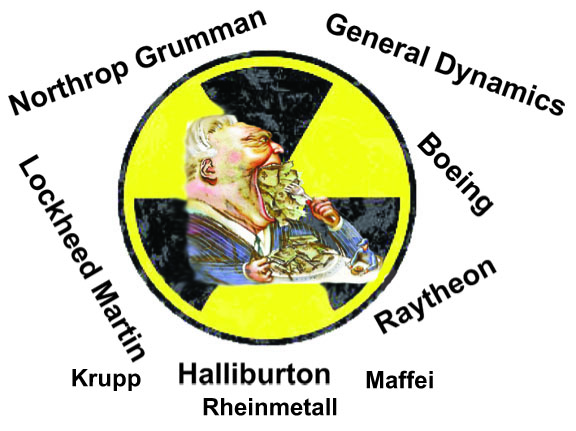
The main corporate beneficiaries making a financial killing from Ukraine are by far the American firms. They include such behemoths as Lockheed Martin, Boeing and RTX (formerly Raytheon). But also enjoying soaring profits are arms makers in other NATO countries: BAE in the United Kingdom, Airbus in France, Netherlands and Spain, Leonardo in Italy, and Germany’s Rheinmetall.
This week the Joe Biden administration requested another $24 billion in U.S. taxpayer-funded aid to Ukraine. It’s hard to keep track of the money flowing from NATO countries to prop up the Nazi regime in Kiev. Even the NATO authorities don’t seem to know the precise figures, such is the rampant corruption that is inevitably associated with the vast doling of funds. But estimates of total U.S. and NATO aid to Ukraine range from $150 billion to $200 billion over the past year alone.
What we are seeing is an audacious racket whereby the American and European public are subsidizing the funneling of their own taxpayers’ money into the coffers of weapons firms. And there is no democratic choice in the matter. It’s a fait accompli. Or, put another way, extortion.
Of course, too, part of this huge scam is the hefty financial cuts for the inner circle of the Kiev regime, including its puppet president, Vladimir Zelensky, and the brazenly sleazy defense chief Aleksy Reznikov. It is reckoned that at least $400 million has been grafted by the top members of the regime from the arms bazaar flowing into Ukraine. Reznikov has even boasted that his country serves as a testing ground for NATO weaponry.
Nearly a century ago, former U.S. Marine Corps General Smedley D Butler popularized the phrase, “war is a racket” as the title of his classic book in which he condemned how American capitalism profits obscenely from military invasions and killing.
Butler’s critique is as relevant today, perhaps more so, as evinced by the conflict in Ukraine.
Western media reports are increasingly admitting – albeit coyly – that the war is a disaster for the Kiev regime and, by extension, the NATO powers. The death toll among Ukrainian forces may be as high as 400,000 since the conflict erupted last February. The much-anticipated Ukrainian counteroffensive launched in early June has resulted in no territorial gains despite the horrendous casualties and despite the gargantuan supply of NATO weapons, training and logistical support.
A report in the Washington Post this week shows that most Ukrainian people are despairing of the grinding war and endless casualties. They see no point in the continuation of hostilities given the failure of the NATO-backed forces to make any advance against well-fortified Russian defense lines.
Yet against this grim reality, the U.S. and European officials keep running the taps of blood.
We see NATO leaders like Polish President Andrzej Duda this week urging for more weapons to be sent to Ukraine even while he concedes the military defeat so far.
Zelensky and his cronies are, not surprisingly, also demanding more NATO arms and claiming with bravado they will never negotiate with Russian President Vladimir Putin. Some people want this conflict to keep going because of their irrational Russophobia and simply because it is too lucrative for their own personal gain.
Where does democracy come into this? It doesn’t, whatsoever. Polls show that most Americans are opposed to the continuing supply of military aid to Ukraine. There are sound reasons to believe that most European citizens are also firmly against the fueling of a bloody war in which Ukrainian corpses keep piling higher. In addition, the perpetuation of this conflict runs the outrageous risk of spiraling out of control into an all-out war between the United States and Russia, the world’s biggest nuclear powers……………………………….. more https://strategic-culture.org/news/2023/08/11/war-iracket-us-nato-arms-industries-make-record-400-billion-sales-from-proxy-war-with-russia/
Chinese UN mission releases working paper on Fukushima nuclear-contaminated wastewater issue, urging Japan to discharge in responsible manner
By Global TimesP Aug 09, 2023 https://www.globaltimes.cn/page/202308/1295954.shtml
Chinese UN mission releases working paper on Fukushima nuclear-contaminated wastewater issue, urging Japan to discharge in responsible manner
China’s Permanent Mission to the United Nations (UN) and Other International Organizations in Vienna has submitted the working paper on the disposal of nuclear-contaminated water of Japan’s Fukushima Daiichi Nuclear Power Station to the First Preparatory Committee for the Eleventh Review Conference of the Treaty on the Non-Proliferation of Nuclear Weapons (NPT).
The disposal of nuclear-contaminated water from Fukushima concerns the global marine environment and public health. There is no precedent for artificially discharging nuclear-contaminated water into the ocean and no internationally recognized disposal standards.
The international community should attach great importance to Japan’s ocean discharge of the nuclear-contaminated water and urge Japan to dispose of the contaminated water in a responsible manner, according to the working paper released on Wednesday.
The working paper pointed out that Japan had previously discussed five ways to dispose of the contaminated water, namely injection into the ground, discharge into the ocean, vapor release, release as hydrogen gas into the atmosphere, and underground burial. However, Japan did not conduct a thorough study of all disposal options and insisted on choosing ocean dumping, which was the lowest cost option, thus transferring the risk of nuclear contamination.
If the so-called ”treated-water” is really safe and harmless, why does Japan not dispose of it within its own territory or use it for industrial and agricultural purposes? The working paper pointed out.
The paper noted that Japan fails to prove the long-term effectiveness and reliability of the purification equipment for treating the contaminated water. According to the data released by Japan, nearly 70 percent of the nuclear-contaminated water treated by Japan’s ALPS (Advanced Liquid Processing System) still fails to meet the discharge standard and needs to be purified again.
Japan has failed to prove the authenticity and accuracy of the data on contaminated water. Fukushima power plant operator TEPCO has repeatedly concealed and falsified nuclear-contaminated water related data in recent years. The IAEA conducted its review and assessment solely based on the data and information provided by Japan, and carried out inter-laboratory comparative analyses of only a small number of nuclear-contaminated water samples collected by Japanese officials, read the working paper.
According to general international law and the provisions of UN Convention on the Law of the Sea, Japan has the obligation to protect and preserve the marine environment. The Convention on the Prevention of Marine Pollution by Dumping of Wastes and Other Matter 1972 (the London Convention) prohibits the dumping of radioactive waste into the sea by means of man-made structures at sea. Japan’s discharging of nuclear-contaminated water into the sea by means of submarine pipelines is in violation of the relevant provisions of the London Convention.
Japan has failed to demonstrate the perfection of the monitoring program. Tokyo must not start discharging until the long-term monitoring mechanism is established, and must stop discharging water once anomalies are detected in the data on the discharge of nuclear contaminated water.
The Chinese UN mission stressed that Japan should not confuse the concept of nuclear-contaminated wastewater with the wastewater from the normal operation of nuclear power plants.
The working paper warned Japan of not making use of IAEA’s comprehensive assessment report on the disposal of Fukushima nuclear-contaminated water as ”shield” or ”greenlight” for the dumping plan.
In addition, the paper urged Japan to fully respond to the concerns of China and the international community, and dispose of the nuclear-contaminated water in a responsible manner in line with its obligations under international law, stop pushing through the dumping plan, fully consult with stakeholders including neighboring countries, make sure to handle the nuclear contaminated water in a science-based, safe and transparent way, and subject itself to rigorous international oversight
Australian Opposition’s likely embrace of nuclear energy is high-risk politics
Crazy brave, or just crazy? If, as seems likely, the opposition embraces
nuclear power in its 2025 election policy, it will be taking a huge
political gamble. The Coalition might argue this would be the best (or
only) way to ensure we achieve net zero by 2050.
But “nuclear” is a trigger word in the political debate, and the reactions it triggers are
mostly negative. Opposition Leader Peter Dutton has been open since the
election about nuclear energy being on the Coalition’s agenda. It’s a “no
surprises” tactic – but one that has allowed the government, especially
Climate Change Minister Chris Bowen, to regularly attack and ridicule the
idea.
The Conversation 10th Aug 2023
Sweden criticised over plan to build at least 10 new nuclear reactors
Environmental experts say proposals are too expensive and will come too late to meet energy needs
Miranda Bryant in Stockholm, Fri 11 Aug 2023 https://www.theguardian.com/world/2023/aug/10/sweden-criticised-over-plan-to-build-at-least-10-new-nuclear-reactors
Environmental experts have criticised the Swedish government’s plan to build at least 10 nuclear reactors in the next 20 years, more than doubling the current number, saying it will be too expensive and will come too late to meet energy needs.
The climate minister, Romina Pourmokhtari, announced on Wednesday that in order to meet its climate goals Sweden needed to double electricity production in the next two decades.
The plan for 10 new reactors would mark a dramatic change from the country’s current capacity for nuclear power, with six reactors in operation in Forsmark, Oskarshamn and Ringhals accounting for about 30% of its electricity production.
Lars J Nilsson, a professor at Lund University and a member of the European climate advisory board, said he disputed the government’s claim that the new reactors were needed and dismissed the move as “symbolic”.
“You cannot certainly say that we need 10 new reactors. Right now the expansion of electricity production in Sweden is through wind power,” he told the Guardian. “I don’t expect any new nuclear power in Sweden, unless the government provides quite far-reaching guarantees similar to what you have at Hinkley Point [in the UK].”
The move was more about posturing than action, he said, claiming the government wanted to show it was taking action on meeting its climate goals. “I see it more as symbolic than actually creating any real change.”
If the reactors were built the costs were likely to fall heavily on the Swedish taxpayer, said Nilsson. Having been a hotly debated issue in the past, this latest announcement had had a “lukewarm response”.
Sweden’s reputation as a green leader on the global stage was shifting, he said. “Sweden will partly lose that profile. Now the momentum and progressiveness is coming from the EU and Brussels.”
The EU’s Fit for 55 plan legally requires member states to reduce emissions by at least 55% by 2030 and become “climate neutral” by 2050.
Sweden’s Moderates agreed when they formed a coalition government with the Christian Democrats, Liberals and the far-right Sweden Democrats that more reactors would be permitted and that investments in nuclear power would be made profitable through credit guarantees and changes to pricing.
This week was the first time the government had given an anticipated number of new reactors.skip past newsletter promotion
#3DNukeMissile on Hiroshima/Nagasaki Days: A reminder of increased nuclear threats And a call to the NPT Prep Com
Basel Peace Office, 11 Aug 23
On Hiroshima and Nagasaki Days this week (August 6 and 9) passers-by in the Vienna Central Square and diplomats at the United Nations in Vienna were confronted with an eerily realistic 3D artistic rendering of a nuclear missile.
“Hiroshima and Nagasaki Days occur this year amid heightened conflicts involving nuclear armed states in Europe, North East Asia, South Asia and the Middle East,” said Alyn Ware, Member of the World Future Council which created the #3DNukeMissile.
“A nuclear war could occur from escalation of one of these conflicts, miscalculation, accident or even intent. We call on the nuclear armed states to stand-down the nuclear forces by relinquishing first-use policies, affirming international law prohibiting the threat or use of nuclear weapons, commencing negotiations on comprehensive nuclear weapons abolition and committing to achieve the global elimination of nuclear weapons within a set timeframe.”
#3DNukeMissile and the NPT Prep Com
The #3DNukeMissile was displayed in Vienna as governments met at the United Nations (VIC) to discuss nuclear risk-reduction, nonproliferation and disarmament proposals in a two-week-long Preparatory Committee Meeting for the Nonproliferation Treaty Review Conference (NPT Prep Com).
The interactive art display provides a symbolic opportunity for members of the public to ‘prevent’ a nuclear missile launch by holding or standing on the chains which are wrapped over the missile.
“The humanitarian and environmental impacts of our shared nuclear history, as well as potential threats, are a threat to our common security and the future of our youths,” said Michaela Higgins Sørensen, a team leader of the Youth Fusion global network which has brought youth perspectives and proposals into the NPT Review process and which co-organised the #3DNukeMissile display. “Now is the time to act and work across the board to ensure we take a human security approach in working towards a more sustainable and peaceful world for our future generations.”
The States Parties to the NPT recognized in 2010 that there would be “catastrophic humanitarian consequences of any use of nuclear weapons” and reaffirmed “the need for all states at all times to comply with applicable international law, including international humanitarian law.” In addition, the legal obligation to negotiate for – and achieve – the complete elimination of nuclear weapons has been affirmed by the International Court of Justice (in 1996) and the UN Human Rights Committee (in 2018).
The Abolition 2000 Global Network to Eliminate Nuclear Weapons submitted a working paper entitled Abolition NWC Reset: Frameworks for a Nuclear-Weapon-Free World to the NPT Prep Com on August 2 outlining a choice of three possible frameworks which the nuclear armed and allied states could employ to implement these obligations and abolish nuclear weapons under strict and effective international verification and control.
Frameworks for a nuclear-weapon-free world
According toMs Jackie Cabasso, Executive Director of Western States Legal Foundation and Coordinating Committee Member of Abolition 2000, The nuclear armed and allied states could negotiate either:
- A nuclear weapons convention or package of agreements which provide a comprehensive framework for the elimination of nuclear weapons along with the necessary verification and compliance measures;
- A framework agreement which includes the legal commitment to achieve a nuclear-weapon-free world, identifies the measures and pathways required in general terms, and provides a process for agreeing on details over time; or
- Protocols to the Treaty on the Prohibition of Nuclear Weapons (TPNW) or related instruments which nuclear armed and allied states would sign as part of a process for them to join the TPNW and build the nuclear destruction, elimination, verification and compliance process through the TPNW, particularly its Article 4.”
| View this email in your browser #3DNukeMissile on Hiroshima/Nagasaki Days: A reminder of increased nuclear threats And a call to the NPT Prep Com August 11, 2023On Hiroshima and Nagasaki Days this week (August 6 and 9) passers-by in the Vienna Central Square and diplomats at the United Nations in Vienna were confronted with an eerily realistic 3D artistic rendering of a nuclear missile.“Hiroshima and Nagasaki Days occur this year amid heightened conflicts involving nuclear armed states in Europe, North East Asia, South Asia and the Middle East,” said Alyn Ware, Member of the World Future Council which created the #3DNukeMissile.“A nuclear war could occur from escalation of one of these conflicts, miscalculation, accident or even intent. We call on the nuclear armed states to stand-down the nuclear forces by relinquishing first-use policies, affirming international law prohibiting the threat or use of nuclear weapons, commencing negotiations on comprehensive nuclear weapons abolition and committing to achieve the global elimination of nuclear weapons within a set timeframe.”  Austria Red Cross checking the missile for radiation Austria Red Cross checking the missile for radiationto see if it is carrying a nuclear warhead in its cone.#3DNukeMissile and the NPT Prep Com The #3DNukeMissile was displayed in Vienna as governments met at the United Nations (VIC) to discuss nuclear risk-reduction, nonproliferation and disarmament proposals in a two-week-long Preparatory Committee Meeting for the Nonproliferation Treaty Review Conference (NPT Prep Com).The interactive art display provides a symbolic opportunity for members of the public to ‘prevent’ a nuclear missile launch by holding or standing on the chains which are wrapped over the missile.“The humanitarian and environmental impacts of our shared nuclear history, as well as potential threats, are a threat to our common security and the future of our youths,” said Michaela Higgins Sørensen, a team leader of the Youth Fusion global network which has brought youth perspectives and proposals into the NPT Review process and which co-organised the #3DNukeMissile display. “Now is the time to act and work across the board to ensure we take a human security approach in working towards a more sustainable and peaceful world for our future generations.”The States Parties to the NPT recognized in 2010 that there would be “catastrophic humanitarian consequences of any use of nuclear weapons” and reaffirmed “the need for all states at all times to comply with applicable international law, including international humanitarian law.” In addition, the legal obligation to negotiate for – and achieve – the complete elimination of nuclear weapons has been affirmed by the International Court of Justice (in 1996) and the UN Human Rights Committee (in 2018).The Abolition 2000 Global Network to Eliminate Nuclear Weapons submitted a working paper entitled Abolition NWC Reset: Frameworks for a Nuclear-Weapon-Free World to the NPT Prep Com on August 2 outlining a choice of three possible frameworks which the nuclear armed and allied states could employ to implement these obligations and abolish nuclear weapons under strict and effective international verification and control.  Jackie Cabasso, Coordinating Committee Member of Abolition 2000, speaking at the Hiroshima Day event at Stephensplatz, Vienna on August 6.Frameworks for a nuclear-weapon-free world Jackie Cabasso, Coordinating Committee Member of Abolition 2000, speaking at the Hiroshima Day event at Stephensplatz, Vienna on August 6.Frameworks for a nuclear-weapon-free worldAccording toMs Jackie Cabasso, Executive Director of Western States Legal Foundation and Coordinating Committee Member of Abolition 2000, The nuclear armed and allied states could negotiate either:A nuclear weapons convention or package of agreements which provide a comprehensive framework for the elimination of nuclear weapons along with the necessary verification and compliance measures;A framework agreement which includes the legal commitment to achieve a nuclear-weapon-free world, identifies the measures and pathways required in general terms, and provides a process for agreeing on details over time; orProtocols to the Treaty on the Prohibition of Nuclear Weapons (TPNW) or related instruments which nuclear armed and allied states would sign as part of a process for them to join the TPNW and build the nuclear destruction, elimination, verification and compliance process through the TPNW, particularly its Article 4.”“The nuclear-armed and nuclear sharing states should immediately affirm that the threat or use of nuclear weapons is not only inadmissible but also illegal under international humanitarian law and human rights law,’ said Mr Bill Kidd MSP, Co-President of Parliamentarians for Nuclear Nonproliferation and Disarmament (PNND). “And they should commit to adopting a framework, package of agreements or comprehensive nuclear weapons convention by 2030, and to achieving its full implementation no later than 2045, the 75th anniversary of the NPT, 100th anniversary of the founding of the United Nations and the 100th anniversary of the use of nuclear weapons against Hiroshima and Nagasaki,” concluded Mr Kidd. |
Welsh groups call on the National Eisteddfod to reject funding from USA nuclear and arms company Westinghouse
The National Eisteddfod receives sponsorship money for the Science Pavilion
from nuclear power and arms company Westinghouse from the United States.
Westinghouse recently announced that they are setting up an office at
M-Sparc, Gaerwen, Ynys Môn to develop nuclear decomissioning skills.
In 2017, Toshiba Westinghouse went bankrupt after having to abandon building
new nuclear reactors at the V.C.Summer site in South Carolina 40% into
construction.
Six directors were charged with financial fraud in the U.S.
Federal Court. The Westinghouse Columbia Fuel Fabrication Facility on a
secretive corner of their site produce radioactive tritium gas. This
tritium is then sent to the Savannah River site in South Carolina where it
is prepared to be inserted in all U.S. nuclear weapons.
CADNO, CND Cymru, Cymdeithas y Cymod, Cymdeithas yr Iaith and PAWB calls on the National Eisteddfod to reject any sponsorship from Westinghouse in future
Eisteddfodau from Westinghouse due to their connection to terrifying arms
of mass destruction.
PAWB 10th Aug 2023
Hinkley Point C unrest continues as steel erectors down tools
An unofficial one-day stoppage of work took place yesterday, as the new
nuclear power station site Hinkley Point C continues to be embroiled in
labour disputes and unrest. Steel erectors working for contractor William
Hare downed tools in response to existing shift rotation patterns on the
site, wanting to change the current 11/3 and 10/4 rotation to a regular
10/4 arrangement. The unrest follows a spate of similar walkouts at Hinkley
Point C. On the supply side, 150 platers, welders and sheet metal workers
at Darchem Engineering in Stockton-Upon-Tees (a Hinkley Point C supplier)
secured a pay boost worth up to 13% after seven weeks of walk-out action.
PBC Today 9th Aug 2023
Ukrainian Minister Warns Zaporizhzhya Nuclear Plant ‘One Step Away’ From Blackout
Ukrainian Energy Minister Herman Halushchenko has appealed to the
International Atomic Energy Agency (IAEA) about the loss of the main power
line supplying electricity to the Zaporizhzhya nuclear power plant in
southern
Ukraine. Halushchenko said on Ukrainian television on August 10
that the nuclear plant is currently being supplied with power from a backup
line. “This is the only external power line left. And such a situation is
one step away from the blackout of the Zaporizhzhya nuclear power plant —
that is, the final loss of external power supply,”
Halushchenko said. In
the event of a blackout, diesel generators would be connected to meet the
needs of the station, but they may be damaged by Russian shelling, which
would stop the cooling of the station and set off a nuclear meltdown,
Halushchenko said. Ukraine’s nuclear authority, Enerhoatom, warned earlier
on August 10 that the Russian-occupied nuclear plant is on the verge of a
blackout because power was cut from the main high-voltage line.
Radio Free Europe 10th Aug 2023
https://www.rferl.org/a/ukraine-zaporizhzhya-nuclear-plant-risk-blackout/32541960.html
Biden to ask congress for an additional $13 billion for Ukraine – total aid given would soar to $113 billion
Lisa Mascaro Associated Press 11 Aug 2023
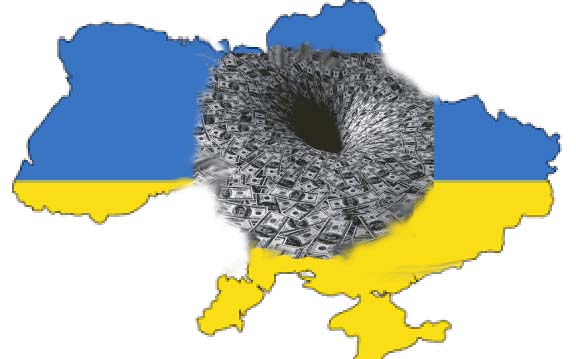
WASHINGTON (AP) — The Biden administration has asked Congress to provide more than $13 billion in emergency defense aid to Ukraine and an additional $8 billion for humanitarian support through the end of the year, another massive infusion of cash as the Russian invasion wears on and Ukraine pushes a counteroffensive against the Kremlin’s deeply entrenched forces…………………………
While the last such supplemental spending request from the White House for Ukraine funding was easily approved in 2022 despite reservations from Republicans, there’s a different dynamic this time.
A political divide on the issue has steadily grown, with the Republican-led House facing enormous pressure to demonstrate support for the party’s leader, Donald Trump, who has been very skeptical of the war. And American support for the effort has been slowly softening………………………………..
the price tag of $40 billion may be too much for Republicans who are fighting to slash, not raise, federal outlays. As a supplemental request, the package the White House is sending to Congress falls outside the budget caps both parties agreed to as part of the debt ceiling showdown earlier this year………………………………………………….
President Joe Biden and his senior national security team have repeatedly said the United States will help Ukraine “as long as it takes” to oust Russia from its borders. Privately, administration officials have warned Ukrainian officials that there is a limit to the patience of a narrowly divided Congress — and American public — for the costs of a war with no clear end. https://apnews.com/article/ukraine-russia-invasion-biden-congress-funding-d392f9b1adbb9c44249dce1cccdc2d1e—
United Nations Institute for Training and Research (UNITAR) held a public youth pitch event “‘Peace & XX’ Ideation – Nuclear Disarmament and Sustainable Futures”
Mirage News, 11 Aug 23
United Nations Institute for Training and Research (UNITAR) held a public youth pitch event “‘Peace & XX’ Ideation – Nuclear Disarmament and Sustainable Futures” in Hiroshima.
.39 youth living in Japan held discussions on nuclear disarmament and non-proliferation and a sustainable future and select teams presented their ideas to expert panellists for their feedback.
Expert panelists congratulated all participants for the fruitful discussions and presentations and for taking the first step to realizing a sustainable future and stressed the importance of youth to continue to act and to disseminate messages to realize their ideal and sustainable future.
11 August 2023, Hiroshima, Japan – On 6 August 2023, the United Nations Institute for Training and Research (UNITAR) held a public youth pitch event “‘Peace & XX’ Ideation – Nuclear Disarmament and Sustainable Futures” at Eikei University in Hiroshima. Youth living in presented their ideas in groups on nuclear disarmament and non-proliferation for a sustainable future based on given sustainable development goals (SDGs) to expert panellists for their feedback.
The panellists were Ms Izumi NAKAMITSU, United Nations Under-Secretary-General and High Representative for Disarmament Affairs, Mr Hidehiko YUZAKI, Governor of Hiroshima Prefectural Government and President of Hiroshima for Global Peace, and Ms Mihoko KUMAMOTO, Director of the UNITAR Division for Prosperity and Hiroshima Office. Mr. Kenta SUMIOKA, Vice-Chair of Peace Culture Village supported as the facilitator of the event and Ms. Kumiko MORIMOTO, freelance announcer as the emcee.
The final presentations were live-streamed in English and Japanese for youth around the world………………………………………………………………………………………………………………………………………………………………..
About UNITAR
The United Nations Institute for Training and Research (UNITAR) is a dedicated training arm of the United Nations. In 2021, UNITAR trained 370,139 learners around the world to support their actions for a better future. In addition to our headquarters in Geneva, we have offices in Hiroshima, New York and Bonn and networks around the world……………. https://www.miragenews.com/unitar-hosts-peace-xx-youth-pitch-on-nuclear-1064342/
TVA should focus on a better grid and renewable, not nuclear, energy
Tennessean, Ita Hardesty-Mason, 11 Aug 23
Nuclear energy is a fool’s folly and a waste of time and money. Unfortunately, the lobby around the Tennessee Valley Authority’s nuclear options is strong. It must be noted that Jeff Lyash, president and CEO of TVA, who wrote the guest column “How Tennessee Valley Authority is planning for growth and meeting future demands,” is also the chairman of the Nuclear Energy Institute. I am not so sure TVA has the best interests of its customers in mind.
Several experts and foundations have investigated this form of energy. Massive nuclear plants are costly, and a recent Fortune magazine article stated that since 2000 “at least $50 billion has been spent on a frantic effort to create a new Golden Age for nuclear energy in the U.S.” Nuclear energy will cost more per kilowatt hours than the renewable energy options like solar, wind, geothermal and hydropower.
The money wasted on these dangerous sites could be more wisely used by TVA to take the steps towards the switch to safe, sustainable forms of energy and a better energy grid.
………………. Nuclear power is not making us safe. It demands perfect conditions, and its problems can be exponentially harmful.
It must be asked if TVA, several elected representatives, and Gov. Bill Lee are being influenced by the fossil fuel and nuclear lobby.
It’s important that we all understand we must move away from fossil fuels and avoid nuclear energy.
We must see the sustainable options being deployed. Investment in and implementation of clean and safe energy is well underway. Renewable energy focus right now will satisfy our energy needs much quicker than nuclear power.
We need help understanding we can turn to solar, wind, hydropower and geothermal-generated energy and that we must make the switch to clean, sustainable energy as soon as possible.
Why in the world would TVA put us at such risk?
https://www.tennessean.com/story/opinion/contributors/2023/08/11/opinion-tva-should-focus-on-shift-to-renewable-not-nuclear-energy/70532888007/
TODAY: The Australian Labor Party embraces militarism- has it lost its soul?

Yes, I’m afraid so. Even when I left the Australian Labor Party in 1984, as then Prime Minister Bob Hawke compromised with the nuclear industry, I still had hope for Australia’s party that represented the workers and the ordinary people.
Not any more. What a huge disappointment is Anthony Albanese. Once he seemed to be a champion for the workers, and for peace, and for a nuclear-free Australia. Now he is Joe Biden’s best friend, and leading Australia into militarism with more fervour even than the Liberals and Nationals.
A glimmer of hope. Labor Against War – a newly formed body within the ALP will be pushing for an end to AUKUS, AUSMIN and the whole war-mongering madness. And they’re not a bunch of extremists – they represent some of the brightest minds and most respected people in the ALP, as well as some powerful trade unions and anti-nuclear activists in many ALP branches.
Labor Against War is not going away . The corporate media today is proclaiming their unimportance – “AUKUS is safe – the coming ALP National Conference will not be troubled by such movement”
Well, we will see. No wonder that so many disenchanted Labor voters have moved to the Greens, as I did. But even within Labor, we still have like-minded people who oppose the suicidal lunacy that is AUKUS.
US/France Threaten Intervention in Resource-Rich Niger: Fears of War in West Africa
SCHEERPOST, August 8, 2023, By Ben Norton / Geopolitical Economy Report
The US and France have threatened foreign intervention to re-install a pro-Western regime in Niger.
The US and France have threatened intervention to re-install a pro-Western regime in Niger, which produces uranium needed for nuclear energy, has untapped oil reserves, and hosts strategic US drone bases and French troops. This follows coups led by nationalist, anti-colonial military officers in West Africa.
Niger is a major producer of gold and uranium, the latter of which is needed for European nuclear energy. The country has significant oil reserves to which foreign corporations have wanted access. It also hosts large US drone bases.
These Western threats follow coups led by nationalist, anti-colonial military officers in neighboring Burkina Faso and Mali, whose governments have warned that intervention would be considered an act of war, and could thus set off a regional conflict.
West Africa is rich in natural resources. It is also very strategic for the United States and France.
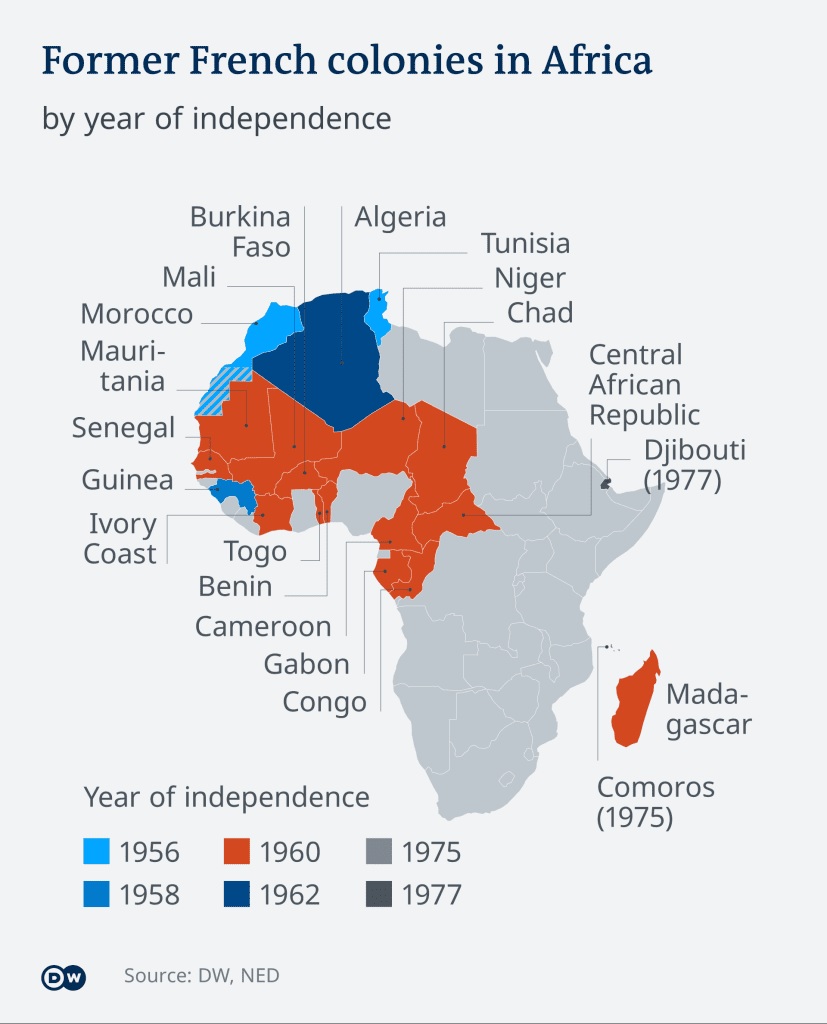
Almost all of West Africa was colonized by France, which committed brutal atrocities in the region.
Still today, France maintains neocolonial policies, effectively controlling West African economies by forcing them to use the CFA franc as their national currency.
Senegalese development economist Ndongo Samba Sylla described the CFA franc as “a colonial currency, born of France’s need to foster economic integration among the colonies under its administration, and thus control their resources, economic structures and political systems”.
Paris dictates the monetary policies and even holds much of the foreign exchange reserves of numerous West African nations, including Niger, Burkina Faso, and Mali.
The CFA franc is a “a barrier to industrialisation and structural transformation” in these countries, explained Sylla, who characterized it as a “neocolonial device that continues to destroy any prospect of economic development in user nations”.
The United States has one of its largest and most important drone bases in Niger: the Air Base 201, which cost $110 million to build, and an additional $20-30 million per year to maintain – in one of the poorest countries on Earth.
Niger is geostrategically important for the Pentagon’s Africa strategy. It is located in the middle of the Sahel, a region with a lot of US and French military activity, where thousands of troops are stationed on a regular basis.
Washington uses its drone bases in Niger, in the heart of the Sahel, to project military dominance in North and West Africa, in coordination with the forces that US Africa Command, or AFRICOM, has deployed across the continent.
If Washington loses its ally in Niger, the new nationalist military government may try to close the foreign military bases and kick out the roughly 1000 US soldiers in the country.
Niger’s historically subordinate relationship with the Western powers has not brought the Nigerien people any prosperity.
The country is a major producer of gold, but more than 40% of Nigeriens live in extreme poverty.
Niger is also one of the world’s largest producers of uranium. This radioactive material is crucial for nuclear energy in Europe, especially in France, where roughly one-third of electricity comes from nuclear power.
Less known is that Niger also has sizeable oil reserves………………………………………………………………………………………………………………………………………….
Soon after the coup in Niger, there were similar reports that the nationalist military government decided to block exports of uranium and gold to the West.
The prospect of a foreign military intervention in Niger and potentially other West African nations is truly on the table. It is by no means an empty threat…………………………………………………………………………………………………..
Anti-colonial nationalists rise to power in West Africa
Some of the nationalist military leaders who have taken power in West Africa are invoking the historical legacy of anti-colonial movements………………………………………………………………………………………………….
Threats of intervention in West Africa
The leaders of the new government in Niger publicly warned that France is plotting military intervention.
Paris is looking “for ways and means to intervene militarily in Niger”, the authorities said, stating that French officials met with the chief of staff of Niger’s national guard “to obtain the necessary political and military authorisation”, The Guardian reported.
The British newspaper described Niger’s toppled president, Bazoum, as “an ally of western powers”.
Along with Paris, the US State Department is actively coordinating with Bazoum and plotting to put its ally back in power.
To give supposed “multilateral” cover to their plans for intervention, the US and France have been working closely with the Economic Community of West African States (ECOWAS).
Reuters reported that ECOWAS and “West African defence chiefs have drawn up a plan for military action if Niger’s coup is not overturned”.
The UK-based news outlet emphasized, “Given its uranium and oil riches and pivotal role in the war with Islamist rebels in the Sahel region, Niger has strategic significance for the United States, China, Europe and Russia”.
ECOWAS imposed sanctions on Niger, and the country’s southern neighbor Nigeria has begun establishing a de facto blockade……………………………………………………………………………………………………………………………………….
Niger is a leading producer of uranium, needed for European nuclear energy
One of the principal economic interests that Western powers have in Niger is its uranium.
The anti-poverty organization Oxfam published a report in 2013 detailing how France was making a killing profiting off of the uranium in Niger, which is one of the poorest countries in the world.
The people of Niger, who are known as Nigeriens (not to be confused with Nigerians from Nigeria), have seen almost no benefits from this uranium extraction.
Oxfam cited a Nigerien activist who noted, “In France, one out of every three light bulbs is lit thanks to Nigerien uranium. In Niger, nearly 90% of the population has no access to electricity. This situation cannot continue”.
“It is incomprehensible that Niger, the world’s fourth-largest uranium producer and a strategic supplier for Areva and France, is not taking advantage of the revenue from this extraction and remains one of the poorest countries on the planet”, an Oxfam researcher added.
……………………………………………………………………………………. Since the coup in Niger, both France and EU leadership have insisted they will not be affected, stating that they have enough uranium in their reserves to last a few years.
But if the nationalist government remains in power in Niger and abides by its alleged pledge to cut off uranium exports, Europe could face economic consequences.
This also comes at a complicated moment for Europe, which has pledged to boycott Russian oil exports and reduce imports of Russian gas………………………………………………………………………………………………..
Niger hosts strategic US military bases
In addition to foreign economic designs on West Africa, the US military has a massive footprint on the region – particularly in Niger, where it operates multiple bases.
A 2019 report in PBS noted an increasing US military presence in Africa, revealing that the Pentagon had nearly 800 personnel stationed in Niger. (That figure later rose to roughly 1000.)………………………………………………………………..
General Thomas Waldhauser, the commander of US military forces in Africa, described Niger’s pro-Western government as “a good partner in a very, very bad neighborhood”.
PBS indicated that the US military was creating a base in Agadez, Niger, which “will be the largest installation Air Force personnel have ever built”.
“The U.S. has been operating drone missions out of another base in Niger’s capital since 2013”, the media outlet wrote, adding, “The CIA is also believed to be using another drone base in Northeastern Niger”.
Investigative journalist Nick Turse, reporting in 2023, described this US facility in Niger, Air Base 201, as “the linchpin of the U.S. military’s archipelago of bases in North and West Africa and a key part of America’s wide-ranging intelligence, surveillance, and security efforts in the region”……………………………
What is striking is the neocolonial symbolism of the United States maintaining these high-tech military facilities worth hundreds of millions of dollars in Niger, one of the poorest countries on Earth, where the majority of the population doesn’t even have access to electricity.
Before the July 2023 coup, Washington saw the Nigerien government as a key ally in its attempt to isolate China and Russia.
Antony Blinken took a historic trip to Niger in March, in the first-ever visit by a US secretary of state………………………………………………………………………………………………………………… Washington sees the continent as highly strategic in its new cold war against China and Russia.
…………………………………………………………………………………………………………………..The nationalist governments in Niger, Burkina Faso, and Mali are very unstable, and the threat of Western-sponsored military intervention could destabilize the countries, fueling more coups, and potentially setting off a regional war.
The transparent goal of the United States and France is to re-impose political control over the region, to exploit its plentiful natural resources and geostrategic location…………. more https://scheerpost.com/2023/08/08/us-france-threaten-intervention-in-resource-rich-niger-fears-of-war-in-west-africa/
1 This Month
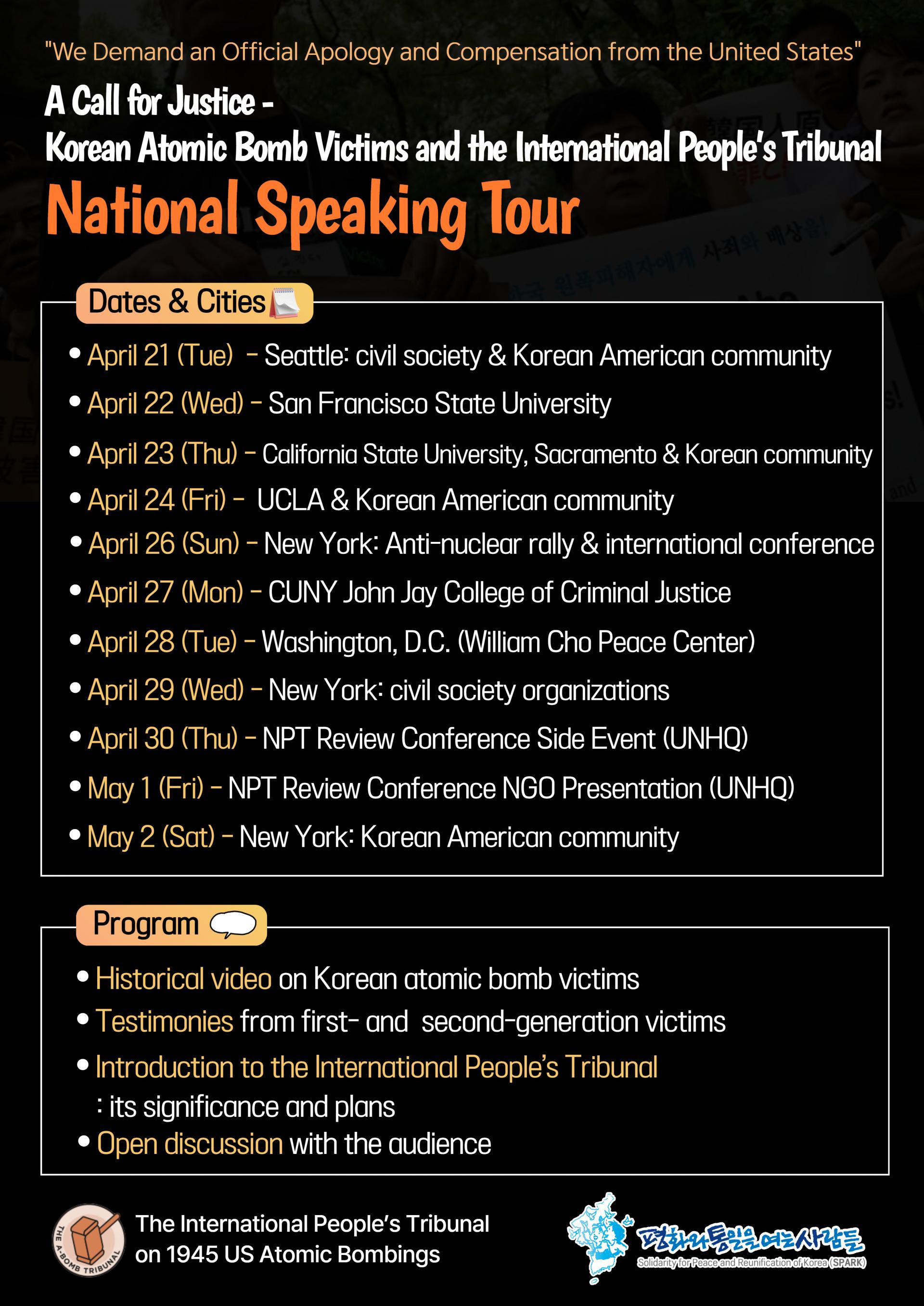
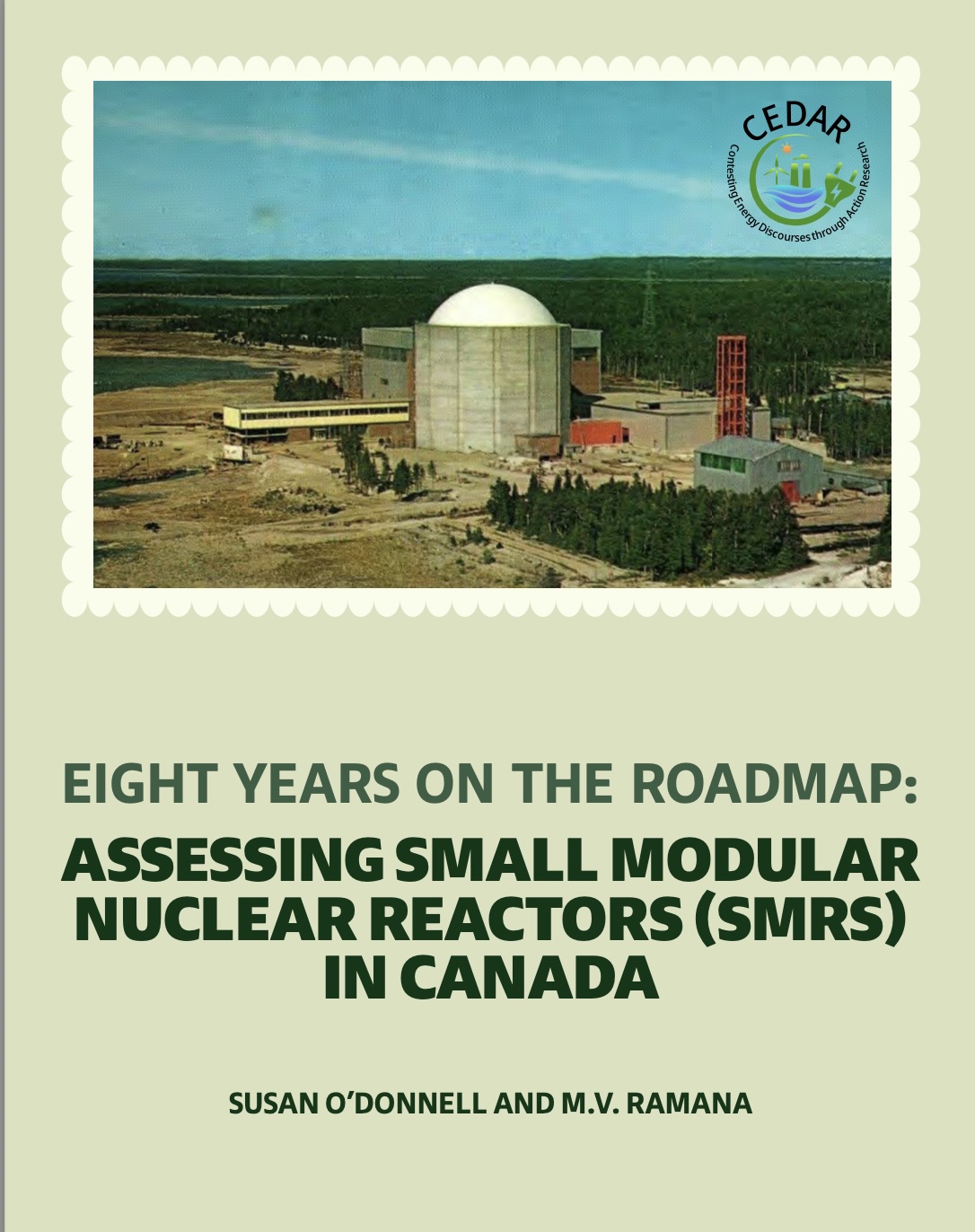
23 April – WEBINAR – Why new nuclear reactors are the wrong tools for decarbonization Thursday, April 23 • 1 AM – 2 AM AEST

Pine Ridge Uranium is the real threat, not Tehran- Tell Burgum: Stop the Extraction.
Chernobyl: The Lost Tapes – A good documentary on Chernobyl on SBS available On Demand for the next 3 weeks– https://www.sbs.com.au/ondemand/tv-program/chernobyl-the-lost-tapes/2352741955560
To see nuclear-related stories in greater depth and intensity – go to https://nuclearinformation.wordpress.com
-
Archives
- April 2026 (275)
- March 2026 (251)
- February 2026 (268)
- January 2026 (308)
- December 2025 (358)
- November 2025 (359)
- October 2025 (376)
- September 2025 (257)
- August 2025 (319)
- July 2025 (230)
- June 2025 (348)
- May 2025 (261)
-
Categories
- 1
- 1 NUCLEAR ISSUES
- business and costs
- climate change
- culture and arts
- ENERGY
- environment
- health
- history
- indigenous issues
- Legal
- marketing of nuclear
- media
- opposition to nuclear
- PERSONAL STORIES
- politics
- politics international
- Religion and ethics
- safety
- secrets,lies and civil liberties
- spinbuster
- technology
- Uranium
- wastes
- weapons and war
- Women
- 2 WORLD
- ACTION
- AFRICA
- Atrocities
- AUSTRALIA
- Christina's notes
- Christina's themes
- culture and arts
- Events
- Fuk 2022
- Fuk 2023
- Fukushima 2017
- Fukushima 2018
- fukushima 2019
- Fukushima 2020
- Fukushima 2021
- general
- global warming
- Humour (God we need it)
- Nuclear
- RARE EARTHS
- Reference
- resources – print
- Resources -audiovicual
- Weekly Newsletter
- World
- World Nuclear
- YouTube
-
RSS
Entries RSS
Comments RSS
 nuclear-news