China swelters through record temperatures. And vulnerability of old people to heat waves

Temperatures across China reached or exceeded their records for the month
of May, the country’s National Climate Centre has said. Weather stations
at 446 sites registered temperatures that were the same as, or greater
than, the highest ever recorded for the month of May, deputy director of
the National Climate Centre Gao Rong said at a press briefing on Friday. On
Monday, the Shanghai Meteorology Bureau reported that the city had recorded
a temperature of 36.1 degrees Celsius. The previous record for May was
35.7C, which occurred in 2018. Over the next three days, most of southern
China is expected to be hit by temperatures of more than 35C, with
temperatures in some areas exceeding 40C, according to national forecasters
on Friday.
Guardian 2nd June 2023
New heatwave warnings could miss vulnerable older people who aren’t
online. Email alerts to warn public about dangers of hot weather will be
voluntary and will give advice on how to stay cool.
Telegraph 1st June 2023
https://www.telegraph.co.uk/news/2023/06/01/new-heatwave-warnings-not-nanny-state-health-officials/
NRG exits nuclear with sale of South Texas Project stake
WNN, 02 June 2023 Constellation Energy has agreed to purchase NRG Energy’s 44% stake in the South Texas Project (STP) for USD1.75 billion. The plant – located about 90 miles southwest of Houston – comprises two 1280 MWe pressurised water reactors which began providing electricity in 1988 and 1989, respectively.
“Today’s announcement is the continuation of our strategy to optimise our portfolio while creating significant shareholder value,” said NRG President and CEO Mauricio Gutier…………………………………………………………………………….Apart from STP, Houston-based NRG does not own any other nuclear generating capacity. https://world-nuclear-news.org/Articles/NRG-exits-nuclear-with-sale-of-South-Texas-Project
Administrative monetary penalty issued to Ontario Power Generation (OPG) for security failures at Pickering and Darlington nuclear stations
http://www.nuclearsafety.gc.ca/eng/acts-and-regulations/regulatory-action/ontario-power-generation.cfm 2 June 23, The CNSC has issued an administrative monetary penalty (AMP) of $21,790 to Ontario Power Generation Inc. (OPG).
This AMP is being issued to OPG as a result of a failure to comply with a licence condition in relation to its security program at the Pickering and Darlington nuclear generating stations.
$528 Billion nuclear clean-up at Hanford Site in jeopardy

The government now appears to be seriously considering whether it will be necessary to leave thousands of gallons of leftover waste buried forever in Hanford’s shallow underground tanks, according to some of those familiar with the negotiations, and protect some of the waste not in impenetrable glass, but in a concrete grout casing that would almost certainly decay thousands of years before the toxic materials that it is designed to hold at bay.
At site after site, the solution has come down to a choice between an expensive, decades-long cleanup or quicker action that leaves a large amount of waste in place.
A Poisonous Cold War Legacy That Defies a Solution
NYT, By Ralph Vartabedian, Reporting from Richland, Wash., May 31, 2023
From 1950 to 1990, the U.S. Energy Department produced an average of four nuclear bombs every day, turning them out of hastily built factories with few environmental safeguards that left behind a vast legacy of toxic radioactive waste.
Nowhere were the problems greater than at the Hanford Site in Washington State, where engineers sent to clean up the mess after the Cold War discovered 54 million gallons of highly radioactive sludge left from producing the plutonium in America’s atomic bombs, including the one dropped on the Japanese city of Nagasaki in 1945.
Cleaning out the underground tanks that were leaching poisonous waste toward the Columbia River just six miles away and somehow stabilizing it for permanent disposal presented one of the most complex chemical problems ever encountered. Engineers thought they had solved it years ago with an elaborate plan to pump out the sludge, embed it in glass and deposit it deep in the mountains of the Nevada desert.
But construction of a five-story, 137,000 square-foot chemical treatment plant for the task was halted in 2012 — after an expenditure of $4 billion — when it was found to be riddled with safety defects. The naked superstructure of the plant has stood in mothballs for 11 years, a potent symbol of the nation’s failure, nearly 80 years after the Second World War, to deal decisively with the atomic era’s deadliest legacy.
The cleanup at Hanford is now at an inflection point. The Energy Department has been in closed-door negotiations with state officials and the U.S. Environmental Protection Agency, trying to revamp the plan. But many fear the most likely compromises, which could be announced in the coming months, will put the speed and quality of the cleanup at risk.
The government now appears to be seriously considering whether it will be necessary to leave thousands of gallons of leftover waste buried forever in Hanford’s shallow underground tanks, according to some of those familiar with the negotiations, and protect some of the waste not in impenetrable glass, but in a concrete grout casing that would almost certainly decay thousands of years before the toxic materials that it is designed to hold at bay.
“The Energy Department is coming to a big crossroads,” said Thomas Grumbly, a former assistant secretary at the department who oversaw the early days of the project during the Clinton administration.
Successive energy secretaries over the last 30 years, he said, “have slammed their heads against the wall” to come up with a technology and budget that would make the problem go away not only at Hanford, but also at other nuclear weapons sites around the country.
Plants in South Carolina, Washington, Ohio and Idaho that helped produce more than 60,000 atomic bombs have tons of radioactive debris that will be radioactive for thousands of years. And unlike nuclear power plants, whose waste consists of dry uranium pellets locked away in metal tubes, the weapons facilities are dealing with millions of gallons of a peanut butter-like sludge stored in aging underground tanks.
Two million pounds of mercury remain in the soils and waters of eastern Tennessee. Radioactive plumes are contaminating the Great Miami aquifer near Cincinnati.
At site after site, the solution has come down to a choice between an expensive, decades-long cleanup or quicker action that leaves a large amount of waste in place.
Hanford, some 580 square miles of shrub-steppe desert in south-central Washington State, is the largest and most contaminated of all the weapons production sites — too polluted to ever be returned to public use. But the problem is urgent, given the risk of radionuclides contaminating the Columbia River, a vital lifeline for cities, farms, tribes and wildlife in two states……………………………………………………………………………………………………
“The closer you get to the bottom of those tanks, the more radioactive, toxic and dangerous waste is,” said Geoffrey Fettus, a lawyer with the Natural Resources Defense Council, which has sued the government over the Hanford cleanup………………………………………………………………. more https://www.nytimes.com/2023/05/31/us/nuclear-waste-cleanup.html
Julian Assange: the plot thickens

The FBI has reopened its case against Wikileaks founder and Australian journalist Julian Assange, the SMH reports, after agents tried to interview his ghostwriter, Andrew O’Hagan, in London.
O’Hagan refused to talk to them because he would never give a statement against “a fellow journalist being pursued for telling the truth”. Badass, particularly as O’Hagan isn’t exactly fond of Assange as a person, as he famously wrote in the London Review of Books.
Anyway, Assange’s lawyer, Stephen Kenny, was taken by surprise by the news — he says it’s been years since the indictment was issued, and he didn’t realise there was an investigation under way. What if they’re gathering evidence to clear Assange’s name, considering there are growing rumours the Albanese government is working on it, as The New Daily’s reporting indicates? It’s not impossible, Kenny says, but it would be “very unusual” if the FBI was trying to help him.
USA urged not to use bomb-grade uranium in nuclear power experiment
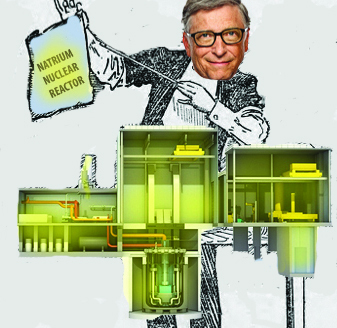
By Timothy Gardner May 31, 2023 https://www.reuters.com/world/us/us-urged-not-use-bomb-grade-uranium-nuclear-power-experiment-2023-05-30/
(Reuters) – Former U.S. State Department and nuclear regulatory officials on Tuesday urged the U.S. Energy Department to reconsider a plan to use bomb-grade uranium in a nuclear power experiment, saying that its use could encourage such tests in other countries.
The Energy Department and two companies aim to share costs on the Molten Chloride Reactor Experiment (MCRE) at the Idaho National Laboratory and use more than 1,322 pounds (600 kg) of fuel containing 93% enriched uranium.
Bill Gates-backed company TerraPower LLC, the utility Southern Co (SO.N) and the department hope the six-month experiment will lead to breakthroughs in reactors……….
But a group of former Nuclear Regulatory Commission members, including former Chairman Allison Macfarlane, and U.S. assistant secretaries of state responsible for nonproliferation, said MCRE could give other countries an excuse to enrich uranium to bomb-grade level in pursuit of new reactors.
“The damage to national security could exceed any potential benefit from this highly speculative energy technology,” the experts said in a letter to Energy Department officials. They fear an increase in such experiments boosts risks that militants looking to create a nuclear weapon could get hold of the uranium.
South Korea experts say more study needed on Japan’s nuclear water plan
Yahoo! News, Hyonhee Shin, Wed, 31 May 2023
SEOUL (Reuters) – South Korean nuclear safety experts who visited Japan’s wrecked Fukushima nuclear power plant said on Wednesday that detailed analysis was needed to verify Japan’s plan to release tonnes of contaminated water from it into the sea…………
Japan plans to dump more than one million tonnes of contaminated water that was mainly used to cool the reactors into the sea by around this summer, triggering alarm at home and abroad, especially in fishing communities.
“Given our closest location, we are reviewing whether Japan has an appropriate discharge plan from a scientific and technological standpoint,” Yoo Guk-hee, chairman of the Nuclear Safety and Security Commission, who led a delegation on a site visit last week, told a briefing.
……….. The 21-member South Korean team had focused during its six-day trip on water purification, transport and release equipment, as well as sampling and analysis facilities.
The visit came days after President Yoon Suk Yeol and Japanese Prime Minister Fumio Kishida held a summit in Seoul this month amid a thaw in relations following years of tension between the neighbours, both important U.S. allies………… https://au.news.yahoo.com/south-korea-experts-more-study-073331552.html
Plan to release Fukushima nuclear plant water into sea faces local opposition: “The sea is not a garbage dump”
CBS BY ELIZABETH PALMER, MAY 31, 2023
Japan’s government is asking for international backup as it prepares to release thousands of gallons of water from the Fukushima nuclear power plant into the sea. The plan has alarmed the public and outraged fishermen — even as the international energy agency looks inclined to back it.
………….The plant sits in what was a lush coastal part of Japan, famous for its seafood and delicious fruit. Today, there’s still no-go area around the power station where fields lie fallow and homes sit abandoned.
Inside a high security fence studded with warning signs, engineers are still working to remove radioactive fuel rods that melted inside the reactors. They’ll be at it for decades.
Another problem is piling up in hundreds of metal tanks on the site: they contain more than a million tons of contaminated water.
…………………………………….. “Piping water into the sea is an outrage,” said Haruo Ono, who has been fishing the ocean off the coast of Fukushima all his life.
“The sea is not a garbage dump,” he said. “The company says it’s safe, but the consequences could catch up with us 50 years down the road.”
………………………………..Haruo Ono, the fisherman, said the science is not the issue.
“People don’t understand it,” he said. “Mothers won’t choose Fukushima fish knowing it’s been swimming in radioactive water. Even if the experts say it’s safe.”
Under current rules, he can only take his fishing vessels out to sea a day or two a week, when he gets the OK from the government.
“This is the end of my livelihood,” he said.
……………. The Fukushima nuclear plant won’t be safely decommissioned for years to come. So far taxpayers have paid $90 billion to clean it up. https://www.cbsnews.com/news/fukushima-nuclear-plant-water-plan-release-into-sea-fear-controversy/
Protest Disrupts Opening of North America’s Largest Weapons Fair

Canada, Nonviolent Activism, By World BEYOND War, May 31, 2023
OTTAWA — Over a hundred people have disrupted the opening of CANSEC, North America’s largest military weapons convention in Ottawa, where 10,000 attendees were expected to gather.
Activists carrying 50 foot banners saying “Stop Profiting from War,” “Arms Dealers Not Welcome” and holding dozens of “War Crimes Start Here” signs blocked vehicle and pedestrian entrances as attendees attempted to register for and enter the convention centre, delaying Canadian Defense Minister Anita Anand’s opening keynote address for over an hour. In police efforts to remove the protesters, they grabbed banners, and handcuffed and arrested one protester, who was later released without charges.
The protest was convened to “oppose CANSEC and the profiteering from war and violence it is designed to support”, promising to “make it impossible for anyone to come anywhere near their weapons fair without confronting the violence and bloodshed these arms dealers are complicit in.”
“We’re here today in solidarity with everyone who has faced down the barrel of a weapon sold at CANSEC, everyone whose family member has been killed, whose communities were displaced and harmed by the weapons being peddled and on display here” said Rachel Small, organizer with World BEYOND War. “While more than eight million refugees have fled Ukraine since the start of 2022, while more than 400,000 civilians have been killed in eight years of war in Yemen, while at least 24 Palestinian children were killed by Israeli forces since the start of this year, the weapons companies sponsoring and exhibiting in CANSEC are raking in record billions in profits. They are the only people who win these wars.”
Lockheed Martin, one of the major sponsors of CANSEC, has seen its stocks soar 37% percent by the end of 2022, while Northrop Grumman’s share price increased 40%. Just prior to the Russian invasion of Ukraine, Lockheed Martin Chief Executive Officer James Taiclet said on an earnings call that he predicted the conflict would lead to inflated military budgets and additional sales for the company. Greg Hayes, CEO of Raytheon, another CANSEC sponsor, told investors last year that the company expected to see “opportunities for international sales” amid the Russian threat. He added: “I fully expect we’re going to see some benefit from it.” Hayes received an annual compensation package of $23 million in 2021, an 11% increase over the previous year, and $22.6 million in 2022.
“CANSEC shows just how deeply private profiteering is embedded in Canada’s foreign and military policy” shared Shivangi M, international human rights lawyer and chairperson of ILPS in Canada. “This event highlights that plenty of people high up in the government and corporate worlds see war not as a devastating, destructive thing, but as a business opportunity. We are demonstrating today because the people at CANSEC are not acting in the interests of ordinary working people. The only way to stop them is by working people getting together and demanding an end to the arms trade.”
Canada has become one of the world’s top arms dealers globally, with Canadian arms exports totalling $2.73-billion in 2021. However most exports bound for the United States were not included in the government figures, despite the U.S. being a major importer of Canadian weapons, receiving more than half of all Canada’s weapons exports each year.
“The Government of Canada is slated to table its annual Exports of Military Goods report today,” said Kelsey Gallagher, researcher with Project Ploughshares. “As has been the trend in recent years, we expect huge volumes of arms to have been transferred around the world in 2022, including some to serial human rights abusers and authoritarian states.”
The promotional video for CANSEC 2023 features Peruvian, Mexican, Ecuadorean, and Israeli militaries and ministers attending the convention…………………………………………………………………………………….
BACKGROUND
10,000 people are expected to attend CANSEC this year. The weapons expo will bring together an estimated 280 exhibitors, including weapons manufacturers, military technology and supply companies, media outlets, and government agencies. 50 international delegations are also expected to attend. CANSEC promotes itself as “a one-stop shop for first responders, police, border and security entities and special operations units.” The weapons expo is organized by the Canadian Association of Defence and Security Industries (CADSI), the “industry voice” for more than 650 defense and security companies that generate $12.6 billion in annual revenues, roughly half of which come from exports.
Hundreds of lobbyists in Ottawa represent arms dealers not only competing for military contracts, but lobbying the government to shape the policy priorities to fit the military equipment they are hawking. Lockheed Martin, Boeing, Northrop Grumman, BAE, General Dynamics, L-3 Communications, Airbus, United Technologies and Raytheon all have offices in Ottawa to facilitate access to government officials, most of them within a few blocks from Parliament.
CANSEC and its predecessor, ARMX, have faced staunch opposition for over three decades. …………………………………………………
Among the 280+ exhibitors that will be at CANSEC:
Among the 280+ exhibitors that will be at CANSEC:
- Elbit Systems – supplies 85% of drones used by the Israeli military to monitor and attack Palestinians in the West Bank and Gaza, and infamously the bullet used to murder Palestinian journalist Shireen Abu Akleh
- General Dynamics Land Systems-Canada – makes the billions of dollars of Light Armoured Vehicles (tanks) Canada exports to Saudi Arabia
- L3Harris Technologies – their drone technology is used for border surveillance and targeting laser guided missiles. Now bidding to sell armed drones to Canada to drop bombs overseas and surveil Canadian protests.
- Lockheed Martin – by far the largest weapons producer in the world, they brag about arming over 50 countries, including many of the most oppressive governments and dictatorships
- Colt Canada – sells guns to the RCMP, including C8 carbine rifles to the C-IRG, the militarized RCMP unit terrorizing Indigenous land defenders in service of oil and logging companies.
- Raytheon Technologies – builds the missiles that will arm Canada’s new Lockheed Martin F-35 warplanes
- BAE Systems – builds the Typhoon fighter jets Saudi Arabia uses to bomb Yemen
- Bell Textron – sold helicopters to the Philippines in 2018 even though its president once boasted he had thrown a man to his death from a helicopter and warned he would do the same to corrupt government workers
- Thales – weapon sales implicated in human rights violations in West Papua, Myanmar and Yemen.
- Palantir Technologies Inc (PTI) – provides Artificial Intelligence (AI) predictive system to Israeli security forces, to identify people in occupied Palestine. Provides the same mass surveillance tools to law enforcement agencies and police departments, circumventing warrant procedures. https://worldbeyondwar.org/protest-disrupts-opening-of-north-americas-largest-weapons-fair/
Rafael Grossi to brief UN Security Council on Zaporizhia nuclear situation
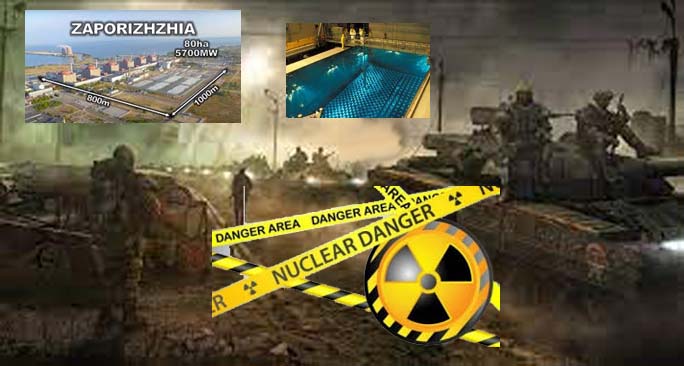
The International Atomic Energy Agency was on 30 May due to brief the UN
Security Council on his proposals for safeguarding Ukraine’s Zaporizhia NPP
(ZNPP). “IAEA director general Rafael Grossi is planning to brief the UN
Security Council on the nuclear safety and security situation” during a
meeting chaired by Switzerland, according to an official statement by the
Agency in advance of the meeting.
Director general Grossi has said he is
seeking to secure agreement on a set of principles to protect ZNPP during
the armed conflict, covering also the availability and security of external
power supplies at all times.
Mr Grossi’s plan consists of five principles:
a ban on the deployment of heavy military equipment and military personnel
at nuclear power plants, a ban on shooting from the territory and towards
the power plant, ensuring security, protecting all external power lines,
and monitoring compliance with these principles.
Modern Power Systems 30th May 2023
British police detain journalist Kit Klarenberg, interrogate him about The Grayzone
The Grayzone, MAX BLUMENTHAL·MAY 30, 2023
British counter-terror police detained journalist Kit Klarenberg upon his arrival at London’s Luton airport and subjected him to an extended interrogation about his political views and reporting for The Grayzone.
As soon as journalist Kit Klarenberg landed in his home country of Britain on May 17, 2023, six anonymous plainclothes counter-terror officers detained him. They quickly escorted him to a back room, where they grilled him for over five hours about his reporting for this outlet. They also inquired about his personal opinion on everything from the current British political leadership to Russia’s invasion of Ukraine.
At one point, Klarenberg’s interrogators demanded to know whether The Grayzone had a special arrangement with Russia’s Federal Security Bureau (FSB) to publish hacked material.
During Klarenberg’s detention, police seized the journalist’s electronic devices and SD cards, fingerprinted him, took DNA swabs, and photographed him intensively. They threatened to arrest him if he did not comply.
Klarenberg’s interrogation appears to be London’s way of retaliating for the journalist’s blockbuster reports exposing major British and US intelligence intrigues. In the past year alone, Klarenberg revealed how a cabal of Tory national security hardliners violated the Official Secrets Act to exploit Brexit and install Boris Johnson as prime minister. In October 2022, he earned international headlines with his exposé of British plans to bomb the Kerch Bridge connecting Crimea to the Russian Federation. Then came his report on the CIA’s recruitment of two 9/11 hijackers this April, a viral sensation that generated massive social media attention.
Among Klarenberg’s most consequential exposés was his June 2022 report unmasking British journalist Paul Mason as a UK security state collaborator hellbent on destroying The Grayzone and other media outlets, academics, and activists critical of NATO’s role in Ukraine.
Because Klarenberg’s reporting on Mason relied heavily on leaked emails, Mason falsely accused him of “assisting a Russian state-backed hack-and-leak disinformation campaign.” Mason has also reported the leak of his emails to the British police………………………………………………………………………………….
While reporting on leaked material, Klarenberg engaged in the same journalistic practice that the West’s most prominent legacy newspapers, from The New York Times to The Washington Post, depend on to break news themselves. In fact, Thomas Rid, a self-styled disinformation expert and professor of Strategic Studies at Johns Hopkins University, has stated that journalists “should not shy away” from covering the leaks first reported by Klarenberg.
It therefore appears that British authorities did not detain Klarenberg for any legal breaches, but because he reported factual stories that exposed the national security state’s own violations of both domestic and international law, as well as the malign plots of its media lackeys.
Interrogated under Counter-Terror provisions, grilled about non-existent Russian ties………………………………………
………. police interrogators homed in on Klarenberg’s work with The Grayzone. “They asked which publications I wrote for, and I told them I wrote for many,” he said. “One even remarked they’d never previously heard of ‘MintPress Zone.’ Their overwhelming, if not exclusive, interest was in The Grayzone.”
……Then came a blizzard of questions relating to The Grayzone: How much was Klarenberg paid by this publication, how often, and into which bank account? Who owned the site? How much contact did he have with Max Blumenthal, the author of this article and editor of The Grayzone? Had he met Blumenthal in person?
The counter-terror officers then rattled off a series of unfounded questions related to Russia: Does The Grayzone have an agreement of any kind with Russia’s Federal Security Bureau (FSB) to publish hacked material? Has Klarenberg knowingly been in contact with any FSB operatives? Is he in touch with current or former personnel of Russian state media? Who owns The Grayzone and is it sponsored by Russia?
(As has been publicly stated many times, The Grayzone is a fully independent outlet founded by me, Max Blumenthal. Unlike many of our adversaries, this outlet does not accept funding or support from any state, including Russia.)
At this point, the officers took Klarenberg’s bank cards out of the room for an extended period. They also seized his camera memory cards and sims, demanding he provide pin codes to open them. “What was done with my bank cards, I do not know,” he remarked. “The same for the SDs – what they got off these old and barely used cards was unclear.”……………………………………………………..
Throughout the interview, the counter-terrorism police probed Klarenberg aggressively on his political affiliations and beliefs. Was he involved in any activist causes in Belgrade? What did he think of the Russian government?
…………………………………. He remains under investigation by the British state at the time of publication. https://thegrayzone.com/2023/05/30/journalist-kit-klarenberg-british-police-interrogated-grayzone/
Extreme heat events have now become the new normal

global cooperation is needed to bolster society’s resilience to extreme heat and enhance its capacity to overcome climate challenges.
By Wei Ke | CHINA DAILY 2023-05-29 https://www.chinadaily.com.cn/a/202305/29/WS6473dd60a310b6054fad5766.html
Since the first day of 2023, extreme heat events have increased the threat to human health and the environment. Europe experienced the warmest New Year in history, with temperatures in some places reaching early summer levels. The highest temperature, of 25.1 Celsius, was recorded in Bilbao, Spain. In Glucholazy, Poland, the temperature at 4 am on Jan 1 was as high as 18.7 C, more than the local average minimum summer temperature. And while at least eight European countries experienced their hottest New Year’s Day, more than 100 weather stations in France reported record-breaking temperatures.
Unlike gradual global warming which many people expect, extreme heat events have raised temperatures to historical highs in many places. On Jan 1 this year, temperatures in many places in France, Germany, Denmark and Latvia were exceptionally high. For example, the temperature in Berlin, Germany, was 16 C — normally, it hovers around 0 C during New Year.
According to the State of the Global Climate 2022 of the World Meteorological Organization, which was released on April 21, global temperatures in 2022 were 1.15 C higher compared with the pre-industrial levels from 1850 to 1900. Global warming is not a gradual and uniform process anymore; instead, it manifests through a succession of extreme heat events, continuously breaking high-temperature records worldwide.
There has been a significant increase in both the frequency and intensity of extreme heat events. According to the UN Office for Disaster Risk Reduction’s report, Human Cost of Disasters 2000-19, there were 432 instances of extreme heat events globally between 2000 and 2019 compared with just 130 instances between 1980 and 1999, an increase of a whopping 232 percent.
As the northern hemisphere enters the summer season, extreme heat events have become the norm, rather than the exception. On April 14, Tak province in northwestern Thailand recorded a scorching 45.4 C, breaking Thailand’s highest temperature record of 44.6 C set in Mae Hong Son province in 2016.
Record-breaking heat-waves have swept across Southeast Asia, South Asia and Central Asia, with temperatures crossing 42 C. And severe air pollution has further compounded the situation in many parts of Southeast Asia, and thus increased the risk of respiratory and cardiovascular diseases.
The impacts of high temperatures are far-reaching, not only affecting human life and health but also posing a threat to the environment and ecosystems. In 2020, more than 330 elephants in the southern region of Botswana died of cyanotoxin poisoning, as prolonged heat and drought led to a bloom of cyanobacteria in ponds and other water bodies. These cyanobacteria released a significant amount of cyanotoxins in the water bodies, which resulted in the poisoning and subsequent deaths of the elephants that consumed the toxic water.
Extreme heat and drought also contribute to wildfires. In 2019-20, Australia experienced severe heat waves that contributed to the devastating wildfires which lasted for a staggering nine months. While the wildfires caused an economic loss of about 10.3 billion Australian dollars ($6.73 billion), they also claimed the lives of or displaced nearly 3 billion animals — mammals including marsupials, birds, reptiles and amphibians.
Worse, the wildfires emitted about 715 million tons of carbon dioxide, more than Australia’s total annual greenhouse gas emissions from fossil fuel combustion.
One of the worst effects of global warming is the “wet gets wetter, dry gets drier” phenomenon, where humid regions experience increased rainfall and arid regions become drier — with the rainy season marked by more severe flooding and the dry season by intense drought.
According to the Human Cost of Disasters 2000-19 report, over the past 20 years, there has been a 134 percent increase in flood-related disasters, 97 percent increase in storms, 46 percent increase in wildfires, and 29 percent increase in droughts or drought-like conditions.
In addition, as the oceans warm, heat-waves emanating from the oceans and seas have become more common. The increasing warming of the ocean surface inhibits the absorption of oxygen by the water, which exacerbates the problem of oxygen depletion in the marine environment, posing a threat to the survival of marine animals and plants. Warmer ocean temperatures also contribute to the increasing frequency and severity of typhoons and hurricanes. And since such storms have a wider range extending to northern latitudes, regions like northeastern China could experience typhoons in the future.
In summer, extreme heat conditions in the northern hemisphere are becoming the norm, prompting the WMO to urge countries to issue early warnings and take early action. But while it is essential for governments and management agencies at all levels to issue weather alerts and forecasts, they should also pay greater attention to the rights of vulnerable groups, including people who work outdoors during hot weather.
Building public heat shelters to protect people during orange and red heat alerts is essential. Especially, public activity centers, libraries and other government facilities allow outdoor workers to avoid working during the hottest hours of the day. As for people in general, they should closely follow weather forecasts and warnings so they can avoid the risk of heatstroke by not venturing out during extreme heat events.
Yet global temperatures will continue to rise as greenhouse gas emissions are unlikely to reduce drastically in the next 20-30 years. Therefore, economies around the world, especially the major economies, should intensify efforts to reduce emissions. The public, on its part, can contribute to the global efforts to mitigate climate change by adopting simple habits including switching off lights when not in use, recycling products, reducing the use of cars, changing the food habit, and refraining from compulsive shopping. These slight changes in habits can help lower individuals’ carbon footprint and thus reduce emissions.
But global cooperation is needed to bolster society’s resilience to extreme heat and enhance its capacity to overcome climate challenges.
Australian submariners test positive for drugs
Andrew Tillett, 29 May 23, https://www.afr.com/politics/federal/high-seas-submariners-test-positive-for-drugs-20230528-p5dbvb
The rumours of drug use saw officials take hair samples and conduct 24 tests of crew members to try to get to the bottom of the claims. A Collins class submarine carries a minimum of 48 officers and sailors, plus additional trainees.
The drug investigation offers a rare window into Australia’s submarine fleet, traditionally known as the “silent service” because of the secrecy attached to operations and deployment.
The revelations also come as the navy’s submarine operations head towards an eventual transformation from the ageing Collins class submarines to nuclear-powered submarines under AUKUS.
Submariners traditionally are among the highest paid of Australia’s military personnel in recognition of the demands of the job, including being isolated at sea and cut off from contact with family for weeks, and the specialist skills required to keep a submarine safe while operating in an inherently risky environment hundreds of metres below the ocean’s surface.
The Defence Department did not answer a series of detailed questions about the incident, but said in a statement a “small number” of navy personnel returned positive tests for prohibited substances in July 2022.
Administrative action
“Defence takes all incidents of this nature very seriously and has a zero-tolerance policy regarding the use of prohibited substances,” the statement said.
“The personnel were provided access to, and informed of, the full range of support services available to all Australian Defence Force personnel.
“Administrative action has been taken against the personnel involved. Broader investigations ruled out wider use of prohibited substances.”
The FOI documents do not reveal what submarine, ports or drugs were involved, and Defence did not provide those answers. The Financial Review has been told the submarine was HMAS Collins.
The documents show that several crew members were alleged to have used drugs during port visits in April and May last year. Commanders learnt of the claims on May 29 and initiated a fact-finding mission.
“The informant indicated that they became aware of this information during conversations with somebody, who heard it from somebody else, who heard it from somebody else and so on. In other words it was potentially 5th hand information,” a Defence Incident Report of the allegations said.
“The informant went on to imply that the officer in the submarine who was the potential source of this information, had been identified by the unknown parties involved in the alleged illicit drug taking, and told that [redacted] had better not report what [redacted] saw (or similar words to that effect), or else!”
The three submariners at the centre of the claims were issued a show cause notice and ordered back to Australia where they were tested for drugs on July 19 last year. Two people tested positive while the results of the third test were inconclusive. As well as the drug use, the fact finding process examined whether the sailors had behaved dishonestly.
Following the positive drug test results, military police drug tested another 13 sailors on August 4. Eight members on board the submarine were tested three days later. Those tests were negative.
Of the sailors who used drugs, one told the navy he did not plan to contest his positive drug test and “wishes to separate from the navy as soon as possible”, the documents said.
While the submariners were put on leave without pay, commanders concluded there was insufficient evidence to launch criminal action against them.
China halts floating nuclear power plan over security fears
Global Construction Review, David Rogers, 31.05.23
China’s plan to build a fleet of nuclear power reactors that would provide electrical power to islands on the South China Sea have been suspended over security concerns, the South China Morning Post reports.
As construction of the first units was about to begin, regulators announced that they were withholding approval.
The decision came as a surprise for the project’s scientists, who believed the technology was mature and that floating reactors were generally safer than those on land, since the ocean acts as a natural heat sink and is immune to seismic activity.
Writing in the journal Nuclear Power Engineering, Wang Donghui, a scientist at the National Energy Offshore Nuclear Power Platform Technology Research Centre, said safety and feasibility were the main concerns of authorities.
He said the decision was made in spite of a 10-year research project into floating plants, and the fact that China has advanced ship design capabilities, as well as domestic design and manufacturing units capable of building floating platforms.
It had been hoped that a floating nuclear power plant would provide power to support military and civilian activities on remote islands in the South China Sea, and China was envisaging the construction of a fleet of such vessels (see further reading)………………
n
One of the major safety concerns is that floating power plants could face attacks from sea and air, but also from underwater attacks, according to Wang.
An enemy submarine, for example, could attempt to sabotage the facility by planting explosives on its hull or damaging its cooling systems. Unmanned aerial vehicles could also fly over the plant and drop bombs or other projectiles on it.
According to Wang, protecting a floating nuclear power plant from “underwater divers, vessels, floating objects or airborne objects”, would require a comprehensive ship security system. https://www.globalconstructionreview.com/china-halts-floating-nuclear-power-plan-over-security-fears/
Call for International Action against Fukushima Radioactive Water Dumping in the Pacific
The Korean coalition, Peoples’ Action to Stop Dumping of Fukushima
Radioactive Water, would like to ask you to join international joint action
on World Ocean Day, June 8, to stop the dumping of Fukushima Radioactive
water into the Pacific Ocean.
Peoples’ Action to Stop Dumping of Fukushima Radioactive Water 30th May
2023
https://docs.google.com/forms/d/e/1FAIpQLSdU3pcoNvYHpN2zXcCy9TLN2sIrzX2eRNOcvi72CeAkxznhvQ/viewform
1 This Month
23 April – WEBINAR – Why new nuclear reactors are the wrong tools for decarbonization Thursday, April 23 • 1 AM – 2 AM AEST


Pine Ridge Uranium is the real threat, not Tehran- Tell Burgum: Stop the Extraction.
Chernobyl: The Lost Tapes – A good documentary on Chernobyl on SBS available On Demand for the next 3 weeks– https://www.sbs.com.au/ondemand/tv-program/chernobyl-the-lost-tapes/2352741955560
To see nuclear-related stories in greater depth and intensity – go to https://nuclearinformation.wordpress.com
-
Archives
- April 2026 (241)
- March 2026 (251)
- February 2026 (268)
- January 2026 (308)
- December 2025 (358)
- November 2025 (359)
- October 2025 (376)
- September 2025 (257)
- August 2025 (319)
- July 2025 (230)
- June 2025 (348)
- May 2025 (261)
-
Categories
- 1
- 1 NUCLEAR ISSUES
- business and costs
- climate change
- culture and arts
- ENERGY
- environment
- health
- history
- indigenous issues
- Legal
- marketing of nuclear
- media
- opposition to nuclear
- PERSONAL STORIES
- politics
- politics international
- Religion and ethics
- safety
- secrets,lies and civil liberties
- spinbuster
- technology
- Uranium
- wastes
- weapons and war
- Women
- 2 WORLD
- ACTION
- AFRICA
- Atrocities
- AUSTRALIA
- Christina's notes
- Christina's themes
- culture and arts
- Events
- Fuk 2022
- Fuk 2023
- Fukushima 2017
- Fukushima 2018
- fukushima 2019
- Fukushima 2020
- Fukushima 2021
- general
- global warming
- Humour (God we need it)
- Nuclear
- RARE EARTHS
- Reference
- resources – print
- Resources -audiovicual
- Weekly Newsletter
- World
- World Nuclear
- YouTube
-
RSS
Entries RSS
Comments RSS
 nuclear-news