Return to Russia: Crimeans Tell the Real Story of the 2014 Referendum and Their Lives Since — RADIATION FREE LAKELAND

Originally posted on In Gaza: Crimeans gather with Russian national and Crimea flags in Sevastopol, Crimea, March 14, 2018. Alexander Zemlianichenko | AP Eva Bartlett traveled to Crimea to see firsthand out how Crimeans have fared since 2014 when their country reunited with Russia, and what the referendum was really like. October 9, 2019, Mint…
Return to Russia: Crimeans Tell the Real Story of the 2014 Referendum and Their Lives Since — RADIATION FREE LAKELAND
SIMFEROPOL, CRIMEA — In early August I traveled to Russia for the first time, partly out of interest in seeing some of the vast country with a tourist’s eyes, partly to do some journalism in the region. It also transpired that while in Moscow I was able to interview Maria Zakharova, spokeswoman of the Foreign Ministry.
High on my travel list, however, was to visit Crimea and Donetsk People’s Republic (DPR) — the former a part of Russia, the latter an autonomous republic in the east of Ukraine, neither accurately depicted in Western reporting. Or at least that was my sense looking at independent journalists’ reports and those in Russian media.
Both regions are native Russian-speaking areas; both opted out of Ukraine in 2014. In the case of Crimea, joining Russia (or actually rejoining, as most I spoke to in Crimea phrased it) was something people overwhelmingly supported. In the case of the Donbass region, the turmoil of Ukraine’s Maidan coup in 2014 set things in motion for the people in the region to declare independence and form the Donetsk and Lugansk People’s Republics.
In March 2014, Crimeans held a referendum during which 96 percent of voters chose to join Russia. This has been heavily disputed in Western media, with claims that Crimeans were forced to hold the referendum and claims of Russian troops on the streets “occupying” the peninsula.
Because Western media insisted the referendum was a sham held under duress, and because they bandy about the term “pro-Russian separatists” for the people of the DPR, I decided to go and speak to people in these areas to hear what they actually want and feel.
From the Russian mainland to the Crimean Peninsula………………………………………………………………
In the evening, we stay in the home of Vlad’s friend Tata, a Russian woman who moved to Crimea in 2012.
Since there was so much hype in Western media about a Russian takeover of the peninsula, I ask the burning questions: Were Crimeans forced to take part in the referendum? What was the mood like around that time? Tata replies:
“I never saw so many people in my life go out to vote, of their own free will. There was a period before the referendum, maybe about two months, during which there were two holidays: International Women’s Day, March 8, and Defender of the Fatherland Day, February 23.
……………………………………………………………I never saw tanks, I never saw Russian soldiers. I never saw any of that in the city.”
I ask Tata about how life had changed after the referendum:………………………………….
After the Soviet Union collapsed, it wasn’t the will of the Crimean people to join Ukraine. People were always Russian here; they always identified as Russian. Ukraine understood this well, and put nothing into Crimea, as punishment. Ukraine didn’t build any hospitals, kindergartens or roads.
In the past four years, the Crimean government has built 200 new kindergartens. This is the most obvious example of how things have improved. They also built the new Simferopol airport.
I worked in aviation. It took three years to build an airport of this standard in Yekaterinburg, Russia. It took half a year in Simferopol.”
International Jazz Festival……………………………………………………….
Construction everywhere……………………………………….
I remark on how kind and gentle people are here, as in Russia. Vlad replies:
“It shouldn’t be surprising — people are people anywhere. But Western media conditions us with stereotypes of Russians as cold and hard, vilifying an entire nation.”
The coastal city of Yalta lies further west along the peninsula. The drive there the following day is more beautiful still, the road flanked by mountains to one side, hills cascading down to the Black Sea on the other, endless wineries and, before Yalta itself, the stunning cliff-top castle known as “Swallow’s Nest.”
In the evening, we stay in the home of Vlad’s friend Tata, a Russian woman who moved to Crimea in 2012.
Since there was so much hype in Western media about a Russian takeover of the peninsula, I ask the burning questions: Were Crimeans forced to take part in the referendum? What was the mood like around that time? Tata replies:
“I never saw so many people in my life go out to vote, of their own free will. There was a period before the referendum, maybe about two months, during which there were two holidays: International Women’s Day, March 8, and Defender of the Fatherland Day, February 23.
Normally, people would go away on vacation during these holidays. But that year, Crimeans didn’t go anywhere; they wanted to be sure they were here during the referendum. We felt the sense of a miracle about to happen. People were anxiously awaiting the referendum.
There were military tents in the city, but they were not erected by the military, but by local men. They would stand there every day, and people could come and sign a document calling for a referendum.
I went one day and asked if I could add my name but I couldn’t, because I have a Russian passport. Only Crimean citizens could sign it. This was the fair way to do it.
At that time, my husband was in America. One day, he was watching CNN and got scared and called me because he saw reports of soldiers in the streets, an ‘invasion’ by Russia.
The local navy came from Sevastopol to Yalta and anchored their ships off the coast, made a blockade to ensure no larger Ukrainian or other ships could come and attack.
But I never saw tanks, I never saw Russian soldiers. I never saw any of that in the city.”
I ask Tata about how life had changed after the referendum:
When I came here in December 2012, everything was dilapidated and run down. The nice roads you were driving on, they didn’t exist when we were a part of Ukraine. I didn’t understand why Crimea was still a part of Ukraine. It was Russian land ever since the Tsars, the imperial time of Russia. This is where the Russian soul is, and the soul of the Russian navy.
After the Soviet Union collapsed, it wasn’t the will of the Crimean people to join Ukraine. People were always Russian here; they always identified as Russian. Ukraine understood this well, and put nothing into Crimea, as punishment. Ukraine didn’t build any hospitals, kindergartens or roads.
In the past four years, the Crimean government has built 200 new kindergartens. This is the most obvious example of how things have improved. They also built the new Simferopol airport.
I worked in aviation. It took three years to build an airport of this standard in Yekaterinburg, Russia. It took half a year in Simferopol.”
Finally, after night falls, we drive into the city of Koktebel, where an annual Jazz Festival is starting.
During all these hours of driving, the roads are smooth and well-trafficked, and I don’t see a single Russian military vehicle.
The next day, I walk through Koktebel, taking in the local markets brimming with produce, cheeses, and other goods, and every so often come across a streetside stand laden with fresh fruits. In the late afternoon, I walk along the sea, past packed beaches, and meet with a Crimean woman, Yaroslava, who lives in Austria but every summer returns to her beloved Crimea. She is ardently supportive of the decision to have joined Russia and spends much of her time back in Austria trying to educate people on why Crimeans wanted to be a part of Russia.
These are reasons I hear throughout my travels in Crimea: We wanted to be able to speak our native language [Russian] and be educated in that language; we wanted to be able to practice our cultural traditions; we have always been a part of Russia and we wanted to return.
Yaroslava is busy helping out with the Jazz Festival and wants to use the rest of our short time talking to help me arrange future meetings with people in Crimea. We decided to do a proper interview via Skype in the future when time allows.
I drift on to the Jazz Festival, where a talented pianist and band play beach-side to an enthusiastic crowd. Some songs later, I drift back along the beach, passing numerous musicians busking, and a pulsing nightlife that isn’t going to bed any time soon.
…………………………………As I stand to orient the map route and zoom in to look for any signs of cafes, a woman walks by me and says with a smile something with the word “shto,” which I think means “what.” When I reply in English, she laughs and flags down another woman, Yana, who speaks English well and insists she and her husband drive me.
As we drive, we chat. I ask her about the referendum, mentioning that many in the West have the notion that it was done under duress, with a heavy military presence to influence the vote. She laughs, saying: “There were no troops, no military, around us during the referendum.” She speaks of the joy of Crimeans to vote, says that maybe 98 percent of Sevastopol voters had voted in favor [it was apparently 96 percent, but close enough], and adds, “We are now under the wing of Russia.”
I ask about developments since then. She mentions the improvements in roads, also the modern trolley-buses and regular buses, the opening of kindergartens and schools, and free courses (like music) for children……………………………………..
Ukrainians in Crimea
In Simferopol anew, I meet Anastasiya Gridchina, the Chair of the Ukrainian Community of Crimea, an organization formed in 2015 whose main goals, she tells me, “are to have friendly relations between two great peoples: Ukrainians and Russians — not the politicians but the people. The second goal is to preserve inter-ethnic peace in the Republic between different nationalities.”
Gridchina explains that in Crimea there are more than 175 nationalities, just 20 less than in all of Russia, but in a very small territory. Hence the importance of preserving inter-ethnic peace. After Russians, Ukrainians comprise the second largest population in Crimea.
I ask Anastasiya whether she supported, much less participated in the referendum.
“I worked very hard in order that we could have a referendum. I live in Perevalne, the last settlement in the mountains above Alushta. There was a Ukrainian military detachment which did surrender. In February 2014, I was among a line of people standing between the Ukrainian and Russian military detachments, to prevent any bloodshed. The fear that prevailed at that time was that nationalists from Ukraine would come here and we would have massacres.
In February, there was a confrontation outside the Parliament here in Simferopol. It was organized by leaders of the Mejlis — the Crimeans Tatars. On the other side, there were some pro-Russia organizations who were protecting the Parliament. They were far less [numerous] than the Mejlis. The Mejlis were armed with sticks and knives. There were clashes and two people were killed, but thankfully it didn’t escalate beyond that.
When the news came that there would be a referendum, people relaxed. They had a chance to express their point of view and 96 percent of the population of Crimea voted for Crimea to return to Russia.”
Since she is Ukrainian, I ask Anastasiya why she wanted Crimea to join Russia:
“I’ve lived in Crimea all my life, and my language is Russian. And I know the history of Crimea, which has always been Russian territory, which has a history beginning with the Russian Empire and then the Soviet Union. So, it is Russian-speaking territory, first of all. That’s why I believe it should be in the Russian Federation, not in Ukraine.”
I ask about the claims that Russian soldiers invaded Crimea:
“Whatever they might have said about Russian soldiers forcing people to participate in the referendum, it was all lies, pure lies. We did not see any soldiers on the streets, especially on the day of the referendum.
I gave an interview to foreign journalists before the referendum. But when they published it, they changed my words. I said we were very thankful to the Russian troops that were here, that protected us from the attacks of Ukrainian nationalists prior to the referendum. But they translated it that I said ‘Please, we want Ukrainian soldiers to defend us from those Russian soldiers.’
The Russian troops that were here were not on the streets on the day of the referendum but, at the time in general, they were there to protect civilians from an attack by Ukrainians.
On the day of the referendum, there were no soldiers, no military. The only security were there to prevent any illegal actions. No military people were there, no arms, no armored personnel carriers, no military equipment, nothing. Only members of the election commission and the people voting.”
I ask whether many Ukrainian Crimeans left following the referendum:
“There were those who immediately after the referendum left Crimea for Ukraine because it was their personal wish. Nobody prevented them from going. Even the soldiers had an option: to stay and continue military service here, or to leave……………
Finally, Anastasiya gives me a message for the people outside of Crimea:
“I’d like to tell people around the world, welcome to Crimea, come here yourselves and see and hear with your own eyes and ears, to understand that all the lies you hear about Crimea, that we are oppressed or under pressure from the military…this is all lies, this is all not true.
Also, that we are not allowed to speak Ukrainian is a lie. One of the state languages is Ukrainian. Russian and Tatar are also state languages.”……………………
Next, I speak to Yuri Gempel, a member of Parliament, and the chairman of the Standard Commission on Inter-Ethnic Relations of the Parliament of Crimea.
“Crimea, under Ukraine, was robbed,” Gempel says. He continues:
“Everything was taken by the government and representatives of the ruling elite of Ukraine. For the 23 years Crimea was a part of Ukraine, they robbed Crimea. Not a single kindergarten was built in Crimea during those years. Kindergartens built during Soviet times stopped functioning.
But the main issue is that during that time, the people still felt themselves to be in Russian territory, not Ukrainian, in language, culture and in spirit. Under Ukrainian rule, Crimeans were made to speak Ukrainian, although Crimeans’ native language is Russian. People were deprived of the right to be in state service if they did not speak Ukrainian.”…………………………………………………………………………………………………………………………………
As for the claims that Russia invaded Crimea and of Russian forces intimidating voters, I believe the many people I met who denounced those claims and articulated very clearly why they wanted to join Russia, or as they say, “return to Russia.” https://ingaza.wordpress.com/2019/10/10/return-to-russia-crimeans-tell-the-real-story-of-the-2014-referendum-and-their-lives-since/
Questions about S.Korea-USA ‘ironclad’ commitment lead to impossible nuke solution
Korea Joong Ang Daily, BY MICHAEL LEE [lee.junhyuk@joongang.co.kr] 23Apr 23
“………… The Korea-U.S. alliance now stands at a crossroads as it marks its 70th anniversary………
South Korean politicians have made headlines in recent months by calling for an independent nuclear deterrent in a shift that experts say is driven by questions about the reliability of Washington’s “ironclad” commitment to defend Seoul.
These politicians include President Yoon Suk Yeol and Seoul Mayor Oh Se-hoon, who have publicly mused in recent months about the need for South Korea to bolster its security by means of developing an independent nuclear deterrent or persuading the United States to re-deploy tactical nuclear weapons on the peninsula that were withdrawn in 1991…………………….
To signal its commitment to defending Seoul, Washington has upped the frequency of U.S. strategic assets on rotation around the peninsula, especially as the North conducted a record 95 missile launches last year and announced the frontline deployment of tactical nuclear weapons and a new preemptive nuclear strike doctrine in April and September.
Seoul’s lack of say in how nuclear weapons would be used
But the United States has thus far ruled out re-deploying tactical nuclear weapons to the peninsula or setting up a nuclear sharing framework with South Korea similar to the one in place in some NATO states, such as Germany and Turkey, which participate in storing and planning the use of U.S. nuclear weapons in the absence of their own deterrent.
U.S. President Joe Biden in January shot down suggestions by Yoon that the two countries are planning joint nuclear weapons exercises, leaving South Korea without a codified say in the key question of how U.S. nuclear weapons could be employed in its defense.
It remains to be seen if decision-making on the use of nuclear weapons in a potential inter-Korean conflict will stay entirely in the hands of Washington.
According to a South Korean government official who spoke on condition of anonymity to the JoongAng Ilbo on March 27, “joint planning on how the U.S. extended deterrence and the nuclear umbrella will be maintained in potential scenarios involving an armed conflict” is on the agenda of Yoon’s summit with Biden later this month.
South Koreans worry about future U.S. administrations……………………………….
Failure of diplomacy with Pyongyang…………………………………………
International deadlock…………………………………….
Differing views of the role of the alliance regarding China
But all the experts agreed that the real test of Seoul’s alliance with Washington would come in the event of an armed conflict between the United States and China.
…………..Kim agreed that the prospect of a U.S.-China conflict over Taiwan was looming, if less publicly discussed, source of insecurity in Seoul’s alliance with Washington……… more https://koreajoongangdaily.joins.com/2023/04/24/national/defense/Korea-KoreaUS-alliance-nuclear-deterrence/20230424173040597.html
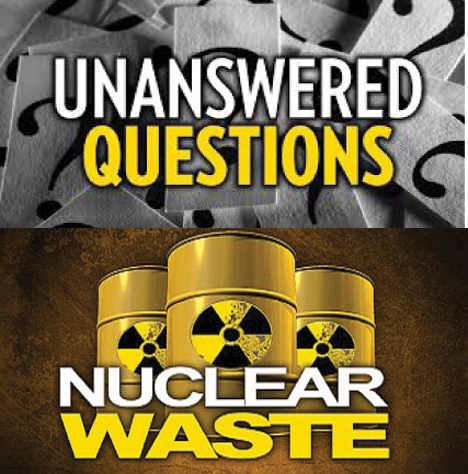
What now for Germany’s remaining nuclear waste?
Jens Thurau, 24 Apr 23 https://www.dw.com/en/what-now-for-germanys-remaining-nuclear-waste/a-65420338
Germany has shut down its last nuclear power stations. But the issue isn’t going anywhere, as the country faces the question of what to do with its remaining nuclear waste.
Nuclear energy in Germany has been history since mid-April. At one time, up to 20 nuclear power plants fed electricity into the German grid. But all that is over now. The last three nuclear power plants ended their operations on April 15.
To Germany’s environment minister Steffi Lemke of the Green Party, the date marks a new dawn: “I think we should now put all our energy into pushing forward photovoltaics, wind power storage, energy saving, and energy efficiency, and stop these backward-looking debates,” she said in a recent radio interview.
April 15 also effectively ended a decades-long political dispute in Germany. In light of the tense situation on the energy market due to Russia’s war in Ukraine, there are still voices demanding that nuclear power be extended
The waste issue
And yet, the issue of nuclear energy will linger for Germany for some time yet, as the reactors still have to be dismantled, and the final disposal of the radioactive nuclear waste has not yet been clarified.
Like almost all other countries that have operated, or continue to operate nuclear power plants, Germany has yet to find a place to safely store the spent fuel. Currently, Germany’s nuclear waste is in interim storage at the sites of abandoned power plants, but the law requires that nuclear waste be safely stored in underground repositories for several millennia.
“The interim storage facilities are designed to last for quite some time,” Wolfram König, president of the Federal Office for the Safety of Nuclear Waste Disposal (BASE), told DW. “They are supposed to bridge the time until a final repository is available. … What we are looking for is geological depth, a suitable layer of salt, in granite or in clay rock, which will ensure that no radioactive substances reach the surface again for an indefinitely long period of time.”
Location, location, location
That’s a principle that Germany shares with all of the 30 or so countries that still operate, or have operated nuclear power plants in the past: Radioactive waste is to be disposed of underground. But where exactly? For a long time, Gorleben, located in the Wendland region of Lower Saxony, northeastern Germany, was the site most favored by politicians looking for an underground repository for nuclear waste.
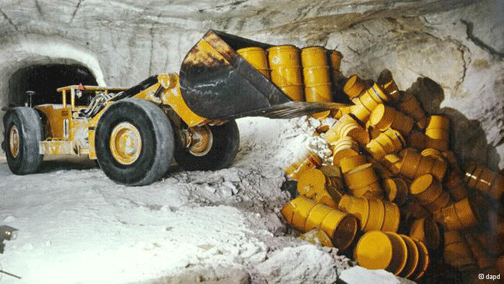
But Gorleben became the location of fierce protests against nuclear energy, so politicians decided a few years ago to abandon the site. Now, the search is on throughout Germany, with more than 90 possible sites under consideration. “We can and must assume that the search process in Germany, with the construction of a final repository, will take approximately as long as we have used nuclear energy, namely 60 years,” König said.
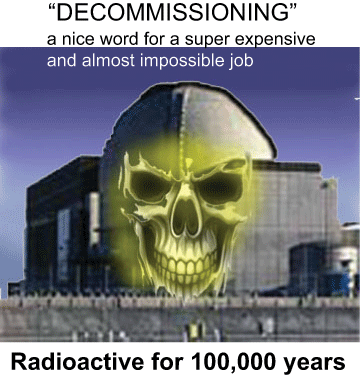
Meanwhile, the dismantling of Germany’s 20 or so nuclear power plants that have been built will also take time. That, according to König, is the responsibility of their operators, who estimate it could take between 10 and 15 years.
A worldwide headache
So far, reactors have been shut down in Italy, Kazakhstan, and Lithuania, while other countries, including the United Arab Emirates and Belarus, are building new nuclear plants.
But the permanent, safe storage of radioactive waste is an unresolved issue everywhere.
Finland is furthest along in its planning. In a report by German public broadcaster ARD, Vesa Lakaniemi, administrative head in the municipality of Eurajoki, southern Finland, talked about the construction of the final storage facility for nuclear waste in his town: “Whoever profits from electricity must also take responsibility for the waste. And that’s how it is in Finland.” The estimated construction costs for the Eurajoki repository is €3.5 billion ($3.8 billion).
According to the International Atomic Energy Agency (IAEA), there are currently 422 nuclear reactors in operation worldwide, with an average age of about 31 years. The recent “World Nuclear Industry Status Report” said that, despite a few countries building new nuclear power stations, there was no evidence of a “nuclear renaissance.” In 1996, some 17.5% of the world’s energy was produced in nuclear reactors — in 2021 it was below 10%. Nevertheless, the radioactive legacy will keep Germany preoccupied for many years to come.
In Indiana, small nuclear reactors don’t need to be “small” any more.

ED. – the picture above is of a NuScale smr design, not Rolls Royce, but the principle is the same. It’s not really small, and they know that truly small reactors are not economically viable.
New law boosts maximum size of nuclear reactors permitted in Indiana
nwi.com Dan Carden, Apr 24, 2023
Gov. Eric Holcomb approved a new state law Thursday increasing the maximum size of the small modular nuclear reactors that someday may be used by utility companies to generate electricity in Indiana.
Senate Enrolled Act 176, which took effect immediately, redefines a small modular reactor (SMR) as a nuclear reactor capable of generating up to 470 megawatts of energy — a 34% increase from the state’s former 350 MW generating cap.
Rep. Ed Soliday, R-Valparaiso, the sponsor of the legislation, said the higher generating capacity encompasses more of the nascent SMR market, including a 450 MW reactor designed by Rolls-Royce, an aircraft engine manufacturer based in Indianapolis…………………………………………..
State lawmakers directed the Indiana Utility Regulatory Commission last year to adopt rules by July 1, 2023, that would permit nuclear SMRs to be used to generate electricity in the Hoosier State……….
Critics of the plans have said there’s no need for Indiana to lead the way with nuclear SMRs, especially through rules that give utilities built-in profits, other incentives and the opportunity to recoup potentially billions of dollars in construction costs from ratepayers before a nuclear reactor actually generates any electricity. https://nwitimes.com/business/technology/new-law-boosts-maximum-size-of-nuclear-reactors-permitted-in-indiana/article_3962a672-8e8c-5168-bc88-31cc6891a88b.html
Why the disbandment of NATO is long overdue
it is no longer feasible or possible to harbour any lingering belief that NATO is anything other than a tool of US hard power, deployed not to protect and defend, but instead to destroy and dominate.
John Wight, Medium, 27 Jan 23 https://johnwight1.medium.com/why-the-disbandment-of-nato-is-long-overdue-aaebff253cd0
The fundamental root cause of the ongoing brutal and tragic conflict in Ukraine is not Russian aggression, it is NATO aggression, reminding us that the latter’s disbandment is a non-negotiable condition of a world in which the triumph of peace and stability over chaos and conflict is at long last achieved.
Indeed the very existence of NATO seventy-four years on from its creation stands as an insult to the millions who died in WWII so that the UN Charter could be born. Produced as the foundational document of the United Nations upon its birth in October 1945, enshrined within the Charter’s articles was a solemn promise that henceforth justice, international law and tolerance would reign in place of brute power, force and intolerance.
Consider for a moment the first section of the Charter’s preamble:
WE THE PEOPLES OF THE UNITED NATIONS DETERMINED
- to save succeeding generations from the scourge of war, which twice in our lifetime has brought untold sorrow to mankind, and
- to reaffirm faith in fundamental human rights, in the dignity and worth of the human person, in the equal rights of men and women and of nations large and small, and
- to establish conditions under which justice and respect for the obligations arising from treaties and other sources of international law can be maintained, and
- to promote social progress and better standards of life in larger freedom
It is impossible to read those words and not lament the gaping disjuncture between the noble ideals and vision they describe and the grim reality that arrived in their wake. For rather than mankind being saved from the ‘scourge of war’, and rather than ‘respect for the obligations arising from treaties and other sources of international law’, the scourge of war and violation of treaties and international law have grown to become a near-everyday occurrence across the globe.
The pressing question we are required to grapple with today is, why? What lies at the root and what is the common denominator responsible for mankind’s abject failure to achieve the vision set out in the UN Charter?
Upon due consideration, we are left in no doubt that fundamentally the series of conflicts that have come to define our existence are a consequence of the drive by one ideological bloc to dominate and impose a particular political, economic and value system onto a world defined by its diversity of languages, cultures, histories and traditions.
The result is the normalization of war and the apotheosis of hard power, rather than war and hard power being regarded as grotesque perversions and an impediment to human progress.
Seventy- four years ago, NATO, a military alliance whose entire existence and ethos is predicated on might is right, emerged from the womb of the Cold War objectives devised by a Truman administration of fanatical hawks, consumed with the goal of full-spectrum dominance at the close of WWII.
In his 1997 essay, ‘The Last Empire,’ Gore Vidal savages the official history proffered by Western ideologues when it comes to the sudden shift that took place from Moscow being viewed as an indispensable ally in the war against Nazi Germany in the eyes of the Roosevelt administration, to implacable foe when Truman entered the White House upon Roosevelt’s death in April 1945.
Vidal:
The National Security State, the NATO alliance, the forty-year Cold War were all created without the consent, much less advice, of the American people… The impetus behind NATO was the United States… We were now hell bent on the permanent division of Germany between our western zone (plus the British and French zones) and the Soviet zone to the east. Serenely, we broke every agreement that we had made with our former ally, now horrendous Communist enemy.
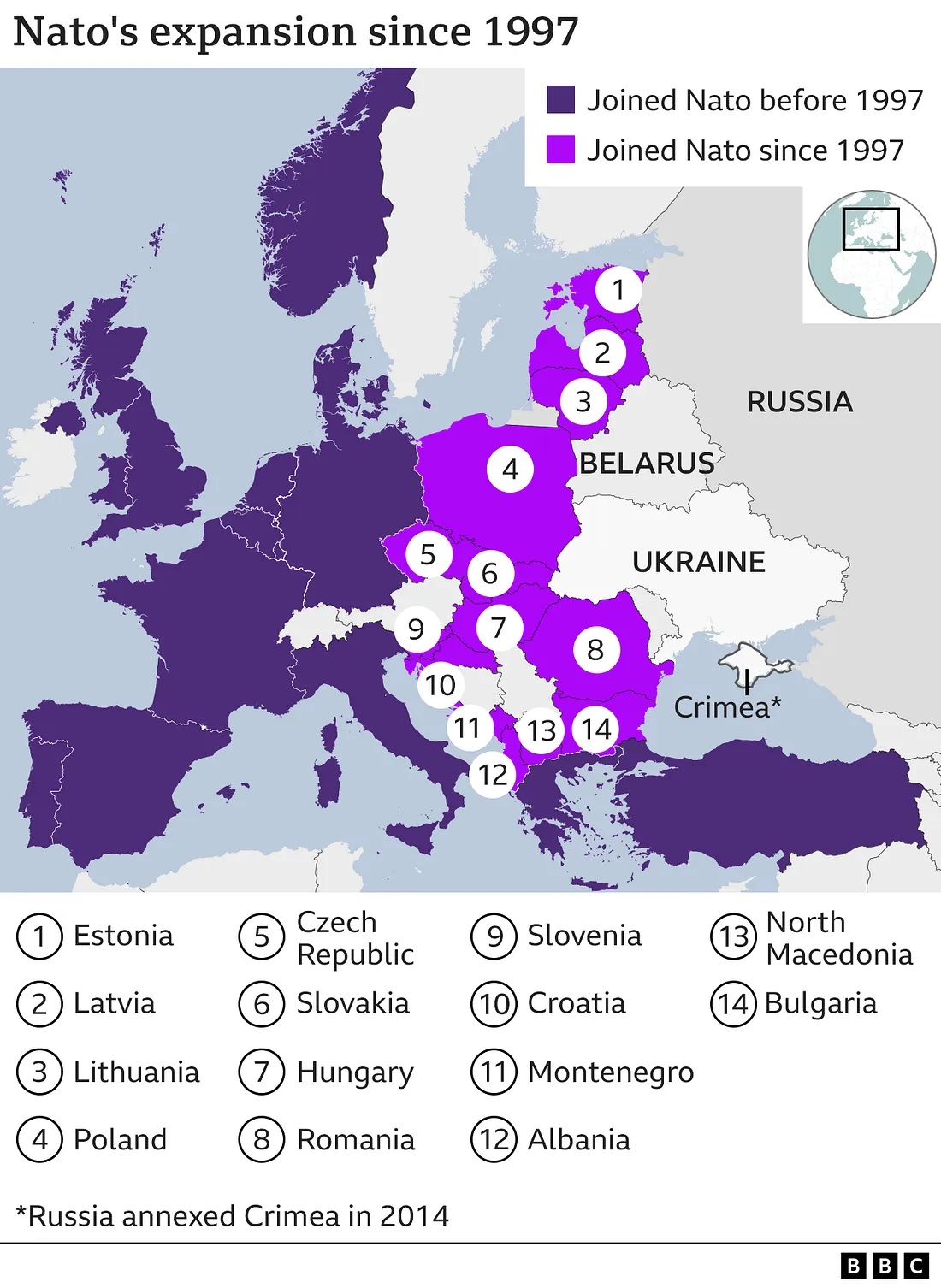
Moving things forward, it is by now no secret that US Secretary of State James Baker assured Soviet premier Mikhail Gorbachev in a meeting on February 9, 1990, that NATO would not expand “one inch eastward” upon the reunification of Germany. According to declassified documents, Baker’s pledge was made as part of a “cascade of assurances” over Soviet security given by Western leaders at that time and on into 1991, when the Soviet Union came to an end. It is the breaking of those assurances that lies at the heart of the deterioration in relations between East and West that has taken place since, and which informs the current conflict in Ukraine.
Flush with triumphalism over the demise of the Soviet Union in the early 1990s, NATO was loosed upon the world not in name of democracy but in the cause of imperialism. Neocon scribe Thomas Friedman wrote openly of the driving ethos of Western foreign policy after the Soviet Union’s demise:
Continue readingGlobal military spending increase: Militarism will cost us the earth
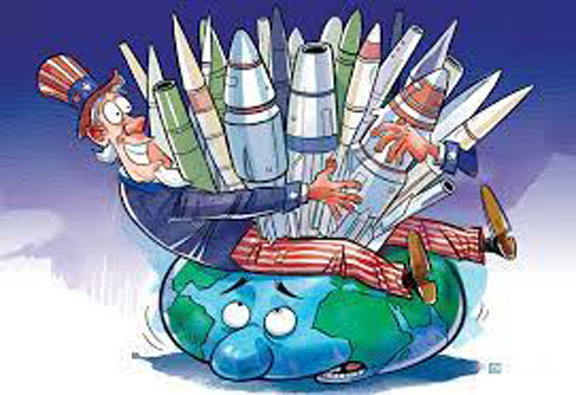
The five largest military spenders in 2022 were the US (39% of the global total), China (13%), Russia (3.9%), India (3.6%) and Saudi Arabia (3.3%),
Aotearoa New Zealand Campaign on Military Spending
24 April 2023
Links to share: Facebook, https://www.facebook.com/PeaceMovementAotearoa/posts/6107093852671266 Twitter, https://twitter.com/PeaceMovementA/status/1650264027988365312
Despite the rapidly escalating climate emergency and humanitarian crises around the world, global military spending increased to its highest ever recorded level last year according to new figures released by the Stockholm International Peace Research Institute (SIPRI) today – the Global Day of Action on Military Spending.SIPRI has estimated global military expenditure last year was at least $2,240 billion (US) – a spending increase of 3.7% in real terms in 2022 (a 6.5% nominal increase in current prices without adjusting for inflation) – which averages out to more than $6.1 billion (US) spent every day. [1]
By way of contrast, on average more than 13,600 children under the age of five died every day last year from mainly preventable causes – lack of access to adequate food, clean water and basic medicines – a figure UNICEF describes as an “immense, intolerable” loss of life. [2] This is one of the prices paid, the collateral damage that is seldom talked about, for maintaining armed forces in a state of combat readiness around the world.
It is inexcusable that many states – including New Zealand – continue to prioritise spending on combat-ready armed forces over human health and wellbeing, and care for the planet…………………………………..
Every dollar of military expenditure is a dollar taken away from socially useful spending – a dollar that could be used to take real action on climate change, to ensure a decent standard of living for all, and to ensure health and social welfare systems can function well in national, regional or global emergencies: it is a dollar that could be used to save lives, to promote climate justice, flourishing communities and care for the planet, rather than being spent on endless preparations for war.
Now more than ever, with the future of life on earth at stake, states must work together to find sustainable solutions, instead of continuing to pour public money into wasteful destructive military activity – the ultimate in unsustainability, with military emissions estimated to be at least 5.5% of the global total.
The five largest military spenders in 2022 were the US (39% of the global total), China (13%), Russia (3.9%), India (3.6%) and Saudi Arabia (3.3%), which together accounted for 63% of world military spending. [1] Military expenditure decreased in Africa (-5.3%) last year, but increased in four of the five geographical regions, with the highest increase in Europe (+13%), followed by the Middle East (+3.2%), then Asia and Oceania (+2.7%) and the Americas (+0.3). Overall in 2022, the military burden (military spending as a share of gross domestic product) globally was 2.2%. [1]New Zealand’s military spendingWhile New Zealand does not feature in the SIPRI table ranking the highest increases in military spending around the world this year as it did in 2020 [3], that is simply because other states increased their spending by more, not because there has been any reduction in New Zealand’s military spending.
With visit of Algerian President France must face up to its nuclear fallout
Next month the Algerian president, Abdelmadjid Tebboune, is set to visit
Emmanuel Macron in Paris. The two countries have a difficult past, with war
giving way to hostility, giving way to a very curious form of
interdependence. The agenda for the visit looks crowded, with irregular
migration through Algeria dominating the list of the Elysee’s priorities.
However, unlike previous meetings between the two leaders, Tebboune arrives
in France on the crest of a diplomatic wave fuelled by Algeria’s
hydrocarbon reserves at a time when European supplies are at a premium.
Moreover, he arrives with a long list of Algeria’s own grievances, not
least the tonnes of radioactive waste France has buried in the Sahara and
for which it still won’t provide details.
New European 22nd April 2023
https://www.theneweuropean.co.uk/france-faces-up-to-its-nuclear-fallout/
The US Has No Plans to Give Up Nuclear Weapons. The Public Needs to Change That.

While the U.S. nuclear enterprise has widespread support by both Democrat and Republican members of Congress, one of the boldest shows of opposition to nuclear weapons was voiced by Michigan congresswoman Rep. Rashida Tlaib, who has expressed her support for the Treaty for the Prohibition of Nuclear Weapons (TPNW). Additional support for the prohibition of TPNW (also called the “ban treaty”) came from Massachusetts Rep. James McGovern and Oregon Rep. Earl Blumenauer, who introduced a resolution in 2019 calling for “the American people to work towards reducing and ultimately eliminating nuclear weapons.” Furthermore, in 2022, more than 200 U.S. mayors collectively called for the adoption of a timebound plan for the total elimination of nuclear weapons.

A first step toward anti-nuclear advocacy is becoming aware of the current sprawling state of the U.S. nuclear arsenal.
By Jon Letman , TRUTHOUT April 24, 2023
hen Russian President Vladimir Putin announced his intention to deploy short-range nuclear missiles to Belarus in March, he pointed to U.S. nuclear weapons housed in five NATO nations as justification. Putin said the construction of a “special repository” for an Iskander missile complex in Belarus would not violate obligations under the Nuclear Nonproliferation Treaty.
But by accepting the deployment of Russian nuclear weapons, Belarus President Alexander Lukashenko would be reversing more than three decades free of nuclear weapons after it pledged to abandon them in 1991. Like Ukraine and Kazakhstan, Belarus gave up Soviet nuclear weapons shortly after the USSR broke apart.
In a statement, Daniel Högsta, acting executive director of the International Campaign to Abolish Nuclear Weapons (ICAN) said, “As long as Putin has nuclear weapons, Europe cannot be safe.” He also warned that decades of “nuclear sharing” with NATO nations “helps give Putin cover,” posing a grave risk far beyond Europe.
ICAN has played a central role in advocating for the UN Treaty on the Prohibition of Nuclear Weapons which entered into force in 2021. Although 68 countries have ratified the treaty which prohibits all aspects of developing, possessing or threatening to use nuclear weapons, none of the nine nuclear-armed nations — Russia, the United States, China, France, the United Kingdom, Pakistan, India, Israel and North Korea — recognizes the treaty.
According to the Federation of American Scientists’ Nuclear Information Project, the U.S. houses an estimated 100 B61 gravity bombs on air bases in five NATO nations (Belgium, Germany, Italy, the Netherlands and Turkey). Usually described as “tactical” or nonstrategic nuclear weapons, the new B61-12, which will replace older versions of the B61, has a selectable yield (energy released in a nuclear explosion) that can be adjusted from 0.3 to 50 kilotons. The atomic bombs which destroyed Hiroshima and Nagasaki were 15 and 21 kilotons respectively.
Daryl Kimball, executive director of the Arms Control Association, said that describing a nuclear weapon as “tactical” may lead people to wrongly assume that such weapons are necessarily “smaller,” less destructive, and would be confined to a battlefield or limited geographic area.
That, he said, is a dangerous assumption. ……………………………………………………
According to research by the Federation of American Scientists’ Nuclear Information Project, the United States maintains an estimated total inventory of 5,244 nuclear weapons, including reserve warheads and retired warheads awaiting dismantlement. Currently, 3,708 nuclear warheads make up the military stockpile (those weapons which could potentially be used in war).
Within the stockpile, the U.S. has 1,770 deployed nuclear warheads that make up the nuclear triad of air, land and sea-based bombs…………………………………….
Under the Sea
Widely considered to be least vulnerable to attack are long-range submarine-launched ballistic missiles (SLBM). The United States has two Strategic Weapons Facilities, one for the Pacific beside Naval Base Kitsap in Bangor, Washington, 20 miles west of Seattle, and a second facility for the Atlantic at Naval Submarine Base Kings Bay, Georgia…………………………………………………………………………
The U.S.’s Nuclear Sponge
The third leg of the nuclear triad is its intercontinental ballistic missiles (ICBMs), which are housed in fortified underground silos in five states (Montana, Colorado, Nebraska, Wyoming and North Dakota). The ICBM force is made up of aging Minuteman III missiles which are slated to be replaced with a new $96 billion system called Sentinel (formerly called Ground Based Strategic Deterrent).
Plagued by scheduling delays and cost overruns, there is growing public support for phasing out ICBMs. Despite this, the bipartisan congressional ICBM Coalition’s support is all but unshakable. But the idea of creating what has been called a “nuclear sponge” (referring to the idea that ICBM silos would attract enemy missiles and, like a sponge, soak up an incoming attack), raises serious questions about why rural communities only began receiving greater government support for improved communications and transportation infrastructure after they started hosting nuclear weapons. “I think it’s important to interrogate that and ask why the needs of the missiles have so often come before the needs of the people who actually live there,” Korda said.
In addition to the SLBM, ICBMs and bombers, Korda and his colleague Hans M. Kristensen have documented additional nuclear warheads (many awaiting dismantlement) at a storage complex in New Mexico and, Korda noted, California has “very important nuclear weapons infrastructure” which could potentially host a small number of nuclear weapons for design purposes.
Finally, there is the Pantex Plant near Amarillo, Texas, which describes itself as “the nation’s primary assembly, disassembly, retrofit, and life-extension center for nuclear weapons.” The dismantlement of retired nuclear warheads is ongoing but, Korda said, the pace has slowed in recent years……………………………………….
In recent years, arms control treaties such as the Intermediate-Range Nuclear Forces Treaty, the Open Skies Treaty and the Joint Comprehensive Plan of Action (“Iran Nuclear Deal”) have been abandoned by the U.S., Russia, or both. The last remaining nuclear arms control treaty between the U.S. and Russia, the New Strategic Arms Reduction Treaty (New START), was extended for five years just two days before it expired in 2021 but in February, Russia announced it was suspending participation, leaving the last U.S.-Russia arms control treaty hanging by a thread.
With the end of inspections, data exchanges, and much-needed communication between Washington and Moscow, as well as Beijing, Kimball worries mistrust can lead to the assumption of worst-case scenarios. He says there is a great need for increased public awareness and engagement on nuclear issues.
While the U.S. nuclear enterprise has widespread support by both Democrat and Republican members of Congress, one of the boldest shows of opposition to nuclear weapons was voiced by Michigan congresswoman Rep. Rashida Tlaib, who has expressed her support for the Treaty for the Prohibition of Nuclear Weapons (TPNW). Additional support for the prohibition of TPNW (also called the “ban treaty”) came from Massachusetts Rep. James McGovern and Oregon Rep. Earl Blumenauer, who introduced a resolution in 2019 calling for “the American people to work towards reducing and ultimately eliminating nuclear weapons.” Furthermore, in 2022, more than 200 U.S. mayors collectively called for the adoption of a timebound plan for the total elimination of nuclear weapons.
“This is an existential threat that demands engagement even with our worst adversaries and even with a bona fide war criminal like Vladimir Putin because our survival ultimately depends on it.”
Without dialogue and diplomatic engagement, the result, Kimball warned, could be an unconstrained three-way arms race between Russia, China and the U.S. “If we didn’t have enough problems already,” Kimball said, “it still can get worse.”
The public has a vital role in all this, Kimball said. “Over the long course of the nuclear age, concerned U.S. citizens have stood up and demanded that their leaders take action to reduce the number and the risks posed by nuclear weapons by engaging in arms control and disarmament diplomacy with our adversaries. That effort has to be renewed again.” https://truthout.org/articles/the-us-has-no-plans-to-give-up-nuclear-weapons-the-public-needs-to-change-that/
—
The Human Dimension to Kazakhstan’s Plutonium Mountain

April 24, 2023, Sig Hecker https://nonproliferation.org/the-human-dimension-to-kazakhstans-plutonium-mountain/
The following is an excerpt from the Stanley Center for Peace and Security.
As we drove deeper into the Semipalatinsk Nuclear Test Site, we found kilometer-long trenches that were clearly the work of professional thieves using industrial earth-moving equipment, rather than hand-dug trenches made by nomad copper-cable-searching amateurs on camelback. Our Kazakh hosts said they could do nothing to stop these operations. In fact, they weren’t sure they had a legal right to stop them from “prospecting” on the site.
It was the sight of these trenches that urged me to convince the three governments that they must cooperate to prevent the theft of nuclear materials and equipment left behind when the Soviets exited the test site in a hurry as their country collapsed.
When the Soviet Union collapsed in December 1991, the most urgent threat to the rest of the world was no longer the immense nuclear arsenal in the hands of the Russian government but rather the possibility of its nuclear assets—weapons, materials, facilities, and experts—getting out of the hands of the government. As director of the Los Alamos National Laboratory, I helped to initiate the US–Russia lab-to-lab nuclear cooperative program in 1992 to mitigate these nuclear threats.
The trilateral US–Russia–Kazakhstan cooperation began in 1999 to secure fissile materials that were left behind by the Soviets at the Semipalatinsk Nuclear Test Site, which was now in the newly independent country of Kazakhstan. The project was kept in confidence until the presidents of the three countries announced it at the Seoul Nuclear Security Summit in 2012
In Doomed to Cooperate, individuals from the three countries recount their cooperative efforts at Semipalatinsk. Unlike the US–Kazakhstan projects initiated earlier on nuclear test tunnel closures, identifying experiments that left weapons-usable fissile materials (plutonium and highly enriched uranium) at the huge test site—whether in the field, in tunnels, or in containment vessels—required trilateral cooperation. The Russian scientists who conducted these experiments were the only ones who knew what was done and where. It required American nuclear scientists who conducted similar tests in the United States to assess how great a proliferation danger the fissile materials in their current state may constitute. And it required Kazakh scientists and engineers to take measures to remediate the dangers. The project also required the political support of all three countries and the financial support of the American government because it was the only one at the time with the financial means. That support came from the US Cooperative Threat Reduction (or Nunn-Lugar) program.
Continue reading at the Stanley Center for Peace and Security.
Nuclear liability issues not yet resolved for Jaitapur project: French company EDF
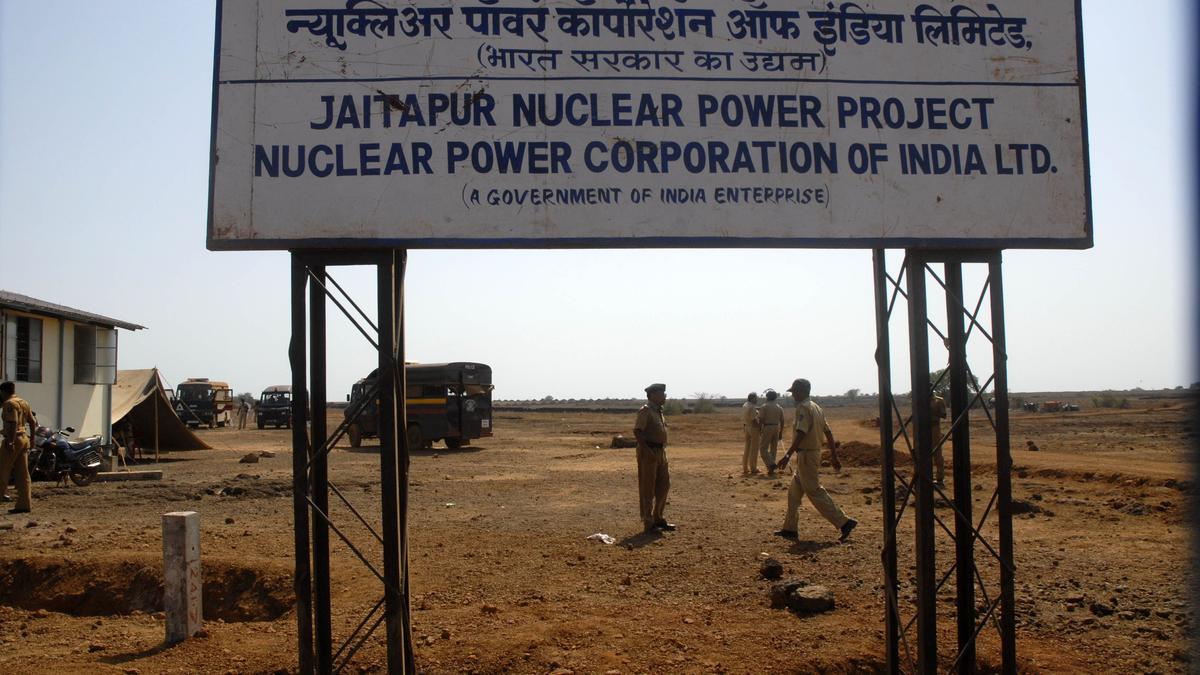
Delays despite assurances by Minister Jitendra Singh that all technical, commercial, legal issues would be sorted by “early 2023”
The Hindu, SUHASINI HAIDAR April 24, 2023
Two years after the French energy company Electricite de France (EDF) submitted its techno-commercial offer for the construction of six nuclear power reactors in Maharashtra’s Jaitapur, talks between Indian and French officials over several issues, including liability, have not resulted in any breakthrough yet.
According to sources in Delhi and Paris, the talks over the high cost of power per unit has also become a major issue in the conclusion of the agreement for the 9,900 MW project, which is the world’s biggest nuclear power generation site under consideration at present.
“The topic [of liability] has been discussed between the French and Indian governments and my understanding is that it is progressing towards convergence. It is a key topic for France and the EDF, and so this topic would have to be solved before any contract can be signed,” an EDF official said in response to a question from The Hindu, as part of a presentation to a larger group of international journalists invited to Paris.
The statement is significant, as in October 2022, the Minister of Space and Atomic Energy, and Minister of State in the Prime Minister’s Office (MoS PMO), Jitendra Singh, promised an early resolution to all the issues, within months………………..
PM to visit Paris in July……………………
The EDF official, who requested not to be identified, but spoke on behalf of the company, said that the issue, arising from India’s Civil Liability for Nuclear Damage Act that India passed in 2010, remains an item on the “agenda for both countries”. India’s CLND Act, which was brought in addition to the International Convention on Supplementary Compensation (CSC), is considered excessive by foreign companies, which could be liable to pay hundreds of millions of dollars in the event of a nuclear accident. As a result, despite signing civil nuclear deals with a number of countries, including the U.S, France and Japan, the only foreign presence in India is that of Russia in Kudankulam, projects that predate the Law.
A recent report in Al Jazeera also points to the fact that despite planning an insurance pool of ₹1,500 crores ($200 million) in 2015, the government’s ‘India Nuclear Insurance Pool” (INIP) has only been able to collect about half, ₹700 crore-₹800 crore, thus far. Concerns over safety after the 2011 Fukushima nuclear disaster, prompted Germany to switch off its last nuclear power reactor this month.
Another factor will be the time taken by the Jaitapur project, for which the original MoU was signed in 2009 with EDF’s predecessor Areva. In 2016, EDF and NPCIL signed a revised MoU, and in 2018, the heads of both signed an agreement on the “industrial way forward” in the presence of Mr. Modi and Mr. Macron. However, officials said nuclear projects do take time, pointing to EDF’s latest construction of an EPR in Finland, Olkiluoto 3. Its work began in 2005 and was completed after a delay of about 14 years, finally starting regular production on April 16 this year. https://www.thehindu.com/news/national/nuclear-liability-issues-not-yet-resolved-for-jaitapur-project-french-company-edf/article66774668.ece
Russia is deploying nuclear weapons in Belarus. NATO shouldn’t take the bait
By Nikolai N. Sokov Bulletin of the Atomic Scientists
Nikolai N. Sokov, a senior fellow at the Vienna Center for Disarmament and Non-Proliferation, previously worked at the Soviet and Russian Ministry. April 24, 2023
In June 2022, Russian President Vladimir Putin announced a new policy of Russia deploying some of its nuclear weapons in Belarus. The nuclear sharing arrangements between Russia and Belarus represent a fundamental change in Russian nuclear policy and the European security landscape. But as is usual with changes in Russian defense policy, the story developed slowly and has been full of unnecessary intrigue with important information revealed in small portions.
More than nine months after the initial announcement, the Russia-Belarus nuclear sharing is still very much incomplete; further developments may depend on the still uncertain evolution of the ongoing Russian war against Ukraine as well as any future changes in the scope and scale of Western assistance to Ukraine. But despite the many uncertainties, some key implications of Russia’s new policy of nuclear sharing can already be anticipated—especially as regard to its consequences for strategic stability.
Slow developments, false intrigue………………………………………………………………………….
Uncertainties. Unlike NATO’s nuclear sharing, which is built around nearly 100 B-61 gravity bombs, the Russia-Belarus one will involve a mix of gravity bombs and ground-launched missiles……………………………………………………………………………………………………….
The location of the storage site(s) for the nuclear warheads is perhaps the greatest of all uncertainties surrounding the Russia-Belarus nuclear sharing……………………………
Strategic consequences. The impact of Russia’s decision to institute nuclear sharing with Belarus will have wide-ranging consequences.
For the first time since the end of the Cold War, short-range, tactical nuclear weapons have acquired a distinct military mission…………………………………………………………………………..
the Russia-Belarus nuclear sharing—which involves preparation for deployment of nuclear weapons and may eventually entail the actual transfer of Russian nuclear weapons to Belarus—is by far the boldest move by Russia because it comes supported with new capability. Moreover, if the delivery systems and warheads under these arrangements are deployed near the western border of Belarus where they are highly vulnerable, the only conceivable mode for them is to strike first. The number of nuclear weapons involved may be relatively small—perhaps only about one-third of the entire inventory of B-61 bombs—but ready to use
The message is undoubtedly addressed to the West; nuclear use against Ukraine has never even indirectly featured in any Russian statements.
……………………………………………. The seriousness of the new signal does not mean that nuclear use in Europe is an immediate threat. First, it is reserved for extreme circumstances, such as a major defeat of Russia, which would put the regime at risk. Second, it would only result from a relatively lengthy process of escalation. ………………………….
Do not respond in kind. Recent nuclear signaling and actions by Russia are clearly a step on the escalation ladder. ………………………………. The wisdom of a symmetrical, tit-for-tat response to Russia’s escalatory steps is questionable
……………………….. NATO would be better off to continue the current policy and rally international opinion against Russia’s possible nuclear use. As Allies’ defense production continues to ramp up, assistance to Ukraine will become more efficient and consequential. Escalation may be tempting, but it is both unnecessary and potentially dangerous. https://thebulletin.org/2023/04/russia-is-deploying-nuclear-weapons-in-belarus-nato-shouldnt-take-the-bait/
Maintenance impacted at Zaporizhzhia, says IAEA

24 April 2023 https://www.world-nuclear-news.org/Articles/Maintenance-impacted-at-Zaporizhzhia,-says-IAEA
The current situation at the Zaporizhzhia nuclear power plant is having a significant impact on the plant’s maintenance capability, the International Atomic Energy Agency (IAEA) said.
Plant management informed the IAEA experts present at plant that the scope of maintenance performed during outages on all units in 2022 was reduced compared with the planned scope, due to reduced maintenance staff, absence of external contractors who perform a significant part of the work, and a lack of spare parts needed for the maintenance, including critical components.
The Zaporizhzhia plant currently has only about one-quarter of its regular maintenance staff available, the IAEA said. It noted new staff are being hired but it will take some time until they are fully trained. The plant said a substantial list of required spare parts has recently been submitted to Russian state nuclear corporation Rosatom.
“As a result of the significant reduction of staff, the ZNPP currently does not have a systematic maintenance and in-service inspection schedule,” the IAEA said. “Before restarting any of the reactor units, the site is considering obtaining advice from an engineering organisation within Rosatom that will assess the status of the plant and provide recommendations for all structures, systems and components important to safety regarding their maintenance or any necessary replacement before operation. The site considers that this maintenance/replacement work may be undertaken using the services of a centralised Rosenergoatom company that is capable of performing these types of maintenance tasks.”
“This shows again the continuing detrimental impact that the current situation on the site is having on the seven indispensable pillars for ensuring nuclear safety and security, in this case pillars two and five on safety and security systems and equipment and logistical supply chain,” IAEA Director General Rafael Mariano Grossi said.
The IAEA noted that the Zaporizhzhia plant continues to rely on the only remaining functioning 750kV power line for the external electricity it needs for reactors cooling and other essential nuclear safety and security functions. Meanwhile, a back-up 330kV power line that was damaged on 1 March on the other side of the Dnipro River from the Russian-controlled plant remains unrepaired, with Ukraine having said military action is preventing its experts from safely accessing the location situated in territory it controls to repair the line.
Russia reported last month that Rosatom was working to remove damaged equipment from the open switchyard, with the aim of restoring three 330kV lines to the grid system in currently Russian-controlled territory. The IAEA team will access the site to assess the situation.
Four of the six reactors have been in cold shutdown, with two (units 5 and 6) in hot shutdown – which allows them to provide heat to the plant and the nearby town of Energodar where many of the workers live. However, the IAEA said that, with the weather warming, unit 6 has now been transferred to cold shutdown.
France’s struggle to deliver a second nuclear era
An ambitious reactornconstruction programme aimed at reducing carbon emissions is running into the realities of skilled worker shortages.
For 10 years, Gaetan Geoffray
worked as a plasterer and painter, before learning metalwork at a company
that made cranes. Arnaud Dupuy was a policeman. A third colleague at their
factory in the depths of rural Burgundy used to be a baker.
The factory is owned by Framatome, a subsidiary of state-controlled power utility EDF, and the trio are hoping to qualify for one of the most sought-after jobs in
France, as nuclear-grade welders. If all goes well, they’ll one day be
allowed to work on the most intricate features of the steel parts assembled
in the plant, where the all-important 24-metre-long casings protecting the
core of atomic reactors are made.
For now, that goal is at least three to
four years off, so exacting are the demands in a field in which imperfect
finishes can delay a project by months and cost millions, if not billions,
of dollars. For France, the next intake of hires and welding apprentices
can’t come a day too soon.
After years of political dithering over whether
or not to cut its reliance on nuclear power, a hesitation echoed globally
after the 2011 Fukushima nuclear accident in Japan, the country has gone
all-in with Europe’s most ambitious atomic construction project in decades.
In order to stand a chance of turning this vision into reality, the
government estimates it needs to find another 100,000 nuclear specialists
of all guises, from engineers and project supervisors to boilermakers and
electricians, over the coming six years.
Looming large, beyond hurdles with
design approvals and financing for the €52bn programme, is an even more
basic question — whether France, Europe’s main atomic nation, still has
the industrial capacity and people to make the projects happen on a scale
it has not contemplated since the 1970s.
FT 23rd April 2023
https://www.ft.com/content/d23b14ae-2c4e-458c-af8a-22692119f786
Water shortage at Sizewell: the environmental cost
Pete Wilkinson: (From Feb 2022) Building the Sizewell C plant, which
requires vast amounts of fresh water, in an area of water scarcity makes no
sense. The availability of water is something we barely give a thought to:
only ten percent of people consider water shortage to be an environmental
issue, yet without it, it’s curtains. According to the Environment Agency
(EA), England could fail to meet national demand by 2050.
As the driest part of the country, Eastern England has been designated as a
water-stressed area and future pressures include climate change, economic
and housing development. Suffolk is recognised as an area of water
scarcity, facing predictions of a water shortage in the coming years.
East Anglia Bylines (accessed) 23rd April 2023
1 This Month

of the week – Shut Down Drone Warfare!


Tell the Ukrainian Government to Drop Prosecution of Peace Activist Yurii Sheliazhenko

Petition to revoke the licensing of the Near Surface Nuclear Disposal Facility (NSDF) at Chalk River. https://www.ourcommons.ca/petitions/en/Petition/Details?Petition=e-7247
To see nuclear-related stories in greater depth and intensity – go to https://nuclearinformation.wordpress.com
-
Archives
- April 2026 (103)
- March 2026 (251)
- February 2026 (268)
- January 2026 (308)
- December 2025 (358)
- November 2025 (359)
- October 2025 (376)
- September 2025 (257)
- August 2025 (319)
- July 2025 (230)
- June 2025 (348)
- May 2025 (261)
-
Categories
- 1
- 1 NUCLEAR ISSUES
- business and costs
- climate change
- culture and arts
- ENERGY
- environment
- health
- history
- indigenous issues
- Legal
- marketing of nuclear
- media
- opposition to nuclear
- PERSONAL STORIES
- politics
- politics international
- Religion and ethics
- safety
- secrets,lies and civil liberties
- spinbuster
- technology
- Uranium
- wastes
- weapons and war
- Women
- 2 WORLD
- ACTION
- AFRICA
- Atrocities
- AUSTRALIA
- Christina's notes
- Christina's themes
- culture and arts
- Events
- Fuk 2022
- Fuk 2023
- Fukushima 2017
- Fukushima 2018
- fukushima 2019
- Fukushima 2020
- Fukushima 2021
- general
- global warming
- Humour (God we need it)
- Nuclear
- RARE EARTHS
- Reference
- resources – print
- Resources -audiovicual
- Weekly Newsletter
- World
- World Nuclear
- YouTube
-
RSS
Entries RSS
Comments RSS
 nuclear-news