NATO chief orders EU cohorts to boost arms purchases, stockpiles for Ukraine war — Anti-bellum
NATOMarch 8, 2023 NATO Secretary General at EU Defence Ministerial: we must boost ammunition stockpiles, ramp up production Video Arriving at a meeting of EU Defence Ministers on Wednesday (8 March 2023), NATO Secretary General Jens Stoltenberg underlined the importance of strengthened ammunition stockpiles and more joint procurement in order to continue supporting Ukraine. He […]
NATO chief orders EU cohorts to boost arms purchases, stockpiles for Ukraine war — Anti-bellum
TODAY. Nuclear economics – the road to fascism.

Western world politicians are twisting themselves into knots, trying to convince their electorates, and themselves, that nuclear power is economically viable.
Russia and China don’t have that agonising problem, as in those countries, the taxpayer dutifully forks out the money, and there’s no pretense that nuclear power is a great way to choose invest your savings. (However, China is obviously aware that renewable energy is a much more economic way to go)
Freed from having to persuade the public of nuclear power’s cheapness, Russia and China are able to go allout for nuclear weapons, which are really now the only purpose of the nuclear industry.

The Wester nuclear industry, and its bought politicians and journalists now work hard to convince a sceptical public of the economic benefit of small nuclear reactors, and even of big ones, too. It’s tough enough to keep pushing that big lie – that nuclear will solve climate change. But as global heating adversely affects the reactors, the job of pitching nuclear as beneficial and cheap, gets ever harder.

Russia and China show the way to go. Stop pretending that Mum and Dad can invest in NuScam or Rolls Royce or Hinkley or all the other nuclear front tricks. Just admit that the big money is in weaponry industries, and let the governments get on with the job of squandering tax-payer money on toys like small nuclear reactors – whose only real purpose is to facilitate the nuclear weapons industry.
Unfortunately, this approach, while being easier for governments, is not good for democracy. The Russian and Chinese people have little choice to dissent from their governments. Indeed, in those regimes, a person’s dissent can result in that person’s disappearance. That’s dictatorship, that’s totalitarianism. For the Western world, it’s certainly in the interest of the nuclear industry to have the governments running it. For the nuclear industry – fascism would be the successful way to go.

The Foreseeable End of Ukraine

The days of Ukraine as we know it are now numbered. Sooner rather than later, it will probably sink into insignificance as a greatly diminished rump state. Its tragedy is that it has allowed itself to be instrumentalised by the West, above all by Washington, in an almost suicidal manner for goals that are not its own. The phrase that the US administration is fighting ‘to the last Ukrainian’ has become a common expression
By Karl Richter, 6 March 2023, https://arktos.com/2023/03/06/the-foreseeable-end-of-ukraine/
Karl Richter asserts that Ukraine is facing an imminent end due to Russia’s dominance in the ongoing conflict, weak Western military and economic support, and Ukraine’s own nationalism, citing predictions by several Western military experts and predicting Western governments will soon have to justify the utter failure of their Ukraine policy.
The faces of Ukraine supporters are now visibly getting longer. In fact, things are getting interesting now. In the next few months, the central lie of Western politics will burst: Ukraine is coming to an end. No more billions of dollars sinking into the Kiev quagmire, and certainly no handful of Western battle tanks, should they ever come, will make much difference to events. Russia is in the driver’s seat and has all the means of escalation at its disposal, while the West is on its last legs economically, militarily and not least morally.
At least four Western military experts who know something of their trade have contradicted mainstream reporting in recent weeks and are now predicting the decisive weeks of Ukraine’s survival. Among them is Austrian Colonel Markus Reisner, a convinced Ukraine sympathiser. In one of his latest analyses, Reisner points to the considerable Russian resources and has to concede: ‘Ukraine could win several rounds, but there has been no knockout yet.’ The Russian side, he says, still has stocks of at least ten million artillery shells at its disposal, plus 3.4 million new shells produced each year. ‘So they are in a position to fight this war even longer’, while things are now getting tight for Kiev
Erich Vad, ex-brigadier general and former military policy advisor to German Chancellor Angela Merkel, is more explicit. He sees Russia ‘clearly on the advance’ and agrees with US Chief of Staff (!) Mark Milley ‘that a military victory for Ukraine is not to be expected’. He is surprised, however, at the extensive ‘synchronisation of the media, the likes of which I have never experienced in the Federal Republic of Germany. This is pure opinion mongering.’ One wonders, however, in which world the honourable ex-general has been living in the last decades.
The fourth member of the group is the former Pentagon adviser and former US colonel Douglas Macgregor. In several recent interviews (including those of the independent US portal Redacted), he not only addresses the immense losses of the Ukrainians – in some cases up to 70 per cent of the original battalion strength – but also the rampant repression of the Ukrainian domestic intelligence service SBU against its own population – a sure sign that the end is near. If the Kiev leadership does not agree to negotiations soon, there will be little more left of Ukraine than a rump state west of the Dnieper, says Macgregor. He does not want to rule out the possibility of a coup movement against the Kiev junta in view of the horrendous losses at the front – if not, Moscow itself would be forced to finish the ‘job’ and mop up the Selenskyj regime. A new Ukrainian government would probably be sensible enough to enter into peace negotiations. In the best case, Russia would thus also have achieved its wartime goal of ‘denazifying’ Ukraine.
Even a mainstream newspaper like the German daily Die Welt had to admit recently (31 January) that in the foreseeable future Russia will emerge from the conflict as the victor not only militarily but also politically: while Ukraine will not achieve any of its goals, certainly not the reconquest of Crimea, Russia will, in the course of an inevitable negotiated settlement, enforce that Ukraine’s NATO membership ‘will be excluded for the foreseeable future’ – nothing else was demanded by Moscow before the war began almost a year ago. And: ‘The result will be an amputated Ukraine.’
One can look forward to how the Western regimes will soon explain the complete failure of their Ukraine policy to their populations. Neither will Ukraine have won nor will Russia be ‘ruined’, which the German Foreign Minister Annalena Baerbock has erroneously claimed is the goal of German government policy. When it comes to the end of Ukraine, the Western regimes will not only have sunk gigantic sums of billions into Kiev, but will also have permanently poisoned relations with Russia, destroyed their own energy supply and successfully disarmed their own armed forces. This is truly an unprecedented achievement that can only be described as open treason. It will cost the Europeans dearly. In ‘normal’ times, those responsible would be held accountable. This bill remains open. The current leadership – not only in Germany – will have to be replaced without residue anyway if we want to get back into talks with Russia even halfway sensibly.
The days of Ukraine as we know it are now numbered. Sooner rather than later, it will probably sink into insignificance as a greatly diminished rump state. Its tragedy is that it has allowed itself to be instrumentalised by the West, above all by Washington, in an almost suicidal manner for goals that are not its own. The phrase that the US administration is fighting ‘to the last Ukrainian’ has become a common expression.
Last but not least, Ukraine has become a victim of its own nationalism. In Soviet times, this was only kept under the surface in a makeshift manner, only to be vigorously fanned by American foundations soon after 1991, with an anti-Russian bias from the start. Today, Ukraine is a pseudo-state consumed by national hatred, which is no longer viable in its current form. If one wants to apply historical perspective, similarities with Czechoslovakia and Poland before the Second World War come to mind. Both countries proved incapable of getting along with their ethnic minorities in a sensible way as a result of their nationalism and the Western powers’ agitation. Kiev is currently reaping the consequences of this policy, comparable to Czechoslovakia in 1938 and Poland in 1939.
As far as Poland is concerned, it would be a particularly bitter irony of history if Poland were to take back its former eastern territories in Galicia in the course of the settlement of Ukraine. The preparations for this have been in full swing for months – interestingly enough, in full agreement with the Kiev cokehead regime. One can research this without much effort. It cannot be ruled out that Moscow has long been on board behind the scenes. The Kremlin could be the one laughing, watching Polish and Ukrainian nationalists butting heads in the future. The Volhynia massacres of 1943/44, when the Ukrainians slaughtered up to 300,000 Polish peasants behind the German lines, have not been forgotten. In no time at all, the EU would have another trouble spot on its hands where it could sink its billions in the future. A mature achievement all around.
Another executive goes to prison for lying about doomed nuclear project

Is 15 months long enough?
By JEFFREY COLLINS, March 9, 2023, https://apnews.com/article/stephen-byrne-scana-power-plant-prison-c97cb1aaa33c991020551b2ae5c4dd85
COLUMBIA, S.C. (AP) — A former executive utility who gave rosy projections on the progress of two nuclear power plants in South Carolina while they were hopelessly behind will spend 15 months in prison for the doomed project that cost ratepayers billions of dollars.
Ex-SCANA Corp. Executive Vice President Stephen Byrne apologized in court Wednesday, saying he thinks about how he let down customers, shareholders, employees, taxpayers and his family almost every day.
The two nuclear plants, which never generated a watt of power despite $9 billion of investment, were supposed to be “the crowning achievement of my life,” Byrne said. “But I failed.”
Byrne is the second SCANA executive to head to prison for the nuclear debacle. Former CEO Kevin Marsh was sentenced to two years in prison in October 2021 and released earlier in March after serving about 17 months.
Two executives at Westinghouse, which was contracted to build the reactors, are also charged. Carl Churchman, who was the company’s top official at the Fairfield County construction site at V.C. Summer, pleaded guilty to perjury and is awaiting sentencing. Former Westinghouse senior vice president Jeff Benjamin faces 16 charges. His trial is scheduled for October.
In Taiwan, strong opposition to extending life of nuclear reactor
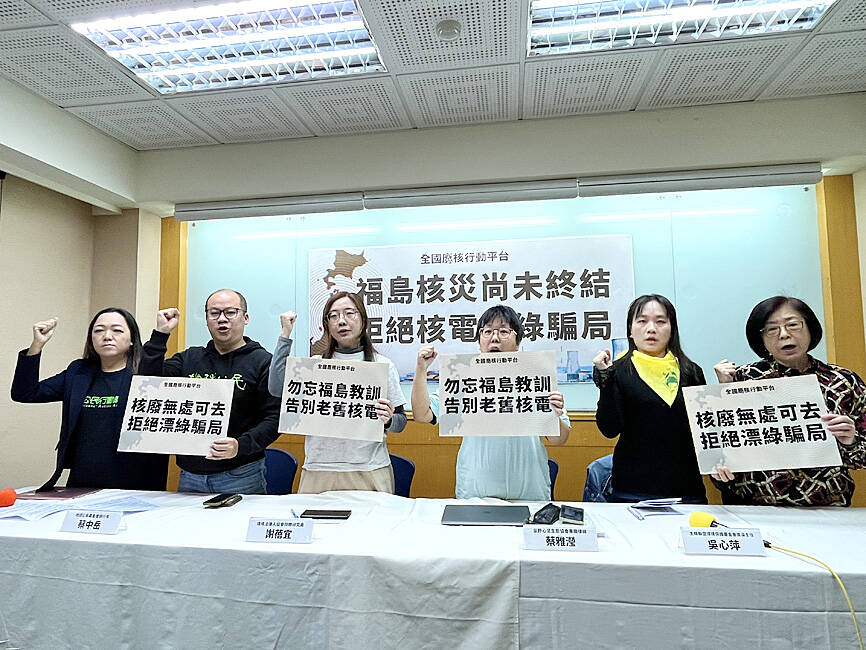
Proposed 20-year nuclear plant extension opposed
NO WASTE STORAGE: Renewable energy last year contributed more than the output of nuclear sources, but the nation risks moving backward, critics said
By Chen Chia-yi and Kayleigh Madjar / Staff reporter, with staff writer 10 Mar 23 https://www.taipeitimes.com/News/taiwan/archives/2023/03/10/2003795851
The National Nuclear Abolition Action Platform yesterday criticized calls by politicians to extend the service of the Guosheng Nuclear Power Plant’s No. 2 reactor, saying it disregards public sentiment and does not address problems with waste storage.
Some lawmakers have suggested a 20-year extension of the No. 2 reactor at the plant in New Taipei City’s Wanli District (萬里), which is set to reach the end of its lifespan on Tuesday, the groups told a news conference in Taipei.
More than 12 years after the Fukushima Dai-ichi nuclear power plant disaster in Japan, issues with contamination and wastewater have yet to be resolved, Green Citizens’ Action Alliance secretary-general Tsuei Su-hsin (崔愫欣) said.
The disaster occurred just as the plant turned 40 years old, said Tsai Ya-ying (蔡雅瀅), an attorney with the Wild at Heart Legal Defense Association.
Although the main cause was a tsunami triggered by an earthquake, an underlying weakness that exacerbated the disaster was the age of its facilities, Tsai said.
The second reactor at the Guosheng plant is about to turn 40 next week and should be decommissioned, she said.
Without locations identified to store nuclear waste, there is no basis for discussing continued use of the reactor, Environmental Jurists Association researcher Hsieh Pei-yi (謝蓓宜) said.
Politicians and corporate leaders — including Taipei City Councilor Wang Hung-wei (王鴻薇) and Broadcasting Corp of China chairman Jaw Shaw-kong (趙少康) — have been using “false, one-sided information” to call for its extension, Citizen of the Earth, Taiwan executive director Tsai Chung-yueh (蔡中岳) said.
They have not addressed the issue of waste storage sites at the plant being filled to capacity, he said, adding that they have evading the question whenever asked.
They are not only disregarding public concern about nuclear waste, but also ignoring legal provisions that require extension requests to be made at least five years before a nuclear plant’s decommission date, Tsai said.
Japan’s experience with restarting its nuclear plants was much different than perceived, the groups said.
In 2011, Japan had 54 nuclear generating units, 24 of which had been decommissioned, they said.
In the years since, seven have been restarted, and more planned restarts were canceled due to public opposition, the groups said.
Last year, renewables contributed close to that of nuclear in the nation’s power mix, at 8.3 percent, the groups said, adding that Taiwan should not to “move backward” on energy transition.
Renewable energy should be made a more viable long-term goal, Homemakers United Foundation director Wu Hsin-ping (吳心萍) said.
Solar and small-scale hydropower are being used in many communities, Wu said.
For example, one small 20-kilowatt solar installation in Taipei, despite frequent overcast weather in the capital, is able to produce a month of power in a year for about 70 households, she said.
Biden’s $1 trillion budget for world war
Patrick Martin, 10 Mar 23, WSWS<
The White House unveiled its budget request for the 2024 fiscal year Thursday, with the largest ever proposed spending on the military. It is a $1 trillion budget for world war. The Biden administration wants the resources to fight Russia in Ukraine, intensify its buildup towards war with China in the Far East and sustain US military aggression in the Middle East.
Besides $842 billion for the Pentagon, which will undoubtedly be pushed even higher in Congress, there is $24 billion for the Department of Energy, which maintains the US nuclear arsenal, and $20 billion for military-related programs in the State Department, CIA and other agencies, bringing the total official military spending to $886 billion.
To this must be added the real cost of the war in Ukraine, which is listed as only $6 billion for the 2024 fiscal year, which begins October 1. In the previous fiscal year, the Biden administration requested $6.9 billion but ended up spending $114 billion. Given that there is no sign of the war ending—on the contrary, it is escalating rapidly—the cost of US support for the otherwise bankrupt regime in Kiev is likely to surpass the current level. This would swell total military outlays well above the $1 trillion mark.
Since Biden took office, the budget for the Pentagon alone has jumped from $718 billion in fiscal 2022, the first full year of his administration, to $816 billion last year. The $842 billion requested for this year could rise past the $900 billion mark once Congress and lobbyists for the weapons manufacturers have their say. Congressional Republicans have already denounced the budget for providing too little funding for the military.
The name “Department of Defense” is itself a gross distortion since there is not an inch of American soil that needs to be defended against an external enemy. It is rather the world which is under threat from the Pentagon. The US government maintains a global military presence without precedent in history, with more than 700 US bases worldwide, while its main targets, Russia and China, have only one base each outside their own borders.
The department should be renamed the Department of Maintaining America’s Global Empire, or perhaps more simply, the Department of World Destruction. Some $38 billion of the Pentagon budget will go to nuclear weapons modernization, bringing the total spending this year on the US nuclear arsenal, to carry out the worldwide annihilation of civilization and perhaps all life on the planet, to more than $60 billion.
Much of the “non-military” budget also contributes to the US capacity to wage war around the world. ………………………………………………………..
The proxy war against Russia in Ukraine is only the antechamber to an even greater conflict with China, which now takes the form of a rapid military buildup towards what one top general suggested would be open warfare by 2025. The corporate media is doing its part to suppress popular opposition to these wars, seeking to shift public opinion with a propaganda blitz over Russia’s reactionary invasion of Ukraine, and whipping up hysteria over alleged Chinese “spy balloons” and the social media app TikTok, depicted as a nefarious scheme by Beijing to collect intelligence on ordinary Americans………………………………………… https://www.wsws.org/en/articles/2023/03/10/pers-m10.html
Britain’s Office for Nuclear Regulation warns on the need for a safety case, as EDF wants to extend the life of 2 nuclear power Stations

A spokesperson for the Office for Nuclear Regulation (ONR) said: “We are
aware of EDF’s announcement today (9 March 2023) of its intention to extend
the operating life of Heysham 1 and Hartlepool Power Stations.
“Although a plant life extension decision does not require formal regulatory
assessment or approval by ONR, it is a requirement of the site licence that
operations be carried out at all times under a valid safety case. “A
number of the current safety cases for the stations will need to be updated
to achieve EDF’s stated ambitions, together with investment in plant to
sustain equipment reliability, all while ensuring that the necessary people
and skills are on site.
“The ongoing safety of operations will need to be
fully demonstrated to us as part of the ongoing regulation of the sites in
Lancashire and Teesside, which will be informed though our extensive
inspection and assessment regime. “Once we receive them, the safety cases
from EDF will be thoroughly assessed by our team of expert inspectors.
ONR 9th March 2023
Graphite – deadly dirt or dusty diamonds?
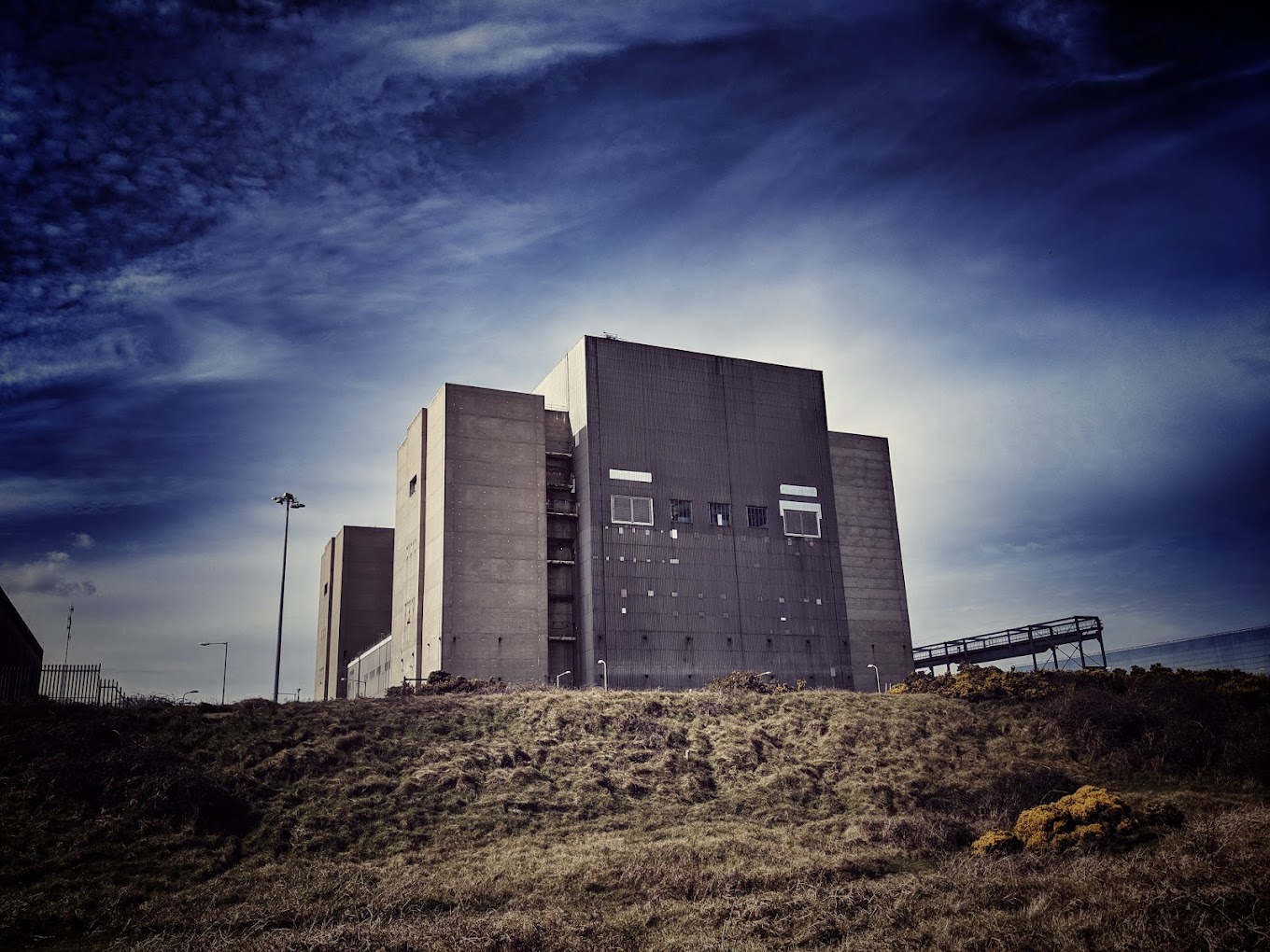
Blackwater Against New Nuclear Group , 8 Mar 23, BANNG’s Coordinator Peter Banks exposes the hidden danger lurking on the Blackwater in the March 2023 column for Regional Life. https://www.banng.info/news/regional-life/radioactive-graphite/
On the Southern shore of the Blackwater Estuary the shiny, grey/blue reactor buildings of the former Bradwell nuclear power station are now a landmark visible for many miles. The power station ceased operating in 2002 and now, in a state of ‘care and maintenance’, remains a visible monument to the early nuclear age.
Contained within the Bradwell buildings (and within all but one of the UK’s civil nuclear power stations) are blocks of graphite forming the very heart of the reactors, called the ‘core’. Once the reactor goes critical the graphite becomes impregnated (technically ‘irradiated’) with a range of radioactive isotopes such that it will remain dangerously contaminated for decades.
Back in the 1960s when Bradwell was commissioned, little forethought was given to the future when these behemoth plants would be taken out of service and decommissioned. The irradiated graphite was far too dangerous for humans to remove as stations were being demolished. Furthermore, the blocks were highly inaccessible as they were at the core of the sealed reactor vessel.
And the reactor chamber metalwork itself had also been irradiated. Recently the process of dismantling was given the new, self-explanatory name of ‘deferred decommissioning’ by the Nuclear Decommissioning Agency (NDA). Whilst this is totally understandable from a health and safety perspective, it does mean that the promises made when Bradwell closed in 2002 that the site would soon be cleared and returned to unrestricted land use were ridiculous.
And diamonds? If the graphite had also been subjected to great pressure as well as heat it would have converted to, amazingly, diamonds! But never think of the contents as precious diamonds, they are actually nasty radioactive wastes – a deadly dirt indeed.
Regardless, irradiated graphite and diamonds both need to be robustly protected. Therefore, expect to see the shiny reactor buildings of Bradwell for at least another 60 years. And, with nowhere else to go, they could remain on our shores into the unknown future.
EDF ordered to inspect 200 nuclear pipe weldings after more cracks discovered

By America Hernandez and Forrest Crellin, 10 Mar. https://www.reuters.com/business/energy/edf-ordered-inspect-200-nuclear-pipe-weldings-after-more-cracks-discovered-2023-03-10/
PARIS, March 10 (Reuters) – France’s nuclear safety watchdog ASN has ordered energy utility EDF (EDF.PA) to inspect about 200 pipe weldings across its 56-nuclear reactor fleet after discovering three additional cracks this week, the regulator said on Friday.
In addition to a major corrosion-related crack on the Penly 1 reactor in Normandy revealed on Tuesday, which the watchdog attributed to faulty welding, two fissures on EDF’s Penly 2 reactor and the Cattenom 3 reactor in Moselle were disclosed on Thursday.
An EDF spokesperson declined to comment on ASN’s criticism, but said the two newer cracks were due to “thermal fatigue”, which happens when very hot and cold water meet inside pipes, causing the steel to dilate, contract and become more fragile over time.
EDF regularly inspects pipes via ultrasound for this phenomenon during maintenance, the spokesperson added.
The latest defects and watchdog scrutiny come as France and the Britain announced a new energy partnership on Friday to strengthen cooperation on nuclear power, including construction of power stations, innovation and safety.
Neither French President Emmanuel Macron nor British Prime Minister Rishi Sunak mentioned the nuclear operator’s latest setbacks after a bilateral summit.
“You are helping us secure our supply of nuclear power thanks to EDF’s incredible work,” Sunak told Macron.
EDF is building a new nuclear plant in Britain, Sizewell C, which has suffered from cost overruns and construction delays. A second plant, Hinkley Point C, is also in the works.
The utility’s Penly 2 and Cattenom 3 in France are part of a group of 16 reactors flagged by EDF as being susceptible to corrosion-related cracks due to a design flaw, and prioritised for checks in its inspection and maintenance plan.
That plan is now being updated to accommodate the additional check of 200 weldings, and will be published “in coming days”, EDF has said.
European forward-curve power prices rose sharply on Friday following the announcement of new cracks, after French nuclear output in 2022 fell to a 34-year low while EDF scrambled to fix stress corrosion issues at several sites.
“Some market participants may be worried that the issues with corrosion are trickier than first anticipated, and that EDF will struggle both long- and short-term to fix it and bring generation back to pre-2022 levels,” Rystad analyst Fabian Ronningen said.
Pentagon delivers first long-range Patriot interceptors for Polish air defense system — Anti-bellum
Polish RadioMarch 10, 2023 Poland receives first US missiles for Patriot air defence systems The first batch of PAC-3 MSE missiles for Polands Patriot air-defence systems has arrived in the country, its producer Lockheed Martin announced on Thursday. US defence contractor Lockheed Martin announced the delivery in a statement on Thursday…. The PAC-3 MSE (Patriot […]
Pentagon delivers first long-range Patriot interceptors for Polish air defense system — Anti-bellum
UK/NATO air combat exercise includes India, Saudi Arabia, Finland for first time — Anti-bellum

NATOAllied Air CommandMarch 9, 2023 Exercise Cobra Warrior underway in the United Kingdom The first iteration of the Royal Air Force-hosted multinational live-fly exercise Cobra Warrior 2023 is underway with air force detachments from the Belgium and the United States, as well as – for the first time – from Finland, India and Saudi Arabia. […]
UK/NATO air combat exercise includes India, Saudi Arabia, Finland for first time — Anti-bellum
Kosovo participates in NATO multinational war games for “wide-area ground combat” throughout Europe — Anti-bellum

U.S. Army EuropeMarch 10, 2023 Press Release – Exercise Announcement for Dynamic Front 23 The 56th Artillery Command is set to conduct Dynamic Front 23 from March 13 to April 5, 2023, at Grafenwoehr Training Area, Germany, and Oksboel Training Area, Denmark. More than 1,700 military personnel from 18 countries, including, Germany, Denmark, Italy, Romania, […]
Kosovo participates in NATO multinational war games for “wide-area ground combat” throughout Europe — Anti-bellum
China increasing the number of nuclear warheads, aiming to match USA’s nuclear arsenal
Moscow is cementing its alliance with Beijing through deliveries of highly
enriched uranium that are fuelling China’s race to match the nuclear
arsenal of the United States, the Pentagon has warned. President Xi’s
military chiefs are seeking nuclear parity with Washington by increasing
the number of nuclear warheads from the present estimated 350 to 400 to
1,500 by 2035.
That total would approximately equal the strategic nuclear
arsenal of the US, limited to 1,550 warheads by New Start, the only
remaining arms control treaty between the US and Russia, which President
Putin has announced could be abandoned.
Times 10th March 2023
https://www.thetimes.co.uk/article/putin-china-plutonium-nuclear-xwlzvjfwh
TODAY. All quiet on the Fukushima front? The global nuclear lobby sure likes it that way.
The video above is from last year. I could find only one up to date video about the 11 March 2011 Fukushima nuclear catastrophe. The newest video is at https://www.youtube.com/watch?v=EY3F1hqt5eA and for this one, it is not permitted to be re-shown on other websites.
Why is it not to be made widely available? Is it because that video shows the sadness, and the courage, of young Japanese university students who are dedicated to tell the story of the nuclear disaster – to the younger generation.
I guess that the Japanese government, all the other pro-nuclear government, and the despicable global nuclear lobby are only too pleased to have the Fukushima nuclear story fade into the background. After all, these worthy entities, having pocketed their fat salaries, with a bit of luck, will be dead and gone when the nuclear shit really hits the fan, world-wide.
It is the young and their children, who will cop the results of this toxic industry.
Meanwhile do we just all pretend that the Fukushima nuclear disaster is over and done with?

Twelve years after 3/11, dispute grows over Fukushima’s radioactive soil

BY TOMOKO OTAKE, STAFF WRITER, https://www.japantimes.co.jp/news/2023/03/10/national/dispute-fukushima-radioactive-soil/
OKUMA, FUKUSHIMA PREF. – On the surface, everything seems to be under control at the expansive site storing radioactive soil collected from across Fukushima Prefecture in the aftermath of the 2011 core meltdowns at the Fukushima No. 1 nuclear power plant.
Since 2015, the Interim Storage Facility, which straddles the towns of Okuma and Futaba and overlooks the crippled plant, has safely processed massive amounts of radioactive soil — enough to fill 11 Tokyo Domes — in an area nearly five times the size of New York’s Central Park. The soil was collected during decontamination procedures in Fukushima’s cities, towns and villages that were polluted by the disaster.
Here, black plastic bags full of contaminated soil are put on conveyor belts and unpacked. The contents are sifted through to remove plastic, leaves, twigs and other nonsoil waste. Then the soil is taken to dump zones, where it’s buried in 15-meter-deep pits with protective sheeting and a drainage pipe at the bottom so that radioactive cesium won’t leak into the ground. Finally, the soil is covered with noncontaminated soil and topped with a lawn. Areas where the work has been completed look like soccer fields.
The level of radiation here is about 0.2 microsieverts per hour (uSv/h), explained Hiroshi Hattori, an official at the Environment Ministry’s local office, during a recent tour of the areas where the polluted soil is buried. The radiation level there is harmless to humans, though higher than an average of 0.04 uSv/h elsewhere in Japan.
“It’s higher not because of the soil, but because of surrounding forests (which have not been decontaminated).”
The problem is that, as smooth and orderly as its operations are, the site is only a temporary home for the radioactive soil. Nobody knows where this massive pile of dirt will eventually end up. All that is certain is that the central government has pledged to — and is legally obliged to — move all of the soil out of Fukushima Prefecture by 2045.
This unresolved soil issue — along with the lingering dispute over the planned ocean release of tritium-laced wastewater from Fukushima No. 1 — is a sour reminder of the enormous toll the nuclear disaster in Fukushima has inflicted on the country and beyond.
Opposition from residents
The soil is a product of years of state-funded measures to bring radiation levels down in communities affected by the disaster. The government drew up a “decontamination road map” soon after the accident, in the hopes of a speedy return of residents to their hometowns.
The desire to avoid moving the massive amount of soil again — and to make it easier to find a final destination for it — has also led the Environment Ministry to try to reduce its volume first by reusing some of the less contaminated mud for public works projects across the nation. That way, only a quarter of the total amount that contains over 8,000 becquerel per kilogram of cesium will be subject to final disposal, the ministry says.
But it’s a tough sell. In December, the ministry held its first round of meetings with residents in areas of greater Tokyo where pilot projects to utilize the soil under the 8,000 Bq/kg threshold are planned: the Shinjuku Gyoen National Garden in Tokyo, the National Environmental Research and Training Institute in Tokorozawa, Saitama Prefecture, and the National Institute for Environmental studies in Tsukuba, Ibaraki Prefecture.
Nearby residents vehemently opposed the plan. Last month, they formally demanded that the ministry cancel the pilot projects, under which the ministry plans to bury radioactive soil underneath a 50 cm layer of cover soil, for flower beds and parking lots.
Roads, tidal walls and dams
Though little known until recently, the ministry released a policy document in 2016 that outlined the “safe use” of radioactive soil with radiation levels of 8,000 Bq/kg or less. According to the document, the government will divert such soil to embankments in public works projects “whose management entities and responsibilities are clearly defined.”
Roads, tidal walls, seaside protection forest and earthfill dams are some of the projects where use of the soil is envisioned, the document says.
The plan has raised the eyebrows of not just residents but also experts.
“Japan is very seismic and we have (harsh) weather and typhoons,” said Azby Brown, architect and lead researcher for Safecast, a citizen science group that has independently measured and publicized radiation levels in Fukushima and elsewhere.
“The half-life of cesium-137 is 30 years. It’s going to stay radioactive for a long time. What happens when these embankments get old?… It is not a very rational or sound decision, from the sense of certainly the perception of safety.”
Kenichi Oshima, professor of energy policy at Ryukoku University in Kyoto, questions the rationale of treating the soil of 8,000 Bq/kg or less as safe, pointing to a “double standard” between the ministry’s policy and the rigorous control of waste required for other nuclear power plants under the Nuclear Reactor Regulation Law. That law states only waste with radiation levels under 100 Bq/kg is considered safe enough to be reused.
All of the radioactive waste produced by the Fukushima disaster is covered by a separate “special law” that went into force in 2012. This says that Tokyo Electric Power Co. Holdings (Tepco), the operator of Fukushima No. 1, is responsible for the handling of the radioactive waste and soil within its property, while the Environment Ministry is responsible for the disposal of the 3/11-borne radioactive waste outside the plant, though the law itself does not mention the reuse of soil that has been decontaminated.
The ministry has explained that the 8,000 Bq/kg threshold keeps it consistent with the level of “designated waste materials” stipulated in that special legislation. When people are exposed to waste below 8,000 Bq/kg, the additional radiation exposure is limited to less than 1 millisievert per year, not a level that causes health concerns, according to the ministry.
“Granted, soil with 8,000 Bq/kg of radioactive materials is not one that immediately kills people who touch it,” Oshima said. “But it is low-level radioactive waste nonetheless, and so should be managed properly as such, just like low-level radioactive waste from other nuclear power plants is. It’s just inconceivable that it would be utilized as materials for infrastructure that people will be using often.”
Public support elusive
On Feb. 24, Environment Minister Akihiro Nishimura reiterated the ministry’s stance, telling a news conference that utilization of soil outside the prefecture is “important to realize its final disposal outside the prefecture (of Fukushima).”
“We would like to continue explaining our stance in detail so as to nurture public understanding,” he said.
But to nurture this understanding about an issue as serious as radioactive waste, everyone who has a stake should be involved in the decision-making process, Brown says.
“The strong consensus internationally regarding where to put things like radioactive waste requires full agreement and participation by all of the stakeholders, all of the citizens, everyone who’s involved,” Brown said. “What we usually see often in Japan in general, and certainly regarding the Fukushima issues, is that a decision is made at the top. It’s decided, it’s announced and then they try to persuade people to go along with it. This is the case with the water release issue (as well as) the soil issue.”
Around this spring or summer, the government and Tepco hope to begin discharging water that has all the radioactive nuclides except tritium removed. Construction work is already under way at the seaside plant to install an undersea tunnel, through which the water will be released 1 kilometer offshore.
The so-called JESCO law, which went into effect in 2014, gives legal grounds for the creation of the government-funded entity that runs the interim storage site, as well as the obligation for the central government to move the soil out of Fukushima by 2045. The obligation was written into law following a political compromise with the Fukushima Prefectural Government, with officials from the national government saying they “considered the excessive burden” being shouldered by the people of Fukushima.
Both Oshima and Brown, however, say they find the government’s plan to recycle the dirt out of line.
In fact, Oshima says the best solution would be to set aside an area and make it a controlled zone for all the polluted soil for 50 years until the radioactive cesium decays, which is how waste from other nuclear plants is handled, and is what the final disposal site is going to look like.
He cites a 2017 report by the Japan Atomic Energy Agency that estimated the size of the area needed for final disposal, which should be ready by 2045. If the volume of the soil is estimated at 20 million cubic meters, a subsurface ground facility for its final disposal will need to measure about 1.3 km by 1.3 km, the report concluded.
“It may sound like a huge space, but both the national government and Tepco have vacant land plots of that size,” Oshima said. Once the soil’s use as construction materials is greenlighted, however, it would be transported nationwide, and it would be impossible to track and measure its radiation doses, he argued.
“If the soil is properly stored in a controlled area, it would make the public feel so much more at ease.”
-
Archives
- February 2026 (228)
- January 2026 (308)
- December 2025 (358)
- November 2025 (359)
- October 2025 (376)
- September 2025 (258)
- August 2025 (319)
- July 2025 (230)
- June 2025 (348)
- May 2025 (261)
- April 2025 (305)
- March 2025 (319)
-
Categories
- 1
- 1 NUCLEAR ISSUES
- business and costs
- climate change
- culture and arts
- ENERGY
- environment
- health
- history
- indigenous issues
- Legal
- marketing of nuclear
- media
- opposition to nuclear
- PERSONAL STORIES
- politics
- politics international
- Religion and ethics
- safety
- secrets,lies and civil liberties
- spinbuster
- technology
- Uranium
- wastes
- weapons and war
- Women
- 2 WORLD
- ACTION
- AFRICA
- Atrocities
- AUSTRALIA
- Christina's notes
- Christina's themes
- culture and arts
- Events
- Fuk 2022
- Fuk 2023
- Fukushima 2017
- Fukushima 2018
- fukushima 2019
- Fukushima 2020
- Fukushima 2021
- general
- global warming
- Humour (God we need it)
- Nuclear
- RARE EARTHS
- Reference
- resources – print
- Resources -audiovicual
- Weekly Newsletter
- World
- World Nuclear
- YouTube
-
RSS
Entries RSS
Comments RSS
 nuclear-news