Grief – Japan marks 12 years since Fukushima nuclear disaster as concerns grow over treated radioactive water release

9 News By Associated Press, Mar 12, 2023
Japan on Saturday marked the 12th anniversary of the massive earthquake, tsunami and nuclear disaster with a minute of silence, as concerns grew ahead of the planned release of the treated radioactive water from the wrecked Fukushima nuclear plant and the government’s return to nuclear energy.
The 9.0 magnitude earthquake and tsunami that ravaged large parts of Japan’s northeastern coast on March 11, 2011, left more than 22,000 people dead, including about 3,700 whose subsequent deaths were linked to the disaster.
A moment of silence was observed nationwide at 2.46pm, the moment the earthquake struck.
Some residents in the tsunami-hit northern prefectures of Iwate and Miyagi walked down to the coast to pray for their loved ones and the 2,519 whose remains were never found.
In Tomioka, one of the Fukushima towns where initial searches had to be abandoned due to radiation, firefighters and police use sticks and a hoe to rake through the coastline looking for the possible remains of the victims or their belongings.
At an elementary school in Sendai, in Miyagi prefecture north of Fukushima, participants released hundreds of colorful balloons in memory of the lives lost.
In Tokyo, dozens of people gathered at an anniversary event in a downtown park, and anti-nuclear activists staged a rally.
The earthquake and tsunami that slammed into the coastal Fukushima Daiichi nuclear plant destroyed its power and cooling functions, triggering meltdowns in three of its six reactors.
They spewed massive amounts of radiation that caused tens of thousands of residents to evacuate.
Over 160,000 people had left at one point, and about 30,000 are still unable to return due to long-term radiation effects or health concerns.
Many of the evacuees have already resettled elsewhere, and most affected towns have seen significant population declines over the past decade.
At a ceremony, Fukushima Gov. Masao Uchibori said decontamination and reconstruction had made progress, but “we still face many difficult problems.”
He said many people were still leaving and the prefecture was burdened with the plant cleanup and rumors about the effects of the upcoming release of the treated water.
The plant’s operator, Tokyo Electric Power Company Holdings, and the government are making final preparations to release into the sea more than 1.3 million tons of treated radioactive water, beginning in coming months.
The government says the controlled release of the water after treatment to safe levels over several decades is safe, but many residents as well as neighbours China and South Korea and Pacific island nations are opposed to it.
Fishing communities are particularly concerned about the reputation of local fish and their still recovering business.
In his speech last week, Uchibori urged the government to do utmost to prevent negative rumors about the water release from further damaging Fukushima’s image.
……….. Kishida’s government has reversed a nuclear phase-out policy that was adopted following the 2011 disaster, and instead is pushing a plan to maximise the use of nuclear energy to address energy supply concerns triggered by Russia’s war on Ukraine while meeting decarbonisation requirements.
He said last week that while the energy policy is the central government’s mandate, he wants it to remember that Fukushima continues to suffer from the nuclear disaster. https://www.9news.com.au/world/japan-fukushima-nuclear-disaster-anniversary-concerns-treated-radioactive-water-release/ccd3dc02-52ae-449f-98a8-0475fbdb85ed
$200billion nuclear submarine deal could cost the average Australian taxpayer about $13,000.
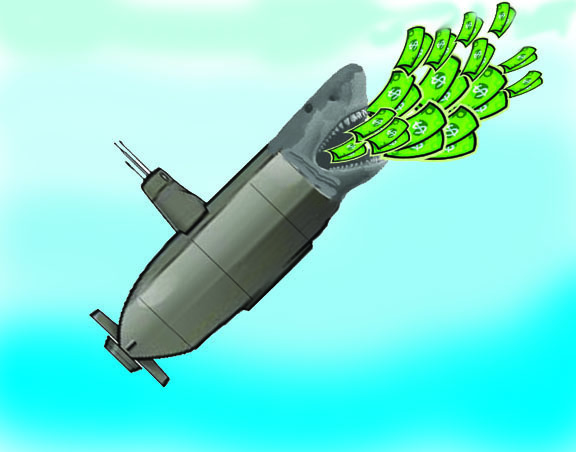
A $200billion nuclear submarine deal could cost the average Australian
taxpayer about $13,000. This is effectively the equivalent of every
Australian buying a new small car – an astonishing outlay on just a handful
of boats. But experts say the deal – despite the extraordinary price tag –
could be worth every cent.
Daily Mail 13th March 2023
Porky pies and half-truths from Australia’s USA- captured Prime Minister Albanese

Today’s significant AUKUS announcement about Australia’s acquisition of nuclear-powered submarines provides significant, long-term strategic benefits for all three countries……..a transformational moment for our nation [Ed. it sure does! – transformed to a colony of USA’s military-industrial-complex]
…. provides significant, long-term strategic benefits [?] for all three countries……… our ability to be sovereign [?] ready.
……creating around 20,000 direct jobs [a very dubious claim – ?jobs for Americans and British military experts]
……… Businesses right across the country in every state and territory will have the opportunity to contribute to and benefit from these opportunities. [ a totally unlikely unrealistic claim, backed by no data]
…….. Importantly, the SSNs will be an Australian sovereign capability [is he joking or is he stupid?] … https://www.theguardian.com/world/2023/mar/13/aukus-australian-submarine-nuclear-loophole-proliferation-fears
Aukus nuclear submarine deal loophole prompts proliferation fears

The scheme allowing nuclear materials in Australian submarines worries experts about the precedent of safeguard removal
Julian Borger in Washington, Guardian, 4 Mar 23
The Aukus scheme announced on Monday in San Diego represents the first time a loophole in the 1968 Nuclear Non-Proliferation Treaty (NPT) has been used to transfer fissile material and nuclear technology from a nuclear weapons state to a non-weapons state.
The loophole is paragraph 14, and it allows fissile material utilized for non-explosive military use, like naval propulsion, to be exempt from inspections and monitoring by the UN nuclear watchdog, the International Atomic Energy Agency (IAEA). It makes arms controls experts nervous because it sets a precedent that could be used by others to hide highly enriched uranium, or plutonium, the core of a nuclear weapon, from international oversight………….
To mitigate the proliferation risk, the Australians have agreed not to have a training reactor on their territory, but train their submariners in the US and the UK instead. Australia will not enrich or reprocess the spent nuclear fuel, and the fissile material provided by the US and the UK will come in welded units that do not have to be refueled in their lifetime. Australia has undertaken not to acquire the equipment necessary to chemically reprocess spent fuel that would make it usable in a weapon.
…………. James Acton, co-director of the nuclear policy programme at the Carnegie Endowment for International Peace, said. “But I still think there is real and concrete harm done.
“The primary problem with Aukus was always the precedent set, that Australia would be the first country that would remove nuclear fuel from safeguards for use in naval reactors,” Acton added. “My fear was never that Australia would misuse that fuel, but that other countries would invoke Aukus as a precedent for removing nuclear fuel from safeguards.”
“The primary problem with Aukus was always the precedent set, that Australia would be the first country that would remove nuclear fuel from safeguards for use in naval reactors,” Acton added. “My fear was never that Australia would misuse that fuel, but that other countries would invoke Aukus as a precedent for removing nuclear fuel from safeguards.” https://www.theguardian.com/world/2023/mar/13/aukus-australian-submarine-nuclear-loophole-proliferation-fears
Lesson from Fukushima: Collusion in the nuclear domain
Nuclear power became an unstoppable force, immune to scrutiny by civil society. Its regulation was entrusted to the same government bureaucracy responsible for its promotion.”
Canada has not heeded these warnings. ……. The CNSC, mandated to protect the public and the environment, lobbied government to abolish full impact assessments for most “small modular nuclear reactors” (SMN
By Gordon Edwards & Susan O’Donnell | Opinion | March 13th 2023 https://www.nationalobserver.com/2023/03/13/opinion/lesson-fukushima-collusion-nuclear-domain
—
This month marks the 12th anniversary of the Fukushima disaster, when three nuclear reactors in Japan suffered catastrophic meltdowns.
A tsunami knocked out the reactors’ cooling systems. The plant was shut down, but radioactivity sent temperatures soaring past the melting point of steel.
Radioactive gases mingled with superheated steam and explosive hydrogen gas, which detonated, spreading radioactive contamination over a vast area; 120,000 people were evacuated and 30,000 are still unable to go home.
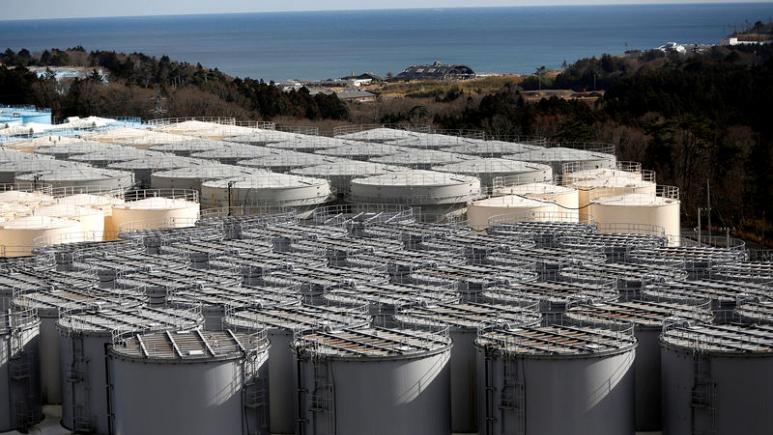
Radioactively contaminated water from the stricken reactors has accumulated in 1,000 gigantic steel tanks, and despite objections from China, Korea and local fishers, Japan plans to dump it into the Pacific Ocean soon.
What caused this catastrophe? Most people blame the tsunami. The commission of investigation in Japan concluded otherwise. In its report to the National Diet, the commission found the root cause was a lack of good governance.
The accident “was the result of collusion between the government, the regulators and TEPCO [the nuclear company], and the lack of governance by said parties. They effectively betrayed the nation’s right to be safe from nuclear accidents. Therefore, we conclude that the accident was clearly ‘man-made.’ We believe that the root causes were the organizational and regulatory systems that supported faulty rationales for decisions and actions…”
The commission chairman wrote: “What must be admitted — very painfully — is that this was a disaster ‘made in Japan.’ Its fundamental causes are to be found in the ingrained conventions of Japanese culture: our reflexive obedience; our reluctance to question authority; our devotion to ‘sticking with the program’; our groupism; and our insularity… Nuclear power became an unstoppable force, immune to scrutiny by civil society. Its regulation was entrusted to the same government bureaucracy responsible for its promotion.”
Canada has not heeded these warnings. After Justin Trudeau was elected in 2015, his government did away with environmental assessments for any new reactors below a certain size, thus eliminating scrutiny by civil society. This leaves all decision-making in the hands of the Canadian Nuclear Safety Commission (CNSC) — an agency previously identified by an expert review panel as a captured regulator.
The CNSC, mandated to protect the public and the environment, lobbied government to abolish full impact assessments for most “small modular nuclear reactors” (SMNRs).
Back in 2011, in the midst of the media frenzy about the triple meltdown, Canadians were testifying at federal environmental assessment hearings for up to four large nuclear reactors to be built by Ontario Power Generation (OPG) at Darlington, about 50 kilometres east of Toronto’s edge. The Fukushima disaster was cited repeatedly as a warning.
The panel approved OPG’s plan, but the Ontario government was thunderstruck by the price tag, reputed to be over $14 billion per unit, and cancelled the project.
Now OPG wants to build a smaller reactor at the Darlington site. Since a full impact assessment has been ruled out, CNSC is using the report from 12 years ago as the basis for public interventions. The reactor now proposed (the BWRX-300) has no similarity to any of the reactors that were under consideration then or to any operating today in Canada. Ironically, it is a “miniaturized” version of those that melted down at Fukushima.
CNSC is legally linked to the minister of Natural Resources, who is also tasked with promoting the nuclear industry at home and abroad. The International Atomic Energy Agency (IAEA) warns that regulators must be independent of any agency promoting the industry.
One day after Canada’s Infrastructure Bank gave OPG a $970-million “low-interest loan” to develop the BWRX-300 at Darlington, the minister boasted to a Washington audience that it would soon become Canada’s first commercial SMNR.
CNSC president Rumina Velshi lauded the speed at which the licensing is proceeding, saying that Canada would be the first western country to approve an SMNR built for the grid.
CNSC is at least two years from approving the reactor. Nevertheless, OPG held a ground-breaking ceremony at Darlington in December. The licence to construct seems a foregone conclusion. When asked, CNSC freely admitted that from the day of its inception, it has never refused to grant a licence for any major nuclear facility.
Government, regulator and industry are already on board. Collusion? Or just co-operation?
Gordon Edwards is president and co-founder of the Canadian Coalition for Nuclear Responsibility, a not-for-profit corporation established in 1975. He is a retired professor of mathematics and science at Vanier College in Montreal.
Susan O’Donnell is an adjunct professor at St. Thomas University and a member of the Coalition for Responsible Energy Development in New Brunswick.
Nuclear news this week – as we remember Fukushima
Some bits of good news – It’s time for some good news about protections for mother Earth.
Climate. 60 Climate Feedbacks & “A Better Catastrophe”.
Coronavirus. Coronavirus Disease (COVID-19): Weekly Epidemiological Update.
Nuclear. 11 March was the 12 year anniversary of the Fukushima nuclear catastrophe. The Japanese government would prefer that this should be forgotten. Trouble is – the catastrophe is not over.
As an Australian, I am finding our media – TV, radio, newspapers – quite nauseating. All falling over themselves in an orgasmic joy over the decision to pay $squillions for motley USA-UK-pretend-Australian nuclear submarines, that will be useless for monitoring our coast, but useful for feeding the coffers of USA-UK weapons-makers who now seem to own their governments. Everyone’s on the bandwagon – even former PM Kevin Rudd, supposedly a friend of China, now twisting himself in knots with weasel words about China, as he’s about to be Australia’s ambassador to Washington. We need a Diogenes, to go about Australian politics and media, in daylight, with a lighted lantern, trying to find an honest person.
ECONOMICS
- Why Russia has such a strong grip on Europe’s nuclear power.
- Costs for safety measures necessary to restart Japan’s idle nuclear reactors keep ballooning.
- Britain’s Public Accounts Committee reveals that UK’s nuclear reactors have been a poor investment . . Britain’s “Regulated Asset Base” funding method for nuclear power is deemed not likely to work. British government poised to label nuclear as “green”, but investors are not impressed
- Former top U.S. admiral cashes in on nuclear sub deal with Australia.
- US Department of Energy announces a $1.2 billion fund to save America’s aged nuclear power stations.
- Marketing. China marketing nuclear power to Uganda
EDUCATION. Nuclear and space lobbies increase their grip on universities, a new example in UK . The extraordinary popularity of renewable energy university courses.
ENVIRONMENT. Campaigners claim permit change at Hinkley Point would kill billions of fish.
HEALTH. Why were studies canceled? . The voices of the victims . Social effects. 2 yrs after Fukushima nuclear disaster, gov’t not facing evacuees’ hardship.
LEGAL. Another executive goes to prison for lying about doomed nuclear project. National remembrance day , and huge civil case penalty for Tepco executives, but memory of Fukushima now fading in Japan.
MEDIA. Australian Media Are Outright Telling Us They Are Feeding Us War Propaganda About China. Australian corporate papers call for war with China, nuclear weapons and mass conscription.
OPPOSITION To NUCLEAR. In Taiwan, strong opposition to extending life of nuclear reactor.
PERSONAL STORIES. Fukushima’s first responders recall the disaster 12 years on.
PLUTONIUM. DOE wanted to quadruple plutonium pit production. For now, activists have stopped them.
POLITICS. The Nightmare Espionage Act That is Killing Julian Assange and the First Amendment. https://www.youtube.com/watch?v=shvZy_95uOg. Some ‘sober thinking’ remains in Ukraine as portions of population are in favor of peace talks.
POLITICS INTERNATIONAL and DIPLOMACY. Saudi Arabia Seeks U.S. Security Pledges, Nuclear Help. Saudi Arabia seeks US security guarantees, nuclear assistance in return for Israel normalisation.
PROTESTS. Fukushima Vigil Outside the UK’s Uranium Fuel Manufacturing Factory .
RADIATION. Low-dose radiation linked to increased lifetime risk of heart disease. Dr Ian Fairlie -Low-dose radiation a health danger in the nuclear industry , as well as in medicine.
SAFETY.
- “Thermal fatigue” is causing flaws in the cooling pipes of France’s nuclear reactors. EDF ordered to inspect 200 nuclear pipe weldings after more cracks discovered. Electricite De France (EDF) discovers a “significant defect” on a weld in Penly nuclear reactor. Nuclear reactor: a deep crack discovered at Penly 1 risks destabilizing EDF. Crack in piping of Penly nuclear reactor further complicates EDF’s situation.
- The narrow field of options for safely managing Ukraine’s Zaporizhzhia Nuclear Power Plant.
- Lessons from Chernobyl and Fukushima: Is Europe prepared for another nuclear disaster?
- Why are the Nuclear Regulatory Commission, and the corporate media ignoring the safety problems of Holtec’s thin-walled nuclear waste canisters?
- Britain’s Office for Nuclear Regulation warns on the need for a safety case, as EDF wants to extend the life of 2 nuclear power Stations . Nuclear crash exercise beset by blunders, says UK’s Ministry of Defence.
- Nuclear research center reiterates need for separate regulatory body.
SECRETS and LIES. Fake ‘nuclear bomb’ alert on TV and radio scares Russians.
SPACE. EXPLORATION, WEAPONS. War in space: U.S. officials debating rules for a conflict in orbit.
SPINBUSTER. How the nuclear lobby scuttled the EU’s anti-greenwashing tool.
WASTES. Twelve years after 3/11, dispute grows over Fukushima’s radioactive soil. What´s happening at Fukushima plant 12 years after meltdown? Massive amounts of fatally radioactive melted nuclear fuel remain inside the reactors. Pacific island leaders urge Japan to stop dumping nuclear waste into ocean: report. Graphite – deadly dirt or dusty diamonds? Ocean discharge is the worst plan for Fukushima waste water. new blow to fishermen.
WAR and CONFLICT Rare admission from Australia’s corporate media that hosting America’s Pine Gap surveillance system makes Australia a legitimate target for long-range ICBMs. Observations on the NATO-Russia Ukrainian War. Ukraine: A war to end all wars in Europe. The Foreseeable End of Ukraine. Netanyahu justifies strikes on nuclear facilities. Romania: airborne troops among 100,000 U.S. forces in Europe poised for war with Russia.
WEAPONS and WEAPONS SALES .
- China is competing in a great Asian arms race because it has no other choice.
- Biden’s $1 trillion budget for world war.
- Australia ‘to buy up to five US nuclear submarines’ under AUKUS pact. US Navy Wants to Turn Australia Into a Full-Service Submarine Hub.
- EU steps up “wareconomy” to rush arms to Ukraine .
- NATO chief orders EU cohorts to boost arms purchases, stockpiles for Ukraine war .
- Ukraine: Pentagon delivers precision-guided bombs .
- Pentagon delivers first long-range Patriot interceptors for Polish air defense system. Ukraine demands “incredible amount” of new Turkish combat drones – DM.
- U.S. to deliver first of 116 Abrams tanks to Poland soon.
- Kosovo participates in NATO multinational war games for “wide-area ground combat” throughout Europe .
- UK/NATO air combat exercise includes India, Saudi Arabia, Finland for first time.
- China increasing the number of nuclear warheads, aiming to match USA’s nuclear arsenal .
Australia, Albanese, and the subs: a looming “Goat Rodeo”

one American commentator has already labelled the tripartite AUKUS project a looming “Goat Rodeo”. For which Google provided the following explanation : “a slang term for something going totally, unbelievably, disastrously wrong, and there’s nothing left to do but to sit back and watch the trainwreck. In other words, a goat rodeo is a chaotic situation, fiasco, or, more vulgarly, a s…show.”
Australia will have absolutely no sovereignty over the USN submarines
Pearls and Irritations, By Mack WilliamsMar 13, 2023
Details of the proposed AUKUS submarine deal to be announced next week in San Diego are leaking out all around the world. It seems that it will be much more complicated and expensive than intended at the outset of the path to the Holy Grail of an “optimal” solution. Already there are ominous signs that the three countries cannot even harmonise their rush into PR to launch the program.
Reflecting the reaction of a growing number of gobsmacked Australians to the extraordinary explosion of rumoured detail of the tripartite project, one American commentator has already labelled the tripartite AUKUS project a looming “Goat Rodeo”. For which Google provided the following explanation : “a slang term for something going totally, unbelievably, disastrously wrong, and there’s nothing left to do but to sit back and watch the trainwreck. In other words, a goat rodeo is a chaotic situation, fiasco, or, more vulgarly, a s…show.”
The claimed details of the project have been well covered in the media but what do they mean?
Sovereignty
A word in which Prime Minister Albanese has come to place great faith – and avoid others like “dependency” which has been expunged from the discussions. In a TV interview in India, Albanese has asserted that “Australia will retain, absolutely, our sovereignty — absolute sovereignty, 100 per cent. it is very important [for] Australia, as a sovereign nation state — and that’s something that’s respected by all of our partners as well.” It is arrant nonsense to claim “absolute” sovereignty when our geostrategic interests have become so enmeshed with those of the US – and have been for some time.
Let us not forget how we needed the US to weigh in with Indonesia before we launched the East Timor operation. Or more recently when Julia Gillard folded to US pressure for the rotational deployment of US Marines and greater USAF use of airfields in Northern Australia and our Defence force posture plans in return for a visit by President Obama. And so this has developed over subsequent years with embedment of senior Australian defence officers in the US IndoPacific Command in Hawaii and elsewhere, our increasing dependence on the US dominated Five Eyes intelligence network (despite some of its failures) and, of course, our ready participation in the disastrous US controlled “coalitions of the willing “ in Afghanistan and Iraq. And the conga line of US service and Pentagon chiefs which has graced our shores in the past year with their megaphones proffering “advice” on Australian strategic policy and defence procurement . Imagine if any other foreign country had done this in Australia with the DSR and submarine project underway !
Even without that background to just how “absolute” our sovereignty has not been, the details of the project definitely take this a significant step further. It is here where the spin from the US and Australia has already diverged. Defence Minister Marles has the temerity today to posit that there will not be any submarine “capability” gap because the Collins class subs are still very much in operation and will be around as we wait for the first of the new submarines to become operational.
(The Collins class, of course, does not have anything like the operational capability or weapons system of the new submarines).
But the US leaks have argued that the capability gap will be covered by US nuclear powered submarines expanding their current operations by regular visits in our region to Stirling in WA. The USN has long been keen to establish some homeporting arrangements there for its nuclear powered submarines and aircraft carriers. US media are also reporting that the early US Virginia class submarines to be delivered would be under US command with that gradually phasing out to mixed crews before eventually being run by the Australians. So Australia will have absolutely no sovereignty over the USN submarines in the first 15 years or so – and probably only very limited consultation with the Americans about their operations – which naturally are always so tightly held. For the following 10 years or so the command and control lines will be at best messy until the second set of submarines emerge. The British will want part of that action! So Albanese could well end up being the one with the credibility gap! As another US commentator has rightly pointed out that will be for politicians years down the track to sort!
Where will they be built?
Another key question on which there is some diverging spin. In keeping with his overall political strategy, Albanese has presented the deal so far as being a major plank in his efforts to boost manufacturing and R&D in Australia (and help argue the case for the huge budget damage the submarines alone will do). From the US side the push has been to emphasise how big a contribution the construction ( seemingly of all 5 or so) will be to US manufacturing and shipbuilding in particular. Some of the leaks have pointed out that very significant Australian funding will be required to US shipbuilders to expand their capacity to manufacture the Australian submarines. There has also been some persistently strong arguments in the US that the deal will exert too much pressure on US industry’s capacity.
A recent article in Foreign Policy summarised these concerns :
“But is it going to work? That’s been the major question all along through phase one of AUKUS, which has been beset by sticky U.S. export control and intelligence-sharing rules that have depth-charged key features of submarine design. First, the United States has to expand its own shipyard output to send five nuclear-powered submarines to Australia as well as make sure Congress is on board. Second, even if all goes to plan, the land Down Under will be operating a Frankenstein-like Navy with nuclear subs from two different countries, a potential nightmare for training and spare parts—and presumably, and most importantly, reactor maintenance and little details like that.”
Then there is the British spin. It seems clear from Prime Minister Sunak’s exuberant reaction to the leaks that they have probably received more out of the deal than they might have expected. No doubt BaE (in which the UK Government has a major interest and which also has bought out ASC in Adelaide) which runs the Astute class construction program in Barrow has been a major player in what appears to have been a relatively recent improvement in their prospects. This is also what Peter Dutton’s curious intervention would suggest as the Astute track record has been littered with failures, delays and cost overruns. ……………..
How much will it all cost?
Without confirmed details this cannot be estimated. But there is a consensus that it will well exceed not only the original French submarine but go well beyond.
Is the Virginia class submarine the best answer ?
In his rush to announce his preference for the Virginia class submarine over a new British design, Dutton placed weight on it being a simpler solution given that it was a proven design. But as I pointed out earlier this year in these columns (Nuclear submarines: from “optimal” to “the best they can get”) the Virginia has been the subject of detailed criticism from the Congressional Research Service and the GAO over its maintenance problems.
“Just last December the US Congressional Research Service issued a very detailed report (Navy Virginia (SSN-774) Class Attack Submarine Procurement: Background and Issues for Congress) outlining the significant delays in SSN repair and maintenance. It contains frequent references to serious concern expressed by a range of US Admirals with command responsibility for submarines. There have been similar criticisms from the GAO in recent years about the poor performance on SSN maintenance reducing significantly the already deficient number of SSN’s the USN can deploy.” https://johnmenadue.com/albanese-and-the-subs-the-goat-rodeo/—
At last! While cowardly Australian corporate media fawns all over the nuclear submarine deal – New Zealand has the guts to criticise it.

the Australian order will be filled with a new and advanced SSN® model still in development. This is where the British come in. In a sense, Australia will be (a) serving as a test run and (b) will be creating extra economies of scale for the British Navy’s plans to develop and build SSN( R) models to replace its Astute class submarines by the early to mid 2040s.
On AUKUS And Australia’s Decision On Nuclear Subs
Monday, 13 March 2023, Scooop, Gordon Campbell
China may well regard Taiwan as a renegade province. Yet the invasion of Taiwan – as the Australian economist and commentator John Quiggin points out – would pose massive challenges for the forces or Xi Jinping……………………………………………………What Quiggin is getting at here is that a concerted campaign is currently being waged by sections of the Aussie media with the aim of scaring the pants off the Australian public about the imminent threat from China in the Pacific, in the South China Sea and with regard to Taiwan.
The aim of this campaign is to justify a sky-high level of new defence spending by the Australian government. New Zealand is at risk of being carted along by the same momentum into authorising increases in our own defence spending that we don’t need, and can’t afford.
Acting the part
The campaign kicks into high gear today. As the Oscars get handed out in Los Angeles, another pantomime of power will be playing out on the docks just down the coast, in San Diego. Anthony Albanese, Rishi Sunak and Joe Biden will be standing shoulder to shoulder as they announce the first concrete manifestation of the AUKUS pact – a military alliance between Australia, Britain and the Americans that has China as its common target……………………………………
. As Reuters put it:
….[The] AUKUS pact, will have multiple stages with at least one U.S. submarine visiting Australian ports in the coming years and end in the late 2030’s with a new class of submarines being built with British designs and American technology, one of the officials said….after the annual port visits, the United States would forward deploy some submarines in Western Australia by around 2027.
In the early 2030’s, Australia would buy 3 Virginia class submarines and have the option to buy two more. AUKUS is expected to be Australia’s biggest-ever defence project and offers the prospect of jobs in all three countries.
That last bit is very important. Like his predecessors, Albanese will be treating Australia’s defence policy as a cutting edge ingredient of its manufacturing policy.
Australia’s defence policy as a cutting edge ingredient of its manufacturing policy. For Australian politicians, military policy and defence spending is as much about (a) creating jobs for Aussie workers, (b) gaining technology upgrades for Aussie industry and (c) scoring lucrative contracts for Aussie goods and services firms as it is about the actual defence of the nation.
…………………………………………………………………. In a worst case scenario, the Australians could well invite New Zealand to join AUKUS and assign us some “friend of AUKUS” status, as an observer. Our anti-nuclear legislation would complicate such a role. That aside, and given the ocean currents and prevailing winds, New Zealand has every good reason to feel nervous about the prospect of our near-neighbour learning on the job about how to build and maintain the nuclear reactors on its new submarine fleet.
Luckily, most of the new Aussie subs won’t be delivered until the early to mid 2030s. That means these massively expensive new purchases probably wouldn’t arrive in time to deter China from invading Taiwan, given that this is supposed to be imminent.
In the US, the building of Virginia-class subs are shared between two shipyards, one in Groton Connecticut and the other in Newport News, Virginia. Reportedly, the design variant that Australia has in mind will have been a three-headed upgrade project to the Virginia-class that will have been co-designed by Britain and the US, as amended to Australian specifications, with at least some of the subs being built by US-trained Australians who had no prior experience in this sort of construction. On top of these complications, all participants will be coming under pressure to deliver every stage of the project at the lowest cost possible. I mean, what could possibly go wrong with such a design and construction plan? And in this case, I don’t just mean the danger of cost blowouts.
Attack and defence
AUKUS is likely to make New Zealanders feel more unsafe in a number of other ways as well. For starters, AUKUS is not a “defend the homeland” pact. It is a forward projection alliance, to attack enemy targets and stifle the enemy’s ability to defend itself and respond. (Enemy = China.) Before we bow to the pressure coming from our traditional allies to join in with their chest-bumping rivalries with China, it is probably worth looking at the Aussie nuclear submarine deal in more detail.
The Albanese government has said the Aussie subs will not be nuclear-armed. (Not yet, anyway) However, the roughly 40 Tomahawk cruise missiles (the final design will limit the number) that each submarine will carry can all carry nuclear warheads. Only previous treaty commitments with Russia have prevented the cruise missiles carried on Virginia-class subs from being nuclear-armed.
Yet with the scrapping of nuclear proliferation treaties with Russia in the wake of the war in Ukraine, we could well be sailing in a few years time into “neither confirm nor deny” territory with our Australian neighbours. Regardless of their potential for carrying nuclear tipped Tomahawk cruise missiles alongside the usual torpedoes, mines, autonomous undersea drones, etc etc ….Would these nuclear-powered Australian subs be barred from docking at New Zealand ports under the terms of our anti-nuclear legislation? Yes, they would.
Therefore, it would be good to know if our current political leaders share a bi-partisan agreement to preserve our anti-nuclear stance in its current form and thereby ban those Aussie subs from our ports, now and forever more. Even if Labour and National did agree, the reality is that our new and expensive Poseidon anti-submarine surveillance aircraft will still be taking part in exercises which will increasingly have (a) a nuclear component and (b) an anti-submarine (ASW) component, courtesy of our ANZAC buddies. Lest we forget. (The growing ASW role for Virginia-class SSN category subs is mentioned on page 9 of the Congressional Review Service evaluation of the SSN programme. )
From what can be gleaned at this point i.e. prior to the formal announcement, the Australian order will be filled with a new and advanced SSN® model still in development. This is where the British come in. In a sense, Australia will be (a) serving as a test run and (b) will be creating extra economies of scale for the British Navy’s plans to develop and build SSN( R) models to replace its Astute class submarines by the early to mid 2040s.
To repeat: It would be unwise for New Zealand to be stampeded by the “defence” lobbyists both here and offshore into making significant increases to the allocations for Defence in the May Budget. If nothing else, the Aussie subs saga is a useful reminder that the regional tensions in the Pacific and the China bogey are both being driven and monetised by firms within the military-industrial complex, via the pork barrel politicking (lucrative jobs and contracts for our neighbourhood! ) that is so rife among our traditional military allies.
Footnote: While we spend billions on a fleet of new Poseidon anti-submarine aircraft, and the Aussies buy their fleet of mega-expensive nuclear submarines, the future of underwater warfare is seen by some observers to rest with unmanned underwater vehicles (UUVs). Apparently, the Australian military has a programme to develop UUVs called Ghost Shark, cutely named after the US Ghost Bat programme.
UUVs are being developed to do some of the dirty and dangerous work previously done by crewed submarines under their ASW air cover. Some see UUVs as an adjunct to conventional below- surface warfare. Others see UUVs as making those conventional tools redundant. You can read about these unmanned underwater military drones here. https://www.scoop.co.nz/stories/HL2303/S00018/on-aukus-and-australias-decision-on-nuclear-subs.htm
Ocean discharge is the worst plan for Fukushima waste water — IPPNW peace and health blog

Japan may soon start dumping radioactively contaminated waste water from the Fukushima Daichi nuclear plant into the Pacific Ocean, despite warnings from neighboring countries, marine scientists, and health experts. As soon as within a month or two, Japan could begin dumping into the Pacific Ocean 1.3 million tons of treated but still radioactively contaminated wastewater […]
Ocean discharge is the worst plan for Fukushima waste water — IPPNW peace and health blog
As soon as within a month or two, Japan could begin dumping into the Pacific Ocean 1.3 million tons of treated but still radioactively contaminated wastewater from the stricken Fukushima Daichi nuclear plant. Construction of the kilometer long undersea discharge tunnel and a complex of pipes feeding it commenced last August.
This cheap and dirty approach of “out of sight out of mind” and “dilution is the solution to pollution” belongs in a past century. It ignores the significant transboundary, transgenerational and human rights issues involved in this planned radioactive dumping, projected to continue over the next 40 years.
Concerns about Japan’s ocean dumping plans have been strongly voiced by China and South Korea, and by numerous Pacific island nations. Multiple UN Special Rapporteurs have severely criticised the plan, which has also been opposed by the United States National Association of Marine Laboratories and many regional and international health and environmental civil society organisations.
Australia bears a particular responsibility in relation to the aftermath of the ongoing Fukushima nuclear disaster, since fuel fabricated with uranium from Australia was in each of the Fukushima reactors which exploded. Yet my letters to the relevant Australian federal ministers on this matter have gone unanswered for seven weeks, and no evidence is publicly available that the Australian government has supported our Pacific neighbours in raising concerns about the planned discharge with its Japanese counterparts.
We are in the UN Decade of Ocean Science for Sustainable Development (2021-30). As Pacific Islands Forum (PIF) Secretary-General Henry Puna reminded us in his piece in The Guardian on 4 January, in 1985 the Forum welcomed the then Japanese prime minister’s statement that “Japan had no intention of dumping radioactive waste in the Pacific Ocean in disregard of the concern expressed by the communities of the region.” The current plan is inconsistent with this commitment.
In a public event organised by the PIF in Suva on 18 January, Puna noted Prime Minister Kishida’s reassurance during Japan’s regular meeting with the Forum in July 2022 of the need to progress this matter consistent with international law and verifiable science. The Secretary-General reiterated his request on behalf of Forum members for postponement of the planned discharge in order to allow adequate consideration of alternative options and to engage in respectful and full evidence-based consultation with Pacific nations in planning the best course of action. His calls have been ignored.
The most authoritative independent scientific assessment of the planned discharge has been conducted by a five-member independent international scientific panel appointed by the PIF. The experts were unanimous in their conclusions and recommendations. Their main conclusions:
- TEPCO’s knowledge of the specific radionuclide contents of all the tanks is seriously deficient. Only roughly one quarter of the more than 1,000 tanks at the site have been sampled at all, and in almost all cases only nine or fewer of 64 total radionuclides are measured in the data shared with PIF. TEPCO’s assumptions of consistent ratios of various radionuclides across different tanks are contradicted by the data, with show many thousand-fold variation.
Sampling and measurements have been unrepresentative, statistically deficient and biased, and have not included the debris and sludges, which Japan has acknowledged are present in at least some of the tanks. Sludges and debris are likely to be most radioactive, particularly in relation to harmful isotopes like plutonium and americium.- More than 70% of the tanks which had gone through ALPS (Advanced Liquid Processing System), designed to remove most of the radioactive contaminants, will require re-treatment. For some isotopes, the levels after treatment are up to 19,900 times higher than the regulatory limits for discharge. There is no evidence confirming that even repeated processing through ALPS can provide consistently effective purification.
- There has been no adequate consideration of the behavior of radioactive elements in the ocean, with transport by ocean currents and organisms, accumulation in biota and sea floor sediments, or the behavior of organically bound tritium in an ocean environment. The seafloor off Japan’s east coast still contains up to 10,000 times the cesium concentration as before the disaster, before any planned discharge.
- Neither TEPCO nor the IAEA acknowledged or addressed the many serious scientific questions raised by the panel. For example, TEPCO reported that tanks sampled in 2019 contained tellurium-127, an isotope with a half-life of only 9 hours. This signifies either that accidental criticality with fission reactions are occurring on an ongoing basis in the molten reactor cores, which would be very significant, or that the measurements are wrong. However no satisfactory answers were provided. Indeed the IAEA cut off contact with the panel.
- Neither TEPCO, the International Atomic Energy Agency (IAEA) nor the Japanese Nuclear Regulatory Authority have properly considered several viable alternative approaches, including storage in purpose-built seismically safe tanks, possibly after initial purification, subsequent use in concrete for structural applications with little or no potential for contact with humans and other organisms, and bioremediation for some important isotopes such as strontium-90. All the proposed alternatives would have orders of magnitude less impact and avoid transboundary impacts.
The argument that the site is running out of room to store water is spurious. Contaminated water will continue to be generated for many decades hence, and there is plenty of nearby space available that will be unfit for other uses for a very long time and is already being used to store large amounts of contaminated soil from around the prefecture. There is in fact no urgency to begin ocean discharge.
The independent expert panel recommended unanimously that the planned ocean dumping should not proceed. Their overwhelming case, based on scientific evidence and the need to minimise transboundary and transgenerational impacts, is that new approaches and alternatives to ocean dumping are needed and are the responsible way forward.
This matter requires urgent attention. Construction of the pipeline through which the ocean discharge is planned to occur is well underway, and the discharge may commence as soon as this month. Given that the discharge is planned to continue over 30-40 years, reconsideration could still be undertaken even after ocean discharge commenced. However it would be far better if the planned discharge were postponed until better alternatives were properly considered and implemented.
Now is the time for the Australian government, scientists and citizens to join with our Pacific neighbours in calling on Japan to stop its irresponsible plan to use the Pacific Ocean as a radioactive waste dump.
Why were studies canceled? — Beyond Nuclear International

Do federal agencies fear a connection between nuclear power and cancer?
Why were studies canceled? — Beyond Nuclear International
Federal agencies won’t look at cancer impacts of commercial nuclear facilities
By Cindy Folkers, 12 Mar 23
If you thought the government of the United States, the country with the most nuclear power reactors in the world, might be interested in finding out the cancer impact of nuclear power on our children, you’d be wrong. But, our government is willing to give failed, uneconomic, decaying nuclear power reactors oodles of taxpayer money without first figuring out if and how they harm our children. Assessing potential health damage should be a prerequisite for reactor license renewal.
Citizens and lawmakers from California have been working to revivify a cancelled National Academy of Sciences (NAS) health study originally requested and funded by the U.S. Nuclear Regulatory Commission (NRC) in 2010. The study was to have been carried out in two phases. The first phase “identified scientifically sound approaches for carrying out an assessment of cancer risks” that would inform the study design(s) to be carried out in Phase 2.
Phase 1 recommended examining seven pilot sites, six of which are operating or closed nuclear power plants: Big Rock Point (MI, closed), Dresden (IL), Haddam (CT, closed), Millstone (CT), Oyster Creek (NJ), and San Onofre (CA, closed). The seventh site, Nuclear Fuel Services (TN), is a fuel processing and stockpile conversion facility.

There were also two study designs recommended in the subsequent 2012 Phase 1 report: an ecologic study that would look at a variety of cancers among adults and children over the operational history of the facilities; and a record-linkage-based case-control study examining cancer risks for childhood exposures to radiation during more recent operating histories of the facilities. Because the case-control study would have focused on children, Beyond Nuclear supported this study type over the ecologic study recommendation.
The NAS was preparing to perform the pilot study at the seven sites in order to see which study type had the stronger methodology to be performed nationwide when it was scuttled by the NRC in 2015.
The NRC justified the cancelation by publicly contending that it would cost too much, take too long, and not be able to see any health impact — claims that are still disputed. The NAS health study would have cost an estimated $8 million at the time it was first proposed.
Yet, at the same time that the NRC claimed the cancer study was too expensive, it signed a 20-year lease for a third building at its Rockville, MD headquarters (against the advice of Congress) that will eventually mount to a cost of $350 million. The decision was made in anticipation of the so-called Nuclear Renaissance, which instead fizzled, leaving the NRC scrambling to lease out the new space instead.
The NAS was considering using new ways of examining the health impacts of radioactivity from NRC licensed sites by implementing a more detailed, more thorough, publicly shared research protocol. Such a protocol could have opened up the NRC’s regulatory regime to exhaustive scrutiny, revealing just how inadequate it is for examining health impacts.
Instead of asking the NRC to restart the original study, three members of the U.S. House of Representatives from California have asked the U.S. Department of Health and Human Services (HHS) to pick up the NAS study where the NRC left off, only to be rebuffed with the jaw-dropping claim by HHS Secretary Xavier Becerra, that such a study would be “premature”(letter from X. Becerra to Hon. Mike Levin (D-CA), September 12, 2022), despite 60+ years of exposures to radiation from nuclear power. Becerra wants more delays to allow “collaboration” with other agencies, like the U.S. Department of Energy that has historically been sanctioned from involvement in certain health studies.
In fact, such studies done in Europe have shown increases of childhood leukemia around nuclear facilities worldwide. These studies were not “premature”, they were revelatory. Despite these findings, there has never been independent nationwide analysis in the U.S. examining connections between childhood cancer and nuclear power facilities. The NAS case-control study under consideration had a design similar to the European studies that found linkage between living near a nuclear reactor and increases in childhood cancers.
While Bacerra claims it is “premature” to study health impacts from nuclear power, it seems to be just the right time to throw more bailout money down the nuclear bottomless pit in order to keep the current reactor fleet running without knowing what their health impacts have been or will be.
In an ironic twist, the first $1.1 billion nuclear bailout was given to Diablo Canyon in California, a slap in the face for those asking for the health study. This taxpayer largess given to the California nuclear power plant was just a small piece of the $30 billion subsidy (by some estimates, nuclear subsidies could be even higher) earmarked for nuclear power in the Inflation Reduction Act.
The two Diablo Canyon nuclear generating units released 72 curies of tritium gas alone in 2019, part of a suite of radionuclides routinely released by operating reactors. This particular isotope is a radioactive form of hydrogen that can collect in fetal tissue to twice the concentration as it does in maternal tissue. It is well-known that pregnancy development is particularly sensitive to damage from radiation exposure — more so than adults or even children — clearly making this an issue that should interest HHS, as well as one that should help determine whether nuclear power can continue to operate or if its impact on our future generations might be too great. After all, we have readily available, cheaper and safer alternatives.
Despite its published motto — “Protecting people and the environment” — the NRC’s main focus has always been nuclear reactor operations, while downplaying and denying rather than investigating health impacts. The agency’s cancellation of the child cancer study was industry-friendly and tone-deaf; in other words, expected. It had undertaken the study to soothe public anxiety about health impacts. When the NRC learned the study might not accomplish this, or worse, might reveal the agency’s shortcomings as a watchdog agency, it pulled the plug.
From HHS, on the other hand, I expected better. “Health” after all, is in their name.
Cindy Folkers is the Radiation and Health Hazard Specialist at Beyond Nuclear.
12 yrs after Fukushima nuclear disaster, gov’t not facing evacuees’ hardship

March 11, 2023 (Mainichi Japan) Editorial:
https://mainichi.jp/english/articles/20230311/p2a/00m/0op/006000c
Today marks 12 years since the Great East Japan Earthquake of March 11, 2011. Over 22,000 lives were lost due to the cataclysm, including a massive tsunami that struck coastal regions and the disaster at the Fukushima Daiichi Nuclear Power Station.
Today, some 31,000 people are still living as evacuees. Around 90% of them are residents of Fukushima Prefecture. In municipalities mostly within so-called “difficult-to-return zones” where radiation levels are high, many residents have been barred from coming back, and reconstruction has been delayed.
The government is proceeding with decontamination of the areas it has designated as bases for reconstruction within these zones. However, they account for less than 10% of the zones’ total area. It also plans to prepare places outside these reconstruction bases so that people who want to return to those areas can do so, but it is expected that decontamination will be limited to the homes to which people want to return and the surrounding roads. This has left residents who want the whole area decontaminated at a loss.
Local ties lost
The town of Namie in Fukushima Prefecture is a prime example of the difficult circumstances. The current population stands below 2,000 — less than a tenth of what it was before the 2011 disaster. The fact that it has the largest area of difficult-to-return zones, accounting for 80% of the entire town, has put it at a significant disadvantage.
“Even if just one part is decontaminated and a person comes back alone, they can’t live in a mountain village. The government first needs to prepare an environment in which the local community can maintain itself,” stressed Shigeru Sasaki, 68, who has evacuated within Fukushima Prefecture.
Before the disaster, Sasaki lived in the eastern part of the Tsushima district, located in a gorge in Namie. When the Obon season arrived, residents in the settlement would go out together and cut the grass along roads and work together to protect the community.
Since the nuclear disaster, however, the entire Tsushima district has been off-limits as a place to dwell. Sasaki is the deputy leader of a group of 650 plaintiffs in a class action against the government and Fukushima Daiichi operator Tokyo Electric Power Company (TEPCO) Holdings Inc. They are calling for the town to be restored to its original state, bringing radiation levels down to what they were before the disaster, but their claims were rejected by a district court. They are now appealing.
Last year, there was a change in government policy that struck a nerve with those whose lives were turned upside down by the nuclear disaster. The administration of Prime Minister Fumio Kishida effectively extended the operating life of existing nuclear reactors, which had been set at a maximum of 60 years, and also set out to promote replacing them with next-generation nuclear power plants. It is thus lowering the banner of “freedom from reliance on nuclear power” that had been held up from the time of the meltdown.
Sasaki was unable to hide his anger. “We see Tsushima in such a state, yet the government is acting as if the problems in Fukushima are over,” he said.
Meanwhile, some residents have voiced concerns that moves to go back to nuclear power will cause memories of the disaster to fade.
Since 2012, the year after the Fukushima disaster, the Namie Machi Monogatari Tsutae-tai, a town storytellers’ group, has performed picture story shows inside and outside Fukushima Prefecture, conveying the confusion immediately after the disaster and the hardship of life as evacuees. Group founder Yoshihiro Ozawa, 77, lamented, “What was the point of all our activities to date to make sure that people don’t forget the accident?”
Ozawa’s health has deteriorated and so he has given up on returning to Namie, where medical infrastructure remains inadequate. He and his wife still live in the place where they evacuated, and they have little contact with neighbors. He worries about what will happen when one of them ends up alone there.
“My friends and relatives are all scattered. I want people to know that Fukushima still has many issues,” Ozawa said.
Anger at the government for forgetting the lessons of 3.11
While the Japanese government wants to quickly close the book on the nuclear disaster, the locals cannot escape from the disaster’s prolonged effects. There is a wide gap between the perceptions of the two sides.
It is said that it will take several decades to decommission the Fukushima Daiichi reactors. In a survey asking residents why they were hesitant to return, quite a few people cited concerns about nuclear power plant safety, in addition to a lack of hospitals and commercial facilities.
Treated wastewater that continues to accumulate at the Fukushima Daiichi is set to be released into the ocean sometime from this spring onward. However, those in the fishery and others harbor strong concerns about reputational damage. At the end of last year, TEPCO announced compensation standards in the event of such damage, but there are no signs it will be able to gain people’s understanding.
Contaminated soil and other items collected during clean-up efforts across the prefecture remain in interim storage facilities in the local towns of Okuma and Futaba. They are supposed to be moved outside the prefecture for final disposal by 2045, but a destination for the material remains undecided.
Such problems, which are difficult to solve, weigh heavily on the future of the region.
Residents have not only lost their hometowns and a place to live; they have lost the happiness and security of living in close contact with those familiar to them. Twelve years after the outbreak of the nuclear disaster, this sense of profound loss has yet to heal.
The nuclear disaster is not over.
Rather than hurrying to retreat to nuclear power, the government should look squarely at the hardship of each and every resident. It has a responsibility to put effort into supporting them so that wherever they find shelter, they can make connections with people and find a purpose in life.
The voices of the victims

The right to avoid exposure is “a fundamental right to protect human life”
The voices of the victims — Beyond Nuclear International
Firsthand accounts from Fukushima survivors and others afflicted by the nuclear sector
From Nos Voisins Lontains 3.11 (Our Faraway Neighbors 3.11)
Where are the voices of nuclear victims? It is becoming increasingly difficult to hear them. In denial of the harmful consequences of atomic plants, there is an attempt, for example, to downplay and minimize the damage caused by nuclear accidents and more generally the nuclear risk, limiting it merely to the number of deaths.
But there is a far wider web of suffering, especially because nuclear power accidents often do not cause instant, headline-grabbing deaths, but later ones, after a long latency period. This makes them harder to quantify and more easily dismissed.
In the context of the revival of nuclear power in France and Japan, it seems important to return to the field and listen to the voices of the victims. To that end, Nos Voisins Lontains 3.11 has created a new YouTube Channel — Voix des victimes du nucléaire (Voices of the nuclear victims).
In this series, the NGO Nos Voisins Lointains 3.11 (Our Faraway Neighbours 3.11) proposes to broadcast their voices with English subtitles. We are not presenting only the voices of the Fukushima nuclear accident victims, but also more widely the words of the victims of all nuclear uses, military or civil.
We hope that the courage and perseverance of these people will allow the warning voices of so many Cassandras to be heard far and wide, piercing the curse of the powerful nuclear industry and the political powers that support it.
The first video message is from Akiko Morimatsu. You can watch her testimony below. The transcript of her remarks follows.
My name is Akiko MORIMATSU.
The Great East Japan Earthquake of March 11, 2011 was followed by the TEPCO Fukushima Daiichi nuclear accident. What happened to us, the residents of Fukushima? What damage did the people living near the plant suffer? I would like to tell you about it in a concrete way.
On March 11, 2011, I was living in Koriyama, a town in Fukushima Prefecture, located about 60 km from the Fukushima Daiichi plant. There were four of us. Me, my husband and two children. A 5-month-old girl and a 3-year-old boy.
First of all, I would like to tell you that when a nuclear accident occurs, regardless of our age or sex, whether we are for or against nuclear power, we are all confronted with the problem of exposure to radioactivity. Radiation is invisible and colourless. There is no pain or tingling on the skin. And there is the issue of low-dose radiation exposure. At a great distance, you are exposed to low doses of radiation. Besides the fact that radiation cannot be perceived by the senses, people do not die instantly.
In this context, we, living 60km from the plant, lost our home in the Great Earthquake, and then after this natural disaster, we suffered a man-made disaster: the nuclear accident.
Of course, we did not hear the explosions at the nuclear power plant, nor did we see the damaged plant buildings directly. We only learned about the accident through the news on TV. Apart from that, there was no way to know that an accident with explosions took place. There was no way of knowing the exact situation of the Fukushima Daiichi plant, nor how much radiation we would be exposed to.
First of all, I would like to tell you that when a nuclear accident occurs, regardless of our age or sex, whether we are for or against nuclear power, we are all confronted with the problem of exposure to radioactivity. Radiation is invisible and colourless. There is no pain or tingling on the skin. And there is the issue of low-dose radiation exposure. At a great distance, you are exposed to low doses of radiation. Besides the fact that radiation cannot be perceived by the senses, people do not die instantly.
In this context, we, living 60km from the plant, lost our home in the Great Earthquake, and then after this natural disaster, we suffered a man-made disaster: the nuclear accident.
Of course, we did not hear the explosions at the nuclear power plant, nor did we see the damaged plant buildings directly. We only learned about the accident through the news on TV. Apart from that, there was no way to know that an accident with explosions took place. There was no way of knowing the exact situation of the Fukushima Daiichi plant, nor how much radiation we would be exposed to. . We didn’t know how much radiation we had to endure, because neither the state authorities nor the operator TEPCO provided accurate information. We, the people living near the plant, had to make many decisions in this ignorance.
I’m going to tell you about the most difficult thing I have had to do in the last 12 years since the accident. After the explosions at the nuclear power plant, we were well aware of the explosions… But we, who were 60 km away from the plant, were not evacuated by force. Apart from the evacuation order, there was also a confinement order. Gradually, within a radius of 2 km, then 3 km around the nuclear power plant, the population was forcibly evacuated. The circular mandatory evacuation zone gradually expanded. And from 20 to 30 km from the power plant, there was the order to stay indoors. That was the order given by the government. But we, 60 km away, did not receive the confinement order. We were not evacuated either. We were left on our own without any protection.
In this situation, I learned from the TV that the tap water, the drinking water, was contaminated. The first information I got was about the tap water in Kanamachi in Tokyo. They had found radioactive substances in the water. It was on a television program.
The Kanamachi water treatment plant was 200 km from the Fukushima Daiichi plant. We were only 60 km from the plant. Within the 200 km radius, the radioactivity increased, and with the rain radioactive substances contaminated the drinking water. Since the tap water at 200 km from the plant was contaminated, the water at 60 km had to be contaminated without any doubt. So, we learned about the radioactive contamination of our drinking water from the TV news.
Up to that point, it was known that radioactive material had been dispersed, but at 60km, there were no orders to evacuate or to stay indoors. There were repeated statements from the Prime Minister’s Office that there would be no immediate impact on health. The issue of exposure was indeed on our minds. But when I found out that the water in Tokyo was contaminated, and that the water in Fukushima was also contaminated, I realised that I was unknowingly drinking radioactive water. But even after learning this fact, I had to continue drinking the water. And so did my two children, aged 5 months and 3 years. My 5-month-old daughter was clinging to life through breast milk from a mother who was drinking contaminated water.
We also heard on the news that there had been a huge radioactive fallout in and around Fukushima, that shipments of leafy vegetables had been suspended, that farmers were going to lose their livelihoods, and that there had been suicides of desperate farmers. They had lost all hope in the future of their profession. All this we heard on TV.
So, we learned that there really was radioactive contamination. I learned that the farmers had milked the cows, but since shipping was no longer possible, they had to dump the milk in the fields.
As a nursing mother in Fukushima, I thought that we were also mammals like the cows. We humans were also exposed to high doses of radioactivity in the air, and we had to drink tap water, knowing that it was polluted.
I heard about the biological concentration. Milk was even more radioactive than water. That’s why the milk had to be thrown away. Yet I was drinking radioactive water, I was breastfeeding my 5-month-old daughter, and my milk concentrated the radioactivity.
didn’t want to be exposed to radiation myself, and of course I didn’t want my five-month-old child to be exposed to radiation. But we were totally denied the right to choose to refuse exposure. Above all, a baby can’t say she doesn’t want to drink breast milk because it is contaminated. My three-year-old son brought me a glass when he was thirsty, saying “mummy, give me a glass of water”. Knowing that the tap water was contaminated, I was obliged to give him this water.
This is my experience.
The will to avoid exposure, the right to avoid exposure, are fundamental rights to protect life. Their violation is the most serious of all the damages caused by the nuclear accident. I think this issue should be at the heart of the nuclear debate.
I am not the only one who gave poisoned water to our children. Many people living in the area affected by the nuclear disaster had the same experience.
In order to avoid repeating these experiences and to improve the radioprotection policy, I would like you all to think together about the real damage caused by a nuclear accident, starting with whether you can drink radio-contaminated water. I think that this would naturally lead to a certain conclusion.
The most serious damage I suffered from the nuclear accident was that I was subjected to radiation exposure that was not chosen and was avoidable.
This is the most serious damage to which I would strongly like to draw your attention.
Headline photo of Akiko Morimatsu and her son in Geneva at the UN courtesy of Nos Voisins Lontains 3.11.
Fukushima nuclear water plan is a new blow to fishermen
Locals believe livelihoods are at risk as authorities attempt to tackle
contamination 12 years on from the disaster. The authorities are about to
begin pumping contaminated water from the Fukushima nuclear power plant
into the Pacific Ocean.
More than a million tons of water will be released
into the sea over the next thirty years. The waste water will be treated
and diluted to remove most radioactive contaminants, but will still contain
traces of the isotopes, tritium and carbon-14.
The governments of China,
South Korea and Pacific island nations have protested against the decision.
But none are affected more directly than the fishermen of Fukushima. Twelve
years after the catastrophe, there is no clear timeline for the
decommissioning of Fukushima Daiichi, which is decades away from being
safely dismantled.
In the meantime, 130 tons of water is contaminated by it
every day. Some of this is poured directly onto the broken reactors to cool
them. Much is natural ground water which flows through the earth towards
the sea, picking up radiation from the exposed reactors on the way.
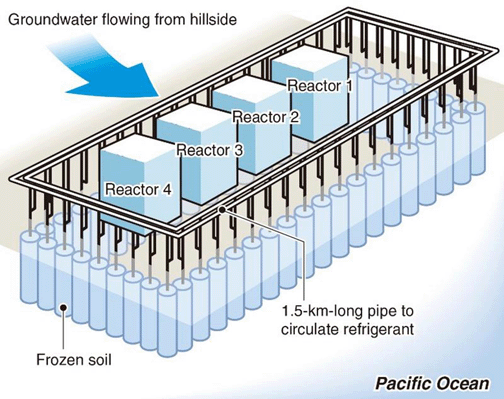
To prevent the groundwater reaching the plant in the first place, the
authorities built an underground “ice wall” of frozen earth, but this
has been only partly effective. Filtering is supposed to remove all the
radioactive elements except for tritium, which is routinely released into
the sea in diluted form from nuclear plants around the world
. But carbon-14
and trace elements of more dangerous radioactive substances, including
strontium-90 and iodine-129, have also been detected in the water. The
Japanese government says that tritium will be diluted to less than one-40th
of the concentration permitted under Japanese safety standards and
one-seventh of the World Health Organisation’s permitted level for safe
drinking water.
According to Tepco, the radiation in the tritium in the
water amounts to some 860 trillion becquerels — less than half the 1,620
trillion becquerels released from Britain’s Sellafield plant in 2015. The
theory is that the water will quickly and harmlessly dissipate into the
vastness of the Pacific Ocean.
But environmentalists and some scientists
disagree. The US National Association of Marine Laboratories claims that
the statistics, assumptions and models used in the Tepco projections are
flawed. It points to the danger of concentrated clusters of radiation
accumulating on the ocean floor.
Shaun Burnie, a nuclear expert at
Greenpeace, says that the water should be stored longer in tanks, allowing
time for the tritium to reduce, and that the decision to release into the
ocean is as much as about saving money as science. It also gives an
illusion of concrete progress.
Even if it is safe, it makes little
difference to the fishermen of Soma, for whom even just the perception of a
danger is enough to harm their business. Among them opinion is divided.
Some oppose the release under any circumstances; others, including Konno,
reluctantly accept it as the least worst option given that only complete
decommissioning, decades in the future, will solve the problem.
Times 10th March 2023
Costs for safety measures necessary to restart Japan’s idle nuclear reactors keep ballooning

Costs for safety measures necessary to restart Japan’s idle nuclear
reactors following the 2011 Fukushima nuclear disaster ballooned to over
6.09 trillion yen in January, according to 11 major power companies in the
country. As some companies have not yet included costs related to
implementing anti-terrorism measures in their calculations, required under
stricter regulations introduced in 2013 following the nuclear accident that
occurred on March 11, 2011, the total amount is expected to increase
further.
The costs involve safety measures for 15 nuclear power stations
and consist of both expenses already used and those expected in the future.
As of January 2022, they totaled 5.78 trillion yen. Over a one-year period
through January this year, safety costs increased by 230 billion yen at the
No. 2 unit in Tohoku Electric Power Co’s Onagawa plant in Miyagi
Prefecture, northeastern Japan, and by 80 billion yen at Chugoku Electric
Power Co’s Shimane nuclear plant in western Japan. The Onagawa No. 2 unit
and the Shimane No. 2 unit have already cleared safety screenings by the
country’s nuclear regulator, the Nuclear Regulation Authority, with
construction work necessary to restart them under way after gaining local
consent. The cost of safety measures for the Onagawa No. 2 unit totals 710
billion yen, more than double the roughly 300 billion yen spent to build
it.
Japan Today 12th March 2023
https://japantoday.com/category/national/safety-costs-at-nuclear-plants-in-japan-exceed-6-tril.-yen
DOE wanted to quadruple plutonium pit production. For now, activists have stopped them

https://beyondnuclearinternational.org/2023/03/05/new-nuclear-weapons-plan-faces-scrutiny/From SRS Watch, Tri-Valley CAREs, Nuclear Watch New Mexico and the Gullah/Geechee Sea Island Coalition 13 Mar 23,
In a win for public participation and environmental protection, the United States District Court of South Carolina denied the Department of Energy’s motion to dismiss a 2021 legal action filed by multiple citizen groups.
The suit was prompted by the agency’s failure to take the “hard look” required by the National Environmental Policy Act at its plans to more than quadruple the production of plutonium pits for new nuclear weapons and split their production between the Los Alamos National Laboratory and the Savannah River Site.
In her ruling, Judge Mary Geiger Lewis thoroughly rejected the defendants’ arguments that the plaintiffs lacked standing, saying it was “not a close call”.
“We were able to defeat yet another attempt to use standing as a weapon to keep members of the public out of the government’s decision-making process,” said Leslie Lenhardt, Senior Managing Attorney at the South Carolina Environmental Law Project (SCELP).
To date, the Department of Energy (DOE) has refused to fully examine the environmental and safety impacts of their cross-country plan, which would create massive quantities of dangerous radioactive materials, put hundreds of billions of taxpayer dollars on the line, risk a new nuclear arms race, and violate the nation’s foundational environmental law.
The Savannah River Site has never produced plutonium pits, the explosive cores of all U.S.nuclear weapons, and currently stores 11.5 metric tons of plutonium, which poses a daunting management and disposal challenge. Pit production will only increase its plutonium burden, along with more waste that needs to be treated, stored and disposed of.
“The ruling is a significant loss for the DOE in its efforts to dodge its legal obligations under NEPA,” said Tom Clements, Director of SRS Watch. “We will push forward in court to make sure that the DOE conducts the mandated environmental analysis of impacts of plutonium pit production at all involved DOE sites, including sites at which plutonium waste would be disposed.”
Despite outdated analyses failing to account for significant changes in circumstances, the U.S. government has ignored the repeated calls from the public, including the plaintiffs specifically, to conduct the legally required “hard look” at this major shift in policy that will only exacerbate the already documented waste of taxpayers’ money.
“It’s critical that the public understands that no future pit production is to maintain the safety and reliability of the existing nuclear weapons stockpile,” said Jay Coghlan, Executive Director of Nuclear Watch New Mexico. “Instead, it is for speculative new designs that can’t be tested because of the international testing moratorium. Or worse yet, it could prompt the U.S. to resume testing, which would have severe proliferation consequences. This is the kind of needed public discussion that the Department of Energy seeks to shut down while spending enormous sums of taxpayers’ money on expanding nuclear weapons production.”
SCELP filed the lawsuit on behalf of Savannah River Site Watch, Nuclear Watch New Mexico, Tri-Valley CAREs and the Gullah/Geechee Sea Island Coalition in June of 2021 after the DOE’s semi-autonomous National Nuclear Security Administration (NNSA) concluded it was unnecessary to conduct a broad, nationwide review of this two-site strategy. Instead, the agency is relying on a supplemental analysis of an outdated Programmatic Environmental Impact Statement (PEIS) completed more than a decade ago, along with a separate review done for SRS alone.
“We are thrilled that the Court ruled in our favor and that this landmark environmental case can now proceed toward a final decision,” said Marylia Kelley, Executive Director of the Livermore-based Tri-Valley CAREs. “What’s at stake in our litigation is nothing less than the question of whether the federal government will be allowed to run roughshod over affected communities like mine all across the country.
“We believe the Court will ultimately agree with Plaintiff groups that the National Nuclear Security Administration must produce a nationwide Programmatic Environmental Impact Statement and hold public hearings at all of the locations that will be actively involved in these dangerous plutonium bomb core activities, including Livermore, CA. The analysis of risks must precede implementation of the project in order to forestall serious environmental degradation and potential loss of life, “Kelley concluded.
-
Archives
- February 2026 (228)
- January 2026 (308)
- December 2025 (358)
- November 2025 (359)
- October 2025 (376)
- September 2025 (258)
- August 2025 (319)
- July 2025 (230)
- June 2025 (348)
- May 2025 (261)
- April 2025 (305)
- March 2025 (319)
-
Categories
- 1
- 1 NUCLEAR ISSUES
- business and costs
- climate change
- culture and arts
- ENERGY
- environment
- health
- history
- indigenous issues
- Legal
- marketing of nuclear
- media
- opposition to nuclear
- PERSONAL STORIES
- politics
- politics international
- Religion and ethics
- safety
- secrets,lies and civil liberties
- spinbuster
- technology
- Uranium
- wastes
- weapons and war
- Women
- 2 WORLD
- ACTION
- AFRICA
- Atrocities
- AUSTRALIA
- Christina's notes
- Christina's themes
- culture and arts
- Events
- Fuk 2022
- Fuk 2023
- Fukushima 2017
- Fukushima 2018
- fukushima 2019
- Fukushima 2020
- Fukushima 2021
- general
- global warming
- Humour (God we need it)
- Nuclear
- RARE EARTHS
- Reference
- resources – print
- Resources -audiovicual
- Weekly Newsletter
- World
- World Nuclear
- YouTube
-
RSS
Entries RSS
Comments RSS
 nuclear-news