Nuclear dispute hangs over EU renewable energy talks
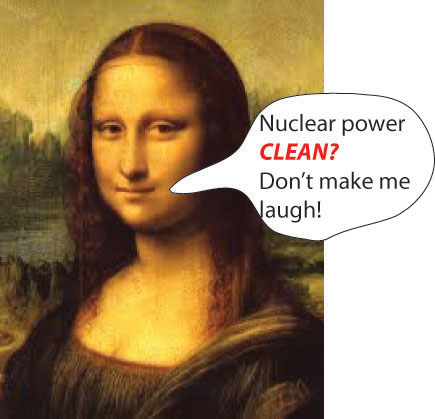
The renewable energy law reflects a broader dispute among countries over whether EU policies should actively encourage nuclear energy with subsidies and incentives – or restrict those privileges to other green technologies like wind and solar.
By Kate Abnett, https://www.reuters.com/business/energy/nuclear-row-looms-over-eu-renewable-energy-talks-2023-03-29/
BRUSSELS, March 29 (Reuters) – The European Union enters the final stage of tense talks over how to treat hydrogen produced using nuclear power on Wednesday, in an effort to end a dispute that threatens to thwart a deal on more ambitious renewable energy goals.
Reporting by Kate Abnett; Editing by Jan Strupczewski, Sharon Singleton and Alexander Smith
Negotiators from EU countries and the European Parliament are meeting to reach a deal on how fast to expand renewable energy sources this decade – a central pillar of the 27-member bloc’s efforts to fight climate change.
One of the key goals in the renewable energy policy is for every EU country to use a certain amount of renewable fuels, such as hydrogen, as a energy source in industry by 2030.
Because low-carbon hydrogen requires electricity to be made in the first place, the EU battle now is over what energy sources should be allowed for its production, if it is to be counted towards the renewable energy targets.
Hours before the final negotiations between EU governments and the European Parliament begin, EU countries are still at odds over whether to recognise hydrogen produced from nuclear power under the targets.
EU officials said they expect a long night, with some doubtful a deal will be reached.
France, backed by at least eight other EU countries, including Poland and Hungary, is leading a push for “low-carbon hydrogen”, made using nuclear power, to count towards the renewable goals.
Nuclear energy does not produce planet-heating CO2 emissions and those countries say the EU should better support its contribution to meeting climate goals.
But at least nine other EU countries, including Germany, Spain and Austria, disagree. They say the EU targets should solely focus on renewable sources like wind and solar to drive the massive expansion of these energy sources needed for Europe to end its reliance on Russian gas and cut CO2.
The renewable energy law reflects a broader dispute among countries over whether EU policies should actively encourage nuclear energy with subsidies and incentives – or restrict those privileges to other green technologies like wind and solar.
EU countries’ ambassadors failed to agree on Wednesday to a compromise drafted by Sweden, which holds the EU’s rotating presidency – leaving Sweden to represent EU countries in the final talks without a clear negotiating position on the issue.
The proposal, seen by Reuters, offered countries a reduced target to use renewable hydrogen in 2030, if 30% or less of their total hydrogen use is fossil fuel-based hydrogen.
That could benefit countries where large shares of nuclear-based hydrogen have helped push fossil-based hydrogen out of the mix. EU officials said some countries opposed any reopening of the targets to nuclear-based fuels while others wanted a deeper reduction than the proposed 30%.
The EU renewable energy policy contains a raft of other rules to help countries shift away from fossil fuels.
Negotiators will try to agree binding targets for how much of the EU’s total energy must come from renewable sources by 2030 – with 40% and 45% among the options being considered.
Other parts of the deal may tighten the EU’s rules on whether wood-burning “biomass” energy can be classed as renewable and count towards green goals.
Cancer as Weapon: Sowing Battlefields With Depleted Uranium

If the US has kept silent, the Brits haven’t. A 1991 study by the UK Atomic Energy Authority predicted that if less than 10 percent of the particles released by depleted uranium weapons used in Iraq and Kuwait were inhaled it could result in as many as “300,000 probable deaths.”
excuses in the absence of any action to address the situation are growing very thin indeed. Doug Rokke, the health physicist for the US Army who oversaw the partial clean up of depleted uranium bomb fragments in Kuwait, is now sick. His body registers 5,000 times the level of radiation considered “safe”.
CounterPunch, BY JEFFREY ST. CLAIR 29 Mar 23
With the UK’s unconscionable decision to send Depleted Uranium ammunition to Ukraine, it’s perhaps useful to revisit the environmental and health consequences of the US’s widespread use of such weapons in Iraq and Kuwait during the first Gulf War. This short essay is adapted from my book, Been Brown So Long It Looked Like Green to Me: the Politics of Nature.
At the close of the first Gulf War, Saddam Hussein was denounced as a ferocious villain for ordering his retreating troops to destroy Kuwaiti oil fields, clotting the air with poisonous clouds of black smoke and saturating the ground with swamps of crude. It was justly called an environmental war crime.
But months of bombing of Iraq by US and British planes and cruise missiles has left behind an even more deadly and insidious legacy: tons of shell casings, bullets and bomb fragments laced with depleted uranium. In all, the US hit Iraqi targets with more than 970 radioactive bombs and missiles.
It took less than a decade for the health consequences from this radioactive bombing campaign to begin to coming into focus. And they are dire, indeed. Iraqi physicians call it “the white death”-leukemia. Since 1990, the incident rate of leukemia in Iraq has grown by more than 600 percent. The situation is compounded by Iraq’s forced isolations and the sadistic sanctions regime, recently described by UN secretary general Kofi Annan as “a humanitarian crisis”, that makes detection and treatment of the cancers all the more difficult.
“We have proof of traces of DU in samples taken for analysis and that is really bad for those who assert that cancer cases have grown for other reasons,” said Dr. Umid Mubarak, Iraq’s health minister……………
“The desert dust carries death,” said Dr. Jawad Al-Ali, an oncologist and member England’s Royal Society of Physicians. “Our studies indicate that more than forty percent of the population around Basra will get cancer. We are living through another Hiroshima.”
Most of the leukemia and cancer victims aren’t soldiers. They are civilians. And many of them are children. The US-dominated Iraqi Sanctions Committee in New York has denied Iraq’s repeated requests for cancer treatment equipment and drugs, even painkillers such as morphine. As a result, the overflowing hospitals in towns such as Basra are left to treat the cancer-stricken with aspirin………………………………………………..
Depleted uranium is a rather benign sounding name for uranium-238, the trace elements left behind when the fissionable material is extracted from uranium-235 for use in nuclear reactors and weapons. For decades, this waste was a radioactive nuisance, piling up at plutonium processing plants across the country. By the late 1980s there was nearly a billion tons of the material.
Then weapons designers at the Pentagon came up with a use for the tailings: they could be molded into bullets and bombs. The material was free and there was plenty at hand. Also uranium is a heavy metal, denser than lead. This makes it perfect for use in armor-penetrating weapons, designed to destroy tanks, armored-personnel carriers and bunkers.
When the tank-busting bombs explode, the depleted uranium oxidizes into microscopic fragments that float through the air like carcinogenic dust, carried on the desert winds for decades. The lethal dust is inhaled, sticks to the fibers of the lungs, and eventually begins to wreck havoc on the body: tumors, hemorrhages, ravaged immune systems, leukemias.
In 1943, the doomsday men associated with the Manhattan Project speculated that uranium and other radioactive materials could be spread across wide swaths of land to contain opposing armies. Gen. Leslie Grove, head of the project, asserted that uranium weapons could be expected to cause “permanent lung damage.” In the late, 1950s Al Gore’s father, the senator from Tennessee, proposed dousing the demilitarized zone in Korea with uranium as a cheap failsafe against an attack from the North Koreans.
After the Gulf War, Pentagon war planners were so delighted with the performance of their radioactive weapons that ordered a new arsenal and under Bill Clinton’s orders fired them at Serb positions in Bosnia, Kosovo and Serbia. More than a 100 of the DU bombs have been used in the Balkans over the last six years.
Already medical teams in the region have detected cancer clusters near the bomb sites. The leukemia rate in Sarajevo, pummeled by American bombs in 1996, has tripled in the last five years. But it’s not just the Serbs who are ill and dying. NATO and UN peacekeepers in the region are also coming down with cancer. As of January 23, eight Italian soldiers who served in the region have died of leukemia.
The Pentagon has shuffled through a variety of rationales and excuses. ……………………………
If the US has kept silent, the Brits haven’t. A 1991 study by the UK Atomic Energy Authority predicted that if less than 10 percent of the particles released by depleted uranium weapons used in Iraq and Kuwait were inhaled it could result in as many as “300,000 probable deaths.”
The British estimate assumed that the only radioactive ingredient in the bombs dropped on Iraq was depleted uranium. It wasn’t. A new study of the materials inside these weapons describes them as a “nuclear cocktail,” containing a mix of radioactive elements, including plutonium and the highly radioactive isotope uranium-236. These elements are 100,000 times more dangerous than depleted uranium.
Typically, the Pentagon has tried to dump the blame on the Department of Energy’s sloppy handling of its weapons production plants.
He knows where to place the blame. “There can be no reasonable doubt about this,” Rokke told Australian journalist John Pilger. “As a result of heavy metal and radiological poison of DU, people in southern Iraq are experiencing respiratory problems, kidney problems, cancers. Members of my own team have died or are dying from cancer.”
Depleted uranium has a half-life of more than 4 billion years, approximately the age of the Earth. Thousand of acres of land in the Balkans, Kuwait and southern Iraq have been contaminated forever. If George Bush Sr., Dick Cheney, Colin Powell and Bill Clinton are still casting about for a legacy, there’s a grim one that will stay around for an eternity. https://www.counterpunch.org/2023/03/29/cancer-as-weapon-sowing-battlefields-with-depleted-uranium/
Number of usable nuclear warheads increased in 2022 — report

https://www.dw.com/en/number-of-usable-nuclear-warheads-increased-in-2022-report/a-65169976 29 Mar 23
The world’s stockpile of usable nuclear warheads increased by over 130 in 2022, Norwegian People’s Aid has reported. The authors have warned of the risk that nuclear weapons pose to humanity.
The number of nuclear warheads that states could deploy reached a total of 9,576 at the beginning of 2023, up from 9,440 the previous year, according to a report published by the NGO Norwegian People’s Aid (NPA) on Wednesday.
The Nuclear Weapons Ban Monitor report said that the weaponized nuclear power amounted to a “collective destructive power of more than 135,000 Hiroshima bombs.”
The issue of nuclear weapons has become its most prominent since the end of the Cold War thanks in part to Russia’s invasion of Ukraine and subsequent aggressive rhetoric, as well as fears over Iran’s nuclear program and North Korea’s renewed missile tests.
Warhead build-up is a ‘worrying trend’
Wednesday’s report pointed out that the total number of warheads has decreased because the US and Russia dismantle some of their older weapons every year.
However, NPA’s Grethe Ostern warned that the construction of new warheads may soon outpace the dismantling of old ones.
“This increase is worrying, and continues a trend that started in 2017. If this does not stop, we will soon see an increase also in the total number of nuclear weapons in the world for the first time since the Cold War,” she said.
Some five countries are responsible for the increase in ready-to-use warheads, according to Hans M. Kristensen, the director of the Nuclear Information Project at the Federation of American Scientists and contributor to the Nuclear Weapons Ban Monitor.
“Russia, China, India, North Korea, and Pakistan continued to expand their stockpiles of warheads in 2022, bringing about a corresponding increase of 136 warheads also in the global total of stockpiled warheads available for use by the military,” Kristensen said.
Nuclear tensions threatening the planet
Russian President Vladimir Putin recently ramped up nuclear tensions by announcing that so-called “tactical” nuclear weapons would be deployed in Belarus, on the EU’s border
He justified the move by pointing to the presence of US nuclear weapons in various countries close to Russia over the years, including Belgium, Germany, Italy, the Netherlands and Turkey.
Russia has the world’s largest nuclear weapons stockpile.
The total number of nuclear warheads reached a peak of 70,000 in 1986 at the height of tensions between the US and the Soviet Union, according to the Stockholm International Peace Research Institute.
This number was down to 12,512 in 2023, but still enough to bring an end to life on the planet as we know it.
“The Ukraine crisis has demonstrated that nuclear weapons do not create peace and stability. They don’t deter aggression, but enable conventional wars and incentivize risk-taking that could lead to nuclear war,” NPA’s Secretary General Henriette Westhrin said.
Canada’s “peaceful” nuclear program intimately involved in selling Plutonium For American Bombs

Canadians have been told repeatedly by spokespersons from Atomic Energy of Canada Limited, the Canadian Nuclear Association and the Government of Canada
- that the Canadian nuclear program has nothing to do with atomic bombs,
- that plutonium produced in Canadian reactors is unfit for military use, and
- that Canada has a strict policy that all nuclear materials supplied to other countries must be used for peaceful, non-explosive purposes.
What they don’t say is
that the Canadian nuclear program was born as part of the Manhattan Project — the secret project which produced the world’s first atomic bombs;
that the Canadian role in the atomic bomb project was focussed on basic research into the production and separation of plutonium for use in atomic bombs;
that the Chalk River Nuclear Establishment was built following a military decision in 1944 in Washington D.C. to utilize Canada’s plutonium research;
that for thirty years after the bombing of Hiroshima and Nagasaki, Canada sold plutonium to the Americans for use in their nuclear weapons program.
Recently, the U.S. Department of Energy published its stockpiles of plutonium, and revealed exactly how much plutonium was sent to or received from other countries. For the first time, through this letter dated March 4 1996, Canadians learned how much plutonium Canada contributed to the U.S. nuclear weapons program.
…………………………………………….. more http://www.ccnr.org/DOE.html
US stops sharing nuclear arms data with Russia under START Treaty
Aljazeera, 29 Mar 23,
Under terms of the New START treaty, both countries should share data on deployed nuclear warheads on a biannual basis.
The United States has told Russia it will cease exchanging detailed data on its nuclear weapons stockpiles, the White House said, calling the move a response to Russia’s suspension of participation in the New START nuclear arms treaty.
While Russian President Vladimir Putin has not formally withdrawn from the treaty, his suspension from participating in it announced in February has endangered the last pillar of US-Russian nuclear arms control.
The US and Russia hold nearly 90 percent of the world’s nuclear warheads – enough to destroy the planet several times over. The New START (Strategic Arms Reduction Treaty) limits the number of strategic nuclear warheads countries deploy.
“Russia has not been in full compliance and refused to share data which we … agreed in New START to share biannually,” John Kirby, the US National Security Council spokesperson, told reporters in a conference call on Tuesday.
“Since they have refused to be in compliance … we have decided to likewise not share that data,” he said……………………………………….
Under the terms of the New START, signed in 2010 and due to expire in 2026, Moscow and Washington may deploy no more than 1,550 strategic nuclear warheads and 700 land- and submarine-based missiles and bombers to deliver them………………………. https://www.aljazeera.com/news/2023/3/29/us-stops-sharing-nuclear-arms-data-with-russia-under-start-treaty
UN watchdog ditches Ukrainian nuclear plant safety zone scheme
Politico, BY LOUISE GUILLOT, MARCH 29, 2023
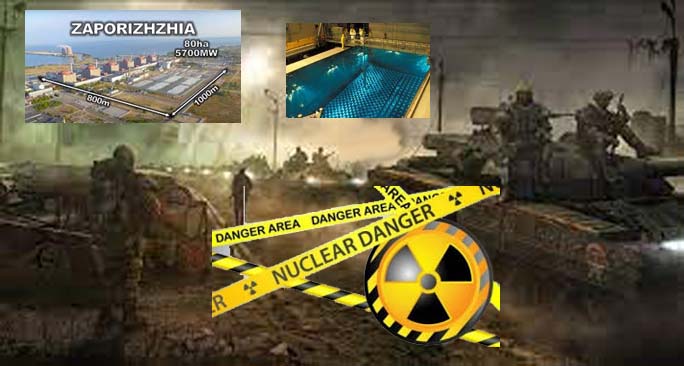
The head of the U.N. nuclear watchdog today abandoned the idea of creating a safety and security zone around the Zaporizhzhia nuclear power plant in southern Ukraine.
Since September, Rafael Mariano Grossi, the director general of the International Atomic Energy Agency, has been pushing Ukraine and Russia to agree on putting the nuclear plant off limits from the ongoing military conflict.
“Initially we have been focusing on the possibility of establishing a well-determined zone around the plant,” he told reporters during a visit at the plant today. “Now the concept is evolving, refocusing more on the protection itself, the things that should be avoided … rather than on territorial aspects which pose certain problems.”…………….
“It is obvious that the situation is not improving,” Grossi said, pointing at increasing military activity in the region.
Grossi added that efforts to reach a deal between Kyiv and Moscow on measures to prevent a nuclear accident are still “a work in progress.” https://www.politico.eu/article/un-watchdog-ditches-ukrainian-nuclear-plant-safety-zone-scheme/
IAEA nuclear safety chief at Ukraine’s Zaporizhzhia nuclear power station
The UN atomic watchdog chief is expected on Wednesday to visit Ukraine’s
Zaporizhzhia nuclear power plant, which is currently held by Russian
forces. There are persistent fears about the safety of the nuclear plant —
Europe’s largest — which is located in the southern Zaporizhzhia region
where there has been frequent shelling since Russian troops invaded. Rafael
Grossi, head of the International Atomic Energy Agency (IAEA), and his
delegation are expected to arrive Wednesday morning and leave by afternoon,
according to the Russian news agency TASS, citing an official with Russia’s
nuclear operator Rosenergoatom. This will be Grossi’s second visit to
Zaporizhzhia since Russia invaded Ukraine in February last year, and he
plans to “assess first-hand the serious nuclear safety and security
situation at the facility”, according to the IAEA.
France24 29th March 2023
https://www.france24.com/en/live-news/20230329-iaea-chief-to-visit-ukraine-nuclear-plant
Small nuclear reactors – the global hype and hoax continues, especially in Europe
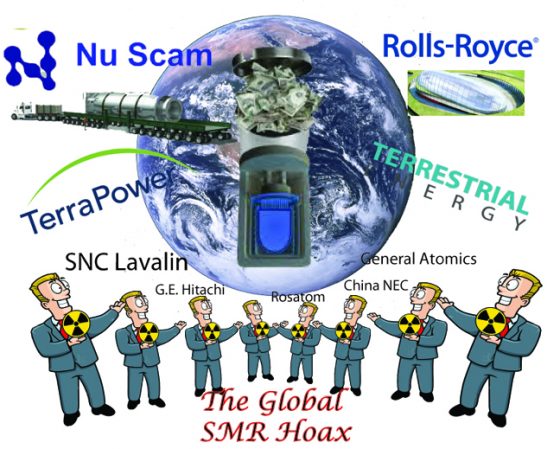
Some 13 European Union countries including Italy on Tuesday signed a joint
declaration urging more research and innovation in the sector of mini
nuclear power reactors as part of a new alliance. The 13 EU countries,
including Italy, are calling for “a favourable industrial and financial
framework for nuclear projects”, promoting “research and innovation in
particular for small modular reactors and advanced modular reactors”.
Ansa 28th March 2023
Elon Musk is remaking Twitter into a climate denier sanctuary
by ketanjoshi85 [very good graphs]
As I wrote recently here on my site, Elon Musk’s reputation as a ‘climate hero’ has been badly exaggerated. Every good thing he’s contributed to sits alongside a collection of actively counter-productive things. One of those things is killing a space that climate activists, communicators and experts used regularly – that is, Twitter. Still my core social media space, but a broken, burning one……………………………………………………………………….
The gradual rebirth of climate denier Twitter
It feels like something more fundamental in site dynamic has changed – particularly around which accounts and tweets get boosted and promoted.
I recently noticed that climate deniers, or climate delayers (who argue for no or slow climate action) have had massive increases in their followings, whereas pro-climate accounts have either lost followers, or gained very few of them. Musk has himself been cosying up with climate deniers, boosting, for instance, a conspiracy theory video from Australian climate denier and member of far-right xenophobic party One Nation, Senator Malcolm Roberts. “[Musk is] doing a marvellous job of rekindling freedom of speech,” Roberts told the SMH. “That alone is worthy of high praise.”
Berlin-based researcher Travis Brown has been tracking various changes at Twitter under Musk’s rule; particularly how the roll-out of the paid service ‘Twitter Blue’ has been going (I did an ad-hoc data snapshot of climate denial among Blue accounts, and…it’s bad). Being able to pay a tiny fee to simulate trustworthiness and get boosted into prominence in both algorithmic feeds and the sorting of replies on Twitter is invaluable for climate deniers.
It is, of course, very relevant given that Musk has just announced that the only tweets appearing in the algorithmic ‘For You’ feed will be those who’ve paid to subscribe to Twitter. Musk think he’s onto a solid grift here; offering prominence to those who are so deeply shit in their speech that they’ve failed to earn it.
Another recent analysis by ISD found that “fringe climate denialist websites have gained a foothold in online conversation with thousands of daily mentions on Twitter by highly followed climate-denying actors, pundits and outlets”. They also found that “some actors identified as ‘super-spreaders’ of climate misinformation by ISD and CAAD linked to the fringe websites”, including notorious denier accounts Patrick Moore, Steve Milloy and Peter Clack…………………………………………………………………..
Though my account selection method was somewhat ad-hoc, there’s basically no denying how significantly Musk-Twitter has caused a massive audience boost for climate deniers and delayers. To some degree, this had already kicked off around mid 2022, prior to Musk’s official purchase, but whatever dials Musk turned has accelerated this phenomenon significantly…………………………………………………………………
The change of ownership has had both direct and indirect influence in denier prominence on Twitter, accelerating this pre-existing problem. There’s been a general emboldening of the worst, most cruel right-wing accounts. There’s a spring in their step – their man is in the top job. And climate is a big focus for them.
A specific change to the algorithm to boost tweets ‘outside’ of one’s political sphere has resulted in far, far more eyeballs on right-wing content (in addition to being the core reason I get ferociously racist responses to innocuous things I post). And Twitter Blue subscriptions are helping grant legitimacy and prominence to the worst, pro-fossil deniers, as shown by journalist David Vetter. “As a platform, Twitter is now fully weaponized to undermine science, climate action and global sustainable development”, he wrote.
Some of the reason pro-climate accounts have lost followers has been people leaving Twitter. Musk has been publicly endorsing far-right and right-wing views,……………………………………………………………….. more https://ketanjoshi.co/2023/03/28/musk-is-remaking-twitter-into-a-climate-denier-sanctuary/
1 This Month
Chernobyl: The Lost Tapes – A good documentary on Chernobyl on SBS available On Demand for the next 3 weeks– https://www.sbs.com.au/ondemand/tv-program/chernobyl-the-lost-tapes/2352741955560

of the week–London Campaign for Nuclear Disarmament

Tell the Ukrainian Government to Drop Prosecution of Peace Activist Yurii Sheliazhenko
To see nuclear-related stories in greater depth and intensity – go to https://nuclearinformation.wordpress.com
-
Archives
- April 2026 (139)
- March 2026 (251)
- February 2026 (268)
- January 2026 (308)
- December 2025 (358)
- November 2025 (359)
- October 2025 (376)
- September 2025 (257)
- August 2025 (319)
- July 2025 (230)
- June 2025 (348)
- May 2025 (261)
-
Categories
- 1
- 1 NUCLEAR ISSUES
- business and costs
- climate change
- culture and arts
- ENERGY
- environment
- health
- history
- indigenous issues
- Legal
- marketing of nuclear
- media
- opposition to nuclear
- PERSONAL STORIES
- politics
- politics international
- Religion and ethics
- safety
- secrets,lies and civil liberties
- spinbuster
- technology
- Uranium
- wastes
- weapons and war
- Women
- 2 WORLD
- ACTION
- AFRICA
- Atrocities
- AUSTRALIA
- Christina's notes
- Christina's themes
- culture and arts
- Events
- Fuk 2022
- Fuk 2023
- Fukushima 2017
- Fukushima 2018
- fukushima 2019
- Fukushima 2020
- Fukushima 2021
- general
- global warming
- Humour (God we need it)
- Nuclear
- RARE EARTHS
- Reference
- resources – print
- Resources -audiovicual
- Weekly Newsletter
- World
- World Nuclear
- YouTube
-
RSS
Entries RSS
Comments RSS
 nuclear-news