From the fossil fuel frying pan into the fission fire

“Coal to Nuclear” plan is old thinking at its worst
From the fossil fuel frying pan into the fission fire — Beyond Nuclear International
Another smokescreen that obscures real climate solutions
By Linda Pentz Gunter
They’ve given it a snappy little acronym, one that is perhaps supposed to masquerade as a sort of scientific-sounding calculus — C2N. After the failure of the much-trumpeted “nuclear renaissance” that never was, the nuclear lobby and its federal lackeys have come up with another PR clunker — Coal 2 Nuclear (hence, C2N). In reality, this is less C2N than CPR for an ailing nuclear power industry.
Unfortunately, to arrive at this dangerously out-of-touch scheme, our tax dollars had to be wasted on yet another U.S. Department of Energy (DOE) report. Its conclusion was that, “hundreds of U.S. coal power plant sites could convert to nuclear power plant sites, adding new jobs, increasing economic benefit, and significantly improving environmental conditions.”
Notice the word “could” though. Not “will”. Because it’s more of the same aspirational irrationality that is driving the small modular reactor fantasy in the first place, the version of nuclear power that would supposedly dot the defunct coal plant landscapes.
The DOE study was conducted by Argonne National Laboratory, Idaho National Laboratory, and Oak Ridge National Laboratory. Their self-interested conclusions then, come as no surprise.
C2N is enough to make you despair — or confirm your pre-existing suspicions — that our leadership is blind and deaf to the reality of the climate emergency we are facing. They are truly mired in the mud of outdated thinking, clinging to failed and foolish energy plans that have long been supplanted by demonstrably better, faster, cheaper, safer and more workable options, ergo renewable energy, energy efficiency and conservation.
More than 3 million of the 7.8 million jobs in the US energy sector are in areas aligned to America’s goal of being carbon neutral by 2050”, reported the World Economic Forum in July 2022. “This means renewable energy jobs in 2021 accounted for around 40% of total energy jobs.”
But no, the DOE would rather spend decades dangling before depressed coal communities the false promise of “new jobs” and “economic benefits” in a phantom new nuclear sector. It’s a con and the worst form of betrayal and guess whose fingerprints are all over this?
With C2N, Senator Joe Manchin of West Virginia (Democrat in name only and with his pockets full of coal money), is throwing his most deprived constituents under a petroleum-powered bus. He is leading those who need work today down a long and winding road to C2N that will deliver little if anything and nothing anytime soon.
All of this is in line with a collective madness that appears to have taken over significant swaths of human society. In November, UN General Secretary, António Guterres, desperate to steer us away from our final precipice, issued his most strident and urgent warning yet:
“We are in the fight of our lives and we are losing … And our planet is fast approaching tipping points that will make climate chaos irreversible,” Guterres said. “We are on a highway to climate hell with our foot on the accelerator.”
He was speaking at the opening of the COP27 UN climate summit in Egypt, or the “COP-out” as some cynics prefer to call it, given the abject failure of these annual meetings to ensure enforcement of the pledges made, albeit most are still woefully inadequate.
The US DOE meanwhile, prefers to dwell in the dark ages of denial. “A coal to nuclear transition could significantly improve air quality,” the department alleged in its report. But this ignores the fact that nuclear power plants and the nuclear fuel chain routinely release radioactivity, especially dangerous to children. Among more than 60 epidemiological studies worldwide, most found increases in rates of leukemia among children under five living near nuclear power plants. The rates increased the closer children lived to the plant.
And it ignores the fact that air quality could be improved faster and more significantly by shifting from coal to renewables rather than to nuclear, thereby also avoiding the cancer-causing emissions delivered by nuclear power.
Of course, “air quality” would be rendered meaningless if/when one of the C2N plants suffers a serious accident. Such an event would release large amounts of fast-traveling radioactive iodine-131 gas, followed by clouds of heavier radioactive fallout such as cesium and strontium. A major disaster, such as those at Chernobyl in 1986 and Fukushima in 2011, even released “hot” particles such plutonium into the environment.
This outcome is made even more likely by virtue of the reactor choices for these C2N sites, which include small modular reactors, sodium-cooled fast reactors and very high temperature reactors, all designs vulnerable to fires, leaks, explosions and other major failures.
Needless to say, a C2R program (Coal to Renewables), the most obvious choice staring our federal government in the face, just wasn’t even on the cards. That would have meant relinquishing the stranglehold —and renouncing the pocket-lining dollars — of the big fossil fuel and nuclear corporations.
As M.V. Ramana and Cassandra Jeffery noted with such precision on these pages, the powers that be are “far more devoted to maintaining the current system for as long as it is feasible,” rather than exploring genuine climate solutions.
C2N preserves that status quo, operating inside a spectacularly failed system that, nevertheless, continues to enrich the already wealthy and preserve the monopoly enjoyed by large, inflexible and already obsolete forms of energy production such as nuclear power.
An argument made by these entrenched establishment forces is that moving from coal to nuclear allows for a continued electricity supply system that is “always on”, reinforcing the myth that base load energy is somehow beneficial.
Nuclear reactors “run uninterrupted,” Maria Korsnick, head of the industry lobbying group, Nuclear Energy Institute, told an audience of Purdue University students in October when stumping for C2N. “Every hour of every day, rain or shine.”
But, as George Harvey explained in CleanTechnica: “Base load power may supply the electricity in the middle of the night in many cases, but power from other sources could be used instead.” Clinging to base load is related to cost, not demand and efficiency.
Already back in 2017, the Brattle Group conducted an analysis for the Senate Energy and Natural Resources Committee — Advancing Past “Baseload” to a Flexible Grid, in which the group concluded that the base load concept was outdated. Base load, it said, has now been left behind by the economics of a changing electricity landscape that have rendered it “no longer very relevant”.
Much more efficient, said the report, is an electricity demand and supply met with high renewable generation. In their graph illustrating this, nuclear power is nowhere to be seen.
And of course, nuclear power invariably doesn’t “run uninterrupted.” It must power down or off during violent storms, droughts or heatwaves, or due to offsite grid instability, and shut down for extended periods during refueling and maintenance. And, as exemplified most recently by France, it can simply break down altogether for extended periods.
If the C2N reactors ever do happen, it will be decades in the future. By then, those who needed the work in the 2020s, falsely promised by C2N, will be retired or deceased. Our coastlines may well be underwater. If we did enough in time to save ourselves, we will be on smart grids using distributed generation.
“Nuclear energy is going to create incredible new career opportunities all over the country,” Korsnick told the Purdue students. According to the dictionary definition, “incredible” means “not credible; hard to believe”. That about sums it up.
Linda Pentz Gunter is the international specialist at Beyond Nuclear and writes for and curates Beyond Nuclear International.
Sizewell C: How will the £20billion plant be fully-funded?
Campaigners will have their day in court to challenge the “woeful
decision” to give the go-ahead to the Sizewell C nuclear plant – just part
of a challenging year ahead for the huge project.
The government approved the £20billion-plus twin reactor on the Suffolk coast last summer and has
already pledged £700million of public money towards it along with a levy
on power bills.
But that still leaves huge decisions to be made as to where
the rest of the money will come from and how the power plant – which will
provide electricity for six million homes – will be fully funded.
Ministers say the financial investment decision (FID) will be made in this parliament
– which means in the next two years, though it could come sooner than that.
Construction work on the reactors will start soon after. Early work this
year will continue on the main development site and also to relocate some
buildings at Sizewell B to make room for Sizewell C.
East Anglian Daily Times 4th Jan 2023
https://www.eadt.co.uk/news/23225503.sizewell-c-will-20billion-plant-fully-funded/
SMRs – an oversold hype?
https://renewextraweekly.blogspot.com/2023/01/smrs-oversold-hype.html 8 Jan 23 Writing in the venerable US journal Bulletin of the Atomic Scientists, Markku Lehtonen takes at look at Small Modular Reactors (SMRs), warning that they may be being oversold. He says ‘Despite the boost from the Ukraine crisis, it is uncertain whether SMR advocates can muster the political will and societal acceptance needed to turn SMRs into a commercial success. The economic viability of the SMR promise will crucially depend on how much further down the road towards deglobalization, authoritarianism in its various guises, and further tweaking of the energy markets the Western societies are willing to go. Moreover, the reliance of the SMR business case on complex global supply chains as well as on massive deployment and geographical dispersion of nuclear facilities creates its own geopolitical vulnerabilities and security problems’.
A key issue for the selling of SMRs is ease of deployment . Well it may not be as easy as some hope, although the US Nuclear Regulatory Commission has recently moved to allow ‘advanced nuclear plants’ to be built in thickly populated areas. The NRC decision entitled ‘Population-Related Siting Considerations for Advanced Reactors,’ was passed subject to one vote against from Commissioner Jeffery Baran, who said ‘multiple, independent layers of protection against potential radiological exposure are necessary because we do not have perfect knowledge of new reactor technologies and their unique potential accident scenarios… Unlike light-water reactors, new advanced reactor designs do not have decades of operating experience; in many cases, the new designs have never been built or operated before.’
There may be other ways for NRC to smooth the path ahead . NIRS/WISE Nuclear Monitor 904, reports on the views of Dr Ed Lyman, from the US Union of Concerned Scientists, who says SMRs and Advanced Modular Reactors are likely to be expensive and he lists some other possible ways to ‘cut corners on safety & security to cut costs’, that the industry would like NRC to consider. Here are some of them:
• Allow nuclear power plants to have a ‘small containment-or no physical containment at all’.
• No offsite emergency planning requirements.
• Fewer or even zero operators.
• Letting the plants have ‘fewer NRC inspections and weaker enforcement.’
• ‘Reduced equipment reliability reporting.’
• ‘Fewer back-up safety systems.’
• ‘Regulatory requirements should be few in number and vague.’
• ‘Zero’ armed security personnel to try to protect an advanced nuclear plant from terrorists.
We are almost talking about a ‘wild west’ free for all! Hopefully some sense will prevail. And a more balanced view of possibilities, risks and benefits will be taken, in the US, and also in the UK, where there are plans for developing 20-30 PWR-type SMRs as part of the UK plan to triple UK nuclear capacity by 2050.
Will it really happen? There certainly are a lot of very different ideas being mooted, beyond just mini-versions of Pressurised Water-cooled Reactors, including sodium cooled fast neutron reactors, molten flouride salt reactors, and high temperature helium cooled reactors. But as I explored in my recent book, looking back how these ideas emerged and were then abandoned in the early days of nuclear experimentation, I’m not convinced that any of the new nuclear, variants large or small, has much of a future. Renewables are arguably a far better bet. And I’m not alone in thinking that SMRs are not the way ahead.
Russian computer hacking team targeted 3 USA nuclear weapons facilities
A Russian hacking team known as Cold River targeted three nuclear research
laboratories in the United States this past summer, according to internet
records reviewed by Reuters and five cyber security experts.
Between August and September, as President Vladimir Putin indicated Russia would be
willing to use nuclear weapons to defend its territory, Cold River targeted
the Brookhaven (BNL), Argonne (ANL) and Lawrence Livermore National
Laboratories (LLNL), according to internet records that showed the hackers
creating fake login pages for each institution and emailing nuclear
scientists in a bid to make them reveal their passwords.
Reuters 6th Jan 2023
https://www.reuters.com/world/europe/russian-hackers-targeted-us-nuclear-scientists-2023-01-06/
Sizewell C Nuclear Project’s biggest stumbling block is its funding problem.
Everything you need to know about the future of Sizewell C power station
in 2023.
Sizewell C’s biggest stumbling block surrounds its funding. The
government’s £700 million commitment is merely a small amount of the
estimated final cost, which is likely to run above £25 billion.
In November, Business, Energy and Industrial Strategy Secretary Grant Shapps
confirmed that the government had bought out China General Nuclear’s stake
in the project. However, it’s reported that around 60 per cent of the
funding is yet to be found. Most of the returns for the investors will come
when they sell electricity to businesses and households around the UK.
However, the government has also said that it will allow investors in new
nuclear to get money through the so-called Regulated Asset Base model.
Suffolk Live 5th Jan 2023
https://www.suffolklive.com/news/suffolk-news/everything-you-need-know-future-7989137
Dear US Congress, thank you for saving Australia from itself
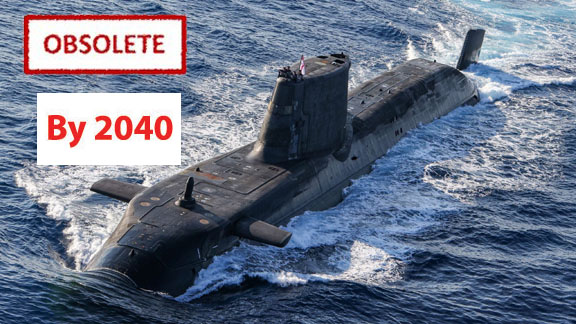
by Rex Patrick | Jan 7, 2023 https://michaelwest.com.au/dear-us-congress-thank-you-for-saving-australia-from-itself/
Is “bad news” out of US Congress about an AUKUS nuclear submarine deal a blessing in disguise? Former submariner and senator Rex Patrick says US politicians, though acting in the interests of the US, may save Australia from itself, and $170 billion too.
We are concerned that what was initially touted as a ‘do no harm’ opportunity to support Australia and the United Kingdom and build long-term competitive advantages for the US and its Pacific allies, may be turning into a zero-sum game for scarce, highly advanced U. SSNs,” wrote the Democrat and Republican heads of the Senate Armed Services Committee.
“Over the past year, we have grown more concerned about the state of the US submarine industrial base as well as its ability to support the desired AUKUS SSN [Nuclear Submarine] end state”.
“We believe current conditions require a sober assessment of the facts to avoid stressing the US submarine industrial base to the breaking point.”
These two Senators have nailed it.
Scotty’s greatest marketing moment
The AUKUS submarine was a ‘brain fart’ of Prime Minister Scott Morrison who was facing disquiet within the Liberal Party ranks (I know; as a Senator and submariner, they were raising the issue with me) over the French designed Attack Class replacement submarine program.
It was an idea supported by a Defence Department which had, in the 12 years since the future submarine project had been initiated, spent five billion taxpayer dollars delivering no submarine, and more than $8.5 billon on other failed projects.
On the morning of September 16, 2021, Morrison stood up in a stage-managed announcement staring US President Biden, then UK Prime Minister Boris Johnson and Morrison. Apart from the fact that President Biden didn’t know Morrison’s name, it was Morrison’s greatest ‘Scotty from Marketing’ moment.
While waving a big and distracting nuclear submarine hand to the camera, his other hand was behind his back silently putting a death to the French submarine program, something that would very shortly after cause a diplomatic rift between Australia and France.
Then opposition leader, Anthony Albanese, was given a briefing on AUKUS and the new submarine plans just 24 hours prior to the announcement. In the face of the oncoming election, Albanese made the political call to give the announcement Labor’s full support. Indeed, pursuing a ‘small target’ political strategy, Labor was embarrassingly desperate to avoid a fight about national security.
Not good for Australia
It was only after the dust had settled that the right questions started to be asked; simple questions like how much, when and where?
The cost soon emerged. The French submarine program has taken an expensive $50 billion submarine program and blown out to an unaffordable $90 billion. The AUKUS submarine was to invoke a cost ‘chain reaction’, coming in at a bankrupting $170 billion. We were jumping out of the financial frying pan and into the fire.
2040 what?
The commissioning date soon emerged. 2040! Noting the rationale for the switch from a French to an AUKUS program was the rising geo-political tension in our regions, the AUKUS submarine was to be delivered even later that the French solution. In an environment where Defence itself had warned our defence procurement warning time had been reduced to less than 10 year, it made no sense to embark on a program that delivers a first capability in 20 years.
Then the build discussions started. The nuclear submarine was not to be built in Australia, rather the US. We were going to sell out Australia industry, and in particular our hard-won competent submarine sustainment industry. We were going simply export $170B, most of the jobs and a sovereign capability the taxpayer had spent billions developing.
Not good for the US either
And the US Congress is now coming to the realisation that the AUKUS program will not be good for the US either.
Supporting Australia’s submarine program will put even more pressure on the US submarine industry trying to build 12 new Columbia Class ballistic missile submarines and meet the demands of supplying the US Navy with its own Virginia Class submarines.
This is not surprising. The US Congressional Research Service has been issuing reports for the better part of a decade that highlight the growing pressures on and limited capacity of the two American submarine construction facilities. The industrial capacity problem is already acute.
The old Los Angeles Class submarines are retiring faster that the Virginias can be brought online.
Now the Senate Armed Services Committee has finally realised what would be involved in supporting the AUKUS submarine.
Please help pal!
Not having built or operated nuclear submarines before, and as the only country in the world that would be operating nuclear submarines without an established nuclear power industry, Australia’s dependency on the US would be significant. Training, shipbuilding, operating and maintaining a nuclear submarine, nuclear safety … we would need a lot of help with all of it.
We are talking about nuclear reactors. The US can’t half commit to this. AUKUS nuclear submarines will be a considerable distraction to the entire US submarine enterprise at a time when they don’t need distraction.
But the public concerns of the senators only tell half the story.
China conflict looms, before the subs arrive
Conflict between the US and China is more likely to occur in the next decade, than in the 2040’s when a first AUKUS nuclear submarine would be fully operational.
A decision by the US to support an AUKUS nuclear submarine would be a decision resigning their close Asia-Pacific ally to the operating of ageing Collins class submarines in the very period a high-end submarine partnering capability was needed most.
Stupid and stupider, but political momentum
The whole AUKUS nuclear submarine thing has a political momentum about it which will bring about national security downsides for both countries.
As indicated above, the Labor Party leadership signed up to this massive project on 24 hours’ notice and little information. Now, completely captured by the ‘Department of Largely Failed Procurement and No Accountability’, Albanese, Defence Minister Richard Marles and Defence Industry Minister Pat Conroy have been supplied with a full barrel of naval Kool Aide, and they’re chugging it down.
Cold hard analysis, such as that being conducted by the US Congress, might be the only thing that saves Australia from itself.
Analysis Shows U.S. Wind and Solar Could Outpace Coal and Nuclear Power in 2023
EcoWatch By: Common Dreams, January 8, 2023, By Jake Johnson
A new analysis of federal data shows that wind and solar alone could generate more electricity in the United States than nuclear and coal over the coming year, critical progress toward reducing the country’s reliance on dirty energy.
The SUN DAY Campaign, a nonprofit that promotes sustainable energy development, highlighted a recently released U.S. Energy Information Administration (EIA) review finding that renewable sources as a whole—including solar, wind, biomass, and others—provided 22.6% of U.S. electricity over the first 10 months of 2022, a pace set to beat the agency’s projection for the full year.
“Taken together, during the first ten months of 2022, renewable energy sources comfortably out-produced both coal and nuclear power by 16.62% and 27.39% respectively,” the SUN DAY Campaign noted Tuesday. “However, natural gas continues to dominate with a 39.4% share of total generation.”…………………… more https://www.ecowatch.com/wind-solar-outpace-nuclear-coal.html
Nuclear fusion may change our world but renewable energy sources will save it: experts
Harnessing nuclear fusion could take more than 40 years, while some solutions already exist
Rossland News, Jan. 8, 2023 By Rachel Morgan, Local Journalism Initiative Reporter, The Pointer
We are living through unprecedented times……………. we are also.. living through unprecedented technological times…….
But experts are already warning that `nuclear fusion’ technology, suddenly being heralded by many as the panacea, the great answer to our planetary climate problem, should not distract from the critical role renewable energy sources are already playing in our quest to cleanse Earth.
While some forms of renewable energy have been used as far back as 2,000 years ago when the Greeks built water mills to turn grains into flour, modern renewable energy technologies first began to take shape over the 19th and 20th centuries. It wasn’t until the turn of the 21st century that technologies like wind turbines and solar panels reached the point of viability as wide scale sources of energy. According to the International Energy Agency (IEA), renewable sources of energy are now, collectively, on track to surpass coal as the number one generator of electricity by 2025.
A month ago, everything changed. Suddenly, the entire conversation around alternative energy has been shifted, forever……………..
When news broke [of a “breakthrough ” in nuclear fusion] there was a sigh of relief across the globe. Immediately, articles began circulating about salvation for the planet as fusion would, inevitably, power a clean energy grid.
But as the novelty of the remarkable breakthrough begins to wear off, researchers and scientists are already wary of the potential negative consequences.
“I was not overly optimistic,” Jean-Thomas Bernard, a visiting professor in the Department of Economics and the Institute of the Environment at the University of Ottawa, says. His expertise deals with the economics of energy use and he addressed the potential of nuclear fusion. “It is a good idea to proceed with developing, doing research on that line. But we are very far from seeing commercial plants being built.”
His concern, like many others in the growing fields dedicated to finding solutions for the most pressing environmental issues, is the danger of being distracted by a silver bullet, especially one that might arrive too late.
It could take more than 40 years before nuclear fusion can be harnessed and scaled to create the amount of electricity needed to change the game. Meanwhile, alternatives that are already doing this, could be suddenly overlooked, in favour of a technology that won’t be ready before catastrophic climate change alters Earth, forever.
Currently, there is research and testing into two different methods to create the type of nuclear fusion the California experiment produced. Both rely on heavy forms of hydrogen which are compressed until they fuse together emitting energy that can create steam to turn a turbine. The process used at the NIF lab relied on laser beams directed at the elements, which needed about 99 percent more energy to actually operate them than what was ultimately produced (the ignition event only measures the energy gain from the laser output, not the electricity required to run the laser machines).
Another process being experimented with across the globe, including in British Columbia, uses magnetic force to create the pressure and heat needed for the elements to fuse. It is unclear which process will result in the biggest gains, using the least amount of initial energy input. It’s also unclear which of the two methods might be realistically scalable, to use for global electricity production. Scientists have also said it is hard to predict how long it will take to advance current technology around each method to the point when nuclear fusion can be widely generated to create energy for everyday human use.
Experts agree it could still be decades before we see fusion contributing to our electricity grid…………
One fear is the nuclear fusion breakthrough will siphon off investments and detract attention from current renewable alternatives, just as those technologies are becoming more and more viable.
Late last year the International Energy Agency released a report with an accompanying article, headlined: “Renewable power’s growth is being turbocharged as countries seek to strengthen energy security”.
…….. Global renewable power capacity is now expected to grow by 2,400 gigawatts (GW) over the 2022-2027 period, an amount equal to the entire power capacity of China today, according to Renewables 2022, the latest edition of the IEA’s annual report on the sector.” https://www.rosslandnews.com/opinion/opinion-nuclear-fusion-may-change-our-world-but-renewable-energy-sources-will-save-it-experts/
Nuclear weapons and the resistance to reality
Rev. Peter Kakos, Northampton 8 Jan 23 https://www.gazettenet.com/Letter-to-the-editor-49451478
In response to J.M. Sorrell’s perceptive litany, “Resistance to reality,” (Gazette, Jan. 4), permit me to add our decades’ long blind eye to the terrifying global presence of nuclear weaponry, the summation of which keeps us held captive to the harshest fact: that we are poised for extinction.
What degree of madness possesses our citizenry to remain inured to this ominous threat to all humanity, let alone our own beloved homeland? Like it or not, the studied estimates inform us that only two percent of the current number of roughly 7,000, are needed to virtually extinguish civilization. (see the thorough analysis of the Physicians For Social Responsibility’s 5-year-long Back From The Brink campaign).
Today, not tomorrow, the nuclear abolition cause has eight billion reasons to demand to know what rude awakening will it take to overcome this ultimate resistance to reality?
Media Silent as Latest Twitter Files Expose Flagrant Misconduct in Govt. & Journalism
Video transcript: Plus, an interview with independent broadcaster Sabby Sabs
Glenn Greenwald. Jan 7, Substack
In this episode, we take a look at the new installment of the Twitter Files from independent journalist Matt Taibbi, undoubtedly one of the most important and revelatory yet. Among other things, it shines a brand new light on how aggressively and constantly the FBI and other Security State agencies were bombarding Twitter with censorship demands of dissidents, journalists, and critics almost on a daily basis.
…………. very few shows will cover these self-evidently significant stories because of a corporate media blackout, all but explicit, that arose on the very first night of this reporting and has only strengthened since. So, in addition to the substance of the new revelations, we will also dissect how this media blackout was imposed and what it says about the state of corporate journalism in the United States. Hint: It’s nothing good. ………………………… https://systemupdate.substack.com/p/media-silent-as-latest-twitter-files
 | |||
| |||
January 8 Energy News — geoharvey

Opinion: ¶ “What Does It Mean That (Once Rare) Atmospheric Rivers And Bomb Cyclones Are Becoming More Frequent?” • Atmospheric rivers and bomb cyclones are ever more frequent and intense parts of the North American meteorological landscape. That fact is perfectly compatible with projections of climate change driven by our warming our planet. [The Hill] […]
January 8 Energy News — geoharvey
Nuclear Ukraine? Amid ‘concerns’ over alleged Russian threat, the world overlooks the real danger

on February 19, 2022, before the start of Russia’s special military operation, Ukrainian President Vladimir Zelensky announced at the Munich Security Conference that Ukraine has the right to abandon the Budapest Memorandum, which proclaimed the country’s nuclear-free status.
Rt.com By Olga Sukharevskaya, ex-Ukrainian diplomat 6 Jan 23 Kiev is capable of building an atomic device, and its leaders often outline such thoughts.
Last year, Western media and high-ranking politicians actively discussed the possibility of Russian troops using atomic weapons in Ukraine. There has even been speculation on the likelihood of a nuclear war breaking out. However, it could be said that the risk is probably a lot higher on the other side of the barricades.
Ukraine’s Atomic History
Ukraine was a nuclear state after the collapse of the USSR, when 1,700 active atomic warheads remained in the country. Its politicians of that time had the prudence to abandon this status. The weapons were taken to Russia under international control, and their means of delivery were destroyed. Ukraine’s missile silos, with the exception of one which is now a museum near Kiev, were blown up, while its strategic bombers capable of carrying nuclear weapons were either transferred to Russia or destroyed.
Despite this, there were still many nuclear specialists in Ukraine, as research into nuclear fission has been conducted in Kharkov since the 1930s. In addition, five nuclear power plants were built in Ukraine during the Soviet years: Zaporozhye, Rovno, Khmelnitsky, and South-Ukrainian, as well as the infamous Chernobyl, where an accident involving a power unit led to an explosion that spewed radioactive fallout throughout Europe.
In addition, uranium is extracted at a deposit in Ukraine’s Kirovograd Region and enriched at a plant in the city of Zheltye Vody. In the 2010s, there were plans with Russia’s Rosatom to build a plant in Ukraine that would produce fuel for nuclear power stations. However, these were abandoned after the Maidan coup in 2014, when the country adopted an adversarial stance towards Russia.
At present, three of Ukraine’s five original nuclear power plants remain under its control. Chernobyl, which continued to generate electricity even after the 1986 accident, was finally decommissioned in 2020, while Zaporozhye, the largest nuclear power plant in Europe, has been guarded by Russian troops since last year. It is currently being run by Rosatom but does not produce electricity, largely for safety reasons. This is due to regular rocket and artillery attacks by Ukrainian troops, which have damaged numerous pieces of auxiliary equipment.
Push to Reobtain Nuclear Weapons
It should be noted that not everyone in Ukraine was happy that the country gave up its nuclear weapons. Ukrainian politicians have often failed to hide the fact that their dream of reobtaining nuclear weapons is not so much connected with their country’s security, as the desire to dictate their will to the rest of the world. Radical Ukrainian nationalists were particularly dissatisfied with the abandonment of the country’s nuclear status, and many of their manifestos contain a clause calling for it to be restored.
For example, “the return of nuclear weapons” is specifically cited as a goal in paragraph 2 of the Military Doctrine section in the program statement of the Patriot of Ukraine organization, while paragraph 7 of its Foreign Policy section reads: “The ultimate goal of Ukrainian foreign policy is world domination.” Patriot of Ukraine was created in 2014 by the notorious Andrey Biletsky, who formed it based on the ideology of the neo-Nazi Azov Battalion and had dreamed of Ukraine possessing nuclear weapons as far back as 2007.
In 2009, the Ternopil Regional Council, which was then dominated by Oleg Tianibok’s neo-Nazi Svoboda Party (called the Social-National Party until 2004), demanded that Ukraine’s president, prime minister, and head of the Verkhovna Rada “terminate the Budapest Memorandum of 1994 and retore Ukraine’s nuclear status.”
Ukraine’s longing for an atomic bomb especially increased after February 2014. In an interview with USA Today in March of that year, Ukrainian MP Pavel Rizanenko called Ukraine’s accession to the Treaty on the Non-Proliferation of Nuclear Weapons a “big mistake.” And that was not just the opinion of one MP. Just a few days later, representatives of the Batkivshchyna party, headed by ex-Prime Minister Yulia Timoshenko, and UDAR, headed by Kiev’s current mayor, Vitaly Klitschko, including the secretary of the parliamentary Committee on National Security and Defense, Sergey Kaplin, submitted a bill on withdrawing from the non-proliferation treaty. Kaplin claimed that Ukraine could create nuclear weapons in just two years because it already had almost everything necessary: The fissile materials, equipment (except centrifuges), technology, specialists, and even means of delivery. In September of the same year, Ukraine’s minister of defense, Valery Geletey, also expressed the desire to develop nuclear weapons.
In December 2018, the former representative of the Ukrainian mission to NATO, Major General Pyotr Garashchuk, announced the real possibility of Ukraine creating its own nuclear weapons. In 2019, Aleksandr Turchinov, who usurped power in Ukraine in February of 2014, called Ukraine’s renunciation of nuclear weapons a “historic mistake.” Following him, in April 2021, the Ukrainian ambassador to Germany, Andrey Melnik, stated that if the West did not help Ukraine in its confrontation with Russia, the country would launch a nuclear program and create an atomic bomb. And on February 19, 2022, before the start of Russia’s special military operation, Ukrainian President Vladimir Zelensky announced at the Munich Security Conference that Ukraine has the right to abandon the Budapest Memorandum, which proclaimed the country’s nuclear-free status.
Perhaps the most striking statement by a Ukrainian politician was made by David Arakhamia, the head of the Ukrainian parliament’s ruling parliamentary faction, Servant of the People. “We could blackmail the whole world, and we would be given money to service (nuclear weapons), as is happening in many other countries now,” he said in mid-2021.
Range of Possibilities
Is Ukraine technically capable of creating an atomic bomb? Absolutely. Yes, enriching uranium-235 to the purity necessary to set off a chain reaction would cost a lot, primarily to create centrifuges for separating isotopes. However, though this may be the most effective way to separate isotopes, it’s not the only one. The first American bombs dropped on Hiroshima and Nagasaki were created without the use of this technology.
In addition, it should not be forgotten that there are not only uranium, but also plutonium bombs. Breeder reactors are used to synthesize this chemical element, most often using heavy-water reactor technology, and research reactors are capable of producing weapons-grade plutonium. There is presently a nuclear research installation at the Kharkov Institute of Physics and Technology, and a VVR-M reactor suitable for plutonium production at the Institute for Nuclear Research of Ukraine’s National Academy of Sciences in Kiev. ………………………………………..
Nuclear Power on the Brink of Disaster
Just as dangerous is the nuclear power policy pursued by the Ukrainian government.
Ukraine inherited five nuclear power plants with 18 active reactors from the USSR. Three of them located at the Chernobyl NPP were decommissioned by 2000. Five of the six reactors at the Zaporozhye NPP, three of the four reactors at the Rovno NPP, one of the two reactors at the Khmelnitsky NPP, and all three reactors at the South Ukraine NPP have exceeded their original lifespans and received extensions of their operating lives for another 10 to 15 years.
The license extensions have sometimes been granted with violations of existing regulations since, after 2015, Ukraine’s State Nuclear Regulatory Inspectorate stopped cooperating with Russian vendors and has not overhauled reactor vessels, which become brittle after prolonged exposure to neutron radiation. Back in 2015, independent experts noted the critical condition of Reactor 1 of the South Ukraine NPP, which, nevertheless, has had its service life extended until 2025.
Ukraine’s Union of Veterans of Nuclear Energy and Industry sent a warning letter to the government in April 2020, arguing that the country’s nuclear energy sector was faced with a “threatening situation,” which, according to the authors of the letter, could well result in “a new Chernobyl.……………..
That fuel assemblies fabricated by Westinghouse tend to malfunction in Soviet-designed reactors was not a revelation. They have repeatedly caused emergencies at NPPs in Finland, Hungary, the Czech Republic, and Slovakia, but that did not deter the Ukrainian leadership. Not even losses of around $175 million caused by using non-standard assemblies persuaded Ukraine against conducting risky experiments with its nuclear assets………….
Emergencies at Ukrainian NPPs became a routine event, and yet Westinghouse assemblies accounted for 46% of all nuclear fuel used in Ukraine by the end of 2018………………………………………………………….
Provocation for Nuclear Escalation
After Russian forces assumed control of the Zaporozhye NPP, it became a target for incessant Ukrainian shelling, sometimes with the use of Western-made multiple launch rocket systems, heavy artillery, and attack drones. The plant sustained significant damage and was forced to stop generating electricity due to the destruction of auxiliary equipment and the threat to the reactors themselves. At the same time, an IAEA mission “was unable” to establish who was firing on the nuclear site, where Russian soldiers were present.
As the Western media was busy whipping up hysteria over the potential use of tactical nuclear weapons by Russia in Ukraine, it transpired that Ukraine was allegedly plotting a provocation of exactly that nature. According to Russian intelligence services, in October 2022, the Eastern Mining and Enrichment Combine in the town of Zheltye Vody and the Kiev Institute for Nuclear Research were in the final stages of developing a dirty bomb on the orders of the Ukrainian government. A missile plant in Dnepropetrovsk built a mock-up of the Russian Iskander missile, which was supposed to carry a radioactive charge and be “shot down” over the Chernobyl exclusion zone. The goal was to accuse Russia of using nuclear weapons and push NATO to retaliate in kind. In other words, to start a nuclear war in Europe.
All these facts mean that present-day Ukraine is arguably a real threat to nuclear security not just in Europe, but on a global scale. It has everything it would take, from irresponsible people in charge of safety and security at nuclear sites, to the technical capabilities. https://www.rt.com/russia/569292-one-step-from-nuclear-armageddon/
US President Joe Biden warned AUKUS nuclear submarine deal could come at cost to American fleet2 B1
By defence correspondent Andrew Greene and political reporter Georgia Hitch
Two powerful US politicians have raised serious concerns about the AUKUS pact, warning President Joe Biden the proposal to help Australia acquire nuclear-powered submarines risked harming America’s industrial base to “breaking point”.
Key points:
- The senators warned against selling or transferring Virginia-class submarines to Australia
- A spokesperson for the defence minister says details of the AUKUS deal will be announced in the first half of 2023
- Canberra’s outgoing US ambassador says “bedding down” AUKUS is biggest challenge for new representative Kevin Rudd
In a leaked letter dated December 21, first obtained by US publication Breaking Defense, the Democratic Chair of the Senate Armed Services Committee and a former Republican colleague outline their anxieties over the ambitious project.
“Over the past year, we have grown more concerned about the state of the US submarine industrial base as well as its ability to support the desired AUKUS SSN [nuclear sub] end state.”
Committee chair, Senator Jack Reed, and Republican Senator James Inhofe warn the White House explicitly against any plan to sell or transfer Virginia-class submarines to Australia before the US Navy meets its current requirements.
“We believe current conditions require a sober assessment of the facts to avoid stressing the US submarine industrial base to the breaking point,” the Senators are quoted as saying………….
Their dramatic intervention comes just three months before the Albanese government unveils its nuclear submarine plan and is the first time members of Congress have raised major concerns about AUKUS, which enjoys bi-partisan support in Washington.
In August a senior US Navy official also warned helping Australia acquire nuclear-powered submarines could be too big a burden for America’s already overstretched shipyards. ……………………………………………………… more https://www.abc.net.au/news/2023-01-06/biden-warned-aukus-deal-could-imperil-us-submarines/101832468
Indigenous Taiwanese kept in the dark as a massive nuclear waste dump was imposed on their island
No one bothered to inform the residents why the southern tip of their island home was suddenly no longer accessible. All they knew was that the place where women for generations had scoured the craggy tide pools for crabs and where farmers had long tended fields of taro and millet had suddenly been turned into a large construction site.
Rumors began to fly. It was a pineapple cannery. No, it was a cannery for fish. Whatever it was, the locals decided, it would mean more jobs for the islanders.
It was not until years later, in 1980, when a local pastor saw an article buried in the back of a newspaper, that the islanders found out what the site actually was: a massive nuclear waste dump.
New York Times 5th Jan 2023
Under present conditions, a huge loss of the planet’s glaciers will happen in the next 30 years
Half the planet’s glaciers will have melted by 2100 even if humanity sticks
to goals set out in the Paris climate agreement, according to research that
finds the scale and impacts of glacial loss are greater than previously
thought.
At least half of that loss will happen in the next 30 years.
Researchers found 49% of glaciers would disappear under the most optimistic
scenario of 1.5C of warming.
However, if global heating continued under the
current scenario of 2.7C of warming, losses would be more significant, with
68% of glaciers disappearing, according to the paper, published in Science.
There would be almost no glaciers left in central Europe, western Canada
and the US by the end of the next century if this happened.
This will significantly contribute to sea level rise, threaten the supply of water of
up to 2 billion people, and increase the risk of natural hazards such as
flooding. The study looked at all glacial land ice except for Greenland and
Antarctic ice sheets.
Guardian 5th Jan 2023
1 This Month
23 April – WEBINAR – Why new nuclear reactors are the wrong tools for decarbonization Thursday, April 23 • 1 AM – 2 AM AEST

Pine Ridge Uranium is the real threat, not Tehran- Tell Burgum: Stop the Extraction.
Chernobyl: The Lost Tapes – A good documentary on Chernobyl on SBS available On Demand for the next 3 weeks– https://www.sbs.com.au/ondemand/tv-program/chernobyl-the-lost-tapes/2352741955560
To see nuclear-related stories in greater depth and intensity – go to https://nuclearinformation.wordpress.com
-
Archives
- April 2026 (231)
- March 2026 (251)
- February 2026 (268)
- January 2026 (308)
- December 2025 (358)
- November 2025 (359)
- October 2025 (376)
- September 2025 (257)
- August 2025 (319)
- July 2025 (230)
- June 2025 (348)
- May 2025 (261)
-
Categories
- 1
- 1 NUCLEAR ISSUES
- business and costs
- climate change
- culture and arts
- ENERGY
- environment
- health
- history
- indigenous issues
- Legal
- marketing of nuclear
- media
- opposition to nuclear
- PERSONAL STORIES
- politics
- politics international
- Religion and ethics
- safety
- secrets,lies and civil liberties
- spinbuster
- technology
- Uranium
- wastes
- weapons and war
- Women
- 2 WORLD
- ACTION
- AFRICA
- Atrocities
- AUSTRALIA
- Christina's notes
- Christina's themes
- culture and arts
- Events
- Fuk 2022
- Fuk 2023
- Fukushima 2017
- Fukushima 2018
- fukushima 2019
- Fukushima 2020
- Fukushima 2021
- general
- global warming
- Humour (God we need it)
- Nuclear
- RARE EARTHS
- Reference
- resources – print
- Resources -audiovicual
- Weekly Newsletter
- World
- World Nuclear
- YouTube
-
RSS
Entries RSS
Comments RSS
 nuclear-news