‘No need’ for nuclear strikes on Ukraine, Putin says
9 News, By Associated Press Oct 28, 22
Russian President Vladimir Putin has denied having any intentions of using nuclear weapons in Ukraine but described the conflict there as part of alleged efforts by the West to secure its global domination, which he insisted were doomed to fail.
Speaking at a conference of international foreign policy experts, Putin said it’s pointless for Russia to strike Ukraine with nuclear weapons.
“We see no need for that,” Putin said.
“There is no point in that, neither political, nor military.”
Putin said an earlier warning of his readiness to use “all means available to protect Russia” didn’t amount to nuclear sabre-rattling but was merely a response to Western statements about their possible use of nuclear weapons.
He particularly mentioned Liz Truss saying in August that she would be ready to use nuclear weapons if she became Britain’s prime minister, a remark which he said worried the Kremlin.
“What were we supposed to think?” Putin said.
“We saw that as a coordinated position, an attempt to blackmail us.”……………………………………………….
US Defence Secretary Lloyd Austin told reporters today that the US has still not seen anything to indicate that Putin has decided to use a dirty bomb……………………………………………………. more https://www.9news.com.au/world/russia-ukraine-vladimir-putin-says-kremlin-not-intending-to-use-nuclear-weapons/7ab0234c-cadb-41f9-b8c2-05305c1eb464
Biden to scrap Trump missile project but critics attack US ‘nuclear overkill’
Arms control advocates say changes from Trump era outlined in Nuclear Posture Review do not go far enough
Guardian, Julian Borger , 28 Oct 22,
The Biden administration has confirmed it will cancel a submarine-launched nuclear cruise missile programme begun by Donald Trump, as part of its review of nuclear policy.
The administration will also retire a gravity bomb, the B83-1, from its arsenal as part of its Nuclear Posture Review (NPR), but arms control advocates argued the changes from the Trump era did not go far enough.
The administration is retaining another weapon variant introduced by Trump, a low-yield warhead called the W76-2, intended to deter an adversary like Russia using a low-yield weapon. The Democratic party manifesto in 2020 had called the W76-2 “unnecessary, wasteful, and indefensible”……………………..
Jon Wolfsthal, who was special assistant to Barack Obama on arms control and nonproliferation issues, expressed disappointment in the Biden NPR.
“The world is a dangerous place and our allies and we still rely on nuclear deterrence but this document ignores the role the US can play to make nukes less usable, less likely,” Wolfsthal said on Twitter……………………………………
In response to the NPR, Jessica Sleight, partner for policy at Global Zero, a disarmament advocacy group, said: “Contrary to President Biden’s stated intentions to reduce the role of nuclear weapons, this Nuclear Posture Review continues decades of nuclear overkill, doubles down on needless weapons programs, and fails to advance overdue reforms to policy and posture that would make the United States, its allies, and the world safer.” https://www.theguardian.com/world/2022/oct/27/biden-trump-missile-nuclear-posture-review
Cracks found in all four Olkiluoto Nuclear 3 feedwater pumps
WNN, 28 October 2022, Cracks of a few centimetres have been identified in all four of the feedwater pumps of the Olkiluoto 3 EPR in Finland. Operator Teollisuuden Voima Oyj (TVO) said it does not yet know the impact this will have on the schedule for the plant’s commissioning.
On 18 October, TVO announced that damage had been discovered in the internals of the feedwater pumps located in the plant’s turbine island during maintenance and inspection work.
The feedwater pumps are Olkiluoto 3’s largest pumps and are used to pump water from the feedwater tank into the steam generators. TVO said the cracks detected in the pumps have no impact on nuclear safety.
The company noted the structure of the feedwater pumps located in Olkiluoto 3’s turbine island is commonly used in power plants. However, the pumps at OL3 have been designed for the plant unit’s operations and are larger in size.
“The investigation is currently ongoing in several laboratories,” TVO has now said. “The root cause of the cracks found in the pump impellers is still unknown.”……………………………. more https://www.world-nuclear-news.org/Articles/Cracks-found-in-all-four-OL3-feedwater-pumps
Ukraine’s Biggest Nuclear Plant Needs a Safety Zone
Atomic energy experts are calling for protections for the Zaporizhzhya plant, which has become a pawn in the war, thanks to power outages and nearby shelling.
Wired, Ramin Skibba, 28 Oct 22,
EUROPE’S LARGEST NUCLEAR power plant lies in the middle of a war zone, posing an ever-present risk of radiation leaks as the conflict following Russia’s invasion of Ukraine drags on. The most immediate dangers include the possibility of an errant missile or shell blowing up waste containers, or a protracted power outage that would prevent workers from keeping spent fuel rods cool, a situation that could eventually lead to a radioactive release……………………………….
To reduce tensions and safety risks at Zaporizhzhya, Grossi and the IAEA are calling for a “nuclear safety and security protection zone” around the plant, including its reactors, nuclear waste, spent fuel pools, and energy and cooling systems. Establishing this zone would mandate an end to shelling near the plant, and to military activities that can affect power supply systems. It also calls for the removal of military vehicles from areas where they could affect safety and security systems, and reestablishing an appropriate work environment for operating staff, with clear lines of responsibilities, so that the workers continue reporting to Ukrainian government officials, not Russian ones.
Earlier this month, Grossi met with Putin in St. Petersburg, and with Ukrainian president Volodymyr Zelensky in Kyiv, to make the case. “It is imperative to agree to this as soon as possible,” he said, according to an IAEA statement on October 18. Both leaders have signaled some interest in the plan: Zelensky has said he would back such a zone if it were aimed at demilitarizing the plant, while Putin told the state Tass news agency that Russia is open to dialog about all issues involving the plant’s operations.
Yet Ukraine’s push for a “demilitarized” zone would go further than the IAEA’s proposal by requiring Russia to completely withdraw its forces and effectively abandon the plant to Ukraine, which Russia is unlikely to do, says George Moore, a nuclear scientist at the Middlebury Institute of International Studies in Monterey, California.
Negotiating a ceasefire within a well-defined perimeter would be more politically achievable, he thinks. That would mean taking care to avoid firing mortars, missiles, or drone weapons anywhere in the area. “Hopefully good sense would prevail, but it hasn’t seemed to,” Moore says.
Until Ukraine and Russia reach an agreement, the plant remains in danger. “There’s no question: There should not be any military operations at the plant or in the vicinity of the plant,” says Ed Lyman, senior global security scientist at the Union of Concerned Scientists and coauthor of the book Fukushima: The Story of a Nuclear Disaster. But, he continues, while neither military’s soldiers have deliberately fired on the plant, anything can happen in the fog of war. A misfired weapon or a missile shot down in the wrong place could exacerbate an already dangerous situation. ………………………………………. more https://www.wired.com/story/zaporizhzhya-ukraines-biggest-nuclear-plant-needs-a-safety-zone/
NATO could deploy nuclear warheads to Poland: official — Anti-bellum
Polish RadioOctober 28, 2022 Poland interested in joining NATO’s nuclear sharing program: official Poland is interested in joining NATO’s nuclear sharing program, a Polish presidential aide has said. …according to the Polish president’s top foreign policy aide, Jakub Kumoch, Moscow “rendered invalid” a 1997 NATO-Russia agreement prohibiting the deployment of permanent NATO forces in Eastern […]
NATO could deploy nuclear warheads to Poland: official — Anti-bellum
Bring voices from the coast into the Fukushima treated water debate
PNAS Leslie Mabon and Midori Kawabe 28 Oct 22, More than a decade has passed since the accident at the Fukushima Dai’ichi nuclear power plant in Japan—but the most contentious aspect of bringing the site under control is only just beginning. The Japanese Government has approved plant operator TEPCO’s plan to release treated water into the Pacific Ocean. That water is currently being stored onsite and retains some radioactive substances after treatment. The decision to release this water has provoked political contention and societal concern. South Korea, China, and Taiwan, as well as international environmental nongovernmental organizations, have expressed strong concern; and fisheries cooperatives in Japan remain opposed to the releases for fear of possible reputational impacts on Fukushima seafood.
TEPCO are confirming specific details of the release process, and an International Atomic Energy Agency (IAEA) task force has made multiple visits to the Fukushima Dai’ichi site at the behest of the Japanese Government and TEPCO. The releases are scheduled to start in 2023 and run for many years………………………………………
Even if TEPCO and the government minimize environmental impacts through careful management of the process, as some international experts believe possible (3), the indirect socioeconomic impacts of the treated water releases on Fukushima’s coastal fishing communities are likely to be experienced over the long term. Proposals made by the community of researchers and institutions working at the science–policy interface for Fukushima treated water must be informed by a deep understanding of the local community context—and they must be responsive to the concerns of local stakeholders. We believe local community concerns can be more fully incorporated into decision making for treated water at Fukushima Dai’ichi………………….
Local Influence
Within Japan, the government expert committees advising the management of treated water are dominated largely—albeit not exclusively—by engineering and physical science expertise (4). Despite fisheries cooperatives’ long-standing and vocal opposition to the releases, plant operator TEPCO explained in August 2021 that they had not at that point had direct consultations with fisheries representatives regarding the discharges (5). Formal dialogue between the operator and the fisheries sector in Fukushima on the topic of releases did not start until TEPCO and the Japanese Government had determined most of the technical details. This left little room for the plans to be adjusted in response to any concerns from Fukushima’s fishers or coastal residents…………………………
Both within Japan and internationally, Fukushima’s fishers and coastal residents, although not completely absent, have received limited consideration as stakeholders. Fishers and residents tend to be caricatured as being concerned over rumors and reputational damage to Fukushima seafood owing to the treated water releases (9, 10)—or as harboring “irrational” safety fears over the relatively small amounts of radioactivity from pollutants such as tritium that are contained in the tanks currently storing treated water onsite (e.g., 3)………….
Missing Local Context
The Japanese Government is unlikely to reverse their decision to release treated water. Even so, it’s important to recognize that fishing is both an economic activity and the subject of deep emotional investment on the Fukushima coast. ……………………………….more https://www.pnas.org/doi/10.1073/pnas.2205431119
NATO adds to warplane, missile defense assets in Baltic Sea — Anti-bellum

NATOAllied Air CommandOctober 24, 2022 German and Belgian fighters on NATO mission in Estonia Both Germany and Belgium have been long-standing supporters of NATO’s mission…at Ämari. While German Eurofighters are flying enhanced Air Policing missions, six Belgian F-16s are deployed in Estonia supporting NATO’s Air Shielding mission. At the end of February 2022, NATO’s commitment […]
NATO adds to warplane, missile defense assets in Baltic Sea — Anti-bellum
Rocket Report: Norway’s nuclear rocket concerns.
Ars Technica 28 Oct 22
Norway has nuclear concerns about rocket launches? In what can charitably be described as an “odd take” on its local spaceport, the Norwegian Broadcasting Corporation has published an article asking whether the Andøya spaceport could trigger a nuclear war. The concern appears to be that the launch of Isar Aerospace’s new Spectrum rocket, probably next year, will trigger Russia into believing it is about to be attacked by nuclear warheads.
There is some historical precedent … In January 1995, Norwegian and US scientists launched a Black Brant-sounding rocket from Andøya. This alarmed Russian observers, who feared a high-altitude nuclear attack that could blind Russian radar, and accordingly the “nuclear briefcase” was brought to Russian President Boris Yeltsin. Fortunately, before he had to decide whether to order a retaliatory strike, Russian observers determined that there was no nuclear attack. Presumably, communications about forthcoming rocket launches will be better a quarter of a century later. (submitted by SvenErik1968)……… more https://arstechnica.com/science/2022/10/rocket-report-amazon-may-consider-launching-on-spacex-a-canadian-space-race/
About 100 Zaporizhzhia Nuclear Power Plant employees, including senior managers, agree to collaborate with Russian occupiers
Ukrainska Pravda ANASTASIIA ZHARYKOVA – FRIDAY, 28 OCTOBER 2022,
Out of the 6,700 Zaporizhzhia Nuclear Power Plant (ZNPP) employees who continue working at the plant since its occupation by Russian forces, about 100 workers have signed contracts with Rosatom [Russia’s state nuclear energy corporation] under pressure from the Russians. Several senior managers are among those who had agreed to work for Russia, too…………………. more https://news.yahoo.com/100-zaporizhzhia-nuclear-power-plant-145214038.html
Global heating levels threaten to destroy economies

Levels of warming threaten to ‘destroy economies’, says UN. The world
is already seeing increasing floods, storms, heatwaves and wildfires as a
result of climate change. The planet is heading for “climate
catastrophe”, with countries significantly behind in cutting global
warming pollution, the UN has warned. UN Secretary General Antonio Guterres
said countries are bracing for “economy-destroying levels of global
heating”.
Express 27th Oct 2022
https://www.express.co.uk/news/nature/1688646/climate-change-warming-environment-un-UNEP-CAP26
TODAY. USA’s ‘Progressive” Democrats reveal themselves to be cowardly wimps

Wha-aa-aat? 30 USA Democrat Members oof Congress wrote an obsequious sycophantic letter to President Biden – congratulating him with fulsome praise on his management of the Ukraine war – and at the end – a timid paragraph – urging “vigorous diplomatic efforts in support of a negotiated settlement and ceasefire, engage in direct talks with Russia “
We – insignificant peasants – thought that, for the slavish mindless party loyalty of American politicians , this letter was a good idea.
But – no. Slavish mindless party loyalty beats good ideas – and within less than 24 hours Rep. Pramila Jayapal, the chair of the Progressive Caucus, said the caucus was withdrawing the letter.
The problem is – the slavish mindless loyalty is really to the military-industrial-corporate- complex. They are America’s winners in all the wars over recent decades, inn the present Ukraine war, and the coming war against China – and further endless US wars if there’s anything left after that one.

Rising Sea Levels Spell Disaster For America’s Coastal Nuclear Plants
By Haley Zaremba – Oct 25, 2022,
- The Biden administration is pushing for a revitalization of America’s nuclear industry.
- Seven of the country’s coastal nuclear plants are at risk as sea levels rise.
- Mitigation measures are needed to protect America’s aging nuclear infrastructure.
……………………………….. The Turkey Point nuclear power plant, located between the Florida Everglades and Biscayne National Park, has been active for fifty years. While mathematical modeling shows that the aging plant is still safe to operate, many local residents live in fear of what will happen when the next hurricane pummels the southern coast of Florida – and the one after that, and the one after that. After seeing what a natural disaster did to Japan’s Fukushima power plant in 2011, anxiety about storm surges crashing into nuclear plants – and very old ones, at that – are justified.
……………. The National Oceanic and Atmospheric Administration (NOAA) projects that the area where Turkey Point is located will experience a full foot of sea level rise by 2050 and three feet of annual flooding. This would mean that the plant’s cooling systems and access roads would flood as well. What’s more, according to a 2020 study by scientists from Johns Hopkins University, Turkey Point is just one of seven coastal nuclear facilities that are vulnerable to sea level rise.
Serious and swift mitigation plans are clearly needed to make sure that aging nuclear infrastructure can safely stand up to storm surges and extreme weather events, which are a matter of “when,” not “if.”……………………. https://oilprice.com/Alternative-Energy/Nuclear-Power/Rising-Sea-Levels-Spell-Disaster-For-Americas-Coastal-Nuclear-Plants.html
Progressives retract Ukraine letter to Biden after uproar
By FARNOUSH AMIRI and SEUNG MIN KIM, 26 Oct 22
WASHINGTON (AP) — A group of progressive Democrats in Congress said Tuesday it had retracted a letter to the White House urging President Joe Biden to engage in direct diplomatic talks with Russia after it triggered an uproar among Democrats and raised questions about the strength of the party’s support for Ukraine.
In a statement, Rep. Pramila Jayapal, the chair of the Progressive Caucus, said the caucus was withdrawing the letter it sent less than 24 hours prior. It was signed by 30 members of the party’s liberal flank.
“The letter was drafted several months ago, but unfortunately was released by staff without vetting,” the Washington Democrat wrote in a statement. As chair of the caucus, Jayapal said she took responsibility for this.
The unusual retraction capped a tense 24-hour period for Democrats. Many reacted angrily to the appearance of flagging support for the president’s Ukraine strategy, coming just weeks before a midterm election where their majorities in Congress are at risk.
The back-and-forth spotlighted the fragile nature of Biden’s relationship with the progressive wing of his party, raising stark questions about their ability to work together not only on Ukraine funding — which seems secure, for now — but on more pressing issues that are top priorities for liberals.
The letter had called for Biden to pair the unprecedented economic and military support for Ukraine with a “proactive diplomatic push, redoubling efforts to seek a realistic framework for a cease fire.”
“The alternative to diplomacy is protracted war, with both its attendant certainties and catastrophic and unknowable risks,” the letter read.
Jayapal said the letter was unfairly conflated with recent comments from Minority Leader Kevin McCarthy, R-Calif., who warned that Republicans will not write a “blank check” for Ukraine if they win back the House majority in November.
Progressives retract Ukraine letter to Biden after uproar
By FARNOUSH AMIRI and SEUNG MIN KIMyesterday

FILE – Rep. Pramila Jayapal, D-Wash., chair of the House Progressive Caucus, attends an event at the Capitol in Washington, July 28, 2022. A group of progressive Democrats in Congress said Tuesday it had retracted a letter to the White House urging President Joe Biden to engage in direct diplomatic talks with Russia after it triggered an uproar among Democrats and raised questions about the strength of the party’s support for Ukraine. (AP Photo/J. Scott Applewhite, File)
WASHINGTON (AP) — A group of progressive Democrats in Congress said Tuesday it had retracted a letter to the White House urging President Joe Biden to engage in direct diplomatic talks with Russia after it triggered an uproar among Democrats and raised questions about the strength of the party’s support for Ukraine.
In a statement, Rep. Pramila Jayapal, the chair of the Progressive Caucus, said the caucus was withdrawing the letter it sent less than 24 hours prior. It was signed by 30 members of the party’s liberal flank.
“The letter was drafted several months ago, but unfortunately was released by staff without vetting,” the Washington Democrat wrote in a statement. As chair of the caucus, Jayapal said she took responsibility for this.
The unusual retraction capped a tense 24-hour period for Democrats. Many reacted angrily to the appearance of flagging support for the president’s Ukraine strategy, coming just weeks before a midterm election where their majorities in Congress are at risk.
ADVERTISEMENT
The back-and-forth spotlighted the fragile nature of Biden’s relationship with the progressive wing of his party, raising stark questions about their ability to work together not only on Ukraine funding — which seems secure, for now — but on more pressing issues that are top priorities for liberals.
RUSSIA-UKRAINE WAR
UN steps up satellite tracking of damage to Ukraine cultureRussia, NATO hold nuclear drills as Ukraine villages poundedLive Updates | Russia-Ukraine-WarPutin monitors practice launches by Russia’s nuclear forces
The letter had called for Biden to pair the unprecedented economic and military support for Ukraine with a “proactive diplomatic push, redoubling efforts to seek a realistic framework for a cease fire.”
“The alternative to diplomacy is protracted war, with both its attendant certainties and catastrophic and unknowable risks,” the letter read.
Jayapal said the letter was unfairly conflated with recent comments from Minority Leader Kevin McCarthy, R-Calif., who warned that Republicans will not write a “blank check” for Ukraine if they win back the House majority in November.
“The proximity of these statements created the unfortunate appearance that Democrats, who have strongly and unanimously supported and voted for every package of military, strategic, and economic assistance to the Ukrainian people, are somehow aligned with Republicans who seek to pull the plug on American support” for Ukraine, Jayapal said.
Yet Jayapal did not disavow the substance of the letter or the push for Biden to engage in diplomacy. Members of the caucus have been calling for a diplomatic solution since Russian President Vladimir Putin’s forces invaded Ukraine on Feb. 24.
The text of the letter had been circulating since at least June, but only a handful of lawmakers signed on at the time, according to two Democrats familiar with the matter who were granted anonymity to discuss internal party deliberations.
Some Democrats who signed the letter months ago said they no longer support it………………………
Despite the retraction and messy behind-the-scenes process, some Democratic lawmakers said they still backed the sentiments behind the letter, arguing that it is the prerogative of Congress to debate the issue as it continues to approve billions of dollars in aid to Ukraine…………………….
Since the war began, Congress has approved tens of billions in emergency security and humanitarian assistance for Ukraine, while the Biden administration has shipped billions worth of weapons and equipment from military inventories.
Last month, lawmakers approved about $12.3 billion in Ukraine-related aid as part of a bill that finances the federal government through Dec. 16. The money included aid for the Ukrainian military as well as money to help the country’s government provide basic services to its citizens.
That comes on top of more than $50 billion provided in two previous bills………………………………….. more https://apnews.com/article/russia-ukraine-biden-europe-congress-government-and-politics-e474bfd7439a57e7923aa1d1b43c8682—
FRANCE DISCOVERS OMINOUS CRACKS IN DOZENS OF NUCLEAR REACTORS
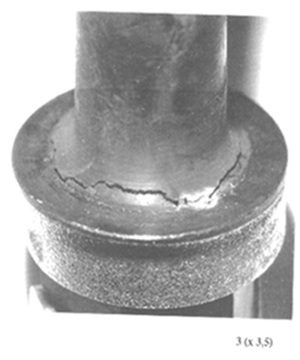
AND THE TIMING COULDN’T BE WORSE.
https://futurism.com/the-byte/france-cracks-dozens-reactors by MAGGIE HARRISON, 27 Oct 22,
Bad Reaction
Europe’s energy crisis may have just gotten worse.
The Wall Street Journal reports that dozens of France’s nuclear reactors — which, amid Russia’s devastating stranglehold on the continent’s natural gas supply, are essential to the nation’s energy security — remain offline following a series of troubling outages believed to be caused by stress-induced pipe corrosion. Fixes are reportedly taking longer than anticipated, but for a struggling continent on the brink of winter, those fixes can’t come quickly enough.
“It’s important that this work restarts as soon as possible,” Emmanuelle Wargon, head of France’s energy regulator, told the WSJ. “If not, the risk of not having electricity rises.”
High Pressure
The nuclear fleet in question, owned by the energy provider EDF, is comprised of 56 reactors, of which 26 are currently out for the count.
According to the WSJ, the pipe problems trace back to late last year, when a crack was discovered in a high-pressure pipe close to the reactor’s core at the nation’s youngest nuclear plant. Other plants, which then launched their own investigations, discovered their own stress corrosion issues shortly thereafter.
“It is only possible to identify [stress corrosion’s] presence once cracking has begun,” read a note from France’s Institute for Radioprotection and Nuclear Safety, the WSJ reports. “Regular inspections of the pipes can only identify the phenomenon once a fault is present.”
Importantly, these aren’t simple fixes. Because the majority of the cracks are so close to the reactor core, radioactivity is a very real threat for technicians, whose exposure has to be limited.
And given how complicated the repairs are, French power experts are reportedly quite pessimistic about the EDF’s ability to get their reactors back online for the winter, especially given that, per the WSJ’s sources, the timelines for several reactor fixes have already been pushed back by at least six weeks.
Beyond the Border
These outages are clearly terrible for France, but they’re just as bad for the rest of Europe, too.
Natural gas prices have skyrocketed as a result of the Russian invasion of Ukraine, which sparred a barrage of Western sanctions and Russia’s subsequent retaliation by way of natural gas restriction. Nations are asking a lot of their citizens, and the continent needs any ounce of energy that it can scavenge to at least somewhat comfortably — let alone safely — get through the winter.
READ MORE: France’s Nuclear Reactors Malfunction as Energy Crisis Bites [The Wall Street Journal]
More on Europe’s energy crisis: Europe’s Energy Crisis Is so Bad It May Have to Idle Cern’s Large Hadron Collider
24 – 30 October UN Disarmament Week – don’t let the world powers normalise “tactical” nuclear weapons – demand abolition of nuclear weapons now!
This Disarmament Week, Women’s International League for Peace and Freedom Demands Nuclear Abolition Now!
The United Nations is marking its annual Disarmament Week from 24 to 30 October 2022. As the week is used to promote awareness of disarmament issues and initiatives, this year WILPF is focusing on amplifying demands for the abolition of nuclear weapons and urging everyone to get involved to prevent any more harm from these weapons of mass destruction.
WILPF International Secretariat 24 October 2022
…………………… current events have elevated the attention being paid to the risks of nuclear weapons and nuclear power, nuclear dangers have persisted in the shadows for decades. Every day, we all live with the possibility of massive nuclear violence, whether by intention, accident, or miscalculation.
The governments of nuclear-armed states, and many of their mainstream media outlets, do not want people to worry. Spreading misinformation about the allegedly “limited” impacts of “tactical” nuclear weapons, they are trying to normalise the threat and risk of nuclear war in order to prevent mass mobilisation against the bomb, as was seen around the world during the 1980s at the height of the Cold War.
But there is no such thing as a small nuclear weapon, and no such thing as a limited nuclear war. If nuclear weapons are used, the humanitarian and environmental consequences will be devastating. And the risks of escalation could mean a nuclear war that leads to climate catastrophe, global famine, and the end of life on Earth as we know it.
We do not have to accept this. People everywhere in the world have a voice and there are actions we can take. Instead of normalising nuclear war, we must stigmatise nuclear weapons.
Most governments have already rejected nuclear weapons, recognising that they are immoral weapons of insecurity and catastrophic harm. These governments negotiated the Treaty on the Prohibition of Nuclear Weapons, which has inspired many local, national, and international activities for nuclear disarmament, ranging from economic divestment to public protest.
What can you do?
This Disarmament Week, when we once again can clearly see the risks posed by nuclear weapons every single day, is a good time to get engaged in the work to abolish nuclear weapons, wherever you are.
You can start by signing this Open Letter From Nobel Peace Prize Laureates and Citizens of the World Against War and Nuclear Weapons, which WILPF’s Disarmament programme Reaching Critical Will, together with the International Physicians for the Prevention of Nuclear War (IPPNW), presented to the UN High Representative for Disarmament Affairs earlier this year.
You can also join the International Campaign to Abolish Nuclear Weapons (ICAN) and its many initiatives working with cities, parliamentarians, schools, and financial institutions to end the reign of terror of nuclear weapons.
Also check out WILPF’s resource page on nuclear weapons and current nuclear threats and risks, which includes key messages for talking with media or friends and family; an FAQ for details; links to resources that you can share to spread the word about the dangers of nuclear weapons; and ideas for how you can get engaged in the work to abolish nuclear weapons and prevent nuclear catastrophes.
This Disarmament Week, and beyond, join WILPF and the global antinuclear movement in demanding Nuclear Abolition Now!
1 This Month
26 April – Chernobyl: Inside the Meltdown airs on National Geographic on Sunday 26th April from 4pm


29 April – Nuclear Expert Webinar #1 – Radiation Impacts on Families with Mary Olson and Cindy Folkers
- 12:15 PM MT – 1:45 PM MT
- Location: Virtual – REGISTER TODAY

4 May -West Suburban Peace Coalition to discuss Iran war at May Educational Forum
Monday, May 4, 7:00 – 8:00 PM Central Standard Time
Title: : How Trump’s Narrative Tries to Shape the Reality of the War on Iran.
Contact Walt Zlotow, zlotow@hotmail.com 630 442 3045 for further information
14 May – online event From Bombs to Data Centres: the Face of Nuclear Colonialism


Pine Ridge Uranium is the real threat, not Tehran- Tell Burgum: Stop the Extraction.
Chernobyl: The Lost Tapes – A good documentary on Chernobyl on SBS available On Demand for the next 3 weeks– https://www.sbs.com.au/ondemand/tv-program/chernobyl-the-lost-tapes/2352741955560
To see nuclear-related stories in greater depth and intensity – go to https://nuclearinformation.wordpress.com
-
Archives
- April 2026 (288)
- March 2026 (251)
- February 2026 (268)
- January 2026 (308)
- December 2025 (358)
- November 2025 (359)
- October 2025 (376)
- September 2025 (257)
- August 2025 (319)
- July 2025 (230)
- June 2025 (348)
- May 2025 (261)
-
Categories
- 1
- 1 NUCLEAR ISSUES
- business and costs
- climate change
- culture and arts
- ENERGY
- environment
- health
- history
- indigenous issues
- Legal
- marketing of nuclear
- media
- opposition to nuclear
- PERSONAL STORIES
- politics
- politics international
- Religion and ethics
- safety
- secrets,lies and civil liberties
- spinbuster
- technology
- Uranium
- wastes
- weapons and war
- Women
- 2 WORLD
- ACTION
- AFRICA
- Atrocities
- AUSTRALIA
- Christina's notes
- Christina's themes
- culture and arts
- Events
- Fuk 2022
- Fuk 2023
- Fukushima 2017
- Fukushima 2018
- fukushima 2019
- Fukushima 2020
- Fukushima 2021
- general
- global warming
- Humour (God we need it)
- Nuclear
- RARE EARTHS
- Reference
- resources – print
- Resources -audiovicual
- Weekly Newsletter
- World
- World Nuclear
- YouTube
-
RSS
Entries RSS
Comments RSS
 nuclear-news