Sizewell C nuclear project might be scrapped as UK faces ‘long winter’ due to energy crisis

A NEW NUCLEAR reactor which is planned for the Sizewell site in Suffolk could face numerous problems with funding and completion, an expert has warned.
Express UK, By MATTHEW DOOLEY, Sun, Sep 11, 2022 Sizewell C nuclear power station is a proposed nuclear plant in Suffolk which would meet up to seven percent of the UK’s energy demand. The project is owned by the French nuclear giant EDF and the China Nuclear group who own an 80 and 20 percent stake, respectively, in the project.
………. the plant will take years to complete, so it is unlikely it will have any effect on consumers’ bills in the short term.
Concerns have also been raised about the French company taking on the project, EDF. The company is reportedly heavily in-debt – €42.8billion (£37billion) at the end of June, according to Bloomberg.
In July, French Prime Minister Elisabeth Borne announced that EDF would be nationalised with the French Government buying 14 percent of the company which it did not already own.
This led some experts to express concern over the viability of the new Sizewell plant amidst an ongoing energy crisis.
Associate Fellow at the Science Policy Research Unit, Sussex Business School, University of Sussex Paul Dorfman is an expert in civil nuclear technology.
He said that following the winter, EDF may lose its appetite for building a nuclear project in the UK, particularly when the rest of Europe was struggling with its own energy crisis.
He said: “EDF has huge problems, as they are massively in debt – essentially bankrupt, right now about €42billion in debt, with huge waste and decommissioning costs on the horizon.
“At the moment half of all French EDF reactors are offline, many with ageing maintenance and corrosion safety problems. Because of all this, the French Government has been forced to fully nationalise EDF.
“This winter will be a long time in energy and in politics. It will be a cold winter, and what would happen if France needed all its power for Paris, and fails to deliver power to the UK? How will that go down with UK people and policy, and could that impact the any new nuclear decision at Sizewell C?”
“What will happen if France says, ‘well we are in such problems with our nuclear, we don’t want to commit to the UK?’ Already, just this week, the EDF Board has refused sign off on Johnson’s Sizewell C contract – are they getting cold feet because they worry about taking on more debt for another UK project, when they have their own problems at home.”
Dr Dorfman was referring to a number of sources close to the matter who apparently told the French magazine Le Figaro EDF’s board of directors had voted against the Government’s negotiated decision with EDF to build the reactor at Sizewell……………….
The Sizewell C project would be funded by three parties – EDF would fund 20 percent while the Government would take on another 20 percent of the project. Private investors would take on another 60 percent of the funding while current investor China General Nuclear Power is expected to ease out of its 20 percent investment.
This adds more uncertainty to the project, according to Dr Dorfman who claims the current market won’t “touch nuclear with a barge pole”.
A portion of the construction will be funded by the Regulated Asset Base (RAB) module, which will see consumers pay a premium on their energy bills to go towards the construction of the plant. https://www.express.co.uk/news/science/1667357/energy-crisis-sizewell-c-nuclear-plant-uk-long-winter-energy-crisis
All 6 reactors at Zaporizhzhia nuclear plant now completely stopped operating
Operations at the Russian-held Zaporizhzhia Nuclear Power Plant in Ukraine
have been fully stopped as a safety measure, Energoatom, the state agency
in charge of the plant, said. The plant “is completely stopped” after thec
agency disconnected the number 6 power unit from the grid at 3.41am (local
time), it said in a statement. “Preparations are under way for its cooling
and transfer to a cold state.”
RTE 11th Sept 2022
https://www.rte.ie/news/ukraine/2022/0911/1321783-ukraine-russia/
Ukraine Considers Shutting Nuclear Plant After Loss of Backup Power
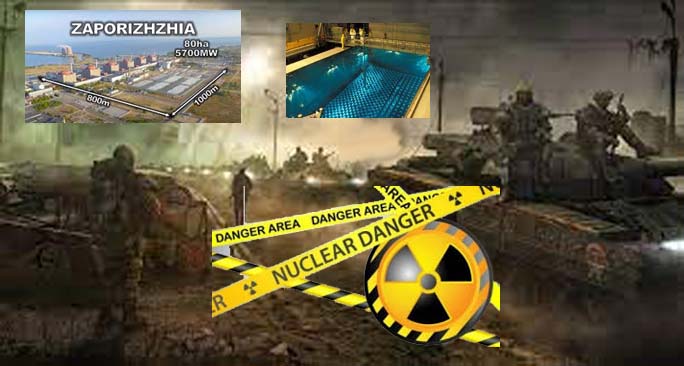
After shelling destroys key electricity supply, Zaporizhzhia facility may have to rely on generators with 10 days of fuel left
WSJ, By Drew Hinshaw and Laurence Norman Sept. 9, 2022
Ukraine is considering shutting down the sole remaining reactor at the Zaporizhzhia nuclear plant, the International Atomic Energy Agency said Friday, after shelling left the plant without a safe and sustainable source of backup power.
The plant, which has already shut down five of its six reactors, risks having only one remaining source of electricity to power its systems in case the sixth reactor has to go offline, said Director General Rafael Grossi in a statement..
Normally, if the plant can’t supply itself power,
it can draw electricity from a nearby thermal-energy plant. But shelling
overnight Thursday destroyed a switchyard that carries electricity out from
that coal-fired plant, Mr. Grossi said.
It is unlikely that it will be
repaired, he added, given the constant artillery fire, meaning the nuclear
plant would have no off-site emergency source of power. The plant could
turn to back up generators, but those only have enough fuel for about 10
days, according to Ukraine’s state-owned nuclear company, Energoatom. The
plant, occupied by Russian soldiers who patrol with grenades dangling off
their belts, is still operated by the company’s Ukrainian workforce.
Plant workers, meanwhile, have no electricity in their homes and the
shelling risks accelerating an exodus of essential staff. “This is an
unsustainable situation and is becoming increasingly precarious,” Mr.
Grossi said. “The power plant has no off-site power, This is completely
unacceptable. It cannot stand. ”The Zaporizhzhia plant is now producing a
minimal 250 megawatts, enough to monitor and sustain the temperature of its
cooling ponds, to pump water through the station, to clean the air inside
the plant, and to perform other basic safety functions, said Petro Kotin,
interim president of Energoatom.
If the last operating reactor goes down,
he said, the staff will need to supply 200 tons of diesel daily to the
generators. The IAEA said in a report Tuesday Ukraine had 2,250 tons of
diesel fuel available for the whole site. Procuring more would require
several truckloads of fuel to cross through an active conflict area
subjected to continual artillery fire, many times a day. Nuclear experts
said it could make sense to shut down the last reactor and work off backup
generators, because the earlier that is done, the cooler the reactor core
would be if Zaporizhzhia’s generators run out of fuel and there is an
accident.
Workers reached by The Wall Street Journal have blamed the
artillery fire on Russia. Plant technicians, backed by European officials
and independent nuclear analysts, have said the shelling serves the
Kremlin’s broader goal of severing Zaporizhzhia’s power connection to
Ukraine’s remaining territory and eventually rerouting it into
Russian-held areas. Russian soldiers have laid land mines around the
plant’s cooling ponds, parked heavy artillery near its reactors, and
turned its safety shelters—meant for plant workers to flee to in an
emergency—into a bunker for themselves, workers say.
When IAEA inspectors
visited the plant last week, they found that the alternative emergency
center that Russian soldiers offered the staff didn’t have its own
ventilation system to filter out radiation from the air, or its own source
of power—or even an internet connection.
Shutting down the plant, in the
midst of an active conflict, would pose enormous and unprecedented
challenges for the nuclear industry. Defunct or dormant nuclear plants
still require electricity and careful maintenance by trained staff to
monitor and safeguard spent nuclear fuel, among other safety operations.
The plant currently suffers obstacles sourcing the spare parts and fuel
that would be required. Compounding difficulties, the Zaporizhzhia plant
has seen a considerable amount of its workforce flee, slipping out through
Russian checkpoints to Ukrainian-held ground.
Wall Street Journal 10th Sept 2022 https://www.wsj.com/articles/ukraine-considers-shutting-nuclear-plant-after-loss-of-backup-power-11662747396
Here’s why the risk of a nuclear accident in Ukraine has ‘significantly increased’
https://www.wboi.org/npr-news/npr-news/2022-09-09/heres-why-the-risk-of-a-nuclear-accident-in-ukraine-has-significantly-increased By Geoff Brumfiel, September 9, 2022, The head of the International Atomic Energy Agency is warning that the risk of a nuclear accident at the Zaporizhzhia nuclear power plant has “significantly increased,” following ongoing fighting around the site.
“Let me be clear, the shelling around Zaporizhzhia nuclear plant must stop,” IAEA Director General Rafael Mariano Grossi said in a brief recorded statement released on Friday.
Grossi also warned that the continued fighting might require the plant to shut down its last operating reactor. That would set into motion a chain of events that could intensify the current nuclear crisis. Here’s how.
Nuclear plants need electricity
The Zaporizhzhia nuclear plant is the largest in Europe, capable of producing thousands of megawatts of electricity. But the plant also needs power from the same electricity grid it feeds.
The power is used to run the various parts of the plant, including its safety and cooling systems. Specifically, nuclear power plants require water to be pumped constantly through their cores in order to function safely, and the pumps need electricity.
At Zaporizhzhia, the power is normally supplied by four high-voltage lines, which connect the nuclear complex to Ukraine’s electricity grid, but the conflict has seen those lines systematically cut. The last 750kV line was severed on September 3, according to the IAEA.
A backup line was disconnected two days later due to a fire on the site. In a press conference shortly after returning from Zaporizhzhia, Grossi told reporters that he believed the power lines were being deliberately targeted:
Zaporizhzhia has been making its own power, but that’s a limited solution
Since losing its last connection to the grid on Sept. 5, the nuclear plant has been powering itself in so-called “islanding operation mode.” Under this setup, the Unit 6 reactor has been producing low levels of electricity that are running the rest of the facility.
The reactors at Zaporizhzhia are designed to operate in this mode during startup, according to a nuclear engineer who worked directly with the reactors when the plant began operations in the 1980s, but who was not authorized to speak publicly by his current employer.
“It’s not good, it cannot be done for a long time,” he says. The problem is less to do with the reactor itself than the turbine, generators and other systems–all of which are designed to run at significantly higher power levels than islanding operation mode provides.
Adding to the problem, Grossi said in his statement, is the increasing strain on the plant’s Ukrainian operators. Many of the plant’s current staff of just under 1,000 live in the nearby town of Enerhodar. Its water, sewage and electrical supplies have all been disrupted in recent days by the same fighting that’s damaged the lines around the plant.
“The shelling is putting in danger operators and their families, making it difficult to adequately staff the plant,” Grossi says.
Shutting down the last reactor will trigger emergency generators
With conditions deteriorating, it seems more likely that Ukrainian authorities will decide to power down the last reactor. But in the short term, that could exacerbate the crisis.
That’s because nuclear reactors are more like charcoal grills than gas stoves. Even after they’re shut off, they remain hot for a long period of time. Water must still circulate in the cores to prevent a meltdown.
With its reactors shut down, Zaporizhzhia will switch to backup emergency diesel generators to keep the reactors cool. The emergency generators themselves are a tried-and-true method for cooling a nuclear reactor. In fact, the Nuclear Regulatory Commission requires U.S. plants to switch to emergency diesel generators immediately, bypassing the “islanding operation mode” used in Zaporizhzhia.
“We don’t want to go on the diesel generators, but it’s a situation you can abide by for awhile,” says Steven Nesbit, a nuclear engineer and member of the American Nuclear Society’s rapid response taskforce, which is tracking the current crisis. For example, after losing power during Hurricane Andrew in 1992, the Turkey Point Nuclear Plant in Florida operated for days on emergency diesel power.
If the generators run out of fuel, a meltdown could occur
Continue readingWow! The nuclear lobby comes up with a new plan “to compel governments to make difficult decisions”

The solution that we have created – the creation of a multilateral bank that will support nuclear investment and nuclear infrastructure all across the world – is a needed tool to achieve these objectives.
The proposed International Bank for Nuclear Infrastructure (IBNI)will be based on the same model as the World Bank, European Bank for Reconstruction and Development and the Asian Development Bank, among others.
“What a multilateral can do, through the establishment, adoption and enforcement of country-level agreements, is compel governments to make the politically-difficult decisions.
Financing issues for nuclear under the spotlight
World Nuclear News, 09 September 2022 The financing of nuclear projects under current mechanisms faces many challenges, panelists at World Nuclear Symposium agreed. However, plans for a new multilateral bank specifically for nuclear infrastructure could help projects move forward.
I think we all share a vision that nuclear needs to play a major role in the attainment of [energy security, sustainable development, climate targets] policy objectives,” said Daniel Dean, chair of the International Bank for Nuclear Infrastructure (IBNI) Implementation Organisation Strategic Advisory Group.
“The more we make nuclear accessible, financeable and achievable in countries throughout the world, the more that nuclear will be considered as a viable option to achieve those carbon transition objectives. But we are talking about multiple trillions of dollars of investment to achieve this vision. That is a problem given the existing financing mechanisms, the existing commercial structures being utilised to deliver nuclear projects.
George Borovas, partner and head of nuclear at law firm Hunton Andrews Kurth, who chaired the session, said the financing of nuclear projects is “an issue that is dear to my heart”. He said he has seen many such projects fail because of a lack of the right financial solutions……… You have to think about the financing solution up front.”
“General issues of public acceptance, reputational risk, potential controversies inevitably makes a lot of banks nervous, or at least cautious, about engaging with nuclear,” said Mark Muldowney of BNP Paribas…………..

Dean said nuclear must been considered from an Environmental, Social and Governance (ESG) perspective as an investor.
“We need to establish a better basis for the ESG status of nuclear and its role in terms of net-zero and its role in energy security,” he said. “That’s important as that will start to aggregate stability and actually say that nuclear is something that collectively financiers want to finance.”
what you need for that assessment is for industry collectively to put together the case why nuclear makes sense – from a policy point of view that’s the government’s domain
Dean said it is not just a financing issue. “It is a multidimensional problem that needs a multidimensional solution. The solution that we have created – the creation of a multilateral bank that will support nuclear investment and nuclear infrastructure all across the world – is a needed tool to achieve these objectives.
…………………… The proposed IBNI will be based on the same model as the World Bank, European Bank for Reconstruction and Development and the Asian Development Bank, among others.
“What a multilateral can do, through the establishment, adoption and enforcement of country-level agreements, is compel governments to make the politically-difficult decisions. https://world-nuclear-news.org/Articles/Financing-issues-for-nuclear-under-the-spotlight
UK and Europe cannot depend on nuclear power, with reactors shutting down, just as winter hits.
The first real winter test of how strained the UK’s energy supplies are will come next month when nuclear reactors start closing for maintenance, just as the heating season kicks off.
Nuclear output makes up roughly 15% of Britain’s energy mix, and the planned shutdowns may challenge
electricity production when the country can least afford it. Two units at n the Heysham plant in northern England are set to halt for periods between October and November, and more nuclear closures are scheduled through winter.
European power prices have surged amid an energy crisis linked to soaring gas costs caused by Russia’s war in Ukraine. While early winter weather is expected to be mild, the UK grid risks becoming particularly
tight as it gets colder, with the country exporting power to France because of major outages at reactors there.
Bloomberg 7th Sept 2022
Zelensky and NATO plan to transform post-war Ukraine into ‘a big Israel’.

https://thegrayzone.com/2022/09/17/zelensky-nato-ukraine-big-israel/— ALEXANDER RUBINSTEIN·SEPTEMBER 17, 2022
The NATO-backed Atlantic Council has proposed apartheid Israel as a blueprint for a hyper-militarized Ukraine. The paper was authored by Obama’s former ambassador to Tel Aviv, now an Israeli spy-tech consultant.
Just forty days after Russia’s military campaign began inside Ukraine, Ukrainian President Vlodymyr Zelensky told reporters that in the future, his country would be like “a big Israel.” The following day, one of Israel’s top promoters in the Democratic Party published an op-ed in NATO’s official think tank exploring how that could be executed.
Zelensky made his prediction while speaking to reporters on April 5, rejecting the idea that Kiev would remain neutral in future conflicts between NATO, the European Union, and Russia. According to Zelensky, his country would never be like Switzerland (which coincidentally abandoned its Napoleon-era tradition of nonalignment by sanctioning Russia in response to its February invasion).
“We cannot talk about ‘Switzerland of the future,’” the president informed reporters. “But we will definitely become a ‘big Israel’ with its own face.”
For those wondering what a “big Israel” would actually look like, Zelensky quickly elaborated on his disturbing prophecy.
“We will not be surprised that we will have representatives of the Armed Forces or the National Guard in all institutions, supermarkets, cinemas — there will be people with weapons,” Ukraine’s president said, predicting a bleak existence for his citizens. “I am sure that our security issue will be number one in the next ten years.”
Though the web post was based on comments Zelensky made to reporters, the president’s office mysteriously excised a section of his remarks in which he declared a future Ukraine would not be “absolutely liberal, European.” Instead, along with his vision for a heavily militarized Ukraine, the post emphasized Zelensky’s readiness to join NATO “already tomorrow.”
For NATO’s power brokers, however, Zelensky’s intimated willingness to join the military alliance was perhaps the least remarkable aspect of his statement. Instead, within 48 hours of his comments, the Atlantic Council – NATO’s semi-official think tank in Washington – published a “road map” exploring how to transform Ukraine into “a big Israel.”
Authored by Daniel B. Shapiro, the former US Ambassador to Israel under President Barack Obama, the document posited that “the two embattled countries share more than you might think.”
Just as former US Secretary of State Alexander Haig presented Israel as “the largest American air craft carrier in the world that cannot be sunk,” Shapiro put forward a vision of Ukraine as a hyper-militarized NATO bastion whose national identity would be defined by its ability to project US power against Russia.
Despite Israel’s reluctance to join the Western sanctions campaign against Russia, it has aided Ukraine’s militarily, sending two large shipments of defensive equipment since February of this year. In the past, however, Israel’s support for Ukraine in its fight against Russia has been more than defensive.
Back in 2018, over 40 human rights activists petitioned the Israeli High Court of Justice to stop arming Ukraine after members of the neo-nazi Azov Battalion were caught brandishing Israeli-made weapons. As Israel’s Ha’aretz noted at the time, “The militia’s [Azov] emblems are well-known national socialist ones. Its members use the Nazi salute and carry swastikas and SS insignias… One militia member said in an interview that he was fighting Russia since Putin was a Jew.”

Zelensky, a Ukrainian Jew, was apparently unperturbed by Israel’s alleged arming of Nazi elements in his country. One year after his 2019 election, he made a pilgrimage to Jerusalem to launch what he called a “prayer for peace,” and to attend an event entitled “Remember the Holocaust to fight anti-Semitism.” Ahead of the junket, Zelensky heaped praise on Israeli society, remarking in an interview that “Jews managed to build a country, to elevate it, without anything except people and brains,” and that Israelis are a “united, strong, powerful people. And despite being under the threat of war, they enjoy every day. I’ve seen it.”
NATO’s Approach to Russia’s Borders Planned Years Ago

The alliance revealed plans to increase the number of prepared forces on the eastern flank to more than 300,000 soldiers in the near future.
The head of NATO’s Military Committee, Admiral Rob Bauer, stated on Saturday that NATO began planning its expansion near Russia’s borders several years ago.
Earlier on Saturday, the NATO Military Committee met in Estonia, where Supreme Allied Commander Europe General Christopher Cavoli outlined to NATO member countries his strategic considerations for NATO’s efforts on the eastern flank, among other things.
“We’re talking about the biggest overhaul of our military structures since 1949. The planning for that started several years ago, but now we’re implementing it,” Bauer said at a press conference.
NATO leaders agreed on a plan for a significant build-up of the alliance’s forces at the end of June, on the eastern flank by 2023, amid Russia’s military operation in Ukraine.
The alliance revealed plans to increase the number of prepared forces on the eastern flank to more than 300,000 soldiers in the near future. In addition, it intends to increase the composition of combat groups to the brigade level. Moreover, NATO countries pledged to increase defense spending.
Max Blumenthal tweets: In their post-counteroffensive triumphalism, US hawks reveal real objectives of the Ukraine proxy war. “A victory in Ukraine’s understanding of the term also brings about the end of Putin’s regime,” Anne Applebaum wrote, urging Russia’s destabilization.
NATO is closely collaborating with the defense sector to restock its arsenal, which has been depleted as a result of the supply of armaments to Ukraine by the bloc, according to the NATO Secretary-General.
“NATO is working closely with defense industry in order to replenish stocks for the military equipment the allies have sent to Ukraine,” Stoltenberg said on the sidelines of a forum organized by U.S. magazine Foreign Policy, adding that NATO countries were also asking defense companies to ramp up their production.
The Secretary-General added that the need for additional help for Ukraine was still urgent, and it was crucial to make sure that the bloc had adequate weapons and other equipment to stockpile and support Kiev militarily.
Caitlin Johnstone: Ukraine crawling with CIA & Co

https://johnmenadue.com/caitlin-johnstone-ukraine-crawling-with-cia-co/ 17 Sept 22
The previously unthinkable idea that the U.S. is at war with Russia has been gradually normalised, with the heat turned up so slowly that the frog doesn’t notice it’s being boiled alive.
The New York Times reports that Ukraine is crawling with special forces and spies from the U.S. and its allies, which would seem to contradict earlier reports that the U.S. intelligence cartel is having trouble getting intel about what’s happening on the ground in Ukraine.
This would also, obviously, put the final nail in the coffin of the claim that this is not a U.S. proxy war.
In an article headlined “Commando Network Coordinates Flow of Weapons in Ukraine, Officials Say,” anonymous Western officials inform us of the following through their stenographers at The New York Times:
“As Russian troops press ahead with a grinding campaign to seize eastern Ukraine, the nation’s ability to resist the onslaught depends more than ever on help from the United States and its allies — including a stealthy network of commandos and spies rushing to provide weapons, intelligence and training, according to U.S. and European officials.
Much of this work happens outside Ukraine, at bases in Germany, France and Britain, for example. But even as the Biden administration has declared it will not deploy American troops to Ukraine, some C.I.A. personnel have continued to operate in the country secretly, mostly in the capital, Kyiv, directing much of the massive amounts of intelligence the United States is sharing with Ukrainian forces, according to current and former officials.
At the same time, a few dozen commandos from other NATO countries, including Britain, France, Canada and Lithuania, also have been working inside Ukraine.”
he revelation that the C.I.A. and U.S. special forces are conducting military operations in Ukraine does indeed make a lie of the Biden administration’s insistence at the start of the war that there would be no American boots on the ground in Ukraine. And the admission that NATO powers are so involved in operations against a nuclear superpower means, we are closer to seeing a nuclear exchange than anyone should be comfortable with.
This news should surprise no one who knows anything about the usual behaviour of the U.S. intelligence cartel, but interestingly it contradicts something we were told by the same New York Times not three weeks ago.
“American intelligence agencies have less information than they would like about Ukraine’s operations and possess a far better picture of Russia’s military, its planned operations and its successes and failures,” The New York Times told us earlier this month. “U.S. officials said the Ukrainian government gave them few classified briefings or details about their operational plans, and Ukrainian officials acknowledged that they did not tell the Americans everything.”
It seems a bit unlikely that U.S. intelligence agencies would have a hard time getting information about what’s happening in a country where they themselves are physically located. Moon of Alabama theorised at the time that this ridiculous, “We don’t know what’s happening in our own proxy war” line was being pushed to give the U.S. plausible deniability about Ukraine’s failures on the battlefield, which have only gotten worse since then.
So why are they telling us all this now? Well, it could be that we’re being paced into accepting an increasingly direct role of the U.S. and its allies in Ukraine.
The other day Antiwar’s Daniel Larison tweeted, “Hawks in April: Don’t call it a proxy war! Hawks in May: Of course it’s a proxy war! Hawks in June: It’s not their war, it’s our war!”
This is indeed exactly how it happened. Back in April President Joe Biden told the press the idea that this is a proxy war between the U.S. and Russia was “not true” and Defence Secretary Lloyd Austin said “It’s not, this is clearly Ukraine’s fight” when asked if this is a proxy war. The mainstream media were still framing this claim as merely an “accusation” by the Russian government and empire spinmeisters were regularly admonishing anyone who used that term on the grounds that it deprives Ukrainians of their “agency.”
Then May rolled around and all of a sudden we had The New Yorker unequivocally telling us that the U.S. is in “a full proxy war with Russia” and hawks like U.S. Rep. Seth Moulton saying things like,
“We’re not just at war to support the Ukrainians. We’re fundamentally at war, although somewhat through a proxy, with Russia, and it’s important that we win.”
And now here in June we’ve got war hawks like Max Boot coming right out and saying that this is actually America’s war, and it is therefore important for the U.S. to drastically escalate it in order to hand the Russians “devastating losses.”
So, the previously unthinkable idea that the U.S. is at war with Russia has been gradually normalised, with the heat turned up so slowly that the frog doesn’t notice it’s being boiled alive. If that idea can be sufficiently normalised, public consent for greater escalations will likely be forthcoming, even if those escalations are extremely psychotic.
Back in March when I said the only “agency” Ukraine has in this conflict is the Central Intelligence one, empire loyalists jumped down my throat. They couldn’t believe I was saying something so evil and wrong. Now they’ve been told that the Central Intelligence Agency is indeed conducting operations and directing intelligence on the ground in Ukraine, but I somehow doubt that this will stir any self-reflection on their part.
New study reveals Russia’s comprehensive buildup of nuclear missile test-ground at Novaya Zemlya
Russia is about to scale up its dangerous testing of the Burevestnik nuclear-powered cruise missile, according to a study of satellite images obtained by military analyst Tony Roper.
 | |||
|
https://thebarentsobserver.com/en/security/2022/09/new-study-reveals-comprehensive-buildup-nuclear-missile-test-ground-novaya-zemlya By Thomas Nilsen September 18, 2022, [Excellent pictures and map]
Few places on planet earth are surrounded by more secrecy than the remote military test ranges for nuclear material at Novaya Zemlya in the Arctic. Totally forbidden to visitors since the 1950ties as atmospheric and underground nuclear weapons tests were conducted till 1990. Since then, the polygon near the Matochkin Strait has facilitated subcritical nuclear tests.
A bit to the south is Pankovo, a missile launch site where Russia in November 2017 made at least one test flight of the Burevestnik, in the West known as the SSC-X-9 Skyfall.
It could as well be named ‘a flying Chernobyl’ as the missile is powered by a small nuclear reactor which is cooled by the outside air running through the uranium core, leaving behind radioactive isotopes as it is flying.
That is the reason tests of the weapon now take place at one of the world’s most remote locations, hundreds of kilometers from nearest civilian populations.
“Should anything go wrong, then it won’t be so noticeable,” said Tony Roper to the Barents Observer. He has for years studied satellite images from Novaya Zemlya. In recent months, his focus has especially been on developments at the Pankovo site.
This weekend, Roper obtained new satellite images that drove him to blow the whistle.
“It is definitely Burevestnik,” he said.
Few places on planet earth are surrounded by more secrecy than the remote military test ranges for nuclear material at Novaya Zemlya in the Arctic. Totally forbidden to visitors since the 1950ties as atmospheric and underground nuclear weapons tests were conducted till 1990. Since then, the polygon near the Matochkin Strait has facilitated subcritical nuclear tests.
A bit to the south is Pankovo, a missile launch site where Russia in November 2017 made at least one test flight of the Burevestnik, in the West known as the SSC-X-9 Skyfall.
It could as well be named ‘a flying Chernobyl’ as the missile is powered by a small nuclear reactor which is cooled by the outside air running through the uranium core, leaving behind radioactive isotopes as it is flying.
That is the reason tests of the weapon now take place at one of the world’s most remote locations, hundreds of kilometers from nearest civilian populations.
“Should anything go wrong, then it won’t be so noticeable,” said Tony Roper to the Barents Observer. He has for years studied satellite images from Novaya Zemlya. In recent months, his focus has especially been on developments at the Pankovo site.
This weekend, Roper obtained new satellite images that drove him to blow the whistle.
“It is definitely Burevestnik,” he said.
ADVERTISEMENT
https://googleads.g.doubleclick.net/pagead/ads?client=ca-pub-2104545995324909&output=html&h=250&slotname=5022142078&adk=3712131370&adf=404035791&pi=t.ma~as.5022142078&w=300&lmt=1663528077&url=https%3A%2F%2Fthebarentsobserver.com%2Fen%2Fsecurity%2F2022%2F09%2Fnew-study-reveals-comprehensive-buildup-nuclear-missile-test-ground-novaya-zemlya&wgl=1&uach=WyJXaW5kb3dzIiwiMTQuMC4wIiwieDg2IiwiIiwiMTA1LjAuNTE5NS4xMjciLFtdLGZhbHNlLG51bGwsIjY0IixbWyJHb29nbGUgQ2hyb21lIiwiMTA1LjAuNTE5NS4xMjciXSxbIk5vdClBO0JyYW5kIiwiOC4wLjAuMCJdLFsiQ2hyb21pdW0iLCIxMDUuMC41MTk1LjEyNyJdXSxmYWxzZV0.&dt=1663539271101&bpp=16&bdt=2086&idt=393&shv=r20220914&mjsv=m202209080101&ptt=5&saldr=sa&abxe=1&cookie=ID%3D01cdbfbc9b26bc0b-22b832c0a6d600ff%3AT%3D1663539273%3ART%3D1663539273%3AS%3DALNI_MbVJ8-jessrZIStq39IULHZNtNldA&gpic=UID%3D000009cd55ded703%3AT%3D1663539273%3ART%3D1663539273%3AS%3DALNI_MaKEb-9tPO0q9SohXFpVCkMM-ooNQ&prev_slotnames=5270755046%2C2076026748%2C4761899835%2C5419331806&correlator=7050549214270&frm=20&pv=1&ga_vid=1485890113.1663539271&ga_sid=1663539271&ga_hid=1980766128&ga_fc=1&u_tz=600&u_his=1&u_h=720&u_w=1280&u_ah=672&u_aw=1280&u_cd=24&u_sd=1.5&dmc=8&adx=218&ady=2616&biw=1263&bih=512&scr_x=0&scr_y=621&eid=44759876%2C44759927%2C44759842%2C44767667%2C44761792%2C42531705&oid=2&psts=APxP-9B9zlXnYoGpvHps-ru59194T9EBOWEPbFzZTKbNUlPlKkfRHTEQ7qMmfqtsREf-jFUnbtr7Tfb14fTbIA%2CAPxP-9Bqqp6JY_UnvxjIcZhV3_0AskK8cuFdGKn9eFW6km7Pyk18Hmw05vEMYHKSlwJCpwIKXD7sU_q4u6hy%2CAPxP-9Bavt_866R27rHZI1VyPoIeTUH6MxIR6cuKFXrlbuV-5yzvwWcc5hxn7OrIPg0hDv_ZswPL5KEly-iGzw%2CAPxP-9DxiRPJQR3W_f8dqT_ILxR5X9RatOrMcGD_xIPQ6tRuA5MUw-1HvJ8xl5hLpw-5v-7yZk1nA4ajiHP77QhHA_upjNyUUg6D4rogXnVWe5Q&pvsid=3244277979942446&uas=3&nvt=1&ref=https%3A%2F%2Fnews.google.com%2F&eae=0&fc=640&brdim=0%2C0%2C0%2C0%2C1280%2C0%2C1280%2C672%2C1280%2C512&vis=1&rsz=%7C%7CoeEbr%7C&abl=CS&pfx=0&fu=0&bc=31&ifi=4&uci=a!4&btvi=2&fsb=1&xpc=IR5E9NXJ4h&p=https%3A//thebarentsobserver.com&dtd=4862
Tony Roper has published several of the satellite images on his online site, detailing the different infrastructure improvements made at the site this summer and autumn.
The size of the ongoing development is much more comprehensive than previous year’s container-based structures aimed at supporting the test launches of the nuclear-powered missile.
New infrastructure
A new jetty is placed on the shore where equipment is landed from ships, the road is improved, helicopter pads are made, new buildings are erected, shelters and concrete pads with rails are assembled.
It is, however, Tony Roper’s latest findings from a space image taken by Airbus on September 16 that prove that the Burevestnik is actually present at Pankovo.
A canister, similar to what previously has been seen in a video by Russia’s Defense Ministry, is now in place next to the rails on the launch pad partly covered by a retractable shelter.
It was in March 2018 the work on developing Russia’s nuclear-powered cruise missile was made public to the outside world. Along with other weapons of mass destruction, President Vladimir Putin showed a video of the Burevestnik in his annual speech to the nation.
Later the same year, U.S. intelligence sources reported about one of the missiles being lost at sea after a test in late 2017.
The building infrastructures to Pankovo are likely brought to shore from Rosatomflot’s nuclear-powered container ship “Sevmorput”, a vessel capable of floating out barges with containers towed to shores by smaller tugs in Arctic coastal areas where no harbor infrastructure is developed.
Rosatom in charge
Rosatomflot is a subsidiary of Rosatom, Russia’s state nuclear corporation also in charge of testing and developing the small nuclear reactors used with the Burevestnik missile.
The Barents Observer has followed AIS tracks of “Sevmorput” via the online exactEarth ShipView since August as the vessel has been shuttling back and forth between Murmansk, the waters just outside Pankovo and Rogachevo, the main military settlement on the southern shores in Novaya Zemlya.
By Sunday, September 18, “Sevmorput” is at anchor near Rogachevo.
The town is home to one of Russia’s upgraded air bases in the Arctic and also facilitates the polygon for sub-critical nuclear tests in the tunnels near Matochkin Strait. Helicopters flying personnel to Pankovo are based here, and it is likely that Rosatom’s specialists for developing and testing the Burevestnik missile are commuting to Rogachevo from mainland Russia.
Testing such a flying reactor is risky. What goes up must come down.
It will eventually have an impact zone, whether crashing at sea or ground as planned or by accident mid-air.
Radiation fear 2
The infamous accident in the White Sea outside the Nenoksa test site in 2019 happened on a barge during the salvage work of a crashed Burevestnik missile. Five Rosatom experts were killed after the explosion, which also caused a spike in radiation over the nearby city of Severodvinsk.
There have also been speculations that numerous low-level measurements of radioactive isotopes in northern Scandinavia in recent years have been related to Russia’s testing of secret nuclear-powered weapons systems.
Last year, Norway’s Intelligence Service warned about Russia’s testing and deployment of new nuclear weapons technologies in northern regions.
Objectives with such tailored weapons could be to easier penetrate missile defense systems, or to compensate for conventional inferiority.
Nuclear deterrence
“It is our worry that the New Start Treaty is not sufficient enough to cover the new technological developments,” Chief of the Norwegian Intelligence Service, Vice Admiral Nils Andreas Stensønes told the Barents Observer.
Stensønes added that the agreements should be updated.
An advantage of a nuclear-powered missile, according to Putin’s 2018 speech, is its capability to avoid any anti-ballistic missile defense systems. The missile can also, at least theoretically, conduct mid-air navigation and has a range much longer than any other cruise missile.
The Burevestnik is designed to carry a nuclear warhead.
Doomsday scenario: Simulation reveals nuclear war with Russia would cause 90 million casualties
https://www.washingtonexaminer.com/policy/defense-national-security/simulation-reveals-nuclear-war-russia-90-million-casualties by Rachel Schilke, Breaking News Reporter | September 17, 2022,
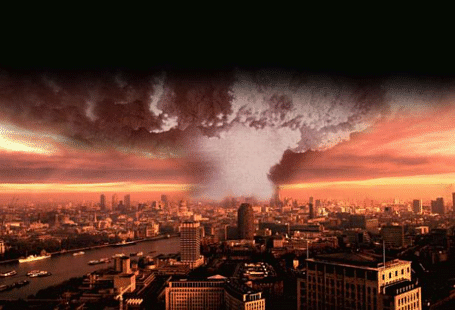
It is predicted that over 90 million people would be dead or injured in a war between the United States and Russia, Princeton University researchers discovered.
Researchers at the Princeton Program on Science and Global Security created a simulated war using realistic nuclear weapons positions, targets, and fatality estimates to show the consequences that a nuclear war could have on both countries and the world, according to the project’s website.
The simulation’s scenario predicted 91.5 million casualties, with 34.1 million dead and 57.4 million injured.
“Deaths from nuclear fallout and other long-term effects would significantly increase the estimate,” the project’s video noted.
In the scenario, Russia would fire the first shot to prevent a U.S.-NATO advance. Within three hours, the researchers estimated 2.6 million immediate casualties and 480 nuclear weapons fired, 300 from Russia and 180 from NATO.
Targets would include NATO bases across Europe. The researchers determined that after Europe was destroyed, warheads would be launched from the U.S. Within 45 minutes of that launch, they estimated 3.4 million immediate casualties.
Tensions between Russia and the U.S. have escalated in recent years, particularly with the war in Ukraine. The researchers cite that both countries have “abandoned” long-standing nuclear arms control treaties, most notably the U.S. under former President Donald Trump’s administration.
In August 2018, the U.S. pulled out from the INF Treaty, which bans midrange, ground-launched nuclear missiles, on the basis that Russia allegedly tested and deployed a cruise missile prohibited by the treaty, an allegation the Kremlin has denied.
The U.S. also left the Treaty on Open Skies in November 2020, stating that Russia had disregarded its terms for years. Fellow NATO members, who had supported America’s decision to leave the INF Treaty, expressed regret at the U.S. leaving the open skies treaty.
Currently, the two countries are locked in the New START Treaty, which places limits on all Russian-deployed intercontinental-range nuclear weapons. The treaty will be in effect until February 2026.
The Washington Examiner reached out to the researchers on the project for comment on the results.
Nuclear power still doesn’t make much sense
More on the A NEW ENERGY PARADIGM
New York Times-NYT | Opinion Piece | by Farhad Manjoo 16 Sept 22
“…the nuclear industry has long been hobbled by two problems that its boosters can’t really wish away:
Nuclear is far slower to build than most other forms of power, and it’s far more expensive, too.
And now there is a third problem on the horizon.
As battery technology improves and the price of electricity storage plummets, nuclear may be way too late, too…
with much of its value eclipsed by cheaper, faster and more flexible renewable power technologies.”
This is without discussing in detail why, how, and where, increasing, innovation efficiencies in current batteries, are trending cheaper;
or the high probability of solid-state batteries, in the development pathway emerging.
Keywords: ‘battery technology improves’ ‘the price of electricity storage plummets’ ‘nuclear’ ‘eclipsed by cheaper, faster and more flexible renewable’
Many good points in this article, including –
“… because any new money put in nuclear is money you aren’t spending on renewable projects that could lower emissions immediately. There’s an opportunity cost “of waiting around for a nuclear reactor to be built when you could have spent that money on wind or solar and got rid of emissions much faster,” Jacobson said. …” https://www.nytimes.com/…/nuclear-power-still-doesnt…
Why future sea levels matter to Suffolk’s Sizewell nuclear plant
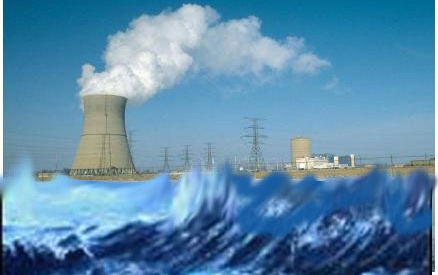
Global coastal inundation is now expected to be far worse than previously predicted
https://www.theguardian.com/news/2022/sep/16/why-future-sea-levels-matter-to-suffolks-sizewell-nuclear-plant Paul Brown, 16 Sept 22,
The caution of scientists, reinforced by accusations scaremongering from the well-funded fossil fuel lobby, has meant computer estimates of sea level rise in official forecasts have been low. Scientists mostly only counted the rise of the oceans because of expansion of warmer water then added on melting glaciers in the Alps and other temperate regions.
Originally ice caps in Greenland and Antarctica were excluded, in case increased snow fall in winter was greater than the ice melt in summer. Real time measurements of ice lost in polar regions has changed that. Coastal inundation in places such as East Anglia, Florida, and the Nile and Mekong deltas is expected to be far worse and quicker than previously predicted. Food supplies are threatened. The melting is also irreversible.
This makes Boris Johnson’s last act as prime minister to back a giant nuclear power plant on a low lying coast at Sizewell in Suffolk look a gamble. The builders, EDF, say there is no danger because the twin reactors will be built on a concrete raft seven metres above mean sea level, with a further surrounding wall to protect the nuclear island. But this concrete monolith will need to withstand sea level rise and storm surges for up to 200 years to protect future generations from its radioactive content.
U.S. Finally Admits Ukraine Bombs Zaporizhzhia’s Nuclear Power Plant.

The Duran, by Eric Zuesse, September 15, 2022, Unnamed American officials, according to the New York Times, have admitted that the explosives fired against Ukraine’s nuclear power plant in Zaporizhzhia have been fired against the plant by Ukraine’s Government, not by Russia’s Government, and furthermore these officials make clear that Ukraine’s attacks against the plant are a key part of Ukraine’s plan to win its U.S.-backed-and-advised war against Russia, on the battlefields of Ukraine, using Ukrainian soldiers.
Zaporizhzhia is a city in Ukraine that is in Russian-controlled territory, and Ukraine’s strategy is to destroy the ability of the plant to function, so that areas controlled by Russia will no longer be able to benefit from that plant’s electrical-power output. The United States Government helped Ukraine’s Government to come up with this plan, according to the New York Times.
This information was buried by the Times, 85% of the way down a 1,600-word news-report they published on September 13th, titled “The Critical Moment Behind Ukraine’s Rapid Advance”, in which it stated that, “Eventually, Ukrainian officials believe their long-term success requires progress on the original goals in the discarded strategy, including recapturing the nuclear power plant in Zaporizhzhia, cutting off Russian forces in Mariupol and pushing Russian forces in Kherson back across the Dnipro River, American officials said.”
When IAEA inspectors arrived at that plant on September 1st, after a lengthy period of trying to get there to inspect it but which was blocked by Ukraine’s Government, and the IAEA started delivering reports regarding what they were finding at the plant, no mention has, as-of yet, been made concerning which of the two warring sides has been firing those bombs into the plant.
Even when the IAEA headlined on September 9th “Director General’s Statement on Serious Situation at Ukraine’s Zaporizhzhya Nuclear Power Plant”, and reported that the plant’s ability to operate “has been destroyed by shelling of the switchyard at the city’s thermal power plant, leading to a complete power black-out in” the entire region, and that “This is completely unacceptable. It cannot stand.”, and closed by saying they “urgently call for the immediate cessation of all shelling in the entire area,” no mention was made as to which of the two sides was shooting into the plant in order to disable it, and which of the two sides was firing out from the plant in order to protect it against that incoming fire.
Previously known was only that the city of Zaporizhzhia has been and is under Russian control ever since March 4th. Consequently, all news-media and reporters have known that (since Russia was inside and Ukraine was outside) Russia has been defending the plant and Ukraine has been attacking it, but until “American officials” let slip, in this news-report, the fact that this has indeed been the case there, no Western news-medium has previously published this fact — not even buried it in a news-report.
So, although nothing in this regard may yet be considered to be official, or neutral, or free of fear or of actual intent to lie, there finally is, at the very least, buried in that news-report from the New York Times, a statement that is sourced to “American officials,” asserting that this is the case, and the Times also lets slip there that this “shelling” of that plant is an important part of the joint U.S.-Ukraine master-plan to defeat Russia in Ukraine.
It is part of the same master-plan, which the U.S. Government recommended to Ukraine’s Government, and which also included the recent successful retaking by Ukraine of Russian-controlled land near the major Ukrainian city of Kharkov, which city’s recapture by Ukraine is also included in the master-plan. Both operations — the shelling of the nuclear power plant, and the recapture of that land near Kharkov — were parts of that master-plan, according to the New York Times.
The Times report asserts that
Long reluctant to share details of their plans, the Ukrainian commanders started opening up more to American and British intelligence officials and seeking advice. Jake Sullivan, the national security adviser, and Andriy Yermak, a top adviser to Mr. Zelensky, spoke multiple times about the planning for the counteroffensive, according to a senior administration official. Gen. Mark A. Milley, the chairman of the Joint Chiefs of Staff, and senior Ukrainian military leaders regularly discussed intelligence and military support.
And in Kyiv, Ukrainian and British military officials continued working together while the new American defense attaché, Brig. Gen. Garrick Harmon, began having daily sessions with Ukraine’s top officers.
Back-up power lines restored to the shut-down Zaporizhzhia nuclear power station
Ukrainian operators of the Zaporizhzhia nuclear power station won’t restart
the plant until its occupying Russian forces leave the facility, the head
of Ukraine’s nuclear agency, Petro Kotin, tells NPR.
Ukrainian workers powered down the war-damaged plant last weekend for safety reasons amid
continued shelling. On Tuesday, workers finished restoring all three backup
power lines — a sliver of good news at the plant that officials and
energy experts have warned could face a catastrophe as fighting continues
around it.
Still, the situation remains tense and unpredictable at
Zaporizhzhia — Europe’s largest nuclear plant, which has been occupied by
Russian troops since early March but is operated mostly by Ukrainian staff
— and concerns about the risk of a nuclear disaster are still looming as
fighting picked up in that part of southern Ukraine.
NPR 15th Sept 2022
https://www.npr.org/2022/09/15/1122908577/ukraine-zaporizhzhia-nuclear-power-plant-operator-russia
1 This Month
23 April – WEBINAR – Why new nuclear reactors are the wrong tools for decarbonization Thursday, April 23 • 1 AM – 2 AM AEST


Pine Ridge Uranium is the real threat, not Tehran- Tell Burgum: Stop the Extraction.
Chernobyl: The Lost Tapes – A good documentary on Chernobyl on SBS available On Demand for the next 3 weeks– https://www.sbs.com.au/ondemand/tv-program/chernobyl-the-lost-tapes/2352741955560
To see nuclear-related stories in greater depth and intensity – go to https://nuclearinformation.wordpress.com
-
Archives
- April 2026 (275)
- March 2026 (251)
- February 2026 (268)
- January 2026 (308)
- December 2025 (358)
- November 2025 (359)
- October 2025 (376)
- September 2025 (257)
- August 2025 (319)
- July 2025 (230)
- June 2025 (348)
- May 2025 (261)
-
Categories
- 1
- 1 NUCLEAR ISSUES
- business and costs
- climate change
- culture and arts
- ENERGY
- environment
- health
- history
- indigenous issues
- Legal
- marketing of nuclear
- media
- opposition to nuclear
- PERSONAL STORIES
- politics
- politics international
- Religion and ethics
- safety
- secrets,lies and civil liberties
- spinbuster
- technology
- Uranium
- wastes
- weapons and war
- Women
- 2 WORLD
- ACTION
- AFRICA
- Atrocities
- AUSTRALIA
- Christina's notes
- Christina's themes
- culture and arts
- Events
- Fuk 2022
- Fuk 2023
- Fukushima 2017
- Fukushima 2018
- fukushima 2019
- Fukushima 2020
- Fukushima 2021
- general
- global warming
- Humour (God we need it)
- Nuclear
- RARE EARTHS
- Reference
- resources – print
- Resources -audiovicual
- Weekly Newsletter
- World
- World Nuclear
- YouTube
-
RSS
Entries RSS
Comments RSS
 nuclear-news