Nuclear Waste: DOE Needs to Improve Transparency in Planning for Disposal of Certain Low-Level Waste
GAO-22-105636 Sep 29, 2022,
Fast Facts
The Department of Energy is responsible for disposing of certain low-level nuclear waste from medical equipment, metals in nuclear reactors, and cleanup sites. The Energy Policy Act of 2005 required DOE to assess the potential environmental effects of various disposal options. No legal options currently exist.
DOE’s assessments were extensive but didn’t give rationales for preferring certain disposal options. They also weren’t clear on the amount of waste that will need disposal—key information for decision makers.
We recommended ways to improve transparency. We also suggested that Congress consider addressing legal barriers to waste disposal……………………………………………….. more https://www.gao.gov/products/gao-22-105636
Leni Riefenstahl said her epic films glorifying the Nazis depended on a “submissive void” in the German public. This is how propaganda is done.
By John Pilger
Special to Consortium News
In the 1970s, I met one of Hitler’s leading propagandists, Leni Riefenstahl, whose epic films glorified the Nazis. We happened to be staying at the same lodge in Kenya, where she was on a photography assignment, having escaped the fate of other friends of the Fuhrer.
She told me that the “patriotic messages” of her films were dependent not on “orders from above” but on what she called the “submissive void” of the German public.
Did that include the liberal, educated bourgeoisie? I asked. “Yes, especially them,” she said.
I think of this as I look around at the propaganda now consuming Western societies.
Of course, we are very different from Germany in the 1930s. We live in information societies. We are globalists. We have never been more aware, more in touch, better connected.
Or do we in the West live in a Media Society where brainwashing is insidious and relentless, and perception is filtered according to the needs and lies of state and corporate power?
The United States dominates the Western world’s media. All but one of the top 10 media companies are based in North America. The internet and social media – Google, Twitter, Facebook – are mostly American owned and controlled.
In my lifetime, the United States has overthrown or attempted to overthrow more than 50 governments, mostly democracies. It has interfered in democratic elections in 30 countries. It has dropped bombs on the people of 30 countries, most of them poor and defenceless. It has attempted to murder the leaders of 50 countries. It has fought to suppress liberation movements in 20 countries.
The extent and scale of this carnage is largely unreported, unrecognised, and those responsible continue to dominate Anglo-American political life.
Harold Pinter Broke the Silence
In the years before he died in 2008, the playwright Harold Pinter made two extraordinary speeches, which broke a silence.
“U.S. foreign policy,” he said, is
“best defined as follows: kiss my arse or I’ll kick your head in. It is as simple and as crude as that. What is interesting about it is that it’s so incredibly successful. It possesses the structures of disinformation, use of rhetoric, distortion of language, which are very persuasive, but are actually a pack of lies. It is very successful propaganda. They have the money, they have the technology, they have all the means to get away with it, and they do.”
………………………………… In our systems of corporate democracy, war is an economic necessity, the perfect marriage of public subsidy and private profit: socialism for the rich, capitalism for the poor. The day after 9/11 the stock prices of the war industry soared. More bloodshed was coming, which is great for business.
Today, the most profitable wars have their own brand. They are called “forever wars” — Afghanistan, Palestine, Iraq, Libya, Yemen and now Ukraine. All are based on a pack of lies.
……………………………….. At its summit in Madrid in June, NATO, which is controlled by the United States, adopted a strategy document that militarises the European continent, and escalates the prospect of war with Russia and China. It proposes “multi domain warfighting against nuclear-armed peer-competitor.” In other words, nuclear war.
…………………….. The news from the war in Ukraine is mostly not news, but a one-sided litany of jingoism, distortion, omission. I have reported a number of wars and have never known such blanket propaganda.
In February, Russia invaded Ukraine as a response to almost eight years of killing and criminal destruction in the Russian-speaking region of Donbass on their border.
In 2014, the United States had sponsored a coup in Kiev that got rid of Ukraine’s democratically elected, Russian-friendly president and installed a successor whom the Americans made clear was their man.
………………………………. On April 25, U.S. Defense Secretary Lloyd Austin flew into Kiev and confirmed that America’s aim was to destroy the Russian Federation — the word he used was “weaken.” America had got the war it wanted, waged by an American bankrolled and armed proxy and expendable pawn.
Almost none of this was explained to Western audiences.
[Read: Joe Lauria: Biden Confirms Why the US Needed This War]
Russia’s invasion of Ukraine is wanton and inexcusable. It is a crime to invade a sovereign country. There are no “buts” — except one.
When did the present war in Ukraine begin and who started it? According to the United Nations, between 2014 and this year, some 14,000 people have been killed in the Kiev regime’s civil war on the Donbass. Many of the attacks were carried out by neo-Nazis.
Watch an ITV news report from May 2014, by the veteran reporter James Mates, who is shelled, along with civilians in the city of Mariupol, by Ukraine’s Azov (neo-Nazi) battalion.
In the same month, dozens of Russian-speaking people were burned alive or suffocated in a trade union building in Odessa besieged by fascist thugs, the followers of the Nazi collaborator and anti-Semitic fanatic Stepan Bandera. The New York Times called the thugs “nationalists.”
“The historic mission of our nation in this critical moment,” said Andreiy Biletsky, founder of the Azov Battaltion, “is to lead the White Races of the world in a final crusade for their survival, a crusade against the Semite-led Untermenschen.”
Since February, a campaign of self-appointed “news monitors” (mostly funded by the Americans and British with links to governments) have sought to maintain the absurdity that Ukraine’s neo-Nazis don’t exist.
Airbrushing, once associated with Stalin’s purges, has become a tool of mainstream journalism.
In less than a decade, a “good” China has been airbrushed and a “bad” China has replaced it: from the world’s workshop to a budding new Satan.
Much of this propaganda originates in the U.S., and is transmitted through proxies and “think-tanks,” such as the notorious Australian Strategic Policy Institute, the voice of the arms industry, and by journalists such as Peter Hartcher of The Sydney Morning Herald, who has labeled those spreading Chinese influence as “rats, flies, mosquitoes and sparrows” and suggested these “pests” be “eradicated.”
News about China in the West is almost entirely about the threat from Beijing. Airbrushed are the 400 American military bases that surround most of China, an armed necklace that reaches from Australia to the Pacific and south east Asia, Japan and Korea. The Japanese island of Okinawa and the Korean island of Jeju are like loaded guns aimed point blank at the industrial heart of China. A Pentagon official described this as a “noose.”
Palestine has been misreported for as long as I can remember. ………………………………………………………………..
In recent years, some of the best journalists have been eased out of the mainstream. “Defenestrated” is the word used. The spaces once open to mavericks, to journalists who went against the grain, truth-tellers, have closed.
The case of Julian Assange is the most shocking. When Julian and WikiLeaks could win readers and prizes for The Guardian, The New York Times and other self-important “papers of record,” he was celebrated.
When the dark state objected and demanded the destruction of hard drives and the assassination of Julian’s character, he was made a public enemy. Vice President Joe Biden compared him to a “hi-tech terrorist.” Hillary Clinton asked, “Can’t we just drone this guy?”
The ensuing campaign of abuse and vilification against Julian Assange — the U.N. rapporteur on torture called it “mobbing” — brought the liberal press to its lowest ebb. We know who they are. I think of them as collaborators: as Vichy journalists
When will real journalists stand up? An inspirational samizdat already exists on the internet: Consortium News, founded by the great reporter Robert Parry, Max Blumenthal’s The Grayzone, Mint Press News, Media Lens, DeclassifiedUK, Alborada, Electronic Intifada, WSWS, ZNet, ICH, CounterPunch, Independent Australia, the work of Chris Hedges, Patrick Lawrence, Jonathan Cook, Diana Johnstone, Caitlin Johnstone and others who will forgive me for not mentioning them here.
And when will writers stand up, as they did against the rise of fascism in the 1930s? When will film-makers stand up, as they did against the Cold War in the 1940s? When will satirists stand up, as they did a generation ago?
Having soaked for 82 years in a deep bath of righteousness that is the official version of the last world war, isn’t it time those who are meant to keep the record straight declared their independence and decoded the propaganda? The urgency is greater than ever. https://consortiumnews.com/2022/09/07/john-pilger-silencing-the-lambs-how-propaganda-works/
Trump’s Top-Secret Document Hoard Included Nuclear Weapons Data
William Rivers Pitt, Truthout, September 7, 2022
Donald Trump now has at least 19 attorneys defending him in eight or more investigations, according to Politico. If the revelations keep piling up, that number could double in about as much time as it takes a box of bunny rabbits to breed. Finding that help won’t be easy, either; this is an area of the law that isn’t lousy with specific experts, and the ones available have this thing about getting paid.
Plus, the latest development in the saga would have most lawyers running for the hills.
“A document describing a foreign government’s military defenses, including its nuclear capabilities, was found by FBI agents who searched former president Donald Trump’s Mar-a-Lago residence and private club last month,” reports The Washington Post. “Some of the seized documents detail top-secret U.S. operations so closely guarded that many senior national security officials are kept in the dark about them. Only the president, some members of his Cabinet or a near-Cabinet-level official could authorize other government officials to know details of these special-access programs.”………………
“A fortress mindset feeds the U.S. government’s huge ‘defense’ budget — which is higher than the military budgets of the next 10 countries combined — while the Pentagon maintains about 750 military bases overseas,” author and activist Norman Solomon writes for Truthout. “But victimology is among Washington’s official poses, in sync with a core belief that the United States is at the center of the world’s importance and must therefore police the world to the best of its capacity.”
The core nature of secrets is their importance, which is why they are usually so well guarded, and why this latest Trump debacle has so many people freaked. …………………………
Understand: No intelligence body on the planet would gladly grant top-secret access to a person like Donald Trump. He is the living embodiment of an easily compromised individual, a walking blackmail target with debts on his debts. The only reason he got his hands on all that stuff is because the country went berserk and made him president, and presidents are automatically gifted top-flight clearance by dint of electoral victory.
Yet he remains Donald Trump, the blowhard desperate to hide the small fraction of a man within.
Even being president of the United States wasn’t enough to assuage his insecurity, so, perhaps, he surrounded himself with boxes of secret documents that made him feel whatever passes for powerful in his shriveled little soul.
Who knows what country those nuke documents were describing. Israel? China? Russia? Does it even matter at this juncture? Thanks to a million profit-driven war decisions made over the last 80 years, we exist within a wildly delicate latticework of perils that are mostly left over from the Cold War. Not our fault, but all our problem. https://truthout.org/articles/trumps-top-secret-document-hoard-included-nuclear-weapons-data/?eType=EmailBlastContent&eId=df913dd0-f214-4843-a78f-46849632c0c5
Race Correction and the X-Ray Machine — The Controversy over Increased Radiation Doses for Black Americans in 1968
New England Journal of Medicine Itai Bavli, Ph.D., and David S. Jones, M.D., Ph.D.
In May 23, 1968, Howard Goldman, director of the New York Bureau of X-Ray Technology, acknowledged that x-ray technicians routinely exposed Black patients to doses of radiation that were higher than those White patients received.1 This practice, which adhered to guidelines from x-ray machine manufacturers, may have been widespread in the 1960s. Senate hearings held that month, as political unrest rocked the country, prompted public outcry and led to calls from state and federal officials to end the practice. Yet in the 21st century, despite growing interest in the problems of race and racism in medicine, race adjustment of x-rays has received little attention.2-6 It’s important to understand the origins of this practice, its rationales, its possible harms, and related controversies. The history shows how assumptions about biologic differences between Black and White people affected the theory and practice of medicine in the United States in ways that may have harmed patients. These insights can inform ongoing debates about the uses of race in medicine.7-10
………………………………….. despite recent attempts to mitigate the harmful effects of racial biases in medicine, race-based beliefs and practices, especially the use of racial categories, remain widespread.8 The history of race adjustment for x-ray dosing reveals how mistaken assumptions can be admitted into medical practices — and how those practices can be ended.
Racialization of the X-Ray
The discovery of x-rays in 1895 revolutionized medicine. It allowed doctors to diagnose and treat many medical problems more easily.22 The ability to image teeth also transformed dental care. However, as x-ray technology developed in the early 20th century, false beliefs about biologic differences between Black and White people affected how doctors used this technology.
Ideas about racial differences in bone and skin thickness appeared in the 19th century and remained widespread throughout the 20th.
………………………………… The belief that Black people have denser bones, more muscle, or thicker skin led radiologists and technicians to use higher radiation exposure during x-ray procedures.
…………………………………….. In the 1950s and 1960s, x-ray technologists were told to use higher radiation doses to penetrate Black bodies. Roentgen Signs in Clinical Diagnosis, published in 1956, described the radiographic examination of a Black person’s skull as a “technical problem” that required a modified technique……………………………..
Debate and Denial in the Senate
The practice of giving larger x-ray doses to Black patients was brought to national attention in May 1968, when the U.S. Senate held hearings about the Radiation Control for Health and Safety Act of 1968.27
………………………… At the hearings on May 15, Ralph Nader mentioned that technicians exposed Black patients to higher x-ray doses: “A practice widespread around the country is that by technologists and their supervisors giving Negroes one-fourth to one-half larger X-ray dosages than white patients because of a generalized intuition or folklore.”27
…………………………………… Race classifications have traditionally been based on skin pigmentation and other superficial physical traits. One might have expected x-ray technologies, which see through the skin to deeper structures beneath, to be spared racialization. They were not. During the 20th century, radiologists and device manufacturers embedded racial assumptions in the basic practices of radiology. Nader, a consumer advocate working on radiation safety, exposed the practices of race adjustment to public scrutiny, triggering investigation and rapid action by federal and state officials and by physicians and device manufacturers. However, radiologists and technicians retained the ability to determine x-ray exposures. We do not know how long the practice of race adjustment actually endured……………………….. more https://www.nejm.org/doi/full/10.1056/NEJMms2206281
Operator doubts German plan to keep nuclear plants on standby
Germany plans to delay closure of two nuclear power plants amid disruption to Russian gas deliveries to Europe.
Germany’s plans to delay the closure of two nuclear plants were thrown into confusion on Wednesday, with the operator of one saying the request to keep it on standby was not technically possible as the government said it had been misunderstood.
Berlin announced on Monday that it plans to keep two out of three remaining nuclear power stations on standby to have enough electricity through the winter.
The operator of one of the plants, E.ON, said on Wednesday that it believed it is not possible to put its Isar 2 facility in reserve mode beyond its scheduled closure at the end of 2022.
“We communicated on Monday evening that nuclear power plants are not suitable for reserve power plant operation for technical reasons,” said E.ON, adding it was in contact with the government on the issue………………………………
In January, the government called nuclear energy dangerous, objecting to EU proposals that would let the technology remain part of the bloc’s plans for a climate-friendly future. Its energy plan before was to switch off its remaining three nuclear power plants at the end of this year and phase out coal by 2030.
Nuclear-news.net may now be up and running again- here’s hoping.

Curioser and curioser – nuclear-news.net is up and running. Not clear who paid the renewal fee. Hoping we still own it.
German chancellor rejects calls to reverse nuclear power plant closures
Kate Connolly in Berlin, Thu 8 Sep 2022, Olaf Scholz says country has enough energy to get through winter after Russia cut gas supplies
The German chancellor, Olaf Scholz, has rejected calls for his government to commit to a longer-term extension of the life of the country’s nuclear power plants and insisted that Europe’s largest economy would have enough energy to get through the winter.
Scholz shut down criticism from the opposition conservative alliance and at least one leading economist, who have described his coalition’s decision to keep two remaining reactors in emergency reserve rather than letting them produce electricity, as “madness” while the government refuses to reverse its long-term plan to close down the last remaining plants…………….
The crisis, triggered by Russia’s invasion of Ukraine, has been exacerbated in recent weeks by Moscow’s reduction of gas supplies to Germany, which was followed a week ago by a complete halt. Moscow has cited maintenance issues linked to sanctions imposed by the west.
Scholz accused Friedrich Merz’s conservative alliance (CDU/CSU) of refusing to accept responsibility for its role in the crisis, calling it “the party which holds complete responsibility for the fact that Germany made decisions to withdraw both from coal and from atomic energy, but never had the strength to enter into anything else”. He also accused the conservatives of failing to embrace renewable energy and actively campaigning against it.
“You were incapable of bringing about the expansion of renewable energies. You led defensive battles against every single wind turbine,” he said. By trying now to save as much gas, electricity and oil as it can before winter kicks in – in part with the construction of LNG terminals and expanding renewable energy – Scholz said his government was “solving problems that the union failed to recognise as such when it was in power”.
Scholz said Germans would “rise above themselves” and deal with the coming winter with “with boldness and bravery” and said that Germany was close to its goal of becoming independent from Russian gas exports. Gas storage facilities were 86% full on Wednesday……………
On Monday Habeck had announced that two nuclear reactors would remain “on standby” supported by the necessary staff, equipment and security, but would not be producing electricity unless needed……………….
Amira Mohamed Ali, parliamentary leader of the far-left Die Linke, accused the coalition government of having “no social conscience”. She urged the government to approach Russia in an attempt to bring it to the negotiating table and end its hostilities in Ukraine.
The instability of nuclear power is one of the main reason for not relying on it, the economics ministry argued when it presented its plans on Monday. Currently only 28 of 56 plants in France are on the grid, due in part to the shortage of cooling water linked to this summer’s drought, meaning Germany has had to supply its neighbour with electricity.
Trouble renewing the domain name nuclear-news.net
If any of you can still read this site (I can’t) – the annual payment for renewing this domain name lapsed by 2 days. So – now it is closed for me – the owner if this site. I’m having a lot of trouble trying to find out how to pay up and renew it..
So – that’s why nuclear-news.net has suddenly become invisible.
I do hope that I can renew this. I sure would hate for this site to be taken over by the disgusting pro nuclear lobby. Any helpful advice would be welcome.
Drying up of Europe’s great rivers – the death knell for France’s nuclear fleet?
From the Danube to the Loire, Europe’s prime rivers — lifelines for the continent’s economy — are running low after a brutal five-month drought. After years of dry weather, scientists are warning that low-water conditions could become the norm in Europe as the climate changes.
Could the Drying Up of Europe’s Great Rivers Be the New Normal Yale Environment 369 BY PAUL HOCKENOS • SEPTEMBER 6, 2022 “………………………………. “At towns up and down the Danube, drought and climate change take on an existential meaning,” explains Nick Thorpe, author of The Danube: A Journey Upriver from the Black Sea to the Black Forest. “In contrast to city dwellers, they’re having this disaster unfold before their eyes.”
…………………………. In France, the warmed waters of the Rhône and Garonne can no longer cool the systems of nuclear power plants, forcing numerous plants to shut down. And hundreds of tributaries to the larger rivers are in even worse shape: bone dry.
…………………………. In early August, France’s prime minister, Élisabeth Borne, said that France is in the midst of the “most severe drought” the country has ever experienced, which has so sapped rivers — including the Loire, the Doubs, the Dordogne, and the Garonne — that hundreds of municipalities now require that drinking water be delivered by truck………………………… https://e360.yale.edu/features/europe-rivers-drought
Zaporizhzhia’s ‘last working’ nuclear reactor loses power after Russian shelling

SBS News6 Sept 22, The vast Zaporizhzhia nuclear power plant – the largest nuclear power plant in Europe – was captured by Moscow in March, but is still run by Ukrainian staff……….
The imperilled six-reactor facility in southern Ukraine, which is the largest nuclear power plant in Europe, was captured by Moscow in March, but is still run by Ukrainian staff.
“Today, as a result of a fire caused by shelling, the (last working) transmission line was disconnected,” Energoatom said in a statement on Telegram on Monday.
Advertisement
“As a result, (reactor) unit No. 6, which currently supplies the (plant’s) own needs, was unloaded and disconnected from the grid,” it said.
Ukraine was unable to repair the power lines now because of fighting raging around the station, Ukrainian Energy Minister German Galushchenko wrote on Facebook.
“Any repairs of the power lines are currently impossible- fighting is ongoing around the station,” he said……
Two reactors at the plant, number five and six, remain in use but are currently disconnected from the grid.
They have suffered repeated disconnections due to shelling over the last fortnight.
Sizewell C nuclear plant “will never get built” due to impossibility of raising finance for it.
Sizewell C: UK tapping up Saudi and UAE investors as it struggles to bring in nuclear investment funds.
The UK is approaching foreign investors to fill a gaping funding hole in Sizewell C as the Government struggles to attract attention for nuclear investment, i can reveal.
In his final major policy speech as Prime Minister, this week Boris Johnson announced £700m in funding for the nuclear project in Suffolk, urging his successor to “go nuclear and go large and go with Sizewell C”. But the scheme, which is estimated to cost more than £20bn, is struggling to drum up interest amid a diminishing appetite for nuclear investments.
Barclays and Rothschild banks have been hired to help the UK fill the remaining stake, but i understands that negotiations have not yet begun between Barclays and potential investors, and investment is still in the preparatory stages. The UK has approached investors in the UAE, Australia and Saudi Arabia in a bid
to shore up financial support, sources told i. An industry source said the Emirates Nuclear Energy Corporation (ENEC) were “definitely interested” and had already visited the UK to discuss nuclear collaboration, with further meetings planned this month. A Government source confirmed that talks had taken place with ENEC and were set to continue. ENEC is thought to be keen to expand on the launch of the Barakah power plant in Abu Dhabi, the UAE’s first nuclear site.
Another source said that Macquarie, an Australian bank, had also been approached by Rothschild and been given a presentation on Sizewell C.
A finance source said securing investment has proved “not as easy” as No 10 had envisaged and there were not many Western-based funds that would get involved with nuclear. Many investors are understood to be reluctant to invest in Sizewell C over economic considerations, and over ESG – environmental, social and governance – concerns, such as how nuclear waste is dealt with.
Dr Paul Dorfman, a nuclear energy expert at the University of Sussex, said that the “market has fled nuclear.” He added: “There is no nuclear being built without vast public subsidy. The market has said no to nuclear, because it’s completely uneconomic and doesn’t make financial sense. It’s hugely expensive, the learning curve is completely static, the renewable market is off the wall. Last year, 84 per cent of all new power capacity worldwide was renewable, but nuclear is nowhere.
Jérôme Guillet – who has worked in energy for 25 years and was managing director of renewable energy
financial advisory firm Green Giraffe – said that private investment in nuclear power was extremely hard to come by, with renewable energy now cheaper and the infrastructure faster to build. “Nuclear has just become too expensive,” because of the high safety and financing costs, he said. He added that investment was likely only to come from those already involved in nuclear, such as EDF, or those with political interest, such as Chinese companies – and that the funds may never be raised.
“My personal opinion is that this plant will never get built. The delays to Flamanville [a nuclear project in northern France] and Hinkley Point will push any decision into the future, and by the time it could be taken, enough offshore wind will have been built to make the question moot.”
iNews 4th Sept 2022
Environment Agency rejects EDF’s appeal against requirement to protect millions of fish from Hinkley C’s huge cooling system

A report threatens to undermine the government’s Sizewell C plan after it sided with opponents who claim a plughole to cool a similar nuclear reactor could kill millions of fish. Boris Johnson promised £700 million for the Sizewell C power station in Suffolk in a speech last week, saying he was “absolutely confident” the project would “get over the line”.
A day later an inspector threw out an appeal by EDF, the French energy company, against the installation of a fish deterrent device relating to Hinkley Point C in Somerset, which EDF is building. Environmentalists claim that without the device, millions of fish could be killed after being sucked into the large cooling system for the new reactor. EDF now has to install the technology or be at risk of paying compensation, which experts say could run into hundreds of millions of pounds.
Campaigners claim the saga is directly relevant to the proposed Sizewell C plant, which is also being developed by EDF and uses the same technology. The Blue Marine Foundation was one of six groups that opposed the plans from EDF. Priyal Bunwaree, the foundation’s lawyer, said: “EDF decided to build the largest engineering project in Europe in the middle of a marine protected area in the Severn estuary and then claimed it would have no adverse effect on the species within it. This was a colossal blunder and they were poorly advised. “The company must now find a technical solution to stop killing so many fish or pay compensation which we estimate could run into hundreds of millions.”
Bunwaree added that similar legal issues could be an obstacle to opening Sizewell C. “The sad
thing about Sizewell is that there has been no proper assessment of damage to the marine environment, so it is likely the same legal issue will arise there,” she said. The Hinkley C cooling system, described as a giant plughole under the sea, will suck in 130,000 litres of water per second. The twin inlet tunnels, stretching two miles out into the Severn estuary, are so big that a double-decker bus could drive through them.
Conservation groups say it will kill up to 250,000 fish a day and must be altered or scrapped. EDF appealed against the Environment Agency’s requirement that it fit an “acoustic fish deterrent” to the cooling system. It argued that it was dangerous for divers to install the fish deterrent device in
the fast waters of the Bristol Channel. An inquiry into the appeal was held last year. The inspector and George Eustice, the environment secretary who endorsed his conclusions, said that before the Hinkley plant can open EDF must fit the technology to it. Experts say it will stop the deaths of an estimated 182 million fish, which will be killed in the Bristol Channel every year for the 60 years the plant is in operation. The inspector’s report said the measures are required by law to protect cod, herring, bass and whiting and migratory species such as Atlantic salmon, allis shad and twaite shad. The report concluded that the magnitude of predicted fish deaths was more likely than EDF’s contention that there would be “no adverse effect” on species or the Bristol Channel. Some experts say the
Sizewell plant would kill 804 million fish a year.
Times 5th Sept 2022
Exposure to ionizing occupational radiation affects over 24 million workers globally

https://www.ilo.org/global/about-the-ilo/newsroom/news/WCMS_854878/lang–en/index.htm—
3rd International Conference on Occupational Radiation Protection, 5 Sept 22
Over 500 experts from all over the world are to exchange information and experiences on strengthening the protection of workers from radiation. 05 September 2022
GENEVA (ILO News) – The International Labour Organization is co-sponsoring the third international conference on Occupational Radiation Protection , organized with the International Atomic Energy Agency and hosted by the Government of Switzerland.
The conference, which takes place 5 – 9 September in Geneva, will review international standards and recommendations on occupational radiation protection, progress over the past twenty years, and will identify priority actions leading to an improved global occupational radiation protection system.
While radiation exposure is commonly associated with those working in the nuclear field or dealing with radioactive sources, workers in other professions, such as miners, aircrew, researchers, and healthcare professionals can also become seriously affected if adequate measures are not taken.
Moreover, accidents in nuclear power plants can have catastrophic effects not only for the workers but also for communities and the environment. Strict preventive and control measures therefore need to be in place.
“It has been a constitutional objective of the ILO since its establishment in 1919 to protect the health of workers,” said Vic Van Vuuren, Deputy-Director General for Policy Officer in Charge. “Today, we are still a long way away from this objective. Work-related deaths and injuries including those caused by exposure to radiation take a particularly heavy toll, especially in developing countries, where national systems for occupational safety and health are not well established.”
“This conference will serve as an excellent opportunity to exchange knowledge and experience and set the course for further concrete progress in enhancing the radiation protection of workers in all industries and countries and in making working environments safer and healthier, notably though building a global preventative culture.”
In June 1960, the International Labour Conference adopted the Radiation Protection Convention, 1960 (No. 115) , and its accompanying Recommendation (No. 114) . The Convention applies to all activities involving the exposure of workers to ionizing radiation in the course of their work and provides that each Member of the ILO which ratifies it shall give effect to its provisions by means of laws or regulations, codes of practice or other appropriate means.
It is the only international legal instrument that addresses the protection of workers against radiation. The Convention has been ratified by 50 countries .
Zaporizhzhia nuclear power station is still under threat
https://www.thenational.scot/news/20899451.zaporizhzhia-nuclear-power-station-still-threat/ By Jane McLeod, 4 Sept 22,
INSPECTORS from the International Atomic Energy Agency are used to risky missions – from the radioactive aftermath of the Fukushima disaster in Japan to the politically-charged Iranian nuclear programme.
But their deployment amid the war in Ukraine to Zaporizhzhia takes the threat to a new level and underscores the lengths to which the organisation will go in attempts to avert a potentially catastrophic nuclear disaster.
The six-month war, sparked by Russia’s invasion of its western neighbour, is forcing international organisations, including the IAEA, to deploy teams during active hostilities in their efforts to impose order around Ukraine’s nuclear power plants, pursue accountability for war crimes and identify the dead.
The Zaporizhzhia plant was once again knocked offline in the early hours yesterday amid sustained shelling that destroyed a key power line and penetrated deep into the plant’s premises, local Russian-backed authorities said.
The IAEA’s mission is meant to help secure the site as Moscow and Kyiv continue to trade blame for shelling at and around the plant.
The plant has repeatedly suffered complete disconnection from Ukraine’s power grid since last week, with the country’s nuclear energy operator Enerhoatom blaming mortar shelling and fires near the site.
Noting that the IAEA sent inspectors to Iraq in 2003 and to the former Soviet Republic of Georgia during fighting, Tariq Rauf, the organisation’s former head of verification and security, said: “This is not the first time that an IAEA team has gone into a situation of armed hostilities. But this situation in Zaporizhzhia, I think it’s the most serious situation where the IAEA has sent people in ever, so it’s unprecedented.”
IAEA director general Rafael Mariano Grossi highlighted the risks on Thursday when he led a team to the sprawling plant in southern Ukraine.
“There were moments when fire was obvious – heavy machine guns, artillery, mortars at two or three times were really very concerning, I would say, for all of us,” he said of his team’s journey through an active war zone to reach the plant.
Speaking to reporters after leaving colleagues inside, he said the agency is “not moving” from the plant from now on, and vowed a “continued presence” of agency experts.
But it remains to be seen what exactly the organisation can accomplish.
Rauf added: “The IAEA cannot force a country to implement or enforce nuclear safety and security standards. They can only advise and then it is up to … the state itself.”
In Ukraine, that is further complicated by the Russian occupation of the power station.
The IAEA is not the only international organisation seeking to locate staff permanently in Ukraine amid the ongoing war.
International Criminal Court prosecutor Karim Khan has visited Ukraine three times, set up an office in the country and sent investigators into a conflict zone to gather evidence amid widespread reports of atrocities. National governments including the Netherlands have sent expert investigators to help the court.
Khan told a United Nations meeting in April: “This is a time when we need to mobilise the law and send it into battle, not on the side of Ukraine against the Russian Federation or on the side of the Russian Federation against Ukraine, but on the side of humanity to protect, to preserve, to shield people … who have certain basic rights.”
Super Typhoon Hinnamnor Could Slam Straight Into Nuclear Power Plant
https://www.newsweek.com/typhoon-hinnamnor-south-korea-kori-nuclear-power-plant-1739947 BY JESS THOMSON ON 9/5/22
The most powerful storm in South Korean history is due to collide with a nuclear power plant.
According to the South Korea Meteorological Administration, Super Typhoon Hinnamnor is due to hit on September 6, and may cause multiple casualties. Kori Nuclear Power Plant, which is in the oncoming path of the Category 5 storm near to industrial city Ulsan, has lowered the run rates of three of its nuclear reactors to less than 30 percent in preparation for the typhoon, according to EnergyVoice.
“We’re now entering a phase where we have to minimize casualties,” Han Sang Un, the chief forecaster at Korea Meteorological Administration, said during a briefing on September 5.
“It’s a massive typhoon with a 400-kilometer (248.5 miles) radius, which is big enough to cover Seoul to Busan. Most regions in Korea will experience intense rain and wind,” he said.
Typhoon Sarah, which hit South Korea in 1959, and Typhoon Maemi, which hit in 2003, are thought to be two of the most powerful storms in the nation’s history. Hinnamnor is forecasted to be potentially more powerful. As of September 5, the storm has wind speeds of 127 miles per hour (mph) with gusts around 155 mph, according to the U.S. Joint Typhoon Warning Center.
“Super typhoons are defined as a typhoon in the NW Pacific Ocean basin with 1-minute sustained winds of at least 130 kts (150 mph), which is equivalent to a strong Category 4 or Category 5 on the Saffir-Simpson hurricane wind scale,” Dr. Adam Lea, a senior research associate in hurricanes, typhoons and tropical cyclones for University College London’s Department of Space & Climate Physics, told Newsweek.
“The overall diameter of the storm can be hundreds of km but the very damaging winds are confined to a much smaller region surrounding the eye called the eye wall, which is a ring of thunderstorms surrounding the eye where the most extreme conditions occur. This area typically extends to 100km [around 60 miles] from the eye. Hinnamnor is one of the larger typhoons with typhoon force winds extending up to around 140km [around 85 miles] from the center.”
The Kori Nuclear Power Plant, which is in the path of the storm, may therefore be at risk if the typhoon hits it at full power.
Natural disasters of this kind are historically very bad news for power plants: the Fukushima Daiichi nuclear plant in Japan was severely damaged by a tsunami caused by a 9.0-magnitude earthquake in 2011, leading to some 150,000 people to be evacuated from the communities close to the disaster site.
According to Lea, a super typhoon hitting land at peak intensity would cause extreme to catastrophic damage to most buildings not built to resist such winds.
However, typhoon Hinnamnor has weakened considerably from its peak intensity.
“I am not knowledgeable on nuclear power plants, but the buildings are very sturdily constructed and will withstand the winds comfortably,” he said. “In advance of typhoon Maemi in 2003, five nuclear plants were shut down automatically and were ultimately unaffected.”
The typhoon is forecasted by the South Korea Meteorological Administration to hit the resort island of Jeju at about 1 a.m. local time on September 6, and southern coastal cities including Ulsan and Busan at about 7 a.m. Residents have been advised to remain indoors, and according to Bloomberg, 200 residents in coastal areas of Busan have been asked to evacuate to shelters on September 5.
1 This Month
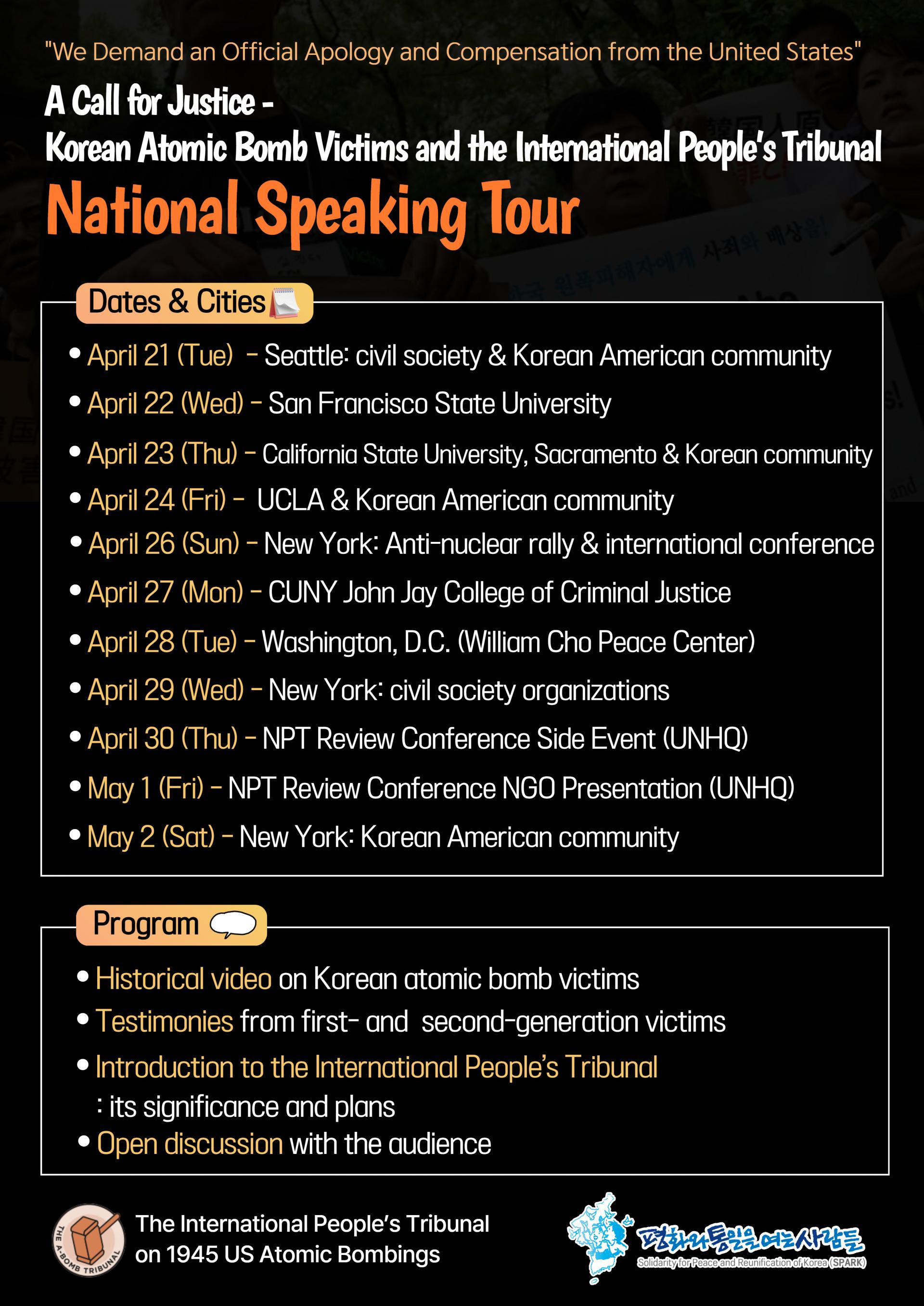
23 April – WEBINAR – Why new nuclear reactors are the wrong tools for decarbonization Thursday, April 23 • 1 AM – 2 AM AEST

Pine Ridge Uranium is the real threat, not Tehran- Tell Burgum: Stop the Extraction.
Chernobyl: The Lost Tapes – A good documentary on Chernobyl on SBS available On Demand for the next 3 weeks– https://www.sbs.com.au/ondemand/tv-program/chernobyl-the-lost-tapes/2352741955560
To see nuclear-related stories in greater depth and intensity – go to https://nuclearinformation.wordpress.com
-
Archives
- April 2026 (275)
- March 2026 (251)
- February 2026 (268)
- January 2026 (308)
- December 2025 (358)
- November 2025 (359)
- October 2025 (376)
- September 2025 (257)
- August 2025 (319)
- July 2025 (230)
- June 2025 (348)
- May 2025 (261)
-
Categories
- 1
- 1 NUCLEAR ISSUES
- business and costs
- climate change
- culture and arts
- ENERGY
- environment
- health
- history
- indigenous issues
- Legal
- marketing of nuclear
- media
- opposition to nuclear
- PERSONAL STORIES
- politics
- politics international
- Religion and ethics
- safety
- secrets,lies and civil liberties
- spinbuster
- technology
- Uranium
- wastes
- weapons and war
- Women
- 2 WORLD
- ACTION
- AFRICA
- Atrocities
- AUSTRALIA
- Christina's notes
- Christina's themes
- culture and arts
- Events
- Fuk 2022
- Fuk 2023
- Fukushima 2017
- Fukushima 2018
- fukushima 2019
- Fukushima 2020
- Fukushima 2021
- general
- global warming
- Humour (God we need it)
- Nuclear
- RARE EARTHS
- Reference
- resources – print
- Resources -audiovicual
- Weekly Newsletter
- World
- World Nuclear
- YouTube
-
RSS
Entries RSS
Comments RSS
 nuclear-news