General: Supply chain problems are hurting nuclear modernization
Defense News, By Joe Gould, 16 Sept 22,
WASHINGTON ― The nominee to lead the U.S. nuclear arsenal said Thursday that supply chain snags that are pummeling the defense industrial base are also hurting Washington’s plans to modernize its aging nuclear arsenal.
“I would venture to say that it’s probably being seen across the Department of Defense, but in particular for the nuclear portfolio,” Air Force Gen. Anthony Cotton, nominated to lead U.S. Strategic Command, told the Senate Armed Services Committee, at his confirmation hearing.
………… It’s taking some nuclear programs up to 90 days to source certain U.S.-made components that would have typically taken 10 days, he said.
Operating and modernizing the nuclear force will cost $634 billion in the 2021-2030 period, the nonpartisan Congressional Budget Office said last year. Along with the expense of the Energy Department managing nuclear stockpiles, the Defense Department is modernizing the sea, air and land-based legs of the nuclear triad.
………………………………………… Looming over the hearing was Strategic Command’s scramble to reimagine nuclear deterrence theory that simultaneously faces Russia and China……………………. more https://www.defensenews.com/pentagon/2022/09/15/general-supply-chain-problems-are-hurting-nuclear-modernization/
A new window into France’s nuclear history
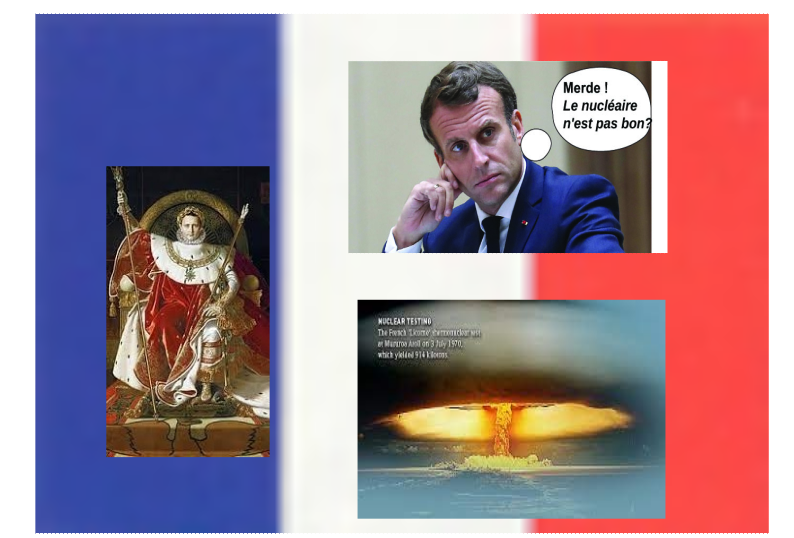
Bulletin of the Atomic Scientists By Austin R. Cooper | September 16, 2022, Access to French nuclear archives has increased dramatically during the past year. Since October 2021, French officials have declassified thousands of documents about the development of French nuclear weapons, an arsenal of roughly 300 warheads today.
This work marks a sea change in France, for decades one of the most difficult nuclear-armed democracies to study. Unlike the United States and the United Kingdom, France does not have Freedom of Information laws, which allow the public to file declassification requests. French archives do consider special access requests (dérogations), but these requests cannot compel a declassification review, which limits their utility in making nuclear weapons documents available for research.
French President Emmanuel Macron, in the wake of prize-nominated journalism and scholarship on the development of French nuclear weapons, launched a significant declassification initiative last year. This process has focused on Polynesia, the semi-autonomous French territory where French forces conducted nearly 200 atmospheric and underground explosions from 1966 to 1996. The scope does not include Algeria, the former French colony where French authorities built and operated their first nuclear test sites between 1960 and 1966, during the Algerian War for Independence (1954–62) and the construction of the postcolonial Algerian state.
New French transparency could help settle debates about environmental contamination and health effects from radiation exposure, especially in Polynesia. French law has promised to compensate victims of French nuclear weapons development who become sick or die from radiation-linked illness but has made only slow progress since 2010. Other nuclear-armed democracies, including the United States and the United Kingdom, have established similar compensation programs.
…………………………. Yet crucial gaps remain in access to French nuclear archives, especially records from the earliest years of the weapons testing program—when it took place in Algeria—and records concerning foreign affairs.
………………………. A report in February 2022 indicated that Macron’s declassification review had withdrawn only 59 documents out of nearly 35,000.
The global stakes. French nuclear history does not only concern France. France became the world’s fourth nuclear weapon state by building test sites and conducting atmospheric and underground explosions in two former French colonies: Algeria and then Polynesia. These blasts drew criticism from Algerian and Polynesian leaders, and from many neighboring countries in Africa and the Pacific.
Before becoming one of the world’s top nonproliferation cops, France served as a global nuclear supplier. During the Cold War arms race, the French government was among those that provided Israel, India, South Africa, Iran, and Iraq with nuclear technologies. Except for possibly Iran, all these states endeavored to build nuclear weapons; so far, only Iraq has failed to do so.
……………………. President Richard Nixon and his National Security Advisor Henry Kissinger secretly reversed US policy and launched unprecedented Franco-American cooperation on weapons design and safety procedures.
………………………………… . The publication in March 2021 of the French-language book Toxique, by the physicist Sébastien Philippe and investigative journalist Tomas Statius, created a media firestorm surrounding French nuclear history.
Toxique showed that French authorities underestimated and overlooked the extent of radioactive contamination—and the health risks—from the atmospheric explosions conducted in Polynesia until 1974. This finding relied on dozens of French documents declassified in 2012–13, following a decade of court battles fought by associations of nuclear test victims and anti-nuclear organizations.
……………………………………………….. Limits to French nuclear transparency. Recent French declassifications indicate real progress, but three shortcomings have become clear.
First, archival documentation of France’s first nuclear explosions in the Algerian Sahara (1960–66) falls outside the Declassification Commission’s mandate. This recent work, as well as the CEA-DAM process, have incidentally declassified a few documents about the two test sites in the Algerian desert. But most of these records remain unavailable for research.
This split in French nuclear history—between Algeria and Polynesia—is artificial. Similar French entities, and often the same French officials, directed the Algerian and Polynesian sites.
The reason for French transparency about the Polynesian sites, but not the Algerian ones, stems from French politics. Polynesia, and its semi-autonomous government, are part of France. Algeria won its independence in a bloody war of decolonization that coincided with the first French nuclear explosions. Algeria remains a touchy subject in France……………………………………………………….
Insights from the archives. French President Macron’s shift in declassification policy opens a new window into the development of French nuclear weapons. Researchers can now look to France for resources to understand the nuclear dimensions of European security during a moment when these dimensions have become all too obvious.
What makes France so important? Now the only nuclear weapon state in the European Union, France’s nuclear history has key quirks. It also has global reach.
In contrast to their British neighbors, French officials endeavored to build their nuclear weapons program as independently of the United States as possible. Franco-American technological cooperation improved during the Cold War, but Paris remained committed to charting its own strategic course. France provides a case study of trying to go it alone.
The French case also demonstrates deep entanglement with French colonial policies in Africa and the Pacific. A similar point holds true for the US use of the Marshall Islands as a nuclear test site and tribal lands for uranium mining, or for UK nuclear testing in Australia. As the only country not merely to plan but actually to conduct nuclear explosions on the African continent, and given the longevity of its nuclear presence in the Pacific, France offers a unique vantage point on broader intersections between the Cold War arms race and decolonization struggles.
French nuclear archives have as much to do with today’s politics as with 20th-century history. Macron’s policy shift demonstrates the impact of executive action and the power of civil society to shape nuclear weapons governance when researchers, journalists, activists, and other stakeholders work together. The French case has unique features—namely the legal status of Polynesia—but it holds broad lessons for nuclear-armed democracies.
Building on recent strides, the French declassification effort can expand in ways that do not threaten nonproliferation goals. Two places to start: documentation of the Algerian test sites and the rich nuclear collections in the Diplomatic Archives. https://thebulletin.org/2022/09/a-new-window-into-frances-nuclear-history/
Nuclear power making a comeback in Europe? Not really
Nuclear Power Makes A Comeback In Europe , Eurasia Review, By Arab News, By Zaid M. Belbagi 17 Sept 22, “……………………………………………………………… Despite the crisis, it would seem that large-scale investment in the power sectors of the past is challenging, as countries strive to reach net-zero emissions by 2050. Though the shortcomings of an overreliance on Russian gas have been exposed, only a committed effort to generate power from renewable sources will offer a long-term solution. However, fully replacing gas and nuclear energy with renewables will take years and such sources are themselves greatly impacted by climate change. The severe drought this summer, believed to be the worst in 500 years, led to a drop in hydropower generation across Europe, while repeated heat waves forced the closure of nuclear reactors over environmental concerns.
For the next two decades, Europe will remain exposed to global energy shocks until sustainable ways of generating renewable power, alongside a change in consumption, can be guaranteed.
• Zaid M. Belbagi is a political commentator and an adviser to private clients between London and the GCC. Twitter: @Moulay_Zaid
Tepco to revise power prices for industry, factoring in nuclear restart
TOKYO, Sept 16 (Reuters) – Tokyo Electric Power Company (Tepco) (9501.T) said on Friday it will revise its pricing for high-voltage industry customers next year to reflect soaring costs, but will take into account the assumed restart of the No.7 unit of its Kashiwazaki-Kariwa nuclear power plant.
Tepco President Tomoaki Kobayakawa told a news conference of the new pricing policy, including the impact of an assumed restart, although Japan’s nuclear regulator is continuing inspections after barring Tepco, operator of the wrecked Fukushima Daiichi nuclear plant, from restarting its only operable atomic power station last year due to safety breaches.
“We plan to revise the pricing scheme next business year as we can’t reflect soaring power procurement cost in the electricity price,” Kobayakawa said.
“But we are factoring in that the No.7 unit will be 75% operational next year, or operating nine months out of 12, in calculating the new electricity price to reduce the burden on customers,” he said, adding that the company itself is not forecasting the unit’s resumption next year.
“We do hope to restart the Kashiwazaki-Kariwa as soon as possible, but we can’t say when it will happen,” he said.
Tepco plans to announce details of the new price scheme for industry customers by the end of this month……..
Tepco had been hoping to restart the world’s biggest atomic power plant, with capacity of 8,212 megawatts, in a quest to slash the utility’s operating costs.
But it drew criticism last year when failings at the plant came to light, including security breaches that led to an unauthorised staff member accessing sensitive areas of the plant.
Japan’s industry minister said at the time the plant would not be restarted any time soon.
https://www.reuters.com/business/energy/tepco-revise-power-prices-industry-factoring-nuclear-restart-2022-09-16/
Extreme hunger is soaring in the world’s climate hotspots – Oxfam
Extreme hunger is closely linked to the climate crisis, with many areas of
the world most affected by extreme weather experiencing severe food
shortages, research has shown.
The development charity Oxfam examined 10 of
the world’s worst climate hotspots, afflicted by drought, floods, severe
storms and other extreme weather, and found their rates of extreme hunger
had more than doubled in the past six years.
Within the countries studied,
48 million people are currently suffering from acute hunger, up from about
21 million people in 2016. Of these, about 18 million people are on the
brink of starvation, according to the Oxfam report published on Thursday.
Guardian 16th Sept 2022
Tory Minister Zac Goldsmith, who actually cares about the environment, sacked as Environment Minister
Boris Johnson ally Zac Goldsmith has been axed as an environment minister
and told he will no longer be attending Liz Truss’s cabinet, it has
emerged. The Conservative minister has been stripped of his brief
overseeing animal welfare at the Department for Environment, Food and Rural
Affairs (Defra), government sources confirmed to The Independent. Mr
Goldsmith appeared to issue a warning to Ms Truss in an exit letter to
Defra staff, saying the government has “so much more to do to turn the
tide” on the environment, according to The Guardian, which first reported
on his sacking.
Independent 15th Sept 2022
https://www.independent.co.uk/news/uk/politics/zac-goldsmith-sacked-liz-truss-b2168250.html
Fast transition to renewables will save the world up to $12tn (£10.2tn) by 2050

Switching from fossil fuels to renewable energy could save the world as
much as $12tn (£10.2tn) by 2050, an Oxford University study says. The
report said it was wrong and pessimistic to claim that moving quickly
towards cleaner energy sources was expensive. Gas prices have soared on
mounting concerns over energy supplies. But the researchers say that going
green now makes economic sense because of the falling cost of renewables.
“Even if you’re a climate denier, you should be on board with what we’re
advocating,” Prof Doyne Farmer from the Institute for New Economic Thinking
at the Oxford Martin School told BBC News. “Our central conclusion is that
we should go full speed ahead with the green energy transition because it’s
going to save us money,” he said.
BBC 13th Sept 2022
Plunging costs of renewable energy – as nuclear power costs increase
The tumbling cost of renewable energy means transitioning away from fossil
fuels over the next 30 years will save the world “at least $12 trillion”,
according to researchers at the University of Oxford.
The decarbonisation
of the energy system will not only see a major reduction in the cost of
producing and distributing energy, but will also allow for greater levels
of energy to be produced and therefore help expand energy access around the
planet.
The faster the transition to renewables occurs, the greater the
potential for savings, the team found, and urged governments to recognise
the enormous boost to the global economy, that abandoning fossil fuels will
bring about.
“There is a pervasive misconception that switching to clean,
green energy will be painful, costly and mean sacrifices for us all – but
that’s just wrong,” said Professor Doyne Farmer, who leads the team that
conducted the study at the Institute for New Economic Thinking at the
Oxford Martin School. The research team analysed thousands of transition
cost scenarios produced by major energy models and examined data on: 45
years of solar energy costs, 37 years of wind energy costs and 25 years for
battery storage.
They said the research reveals that the real cost of solar
energy dropped twice as fast as the most ambitious projections in these
models, revealing that, over the past 20 years, previous models “badly
overestimated the future costs” of renewable energy technology compared to
the reality of cheap renewables we are already seeing today.
The research also suggests nuclear power will play a diminishing role in the future
global energy mix due to the rising costs of building reactors. “The costs
of nuclear have consistently increased over the last five decades, making
it highly unlikely to be cost competitive with plunging renewable and
storage costs,” the researchers said. Meanwhile, the study showed the costs
for storage technologies, such as batteries and hydrogen electrolysis, are
also likely to fall dramatically.
Independent 13th Sept 2022
Russia’s uranium exports can continue – exempt from sanctions imposed on other commodities
The German government said Monday that it can’t stop a shipment of Russian uranium destined for French nuclear plants from being processed at a site in Germany because atomic fuel isn’t covered by European Union sanctions on Russia.
Environmentalists have called on Germany and the Netherlands to block a shipment of uranium aboard the Russian ship Mikhail Dudin — currently docked in the French port of Dunkirk — from being transported to a processing plant in Lingen, close to the German-Dutch border.
“We have no legal grounds to prevent the transport of uranium from Russia, because the sanctions imposed by the EU due to the Russian invasion of Ukraine exempt the import of nuclear fuel … to the EU from import bans,” said a spokesman for Germany’s Environment Ministry, Andreas Kuebler. Safety requirements for the shipment had been examined and foundto meet requirements, meaning German authorities had to approve it, he added.
Washington Post 12th Sept 2022
Continued drop in France’s nuclear power energy production

Nuclear power generation at EDF’s (EDF.PA) French reactors in August fell
by 37.6% year on year to 18.1 terawatt hours (TWh), mainly due to the
impact of the discovery of stress corrosion, the utility said on Tuesday.
EDF said on its website that total nuclear generation in France since the
start of the year was 191 TWh, down 20.2% compared with January-August
2021.
Reuters 13th Sept 2022
Scotland, with its renewable energy success, has no need for nuclear power

the reason the UK Government has backed nuclear so completely is less to do with net zero, and more to do with military needs.
Holyrood, 14 Sept 22, “………………………………………………………………….Torness nuclear power station is now coming to the end of its life. It is expected to shut down in 2028. Forrest explains: “The life-limiting factor of Torness – and it was the same at Hunterston [B, a nuclear power plant in North Ayrshire which ceased operations in January] – is our graphite core. The graphite core, as it gets older, we get a thing called keyway root cracks. Now, operationally we don’t see them, we don’t feel them, it doesn’t affect the plant in how it operates safely. How it does affect the plant is that we are required to demonstrate that we can withstand a Californian-style seismic event… As the onset of keyway root cracking progresses, that becomes more difficult and therefore at some point, because of the seismic input motion, we will choose to shut this power station down.”
It’s been clear since the 80s that we don’t have to have nuclear
The Scottish Government’s opposition to nuclear means that once Torness closes, that will be the end of nuclear power in Scotland. It is in stark opposition to the approach of the UK Government, which is backing the installation of eight new nuclear reactors by the end of the next decade…………………
Andy Stirling, a professor of science and technology policy at the University of Sussex, has been working in this field for over three decades. He says: “Simply looking at the government’s own assessments – albeit often hidden away in the grey literature – it’s been clear since the 80s that we don’t have to have nuclear. …………
A paper published last month by LUT University in Finland, supported by academics from 14 other institutions, confirms Stirling’s view. Taking evidence from hundreds of studies, it concluded: “In the early 2020s, the consensus has increasingly become that solar PV and wind power will dominate the future energy system and new research increasingly shows that 100 per cent renewable energy systems are not only feasible but also cost effective.”…………………….
Chief executive of the Nuclear Industry Association, Tom Greatrex says” “……………the UK Government’s decisions mean Scotland will be able to access nuclear power from the grid. “In one sense, the Scottish Government position – whilst I think it’s not particularly robust in terms of science or logic, I can understand the politics behind it – it doesn’t matter because other bits of the GB system will be able to provide the bits that there’s no political appetite in Scotland to do,” he says.
The Scottish Government, for its part, argues a mixture of renewables, storage and hydrogen offer “the best pathway to net zero by 2045”. The leaps made in renewables in recent years strengthen that argument. Phil Johnstone, a research fellow also at Sussex University’s Science Policy Research Unit, says it is “staggering” that the UK as a whole is “not shouting from the rooftops more about what has happened in Scotland”.
He adds: “It’s gone from less than 30 per cent renewables electricity to nearly 100 per cent in 10 years. And it’s just amazing that you have people in Westminster and the [UK] Government saying Scotland is being very irrational in not having nuclear. I mean, the comparison could not be more stark – what Scotland has done with renewables and what’s happened in 10 years [versus] what has happened with the nuclear renaissance in 10 years.”
He continues: “If you’re looking at net zero and you’re looking at speed and you’re looking at the urgency of the situation and you’re looking on the grounds of cost, if you use these criteria, which are the things you evaluate energy policy from, then it would suggest to me that Scotland is a doing a sensible thing.”
Both he and Stirling say the reason the UK Government has backed nuclear so completely is less to do with net zero, and more to do with military needs. When this argument was put to a senior civil servant by MPs during an inquiry on Hinkley Point C in 2017, they were told: “We have at some point to renew the warheads, so there is very definitely an opportunity here for the nation to grasp in terms of building up its nuclear skills. I do not think that that is going to happen by accident; it is going to require concerted government action to make it happen.”
Indeed, the SNP’s position on nuclear power is linked to their long-standing opposition to Trident. But Stirling says using the civil sector to maintain the nuclear deterrent is “a feasible way of funding it,” if the government so chooses. However, he says there needs to be more transparency, particularly when ultimately the cost of building nuclear plants falls to consumers via energy bills………………………………………… more https://www.holyrood.com/inside-politics/view,is-the-scottish-governments-antinuclear-stance-the-right-one
Study shows ‘unprecedented’ changes to world’s rivers
Study shows ‘unprecedented’ changes to world’s rivers
In the past 40 years, humans have caused unprecedented, consequential changes to river sediment transport, according to a new study by scientists at Dartmouth, supported by the U.S. National Science Foundation and published in Science.
After U.N. conference, nuclear disarmament advocates look to new strategies
Dennis Sadowski, Catholic Review, 11 Sept 22,
WASHINGTON (CNS) — Four weeks of debate — during a review conference for a treaty widely viewed as a cornerstone of nuclear disarmament — resulted in no consensus on how to move forward despite the efforts of the Holy See, disarmament advocates and non-nuclear nations
Russia blocked agreement on a final document late Aug. 26, the review conference’s final day, by objecting to paragraphs raising concerns about military activity around the Zaporizhzhia nuclear power plant in Ukraine.
The 10th Review Conference for the Treaty on the Non-Proliferation of Nuclear Weapons (NPT) at the United Nations headquarters in New York led to widespread consensus on numerous issues related to nuclear safety, but could not satisfy the Russian delegation’s objection even though the document did not mention Russia by name.
Maryann Cusimano Love, associate professor of international politics at The Catholic University of America, attended the conference as an expert consultant to the Holy See Mission at the U.N.
She told Catholic News Service that the Holy See’s participation in the review conference and its consistent voice in urging the world to abolish nuclear weapons was critical, especially at a time when fears remain that nuclear weapons may be introduced to the war in Ukraine
Early in the war, Russian President Vladimir Putin put his country’s nuclear forces on alert, but has since backed off any suggestion that he would authorize the use of nuclear weapons in Ukraine.
The review conference brought delegations from around the world to New York to discuss next steps toward fulfilling the treaty’s goal of the eventual abolition of nuclear weapons. Originally scheduled for 2020, it was delayed three times because of the coronavirus pandemic.
Among the treaty’s provisions is a requirement that parties to it “pursue negotiations in good faith on effective measures relating to cessation of the nuclear arms race at an early date and to nuclear disarmament.”
Disarmament advocates say that not enough has been done to achieve that goal…………………………………..
Maryann Cusimano Love also said that while the Russian objection was the main focus coming out of the meeting, the 35-page draft document offered numerous other steps related to nuclear safety, reducing nuclear arsenals and protecting human life that conference delegates can pursue going forward.
………………………………. the 65 states that have signed the 2017 Treaty on the Prohibition of Nuclear Weapons, including the Holy See, released a statement voicing their disappointment over the outcome. They pledged their support for the treaty, saying it was a necessary step toward an eventual ban on nuclear weapons.
The ban treaty went into force in January 2021, but has not gained the support of any nuclear-armed nations.
Supporters of the ban treaty also expressed concern that the risk of the use of nuclear weapons in the world today remained high, “and the possibility of the catastrophic humanitarian impact … is looming ominously over us.”
“We are dismayed that this very fact has been used at the NPT review conference deliberations as reason against the urgently needed progress on nuclear disarmament, and to uphold an approach to security based on the fallacy of nuclear deterrence. This approach relies on the threat of the actual use of nuclear weapons and, hence, the risks of the destruction of countless lives, of societies, of nations, and of inflicting global catastrophic consequences,” the statement said…………………………………………… more https://catholicreview.org/after-u-n-conference-nuclear-disarmament-advocates-look-to-new-strategies/
It’s not okay for grown adults to say the Ukraine invasion was “unprovoked”
The US Army-commissioned paper details how the empire can use proxy warfare, economic warfare and other cold war tactics to push its longtime geopolitical foe to the brink without costing American lives or sparking a nuclear conflict. It mentions Ukraine hundreds of times, and it explicitly discusses the same economic warfare tactics we’re seeing today
Caitlin Johnstone, TheAltWorld, Wed, 07 Sep 2022
On a recent interview with the Useful Idiots podcast, Noam Chomsky repeated his argument that the only reason we hear the word “unprovoked” every time anyone mentions Russia’s invasion of Ukraine in the mainstream news media is because it absolutely was provoked, and they know it. Chomsky said:
“Right now if you’re a respectable writer and you want to write in the main journals, you talk about the Russian invasion of Ukraine, you have to call it ‘the unprovoked Russian invasion of Ukraine”. It’s a very interesting phrase; it was never used before. You look back, you look at Iraq, which was totally unprovoked, nobody ever called it ‘the unprovoked invasion of Iraq.’ In fact I don’t know if the term was ever used — if it was it was very marginal. Now you look it up on Google, and hundreds of thousands of hits. Every article that comes out has to talk about the unprovoked invasion of Ukraine.
“Why? Because they know perfectly well it was provoked. That doesn’t justify it, but it was massively provoked. Top US diplomats have been talking about this for 30 years, even the head of the CIA.”
Chomsky is of course correct here. The imperial media and their brainwashed automatons have spent half a year mindlessly bleating the word “unprovoked” in relation to this war, but one question none of them ever have a straight answer for is this: if the invasion of Ukraine was unprovoked, how come so many western experts spent years warning that the actions of western governments would provoke an invasion of Ukraine?
Because, as Chomsky notes, that is indeed the case. A few days after the invasion began this past February a guy named Arnaud Bertrand put together an extremely viral Twitter thread that just goes on and on and on about the various diplomats, analysts and academics in the west who have over the years been warning that a dangerous confrontation with Russia was coming because of NATO advancements toward its borders, interventionism in Ukraine, and various other aggressions. It contains examples like John Mearsheimer explicitly warning in 2015 that “the west is leading Ukraine down the primrose path, and the end result is that Ukraine is going to get wrecked,” and Pat Buchanan warning all the way back in 1999 that “By moving NATO onto Russia’s front porch, we have scheduled a twenty-first-century confrontation.”
Empire apologists love claiming that the invasion of Ukraine had nothing to do with NATO expansionism (their claims generally based on brazen misrepresentations of what Vladimir Putin has said about Russia’s reasons for the war), but that’s silly. The US war machine was continuing to taunt the possibility of NATO membership for Ukraine right up until the invasion, a threat it refused to take off the table since placing it there in 2008 despite knowing full well that this threat was an incendiary provocation to Moscow.
This is to say nothing of the US empire actively fomenting a violent uprising in 2014 which ousted Kyiv’s sitting government and fractured the nation between its more Moscow-loyal populations to the east and the more US/EU-friendly parts of the country. This led to the annexation of Crimea (overwhelmingly supported by the people who live there) and eight years of brutal warfare against Russia-backed separatists in the Donbas. Ukrainian attacks on those separatists are known to have increased exponentially in the days leading up to the invasion, and it has been argued that this is what provoked Putin’s final decision to commit to invading (which was a last-minute decision according to US intelligence).
The US power alliance could very easily have prevented this war with a few low-cost concessions like enshrining Ukrainian neutrality, rolling back its war machinery from Russia’s borders and sincerely pursuing detente with Moscow instead of shredding treaties and ramping up cold war escalations. Hell, it could likely have prevented this war just by protecting President Zelensky from the anti-Moscow far right nationalists who were openly threatening to lynch him if he began honoring the Minsk agreements and pursuing peace with Russia, as he was originally elected to do.
Instead it knowingly chose the opposite course: continuing to float the possibility of formal NATO membership for Ukraine while pouring weapons into the nation and making it more and more of a de facto NATO memberwith closer and closer intimacy with the US war machine, and then either ordering, encouraging or tolerating Ukraine’s aggressive assault on Donbas separatists.
Why did the empire opt for provocation over peace? Congressman Adam Schiff gave a pretty good answer to that question in January of 2020 as the road to war was being paved: “so that we can fight Russia over there, and we don’t have to fight Russia here.” If you relinquish the infantile idea that the US empire is helping its good friend Ukraine because it loves the Ukrainian people and wants them to have freedom and democracy, it’s not hard to see that the US sparked a convenient proxy war because it was in its geostrategic interests to do so, and because it wouldn’t be their lives and property getting laid to waste.
Brian Berletic put out a good video a few days ago about a Pentagon-funded 2019 Rand Corporation paper titled “Extending Russia – Competing from Advantageous Ground,” which is exactly what it sounds like. The US Army-commissioned paper details how the empire can use proxy warfare, economic warfare and other cold war tactics to push its longtime geopolitical foe to the brink without costing American lives or sparking a nuclear conflict. It mentions Ukraine hundreds of times, and it explicitly discusses the same economic warfare tactics we’re seeing today like sanctions and attacking Russia’s energy interests in Europe (the latter of which Berletic points out is also being used to bolster US dominance over its vassals in the EU).
Continue readingSwitzerland plans controversial nuclear waste dump all too close to German border
A plan for a nuclear waste storage facility in Switzerland is raising
safety concerns among Germans close to the border. The project, which is
backed by power plant operators, requires approval by the Swiss government.
Switzerland has announced plans to build a nuclear waste storage facility
on the border with Germany, leaving communities concerned about the issues
of safety and clean drinking water supply. The National Cooperative for the
Disposal of Radioactive Waste (Nagra) is behind the proposal. It suggested
the region of Nördlich Lägern, north of Zurich and close to the border
with Germany, the Swiss Federal Office of Energy said.
Deutsche Welle 10th Sept 2022
1 This Month
23 April – WEBINAR – Why new nuclear reactors are the wrong tools for decarbonization Thursday, April 23 • 1 AM – 2 AM AEST
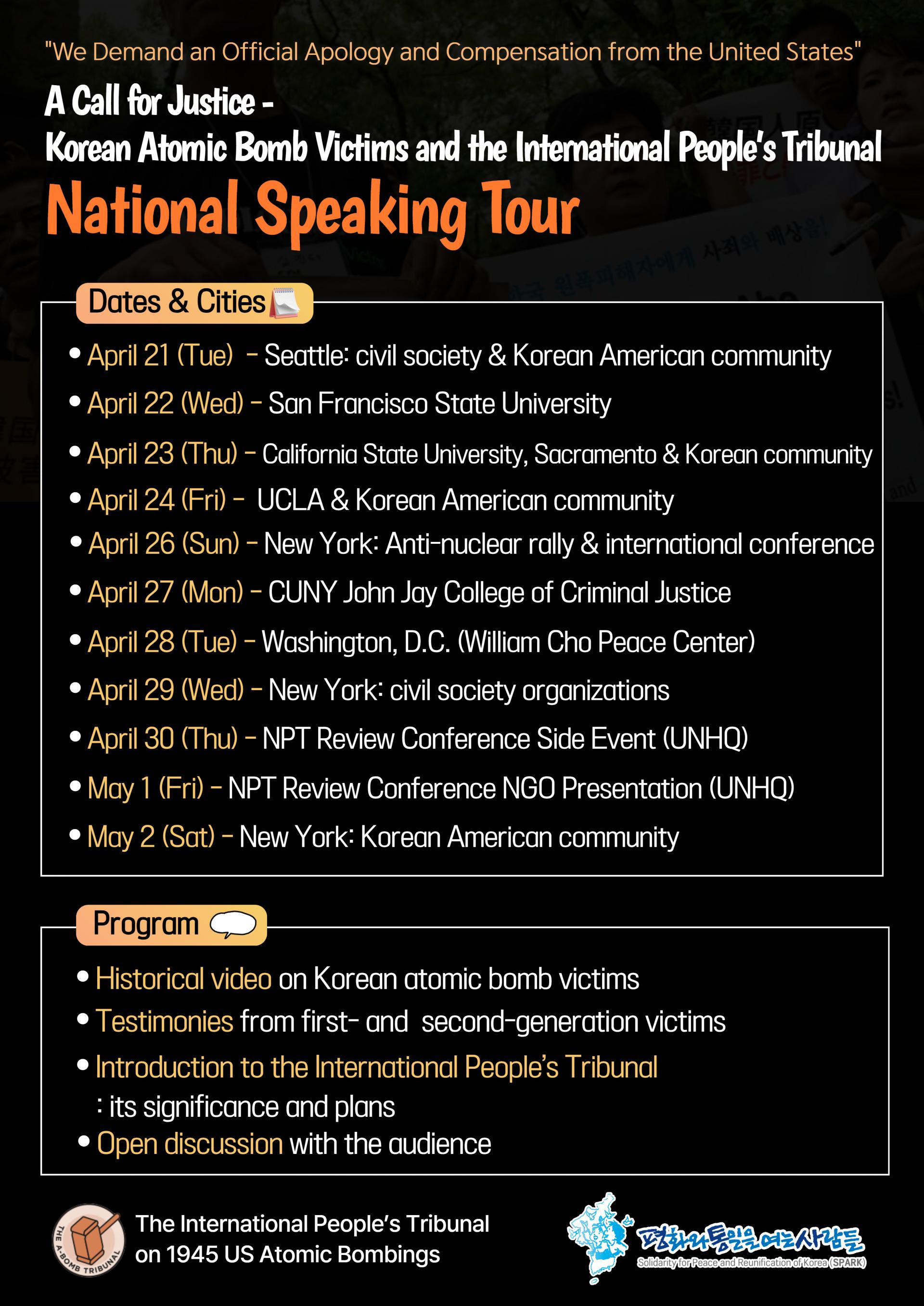

Pine Ridge Uranium is the real threat, not Tehran- Tell Burgum: Stop the Extraction.
Chernobyl: The Lost Tapes – A good documentary on Chernobyl on SBS available On Demand for the next 3 weeks– https://www.sbs.com.au/ondemand/tv-program/chernobyl-the-lost-tapes/2352741955560
To see nuclear-related stories in greater depth and intensity – go to https://nuclearinformation.wordpress.com
-
Archives
- April 2026 (275)
- March 2026 (251)
- February 2026 (268)
- January 2026 (308)
- December 2025 (358)
- November 2025 (359)
- October 2025 (376)
- September 2025 (257)
- August 2025 (319)
- July 2025 (230)
- June 2025 (348)
- May 2025 (261)
-
Categories
- 1
- 1 NUCLEAR ISSUES
- business and costs
- climate change
- culture and arts
- ENERGY
- environment
- health
- history
- indigenous issues
- Legal
- marketing of nuclear
- media
- opposition to nuclear
- PERSONAL STORIES
- politics
- politics international
- Religion and ethics
- safety
- secrets,lies and civil liberties
- spinbuster
- technology
- Uranium
- wastes
- weapons and war
- Women
- 2 WORLD
- ACTION
- AFRICA
- Atrocities
- AUSTRALIA
- Christina's notes
- Christina's themes
- culture and arts
- Events
- Fuk 2022
- Fuk 2023
- Fukushima 2017
- Fukushima 2018
- fukushima 2019
- Fukushima 2020
- Fukushima 2021
- general
- global warming
- Humour (God we need it)
- Nuclear
- RARE EARTHS
- Reference
- resources – print
- Resources -audiovicual
- Weekly Newsletter
- World
- World Nuclear
- YouTube
-
RSS
Entries RSS
Comments RSS
 nuclear-news